Results by title
2284 books match the query 'Women' and 370 start with t
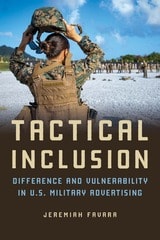
Tactical Inclusion
Difference and Vulnerability in U.S. Military AdvertisingJeremiah Favara
University of Illinois Press, 2024
Compelling and eye-opening, Tactical Inclusion combines original analysis with personal experience to chart advertising’s role in building the all-volunteer military.
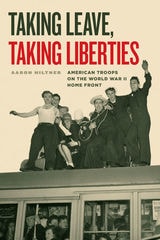
Taking Leave, Taking Liberties
American Troops on the World War II Home FrontAaron Hiltner
University of Chicago Press, 2020
With unsettling clarity, Aaron Hiltner reveals what American troops really did on the home front. While GIs are imagined to have spent much of the war in Europe or the Pacific, before the run-up to D-Day in the spring of 1944 as many as 75% of soldiers were stationed in US port cities, including more than three million who moved through New York City. In these cities, largely uncontrolled soldiers sought and found alcohol and sex, and the civilians living there—women in particular—were not safe from the violence fomented by these de facto occupying armies. Troops brought their pocketbooks and demand for “dangerous fun” to both red-light districts and city centers, creating a new geography of vice that challenged local police, politicians, and civilians. Military authorities, focused above all else on the war effort, invoked written and unwritten legal codes to grant troops near immunity to civil policing and prosecution.
The dangerous reality of life on the home front was well known at the time—even if it has subsequently been buried beneath nostalgia for the “greatest generation.” Drawing on previously unseen military archival records, Hiltner recovers a mostly forgotten chapter of World War II history, demonstrating that the war’s ill effects were felt all over—including by those supposedly safe back home.
Taking Off the White Gloves
Southern Women and Women HistoriansEdited & Intro by Michele Gillespie & Catherine Clinton
University of Missouri Press, 1998
When southern women remove their gloves, they speak their minds. The ten timely and provocative essays in Taking Off the White Gloves represent the collective wisdom of some of the finest scholars on women's history in the American South. On the eve of the thirtieth anniversary of the Southern Association for Women Historians, this volume brings together some of the outstanding lectures delivered by distinguished members of the association over the past fifteen years.
Spanning four centuries of women's experiences in the South, the topics featured in Taking Off the White Gloves range from Native American sexuality and European conquest to woman suffrage in the South, from black women's protest history to the status of women in the historical profession at the end of the twentieth century.
Despite diverse subject matter, these rich essays share a number of important qualities. They take an integrative approach, combining literary analysis, social history, cultural interpretation, labor history, popular culture, and oral history. Embracing the distinctiveness of the southern past and women's experiences within that past, they also recognize the inextricability of critical categories such as sexuality and gender, race and gender, and women and work. Finally, these essays emphasize the authors' commitment to the belief that the personal is political; they reveal the subtle and not so subtle ways that women transform theory into practice.
Taking Off the White Gloves invites a new understanding of the complexities that surround the history of southern women across race, class, place, and time. A model of innovative and imaginative scholarly historical writing, this book provides fertile ground for young scholars and is sure to inspire new research. This thought- provoking volume has much to offer scholars and students, as well as the general reader.
Taking Root
Narratives of Jewish Women in Latin AmericaMarjorie Agosín
Ohio University Press, 2002
In Taking Root, Latin American women of Jewish descent, from Mexico to Uruguay, recall their coming of age with Sabbath candles and Hebrew prayers, Ladino songs and merengue music, Queen Esther and the Virgin of Guadalupe. Rich and poor, Sephardi and Ashkenazi, Jewish immigrant families searched for a new home and identity in predominantly Catholic societies. The essays included here examine the religious, economic, social, and political choices these families have made and continue to make as they forge Jewish identities in the New World.
Marjorie Agosín has gathered narratives and testimonies that reveal the immense diversity of Latin American Jewish experience. These essays, based on first- and second-generation immigrant experience, describe differing points of view and levels of involvement in Jewish tradition. In Taking Root, Agosín presents us with a contemporary and vivid account of the Jewish experience in Latin America.
Taking Root documents the sadness of exile and loss but also a fierce determination to maintain Jewish traditions. This is Jewish history but it is also part of the untold history of Brazil, Argentina, El Salvador, Ecuador, Chile, Peru, and all of Latin America.
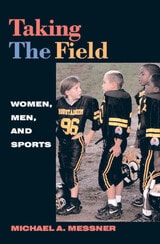
Taking The Field
Women, Men, and SportsMichael A. Messner
University of Minnesota Press, 2002

Taking Time
Mindy Fried
Temple University Press, 1998
This timely book provides an inside look at life in a major U.S. corporation, focusing on the impact of workplace culture on the use of parental leave and those who use it. Fried begins by describing why parental leave is critical to making parenting the job of both parents in two-parent families. She examines the varied experiences of different levels of workers in how parental leave policy is used.
The author tells a rich and textured tale of day-to-day life in the skyscraper offices of a large corporation. How people dress, what their offices look like, which cafeteria they eat in, how the supervisors and supervised talk -- all these things are part of the fabric of corporate culture that Fried describes.
Most of us live in work cultures that value overtime. Fried argues that, as a "time policy" parental leave clashes with the powerful norm that corporate employees must work long and hard. Taking time for parenting -- a job that is devalued in our culture -- may be perceived as "taking time away" from the company, and, in particular, from the company's productivity.
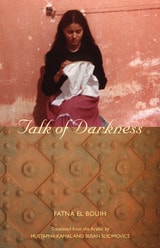
Talk of Darkness
By Fatna El Bouih
University of Texas Press, 2008
Fatna El Bouih was first arrested in Casablanca as an 18-year-old student leader with connections to the Marxist movement. Over the next decade she was rearrested, forcibly disappeared, tortured, and transferred between multiple prisons. While imprisoned, she helped organize a hunger strike, completed her undergraduate degree in sociology, and began work on a Master's degree.
Beginning with the harrowing account of her kidnapping during the heightened political tension of the 1970s, Talk of Darkness tells the true story of one woman's struggle to secure political prisoners' rights and defend herself against an unjust imprisonment.
Poetically rendered from Arabic into English by Mustapha Kamal and Susan Slyomovics, Fatna El Bouih's memoir exposes the techniques of state-instigated "disappearance" in Morocco and condemns the lack of laws to protect prisoners' basic human rights.
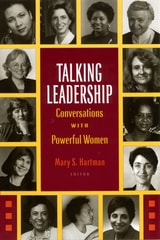
Talking Leadership
Conversations with Powerful WomenHartman, Mary
Rutgers University Press, 1999
Talking Leadership presents a though-provoking look at differences and commonalities in the lives and leadership approaches of some of today's outstanding women in areas ranging from philanthropy to politics, and from business to academia. Regardless of their backgrounds and areas of expertise, these women are committed to social change--change that includes improving women's lives and options.
Well beyond personal details and entertaining anecdotes, these conversations capture a variety of fascinating experiences and insights reflecting what it is like to be a woman and a major leader in America at the close of the twentieth century. Many of these women hold positions in which womanhood sets them apart--not infrequently in uncomfortable ways. Talking Leadership gives testimony not only to how far women have come, but also how far they still have to go to claim their places as leaders.
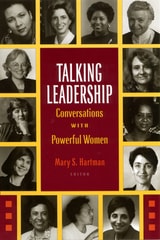
Talking Leadership
Conversations with Powerful WomenHartman, Mary
Rutgers University Press, 1999
Whether we love it, hate it, or use it just to pass the time, most adults in the United States are watching more television than ever, up to four hours a day by some estimates. Our devotion to commercial television gives it unprecedented power in our lives.
Advertisers and television executives want us to spend as much time as we can in front of our sets, for it is access to our brains that they buy and sell. Yet the most important effect of television may be one that no one intends-accelerated destruction of the natural environment.
Consuming Environments explores how, with its portrayal of a world of simulated abundance, television has nurtured a culture of consumerism and overconsumption. The average person in the US consumers more than twice the grain and ten times the oil of a citizen of Brazil or Indonesia. And people in less industrialized countries suffer while their resources while their resources are commandeered to support comfortable lifestyles in richer nations.
Using detailed examples illustrated with images from actual commercials, news broadcasts, and television shows, and authors demonstrate how ads and programs are put together in complex way s to manipulate viewers, and they offer specific ways to counteract the effects of TV and overconsumption's assault on the environment.
Tangled Diagnoses
Prenatal Testing, Women, and RiskIlana Löwy
University of Chicago Press, 2018
Tangled Diagnoses examines the multiple consequences of the widespread diffusion of this medical innovation. Prenatal testing, Ilana Löwy argues, has become mainly a risk-management technology—the goal of which is to prevent inborn impairments, ideally through the development of efficient therapies but in practice mainly through the prevention of the birth of children with such impairments. Using scholarship, interviews, and direct observation in France and Brazil of two groups of professionals who play an especially important role in the production of knowledge about fetal development—fetopathologists and clinical geneticists—to expose the real-life dilemmas prenatal testing creates, this book will be of interest to anyone concerned with the sociopolitical conditions of biomedical innovation, the politics of women’s bodies, disability, and the ethics of modern medicine.
Tapestries of Life
Women's Work, Women's Consciousness, and the Meaning of Daily ExperienceBettina Aptheker
University of Massachusetts Press, 1989
Tasting and Testing Books
Good Housekeeping, Popular Modernism, and Middlebrow ReadingAmy L. Blair
University of Massachusetts Press, 2024
A CHOICE 2025 Outstanding Academic Title
Honorable Mention, 2023-2024 Research Society of American Periodicals Book Prize
In its February 1926 issue, Good Housekeeping magazine introduced a column for its approximately one million subscribers called “Tasting and Testing Books.” The column’s author, Emily Newell Blair, would go on to produce ninety-one reading advice columns for the magazine between 1926 and 1934. During this period, Good Housekeeping became the most widely circulated periodical in the United States, doubling its circulation to over two million copies. Much of its popularity stemmed from its intensive promotion of its Seal of Approval for a variety of products, which brought consumers to it for utilitarian purposes. With her focus on regular books, Blair distinguished herself from highbrow literary critics, many of whom have been objects of study as High Modernists. She offered advice to help middle-class women readers make their own choices about the best books in which to invest time and money, rather than dictating what they should or should not read. She aligns herself with the average subscriber, outside the book publishing and reviewer industries, focusing on books that would now be termed middlebrow reading.
Blair’s time at Good Housekeeping covers the era from the heights of the “Roaring Twenties” to the depths of the Great Depression, and her recommendations offer a window into the uses of middlebrow reading during this period of dramatic economic and social shifts. Tasting and Testing Books argues that the consumer-first message of Good Housekeeping infused Blair’s advice column and validated a new attitude of proudly middlebrow pleasure reading in the mid-twentieth century. These columns shed new light on the reading lives of too-often overlooked women, often living outside of urban centers and away from elite literary circles, and present Emily Newell Blair, who strongly identified with her readers as a truly democratic tastemaker.
Taxing Women
Edward J. McCaffery
University of Chicago Press, 1997
"Taxing Women is a must-have primer for any woman who wants to understand how our current tax system affects her family's economic condition. In plain English, McCaffery explains how the tax code stacks the deck against women and why it's in women's economic interest to lead the next great tax rebellion."—Patricia Schroeder
"McCaffery is an expert on the interplay between taxes and social policy. . . . Devastating in his analysis. . . . Intriguing."—Harris Collingwood, Working Women
"A wake-up call regarding the inequalities of an archaic system that actually penalizes women for working."—Publishers Weekly
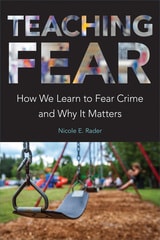
Teaching Fear
How We Learn to Fear Crime and Why It MattersNicole E. Rader
Temple University Press, 2023
Where do lessons of “stranger danger” and safety come from—and do they apply differently for women? A gender-fear paradox shows that although women are less likely to be victims of most crimes (sexual assault aside), their fear of crime is greater. Moreover, girls and women—especially White women—are taught to fear the wrong things and given impossible tools to prevent victimization. In Teaching Fear, Nicole Rader zooms in on the social learning process, tracing the ways that families, schools, and the media have become obsessed with crime myths, especially regarding girls and women.
Based on in-depth research and family studies, Rader reveals the dubious and dangerous origins of many of the most prominent safety guidelines that teach young girls to be more afraid of crime. These guidelines carry over to adulthood, influencing women’s behaviors and the way they order their worlds, with dangerous consequences. As women teach their learned behavior and conditioned fear to others, gendered crime myths are recirculated from generation to generation, making them a staple in our society.
Teaching Fear includes suggestions for taking precautionary measures and crime prevention strategies. Rader also provides guidance for instilling safety values and demonstrating how we can “teach fear better” to break this cycle and truly create greater security.
Teaching Other Voices
Women and Religion in Early Modern EuropeEdited by Margaret L. King and Albert Rabil Jr.
University of Chicago Press, 2007
Teaching against Violence
The Reassessing ToolboxInez Testoni
Central European University Press, 2014
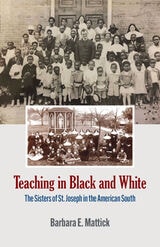
Teaching in Black and White
The Sisters of St. Joseph in the American SouthBarbara E. Mattick
Catholic University of America Press, 2022
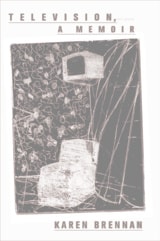
Television, a memoir
Karen Brennan
Four Way Books, 2022
Television, a memoir is a hybrid collection of autobiographical pieces, tragi-comic in spirit, that depict a woman’s life evolving through time and culture in fragmentary glimpses. Indeterminate in genre, Television is a fluid text that sometimes reads as poetry, sometimes as prose, while exploring classism, ableism, and feminism in a world defined by the advent of new media and, for the author, a privilege that often felt suffocating. Working structurally and thematically, television creates conceptual mileposts in the memoir, with certain programs and cultural references corresponding to specific eras in the author’s past, but it also gestures at an existential modality — the experience of a televisual life, the performative arrangements of nuclear families and neighborhoods, the periodic events and dramas of an adolescence watched from outside oneself.
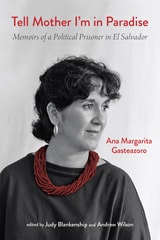
Tell Mother I'm in Paradise
Memoirs of a Political Prisoner in El SalvadorAna Margarita Gasteazoro, edited by Judy Blankenship and Andrew Wilson
University of Alabama Press, 2022
The life and times of Ana Margarita Gasteazoro: political activist, clandestine operative, and prisoner of conscience.
Ana Margarita Gasteazoro (1950–1993) was a Salvadoran opposition activist and renowned Amnesty International prisoner of conscience. Tell Mother I’m in Paradise:Memoirs of a Political Prisoner in El Salvador recounts her extraordinary life story. From a privileged Catholic upbringing, with time spent studying and working abroad, Ana Margarita first became a member of the legal political opposition in the late 1970s and later a clandestine operative at work against the brutal military junta.
Gasteazoro recounts her early rebellion against the strictures of conservative upper-class Salvadoran society. She spoke perfect English and discovered a talent for organizing in administrative jobs abroad and at home. As the civil war progressed, she quickly became a valued figure in the National Revolutionary Movement (MNR), a social democratic party, often representing it at international meetings. Against the backdrop of massive social oppression and the “disappearances” of thousands of opposition members, Gasteazoro began a double life as an operative in a faction of the Farabundo Martí National Liberation Front (FMLN). Multitalented and energetic, she organized safe houses for fellow activists, transported weapons and equipment, wrote scripts for an underground radio station, and produced an award-winning documentary film. But the toll on her family life and personal relationships was heavy.
Ana Margarita was disappeared in May 1981 by the infamous National Guard and endured a nightmare 11 days of interrogations, beatings, and abuse. Through international pressure and the connections of her family, her arrest was finally made public, and she was transferred to the women’s prison at Ilopango. There, she and other activists continued the political struggle through the Committee of Political Prisoners of El Salvador (COPPES). During her two years in prison, tested by hunger strikes, violence, and factional divisions, she became one of Amnesty International’s best-known prisoners of conscience. Tell Mother I’m in Paradise is a gripping story of a self-aware activist and a vital young woman’s struggle to find her own way within a deeply conservative society.

Tell the World You're a Wildflower
StoriesJennifer Horne
University of Alabama Press, 2014
In Tell the World You’re a Wildflower, each character must decide what to tell, whether to tell it, and to whom to tell it. Each struggles with questions of identity and truth, trying to understand who she is and what holds true for her. Some tell their stories plainly, directly, others more obliquely, nesting one within another. Anchored in the tradition of southern storytelling, these women contend with loss, change, and growth while going to church, school, and prison, navigating love and sex, and worrying too much about what people might think.
Yet these women generally refuse to behave, and they wander in and out of each other’s stories just like people do in small towns across the South. Small town lives are always interconnected: your third-grade teacher is your new neighbor’s aunt and the boy you dated your senior year falls from political grace after being caught in a hot tub with your second cousin. Though they may have had little say in where they were planted, Horne’s protagonists nevertheless do their best to bloom.
Rich, multifaceted, and unforgettable, Tell the World You’re a Wildflower is the work of a veteran explorer of the twentieth and twenty-first century South. Horne’s quest to understand her culture through decades of reading and observing has now yielded these narratives that imaginatively and insightfully enter the hearts and minds of southern women.
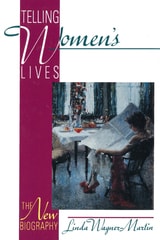
Telling Women's Lives
The New BiographyWagner-Martin, Linda
Rutgers University Press, 1996
Placing herself in the avid reader’s chair, Linda Wagner-Martin writes about women’s biography from George Eliot and Virginia Woolf to Eleanor Roosevelt and Margaret Mead, and even to Cher and Elizabeth Taylor. Along the way, she looks at dozens of other life stories, probing at the differences between biographies of men and women, prevailing stereotypes about women’s lives and roles, questions about what is public and private, and the hazy margins between autobiography, biography, and other genres. In quick paced and wide-ranging discussions, she looks at issues of authorial stance (who controls the narrative? who chooses which story to tell?), voice (is this story told in the traditional objective tone? and if it is, what effect does that telling have on our reading?), and the politics of publishing (why aren’t more books about women’s lives published? and when they are, what happens to their advertising budgets?). She discusses the problems of writing biography of achieving women who were also wives (how does the biographer balance the two?), of daughters who attempt to write about their mothers, and of husbands trying to portray their wives.
Telling Women’s Lives is the first overview of the writing and the history of biographies about women. It is a significant contribution to the reassessment of the work of the hundreds of women writers who have made a difference in our conception of what women’s stories--and women’s lives--have been, and are becoming. The book is a must read for anyone who loves reading biographies, particularly biographies of women.
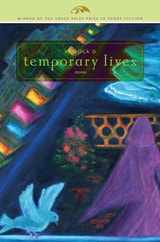
Temporary Lives
StoriesRamola Dharmaraj
University of Massachusetts Press, 2010
In the title story, Rose Ammal, who married young and bore numerous children, survives her husband's betrayal and religious conversion by creating her own private redemptions and conversions. "The Next Corpse Collector" chronicles significant moments in the lives of two young brothers, Anwar and Amir, who seek to escape the destiny of corpse
collector, the job their father is determined to bequeath to them. "What the Watchman Saw" offers a glimpse into the life of Venkatesh, a longtime watchman who is faced with the dilemma of whether to report the theft of stolen antiquities from the house of his new neighbor.
"Esther" is a tale of the haunting, troubled spirit of Leeza's grandmother, who lingers in Leeza's childhood home and unexpectedly helps her during the summer her grandfather dies as she wakes to an adolescent infatuation with a neighbor boy. In "The Couple in the Park," a young middle-class wife, Laura, in a constrictive arranged marriage, finds comfort in watching a couple in the park who remind her of her own grandparents as she tips over the edge into schizophrenia. "The Man on the Veranda" traces a significant day in the life of retired government-worker Parameswaran—the day his wife finally leaves him.

Tender Machines
J. Mae Barizo
Tupelo Press, 2023
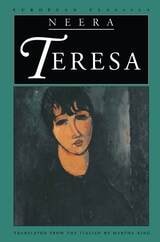
Teresa
Neera, translated by Martha King
Northwestern University Press, 1999
Through Teresa and other women characters, Neera addressed the injustice of such societal restrictions in nineteenth-century Italy. Neera's narratives are noted for their subtle psychoanalytical presentation of feminine states of mind as well as for an unflinching examination of society.
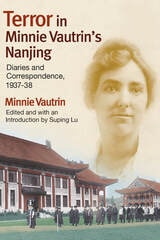
Terror in Minnie Vautrin's Nanjing
Diaries and Correspondence, 1937-38Minnie Vautrin. Edited and with an Introduction by Suping Lu
University of Illinois Press, 2007
In December of 1937, the Japanese Imperial Army marched into China's capital city of Nanjing and launched six weeks of carnage that would become known as the Rape of Nanjing. In addition to the deaths of Chinese POWs and civilians, tens of thousands of women were raped, tortured, and killed by Japanese soldiers. In this traumatic environment, both native and foreign-born inhabitants of Nanjing struggled to carry on with their lives.
This volume collects the diaries and correspondence of Minnie Vautrin, a farmgirl from Illinois who had dedicated herself to the education of Chinese women at Ginling College in Nanjing. Faced with the impending Japanese attack, she turned the school into a sanctuary for ten thousand women and girls. Vautrin's firsthand accounts of daily life in Nanjing and the intensifying threat of Japanese invasion reveal the courage of the occupants under siege--Chinese nationals as well as Western missionaries, teachers, surgeons and business people--and the personal costs of violence in wartime.
Thanks to Vautrin's painstaking effort in keeping a day-to-day account, present-day readers are able to examine this episode of history at close range through her eyes. With detailed maps, photographs, and carefully researched in-depth annotations, Terror in Minnie Vautrin's Nanjing: Diaries and Correspondence, 1937-38 presents a comprehensive and detailed daily account of the events and of life during the horror-stricken days within the city walls and in particular on the Ginling campus. Through chronologically arranged diaries, letters, reports, documents, and telegrams, Vautrin bears witness to those terrible events and to the magnitude of trauma that the Nanjing Massacre exacted on the populace.
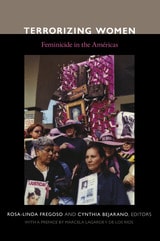
Terrorizing Women
Feminicide in the AmericasRosa-Linda Fregoso and Cynthia L. Bejarano, eds.
Duke University Press, 2010
Terrorizing Women brings together essays by feminist and human rights activists, attorneys, and scholars from Latin America and the United States, as well as testimonios by relatives of women who were disappeared or murdered. In addition to investigating egregious violations of women’s human rights, the contributors consider feminicide in relation to neoliberal economic policies, the violent legacies of military regimes, and the sexual fetishization of women’s bodies. They suggest strategies for confronting feminicide; propose legal, political, and social routes for redressing injustices; and track alternative remedies generated by the communities affected by gender-based violence. In a photo essay portraying the justice movement in Chihuahua, relatives of disappeared and murdered women bear witness to feminicide and demand accountability.
Contributors: Pascha Bueno-Hansen, Adriana Carmona López, Ana Carcedo Cabañas, Jennifer Casey, Lucha Castro Rodríguez , Angélica Cházaro, Rebecca Coplan, Héctor Domínguez-Ruvalcaba, Marta Fontenla, Alma Gomez Caballero, Christina Iturralde, Marcela Lagarde y de los Ríos, Julia Estela Monárrez Fragoso, Hilda Morales Trujillo, Mercedes Olivera, Patricia Ravelo Blancas, Katherine Ruhl, Montserrat Sagot, Rita Laura Segato, Alicia Schmidt Camacho, William Paul Simmons, Deborah M. Weissman, Melissa W. Wright
Texas Monthly On . . .
Texas WomenFrom the editors of Texas Monthly
University of Texas Press, 2006
Since 1973, Texas Monthly has spotlighted hundreds of Texans who, for better or worse, make this state like no place else. TEXAS MONTHLY On . . . Texas Women profiles thirteen women who are not only fascinating in their own right, but also representative of the legions of women who have contributed to the character and uniqueness of Texas. They range from First Ladies Laura Bush and Lady Bird Johnson to pop culture icons such as Candy Barr and Janis Joplin—and all of them exemplify the qualities that make Texas women distinctive. The women's profiles originally appeared as articles in the magazine, authored by some of Texas Monthly's notable writers—Cecilia Ballí, Gary Cartwright, Paul Burka, Mimi Swartz, Jan Jarboe Russell, Skip Hollandsworth, Robert Draper, William Broyles Jr., Jan Reid, Joe Nick Patoski, Pamela Colloff, and Helen Thorpe. The writers also introduce their pieces with headnotes that update the stories or, in some cases, tell the story behind the story.
TEXAS MONTHLY On . . . Texas Women is the first in a series of books in which the editors of Texas Monthly will offer the magazine's inimitable perspective on various aspects of Texas culture, including food, politics, travel, and music, among other topics.
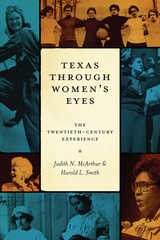
Texas Through Women's Eyes
The Twentieth-Century ExperienceBy Judith N. McArthur and Harold L. Smith
University of Texas Press, 2010
Winner, Liz Carpenter Award For Research in the History of Women, Texas State Historical Association, 2010
Texas women broke barriers throughout the twentieth century, winning the right to vote, expanding their access to higher education, entering new professions, participating fully in civic and political life, and planning their families. Yet these major achievements have hardly been recognized in histories of twentieth-century Texas. By contrast, Texas Through Women's Eyes offers a fascinating overview of women's experiences and achievements in the twentieth century, with an inclusive focus on rural women, working-class women, and women of color.
McArthur and Smith trace the history of Texas women through four eras. They discuss how women entered the public sphere to work for social reforms and the right to vote during the Progressive era (1900–1920); how they continued working for reform and social justice and for greater opportunities in education and the workforce during the Great Depression and World War II (1920–1945); how African American and Mexican American women fought for labor and civil rights while Anglo women laid the foundation for two-party politics during the postwar years (1945–1965); and how second-wave feminists (1965–2000) promoted diverse and sometimes competing goals, including passage of the Equal Rights Amendment, reproductive freedom, gender equity in sports, and the rise of the New Right and the Republican party.
Texts and Contexts from the History of Feminism and Women’s Rights
East Central Europe, Second Half of the Twentieth CenturyZsofia Lorand
Central European University Press, 2024
A compendium of one hundred sources, preceded by a short author’s bio and an introduction, this volume offers an English language selection of the most representative texts on feminism and women’s rights from East Central Europe between the end of the Second World War and the early 1990s. While communist era is the primary focus, the interwar years and the post-1989 transition period also receive attention. All texts are new translations from the original.
The book is organised around themes instead of countries; the similarities and differences between nations are nevertheless pointed out. The editors consider women not only in their local context, but also in conjunction with other systems of thought—including shared agendas with socialism, liberalism, nationalism, and even eugenics.
The choice of texts seeks to demonstrate how feminism as political thought was shaped and organised in the region. They vary in type and format from political treatises, philosophy to literary works, even films and the visual arts, with the necessary inclusion of the personal and the private. Women’s political rights, right to education, their role in nation-building, women, and war (and especially women and peace) are part of the anthology, alongside the gendered division of labour, violence against women, the body, and reproduction.
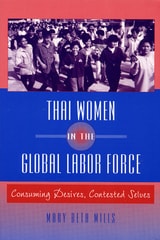
Thai Women in the Global Labor Force
Consuming Desires, Contested SelvesMills, Mary Beth
Rutgers University Press, 1999
Mills describes the environments from which these women left, as well as the urban landscape they now call home. Hence, she examines key aspects of rural Thai community life, such as local consumption practices, gender roles, and the familial tensions that are often the catalyst to labor migration. Then she focuses on the city and the underlying tensions of urban employment as migrants pursue newly imagined identities as modern women, while still upholding economic and moral responsibilities to rural kin.

Thanatographies
Yanara Friedland
University of Alabama Press, 2026
A haunting, poetic excavation of memory, the nocturnal imagination, and a search for new forms of language to act upon legacies of violence and erasure.
Thanatographies is a genre-defying meditation on disappearance, memory, and the porous boundaries between the living and the dead. In poetic prose, Yanara Friedland weaves together dreamscapes, historical fragments, personal recollections, and philosophical inquiry to explore the afterlives of loss and survival. Moving through rooms, cities, forests, and archives, the text becomes a living document of insomnia, exile, and the spectral presence of women across time, including artists, revolutionaries, caretakers, and ghosts.
Structured in four sections titled Room, Night, Medusas, and Burials, the book traverses inner and outer landscapes, from Berlin’s haunted streets to the intimate terrain of the body. Friedland’s voice is both lyrical and incisive, drawing on figures such as Unica Zürn, Rosa Luxemburg, and Else Lasker-Schüler to illuminate the intersections of gender, violence, and historical erasure. The result is a deeply embodied poetics of wakefulness, where hidden life remembers and speaks.
Thanatographies is written for readers of experimental literature, feminist theory, and contemporary poetics. The book resonates with artists, scholars, and seekers who are compelled by the aesthetics of mourning, the politics of memory, and the radical potential of language to hold what is otherwise unspeakable.
That May Not Mean What You Think
StoriesElizabeth Crane
Northwestern University Press, 2026
A visionary and profound new collection from innovative author Elizabeth Crane
Throughout her body of work, Elizabeth Crane’s literary vision has always been singular and innovative, twisting form and bending reality into new universes. Her latest collection, That May Not Mean What You Think, explores themes of aging and youth, gender and discrimination, and sex and love. In “Training Module,” Crane takes the structure and protocol of workplace harassment prevention training and turns it on its head; “The Box” tells the story of a woman trying to recover from divorce with the help of a literal unicorn; and “The Youngs” follows a group of teenagers experiencing loss for the first time, clinging to the belief that they’ll live forever. Across these delightfully weird and disarmingly truthful stories, American culture is refracted through humor and heart, asking readers to consider their complicity and to imagine new possibilities of participating in a better future.
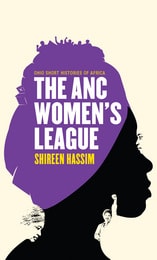
The ANC Women’s League
Sex, Gender and PoliticsShireen Hassim
Ohio University Press, 2015
First formed in the early twentieth century, the ANC Women’s League has grown into a leading organization in the women’s movement in South Africa. The league has been at the forefront of the nation’s century-long transition from an authoritarian state to a democracy that espouses gender equality as a core constitutional value. It has, indeed, always regarded itself as the women’s movement, frequently asserting its primacy as a vanguard organization and as the only legitimate voice of the women of South Africa. But, as this deeply insightful book shows, the history of the league is a more complicated affair—it was neither the only women’s organization in the political field nor an easy ally for South African feminism.
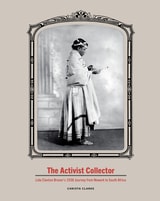
The Activist Collector
Lida Clanton Broner’s 1938 Journey from Newark to South AfricaChrista Clarke
Rutgers University Press, 2023
Published by the Newark Museum. Distributed worldwide by Rutgers University Press.
“After twenty-eight years of desire and determination, I have visited Africa, the land of my forefathers.” So wrote Lida Clanton Broner (1895–1982), an African American housekeeper and hairstylist from Newark, New Jersey, upon her return from an extraordinary nine-month journey to South Africa in 1938. This epic trip was motivated not only by Broner’s sense of ancestral heritage, but also a grassroots resolve to connect the socio-political concerns of African Americans with those of black South Africans under the segregationist policies of the time. During her travels, this woman of modest means circulated among South Africa’s Black intellectual elite, including many leaders of South Africa’s freedom struggle. Her lectures at Black schools on “race consciousness and race pride” had a decidedly political bent, even as she was presented as an “American beauty specialist.”
How did Broner—a working class mother—come to be a globally connected activist? What were her experiences as an African American woman in segregated South Africa and how did she further her work after her return? Broner’s remarkable story is the subject of this book, which draws upon a deep visual and documentary record now held in the collection of the Newark Museum of Art. This extraordinary archive includes more than one hundred and fifty objects, ranging from beadwork and pottery to mission school crafts, acquired by Broner in South Africa, along with her diary, correspondence, scrapbooks, and hundreds of photographs with handwritten notations.
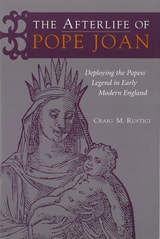
The Afterlife of Pope Joan
Deploying the Popess Legend in Early Modern EnglandCraig M. Rustici
University of Michigan Press, 2010
The legend concerning a popess had first taken written form in the thirteenth century and for several hundred years was more or less accepted. The Reformation, however, polarized discussions of the legend, pitting Catholics, who denied the story’s veracity, against Protestants, who suspected a cover-up and instantly cited Joan as evidence of papal depravity. In this heated environment, writers reimagined Joan variously as a sorceress, a hermaphrodite, and even a noteworthy author.
The Afterlife of Pope Joan examines sixteenth- and seventeenth-century debates concerning the popess’s existence, uncovering the disputants’ historiographic methods, rules of evidence, rhetorical devices, and assumptions concerning what is probable and possible for women and transvestites. Author Craig Rustici then investigates the cultural significance of a series of notions advanced in those debates: the claim that Queen Elizabeth I was a popess in her own right, the charge that Joan penned a book of sorcery, and the curious hypothesis that the popess was not a disguised woman at all but rather a man who experienced a sort of spontaneous sex change.
The Afterlife of Pope Joan draws upon the discourses of religion, politics, natural philosophy, and imaginative literature, demonstrating how the popess functioned as a powerful rhetorical instrument and revealing anxieties and ambivalences about gender roles that persist even today.
Craig M. Rustici is Associate Professor of English at Hofstra University.
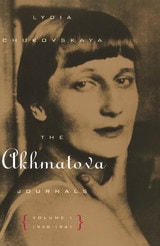
The Akhmatova Journals
Volume 1: 1938-1941Lydia Chukovskaya
Northwestern University Press, 2002
The Ambassador and the Courtesan
Political Bodies in Renaissance ItalyPaola De Santo
University of Delaware Press, 2026
The American Girl Goes to War
Women and National Identity in U.S. Silent FilmLiz Clarke
Rutgers University Press, 2022
The American New Woman Revisited
A Reader, 1894-1930Patterson, Martha H
Rutgers University Press, 2008
In North America between 1894 and 1930, the rise of the “New Woman” sparked controversy on both sides of the Atlantic and around the world. As she demanded a public voice as well as private fulfillment through work, education, and politics, American journalists debated and defined her. Who was she and where did she come from? Was she to be celebrated as the agent of progress or reviled as a traitor to the traditional family? Over time, the dominant version of the American New Woman became typified as white, educated, and middle class: the suffragist, progressive reformer, and bloomer-wearing bicyclist. By the 1920s, the jazz-dancing flapper epitomized her. Yet she also had many other faces.
Bringing together a diverse range of essays from the periodical press of the late nineteenth and early twentieth centuries, Martha H. Patterson shows how the New Woman differed according to region, class, politics, race, ethnicity, and historical circumstance. In addition to the New Woman’s prevailing incarnations, she appears here as a gun-wielding heroine, imperialist symbol, assimilationist icon, entrepreneur, socialist, anarchist, thief, vamp, and eugenicist. Together, these readings redefine our understanding of the New Woman and her cultural impact.
The Archivists
StoriesDaphne Kalotay
Northwestern University Press, 2023
Longlisted for the 2024 Joyce Carol Oates Prize
Longlisted for the 2024 Massachusetts Book Award
The characters in The Archivists are everyday people, but when private losses or the shocks of history set their worlds reeling, they find connection and liberation in surprising, buoyant ways. This vibrant collection brings transcendence, wry humor, and a touch of the uncanny to life’s absurdities and catastrophes—whether the 2008 economic crash, fallout after the 2016 presidential election, gentrification, pandemic lockdown, illness, or the intergenerational impacts of the Holocaust and Communist occupation of Eastern Europe.
A hardheaded realist is confronted by both her mortality and a would-be wizard. A thirteen-year-old girl in 1950s Toronto infiltrates the ranks of Bell Canada. A ninety-nine-year-old woman appears to be invincible. A group hikes in Germany, and a solitary woman is pursued on a walk in New Mexico. These deeply moving stories ingeniously consider issues of identity, history, and memory and our shared search for meaning in an off-kilter world.
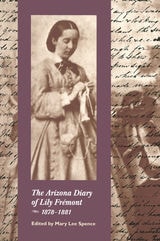
The Arizona Diary of Lily Frémont, 1878–1881
Elizabeth Benton Frémont
University of Arizona Press, 1997
Here, in rich detail, her day-by-day narrative and the editor's annotations bring to life Arizona's territorial capital of Prescott more than one hundred years ago. Lily gives us firsthand accounts of the operation of territorial government; of pressure from Anglo settlers to dispossess Pima Indians from their land; and of efforts by the governor and the army to deal with Indian scares. Here also, underlying her words, are insights into the dynamics of a close-knit Victorian family, shaping the life of an intelligent, educated single woman. As unofficial secretary for her father, Lily was well placed to observe and record an almost constant stream of visitors to the governor's home and office. Observe and record, she did. Her diary is filled with unvarnished images of personalities such as the Goldwaters, General O. B. Willcox, Moses Sherman, Judge Charles Silent, and a host of lesser citizens, politicians, and army officers.
Lily's anecdotes vividly re-create the periodic personality clashes that polarized society (and one full-fledged scandal), the ever-present danger of fire, religious practices (particularly a burial service conducted in Hebrew), and attitudes toward Native Americans and Chinese. On a more personal level, the reader will find intimate accounts of John Frémont's obsession with mining promotion, his complicated business dealings with Judge Silent, and his attempts to recoup his family's sagging fortune. Here especially, Lily outlines a telling profile of her father, a man roundly castigated then and now as a carpetbagger less interested in promoting Arizona's interests than his own.
For students of western history, Lily Frémont's diary provides a wealth of fresh information on frontier politics, mining, army life, social customs, and ethnicity. For all readers, her words from a century ago offer new perspectives on the winning of the West as well as fascinating glimpses of a world that once was and is no more.
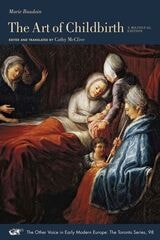
The Art of Childbirth
A Seventeenth-Century Midwife’s Epistolary Treatise to Doctor Vallant: A Bilingual EditionMarie Baudoin
Iter Press, 2022
In 1671, Marie Baudoin (1625–1700), head midwife and governor of the Hôtel-Dieu of Clermont-Ferrand, sent a treatise on the art of childbirth to her powerful Parisian patron, Dr. Vallant. The story of how Baudoin’s knowledge and expertise as a midwife came to be expressed, recorded, and archived raises the question: Was Baudoin exceptional because she was herself extraordinary, or because her voice has reached us through Vallant’s careful archival practices? Either way, Baudoin’s treatise invites us to reconsider the limits of what we thought we knew midwives “could be and do” in seventeenth-century France. Grounding Marie Baudoin’s text in a microanalysis of her life, work, and the Jansenist network between Paris and Clermont-Ferrand, this book connects historiographies of midwifery, Jansenism, hospital administration, public health, knowledge and record-keeping, and women’s work, underscoring both Baudoin’s capabilities and the archival accidents and intentions behind the preservation of her treatise in a letter.
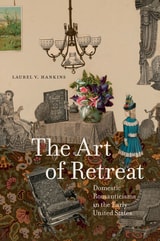
The Art of Retreat
Domestic Romanticisms in the Early United StatesLaurel V. Hankins
Bucknell University Press, 2025
The political and cultural fantasy of home as a retreat from the pressures of the world first emerged in the U.S. alongside two major nineteenth-century literary movements: Romanticism and domestic fiction. Upending accepted gendered narratives from this period, The Art of Retreat posits that these movements originated from a domestic culture already in transition, in which home was frequently a more complicated site of self-interested pleasure, coerced labor, creole social reproduction, homosocial intimacy, bachelor whimsy, petty tyranny, racial abuse, and transgender capacity. The early national periodicals, sketches, and novels examined here lend themselves to this interpretation. Hankins argues that the literary tradition emerging from these decades—one that aligned creative genius with domestic retreat—reminds us that a politics that appeals to private feeling must reckon with new interpretations of labor, kinship, and reform in exchange for the promise of consensual citizenship.
Published by Bucknell University Press. Distributed worldwide by Rutgers University Press.
The Barbara Johnson Collective
Edited by Devin M. Garofalo and Nathan K. Hensley
Northwestern University Press, 2027
Collaboratively reassesses Barbara Johnson’s legacy as a reader and thinker with an eye to contemporary conditions
Across an archive of essays on abortion and race, Mallarmé and Melville, feminist philosophy, rhetorical device, and pedagogical method, Barbara Johnson built a legacy of thought whose energies reverberate into the present. This collected volume gathers writers and critics from a range of North American higher educational settings to engage with this essential but still often underappreciated critic in a time of renewed and deepening crisis.
In Zoom meetings and shared essays, across a virtualized map of today’s academic and para-academic worlds, the group assessed how the rolling catastrophes of late neoliberalism continue to stage the sort of analogy Johnson herself would highlight between patriarchy, capitalism, ecocide, and other forms of structural violence. Emerging from that assemblage, this experimental collection tracks Johnson’s efforts to link literary reading with concrete matters of personhood and care at a moment when the very system of higher education that enabled Johnson’s work in the 1980s and 1990s faces existential threat. The frozen record of a live experience, the book is an impure procedure, tangled in the idiom of its own unfolding: a temporary culmination of an ongoing collaborative undertaking that will always remain unfinished.
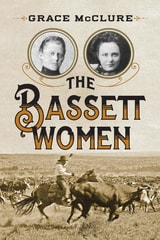
The Bassett Women
Grace McClure
Ohio University Press, 1985
In the late nineteenth century, Brown’s Park, a secluded valley astride the Utah-Colorado border, was a troubled land of deadly conflict among cattle barons, outlaws, rustlers, and small ranchers. Homesteader Elizabeth Bassett gained a tough reputation of her own, and her daughters followed suit, going on to become members of Butch Cassidy and the Wild Bunch’s inner circle. Ann—who counted Cassidy among her lovers—became known as “queen of the cattle rustlers.” Both sisters proved themselves shrewd businesswomen as they fended off hostile takeovers of the family ranch. Through the following decades, the sisters became the stuff of legend, women who embodied the West’s fearsome reputation, yet whose lived experiences were far more nuanced. Ann became a writer. Josie, whose cabin still stands at present-day Dinosaur National Monument, applied her pioneer ethics to a mechanized world and became renowned for her resourcefulness, steadfastness, and audacity.
For The Bassett Women, Grace McClure tracked down and untangled the legends of Brown’s Park, one of the way stations of the fabled “Outlaw Trail,” while creating an evenhanded and indelible portrait of the Bassetts. Based on interviews, written records, newspapers, and archives, The Bassett Women is one of the few credible accounts of early settlers on Colorado’s western slope, one of the last strongholds of the Old West.

The Best Revenge
Short StoriesRebecca Rule
University of New Hampshire Press, 2004
Twice nominated for the Pushcart Prize, Rule captures the essence of small-town New England life as she paints with a sure hand the fallings-out and friendships, the trials and triumphs of the New England microcosm. In Yankee Curse, elderly Miranda knits placidly at a town meeting, pondering an amazing string of unspoken invective against an enemy but stopping short at a curse she would never levy, not even on Mort Wallace: to live too long. In Minna Runs for Selectman, a middle-aged woman's battlefield is the strange, incestuous politics of this eccentric little town but her real opponent is her own insecurity. In Jim's Boat a young couple wages a silent struggle over priorities in their marriage; in Fishing with George a small girl worries that there's a hole in our family that gets bigger every time her parents argue; and in the title story a mother copes with a hated neighbor through a sculpture that makes her laugh the kind of laugh that doesn't end in a sob. Children and grandmothers, trappers and college professors, lifetime Yankees or transplanted Flatlanders: each finds the truth in Rule's observation that revenge takes many forms -- some of which can heal.

The Bible of Dirty Jokes
Eileen Pollack
Four Way Books, 2018
The Body of Poetry
Essays on Women, Form, and the Poetic SelfAnnie Finch
University of Michigan Press, 2005
The Body of War
Media, Ethnicity, and Gender in the Break-up of YugoslaviaDubravka Zarkov
Duke University Press, 2007
Tracing the links between the war and press representations of ethnicity, gender, and sexuality, Žarkov examines the media’s coverage of two major protests by women who explicitly identified themselves as mothers, of sexual violence against women and men during the war, and of women as militants. She draws on contemporary feminist analyses of violence to scrutinize international and local feminist writings on the war in former Yugoslavia. Demonstrating that some of the same essentialist ideas of gender and sexuality used to produce and reinforce the significance of ethnic differences during the war often have been invoked by feminists, she points out the political and theoretical drawbacks to grounding feminist strategies against violence in ideas of female victimhood.
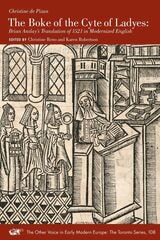
The Boke of the Cyte of Ladyes
Brian Anslay's Translation of 1521 in Modernized EnglishChristine de Pizan
Iter Press, 2025
Christine de Pizan's defense of women against centuries of misogyny, Cité des dames, was the only work of literature translated into English by Brian Anslay, an administrator in the household of King Henry VII. While numerous manuscripts were held in royal and aristocratic libraries, Anslay’s printed translation enabled a broader range of readers to appreciate the arguments for female rule crucial to the reigns of Mary I and Elizabeth I. Anslay’s translation also played a key role in the late-nineteenth-century revival of interest in Christine. This modernization of Anslay’s Tudor English makes his translation accessible to contemporary readers while preserving the rhythms of early Tudor prose. It includes an extensive introduction and notes highlighting both the history of the language and the cultural references embodied in the text.