Results by title
4531 books match the query 'Cultural & Ethnic Studies' and 804 start with t
The New Black Middle Class in the Twenty-First Century
Landry, Bart
Rutgers University Press, 2018
The New Chinese America
Class, Economy, and Social HierarchyZhao, Xiaojian
Rutgers University Press, 2010
In this detailed and comprehensive study of contemporary Chinese America, Xiaojian Zhao uses class analysis to illuminate the difficulties of everyday survival for poor and undocumented immigrants and analyzes the process through which social mobility occurs. Through ethnic ties, Chinese Americans have built an economy of their own in which entrepreneurs can maintain a competitive edge given their access to low-cost labor; workers who are shut out of the mainstream job market can find work and make a living; and consumers can enjoy high quality services at a great bargain. While the growth of the ethnic economy enhances ethnic bonds by increasing mutual dependencies among different groups of Chinese Americans, it also determines the limits of possibility for various individuals depending on their socioeconomic and immigration status.
The New Japanese Woman
Modernity, Media, and Women in Interwar JapanBarbara Sato
Duke University Press, 2003
The New Japanese Woman is rich in descriptive detail and full of fascinating vignettes from Japan’s interwar media and consumer industries—department stores, film, radio, popular music and the publishing industry. Sato pays particular attention to the enormously influential role of the women’s magazines, which proliferated during this period. She describes the different kinds of magazines, their stories and readerships, and the new genres the emerged at the time, including confessional pieces, articles about family and popular trends, and advice columns. Examining reactions to the images of the modern girl, the housewife, and the professional woman, Sato shows that while these were not revolutionary figures, they caused anxiety among male intellectuals, government officials, and much of the public at large, and they contributed to the significant changes in gender relations in Japan following the Second World War.
The New Kingdom of Granada
The Making and Unmaking of Spain's Atlantic EmpireSantiago Muñoz-Arbeláez
Duke University Press, 2025

The New Metropolis
Power, Place, and Inequality in Twenty-First-Century AmericaMargaret Weir
University of Chicago Press, 2027
A path-breaking investigation of changing patterns of inequality and contestation in America’s metropolises.
Since 1990, a new political geography of winners and losers has emerged in metros across America. This new metropolis looks nothing like the old. In many exurbs, suburban mansions abut declining towns and distressed communities. In historic central cities, African American communities reel from institutional stripping, even as gentrification and immigration revitalize once forgotten neighborhoods. The New Metropolis considers why, despite all the changes over the past four decades, we have recreated a metropolis that makes it harder for low-income Americans—especially low-income Americans of color—to thrive and why some efforts to promote equitable opportunity succeed against the odds.
With a focus on Chicago, Atlanta, and Houston, The New Metropolis shows how multi-level political actors and translocal networks build power across political boundaries to determine the pool of local public resources and the scope of local powers. Weir demonstrates how the timing of urbanization set up distinct conflicts over the public sector in Frostbelt versus Sunbelt metropolises, explaining how partisan divisions now supercharge these conflicts.
The New Metropolis shows why the battle over the metropolis sits at the center of American politics. It determines the shape of the public arenas where we make decisions and, ultimately, the kinds of connections Americans have with one another.
The New Negro in the Old South
Briggs, Gabriel A
Rutgers University Press, 2015
In this groundbreaking historical study, Gabriel A. Briggs makes the compelling case that the New Negro first emerged long before the Great Migration to the North. The New Negro in the Old South reconstructs the vibrant black community that developed in Nashville after the Civil War, demonstrating how it played a pivotal role in shaping the economic, intellectual, social, and political lives of African Americans in subsequent decades. Drawing from extensive archival research, Briggs investigates what made Nashville so unique and reveals how it served as a formative environment for major black intellectuals like Sutton Griggs and W.E.B. Du Bois.
The New Negro in the Old South makes the past come alive as it vividly recounts little-remembered episodes in black history, from the migration of Colored Infantry veterans in the late 1860s to the Fisk University protests of 1925. Along the way, it gives readers a new appreciation for the sophistication, determination, and bravery of African Americans in the decades between the Civil War and the Harlem Renaissance.
The New Urban Renewal
The Economic Transformation of Harlem and BronzevilleDerek S. Hyra
University of Chicago Press, 2008
As public housing is torn down and money floods back into cities across the United States, countless neighborhoods are being monumentally altered. The New Urban Renewal is a compelling study of the shifting dynamics of class and race at work in the contemporary urban landscape.
The New Welfare Bureaucrats
Entanglements of Race, Class, and Policy ReformCeleste Watkins-Hayes
University of Chicago Press, 2009
As the recession worsens, more and more Americans must turn to welfare to make ends meet. Once inside the agency, the newly jobless will face a bureaucracy that has undergone massive change since the advent of welfare reform in 1996. A behind-the-scenes look at bureaucracy’s human face, The New Welfare Bureaucrats is a compelling study of welfare officers and how they navigate the increasingly tangled political and emotional terrain of their jobs.
Celeste Watkins-Hayes here reveals how welfare reform engendered a shift in focus for caseworkers from simply providing monetary aid to the much more complex process of helping recipients find work. Now both more intimately involved in their clients’ lives and wielding greater power over their well-being, welfare officers’ racial, class, and professional identities have become increasingly important factors in their work. Based on the author’s extensive fieldwork in two very different communities in the northeast, The New Welfare Bureaucrats is a boon to anyone looking to understand the impact of the institutional and policy changes wrought by welfare reform as well as the subtle social dynamics that shape the way welfare is meted out at the individual level.
The New World Inside A Basque Village
The Oiartzun Valley And Its Atlantic Emigrants, 1550-1800Juan Javier Pescador
University of Nevada Press, 2003
An ethnohistory detailing the lives of fifteen generations in a Basque-speaking community in Spain and the result of their diverse contacts with the New World. The Basques’ remarkable role in the establishment and exploitation of Spain’s American empire is well known, but until now the impact of these achievements on the Basque Country itself has received little attention. In this pioneering study, Juan Javier Pescador meticulously examines three centuries of social and economic change in the Oiartzun Valley of Gipuzkoa, a typical Basque peasant community altered by its contacts with the New World.
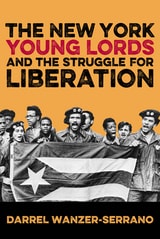
The New York Young Lords and the Struggle for Liberation
Darrel Wanzer-Serrano
Temple University Press, 2015
In The New York Young Lords and the Struggle for Liberation, Darrel Wanzer-Serrano details the numerous community initiatives that advanced decolonial sensibilities in El Barrio and beyond. Using archival research and interviews, he crafts an engaging account of the Young Lords’ discourse and activism. He rescues the organization from historical obscurity and makes an argument for its continued relevance, enriching and informing contemporary discussions about Latino/a politics.
The Noise Silence Makes
Secularity and Ghana's Drum WarsMariam Goshadze
Duke University Press, 2025
The Obama Phenomenon
Toward a Multiracial DemocracyEdited by Charles P. Henry, Robert L. Allen, and Robert Chrisman
University of Illinois Press, 2011
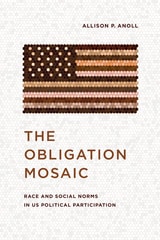
The Obligation Mosaic
Race and Social Norms in US Political ParticipationAllison P. Anoll
University of Chicago Press, 2022
In The Obligation Mosaic, Allison P. Anoll shows that the obligations that bring people into the political world—or encourage them to stay away—vary systematically by race in the United States, with broad consequences for representation. Drawing on a rich mix of interviews, surveys, and experiments with Asian, Black, Latino, and White Americans, the book uncovers two common norms that centrally define concepts of obligation: honoring ancestors and helping those in need. Whether these norms lead different groups to politics depends on distinct racial histories and continued patterns of segregation.
Anoll’s findings not only help to explain patterns of participation but also provide a window into opportunities for change, suggesting how activists and parties might better mobilize marginalized citizens.

The Ocean in the School
Pacific Islander Students Transforming Their UniversityRick Bonus
Duke University Press, 2020
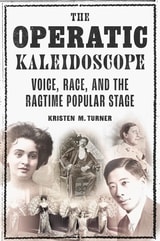
The Operatic Kaleidoscope
Voice, Race, and the Ragtime Popular StageKristen M. Turner
University of Illinois Press, 2026
Turner examines performances ranging from Florenz Ziegfeld’s early Follies to Black vaudeville shows to musical comedies, including everything from celebrity vehicles to obscure productions and overlooked artists. She reveals how opera’s popularity in mass culture illuminates the effects of exclusionary immigration policies, pervasive racial and ethnic inequalities, debates over women’s suffrage, and the imposition of legalized segregation. Performers and creators from many communities—white immigrants, Jewish, Black, and Asian American—strategically deployed operatic allusions and the genre’s characteristic vocal timbre to assert their respectability, challenge stereotypes, and navigate oppressive social structures.
Nuanced and expansive, The Operatic Kaleidoscope explores opera’s role when popular culture grappled with questions of race and citizenship.
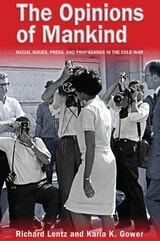
The Opinions of Mankind
Racial Issues, Press, and Propaganda in the Cold WarRichard Lentz and Karla K. Gower
University of Missouri Press, 2011
Throughout this period, the American press provided the foreign media with information about racially charged events in the United States. Such news coverage sometimes put Washington at a disadvantage, making it difficult for government officials to assuage foreign reactions to the injustices occurring on U.S. soil. Yet in other instances, the domestic press helped to promote favorable opinions abroad by articulating themes of racial progress. While still acknowledging racial abuses, these press spokesmen asserted that the situation in America was improving. Such paradoxical messages, both aiding and thwarting the efforts of the U.S. government, are the subject of The Opinions of Mankind: Racial Issues, Press, and Propaganda in the Cold War.
The study, by scholars Richard Lentz and Karla K. Gower, describes and analyzes the news discourse regarding U.S. racial issues from 1946 to 1965. The Opinions of Mankindnot only delves into the dissemination of race-related news to foreign outlets but also explores the impact foreign perceptions of domestic racism had on the U.S. government and its handling of foreign relations during the period. What emerges is an original, insightful contribution to Cold War studies. While other books examine race and foreign affairs during this period of American history, The Opinions of Mankind is the first to approach the subject from the standpoint of press coverage and its impact on world public opinion.
This exhaustively researched and compellingly written volume will appeal to media scholars, political historians, and general readers alike. By taking a unique approach to the study of this period, The Opinions of Mankind presents the workings behind the battles for public opinion that took place between 1946 and 1965.
The Oriental Obscene
Violence and Racial Fantasies in the Vietnam EraSylvia Shin Huey Chong
Duke University Press, 2011
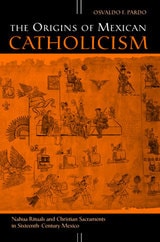
The Origins of Mexican Catholicism
Nahua Rituals and Christian Sacraments in Sixteenth-Century MexicoOsvaldo F. Pardo
University of Michigan Press, 2004
---Fernando Cervantes, Bristol University, UK
"Pardo does an excellent job of balancing and contrasting sixteenth-century Catholic theology with Nahua thought and belief."
---John F. Schwaller, University of Minnesota
At first glance, religious conversion may appear to be only a one-way street. When studying sixteenth-century Mexico, one might assume that colonial coercion was the driving force behind the religious conversion of the native population. But The Origins of Mexican Catholicism shows how Spanish missionaries instead drew on existing native ceremonies in order to make Christianity more accessible to the Nahua population whom they were trying to convert.
Osvaldo F. Pardo explains that religious figures not only shaped native thought, but that indigenous rituals had an impact on the religion itself. This work illustrates the complex negotiations that took place in the process of making the Christian sacraments available to the native peoples, and at the same time, forced the missionaries to reexamine the meaning of their sacraments through the eyes of an alien culture.
For Spanish missionaries, ritual not only became a focus of evangelical concern but also opened a window to the social world of the Nahuas. Missionaries were able to delve into the Nahua's notions of self, emotions, and social and cosmic order. By better understanding the sociological aspects of Nahua culture, Christians learned ways to adequately convey their religion through mutual understanding instead of merely colonial oppression.
Given its interdisciplinary approach, this book will be of interest to specialists in Latin American intellectual and literary history, the history of religion, and anthropology, and to anyone interested in cross-cultural processes.

The Origins of the Authoritarian Welfare State in Prussia
Conservatives, Bureaucracy, and the Social Question, 1815-70Hermann Beck
University of Michigan Press, 1997
The Origins of the Dual City
Housing, Race, and Redevelopment in Twentieth-Century ChicagoJoel Rast
University of Chicago Press, 2019
The Other Brahmins
Boston's Black Upper Class 1750-1950Adelaide Cromwell
University of Arkansas Press, 1995
Adelaide Cromwell’s pioneering work explores race and the social caste system in an atypical northern environment over a period of two centuries. Based on scholarly sources, interviews, and questionnaires, the study identifies those blacks in Boston who exercised political, economic, and social leadership from the end of the eighteenth century to the middle of the twentieth. The central focus is a comparison of black and white upper-class women in the 1940s.
This rare look at a black social microcosm not located in the South is seminal and timely. Because it concludes at a critical period in American history, The Other Brahmins paints a colorful backdrop for evaluating subsequent changes in urban sociology and stratification. In a groundbreaking study, Cromwell effectively challenges the simplistic notions of hierarchy as they pertain to race.
The Other Side of Empathy
Jade E. Davis
Duke University Press, 2023
The Other Zulus
The Spread of Zulu Ethnicity in Colonial South AfricaMichael R. Mahoney
Duke University Press, 2012
The Otherness of Self
A Genealogy of Self in Contemporary ChinaXin Liu
University of Michigan Press, 2002

The Paleolithic of Siberia
New Discoveries and InterpretationsEdited and Compiled by Anatoli P. Derev'anko: Demitri B. Shimkin and W. Roger Powers (American Editors). Translated by Inna P. Laricheva
University of Illinois Press, 1998
It traces the routes of human migration throughout Eurasia, shows Siberian lithic industries as they evolved from the Early through the Middle and Late Paleolithic, and correlates them with reports from Mongolia, China, Japan, and America.
The Pandemic Divide
How COVID Increased Inequality in AmericaGwendolyn L. Wright, Lucas Hubbard, and William A. Darrity, editors
Duke University Press, 2022
Contributors. Fenaba Addo, Steve Amendum, Leslie Babinski, Sandra Barnes, Mary T. Bassett, Keisha Bentley-Edwards, Kisha Daniels, William A. Darity Jr., Melania DiPietro, Jane Dokko, Fiona Greig, Adam Hollowell, Lucas Hubbard, Damon Jones, Steve Knotek, Arvind Krishnamurthy, Henry Clay McKoy Jr., N. Joyce Payne, Erica Phillips, Eugene Richardson, Paul Robbins, Jung Sakong, Marta Sánchez, Melissa Scott, Kristen Stephens, Joe Trotter, Chris Wheat, Gwendolyn L. Wright
The Past as Present in the Drama of August Wilson
Harry J. Elam, Jr.
University of Michigan Press, 2004
The Pawnshop in China
Yang Chao-yu; Translated by T. S. Whelan
University of Michigan Press, 1979
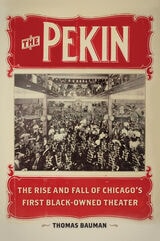
The Pekin
The Rise and Fall of Chicago's First Black-Owned TheaterThomas Bauman
University of Illinois Press, 2014
A missing chapter in African American theatrical history, Bauman's saga presents how Motts used his entrepreneurial acumen to create a successful black-owned enterprise. Concentrating on institutional history, Bauman explores the Pekin's philosophy of hiring only African American staff, its embrace of multi-racial upper class audiences, and its ready assumption of roles as diverse as community center, social club, and fundraising instrument.
The Pekin's prestige and profitability faltered after Motts' death in 1911 as his heirs lacked his savvy, and African American elites turned away from pure entertainment in favor of spiritual uplift. But, as Bauman shows, the theater had already opened the door to a new dynamic of both intra- and inter-racial theater-going and showed the ways a success, like the Pekin, had a positive economic and social impact on the surrounding community.
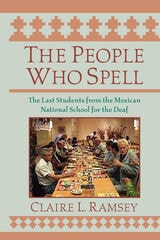
The People Who Spell
The Last Students from the Mexican National School for the DeafClaire L. Ramsey
Gallaudet University Press, 2011
The Escuela Nacional para Sordomudos (ENS), translated as the Mexican National School for the Deaf, opened its doors in the 1860s as part of the republic’s intention to educate its deaf people. The ENS did not use Lengua de Señas Mexicana (LSM), Mexico’s native sign language, for instruction, though they tolerated LSM use by the students. The school was closed permanently in 1972, thus leaving its former students still alive today as the last links to this historic institution. In this compelling social history, Claire L. Ramsey presents these unique Deaf Mexicans from their extraordinary experiences as ENS students and signers to their current personal lives.
One ENS signer, María de los Ángeles Bedolla, inspired the title of the book, The People Who Spell. In her account, she describes herself and her peers as cultured and educated compared to the young deaf people of today. The ENS signers pride themselves on el deletreo, LSM fingerspelling, which they consider key to their sophistication. Ramsey relates each of the signers’ childhoods, marriages, work experiences, and retirements. However, she brings threads of their stories together to reveal a common and abiding disappointment in modern-day Mexico’s failure to educate its deaf citizens according to the promise made more than 100 years ago. The narratives of the ENS signers detail their remarkable lives and heritage but also legitimately question the future of Mexico’s young deaf people.
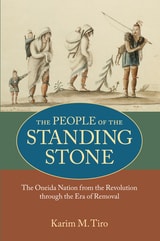
The People of the Standing Stone
The Oneida Nation from the Revolution through the Era of RemovalKarim M. Tiro
University of Massachusetts Press, 2011
The Oneidas' physical, political, and emotional division persists to this day. Even for those who stayed put, their world changed more in cultural, ecological, and demographic terms than at any time before or since. Oneidas of the post-Revolutionary decades were reluctant pioneers, undertaking more of the adaptations to colonized life than any other generation. Amid such wrenching change, maintaining continuity was itself a creative challenge. The story of that extraordinary endurance lies at the heart of this book.
The People, in Parts
The Majoritarian Work of the Minority FormNatasha S. Raheja
University of Chicago Press, 2027
Offers a new theory of the minority as a political form and shows how majoritarian projects are built through its appropriation.
Around the world, national majorities are telling themselves a potent story: that they are the ones in danger. In the United States and Serbia, Christian and white nationalists warn of “replacement.” In Turkey and Pakistan, Muslim nationalists cast religious “others” as existential threats. In India, Hindu nationalists claim that Hindus are becoming minorities in “their own” land. These movements, and the migration and citizenship policies that accompany them, are not aberrations, but rather expressions of a logic embedded in the modern nation-state—a logic that turns people into numbers, numbers into votes, and difference into enmity.
In The People, in Parts, anthropologist Natasha S. Raheja homes in on a paradox visible along the India-Pakistan border. When Hindus cross into India from Pakistan seeking refuge, they are admitted as minorities in need of protection. Yet in India, their welcome into the putative majority is selective and conditional. How does majority-minority status shift by crossing a border? Drawing on long-term research in the Thar Desert region, across Sindh and Rajasthan, Raheja traces how caste and religion shape people's encounters with the state and argues that this bureaucratic confusion is political machinery. Where liberal democracy treats the minority as a shifting, procedural category, nation-state governance fixes it as a substantive identity. The suffering of minoritized populations becomes raw material for majoritarian projects, converted into demographic justification, electoral arithmetic, and nationalist grievance. The minority form, in other words, does majoritarian work.
The People, in Parts offers not only a searing diagnosis of minority-majority politics and the governance of migration but a reframing: the problem is not simply about who belongs and who does not, but how nationalist belonging crosses state borders, pointing to strains within liberal democracy and the nation-state order.
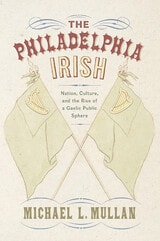
The Philadelphia Irish
Nation, Culture, and the Rise of a Gaelic Public SphereMichael L. Mullan
Rutgers University Press, 2021
Using Jurgen Habermas’s concept of a public sphere, the author reveals how the Irish constructed a plebian “counter” public of Gaelic meaning through various mechanisms of communication, the ethnic press, the meeting rooms of Irish societies, the consumption of circulating pamphlets, oratory, songs, ballads, poems, and conversation.
Settled in working class neighborhoods of vast spatial separation in an industrial city, the Irish resisted a parochialism identified with neighborhood and instead extended themselves to construct a vibrant, culturally engaged network of Irish rebirth in Philadelphia, a public of Gaelic meaning.

The Philippine Temptation
Dialectics of Philippines-U.S. Literary RelationsE. San Juan
Temple University Press, 1996
The Play of Mirrors
The Representation of Self Mirrored in the OtherBy Sylvia Caiuby Novaes
University of Texas Press, 1997
Focusing on the Bororo people of west-central Brazil, this book addresses the construction of self-identity through interethnic interaction. By presenting the images the Bororo have of themselves as well as the images of others who have interacted with them, Brazilian anthropologist Sylvia Caiuby Novaes argues convincingly that Bororo self-images are constructed with the aid of a peculiar looking-glass—it is in the images of others that they see themselves.
Incorporating contributions from psychology, psychoanalysis, linguistics, and semiotics, Play of Mirrors focuses on symbols, images, discourse, and meanings rather than solely on the problem of acculturation. It thus reflects the thinking of a new generation of Brazilian anthropologists who have shifted their focus from native communities as isolated entities to an examination of their embeddedness within broader national and international arenas.
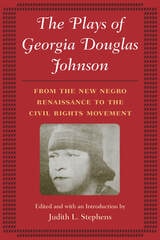
The Plays of Georgia Douglas Johnson
From the New Negro Renaissance to the Civil Rights MovementEdited and with an Introduction by Judith L. Stephens
University of Illinois Press, 2006
Recovering the stage work of one of America's finest black female writers
This volume collects twelve of Georgia Douglas Johnson's one-act plays, including two never-before-published scripts found in the Library of Congress. As an integral part of Washington, D.C.'s, thriving turn-of-the-century literary scene, Johnson hosted regular meetings with Harlem Renaissance writers and other artists, including Countee Cullen, Langston Hughes, May Miller, and Jean Toomer, and was herself considered among the finest writers of the time. Johnson also worked for U.S. government agencies and actively supported women's and minorities' rights.
As a leading authority on Johnson, Judith L. Stephens provides a brief overview of Johnson's career and significance as a playwright; sections on the creative environment in which she worked; her S Street Salon; "The Saturday Nighters," and its significance to the New Negro Theatre; selected photographs; and a discussion of Johnson's genres, themes, and artistic techniques.
The Pleasures of Exile
George Lamming
University of Michigan Press, 1992
Through a series of interrelated essays, The Pleasures of Exile explores the cultural politics and relationships created in the crucible of colonization. Drawing on Shakespeare’s The Tempest and C. L. R. James’s The Black Jacobins, as well as his own fiction and poetry, Lamming deftly locates the reader in a specific intellectual and cultural domain while conjuring a rich and varied spectrum of physical, intellectual, psychological, and cultural responses to colonialism. “My subject,” he writes, “is the migration of the West Indian writer, as colonial and exile, from his native kingdom, once inhabited by Caliban, to the tempestuous island of Prospero’s and his language. This book is a report on one man’s way of seeing.”

The Political Economy of NGOs
State Formation in Sri Lanka and BangladeshJude L. Fernando
Pluto Press, 2011
Jude L. Fernando explores the paradoxical relationship between NGOs and capitalism, showing that supposedly progressive organisations often promote essentially the same policies and ideas as existing governments.
The book examines how a diverse group of NGOs have shaped state formation in Bangladesh and Sri Lanka. It argues that, rather than influencing state formation for the better, NGOs have been integrated into the capitalist system and their language adopted to give traditional exploitative social relations a transformative appearance.
This enlightening study will give pause to those who see NGOs as drivers of true social change and will encourage students of development studies to make a deeper analysis of state formation.
The Political Force of Musical Beauty
Barry Shank
Duke University Press, 2014
The Political Use of Racial Narratives
School Desegregation in Mobile, Alabama, 1954-97Richard A. Pride
University of Illinois Press, 2002
Exploring who benefits and who pays when different narratives are accepted as true, Pride offers a step-by-step account of how Mobile's culture changed each time a new and more forceful narrative was used to justify inequality. More than a retelling of Mobile's story of desegregation, The Political Use of Racial Narratives promotes the value of rhetorical and narrative analysis in the social sciences and history.
The Politics Of Life
edited by Velina Hasu Houston
Temple University Press, 1993
This anthology of work by three Asian American women playwrights—Wakako Yamauchi, Genny Lim, and Velina Hasu Houston—features pioneering contemporary writers who have made their mark in regional and ethnic theatres throughout the United States. In her introduction, Houston observes that the Asian American woman playwright is compelled "to mine her soul" and express the angst, fear, and rage that oppression has wrought while maintaining her relationship with America as a good citizen.
The plays are rich with cultural and political substance and have a feminist concern about women's spirit, intellect, and lives. They portray Asian and Asian American women who challenge the cultural and sexual stereotypes of the Asian female. Yamauchi's two plays deal with how easily a country can dishonor its citizens. In "12-1-A," a Japanese American family is incarcerated during World War II in an Arizona camp where Yamauchi herself was interned. "The Chairman's Wife" dramatizes the life of Madame Mao Tse Tung through the lens of events at Tien An Men Square in 1989. Lim's "Bitter Cane" is about the exploitation of Chinese laborers who were recruited to work the Hawaiian sugar cane plantations. In "Asa Ga Kimashita" ("Morning Has Broken"), Houston explores a Japanese woman's interracial romance in postwar Japan and the influence of traditional patriarchy on the lives of Japanese women.
These plays will entertain and enlighten, enrage and profoundly move audiences. With honesty, imagination and courage, each grapples with the politics of life.
In the series Asian American History and Culture, edited by Sucheng Chan, David Palumbo-Liu, Michael Omi, K. Scott Wong, and Linda Trinh Võ.
The Politics of Belonging
Race, Public Opinion, and ImmigrationNatalie Masuoka and Jane Junn
University of Chicago Press, 2013
The Politics of Care Work
Puerto Rican Women Organizing for Social JusticeEmma Amador
Duke University Press, 2025
The Politics of Common Reading
Vernacular Knowledge and Everyday Technics in China, 1894–1954Joan Judge
University of Chicago Press, 2025
Examines the transformation of vernacular knowledge during a pivotal period of modern Chinese history, 1894 to 1954.
What did common readers read in the midst of the revolutions that punctuated China’s long Republic (1894–1954)? How did they manage the often-unprecedented challenges of the era? What did they know and how did they know it?
In The Politics of Common Reading, Joan Judge traces the unfolding of a consequential politics of accommodation that engaged commoners as knowers rather than as an unenlightened mass. A response to the institutional failures of the era, this politics was enacted through an informal knowledge infrastructure comprised of low-budget publishers, rustic bookstalls, and a piecemeal national network. As yet unstudied, this infrastructure produced and circulated up to ten times the number of books as official, mainstream channels.
A corpus of some five hundred of these cheap collections of recipes and techniques serves as the basis for this book. Judge focuses on four challenges common readers faced: how to cure an opium addiction, avoid an electric shock, prevent a cholera infection, and graft a plant. She further draws on government, archival, periodical, and fiction materials in devising composites of individual common readers so that we can better know them: details of the crises they faced, the remedies they tried, and the knowledge they relied on as they decocted cures and applied technologies. She argues that the acts of conciliation and assemblage these readers engaged in shaped the broader epistemic terrain from which historical change was actualized in China’s century of revolution.

The Politics of Decolonial Investigations
Walter D. Mignolo
Duke University Press, 2021
The Politics of Diversity
Immigration, Resistance, and Change in Monterey Park, CaliforniaJohn Horton
Temple University Press, 1995
Advertised in Asia as "The Chinese Beverly Hills," this small city minutes east of downtown Los Angeles, became by the late 1970s a regional springboard for a new type of Chinese immigration—suburban and middle class with a diversified and globally-oriented economy. Freed from the isolation of old Chinatowns, new immigrants now confronted resistance from more established Anglo, Asian American, and Latino neighbors, whose opposition took the form of interconnected "English Only" and slow-growth movements.
In The Politics of Diversity, a multiethnic team of researches employ ethnography, interviewing, and exit polls to capture the process of change as newcomers and established residents come to terms with the meaning of diversity and identity in their everyday lives. The result is an engaging grass-roots account of immigration and change: the decline of the loyal old-boy Anglo network; the rise of women, minorities, and immigrants in the political scene; and a transformation of ethnic and American identities.
The Politics of International Marriage in Japan
Viktoriya Kim
Rutgers University Press, 2022
The Politics of Kinship
Race, Family, GovernanceMark Rifkin
Duke University Press, 2024
The Politics of New Immigrant Destinations
Transatlantic PerspectivesStefanie Chambers
Temple University Press, 2017
Migration to new destinations in Europe and the United States has expanded dramatically over the past few decades. Within these destinations, there is a corresponding greater variety of ethnic, cultural, and/or religious diversity. This timely volume, The Politics of New Immigrant Destinations, considers the challenges posed by this proliferation of diversity for governments, majority populations, and immigrants.
The contributors assess the effectiveness of the policy and political responses that have been spawned by increasing diversity in four types of new immigrant destinations: “intermediate” destination countries—Ireland and Italy; culturally distinct regions experiencing new migration such as Catalonia in Spain or the American South; new destinations within traditional destination countries like the state of Utah and rural towns in England; and “early migration cycle” countries including Latvia and Poland.
The Politics of New Immigrant Destinations examines how these new destinations for immigrants compare to traditional destinations, with respect to their policy responses and success at integrating immigrants, offering perspectives from both immigrants and natives.
Contributors include: Dace Akule, Amado Alarcón, Rhys Andrews, Francesca Campomori, Tiziana Caponio, Scott Decker, Erica Dobbs, Melissa M. Goldsmith, Aleksandra Grzymała-Kazłowska, Claudio A. Holzner, Magdalena Lesińska, Paul Lewis, Helen B. Marrow, Laura Morales, Katia Pilati, Marie Provine, Monica Varsanyi, and the editors.
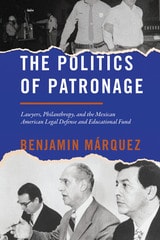
The Politics of Patronage
Lawyers, Philanthropy, and the Mexican American Legal Defense and Educational FundBy Benjamin Márquez
University of Texas Press, 2021
Co-winner, Latino Politics Best Book Award, American Political Science Association
The first book about the Mexican American Legal Defense and Educational Fund, the influential work it has done for the Latina/o community, and the issues stemming from its dependence on large philanthropic organizations.
Founded in 1968, the Mexican American Legal Defense and Educational Fund (MALDEF) is the Latino equivalent to the NAACP: a source of legal defense for the Latina/o community in cases centered on education, state immigration laws, redistricting, employment discrimination, and immigrant rights. Unlike the NAACP, however, MALDEF was founded by Mexican American activists in conjunction with the larger philanthropic structure of the Ford Foundation—a relationship that has opened it up to controversy and criticism.
In the first book to examine this little-known but highly influential organization, Benjamin Márquez explores MALDEF’s history and shows how it has thrived and served as a voice for the Latina/o community throughout its six decades of operation. But he also looks closely at large-scale investments of the Ford Foundation, Rockefeller Foundation, and others, considering how their ties to MALDEF have influenced Mexican American and Latinx politics. Its story crafted from copious research into MALDEF and its benefactors, this book brings to light the influence of outside funding on the articulation of minority identities and the problems that come with creating change through institutional means.