Results by title
3064 books match the query 'Social conditions' and 510 start with t
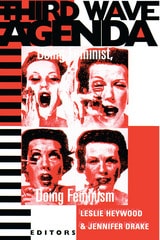
Third Wave Agenda
Being Feminist, Doing FeminismLeslie Heywood
University of Minnesota Press, 1997
Discusses the challenges and pleasures of creating a new feminism.
Young feminists have grown up with a plethora of cultural choices and images-in the distance from Gloria Steinem to Courtney Love, a chasm has been traversed and an entire history made. In Third Wave Agenda, feminists born between the years 1964 and 1973 discuss the things that matter now, both in looking back at the accomplishments and failures of the past and in planning for the challenges of the future.
The women and men writing here are activists, teachers, cultural critics, artists, and journalists. They distinguish themselves from a group of young, conservative feminists, including Naomi Wolf and Katie Roiphe, who criticize second wave feminists and are regularly called on to speak for the “next generation” of feminism. In contrast, Third Wave Agenda seeks to complicate our understanding of feminism by not only embracing the second wave critique of beauty culture, sexual abuse, and power structures, but also emphasizing ways that desires and pleasures such as beauty and power can be used to enliven activist work, even while recognizing the importance of maintaining a critique of them.Combining research, theory, and social practice with an autobiographical style, these writers are hard at work creating a new feminism that draws on the submerged histories of other feminisms-black feminism, “womanism,” and working-class feminism, among others. Some topics explored in Third Wave Agenda include feminism in popular music, interracial coalitions, and tensions between individual ambitions and collective action. Contributors: Barry Baldridge, Ana Marie Cox, Ophira Edut, Tali Edut, Carol Guess, Freya Johnson, Melissa Klein, Dyann Logwood, Annalee Newitz, Jeff Niesel, Jennifer Reed, Jillian Sandel, Leigh Shoemaker, Michelle Sidler, Deborah L. Siegel, Jen Smith, Carolyn Sorisio, and Lidia Yukman.
This Fine Place So Far from Home
Voices of Academics from the Working Classedited by C. L. Barney Dews and Carolyn Leste Law
Temple University Press, 1995
These autobiographical and analytical essays by a diverse group of professors and graduate students from working-class families reveal an academic world in which "blue-collar work is invisible." Describing conflict and frustration, the contributors expose a divisive middle-class bias in the university setting. Many talk openly about how little they understood about the hierarchy and processes of higher education, while others explore how their experiences now affect their relationships with their own students. They all have in common the anguish of choosing to hide their working-class background, to keep the language of home out of the classroom and the ideas of school away from home. These startlingly personal stories highlight the fissure between a working-class upbringing and the more privileged values of the institution.
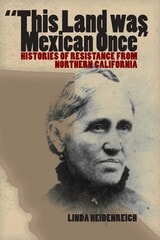
This Land Was Mexican Once
Histories of Resistance from Northern CaliforniaBy Linda Heidenreich
University of Texas Press, 2007
The territory of Napa County, California, contains more than grapevines. The deepest roots belong to Wappo-speaking peoples, a group whose history has since been buried by the stories of Spanish colonizers, Californios (today's Latinos), African Americans, Chinese immigrants, and Euro Americans. Napa's history clearly is one of co-existence; yet, its schoolbooks tell a linear story that climaxes with the arrival of Euro Americans. In "This Land was Mexican Once," Linda Heidenreich excavates Napa's subaltern voices and histories to tell a complex, textured local history with important implications for the larger American West, as well.
Heidenreich is part of a new generation of scholars who are challenging not only the old, Euro-American depiction of California, but also the linear method of historical storytelling—a method that inevitably favors the last man writing. She first maps the overlapping histories that comprise Napa's past, then examines how the current version came to dominate—or even erase—earlier events. So while history, in Heidenreich's words, may be "the stuff of nation-building," it can also be "the stuff of resistance." Chapters are interspersed with "source breaks"—raw primary sources that speak for themselves and interrupt the linear, Euro-American telling of Napa's history. Such an inclusive approach inherently acknowledges the connections Napa's peoples have to the rest of the region, for the linear history that marginalizes minorities is not unique to Napa. Latinos, for instance, have populated the American West for centuries, and are still shaping its future. In the end, "This Land was Mexican Once" is more than the story of Napa, it is a multidimensional model for reflecting a multicultural past.

Threadbare
Class and Crime in Urban AlaskaMary Kudenov
University of Alaska Press, 2017
Journalist Mary Kudenov set out to find the true stories behind this “end-of-the-road” culture. Through her essays, we meet Alaskans who live outside the common adventurer narrative: a recent graduate of a court-sponsored sobriety program, a long-timer in the Hiland Mountain Correctional Center for women, a slum-landlord’s emancipated teenage daughter, and even a post-rampage spree killer. Her subjects struggle with poverty and middle-class aspirations, education and minimum wage work, God and psychology. The result is a raw and startling collection of direct, ground-level reporting that will leave you deeply moved.

Three Decades of Engendering History
Linda Heidenreich
University of North Texas Press, 2014
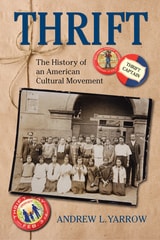
Thrift
The History of an American Cultural MovementAndrew L. Yarrow
University of Massachusetts Press, 2014
In this lively and engaging book, Andrew L. Yarrow tells the story of a national movement that promoted an amalgam of values and practices ranging from self-control, money management, and efficiency to conservation, generosity, and planning for the future—all under the rubric of “thrift.” Emerging in tandem and in tension with the first flowerings of consumer society, the thrift movement flourished during the 1910s and 1920s and then lingered on the outskirts of American culture from the Depression to the prosperous mid-twentieth century.
The movement brought together a diverse array of social actors with widely divergent agendas—the YMCA, the Boy and Girl Scouts, temperance crusaders, and others seeking to strengthen the moral fiber of urban young men and boys in particular, and to tamp down the appeal of radicalism. It also attracted credit union and other progressive activists wanting to empower the working class economically, bankers desiring to broaden their customer base, conservationists and efficiency proponents denouncing “waste,” and government leaders, school teachers, and economists who believed that encouraging saving was in the economic interests of both individuals and the nation.
A post–World War II culture that centered on spending and pleasure made the early-twentieth-century thrift messages seem outdated. Nonetheless, echoes of thrift can be found in currently popular ideas of “sustainability,” “stewardship,” and “simplicity” and in efforts to curtail public and private debt.

Through Fences
Written by Frederick Luis Aldama and Illustrated by Oscar Garza
The Ohio State University Press, 2024
Honor-winner, 2025 Texas Institute of Letters Jean Flynn Award for Best Young Adult Book
Longlisted, REFORMA National Book Award 2024
Through Fences follows the ups and downs of Latino kids and young adults in the US–Mexico borderlands: San Ysidro, Calexico, McAllen, and back and forth across the border. A young girl's journey north goes wrong, and now she is in a forbidding new place, away from her parents and brother, where she doesn't understand what the adults in green are saying even as she tries to obey their rules. Rocky, one of the few white kids in town, stands by and watches as Miguel is jumped by two of his friends. Maggie and her parents are separated at the border in a tragic accident. Alberto's son doesn't understand his Mexican father's hatred for illegals or his work as a border patrol agent. Alicia is a TikTok influencer who doesn't want to grow up to be a hospital cleaning lady like her mother, but COVID complicates things. Whatever their challenges, the kids, teens, tweens, and adults in these pages are just trying to survive their everyday lives. Vibrantly illustrated by Oscar Garza, each of these short stories brings a different perspective on the perils of living on the border while brown.

Through French Windows
An Introduction to France in the NinetiesJames Corbett
University of Michigan Press, 1994

Through Japanese Eyes
Thirty Years of Studying Aging in AmericaYohko Tsuji
Rutgers University Press, 2021
Through Japanese Eyes offers an ethnography of aging in America from a cross-cultural perspective based on a lengthy period of research. It illustrates how older Americans cope with the gap between the ideal (e.g., independence) and the real (e.g., needing assistance) of growing older, and the changes the author observed over thirty years of research.
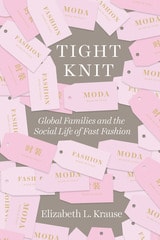
Tight Knit
Global Families and the Social Life of Fast FashionElizabeth L. Krause
University of Chicago Press, 2018
Krause offers a revelatory look into how families involved in the fashion industry are coping with globalization based on longterm research in Prato, the historic hub of textile production in the heart of metropolitan Tuscany. She brings to the fore the tensions—over value, money, beauty, family, care, and belonging—that are reaching a boiling point as the country struggles to deal with the same migration pressures that are triggering backlash all over Europe and North America. Tight Knit tells a fascinating story about the heterogeneity of contemporary capitalism that will interest social scientists, immigration experts, and anyone curious about how globalization is changing the most basic of human conditions—making a living and making a life.
Times of Upheaval
Four Medievalists in Twentieth-Century Central Europe. Conversations with Jerzy Kloczowski, János M. Bak, František Šmahel, and Herwig WolframPavlína Rychterová
Central European University Press, 2019

Tirana Modern
Biblio-Ethnography on the Margins of EuropeMatthew Rosen
Vanderbilt University Press, 2022
Drawing on material collected through fieldwork with a community of readers, writers, and translators attached to the independent Albanian publisher Pika pa sipërfaqe (Point without Surface), Tirana Modern provides a tightly focused ethnography of literary culture in Albania that brings into relief the more general dialectic between social imagination and social reality as mediated by reading and literature.
To Be a Man Is Not a One-Day Job
Masculinity, Money, and Intimacy in NigeriaDaniel Jordan Smith
University of Chicago Press, 2017
Drawing on twenty-five years of experience in southeastern Nigeria, Daniel Jordan Smith takes readers through the principal phases and arenas of men’s lives: the transition to adulthood; searching for work and making a living; courtship, marriage, and fatherhood; fraternal and political relationships; and finally, the attainment of elder status and death. He relates men’s struggles both to fulfill their own aspirations and to meet society’s expectations. He also considers men who behave badly, mistreat their wives and children, or resort to crime and violence. All of these men face similar challenges as they navigate the complex geometry of money and intimacy. Unraveling these connections, Smith argues, provides us with a deeper understanding of both masculinity and society in Nigeria.
To Be an Immigrant
Kay Deaux
Russell Sage Foundation, 2006
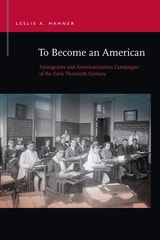
To Become an American
Immigrants and Americanization Campaigns of the Early Twentieth CenturyLeslie A. Hahner
Michigan State University Press, 2017
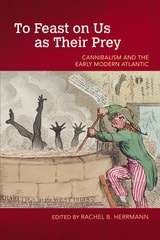
To Feast on Us as Their Prey
Cannibalism and the Early Modern AtlanticRachel B. Herrmann
University of Arkansas Press, 2019
Winner, 2020 Association for the Study of Food and Society Book Award, Edited Volume
Long before the founding of the Jamestown, Virginia, colony and its Starving Time of 1609–1610—one of the most famous cannibalism narratives in North American colonial history—cannibalism played an important role in shaping the human relationship to food, hunger, and moral outrage. Why did colonial invaders go out of their way to accuse women of cannibalism? What challenges did Spaniards face in trying to explain Eucharist rites to Native peoples? What roles did preconceived notions about non-Europeans play in inflating accounts of cannibalism in Christopher Columbus’s reports as they moved through Italian merchant circles?
Asking questions such as these and exploring what it meant to accuse someone of eating people as well as how cannibalism rumors facilitated slavery and the rise of empires, To Feast on Us as Their Prey posits that it is impossible to separate histories of cannibalism from the role food and hunger have played in the colonization efforts that shaped our modern world.
To Heal the Scourge of Prejudice
The Life and Writings of Hosea EastonHosea Easton
University of Massachusetts Press, 1999
How did racial prejudice originate and why has it been so deeply rooted in American culture? What have been the long-term effects of prejudice on the intellectual, communal, and psychological resources of African Americans? How might the nightmare of racial domination be truly brought to an end? Still pertinent today, these were among the key questions addressed more than a century and a half ago by Hosea Easton (1799–1837), an important yet long neglected activist and intellectual.
A black minister from New England, Easton rose to prominence during the 1820s and 1830s by joining in the struggle of free African Americans to resist southern slavery and secure racial equality. From this experience he developed a deep understanding of the problem of "race" in the United States and became a trenchant critic of white supremacy and its devastating consequences. This volume brings back into print the only extended writings of Easton that have survived into our time: his insightful, almost prescient A Treatise on the Intellectual Character, and the Civil and Political Condition of the Colored People of the U. States, first published in 1837; and his passionate 1828 Thanksgiving Day “Address.” The book also provides a biographical portrait of Easton and his family, drawn from primary documents as well as secondary sources in the areas of biography, genealogy, and social history.
To Live Here, You Have to Fight
How Women Led Appalachian Movements for Social JusticeJessica Wilkerson
University of Illinois Press, 2019
Jessica Wilkerson tells their stories within the larger drama of efforts to enact change in the 1960s and 1970s. She shows white Appalachian women acting as leaders and soldiers in a grassroots war on poverty--shaping and sustaining programs, engaging in ideological debates, offering fresh visions of democratic participation, and facing personal political struggles. Their insistence that caregiving was valuable labor clashed with entrenched attitudes and rising criticisms of welfare. Their persistence, meanwhile, brought them into unlikely coalitions with black women, disabled miners, and others to fight for causes that ranged from poor people's rights to community health to unionization.
Inspiring yet sobering, To Live Here, You Have to Fight reveals Appalachian women as the indomitable caregivers of a region--and overlooked actors in the movements that defined their time.
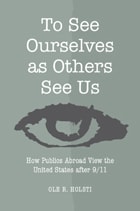
To See Ourselves as Others See Us
How Publics Abroad View the United States after 9/11Ole R. Holsti
University of Michigan Press, 2008
"Holsti, the authority on American foreign policy attitudes, investigates others' views of us. It's not pretty. It matters. Read this."
---Bruce Russett, Dean Acheson Professor of International Relations, Yale University, and editor of the Journal of Conflict Resolution
"Clearly and engagingly written, Holsti's book ranks among the most important---and most objective---of the post-9/11 scholarly studies. It deserves a large readership, both within and beyond academe."
---Ralph Levering, Vail Professor of History, Davidson College
In terms of military and economic power, the United States remains one of the strongest nations in the world. Yet the United States seems to have lost the power of persuasion, the ability to make allies and win international support.
Why? Immediately after the terrorist attacks of 9/11, leaders and citizens of foreign nations generally expressed sympathy for the United States. Since then, attitudes have changed. Drawing upon public opinion surveys conducted in 30 nations, Ole R. Holsti documents an increasing anti-American sentiment. His analysis suggests that the war in Iraq, human rights violations, and unpopular international policies are largely responsible. Consequently, the United States can rebuild its repute by adopting an unselfish, farsighted approach to global issues.
Indeed, the United States must restore goodwill abroad, Holsti asserts, because public opinion indirectly influences the leaders who decide whether or not to side with the Americans.
Ole R. Holsti is George V. Allen Professor Emeritus of International Affairs in the Department of Political Science at Duke University and author of Public Opinion and American Foreign Policy.
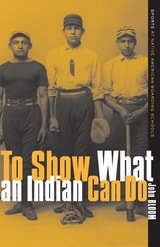
To Show What an Indian Can Do
Sports at Native American Boarding SchoolsJohn Bloom
University of Minnesota Press, 2005
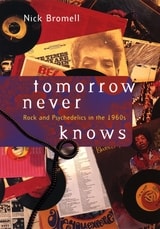
Tomorrow Never Knows
Rock and Psychedelics in the 1960sNick Bromell
University of Chicago Press, 2000
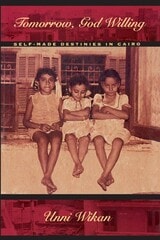
Tomorrow, God Willing
Self-made Destinies in CairoUnni Wikan
University of Chicago Press, 1996
Umm Ali's story is amazing not only for what it reveals about her resourcefulness but for the light it sheds on the resilience of Cairo's poor in the face of disastrous poverty. Like countless other poor people in Cairo, she has developed a personal buoyancy to cope with relentless economic need. It stems from a belief in the ability of people to shape their own destiny and helps explain why Cairo remains virtually free of the social ills—violent street crime and homelessness—that have eroded the lives of poor people in other major cities.
Unni Wikan first met Umm Ali and her family twenty-five years ago and has returned almost every year. She draws on her firsthand experience of their lives to create an intimate portrait of Cairo's back streets and the people who live there. Wikan's innovative approach to ethnographic writing reads like a novel that presents the experiences of Umm Ali's family and neighbors in their own words.
As Umm Ali recounts triumphs and defeats—from forming a savings club with neighbors to the gradual drifting away and eventual return of her husband—she unveils a deeply reflective attitude and her unwavering belief that she can improve her situation. Showing how Egyptian culture interprets poverty and family, this book attests to the capacity of an individual's self-worth to withstand incredible adversity.
Too Many Children Left Behind
The U.S. Achievement Gap in Comparative PerspectiveBRUCE BRADBURY is associate professor at the Social Policy Research Centre at the University of New South Wales, Australia. MILES CORAK is professor of economics at the Graduate School of Public and International Affairs at the University of Ottawa. JANE WALDFOGFEL is professor of social work and public affairs at the Columbia University School of Social Work and visiting professor at the Centre for Analysis of Social Exclusion at the London School of Economics and Political Science. ELIZABETH WASHBROOK is lecturer in Quantitative Methods for Education at the Graduate School of Education and a member of the Centre for Multilevel Modelling at the University of Bristol, United Kingdom.
Russell Sage Foundation, 2015
The belief that with hard work and determination, all children have the opportunity to succeed in life is a cherished part of the American Dream. Yet, increased inequality in America has made that dream more difficult for many to obtain. In Too Many Children Left Behind, an international team of social scientists assesses how social mobility varies in the United States compared with Australia, Canada, and the United Kingdom. Bruce Bradbury, Miles Corak, Jane Waldfogel, and Elizabeth Washbrook show that the academic achievement gap between disadvantaged American children and their more advantaged peers is far greater than in other wealthy countries, with serious consequences for their future life outcomes. With education the key to expanding opportunities for those born into low socioeconomic status families, Too Many Children Left Behind helps us better understand educational disparities and how to reduce them.
Analyzing data on 8,000 school children in the United States, the authors demonstrate that disadvantages that begin early in life have long lasting effects on academic performance. The social inequalities that children experience before they start school contribute to a large gap in test scores between low- and high-SES students later in life. Many children from low-SES backgrounds lack critical resources, including books, high-quality child care, and other goods and services that foster the stimulating environment necessary for cognitive development. The authors find that not only is a child’s academic success deeply tied to his or her family background, but that this class-based achievement gap does not narrow as the child proceeds through school.
The authors compare test score gaps from the United States with those from three other countries and find smaller achievement gaps and greater social mobility in all three, particularly in Canada. The wider availability of public resources for disadvantaged children in those countries facilitates the early child development that is fundamental for academic success. All three countries provide stronger social services than the United States, including universal health insurance, universal preschool, paid parental leave, and other supports. The authors conclude that the United States could narrow its achievement gap by adopting public policies that expand support for children in the form of tax credits, parenting programs, and pre-K.
With economic inequalities limiting the futures of millions of children, Too Many Children Left Behind is a timely study that uses global evidence to show how the United States can do more to level the playing field.
Torn
Asian/white Life and the Intimacy of ViolenceAnna M. Moncada Storti
Duke University Press, 2026
Tourist Attractions
Performing Race and Masculinity in Brazil's Sexual EconomyGregory Mitchell
University of Chicago Press, 2015
Mitchell takes us into the bath houses of Rio de Janeiro, where rent boys cruise for clients, and to the beaches of Salvador da Bahia, where African American gay men seek out hustlers while exploring cultural heritage tourist sites. His ethnography stretches into the Amazon, where indigenous fantasies are tinged with the erotic at eco-resorts, and into the homes of “kept men,” who forge long-term, long-distance, transnational relationships that blur the boundaries of what counts as commercial sex. Mitchell asks how tourists perceive sex workers’ performances of Brazilianness, race, and masculinity, and, in turn, how these two groups of men make sense of differing models of racial and sexual identity across cultural boundaries. He proposes that in order to better understand how people experience difference sexually, we reframe prostitution—which Marxist feminists have long conceptualized as sexual labor—as also being a form of performative labor. Tourist Attractions is an exceptional ethnography poised to make an indelible impact in the fields of anthropology, gender, and sexuality, and research on prostitution and tourism.
Toward Better Problems
New Perspectives on Abortion, Animal Rights, the Environment, and JusticeAnthony Weston
Temple University Press, 1992
Toward Camden
Mercy Romero
Duke University Press, 2021
Duke University Press Scholars of Color First Book Award recipient
Toward a Framework for Vietnamese American Studies
History, Community, and MemoryEdited by Linda Ho Peché, Alex-Thai Dinh Vo, and Tuong Vu
Temple University Press, 2023
The large number of Vietnamese refugees that resettled in the United States since the fall of Saigon have become America’s fastest growing immigrant group. Toward a Framework for Vietnamese American Studies traces the ideologies, networks, and cultural sensibilities that have long influenced and continue to transform social, political, and economic developments in Vietnam and the U.S.
Moving beyond existing approaches, the editors and contributors to this volume—the first to craft a working framework for researching, teaching, and learning about this dynamic community—present a new Vietnamese American historiography that began in South Vietnam. They provide deep-dive explorations into community development, political activism, civic participation and engagement, as well as entrepreneurial endeavors. Chapters offer new concepts and epistemological approaches to how legacy and memory is nurtured, produced and circulated in the Vietnamese diaspora.
Toward a Framework for Vietnamese American Studies seeks to better understand the rapidly changing landscape of Vietnamese American diaspora.
Contributors: Duyen Bui, Christian Collet, Wynn Gadkar-Wilcox, Elwing Suong Gonzalez, Tuan Hoang, Jennifer A. Huynh, Y Thien Nguyen, Nguyen Vu Hoang, Van Nguyen-Marshall, Thien-Huong Ninh, Hai-Dang Phan, Ivan V. Small, Quan Tue Tran, Thuy Vo Dang, and the editors
Towards Defining the Prairies
Region, Culture, and HistoryRobert Wardhaugh
University of Manitoba Press, 2001
Trade and Taboo
Disreputable Professions in the Roman MediterraneanSarah E. Bond
University of Michigan Press, 2016
In this book, Sarah E. Bond reveals the construction and motivations for these attitudes, and to show how they created inequalities, informed institutions, and changed over time. Additionally, she shows how political and cultural shifts mutated these taboos, reshaping economic markets and altering the status of professionals at work within these markets.
Bond investigates legal stigmas in the form of infamia and other marks of legal disrepute. She expands on anthropological theories of pollution, closely studying individuals who regularly came into contact with corpses and other polluting materials, and considering communication and network formation through the disrepute attached to town criers, or praecones. Ideas of disgust and the language of invective are brought forward looking at tanners. The book closes with an exploration of caste-like systems created in the later Roman Empire. Collectively, these professionals are eloquent about economies and changes experienced within Roman society between 45 BCE and 565 CE.
Trade and Taboo will interest those studying Roman society, issues of historiographical method, and the topic of taboo in preindustrial cultures.
Traffic in Asian Women
Laura Hyan Yi Kang
Duke University Press, 2020
Trajectories of Empire
Transhispanic Reflections on the African DiasporaJerome C. Branche
Vanderbilt University Press, 2022
The book’s chapters explore what Blackness means in the so-called racial democracies of Brazil and Cuba today. Among the historical narratives and themes it covers are the role of medical science in the objectification and nullification of Black female personhood during slavery in nineteenth-century Brazil; the protocols of portraiture in the colonial period that, in including enslaved individuals, pictorially highlight and freeze their supposed inferiority vis-à-vis their owners; and those aspects of discourse that promote colonial capture and oppression in terms of evangelization and the saving of souls, or simply create the discursive template as early as the fifteenth century, for their continued alienation and marginalization across generations.
Trajectories of Empire’s contributions come from the fields of literary criticism, visual culture, history, anthropology, popular culture (rap), and cultural studies. As the product of an interdisciplinary collective, this book will be of interest to scholars in Iberian or Hispanic studies, Africana studies, postcolonial studies, and transatlantic studies, as well as the general public.
Transatlantic Subjects
Acts of Migration and Cultures of Transnationalism between Greece and AmericaIoanna Laliotou
University of Chicago Press, 2004
According to Ioanna Laliotou, cultural institutions and practices played an important role in the formation of migrant subjectivities. Reconstructing the cultural history of migration, her book points out the relationship between subjectivity formation and cultural practices and performances, such as publishing, reading, acting, storytelling, consuming, imitating, parading, and traveling. Transatlantic Subjects then locates the development of these practices within key sites and institutions of cultural formation, such as migrant and fraternal associations, educational institutions, state agencies and nongovernmental organizations, mental institutions, coffee shops, the church, steamship companies, banks, migration services, and chambers of commerce.
Ultimately, Laliotou explores the complex and situational entanglements of migrancy, cultural nationalism, and the politics of self. Reading against the grain of hegemonic narratives of cultural and migration histories, she reveals how migrancy produced distinctive forms of sociality during the first half of the twentieth century.
Transformation of the Mormon Culture Region
Ethan R. Yorgason
University of Illinois Press, 2010
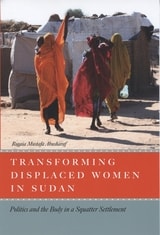
Transforming Displaced Women in Sudan
Politics and the Body in a Squatter SettlementRogaia Mustafa Abusharaf
University of Chicago Press, 2009
Over twenty years of civil war in predominantly Christian Southern Sudan has forced countless people from their homes. Transforming Displaced Women in Sudan examines the lives of women who have forged a new community in a shantytown on the outskirts of Khartoum, the largely Muslim, heavily Arabized capital in the north of the country.
Sudanese-born anthropologist Rogaia Mustafa Abusharaf delivers a rich ethnography of this squatter settlement based on personal interviews with displaced women and careful observation of the various strategies they adopt to reconstruct their lives and livelihoods. Her findings debunk the myth that these settlements are utterly abject, and instead she discovers a dynamic culture where many women play an active role in fighting for peace and social change. Abusharaf also examines the way women’s bodies are politicized by their displacement, analyzing issues such as religious conversion, marriage, and female circumcision.
An urgent dispatch from the ongoing humanitarian crisis in northeastern Africa, Transforming Displaced Women in Sudan will be essential for anyone concerned with the interrelated consequences of war, forced migration, and gender inequality.
Transforming Places
Lessons from AppalachiaEdited by Stephen L. Fisher and Barbara Ellen Smith
University of Illinois Press, 2012
Transforming Science and Engineering
Advancing Academic WomenAbigail J. Stewart, Janet E. Malley, and Danielle LaVaque-Manty, Editors
University of Michigan Press, 2010
"If you have thrown up your hands in despair after trying to retain women science and engineering in the academy, read this book. It offers detailed descriptions of a wide array of tried-and-true programs that have been tested out by the NSF ADVANCE program."
---Joan C. Williams, 1066 Foundation Chair & Distinguished Professor of Law Director, Center for WorkLife Law University of California
"Solid and practical, this volume details the first years of NSF funded institutional change to remake gender dynamics inside U.S. science. What works? What doesn't? And why?"
---Londa Schiebinger, John L. Hinds Professor of History of Science and Barbara D. Finberg Director, Michelle R. Clayman Institute for Gender Research at Stanford University, and author of Has Feminism Changed Science?
"This book's time has come. Transforming Science and Engineering is important, and lots of people can learn from what has happened in the ADVANCE universities."
---Lotte Bailyn, Professor of Management, Behavioral and Policy Sciences Department, Sloan School of Management, MIT; author of Breaking the Mold: Redesigning Work for Productive and Satisfying Lives; and coauthor of Beyond Work-Family Balance: Advancing Gender Equity and Workplace Performance
"This collection profiles 16 NSF ADVANCE grant successes, sandwiched between an interview with Dr. Alice Hogan and Dr. Lee Harle's summary of cost-effective practices from ADVANCE programs, giving so many 'biggest bang for the buck' examples in so few pages that it will easily justify both the cost of the book and the reading time. These accounts do not continue the too-common vague referrals to 'unhealthy environment' or 'chilly climate,' but rather expound the situations before and after the interventions, something necessary in order to transplant the programs, or even to use the programs for idea generation. Transforming Science and Engineering is a model of excellence, and will be extremely useful for those women, men, faculty, or administrators wanting to help their universities move into the 21st century and attract to their campuses qualified women and men who want opportunities to attain their full potentials."
---Donna J. Nelson, Associate Professor of Chemistry, University of Oklahoma
In 2001, the National Science Foundation's ADVANCE Institutional Transformation program began awarding five-year grants to colleges and universities to address a common problem: how to improve the work environment for women faculty in science and engineering. Drawing on the expertise of scientists, engineers, social scientists, specialists in organizational behavior, and university administrators, this collection is the first to describe the variety of innovative efforts academic institutions around the country have undertaken.
Focusing on a wide range of topics, from how to foster women's academic success in small teaching institutions, to how to use interactive theater to promote faculty reflection about departmental culture, to how a particular department created and maintained a healthy climate for women's scientific success, the contributors discuss both the theoretical and empirical aspects of the initiatives, with emphasis on the practical issues involved in creating these approaches. The resulting evidence shows that these initiatives have the desired effects. The cases represented in this collection depict the many issues women faculty in science and engineering face, and the solutions that are presented can be widely accepted at academic institutions around the United States. The essays in Transforming Science and Engineering illustrate that creating work environments that sustain and advance women scientists and engineers benefits women, men, and underrepresented minorities.
Abigail J. Stewart is Sandra Schwartz Tangri Distinguished University Professor of Psychology and Women's Studies at the University of Michigan.
Janet E. Malley is a psychologist and Associate Director of the Institute for Research on Women and Gender at the University of Michigan.
Danielle LaVaque-Manty, former Research Associate at the Institute for Research on Women and Gender at the University of Michigan, teaches composition at U-M's Sweetland Writing Center.
Cover photo: Joanne Leonard
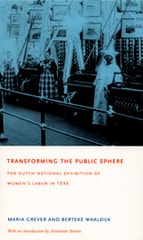
Transforming the Public Sphere
The Dutch National Exhibition of Women’s Labor in 1898Maria Grever and Berteke Waaldijk
Duke University Press, 2004
A comprehensive social history, Transforming the Public Sphere describes the planning and construction of the Exhibition of Women’s Labor and the event itself—the sights, the sounds, and the smells—as well as the role of exhibitions in late-nineteenth-century public culture. The authors discuss how the 1898 exhibition displayed the range and variety of women’s economic, intellectual, and artistic roles in Dutch culture, including their participation in such traditionally male professions as engineering, diamond-cutting, and printing and publishing. They examine how people and goods from the Dutch colonies were represented, most notably in an extensive open-air replica of a “Javanese village.” Grever and Waaldijk reveal the tensions the exhibition highlighted: between women of different economic classes; between the goal of equal rights for women and the display of imperial subjects and spoils; and between socialists and feminists, who competed fiercely with one another for working women’s support. Transforming the Public Sphere explores an event that served as the dress rehearsal for advances in women’s public participation during the twentieth century.

Transition & Development in Algeria
Economic, Social and Cultural ChallengesMohammed Saad
Intellect Books, 2013
The contributors represent a range of expertise in economics, business management, sociology, linguistics, political science and cultural studies. Their diverse backgrounds and perspectives permit this publication to explore new avenues of debate, which represent a significant contribution to the understanding of the present problems and solutions.
Translocas
The Politics of Puerto Rican Drag and Trans PerformanceLawrence La Fountain-Stokes
University of Michigan Press, 2021
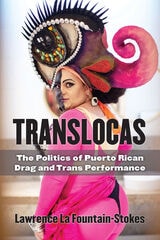
Translocas focuses on drag and transgender performance and activism in Puerto Rico and its diaspora. Arguing for its political potential, Lawrence La Fountain-Stokes explores the social and cultural disruptions caused by Latin American and Latinx “locas” (effeminate men, drag queens, transgender performers, and unruly women) and the various forms of violence to which queer individuals in Puerto Rico and the U.S. are subjected. This interdisciplinary, auto-ethnographic, queer-of-color performance studies book explores the lives and work of contemporary performers and activists including Sylvia Rivera, Nina Flowers, Freddie Mercado, Javier Cardona, Jorge Merced, Erika Lopez, Holly Woodlawn, Monica Beverly Hillz, Lady Catiria, and Barbra Herr; television programs such as RuPaul’s Drag Race; films such as Paris Is Burning, The Salt Mines, and Mala Mala; and literary works by authors such as Mayra Santos-Febres and Manuel Ramos Otero. Lawrence La Fountain-Stokes, a drag performer himself, demonstrates how each destabilizes (and sometimes reifies) dominant notions of gender and sexuality through drag and their embodied transgender expression. These performances provide a means to explore and critique issues of race, class, poverty, national identity, and migratory displacement while they posit a relationship between audiences and performers that has a ritual-like, communal dimension. The book also analyzes the murders of Jorge Steven López Mercado and Kevin Fret in Puerto Rico, and invites readers to challenge, question, and expand their knowledge about queer life, drag, trans performance, and Puerto Rican identity in the Caribbean and the diaspora. The author also pays careful attention to transgender experience, highlighting how trans activists and performers mold their bodies, promote social change, and create community in a context that oscillates between glamour and abjection.

Transnational Desires
Brazilian Erotic Dancers in New YorkSuzana Maia
Vanderbilt University Press, 2012
Their motivation to migrate and to work as erotic dancers can also be understood in the context of a representational system, inaugurated in colonial times, that emphasizes the exoticism of Brazilian womentheir bodies, their skin tone, their sexuality. These stereotypes are the props that Brazilian women use to construct their performances in Manhattan and Queens gentlemen's bars and the language through which they negotiate their relationships to society at large.
Transnational Desires focuses on the lives of nine Brazilian dancers with whom the author, herself a middleclass Brazilian, developed close relationships over the years. Maia examines their social relations both in the bar scene and with family, friends, and lovers outside. She shows that for these women erotic dancing is part of a life trajectory that involves negotiating their social position and life prospects in a fundamentally transnational social universe.

Trappings
Stories of Women, Power, and ClothingLudwig, Tiffany
Rutgers University Press, 2007
What do you wear that makes you feel powerful? How about the woman next to you at the bank? In line with you at the store? Think about your mother. What would she put on to reveal her power source to the world? These are the questions that inspired Tiffany Ludwig and Renee Piechocki to embark on an interview journey across the United States. Over a period of six years, they talked with more than 500 women and girls, ages four through ninety-two, who ranged from office workers to drag-kings, stay-at-home moms to attorneys, fashion industry executives to elected officials, students to cowgirls.
It is these women’s sensitive, funny, and always revealing thoughts that are at the heart of Trappings—a book that although it begins with a question about clothing is not about fashion at all. Here, clothing is simply a vehicle to access a larger dialogue about a diverse range of issues women face related to power and identity, including what expectations and limitations are placed upon them by their affiliation with a specific gender, culture, race, class, or profession. A complex spectrum of responses include discussions about the importance of clothing’s comfort and practicality, how clothing can facilitate women’s movement through class and social strata, how sex is used strategically in business and social settings, and how clothing can be used to empower women by connecting them with cultural or personal history.
Complimented by 148 color and black-and-white photographs, the visual and written portraits in this book reveal much more than the contents of women’s closets. Through the intimate lens of clothing, Ludwig and Piechocki expose the very personal ways that power is sought, experienced, and projected by women.
Traumatic States
Gendered Violence, Suffering, and Care in ChileNia Parson
Vanderbilt University Press, 2013
In Traumatic States, anthropologist Nia Parson explores the development of methods of care and recovery from domestic violence. She interviews and contextualizes the lives of numerous individuals who have confronted these acts, as victims, authorities, and activists. Ultimately, Traumatic States argues that facing the challenges of healing both body and mind, and addressing the fundamental inequalities that make those challenges even more formidable, are part of the same battle.
Traveling Economies
American Women's Travel WritingJennifer Bernhardt Steadman
The Ohio State University Press, 2007
Treasure Hill
Portrait Of A Silver Mining CampW. Turrentine Jackson
University of Nevada Press, 2000
Treating AIDS
Politics of Difference, Paradox of PreventionSangaramoorthy, Thurka
Rutgers University Press, 2014
Sangaramoorthy documents in detail the work of AIDS prevention programs and their effect on the health and well-being of Haitians, a transnational community long plagued by the stigma of being stereotyped in public discourse as disease carriers. By tracing the ways in which public knowledge of AIDS prevention science circulates from sites of surveillance and regulation, to various clinics and hospitals, to the social worlds embraced by this immigrant community, she ultimately demonstrates the ways in which AIDS prevention programs help to reinforce categories of individual and collective difference, and how they continue to sustain the persistent and pernicious idea of race and ethnicity as risk factors for the disease.
Tripping on the Color Line
Black-White Multiracial Families in a Racially Divided WorldDalmage, Heather M
Rutgers University Press, 2000
At the turn of the twentieth century W.E.B. DuBois predicted that the central problem facing the United States in the new century would be that of the “color line.” Now, at the beginning of a new century, we find many people straddling the color line. These people come from the growing number of multiracial families in America, families who search for places of comfort and familiarity in a racially polarized society whose educational system, places of worship, and neighborhoods continue to suffer a de facto segregation. This group has provoked an ever-widening debate and an upheaval in traditional racial thinking in the United States.
Through in-depth interviews with individuals from black–white multiracial families, and insightful sociological analysis, Heather M. Dalmage examines the challenges faced by people living in such families and explores how their experiences demonstrate the need for rethinking race in America. She examines the lived reality of race in the ways multiracial family members construct and describe their own identities and sense of community and politics. She shows how people whose own very lives complicate the idea of the color line must continually negotiate and contest it in order not to reproduce it. Their lack of language to describe their multiracial existence, along with their experience of coping with racial ambiguity and with institutional demands to conform to a racially divided, racist system is the central theme of Tripping on the Color Line. By connecting the stories to specific issues, such as census categories, transracial adoption, intermarriage, as well as the many social responses to violations of the color line, Dalmage raises the debate to a broad discussion on racial essentialism and social justice.
Exploring the dynamic of race as it pervades the lives of those close to the color line, Dalmage argues that the struggle for racial justice must include an understanding that race is a complex construct that is constantly shifting, and is something we do rather than something we simply are.
Troubled Pasts
News and the Collective Memory of Social UnrestJill A. Edy
Temple University Press, 2006

Tuberculosis Control and Institutional Change in Shanghai, 1911–2011
Rachel S. Core
Hong Kong University Press, 2023
Tuberculosis Control and Institutional Change in Shanghai, 1911–2011 is the first book on the most widespread and deadly infectious disease in China, both historically and today. Weaving together interviews with data from periodicals and local archives in Shanghai, Rachel Core examines the rise and fall of tuberculosis control in China from the 1950s to the 1990s. Under the socialist work unit system, the vast majority of people had guaranteed employment, a host of benefits tied to their workplace, and there was little mobility—factors that made the delivery of medical and public health services possible in both urban and rural areas. The dismantling of work units amid wider market reforms in the 1980s and 1990s led to the rise of temporary and casual employment and a huge migrant worker population, with little access to health care, creating new challenges in TB control. This study of Shanghai will provide valuable lessons for historians, social scientists, public health specialists, and many others working on public health infrastructure on both the national and global levels.
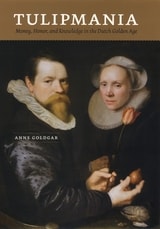
Tulipmania
Money, Honor, and Knowledge in the Dutch Golden AgeAnne Goldgar
University of Chicago Press, 2007
“Goldgar tells us at the start of her excellent debunking book: ‘Most of what we have heard of [tulipmania] is not true.’. . . She tells a new story.”—Simon Kuper, Financial Times