Results by title
5159 books match the query 'Biography' and 934 start with t
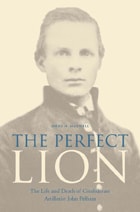
The Perfect Lion
The Life and Death of Confederate Artillerist John PelhamJerry H. Maxwell
University of Alabama Press, 2011
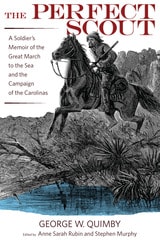
The Perfect Scout
A Soldier’s Memoir of the Great March to the Sea and the Campaign of the CarolinasGeorge W. Quimby, edited by Anne Sarah Rubin and Stephen Murphy
University of Alabama Press, 2018
After his father-in-law passed away, Stephen Murphy found, among the voluminous papers left behind, an ancestral memoir. Murphy quickly became fascinated with the recollections of George W. Quimby (1842–1926), a Union soldier and scout for General William Tecumseh Sherman.
Before Quimby became a part of Sherman’s March, he was held captive by Nathan Bedford Forrest’s troops in western Tennessee. He joined Sherman’s Army in Vicksburg, destroying railroads and bridges across Mississippi and Alabama on the way to Georgia. As the notorious march began, Quimby became a scout and no longer experienced war as his fellow soldiers did. Scouts moved ahead of the troops to anticipate opportunities and dangers. The rank and file were instructed to be seen and feared, while scouts were required to be invisible and stealthy. This memoir offers the rare perspective of a Union soldier who ventured into Confederate territory and sent intelligence to Sherman.
Written around 1901 in the wake of the Spanish American War, Quimby’s memoir shows no desire to settle old scores. He’s a natural storyteller, keeping his audience’s attention with tales of drunken frolics and narrow escapes, providing a memoir that reads more like an adventure novel. He gives a new twist to the familiar stories of Sherman’s March, reminding readers that while the Union soldiers faced few full-scale battles, the campaign was still quite dangerous.
More than a chronicle of day-to-day battles and marches, The Perfect Scout is more episodic and includes such additional elements as the story of how he met his wife and close encounters with the enemy. Offering a full picture of the war, Quimby writes not only about his adventures as one of Sherman’s scouts, but also about the suffering of the civilians caught in the war. He provides personal insight into some of the war’s historic events and paints a vivid picture of the devastation wreaked upon the South that includes destroyed crops and homes and a shattered economy. He also tells of the many acts of kindness he received from Southerners, including women and African Americans, who helped him and his fellow scouts by providing food, shelter, or information.
The Perils and Prospects of Southern Black Leadership
Gordon Blaine Hancock, 1884–1970Raymond Gavins
Duke University Press, 1993
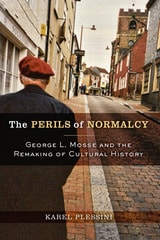
The Perils of Normalcy
George L. Mosse and the Remaking of Cultural HistoryKarel Plessini
University of Wisconsin Press, 2014
In this intellectual biography of George Mosse, Karel Plessini draws on all of Mosse's published and unpublished work to illuminate the origins and development of his groundbreaking methods of historical analysis and the close link between his life and work. He redefined the understanding of modern mass society and politics, masterfully revealing the powerful influence of conformity and political liturgies on twentieth-century history. Mosse warned against the dangers inherent in acquiescence, showing how identity creation and ideological fervor can climax in intolerance and mass murder—a message of continuing relevance.
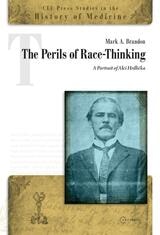
The Perils of Race-Thinking
A Portrait of Ales HrdlickaMark A. Brandon
Central European University Press, 2023
Eugenics and scientific racism are experiencing a resurgence, and an understanding of the ideas of Aleš Hrdlička can help combat them. Today, the racial science of the early twentieth century is both untenable and contemptible. This book is about an arch figure of that period: Aleš Hrdlička served as Curator of Physical Anthropology at the prestigious Smithsonian Institution from 1910 to 1941. Although his ideas about race are today considered pseudoscience, the uncomfortable truth is that he was an internationally respected scientist in his own day.
The Perils of Race-Thinking advances a bold new interpretation of modern racial ideology by exploring Hrdlička’s intellectual world. Using previously untapped Czech-language sources, Brandon irrevocably alters the discussion about this important figure by placing Czech nationalism at the center of his racial thinking. Defying disciplinary categories, Perils of Race-Thinking joins critical analysis of this key American anthropologist with an incisive revisionist perspective of interwar Czechoslovakia to unearth transnational racial presumptions lurking behind the worst crimes of the twentieth century.
At the center of Hrdlička’s race beliefs was his commitment to Czech and Slovak unity and independence. From this center, his next level of concern was what he believed to be a millennial racial struggle between Germans and Slavs. On a global scale, he viewed the Slavs, and especially the Soviet Union, as a eugenic bastion of White strength holding off the “rising tide of color.”
Step by step, Perils of Race-Thinking mercilessly dismantles Hrdlička’s racial system and exposes it as mysticism dressed up in the language of science. Convinced that human individuals belonged “naturally” in racial groups, Hrdlička embraced a revolutionary program of reordering the globe according to a harrowing morality of “Darwinist” struggle. Yet despite a lifetime of measuring body parts, even Hrdlička could not decide how many races there were or how to tell them apart.
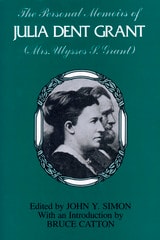
The Personal Memoirs of Julia Dent Grant
(Mrs. Ulysses S. Grant)Edited by John Y. Simon
Southern Illinois University Press, 1975
Written in the early twentieth century for her children and grandchildren and first published in 1975, these eloquent memoirs detail the life of General Ulysses S. Grant’s wife. First Lady Julia Dent Grant wrote her reminiscences with the vivacity and charm she exhibited throughout her life, telling her story in the easy flow of an afternoon conversation with a close friend. She writes fondly of White Haven, a plantation in St. Louis County, Missouri, where she had an idyllic girlhood and later met Ulysses.
In addition to relating the joys she experienced, Grant tells about the difficult and sorrowful times. Her anecdotes give fascinating glimpses into the years of the American Civil War. One recounts the night President Abraham Lincoln was assassinated. Grant insisted she and her husband turn down an invitation to the theater. Her decision saved her husband’s life: like Lincoln, he too had been marked for assassination.
Throughout these memoirs, which she ends with her husband’s death, Grant seeks to introduce her descendants to both her and the man she loved. She also strives to correct misconceptions that were circulated about him. She wanted posterity to share her pride in this man, whom she saw as one of America’s greatest heroes. Her book is a testament to their devoted marriage.
This forty-fifth-anniversary edition includes a new foreword by John F. Marszalek and Frank J. Williams, a new preface by Pamela K. Sanfilippo, the original foreword by Bruce Catton, the original introduction by editor John Y. Simon, recommendations for further reading, and more than twenty photographs of the Grants, their children, and their friends.
The Perversity of Gratitude
An Apartheid EducationFarred, Grant
Temple University Press, 2024
Unsentimental about his education, Farred’s critique recognizes the impact of four exceptional teachers—all engaging pedagogical figures who cultivated a great sense of possibility in how thinking could be learned through a disenfranchised South African education.
The Perversity of Gratitude brings to bear the work of influential philosophers such as Martin Heidegger and Jacques Derrida. The book tackles broad philosophical concepts—transgression, withdrawal, and the dialectic. This leads to the creation of a new concept, “the diaspora-in-place,” which Farred explains, “is having left a place before one physically removes oneself from this place.”
Farred’s apartheid education in South Africa instilled in him a lifelong commitment to learning thinking. “And for that I am grateful,” Farred writes in The Perversity of Gratitude. His autopoiesis is sure to provoke and inspire readers.

The Phantom Vietnam War
An F-4 Pilot's Combat over LaosDavid R. Honodel
University of North Texas Press, 2018
The Phenomenology of Pain
Saulius Geniusas
Ohio University Press, 2020
The Phenomenology of Pain is the first book-length investigation of its topic to appear in English. Groundbreaking, systematic, and illuminating, it opens a dialogue between phenomenology and such disciplines as cognitive science and cultural anthropology to argue that science alone cannot clarify the nature of pain experience without incorporating a phenomenological approach. Building on this premise, Saulius Geniusas develops a novel conception of pain grounded in phenomenological principles: pain is an aversive bodily feeling with a distinct experiential quality, which can only be given in original first-hand experience, either as a feeling-sensation or as an emotion.
Geniusas crystallizes the fundamental methodological principles that underlie phenomenological research. On the basis of those principles, he offers a phenomenological clarification of the fundamental structures of pain experience and contests the common conflation of phenomenology with introspectionism. Geniusas analyzes numerous pain dissociation syndromes, brings into focus the de-personalizing and re-personalizing nature of chronic pain experience, and demonstrates what role somatization and psychologization play in pain experience. In the process, he advances Husserlian phenomenology in a direction that is not explicitly worked out in Husserl’s own writings.
The Philadelphia Reader
Robert Huber
Temple University Press, 2006
The Philosopher of Palo Alto
Mark Weiser, Xerox PARC, and the Original Internet of ThingsJohn Tinnell
University of Chicago Press, 2023
When developers and critics trace the roots of today’s Internet of Things—our smart gadgets and smart cities—they may single out the same creative source: Mark Weiser (1952–99), the first chief technology officer at Xerox PARC and the so-called “father of ubiquitous computing.” But Weiser, who died young at age 46 in 1999, would be heartbroken if he had lived to see the ways we use technology today. As John Tinnell shows in this thought-provoking narrative, Weiser was an outlier in Silicon Valley. A computer scientist whose first love was philosophy, he relished debates about the machine’s ultimate purpose. Good technology, Weiser argued, should not mine our experiences for saleable data or demand our attention; rather, it should quietly boost our intuition as we move through the world.
Informed by deep archival research and interviews with Weiser’s family and colleagues, The Philosopher of Palo Alto chronicles Weiser’s struggle to initiate a new era of computing. Working in the shadows of the dot-com boom, Weiser and his collaborators made Xerox PARC headquarters the site of a grand experiment. Throughout the building, they embedded software into all sorts of objects—coffeepots, pens, energy systems, ID badges—imbuing them with interactive features. Their push to integrate the digital and the physical soon caught on. Microsoft’s Bill Gates flagged Weiser’s Scientific American article “The Computer for the 21st Century” as a must-read. Yet, as more tech leaders warmed to his vision, Weiser grew alarmed about where they wished to take it.
In this fascinating story of an innovator and a big idea, Tinnell crafts a poignant and critical history of today’s Internet of Things. At the heart of the narrative is Weiser’s desire for deeper connection, which animated his life and inspired his notion of what technology at its best could be.
The Philosophical Life
Arthur P. Urbano
Catholic University of America Press, 2013
The Philosophy of Autobiography
Edited by Christopher Cowley
University of Chicago Press, 2015
Cowley and his contributors show that while philosophers have seemed uninterested in autobiography, they have actually long been preoccupied with many of its conceptual elements, issues such as the nature of the self, the problems of interpretation and understanding, the paradoxes of self-deception, and the meaning and narrative structure of human life. But rarely have philosophers brought these together into an overarching question about what it means to tell one’s life story or understand another’s. Tackling these questions, the contributors explore the relationship between autobiography and literature; between story-telling, knowledge, and agency; and between the past and the present, along the way engaging such issues as autobiographical ethics and the duty of writing. The result bridges long-standing debates and illuminates fascinating new philosophical and literary issues.
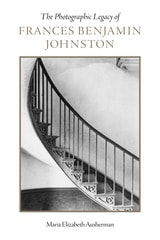
The Photographic Legacy of Frances Benjamin Johnston
Maria Elizabeth Ausherman
University of Alabama Press, 2022
An illustrated account of the life and work of the pioneering photographer
The Photographic Legacy of Frances Benjamin Johnston (1864–1952) draws on original papers and photographs from the Library of Congress to document the extraordinary life and nearly seventy-year career of this pioneering photographer. Maria Elizabeth Ausherman illuminates the early origins of Johnston’s style and vision, and her attempts to change society through her art. One of the first women to work in an emerging field dominated by men, Johnston achieved acclaim as an accomplished photographer and photojournalist.
As the official White House photographer for five administrations, she was instrumental in defining the medium and inspiring women to train in and appreciate photography. But it is her monumental nine-state survey of southern American architecture that stands as her most significant contribution to the history and development of photography both as art and as documentary. Through her photography, Johnston showed reverence for the beautiful historic buildings she appreciated and also helped shape architectural and photographic preservation in the United States.

The Photography of Gustave Le Gray
Eugenia Parry Janis
University of Chicago Press, 1987
Drawing on entirely new material Eugenia Parry Janis fully analyzes the life and work of Le Gray and demonstrates the originality of his artistic achievement in the context of discoveries about his personal and professional history. Janis, approaching the photographs of Le Gray with the methods and sensibilities of an art historian, reveals telling connections between Le Gray's choices of subject matter and formal means of presentation and the existing pictorial practice of other media such as painting. This same approach makes her sensitive to Le Gray's departures from such traditional practice, and she skillfully illustrates how he evolved from student painter into master photographer. In doing so she gives us a glimpse of the way in which Le Gray's manipulation of the photographic process was always informed by his pictorial needs and by his developing style.
The Picshuas of H. G. Wells
A Burlesque DiaryGene K. Rinkel and Margaret E. Rinkel
University of Illinois Press, 2000
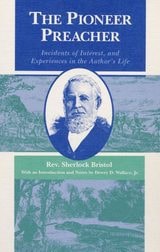
The Pioneer Preacher
Incidents of Interest, and Experiences in the Author's LifeRev. Sherlock Bristol. Introduction and notes by Dewey D. Wallace Jr. Illustrated by Isabelle Blood.
University of Illinois Press, 1989
Originally published in 1887, The Pioneer Preacher is a lively account of a Congregationalist minister's attempts to lead a sin-free existence on the American frontier. Sherlock Bristol (1815-1906) was a California gold miner, wagon train captain, Wisconsin farmer, Idaho rancher, Indian fighter, abolitionist, and Oberlin-trained clergyman. While serving a series of churches in the East, he periodically cured himself of "nervous disorders" by journeying out West. He only broke the Sabbath once---during an Indian attack!
Reflecting in his memoirs the exploits of Daniel Boone and Davy Crockett, Bristol delights in recounting his adventures, ecclesiastical or otherwise. He vividly recalls his redemption in the wilderness where he enjoyed having "little opportunity for reading books or mental exercise, and an abundance of calls for muscular employment." Greatly influenced by the evangelist Charles G. Finney at Oberlin, Bristol tried to teach miners and frontiersmen the principles of revivalism, postmillennialism, and perfectionism. In The Pioneer Preacher he shares his own disputatious views on abolition, American Indians, temperance, and other issues of his day.
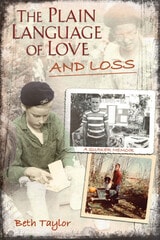
The Plain Language of Love and Loss
A Quaker MemoirBeth Taylor
University of Missouri Press, 2009
The Play of Allusion in the Historia Augusta
David Rohrbacher
University of Wisconsin Press, 2015
The Players
The Men Who Made Las VegasJack Sheehan
University of Nevada Press, 1997
The Pleasures of Exile
George Lamming
University of Michigan Press, 1992
Through a series of interrelated essays, The Pleasures of Exile explores the cultural politics and relationships created in the crucible of colonization. Drawing on Shakespeare’s The Tempest and C. L. R. James’s The Black Jacobins, as well as his own fiction and poetry, Lamming deftly locates the reader in a specific intellectual and cultural domain while conjuring a rich and varied spectrum of physical, intellectual, psychological, and cultural responses to colonialism. “My subject,” he writes, “is the migration of the West Indian writer, as colonial and exile, from his native kingdom, once inhabited by Caliban, to the tempestuous island of Prospero’s and his language. This book is a report on one man’s way of seeing.”
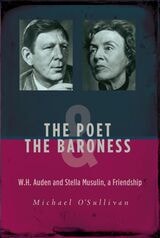
The Poet & the Baroness
W.H. Auden and Stella Musulin, a FriendshipMichael O'Sullivan
Central European University Press, 2023
For long periods in history, the Austrian capital found itself on the geographical edge of western civilisation. Yet from the 18th century on, Vienna has been a vibrant centre of European culture. This city is the scene of the formidable meeting of the two outstanding intellectuals that are at the core of this book.
The warm relationship between W.H. Auden, the celebrated British-American poet (1907–1973), and his fellow expatriate, the Welsh-Austrian journalist, translator and writer Stella Musulin (1915–1996) lasted while Auden resided in the nearby small town of Kirchstetten starting in 1958. It was here that the poet was laid to rest in the autumn of 1973. This book is based on the unpublished letters of Auden to Musulin and her private journals.
The study of this inspiring material yields new insights into Auden’s last, prolific, creative period and underscores the ‘Austrian Auden.’ In addition, Michael O’Sullivan pays tribute to the closest ‘Austrian’ friend of the poet. Baroness Stella von Musulin was an intellectual whose two books for Faber & Faber are acknowledged as classics: Vienna in the Age of Metternich and Austria: People & Landscape (with a foreword by Auden). The author situates the close relationship of two individuals in the context of Austria’s complex political, social, and cultural history in the Cold War years.
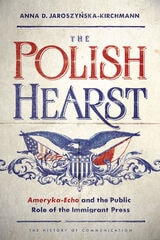
The Polish Hearst
Ameryka-Echo and the Public Role of the Immigrant PressAnna D. Jaroszynska-Kirchmann
University of Illinois Press, 2015
Anna D. Jaroszyńska-Kirchmann mines seven decades' worth of thoughts expressed by Ameryka-Echo readers to chronicle the ethnic press's role in the immigrant experience. Open and unedited debate harkened back to homegrown journalistic traditions, and Jaroszyńska-Kirchmann opens up the nuances of an editorial philosophy that cultivated readers as content creators. As she shows, ethnic publications in the process forged immigrant social networks and pushed notions of education and self-improvement throughout Polonia. Paryski, meanwhile, built a publishing empire that earned him the nickname ""The Polish Hearst.""
Detailed and incisive, The Polish Hearst opens the door on the long-overlooked world of ethnic publishing and the amazing life of one of its towering figures.
The Politics of Fame
Burns, Eric
Rutgers University Press, 2019
In search of answers, cultural historian Eric Burns delves deep into the biographies of some of the most famous figures in American history, from Benjamin Franklin to Fanny Kemble, Elvis Presley to Gene Tierney, and Michael Jordan to Oprah Winfrey. Through these case studies, he considers the evolution of celebrity throughout the ages. More controversially, he questions the very status of fame in the twenty-first century, an era in which thousands of minor celebrities have seen their fifteen minutes in the spotlight.
The Politics of Fame is a provocative and entertaining look at the lives and afterlives of America’s most beloved celebrities as well as the mad devotion they inspired. It raises important questions about what celebrity worship reveals about the worshippers—and about the state of the nation itself
The Politics of Fear
Joseph R. McCarthy and the SenateRobert Griffith
University of Massachusetts Press, 1970
Winner of the Organization of American Historians’ Frederick Jackson Turner Award
Originally published in 1970, and now a classic in its field, The Politics of Fear traces the rise and fall of one of America’s most notorious political demagogues. Robert Griffith concludes that McCarthy’s enormous power owed less to the force of the senator’s unique personality than to the issues and symbols with which he identified and that McCarthy was the product, not the progenitor, of the postwar politics of anticommunism. For this edition, Griffith has provided a new introduction covering the recent literature on McCarthyism and the changing views on the topic.
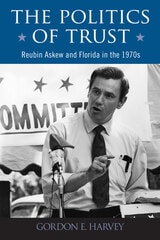
The Politics of Trust
Reubin Askew and Florida in the 1970sGordon E. Harvey
University of Alabama Press, 2015
Askew rose to power on a wave of “New South” leadership that hoped to advance the Democratic Party beyond the intransigent torpor of southern politics since the Civil War. He hoped to replace appeals to white supremacy with a vision of a more diverse and inclusive party. Following his election in Florida, other New South leaders such as Georgia’s Jimmy Carter, Arkansas’s Dale Bumpers, and South Carolina’s John C. West all came to power.
Audacious and gifted, Askew was one of six children raised by a single mother in Pensacola. As he worked his way up through the ranks of the state legislature, few in Florida except his constituents knew his name when he challenged Republic incumbent Claude R. Kirk Jr. on a populist platform promising higher corporate taxes. When he won, he inaugurated a series of reforms, including a new 5 percent corporate income tax; lower consumer, property, and school taxes; a review of penal statutes; environmental protections; higher welfare benefits; and workers’ compensation to previously uncovered migrant laborers.
Touting honesty, candor, and transparency, Askew dubbed his administration “government in the sunshine.” Harvey demonstrates that Askew’s success was not in spite of his penchant for bold, sometimes unpopular stances, but rather because his mix of unvarnished candor, sober ethics, and religious faith won the trust of the diverse peoples of his state.
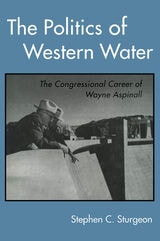
The Politics of Western Water
The Congressional Career of Wayne AspinallStephen C. Sturgeon
University of Arizona Press, 2002
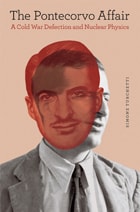
The Pontecorvo Affair
A Cold War Defection and Nuclear PhysicsSimone Turchetti
University of Chicago Press, 2012
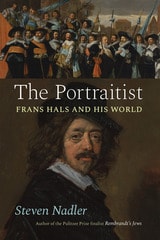
The Portraitist
Frans Hals and His WorldSteven Nadler
University of Chicago Press, 2022
Frans Hals was one of the greatest portrait painters in history, and his style transformed ideas and expectations about what portraiture can do and what a painting should look like.
Hals was a member of the great trifecta of Dutch Baroque painters alongside Rembrandt and Vermeer, and he was the portraitist of choice for entrepreneurs, merchants, professionals, theologians, intellectuals, militiamen, and even his fellow artists in the Dutch Golden Age. His works, with their visible brush strokes and bold execution, lacked the fine detail and smooth finish common among his peers, and some dismissed his works as sloppy and unfinished. But for others, they were fresh and exciting, filled with a sense of the sitter’s animated presence captured with energy and immediacy.
Steven Nadler gives us the first full-length biography of Hals in many years and offers a view into seventeenth-century Haarlem and this culturally rich era of the Dutch Republic. He tells the story not only of Hals’s life, but also of the artistic, social, political, and religious worlds in which he lived and worked.
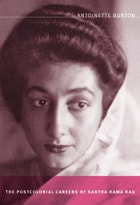
The Postcolonial Careers of Santha Rama Rau
Antoinette Burton
Duke University Press, 2007
Drawing on archival research and interviews with Rama Rau, historian Antoinette Burton opens Rama Rau’s career into an examination of orientalism in the postwar United States, the changing idioms of cosmopolitanism in the postcolonial era, and the afterlife of British colonialism in the American public sphere. Burton describes how Rama Rau’s career was shaped by gendered perceptions of India and “the East” as well as by the shifting relationships between the United States, India, Pakistan, and Great Britain during the Cold War. Exploring how Rama Rau positioned herself as an expert on both India and the British empire, Burton analyzes the correspondence between Rama Rau and her Time-Life editors over the contents of her book The Cooking of India (1969), and Rama Rau’s theatrical adaptation of E. M. Forster’s A Passage to India, which played on Broadway in 1961 and was the basis for David Lean’s 1985 film. Burton assesses the critical reception of Rama Rau’s play as well as her correspondence with Forster and Lean.
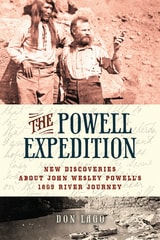
The Powell Expedition
New Discoveries about John Wesley Powell's 1869 River JourneyDon Lago
University of Nevada Press, 2017
Lago offers a feast of new and important material about the river trip, and it will significantly rewrite the story of Powell’s famous expedition. This book is not only a major work on the Powell expedition, but on the history of American exploration of the West.
The Powell Papers
A Confidence Man Amok Among the Anglo-American LiteratiHershel Parker
Northwestern University Press, 2011
In 1849—months before the term “confidence man” was coined to identify a New York crook—Thomas Powell (1809–1887), a spherical, monocled, English poetaster, dramatist, journalist, embezzler, and forger, landed in Manhattan. Powell in London had capped a career of grand theft and literary peccadilloes by feigning a suicide attempt and having himself committed to a madhouse, after which he fled England. He had been an intimate of William Wordsworth, Elizabeth Barrett, Robert Browning, Charles Dickens, and a crowd of lesser literary folk.
Thoughtfully bearing what he presented as a volume of Tennyson with a few trifling revisions in the hand of the poet, Powell was embraced by the slavishly Anglophile New York literary establishment, including a young Herman Melville. In two pot-boilers—The Living Authors of England (1849) and The Living Authors of America (1850)—Powell denounced the most revered American author, Washington Irving, for plagiarism; provoked Charles Dickens to vengeful trans-Atlantic outrage and then panic; and capped his insolence by identifying Irving and Melville as the two worst “enemies of the American mind.” For almost four more decades he sniped at Dickens, put words in Melville’s mouth, and survived even the most conscientious efforts to expose him. Long fascinated by this incorrigible rogue, Hershel Parker in The Powell Papers uses a few familiar documents and a mass of freshly discovered material (including a devastating portrait of Powell in a serialized novel) to unfold a captivating tale of skullduggery through the words of great artists and then-admired journalists alike.

The Power of Two
A Twin Triumph Over Cystic FibrosisIsabel Byrnes and Anabel Stenzel
University of Missouri Press, 2007
For most people, a diagnosis of cystic fibrosis means the certainty of a life ended too soon. But for twin girls with the disease, what began as a family’s stubborn determination grew into a miracle.
The tragedy of CF has been touchingly recounted in such books as Frank Deford’s Alex: The Life of a Child, but The Power of Two is the first book to portray the symbiotic relationship between twins who share this life-threatening disease through adulthood. Isabel Stenzel Byrnes and Anabel Stenzel tell of their lifelong struggle to pursue normal lives with cystic fibrosis while grappling with the realization that they will die young. Their story reflects the physical and emotional challenges of a particularly aggressive form of CF and tells how the twins’ bicultural heritage—Japanese and German—influenced the way they coped with these challenges.
Born in 1972, seventeen years before scientists discovered the genetic mutation that causes CF, Isabel and Anabel endured the daily regimen of chest percussion, frequent doctor visits, and lengthy hospitalizations. But they tell how, in the face of innumerable setbacks, their deep-seated dependence on each other allowed them to survive long enough to reap the benefits of the miraculous lung transplants that marked a crossroads in their lives: “We have an old life—one of growing up with chronic illness—and a new life—one of opportunities and gifts we have never imagined before.” In this memoir, they pay tribute to the people who shaped their experience.
The Power of Two is an honest and gripping portrayal of day-to-day health care, the impact of chronic illness on marriage and family, and the importance of a support network to continuing survival. It conveys an important message to both popular and professional readers as it addresses key psychosocial issues in chronic illness throughout the sufferer’s lifespan and illuminates the human side of advances in biotechnology.
Even as gene therapy and stem cell research increase the chances for eradicating CF, this stirring account portrays its effects on one family that refused to give up. These two remarkable sisters have much to teach about the power of perseverance—and about the ultimate power of hope.
The Power of the Between
An Anthropological OdysseyPaul Stoller
University of Chicago Press, 2008
Beginning with his early days with the Peace Corps in Africa and culminating with a recent bout with cancer, The Power of the Between is an evocative account of the circuitous path Stoller’s life has taken, offering a fascinating depiction of how a career is shaped over decades of reading and research. Stoller imparts his accumulated wisdom not through grandiose pronouncements but by drawing on his gift for storytelling. Tales of his apprenticeship to a sorcerer in Niger, his studies with Claude Lévi-Strauss in Paris, and his friendships with West African street vendors in New York City accompany philosophical reflections on love, memory, power, courage, health, and illness.
Graced with Stoller’s trademark humor and narrative elegance, The Power of the Between is both the story of a distinguished career and a profound meditation on coming to terms with the impermanence of all things.
The Power of the Texas Governor
Connally to BushBy Brian McCall
University of Texas Press, 2009
George W. Bush called it "the best job in the world," yet many would argue that the Texas governorship is a weak office. Given few enumerated powers by the Texas Constitution, the governor must build a successful relationship with the state legislature—sometimes led by a powerful lieutenant governor or speaker of the opposing party—to advance his or her policy agenda. Yet despite the limitations on the office and the power of the legislative branch, many governors have had a significant impact on major aspects of Texas's public life—government, economic development, education, and insurance reform among them. How do Texas governors gain the power to govern effectively?
The Power of the Texas Governor takes a fresh look at the state's chief executives, from John Connally to George W. Bush, to discover how various governors have overcome the institutional limitations of the office. Delving into the governors' election campaigns and successes and failures in office, Brian McCall makes a convincing case that the strength of a governor's personality—in particular, his or her highly developed social skills—can translate into real political power. He shows, for example, how governors such as Ann Richards and George W. Bush forged personal relationships with individual legislators to achieve their policy goals. Filled with revealing insights and anecdotes from key players in each administration, The Power of the Texas Governor offers new perspectives on leadership and valuable lessons on the use of power.
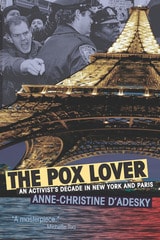
The Pox Lover
An Activist's Decade in New York and ParisAnne-christine d'Adesky
University of Wisconsin Press, 2017
D'Adesky takes us through a fast-changing East Village: squatter protests and civil disobedience lead to all-night drag and art-dance parties, the fun-loving Lesbian Avengers organize dyke marches, and the protest group ACT UP stages public funerals. Traveling as a journalist to Paris, an insomniac d'Adesky trolls the Seine, encountering waves of exiles fleeing violence in the Balkans, Haiti, and Rwanda. As the last of the French Nazis stand trial and the new National Front rises in the polls, d'Adesky digs into her aristocratic family's roots in Vichy France and colonial Haiti. This is a testament with a message for every generation: grab at life and love, connect with others, fight for justice, keep despair at bay, and remember.
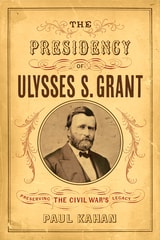
The Presidency of Ulysses S. Grant
Preserving the Civil War's LegacyPaul Kahan
Westholme Publishing, 2025
On December 5, 1876, President Ulysses S. Grant transmitted his eighth and final message to Congress. In reviewing his tenure as president, Grant proclaimed, “Mistakes have been made,” though he assured Congress, his administration’s “failures have been errors of judgment, not of intent.” Until recently, scholars have portrayed Grant as among the country’s worst chief executives. Though the scholarly consensus about Grant’s presidency is changing, the general public knows little, if anything, about his two terms, other than their outsized reputation for corruption. While scandals are undoubtedly part of the story, there is more to Grant’s presidency: Grant faced the Panic of 1873, the severest economic depression in U.S. history, defeated the powerful Senator Charles Sumner on the annexation of Cuba, and deftly avoided war with Spain while laying the groundwork for the “special relationship” between Great Britain and the United States. Grant’s efforts to ensure justice for African Americans and American Indians, however, were undercut by his own decisions and by the contradictory demands of the various constituencies that made up the Republican Party.
In The Presidency of Ulysses S. Grant: Preserving the Civil War’s Legacy, historian Paul Kahan focuses on the unique political, economic, and cultural forces unleashed by the Civil War and how Grant addressed these issues during his tumultuous two terms as chief executive. A timely reassessment, The Presidency of Ulysses S. Grant sheds new light on the business of politics in the decade after the Civil War and portrays an energetic and even progressive executive whose legacy has been overshadowed by both his wartime service and his administration’s many scandals.
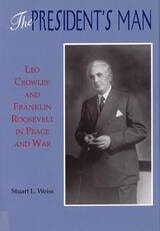
The President's Man
Leo Crowley and Franklin Roosevelt in Peace and WarStuart L. Weiss
Southern Illinois University Press, 1996
Leo Crowley has been known only as the administrator condemned by President Truman for cutting off Soviet lend-lease after V-E Day. Stuart L. Weiss revises this view while exploring Crowley’s long, significant state and federal career, emphasizing his service as Franklin D. Roosevelt’s man for all seasons.
Weiss deals effectively with Crowley’s flaws and virtues as well as those of the administrations he served. Crowley was confirmed as chair of the FDIC in 1934 despite a charge, unknown to President Roosevelt, that Crowley had committed fraud as a banker in Wisconsin. Crowley then served with distinction for more than eleven years as the administration twice buried a 1935 Treasury Department report that, had it been handed to Wisconsin authorities, could have sent him to prison: Roosevelt valued Crowley’s political and administrative talents too highly to allow that to happen.
In 1939, Roosevelt, anxious to have business support for stopping the Axis powers, encouraged Crowley to take the chair of a holding company about to be prosecuted by the SEC. After Pearl Harbor, like priorities prompted the president first to name Crowley alien property custodian, then chair of the Board of Economic Warfare to supplant Roosevelt’s politically troublesome vice president, and, finally, foreign economic administrator, the person responsible for civilian lend-lease activity
In this vibrant biography, Weiss furnishes the reader with detailed portraits of a man faithful to his president even when he disagreed with him and of a president willing to do what he felt was necessary for the good of the country.
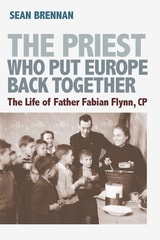
The Priest Who Put Europe Back Together
The Life of Rev. Fabian Flynn, CPSean Brennan
Catholic University of America Press, 2018
The Professional Convict's Tale
The Survival of John O'Neill In and Out of PrisonElmer H. Johnson
Southern Illinois University Press, 2007
Challenging the ideology of treatment in the prison world
The Professional Convict’s Tale: The Survival of John O’Neill In and Out of Prison offers a unique, inside view of life behind bars in the 1960s. Elmer H. Johnson, a criminologist who has specialized in prison life for half a century, gave Menard Penitentiary parolee John O’Neill a tape recorder and a set of questions designed to draw out his opinions and observations about the prison world.
This study frames O’Neill’s responses with Johnson’s analysis. O’Neill’s narrative guides readers through the world beyond the prison gate as he shares his strategies for survival and proposes alternatives to rebellion or submission. He discusses the fractionalization between the keepers and the kept and the effects that subterranean communication, threats of inmate predators, and prison riots can have on the psyche of both inmates and staff.
O’Neill’s frustrations and the inadequate responses from the community to which he was paroled illustrate the social costs and impact of parole for the community and for the parolee. Although O’Neill recorded his comments more than forty years ago, they are still relevant today when thousands of convicts are being released from prison each year.
The Promise of Failure
One Writer's Perspective on Not SucceedingJohn McNally
University of Iowa Press, 2018
The Promise of Failure is part memoir of the writing life, part advice book, and part craft book; sometimes funny, sometimes wrenching, but always honest. McNally uses his own life as a blueprint for the writer’s daily struggles as well as the existential ones, tackling subjects such as when to quit and when to keep going, how to deal with depression, what risking something of yourself means, and ways to reenergize your writing through reinvention.
What McNally illuminates is how rejection, in its best light, is another element of craft, a necessary stage to move the writer from one project to the next, and that it’s best to see rejection and failure on a life-long continuum so that you can see the interconnectedness between failure and success, rather than focusing on failure as a measure of self-worth. As brutally candid as McNally can sometimes be, The Promise of Failure is ultimately an inspiring book—never in a Pollyannaish self-help way. McNally approaches the reader as a sympathetic companion with cautionary tales to tell. Written by an author who has as many unpublished books under his belt as published ones, The Promise of Failure is as much for the newcomer as it is for the established writer.
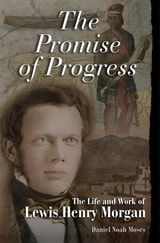
The Promise of Progress
The Life and Work of Lewis Henry MorganDaniel Noah Moses
University of Missouri Press, 2009
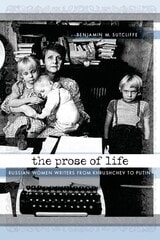
The Prose of Life
Russian Women Writers from Khrushchev to PutinBenjamin M. Sutcliffe
University of Wisconsin Press, 2009
A focus on the representation of everyday life in women’s prose reveals that a first generation of female writers (Natal’ia Baranskaia, Irina Grekova) both legitimated and limited their successors (Liudmila Petrushevskaia, Tat’iana Tolstaia, Liudmila Ulitskaia, and Svetlana Vasilenko) in their choice of literary topics. The Prose of Life traces the development, and intriguing ruptures, of recent Russian women’s prose, becoming a must-read for readers interested in Russian literature and gender studies.
2009 Outstanding Academic Title, Choice Magazine
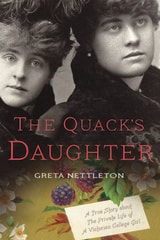
The Quack's Daughter
A True Story about the Private Life of a Victorian College Girl, Revised EditionGreta Nettleton
University of Iowa Press, 2014
This lively, stereotype-shattering story might have been lost, had Cora’s great-granddaughter, Greta Nettleton, not decided to go through some old family trunks instead of discarding most of the contents unexamined. Inside she discovered a rich cache of Cora’s college memorabilia—essential complements to her 1885 diary, which Nettleton had already begun to read. The Quack’s Daughter details Cora’s youthful travails and adventures during a time of great social and economic transformation. From her working-class childhood to her gilded youth and her later married life, Cora experienced triumphs and disappointments as a gifted concert pianist that the reader will recognize as tied to the limited opportunities open to women at the turn of the twentieth century, as well as to the dangerous consequences for those who challenged social norms.
Set in an era of surging wealth torn by political controversy over inequality and women’s rights and widespread panic about domestic terrorists, The Quack’s Daughter is illustrated with over a hundred original images and photographs that illuminate the life of a spirited and charming heroine who ultimately faced a stark life-and-death crisis that would force her to re-examine her doubts about her mother’s medical integrity.

The Quiet Hero
A Life of Ryan WhiteNelson Price
Indiana Historical Society Press, 2015
The Quiet Voices
Southern Rabbis and Black Civil Rights, 1880s to 1990sMark K. Bauman
University of Alabama Press, 1997
These wide-ranging essays reveal the various roles played by southern rabbis in the struggle for black civil rights since Reconstruction
The study of black-Jewish relations has become a hotbed of controversy, especially with regard to the role played by Jewish leaders during the Civil Rights movement. Did these leaders play a pivotal role, or did many of them, especially in the South, succumb to societal pressure and strive to be accepted rather than risk being persecuted? If some of these leaders did choose a quieter path, were their reasons valid? And were their methods successful?
Individually, each essay offers a glimpse into both the private and public difficulties these rabbis faced in their struggle to achieve good. Collectively, the essays provide an unparalleled picture of Jewish leadership during the civil rights era.
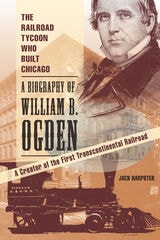
The Railroad Tycoon Who Built Chicago
A Biography of William B. OgdenJack Harpster
Southern Illinois University Press, 2009
William Butler Ogden was a pioneer railroad magnate, one of the earliest founders and developers of the city of Chicago, and an important influence on U.S. westward expansion. His career as a businessman stretched from the streets of Chicago to the wilds of the Wisconsin lumber forests, from the iron mines of Pennsylvania to the financial capitals in New York and beyond. Jack Harpster’s The Railroad Tycoon Who Built Chicago: A Biography of William B. Ogden is the first chronicle of one of the most notable figures in nineteenth-century America.
Harpster traces the life of Ogden from his early experiences as a boy and young businessman in upstate New York to his migration to Chicago, where he invested in land, canal construction, and steamboat companies. He became Chicago’s first mayor, built the city’s first railway system, and suffered through the Great Chicago Fire. His diverse business interests included real estate, land development, city planning, urban transportation, manufacturing, beer brewing, mining, and banking, to name a few. Harpster, however, does not simply focus on Ogden’s role as business mogul; he delves into the heart and soul of the man himself.
The Railroad Tycoon Who Built Chicago is a meticulously researched and nuanced biography set against the backdrop of the historical and societal themes of the nineteenth century. It is a sweeping story about one man’s impact on the birth of commerce in America. Ogden’s private life proves to be as varied and interesting as his public persona, and Harpster weaves the two into a colorful tapestry of a life well and usefully lived.
The Ranger Ideal Volume 1
Texas Rangers in the Hall of Fame, 1823-1861Darren L. Ivey
University of North Texas Press, 2017
The Ranger Ideal Volume 2
Texas Rangers in the Hall of Fame, 1874-1930Darren L. Ivey
University of North Texas Press, 2018
The Ranger Ideal Volume 3
Texas Rangers in the Hall of Fame, 1898-1987Darren L. Ivey
University of North Texas Press, 2021