Results by title
4127 books match the query 'Science' and 980 start with t
The Recombinant University
Genetic Engineering and the Emergence of Stanford BiotechnologyDoogab Yi
University of Chicago Press, 2015
Bay Area scientists, university administrators, and government officials were fascinated by and increasingly engaged in the economic and political opportunities associated with the privatization of academic research. Yi uncovers how the attempts made by Stanford scientists and administrators to demonstrate the relevance of academic research were increasingly mediated by capitalistic conceptions of knowledge, medical innovation, and the public interest. Their interventions resulted in legal shifts and moral realignments that encouraged the privatization of academic research for public benefit. The Recombinant University brings to life the hybrid origin story of biotechnology and the ways the academic culture of science has changed in tandem with the early commercialization of recombinant DNA technology.
The Refracted Muse
Literature and Optics in Early Modern SpainEnrique Garcia Santo-Tomas
University of Chicago Press, 2017
While Spain is often thought to have taken little notice of the Scientific Revolution, García Santo-Tomás tells a different story, one that reveals Golden Age Spanish literature to be in close dialogue with the New Science. Drawing on the work of writers such as Cervantes, Lope de Vega, Calderón de la Barca, and Quevedo, he helps us trace the influence of science and discovery on the rapidly developing and highly playful genre of the novel. Indeed, García Santo-Tomás makes a strong case that the rise of the novel cannot be fully understood without taking into account its relationship to the scientific discoveries of the period.

The Regional Dynamics of Language Differentiation in Belgium
A Study in Cultural-Political GeographyAlexander B. Murphy
University of Chicago Press, 1988

The Renewable Energy Alternative
How the United States and the World Can Prosper without Nuclear Energy or CoalJohn O. Blackburn
Duke University Press, 1987

The Reporter's Handbook on Nuclear Materials, Energy & Waste Management
Michael R. Greenberg
Vanderbilt University Press, 2009
Each "brief" is based on interviews with named scientists, engineers, or administrators in a nuclear specialty, and each has been reviewed by a team of independent experts. The objective is not to make a case for or against nuclear-related technologies, but rather to provide definitive background information. (The approach is based on that of The Reporter's Environmental Handbook, published in 1988, which won a special award for journalism from the Sigma Delta Chi Society of professional journalists.)
Other features of the book include: a glossary of hundreds of terms, an introduction to risk assessment, environmental and economic impacts, and public perceptions, an article by an experienced reporter with recommendations about how to cover nuclear issues, quick guides to the history of nuclear power in the United States, important federal legislation and regulations, nuclear position statements, and key organizations, print and electronic resources.
The Republic of Color
Science, Perception, and the Making of Modern AmericaMichael Rossi
University of Chicago Press, 2019
For a nation in the grip of profound economic, cultural, and demographic crises, the standardization of color became a means of social reform—a way of sculpting the American population into one more amenable to the needs of the emerging industrial order. Delineating color was also a way to characterize the vagaries of human nature, and to create ideal structures through which those humans would act in a newly modern American republic. Michael Rossi’s compelling history goes far beyond the culture of the visual to show readers how the control and regulation of color shaped the social contours of modern America—and redefined the way we see the world.
The Restless Clock
A History of the Centuries-Long Argument over What Makes Living Things TickJessica Riskin
University of Chicago Press, 2016
The Restless Clock examines the history of this principle, banning agency, in the life sciences. It also tells the story of dissenters embracing the opposite idea: that agency is essential to nature. The story begins with the automata of early modern Europe, as models for the new science of living things, and traces questions of science and agency through Descartes, Leibniz, Lamarck, and Darwin, among many others. Mechanist science, Jessica Riskin shows, had an associated theology: the argument from design, which found evidence for a designer in the mechanisms of nature. Rejecting such appeals to a supernatural God, the dissenters sought to naturalize agency rather than outsourcing it to a “divine engineer.” Their model cast living things not as passive but as active, self-making machines.
The conflict between passive- and active-mechanist approaches maintains a subterranean life in current science, shaping debates in fields such as evolutionary biology, cognitive science, and artificial intelligence. This history promises not only to inform such debates, but also our sense of the possibilities for what it means to engage in science—and even what it means to be alive.

The Ribbon of Green
Change in Riparian Vegetation in the Southwestern United StatesRobert H. Webb, Stanley A. Leake, and Raymond M. Turner
University of Arizona Press, 2007

The Riddle of Malnutrition
The Long Arc of Biomedical and Public Health Interventions in UgandaJennifer Tappan
Ohio University Press, 2017
More than ten million children suffer from severe acute malnutrition globally each year. In Uganda, longstanding efforts to understand, treat, and then prevent the condition initially served to medicalize it, in the eyes of both biomedical personnel and Ugandans who brought their children to the hospital for treatment and care. Medicalization meant malnutrition came to be seen as a disease—as a medical emergency—not a preventable condition, further compromising nutritional health in Uganda.
Rather than rely on a foreign-led model, physicians in Uganda responded to this failure by developing a novel public health program known as Mwanamugimu. The new approach prioritized local expertise and empowering Ugandan women, blending biomedical knowledge with African sensibilities and cultural competencies.
In The Riddle of Malnutrition, Jennifer Tappan examines how over the course of half a century Mwanamugimu tackled the most fatal form of childhood malnutrition—kwashiorkor—and promoted nutritional health in the midst of postcolonial violence, political upheaval, and neoliberal resource constraints. She draws on a diverse array of sources to illuminate the interplay between colonialism, the production of scientific knowledge, and the delivery of health services in contemporary Africa.
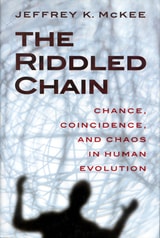
The Riddled Chain
Chance, Coincidence and Chaos in Human EvolutionMcKee, Jeffrey Kevin
Rutgers University Press, 2000
Did human evolution proceed in an inevitable fashion? Can we attribute our origins solely to natural selection, or were more mischievous forces at work?
These are the questions investigated by anthropologist Jeff McKee. He argues that if we were to wind back the clock to our split from ancestral apes, evolution would proceed differently. Ever since our ancestors first stood up on two feet, natural selection undoubtedly was an important factor in guiding human evolution. But McKee shakes the standard notion that natural selection steered early hominids toward particular environmental adaptations. The fossil remains of our ancestors reveal a different story one of an adaptable hominid with no particular direction. It becomes clear that the evolutionary road to Homo sapiens was not paved solely by natural selection; indeed, there was no road to follow. There was just a dim path cut out by prehistoric coincidences and contingencies. Had any link in the evolutionary chain of events been slightly different, then our species would not be as it is today . . . or our ancestors may not have survived at all.
With equal doses of humor and awe, McKee illustrates how the chain of evolution has been riddled by chance, coincidence, and chaos. He uses familiar examples, noting that many of us exist as individuals because of chance meetings of our parents. From the present back through prehistory, chance is at the heart of our creation is chaos. The classic example of chaos is the butterfly effect: a single butterfly, flapping its wings, causes a tiny change in the atmosphere, which in turn amplifies to affect the course of storms on another continent. McKee ties such examples of unpredictability to fossil evidence and computer simulations, revealing the natural coincidences that shaped our evolution. Although chaos exacted an evolutionary price by limiting the powers of natural selection, it also made us what we are. One can only conclude that human beings were neither inevitable nor probable.
The Rise of the Wave Theory of Light
Optical Theory and Experiment in the Early Nineteenth CenturyJed Z. Buchwald
University of Chicago Press, 1989
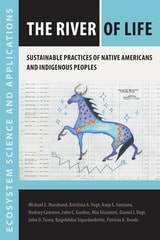
The River of Life
Sustainable Practices of Native Americans and Indigenous PeoplesMichael E. Marchand
Michigan State University Press, 2014
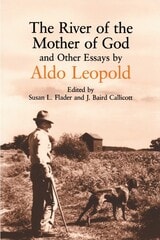
The River of the Mother of God
and other Essays by Aldo LeopoldAldo Leopold; Edited by J. Baird Callicott and Susan L. Flader
University of Wisconsin Press, 1992
His name is inextricably linked with a single work, A Sand County Almanac, a classic of natural history literature and the conservationist's bible. This book brings together the best of Leopold's essays.
The Road since Structure
Philosophical Essays, 1970-1993, with an Autobiographical InterviewThomas S. Kuhn
University of Chicago Press, 2000
The Robot's Rebellion
Finding Meaning in the Age of DarwinKeith E. Stanovich
University of Chicago Press, 2004
Accepting and now forcefully responding to this decentering and disturbing idea, Keith Stanovich here provides the tools for the "robot's rebellion," a program of cognitive reform necessary to advance human interests over the limited interest of the replicators and define our own autonomous goals as individual human beings. He shows how concepts of rational thinking from cognitive science interact with the logic of evolution to create opportunities for humans to structure their behavior to serve their own ends. These evaluative activities of the brain, he argues, fulfill the need that we have to ascribe significance to human life.
We may well be robots, but we are the only robots who have discovered that fact. Only by recognizing ourselves as such, argues Stanovich, can we begin to construct a concept of self based on what is truly singular about humans: that they gain control of their lives in a way unique among life forms on Earth—through rational self-determination.
The Romantic Conception of Life
Science and Philosophy in the Age of GoetheRobert J. Richards
University of Chicago Press, 2002
Integrating Romantic literature, science, and philosophy with an intimate knowledge of the individuals involved—from Goethe and the brothers Schlegel to Humboldt and Friedrich and Caroline Schelling—Richards demonstrates how their tempestuous lives shaped their ideas as profoundly as their intellectual and cultural heritage. He focuses especially on how Romantic concepts of the self, as well as aesthetic and moral considerations—all tempered by personal relationships—altered scientific representations of nature. Although historians have long considered Romanticism at best a minor tributary to scientific thought, Richards moves it to the center of the main currents of nineteenth-century biology, culminating in the conception of nature that underlies Darwin's evolutionary theory.
Uniting the personal and poetic aspects of philosophy and science in a way that the German Romantics themselves would have honored, The Romantic Conception of Life alters how we look at Romanticism and nineteenth-century biology.
The Romantic Machine
Utopian Science and Technology after NapoleonJohn Tresch
University of Chicago Press, 2012
In the years immediately following Napoleon’s defeat, French thinkers in all fields set their minds to the problem of how to recover from the long upheavals that had been set into motion by the French Revolution. Many challenged the Enlightenment’s emphasis on mechanics and questioned the rising power of machines, seeking a return to the organic unity of an earlier age and triggering the artistic and philosophical movement of romanticism. Previous scholars have viewed romanticism and industrialization in opposition, but in this groundbreaking volume John Tresch reveals how thoroughly entwined science and the arts were in early nineteenth-century France and how they worked together to unite a fractured society.
Focusing on a set of celebrated technologies, including steam engines, electromagnetic and geophysical instruments, early photography, and mass-scale printing, Tresch looks at how new conceptions of energy, instrumentality, and association fueled such diverse developments as fantastic literature, popular astronomy, grand opera, positivism, utopian socialism, and the Revolution of 1848. He shows that those who attempted to fuse organicism and mechanism in various ways, including Alexander von Humboldt and Auguste Comte, charted a road not taken that resonates today.
Essential reading for historians of science, intellectual and cultural historians of Europe, and literary and art historians, The Romantic Machine is poised to profoundly alter our understanding of the scientific and cultural landscape of the early nineteenth century.
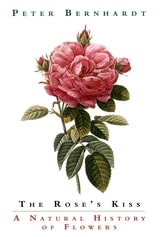
The Rose's Kiss
A Natural History of FlowersPeter Bernhardt
University of Chicago Press, 2002
In The Rose's Kiss, Peter Bernhardt presents a fascinating and wide-ranging look at the natural history of flowers—how they look, what they do, and their often hidden interactions with the surrounding environment and other living organisms upon which they depend for their survival. You'll discover why flowers are so colorful, how they evolved, and how insects exploit them for their nectar. This is a book for all flower lovers, from naturalists and gardeners to poets and botanists.

The Royal Observatory, Greenwich, 1881–1939
Astronomy, Astronomers and Heritage in a Changing WorldLee T. Macdonald
University College London, 2026
The first detailed history of the Royal Observatory at Greenwich covering the period after the retirement of George Airy, seventh Astronomer Royal, in 1881.
This book charts an under-researched period in the long history of the Royal Observatory at Greenwich. It covers both the scientific and social-political history of the Royal Observatory, focusing on its significance within the history of astronomy and UK history more generally. Using a wealth of archival material—much of which was previously unpublished—Lee T. Macdonald's narrative brings the day-to-day operations of the Observatory to life and reveals how its mission in positional astronomy, combined with its cutting-edge research in photographic mapping and the study of solar eclipses, continues to expand the frontiers of astronomical research.
The Runes of Evolution
How the Universe became Self-AwareSimon Conway Morris
Templeton Press, 2015
A leading evolutionary biologist at the University of Cambridge, Conway Morris came into international prominence for his work on the Cambrian explosion (especially fossils of the Burgess Shale) and evolutionary convergence, which is the process whereby organisms not closely related (not monophyletic), independently evolve similar traits as a result of having to adapt to similar environments or ecological niches.
In The Runes of Evolution, he illustrates how the ubiquity of convergence hints at an underlying framework whereby many outcomes, not least brains and intelligence, are virtually guaranteed on any Earth-like planet. Conway Morris also emphasizes how much of the complexity of advanced biological systems is inherent in microbial forms.
By casting a wider net, The Runes of Evolution explores many neglected evolutionary questions. Some are remarkably general. Why, for example, are convergences such as parasitism, carnivory, and nitrogen fixation in plants concentrated in particular taxonomic hot spots? Why do certain groups have a particular propensity to evolve toward particular states?
Some questions lead to unexpected evolutionary insights: If bees sleep (as they do), do they dream? Why is that insect copulating with an orchid? Why have sponges evolved a system of fiber optics? What do mantis shrimps and submarines have in common? If dinosaurs had not gone extinct what would have happened next? Will a saber-toothed cat ever re-evolve?
Cona Morris observes: “Even amongst the mammals, let alone the entire tree of life, humans represent one minute twig of a vast (and largely fossilized) arborescence. Every living species is a linear descendant of an immense string of now-vanished ancestors, but evolution itself is the very reverse of linear. Rather it is endlessly exploratory, probing the vast spaces of biological hyperspace. Indeed this book is a celebration of how our world is (and was) populated by a riot of forms, a coruscating tapestry of life.”
The Runes of Evolution is the most definitive synthesis of evolutionary convergence to be published to date.

The Saguaro Cactus
A Natural HistoryDavid Yetman, Alberto Búrquez, Kevin Hultine, and Michael Sanderson, with Frank S. Crosswhite
University of Arizona Press, 2020
This book offers a complete natural history of this enduring and iconic desert plant. Gathering everything from the saguaro’s role in Sonoran Desert ecology to its adaptations to the desert climate and its sacred place in Indigenous culture, this book shares precolonial through current scientific findings.
The saguaro is charismatic and readily accessible but also decidedly different from other desert flora. The essays in this book bear witness to our ongoing fascination with the great cactus and the plant’s unusual characteristics, covering the saguaro’s: history of discovery, place in the cactus family, ecology, anatomy and physiology, genetics, and ethnobotany. The Saguaro Cactus offers testimony to the cactus’s prominence as a symbol, the perceptions it inspires, its role in human society, and its importance in desert ecology.
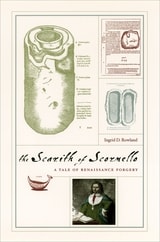
The Scarith of Scornello
A Tale of Renaissance ForgeryIngrid D. Rowland
University of Chicago Press, 2004
As recounted here with relish by Ingrid D. Rowland, Curzio preyed on the Italian fixation with ancestry to forge an array of ancient Latin and Etruscan documents. For authenticity's sake, he stashed the counterfeit treasure in scarith (capsules made of hair and mud) near Scornello. To the seventeenth-century Tuscans who were so eager to establish proof of their heritage and history, the scarith symbolized a link to the prestigious culture of their past. But because none of these proud Italians could actually read the ancient Etruscan language, they couldn't know for certain that the documents were frauds. The Scarith of Scornello traces the career of this young scam artist whose "discoveries" reached the Vatican shortly after Galileo was condemned by the Inquisition, inspiring participants on both sides of the affair to clash again—this time over Etruscan history.
An expert on the Italian Renaissance and one of only a few people in the world to work with the Etruscan language, Rowland writes a tale so enchanting it seems it could only be fiction. In her investigation of this seventeenth-century caper, Rowland will captivate readers with her sense of humor and obvious delight in Curzio's far-reaching prank. And even long after the inauthenticity of Curzio's creation had been established, this practical joke endured: the scarith were stolen in the 1980s by a thief who mistook them for the real thing.

The Science and Politics of Racial Research
William H. Tucker
University of Illinois Press, 1994
The Science of Being as Being
Metaphysical InvestigationsGregory T. Doolan
Catholic University of America Press, 2012
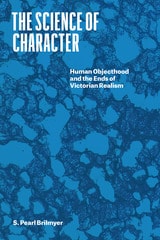
The Science of Character
Human Objecthood and the Ends of Victorian RealismS. Pearl Brilmyer
University of Chicago Press, 2022
In 1843, the Victorian philosopher John Stuart Mill called for the establishment of a new science, “the science of the formation of character.” Although Mill’s proposal failed as scientific practice, S. Pearl Brilmyer maintains that it found its true home in realist fiction of the period, which employed the literary figure of character to investigate the nature of embodied experience. Bringing to life Mill’s unrealized dream of a science of character, novelists such as George Eliot, Thomas Hardy, and Olive Schreiner turned to narrative to explore how traits and behaviors in organisms emerge and develop, and how aesthetic features—shapes, colors, and gestures—come to take on cultural meaning through certain categories, such as race and sex. Engaged with materialist science and philosophy, these authors transformed character from the liberal notion of the inner truth of an individual into a materially determined figuration produced through shifts in the boundaries between the body’s inside and outside. In their hands, Brilmyer argues, literature became a science, not in the sense that its claims were falsifiable or even systematically articulated, but in its commitment to uncovering, through a fictional staging of realistic events, the laws governing physical and affective life. The Science of Character redraws late Victorian literary history to show how women and feminist novelists pushed realism to its aesthetic and philosophical limits in the crucial span between 1870 and 1920.
The Science of Deception
Psychology and Commerce in AmericaMichael Pettit
University of Chicago Press, 2012
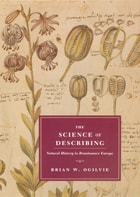
The Science of Describing
Natural History in Renaissance EuropeBrian W. Ogilvie
University of Chicago Press, 2006
In the late fifteenth and early sixteenth centuries, naturalists focused on understanding ancient and medieval descriptions of the natural world, but by the mid-sixteenth century naturalists turned toward distinguishing and cataloguing new plant and animal species. To do so, they developed new techniques of observing and recording, created botanical gardens and herbaria, and exchanged correspondence and specimens within an international community. By the early seventeenth century, naturalists began the daunting task of sorting through the wealth of information they had accumulated, putting a new emphasis on taxonomy and classification.
Illustrated with woodcuts, engravings, and photographs, The Science of Describing is the first broad interpretation of Renaissance natural history in more than a generation and will appeal widely to an interdisciplinary audience.
The Science of Energy
A Cultural History of Energy Physics in Victorian BritainCrosbie Smith
University of Chicago Press, 1999
Replacing the language and concepts of classical mechanics with terms such as "actual" and "potential" energy, the North British group conducted their revolution in physics so astutely and vigorously that the concept of "energy"—a valuable commodity in the early days of industrialization—became their intellectual property. Smith skillfully places this revolution in its scientific and cultural context, exploring the actual creation of scientific knowledge during one of the most significant episodes in the history of physics.
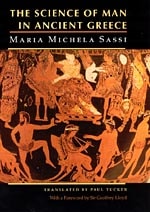
The Science of Man in Ancient Greece
Maria Michela Sassi
University of Chicago Press, 2000
Maria Michela Sassi reconstructs Greek attempts to answer such questions from Homer's day to late antiquity, ranging across physiognomy, ethnography, geography, medicine, and astrology. Sassi demonstrates that in the Greek science of man, empirical observations were inextricably bound up with a prejudiced view of the free Greek male as superior to all others. Thus, because women were assumed to have pale skin from staying indoors too much, Greek biology and medicine sought to explain this feature as an indication of the "cold" nature of women, as opposed to the "hot" constitution of men.
For this English translation, Sassi has rewritten the introduction and updated the text and references throughout, and Sir Geoffrey Lloyd has provided a new foreword.
The Science of Near-Death Experiences
Edited by John C. Hagan III
University of Missouri Press, 2017
The Science of Passionate Interests
An Introduction to Gabriel Tarde's Economic AnthropologyBruno Latour and Vincent Antonin Lépinay
Prickly Paradigm Press, 2009
How can economics become genuinely quantitative? This is the question that French sociologist Gabriel Tarde tackled at the end of his career, and in this pamphlet, Bruno Latour and Vincent Antonin Lépinay offer a lively introduction to the work of the forgotten genius of nineteenth-century social thought. Tarde’s solution was in total contradiction to the dominant views of his time: to quantify the connections between people and goods, you need to grasp “passionate interests.” In Tarde’s view, capitalism is not a system of cold calculations—rather it is a constant amplification in the intensity and reach of passions. In a stunning anticipation of contemporary economic anthropology, Tarde’s work defines an alternative path beyond the two illusions responsible for so much modern misery: the adepts of the Invisible Hand and the devotees of the Visible Hand will learn how to escape the sterility of their fight and recognize the originality of a thinker for whom everything is intersubjective, hence quantifiable.
At a time when the regulation of financial markets is the subject of heated debate, Latour and Lépinay provide a valuable historical perspective on the fundamental nature of capitalism.
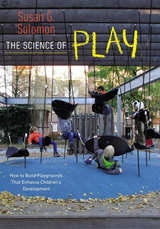
The Science of Play
How to Build Playgrounds That Enhance Children's DevelopmentSusan G. Solomon
University Press of New England, 2014
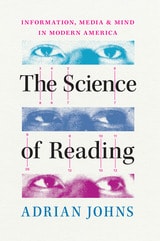
The Science of Reading
Information, Media, and Mind in Modern AmericaAdrian Johns
University of Chicago Press, 2023
Reading is perhaps the essential practice of modern civilization. For centuries, it has been seen as key to both personal fulfillment and social progress, and millions today depend on it to participate fully in our society. Yet, at its heart, reading is a surprisingly elusive practice. This book tells for the first time the story of how American scientists and others have sought to understand reading, and, by understanding it, to improve how people do it.
Starting around 1900, researchers—convinced of the urgent need to comprehend a practice central to industrial democracy—began to devise instruments and experiments to investigate what happened to people when they read. They traced how a good reader’s eyes moved across a page of printed characters, and they asked how their mind apprehended meanings as they did so. In schools across the country, millions of Americans learned to read through the application of this science of reading. At the same time, workers fanned out across the land to extend the science of reading into the social realm, mapping the very geography of information for the first time. Their pioneering efforts revealed that the nation’s most pressing problems were rooted in drastic informational inequities, between North and South, city and country, and white and Black—and they suggested ways to tackle those problems.
Today, much of how we experience our information society reflects the influence of these enterprises. This book explains both how the science of reading shaped our age and why, with so-called reading wars still plaguing schools across the nation, it remains bitterly contested.
The Science of Reading
Information, Media, and Mind in Modern AmericaAdrian Johns
University of Chicago Press, 2023
For the first time, the story of how and why we have plumbed the mysteries of reading, and why it matters today.
Reading is perhaps the essential practice of modern civilization. For centuries, it has been seen as key to both personal fulfillment and social progress, and millions today depend on it to participate fully in our society. Yet, at its heart, reading is a surprisingly elusive practice. This book tells for the first time the story of how American scientists and others have sought to understand reading, and, by understanding it, to improve how people do it.
Starting around 1900, researchers—convinced of the urgent need to comprehend a practice central to industrial democracy—began to devise instruments and experiments to investigate what happened to people when they read. They traced how a good reader’s eyes moved across a page of printed characters, and they asked how their mind apprehended meanings as they did so. In schools across the country, millions of Americans learned to read through the application of this science of reading. At the same time, workers fanned out across the land to extend the science of reading into the social realm, mapping the very geography of information for the first time. Their pioneering efforts revealed that the nation’s most pressing problems were rooted in drastic informational inequities, between North and South, city and country, and white and Black—and they suggested ways to tackle those problems.
Today, much of how we experience our information society reflects the influence of these enterprises. This book explains both how the science of reading shaped our age and why, with so-called reading wars still plaguing schools across the nation, it remains bitterly contested.

The Science of Religion and the Religion of Scientism
A Neuroscientist's Perspective on Consciousness, Morality, and the New AtheismChristopher Breitmeyer
Catholic University of America Press, 2026
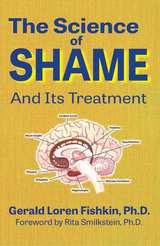
The Science of Shame and Its Treatment
Gerald Loren Fishkin, Ph.D.
Parkhurst Brothers, Inc., 2016
Through his empirical analysis and understanding of toxic shame, Dr. Fishkin has identified multiple effective clinical approaches for its treatment and addressing shame-based behaviors. He clearly outlines why contemporary treatment approaches, including cognitive behavioral therapy, do not treat core shame wounds and most often cause individuals to terminate the therapeutic process prematurely.
This book is a must-read for clinicians, addiction specialists, teachers, students of human behavior, counselors, social workers, patients in treatment.
The Science of Sleep
What It Is, How It Works, and Why It MattersWallace B. Mendelson
University of Chicago Press, 2017
In The Science of Sleep, sleep expert Wallace B. Mendelson explains the elements of human sleep states and explores the variety of sleep disorders afflicting thousands of people worldwide. Mendelson lays out the various treatments that are available today and provides a helpful guide for one of life’s most important activities. By offering the first scientific yet accessible account of sleep science, Mendelson allows readers to assess their personal relationships with sleep and craft their own individual approaches to a comfortable and effective night’s rest.
Addressing one of the major public health issues of the day with cutting-edge research and empathetic understanding, The Science of Sleep is the definitive illustrated reference guide to sleep science.
The Science of Stress
Living Under PressureEdited by Gregory L. Fricchione, Ana Ivkovic, and Albert S. Yeung
University of Chicago Press, 2016
As Fricchione and his colleagues show, alleviating stress is a task that no one physician can alleviate for us on his own. It is not the sort of problem that a surgeon can excise with a scalpel or an internist can eradicate with antibiotics. It requires everyone’s efforts—the healthy, the sick, doctors, nurses, psychologists, clergy, community leaders, and everyone else—to pull together to address the stress-induced drivers in our community that undermine our health. Clearly and accessibly exploring the latest in modern neuroscience and immunology, the authors examine what those drivers are and how they reduce the body’s metabolic reserve, making us more vulnerable to illness. They then look at the antidote: enhanced resilience, something we can achieve by smartly adjusting how we face the significant adversities that can spring up in so many facets of our lives.
Offering innumerable insights on the personal and social causes of stress and the physiological effects they have, this book serves as an essential guide to show us how to alleviate stress and properly take care of ourselves. In doing so, it offers a crucial first step toward meeting the biggest health challenge of this century.
The Science of Sympathy
Morality, Evolution, and Victorian CivilizationRob Boddice
University of Illinois Press, 2016
The Science of Synthesis
Exploring the Social Implications of General Systems TheoryDebora Hammond
University Press of Colorado, 2003
Both metaphor and framework, the systems concept as articulated by its earliest proponents highlights relationship and interconnectedness among the biological, ecological, social, psychological, and technological dimensions of our increasingly complex lives. Seeking to transcend the reductionism and mechanism of classical science-which they saw as limited by its focus on the discrete, component parts of reality-the general systems community hoped to complement this analytic approach with a more holistic orientation. As one of many systems traditions, the general systems group was specifically interested in fostering collaboration and integration among different disciplinary perspectives, with an emphasis on nurturing more participatory and truly democratic forms of social organization.
The Science of Synthesis documents a unique episode in the history of modern thought, one that remains relevant today. This book will be of interest to historians of science, system thinkers, scholars and practicioners in the social sciences, management, organization development and related fields, as well as the general reader interested in the history of ideas that have shaped critical developments in the second half of the twentieth century.
The Science of Walking
Investigations into Locomotion in the Long Nineteenth CenturyAndreas Mayer
University of Chicago Press, 2020
Looking back at more than a century of locomotion research, Mayer charts, for the first time, the rise of scientific endeavors to control and codify locomotion and analyzes their social, political, and aesthetic ramifications throughout the long nineteenth century. In an engaging narrative that weaves together science and history, Mayer sets the work of the most important representatives of the physiology of locomotion—including Wilhelm and Eduard Weber and Étienne-Jules Marey—in their proper medical, political, and artistic contexts. In tracing the effects of locomotion studies across other cultural domains, Mayer reframes the history of the science of walking and gives us a deeper understanding of human movement.
The Science of the Swastika
Bernard Mees
Central European University Press, 2008

The Sciences in Enlightened Europe
Edited by William Clark, Jan Golinski, and Simon Schaffer
University of Chicago Press, 1999
The contributors examine the production of new disciplines through work with instruments and techniques; consider how institutions of public taste and conversation helped provide a common frame for the study of human and nonhuman natures; and explore the regional operations of scientific culture at the geographical fringes of Europe.
Implicated in the rise of both fascism and liberal secularism, the moral and political values that shaped the Enlightenment remain controversial today. Through careful scrutiny of how these values influenced and were influenced by the concrete practices of its sciences, this book gives us an entirely new sense of the Enlightenment.
The Sciences of the Soul
The Early Modern Origins of PsychologyFernando Vidal
University of Chicago Press, 2011
Fernando Vidal’s trailblazing text on the origins of psychology traces the development of the discipline from its appearance in the late sixteenth century to its redefinition at the end of the seventeenth and its emergence as an institutionalized field in the eighteenth. Originally published in 2011, The Sciences of the Soul continues to be of wide importance in the history and philosophy of psychology, the history of the human sciences more generally, and in the social and intellectual history of eighteenth-century Europe.
The Scientific Enterprise in America
Readings from IsisEdited by Ronald L. Numbers and Charles E. Rosenberg
University of Chicago Press, 1996
Contributions include Sally Gregory Kohlstedt, "Parlors, Primers, and Public Schooling: Education for Science in Nineteenth-Century America;" Margaret Rossiter, "'Women's Work' in Science, 1880-1910;" Philip J. Pauly, "The Development of High School Biology: New York City, 1900-1925;" Susan E. Lederer, "Political Animals: The Shaping of Biomedical Research Literature in Twentieth-Century America;" Stanley Goldberg, "Inventing a Climate of Opinion: Vannevar Bush and the Decision to Build the Bomb;" Daniel J. Kevles, "The National Science Foundation and the Debate over Postwar Research Policy, 1942-1945: A Political Interpretation of Science: The Endless Frontier;" David A. Hollinger, "Science as a Weapon in Kulturkämpfe in the United States During and After World War II;" and others.
These essays originally were published in Isis, a publication of the History of Science Society.
The Scientific Enterprise in Antiquity and Middle Ages
Readings from IsisEdited by Michael H. Shank
University of Chicago Press, 2001
Contributors include Francesca Rochberg, David Pingree, G. E. R. Lloyd, Heinrich von Staden, Martin Bernal, Alexander Jones, Bernard Goldstein, Alan Bowen, Owsei Temkin, David Lindberg, Steven McCluskey, Linda Voigts, Edward Grant, Bernard Goldstein, Victor Roberts, Lynn Thorndike, Helen Lemay, William Newman, A. Mark Smith, Nancy Siraisi, Michael McVaugh, and Brian P. Copenhaver.
The Scientific Enterprise in Early Modern Europe
Readings from IsisEdited by Peter Dear
University of Chicago Press, 1997
The anthology features classic and prize-winning articles by renowned scholars, including "Totius in verba: Rhetoric and Authority in the Early Royal Society," by Peter Dear; "The Melanchthon Circle, Rheticus, and the Wittenberg Interpretation of the Copernican Theory," by Robert S. Westman; "Laboratory Design and the Aim of Science," by Owen Hannaway; "Geography as Self-Definition in Early Modern England," by Lesley B. Cormack; "What Happened to Occult Qualities in the Scientific Revolution?" by Keith Hutchison; and "Galileo, Motion, and Essences," by Margaret J. Osler.
Also, "Scientific Patronage: Galileo and the Telescope," by Richard S. Westfall; "The Telescope in the Seventeenth Century," by Albert Van Helden; "Descartes on Refraction," by Bruce S. Eastwood; "Early Seventeenth-Century Atomism," by Christoph Meinel; "Robert Boyle and Structural Chemistry in the Seventeenth Century," by Thomas S. Kuhn; "Newton's Alchemy and His Theory of Matter," by B. J. T. Dobbs; "The House of Experiment in Seventeenth-Century England," by Steven Shapin; and "Maria Winkelmann at the Berlin Academy," by Londa Scheibinger.
This carefully structured collection will help readers approach complex questions—involving argument and experiment, audience and agency, authority and institutions.
The Scientific Journal
Authorship and the Politics of Knowledge in the Nineteenth CenturyAlex Csiszar
University of Chicago Press, 2018
The Scientific Journal tells the story of how that changed. Alex Csiszar takes readers deep into nineteenth-century London and Paris, where savants struggled to reshape scientific life in the light of rapidly changing political mores and the growing importance of the press in public life. The scientific journal did not arise as a natural solution to the problem of communicating scientific discoveries. Rather, as Csiszar shows, its dominance was a hard-won compromise born of political exigencies, shifting epistemic values, intellectual property debates, and the demands of commerce. Many of the tensions and problems that plague scholarly publishing today are rooted in these tangled beginnings. As we seek to make sense of our own moment of intense experimentation in publishing platforms, peer review, and information curation, Csiszar argues powerfully that a better understanding of the journal’s past will be crucial to imagining future forms for the expression and organization of knowledge.
The Scientific Life
A Moral History of a Late Modern VocationSteven Shapin
University of Chicago Press, 2008
Conventional wisdom has long held that scientists are neither better nor worse than anyone else, that personal virtue does not necessarily accompany technical expertise, and that scientific practice is profoundly impersonal. Shapin, however, here shows how the uncertainties attending scientific research make the virtues of individual researchers intrinsic to scientific work. From the early twentieth-century origins of corporate research laboratories to the high-flying scientific entrepreneurship of the present, Shapin argues that the radical uncertainties of much contemporary science have made personal virtues more central to its practice than ever before, and he also reveals how radically novel aspects of late modern science have unexpectedly deep historical roots. His elegantly conceived history of the scientific career and character ultimately encourages us to reconsider the very nature of the technical and moral worlds in which we now live.
Building on the insights of Shapin’s last three influential books, featuring an utterly fascinating cast of characters, and brimming with bold and original claims, The Scientific Life is essential reading for anyone wanting to reflect on late modern American culture and how it has been shaped.
The Scientific Literature
A Guided TourEdited by Joseph E. Harmon and Alan G. Gross
University of Chicago Press, 2007
The scientific article has been a hallmark of the career of every important western scientist since the seventeenth century. Yet its role in the history of science has not been fully explored. Joseph E. Harmon and Alan G. Gross remedy this oversight with The Scientific Literature, a collection of writings—excerpts from scientific articles, letters, memoirs, proceedings, transactions, and magazines—that illustrates the origin of the scientific article in 1665 and its evolution over the next three and a half centuries.
Featuring articles—as well as sixty tables and illustrations, tools vital to scientific communication—that represent the broad sweep of modern science, The Scientific Literature is a historical tour through both the rhetorical strategies that scientists employ to share their discoveries and the methods that scientists use to argue claims of new knowledge. Commentaries that explain each excerpt’s scientific and historical context and analyze its communication strategy accompany each entry.
A unique anthology, The Scientific Literature will allow both the scholar and the general reader to experience first hand the development of modern science.