Results by title
3390 books match the query 'Fiction' and 1041 start with t
The Silent Crossing
Pascal Quignard
Seagull Books, 2013
A haunting homage to life and liberty, to society and solitude, and to the binding and unbinding that constitute the weft of our lives.
The Silent Years
Alena Mornštajnová
Seagull Books, 2026
Bohdana is an introverted young woman grappling with tensions in her family and a lingering question she can’t quite shake: on her last visit to the hospital, why did her gravely ill grandmother call her “Blanka,” and what potential hidden past is her family keeping from her? As Bohdana struggles to piece together the truth, another story unfolds alongside hers—that of Svatopluk Žák, a devoted builder of socialist society who hopes his beloved family’s future will be as brilliant as the star on the Soviet flag. When their two stories collide, hidden histories come to light.
In The Silent Years, Czech author Alena Mornštajnová weaves a rich, intimate family drama that reveals how easily a carefully constructed world can shatter and transform in an instant. Set in postwar Czechoslovakia, the novel follows a human story against a larger backdrop of a society in upheaval.
The Silk, the Shears and Marina; or, About Biography
Irena Vrkljan
Northwestern University Press, 1999
These are the first two volumes of the Croatian poet and novelist Irena Vrkljan's lyrical autobiography. Although each novel illuminates the other, they also stand alone as original and independent works of art. In The Silk, the Shears, Vrkljan traces the symbolic and moral significance of her life, and her vision of the fate of women in her mother's time and in her own. Marina continues the intense analysis of the poetic self, using the life of Marina Tsvetaeva to meditate on the processes behind biography.
The Silver Dove
Andrei Bely
Northwestern University Press, 2000
Dissatisfied with the life of the intelligentsia, the poet Daryalsky joins a rural mystic sect, the Silver Doves. The locals, in particular the peasant woman Matryona, are fascinated by the dashing stranger. Daryalsky is in turn taken in by the Doves' intimacy with the mystical and spiritual--and by Matryona. Under the influence of Kudeyarov, the ruthless cult leader, Daryalsky is used in a bid to produce a sacred child. But in time the poet disappoints the Doves and must face their suspicions and jealousies--and his own inevitable dire fate.
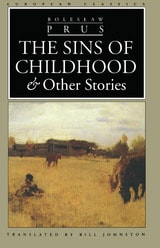
The Sins of Childhood and Other Stories
Boleslav Prus
Northwestern University Press, 1996
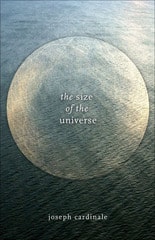
The Size of the Universe
Joseph Cardinale
University of Alabama Press, 2010
The landscape of this novel in stories—Joseph Cardinale’s first book-length work of fiction—is as familiar as childhood yet beguilingly surreal. The question of whether or not the child in the first fiction and the man in the last story are the same person—and whether any person is the same from one moment to the next—is perhaps the book’s main question.
In prose as spare as it is meticulous, The Size of the Universe conjures an elegant labyrinth of time, space, and memory, in which a wavering self, a self on the verge of becoming nothing, seeks a safe haven from the throes of near-religious ecstasy. It is a debut work that is inviting, perplexing, and bold.

The Ski Jumpers
A NovelPeter Geye
University of Minnesota Press, 2022
Now in paperback: a writer and former ski jumper facing a terminal diagnosis takes one more leap—into a past of soaring flights and broken family bonds
A brilliant ski jumper has to be fearless—Jon Bargaard remembers this well. His memories of daring leaps and risks might be the key to the book he’s always wanted to write: a novel about his family, beginning with Pops, once a champion ski jumper himself, who also took Jon and his younger brother Anton to the heights. But Jon has never been able to get past the next, ruinous episode of their history, and now that he has received a terrible diagnosis, he’s afraid he never will.
In a bravura performance, Peter Geye follows Jon deep into the past he tried so hard to leave behind, telling the story he spent his life escaping. It begins with a flourish, his father and his hard-won sweetheart fleeing Chicago, and a notoriously ruthless gangster, to land in North Minneapolis. That, at least, was the tale Jon heard, one that becomes more and more suspect as he revisits the events that eventually tore the family in two, sending his father to prison, his mother to the state hospital, and placing himself, a teenager, in charge of thirteen-year-old Anton. Traveling back and forth in time, Jon tells his family’s story—perhaps his last chance to share it—to his beloved wife Ingrid, circling ever closer to the truth about those events and his own part in them, and revealing the perhaps unforgivable violence done to the brothers’ bond.
The dream of ski jumping haunts Jon as his tale unfolds, daring time to stop just long enough to stick the landing. As thrilling as those soaring flights, as precarious as the Bargaard family’s complicated love, as tender as Jon’s backward gaze while disease takes him inexorably forward, Peter Geye’s gorgeous prose brings the brothers to the precipice of their relationship, where they have to choose: each other, or the secrets they’ve held so tightly for so long.
Cover alt text: Lightly gradiented periwinkle sky background with white cloud in upper right corner and snow in lower left. At top, a cutout black-and-white image of a ski jumper appears and is cut off at the neck. Foreground: Book title in all-caps red, with author name beneath in all-caps white and “A Novel” beneath in all-cap dark grey. All text reads at a motion slant.
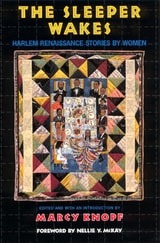
The Sleeper Wakes
Harlem Renaissance Stories by WomenKnopf-Newman, Marcy
Rutgers University Press, 1993
In recent years there has been an explosion of interest in the art and culture of the Harlem Renaissance. Yet this significant collection is the first definitive edition of Harlem Renaissance stories by women. The writers include Gwendolyn Bennett, Jessie Redmon Fauset, Angelina Weld Grimké, Zora Neale Hurston, Nella Larsen, Alice Dunbar-Nelson, and Dorothy West.
Published originally in periodicals such as The Crisis, Fire!!, and Opportunity, these twenty-seven stories have until now been virtually unavailable to readers. These stories are as compelling today as they were in the 1920s and 1930s. In them, we find the themes of black and white racial tension and misunderstanding, economic deprivation, passing, love across and within racial lines, and the attempt to maintain community and uplift the race.
Marcy Knopf's introduction surveys the history of the Harlem Renaissance, the periodicals and books it generated, and describes the rise to prominence of these women writers and their later fall from fame. She also includes a brief biography of each of the writers. Nellie Y. McKay's foreword analyzes the themes and concerns of the stories.
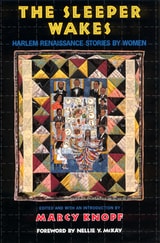
The Sleeper Wakes
Harlem Renaissance Stories by WomenKnopf-Newman, Marcy
Rutgers University Press, 1993
In recent years there has been an explosion of interest in the art and culture of the Harlem Renaissance. Yet this significant collection is the first definitive edition of Harlem Renaissance stories by women. The writers include Gwendolyn Bennett, Jessie Redmon Fauset, Angelina Weld Grimké, Zora Neale Hurston, Nella Larsen, Alice Dunbar-Nelson, and Dorothy West.
Published originally in periodicals such as The Crisis, Fire!!, and Opportunity, these twenty-seven stories have until now been virtually unavailable to readers. These stories are as compelling today as they were in the 1920s and 1930s. In them, we find the themes of black and white racial tension and misunderstanding, economic deprivation, passing, love across and within racial lines, and the attempt to maintain community and uplift the race.
Marcy Knopf's introduction surveys the history of the Harlem Renaissance, the periodicals and books it generated, and describes the rise to prominence of these women writers and their later fall from fame. She also includes a brief biography of each of the writers. Nellie Y. McKay's foreword analyzes the themes and concerns of the stories.
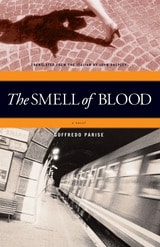
The Smell of Blood
Goffredo Parise
Northwestern University Press, 2003
"A smell very similar to that of slaughterhouses at dawn, but infinitely sweeter and slightly nauseating, or rather, to be more precise, exhilarating."
The smell of blood is really the smell of life. The psychiatrist narrating the story has the power to detect it. His young mistress hungers for it. And his middle-aged wife Silvia has just begun to emanate it--overpoweringly.
Silvia has begun an affair with a violent young idler and neofascist who despises and exploits women. At first her husband reacts with good humor--he has long been unfaithful himself. But jealousy soon colors his curiosity, and his obsession with the details of Silvia's relationship leads to fantasies that become self-fulfilling prophecies. At times coolly analytical, at others driven to know more, the narrator watches as Silvia's actions become more and more self-destructive. When she becomes a slave to her lover's wishes the smell of blood grows stronger, and the odor of life becomes an omen of death.
Goffredo Parise wrote The Smell of Blood in 1979 after suffering a heart attack. Once finished he sealed the manuscript in lead and wax and did not look at it again until a few days before his death in 1986. It was published posthumously in 1997 in Italy.
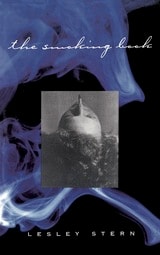
The Smoking Book
Lesley Stern
University of Chicago Press, 1999
Stern writes of addictions and passionate attachments, of the body and bodily pleasure, of autobiography and cultural history. Smoking is Stern's seductive pretext, her way of entering unknown and mysterious regions. The Smoking Book begins with intimate and vivid accounts of growing up on a tobacco farm in colonial Rhodesia, reminiscences that permeate subsequent excursions into precolonial tobacco production and postcolonial life in Zimbabwe, as well as dramatic vignettes set in Australia, the United States, Scotland, Italy, Japan, and South America. Stern has written a book, at once intensely personal and kaleidoscopically international, that weaves the intimate act of a solitary person smoking a cigarette into a broad cultural picture of desire, exchange, fulfillment, and the acts that bind people together, either in lasting ways or through ephemeral encounters.
The Smoking Book is for anyone who has ever smoked or loved a smoker (against their better judgment); it is for those who have never smoked or for those who mourn the loss of cigarettes as they would grieve for a lost friend. But mostly, The Smoking Book is for all those who are smoldering still.
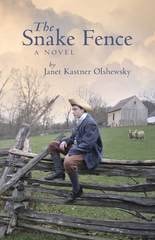
The Snake Fence
Janet Olshewsky
QuakerPress, 2012
The Snobs of England and Punch's Prize Novelists
William Makepeace Thackeray
University of Michigan Press, 2005
This volume of The Snobs of England and Punch's Prize Novelists is an addition to The Thackeray Edition collection, the first full-scale scholarly edition of William Makepeace Thackeray's works to appear in over seventy years, and the only one ever to be based on an examination of manuscripts and relevant printed texts. It is also a concrete attempt to put into practice a theory of scholarly editing that gives new insight into Thackeray's own compositional process. In The Snobs of England, a series of amusing satirical sketches, Thackeray provides a panoramic awareness of the many varieties of human folly, identifying snobbery not as a social attitude but as the unworthy admiration of foolish things. Punch's Prize Novelists presents a series of illustrated burlesque parodies of Thackeray's contemporary writers, including Edward Bulwer, Benjamin Disraeli, Mrs. Catherine Gore, G.P.R. James, Charles Lever, and James Fenimore Cooper. The works are edited here from a comparative study of all relevant documents: from the first published appearances to the last editions touched by the author.
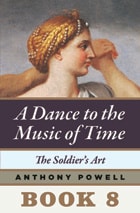
The Soldier's Art
Book 8 of A Dance to the Music of TimeAnthony Powell
University of Chicago Press, 1995
Anthony Powell’s universally acclaimed epic A Dance to the Music of Time offers a matchless panorama of twentieth-century London. Now, for the first time in decades, readers in the United States can read the books of Dance as they were originally published—as twelve individual novels—but with a twenty-first-century twist: they’re available only as e-books.
The eighth volume, The Soldier’s Art (1966), finds Nick in the thankless position of assistant to a rapidly rising Major Widmerpool. The disruptions of war throw up other familiar faces as well: Charles Stringham, heroically emerging from alcoholism but a mere shadow of his former self; Hugh Moreland, his marriage broken, himself nearly so. As the Blitz intensifies, the war’s toll mounts; the fates are claiming their own, and many friends will not be seen again.
"Anthony Powell is the best living English novelist by far. His admirers are addicts, let us face it, held in thrall by a magician."--Chicago Tribune
"A book which creates a world and explores it in depth, which ponders changing relationships and values, which creates brilliantly living and diverse characters and then watches them grow and change in their milieu. . . . Powell's world is as large and as complex as Proust's."--Elizabeth Janeway, New York Times
"One of the most important works of fiction since the Second World War. . . . The novel looked, as it began, something like a comedy of manners; then, for a while, like a tragedy of manners; now like a vastly entertaining, deeply melancholy, yet somehow courageous statement about human experience."--Naomi Bliven, New Yorker
“The most brilliant and penetrating novelist we have.”--Kingsley Amis

The Songs of Betty Baach
Glenn Taylor
University of Massachusetts Press, 2023
Finalist for the 2023 Weatherford Fiction Award
Some called her the Everywhen Woman. She claimed to be 321 years of age. In 2038, after the big storm and the great flood and the bad times, Betty Baach wrote these words down and sometimes spoke them aloud, at her homeplace on Freon Hill. She referred to them as songs. All stories are songs, she’d always say.
Set in West Virginia, The Songs of Betty Baach is a magical guide to resisting despair and a compendium of wisdom and rhythms by which to fortify oneself. The lives of the Baaches of Keystone and the Knoxes of Mosestown twist and connect in a tale of survival and retribution that crosses three centuries—moving from Betty’s girlhood in colonial America to a future warped by environmental collapse and political unrest. Refusing the erasure of the lives of women, Indigenous peoples, and Black people who have always called this region home, this eloquent and distinctive novel is a necessary remedy for the continued distortion of a land and its inhabitants.
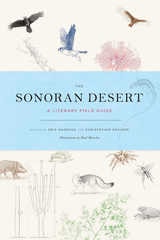
The Sonoran Desert
A Literary Field GuideEdited by Eric Magrane and Christopher Cokinos, Illustrations by Paul Mirocha
University of Arizona Press, 2016
Both literary anthology and hands-on field guide, The Sonoran Desert is a groundbreaking book that melds art and science. It captures the stunning biodiversity of the world’s most verdant desert through words and images. More than fifty poets and writers—including Christopher Cokinos, Alison Hawthorne Deming, Ken Lamberton, Eric Magrane, Jane Miller, Gary Paul Nabhan, Alberto Ríos, Ofelia Zepeda, and many others—have composed responses to key species of this striking desert. Each creative contribution is joined by an illustration by award-winning artist Paul Mirocha and scientific information about the creature or plant authored by the book’s editors.
From the saguaro to the mountain lion, from the black-tailed jackrabbit to the mesquite, the species represented here have evoked compelling and creative responses from each contributor. Just as writers such as Edward Abbey and Ellen Meloy have memorialized the desert, this collection is sure to become a new classic, offering up the next generation of voices of this special and beautiful place, the Sonoran Desert.

The Sorrowful Eyes Of Hannah Karajich
Ivan Olbracht
Central European University Press, 1999
The Sorrowful Eyes of Hannah Karajich is a lyrical, deeply moving story of love and the pain of emancipation, set in the now vanished world of rural East European Jewish village life. Hanna is the most beautiful girl in all Polona, a Hasidic community in the remote province of Sub-Carpathian Ruthenia. Involvement in the exciting new movement of Zionism takes her away to a commune in a nearby town. But there she meets and falls in love with the strangely named Ivo Karajich: a Jew, yet not a Jew. The agonizing drama that follows, plants into her beautiful almond-shaped eyes the hard grain of sorrow that her children, too, will inherit.
Olbracht's novella is both a great love story and a marvellous portrait of a world that modernity threatened and Hitler destroyed.
The Soul of a Patriot
Evgeny Popov, translated from the Russian by Robert Porter
Northwestern University Press, 1994
Freely parodying conformist Russian writing, this novel takes its lead as much from Sterne and Diderot as from the brilliant Russian satirist Mikhail Zoshchenko. In the offhand witticisms and jaunty humor speaks the spirit that survived the "era of stagnation" of Soviet literature.
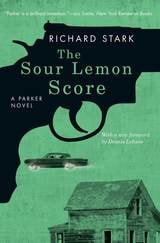
The Sour Lemon Score
A Parker NovelRichard Stark
University of Chicago Press, 2010
Richard Stark's Parker novels are the hardest of hard-boiled, classic crime novels where the heists are huge, the body counts are high, and the bad guys usually win.
The Parker novels have been a huge influence on countless writers and filmmakers, including Quentin Tarantino, Stephen King, George Pelecanos, Colson Whitehead, Lucy Sante, John Banville, and many more. Their stripped-down language and hard-as-nails amorality create an unforgettable world where the next score could be the big one, but your next mistake could also be your last. There's nothing else like them.
Bank robberies should run like clockwork, right? If your name’s Parker, you expect nothing less. The Sour Lemon Score finds Parker wrapping up a heist where everything has gone right. But then one of his partners gets too greedy for his own good. The four-way split following a job leaves too small a take for George Uhl, who begins to pick off his fellow heisters, one by one. The first mistake? That he doesn’t begin things by putting a bullet in Parker. That means he won’t get the chance to make a second. One of the darkest novels in the series, this caper proves the adage that no one crosses Parker and lives.
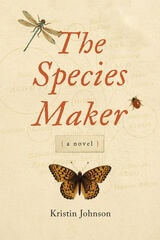
The Species Maker
A NovelKristin Johnson
University of Alabama Press, 2021
A historical novel about the role of science in modern life, set against the backdrop of the 1925 Scopes Trial.
When William Jennings Bryan began a campaign to get evolution out of American schools in the 1920s, entomologist Martin Sullivan sought refuge from the tumult in his research. Although the theory of evolution provides the foundation for his scientific work, he prefers the careful methods of observation and classification to the passion of public debate. But when Martin takes a job teaching college biology in Seattle, he finds it increasingly difficult to retreat to the haven of science. His students are taking sides in the debate over whether religion and evolution can be reconciled. Socialists are using evolution to justify revolution. Politicians are citing Darwin in defense of anti-immigration laws. And Martin’s own colleagues are insisting that only eugenic reforms will save the world. As anti-evolution legislation spreads across the country and passions flare on all sides, the effort to apply science to marriage laws and mate choice even begins to touch the lives of those he loves. By the time the state of Tennessee puts John T. Scopes on trial for teaching evolution in the summer of 1925, Martin can no longer ignore the debates that surround him and must take a stand in the fight over the role of science in American society.
Although set a hundred years ago, The Species Maker wrestles with many issues that continue to confront scientists and science watchers in the present day. Kristin Johnson draws on her experiences in the classroom and extensive knowledge of the history of science to depict what it might have been like for a careful scientist to watch the heated debates over teaching evolution in the United States in the 1920s.
Visit www.thespeciesmaker.com for supplemental material including historical essays, links to online primary sources, a glossary, and guiding questions useful for the classroom or book clubs.

The Spider
Aurko Maitra
Seagull Books, 2025
In the largely undocumented sphere of political violence in eastern India, Qadir the Spider is a mythological killer and casanova, known for the various assassinations and liaisons he carries out across the region. His oldest son Rahim is the latest entry to the field. A 13-year-old killer, the boy bides his time like his father—killing, farming, and getting high as the battles go on around him. In this world where they only follow orders, mutilation becomes their only expression, the nature of violence their only meaningful form of autonomy in the various power struggles of interior Bengal.
After his first year in the field, as the child is groomed by his father to carry on the ways of their mercenary clan, he begins to confront the various legends surrounding the Spider. However, while roaming the strange, spectral forests surrounding the town, his chance encounter with a pair of wandering musicians leads him to question the killings that pattern his life. As he searches for the answers around him, he is slowly led to confront the man his father truly is, as well as the man he knows he will become.
A gripping tale of inherited violence and identity in politically volatile Bengal, Aurko Maitra’s The Spider contains powerful, disturbing parallels to modern-day conflicts. Boldly interrogating our concepts of autonomy and survival in chaos, this revelatory novel explores the impact of political violence and timeless issues of legacy and intergenerational violence.
The Spirit Papers
Elizabeth Metzger
University of Massachusetts Press, 2017
All right, I'm a little afraid.
It's the zeroing in of All That Could
Possibly Go Wrong vs. Myself.
—"Small Talk with an Imagined Son"
The Spirit Papers explores the magical thinking that precedes impending and inevitable loss, the taboo fantasia that occurs in the crippling timelessness of anticipation. Grieving for the future with a spiritual clarity characterized by ritual and doubt, Metzger's lines are chameleons to every feeling. In the interminable window of expecting the unexpected, the poems ultimately materialize the very events they wish to ward off. The Spirit Papers chases mortality with equal parts disbelief and love.
The Spirits of the Earth
Catherine Colomb
Seagull Books, 2016
The Spirits of the Earth is at heart a family drama, set at the Fraidaigue château, along the shores of Lake Geneva, and in the Maison d’en Haut country mansion, located in the hills above the lake. In these luxe locales, readers encounter upper-class characters with faltering incomes, parvenues, and even ghosts. Throughout, Colomb builds a psychologically penetrating and bold story in which the living and the dead intermingle and in which time itself is a mystery.
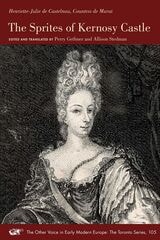
The Sprites of Kernosy Castle
Henriette-Julie de Castelnau, Countess de Murat
Iter Press, 2024
This novel reflects a shift in French values at the turn of the eighteenth century, which saw increased interest in the private lives of the aristocracy and the pre-Enlightenment questioning of political and religious orthodoxies. Novels of fiction and leisure gained popularity, and it was during this time that Henriette-Julie de Castelnau, the Countess de Murat, published her second leisure novel, The Sprites of Kernosy Castle. Combining humor, social satire, and a proto-feminist outlook, Murat crafts a well-constructed plot where the supernatural is debunked. Murat’s career was cut short when a series of “misdemeanors” related to the countess’s homosexual tendencies led to her arrest in 1702. Sprites, which was released during a partial reprieve from prison, is the final published work of this independent-minded early feminist author.
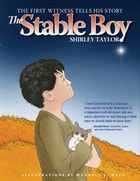
The Stable Boy
The First Witness Tells His StoryShirley A. Taylor
Parkhurst Brothers, Inc., 2012
"Shirley Taylor's story gives readers and hearers insight into the town of Bethlehem at the time of the birth of Christ. Wendell Hall's illustrations help us imagine that scene wonderfully. The young homeless boy touches our hearts and imaginations. Not just for children, this is a read aloud book for all ages." - Lauretta Phillips, Storyteller, Author, Radio & TV Host
The Stars, The Earth, The River
Short Stories by Le Minh KhueLe Minh Khue
Northwestern University Press, 1997
The Stars, the Earth, the River contains an excellent introduction by the translators, grounding the stories in Le Minh Khue's personal history. You simultaneously feel the rage of the author and the narrator when Khue disparagingly notes that the conversations around her center on luxuries, motor scooters, and business deals. Of what use, these stories ask, is such suffering? How can a culture honor the losses of war?
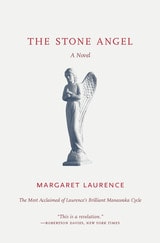
The Stone Angel
Margaret Laurence
University of Chicago Press, 1993
In The Stone Angel, Hagar Shipley, age ninety, tells the story of her life, and in doing so tries to come to terms with how the very qualities which sustained her have deprived her of joy. Mingling past and present, she maintains pride in the face of senility, while recalling the life she led as a rebellious young bride, and later as a grieving mother. Laurence gives us in Hagar a woman who is funny, infuriating, and heartbreakingly poignant.
"This is a revelation, not impersonation. The effect of such skilled use of language is to lead the reader towards the self-recognition that Hagar misses."—Robertson Davies, New York Times
"It is [Laurence's] admirable achievement to strike, with an equally sure touch, the peculiar note and the universal; she gives us a portrait of a remarkable character and at the same time the picture of old age itself, with the pain, the weariness, the terror, the impotent angers and physical mishaps, the realization that others are waiting and wishing for an end."—Honor Tracy, The New Republic
"Miss Laurence is the best fiction writer in the Dominion and one of the best in the hemisphere."—Atlantic
"[Laurence] demonstrates in The Stone Angel that she has a true novelist's gift for catching a character in mid-passion and life at full flood. . . . As [Hagar Shipley] daydreams and chatters and lurches through the novel, she traces one of the most convincing—and the most touching—portraits of an unregenerate sinner declining into senility since Sara Monday went to her reward in Joyce Cary's The Horse's Mouth."—Time
"Laurence's triumph is in her evocation of Hagar at ninety. . . . We sympathize with her in her resistance to being moved to a nursing home, in her preposterous flight, in her impatience in the hospital. Battered, depleted, suffering, she rages with her last breath against the dying of the light. The Stone Angel is a fine novel, admirably written and sustained by unfailing insight."—Granville Hicks, Saturday Review
"The Stone Angel is a good book because Mrs. Laurence avoids sentimentality and condescension; Hagar Shipley is still passionately involved in the puzzle of her own nature. . . . Laurence's imaginative tact is strikingly at work, for surely this is what it feels like to be old."—Paul Pickrel, Harper's
The Stone Child
StoriesStories by Gary Fincke
University of Missouri Press, 2003
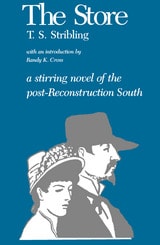
The Store
Thomas S. Stribling
University of Alabama Press, 1933
Pulitzer Prize for the Novel in 1933
The Pulitzer prize-winning The Store is the second novel of Stribling’s monumental trilogy set in the author’s native Tennessee Valley region of north Alabama. The action begins in 1884, the year in which Grover Cleveland became the first Democratic president since the end of the Civil War; and it centers about the emergence of a figure of wealth in the city of Florence.
In The Store, Stribling succeeds in presenting the essence of an age through the everyday lives of his characters. In the New Yorker, reviewer Robert M. Coates compared Stribling with Mark Twain in his ability to convey the “very life and movement” of a small Southern town: “Groups move chatting under the trees or stand loitering in the courthouse square, townsfolk gather at political ‘speakings’ and drift homeward separately afterward; always, in their doings, one has the sense of a whole community surrounding them, binding them together.” Gerald Bullet wrote in The New Statesman and Nation that the novel “is a first-rate book…filled with diverse and vital characters; and much of it cannot be read without that primitive excitement, that eagerness to know what comes next, which is, after all, the triumph of the good story teller.”
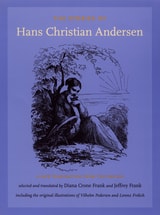
The Stories of Hans Christian Andersen
A New Translation from the DanishHans Christian Andersen
Duke University Press, 2005
In this collection are twenty-two tales that best represent Andersen’s literary legacy, including such classics as “The Little Mermaid,” “The Ugly Duckling,” “Thumbelisa,” and “The Emperor’s New Clothes,” as well as largely unfamiliar stories like “By the Outermost Sea.” Illuminating notes clarify references in the tales. And in an introductory essay, the Franks explore the writer and his times, placing the enigmatic and often bizarre figure of Andersen among his literary contemporaries, such as Charles Dickens and Søren Kierkegaard, with whom he crossed paths; and they bring to life Andersen’s fascinating relationship with the United States. Illustrated with the delicate and beautiful drawings that accompanied the original Danish publication, The Stories of Hans Christian Andersen will delight readers of all ages.
The Story of Fictional Truth
Realism from the Death to the Rise of the NovelPaul Dawson
The Ohio State University Press, 2023
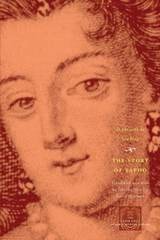
The Story of Sapho
Madeleine de Scudery
University of Chicago Press, 2003
The Story of Sapho makes available for the first time in modern English a self-contained section from Scudéry's novel Artamène ou le Grand Cyrus, best known today as the favored reading material of the would-be salonnières that Molière satirized in Les précieuses ridicules. The Story tells of Sapho, a woman writer modeled on the Greek Sappho, who deems marriage slavery. Interspersed in the love story of Sapho and Phaon are a series of conversations like those that took place in Scudéry's own salon in which Sapho and her circle discuss the nature of love, the education of women, writing, and right conduct. This edition also includes a translation of an oration, or harangue, of Scudéry's in which Sapho extols the talents and abilities of women in order to persuade them to write.
The Story of Tonle
Mario Rigoni Stern
Northwestern University Press, 1998
The Stowe Debate
Rhetorical Strategies in "Uncle Tom's Cabin"Mason I. Lowance
University of Massachusetts Press, 1994
The thirteen contributors to this volume enter these debates from a variety of critical perspectives. They address questions of language and ideology, the tradition of the sentimental novel, biblical influences, and the rhetoric of antislavery discourse. As much as they disagree on various points, they share a keen interest in the cultural work that texts can do and an appreciation of the enduring power of Uncle Tom's Cabin.
The Strange Case of Miss Annie Spragg
Louis BromfieldWith a new introduction by Stephen Heyman, author of The Planter of Modern Life: Louis Bromfield and the Seeds of a Food Revolution
The Ohio State University Press, 2026
A revived work of twentieth-century fiction that spans years and continents to satirize and explore religious fanaticism and expat life.
First published in 1928, Louis Bromfield’s The Strange Case of Miss Annie Spragg is a haunting and genre-defying tale—a thoughtful reflection on religion and human nature with the propulsion of a mystery. Set in Italy and the American Midwest, this surprisingly modern novel now has a new introduction by Bromfield biographer Stephen Heyman.
The novel opens on a ragtag community of American expats in rural Italy. When Annie Spragg, a local eccentric, dies with stigmata on her body, the diocese tasks the skeptical Mr. Winnery with investigating whether actual miracles occurred at her deathbed. From there, the novel brings us back to Annie’s origins as the child of a cult-leader and prophet on the American frontier. As the story unfolds, Bromfield traverses time and continents as he weaves together satire, mysticism, and psychological insight to explore themes of religious fanaticism, repression, and redemption.
Heyman’s new introduction situates Annie Spragg within Bromfield’s literary evolution—from chronicler of liberated women to environmental visionary—and reintroduces readers to a writer whose influence shaped both American letters and sustainable agriculture. This edition invites fans of twentieth-century fiction to rediscover a novel that remains provocative and poignant today.
The Strange Death of Mistress Coffin
Robert J. Begiebing
University Press of New England, 2012
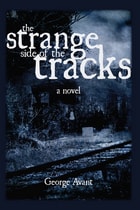
The Strange Side of the Tracks
George Avant
Parkhurst Brothers, Inc., 2015
Some kids have to grow up fast. This is the story of Lonnie Tobin, one such young man. Weary of the physical abuse his mother is subjected to from his father, he takes matt ers into his own hands. Convincing her to flee their fearful home life, son and mother sneak away in the night to the small town of Rocky Branch, where they find peace with her family. It is a corner of the world he thought they had left behind forever. But mysteries abound in this little wooded village, and an unexpected adventure begins when word of a nightly monster on the loose stirs fear among the residents. Young Lonnie soon forgets about his father and becomes fascinated by the story, only to find he might be spending a litt le too much time on The Strange Side of the Tracks.
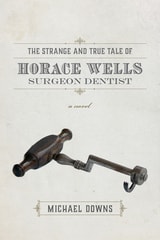
The Strange and True Tale of Horace Wells, Surgeon Dentist
A NovelMichael Downs
Acre Books, 2018
But that discovery would also thrust Wells into scandals that threatened his reputation, his family, and his sanity—hardships and triumphs that resonate in today’s struggles with what hurts us and what we take to stop the hurt.
In this novel, Michael Downs mines the gaps in the historical record and imagines the motivations and mysteries behind Wells’s morbid fascination with pain, as well as the price he and his wife, Elizabeth, paid—first through his obsession, then his addiction.
The book is a love story, but also a story of what love can’t redeem; of narcotic dreams and waking insanity; of humbug and miracle; of pain’s destruction and what pains can never be eased. Following Wells throughout New England and across the ocean to Paris, the novel immerses the reader in the nineteenth century, conveying through rich physical description and telling dialogue the tragic life of a dentist who gave everything to rid the world of suffering.
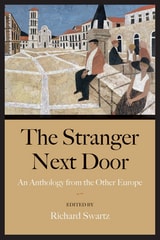
The Stranger Next Door
An Anthology from the Other EuropeRichard Swartz
Northwestern University Press, 2013
The Balkans have been so troubled by violence and misunderstanding that we have the verb “balkanize,” meaning to break up into smaller, warring components. While some of the region’s artists and thinkers have invariably fallen into nationalistic tendencies, the twenty-two prominent authors represented here, from the erstwhile Yugoslavia and its neighbors Albania and Bulgaria, have chosen to attempt to bridge these divides. The essays, biographical sketches, and stories in The Stranger Next Door form a project of understanding that picks up where politics fail. The English-language translation joins editions of the book that appeared concurrently in all of the participating countries.
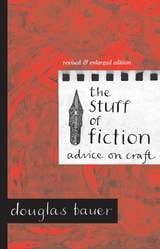
The Stuff of Fiction
Advice on CraftDouglas Bauer
University of Michigan Press, 2010
Bauer’s focus is on the building blocks of successful fiction: dialogue (the intimate relationship between characters talking and the eavesdropping reader), characters (the virtues of creating fictional characters that are both splendidly flawed and sympathetic), and dramatic events (ways to create moments that produce an emotional and psychological impact). There are also chapters on crafting effective openings and memorable closings of stories and on the vital presence of sentiment in fiction versus the ruinous effect of sentimentality. By assuming the point of view of someone at the task, engaged with the work, inside the effort to bring an invented world to life, The Stuff of Fiction speaks to writers of all ages in a pleasurable yet practical voice.

The Sturdy Oak
A Composite Novel of American PoliticsElizabeth Jordan
Ohio University Press, 1998
In the spring of 1916, as the workers for woman suffrage were laying plans for another attack on the bastions of male supremacy, the idea for The Sturdy Oak was born. Based on the rules of an old parlor game, wherein one person begins a narrative, another continues it, and another follows, this collaborative effort by the leading writers of the day, such as Fannie Hurst, Dorothy Canfield, and Kathleen Norris, is a satiric look at the gender roles of the time.
There is much in The Sturdy Oak that reflects the New York campaign for suffrage of 1916–1917. The setting is the fictional city of Whitewater in upstate New York. Idealistic reformers are pitted against a ruthless political machine, and the traditional picture of man as “the sturdy oak” supporting woman, “the clinging vine,” is ridiculed in the portrayal of an engaging couple, George and Genevieve Remington. Nonetheless, the purpose of the book is not primarily ridicule but reform, and the reader is taken through the steps by which a confirmed anti-suffragist is gradually transformed into a supporter of the suffrage cause.
Beyond its historical interest, The Sturdy Oak is imbued with a political and social currency that makes it applicable even today. And because of the skill of the writers of this composite novel, even eight decades after its initial publication The Sturdy Oak is still, as the New York Times said in 1917, “irresistibly readable.”
The Submerged Plot and the Mother's Pleasure from Jane Austen to Arundhati Roy
Kelly A. Marsh
The Ohio State University Press, 2016
Combining feminist and rhetorical narratological approaches, Marsh’s study offers fresh readings of Persuasion, Jane Eyre, Bleak House, The Woman in White, The House of Mirth, The Last September, The Color Purple, A Thousand Acres, Bastard Out of Carolina, Talking to the Dead, and The God of Small Things. Through these readings, The Submerged Plot and the Mother’s Pleasure explores how the unnarratable can be communicated in fiction and offers a significant contribution to our understanding of narrative progression.
The Subtenant / To Outwit God
Hanna Krall
Northwestern University Press, 1992
The Summers
Ronya Othmann, translated by Gary Schmidt
University of Wisconsin Press, 2023
Leyla’s sexual awakening proves far less traumatic than her growing disenchantment with her German classmates and friends, who appear completely indifferent to the fate of her Yazidi community. Thoughtful and poignant, The Summers addresses issues of gender, sexuality, cultural difference, politics, and identity. Othmann draws readers into multiple worlds, ultimately revealing the hopes and dreams that bind us all together when forces threaten to tear us apart.
The Surprising Place
StoriesMalinda McCollum
University of Massachusetts Press, 2018
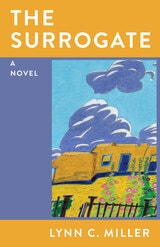
The Surrogate
Lynn C. Miller
University of Wisconsin Press, 2026
Alex Ross, a thirty-year-old psychologist, enjoys the benefits of a close-knit family: her mother and aunt are twins married to two close friends, and Alex and her cousins, Rolf and Stephen, grew up as if they were siblings. When Rolf is killed in a car accident, the entire family spins into grief and chaos.
Nathaniel, a mysterious art museum curator, soon enters their lives and seems to offer solace. Frannie, Rolf’s mother, becomes infatuated with the young man; Alex, who split with her long-term girlfriend in the aftermath of Rolf’s death, finds herself deeply attracted to him. Only Stephen mistrusts Nathaniel—but he soon becomes consumed with the nationwide financial crisis threatening the family’s stability. Will Alex choose Nathaniel over her loyalty to Stephen? Torn between competing desires, fueled by her lifelong but unexamined love of Rolf, she must turn her own training as a psychologist on herself in order to find peace amid the turmoil.
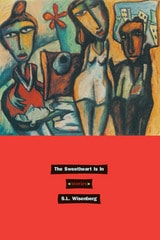
The Sweetheart Is In
S.L. Wisenberg
Northwestern University Press, 2001
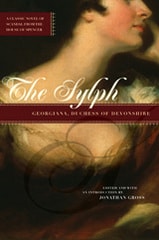
The Sylph
Georgiana, Duchess of Devonshire
Northwestern University Press, 2007
This ranging epistolary novel follows Julia Grenville, a Welsh beauty who knows little of the world until her marriage to the older Lord Stanley. Through Julia’s letters to her sister, readers learn more of Julia’s new life in London—her unfaithful husband, her miscarriage, her disillusionment with the city and its fashions. Other letters reveal that Julia has a longtime admirer, Harry Woodley, from her former life, as well as a mysterious guardian angel: her Sylph. This character guides Julia away from the depravities of her life in London, including her gambling problem. The Sylph is also another sympathetic ear to Julia’s increasing marital dissatisfaction and growing affinity for another man, the Baron Ton-hausen. As Julia nearly falls prey to the overzealous admirations of one of her husband’s associates, her husband is consumed by gambling debts to that same associate. She is shocked to discover the depths of her husband’s ruin and plans to flee to Wales before she too can be claimed in payment. Her disgraced husband takes the ultimate way out and Julia goes home to her father and sister in Wales. Her Sylph is not far behind, however, and soon reveals himself to Julia to be more than she could have ever imagined.
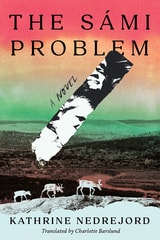
The Sámi Problem
A NovelKathrine Nedrejord
University of Minnesota Press, 2027
An incisive novel illuminating a young mother’s reckoning with her own identity and Sámi lineage through the lives and struggles of her ancestors
As a freelance journalist living in France, Marie Engmo has traveled far and wide to write about languages and local cultures threatened with extinction. But when she returns home to Norway for her áhkku’s (grandmother’s) funeral, she recognizes how far she has strayed from her own sense of self and her Sámi identity. Kathrine Nedrejord’s acclaimed novel—winner of Norway’s national book award—is the lucid and compelling story of Marie’s emotional search through her family’s past for a history and legacy that she might bequeath to her own infant daughter.
In spare and elegant prose, Nedrejord illuminates a young woman’s fierce and clear-eyed reckoning with the sacrifice and oppression that has marked the women and men in her family and generations of Indigenous Sámi communities in the northern reaches of Norway. As Marie awakens to the lengths her mother, grandmother, and great-grandmother traversed to survive discrimination and displacement, she uncovers and embodies their strength and dignity that are her—and her daughter’s—inheritance. What emerges is an unflinching examination of belonging to a minority that can never dominate, that will always have to negotiate and compromise its place in the world. As stirring as it is troubling, The Sámi Problem is itself an awakening and a literary triumph.
Retail e-book files for this title are screen-reader friendly.

The Taciturn Text
The Fiction of Robert Penn WarrenRandolph Paul Runyon
The Ohio State University Press, 1900