Results by title
18284 books match the query 'United States' and 3764 start with t
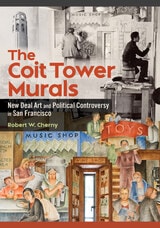
The Coit Tower Murals
New Deal Art and Political Controversy in San FranciscoRobert W. Cherny
University of Illinois Press, 2024
Created in 1934, the Coit Tower murals were sponsored by the Public Works of Art Project (PWAP), the first of the New Deal art programs. Twenty-five master artists and their assistants worked there, most of them in buon fresco, Nearly all of them drew upon the palette and style of Diego Rivera. The project boosted the careers of Victor Arnautoff, Lucien Labaudt, Bernard Zakheim, and others, but Communist symbols in a few murals sparked the first of many national controversies over New Deal art.
Sixty full-color photographs illustrate Robert Cherny’s history of the murals from their conception and completion through their evolution into a beloved San Francisco landmark. Cherny traces and critiques the treatment of the murals by art critics and historians. He also probes the legacies of Coit Tower and the PWAP before surveying San Francisco’s recent controversies over New Deal murals.
An engaging account of an artistic landmark, The Coit Tower Murals tells the full story behind a public art masterpiece.
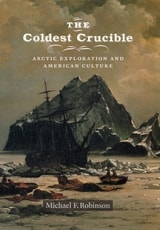
The Coldest Crucible
Arctic Exploration and American CultureMichael F. Robinson
University of Chicago Press, 2006
With chronological chapters featuring emblematic Arctic explorers—including Elisha Kent Kane, Charles Hall, and Robert Peary—The Coldest Crucible reveals why the North Pole, a region so geographically removed from Americans, became an iconic destination for discovery.
The Collaborative Artist's Book
Evolving Ideas in Contemporary Poetry and ArtAlexandra J. Gold
University of Iowa Press, 2023
The Collaborative Artist’s Book offers a rare glimpse into collaborations between poets and painters from 1945 to the present, and highlights how the artist’s book became a critical form for experimental American artists in the twentieth and twenty-first centuries. Alexandra Gold provides a broad overview of the artist’s book form and the many ongoing debates and challenges, from the disciplinary to the institutional, that these forms continue to pose.
Gold presents five case studies and details not only how each individual collaboration came to be but how all five together engage and challenge conventional ideals about art, subjectivity, poetry, and interpersonal relations, as well as complex social questions related to gender and race. Taking several of these books out of special collections libraries and museum archives and making them available to a broad readership, Gold brings to light a whole genre that has been largely forgotten or neglected.
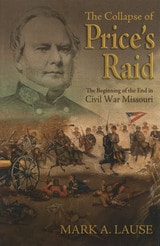
The Collapse of Price's Raid
The Beginning of the End in Civil War MissouriMark A. Lause
University of Missouri Press, 2025
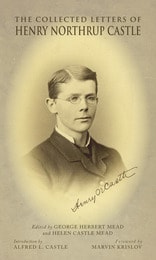
The Collected Letters of Henry Northrup Castle
Henry Northrup Castle
Ohio University Press, 2012
George Herbert Mead, one of America’s most important and influential philosophers, a founder of pragmatism, social psychology, and symbolic interactionism, was also a keen observer of American culture and early modernism. In the period from the 1870s to 1895, Henry Northrup Castle maintained a correspondence with family members and with Mead—his best friend at Oberlin College and brother-in-law—that reveals many of the intellectual, economic, and cultural forces that shaped American thought in that complex era. Close friends of John Dewey, Jane Addams, and other leading Chicago Progressives, the author of these often intimate letters comments frankly on pivotal events affecting higher education, developments at Oberlin College, Hawaii (where the Castles lived), progressivism, and the general angst that many young intellectuals were experiencing in early modern America.
The letters, drawn from the Mead-Castle collection at the University of Chicago, were collected and edited by Mead after the tragic death of Henry Castle in a shipping accident in the North Sea. Working with his wife Helen Castle (one of Henry’s sisters), he privately published fifty copies of the letters to record an important relationship and as an intellectual history of two progressive thinkers at the end of the nineteenth century. American historians, such as Robert Crunden and Gary Cook, have noted the importance of the letters to historians of the late nineteenth century.
The letters are made available here using the basic Mead text of 1902. Additional insights into the connection between Mead, John Dewey, Henry and Harriet Castle, and Hawaii’s progressive kindergarten system are provided by the foundation’s executive director Alfred L. Castle. Marvin Krislov, president of Oberlin College, has added additional comments on the importance of the letters to understanding the intellectual relationship that flourished at Oberlin College.
Published with the support of the Samuel N. and Mary Castle Foundation.

The Collected Short Stories of Harriette Simpson Arnow
Harriette Simpson Arnow
Michigan State University Press, 2005
Harriette Simpson Arnow is an American treasure. Of the twenty-five stories in this collection, fifteen were previously unpublished. Until now, the short fiction of Arnow has remained relatively obscure despite the literary acclaim given to her novels The Dollmaker and Hunter’s Horn. These stories, written early in her career for the most part, reveal an artistic vision and narrative skill and serve as harbingers for her later work. They echo her interest in both agrarian and urban communities, the sharpening of her social conscience, and her commitment to creating credible and complex characters. This collection is organized against the backdrop of her life, from Kentucky in the 1920s to Ohio and Kentucky in the 1930s and to Michigan in the 1940s. As Arnow fans read these early gems, they will be led from gravel roads to city pavement and open layers of Arnow’s development as a novelist to expose the full range of her contributions to American literature.
In 1938, Esquire purchased "The Hunters," which was eventually published as "The Two Hunters," a chilling story of a seventeen-year- old boy’s confrontation with a deputy sheriff. At the time, Esquire did not accept submissions from women, and its editors had no idea that writer H. L. Simpson was not a man. Years later, she admitted in an interview, "it worried me a little, that big lie, but I thought if they wanted a story, let them have it." Esquire paid her $125 for this story. The contributor’s notes at the back of the magazine include a photo of "H.L.Simpson," actually a photo of one of her brothers-in-law. It was her little joke on a publisher that discriminated against women....
—from the Introduction
The Collected Works of Benjamin Hawkins, 1796–1810
Benjamin Hawkins, edited and with an introduction by H. Thomas Foster, II
University of Alabama Press, 2003
In 1795 Benjamin Hawkins, a former US senator and advisor to George Washington, was appointed US Indian agent and superintendent of all the tribes south of the Ohio River. Unlike most other agents, he lived among the Creek Indians for his entire tenure, from 1796 to 1816. Journeying forth from his home on the Flint River in Georgia, he served southeastern Indians as government intermediary during one of the longest eras of peace in the historic period.
Hawkins’s journals provide detailed information about European-Indian relations in the 18th-century frontier of the South. His descriptions of the natural and cultural environment are considered among the best sources for the ethnohistory of the Choctaw, Cherokee, Chickasaw, and, especially, the Creek Indians and the natural history of their territory.
Two previously published bodies of work by Benjamin Hawkins are included here—A Sketch of the Creek Country in the Years 1798 and 1799 and The Letters of Benjamin Hawkins 1796-1806. A third body of work that has never been published, “A Viatory or Journal of Distances” (describing routes and distances of a 3,578-mile journey through parts of Georgia, Alabama, and Mississippi), has been added. Together, these documents make up the known body of Hawkins’ work—his talks, treaties, correspondence, aboriginal vocabularies, travel journals, and records of the manners, customs, rites, and civil polity of the tribes. Hawkins' work provides an invaluable record of the time period.

The Collected Works of William Howard Taft, Volume I
Four Aspects of Civic Duty and Present Day ProblemsDavid H. Burton
Ohio University Press, 2001
The inaugural volume of The Collected Works of William Howard Taft is composed of two of his earliest books, Four Aspects of Civic Duty and Present Day Problems. Based on a series of lectures delivered at Yale in 1906, Four Aspects of Civic Duty is an attempt by then Secretary of War Taft to bring to the attention of his audience the importance of civic duty from the perspective of the university graduate, the judge on the bench, the colonial administrator, and the national executive branch of government. His remarks were drawn from his own experience, while at the same time he laid down the principles of citizenship with which all people could identify. In Present Day Problems, William Howard Taft demonstrates the depth of his knowledge and the seriousness of his reflections on a wide range of topics including Sino-American relations and the ongoing contest between capital and labor in America’s increasingly industrial socioeconomy. The problems he takes up are met head-on and discussed in a fashion likely to persuade his audience that he is well prepared to tackle the burdens of the presidency.
The Collected Works of William Howard Taft, in eight volumes, will include Taft’s complete published works as well as his presidential and state addresses and selected court opinions from his days as chief justice of the Supreme Court.
The Collected Works of William Howard Taft, Volume II
Political Issues and Outlooks: Speeches Delivered Between August 1908 and February 1909David H. Burton
Ohio University Press, 2001
The second volume of The Collected Works of William Howard Taft is dedicated to the speeches and writings that displayed his thinking in the autumn of 1908 and the following winter.
At this time he was campaigning for the presidency against the well-known William Jennings Bryan, and in Taft’s writings is evidence of the contrast in style between Taft and Bryan and between Taft and his predecessor, Teddy Roosevelt. as well. Although uncomfortable with campaigning, he thoughtfully addresses the concerns of the day that framed the election, including race, the Philippines, and socialism.
Political Issues and Outlooks also contains speeches made after the election and leading up to his inauguration as the twenty-seventh president of the United States. Introduced by a commentary from the general series editor Professor David H. Burton, the second volume of The Collected Works of William Howard Taft is a revealing look at the machinations of United States politics at the beginning of the twentieth century and a glimpse into the mind of one of the century’s most influential political architects.
The Collected Works of William Howard Taft, Volume III
Presidential Addresses and State PapersDavid H. Burton
Ohio University Press, 2001
The third volume of The Collected Works of William Howard Taft imparts an appreciation of the range of the twenty-seventh president’s interests. Beginning with his inaugural address and concluding with a detailed exposition of governmental expenses and needed economies, President William Howard Taft showed himself willing to tackle the routine as well as the rarified responsibilities of executive rule.
Whether he was addressing the issue of strikes and labor unions or conservation, President Taft consistently demonstrated that, in word and action, he was prepared to be a modern president. What impresses the reader of these remarks is Taft’s willingness to administer to virtually every part of the nation, thereby proving that he was not a mere figurehead but a chief executive truly concerned about problems across the country. Perhaps, as his words here indicate, Taft was not a good politician after all but a kind man who saw himself as president of all the people. As the first of two volumes directly related to Taft’s tenure as president, Presidential Addresses and State Papers documents a pivotal time in the public life of this man from Ohio. Introduced by a commentary from the general series editor Professor David H. Burton, the third volume of The Collected Works of William Howard Taft underscores the presidential stature of William Howard Taft.
The Collected Works of William Howard Taft, Volume IV
Presidential Messages to CongressDavid H. Burton
Ohio University Press, 2002
“A time when panics seem far removed is the best time to prepare our financial system to withstand a storm. The most crying need this country has is a proper banking and currency system. The existing one is inadequate, and everyone who has studied the question admits it.”—William Howard Taft
The interaction between President William Howard Taft and the Congress provides a window on his leadership. Volume IV of The Collected Works of William Howard Taft is devoted to his messages to the legislative branch and concerns some of the pressing issues of the day, issues that have relevance still.
Oftentimes President Taft was at odds with a somewhat reactionary Congress, causing him to veto legislation that he thought unwise. For example, his commitment to the independence of elected judges led him to reject statehood for Arizona until its constitution was altered to address his objection.
His messages also touched on subjects for which he led the way over the objections of Congress, such as his recommendation of a federal law to protect resident aliens against denial of their civil rights and his advocacy of free trade with Canada.
In his commentary to the volume, Professor Burton points out: “There is exhibited time after time concern for the American people, for men and women from different walks of life. Taft comes across less as a judge, which he had been, or the chief justice he was to become, and more as a sitting president of all the people.”
Taft’s Presidential Messages to Congress provides the documentary evidence to support that claim.
The Collected Works of William Howard Taft, Volume V
Popular Government and The Anti-trust Act and the Supreme CourtDavid H. Burton
Ohio University Press, 2003
The fifth volume of The Complete Works of William Howard Taft presents two publications Taft wrote as Kent Professor of Constitutional Law at Yale University, the position he assumed in 1913 after he was defeated in his bid for re-election as U.S. president. The first, Popular Government, was prepared for a series of lectures, but was motivated by Taft’s passion over the issue of constitutional interpretation, which had been hotly contested during the campaign. Organized around the preamble of the Constitution, the lectures and later the book were opportunities for Taft to restate his opposition to the direct democracy movement and to reveal the workings of a conservative mind.
In the second, The Anti-trust Act and the Supreme Court, Taft articulates his position in the ongoing debate over the conventional nineteenth-century notion of “laissez faire” and the provisions of the Sherman Antitrust Act. Taft had pursued a policy of vigorous antitrust enforcement during his presidency. In this book he intended to demonstrate that restraint of trade was part of the common law, thereby arguing to good effect in favor of reasonable restraint of trade in his own time.
Taft's careful distinction between predatory monopolistic practices and the reasonable business practices of well-behaved corporations continues to inform today's chambers of government.
The Collected Works of William Howard Taft, Volume VI
The President and His Powers and The United States and PeaceDavid H. Burton
Ohio University Press, 2003
Volume VI of The Collected Works of William Howard Taft follows the career of William Howard Taft upon his leaving the White House. It consists of two short publications from 1914 and 1915.
The first, The President and His Powers, is based on a series of lectures delivered at Columbia University and draws on Taft’s experience in the presidency and the executive branch. It speaks particularly to the nature of executive power and its place in the American system and is rooted in his disagreement with Theodore Roosevelt regarding presidential power. Taft believed all presidential power must be traced to some specific grant of power or be necessary to its exercise, while Roosevelt saw the presidency as a position of “steward of the people” limited only by some express provision of the Constitution.
The second, The United States and Peace, reflects Taft’s interest in foreign policy, which was intensified by his years as governor of the Philippines and as secretary of war, as well as by his presidency. Originally four lectures delivered in 1914, The United States and Peace discusses the Monroe Doctrine, the threat to peace presented by incidents of violence to foreigners in the United States, the maintenance of peace through international arbitration, and the trend toward federation in international affairs. Taft hoped to see the latter result in the establishment of an independent judiciary to resolve international disputes.
Taft’s reasoned arguments, supplemented by the commentaries of Professors McWilliams and Gerrity, will stimulate interest among historians, lawmakers, political activists, and the general public.
The Collected Works of William Howard Taft, Volume VII
Taft Papers on League of NationsFrank X. Gerrity
Ohio University Press, 2003
Eager to turn the congressional election of 1918 into a confirmation of his foreign policy, President Woodrow Wilson was criticized for abandoning the spirit of the popular slogan “Politics adjourned!”
His predecessor, William Howard Taft, found Wilson difficult to deal with and took issue with his version of the League of Nations, which Taft felt was inferior to the model proposed by the League to Enforce Peace. Rather than join the massive Republican opposition to the Treaty of Versailles, however, Taft instead supported Wilson’s controversial decision to travel to Paris as the head of the American peace delegation, and he defended the critical tenth article in the covenant, which detractors saw as a surrender of American sovereignty. He also counseled Wilson to insert a clause concerning the Monroe Doctrine that would pacify the Senate’s group of “reservationists,” whose votes were essential to approval of the treaty.
Volume VII in The Collected Works of William Howard Taft consists of the Taft Papers on League of Nations originally published in 1920. This is a collection ofTaft’s speeches, newspaper articles, and complementary documents that reflect his consistent support for a league of nations and, eventually, for the Covenant of the League of Nations emanating from the Paris Peace Conference.
Although the failure of the treaty and its League of Nations can probably be laid at the feet of an obstinate Wilson and a wily Henry Cabot Lodge, William Howard Taft can be credited with rising above partisanship to emerge as the League’s most consistent supporter.
As in the rest of the Collected Works, Taft Papers on League of Nations provides a window on the machinations surrounding some of the most significant decisions of the era.
The Collected Works of William Howard Taft, Volume VIII
“Liberty under Law” and Selected Supreme Court OpinionsFrancis Graham Lee
Ohio University Press, 2004
William Howard Taft’s presidency (1909-1913), succeeding Theodore Roosevelt’s, was mired in bitter partisan fighting, and Taft sometimes blundered politically. However, this son of Cincinnati assumed his true calling when President Warren G. Harding appointed him to the U.S. Supreme Court in 1921. Taft remains the only person to have served both as president of the United States and as chief justice of the Supreme Court.
The Collected Works of William Howard Taft, Volume VIII, consists of “Liberty under Law” and selected Supreme Court opinions, among the most instructive accomplishments of Taft’s ten years at the helm of the court. The writings reveal the sober judgments of a federalist who viewed state regulation with suspicion, championed national government, and saw an independent and powerful judiciary as the bulwark protecting the “vested rights” that the framers of the U.S. Constitution sought to guarantee.
Whatever his failings as a politician, Taft was an intellectual powerhouse who knew how to use the law as a lever to encourage society to move toward more stable and productive ends. Although Taft is considered an average president at best, historians and political scientists rank him among fifteen “near greats” who have served on the high court. His ability and his love for the law shine through in Volume VIII, the concluding volume of The Collected Works of William Howard Taft. As Taft reportedly said to President Harding upon his appointment as chief justice, “I love judges and I love courts. They are my ideals on earth of what we shall meet afterward in heaven under a just God.”
The Collected Writings of Beatrix Farrand
American Landscape Gardener, 1872-1959Beatrix Farrand
University Press of New England, 2009
The Collected Writings of Zelda Fitzgerald
Zelda Fitzgerald
University of Alabama Press, 1997
The voice behind the legend—Zelda Fitzgerald in her own words.
Zelda Sayre Fitzgerald has long been perceived as the tragic "other half" of the Scott and Zelda legend. Born in Montgomery, Alabama, the high-spirited tomboy turned flapper was talented in dance, painting, and writing but lived in the shadow of her husband's success. Her writing can be experienced on its own terms in Matthew Bruccoli's meticulously edited The Collected Writings of Zelda Fitzgerald.
The collection includes Zelda's only published novel, Save Me the Waltz, an autobiographical account of the Fitzgeralds' adventures in Paris and on the Riviera; her celebrated farce, Scandalabra; eleven short stories; twelve articles; and a selection of letters to her husband, written over the span of their marriage, that reveals the couple's loving and turbulent relationship.
Zelda Sayre Fitzgerald has long been an American cultural icon. The Collected Writings affirms her place as a writer and as a symbol not only of the Lost Generation but of all generations as she struggled to define herself through her art.

The Collection All Around
Sharing Our Cities, Towns, and Natural PlacesJeffrey T. Davis
American Library Association, 2017

The College Student's Research Companion
Finding, Evaluating, and Citing the Resources You Need to SucceedArlene Rodda Quaratiello
American Library Association, 2010
The Collision of Political and Legal Time
Foreign Affairs and the Supreme Court's Transformation of Executive AuthorityKimberley L. Fletcher
Temple University Press, 2018
How does the U.S. Supreme Court shape constitutional and political development? In The Collision of Political and Legal Time, Kimberley Fletcher answers this question by analyzing the key role the Court has played in interpreting presidential decision-making in the area of foreign affairs since 1936. She reconsiders the Curtiss-WrightCourt, which instituted a new constitutional order that established plenary powers independent of congressional delegation. Fletcher also reexamines Japanese internment and detainee cases, demonstrating the entrenchment of the new constitutional order and how presidential ascendency becomes institutionalized. Other cases, such as Youngstown, illustrate how the Court, during a time of war, will check Executive power and authority.
The Collision of Political and Legal Time examines these cases and controversies in foreign policymaking through the twentieth and into the twenty-first centuries to show that the Court is not passive or constrained; it does not merely follow politics or the majority coalition. Through her nuanced analysis, Fletcher makes a larger argument about the role of the U.S. Supreme Court as an agent of change, which ultimately transforms power, shapes politics, and redirects history.
The Colonel and The Pacifist
Klancy Clark De Nevers
University of Utah Press, 2004
The Colonel and the Pacifist tells the story of two men caught up in one of the most infamous episodes in American history. While they never met, Bendetsen and Saito’s lives touched tangentially—from their common hometown to their eventual testimony during the 1981 hearings of the Commission on the Wartime Relocation and Internment of Civilians. In weaving together these contrasting stories, Klancy Clark de Nevers not only exposes unknown or little known aspects of World War II history, she also explores larger issues of racism and war that resonate through the years and ring eerily familiar to our post-9/11 ears.
The Colonel's Dream
Charles W. Chesnutt
West Virginia University Press, 2014
Charles Waddell Chesnutt (1858-1932) was an African American writer, essayist, Civil Rights activist, legal-stenography businessman, and lawyer whose novels and short stories explore race, racism, and the problematic contours of African Americans’ social and cultural identities in post-Civil War South. He was the first African American to be published by a major American publishing house and served as a beacon-point for future African American writers.
The Colonel’s Dream, written in 1905, is a compelling tale of the post-Civil War South’s degeneration into a region awash with virulent racist practices against African Americans: segregation, lynchings, disenfranchisement, convict-labor exploitation, and endemic violent repression. The events in this novel are powerfully depicted from the point of view of a philanthropic but unreliable southern white colonel. Upon his return to the South, the colonel learns to abhor this southern world, as a tale of vicious racism unfolds. Throughout this narrative, Chesnutt confronts the deteriorating position of African Americans in an increasingly hostile South. Upon its publication The Colonel’s Dream was considered too controversial and unpalatable because of its bitter criticisms of southern white prejudice and northern indifference, and so this groundbreaking story failed to gain public attention and acclaim.
This is the first scholarly edition of The Colonel’s Dream. It includes an introduction and notes by R. J. Ellis and works to reestablish this great novel’s reputation.

The Colonel's Dream
R.J. Ellis
University of Delaware Press, 0
Charles Waddell Chesnutt (1858–1932) was an African American writer, essayist, Civil Rights activist, legal-stenography businessman, and lawyer whose novels and short stories explore race, racism, and the problematic contours of African Americans’ social and cultural identities in post–Civil War South. He was the first African American to be published by a major American publishing house and served as a beacon-point for future African American writers.
The Colonel’s Dream was the third novel published by the distinguished African American writer Charles W. Chestnutt; since its publication in the early twentieth century, however, the novel has been unduly neglected--and, hence, the pressing need for this edition, the first to include scholarly notes. Written in 1905, The Colonel's Dream is a compelling tale of the post–Civil War South’s degeneration into a region awash with virulent racist practices against African Americans: segregation, lynchings, disenfranchisement, convict-labor exploitation, and endemic violent repression. The events in this novel are powerfully depicted from the point of view of a philanthropic but unreliable southern white colonel. Upon his return to the South, the colonel learns to abhor this southern world, as a tale of vicious racism unfolds. Throughout this narrative, Chesnutt confronts the deteriorating position of African Americans in an increasingly hostile South. Upon its publication, The Colonel’s Dream was considered too controversial and unpalatable because of its bitter criticisms of southern white prejudice and northern indifference, and so this groundbreaking story failed to gain public attention and acclaim.
This is the first scholarly edition of The Colonel’s Dream. It includes an introduction and notes by R. J. Ellis and works to reestablish this great novel’s reputation.
The Colonel
The Life and Legend of Robert R. McCormick, 1880-1955Richard Norton Smith
Northwestern University Press, 2003
This is the acclaimed biography of a giant of American journalism. As editor-publisher of the Chicago Tribune, Robert R. McCormick came to personify his city. Drawing on McCormick's personal papers and years of research, Richard Norton Smith has written the definitive life of the towering figure known as The Colonel.
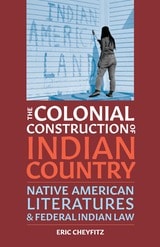
The Colonial Construction of Indian Country
Native American Literatures and Federal Indian LawEric Cheyfitz
University of Minnesota Press, 2024
A guide to the colonization and projected decolonization of Native America
In The Colonial Construction of Indian Country, Eric Cheyfitz mounts a pointed historical critique of colonialism through careful analysis of the dialogue between Native American literatures and federal Indian law. Illuminating how these literatures indict colonial practices, he argues that if the decolonization of Indian country is to be achieved, then federal Indian law must be erased and replaced with independent Native nation sovereignty—because subordinate sovereignty, the historical regime, is not sovereignty at all.
At the same time, Cheyfitz argues that Native American literatures, specifically U.S. American Indian literatures, cannot be fully understood without a knowledge of U.S. federal Indian law: the matrix of colonialism in Indian country. Providing intersectional readings of a range of literary and legal texts, he discusses such authors as Louise Erdrich, Frances Washburn, James Welch, Gerald Vizenor, Simon Ortiz, Leslie Marmon Silko, and others. Cheyfitz examines how American Indian writers and critics have responded to the impact of law on Native life, revealing recent trends in Native writing that build upon traditional modes of storytelling and governance.
With a focus on resistance to the colonial regime of federal Indian law, The Colonial Construction of Indian Country not only elucidates how Native American literatures and federal Indian law are each crucial to any reading of the other, it also guides readers to better understand the genocidal assault on Indigenous peoples by Western structures of literacy, politics, and law.
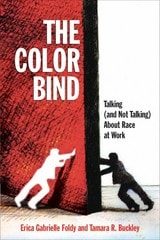
The Color Bind
Talking (and Not Talking) About Race at WorkErica Gabrielle Foldy
Russell Sage Foundation, 2014
The Color Line and the Quality of Life in America
Reynolds Farley
Russell Sage Foundation, 1987
The Color Line
Legacy for the Twenty-First CenturyJohn Hope Franklin
University of Missouri Press, 1993
The Color of Family
History, Race, and the Politics of AncestryMichael O'Malley
University of Chicago Press, 2024
A zealous eugenicist ran Virginia’s Bureau of Vital Statistics in the first half of the twentieth century, misusing his position to reclassify people he suspected of hiding their “true” race. But in addition to being blinded by his prejudices, he and his predecessors were operating more by instinct than by science. Their whole dubious enterprise was subject not just to changing concepts of race but outright error, propagated across generations.
This is how Michael O’Malley, a descendant of a Philadelphia Irish American family, came to have “colored” ancestors in Virginia. In The Color of Family, O’Malley teases out the various changes made to citizens’ names and relationships over the years, and how they affected families as they navigated what it meant to be “white,” “colored,” “mixed race,” and more. In the process, he delves into the interplay of genealogy and history, exploring how the documents that establish identity came about, and how private companies like Ancestry.com increasingly supplant state and federal authorities—and not for the better.
Combining the history of O’Malley’s own family with the broader history of racial classification, The Color of Family is an accessible and lively look at the ever-shifting and often poisoned racial dynamics of the United States.

The Color of Mind
Why the Origins of the Achievement Gap Matter for JusticeDerrick Darby and John L. Rury
University of Chicago Press, 2018
Telling the story of what they call the Color of Mind—the idea that there are racial differences in intelligence, character, and behavior—they show how philosophers, such as David Hume and Immanuel Kant, and American statesman Thomas Jefferson, contributed to the construction of this pernicious idea, how it influenced the nature of schooling and student achievement, and how voices of dissent such as Frederick Douglass, Frances Ellen Watkins Harper, and W. E. B. Du Bois debunked the Color of Mind and worked to undo its adverse impacts.
Rejecting the view that racial differences in educational achievement are a product of innate or cultural differences, Darby and Rury uncover the historical interplay between ideas about race and American schooling, to show clearly that the racial achievement gap has been socially and institutionally constructed. School leaders striving to bring justice and dignity to American schools today must work to root out the systemic manifestations of these ideas within schools, while still doing what they can to mitigate the negative effects of poverty, segregation, inequality, and other external factors that adversely affect student achievement. While we cannot expect schools alone to solve these vexing social problems, we must demand that they address the dignitary injustices associated with how we track, discipline, and deal with special education that reinforce long-standing racist ideas. That is the only way to expel the Color of Mind from schools, close the racial achievement gap, and afford all children the dignity they deserve.

The Color of Night
Race, Railroaders, and Murder in the Wartime WestMax Geier
Oregon State University Press, 2015
In this deeply researched and detailed account, Geier explores how race, gender, and class affected the attitudes of local town-folk, law officers, and courtroom jurors toward Black trainmen on the West Coast, at a time when militarization skewed perceptions of virtue, status, and authority. He delves into the working conditions and experiences of unionized Black trainmen in their “home and away” lives in Los Angeles and Portland, while illuminating the different ways that they, and other residents of Oregon and southern California, responded to news of “Oregon’s murdered war bride.” Reporters, civil rights activists, and curiosity seekers transformed the trial and appeals process into a public melodrama.
The investigation, trial, and conviction of Robert Folkes galvanized civil rights activists, labor organizers, and community leaders into challenging the flawed judicial process and ultimately the death penalty in Oregon, serving as a catalyst for civil rights activism that bridged rural and urban divides. The Color of Night will appeal to “true crime” aficionados, and to anyone interested in the history of race and labor relations, working conditions, community priorities, and attitudes toward the death penalty in the first half of the 20th century.
The Color of Paper
Representing Race in the Comics MediumChris Gavaler
The Ohio State University Press, 2026
The Color of Representation
Congressional Behavior and Black InterestsKenny J. Whitby
University of Michigan Press, 2000
The Color of Sex
Whiteness, Heterosexuality, and the Fictions of White SupremacyMason Stokes
Duke University Press, 2001
The Color of Sex reveals what happens when race and sexuality meet, when white desire encounters its own ambivalence. As Stokes argues, whiteness and heterosexuality exist in anxious relation to one another. Mutually invested in “the normal,” they support each other in their desperate insistence on the cultural logic of exclusion. At the same time, however, they threaten one another in their attempt to create and sustain a white future, since reproducing whiteness necessarily involves the risk of contamination
Charting the curious movements of this “white heterosexuality,” The Color of Sex inaugurates a new moment in our ongoing attempt to understand the frenzied interplay of race and sexuality in America. As such, it will appeal to scholars interested in race theory, sexuality studies, and American history, culture, and literature.
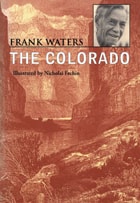
The Colorado
Frank Waters
Ohio University Press, 1985
The vast Colorado River collects water from the highest Rocky Mountain peaks and traverses the widest plateaus, the deepest canyons, and the lowest deserts before emptying into the delta of northern Mexico. This austere land and mighty river resist exploration, settlement, and description. But in the hands of one of the West’s great writers, Frank Waters, the history and lore of its past make irresistible reading and a resounding case for mankind’s respect for the environment.
The Colored Aristocracy of St. Louis
Cyprian Clamorgan, Edited & Intro by Julie Winch
University of Missouri Press, 2018
In 1858, Cyprian Clamorgan wrote a brief but immensely readable book entitled The Colored Aristocracy of St. Louis. The grandson of a white voyageur and a mulatto woman, he was himself a member of the "colored aristocracy." In a setting where the vast majority of African Americans were slaves, and where those who were free generally lived in abject poverty, Clamorgan's "aristocrats" were exceptional people. Wealthy, educated, and articulate, these men and women occupied a "middle ground." Their material advantages removed them from the mass of African Americans, but their race barred them from membership in white society.
The Colored Aristocracy of St. Louis is both a serious analysis of the social and legal disabilities under which African Americans of all classes labored and a settling of old scores. Somewhat malicious, Clamorgan enjoyed pointing out the foibles of his friends and enemies, but his book had a serious message as well. "He endeavored to convince white Americans that race was not an absolute, that the black community was not a monolith, that class, education, and especially wealth, should count for something."
Despite its fascinating insights into antebellum St. Louis, Clamorgan's book has been virtually ignored since its initial publication. Using deeds, church records, court cases, and other primary sources, Winch reacquaints readers with this important book and establishes its place in the context of African American history. This annotated edition of The Colored Aristocracy of St. Louis includes an introductory essay on African Americans in St. Louis before the Civil War, as well as an account of the lives of the author and the members of his remarkable family—a family that was truly at the heart of the city's "colored aristocracy" for four generations.
A witty and perceptive commentary on race and class, The Colored Aristocracy of St. Louis is a remarkable story about a largely forgotten segment of nineteenth-century society. Scholars and general readers alike will appreciate Clamorgan's insights into one of antebellum America's most important communities.
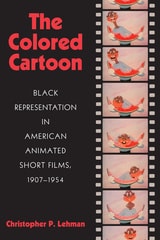
The Colored Cartoon
Black Presentation in American Animated Short Films, 1907-1954Christopher P. Lehman
University of Massachusetts Press, 2007
From the introduction of animated film in the early 1900s to the 1950s, ethnic humor was a staple of American-made cartoons. Yet as Christopher Lehman shows in this revealing study, the depiction of African Americans in particular became so inextricably linked to the cartoon medium as to influence its evolution through those five decades. He argues that what is in many ways most distinctive about American animation reflects white animators' visual interpretations of African American cultural expression.
The first American animators drew on popular black representations, many of which were caricatures rooted in the culture of southern slavery. During the 1920s, the advent of the sound-synchronized cartoon inspired animators to blend antebellum-era black stereotypes with the modern black cultural expressions of jazz musicians and Hollywood actors. When the film industry set out to desexualize movies through the imposition of the Hays Code in the early 1930s, it regulated the portrayal of African Americans largely by segregating black characters from others, especially white females. At the same time, animators found new ways to exploit the popularity of African American culture by creating animal characters like Bugs Bunny who exhibited characteristics associated with African Americans without being identifiably black.
By the 1950s, protests from civil rights activists and the growing popularity of white cartoon characters led animators away from much of the black representation on which they had built the medium. Even so, animated films today continue to portray African American characters and culture, and not necessarily in a favorable light.
Drawing on a wide range of sources, including interviews with former animators, archived scripts for cartoons, and the films themselves, Lehman illustrates the intimate and unmistakable connection between African Americans and animation.

The Colorful Apocalypse
Journeys in Outsider ArtGreg Bottoms
University of Chicago Press, 2007
The Reverend Howard Finster was twenty feet tall, suspended in darkness. Or so he appeared in the documentary film that introduced a teenaged Greg Bottoms to the renowned outsider artist whose death would help inspire him, fourteen years later, to travel the country. Beginning in Georgia with a trip to Finster’s famous Paradise Gardens, his journey—of which The Colorful Apocalypse is a masterly chronicle—is an unparalleled look into the lives and visionary works of some of Finster’s contemporaries: the self-taught evangelical artists whose beliefs and oeuvres occupy the gray area between madness and Christian ecstasy.
With his prodigious gift for conversation and quietly observant storytelling, Bottoms draws us into the worlds of such figures as William Thomas Thompson, a handicapped ex-millionaire who painted a 300-foot version of the book of Revelation; Norbert Kox, an ex-member of the Outlaws biker gang who now lives as a recluse in rural Wisconsin and paints apocalyptic visual parables; and Myrtice West, who began painting to express the revelatory visions she had after her daughter was brutally murdered. These artists’ works are as wildly varied as their life stories, but without sensationalizing or patronizing them, Bottoms—one of today’s finest young writers—gets at the heart of what they have in common: the struggle to make sense, through art, of their difficult personal histories.
In doing so, he weaves a true narrative as powerful as the art of its subjects, a work that is at once an enthralling travelogue, a series of revealing biographical portraits, and a profound meditation on the chaos of despair and the ways in which creativity can help order our lives.

The Colors of Poverty
Why Racial and Ethnic Disparities PersistAnn Chih Lin
Russell Sage Foundation, 2008
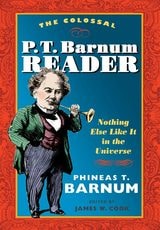
The Colossal P. T. Barnum Reader
Nothing Else Like It in the UniversePhineas T. Barnum. Edited by James W. Cook
University of Illinois Press, 2005
James W. Cook's The Colossal P. T. Barnum Reader is the largest collection of Barnum's works ever produced. Included are excerpts from his pseudo-autobiographical novel The Adventures of an Adventurer (1841), his European letters from 1844-46 informing readers of the New York Atlas of his regal reception overseas, and a large selection from his Ancient and Modern Humbugs of the World, Barnum's 1864-65 insider's look into the frauds of nineteenth-century American culture. It offers a glimpse of Tom Thumb's minstrel and singing performances in front of Queen Victoria, Barnum's many fraudulent representations of the supposedly ancient Joice Heth, and a more immediate, less filtered sense of Barnum as cultural and social critic in his serialized writings and travelogues. This volume also features reproductions of difficult to find posters from Barnum's two-decade collaboration with the prominent New York lithographers, Currier and Ives, and vintage photographs.
Finally, the reader also helps us to understand Barnum's role in building the modern culture industry. We follow his career from itinerant hawker, hardly distinguishable from his pre-industrial forebears, to manager of the world's first show business empire, with a staff of thousands and brand recognition across four continents. The Colossal P. T. Barnum Reader tracks the shifting personas of the great showman, his representational choices, and his publics across the nineteenth century.

The Columbia River Treaty Revisited
Transboundary River Governance in the Face of UncertaintyEdited by Barbara Cosens
Oregon State University Press, 2012
The Columbia River Treaty Revisited, with contributions from historians, geographers, environmental scientists, and other experts, is intended to facilitate conversation about the impending expiration. It allows the reader, through the close inspection of the Columbia River Basin, to better grasp the uncertainty of water governance. It aids efforts, already underway, to understand changes in the basin since the treaty was passed, to predict future changes, and to determine whether alteration of the treaty is ultimately advisable.
The Columbia River Treaty Revisited will appeal to those interested in water basin management–scholars, stakeholders, and residents of the Columbia River basin alike.
A Project of the Universities Consoritum on Columbia River Governance
The Universities Consortium on Columbia River Governance, with representatives from universities in the U.S. and Canada, formed to offer a nonpartisan platform to facilitate an informed, inclusive, international dialogue among key decision-makers and other interested people and organizations; to connect university research to problems faced within the basin; and to expose students to a complex water resources problem. The Consortium organized the symposium on which this volume is based.
The Columbus Anthology
Amanda Page
The Ohio State University Press, 2020
Race, sports, the endless squeeze of gentrification, the city’s booming literary and comics scenes, its reputation as a haven for queer life, the sometimes devastating differences in perspective among black and white, native and transplant residents—and more than one tribute to Buckeye Donuts—make this anthology a challenging and an energizing read. From Hanif Abdurraqib’s sparkling and urgent portrait of Columbus’s vital immigrant culture as experienced through Crew games to Nick Dekker’s insights into breakfast as a vehicle for getting to know a city to the poetry of Maggie Smith and Ruth Awad, the pieces gathered here show us a Columbus far more textured than any test marketer could dream up.

The Combat Zone
Murder, Race, and Boston's Struggle for JusticeJan Brogan
University of Massachusetts Press, 2021
At the end of the 1976 football season, more than forty Harvard athletes went to Boston's Combat Zone to celebrate. In the city's adult entertainment district, drugs and prostitution ran rampant, violent crime was commonplace, and corrupt police turned the other way. At the end of the night, Italian American star athlete Andy Puopolo, raised in the city's North End, was murdered in a stabbing. Three African American men were accused of the crime. His murder made national news and led to the eventual demise of the city's red-light district.
Starting with this brutal murder, The Combat Zone tells the story of the Puopolo family's struggle with both a devastating loss and a criminal justice system that produced two trials with opposing verdicts, all within the context of a racially divided Boston. Brogan traces the contentious relationship between Boston’s segregated neighborhoods during the busing crisis; shines a light on a court system that allowed lawyers to strike potential jurors based purely on their racial or ethnic identity; and lays bare the deep-seated corruption within the police department and throughout the Combat Zone. What emerges is a fascinating snapshot of the city at a transitional moment in its recent past.
The Combing of History
David William Cohen
University of Chicago Press, 1994
Drawing from a wide range of examples, including African legal proceedings, German and American museum exhibits, Native American commemorations, public and academic debates, and scholarly research, David William Cohen explores the "walls and passageways" between academic and non-academic productions of history.

The Come Apart
A NovelSusannah Felts
Northwestern University Press, 2026
An authentic rock band story from Chicago to Nashville and, just maybe, back again
On the cusp of turning thirty, Chicago indie musician Maggie Corbin has hustled for a decade, set on making her rock and roll dreams come true. Her band, Spinning Birds, fronted by Maggie and her romantic partner Matt Turkish, releases a debut record to critical acclaim, hits the road, and begins working on a follow-up. From the outside, her path looks like success—but as streaming deconstructs the industry and Maggie’s relationships shift and slip, the question remains: Can you live for art alone?
When a sudden move back to the South forces Maggie to reframe her dreams and reckon with familial rifts and her past—while still fighting to reimagine what her future could be—a natural disaster in Nashville and a surprise encounter with a character from her childhood shift her perspective on healing, community, and the ties that bind. Drifting in and out of songwriting sessions, cozy kitchens, and moments of bearing witness to the curious power of the natural world, The Come Apart celebrates the times when we must come fully undone in order to put ourselves back together.

The Comedy Studies Reader
Edited by Nick Marx and Matt Sienkiewicz
University of Texas Press, 2018

The Coming Health Crisis
Who Will Pay for Care for the Aged in the 21st Century?John R. Wolfe
University of Chicago Press, 1993
In previous decades, when younger Americans far outnumbered older ones, retirees could depend on financial support through taxes from the population at large. But as "Boomers" retire and the work force begins to shrink, there will be a disproportionately large population of retirees to workers. With such a big jump in the percentage of older Americans in the population, fewer workers will be able to to transfer funds, through taxes, to retirees. Moreover, other traditionally reliable sources of financial assistance—Social Security, Medicare, and Medicaid—have faced serious financial difficulties in recent years. Who will the aged turn to for assistance?
The Coming Health Crisis suggests that as funds from all quarters dwindle, older Americans will have to look to alternative programs for financial assistance. Wolfe urges immediate action to develop new saving programs and increase existing transfer schemes to head off an imminent crisis. Although tax increases might provide some resources, he demonstrates that it is more important to accumulate capital to create solid reserves for the future. Wolfe also explores two roles for government: prefunding new or existing social insurance programs and promoting private insurance options. By exempting insurance fund income from corporate taxation and permitting people at all income levels to defer income tax on accounts earmarked for long-term care, he shows how government could greatly encourage and expand personal saving.
Finally, this work assesses the value of other recent health and long-term-care innovations: social/health maintenance organizations, long-term-care individual retirement accounts, and reverse annuity mortgages, in addition to vouchers, care rationing, mandatory public insurance, and expanded private coverage. Through this wide-ranging survey, Wolfe demonstrates that, through a combination of these programs, we can care for the aging "Baby Boom" generation by anticipating their needs and saving now.
The Coming of the Civil War
Avery O. Craven
University of Chicago Press, 1966
". . . those who would examine the democratic process during a period of progressive breakdown, in order to understand the dangers it embodies within itself, will find The Coming of the Civil War a classic analysis."—Louis D. Rubin, Jr., Sewanee Review
"The book has always been recognized, even by its most severe critics, as a work of consummate scholarship."—T. Harry Williams, Baton Rouge Morning Advocate
The Commercialization of News in the Nineteenth Century
Gerald J. Baldasty
University of Wisconsin Press, 1992
The Commercialization of News in the Nineteenth Century traces the major transformation of newspapers from a politically based press to a commercially based press in the nineteenth century. Gerald J. Baldasty argues that broad changes in American society, the national economy, and the newspaper industry brought about this dramatic shift.
Increasingly in the nineteenth century, news became a commodity valued more for its profitablility than for its role in informing or persuading the public on political issues. Newspapers started out as highly partisan adjuncts of political parties. As advertisers replaced political parties as the chief financial support of the press, they influenced newspapers in directing their content toward consumers, especially women. The results were recipes, fiction, contests, and features on everything from sports to fashion alongside more standard news about politics.
Baldasty makes use of nineteenth-century materials—newspapers from throughout the era, manuscript letters from journalists and politicians, journalism and advertising trade publications, government reports—to document the changing role of the press during the period. He identifies three important phases: the partisan newspapers of the Jacksonian era (1825-1835), the transition of the press in the middle of the century, and the influence of commercialization of the news in the last two decades of the century.
The Committee
A Study of Policy, Power, Politics and Obama's Historic Legislative Agenda on Capitol HillBryan W. Marshall and Bruce C. Wolpe
University of Michigan Press, 2018