Results by title
3390 books match the query 'Fiction' and 1041 start with t
The Wigwam and the Cabin
The Arkansas EditionWilliam G. Simms
University of Arkansas Press, 2001

The Wild Earth’s Nobility
A NovelFrank Waters
Ohio University Press, 2002
The Wild Earth’s Nobility is the first of Frank Waters’s semiautobiographical novels in the Pikes Peak saga. Here, in a frontier town in the shadow of the commanding mountain, the Rogier family settles near an age-old route of migrating Native Americans. In an era of prospecting, silver strikes, and frenzied mining, Joseph Rogier becomes a successful building contractor, rears a large family, and is gradually overwhelmed by the power of the great peak.
In Waters’s visionary prose, the story becomes a mythic journey to reconcile instinct and reason, consciousness and intuition, and the powerful emotions of a family struggling with its own dreams and human limitations.
Frank Waters (1902-1995), one of the finest chroniclers of the American Southwest, wrote twenty-eight works of fiction and nonfiction. Of Pike’s Peak (1971), the Chicago Daily News wrote, “It is a product of maturity, written with a sustained strength and beauty of style rarely found in fiction today.”
Pike’s Peak is composed of three condensed novels: The Wild Earth’s Nobility, Below Grass Roots, and The Dust within the Rock.
The Wild Goose
Mori Ogai; Translated with an Introduction by Burton Watson
University of Michigan Press, 1995
The Willow Pattern
A Judge Dee MysteryRobert van Gulik
University of Chicago Press, 1965
An exceptionally clever, cozy mystery that will thrill all fans of Judge Dee, whom the Los Angeles Times ranked with Sherlock Holmes
Judge Dee has been appointed emergency governor of the plague- and drought-ridden Imperial City. As his guards help the city fend off a popular uprising, an aristocrat from one of the oldest families in China suffers an "accident" in a deserted mansion.
In The Willow Pattern, the illustrious judge uses his trademark expertise to unravel the mysteries of the nobleman, a shattered vase, and a dead bondmaid. Along the way he encounters a woman who fights with loaded sleeves, a nearly drowned courtesan, and an elaborate trap set for a murderer. Packed with suspense, violence, and romance, The Willow Pattern won’t disappoint Judge Dee’s legions of loyal fans.
The Wind
By Dorothy Scarborough
University of Texas Press, 1979
The Wind stirred up a fury among Texas readers when it was first published in 1925.
This is the story of Letty, a delicate girl who is forced to move from lush Virginia to desolate West Texas. The numbing blizzards, the howling sand storms, and the loneliness of the prairie all combine to undo her nerves. But it is the wind itself, a demon personified, that eventually drives her over the brink of madness.
While the West Texas Chamber of Commerce rose up in anger over this slander of their state, Dorothy Scarborough's depiction of the cattle country around Sweetwater during the drought of the late 1880s is essentially accurate. Her blend of realistic description, authentic folklore, and a tragic heroine, bound together by a supernatural theme, is unique in Southwestern literature. As a story by and about a woman, The Wind is a rarity in the early chronicles of the cattle industry. It is also one of the first novels to deal realistically with the more negative aspects of the West.
Sylvia Ann Grider's foreword reports on the life and work of Dorothy Scarborough, a native Texan and a well-respected scholar.
The Wind Traveler
A NovelBy Alonso Cueto; translated by Frank Wynne and Jessie Mendez Sayer
University of Texas Press, 2020
The Wind Traveler showcases the mesmerizing storytelling of Alonso Cueto at the top of his career. At the heart of his latest work is a seemingly ordinary man named Ángel, who sells kitchenware at a store in Lima. In the early 1990s, he had served as an army soldier, engaging in brutal acts whose aftermath still reverberates. He is forced to reckon with his past when a woman he was instructed to kill enters the store and buys a few items. How can she still be alive? What's more, how can she not recognize Ángel? Remarkably, she asks him to deliver her purchases to her house. From this moment, Ángel feels compelled to make amends through any means necessary, even if it requires sacrificing his life of quiet retirement.
A stirring tribute to the wounded souls who yearn to make peace with the past, The Wind Traveler offers a new vision of the fragile human connections that sustain a deeply fractured world.
The Wire Devils
Frank L. Packard
University of Minnesota Press, 2013
Best known for his Jimmie Dale series of books, which have sold more than 3 million copies worldwide, Frank L. Packard first published The Wire Devils in 1918. A “wire thriller” that uses the booming railroads and telegraph lines of the old West as its backdrop for fast-paced adventure, The Wire Devils follows a criminal gang of the same name who hijack a railroad’s telegraph lines to glean information about profitable shipments. But foiling them again and again is the Hawk, the outlaw hero who robs from the robbers and is ultimately on the side of law and order.
Combining elements from dime-store novels and Packard’s own experience on the rails, The Wire Devils is at once a hybrid western and a thriller still worth reading nearly a century after it was written.
The Wished For Country
Wayne Karlin
Northwestern University Press, 2002
The stories of these three men, the women who love them, and the community they form, bring to vivid life the experiences of those who came to America pulled by a dream of what could be shaped from an emptiness that embodied promise, of those who were unwillingly brought to be the instruments of that dream, and of those who saw the shape of their world forever changed by the coming of the Europeans.

The Witkiewicz Reader
Stanislaw Ignacy Witkiewicz
Northwestern University Press, 1992
The Wolf at Number 4
A NovelAyo Tamakloe-Garr
Ohio University Press, 2018
The Woman At Otowi Crossing
Frank Waters
Ohio University Press, 1987
Based on the real life of Edith Warner, who ran a tearoom at Otowi Crossing, just below Los Alamos, The Woman at Otowi Crossing is the story of Helen Chalmer, a person in tune with her adopted environment and her neighbors in the nearby Indian pueblo and also a friend of the first atomic scientists. The secret evolution of atomic research is a counterpoint to her psychic development.
In keeping with its tradition of allowing the best of its list to thrive, Ohio University Press/Swallow Press is particularly proud to reissue The Woman at Otowi Crossing by best-selling author Frank Waters. This new edition features an introduction by Professor Thomas J. Lyon and a foreword by the author’s widow, Barbara Waters.
The story is quintessential Waters: a parable for the potentially destructive materialism of the mid-twentieth century. The antidote is Helen Chalmer’s ability to understand a deeper truth of her being; beyond the Western notion of selfhood, beyond the sense of a personality distinct from the rest, she experiences a new and wider awareness.
The basis for an opera of the same name, The Woman at Otowi Crossing is the powerful story of the crossing of cultures and lives: a fable for our times.
The Woman Who Was Poor
A NovelLeon Bloy
St. Augustine's Press, 2014
It is the story of a woman who is abysmally poor, brutally treated and exploited by her parents, living in the gutters of Paris, yet she retains the spiritual outlook and purity of a saint. We are spared no brutality, yet there are scenes of the most tender beauty.
The woman, Clotilde, becomes an artist's model, meeting all the great French writers, among them the gloomy and magnificent Marchenoir, who is Bloy himself. They are all impressed by the depth of her thoughts and feelings; she finally marries one of them. They are pitifully poor, and the pages that cover the birth and death of their child shock with horror while moving the reader in their tragic beauty and tenderness––for this is Bloy, always hovering between death and ecstasy. Left a widow, Clotilda finds her true vocation, a vocation of poverty. She is the woman who is poor, no other words describe her more accurately. The novel ends with those famous words of extraordinary optimism: "There is only one misery…not to be saints."

The Women Carry River Water
PoemsNguyen Quang Thieu
University of Massachusetts Press, 1997
This landmark collection represents the first English translation of poetry by Nguyen Quang Thieu, a significant Vietnamese writer of the post-1975 generation. Translated collaboratively by acclaimed poet Martha Collins and the author himself, this bilingual volume presents verses rooted deeply in Vietnamese cultural traditions that honor the dignity of daily labor, the resilience of ordinary people, and the spiritual dimensions of human experience in contemporary Vietnam.
Thieu's work draws upon a rich Vietnamese poetic tradition while addressing themes of displacement, reconstruction, memory, and the search for meaning in the aftermath of conflict. The poems capture the essence of Vietnamese life—its rhythms, relationships, and philosophical underpinnings—through images drawn from nature, labor, family, and community. The bilingual format stands as a bridge between Vietnamese and American literary traditions, and honors the linguistic and cultural dimensions of Thieu groundbreaking collection.

The Women and Language Debate
A SourcebookEdited by Camille Roman, Suzanne Juhasz, and Cristanne Miller
Rutgers University Press, 1993
The Woods Colt
A Novel of the Ozarks HillsThames Williamson
University of Arkansas Press, 2023
Although more than one hundred novels set in the Ozarks were published before it, Thames Ross Williamson’s 1933 novel The Woods Colt was the first to achieve notable success both popularly and critically. Written entirely in regional dialect, The Woods Colt is the story of the violent and reckless Clint Morgan, whose attempts to secure love and freedom force him down a path of self-destruction.
Simultaneously exploitative and romantic, The Woods Colt carries us back to the heart of the Great Depression, heyday of the hillbilly in pop culture, when the perceived self-reliance and old-fashioned wisdom of rural people allowed audiences to not only escape their current circumstances but also imagine more hopeful ways of living. Williamson, a prolific author, answered this interest with a fast-paced and action-driven novel filled with folklore that had, ostensibly, been authenticated by none other than renowned Ozarks expert Vance Randolph.
The Woods Colt, with its familiar sense of danger and adventure, continues to offer insight and entertainment as it wrestles with timeless themes of economic struggle, cultural conflict, and modernization. With an introduction and explanatory notes from Phillip Douglas Howerton, this new edition makes the seminal novel available once more to scholars, regional enthusiasts, and anyone looking for a tale of the Ozark hills.
The Woods
StoriesJanice Obuchowski
University of Iowa Press, 2022
What do we find in the woods? An uplifting of spirit or a quieting of sorrow. A sense of being haunted by the past. Sometimes rougher, more violent things: abandoned quarries and feral cats, black bears, brothers caught up in an escalating war, a ghost who wishes to pass on her despair, monsters who boom with hollow ecstatic laughter. But also songbirds: the hermit thrush and the winter wren. Rushing rivers glossy with froth. A nineteenth-century inn that’s somehow gotten by all these years. And far within, a vegetal twilight and constant dusk that feels outside of time. This remarkable debut illuminates the ways we all carry within ourselves aspects stark, beautiful, wild, and unknowable.
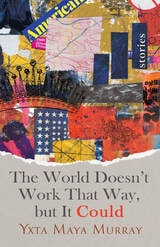
The World Doesn't Work That Way, but It Could
StoriesYxta Maya Murray
University of Nevada Press, 2025
The Millions' Most Anticipated: The Great Second-Half of 2020 Book Preview
The gripping, thought-provoking stories in Yxta Maya Murray’s latest collection find their inspiration in the headlines. Here, ordinary people negotiate tentative paths through wildfire, mass shootings, bureaucratic incompetence, and heedless government policies with vicious impacts on the innocent and helpless. A nurse volunteers to serve in catastrophe-stricken Puerto Rico after Hurricane Maria and discovers that her skill and compassion are useless in the face of stubborn governmental inertia. An Environmental Protection Agency employee, whose agricultural-worker parents died after long exposure to a deadly pesticide, finds herself forced to find justifications for reversing regulations that had earlier banned the chemical. A Department of Education employee in a dystopic future America visits a highly praised charter school and discovers the horrific consequences of academic failure. A transgender trainer of beauty pageant contestants takes on a beautiful Latina for the Miss USA pageant and brings her to perfection and the brink of victory, only to discover that she has a fatal secret.
The characters in these stories grapple with the consequences of frightening attitudes and policies pervasive in the United States today. The stories explore not only our distressing human capacity for moral numbness in the face of evil, but also reveal our surprising stores of compassion and forgiveness. These brilliantly conceived and beautifully written stories are troubling yet irresistible mirrors of our time.
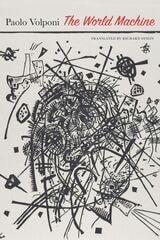
The World Machine
Paolo Volponi
Seagull Books, 2024
A small-time farmer living in central Italy in the 1960s is the keeper of a great truth: that people are machines built by other beings who are machines themselves. Our true destiny is to build ever better machines so that society can become a techno-utopia in which friendship can be established among all people on earth. These ideas bring him into conflict with everyone, especially his wife, against whom he is accused of ill-treatment. His quest takes him to Rome, where he presents his truth, hoping it will bring him worldwide recognition. Behind his poetical reveries and unfathomable scientific notions lies the disturbing fragility of a lone, paranoid, and deluded man in conflict with everyone, including himself.
Paolo Volponi’s unique novel The World Machine examines the relationship between rural life and the modern city, as well as the subversive idealism of a society still firmly anchored in the past, dominated by the Church, and unable to grasp the need for change.
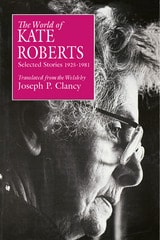
The World of Kate Roberts
Selected Stories, 1925-1981Joseph Clancy
Temple University Press, 1991
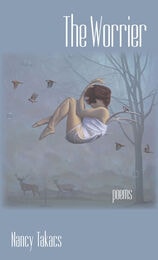
The Worrier
poemsNancy Takacs
University of Massachusetts Press, 2017
What do you know?
How I hide my flaws.
What do you know?
How butterflies
sweeten themselves
opening and closing their wings together
in a little hill
on the beach.
—"The Worrier bed"
The Worrier poems, like a string of worry beads, are dialogues between two interior voices exploring topics as varied as fur coats, marriage, scars, vanishing bees, a silent film star, toads, and volunteers. Strongly imagistic, and often placed in wild landscapes of Utah and Wisconsin, these poems strangely soothe with their surprising offbeat answers to Takacs's worries about intimacy, loss, and turmoil in midlife and beyond; about disappearing wilderness, and compassion, in the world at large. Despite worrying, the poems seem fearless in what they tackle, and in their language and form, creating lightness, promise.
The Worst Thing of All Is the Light
José Luis Serrano
Seagull Books, 2023
The Worst Thing of All Is the Light tells two stories. First, that of the friendship of two heterosexual men, Koldo and Edorta, through the decades of the late twentieth century in Spain’s Basque Country. In the book Edorta writes in order to try and save from oblivion his relationship with Koldo—a bond for which the word “friendship” falls short yet for which he is too afraid to use the word “love.” It is the story of two men who are in love and don’t know it, or don’t want to know it. The second story is that of its author, José Luis Serrano, in the present day as he enjoys his summer holiday in the same Basque Country and talks with his husband at length about many different things, but mostly about how to narrate the relationship of Koldo and Edorta, two men who did not allow themselves to construct the domestic life that their counterparts enjoy today. Together these stories show a love that the lovers hope will outlive them, a love that is the same even if we give it different labels.
The Wretch, Otherwise Known as Guerrino
A Bilingual EditionTullia d'Aragona
Iter Press, 2024
This is an unabridged bilingual, fully annotated edition of Tullia d’Aragona’s epic poem The Wretch. This mid-century epic reflects the many historical and religious changes taking place in the first half of the sixteenth century in Europe and the burgeoning literary debates following the publication of another Italian epic poem, Ariosto’s Orlando Furioso. The Wretch recounts the adventures of Guerrino, a nobleman captured by pirates as an infant and sold into slavery. His famous quest in search of his parents and his identity involves abductions, same-sex seductions, and skirmishes with fantastical beasts as he travels through Europe, Turkey, Africa, India, Arabia, and the Purgatory of St. Patrick. The poem occupies an important position in the development of the prestigious epic genre, the highest step on the ladder to literary recognition and fame, and Tullia’s work paved the way for the epics of other women writers in subsequent decades.
The Year She Disappeared
A NovelBy Ann Harleman
University of Texas Press, 2008
Nan and her four-year-old granddaughter Jane are taking their first airplane trip together, flying from Seattle to the East Coast. But this is no ordinary excursion. Nan is abducting Jane.
Nan's own daughter, Alex, believes Jane's father has been sexually abusing her, and she's asked Nan to take her away, to hide her. But when she and Jane arrive in Providence, Rhode Island, things begin to go wrong. The old friend whom Nan expected to stay with has vanished. Her son-in-law is on her trail. And Alex disappears.
"I'm too old for this!" Nan thinks, in furious, self-pitying despair. She wasn't a good wife; she wasn't a good mother. Now she's stranded in a strange city, without friends or money or even her own identity, in sole charge of a very unhappy little girl. When her new life offers new friends, new work, and even a new lover, she must decide whom to trust.
The Year She Disappeared explores the possibility—and the price—of late blooming love. Will the trials Nan faces during her year on the lam break her? Or will she discover who she really is?

The Year They Gave Women the Priesthood and Other Stories
Michael Fillerup
Signature Books, 2022

The Year
A NovelTomas Espedal
Seagull Books, 2021
Written as a long poem, The Year is Espedal’s riveting stream of consciousness—profound, edgy, sometimes manic, but always intensely intimate.
The Yellow Wall-Paper by Charlotte Perkins Gilman
A Dual-Text Critical EditionCharlotte Perkins Gilman
Ohio University Press, 2006
Most editions have been based on the 1892 New England Magazine publication rather than the handwritten manuscript at Radcliffe College. Publication of the unedited manuscript in 1994 sparked controversy over which of the two was definitive. Since then, scholars have discovered half a dozen parent texts for later twentieth-century printings, including William Dean Howells’s version from 1920 and the 1933 Golden Book version.
While traditional critical editions gather evidence and make an argument for adopting one text as preferable to others,“The Yellow Wall-Paper” by Charlotte Perkins Gilman: A Dual-Text Critical Edition, edited by Shawn St. Jean, offers both manuscript and magazine versions, critically edited and printed in parallel for the first time. New significance appears in such facets as the magazine’s accompanying illustrations, its lineation and paragraphing, Gilman’s choice of pronouns, and her original handwritten ending.
This critical edition of “The Yellow Wall-Paper” includes a full and nontraditional apparatus, making it easy for students and scholars to study the more than four hundred variants between the two texts. Four new essays, written especially for this volume, explore the implications of this multitext model.

The Yemassee
A Romance of CarolinaWilliam Gilmore Simms
University of Arkansas Press, 1994
The Yogi of Cockroach Court
Frank Waters
Ohio University Press, 1970
In this novel of the mestizo, or mixed-blood, Frank Waters completes the Southwestern canvas begun in The Man Who Killed the Deer and People of the Valley. Set in a violent Mexican border town, the story centers on Barby, a tormented mestizo, Guadalupe, the mestiza “percentage-girl,” and Tai-Ling, the serene yogi. Their fates mingle though each remains alone—Barby bound to the brute rages of the night; Guadalupe unconscious of all save the sun of her sexuality; Tai-Ling believing it is possible to transcend completely the flow of life.
The Young Lions
Irwin Shaw
University of Chicago Press, 2000
In the immediate aftermath of World War II, countless American writers attempted to use fiction to convey the complicated experience they'd just undergone. Few of the novels that emerged from that period were as ambitious and powerful as The Young Lions, a sweeping, dramatic account of war from the point of view of ordinary solders that depicts the danger, excitement, trauma, and loss of a no-holds-barred global war.
When Irwin Shaw published The Young Lions, he was known solely as a writer of short stories, and his panoramic, detailed, unforgettable account of the war was met with nothing short of awe. Shaw tells his story from the points of view of a perceptive young Nazi, a jaded American film producer, and a shy Jewish boy just married to the love of his life. Together they enable us to see, decades lateer, as no other novelist has since, the scope, confusion, and complexity of war.
This is a landmark novel that Washington Post critic Jonathan Yardley ranked with wartime classics like From Here to Eternity, The Naked and the Dead, and The Caine Mutiny. As James Salter writes in his foreword, "The Second World War was the central event of Shaw’s generation. The writers who stand in some glory about its forgotten battlefields and whose novels came from firsthand knowledge—Mailer, heller, James Jones, Michener—include, indomitable in their midst. Irwin Shaw. He need not to have bowed to any of them then, or, if he were still alive, now."

The higher jazz
Edmund Wilson
University of Iowa Press, 1998
Their Houses
MEREDITH S. WILLIS
West Virginia University Press, 2018
As children, two sisters make homes for their toys out of matchboxes and shoeboxes, trying to create safe places after the loss of their mother to psychosis.
Grace, a schoolteacher married to a doctor, appears to have a conventional life but has a breakdown during a undesired move her beloved cottage to another house. Dinah has married a once self-ordained preacher with a troubled past and tries to keep her children safely separate from the world. Meanwhile, a childhood friend is linked to a militia’s abortive attempt to blow up the FBI’s fingerprint records facility in West Virginia, and later builds an isolated survivalist compound in the mountains.
These three adults, closely bonded in childhood, are reunited on this acreage once owned by a white supremacist group, where they discover in various ways that there is no final protection, no matter how hard they strive to find it or make it.
Then We Saw the Flames
StoriesDaniel A. Hoyt
University of Massachusetts Press, 2009
In this freewheeling debut collection, Daniel A. Hoyt takes us from the swamps of Florida to the streets of Dresden, to the skies above America, to the tourist hotels of Acapulco, to the southwest corner of Nebraska. Along the way, we encounter a remarkable group of characters all struggling to find their footing in an unsettling world.
Sometimes magical, sometimes realistic, sometimes absurd, these stories reveal people teetering on the dangerous edge of their lives. In “Amar,” a Turkish restaurant owner deals with skinheads and the specter of violence that haunts his family. In “Boy, Sea, Boy,” a shipwrecked sailor receives a surreal visitor, a version of himself as a child. In “The Collection,” a father and son squander a trove of bizarre and fanciful objects. And in “The Kids,” a suburban couple grasp for meaning after discovering children eating from their trash.
In each of these stories, characters find themselves challenged by the political, cultural, and spiritual forces that define their lives. With a clear eye and a steady hand, Hoyt explores a fragile balance: the flames—fueled by love, loss, hope, and family—shed new light on us. Sometimes we feel warmth, and sometimes we simply burn.
Theories of Forgetting
Lance Olsen
University of Alabama Press, 2014
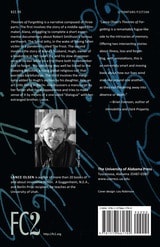
Theories of Forgetting is a narrative in three parts. The first is the story of Alana, a filmmaker struggling to complete a short documentary about Robert Smithson’s famous earthwork, The Spiral Jetty, located where the Great Salt Lake meets the desert. Alana falls victim to a pandemic called The Frost, whose symptoms include an increasing sensation of coldness and growing amnesia. The second involves Alana’s husband, Hugh, owner of a rare-and-used bookstore in Salt Lake City, and his slow disappearance across Jordan while on a trip both to remember and to forget Alana’s death. The third involves marginalia added to Hugh’s section by his daughter, Aila, an art critic living in Berlin. Aila discovers a manuscript by her father after his disappearance and tries to make sense of it by means of a one-sided “dialogue” with her brother, Lance.
Each page of the novel is divided in half. Alana’s narrative runs across the top of the page, from back to front, while Hugh’s and his daughter’s tale runs “upside down” across the bottom of the page, from front to back. How a reader initially happens to pick up Theories of Forgetting determines which narrative is read first, and thereby establishing the reader’s meaning-making of the novel.
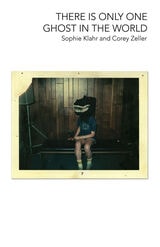
There Is Only One Ghost in the World
Sophie Klahr and Corey Zeller
University of Alabama Press, 2023
One ghost, infinite echoes—where memory, myth, and identity collide.
There Is Only One Ghost in the World follows the fragmented meditations of a multilayered voice, an intimate witness to our times that delicately and bluntly reveals the best and the worst in all of us. It is a kaleidoscopic investigation into the loneliness of modern American life as well as family relationships, exploring the truths and lies that families tell one another, and why, with empathy, sorrow, and humility. We travel from the oil-slicked beaches of California and the alleys of New Orleans to the steps of the Capitol. Here: the raw nerves of gender and identity. Here: the lessons of heartbreak. Here: true myths, fake news, and old rumors. Here: the legacies of art and incisors of seasons. Incompletable Venn diagrams, sibling porn stars, addiction and climate change, shootings and stolen x-rays, the lyrics of disco and the taxonomy of slot machines, steel monoliths and 99-cent stores, last meals and unearthed mummies. There Is Only One Ghost in the World is a book about what happened just before you woke up, and what happened just after. And what happened next.

There Is Only Us
Zoe Ballering
University of North Texas Press, 2022
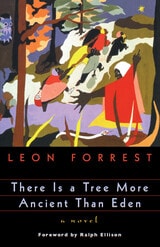
There Is a Tree More Ancient Than Eden
Leon Forrest
University of Chicago Press, 2001

There's Nothing Left for You Here
Allegra Solomon
Four Way Books, 2025
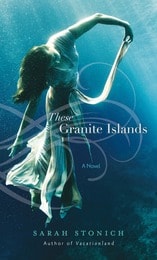
These Granite Islands
A NovelSarah Stonich
University of Minnesota Press, 2013
These Granite Islands is an arresting novel about a woman who, on her deathbed, recalls the haunting and fateful summer of 1936, a summer that forever changed her life. Sarah Stonich’s debut novel, set on the Iron Range of Minnesota, is an intimate and gripping story of a friendship, a portrait of marriage, and a meditation on the tragedy of loss.
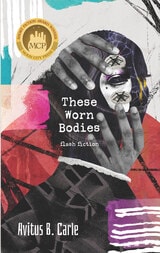
These Worn Bodies
Flash FictionAvitus B. Carle
Moon City Press, 2024

They Change the Subject
Douglas A. Martin
University of Wisconsin Press, 2005
Treacherously comic and poignant, the autobiographical stories in They Change the Subject follow a young man’s quest for identity through love and desire. Sustained by a single voice, the stories simultaneously offer a fractured novel and stand, powerfully, on their own. At the center of each tale is the heightened, visceral possibility of unexpected emotional encounters—from an escort’s dates in Manhattan hotels to a photo shoot that doubles as seduction. Always pushing toward a bigger shiver of passion, Martin’s young-man-on-the-make learns how to adapt his persona to suit his lovers’ needs and tries to embrace his own experience—and his self—by becoming the purest object of desire.

They Die Strangers
By Mohammad Abdul-Wali
University of Texas Press, 2002
They Die Strangers, a novella and thirteen short stories, is the first full-length work of the distinguished Yemeni writer Mohammad Abdul-Wali to appear in English. Abdul-Wali died tragically in an aviation accident, and his stories were collected after his death by the translators Abubaker Bagader and Deborah Akers.
Abdul-Wali was born in Ethiopia of Arab Yemeni parents. His stories, filled with nostalgia and the bitterness of exile, deal with the common experiences of Yemenis like himself who are caught between cultures by the displacements of civil war or labor migration. His characters include women left behind, children raised without fathers, and men returning home after years of absence. He explores the human condition through the eyes of the oppressed and disenfranchised and is particularly sympathetic to the plight of women.
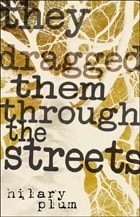
They Dragged Them through the Streets
A NovelHilary Plum
University of Alabama Press, 2013
They Dragged Them Through the Streets is a bold meditation on idealism, anger, and the American home front’s experience of today’s wars. This is an innovative work in the great tradition of war literature and a singular chronicle of one generation’s conflicts.
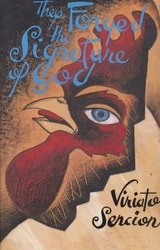
They Forged the Signature of God
A NovelViriato Sención
Northwestern University Press, 1995
Sención's novel follows the lives of three seminary students who suffer from church-state oppression. The book also gives a chilling portrait of Dr. Ramos, a sinister autocrat, who manages to survive six terms as president of his country through manipulation and tyranny. This finely textured novel gives a vivid picture of the internal politics of the Dominican Republic.
They Kept Running
Michelle Ross
University of North Texas Press, 2022
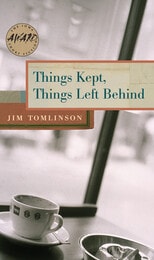
Things Kept, Things Left Behind
Jim Tomlinson
University of Iowa Press, 2006
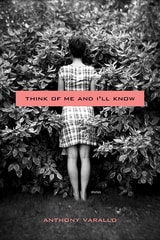
Think of Me and I'll Know
StoriesAnthony Varallo
Northwestern University Press, 2013

Thinking in Cases
Fiction, Law, and the Case HistoryPeter Brooks
University of Chicago Press, 2027
How the form of the case history became an important way of studying the individual as an exemplary case in medicine, psychoanalysis, law, and the novel.
What does it mean when we address ourselves to a specific problem and treat it as a “case” that needs resolution, a resolution that may in turn offer us more general lessons? The “case history” has become a central form of thought and analysis in our culture, but rarely has it been studied on its own. In Thinking in Cases, the distinguished critic Peter Brooks zeroes in on a kind of thinking that we all know—and often use—without understanding its dimensions and its history.
This book ponders what we do and mean when we think in cases—when we take up specific instances with a view to making them exemplary. Brooks brings to this study decades of reflection on the psychoanalytic case history, on the rhetoric of the legal case, and on novels that unfold as cases seeking solutions. Brooks focuses on the case-history’s emergence in the late nineteenth century: first, he examines how Henry James’s uses of narrative parallel case-study methods in law, medicine, and psychoanalysis. Elsewhere, he traces the case history from Hippocratic medicine through Sir Arthur Conan Doyle’s detective fiction to a startling legal case from Victorian England involving shipwreck and cannibalism. Other chapters discuss a tale of madness by Balzac and Freud’s most speculative works, especially Moses and Monotheism. A final chapter examines recent novels—Duras’s The Ravishing of Lol Stein, Coetzee’s Disgrace, Modiano’s Dora Bruder, and Erpenbeck’s Kairos—as case studies.
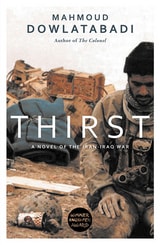
Thirst
Mahmoud Dowlatabadi
Haus Publishing, 2014
At the same time, on the other side of the border, an Iranian author writes the story of the same troop of soldiers but from an Iranian perspective. He, likewise, is interrupted, not by external forces, but by memories of his first encounter with a gun.
Told in a kaleidoscopic style that weaves between the ongoing battle and the struggles of the writers, Thirst is rich with dark humour and surreal images. The emphasis on maintaining humanity and individual identity during war shows, once again, why Mahmoud Dowlatabadi is the most important Iranian writer of the last century.
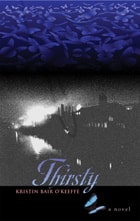
Thirsty
A NovelKristin Bair O’Keeffe
Ohio University Press, 2009
It is 1883, and all of Klara Bozic’s girlish dreams have come crashing down as she arrives in Thirsty, a gritty steel town carved into the slopes above the Monongahela River just outside of Pittsburgh. She has made a heartbreaking discovery. Her new husband Drago is as abusive as the father she left behind in Croatia.
In Kristin Bair O’Keeffe’s debut novel, Klara’s life unfolds over forty years as she struggles to find her place in a new country where her survival depends on the friends who nurture her: gutsy, funny Katherine Zupanovic, who isn‘t afraid of Drago’s fist; BenJo, the only black man in Thirsty to have his own shop; and strangely enough, Old Man Rupert, the town drunk.
Thirsty follows a chain of unlikely events that keep Klara’s spirit aloft: a flock of angelic butterflies descends on Thirsty; Klara gives birth to her first child in Old Man Rupert’s pumpkin patch; and BenJo gives her a talking bird. When Klara’s daughter marries a man even more brutal than Drago, Klara is forced to act. If she doesn’t finally break the cycle of violence in her family, her granddaughters will one day walk the same road, broken and bruised. As the threads that hold her family together fray and come undone, Klara has to decide if she has the courage to carve out a peaceful spot in the world for herself and her girls.

Thirteen Alabama Ghosts and Jeffrey
Kathryn Tucker Windham
University of Alabama Press, 1987
Jeffrey is the mischievous "something" that has headquarters in the Windham home in Selma, Alabama. He first made his presence known in October 1966, and since then he has continued, at irregular and infrequent intervals, to clump down the hall, slam doors, rock in a chair, frighten the family cat (now deceased, through no fault of Jeffrey), move heavy pieces of furniture, cause electronic equipment to malfunction, and hide objects. He frequently accompanies Mrs. Windham on her travels, and tales of Jeffrey's antics are widely recounted.