Results by title
4917 books match the query 'Philosophy' and 1267 start with t
The Shaky Game
Arthur Fine
University of Chicago Press, 1996
"What really led Einstein . . . to renounce the new quantum order? For those interested in this question, this book is compulsory reading."—Harvey R. Brown, American Journal of Physics
"Fine has successfully combined a historical account of Einstein's philosophical views on quantum mechanics and a discussion of some of the philosophical problems associated with the interpretation of quantum theory with a discussion of some of the contemporary questions concerning realism and antirealism. . . . Clear, thoughtful, [and] well-written."—Allan Franklin, Annals of Science
"Attempts, from Einstein's published works and unpublished correspondence, to piece together a coherent picture of 'Einstein realism.' Especially illuminating are the letters between Einstein and fellow realist Schrödinger, as the latter was composing his famous 'Schrödinger-Cat' paper."—Nick Herbert, New Scientist
"Beautifully clear. . . . Fine's analysis is penetrating, his own results original and important. . . . The book is a splendid combination of new ways to think about quantum mechanics, about realism, and about Einstein's views of both."—Nancy Cartwright, Isis
The Silence of Goethe
Josef Pieper
St. Augustine's Press, 2009
But no matter how many astonishing things I saw in these unforgettable weeks of undisturbed inner focus, nothing was more surprising or unexpected than this: to realize how much of what was peculiar to this life occurred in carefully preserved seclusion; how much the seemingly communicative man who carried on a world-wide correspondence still never wanted to expose in words the core of his existence.
However manifold the forms of this silence and of their unconscious roots and conscious motives may have been, is it not always the possibility of hearing, the possibility of a purer perception of reality that is aimed at? And so, is not Goethe’s type of silence above all the silence of one who listens? . . .
The meaning of being silent is hearing – a hearing in which the simplicity of the receptive gaze at things is like the naturalness, simplicity, and purity of one receiving a confidence, the reality of which is creatura, God’s creation. And insofar as Goethe’s silence is in this sense a hearing silence, to that extent it has the status of the model and paradigm – however much, in individual instances, reservations and criticism are justified. One could remain circumspectly silent about this exemplariness after the heroic nihilism of our age has proclaimed the attitude of the knower to be by no means that of a silent listener but rather as that of self-affirmation over against being: insight and knowledge are naked defiance, the severest endangering of existence in the midst of the superior strength of concrete being. The resistance of knowledge opposes the oppressive superior power. However, that the knower is not a defiant rebel against concrete being, but above all else a listener who stays silent and, on the basis of his silence, a hearer – it is here that Goethe represents what, since Pythagoras, may be considered the silence tradition of the West.
The Silent Crossing
Pascal Quignard
Seagull Books, 2013
A haunting homage to life and liberty, to society and solitude, and to the binding and unbinding that constitute the weft of our lives.
The Simple Beauty of the Unexpected
A Natural Philosopher’s Quest for Trout and the Meaning of EverythingMarcelo Gleiser
Brandeis University Press, 2022
Marcelo Gleiser has had a passion for science and fishing since he was a boy growing up on the beaches of Rio de Janeiro. As a world-famous theoretical physicist with hundreds of scientific articles and several books of popular science to his credit, he felt it was time to once again connect with nature in less theoretical ways. After seeing a fly-fishing class on the Dartmouth College green, he decided to learn to fly-fish, a hobby, he says, that teaches humility. In The Simple Beauty of the Unexpected, Gleiser travels the world to scientific conferences, fishing wherever he goes. At each stop, he ponders the myriad ways physics informs the act of fishing; how, in its turn, fishing serves as a lens into nature’s inner workings; and how science engages with questions of meaning and spirituality, inspiring a sense of mystery and awe of the not yet known. Personal and engaging, The Simple Beauty of the Unexpected is a scientist’s tribute to nature, an affirmation of humanity’s deep connection with and debt to Earth, and an exploration of the meaning of existence, from atom to trout to cosmos.
This softcover edition features a new essay by Gleiser on how we need a profound change of worldview if we are to have a vibrant future for our species in this fragile environment. He describes how this book was an incubator for his current thinking.
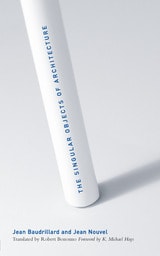
The Singular Objects of Architecture
Jean Baudrillard
University of Minnesota Press, 2005
Among the topics the two speakers take up are the city of tomorrow and the ideal of transparency, the gentrification of New York City and Frank Gehry’s surprising Guggenheim Museum in Bilbao. As Nouvel prompts Baudrillard to reflect on some of his signature concepts (the virtual, transparency, fatal strategies, oblivion, and seduction, among others), the confrontation between such philosophical concerns and the specificity of architecture gives rise to novel and striking formulations—and a new way of establishing and understanding the connections between the practitioner and the philosopher, the object and the idea.
This wide-ranging conversation builds a bridge between the fields of architecture and philosophy. At the same time it offers readers an intimate view of the meeting of objects and ideas in which the imagined, constructed, and inhabited environment is endlessly changing, forever evolving.
Jean Baudrillard is one of the most influential thinkers of his generation and author of The Vital Illusion (2001).
Jean Nouvel has designed buildings throughout the world, including the new Guthrie Theater in Minneapolis, and is a recipient of France’s Grand Prix d’Architecture.
Robert Bononno, a translator and teacher, lives in New York City.
The Situation in Logic
Jon Barwise
CSLI, 1989
The Sixties and the World Event, Volume 36
Christopher Connery and Hortense Spillers, eds.
Duke University Press, 0
Contributors to this issue represent a wide range of disciplines, from Latin American studies and sociology to political theory and literary criticism. They bring a global perspective to the social and political legacy of the 1960s, touching on the Caribbean, Latin America, the former USSR, China, and France, as well as the United States. One contributor presents a reexamination of Latin American armed struggles in the 1960s that foregrounds the relatively positive influence of these struggles on present-day Latin American society and politics. Another contributor translates a seminal essay on José Martí written by one of Cuba’s foremost intellectuals in the mid-1960s, when the course of the Cuban revolution was still uncertain. Yet another contributor considers the forces that have sought to neutralize the struggles and negate the gains of the African American liberation movement in the 1960s American South.
Contributors. John Beverley, Anthony Bogues, Christopher Connery, Roberto Fernández Retamar, Wlad Godzich, Boris Kagarlitsky, Nina Power, Hortense Spillers, Silvia D. Spitta, Alberto Toscano
The Skin of Meaning
Collected Literary Essays and TalksAaron Shurin
University of Michigan Press, 2016

The Social Construction of American Realism
Amy Kaplan
University of Chicago Press, 1988
"[Kaplan] offers some enthralling readings of major novels by Howells, Wharton, and Dreiser. It is a book which should be read by anyone interested in the American novel."—Tony Tanner, Modern Language Review
"Kaplan has made an important contribution to our understanding of American realism. This is a book that deserves wide attention."—June Howard, American Literature
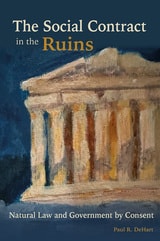
The Social Contract in the Ruins
Natural Law and Government by ConsentPaul R. DeHart
University of Missouri Press, 2024
Most scholars who write on social contract and classical natural law perceive an irreconcilable tension between them. Social contract theory is widely considered the political-theoretic concomitant of modern philosophy. Against the regnant view, The Social Contract in the Ruins, argues that all attempts to ground political authority and obligation in agreement alone are logically self-defeating. Political authority and obligation require an antecedent moral ground. But this moral ground cannot be constructed by human agreement or created by sheer will—human or divine. All accounts of morality as constructed or made collapse into self-referential incoherence. Only an uncreated, real good can coherently ground political authority and obligation or the proposition that rightful government depends on the consent of the governed. Government by consent requires classical natural law for its very coherence.
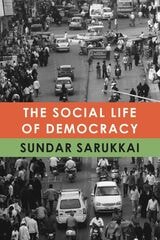
The Social Life of Democracy
Sundar Sarukkai
Seagull Books, 2022
TheSocial Life of Democracy is a response to the polarization of our times and the crisis in democracy being experienced across the world today. Drawing from B. R. Ambedkar’s view that democracy is not a form of government but more a form of society and mental disposition, this book argues that democracy needs to be seen as a form of social life that must be part of our everyday practice. Noting that the obstacles to realizing Ambedkar’s vision of democracy are both material and conceptual, philosopher Sundar Sarukkai critically examines the meaning of democratic action and the function of democracy in different domains ranging from homes to governments. He also examines its relation to labor, science, and religion, and analyzes the ethical processes that are central to democracy. Finally, clarifying the concepts of truth in politics and the ideas of freedom and choice, he persuasively argues in favor of bringing democracy into our everyday lives rather than leaving it exclusively in the domain of electoral politics.
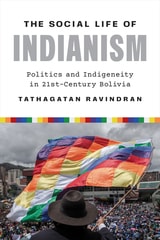
The Social Life of Indianism
Politics and Indigeneity in Twenty-First-Century BoliviaTathagatan Ravindran
University of Texas Press, 2025
A sophisticated analysis of an influential Indigenous political ideology.
When the political ideology known as “Indianism” developed in Bolivia in the 1960s, it was premised on a rejection of Bolivian nationalism. Over the ensuing decades, however, it underwent several mutations as it moved out of a close circle of intellectuals to grip the urban masses that brought Evo Morales—the first Indigenous president—to power in 2006.
The Social Life of Indianism offers a fresh perspective by examining Bolivian Indigenous politics through the lens of political ideology. Through an ethnographic study of Indianism in the city of El Alto, Tathagatan Ravindran shows how canonical Indianism—the original ideology that rejects Bolivia as enslaver of the Indian nation—provided philosophical ballast for exponents of a more popular folk Indianism that accommodates the Bolivian state and pursues Indigenous empowerment within it. Synthesizing approaches from several disciplines, Ravindran demonstrates how canonical Indianism was not refuted or supplanted; it refracted, in the broader public, into a new common sense. A sophisticated analysis of a complex political landscape, The Social Life of Indianism brings much-needed nuance to one of the most prominent forms of Indigenous ideology and offers a unique framework for analyzing political ideologies across the contemporary world.
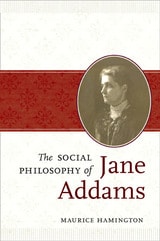
The Social Philosophy of Jane Addams
Maurice Hamington
University of Illinois Press, 2009
Although there has been a resurgence of scholarly interest in Jane Addams, much of the recent literature has dwelt more on her extraordinary and pioneering life than on the philosophical contribution of her twelve books and hundreds of published articles. This study is the first book-length work to focus entirely on Addams as a philosopher, a moral and political theorist who was steeped in the classic American Pragmatist tradition but who transcended that tradition to emphasize the significance of gender, race, and class.
Exploring Addams's contribution to epistemology, ethics, and feminist theory, Maurice Hamington sets the intellectual framework for Addams's social philosophy by discussing her influences, her particular brand of feminism, and finally her unique analytical perspective, which she described as "sympathetic knowledge." The book also investigates how Addams applied her social philosophy to issues of politics, women's rights, prostitution, business ethics, education, and religion.
Addams's philosophical work remains relevant to current feminist ethical discourse, and The Social Philosophy of Jane Addams leads to an understanding of a cosmopolitan theorist who eschewed ideological stances in favor of intermediary steps toward social progress.
The Social Sciences in the Looking Glass
Studies in the Production of KnowledgeDidier Fassin and George Steinmetz, editors
Duke University Press, 2023
Contributors. Chitralekha, Jean-Louis Fabiani, Didier Fassin, Johan Heilbron, Miriam Kingsberg Kadia, Kristoffer Kropp, Nicolas Langlitz, John Lardas Modern, Álvaro Morcillo Laiz, Amín Pérez, Carel Smith, George Steinmetz, Peter D. Thomas, Bregje van Eekelen, Agata Zysiak

The Social Theory of Practices
Tradition, Tacit Knowledge, and PresuppositionsStephen Turner
University of Chicago Press, 1994
Understood broadly as a tacit understanding "shared" by a group, the concept of a practice has a fatal difficulty, Turner argues: there is no plausible mechanism by which a "practice" is transmitted or reproduced. The historical uses of the concept, from Durkheim to Kripke's version of Wittgenstein, provide examples of the contortions that thinkers have been forced into by this problem, and show the ultimate implausibility of the idea.
Turner's conclusion sketches a picture of what happens when we do without the notion of a shared practice, and how this bears on social theory and philosophy. It explains why social theory cannot get beyond the stage of constructing fuzzy analogies, and why the standard constructions of the contemporary philosophical problem of relativism depend upon this defective notion. This first book-length critique of practice theory is sure to stir discussion and controversy in a wide range of fields, from philosophy and science studies to sociology, anthropology, literary studies, and political and legal theory.
The Social Thought of Ortega y Gasset
A Systematic Synthesis in Postmodernism and InterdisciplinarityJohn T. Graham
University of Missouri Press, 2001
The Social Thought of Ortega y Gasset is the third and final volume of John T. Graham's massive investigation of the thought of Ortega, the renowned twentieth-century Spanish essayist and philosopher. This volume concludes the synthetic trilogy on Ortega's thought as a whole, after previous studies of his philosophy of life and his theory of history.
As the last thing on which he labored, Ortega's social theory completed what he called a "system of life" in three dimensions—a unity in the plurality of philosophy, history, and sociology as three fundamental disciplines that enter into and overlap each other and other humanities. In this volume, Graham investigates Ortega's social thought as expressed in his central work, Man and People, and in several pragmatic fields (politics, culture, education, and religion), interpreting it all in terms of comprehensive categories of postmodernism and interdisciplinarity. While others have studied Ortega's social thought and recently his postmodernity, no one has done so in the context of his thought as a whole or by such a variety of methods.
The "unity in plurality" of Ortega's system is evident in the broad and varied structure of his sociology, which he intended to serve for postmodern times. His own postmodernism was rooted in Nietzsche but also in the pragmatism—from James, Peirce, and Dewey—that informs all parts of this trilogy.
Ortega was the first educator with an interdisciplinary theory and practice—another aspect of the "unity in plurality" of his system. He found inspiration in both ancient and modern precedents for what he saw as a postmodern method of investigating themes and problems that are common to all the human sciences. Innovations at his Institute of Humanities were early postmodern precedents for a new interdisciplinary social method for use by specialists in a variety of fields. All of those interested in Ortega can utilize such methods to elucidate his thought as a whole as well as to pursue their own collaborative work.
The Socially Responsive Self
Social Theory and Professional EthicsLarry May
University of Chicago Press, 1996
Applying his theory of responsibility to professional ethics, May contends that current methods of professional socialization should be changed so that professionals are not expected to ignore considerations of personal well-being, family, or community. For instance, lawyers should not place client loyalty above concerns for the common good; doctors should not place the physical well-being of patients above their mental and spiritual well-being; scientists and engineers should not feel obliged to blow the whistle on fraud and corruption unless their professional groups protect them from retaliation.
This book should prove provocative reading for philosophers, political scientists, social theorists, professionals of many stripes, and ethicists.
The Society of the Selfie
Social Media and the Crisis of Liberal DemocracyJeremiah Morelock and Felipe Ziotti Narita
University of Westminster Press, 2021
The Sociology of Howard S. Becker
Theory with a Wide HorizonAlain Pessin
University of Chicago Press, 2017
French fame has brought French analysis, including The Sociology of Howard S. Becker, written by Alain Pessin and translated into English by Steven Rendall. The book is an exploration of Becker’s major works as expressions of the freedom of possibility within a world of collaborators. Pessin reads Becker’s work as descriptions and ideas that show how society can embody the possibilities of change, of doing things differently, of taking advantage of opportunities for free action. The book is itself a kind of collaboration—Pessin and Becker in dialogue. The Sociology of Howard S. Becker is a meeting of two cultures via two great sociological minds in conversation.
The Socratic Paradox and Its Enemies
Roslyn Weiss
University of Chicago Press, 2006
The Socratic Way of Life
Xenophon’s “Memorabilia”Thomas L. Pangle
University of Chicago Press, 2018
In the first part of the book, Pangle analyzes Xenophon’s defense of Socrates against the two charges of injustice upon which he was convicted by democratic Athens: impiety and corruption of the youth. In the second part, Pangle analyzes Xenophon’s account of how Socrates’s life as a whole was just, in the sense of helping through his teaching a wide range of people. Socrates taught by never ceasing to raise, and to progress in answering, the fundamental and enduring civic questions: what is pious and impious, noble and ignoble, just and unjust, genuine statesmanship and genuine citizenship. Inspired by Hegel’s and Nietzsche’s assessments of Xenophon as the true voice of Socrates, The Socratic Way of Life establishes the Memorabilia as the groundwork of all subsequent political philosophy.
The Solitary Self
Jean-Jacques Rousseau in Exile and AdversityMaurice Cranston
University of Chicago Press, 1997
"The Solitary Self is a fitting coda to a magisterial work. Cranston . . . is a compelling stylist who narrates Rousseau's tribulations with a mixture of compassion and dry humor."—Thomas Pavel, Wall Street Journal
"Cranston not only recreates for his readers a rounded view of Rousseau himself, he sets it firmly in the social and political context of Europe's ancien regime. . . . An engrossing work of history."—John Gray, New Statesman
"Cranston's painstaking archival research and lucid style yield the most detailed and thoroughly documented biography of Rousseau written in English. His epilogue masterfully sums up Rousseau's importance as political philosopher and initiator of romantic sensibilities."—Choice
"Anyone curious about the paradoxes of a most paradoxical man will not go wrong by starting with this invaluable biography."—James Miller, Washington Post Book World
"As absorbing as a picaresque novel."—Naomi Bliven, New Yorker
"A monument of scholarship. . . . This amazing biography, like Boswell's account of Johnson, recreates the daily life of Rousseau: what he did, who he saw, what he said, what he wrote. . . . We may be quite confident that we hold in our hands the authoritative account of this life. The definitive Rousseau."—Isaac Kramnick, New Republic
Maurice Cranston (1920-1993), a distinguished scholar and recipient of the James Tait Black Memorial Prize for his biography of John Locke, was professor of political science at the London School of Economics. His numerous books include The Romantic Movement and Philosophers and Pamphleteers, and translations of Rousseau's The Social Contract and Discourse on the Origins of Inequality.

The Sordid Image
The Naturalist Cinema of Arturo Ripstein and Paz Alicia GarciadiegoAgustín Zarzosa
Northwestern University Press, 2026
Drawing on the cinematic oeuvre of Ripstein and Garciadiego to reconceptualize the idea of the sordid
The sordid is not an ideology, an affect, or even a form of taste or sensibility. It is, Agustín Zarzosa argues, an image and an evocation of the process of degradation. The Sordid Image: The Naturalist Cinema of Arturo Ripstein and Paz Alicia Garciadiego offers the first sustained study of this pivotal filmmaker-screenwriter pair, drawing on their multidecade collaborations to reframe an enduring problem of film theory: how to represent marginalized people.
Together, Ripstein and Garciadiego have constructed a recognizable cinematic world filled with social outcasts, characterized by self-degradation and unreason, and set within squalid environments. Inscribing the Ripsteinian universe within the literary and cinematic traditions of naturalism, this book theorizes the notion of the sordid to examine the partners’ unique and epoch-defining films. We can, Zarzosa contends, understand the sordid as a cinematic image, with its specific components and pleasures, recasting questions of authorship, mise-en-scène, spectatorship, genre, and language.
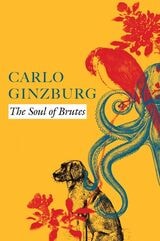
The Soul of Brutes
Carlo Ginzburg
Seagull Books, 2022
Carlo Ginzburg has been at the forefront of the discipline of microhistory ever since his earliest works were published to great acclaim in the 1970s. The Soul of Brutes brings together four of Ginzburg’s recent scintillating essays and lectures that testify to the diversity of his thoughts on history and philosophy.
“Civilization and Barbarism” resurrects a sixteenth-century debate between two thinkers in Spain about the humanness, or lack thereof, of Native Americans, and highlights the influence of classical thinkers, from Herodotus to Aristotle, and the iterations and interpretations through which their writings have traversed down to the Cinquecento. In “The Soul of Brutes” Ginzburg traces the genealogy of the debate on the rationality of animals and the limits of their imagination, from Plutarch and Aristotle to sixteenth-century thinkers like Pietro Pomponazzi and Girolamo Rorario. Following Montaigne, he provokes, are we to beasts as they seem to us? In “Calvino, Manzoni and the Grey Zone,” Carlo Ginzburg pithily writes about the mental dialogue between Holocaust survivor Primo Levi and two Italians who profoundly influenced Levi’s search for these “unexplored pockets of exception”—his contemporary Italo Calvino and the nineteenth-century novelist and philosopher Alessandro Manzoni. And finally, in “Schema and Bias”, he probes whether the historian can clearly see into the past, peering through the layers of bias, which include their own prejudices, or if relativism is the only path.
With several beautifully reproduced color illustrations, The Soul of Brutes will interest not only scholars of history, philosophy, and art, but also general intellectual readers.
The Soul of the Greeks
An InquiryMichael Davis
University of Chicago Press, 2011
The understanding of the soul in the West has been profoundly shaped by Christianity, and its influence can be seen in certain assumptions often made about the soul: that, for example, if it does exist, it is separable from the body, free, immortal, and potentially pure. The ancient Greeks, however, conceived of the soul quite differently. In this ambitious new work, Michael Davis analyzes works by Homer, Herodotus, Euripides, Plato, and Aristotle to reveal how the ancient Greeks portrayed and understood what he calls “the fully human soul.”
Beginning with Homer’s Iliad, Davis lays out the tension within the soul of Achilles between immortality and life. He then turns to Aristotle’s De Anima and Nicomachean Ethics to explore the consequences of the problem of Achilles across the whole range of the soul’s activity. Moving to Herodotus and Euripides, Davis considers the former’s portrayal of the two extremes of culture—one rooted in stability and tradition, the other in freedom and motion—and explores how they mark the limits of character. Davis then shows how Helen and Iphigeneia among the Taurians serve to provide dramatic examples of Herodotus’s extreme cultures and their consequences for the soul. The book returns to philosophy in the final part, plumbing several Platonic dialogues—the Republic, Cleitophon, Hipparchus, Phaedrus, Euthyphro, and Symposium—to understand the soul’s imperfection in relation to law, justice, tyranny, eros, the gods, and philosophy itself. Davis concludes with Plato’s presentation of the soul of Socrates as self-aware and nontragic, even if it is necessarily alienated and divided against itself.
The Soul of the Greeks thus begins with the imperfect soul as it is manifested in Achilles’ heroic, but tragic, longing and concludes with its nontragic and fuller philosophic expression in the soul of Socrates. But, far from being a historical survey, it is instead a brilliant meditation on what lies at the heart of being human.
The Sovereign Self
Aesthetic Autonomy from the Enlightenment to the Avant-GardeGrant H. Kester
Duke University Press, 2023
The Sovereignty of Taste
James S. Hans
University of Illinois Press, 2002
Taste is everything, Hans says, for it produces the primary values that guide our lives. Taste is the fundamental organizing mechanism of human bodies, a lifelong effort to fit one's own rhythms to the rhythms and patterns of the natural world and the larger human community. It is an aesthetic sorting process by which one determines what belongs in--a conversation, a curriculum, a committee, a piece of art, a meal, a logical argument--and what should be left out. On the one hand, taste is the source of beauty, justice, and a sense of the good. On the other hand, as an arbiter of the laws of fair and free play, taste enters into more ominous and destructive patterns--but patterns nonetheless--of resentment and violence.
Hans develops his conception of taste through astute readings of five literary landmarks: Milan Kundera's The Unbearable Lightness of Being, Sophocles' Oedipus the King, William Faulkner's Light in August, and the poetry of Emily Dickinson and the Polish Nobel Laureate Czeslaw Milosz. These texts explore the art of soulmaking and the quest for personal expression: the costs as well as the fruits that come from acceding to the imperatives of one's being. They also reveal how the collision of personal and collective rhythms, whether in the Greek citadel or the Mississippi countryside, leads to violence and ritualized sacrifice.
Elegant, principled, and provocative, The Sovereignty of Taste is an essential book that restores taste to its rightful place of influence, shoring up the ground beneath civilization's feet and offering hope for the future of integrity, value, and aesthetic truth.
The Spectacle 2.0
Reading Debord in the Context of Digital CapitalismMarco Briziarelli and Emiliana Armano
University of Westminster Press, 2017
“Necessary reading for scholars interested in theorising the spectacle's relation to the labour theory of value, commodity fetishism and subjectivity under post-Fordism.” - https://www.triple-c.at/index.php/tripleC/article/view/1015/1176
Spectacle 2.0 recasts Debord's theory of spectacle within the frame of 21st century digital capitalism. It offers a reassessment of Debord’s original notion of Spectacle from the late 1960s, of its posterior revisitation in the 1990s, and it presents a reinterpretation of the concept within the scenario of contemporary informational capitalism and more specifically of digital and media labour. It is argued that the Spectacle 2.0 form operates as the interactive network that links through one singular (but contradictory) language and various imaginaries, uniting diverse productive contexts such as logistics, finance, new media and urbanism. Spectacle 2.0 thus colonizes most spheres of social life by processes of commodification, exploitation and reification. Diverse contributors consider the topic within the book’s two main sections: Part I conceptualizes and historicizes the Spectacle in the context of informational capitalism; contributions in Part II offer empirical cases that historicise the Spectacle in relation to the present (and recent past) showing how a Spectacle 2.0 approach can illuminate and deconstruct specific aspects of contemporary social reality. All contributions included in this book rework the category of the Spectacle to present a stimulating compendium of theoretical critical literature in the fields of media and labour studies. In the era of the gig-economy, highly mediated content and President Trump, Debord’s concept is arguably more relevant than ever.
The Specter of Relativism
Truth, Dialogue, and Phronesis in Philosophical HermeneuticsLawrence Schmidt
Northwestern University Press, 1995
The Spell of Language
Poststructuralism and SpeculationThomas G. Pavel
University of Chicago Press, 2001
In this spirited book, Pavel shows that structuralism's flawed use of linguistic theory has rendered hollow the philosophical core of a whole generation of work in the human sciences.
The Spirit and the Letter
On the Interpretation of ScriptureGiorgio Agamben
Seagull Books, 2026
The problem of interpreting Scripture—above all, sacred scripture, but ultimately any form of writing—coincides with the very history of Western culture. It is no surprise, then, that an archaeological inquiry such as the one proposed here—on the problem of interpretation from Origen to Auerbach, from the Talmud to Benjamin—might hold unexpected revelations.
Essential reading for scholars of theology, religious studies, and hermeneutics interested in the history of scriptural interpretation, The Spirit and the Letter highlights how the interpretation of Scripture reveals itself as inseparable from ethics and politics.
The Spirit of Modern Republicanism
The Moral Vision of the American Founders and the Philosophy of LockeThomas L. Pangle
University of Chicago Press, 1988
"A work of extraordinary ambition, written with great intensity. . . . [Pangle offers] a trenchant analysis of Locke's writings, designed to demonstrate their remarkable originality and to clarify by doing so as much as the objective predicament as the conscious intentions of the Founding Fathers themselves."—John Dunn, Times Higher Education Supplement
"A forcefully argued study of the Founding Fathers' debt to Locke. . . . What distinguishes Pangle's study from the dozens of books which have challenged or elaborated upon the republican revision is the sharpness with which he exposes the errors of the revisionists while at the same time leaving something of substantive value for the reader to consider."—Joyce Appleby, Canadian Journal of History
"Breathtaking in its daring and novelty. . . . Pangle's book is tense and tenacious, a stunning meditation on America's political culture."—John Patrick Diggins, Transactions of the C. S. Peirce Society

The Squatters' Movement in Europe
Commons and Autonomy as Alternatives to CapitalismEdited by Squatting Europe Kollective
Pluto Press, 2014
The Squatters' Movement in Europe is the first definitive guide to squatting as an alternative to capitalism. It offers a unique insider's view on the movement – its ideals, actions and ways of life. At a time of growing crisis in Europe with high unemployment, dwindling social housing and declining living standards, squatting has become an increasingly popular option.
The book is written by an activist-scholar collective, whose members have direct experience of squatting: many are still squatters today. There are contributions from the Netherlands, Spain, the USA, France, Italy, Germany, Switzerland and the UK.
In an age of austerity and precarity this book shows what has been achieved by this resilient social movement, which holds lessons for policy-makers, activists and academics alike.
The Staff and the Serpent
Pertinent and Impertinent Observatioins on the World of MedicineAllen B. Weisse, M.D.
Southern Illinois University Press, 1998
If laughter is good medicine, then the twenty-two essays offered here by Dr. Allen B. Weisse should prove a hearty antidote to a host of ills suffered by doctors, students and would-be students of medicine, amateur and professional medical historians, and, of course, patients, those of us who wonder what the medical profession is all about and how it affects us.
Often humorous and always informative, these essays cover a broad range of medical subjects. Weisse tackles medical ethics, offers advice to medical and premedical students and their families, delves into unusual episodes in medical history, confronts considerations of aging and self-image, and discusses the vagaries of rewards and recognition available from medical research. He also examines honesty in medical thinking, investigates ways of dealing with bureaucracies, and considers ways of learning to live with oneself. Finally, he evaluates the changing nature of medicine and medical research and looks into the roles of minorities and women in medicine.
Weisse knows whereof he speaks, enlivening each essay with personal anecdotes. When he explains past and current medical school admissions policies, for example, he approaches the subject with the combined knowledge of a former premedical student, a medical student, a faculty member, and an admissions chairperson over the past thirty years. As a medical researcher whose chief turned against him, he certainly knows what he is talking about in "Betrayal." He also writes with authority in his humorous account of how he, as a senior physician, struggles to keep on top of the overwhelming onslaught of medical advances ("Confessions of Creeping Obsolescence"). And in an essay to boost all of our spirits, he tells how an ivory tower physician (Weisse himself) gets drawn up in the service of the IRS bureaucracy and winds up tweaking its nose a bit ("In the Service of the IRS").
Perhaps nothing better illustrates the vigor, wit, and élan that characterize Weisse’s essays than his titles. "On Chinese Restaurants" deals with unusual syndromes and the way in which they have evolved and affected the way we look at ourselves. Other titles are "Pneumocystis and Me," "The Vanishing Male," "Say It Isn’t ‘No," "Bats in the Belfry or Bugs in the Belly?: Helicobacter and the Resurrection of Johannes Fibiger," and "PC: Politically Correct or Potentially Corrupting?"
Finally, two words in this book’s subtitle succinctly characterize Weisse’s essays: pertinent and impertinent—germane and irreverent information rakishly presented.

The Star of Redemption
Franz Rosenzweig; Translated by Barbara E. Galli; Foreword by Michael Oppenheim, introduction by Elliot R. Wolfson
University of Wisconsin Press, 2005
The Star of Redemption is essential reading for anyone interested in understanding religion and philosophy in the twentieth century. Fusing philosophy and theology, the book assigns both Judaism and Christianity distinct but equally important roles in the spiritual structure of the world. Franz Rosenzweig finds in both biblical religions approaches to a comprehension of reality.
The major themes and motifs of The Star—the birth, life, death, and the immortality of the soul; Eastern philosophies and Jewish mysticism; the relationship between God, world and humanity over time; and revelation as the real biblical miracle of faith and path to redemption—resonate meaningfully.
The State as a Work of Art
The Cultural Origins of the ConstitutionEric Slauter
University of Chicago Press, 2009
The founding of the United States after the American Revolution was so deliberate, so inspired, and so monumental in scope that the key actors considered this new government to be a work of art framed from natural rights. Recognizing the artificial nature of the state, these early politicians believed the culture of a people should inform the development of their governing rules and bodies. Eric Slauter explores these central ideas in this extensive and novel account of the origins and meanings of the Constitution of the United States. Slauter uncovers the hidden cultural histories upon which the document rests, highlights the voices of ordinary people, and considers how the artifice of the state was challenged in its effort to sustain inalienable natural rights alongside slavery and to achieve political secularization at a moment of growing religious expression.
A complement to classic studies of the Constitution’s economic, ideological, and political origins, The State as a Work of Art sheds new light on the origins of the Constitution and on ongoing debates over its interpretation.
The Still Arrow
Three Attempts to Annul TimeElvio Fachinelli
Seagull Books, 2021
Originally published in 1979, this book displays Fachinelli’s eclectic methodology. The Still Arrow goes against Freud’s attempt in Totem and Taboo to equate individual psycho-libidinal predicaments with those of whole societies. Yet, it argues that the difference between the two always remains one of degree, not of principle. The vexing problem of their relation is approached through an interrogation of time. From a psychoanalytic standpoint, individual obsessional neurosis is firmly connected to a repudiation of death. But, Fachinelli argues, comparable temporal strategies are also present at the group level, in disparate social and historical contexts, for instance, in the archaic transformation of the dead into ancestors and in what he names 'the fascist phenomenon'.
From this perspective, history is not just the sum of all possible histories but also of impossible ones. Fachinelli delineates an innovative knowledge of time which brings together apparently distant events into a characteristic series. This first English translation of a book by Fachinelli, The Still Arrow introduces a major critical European voice to the larger readership.
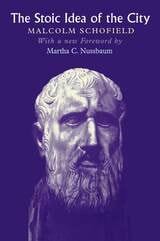
The Stoic Idea of the City
Malcolm Schofield
University of Chicago Press, 1999
"The account emerges from a jigsaw-puzzle of items from a wide range of authorities, painstakingly pieced together and then annotated in a series of appendixes, the whole executed with fine scholarship, clarity, and good humor."—Times Literary Supplement
The Strategy of Life
Teleology and Mechanics in Nineteenth-Century German BiologyTimothy Lenoir
University of Chicago Press, 1989
Strongly influenced by Immanuel Kant, the biologists' approach combined a sophisticated teleology with mechanistic theories and sparked bitter controversies with the rival programs, mechanistic reductionism and Darwinism. Although temporarily eclipsed by these two approaches, the morphological tradition, Lenoir argues, was not vanquished in the field of scientific debate. It contributed to pathbreaking research in areas such as comparative anatomy, embryology, paleontology, and biogeography.

The Structural Allegory
Reconstructive Encounters with the New French ThoughtJohn Fekete, EditorIntroduction by John Fekete
University of Minnesota Press, 1984
The Structural Allegory was first published in 1984. Minnesota Archive Editions uses digital technology to make long-unavailable books once again accessible, and are published unaltered from the original University of Minnesota Press editions.
The radical questions raised by Saussure, Barthes, Foucault, Levi-Strauss, and others have had an enormous impact on Anglo-American literary and cultural studies over the past twenty years. John Fekete argues that we can see this strategic development of French thought in terms of what he calls "the structural allegory." Structuralism proper has given way to the currently dominant model of post-structuralism, yet we remain uncertain of the practical orientations favored by thinkers associated with both phases of the movement.
With the aim of uncovering the legacy of the structural tradition, the essays in this volume survey key French thinkers, including some not well known in the Anglo-American context — Baudrillard and Castoriadis. The essays are reconstructive, not deconstructive, in character, scholarly in method, and ecumenical in spirit. While the structural allegory emerges from this critical analysis as an inescapable intellectual paradigm (analogous to the transformations in quantum physics and modern biology), the authors argue that it merits admiration and reservation in equal measure.

The Structure of Scientific Revolutions
Thomas S. Kuhn
University of Chicago Press, 1996
The Structure of Scientific Revolutions
50th Anniversary EditionThomas S. Kuhn
University of Chicago Press, 2012
A good book may have the power to change the way we see the world, but a great book actually becomes part of our daily consciousness, pervading our thinking to the point that we take it for granted, and we forget how provocative and challenging its ideas once were—and still are. The Structure of Scientific Revolutions is that kind of book. When it was first published in 1962, it was a landmark event in the history and philosophy of science. Fifty years later, it still has many lessons to teach.
With The Structure of Scientific Revolutions, Kuhn challenged long-standing linear notions of scientific progress, arguing that transformative ideas don’t arise from the day-to-day, gradual process of experimentation and data accumulation but that the revolutions in science, those breakthrough moments that disrupt accepted thinking and offer unanticipated ideas, occur outside of “normal science,” as he called it. Though Kuhn was writing when physics ruled the sciences, his ideas on how scientific revolutions bring order to the anomalies that amass over time in research experiments are still instructive in our biotech age.
This new edition of Kuhn’s essential work in the history of science includes an insightful introduction by Ian Hacking, which clarifies terms popularized by Kuhn, including paradigm and incommensurability, and applies Kuhn’s ideas to the science of today. Usefully keyed to the separate sections of the book, Hacking’s introduction provides important background information as well as a contemporary context. Newly designed, with an expanded index, this edition will be eagerly welcomed by the next generation of readers seeking to understand the history of our perspectives on science.

The Structure of Scientific Theories
Edited by Frederick Suppe
University of Illinois Press, 1977
The Structures of the Life World
Alfred Schutz and Thomas Luckmann
Northwestern University Press, 1989
The Structures of the Life World
Alfred Schutz and Thomas Luckmann
Northwestern University Press, 1973
The Struggle For Meaning
Reflections on Philosophy, Culture, and Democracy in AfricaPaulin J. Hountondji
Ohio University Press, 2002
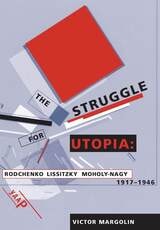
The Struggle for Utopia
Rodchenko, Lissitzky, Moholy-Nagy, 1917-1946Victor Margolin
University of Chicago Press, 1997
"An ambitious effort. This book puts the masters of European Modernism into perfect focus as inventors, propagators, and practitioners of a visual language that continues to hold sway over contemporary graphic style."—Steven Heller
"Worth the wait. . . . Margolin usefully presents what he calls the 'failed hope' of this movement in this valuable effort."—Publishers Weekly
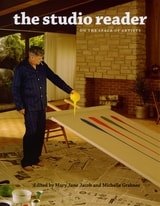
The Studio Reader
On the Space of ArtistsEdited by Mary Jane Jacob and Michelle Grabner
University of Chicago Press, 2010
The image of a tortured genius working in near isolation has long dominated our conceptions of the artist’s studio. Examples abound: think Jackson Pollock dripping resin on a cicada carcass in his shed in the Hamptons. But times have changed; ever since Andy Warhol declared his art space a “factory,” artists have begun to envision themselves as the leaders of production teams, and their sense of what it means to be in the studio has altered just as dramatically as their practices.
The Studio Reader pulls back the curtain from the art world to reveal the real activities behind artistic production. What does it mean to be in the studio? What is the space of the studio in the artist’s practice? How do studios help artists envision their agency and, beyond that, their own lives? This forward-thinking anthology features an all-star array of contributors, ranging from Svetlana Alpers, Bruce Nauman, and Robert Storr to Daniel Buren, Carolee Schneemann, and Buzz Spector, each of whom locates the studio both spatially and conceptually—at the center of an art world that careens across institutions, markets, and disciplines. A companion for anyone engaged with the spectacular sites of art at its making, The Studio Reader reconsiders this crucial space as an actual way of being that illuminates our understanding of both artists and the world they inhabit.
The Study of Religion in an Age of Global Dialogue
Leonard Swidler
Temple University Press, 2000
What is religion? As this comprehensive work shows, religion is an explanation of the ultimate meaning of life and how to live accordingly, based on a notion of the Transcendent. Normally it contains the four "C's": Creed, Code, Cult, Community-structure.
This volume looks at the ways we humans have developed to study religion. It also examines the new age in human consciousness that is now drawing. It also examines the new age in human consciousness that is now dawning: The Age of Global Dialogue, a radically new consciousness that shifts the ways we understand everything in life, including religion. This global dialogical way of understanding life does not lead to one global religion, but it does lead toward a consciously acknowledged common set of ethical principles, a Global Ethic. The book looks at these two movements -- the Age of Global Dialogue and inchoative Global Ethic -- in order to help readers understand what is going on around them, so they may make informed, intelligent decisions about the meaning of life and how to live it.
The Subject and Other Subjects
On Ethical, Aesthetic, and Political IdentityTobin Siebers
University of Michigan Press, 1998