Results by title
977 books match the query 'American literature' and 183 start with t
The Global Frontier
Postwar Travel in American LiteratureEric Strand
University of Iowa Press, 2023
After World War II, the Western frontier of self-reinvention and spatial expansion opened up through the explosion of the global travel industry. The Global Frontier shows that a variety of postwar literary travelers sought personal freedom and cultural enrichment outside their nation’s borders, including Black, female, and queer writers. But the price of incorporation into a transnational leisure class was complicity in postwar American imperialism and the rejection of 1930s social commitments. Eric Strand argues that capitalist globalization has enabled creative expression for marginalized identities, and that present-day humanists are the descendants of writers such as William S. Burroughs, Saul Bellow, Richard Wright, and Elizabeth Bishop. Yet this personal liberation has accompanied a vast growth of social inequality, which can only be addressed by reorienting toward progressive nationalism and an activist state.
The Harlem Renaissance and the Idea of a New Negro Reader
Shawn Anthony Christian
University of Massachusetts Press, 2016
Many scholars have written about the white readers and patrons of the Harlem Renaissance, but during the period many black writers, publishers, and editors worked to foster a cadre of African American readers, or in the poet Sterling Brown's words, a “reading folk.” Black newspapers featured columns that reviewed the latest African American fiction. Magazines held writing contests to urge black readers to participate in the literary culture. Through newspapers, journals, and anthologies, writers such as James Weldon Johnson, Jessie Fauset, and Gwendolyn Bennett spoke directly to their fellow African Americans to cultivate interest in literature and the intellectual tools for reading it.
In The Harlem Renaissance and the Idea of a New Negro Reader, Shawn Anthony Christian argues that print-based addresses to African Americans are a defining but understudied component of the Harlem Renaissance. Especially between 1919 and 1930, these writers promoted diverse racial representation as a characteristic of “good literature” both to exhibit black literacy and to foster black readership. Drawing on research from print culture studies, histories of racial uplift, and studies of modernism, Christian demonstrates the importance of this focus on the African American reader in influential periodicals such as The Crisis and celebrated anthologies such as The New Negro. Christian illustrates that the drive to develop and support black readers was central in the poetry, fiction, and drama of the era.
The Holocaust of Texts
Genocide, Literature, and PersonificationAmy Hungerford
University of Chicago Press, 2002
Hungerford examines the implications of conflating texts with people in a broad range of texts: Art Spiegelman's Maus; Ray Bradbury's Fahrenheit 451; the poetry of Sylvia Plath; Binjamin Wilkomirski's fake Holocaust memoir Fragments; and the fiction of Saul Bellow, Philip Roth, and Don DeLillo. She considers the ethical consequences of this trend in the work of recent and contemporary theorists and literary critics as well, including Cathy Caruth, Jacqueline Rose, Jacques Derrida, and Paul de Man. What she uncovers are fundamentally flawed ideas about representation that underwrite and thus undermine powerful and commonly accepted claims about literature and identity. According to Hungerford, the personification of texts is ethically corrosive and theoretically unsound. When we exalt the literary as personal and construe genocide as less a destruction of human life than of culture, we esteem memory over learning, short-circuit debates about cultural change, lend credence to the illusion or metaphysics of presence, and limit our conception of literature and its purpose.
Ultimately, The Holocaust of Texts asks us to think more deeply about the relationship between reading, experience, and memorialization. Why, for instance, is it more important to remember acts of genocide than simply to learn about them? If literary works are truly the bearers of ontology, then what must be our conduct toward them? Considering difficult questions such as these with fresh logic, Hungerford offers us an invigorating work, one that will not only interest scholars of American and postwar literature, but students of the Holocaust and critical theory as well.
The Hopwood Awards
75 Years of Prized WritingEdited by Nicholas Delbanco, Andrea Beauchamp, and Michael Barrett
University of Michigan Press, 2006
-Arthur Miller
The Hopwood Awards claim a gallery of prizewinners who rose to become the Who's Who of writers of the last three generations: Max Apple, John Ciardi, Mary Gaitskill, Robert Hayden, Laura Kasischke, Jane Kenyon, Arthur Miller, Howard Moss, Frank O'Hara, Marge Piercy, Ronald Wallace, and Nancy Willard, among many others.
Since they first began in 1931, funded by a bequest from the will of playwright Avery Hopwood, University of Michigan Class of 1905, the Hopwood Awards have grown in profile and stature to become one of the most sought after and celebrated writing prizes for students.
The Hopwood Awards: 75 Years of Prized Writing collects-for the first time in one volume-poetry and prose by writers who won Hopwood Awards when they were students at the University of Michigan and who went on to achieve fame as writers.
Nicholas Delbanco is Professor of English and Director of the Hopwood Program at the University of Michigan. He is author or editor of numerous books, including Anywhere Out of the World: Essays on Travel, Writing, Death;The Sincerest Form; and The Writing Life: The Hopwood Lectures.
Andrea Beauchamp is Program Associate at the Hopwood Program, and Michael Barrett is Associate Editor at the Hopwood Program, University of Michigan.
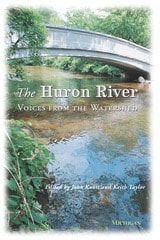
The Huron River
Voices from the WatershedJohn Knott and Keith Taylor, Editors
University of Michigan Press, 2000
"The Huron River . . . was called 'Cos-scut-e-nong Sebee'. . . . [It] is a beautiful, transparent stream, passing alternatively through rich bottoms, openings, plains, and sloping woodlands, covered with heavy timber."
---History of Washtenaw County, Michigan, 1881
The Huron River---stretching 130 miles through three counties---has inspired numerous writers throughout the nineteenth and twentieth centuries. Contained here is a collection of new poems, essays, and stories, accompanied by maps, photographs, and illustrations that celebrate the Huron River. Over twenty locally and nationally known literary figures, including Alice Fulton and Charles Baxter, have contributed to this volume. In addition, the work of biologists, naturalists, and even an arche-ologist have been included to give a richer sense of the physical and cultural environment.
Each of these writers reminds us that our lives are more intertwined with the river and its watershed than we might think. The Huron River opens with these words: "Watersheds are the oldest and most durable markers of place. . . . These boundaries affect our lives by defining our natural environment, not only its topography but its soils, its plant and animal life, and to some extent its weather. The water that sustains most of us is the water that flows through our local watershed."
And the river's strength is wondrous unto itself. "The water will always be there, and it will always find its way down," writer Gary Snyder tells us. The river is sometimes visible, sometimes not; yet it "is alive and well under the city streets, running in giant culverts."
John Knott is Professor of English, University of Michigan. After working as a bookseller for twenty years, Keith Taylor now teaches writing part-time for the University of Michigan and works as a freelance writer.
The Image and the Fire
The Subversive Anthology in the Twentieth CenturyWhit Frazier Peterson
University of Massachusetts Press, 2026
Racial identity and literary form in the modernist anthology
The Image and the Fire examines the coterie anthology—a small, outsider literary collection—as a key, yet understudied, instrument of literary intervention within American modernism. Whit Frazier Peterson argues that these anthologies, produced outside of institutional or canonical frameworks, served as deliberate challenges to dominant literary paradigms. Distinct from academic anthologies that helped codify the American literary canon, coterie anthologies were used by both white and Black avant-garde movements to disrupt prevailing cultural narratives and assert alternative literary visions.
Through close analysis of three seminal case studies—Des Imagistes, edited by Ezra Pound; Fire!!, a short-lived but groundbreaking magazine from the Harlem Renaissance, co-edited by Wallace Thurman; and Black Fire, compiled by Amiri Baraka and Larry Neal during the Black Arts Movement—Peterson traces a genealogy of the coterie anthology as a politically charged genre. He reveals how Black American writers and editors, particularly during the Harlem Renaissance and the Black Arts Movement, reappropriated and reconfigured this type of anthology format from white modernists.
Ultimately, The Image and the Fire positions the coterie anthology as a site of aesthetic and ideological contestation, one through which marginalized literary communities engaged in acts of cultural self-definition, canon revision, and formal innovation. By foregrounding the coterie anthology’s role in shaping a hybrid American modernism, Peterson contributes to ongoing conversations in literary studies around race, authorship, and the politics of literary form.
The Imaginary and Its Worlds
American Studies after the Transnational TurnEdited by Laura Bieger, Ramón Saldívar, and Johannes Voelz
Dartmouth College Press, 2013
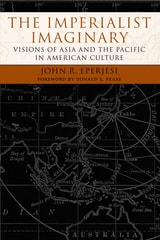
The Imperialist Imaginary
Visions of Asia and the Pacific in American CultureJohn Eperjesi
Dartmouth College Press, 2014
The Imprint of Another Life
Adoption Narratives and Human PossibilityMargaret Homans
University of Michigan Press, 2015
The Imprint of Another Life: Adoption Narratives and Human Possibilityaddresses a series of questions about common beliefs about adoption. Underlying these beliefs is the assumption that human qualities are innate and intrinsic, an assumption often held by adoptees and their families, sometimes at great emotional cost. This book explores representations of adoption—transracial, transnational, and domestic same-race adoption—that reimagine human possibility by questioning this assumption and conceiving of alternatives.
Literary scholar Margaret Homans examines fiction making’s special relationship to themes of adoption, an “as if” form of family making, fabricated or fictional instead of biological or “real.” Adoption has tended to generate stories rather than uncover bedrock truths. Adoptive families are made, not born; in the words of novelist Jeanette Winterson, “adopted children are self-invented because we have to be.” In attempting to recover their lost histories and identities, adoptees create new stories about themselves. While some believe that adoptees cannot be whole unless they reconnect with their origins, others believe that privileging biology reaffirms hierarchies (such as those of race) that harm societies and individuals. Adoption is lived and represented through an irresolvable tension between belief in the innate nature of human traits and belief in their constructedness, contingency, and changeability. The book shows some of the ways in which literary creation, and a concept of adoption as a form of creativity, manages this tension.
The texts examined include fiction (e.g., classic novels such as Silas Marner, What Maisie Knew, and Beloved); memoirs by adoptees, adoptive parents, and birthmothers; drama, documentary films, advice manuals, social science writing; and published interviews with adoptees, parents, and birth parents. Along the way the book tracks the quests of adoptees who, whether or not they meet their original families, must construct their own stories rather than finding them; follows transnational adoptees as they return, hopes held high, to Korea and China; looks over the shoulders of a generation of girls adopted from China as they watch Disney’s iconic Mulan, with its alluring story of destiny written on the skin; and listens to birthmothers as they struggle to tell painful secrets held for decades.
This book engages in debates within adoption studies, women’s and gender studies, transnational studies, and ethnic studies; it will appeal to literary scholars and critics, including specialists in memoir or narrative theory, and to general readers interested in adoption and in race.
The Innocent Midwest
Culture, Region, and Identity, 1793–1930Marcia Noe
Ohio University Press, 0
The Innocent Midwest delves into one of the most enduring stereotypes in American cultural history: the image of the Midwest as a bastion of innocence. Despite its share of social, political, and economic complexities, the region has long been portrayed as wholesome, virtuous, and peace loving—a perception that has persisted from its pastoral beginnings through industrialization and into the digital age.
This book traces the roots and evolution of that myth, arguing that the Midwest’s innocent image has been carefully cultivated through American popular and high culture. From literature and film to music and visual art, the trope of the innocent Midwesterner has shaped national perceptions of the region for over a century. Focusing on literature from 1793 to the 1920s, the book explores how this character type emerged, evolved, and eventually confronted the disillusionment of the machine age.
Organized thematically, the book examines early frontier narratives, stories of Midwesterners abroad, Progressive Era ideals of neighborliness, immigrant and migrant experiences, and the eventual unraveling of the pastoral dream. It reveals how the myth of innocence was underpinned by a constellation of values—agrarianism, Christian morality, and a belief in education—that supported the Jeffersonian vision of a democratic, virtuous citizenry.
Rather than offering a sweeping theory of regional identity, The Innocent Midwest focuses on the recurring literary figure of the innocent Midwesterner—an individual shaped by the land and striving for self-actualization. The book draws both on canonical authors like Mark Twain, William Dean Howells, Booth Tarkington, Sinclair Lewis, Theodore Dreiser, and Willa Cather and on lesser-known voices such as Maria Susanna Cummins, David Graham Phillips, Elia W. Peattie, William Webb, Chief Luther Standing Bear, and Oscar Micheaux, whose works contributed to the cultural construction of the Midwest.
Through its nuanced exploration of literature and culture, this book offers a compelling account of how the Midwest came to symbolize innocence—and why that image continues to resonate in the American imagination.
The Intimacy of Paper in Early and Nineteenth-Century American Literature
Jonathan Senchyne
University of Massachusetts Press, 2020
The Intimacy of Paper in Early and Nineteenth-Century American Literature reveals that book history and literary studies are mutually constitutive and proposes a new literary periodization based on materiality and paper production. In unpacking this history and connecting it to cultural and literary representations, Senchyne also explores how the textuality of paper has been used to make social and political claims about gender, labor, and race.
The Intimate Critique
Autobiographical Literary CriticismDiane P. Freedman, Olivia Frey, and Frances Murphy Zauhar, eds.
Duke University Press, 1993
Grounded in feminism and connected to the race, class, and gender paradigms in cultural studies, the twenty-six contributors to this volume—including Jane Tompkins, Henry Louis Gates, Jr., Shirley Nelson Garner, and Shirley Goek-Lin Lim—respond in new, refreshing ways to literary subjects ranging from Homer to Freud, Middlemarch to The Woman Warrior, Shiva Naipaul to Frederick Douglass. Revealing the beliefs and formative life experiences that inform their essays, these writers characteristically recount the process by which their opinions took shape--a process as conducive to self-discovery as it is to critical insight. The result—which has been referred to as "personal writing," "experimental critical writing," or "intellectual autobiography"—maps a dramatic change in the direction of literary criticism.
Contributors. Julia Balen, Dana Beckelman, Ellen Brown, Sandra M. Brown, Rosanne Kanhai-Brunton, Suzanne Bunkers, Peter Carlton, Brenda Daly, Victoria Ekanger, Diane P. Freedman, Olivia Frey, Shirley Nelson Garner, Henry Louis Gates, Jr., Melody Graulich, Gail Griffin, Dolan Hubbard, Kendall, Susan Koppelman, Shirley Geok-Lin Lim, Linda Robertson, Carol Taylor, Jane Tompkins, Cheryl Torsney, Trace Yamamoto, Frances Murphy Zauhar

The Journey Back
Houston A. Baker Jr.
University of Chicago Press, 1984
The Law of the Heart
Individualism and the Modern Self in American LiteratureBy Sam B. Girgus
University of Texas Press, 1979
The Law of the Heart is a vigorous challenge to the prevailing concept of the “antidemocratic” image of the self in the American literary and cultural tradition. Sam B. Girgus counters this interpretation and attempts to develop a new understanding of democratic individualism and liberal humanism in American literature under the rubric of literary modernism.
The image of the individual self who retreats inward, conforming to a distorted “law of the heart,” emerges from the works of such writers as Cooper and Poe and composer Charles Ives. Yet, as Girgus shows, other American writers relate the idea of the self to reality and culture in a more complex way: the self confronts and is reconciled to the paradox of history and reality.
In Girgus’ view, the tradition of pragmatic, humanistic individualism provides a foundation for a future where individual liberty is a major priority. He uses literary modernism as a bridge for relating contemporary social conditions to crises of the American self and culture as seen in the works of writers including Emerson, Howells, Whitman, Henry James, William James, Fitzgerald, Bellow, and McLuhan.
The Lesbian Menace
Ideology, Identity, and the Representation of Lesbian LifeSherrie A. Inness
University of Massachusetts Press, 1997
Electroshock. Hysterectomy. Lobotomy. These are only three of the many “cures” to which lesbians have been subjected in this century. How does a society develop such a profound aversion to a particular minority? In what ways do images in the popular media perpetuate cultural stereotypes about lesbians, and to what extent have lesbians been able to subvert and revise those images? This book addresses these and other questions by examining how lesbianism has been represented in American popular culture in the twentieth century and how conflicting ideologies have shaped lesbian experiences and identity.
In the first section, “Inventing the Lesbian,” Sherrie A. Inness explores depictions of lesbians in popular texts aimed primarily at heterosexual consumers. She moves from novels of the 1920s to books about life at women's colleges and boarding schools, to such contemporary women's magazines as Cosmopolitan, Glamour, and Vogue.
In the next section, “Forms of Resistance,” Inness probes the ways in which lesbians have refashioned texts intended for a heterosexual audience or created their own narratives. One chapter shows how lesbian readers have reinterpreted the Nancy Drew mysteries, looking at them from a distinctly “queer” perspective. Another chapter addresses the changing portrayal of lesbians in children's books over the past two decades.
The last section, “Writing in the Margins,” scrutinizes the extent to which lesbians, themselves a marginalized group, have created a society that relegates some of its own members to the outskirts. Topics include the geographic politics of lesbianism, the complex issue of "passing," and the meaning of butch identity in twentieth-century lesbian culture.
The Likeness of Things Unlike
A Poetics of IncommensurabilitySharon Cameron
University of Chicago Press, 2025
In Sharon Cameron’s essays, a magnetic constellation gathers works of Emerson, Whitman, Dickinson, Cather, and Stevens—each manifesting in its own terms “the likeness of things unlike”—to form a loose commonality in a strain of American writing in which incommensurable elements can’t be integrated and can’t be separated. The Likeness of Things Unlike is concerned with discordant elements of an aesthetic work and argues that these elements refigure the aesthetic wholes whose integrity they apparently violate. These intertwined, subversive elements are challenges to literary systems and are essentially philosophical in their rethinking of categories, and thus go beyond the aesthetic particulars that exemplify them.
Cameron is known for rigorously and brilliantly connecting artistic achievement to radical ways of thinking. Georg Lukcás describes the essayist as one who “adapts himself to the essay’s ‘smallness’ of form—the eternal smallness of the most profound work of the intellect in [the] face of life.” With The Likeness of Things Unlike Cameron powerfully demonstrates Lukács’s remarkable insight.
The Literature of the Ozarks
An AnthologyPhillip Douglas Howerton
University of Arkansas Press, 2019
The job of regional literature is twofold: to explore and confront the culture from within, and to help define that culture for outsiders. Taken together, the two centuries of Ozarks literature collected in this ambitious anthology do just that. The fiction, nonfiction, poetry, and drama presented in The Literature of the Ozarks complicate assumptions about backwoods ignorance, debunk the pastoral myth, expand on the meaning of wilderness, and position the Ozarks as a crossroads of human experience with meaningful ties to national literary movements.
Among the authors presented here are an Osage priest, an early explorer from New York, a native-born farm wife, African American writers who protested attacks on their communities, a Pulitzer Prize–winning poet, and an art history professor who created a fictional town and a postmodern parody of the region’s stereotypes.
The Literature of the Ozarks establishes a canon as nuanced and varied as the region’s writers themselves.
The Literatures of the U.S.-Mexican War
Narrative, Time, and IdentityBy Jaime Javier Rodríguez
University of Texas Press, 2010
The literary archive of the U.S.-Mexican War (1846–1848) opens to view the conflicts and relationships across one of the most contested borders in the Americas. Most studies of this literature focus on the war's nineteenth-century moment of national expansion. In The Literatures of the U.S.-Mexican War, Jaime Javier Rodríguez brings the discussion forward to our own moment by charting a new path into the legacies of a military conflict embedded in the cultural cores of both nations.
Rodríguez's groundbreaking study moves beyond the terms of Manifest Destiny to ask a fundamental question: How do the war's literary expressions shape contemporary tensions and exchanges among Anglo Americans, Mexicans, and Mexican Americans. By probing the war's traumas, anxieties, and consequences with a fresh attention to narrative, Rodríguez shows us the relevance of the U.S.-Mexican War to our own era of demographic and cultural change. Reading across dime novels, frontline battle accounts, Mexican American writings and a wide range of other popular discourse about the war, Rodríguez reveals how historical awareness itself lies at the center of contemporary cultural fears of a Mexican "invasion," and how the displacements caused by the war set key terms for the ways Mexican Americans in subsequent generations would come to understand their own identities. Further, this is also the first major comparative study that analyzes key Mexican war texts and their impact on Mexico's national identity.
The Living Dead
A Study of the Vampire in Romantic LiteratureJames B. Twitchell
Duke University Press, 1981
The Lost Roads Project
A Walk-in Book of ArkansasC.D. Wright
University of Arkansas Press, 1994
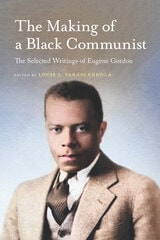
The Making of a Black Communist
The Selected Writings of Eugene GordonLouis J. Parascandola, Editor
University of Massachusetts Press, 2025
Eugene Gordon (1891–1974) was a major writer involved in the development of the burgeoning Black literary scene in Boston in the 1920s, an active player in the Harlem Renaissance, and a longtime member of the Communist Party. Despite his credentials as a reporter, editor, fiction writer, and political activist, he is rarely mentioned in studies of the Harlem Renaissance or Marxist politics. Here, Louis J. Parascandola has pulled together Gordon’s journalism, autobiographical writing, and fiction. This new collection, featuring both previously published pieces from a wide variety of publications as well as material that has never before been published, demonstrates his range and his skill while establishing his importance as a critical voice of his time.
Gordon was born and raised in the South but made his way north at a young age. In Boston, he founded the Saturday Evening Quill Club, an African American literary group that included other notable writers such as Helene Johnson and Dorothy West. He later became editor of and contributor to two major publications coming out of the era: the Messenger and Opportunity: A Journal of Negro Life. As he grew more political, he joined the Communist Party in the 1930s and became editor of and contributor to the New Masses. Scholars looking to research him have struggled to find disparate writings to get a fuller sense of his literary stylings as well as his political commitments. This welcome new volume establishes Gordon as a significant, understudied figure.
The Master and the Dean
The Literary Criticism of Henry James and William Dean HowellsRob Davidson
University of Missouri Press, 2005
The Matter of Black Living
The Aesthetic Experiment of Racial Data, 1880–1930Autumn Womack
University of Chicago Press, 2022
As the nineteenth century came to a close and questions concerning the future of African American life reached a fever pitch, many social scientists and reformers approached post-emancipation Black life as an empirical problem that could be systematically solved with the help of new technologies like the social survey, photography, and film. What ensued was nothing other than a “racial data revolution,” one which rendered African American life an inanimate object of inquiry in the name of social order and racial regulation. At the very same time, African American cultural producers and intellectuals such as W. E. B. Du Bois, Kelly Miller, Sutton Griggs, and Zora Neale Hurston staged their own kind of revolution, un-disciplining racial data in ways that captured the dynamism of Black social life.
The Matter of Black Living excavates the dynamic interplay between racial data and Black aesthetic production that shaped late nineteenth-century social, cultural, and literary atmosphere. Through assembling previously overlooked archives and seemingly familiar texts, Womack shows how these artists and writers recalibrated the relationship between data and Black life. The result is a fresh and nuanced take on the history of documenting Blackness. The Matter of Black Living charts a new genealogy from which we can rethink the political and aesthetic work of racial data, a task that has never been more urgent.
The Meaning of Rivers
Flow and Reflection in American LiteratureT. S. McMillin
University of Iowa Press, 2011
The Midwestern Pastoral
Place and Landscape in Literature of the American HeartlandWilliam Barillas
Ohio University Press, 2006
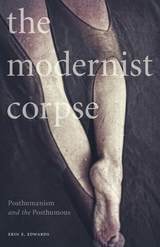
The Modernist Corpse
Posthumanism and the PosthumousErin E. Edwards
University of Minnesota Press, 2018
An unconventional take on the corpse challenges traditional conceptions of who—and what—counts as human, while offering bold insights into the modernist project
Too often regarded as the macabre endpoint of life, the corpse is rarely discussed and largely kept out of the public eye. In The Modernist Corpse, Erin E. Edwards unearths the critically important but previously buried life of the corpse, which occupies a unique place between biology and technology, the living and the dead. Exploring the posthumous as the posthuman, Edwards argues that the corpse is central to understanding relations between the human and its “others,” including the animal, the machine, and the thing.
From photographs of lynchings to documentation of World War I casualties, the corpse is also central to the modernist project. Edwards turns critical attention to the corpse through innovative, posthumanist readings of canonical thinkers such as William Faulkner, Jean Toomer, W. E. B. Du Bois, Mina Loy, Djuna Barnes, and Gertrude Stein, offering new insights into the intersections among race, gender, technical media, and matter presumed to be dead. Edwards’s expansive approach to modernism includes diverse materials such as Hollywood film, experimental photography, autopsy discourses, and the comic strip Krazy Kat, producing a provocatively broad understanding of the modernist corpse and its various “lives.”
The Modernist Corpse both establishes important new directions for modernist inquiry and overturns common thought about the relationship between living and dead matter.
The Modernist Nation
Generation, Renaissance, and Twentieth-Century American LiteratureMichael Soto
University of Alabama Press, 2007
The Modernist Nation examines why America's modern literary movements have come to be characterized as "generations" and "renaissances," such as the Lost Generation and the Beat Generation or the Harlem, Southern, and San Francisco Renaissances. The metaphor of rebirth, Michael Soto argues, offered and continues to offer American writers a kind of shorthand for imagining American cultural history, especially as a departure from Old World (English) trappings.
Soto highlights the interracial dynamics of American literary movements, touching on authors as varied as James Weldon Johnson, Malcolm Cowley, W. E. B. DuBois, Gertrude Stein, Ernest Hemingway, Zora Neale Hurston, and Jack Kerouac. After assessing the origins of the Lost Generation and the Harlem Renaissance, Soto traces the rise of the "bohemian artist" narrative, and demonstrates how a polyethnic cast of writers and critics constructed American literary production in terms of symbolic rebirth.
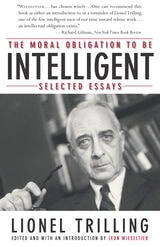
The Moral Obligation to Be Intelligent
Selected EssaysLionel Trilling
Northwestern University Press, 2009
Bringing together the thoughts of one of American literature’s sharpest cultural critics, this compendium will open the eyes of a whole new audience to the work of Lionel Trilling. Trilling was a strenuous thinker who was proud to think “too much.” As an intellectual he did not spare his own kind, and though he did not consider himself a rationalist, he was grounded in the world.
This collection features 32 of Trilling’s essays on a range of topics, from Jane Austen to George Orwell and from the Kinsey Report to Lolita. Also included are Trilling’s seminal essays “Art and Neurosis” and “Manners, Morals, and the Novel.” Many of the pieces made their initial appearances in periodicals such as The Partisan Review and Commentary; most were later reprinted in essay collections. This new gathering of his writings demonstrates again Trilling’s patient, thorough style. Considering “the problems of life”—in art, literature, culture, and intellectual life—was, to him, a vital occupation, even if he did not expect to get anything as simple or encouraging as “answers.” The intellectual journey was the true goal.
No matter the subject, Trilling’s arguments come together easily, as if constructing complicated defenses and attacks were singularly simple for his well-honed mind. The more he wrote on a subject and the more intricate his reasoning, the more clear that subject became; his elaboration is all function and no filler. Wrestling with Trilling’s challenging work still yields rewards today, his ideas speaking to issues that transcend decades and even centuries.
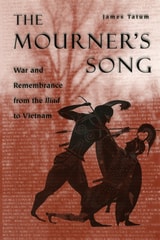
The Mourner's Song
War and Remembrance from the Iliad to VietnamJames Tatum
University of Chicago Press, 2002
Tatum's touchstone throughout is the Iliad, not just one of the earliest war poems, but also one of the most powerful examples of the way poetry can be a tribute to and consolation for what is lost in war. Reading the Iliad alongside later works inspired by war, Tatum reveals how the forms and processes of art convert mourning to memorial. He examines the role of remembrance and the distance from war it requires; the significance of landscape in memorialization; the artifacts of war that fire the imagination; the intimate relationship between war and love and its effects on the ferocity with which soldiers wage battle; and finally, the idea of memorialization itself. Because all survivors suffer the losses of war, Tatum's is a story of both victims and victors, commanders and soldiers, women and men. Photographs of war memorials in Vietnam, France, and the United States beautifully augment his testimonials.
Eloquent and deeply moving, The Mourner's Song will speak to anyone interested in the literature of war and the relevance of the classics to our most pressing contemporary needs.
The Mourning After
Loss and Longing among Midcentury American MenJohn Ibson
University of Chicago Press, 2018
The Mouth That Begs
Hunger, Cannibalism, and the Politics of Eating in Modern ChinaGang Yue
Duke University Press, 1999
Yue’s discussion begins with a brief look at ancient Chinese alimentary writing and then moves on to its main concern: the exploration and textual analysis of themes of eating in modern Chinese literature from the May Fourth period through the post-Tiananmen era. The broad historical scope of this volume illustrates how widely applicable eating-related metaphors can be. For instance, Yue shows how cannibalism symbolizes old China under European colonization in the writing of Lu Xun. In Mo Yan’s 1992 novel Liquorland, however, cannibalism becomes the symbol of overindulgent consumerism. Yue considers other writers as well, such as Shen Congwen, Wang Ruowang, Lu Wenfu, Zhang Zianliang, Ah Cheng, Zheng Yi, and Liu Zhenyun. A special section devoted to women writers includes a chapter on Xiao Hong, Wang Anyi, and Li Ang, and another on the Chinese-American women writers Jade Snow Wong, Maxine Hong Kingston, and Amy Tan. Throughout, the author compares and contrasts the work of these writers with similarly themed Western literature, weaving a personal and political semiotics of eating.
The Mouth That Begs will interest sinologists, literary critics, anthropologists, cultural studies scholars, and everyone curious about the semiotics of food.
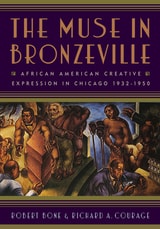
The Muse in Bronzeville
African American Creative Expression in Chicago, 1932-1950Bone, Robert
Rutgers University Press, 2011
The Muse in Bronzeville, a dynamic reappraisal of a neglected period in African American cultural history, is the first comprehensive critical study of the creative awakening that occurred on Chicago's South Side from the early 1930s to the cold war. Coming of age during the hard Depression years and in the wake of the Great Migration, this generation of Black creative artists produced works of literature, music, and visual art fully comparable in distinction and scope to the achievements of the Harlem Renaissance.
This highly informative and accessible work, enhanced with reproductions of paintings of the same period, examines Black Chicago's "Renaissance" through richly anecdotal profiles of such figures as Richard Wright, Gwendolyn Brooks, Margaret Walker, Charles White, Gordon Parks, Horace Cayton, Muddy Waters, Mahalia Jackson, and Katherine Dunham. Robert Bone and Richard A. Courage make a powerful case for moving Chicago's Bronzeville, long overshadowed by New York's Harlem, from a peripheral to a central position within African American and American studies.
The Myth of Emptiness and the New American Literature of Place
Wendy Harding
University of Iowa Press, 2014
In The Myth of Emptiness and the New American Literature of Place, Wendy Harding identifies an important recent development in the literature of place that corrects the misperceptions resulting from these tropes. Works by Rick Bass, Charles Bowden, Ellen Meloy, Jonathan Raban, Rebecca Solnit, and Robert Sullivan move away from the tradition of nature writing, with its emphasis on the solitary individual communing with nature in uninhabited places, to recognize the interactions of human and other-than-human presences in the land. In different ways, all six writers reveal a more historically complex relationship between Americans and their environments. In this new literature of place, writers revisit abandoned, threatened, or damaged sites that were once represented as devoid of human presence and dig deeper to reveal that they are in fact full of the signs of human activity. These writers are interested in the role of social, political, and cultural relationships and the traces they leave on the landscape.
Throughout her exploration, Harding adopts a transdisciplinary perspective that draws on the theories of geographers, historians, sociologists, and philosophers to understand the reasons for the enduring perception of emptiness in the American landscape and how this new literature of place works with and against these ideas. She reminds us that by understanding and integrating human impacts into accounts of the landscape, we are better equipped to fully reckon with the natural and cultural crisis that engulfs all landscapes today.
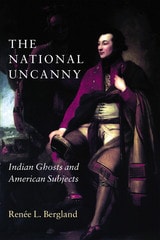
The National Uncanny
Indian Ghosts and American SubjectsRenée L. Bergland
Dartmouth College Press, 2000
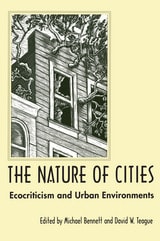
The Nature of Cities
Ecocriticism and Urban EnvironmentsMichael Bennett
University of Arizona Press, 1999
The editors—both raised in small towns but now living in major urban areas—are especially concerned with the sociopolitical construction of all environments, both natural and manmade. Following an opening interview with Andrew Ross exploring the general parameters of urban ecocriticism, they present essays that explore urban nature writing, city parks, urban "wilderness," ecofeminism and the city, and urban space. The volume includes contributions on topics as wide-ranging as the urban poetry of English writers from Donne to Gay, the manufactured wildness of a gambling casino, and the marketing of cosmetics to urban women by idealizing Third World "naturalness." These essays seek to reconceive nature and its cultural representations in ways that contribute to understanding the contemporary cityscape. They explore the theoretical issues that arise when one attempts to adopt and adapt an environmental perspective for analyzing urban life.
The Nature of Cities offers the ecological component often missing from cultural analyses of the city and the urban perspective often lacking in environmental approaches to contemporary culture. By bridging the historical gap between environmentalism, cultural studies, and urban experience, the book makes a statement of lasting importance to the development of the ecocritical movement.
The Necessary Earth
Nature and Solitude in American LiteratureBy Wilson O. Clough
University of Texas Press, 1964
The Necessary Earth is a study of the degree to which the long American experience with an open frontier has entered into an inherently American literature to distinguish it from that of other lands. Since literature is, in the author’s words, “a compound of time, place, and the individual projection of personal experience and reflection into objective forms,” the American compulsion to communicate their experience and their difference was a virtual guarantee that a native literature would arrive.
The text falls into three major portions. The first considers the “age of wonder,” the impact of New World upon Old World comers to effect profound changes, and to set the new American on the parallel paths of idealism and pragmatism. The second part examines the effort of native-born writers to appropriate this experience for new metaphors and new literary theme. Without this effort, the frontier might have remained no more than a dwindling legend, and the transference to the theme of self-reliance might never have appeared. In the third portion the author turns to the twentieth century, examining here the degree to which the national theme of reliance on experience over tradition has persisted in the work of major authors.
Ranging thus from Jamestown and Plymouth to Wallace Stevens, the book stresses, throughout, the pull of untamed nature on the human spirit, and the echoes of that experience in what is most intrinsic in American literature. Without denying frontier lawlessness or native chauvinism, Clough directs our attention primarily to the problems of the creation of a new language and a new metaphor to meet the new experience, and the persistence of a truly American note into a maturing of both manner and matter.
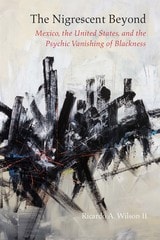
The Nigrescent Beyond
Mexico, the United States, and the Psychic Vanishing of BlacknessRicardo A. Wilson II
Northwestern University Press, 2020
Wilson models a practice of reading that honors the disruptive possibilities offered by an ever-present awareness of that which lies, irretrievable, beyond the horizon of vanishing itself. In doing so, he engages with historical accounts detailing maroon activities in early New Spain, contemporary coverage of the push to make legible Afro-Mexican identities, the electronic archives of the Obama presidency, and the work of Carlos de Sigüenza y Góngora, Octavio Paz, Ivan Van Sertima, Miguel Covarrubias, Steven Spielberg, and Colson Whitehead, among others.
The Offbeat
Collecting GlancesKristen DeMay
Michigan State University Press, 2005
The Offbeat is an independent literary series devoted to publishing a diverse collection of voices,and to promoting contactand discussion among Michigan writers. The Offbeat is run entirely by Michigan State University undergraduates, and is centered in East Lansing. Student editors encourage contributions by all individuals with a Michigan connection, past and present, visitor and resident, urban and rural, student and non-student alike. The Offbeat’s goal is to provide an alternative literary outlet for all Michigan writers.
The Offbeat
Eschew ObfuscationTheresa Mlinarcik
Michigan State University Press, 2003
The Offbeat literary collection series is devoted to publishing a diverse selection of voices and to promoting contact and discussion among writers. The Offbeat is run entirely by Michigan State University students, with the goal of providing an alternative literary outlet for Michigan writers.
This edition features an interview with noted author, W. S. Penn, plus a selection of original fiction, prose, and poetry from a variety of authors, including Daniel Klass, Timothy Carmody, Joshua Moon, Robert Brady, Mark Geralds, Andrew Hungerford, Jeremy Campbell, Gavin Craig, Ashley Honeysett, Andy McGashen, Colleen Farrow, Crystal Passmore, Jogn Garcia, De'Juan McDuell, Gregory Wright, Bailey Follette, and Brandon Connell.
The Offbeat
Fully ClothedKristen DeMay
Michigan State University Press, 2006
The Offbeat is an independent literary series devoted to publishing a diverse collection of voices, and to promoting contact and discussion among Michigan writers. The Offbeat is run entirely by Michigan State University undergraduates, and is centered in East Lansing. Student editors encourage contributions by all individuals with a Michigan connection, past and present, visitor and resident, urban and rural, student and non student alike. The Offbeat’s goal is to provide an alternative literary outlet for all Michigan writers.
The Offbeat
I Have Been Sometimes True to NothingTheresa Mlinarcik
Michigan State University Press, 2003
The Offbeat is an independent literary series devoted to publishing a diverse collection of voices, and to promoting contact and discussion among Michigan writers. The Offbeat is run entirely by Michigan State University undergraduates, and is centered in East Lansing. Student editors encourage contributions by all individuals with a Michigan connection, past and present, visitor and resident, urban and rural, student and non-student alike. The Offbeat' goal is to provide an alternative literary outlet for all Michigan writers. The Offbeat presents, encourages, and explores creative works in fiction, poetry, drama, essay, criticism, image, and that which defies categorization. Its purpose is to call attention to voices both emerging and established, including those that have been previously overlooked.
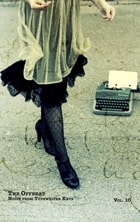
The Offbeat
Noise from Typewriter KeysGoldie Currie
Michigan State University Press, 2010
Noise from Typewriter Keys is the tenth volume in the independent literary series, The Offbeat, devoted to publishing a diverse collection of voices, and to promoting contact and discussion among writers. The Offbeat is run entirely by Michigan State Undergraduates, and is centered in East Lansing. The mission of The Offbeat is to provide an alternative literary outlet for writers from Michigan and beyond, and to call attention to voices both emerging and established.
The Offbeat: Noise from Typewriter Keys is an ensemble of voices and eruptions heard from the inside and out. This volume includes a wide variety of writers and focuses on the ambition of new creation. This part of the series seeks to capture movement of a writer while exploring the varied sounds that come from imagination.
The Offbeat
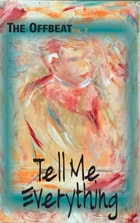
Tell Me EverythingKristen DeMay
Michigan State University Press, 2007
The Offbeat is an independent literary series devoted to publishing a diverse collection of voices, and to promoting contactand discussion among Michigan writers. The Offbeat is run entirely by Michigan State University undergraduates, and is centered in East Lansing. Student editors encourage contributions by all individuals with a Michigan connection, past and present, visitor and resident, urban and rural, student and non-student alike. The Offbeat's goal is to provide an alternative literary outlet for all Michigan writers.
The Offbeat
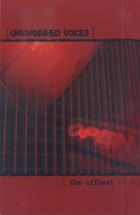
Unvarnished VoicesKristen DeMay
Michigan State University Press, 2004
The Offbeat is a literary collection series devoted to publishing a diverse selection of voices and to promoting contact and discussion among writers. The Offbeat is run entirely by Michigan State University students, with the goal of providing an alternative literary outlet for Michigan writers.
This edition contains work by Steven Rajewski, Erin Ashmore, Neil Kennedy, Victoria Henderson, Mary Helmic, Rebecca Klein, Jamie Miller, Ken Sleight, Laura Tisdel, and many others.
The Offbeat
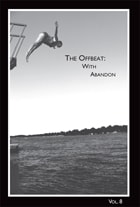
With AbandonChris Cobb
Michigan State University Press, 2008
With Abandon is the eighth volume in the independent literary series, The Offbeat, devoted to publishing a diverse collection of voices, and to promoting contact and discussion among writers. The Offbeat is run entirely by Michigan State Undergraduates, and is centered in East Lansing. The mission of The Offbeat is to provide an alternative literary outlet for writers from Michigan and beyond, and to call attention to voices both emerging and established.
The Offbeat: With Abandon features a wide array of writing that cuts across genres, highlighting the best work by authors ranging from professional journalists to undergraduate writers. Thrown into the mix are voices from professors of literature, graduate students in creative writing, and even a few of our editorial staff. In this volume, writing is an act of faith, a documentation of the joy and terror of life, and above all, an act of witness.
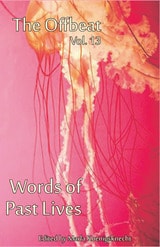
The Offbeat
Words of Past LivesMarla Koenigsknecht
Michigan State University Press, 2013
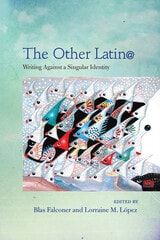
The Other Latin@
Writing Against a Singular IdentityEdited by Blas Falconer and Lorraine M. López
University of Arizona Press, 2011
The sheer number of different ethnic groups and cultures in the United States makes it tempting to classify them according to broad stereotypes, ignoring their unique and changing identities. Because of their growing diversity within the United States, Latinas and Latinos face this problem in their everyday lives. With cultural roots in Mexico, Puerto Rico, Cuba, the Dominican Republic, or a variety of other locales, Hispanic-origin people in the United States are too often consigned to a single category. With this book Blas Falconer and Lorraine M. López set out to change this.
The Other Latin@ is a diverse collection of essays written by some of the best emerging and established contemporary writers of Latin origin to help answer the question: How can we treat U.S. Latina and Latino literature as a definable whole while acknowledging the many shifting identities within their cultures? By telling their own stories, these authors illuminate the richness of their cultural backgrounds while adding a unique perspective to Latina and Latino literature.
This book sheds light on the dangers of abandoning identity by accepting cultural stereotypes and ignoring diversity within diversity. These contributors caution against judging literature based on the race of the author and lament the use of the term Hispanic to erase individuality. Honestly addressing difficult issues, this book will greatly contribute to a better understanding of Latina and Latino literature and identity.
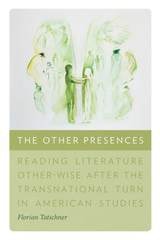
The Other Presences
Reading Literature Other-Wise after the Transnational Turn in American StudiesFlorian Tatschner
Dartmouth College Press, 2019
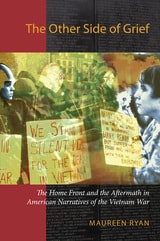
The Other Side of Grief
The Home Front and the Aftermath in American Narratives of the Vietnam WarMaureen Ryan
University of Massachusetts Press, 2008
The lingering aftereffects of the Vietnam War resonate to this day throughout American society: in foreign policy, in attitudes about the military and war generally, and in the contemporary lives of members of the so-called baby boom generation who came of age during the 1960s and early 1970s. While the best-known personal accounts of the war tend to center on the experience of combat, Maureen Ryan's The Other Side of Grief examines the often overlooked narratives—novels, short stories, memoirs, and films—that document the war's impact on the home front.
In analyzing the accounts of Vietnam veterans, women as well as men, Ryan focuses on the process of readjustment, on how the war continued to insinuate itself into their lives, their families, and their communities long after they returned home. She looks at the writings of women whose husbands, lovers, brothers, and sons served in Vietnam and whose own lives were transformed as a result. She also appraises the experiences of the POWs who came to be embraced as the war's only heroes; the ordeal of Vietnamese refugees who fled their “American War” to new lives in the United States; and the influential movement created by those who committed themselves to protesting the war.
The end result of Ryan's investigations is a cogent synthesis of the vast narrative literature generated by the Vietnam War and its aftermath. Together those stories powerfully demonstrate how deeply the legacies of the war penetrated American culture and continue to reverberate still.

The Performing Self
Compositions and Decompositions in the Languages of Contemporary LifePoirier, Richard
Rutgers University Press, 1992
.