Results by title
440 books match the query 'Colonialism & Post-Colonialism' and 101 start with t

The Invention of Order
On the Coloniality of SpaceDon Thomas Deere
Duke University Press, 2025
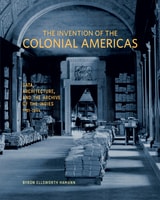
The Invention of the Colonial Americas
Data, Architecture, and the Archive of the Indies, 1781–1844Byron Ellsworth Hamann
J. Paul Getty Trust, The, 2022
The Invention of the Colonial Americas is an architectural history and media-archaeological study of changing theories and practices of government archives in Enlightenment Spain. It centers on an archive created in Seville for storing Spain’s pre-1760 documents about the New World. To fill this new archive, older archives elsewhere in Spain—spaces in which records about American history were stored together with records about European history—were dismembered. The Archive of the Indies thus constructed a scholarly apparatus that made it easier to imagine the history of the Americas as independent from the history of Europe, and vice versa.
In this meticulously researched book, Byron Ellsworth Hamann explores how building layouts, systems of storage, and the arrangement of documents were designed to foster the creation of new knowledge. He draws on a rich collection of eighteenth-century architectural plans, descriptions, models, document catalogs, and surviving buildings to present a literal, materially precise account of archives as assemblages of spaces, humans, and data—assemblages that were understood circa 1800 as capable of actively generating scholarly innovation.
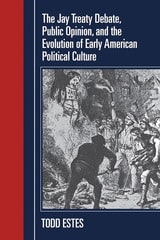
The Jay Treaty Debate, Public Opinion, and the Evolution of Early American Political Culture
Todd Estes
University of Massachusetts Press, 2006
Drawing evidence from a broad range of sources—petitions and newspaper polemics, crowd gatherings, as well as rhetorical exchanges on the floor of Congress—Estes shows how both sides in the Jay Treaty debate mounted extensive and unprecedented campaigns to marshal popular support for their positions. Although many Americans initially opposed the treaty, the Federalists proved particularly skillful at courting the public and eventually prevailed over their opponents, just as they had won earlier battles over neutrality, democratic societies, and the Whiskey Rebellion. But the Republicans, Estes points out, learned from the experience, and in the long run they would become even more adept than the Federalists at shaping public opinion.
Even at the time, amid the fierce political rhetoric and colorful street demonstrations that characterized the Jay Treaty debate, participants recognized that important changes were taking place. Not only did the dispute solidify party allegiances, it also legitimized and advanced popular involvement in the political process. While some welcomed the emergence of this new, more democratic political culture, Estes concludes, others were much more ambivalent.
The Jurisprudence of Emergency
Colonialism and the Rule of LawNasser Hussain
University of Michigan Press, 2003
Ever-more-frequent calls for the establishment of a rule of law in the developing world have been oddly paralleled by the increasing use of "exceptional" measures to deal with political crises. To untangle this apparent contradiction, The Jurisprudence of Emergency analyzes the historical uses of a range of emergency powers, such as the suspension of habeas corpus and the use of military tribunals. Nasser Hussain focuses on the relationship between "emergency" and the law to develop a subtle new theory of those moments in which the normative rule of law is suspended.
The Jurisprudence of Emergency examines British colonial rule in India from the late eighteenth to the early twentieth century in order to trace tensions between the ideology of liberty and government by law, which was used to justify the British presence, and the colonizing power's concurrent insistence on a regime of conquest. Hussain argues that the interaction of these competing ideologies exemplifies a conflict central to all Western legal systems—between the universal, rational operation of law on the one hand and the absolute sovereignty of the state on the other. The author uses an impressive array of historical evidence to demonstrate how questions of law and emergency shaped colonial rule, which in turn affected the development of Western legality.
The pathbreaking insights developed in The Jurisprudence of Emergency reevaluate the place of colonialism in modern law by depicting the colonies as influential agents in the interpretation and delineation of Western ideas and practices. Hussain's interdisciplinary approach and subtly shaded revelations will be of interest to historians as well as scholars of legal and political theory.
The Jurisprudence of Emergency
Colonialism and the Rule of LawNasser Hussain
University of Michigan Press, 2019
The Jurisprudence of Emergency examines British rule in India from the late eighteenth to the early twentieth century, tracing tensions between the ideology of liberty and government by law used to justify the colonizing power's insistence on a regime of conquest. Nasser Hussain argues that the interaction of these competing ideologies exemplifies a conflict central to all Western legal systems—between the universal, rational operation of law on the one hand and the absolute sovereignty of the state on the other. The author uses an impressive array of historical evidence to demonstrate how questions of law and emergency shaped colonial rule, which in turn affected the development of Western legality.
The pathbreaking insights developed in The Jurisprudence of Emergency reevaluate the place of colonialism in modern law by depicting the colonies as influential agents in the interpretation of Western ideas and practices. Hussain's interdisciplinary approach and subtly shaded revelations will be of interest to historians as well as scholars of legal and political theory.
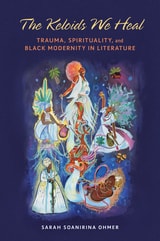
The Keloids We Heal
Trauma, Spirituality, and Black Modernity in LiteratureSarah Soanirina Ohmer
University of Illinois Press, 2025
Women of colors and a literature written in corporeal and spiritual scars
The corporeal and spiritual healing in literature by women of colors can be seen to redefine modern thought and printed text. Sarah Soanirina Ohmer traces the impact of colonization and enslavement on Black women and Black women’s contributions to colonial, nineteenth, and twentieth century literature in the US, Brazil, and the Caribbean.
Drawing on intersectional analysis, Ohmer focuses on portrayals of trauma and spirituality in works by Toni Morrison, Conceição Evaristo, Maryse Condé, Gloria Anzaldúa, the Quilombhoje poets, and María de los Reyes Castillo. Ohmer compares literature from different countries along four thematic pathways: ghosts, mirrors, naming, and motherhood. Her analysis unlocks the literature’s power to heal through gut-wrenching descriptions of wounds and thrilling passages of hope and liberation. Throughout, Ohmer weaves in her life story as a Black woman as she reflects on how colonialism, racism, sexism, and capitalism have impacted her work, traumas, and faith journey.
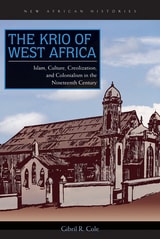
The Krio of West Africa
Islam, Culture, Creolization, and Colonialism in the Nineteenth CenturyGibril R. Cole
Ohio University Press, 2013
Sierra Leone’s unique history, especially in the development and consolidation of British colonialism in West Africa, has made it an important site of historical investigation since the 1950s. Much of the scholarship produced in subsequent decades has focused on the “Krio,” descendants of freed slaves from the West Indies, North America, England, and other areas of West Africa, who settled Freetown, beginning in the late eighteenth century. Two foundational and enduring assumptions have characterized this historiography: the concepts of “Creole” and “Krio” are virtually interchangeable; and the community to which these terms apply was and is largely self-contained, Christian, and English in worldview.
In a bold challenge to the long-standing historiography on Sierra Leone, Gibril Cole carefully disentangles “Krio” from “Creole,” revealing the diversity and permeability of a community that included many who, in fact, were not Christian. In Cole’s persuasive and engaging analysis, Muslim settlers take center stage as critical actors in the dynamic growth of Freetown’s Krio society.
The Krio of West Africa represents the results of some of the first sustained historical research to be undertaken since the end of Sierra Leone’s brutal civil war. It speaks clearly and powerfully not only to those with an interest in the specific history of Sierra Leone, but to histories of Islam in West Africa, the British empire, the Black Atlantic, the Yoruban diaspora, and the slave trade and its aftermath.
The Last Colonial Massacre
Latin America in the Cold War, Updated EditionGreg Grandin
University of Chicago Press, 2011
After decades of bloodshed and political terror, many lament the rise of the left in Latin America. Since the triumph of Castro, politicians and historians have accused the left there of rejecting democracy, embracing communist totalitarianism, and prompting both revolutionary violence and a right-wing backlash. Through unprecedented archival research and gripping personal testimonies, Greg Grandin powerfully challenges these views in this classic work. In doing so, he uncovers the hidden history of the Latin American Cold War: of hidebound reactionaries holding on to their power and privilege; of Mayan Marxists blending indigenous notions of justice with universal ideas of equality; and of a United States supporting new styles of state terror throughout the region.
With Guatemala as his case study, Grandin argues that the Latin American Cold War was a struggle not between political liberalism and Soviet communism but two visions of democracy—one vibrant and egalitarian, the other tepid and unequal—and that the conflict’s main effect was to eliminate homegrown notions of social democracy. Updated with a new preface by the author and an interview with Naomi Klein, The Last Colonial Massacre is history of the highest order—a work that will dramatically recast our understanding of Latin American politics and the role of the United States in the Cold War and beyond.
“This work admirably explains the process in which hopes of democracy were brutally repressed in Guatemala and its people experienced a civil war lasting for half a century.”—International History Review
“A richly detailed, humane, and passionately subversive portrait of inspiring reformers tragically redefined by the Cold War as enemies of the state.”—Journal of American History
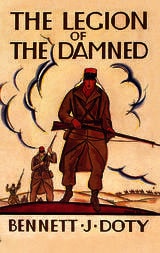
The Legion of the Damned
The Adventures of Bennett J. Doty in the French Foreign Legion as Told by HimselfBennett J. Doty
Westholme Publishing, 2020
“You see there was down South a girl I liked. And she is now married . . . not to me.” So Bennett J. Doty confessed when he sailed for France and enlisted in the French Foreign Legion in 1924. A World War I veteran and University of Virginia student, Doty first trained in Morocco and Algeria before being shipped off to the French-controlled State of Syria. There, he and his fellow “bleus,” who hailed from Belgium, Poland, Italy, Senegal, Spain, Germany, Russia, and other countries, found themselves at the spearhead of the attempt to quell the revolt against French rule in the area. The fighting, mostly against the Druze, was fierce, merciless, and unrelenting. Fought in villages and at isolated outposts, there was no quarter. Entire villages were razed, fields destroyed, and prisoners were not taken by either side. In the engagement where Doty and several other of his “copains”—“buddies”—earned the Croix de Guerre, his unit became isolated and withstood days of attacks which claimed more than half of the Legionnaires until they were finally relieved by a French colonial column. With the immediate fighting over, the Legion was put to heavy manual labor under the hot desert sun. Doty became disillusioned, and with four other soldiers, fled in an attempt to reach British-controlled Jordan. They were caught, tried, and Doty was sentenced to eight years in a French prison. When word reached the United States, diplomatic efforts ultimately gained Doty a pardon and honorable discharge from service.
Originally published in 1928, Legion of the Damned, Doty’s acclaimed account of his time in the Legion, is a remarkable memoir that requires no additional drama to allow the reader to experience the desperation, exhilaration, fear, and disgust of a colonial war. Here, Doty shows how drunken, unruly, vicious veterans would transform into capable, cool, and orderly soldiers as soon as a battle began—the élan that earned the French Foreign Legion its reputation as a legendary fighting unit.
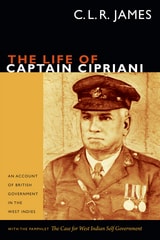
The Life of Captain Cipriani
An Account of British Government in the West Indies, with the pamphlet The Case for West-Indian Self GovernmentC. L. R. James
Duke University Press, 2014

The Limits of Okinawa
Japanese Capitalism, Living Labor, and Theorizations of CommunityWendy Matsumura
Duke University Press, 2015
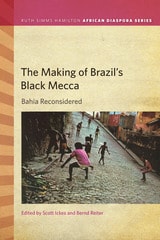
The Making of Brazil's Black Mecca
Bahia ReconsideredScott Ickes
Michigan State University Press, 2018
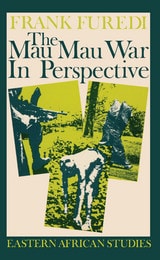
The Mau Mau War in Perspective
Eastern African StudiesFrank Furedi
Ohio University Press, 1989
The book breaks new ground in following the story of the participants of the rural movement during the decade after the defeat of the Mau Mau. New archival sources and interviews provide exciting material on the mechanics of the sociology of decolonization and on the containment of rural radicalism in Kenya. For the first time an account of decolonization in Kenya based on primary sources is offered to the reader.
The Mau Mau was militarily crushed in the mid-fifties, but the struggle for land rights was only contained in the post independence era of Kenya. Kikuyu squatters on European estates who formed the backbone of this movement are the main subject of this book.
Furedi’s account considers how the radicalization of rural protest in the so-called White Highlands led to the Mau Mau explosion and how it was sustained during the subsequent fifteen years.
The book establishes a focus for discussion of these critical events through exploring the relationship between rural resistance and decolonization. The author argues that the main issue facing post-colonial policies in Kenya was to resolve the problems raised by the Mau Mau revolt.
Written from an interdisciplinary perspective, with a special emphasis on historical and political sociology, this book is aimed at students of African politics and political sociologists interested in rural revolution and revolt.
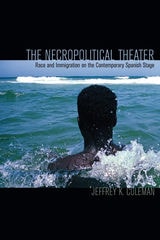
The Necropolitical Theater
Race and Immigration on the Contemporary Spanish StageJeffrey K. Coleman
Northwestern University Press, 2020
Coleman identifies an inherent racial hierarchy informed by the legacies of colonization and religious intolerance.
Drawing on theatrical texts, performances, legal documents, interviews, and critical reviews, this book challenges Spanish theater to develop a new theatrical space. Jeffrey K. Coleman proposes a “convivial theater” that portrays immigrants as contributors to the Spanish state and better represents the multicultural reality of the nation today.
The Neocolonialism of the Global Village
Ginger Nolan
University of Minnesota Press, 2018
Uncovering a vast maze of realities in the media theories of Marshall McLuhan
The term “global village”—coined in the 1960s by Marshall McLuhan—has persisted into the twenty-first century as a key trope of techno-humanitarian discourse, casting economic and technical transformations in a utopian light. Against that tendency, this book excavates the violent history, originating with techniques of colonial rule in Africa, that gave rise to the concept of the global village. To some extent, we are all global villagers, but given the imbalances of semiotic power, some belong more thoroughly than others. Reassessing McLuhan’s media theories in light of their entanglement with colonial and neocolonial techniques, Nolan implicates various arch-paradigms of power (including “terra-power”) in the larger prerogative of managing human populations.
Forerunners: Ideas First is a thought-in-process series of breakthrough digital publications. Written between fresh ideas and finished books, Forerunners draws on scholarly work initiated in notable blogs, social media, conference plenaries, journal articles, and the synergy of academic exchange. This is gray literature publishing: where intense thinking, change, and speculation take place in scholarship.
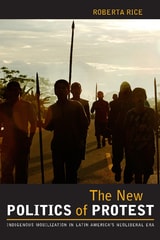
The New Politics of Protest
Indigenous Mobilization in Latin America's Neoliberal EraRoberta Rice
University of Arizona Press, 2012
In June 1990, Ecuador saw the first major indigenous rebellion within its borders since the colonial era. For weeks, indigenous protesters participated in marches, staged demonstrations, seized government offices, and blockaded roads. Since this insurrection, indigenous movements have become increasingly important in the fight against Latin American Neoliberalism.
Roberta Rice's New Politics of Protest seeks to analyze when, where, and why indigenous protests against free-market reforms have occurred in Latin America. Comparing cases in Ecuador, Peru, Bolivia, and Chile, this book details the emergence of indigenous movements under and against Neoliberal governments. Rice uses original field research and interviews with indigenous leaders to examine long-term patterns of indigenous political activism and overturn accepted theories on the role of the Indian in democracy.
A useful and engaging study, The New Politics of Protest seeks to determine when indigenous movements become viable political parties. It covers the most recent rounds of protest to demonstrate how a weak and unresponsive government is more likely to experience revolts against unpopular reforms. This influential work will be of interest to scholars of Latin American politics and indigenous studies as well as anyone studying oppressed peoples who have organized nationwide strikes and protests, blocked economic reforms, toppled corrupt leaders, and even captured presidencies.
The Nutmeg's Curse
Parables for a Planet in CrisisAmitav Ghosh
University of Chicago Press, 2021
A powerful work of history, essay, testimony, and polemic, Amitav Ghosh’s new book traces our contemporary planetary crisis back to the discovery of the New World and the sea route to the Indian Ocean. The Nutmeg’s Curse argues that the dynamics of climate change today are rooted in a centuries-old geopolitical order constructed by Western colonialism. At the center of Ghosh’s narrative is the now-ubiquitous spice nutmeg. The history of the nutmeg is one of conquest and exploitation—of both human life and the natural environment. In Ghosh’s hands, the story of the nutmeg becomes a parable for our environmental crisis, revealing the ways human history has always been entangled with earthly materials such as spices, tea, sugarcane, opium, and fossil fuels. Our crisis, he shows, is ultimately the result of a mechanistic view of the earth, where nature exists only as a resource for humans to use for our own ends, rather than a force of its own, full of agency and meaning.
Writing against the backdrop of the global pandemic and the Black Lives Matter protests, Ghosh frames these historical stories in a way that connects our shared colonial histories with the deep inequality we see around us today. By interweaving discussions on everything from the global history of the oil trade to the migrant crisis and the animist spirituality of Indigenous communities around the world, The Nutmeg’s Curse offers a sharp critique of Western society and speaks to the profoundly remarkable ways in which human history is shaped by non-human forces.
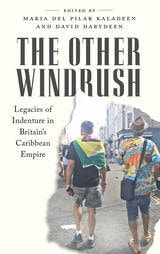
The Other Windrush
Legacies of Indenture in Britain's Caribbean EmpireMaria del Pilar Kaladeen
Pluto Press, 2021

The Other Windrush
Legacies of Indenture in Britain's Caribbean EmpireMaria del Pilar Kaladeen
Pluto Press, 2021
Between the arrival of the HMT Empire Windrush in 1948 and the passing of the 1971 Immigration Act, half a million people came to the UK from the Caribbean. In the aftermath of the 2018 Windrush Scandal, the story of the Windrush Generation is more widely known than ever. But is it the whole story?
Through a series of biographical essays, poems and articles, The Other Windrush shines a light on the hidden history of a 'minority within a minority': Caribbean migrants of Indian and Chinese descent - often the descendants of indentured labourers - who were the 'invisible passengers' of the Windrush generation.
Both highlighting the diversity of their lives and cultural backgrounds, and delving into the largely forgotten history of the system of indenture in the British Caribbean, The Other Windrush makes a unique addition to the literature on migration and the British Empire.

The Paradox of Protection
The Making of Indirect Rule in Southern Sierra Leone, 1850–1915Trina Leah Hogg
Michigan State University Press, 2025
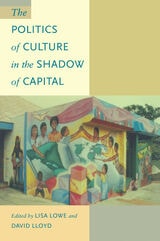
The Politics of Culture in the Shadow of Capital
Lisa Lowe and David Lloyd, eds.
Duke University Press, 1997
Reworking Marxist critique, these essays on Asia, Latin America, the Caribbean, North America, and Europe advance a new understanding of "cultural politics" within the context of transnational neocolonial capitalism. This perspective contributes to an overall critique of traditional approaches to modernity, development, and linear liberal narratives of culture, history, and democratic institutions. It also frames a set of alternative social practices that allows for connections to be made between feminist politics among immigrant women in Britain, women of color in the United States, and Muslim women in Iran, Egypt, Pakistan, and Canada; the work of subaltern studies in India, the Philippines, and Mexico; and antiracist social movements in North and South America, the Caribbean, and Europe. These connections displace modes of opposition traditionally defined in relation to the modern state and enable a rethinking of political practice in the era of global capitalism.
Contributors. Tani E. Barlow, Nandi Bhatia, Dipesh Chakrabarty, Chungmoo Choi, Clara Connolly, Angela Davis, Arturo Escobar, Grant Farred, Homa Hoodfar, Reynaldo C. Ileto, George Lipsitz, David Lloyd, Lisa Lowe, Martin F. Manalansan IV, Aihwa Ong, Pragna Patel, José Rabasa, Maria Josefina Saldaña-Portillo, Jaqueline Urla
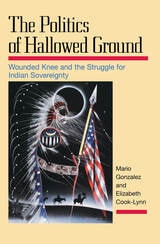
The Politics of Hallowed Ground
Wounded Knee and the Struggle for Indian SovereigntyMario Gonzalez and Elizabeth Cook-Lynn
University of Illinois Press, 1999
Inside the Sioux Nation's pursuit of recognition and justice
This book is the powerful story of the ongoing struggle of indigenous Americans in the twentieth century United States and of its shift in focus from traditional battlefield and massacre sites to federal courtrooms and the halls of Congress.
The Politics of Hallowed Ground includes excerpts from the diary kept by Mario Gonzalez, the attorney for the Sioux Nation in its struggle for recognition of the Wounded Knee Massacre site as a national monument. Gonzalez's personal record of the struggle is coupled with commentary by Elizabeth Cook-Lynn, a Native American writer who places the work in its historical context. Together, the two voices will draw the reader into far more than the continuing struggle of the Sioux people to achieve justice.
The book covers Sioux history from before the Wounded Knee tragedy to modern times, through the Sioux Nation's long and often rancorous dialogue with the U.S. government over control of South Dakota's Black Hills, traditional Sioux lands recognized by treaty in 1877 and never forfeited or sold. After reading a 13-year-old survivor's narrative of what happened at Wounded Knee and the list of the dead and wounded, readers will find it difficult not to share the Sioux perspective.
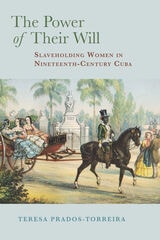
The Power of Their Will
Slaveholding Women in Nineteenth-Century CubaTeresa Prados-Torreira
University of Alabama Press, 2021
CHOICE OUTSTANDING ACADEMIC TITLE, 2022
“This fascinating book explores the unique circumstances of white slaveholding women in 19th-century Cuba and the enslaved peoples they controlled . . .This is a must read for scholars of the Caribbean and the African diaspora. Essential.” —CHOICE
In the early nineteenth century, while abolitionism was rising and the slave trade was declining in the Atlantic world, Spain used this opportunity to massively expand plantation slavery in Cuba. Between 1501 and 1866, more than 778,000 Africans were torn from their homelands and brought to work for the Cuban slaveholding class.
An understudied aspect of Cuban slaveholding society is the role of the white Cuban slave mistress (amas). The Power of Their Will: Slaveholding Women in Nineteenth-Century Cuba illuminates the interaction of female slaveholders and the enslaved during this time. Teresa Prados-Torreira shows, despite the lack of political power in a highly patriarchal society, Cuban women as property owners were instrumental in supporting the long duration of slavery, whether by enforcing the disciplining of the enslaved in the domestic sphere or helping to create the illusion of slavery as a humane institution. Thousands of Creole slaveholding women relied on slaves to lead a comfortable life. Even the subsistence of many poor women depended on the income derived from the hiring out of their enslaved.
In this accessible cultural history, culled from government documents, fiction, newspaper articles, traveler’s accounts, women’s wills, and archival research, Prados-Torreira coalesces a valuable narrative out of the often paradoxical and conflicting stories of the human bonds between the female owner and the enslaved. Narrative chapters, enlivened by vignettes, describe the daily life of slave mistresses in the main cities of Havana and Santiago and other towns, workings of sugar mills and coffee plantations, how slaveholding women coping with slave rebellions and wartime during the Ten Years’ War, and how personal relationships could occasionally affect the balance of power.
The Power of the Steel-tipped Pen
Reconstructing Native Hawaiian Intellectual HistoryNoenoe K. Silva
Duke University Press, 2017
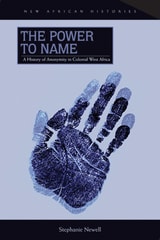
The Power to Name
A History of Anonymity in Colonial West AfricaStephanie Newell
Ohio University Press, 2013
Between the 1880s and the 1940s, the region known as British West Africa became a dynamic zone of literary creativity and textual experimentation. African-owned newspapers offered local writers numerous opportunities to contribute material for publication, and editors repeatedly defined the press as a vehicle to host public debates rather than simply as an organ to disseminate news or editorial ideology. Literate locals responded with great zeal, and in increasing numbers as the twentieth century progressed, they sent in letters, articles, fiction, and poetry for publication in English- and African-language newspapers.
The Power to Name offers a rich cultural history of this phenomenon, examining the wide array of anonymous and pseudonymous writing practices to be found in African-owned newspapers between the 1880s and the 1940s, and the rise of celebrity journalism in the period of anticolonial nationalism. Stephanie Newell has produced an account of colonial West Africa that skillfully shows the ways in which colonized subjects used pseudonyms and anonymity to alter and play with colonial power and constructions of African identity.

The Price of Living
The Stories We Tell About the PoorS. Shankar
Duke University Press, 2027
The Privatisation of Israeli Security
Shir Hever
Pluto Press, 2017
The Repeating Island
The Caribbean and the Postmodern PerspectiveAntonio Benitez-Rojo
Duke University Press, 1996
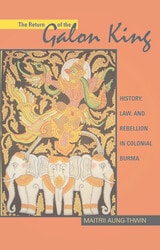
The Return of the Galon King
History, Law, and Rebellion in Colonial BurmaMaitrii Aung-Thwin
Ohio University Press, 2010
In late 1930, on a secluded mountain overlooking the rural paddy fields of British Burma, a peasant leader named Saya San crowned himself King and inaugurated a series of uprisings that would later erupt into one of the largest anti-colonial rebellions in Southeast Asian history. Considered an imposter by the British, a hero by nationalists, and a prophet-king by area-studies specialists, Saya San came to embody traditional Southeast Asia’s encounter with European colonialism in his attempt to resurrect the lost throne of Burma.
The Return of the Galon King analyzes the legal origins of the Saya San story and reconsiders the facts upon which the basic narrative and interpretations of the rebellion are based. Aung-Thwin reveals how counter-insurgency law produced and criminalized Burmese culture, contributing to the way peasant resistance was recorded in the archives and understood by Southeast Asian scholars.
This interdisciplinary study reveals how colonial anthropologists, lawyers, and scholar-administrators produced interpretations of Burmese culture that influenced contemporary notions of Southeast Asian resistance and protest. It provides a fascinating case study of how history is treated by the law, how history emerges in legal decisions, and how the authority of the past is used to validate legal findings.
The Roman Empire
Roots of ImperialismNeville Morley
Pluto Press, 2010
A millennium and a half after the end of the period of its unquestioned dominance, Rome remains a significant presence in western culture. This book explores what the empire meant to its subjects.
The idea of Rome has long outlived the physical empire that gave it form, and now holds sway over vastly more people and a far greater geographical area than the Romans ever ruled. It continues to shape our understanding of the nature of imperialism, and thus, however subtly, to influence the workings of the world. Unlike most works on Roman history, this book does not offer a simplistic narrative, with military triumph followed by decline and fall. Instead, it analyses the origins and nature of Roman imperialism, its economic, social and cultural impact on the regions it conquered, and its continuing influence in discussions and debates about modern imperialism.
The Second Palestinian Intifada
A Chronicle of a People's StruggleRamzy Baroud
Pluto Press, 2006
Ramzy Baroud is a veteran journalist and former producer for Al-Jazeera TV. This is his comprehensive account of the momentous events of the last five years which shaped the political landscape not only of Palestine and Israel but of the entire Middle East region.
Addressing the most controversial issues, including the alarming escalation in suicide bombings, and the construction of the Separation Wall, he reports on the huge rate of unemployment and hunger in the Occupied Territories -- statistics so critical that NGOs compare their magnitude to African nations such as the Congo. From the brutality of the Israeli army to the ever-compromising nature of the Palestinian Authority, few are spared Baroud’s thoughtful critique.
The book is clear and concise, with one chapter dedicated to the major events of each year, and includes a comprehensive timeline.
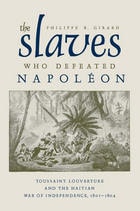
The Slaves Who Defeated Napoléon
Toussaint Louverture and the Haitian War of Independence, 1801–1804Philippe R. Girard
University of Alabama Press, 2011
A deeply researched and definitive account of the climactic battle at the end of the Haitian Revolution
Among the many rebellions against European colonial empires, the Haitian Revolution against France is among the most dramatic and complex. Having begun in 1791 as France was in the throes of its own young revolution, the conflict reached its dramatic climax when Napoleon dispatched a heavily armed expeditionary force led by his brother-in-law Charles Leclerc to re-establish slavery and the sugar economy that had so enriched France. Philippe Girard’s Slaves Who Defeated Napoleon is a deeply researched and engrossing account of this invasion and its spectacular defeat.
For this ambitious account, Philippe Girard has studied not only primary records in Haiti itself but also rare documents from nineteen public and private archives and research libraries in French, U.S., British, and Spanish collections. His more inclusive approach provides a fuller, more accurate and detailed narrative. He reveals not only key military movements, but also less-known aspects like the activities of U.S. merchants, in-fighting within Napoleon’s government, and communication between both sides and other European powers. Girard fills the work with unforgettable stories of those who led or were caught up in the war, people like poorly armed Black soldiers who ambushed Bonaparte’s columns, French child drummers, Jewish bankers in Kingston, weapon smugglers from Quaker Philadelphia, Polish artillerists, and mixed-raced people struggling to preserve their freedom against both Black and white opponents.
Transcending pat ideological and racial categories, the book brings into focus an Atlantic society at the crossroads of African and European influences, where Haitian rebels fought France while embracing its ideals.
The Struggle for Hegemony in Pakistan
Fear, Desire and Revolutionary HorizonsAasim Sajjad-Akhtar
Pluto Press, 2022
The collapse of neoliberal hegemony in the western world following the financial crash of 2007-8 and subsequent rise of right-wing authoritarian personalities has been described as a crisis of 'the political' in western societies. But the crisis must be seen as global, rather than focusing on the west alone.
Pakistan is experiencing rapid financialization and rapacious capture of natural resources, overseen by the country's military establishment and state bureaucracy. Under their watch, trading and manufacturing interests, property developers and a plethora of mafias have monopolized the provision of basic needs like housing, water and food, whilst also feeding conspicuous consumption by a captive middle-class.
Aasim Sajjad-Akhtar explores neoliberal Pakistan, looking at digital technology in enhancing mass surveillance, commodification and atomization, as well as resistance to the state and capital. Presenting a new interpretation of our global political-economic moment, he argues for an emancipatory political horizon embodied by the 'classless' subject.
The Struggle of Non-Sovereign Caribbean Territories
Neoliberalism since the French Antillean Uprisings of 2009H. Adlai Murdoch
Rutgers University Press, 2021
The Suicide Archive
Reading Resistance in the Wake of French EmpireDoyle D. Calhoun
Duke University Press, 2024
The Terms of Our Surrender
Colonialism, Dispossession and the Resistance of the InnuElizabeth Cassell
University of London Press, 2021
Based on extensive fieldwork and oral history, The Terms of Our Surrender is a powerful critical appraisal of unceded indigenous land ownership in eastern Canada. Set against an ethnographic, historical, and legal framework, this book traces the myriad ways the Canadian state has evaded the 1763 Royal Proclamation that guaranteed First Nations people a right to their land and way of life.
Focusing on the Innu of Quebec and Labrador, whose land has been taken for resource extraction and development, this book strips back the law of fiduciary duty to its origins. The Terms of Our Surrender argues for the preservation of land ownership and positions First Nations people as natural land defenders amidst a devastating climate crisis. This volume offers a voice to the Innu people, detailing the spirituality practices, culture, and values that make it impossible for them to willingly cede their land.
This book is intended to bridge the gap in knowledge between legal practitioners and those working at the intersections of human rights, social work, and public policy. It offers a potent template for using the law to fight back against the indignities suffered by indigenous communities.
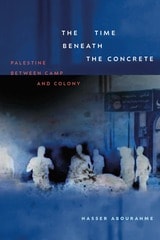
The Time beneath the Concrete
Palestine between Camp and ColonyNasser Abourahme
Duke University Press, 2025

The Transit of Empire
Indigenous Critiques of ColonialismJodi A. Byrd
University of Minnesota Press, 2011
In 1761 and again in 1768, European scientists raced around the world to observe the transit of Venus, a rare astronomical event in which the planet Venus passes in front of the sun. In The Transit of Empire, Jodi A. Byrd explores how indigeneity functions as transit, a trajectory of movement that serves as precedent within U.S. imperial history. Byrd argues that contemporary U.S. empire expands itself through a transferable “Indianness” that facilitates acquisitions of lands, territories, and resources.
Examining an array of literary texts, historical moments, and pending legislations—from the Cherokee Nation of Oklahoma’s vote in 2007 to expel Cherokee Freedmen to the Native Hawaiian Government Reorganization bill—Byrd demonstrates that inclusion into the multicultural cosmopole does not end colonialism as it is purported to do. Rather, that inclusion is the very site of the colonization that feeds U.S. empire.
Byrd contends that the colonization of American Indian and indigenous nations is the necessary ground from which to reimagine a future where the losses of indigenous peoples are not only visible and, in turn, grieveable, but where indigenous peoples have agency to transform life on their own lands and on their own terms.

The Visual Afterlife of Abdelkader Bennahar
Robert Desjarlais
Duke University Press, 2025
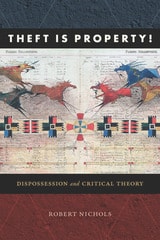
Theft Is Property!
Dispossession and Critical TheoryRobert Nichols
Duke University Press, 2020
Theory from the Trenches
Decolonization and the Horizons of Subaltern MarxismShozab Raza
Duke University Press, 2027
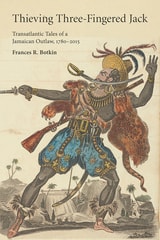
Thieving Three-Fingered Jack
Transatlantic Tales of a Jamaican Outlaw, 1780-2015Botkin, Frances R.
Rutgers University Press, 2018
The fugitive slave known as “Three-Fingered Jack” terrorized colonial Jamaica from 1780 until vanquished by Maroons, self-emancipated Afro-Jamaicans bound by treaty to police the island for runaways and rebels. A thief and a killer, Jack was also a freedom fighter who sabotaged the colonial machine until his grisly death at its behest. Narratives about his exploits shed light on the problems of black rebellion and solutions administered by the colonial state, creating an occasion to consider counter-narratives about its methods of divide and conquer. For more than two centuries, writers, performers, and storytellers in England, Jamaica, and the United States have “thieved" Three Fingered Jack's riveting tale, defining black agency through and against representations of his resistance.
Frances R. Botkin offers a literary and cultural history that explores the persistence of stories about this black rebel, his contributions to constructions of black masculinity in the Atlantic world, and his legacies in Jamaican and United States popular culture.
Third World Studies
Theorizing LiberationGary Y. Okihiro
Duke University Press, 2024
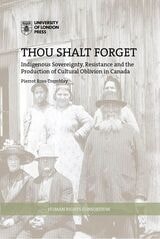
Thou Shalt Forget
Indigenous sovereignty, resistance and the production of cultural oblivion in CanadaPierrot Ross-Tremblay
University of London Press, 2019
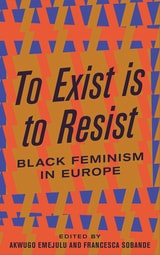
To Exist is to Resist
Black Feminism in EuropeEdited by Akwugo Emejulu and Francesca Sobande
Pluto Press, 2019
Deeply aware that they are constructed as 'Others' living in a racialised and hierarchical continent, the contibutors explore gender, class, sexuality and legal status to show that they are both invisible - presumed to be absent from and irrelevant to European societies - and hyper-visible - assumed to be passive and sexualised, angry and irrational.
Through imagining a future outside the neocolonial frames and practices of contemporary Europe, this book explores a variety of critical spaces including motherhood and the home, friendships and intimate relationships, activism and community, and literature, dance and film.
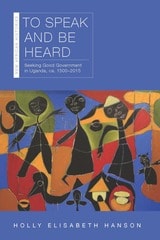
To Speak and Be Heard
Seeking Good Government in Uganda, ca. 1500–2015Holly Elisabeth Hanson
Ohio University Press, 2021
A history of a political practice through which East Africans have sought to create calm, harmonious polities for five hundred years.
“To speak and be heard” is a uniquely Ugandan approach to government that aligns power with groups of people that actively demonstrate their assent both through their physical presence and through essential gifts of goods and labor. In contrast to a parliamentary democracy, the Ugandan system requires a level of active engagement much higher than simply casting a vote in periodic elections.
These political strategies—assembly, assent, and powerful gifts—can be traced from before the emergence of kingship in East Africa (ca. 1500) through enslavement, colonial intervention, and anticolonial protest. They appear in the violence of the Idi Amin years and are present, sometimes in dysfunctional ways, in postcolonial politics. Ugandans insisted on the necessity of multiple voices contributing to and affirming authority, and citizens continued to believe in those principles even when colonial interference made good governance through building relationships almost impossible.
Through meticulous research, Holly Hanson tells a history of the region that differs from commonly accepted views. In contrast to the well-established perception that colonial manipulation of Uganda’s tribes made state failure inevitable, Hanson argues that postcolonial Ugandans had the capacity to launch a united, functional nation-state and could have done so if leaders in Buganda, Britain, and Uganda’s first governments had made different choices.
Torture in the National Security Imagination
Stephanie Athey
University of Minnesota Press, 2023
Reassessing the role of torture in the context of police violence, mass incarceration, and racial capitalism
At the midpoint of a century of imperial expansion, marked on one end by the Philippine–American War of 1899–1902 and on the other by post–9/11 debates over waterboarding, the United States embraced a vision of “national security torture,” one contrived to cut ties with domestic torture and mass racial terror and to promote torture instead as a minimalist interrogation tool. Torture in the National Security Imagination argues that dispelling this vision requires a new set of questions about the everyday work that torture does for U.S. society.
Stephanie Athey describes the role of torture in the proliferation of a U.S. national security stance and imagination: as U.S. domestic tortures were refined in the Philippines at the turn of the twentieth century, then in mid-century counterinsurgency theory and the networks that brought it home in the form of law-and-order policing and mass incarceration.
Drawing on examples from news to military reports, legal writing, and activist media, Athey shows that torture must be seen as a colonial legacy with a corporate future, highlighting the centrality of torture to the American empire—including its role in colonial settlement, American Indian boarding schools, and police violence. She brings to the fore the spectators and commentators, the communal energy of violence, and the teams and target groups necessary to a mass undertaking (equipment suppliers, contractors, bureaucrats, university researchers, and profiteers) to demonstrate that, at base, torture is propelled by local social functions, conducted by networked professional collaborations, and publicly supported by a durable social imaginary.
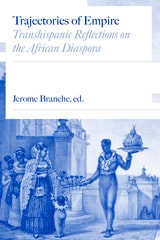
Trajectories of Empire
Transhispanic Reflections on the African DiasporaJerome C. Branche
Vanderbilt University Press, 2022
The book’s chapters explore what Blackness means in the so-called racial democracies of Brazil and Cuba today. Among the historical narratives and themes it covers are the role of medical science in the objectification and nullification of Black female personhood during slavery in nineteenth-century Brazil; the protocols of portraiture in the colonial period that, in including enslaved individuals, pictorially highlight and freeze their supposed inferiority vis-à-vis their owners; and those aspects of discourse that promote colonial capture and oppression in terms of evangelization and the saving of souls, or simply create the discursive template as early as the fifteenth century, for their continued alienation and marginalization across generations.
Trajectories of Empire’s contributions come from the fields of literary criticism, visual culture, history, anthropology, popular culture (rap), and cultural studies. As the product of an interdisciplinary collective, this book will be of interest to scholars in Iberian or Hispanic studies, Africana studies, postcolonial studies, and transatlantic studies, as well as the general public.
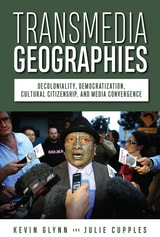
Transmedia Geographies
Decoloniality, Democratization, Cultural Citizenship, and Media ConvergenceKevin Glynn
Rutgers University Press, 2025
The authors explore the cultural politics that have developed within this new media environment by moving across the mediated landscapes of the first, third, and fourth (Indigenous people’s) worlds, which are deeply intertwined and interconnected under contemporary conditions of neoliberal globalization and emergent regimes of authoritarian postdemocracy. The book attends both to the platforms and digital networks of the new media environment and to the cultural forms and practices that have constituted television as the dominant medium of communication throughout the second half of the twentieth century. In the new media environment, transmediation works on behalf not only of those corporate megaconglomerates that have become all too familiar to media consumers around the world but also of many communities that have previously been excluded from access to the means of electronic textual production and circulation. For the latter, grassroots transmediation has become an important technique for the production of cultural citizenship.