Results by title
4917 books match the query 'Philosophy' and 1267 start with t
Toward a Phenomenological Rhetoric
Writing, Profession, and AltruismBarbara Couture
Southern Illinois University Press, 1998
Current rhetorical and critical theory for the most part separates writing from consciousness and presumes relative truth to be the only possible expressive goal for rhetoric. These presumptions are reflected in our tradition of persuasive rhetoric, which values writing that successfully argues one person’s belief at the expense of another’s. Barbara Couture presents a case for a phenomenological rhetoric, one that values and respects consciousness and selfhood and that restores to rhetoric the possibility of seeking an all-embracing truth through pacific and cooperative interaction.
Couture discusses the premises on which current interpretive theory has supported relative truth as the philosophical grounding for rhetoric, premises, she argues, that have led to constraints on our notion of truth that divorce it from human experience. She then shows how phenomenological philosophy might guide the theory and practice of rhetoric, reanimating its role in the human enterprise of seeking a shared truth. She proposes profession and altruism as two guiding metaphors for the phenomenological activity of "truth-seeking through interaction."
Among the contemporary rhetoricians and philosophers who influence Couture are Pierre Teilhard de Chardin, Martin Buber, Charles Altieri, Charles Taylor, Alasdair Maclntyre, and Jürgen Habermas.
Toward a Philosophy of the Act
By M. M. Bakhtin
University of Texas Press, 1993
Rescued in 1972 from a storeroom in which rats and seeping water had severely damaged the fifty-year-old manuscript, this text is the earliest major work (1919-1921) of the great Russian philosopher M. M. Bakhtin. Toward a Philosophy of the Act contains the first occurrences of themes that occupied Bakhtin throughout his long career. The topics of authoring, responsibility, self and other, the moral significance of "outsideness," participatory thinking, the implications for the individual subject of having "no-alibi in existence," the difference between the world as experienced in actions and the world as represented in discourse—all are broached here in the heat of discovery. This is the "heart of the heart" of Bakhtin, the center of the dialogue between being and language, the world and mind, "the given" and "the created" that forms the core of Bakhtin's distinctive dialogism.
A special feature of this work is Bakhtin's struggle with the philosophy of Immanuel Kant. Put very simply, this text is an attempt to go beyond Kant's formulation of the ethical imperative. mci will be important for scholars across the humanities as they grapple with the increasingly vexed relationship between aesthetics and ethics.
Toward a Pragmatist Sociology
John Dewey and the Legacy of C. Wright MillsRobert G. Dunn
Temple University Press, 2018
In Toward a Pragmatist Sociology, Robert Dunn explores the relationship between the ideas of philosopher and educator John Dewey and those of sociologist C. Wright Mills in order to provide a philosophical and theoretical foundation for the development of a critical and public sociology. Dunn recovers an intellectual and conceptual framework for transforming sociology into a more substantive, comprehensive, and socially useful discipline.
Toward a Pragmatist Sociology argues that Dewey and Mills shared a common vision of a relevant, critical, public sociology dedicated to the solution of societal problems. Dunn investigates the past and present state of the discipline, critiquing its dominant tendencies, and offering historical examples of alternatives to conventional sociological approaches.
By stressing the similar intellectual and moral visions of both men, Toward a Pragmatist Sociology provides an original treatment of two important American thinkers whose work offers a conception and model of a sociology with a sense of moral and political purpose and public relevance. It should liberate future sociologists and others to regard the discipline as not only a science but an intellectual, moral, and political enterprise.
Toward a Rhetoric of Insult
Thomas Conley
University of Chicago Press, 2010
From high school cafeterias to the floor of Congress, insult is a truly universal and ubiquitous cultural practice with a long and earthy history. And yet, this most human of human behaviors has rarely been the subject of organized and comprehensive attention—until Toward a Rhetoric of Insult. Viewed through the lens of the study of rhetoric, insult, Thomas M. Conley argues, is revealed as at once antisocial and crucial for human relations, both divisive and unifying.
Explaining how this works and what exactly makes up a rhetoric of insult prompts Conley to range across the vast and splendidly colorful history of offense. Taking in Monty Python, Shakespeare, Eminem, Cicero, Henry Ford, and the Latin poet Martial, Conley breaks down various types of insults, examines the importance of audience, and explores the benign side of abuse. In doing so, Conley initiates readers into the world of insult appreciation, enabling us to regard insults not solely as means of expressing enmity or disdain, but as fascinating aspects of human interaction.
Toward an Aesthetic of Reception
Hans Jauss
University of Minnesota Press, 1982
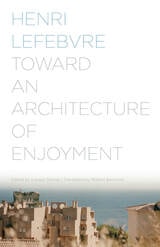
Toward an Architecture of Enjoyment
Henri Lefebvre
University of Minnesota Press, 2014
Toward an Architecture of Enjoyment is the first publication in any language of the only book devoted to architecture by Henri Lefebvre. Written in 1973 but only recently discovered in a private archive, this work extends Lefebvre’s influential theory of urban space to the question of architecture. Taking the practices and perspective of habitation as his starting place, Lefebvre redefines architecture as a mode of imagination rather than a specialized process or a collection of monuments. He calls for an architecture of jouissance—of pleasure or enjoyment—centered on the body and its rhythms and based on the possibilities of the senses.
Examining architectural examples from the Renaissance to the postwar period, Lefebvre investigates the bodily pleasures of moving in and around buildings and monuments, urban spaces, and gardens and landscapes. He argues that areas dedicated to enjoyment, sensuality, and desire are important sites for a society passing beyond industrial modernization.
Lefebvre’s theories on space and urbanization fundamentally reshaped the way we understand cities. Toward an Architecture of Enjoyment promises a similar impact on how we think about, and live within, architecture.
Toward an Islamic Theology of Nonviolence
In Dialogue with René GirardAdnane Mokrani
Michigan State University Press, 2022
Towards a Christian Philosophy
Joseph Owens
Catholic University of America Press, 2018
Towards a New Universalism
Boris Groys
University of Minnesota Press, 2026
A dynamic contemporary examination of universalism
Gathering a selection of essays by influential theorist Boris Groys, Towards a New Universalism articulates his sustained engagement with the problem of universality under contemporary conditions shaped by globalization, institutional fragmentation, and digital mediation. Rather than defending classical universalism or abandoning it in favor of cultural particularism, Groys approaches universality as something produced within shared historical, institutional, and technological frameworks.
These essays address topics spanning from identity politics to migration, museums, media, and artificial intelligence, examining how universal claims make their way into social and cultural contexts. Distinct from recent philosophical treatments of universalism, Towards a New Universalism situates the question within aesthetics, media theory, and institutional critique, offering an indispensable collection for anyone interested in the intersections of politics and art.
Distributed for e-flux.
Towards an Aesthetics of Production
Sebastian Egenhofer
Diaphanes, 2017
After laying out his argument for a new aesthetics of production in introductory chapters that discuss the work of Spinoza, Nietzsche, and Bergson, as well as Heidegger and Kant, Egenhofer applies this theoretical framework to case studies on Michael Asher, Marcel Duchamp, Thomas Hirschhorn, and Piet Mondrian. An aesthetics of production does not, he argues, imply a nostalgia for the artisanal or for a work of art’s singularity, but a way to bring together elements of critical materialism with a thorough reevaluation of the modern art and abstraction.
Traces of the Past
Classics between History and ArchaeologyKaren Bassi
University of Michigan Press, 2016
Aimed at classicists, literary scholars, ancient historians, cultural historians, and archaeological theorists, the book combines three areas of research: time as a feature of narrative structure in literary theory; the concept of “the past itself” in the philosophy of history; and the ontological status of material objects in archaeological theory. Each of five central chapters explores how specific protoarchaeological narratives—from the fate of Zeus’ stone in Hesiod’s Theogony to the contest between words and objects in Aristophanes’ Frogs—both expose and attempt to bridge this gap. Throughout, the book serves as a response to Herodotus’ task in writing the Histories, namely, to ensure that “the past deeds of men do not fade with time.”
Tracing Expression in Merleau-Ponty
Aesthetics, Philosophy of Biology, and OntologyVéronique M. Fóti
Northwestern University Press, 2012
The French philosopher Renaud Barbaras remarked that late in Maurice Merleau-Ponty’s career, “The phenomenology of perception fulfills itself as a philosophy of expression.” In Tracing Expression in Merleau-Ponty: Aesthetics, Philosophy of Biology, and Ontology, Véronique M. Fótiaddresses the guiding yet neglected theme of expression in Merleau-Ponty’s thought. She traces Merleau-Ponty’s ideas about how individuals express creative or artistic impulses through his three essays on aesthetics, his engagement with animality and the “new biology” in the second of his lecture courses on nature of 1957–58, and in his late ontology, articulated in 1964 in the fragmentary text of Le visible et l’invisible (The Visible and the Invisible). With the exception of a discussion of Merleau-Ponty’s 1945 essay “Cezanne’s Doubt,” Fóti engages with Merleau-Ponty’s late and final thought, with close attention to both his scientific and philosophical interlocutors, especially the continental rationalists. Expression shows itself, in Merleau-Ponty’s thought, to be primordial, and this innate and fundamental nature of expression has implications for his understanding of artistic creation, science, and philosophy.
Tracking the Meaning of Life
A Philosophical JourneyYuval Lurie
University of Missouri Press, 2006
Tractates on the Gospel of John 112–24; Tractates on the First Epistle of John
Saint Augustine
Catholic University of America Press, 1988
Tractates on the Gospel of John 11–27
Saint Augustine
Catholic University of America Press, 1988
Tractates on the Gospel of John 1–10
Saint Augustine
Catholic University of America Press, 1988
Tractates on the Gospel of John 28–54
Saint Augustine
Catholic University of America Press, 1988
Tradition
Edward Shils
University of Chicago Press, 1981
"Shils is a man of fabled learning, whose mind purrs powerfully like the moth at dusk. I hesitate to use the word conservative of him because it misses the central concern of his work, which is not conservatism, but the conservation of those human resources and achievements which are richest, and matter most."—David A. Martin, Times Literary Supplement
"Tradition is the first comprehensive treatment of the subject that encompasses the totality of tradition in all its multifaceted variables and functions. . . . It is a landmark analytical and theoretical sociological study that not only fills a need but also provides a basic model and impetus for further research."—H. Leon Abrams Jr., Sociology
Tradition and Authenticity in the Search for Ecumenic Wisdom
Thomas Langan
University of Missouri Press, 1992
Our emerging world system is bringing the great traditions and cultures it has spawned into ever more intimate and dangerous contact. Langan argues that we must struggle toward a unity of discourse respectful of genuine experiences of varying civilizations if we are to live peacefully on one planet.
Tradition
Concept and ClaimJosef Pieper
St. Augustine's Press, 2010
Traditional Truth, Poetry, Sacrament
For My Mother, on Her 70th BirthdayJosef Pieper
St. Augustine's Press, 2019
Pieper collects his contributions to radio programs and to a number of journals and periodicals. The book also includes a selection of notes and comments. The contributions fall into two main groups: the period which encompasses the immediate pre-war period as well as the war period itself, and the post-war period up to 1953.The reader becomes witness, first, to Pieper’s problems with the National Socialist regime and, second, to his problems with the ensuing challenges to religious life as it is exposed to increasing secularization.
As with his later works, Pieper draws on traditional wisdom which, for him, dates back to Plato and Aristotle, and in these contributions we also see his early preoccupation with the wisdom of St. Thomas Aquinas. The normal boundaries between philosophy and theology are here not clearly drawn. Pieper is preoccupied with the mystery of our world and its importance as a source of symbols signifying deeper levels of reality. He sees the sacraments as achieving their fundamental effect from divine intervention, but he also highlights the need for careful observance of the rituals, so that their meaning is not obscured. Proper execution of the sacrament should enable the faithful to enjoy the existential fruits of their participation in the ritual.
This work manifests the organic cohesion of Pieper’s thinking, and it reflects his profound awareness of the role to be played not so much by the professional (academic) philosopher as by the existential Philosophizer.
Traditions of Natural Law in Medieval Philosophy
Dominic Farrell
Catholic University of America Press, 2022
These various traditions of medieval reflection on natural law, and their interrelation, merit further study, particularly since they touch upon many current philosophical concerns. They grapple with the problem of ethical and religious pluralism. They consider whether universally valid standards of action and social life are accessible to those who rely on reason rather than divine law. In so doing, they develop sophisticated accounts of many central issues in metaethics, action theory, jurisprudence, and the philosophy of religion. However, do they reach a consensus about natural law, or do they end up defending incommensurable ethical frameworks? Do they confirm the value of arguments based on natural law or do they cast doubt on it?
This collection brings together contributions from various expert scholars to explore these issues and the pluralism that exists within medieval reflection on natural law. It is the first one to study the relation between the natural law theories of these various traditions of medieval philosophy: Jewish, Islamic, Byzantine, and Latin.
Each of the first four essays surveys the ‘natural law theory’ of one of the religious traditions of medieval philosophy—Jewish, Islamic, Byzantine, and Latin—and its relation to the others. The next four essays explore some of the alternative accounts of natural law that arise within the Latin tradition. They range over St. Bonaventure, Peter of Tarentaise, Matthew of Aquasparta, John Duns Scotus, and Marsilius of Padua.
Tragic Thoughts at the End of Philosophy
Language, Literature, and Ethical TheoryGerald L. Bruns
Northwestern University Press, 1999
Tragic Wisdom and Beyond
Gabriel Marcel
Northwestern University Press, 1980
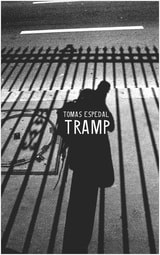
Tramp
Or the Art of Living a Wild and Poetic LifeTomas Espedal
Seagull Books, 2010
“Why travel?” asks Tomas Espedal in Tramp, “Why not just stay at home, in your room, in your house, in the place you like better than any other, your own place. The familiar house, the requisite rooms in which we have gathered the things we need, a good bed, a desk, a whole pile of books. The windows giving on to the sea and the garden with its apple trees and holly hedge, a beautiful garden, growing wild.”
The first step in any trip or journey is always a footstep—the brave or curious act of putting one foot in front of the other and stepping out of the house onto the sidewalk below. Here, Espedal contemplates what this ambulatory mode of travel has meant for great artists and thinkers, including Rousseau, Kant, Hazlitt, Thoreau, Rimbaud, Whitman, Giacometti, and Robert Louis Stevenson. In the process, he confronts his own inability to write from a fixed abode and his refusal to banish the temptation to become permanently itinerant.
Lyrical and rebellious, immediate and sensuous, Tramp conveys Espedal’s own need to explore on foot—in places as diverse as Wales and Turkey—and offers us the excitement and adventure of being a companion on his fascinating and intriguing travels.
Trans Philosophy
Perry Zurn
University of Minnesota Press, 2024
Establishing trans philosophy as a unique field of inquiry, offering tools for our quest toward a more just and equitable world
Trans Philosophy defines this burgeoning and polymorphous discipline as philosophical work that is accountable to and illuminative of cross-cultural and global trans experiences, histories, and cultural productions. Across language and politics, feminism and phenomenology, and decolonial theory, it addresses trans worldmaking in all its beauty and mundanity.
Critically, the editors center the contributions of trans and gender-nonconforming philosophers from around the globe. Showcasing work from a range of emerging and established voices, Trans Philosophy addresses discrimination, embodiment, identity, language, and law, utilizing diverse philosophical methods to attend to significant intersections between trans experience and class, disability, race, nationality, and sexuality.
At a time when trans-exclusionary views are gaining traction in politics as well as philosophy, this volume urgently redraws the contours of trans discourse, centering the wisdom already generated in trans and other gender-disruptive communities.
Contributors: Megan Burke, Sonoma State U; Robin Dembroff, Yale U; Marie Draz, San Diego State U; Che Gossett, U of Pennsylvania; Ryan Gustafsson, U of Melbourne; Stephanie Kapusta, Dalhousie U; Tamsin Kimoto, Washington U, St. Louis; Hil Malatino, Pennsylvania State U and Rock Ethics Institute; Amy Marvin, Lafayette U; Marlene Wayar.
Retail e-book files for this title are screen-reader friendly.
Transcendence and History
The Search for Ultimacy from Ancient Societies to PostmodernityGlenn Hughes
University of Missouri Press, 2020
Transcendence and Wittgenstein's Tractatus
Michael P. Hodges
Temple University Press, 1990
Although Wittgenstein claimed that his first book, the Tractatus Logico-Philosophicus, was essentially an ethical work, it has been viewed insistently as a purely logical one. His later work, Philosophical Investigations, is generally seen as presenting totally different ideas from his earlier writings. In this book, Michael Hodges shows how Wittgenstein’s later work emerged from his earlier Tractatus, and he unifies the early philosophy, both its well-known logical aspects and the lesser known ethical dimensions, in terms of the notion of transcendence.
Hodges studies the Tractatus in light of Wittgenstein’s own claim that the Philosophical Investigations can only be understood when read against the background of the Tractatus. At the heart of an understanding of the earlier work is the idea of transcendence which structures both Wittgenstein’s logical and ethical insights. Seen in terms of this notion, the rigorous unity of Wittgenstein’s early thinking becomes apparent and the gestalt shift to the later philosophy comes clearly into focus.
Transcending Gender Ideology
A Philosophy of Sexual DifferenceAntonio Malo
Catholic University of America Press, 2020
Transfigurements
On the True Sense of ArtJohn Sallis
University of Chicago Press, 2008
Transfigurements develops a framework for thinking about art through innovative readings of some of the most important philosophical writing on the subject by Kant, Hegel, and Heidegger. Sallis exposes new layers in their texts and theories while also marking their limits. By doing so, his aim is to show that philosophy needs to attend to art directly. Consequently, Sallis also addresses a wide range of works of art, including paintings by Raphael, Monet, and Klee; Shakespeare’s comedies; and the music of Beethoven, Schubert, Mahler, and Tan Dun. Through these interpretations, he puts forth a compelling new elaboration of the philosophy of art.
Transformations
Thinking after HeideggerGail Stenstad
University of Wisconsin Press, 2006
How are we to think and act constructively in the face of today’s environmental and political catastrophes? Gail Stenstad finds inspiring answers in the thought of German philosopher Martin Heidegger. Rather than simply describing or explaining Heidegger’s transformative way of thinking, Stenstad’s writing enacts it, bringing new insight into contemporary environmental, political, and personal issues. Readers come to understand some of Heidegger’s most challenging concepts through experiencing them. This is a truly creative scholarly work that invites all readers to carry Heidegger’s transformative thinking into their own areas of deep concern.
Transforming Contagion
Risky Contacts among Bodies, Disciplines, and NationsFahs, Breanne
Rutgers University Press, 2018
Moving from viruses, vaccines, and copycat murder to gay panics, xenophobia, and psychopaths, Transforming Contagion energetically fuses critical humanities and social science perspectives into a boundary-smashing interdisciplinary collection on contagion. The contributors provocatively suggest contagion to be as full of possibilities for revolution and resistance as it is for the descent into madness, malice, and extensive state control. The infectious practices rooted in politics, film, psychological exchanges, social movements, the classroom, and the circulation of a literary text or meme on social media compellingly reveal patterns that emerge in those attempts to re-route, quarantine, define, or even exacerbate various contagions.
Transforming the Personal, Political, Historical and Sacred in Theory and Practice
Personal, Political, Historical, and SacredManfred Halpern
University of Scranton Press, 2009
Translating Worlds
The Epistemological Space of TranslationEdited by Carlo Severi and William F. Hanks
HAU, 2015
Since Ferdinand de Saussure and Franz Boas, languages have been seen as systems whose differences make precise translation nearly impossible. And still others have viewed translation between languages as principally indeterminate. The contributors here argue that the challenge posed by the constant confrontation between incommensurable worlds and systems may be the most fertile ground for state-of-the-art ethnographic theory and practice. Ranging from tourism in New Guinea to shamanism in the Amazon to the globally ubiquitous restaurant menu, the contributors mix philosophy and ethnography to redefine translation not only as a key technique for understanding ethnography but as a larger principle in epistemology.
Transmedia Geographies
Decoloniality, Democratization, Cultural Citizenship, and Media ConvergenceKevin Glynn
Rutgers University Press, 2025
The authors explore the cultural politics that have developed within this new media environment by moving across the mediated landscapes of the first, third, and fourth (Indigenous people’s) worlds, which are deeply intertwined and interconnected under contemporary conditions of neoliberal globalization and emergent regimes of authoritarian postdemocracy. The book attends both to the platforms and digital networks of the new media environment and to the cultural forms and practices that have constituted television as the dominant medium of communication throughout the second half of the twentieth century. In the new media environment, transmediation works on behalf not only of those corporate megaconglomerates that have become all too familiar to media consumers around the world but also of many communities that have previously been excluded from access to the means of electronic textual production and circulation. For the latter, grassroots transmediation has become an important technique for the production of cultural citizenship.

Transmedial Exposure
Toward an Experimental HumanitiesErin Graff Zivin
Duke University Press, 2027
Transnational Intellectual Networks
Forms of Academic Knowledge and the Search for Cultural IdentitiesEdited by Christophe Charle, Jürgen Schriewer, and Peter Wagner
Campus Verlag, 2004
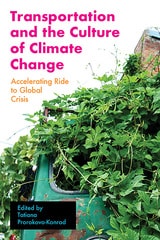
Transportation and the Culture of Climate Change
Accelerating Ride to Global CrisisTatiana Prorokova-Konrad
West Virginia University Press, 2020
The essays in Transportation and the Culture of Climate Change cover an eclectic range of subject matter, from the association of bicycles with childhood to the songs of Bruce Springsteen, but are united in a central conviction: “Transport is a considerable part of our culture that is as hard to transform as it is for us to stop using fossil fuels—but we do not have an alternative.”
Transversal Rationality and Intercultural Texts
Essays in Phenomenology and Comparative PhilosophyHwa Yol Jung
Ohio University Press, 2011
Transversality is the keyword that permeates the spirit of these thirteen essays spanning almost half a century, from 1965 to 2009. The essays are exploratory and experimental in nature and are meant to be a transversal linkage between phenomenology and East Asian philosophy.
Transversality is the concept that dispels all ethnocentrisms, including Eurocentrism. In the globalizing world of multiculturalism, Eurocentric universalism falls far short of being universal but simply parochial at the expense of the non-Western world. Transversality is intercultural, interspecific, interdisciplinary, and intersensorial. Transversal Rationality and Intercultural Texts means to transform the very way of philosophizing itself by infusing or hybridizing multiple traditions in the history of the world.
Like no other scholar, Jung bridges the gap between Asian and Western cultures. By engaging Western philosophers as diverse as Bacon, Descartes, Heidegger, Hegel, Merleau-Ponty, Derrida, Glissant, Barthes, Fenollosa, McLuhan, and Eastern philosophers such as Wang Yang-ming, Nishida Kitaro, Nishitani Keiji, Watsuji Tetsuro, Nhat Hanh, and Suzuki Daisetz Teitaro, this book marks an unparalleled contribution to comparative philosophy and the study of philosophy itself.
Traversing the Imaginary
Richard Kearney and the Postmodern ChallengeEdited by Peter Gratton and John Panteleimon Manoussakis; Foreword by Richard Kearney
Northwestern University Press, 2007
The book opens with Kearney's own "prelude" in which he traces his intellectual itinerary as it traverses the three imaginaries explored in the volume: the dialogical, the political, and the narrative. The interviews that follow the first section allow readers to listen in on conversations between Kearney and some of the most interesting and respected thinkers of our time—Noam Chomsky, Charles Taylor, Jacques Derrida, Paul Ricouer, and Martha Nussbaum—as they reveal new and unexpected aspects of their thought on stories and mourning, ethics and narrative, terror and religion, intellectuals and ideology. The next section, on the political imaginary, looks at Kearney's distinctive contribution to the political situation in Ireland and in Europe more generally; and in the last, on narrative, writers including David Wood, Terry Eagleton, and Mark Dooley focus on Kearney's novels as instances of narrative theory put into literary practice. Concluding with Kearney's postscript, an essay on "Traversals and Epiphanies in Joyce and Proust," the volume comes full circle, encompassing the full extent of Richard Kearney's engagement and offerings as a philosopher,
Treatise on Human Nature
The Complete Text (Summa Theologiae I, Questions 75-102)Thomas Aquinas
St. Augustine's Press, 2010
St. Thomas Aquinas’s Treatise on Human Nature occupies questions 75-102 of Part 1 of the Summa Theologiae. It contains St. Thomas’s most mature statement of his philosophical and theological anthropology, i.e., his account of what human beings are and of their origin as distinctive creatures made in the image of God. This translation, moreover, is the only complete edition of all the material St. Thomas envisaged as being part of the Treatise.
The treatise begins with two long and complex questions on the metaphysical status of the human soul and its relation to the human organism. Here St. Thomas tries to show how the human being is both an animal and an animal who transcend the other animals. In doing so he marks out a distinctive Christian/Aristotelian conceptual space between “materialist” accounts of human nature that reduce human beings to mere collections of physical or chemical or biological components and “dualistic” accounts of human nature, such as those propounded by Plato and, later on, Descartes, that identify human beings with their immaterial souls.
The next thirteen questions deal with the powers of the soul, especially those higher intellective powers of understanding and willing that distinguish human beings from the other animals. Here we are given a philosophical framework for the findings of the human sciences.
Finally, the last thirteen questions have to do with human origins, the creation of the first man and first woman, the state of our first parents, and their status as beings created in the image of God. In essence, this is St. Thomas’s philosophically attuned commentary on the parts of Genesis 1–2 that deal specifically with the creation of the human species. These thirteen questions, though an integral part of the Treatise, are not included in other translations of the Treatise on Human Nature.
Treatise on Law
The Complete TextThomas Aquinas
St. Augustine's Press, 2009
St. Thomas’s account of law is firmly embedded within a general moral theory that begins with a rich conception of human flourishing, i.e., the good for human beings (Questions 1–5). This good consists, first and foremost, in our ultimate and intimate union with the Persons of the Blessed Trinity – a union that in our present state we can grasp intellectively and pursue affectively only with God’s supernatural assistance. It is within this framework that we order our loves and pursue the more proximate goals they open up to us as human beings in this life. Given the appropriate goals, the next question is how we can get from where we are, in the grips of the consequences of Original Sin, to where we want to be. The answer is: by means of (a) human actions that are good, i.e., rightly ordered toward our ultimate end and (b) the habits that these actions either engender or flow from. In analyzing human actions (Questions 6–21) and their relation to the passions (Questions 22–48), St. Thomas gives a general account of what he calls the ‘intrinsic principles’ of human actions and their associated habits – both virtues (Questions 49–70) and vices (Questions 71–89). It is only then that he turns to what he calls the ‘extrinsic principles’ of good human actions, viz., law (Questions 90–108) and grace (Questions 109–114).
According to St. Thomas, law, far from supplanting virtue as a basic principle of action, serves as an independent principle of action that complements virtue and is itself capable of being factored into practical deliberation. The reason is that all of God’s
precepts, prohibitions, and punishments are aimed at promoting the good of the whole universe and, more particularly, the good for human beings, both individually and within the various forms of social life. Because of this, law serves as both a restraint on bad actions and a spur to good action, i.e., a restraint on actions that take us away from virtue and genuine human flourishing and a spur to actions that promote virtue and flourishing.
There are many benefits of having the whole treatise rather than just the first few questions, as has been the standard practice in previous editions of the Treatise on Law. To mention just a few of these benefits, the question on the moral precepts of the Old Law (question 100) helps to illuminate in many different ways the earlier questions on natural law and human law (questions 94–97). Again, the questions on the ceremonial and judicial precepts of the Old Law (questions 101–105) demon-strate in depth the symbiotic relationship that St. Thomas takes to obtain between the Old Testament and the New Testament. The questions on the New Law provide an introduction to the Christian way of life that will be described in incomparable detail in the Second Part of the Second Part, the bulk of which is structured around the treatment of the three theological virtues and the four cardinal virtues.
Trespassing Natures
Species Migration and the Right to SpaceDonnie Johnson Sackey
The Ohio State University Press, 2024
As old worlds become hostile and new spaces become hospitable, many species are shifting their ranges to live in locations where they have never previously existed. Biological and sociocultural realms collide and boundaries blur, making it increasingly difficult to mark definitively who belongs and who is a trespasser. In Trespassing Natures, Donnie Johnson Sackey troubles the idea of biological “invasion,” turning our attention away from scientific considerations and toward the discursive and rhetorical dimensions of this term—offering a new paradigm that recasts this issue as a question of what it means to live in multi-species communities. Presenting case studies on bed bugs, bighead carp, feral cats, and mackerel, Sackey argues that the identification of a species as an invader is not merely a scientific act, but a cultural and political one. By questioning issues around space, identity, and the institutions that make human participation apparent, Sackey redirects focus away from the belief that a single species threatens space. Ultimately, Trespassing Natures asks us to expand our idea of community and question who has the right to space.
Trialectic
The Confluence of Law, Neuroscience, and MoralityPeter A. Alces
University of Chicago Press, 2023
A thought-provoking examination of how insights from neuroscience challenge deeply held assumptions about morality and law.
As emerging neuroscientific insights change our understanding of what it means to be human, the law must grapple with monumental questions, both metaphysical and practical. Recent advances pose significant philosophical challenges: how do neuroscientific revelations redefine our conception of morality, and how should the law adjust accordingly?
Trialectic takes account of those advances, arguing that they will challenge normative theory most profoundly. If all sentient beings are the coincidence of mechanical forces, as science suggests, then it follows that the time has come to reevaluate laws grounded in theories dependent on the immaterial that distinguish the mental and emotional from the physical. Legal expert Peter A. Alces contends that such theories are misguided—so misguided that they undermine law and, ultimately, human thriving.
Building on the foundation outlined in his previous work, The Moral Conflict of Law and Neuroscience, Alces further investigates the implications for legal doctrine and practice.
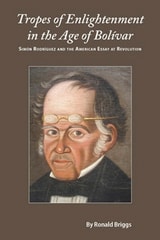
Tropes of Enlightenment in the Age of Bolivar
Simon Rodriguez and the American Essay at RevolutionRonald Briggs
Vanderbilt University Press, 2010
The book, released during the bicentennial of the early wars for Latin American independence, boldly places Rodriguez in the pantheon of important writers who influenced philosophical thought during the upheavals of the eighteenth and nineteenth centuries, including Ralph Waldo Emerson, Noah Webster, and Tom Paine. Beyond merely providing the first in-depth analysis of Rodriguez's writings and life work, Briggs also reveals an innovator of style as Rodriguez shaped the utility and vitality of the essay as an emerging form of argument.
Tropes of Enlightenment in the Age of Bolivar is an essential study of a unique and playful writer who is finally revealed as a foundational figure in Spanish American independence and an influential thinker in the larger field of hemispheric studies.
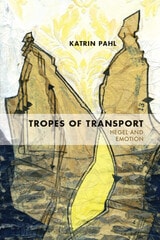
Tropes of Transport
Hegel and EmotionKatrin Pahl
Northwestern University Press, 2012
Intervening in the multidisciplinary debate on emotion, Tropes of Transport offers a fresh analysis of Hegel’s work that becomes an important resource for Pahl’s cutting-edge theory of emotionality. If it is usually assumed that the sincerity of emotions and the force of affects depend on their immediacy, Pahl explores to what extent mediation—and therefore a certain degree of manipulation but also of sympathy—is constitutive of emotionality. Hegel serves as a particularly helpful interlocutor not only because he offers a sophisticated analysis of mediation, but also because, rather than locating emotion in the heart, he introduces impersonal tropes of transport, such as trembling, release, and shattering.
Trouillot Remixed
The Michel-Rolph Trouillot ReaderMichel-Rolph Trouillot. Edited by Yarimar Bonilla, Greg Beckett, and Mayanthi L. Fernando
Duke University Press, 2021
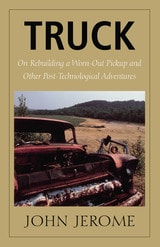
Truck
On Rebuilding a Worn-Out Pickup and Other Post-Technological AdventuresJohn Jerome
University Press of New England, 1996
True Love
Josef Seifert
St. Augustine's Press, 2014
Truth and Beauty
Aesthetics and Motivations in ScienceS. Chandrasekhar
University of Chicago Press, 1987
The late S. Chandrasekhar was best known for his discovery of the upper
limit to the mass of a white dwarf star, for which he received the Nobel
Prize in Physics in 1983. He was the author of many books, including
The Mathematical Theory of Black Holes and, most recently,
Newton's Principia for the Common Reader.