Results by title
662 books match the query 'China' and 145 start with t
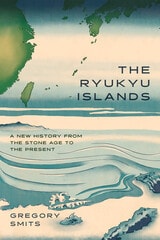
The Ryukyu Islands
A New History from the Stone Age to the PresentGregory Smits
University of Chicago Press, 2025
The Ryukyu Islands between Japan and Taiwan consist of around 160 islands and are home to about 1.5 million inhabitants. Across the islands’ history, sea-lanes and trade patterns have connected them to the East China Sea region, giving them a unique vantage point on the region’s changes and making them a useful lens through which to view and understand those transformations. In this book, Gregory Smits marshals his expertise to canvass the environmental, political, and social history of this fascinating area, emphasizing the diversity of influences from China, Japan, and Korea that have shaped it. Smits begins by tracing the islands’ early history from the time of the oldest extant human remains, through massive inflows of settlers from Japan, until the emergence of a centralized state in the sixteenth century. He then traces the development of the Ryukyu Kingdom from the fifteenth to the nineteenth century, examining its major cultural formations and the interplay of local and external influences driving its evolution. Finally, Smits ushers readers to the modern era, from the end of the Ryukyu Kingdom in 1879 through World War II, the era of American military control, and on to the present. He concludes with their present-day status as a tourist destination affected by ongoing geopolitical, economic, and environmental challenges. Synthesizing decades of research, this book is an indispensable, comprehensive guide to the islands’ history for scholars and nonspecialists alike.
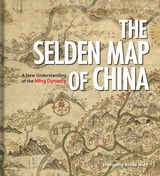
The Selden Map of China
A New Understanding of the Ming DynastyHongping Annie Nie
Bodleian Library Publishing, 2019
Exploring the commercial aims of the Ming Dynasty, the port city of Quanzhou and its connections with the voyages of the early traveler Zheng He, this book describes the historical background of the era in which the map was used. It also includes an analysis of the skills and techniques involved in Chinese map-making and the significance of the compass bearings, scale, and ratios found on the map, all of which combine to represent a breakthrough in cartographic techniques.
The enthralling story revealed by this extraordinary artifact sheds light on the long history of China’s relationship with the sea and with the wider world.
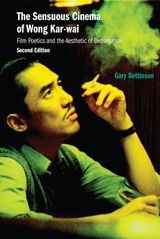
The Sensuous Cinema of Wong Kar-wai
Film Poetics and the Aesthetic of Disturbance, Second EditionGary Bettinson
Hong Kong University Press, 2025
The widely acclaimed films of Wong Kar-wai are characterized by their sumptuous yet complex visual and sonic style. This study of Wong’s filmmaking techniques uses a poetics approach to examine how form, music, narration, characterization, genre, and other artistic elements work together to produce certain effects on audiences. Bettinson argues that Wong’s films are permeated by an aesthetic of sensuousness and “disturbance” achieved through techniques such as narrative interruptions, facial masking, opaque cuts, and other complex strategies. The effect is to jolt the viewer out of complete aesthetic absorption. Each of the chapters focuses on a single aspect of Wong’s filmmaking.
This tenth-anniversary edition of The Sensuous Cinema of Wong Kar-wai includes a substantial new afterword bringing the story of Wong’s career up to date (including reflections on the Mainland Chinese drama Blossoms Shanghai). Bettinson revisits and extends the arguments of the first edition, surveys the recent key debates on Wong’s filmmaking, and introduces fresh lines of critical investigation. The book will appeal to all who are interested in authorship and aesthetics in film studies, to scholars in Asian studies, media, and cultural studies, and to anyone with an interest in Hong Kong cinema in general, and Wong’s films in particular.
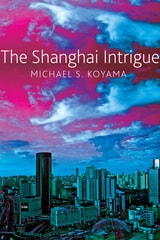
The Shanghai Intrigue
Michael S. Koyama
Seagull Books, 2017
As the complex plot to bring down a major financial institution unfolds at a rapid pace, American and Japanese officials scramble to prevent a crisis with international implications. Set against the backdrop of the political and financial practices of Japan, China, and the US, The Shanghai Intrigue brings with it murder, betrayal, romance, even a natural disaster, as the plot races to a most unpredictable outcome. The book’s breakneck speed and thrilling twists and turns will leave readers spellbound from the first page.
The Sian Incident
A Pivotal Point in Modern Chinese HistoryTien-wei Wu
University of Michigan Press, 1976
The Silk Road Idea
Ancient Contact in the Modern Human SciencesTamara T. Chin
University of Chicago Press, 2026
Traces the rise and fall of a set of modern disciplinary fields devoted to premodern historical contact that drew on intellectual currents across and beyond China and Europe.
The Silk Road Idea examines how the transnational past became a modern object of inquiry. Tamara T. Chin argues that between 1870 and 1970—a century spanning imperialism, decolonization, and the Cold War—interest in deep global connections unexpectedly emerged across opposing camps: the colonialist and the anticolonial, the capitalist and the communist, the antiquarian and the activist. To study world history through cross-cultural contact rather than isolated civilizational origins, scholars around the globe turned to ancient Afro-Eurasian ties with China. This entangled modern intellectual debates in East Asia and Europe with those in South Asia and East Africa. During the ascent of academic specialization and national studies, disciplines developed distinct frameworks and units for analyzing contact: maps in geography, narratives in history, words in philology, and sounds in linguistics. The Silk Road Idea models a multiregional and multidisciplinary history of knowledge that reveals how the connecting up of the modern world both enabled and was enabled by a radical reimagination of antiquity.
The Specter of Global China
Politics, Labor, and Foreign Investment in AfricaChing Kwan Lee
University of Chicago Press, 2017
Offering the clearest look yet at China’s state-driven investment in Africa, this book is rooted in six years of extensive fieldwork in copper mines and construction sites in Zambia, Africa’s copper giant. Lee shadowed Chinese, Indian, and South African managers in underground mines, interviewed Zambian miners and construction workers, and worked with Zambian officials. Distinguishing carefully between Chinese state capital and global private capital in terms of their business objectives, labor practices, managerial ethos, and political engagement with the Zambian state and society, she concludes that Chinese state investment presents unique potential and perils for African development. The Specter of Global China will be a must-read for anyone interested in the future of China, Africa, and capitalism worldwide.
The Specter of Materialism
Queer Theory and Marxism in the Age of the Beijing ConsensusPetrus Liu
Duke University Press, 2023
The Stone and the Wireless
Mediating China, 1861–1906Shaoling Ma
Duke University Press, 2021
The Transformation of Chinese Socialism
Chun Lin
Duke University Press, 2006
The Transnational History of a Chinese Family
Immigrant Letters, Family Business, and Reverse MigrationLiu, Haiming
Rutgers University Press, 2005
Family and home are one word—jia—in the Chinese language. Family can be separated and home may be relocated, but jia remains intact. It signifies a system of mutual obligation, lasting responsibility, and cultural values. This strong yet flexible sense of kinship has enabled many Chinese immigrant families to endure long physical separation and accommodate continuities and discontinuities in the process of social mobility.
Based on an analysis of over three thousand family letters and other primary sources, including recently released immigration files from the National Archives and Records Administration, Haiming Liu presents a remarkable transnational history of a Chinese family from the late nineteenth century to the 1970s. For three generations, the family lived between the two worlds. While the immigrant generation worked hard in an herbalist business and asparagus farming, the younger generation crossed back and forth between China and America, pursuing proper education, good careers, and a meaningful life during a difficult period of time for Chinese Americans. When social instability in China and hostile racial environment in America prevented the family from being rooted in either side of the Pacific, transnational family life became a focal point of their social existence.
This well-documented and illustrated family history makes it clear that, for many Chinese immigrant families, migration does not mean a break from the past but the beginning of a new life that incorporates and transcends dual national boundaries. It convincingly shows how transnationalism has become a way of life for Chinese American families.
The Transsion Approach
Translating Chinese Mobile Technology in AfricaMiao Lu
University of Illinois Press, 2025
The U.S.–China Trade War
Global News Framing and Public Opinion in the Digital AgeLouisa Ha
Michigan State University Press, 2022

The United States and China
Arnold Xiangze Jiang
University of Chicago Press, 1988
The United States and China is the first comprehensive study in English of the tumultuous history of Sino-American relations from a Chinese perspective. Jiang critically examines U.S. foreign policy toward China from the eighteenth century to the Reagan-Deng years, illustrating how America's presence, influence, and pressure have shaped the history and politics of China. At the same time, Jiang's account is an illuminating and insightful synthesis of Chinese historiography since 1949—history as it has been taught in the People's Republic of China.

The University of Michigan & China, 1845 – 2017
Neal McKenna
Michigan Publishing Services, 2017
Throughout the last two centuries U.S. administrations from President Lincoln to President Clinton have relied on U-M leaders and faculty to engage China and develop political and cultural relationships. The University of Michigan was one of the first universities in the U.S. to enroll Chinese students and has many prominent Chinese graduates, including a Nobel Laureate and the first female college president in China.
As U-M celebrates its own bicentennial, this book recounts the university's considerable history with Chinese governments, people and culture. The book also updates readers on the current and ongoing partnerships between different U-M departments and schools with Chinese institutions, and provides a list of several prominent Chinese graduates of the University of Michigan.
The University of Michigan in China
David Ward and Eugene Chen
Michigan Publishing Services, 2017
This book tells the story of twenty remarkable individuals, the country they transformed, and the University that helped them do it. There are many “firsts” in this book—first Chinese students at U-M, first female college president of China—and there are many “fathers” of disciplines: Wu Dayou, father of physics in China; Zheng Zuoxin, father of Chinese ornithology; Zeng Chengkui, father of marine botany.
While much has been written about these leaders and scholars in both English and Chinese, nowhere else is their collective story told or their shared bond with the University of Michigan celebrated.
The University of Michigan in China celebrates this nearly 200-year-old legacy.
The Urban Generation
Chinese Cinema and Society at the Turn of the Twenty-First CenturyZhen Zhang, ed.
Duke University Press, 2007
The contributors analyze the historical and social conditions that gave rise to the Urban Generation, its aesthetic innovation, and its ambivalent relationship to China’s mainstream film industry and the international film market. Focusing attention on the Urban Generation’s sense of social urgency, its documentary impulses, and its representations of gender and sexuality, the contributors highlight the characters who populate this new urban cinema—ordinary and marginalized city dwellers including aimless bohemians, petty thieves, prostitutes, postal workers, taxi drivers, migrant workers—and the fact that these “floating urban subjects” are often portrayed by non-professional actors. Some essays concentrate on specific films (such as Shower and Suzhou River) or filmmakers (including Jia Zhangke and Zhang Yuan), while others survey broader concerns. Together the thirteen essays in this collection give a multifaceted account of a significant, ongoing cinematic and cultural phenomenon.
Contributors. Chris Berry, Yomi Braester, Shuqin Cui, Linda Chiu-han Lai, Charles Leary, Sheldon H. Lu, Jason McGrath, Augusta Palmer, Bérénice Reynaud, Yaohua Shi, Yingjin Zhang, Zhang Zhen, Xueping Zhong
The Value of Comparison
Peter van der Veer
Duke University Press, 2016
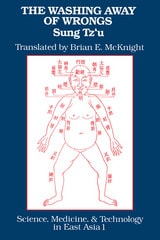
The Washing Away of Wrongs
Forensic Medicine in Thirteenth-Century ChinaSung Tz’u; Translated by Brian E. McKnight
University of Michigan Press, 1981
The Water Kingdom
A Secret History of ChinaPhilip Ball
University of Chicago Press, 2017
Water, Ball shows, is a key that unlocks much of Chinese culture. In The Water Kingdom, he takes us on a grand journey through China’s past and present, showing how the complexity and energy of the country and its history repeatedly come back to the challenges, opportunities, and inspiration provided by the waterways. Drawing on stories from travelers and explorers, poets and painters, bureaucrats and activists, all of whom have been influenced by an environment shaped and permeated by water, Ball explores how the ubiquitous relationship of the Chinese people to water has made it an enduring metaphor for philosophical thought and artistic expression. From the Han emperors to Mao, the ability to manage the waters ― to provide irrigation and defend against floods ― was a barometer of political legitimacy, often resulting in engineering works on a gigantic scale. It is a struggle that continues today, as the strain of economic growth on water resources may be the greatest threat to China’s future.
The Water Kingdom offers an unusual and fascinating history, uncovering just how much of China’s art, politics, and outlook have been defined by the links between humanity and nature.
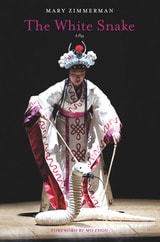
The White Snake
A PlayMary Zimmerman
Northwestern University Press, 2013
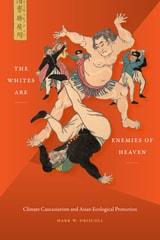
The Whites Are Enemies of Heaven
Climate Caucasianism and Asian Ecological ProtectionMark W. Driscoll
Duke University Press, 2020
The Willow Pattern
A Judge Dee MysteryRobert van Gulik
University of Chicago Press, 1965
An exceptionally clever, cozy mystery that will thrill all fans of Judge Dee, whom the Los Angeles Times ranked with Sherlock Holmes
Judge Dee has been appointed emergency governor of the plague- and drought-ridden Imperial City. As his guards help the city fend off a popular uprising, an aristocrat from one of the oldest families in China suffers an "accident" in a deserted mansion.
In The Willow Pattern, the illustrious judge uses his trademark expertise to unravel the mysteries of the nobleman, a shattered vase, and a dead bondmaid. Along the way he encounters a woman who fights with loaded sleeves, a nearly drowned courtesan, and an elaborate trap set for a murderer. Packed with suspense, violence, and romance, The Willow Pattern won’t disappoint Judge Dee’s legions of loyal fans.
The World in Guangzhou
Africans and Other Foreigners in South China’s Global MarketplaceGordon Mathews, Linessa Dan Lin, and Yang Yang
University of Chicago Press, 2017
Through detailed ethnographic portraits, Mathews reveals a world of globalization based on informality, reputation, and trust rather than on formal contracts. How, he asks, can such informal relationships emerge between two groups—Chinese and sub-Saharan Africans—that don't share a common language, culture, or religion? And what happens when Africans move beyond their status as temporary residents and begin to put down roots and establish families?
Full of unforgettable characters, The World in Guangzhou presents a compelling account of globalization at ground level and offers a look into the future of urban life as transnational connections continue to remake cities around the world.
The Worlds of Victor Sassoon
Bombay, London, Shanghai, 1918–1941Rosemary Wakeman
University of Chicago Press, 2024
In this book, historian Rosemary Wakeman brings to life the frenzied, crowded streets, markets, ports, and banks of Bombay, London, and Shanghai. In the early twentieth century, these cities were at the forefront of the sweeping changes taking the world by storm as it entered an era of globalized commerce and the unprecedented circulation of goods, people, and ideas. Wakeman explores these cities and the world they helped transform through the life of Victor Sassoon, who in 1924 gained control of his powerful family’s trading and banking empire. She tracks his movements between these three cities as he grows his family’s fortune and transforms its holdings into a global juggernaut. Using his life as its point of entry, The Worlds of Victor Sassoon paints a broad portrait not just of wealth, cosmopolitanism, and leisure but also of the discrimination, exploitation, and violence wreaked by a world increasingly driven by the demands of capital.
Three-Way Street
Strategic Reciprocity in World PoliticsJoshua S. Goldstein and John R. Freeman
University of Chicago Press, 1990
The authors demonstrate that three major schools of international relations theory—all game-theoretic, psychological, and quantitative-empirical approaches—have all advocated a strategy that employs cooperative initiatives and reciprocal responses in order to elicit cooperation from other countries. Critics have questioned whether such approaches can model how countries actually behave, but Goldstein and Freeman provide a wealth of detailed empirical evidence showing the existence and effectiveness of strategic reciprocity among the three countries between 1948 and 1989. Specifically, they establish that relations among the three countries have improved in recent decades through a "two steps forward, one step back" pattern. Their innovative and remarkably accessible synthesis of leading theoretical perspectives brilliantly illuminates the nature and workings of international cooperation.
Thucydides’s Trap?
Historical Interpretation, Logic of Inquiry, and the Future of Sino-American RelationsSteve Chan
University of Michigan Press, 2020
The Peloponnesian War (431–404 BCE) ostensibly arose because of the fear that a rising Athens would threaten Sparta’s power in the Mediterranean. The idea of Thucydides’ Trap warns that all rising powers threaten established powers. As China increases its power relative to the United States, the theory argues, the two nations are inevitably set on a collision course toward war. How enlightening is an analogy based on the ancient Greek world of 2,500 years ago for understanding contemporary international relations? How accurate is the depiction of the history of other large armed conflicts, such as the two world wars, as a challenge mounted by a rising power to displace an incumbent hegemon?Thucydides’s Trap?: Historical Interpretation, Logic of Inquiry, and the Future of Sino-American Relations offers a critique of the claims of Thucydides’s Trap and power-transition theory. It examines past instances of peaceful accommodation to uncover lessons that can ease the frictions in ongoing Sino-American relations.
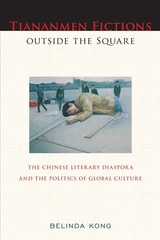
Tiananmen Fictions outside the Square
The Chinese Literary Diaspora and the Politics of Global CultureBelinda Kong
Temple University Press, 2012
An exciting analysis of the myriad literary effects of Tiananmen, Belinda Kong's Tiananmen Fictions Outside the Square is the first full-length study of fictions related to the 1989 movement and massacre. More than any other episode in recent world history, Tiananmen has brought a distinctly politicized Chinese literary diaspora into stark relief.
Kong redefines Tiananmen's meaning from an event that ended in local political failure to one that succeeded in producing a vital dimension of contemporary transnational writing today. She spotlights key writers-Gao Xingjian, Ha Jin, Annie Wang, and Ma Jian-who have written and published about the massacre from abroad. Their outsider/distanced perspectives inform their work, and reveal how diaspora writers continually reimagine Tiananmen's relevance to the post-1989 world at large.
Compelling us to think about how Chinese culture, identity, and politics are being defined in the diaspora, Tiananmen Fictions Outside the Square candidly addresses issues of political exile, historical trauma, global capital, and state biopower.
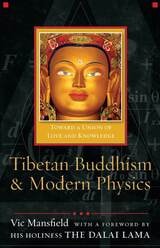
Tibetan Buddhism and Modern Physics
Toward a Union of Love and KnowledgeVic Mansfield
Templeton Press, 2008
Tibetan Buddhism and Modern Physics: Toward a Union of Love and Knowledge addresses the complex issues of dialogue and collaboration between Buddhism and science, revealing connections and differences between the two. While assuming no technical background in Buddhism or physics, this book strongly responds to the Dalai Lama’s “heartfelt plea” for genuine collaboration between science and Buddhism. The Dalai Lama has written a foreword to the book and the Office of His Holiness will translate it into both Chinese and Tibetan.
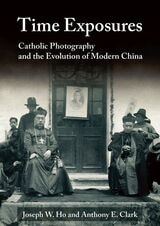
Time Exposures
Catholic Photography and the Evolution of Modern ChinaJoseph W. Ho and Anthony E. Clark
Hong Kong University Press, 2026
A history of China’s transition from empire to modern nation, told through photographs by and of Chinese Catholic communities.
Time Exposures explores how historical photographs created by and of Chinese Catholic communities illuminate the vicissitudes of China’s transition from empire to modern nation. Relying on an expansive worldwide network of Catholic photographic archives, this book examines largely unseen and unpublished images related to Catholicism in China. These images, made from the 1870s through the 1990s, were central to visual practices and afterlives that represent, recover, and reenvision diverse Chinese experiences. This volume provides insight into the lives of women and men behind and in front of the camera who were important documentarians of China’s local and national changes over time, shaping ways of seeing and belonging to the country’s many cultural evolutions.
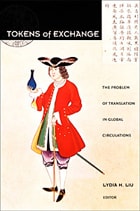
Tokens of Exchange
The Problem of Translation in Global CirculationsLydia H. Liu, ed.
Duke University Press, 1999
By studying the production and circulation of meaning as value in areas including history, religion, language, law, visual art, music, and pedagogy, essays consider exchanges between Jesuit and Protestant missionaries and the Chinese between the seventeenth and nineteenth centuries and focus on the interchanges occasioned by the spread of capitalism and imperialism. Concentrating on ideological reciprocity and nonreciprocity in science, medicine, and cultural pathologies, contributors also posit that such exchanges often lead to racialized and essentialized ideas about culture, sexuality, and nation. The collection turns to the role of language itself as a site of the universalization of knowledge in its contemplation of such processes as the invention of Basic English and the global teaching of the English language. By focusing on the moments wherein meaning-value is exchanged in the translation from one language to another, the essays highlight the circulation of the global in the local as they address the role played by historical translation in the universalizing processes of modernity and globalization.
The collection will engage students and scholars of global cultural processes, Chinese studies, world history, literary studies, history of science, and anthropology, as well as cultural and postcolonial studies.
Contributors. Jianhua Chen, Nancy Chen, Alexis Dudden Eastwood, Roger Hart, Larissa Heinrich, James Hevia, Andrew F. Jones, Wan Shun Eva Lam, Lydia H. Liu, Deborah T. L. Sang, Haun Saussy, Q. S. Tong, Qiong Zhang
Tongzhi Living
Men Attracted to Men in Postsocialist ChinaTiantian Zheng
University of Minnesota Press, 2015
Tongzhi, which translates into English as “same purpose” or “same will,” was once widely used to mean “comrade.” Since the 1990s, the word has been appropriated by the LGBT community in China and now refers to a broad range of people who do not espouse heteronormativity.
Tongzhi Living, the first study of its kind, offers insights into the community of same-sex-attracted men in the metropolitan city of Dalian in northeast China. Based on ethnographic fieldwork by Tiantian Zheng, the book reveals an array of coping mechanisms developed by tongzhi men in response to rapid social, cultural, and political transformations in postsocialist China. According to Zheng, unlike gay men in the West over the past three decades, tongzhi men in China have adopted the prevailing moral ideal of heterosexuality and pursued membership in the dominant culture at the same time they have endeavored to establish a tongzhi culture. They are, therefore, caught in a constant tension of embracing and contesting normality as they try to create a new and legitimate space for themselves.
Tongzhi men’s attempts to practice both conformity and rebellion paradoxically undercut the goals they aspire to reach, Zheng shows, perpetuating social prejudice against them and thwarting the activism they believe they are advocating.
Trading Freedom
How Trade with China Defined Early AmericaDael A. Norwood
University of Chicago Press, 2022
The economic and geographic development of the early United States is usually thought of in trans-Atlantic terms, defined by entanglements with Europe and Africa. In Trading Freedom, Dael A. Norwood recasts these common conceptions by looking to Asia, making clear that from its earliest days, the United States has been closely intertwined with China—monetarily, politically, and psychologically.
Norwood details US trade with China from the late eighteenth through the late nineteenth centuries—a critical period in America’s self-definition as a capitalist nation—and shows how global commerce was central to the articulation of that national identity. Trading Freedom illuminates how debates over political economy and trade policy, the building of the transcontinental railroad, and the looming sectional struggle over slavery were all influenced by Sino-American relations. Deftly weaving together interdisciplinary threads from the worlds of commerce, foreign policy, and immigration, Trading Freedom thoroughly dismantles the idea that American engagement with China is anything new.
Traditional Chinese Children’s Primers
A SourcebookEdited by Katherine Ngo and Kelly Ngo
Lever Press, 2025
Traditional Chinese Children’s Primers: A Sourcebook is the first anthology of traditional Chinese children’s textbooks in a European language. This selection of eleven primers, spanning over two thousand years of Chinese education history, remains well-known in East Asia and the global diaspora of Confucian-heritage cultures. These texts represent an important genre of children’s literature and education materials that were employed to teach basic vocabulary, develop cultural literacy, and start students on their journey toward greater fortunes in the imperial examinations.
The sourcebook covers texts from the second-century BCE to the late twentieth-century, and a range of subject areas, including etiquette instruction, literacy training, character education, and Confucian and Daoist thought. The Classic of Family Reverence (Xiaojing), for example, opens a window onto early Confucian thought in ancient China, while the Extended Wise Sayings (Zengguang xian wen) represents the eclectic worldviews and beliefs of the seventeenth century, and Lord Wenchang’s Essay on Quiet Merits (Wenchang dijun yinzhi wen) introduces readers to the tradition of popular morality books.
This first-of-a-kind sourcebook in English addresses a long-standing gap in the translation of primers and provides impetus for research in the development of character and virtues, comparative literature, and cross-cultural education studies.
Training the Body for China
Sports in the Moral Order of the People's RepublicSusan Brownell
University of Chicago Press, 1995
Training the Body for China is the first book on Chinese sports based on extended fieldwork by a Westerner. Brownell introduces the notion of "body culture" to analyze Olympic sports as one element in a whole set of Chinese body practices: the "old people's disco dancing" craze, the new popularity of bodybuilding (following reluctant official acceptance of the bikini), mass calisthenics, martial arts, military discipline, and more.
Translating official and dissident materials into English for the first time and drawing on performance theory and histories of the body, Brownell uses the culture of the body as a focal point to explore the tensions between local and global organizations, the traditional and the modern, men and women. Her intimate knowledge of Chinese social and cultural life and her wide range of historic examples make Training the Body for China a unique illustration of how gender, the body, and the nation are interlinked in Chinese culture.
Transforming Gender and Emotion
The Butterfly Lovers Story in China and KoreaSookja Cho
University of Michigan Press, 2017
Transforming Tradition
The Reform of Chinese Theater in the 1950s and Early 1960sSiyuan Liu
University of Michigan Press, 2021
Shortly after the establishment of the People’s Republic of China in 1949, the PRC launched a reform campaign that targeted traditional song and dance theater encompassing more than a hundred genres, collectively known as xiqu. Reformers censored or revised xiqu plays and techniques; reorganized star-based private troupes; reassigned the power to create plays from star actors to the newly created functions of playwright, director, and composer; and eliminated market-oriented functionaries such as agents. While the repertoire censorship ended in the 1980s, major reform elements have remained: many traditional scripts (or parts of them) are no longer in performance; actors whose physical memory of repertoire and acting techniques had been the center of play creation, have been superseded by directors, playwrights, and composers. The net result is significantly diminished repertoires and performance techniques, and the absence of star actors capable of creating their own performance styles through new signature plays that had traditionally been one of the hallmarks of a performance school. Transforming Tradition offers a systematic study of the effects of the comprehensive reform of traditional theater conducted in the 1950s and ’60s, and is based on a decade’s worth of exhaustive research of official archival documents, wide-ranging interviews, and contemporaneous publications, most of which have never previously been referenced in scholarly research.
Transition Scenarios
China and the United States in the Twenty-First CenturyDavid P. Rapkin and William R. Thompson
University of Chicago Press, 2013
Transport in Transition
The Evolution of Traditional Shipping in ChinaTranslated by Andrew Watson
University of Michigan Press, 1972
Travels and Revelations
23 Essays by Zhang ChengzhiChengzhi Zhang
Hong Kong University Press, 2026
This is an English translation of twenty-three essays written by the Chinese author Zhang Chengzhi, spanning over twenty years. The collection of prose covers Zhang’s memories when living in Inner Mongolia, his perception of the Western part of China, his views on several figures, and events in modern Chinese history and contemporary China.

Troubadours, Trumpeters, Troubled Makers
Lyricism, Nationalism, and Hybridity in China and Its OthersGregory B. Lee
Duke University Press, 1996
Lee’s broad definition of lyric includes the work of poets, amateur versifiers, and all manner of popular songwriters, and his inclusive sense of nation refers to all Chinese communities regardless of geographic location. Whether examining the globalized consumption of satellite-broadcast pop music or the heroic efforts of little-known poets on the margins of the Chinese diaspora, he finds a questioning and contesting of both the Orientalist construction of a mythic monolithic China invented by the West and the Chinese obsession with ideas of authenticity and purity of nationhood. Lee explores the lyrical transgression of these ideological boundaries in China, in the Chinese communities of America and Britain, and in other marginalized communities, before using the examples of Hong Kong and other non-nationalistic sites to discuss the creative possibilities of hybrid cultures and societies.
Tuberculosis Control and Institutional Change in Shanghai, 1911–2011
Rachel S. Core
Hong Kong University Press, 2023
Tuberculosis Control and Institutional Change in Shanghai, 1911–2011 is the first book on the most widespread and deadly infectious disease in China, both historically and today. Weaving together interviews with data from periodicals and local archives in Shanghai, Rachel Core examines the rise and fall of tuberculosis control in China from the 1950s to the 1990s. Under the socialist work unit system, the vast majority of people had guaranteed employment, a host of benefits tied to their workplace, and there was little mobility—factors that made the delivery of medical and public health services possible in both urban and rural areas. The dismantling of work units amid wider market reforms in the 1980s and 1990s led to the rise of temporary and casual employment and a huge migrant worker population, with little access to health care, creating new challenges in TB control. This study of Shanghai will provide valuable lessons for historians, social scientists, public health specialists, and many others working on public health infrastructure on both the national and global levels.
Turbulence Across the Sea
Transatlantic Relations and Strategic CompetitionEdited by Elie Baranets and Andrew Novo
University of Michigan Press, 2024
With a mix of research methodologies applied by scholars from both sides of the Atlantic, Turbulence Across the Sea offers a comprehensive analysis of relations among European and North American actors in the context of strategic competition among the United States, Europe, Russia, and China. In doing so, it demonstrates that a reaffirmation of transatlantic cooperation is necessary to maintain security in the face of aggressive moves by both Russia and China. By analyzing attitudes from the perspective of both the various actors (Britain, France, Germany, and the European Union) and various sectors (intelligence cooperation, foreign direct investments, technology, and the defense industry), this book provides readers with a comprehensive perspective on the challenges and opportunities in the shifting landscape of security in the twenty-first century.
Two Dreams in One Bed
Empire, Social Life, and the Origins of the North Korean Revolution in ManchuriaHyun Ok Park
Duke University Press, 2005
Drawing on a rich archive of Korean, Japanese, and Chinese sources, Park describes how Koreans negotiated the contradictory demands of national and colonial powers. She demonstrates that the dynamics of global capitalism led the Chinese and Japanese to pursue capitalist expansion while competing for sovereignty. Decentering the nation-state as the primary analytic rubric, her emphasis on the role of global capitalism is a major innovation for understanding nationalism, colonialism, and their immanent links in social space.
Through a regional and temporal comparison of Manchuria from the late nineteenth century until 1945, Park details how national and colonial powers enacted their claims to sovereignty through the regulation of access to land, work, and loans. She shows that among Korean migrants, the complex connections among Chinese laws, Japanese colonial policies, and Korean social practices gave rise to a form of nationalism in tension with global revolution—a nationalism that laid the foundation for what came to be regarded as North Korea’s isolationist politics.
Two Studies on Ming History
Charles O. Hucker
University of Michigan Press, 1971