Results by title
28167 books match the query 'History' and 6372 start with t

The Deadliest Outlaws
The Ketchum Gang and the Wild Bunch, Second EditionJeffrey Burton
University of North Texas Press, 2009
The Deadly Politics of Giving
Exchange and Violence at Ajacan, Roanoke, and JamestownSeth Mallios
University of Alabama Press, 2006
The Deaf Experience
Classics in Language and EducationHarlan Lane
Gallaudet University Press, 2006
The fifth volume in the Gallaudet Classics in Deaf Studies series features works written from 1764 up to1840. Pierre Desloges offers a stirring paean to sign language in an excerpt from his book, the first ever published by a deaf person. Saboureux de Fontenay and Jean Massieu, two prominent leaders, relate their respective experiences in autobiographical accounts. In separate essays, Charles-Michel de l’Epée and Roch-Ambroise Sicard describe systems for teaching manual French, followed by a critique of these methods by Roch-Ambroise Bébian, a well-known hearing friend of Deaf people during that era. Ferdinand Berthier, a renowned Deaf teacher and writer in the 19th century, concludes with a history of Deaf people up to that time.
The Deaf Experience shows clearly how this extraordinary era of French deaf education influenced the adoption of the manual method by the first schools for deaf students in America, in sharp contrast to the oral movement that repressed sign-language-centered education for nearly a century afterward. Deaf studies scholars and students alike will welcome the return of this invaluable resource.
The Deaf History Reader
John Vickrey Van Cleve
Gallaudet University Press, 2007
The Deaf History Reader presents nine masterful chapters that bring together a remarkably vivid depiction of the varied Deaf experience in America. This collection features the finest scholarship from a noteworthy group of historians, including Reginald Boyd, Barry A. Crouch, Mary French, Brian H. Greenwald, Harlan Lane, Harry G. Lang, Kent R. Olney, Richard Pillard, Jill Hendricks Porco, Michael Reis, and volume editor John Vickrey Van Cleve.
The incisive articles collected here include an exploration of the genesis of the Deaf community and early evidence of the use of sign language; a comparison of a failed, oralist school for deaf students in Virginia to the success of the American School for the Deaf in Hartford, Connecticut; the development of Deaf consciousness among people who carried a dominant gene for deafness; a biographical sketch of Mary Ann Walworth Booth, an accomplished deaf woman who lived on the Western frontier; an account of Deaf agency in the Indiana Institution and the Evansville Day School; the early antecedents of mainstreaming deaf children despite the objections of their parents; a profile of Alexander Graham Bell that contrasts his support of eugenics to his defense of Deaf rights; the conflicting actions of supervisors of the Pennsylvania Society for the Advancement of the Deaf; and finally, the critical role played by deaf people in the Chicago Mission for the Deaf’s success in maintaining the Deaf community for more than five decades. The remarkably rich range of topics treated in The Deaf History Reader assure its future status as a standard resource for all Deaf scholars and students.

The Dealmakers of Downstate Illinois
Paul Powell, Clyde L. Choate, John H. StelleRobert E. Hartley
Southern Illinois University Press, 2016
Many people are unaware that from 1945 to 1975, downstate lawmakers dominated the Illinois political arena. In The Dealmakers of Downstate Illinois, Robert E. Hartley details the lives and contributions of three influential southern Illinois politicians, Paul Powell, Clyde Choate, and John Stelle. He describes how these “dealmakers” were able to work with Democrats and Republicans throughout the state to bring jobs and facilities to their region. Using a variety of coalitions, they maintained downstate political strength in the face of growing Chicago influence.
Hartley traces the personal histories of Powell, Choate, and Stelle, shows how they teamed up to advance a downstate political agenda, and reviews their challenges and successes. Beginning with an account of early experiences, including the battlefield courage that earned Choate the Medal of Honor as well as Stelle’s World War I experience and later entrepreneurship, the book continues with an exploration of the groundwork for their collaborative legislative agenda and their roles in the growth of Southern Illinois University and the passage of income tax legislation. Hartley reviews the importance of Powell’s relationship with Governor Stratton, Choate’s leadership of the 1972 Democratic National Convention and his relationships with Governor Walker and with Chicago interests.
The Dealmakers of Downstate Illinois is a vivid, straightforward tale of fighting in the legislative chambers, backstabbing behind the scenes, and trading special favors for votes in pursuit of not only personal gain but also the advancement of a regional agenda.
The Death Penalty in the Eighties
An Examination of the Modern System of Capital PunishmentWelsh S. White
University of Michigan Press, 1987

The Death Penalty in the Nineties
An Examination of the Modern System of Capital PunishmentWelsh S. White
University of Michigan Press, 1991
The Death and Life of Chinese Civil Society
Mujun Zhou
University of Michigan Press, 2026
Mujun Zhou employs the concept of interstitial space, or the space where the exercise of power has not been fully institutionalized, to examine the history of the civil society project over the past three decades and its changing relationship with other social movements. Zhou suggests that by advocating for civil society the liberals gained allies and thematized many social problems rising during China’s economic reform; however, liberals’ activism also produced new forms of power inequalities.
The Death and Life of Germany
An Account of the American OccupationEugene Davidson
University of Missouri Press, 1999
Offering much more than a detached historical account of the "German miracle"—a ruined, war-torn nation evolving within a decade into the most flourishing country in Europe—Eugene Davidson delves into this intriguing story as a "participant observer." Drawing on countless interviews with Germans and Americans of various backgrounds and perspectives, from High Commissioner's office personnel to occupation troop GIs, storekeepers to housewives, Davidson insightfully conveys the atmosphere of postwar Germany and the role of the American occupation in achieving the nation's economic miracle.
The Death and Life of Germany examines the transformation of Germany, focusing on such key episodes as the unprecedented war-crimes tribunal at Nuremberg, the almost unceasing attempts of the Western Allies to cooperate with the Russians, the startling effects of the currency reform and Marshall Plan aid, the break between East and West Germany that culminated in the Berlin airlift, the heroic East German uprising of June 17, 1953, and the eventual formation of the Federal Republic of Germany and the German Democratic Republic.
Davidson traces the progress of thought among Germans and Americans alike as their conceptions of postwar Germany gradually evolved and the leaders of a new, democratic West Germany emerged from the ashes of defeat.
The strength of Davidson's research and analysis and the continuing relevance of this important volume make The Death and Life of Germany an invaluable addition to the collections of scholars and general readers interested in the evolution of postwar Germany.
The Death and Life of Malcolm X
Peter Goldman
University of Illinois Press, 2013
The Death and Life of the Single-Family House
Lessons from Vancouver on Building a Livable CityNathanael Lauster
Temple University Press, 2016
Vancouver today is recognized as one of the most livable cities in the world as well as an international model for sustainability and urbanism. Single-family homes in this city are “a dying breed.” Most people live in the various low-rise and high-rise urban alternatives throughout the metropolitan area.
The Death and Life of the Single-Family House explains how residents in Vancouver attempt to make themselves at home without a house. Local sociologist Nathanael Lauster has painstakingly studied the city’s dramatic transformation to curb sprawl. He tracks the history of housing and interviews residents about the cultural importance of the house as well as the urban problems it once appeared to solve.
Although Vancouver’s built environment is unique, Lauster argues that it was never predestined by geography or demography. Instead, regulatory transformations enabled the city to renovate, build over, and build around the house. Moreover, he insists, there are lessons here for the rest of North America. We can start building our cities differently, and without sacrificing their livability.
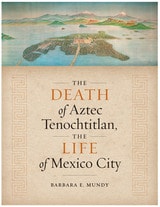
The Death of Aztec Tenochtitlan, the Life of Mexico City
By Barbara E. Mundy
University of Texas Press, 2015
Winner, Book Prize in Latin American Studies, Colonial Section of Latin American Studies Association (LASA), 2016
ALAA Book Award, Association for Latin American Art/Arvey Foundation, 2016
The capital of the Aztec empire, Tenochtitlan, was, in its era, one of the largest cities in the world. Built on an island in the middle of a shallow lake, its population numbered perhaps 150,000, with another 350,000 people in the urban network clustered around the lake shores. In 1521, at the height of Tenochtitlan’s power, which extended over much of Central Mexico, Hernando Cortés and his followers conquered the city. Cortés boasted to King Charles V of Spain that Tenochtitlan was “destroyed and razed to the ground.” But was it?
Drawing on period representations of the city in sculptures, texts, and maps, The Death of Aztec Tenochtitlan, the Life of Mexico City builds a convincing case that this global capital remained, through the sixteenth century, very much an Amerindian city. Barbara E. Mundy foregrounds the role the city’s indigenous peoples, the Nahua, played in shaping Mexico City through the construction of permanent architecture and engagement in ceremonial actions. She demonstrates that the Aztec ruling elites, who retained power even after the conquest, were instrumental in building and then rebuilding the city. Mundy shows how the Nahua entered into mutually advantageous alliances with the Franciscans to maintain the city's sacred nodes. She also focuses on the practical and symbolic role of the city’s extraordinary waterworks—the product of a massive ecological manipulation begun in the fifteenth century—to reveal how the Nahua struggled to maintain control of water resources in early Mexico City.

The Death of a Disease
A History of the Eradication of PoliomyelitisSeytre, Bernard
Rutgers University Press, 2005
In 1988, the World Health Organization launched a campaign for the global eradication of polio. Today, this goal is closer than ever. Fewer than 1,300 people were paralyzed from the disease in 2004, down from approximately 350,000 in 1988.
In The Death of a Disease, science writers Bernard Seytre and Mary Shaffer tell the dramatic story of this crippling virus that has evoked terror among parents and struck down healthy children for centuries. Beginning in ancient Egypt, the narrative explores the earliest stages of research, describes the wayward paths taken by a long line of scientists-each of whom made a vital contribution to understanding this enigmatic virus-and traces the development of the Salk and Sabin vaccines. The book also tracks the contemporary polio story, detailing the remaining obstacles as well as the medical, governmental, and international health efforts that are currently being focused on developing countries such as India, Pakistan, Nigeria, and Niger.
At a time when emerging diseases and the threat of bioterrorism are the focus of much media and public attention, this book tells the story of a crippling disease that is on the verge of disappearing. In the face of tremendous odds, the near-eradication of polio offers an inspiring story that is both encouraging and instructive to those at the center of the continued fight against communicable diseases.

The Death of the Child Valerio Marcello
Margaret L. King
University of Chicago Press, 1994
This child, scion of a family of power and privilege at Venice's time of greatness, left his father in a state of despair so profound and so public that it occasioned an outpouring of consoling letters, orations, treatises, and poems. In these documents, we find a firsthand account, richly colored by humanist conventions and expectations, of the life of the fifteenth-century boy, the passionate devotion of his father, the feelings of his brothers and sisters, the striking absence of his mother. The father's story is here as well: the career of a Venetian nobleman and scholar, patron and soldier, a participant in Venice's struggle for dominion in the north of Italy.
Through these sources also King traces the cultural trends that made Marcello's century famous. Her work enlarges our view of the literature of consolation, which had a distinctive tradition in Venice, and shifting attitudes toward death from the late Middle Ages onward.
For the depth and acuity of its insights into political, cultural, and private life in fifteenth-century Venice, this book will be essential reading for students of the Renaissance. For the grace and drama of its storytelling, it will be savored by anyone who wishes to look into life and death in a palace, and a city, long ago.

The Death-Bound-Subject
Richard Wright's Archaeology of DeathAbdul R. JanMohamed
Duke University Press, 2005
Drawing on psychoanalytic, Marxist, and phenomenological analyses, and on Orlando Patterson’s notion of social death, JanMohamed develops comprehensive, insightful, and original close readings of Wright’s major publications: his short-story collection Uncle Tom’s Children; his novels Native Son, The Outsider, Savage Holiday, and The Long Dream; and his autobiography Black Boy/American Hunger. The Death-Bound-Subject is a stunning reevaluation of the work of a major twentieth-century American writer, but it is also much more. In demonstrating how deeply the threat of death is involved in the formation of black subjectivity, JanMohamed develops a methodology for understanding the presence of the death-bound-subject in African American literature and culture from the earliest slave narratives forward.

The Decision Between Us
Art and Ethics in the Time of ScenesJohn Paul Ricco
University of Chicago Press, 2014
Laying out this theory of “unbecoming community” in modern and contemporary art, literature, and philosophy, and calling our attention to such things as blank sheets of paper, images of unmade beds, and the spaces around bodies, The Decision Between Us opens in 1953, when Robert Rauschenberg famously erased a drawing by Willem de Kooning, and Roland Barthes published Writing Degree Zero, then moves to 1980 and the “neutral mourning” of Barthes’ Camera Lucida, and ends in the early 1990s with installations by Felix Gonzalez-Torres. Offering surprising new considerations of these and other seminal works of art and theory by Jean Genet, Marguerite Duras, and Catherine Breillat, The Decision Between Us is a highly original and unusually imaginative exploration of the spaces between us, arousing and evoking an infinite and profound sense of sharing in scenes of passionate, erotic pleasure as well as deep loss and mourning.
The Decision Was Always My Own
Ulysses S. Grant and the Vicksburg CampaignTimothy B. Smith
Southern Illinois University Press, 2018
The Vicksburg Campaign, argues Timothy B. Smith, is the showcase of Ulysses S. Grant’s military genius. From October 1862 to July 1863, Grant tried repeatedly to capture the Confederate river city. His final, daring move allowed him to land an army in Mississippi and fight his way to the gates of Vicksburg. He captured the city and Confederate garrison on July 4, 1863, opening the Mississippi River for the Union.
This volume presents a fast-paced reexamination of Grant’s decision-making process during the Vicksburg maneuvers, battles, and siege. Smith details the course of campaigning on military, political, administrative, and personal levels. The successful military campaign required Grant to handle President Lincoln’s impatience, as well as to deal with troublesome general John A. McClernand, all while juggling administrative work. In addition, Grant was more than a military genius—he was also a husband and a father, and Smith shows how Grant’s family played a role in every decision he made.
Grant’s nontraditional choices went against the accepted theories of war, supply, and operations, as well as against the chief thinkers of the day, such as Henry Halleck, Grant’s superior. Yet Grant pulled off the victory in compelling fashion. In the first in-depth examination in decades, Smith shows how Grant’s decisions created and won the Civil War’s most brilliant, complex, decisive, and lengthy campaign.
The Decline of Latin American Economies
Growth, Institutions, and CrisesEditied by Sebastian Edwards, Gerardo Esquivel, and Graciela Márquez
University of Chicago Press, 2007
Latin America’s economic performance is mediocre at best, despite abundant natural resources and flourishing neighbors to the north. The perplexing question of how some of the wealthiest nations in the world in the nineteenth century are now the most crisis-prone has long puzzled economists and historians. The Decline of Latin American Economies examines the reality behind the struggling economies of Argentina, Chile, and Mexico.
A distinguished panel of experts argues here that slow growth, rampant protectionism, and rising inflation plagued Latin America for years, where corrupt institutions and political unrest undermined the financial outlook of already besieged economies. Tracing Latin America’s growth and decline through two centuries, this volume illustrates how a once-prosperous continent now lags behind. Of interest to scholars and policymakers alike, it offers new insight into the relationship between political systems and economic development.
The Decline of Organized Labor in the United States
Michael Goldfield
University of Chicago Press, 1987

The Decolonization Of Africa
David Birmingham
Ohio University Press, 1995
The Deeds of Count Roger of Calabria and Sicily and of His Brother Duke Robert Guisc
Kenneth Baxter Wolf
University of Michigan Press, 2005
Geoffrey Malaterra's Deeds of Count Roger is the most important extant account of the Norman conquest of Muslim Silicy (1061-91). This volume includes a translation of the Latin original as well as an introduction, notes, and maps.
The Deeds of Count Roger fills a gap in the primary literature pertaining to the earliest phase of Latin Christian expansion at the expense of Islam, since the Norman conquests in Sicily were more or less contemporary with the First Crusade and the beginnings of the Spanish Reconquista. The account also illustrates the complexity of medieval historical writing, with Malaterra on the one hand praising the Normans for their military achievements and on the other subtly criticising the "lust for domination" that inspired them.
Kenneth Baxter Wolf is Professor of History at Pomona College.
The Deeds of Louis the Fat
Abbot of Saint Denis, Suger
Catholic University of America Press, 1992

The Deeds of Pope Innocent III
James M. Powell
Catholic University of America Press, 2004
The Deepest Sense
A Cultural History of TouchConstance Victoria Classen
University of Illinois Press, 2012
The Defender
The Battle to Protect the Rights of the Accused in PhiladelphiaEdward W. Madeira Jr. and Michael D. Schaffer
Temple University Press, 2020
Long before the Supreme Court ruled that impoverished defendants in criminal cases have a right to free counsel, Philadelphia’s public defenders were working to ensure fair trials for all. In 1934, when penniless defendants were routinely railroaded through the courts without ever seeing a lawyer, Philadelphia attorney Francis Fisher Kane helped create the Voluntary Defender Association, supported by charity and free from political interference, to represent poor people accused of crime.
When the Supreme Court’s 1963 decision Gideonv. Wainwright mandated free counsel for indigent defendants, the Defender (as it is now known) became more essential than ever, representing at least 70 percent of those caught in the machinery of justice in the city. Its groundbreaking work in juvenile advocacy, homicide representation, death-row habeas corpus petitions, parole issues, and alternative sentencing has earned a national reputation.
In The Defender, Edward Madeira, past president of the Defender’s Board of Directors, and former Philadelphia Inquirer journalist Michael Schaffer chart the 80-plus-year history of the organization as it grew from two lawyers in 1934 to a staff of nearly 500 in 2015.
This is a compelling story about securing justice for those who need it most.
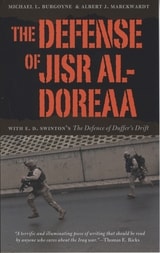
The Defense of Jisr al-Doreaa
With E. D. Swinton's "The Defence of Duffer's Drift"Michael L. Burgoyne and Albert J. Marckwardt
University of Chicago Press, 2009
Following the invasion of Iraq in 2003 the U.S. military found itself in a battle with a lethal and adaptive insurgency, where the divisions between enemy and ally were ambiguous at best, and working with the local population was essential for day-to-day survival. From the lessons they learned during multiple tours of duty in Iraq, two American veterans have penned The Defense of Jisr al-Doreaa, an instructional parable of counterinsurgency that addresses the myriad of difficulties associated with war in the postmodern era.
In this tactical primer based on the military classic The Defence of Duffer’s Drift, a young officer deployed for the first time in Iraq receives ground-level lessons about urban combat, communications technology, and high-powered weaponry in an environment where policy meets reality. Over the course of six dreams, the inexperienced soldier fights the same battle again and again, learning each time—the hard way—which false assumptions and misconceptions he needs to discard in order to help his men avoid being killed or captured. As the protagonist struggles with his missions and grapples with the consequences of his mistakes, he develops a keen understanding of counterinsurgency fundamentals and the potential pitfalls of working with the native population.
Accompanied here by the original novella that inspired it, The Defense of Jisr al-Doreaa offers an invaluable resource for cadets and junior military leaders seeking to master counterinsurgency warfare—as well as general readers seeking a deeper understanding of the wars in Iraq and Afghanistan. Just as its predecessor has been a hallmark of military instruction, The Defense of Jisr al-Doreaa will draw the road map for counterinsurgency in the postmodern world.
Visit a website for the book here: www.defenseofJAD.com

The Defoliation of America
Agent Orange Chemicals, Citizens, and ProtestsAmy M. Hay
University of Alabama Press, 2022
Examines the domestic and international use of phenoxy herbicides by the United States in the mid-twentieth century.
In The Defoliation of America: Agent Orange Chemicals, Citizens, and Protests, Amy M. Hay profiles the attitudes, understandings, and motivations of grassroots activists who rose to fight the use of phenoxy herbicides, or Agent Orange chemicals as they are commonly known, in various aspects of American life during the post-WWII era. Hay focuses her analysis on citizen responses to illuminate how regulatory policies were understood, challenged, and negotiated, contributing to a growing body of research on chemical regulatory policies, risk society, and hazardous chemicals. This volume uncovers new understandings about the authority of the state and its obligation to society, the role of scientific authority and expertise, and the protests made by various groups of citizens.
First introduced in 1946, phenoxy herbicides mimic hormones in broadleaf plants, causing them to “grow to death” while grass, grains, and other monocots remain unaffected. By the 1950s, millions of pounds of these chemicals were produced annually for use in brush control, weed eradication, forest management, and other agricultural applications. Pockets of skepticism and resistance began to appear by the late 1950s, and the trend intensified after 1962 when Rachel Carson’s Silent Spring directed mainstream attention to the harm modern chemicals were causing in the natural world. It wasn’t until the Vietnam War, however, when nearly 19 million gallons of Agent Orange and related herbicides were sprayed to clear the canopy and destroy crops in Southeast Asia, that the long-term damage associated with this group of chemicals began to attract widespread attention and alarm.
Using a wide array of sources and an interdisciplinary approach, Hay contributes to the robust fields of chemical toxicity, regulation, environmental management, and public health. This study of the scientists, health and environmental activists, and veterans who fought US chemical regulatory policies and practices reveals the mechanisms, obligations, and constraints of state and scientific authority in mid-twentieth-century America. Hay also shows how these disparate and mostly forgotten citizen groups challenged the political consensus and contested government and industry narratives of chemical safety.
The Degradation of American History
David Harlan
University of Chicago Press, 1997
Part One, "The Legacy of the Sixties," describes the impact of literary theory in the 1970s and beyond, the rise of women's history, the various forms of ideological analysis developed by historians on the left, and the crippling obsession with professionalism in the 1980s. Part Two, "The Renewal of American Historical Writing," focuses on the contributions of John Patrick Diggins, Hayden White, Richard Rorty, Elaine Showalter, Henry Louis Gates Jr., and others. Harlan argues that at the end of the twentieth century American historical writing is perfectly poised to become what it once was: not one of the social sciences in historical costume, but a form of moral reflection that speaks to all Americans.
"[A] wholly admirable work. This book will be talked about for years."—Library Journal
The Delaware Indians
A HistoryWeslager, C. A.
Rutgers University Press, 1990
In the seventeenth century white explorers and settlers encountered a tribe of Indians calling themselves Lenni Lenape along the Delaware River and its tributaries in New Jersey, Delaware, eastern Pennsylvania, and southeastern New York. Today communities of their descendants, known as Delawares, are found in Oklahoma, Kansas, Wisconsin, and Ontario, and individuals of Delaware ancestry are mingled with the white populations in many other states. The Delaware Indians is the first comprehensive account of what happened to the main body of the Delaware Nation over the past three centuries.
C. A. Weslager puts into perspective the important events in United States history in which the Delawares participated and he adds new information about the Delawares. He bridges the gap between history and ethnology by analyzing the reasons why the Delawares were repeatedly victimized by the white man.
The Delight Makers
Anglo-American Metaphysical Religion and the Pursuit of HappinessCatherine L. Albanese
University of Chicago Press, 2023
The pursuit of happiness weaves disparate strands of Anglo-American religious history together. In The Delight Makers, Catherine L. Albanese unravels a theology of desire tying Jonathan Edwards to Ralph Waldo Emerson to the religiously unaffiliated today. As others emphasize redemptive suffering, this tradition stresses the “metaphysical” connection between natural beauty and spiritual fulfillment. In the earth’s abundance, these thinkers see an expansive God intent on fulfilling human desire through prosperity, health, and sexual freedom. Through careful readings of Cotton Mather, Andrew Jackson Davis, William James, Esther Hicks, and more, Albanese reveals how a theology of delight evolved alongside political overtures to natural law and individual liberty in the United States.
The Demise of Yugoslavia
A Political MemoirStipe Mesic
Central European University Press, 2004
The Democratic Surround
Multimedia and American Liberalism from World War II to the Psychedelic SixtiesFred Turner
University of Chicago Press, 2013
In this prequel to his celebrated book From Counterculture to Cyberculture, Turner rewrites the history of postwar America, showing how in the 1940s and ’50s American liberalism offered a far more radical social vision than we now remember. Turner tracks the influential mid-century entwining of Bauhaus aesthetics with American social science and psychology. From the Museum of Modern Art in New York to the New Bauhaus in Chicago and Black Mountain College in North Carolina, Turner shows how some of the most well-known artists and intellectuals of the forties developed new models of media, new theories of interpersonal and international collaboration, and new visions of an open, tolerant, and democratic self in direct contrast to the repression and conformity associated with the fascist and communist movements. He then shows how their work shaped some of the most significant media events of the Cold War, including Edward Steichen’s Family of Man exhibition, the multimedia performances of John Cage, and, ultimately, the psychedelic Be-Ins of the sixties. Turner demonstrates that by the end of the 1950s this vision of the democratic self and the media built to promote it would actually become part of the mainstream, even shaping American propaganda efforts in Europe.
Overturning common misconceptions of these transformational years, The Democratic Surround shows just how much the artistic and social radicalism of the sixties owed to the liberal ideals of Cold War America, a democratic vision that still underlies our hopes for digital media today.

The Democrats
From Jefferson to ClintonRobert Allen Rutland, Foreword by Jimmy Carter
University of Missouri Press, 1995
Interlacing humor into his ongoing narrative, Robert Allen Rutland provides in The Democrats a readable, balanced account of how the Democratic party was founded, evolved, nearly died, and came back in the twentieth century, flourishing as a political melting pot despite numerous setbacks. This updated version of Rutland's much-heralded The Democrats: From Jefferson to Carter provides new insight into the long hiatus in the Democrats' presence in the White House between Carter and Clinton. In additon to analyzing Carter's successes and failures as president, Rutland also examines the forces that went into the Democratic defeats and Republican victories in 1980, 1984, and 1988, concluding with the election of another Jeffersonian Democrat, William Jefferson Clinton. The book ends with an examination of the dramatic results of the 1994 congressional elections that began to alert President Clinton to the challenge he would face in winning reelection in 1996.
The Demographics of Empire
The Colonial Order and the Creation of KnowledgeKarl Ittmann
Ohio University Press, 2010
The Demographics of Empire is a collection of essays examining the multifaceted nature of the colonial science of demography in the last two centuries. The contributing scholars of Africa and the British and French empires focus on three questions: How have historians, demographers, and other social scientists understood colonial populations? What were the demographic realities of African societies and how did they affect colonial systems of power? Finally, how did demographic theories developed in Europe shape policies and administrative structures in the colonies? The essays approach the subject as either broad analyses of major demographic questions in Africa’s history or focused case studies that demonstrate how particular historical circumstances in individual African societies contributed to differing levels of fertility, mortality, and migration. Together, the contributors to The Demographics of Empire question demographic orthodoxy, and in particular the assumption that African societies in the past exhibited a single demographic regime characterized by high fertility and high mortality.
The Demon and the Damozel
Dynamics of Desire in the Works of Christina Rossetti and Dante Gabriel RossettiSuzanne M. Waldman
Ohio University Press, 2008
The Denver Artists Guild
Its Founding Members; An Illustrated HistoryStan Cuba
University Press of Colorado, 2015
In 1928, the newly organized Denver Artists Guild held its inaugural exhibition in downtown Denver. Little did the participants realize that their initial effort would survive the Great Depression and World War II—and then outlive all of the group’s fifty-two charter members.
The guild’s founders worked in many media and pursued a variety of styles. In addition to the oils and watercolors one would expect were masterful pastels by Elsie Haddon Haynes, photographs by Laura Gilpin, sculpture by Gladys Caldwell Fisher and Arnold Rönnebeck, ceramics by Anne Van Briggle Ritter and Paul St. Gaudens, and collages by Pansy Stockton. Styles included realism, impressionism, regionalism, surrealism, and abstraction. Murals by Allen True, Vance Kirkland, John E. Thompson, Louise Ronnebeck, and others graced public and private buildings—secular and religious—in Colorado and throughout the United States. The guild’s artists didn’t just contribute to the fine and decorative arts of Colorado; they enhanced the national reputation of the state.
Then, in 1948, the Denver Artists Guild became the stage for a great public debate pitting traditional against modern. The twenty-year-old guild split apart as modernists bolted to form their own group, the Fifteen Colorado Artists. It was a seminal moment: some of the guild’s artists became great modernists, while others remained great traditionalists.
Enhanced by period photographs and reproductions of the founding members’ works, The Denver Artists Guild chronicles a vibrant yet overlooked chapter of Colorado’s cultural history. The book includes a walking tour of guild members’ paintings and sculptures viewable in Denver and elsewhere in Colorado, by Leah Naess and author Stan Cuba.
In honor of the book’s release, the Byers-Evans House Gallery will showcase a collection of founding guild members’ works starting June 26, 2015. The exhibit, also titled The Denver Artists Guild: Its Founding Members, contains paintings from artists such as the famed Paschal Quackenbush, Louise Ronnebeck, Albert Byron Olson, Elisabeth Spalding, Waldo Love and Vance Kirkland. The show will be on display through September 26, 2015.
The Deoliwallahs
The True Story of the 1962 Chinese Indian InternmentJoy Ma
Rutgers University Press, 2026
The Deoliwallahs sheds light on a lesser-known chapter of Indian history—the internment of Chinese Indians following the 1962 Sino-Indian War. During the war, around 3,000 Indians of Chinese descent were detained in a camp in Deoli, Rajasthan, under suspicion of espionage. Many of these individuals had deep roots in India, with families that had lived there for generations. The book recounts their harrowing experiences, including abrupt arrests, harsh conditions in the camp, and the emotional toll of being ostracized by their own country.
Alternating between historical context and the personal stories of survivors, authors Joy Ma and Dilip D'Souza weave together a compelling and emotional account of a nearly forgotten community of people interned against their will. The book draws parallels with other instances of internment, such as the Japanese American experience during World War II, highlighting the universal themes of identity, citizenship, and the consequences of fear-driven policies.
A documentary, Voices of Deoli (2025), directed by Lulu Men with author Joy Ma serving as executive producer, along with Michael Cheng and Neela D’Souza, also shares the stories of survivors and, like the book, serves as a powerful reminder of the fragility of rights and the impact of prejudice.
The Depression Dilemmas of Rural Iowa, 1929-1933
Lisa L. Ossian
University of Missouri Press, 2012

The Dervish Bowl
The Many Lives of Arminius VambéryAnabel Loyd
Haus Publishing, 2025
Who was Arminius Vámbéry? A poverty-stricken, Jewish autodidact; a linguist, traveler, and writer—or a sometime Zionist, inspiration for Dracula’s nemesis, and British secret agent? Vámbéry wrote his own story many times over, and it was these often highly embroidered accounts of journeys through Persia and Central Asia that saw him acclaimed in Victorian England as an intrepid explorer and daring adventurer. Against the backdrop of the “Great Game,” in which Russia and Britain jostled for territory, influence, and control of the borders and gateways to India and its wealth, Vámbéry played the roles of hero and double-dealer, of fascinated witness and imperialist charlatan.
The Dervish Bowl is the story of these competing narratives and a compelling investigation of both the ever-changing persona Vámbéry created for himself and the man who emerges from his private correspondence and the accounts of both his friends and his enemies, many of whom were themselves major players in the geopolitical adventures of the volatile nineteenth century—a time when Britain’s ambitions for her empire were at their height, yet nothing and no one was quite as they seemed.
The Descent of Political Theory
The Genealogy of an American VocationJohn G. Gunnell
University of Chicago Press, 1993
Gunnell reconstructs the evolution of the field by locating it within the broader development of political science and American social science in general. During the behavioral revolution that swept political science in the 1950s, the relationship between political theory and political science changed dramatically, relegating theory to the margins of an increasingly empirical discipline. Gunnell demonstrates that the estrangement of political theory is rooted in a much older quarrel: the authority of knowledge versus political theory is rooted in a much older quarrel: the authority of knowledge versus political authority, academic versus public discourse. By disclosing the origin of this dispute, he opens the way for a clearer understanding of the basis and purpose of political theory.
As critical as it is revelatory, this thoughtful book should be read by any one interested in the history of political theory or science—or in the relationship of social science to political practice in the United States.
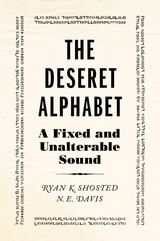
The Deseret Alphabet
A Fixed and Unalterable SoundRyan K. Shosted and N. E. Davis
University of Illinois Press, 2026
Shosted and Davis draw on a wide range of sources, including previously unpublished archival material, to trace the alphabet’s roots in Joseph Smith’s esoteric translations and its role in shaping Latter-day Saint identity. Their account brings together theology, linguistics, and culture. As they show, the Deseret Alphabet remains relevant as a living artifact of a religion wrestling with its visionary origins and the divine potential of words.
In-depth and up to date, The Deseret Alphabet traces the script’s creation, use, and legacy across Latter-day Saint history.
The Desert Fathers
Helen Waddell
University of Michigan Press, 1956

The Desert Is Alive
Aesthetic Cartographies and the SaharaJill Jarvis
University of Chicago Press, 0
How contemporary writers and filmmakers from across the African Sahara confront the colonial ideology of desert emptiness.
Jill Jarvis’s The Desert Is Alive challenges the image of the Sahara desert as a historical and cultural blank zone through a new “aesthetic cartography” that combines literary and film study with interdisciplinary thinking about space, borders, and infrastructures. In fields that still bear the imprint of a French colonial mindset, the Sahara has long been overlooked as a site of intellectual and cultural vitality. The Desert Is Alive breaks with a longstanding conceptual divide between “North” and “Subsaharan” Africa by resolutely centering the African Sahara and recognizing that the desert is not just full, but “peopled” in unexpected ways.
Jarvis accounts for colonial transformations of Saharan land during the twentieth century, attesting to the tactical and symbolic allure that this desert’s purported “emptiness” has held for French empire-building. Jarvis also considers how such tactics have been repurposed by postcolonial states. She takes up the last manuscript composed by Swiss writer Isabelle Eberhardt, who died in a flood at Aïn Sefra, Algeria in 1904, and examines the first novel published by French writer and aviator Antoine de Saint-Exupéry, composed while he worked as a pilot at Tarfaya, Morocco, in order to build the first trans-Saharan flight line during the 1920s. Jarvis then explores depictions of Timbuktu (Mali) and Nouadhibou (Mauretania) in films by Mauritanian-French director Abderrahmane Sissako. Jarvis concludes with chapters that unfold the unfinished history of French nuclear violence in the Sahara. First, she discusses multimedia and documentary works that reckon with the enduring impact of the seventeen nuclear bombs that France detonated in the Algerian desert in the 1960s. Finally, Jarvis turns to works by Tuareg poet and artist Hawad that confront the ongoing legacy of uranium mining on Indigenous land in northern Niger. The result is a rich contribution to Francophone cultural studies, African studies, postcolonial studies, and ecocriticism.
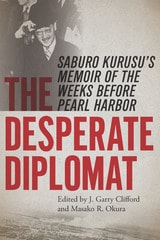
The Desperate Diplomat
Saburo Kurusu's Memoir of the Weeks before Pearl HarborEdited by J. Garry Clifford and Masako R. Okura
University of Missouri Press, 2014
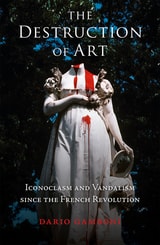
The Destruction of Art
Iconoclasm and Vandalism since the French RevolutionDario Gamboni
Reaktion Books, 2007
Last winter, a man tried to break Marcel Duchamp’s Fountain sculpture. The sculpted foot of Michelangelo’s David was damaged in 1991 by a purportedly mentally ill artist. With each incident, intellectuals must confront the unsettling dynamic between destruction and art. Renowned art historian Dario Gamboni is the first to tackle this weighty issue in depth, exploring specters of censorship, iconoclasm, and vandalism that surround such acts.
Gamboni uncovers here a disquieting phenomenon that still thrives today worldwide. As he demonstrates through analyses of incidents occurring in nineteenth- and twentieth-century America and Europe, a complex relationship exists among the evolution of modern art, destruction of artworks, and the long history of iconoclasm. From the controversial removal of Richard Serra’s Tilted Arc from New York City’s Federal Plaza to suffragette protests at London’s National Gallery, Gamboni probes the concept of artist’s rights, the power of political protest and how iconoclasm sheds light on society’s relationship to art and material culture.
Compelling and thought-provoking, The Destruction of Art forces us to rethink the ways that we interact with art and react to its power to shock or subdue.
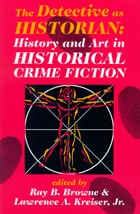
The Detective as Historian
History and Art in Historical Crime FictionEdited by Ray B. Browne and Lawrence A. Kreiser, Jr.; Preface by Robin W. Winks
University of Wisconsin Press, 2000
Topics include: Ellis Peter’s Brother Cadfael; Umberto Eco’s Name of the Rose; Susanna Gregory’s Doctor Matthew Bartholomew; Peter Heck’s Mark Twain as detective; Anne Perry and her Victorian-era world; Caleb Carr’s works; and Elizabeth Peter’s Egyptologist-adventurer tales.

The Detroit River
Stories of Development and Industrialization, 1874–1912Richard Gebhart
Michigan State University Press, 2027
Covering the period from the first government survey of the treacherous Limekiln Crossing to the completion of the Livingstone Channel, The Detroit River tells the story of the industrial transformation of the city’s most important waterway.

The Detroit Tigers Reader
Tom Stanton, Editor
University of Michigan Press, 2010
The story of the Tigers---like the story of Detroit itself---is one of resilience and endurance. For baseball fans it's also an intensely personal one: Detroit Tigers baseball has flowed through the veins of generations of families.
The essays, articles, and letters in The Detroit Tigers Reader capture those stories and the essence of the Tigers' spirit, tracing the history of the team from its first game on April 25, 1901, up through the arrival of "Pudge" Rodriguez in 2004. With contributions from some of the greatest sportswriters and athletes, as well as local journalists and fans, The Detroit Tigers Reader charts the highs and lows of one of the most extraordinary and celebrated teams in baseball history.
Includes contributions from
Mitch Albom
Dave Anderson
Joseph Durso
Joe Falls
Hank Greenberg
Ernie Harwell
Al Kaline
Mike Lupica
Grantland Rice
Damon Runyon
Babe Ruth
Neal Shine
The Development of Dogma
A Systematic AccountGuy Mansini, OSB
Catholic University of America Press, 2023
The Development of Higher Education and Social Change
Teshome Wagaw
Michigan State University Press, 1990
Begun while the author taught at the Ethiopian National University, this study examines the development of the institutions of higher education and the roles they played in transforming traditional Ethiopian society.
Wagaw sets out to prove that, although other modernizing institutions of learning may contribute significantly to social and economic change, institutions of higher education and their students already have effected profound revolution and proven indispensable to the established order.
His study argues that Ethiopian institutions of higher education were germane to the emerging society. They led Ethiopia down an often unpeaceful path from its oppressively traditional past toward progress and enlightenment.