Results by title
935 books match the query 'Ancient' and 221 start with t
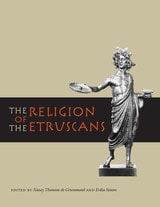
The Religion of the Etruscans
Edited by Nancy Thomson de Grummond and Erika Simon
University of Texas Press, 2006
Devotion to religion was the distinguishing characteristic of the Etruscan people, the most powerful civilization of Italy in the Archaic period. From a very early date, Etruscan religion spread its influence into Roman society, especially with the practice of divination. The Etruscan priest Spurinna, to give a well-known example, warned Caesar to beware the Ides of March. Yet despite the importance of religion in Etruscan life, there are relatively few modern comprehensive studies of Etruscan religion, and none in English. This volume seeks to fill that deficiency by bringing together essays by leading scholars that collectively provide a state-of-the-art overview of religion in ancient Etruria.
The eight essays in this book cover all of the most important topics in Etruscan religion, including the Etruscan pantheon and the roles of the gods, the roles of priests and divinatory practices, votive rituals, liturgical literature, sacred spaces and temples, and burial and the afterlife. In addition to the essays, the book contains valuable supporting materials, including the first English translation of an Etruscan Brontoscopic Calendar (which guided priests in making divinations), Greek and Latin sources about Etruscan religion (in the original language and English translation), and a glossary. Nearly 150 black and white photographs and drawings illustrate surviving Etruscan artifacts and inscriptions, as well as temple floor plans and reconstructions.
The Renaissance Rediscovery of Intimacy
Kathy Eden
University of Chicago Press, 2012
In 1345, when Petrarch recovered a lost collection of letters from Cicero to his best friend Atticus, he discovered an intimate Cicero, a man very different from either the well-known orator of the Roman forum or the measured spokesman for the ancient schools of philosophy. It was Petrarch’s encounter with this previously unknown Cicero and his letters that Kathy Eden argues fundamentally changed the way Europeans from the fourteenth through the sixteenth centuries were expected to read and write.
The Renaissance Rediscovery of Intimacy explores the way ancient epistolary theory and practice were understood and imitated in the European Renaissance.Eden draws chiefly upon Aristotle, Cicero, and Seneca—but also upon Plato, Demetrius, Quintilian, and many others—to show how the classical genre of the “familiar” letter emerged centuries later in the intimate styles of Petrarch, Erasmus, and Montaigne. Along the way, she reveals how the complex concept of intimacy in the Renaissance—leveraging the legal, affective, and stylistic dimensions of its prehistory in antiquity—pervades the literary production and reception of the period and sets the course for much that is modern in the literature of subsequent centuries. Eden’s important study will interest students and scholars in a number of areas, including classical, Renaissance, and early modern studies; comparative literature; and the history of reading, rhetoric, and writing.
The Republican Aventine and Rome’s Social Order
Lisa Marie Mignone
University of Michigan Press, 2016
The myth of the “plebeian Aventine” became embedded not only in classical scholarship, but also in modern political and cultural consciousness; it has even been used by modern figures to support their political agenda. Yet The Republican Aventine and Rome’s Social Order makes bold new claims regarding the urban design and social history of ancient Rome and raises a significant question about ancient urbanism and social stability more generally: Did social integration reduce violence in premodern cities and promote urban concord?
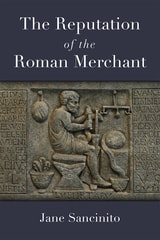
The Reputation of the Roman Merchant
Jane Sancinito
University of Michigan Press, 2024
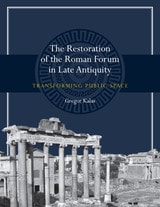
The Restoration of the Roman Forum in Late Antiquity
Transforming Public SpaceBy Gregor Kalas
University of Texas Press, 2015
In The Restoration of the Roman Forum in Late Antiquity, Gregor Kalas examines architectural conservation during late antiquity period at Rome’s most important civic center: the Roman Forum. During the fourth and fifth centuries CE—when emperors shifted their residences to alternate capitals and Christian practices overtook traditional beliefs—elite citizens targeted restoration campaigns so as to infuse these initiatives with political meaning. Since construction of new buildings was a right reserved for the emperor, Rome’s upper echelon funded the upkeep of buildings together with sculptural displays to gain public status. Restorers linked themselves to the past through the fragmentary reuse of building materials and, as Kalas explores, proclaimed their importance through prominently inscribed statues and monuments, whose placement within the existing cityscape allowed patrons and honorees to connect themselves to the celebrated history of Rome.
Building on art historical studies of spolia and exploring the Forum over an extended period of time, Kalas demonstrates the mutability of civic environments. The Restoration of the Roman Forum in Late Antiquity maps the evolution of the Forum away from singular projects composed of new materials toward an accretive and holistic design sensibility. Overturning notions of late antiquity as one of decline, Kalas demonstrates how perpetual reuse and restoration drew on Rome’s venerable past to proclaim a bright future.
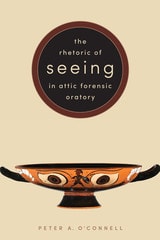
The Rhetoric of Seeing in Attic Forensic Oratory
By Peter A. O'Connell
University of Texas Press, 2017
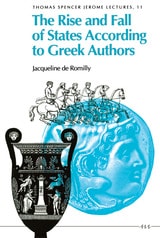
The Rise and Fall of States According to Greek Authors
Jacqueline de Romilly
University of Michigan Press, 1991
The Rise and Fall of States According to Greek Authors is a masterful survey of the manner in which Greek historians, from Herodotus to Polybius, explained the conditions of a state’s success and the dangers of power. Both the differences and the similarities among the major authors’ ideas are carefully analyzed: the changing notions of excess, or hybris; the common stress on public morality; and the value of goodwill and union.
The first woman to be elected to the Académie des Inscriptions et Belles Lettres and the first woman to hold a professorship at the College de France, Jacqueline de Romilly has serves as director of the Department of Greek at the Sorbonne and had lectured at numerous universities and institutions of learning around the world. The author or editor of numerous volumes concerning Thucydides, Jacqueline de Romilly has in recent years become increasingly interested in the history of moral and political ideas.
The Rise of the West
A History of the Human CommunityWilliam H. McNeill
University of Chicago Press, 1991
One of the most important works of history from the twentieth century, The Rise of the West, winner of the National Book Award in 1964, is famous for its ambitious scope and intellectual rigor. In it, William H. McNeill challenges the then-prevalent view that a number of separate civilizations pursued essentially independent careers, and argues instead that human cultures interacted at every stage of their history. McNeill argues instead that from the Neolithic beginnings of grain agriculture to the present major social changes in all parts of the world were triggered by new or newly important foreign stimuli, and he presents a persuasive narrative of world history to support this claim.
In a retrospective essay titled "The Rise of the West after Twenty-five Years," McNeill shows how his book was shaped by the time and place in which it was written (1954-63). He discusses how historiography subsequently developed and suggests how his portrait of the world's past in The Rise of the West should be revised to reflect these changes.
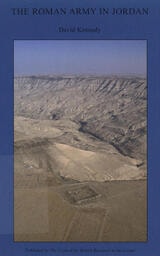
The Roman Army in Jordan
David Kennedy
Council for British Research in the Levant, 2004
The Roman Community at Table during the Principate, New and Expanded Edition
John F. Donahue
University of Michigan Press, 2017
This expanded edition of Donahue’s work includes significant new material on current trends in food studies, including the archaeology and bioarchaeology of ancient food and drink; an additional collection of inscriptions on public banquets from the Roman West; and an extensive bibliography of scholarship produced in the last ten years. It will be of interest not only to classicists and historians of the ancient world, but also to anthropologists and sociologists interested in food and social group dynamics.
The Roman Republic in Political Thought
Fergus Millar
Brandeis University Press, 2002
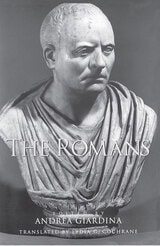
The Romans
Edited by Andrea Giardina
University of Chicago Press, 1993
Synthesizing a wealth of current research, The Romans surveys the most complex society ever to exist prior to the Industrial Age. Searching out the identity of the ancient Roman, the contributors describe an urbane figure at odds with his rustic peers, known for his warlike nature and his love of virtue, his magnanimity to foreigners and his predilection for cutting off his enemies' heads. Most important, perhaps, of the themes explored throughout this volume are those of freedom and slavery, of citizenship and humanitas.
What results from the depictions Roman society through time and across its many constituent cultures is the variety of Roman identity in all its richness and depth. These masterful essays will engage the general reader as well as the specialist in history and culture.
The Roots of Cooperation
Constructing Interstate Alliances in Ancient GreeceNicholas D. Cross
University of Michigan Press, 2026
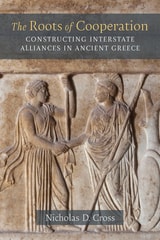
Nicholas D. Cross’s The Roots of Cooperation reinterprets how the Greeks conceived, enacted, and displayed their alliances, offering a socially grounded understanding of interstate relations in antiquity. Following the international relations model of constructivism, Cross emphasizes the social features of Greek alliances including words used to articulate agreements, ceremonial acts they performed during the formation process, and the symbols they employed to illustrate how the alliances contributed to the creation of shared goals, ideas, and identities. The study covers the proposals for alliances, the articulation of alliance treaties, the ratification of alliances by means of religious ceremonies, the public display of the agreements in visual media, and the implications of terminated alliances. While alliances had political and military objectives, the Greeks represented them as collective and consensual achievements. Relying as much on epigraphic and numismatic evidence as on the literary record, this study recontextualizes interstate activity by analyzing how contemporaries imagined and depicted their formal interstate agreements. The Roots of Cooperation offers fresh insights that go beyond just alliances and can deepen our understanding of interstate relations, broadly speaking, in the ancient world.
The Sarpedon Krater
The Life and Afterlife of a Greek VaseNigel Spivey
University of Chicago Press, 2019
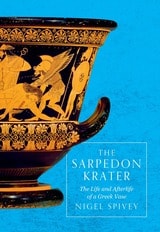
Spivey takes the reader on a dramatic journey, beginning with the krater’s looting from an Etruscan tomb in 1971 and its acquisition by the Metropolitan Museum of Art, New York, followed by a high-profile lawsuit over its status and its eventual return to Italy. He explains where, how, and why the vase was produced, retrieving what we know about the life and legend of Sarpedon. Spivey also pursues the figural motif of the slain Sarpedon portrayed on the vase and traces how this motif became a standard way of representing the dead and dying in Western art, especially during the Renaissance.
Fascinating and informative, The Sarpedon Krater is a multifaceted introduction to the enduring influence of Greek art on the world.
The Sasanian Empire at War
Persia, Rome, and the Rise of Islam, 224–651Michael J. Decker
Westholme Publishing, 2025
A comprehensive military history of one of the most important empires of Late Antiquity
The Sasanian Empire at War: Persia, Rome, and the Rise of Islam, 224–651 is the first comprehensive study in English examining war and society in one of the most important empires in world history: the Persian Empire of 224-651 AD, ruled by the Sasanian clan. At its height the Sasanians governed lands from the Indus River in the east to Egypt and the Mediterranean in the west. Adversaries of Rome, they also faced grave challenges from nomadic powers from Central Asia, notably the Huns and Turks. The Sasanians were able to maintain their empire for hundreds of years through nearly constant warfare, but when their expansion was checked in the north by the Byzantines at Constantinople in 626, and with the Muslim invasions to their south and west beginning in the 630s, the empire could no longer be sustained, and it finally collapsed.
In this book, Michael J. Decker examines Sasanian warfare, including military capabilities, major confrontations, organization and weapons of the Persian army. In addition to providing a comprehensive overview of the conflicts that marked this vital period in the history of Eurasia, The Sasanian Empire at War challenges long cherished notions of the inferiority of Sasanian military capabilities and renders a new image of a sophisticated, confident culture astride the heart of Eurasia at the end of the ancient world and birth of the Silk Road. Persian arms were among the many features of their culture that drew widespread admiration and was one of the keys to the survival of Iranian culture beyond the Arab Conquest and into the present day.
The Scent of Ancient Magic
Britta K. Ager
University of Michigan Press, 2022
The Scent of Ancient Magic explores the complex interconnection of scent and magic in the Greco-Roman world between 800 BCE and CE 600, drawing on ancient literature and the modern study of the senses to examine the sensory depth and richness of ancient magic. Author Britta K. Ager looks at how ancient magicians used scents as part of their spells, to put themselves in the right mindset for an encounter with a god or to attack their enemies through scent. Ager also examines the magicians who appear in ancient fiction, like Medea and Circe, and the more metaphorical ways in which their spells are confused with perfumes and herbs. This book brings together recent scholarship on ancient magic from classical studies and on scent from the interdisciplinary field of sensory studies in order to examine how practicing ancient magicians used scents for ritual purposes, how scent and magic were conceptually related in ancient literature and culture, and how the assumption that strong scents convey powerful effects of various sorts was also found in related areas like ancient medical practices and normative religious ritual.
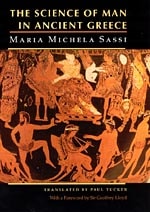
The Science of Man in Ancient Greece
Maria Michela Sassi
University of Chicago Press, 2000
Maria Michela Sassi reconstructs Greek attempts to answer such questions from Homer's day to late antiquity, ranging across physiognomy, ethnography, geography, medicine, and astrology. Sassi demonstrates that in the Greek science of man, empirical observations were inextricably bound up with a prejudiced view of the free Greek male as superior to all others. Thus, because women were assumed to have pale skin from staying indoors too much, Greek biology and medicine sought to explain this feature as an indication of the "cold" nature of women, as opposed to the "hot" constitution of men.
For this English translation, Sassi has rewritten the introduction and updated the text and references throughout, and Sir Geoffrey Lloyd has provided a new foreword.
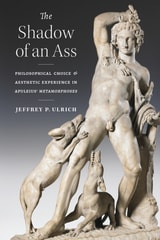
The Shadow of an Ass
Philosophical Choice and Aesthetic Experience in Apuleius' MetamorphosesJeffrey P. Ulrich
University of Michigan Press, 2024
Situating the novel in a long history of philosophical and literary conversations, Ulrich suggests that the Metamorphoses anticipates much of the philosophical burlesque we tend to associate with early modern fiction, from Don Quixote to Lewis Carroll.
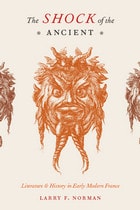
The Shock of the Ancient
Literature and History in Early Modern FranceLarry F. Norman
University of Chicago Press, 2011
The cultural battle known as the Quarrel of the Ancients and Moderns served as a sly cover for more deeply opposed views about the value of literature and the arts. One of the most public controversies of early modern Europe, the Quarrel has most often been depicted as pitting antiquarian conservatives against the insurgent critics of established authority. The Shock of the Ancient turns the canonical vision of those events on its head by demonstrating how the defenders of Greek literature—rather than clinging to an outmoded tradition—celebrated the radically different practices of the ancient world.
At a time when the constraints of decorum and the politics of French absolutism quashed the expression of cultural differences, the ancient world presented a disturbing face of otherness. Larry F. Norman explores how the authoritative status of ancient Greek texts allowed them to justify literary depictions of the scandalous. The Shock of the Ancient surveys the diverse array of aesthetic models presented in these ancient works and considers how they both helped to undermine the rigid codes of neoclassicism and paved the way for the innovative philosophies of the Enlightenment. Broadly appealing to students of European literature, art history, and philosophy, this book is an important contribution to early modern literary and cultural debates.
The Shotgun Method
The Demography of the Ancient Greek City-State CultureMogens Herman Hansen
University of Missouri Press, 2006
Although the polis, or city-state, defined the essence of classical Greek civilization, evidence of its most basic characteristics is woefully inadequate. Now a leading scholar in the evaluation of data from the ancient world sheds new light on how those units were constituted.
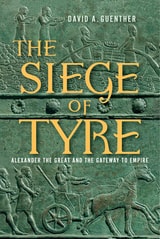
The Siege of Tyre
Alexander the Great and the Gateway to EmpireDavid A. Guenther
Westholme Publishing, 2024
The Siege of Tyre: Alexander the Great and the Gateway to Empire by David A. Guenther is the first book-length treatment of this critical and fascinating campaign, featuring catapults, triremes, religious invocations, close combat, and marvels of engineering, including a massive manmade causeway from the mainland to the island. The siege is thoroughly analyzed from the standpoint of what is plausible given the nature of the technology of the time and what we now know of the geology and physical fortifications of ancient Tyre. The book begins with the background leading up to the siege: Alexander’s army, his invasion of Asia Minor, the sieges of Miletus and Halicarnassus, and the battles of the Granicus and Issus. It also describes the culture, people, cities, and economy of ancient Phoenicia to place the story of the siege in a broader context. Critical to the siege were the evolving technologies in the ancient Mediterranean world, including innovations in catapult design, military engineering, and naval architecture. Guenther also takes into account recent scientific discoveries about the geology of the ancient seabed around Tyre and its effect on the siege. Finally, the book points out possible gender-biased views on topics such as sacred temple prostitution among the ancient Phoenicians and the fate of women in besieged cities of the ancient world. An engrossing blend of ancient wonder and historical and technological analysis, The Siege of Tyre is the remarkable story of Alexander the Great’s “masterpiece.”
The Sky Is Our Song
The "Phaenomena" of AratusAratus
University of Chicago Press, 2025
A poetic guide to the heavens, the Phaenomena of Aratus—dating from around 270 BCE—was widely known across the ancient world, second only in fame to the works of Homer. Beginning with an invocation to Zeus, the poem describes the constellations of the northern and southern skies, the celestial sphere, and weather signs. Aratus’s vivid work offered a complete handbook of astronomy, constellations, and weather, and this treatise on the night sky was later translated or adapted by luminaries including Cicero, Virgil, and Ovid. The Phaenomena remained popular throughout the Renaissance and had more than sixty printed editions by the early seventeenth century, but its fame has faded in the modern world.
With this edition, renowned translator and amateur astronomer Stanley Lombardo renders Aratus’s poem in reader-friendly vernacular English verse. Complete with endnotes, an accessible introduction, and astronomically accurate illustrations, The Sky Is Our Song brings this master poet’s celebration of the sky to a twenty-first-century audience, inviting new readers to follow Aratus on a visual journey through star signs, moon phases, weather phenomena, and all wonders of the heavens.
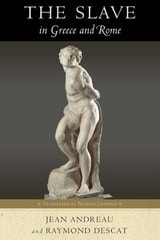
The Slave in Greece and Rome
Jean Andreau and Raymond Descat, translated by Marion Leopold
University of Wisconsin Press, 2012
Jean Andreau and Raymond Descat break new ground in this comparative history of slavery in Greece and Rome. Focusing on slaves’ economic role in society, their crucial contributions to Greek and Roman culture, and their daily and family lives, the authors examine the different ways in which slavery evolved in the two cultures. Accessible to both scholars and students, this book provides a detailed overview of the ancient evidence and the modern debates surrounding the vast and largely invisible populations of enslaved peoples in the classical world.
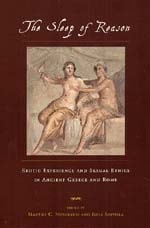
The Sleep of Reason
Erotic Experience and Sexual Ethics in Ancient Greece and RomeEdited by Martha C. Nussbaum and Juha Sihvola
University of Chicago Press, 2002
The Sleep of Reason brings together an international group of philosophers, philologists, literary critics, and historians to consider two questions normally kept separate: how is erotic experience understood in classical texts of various kinds, and what ethical judgments and philosophical arguments are made about sex? From same-sex desire to conjugal love, and from Plato and Aristotle to the Roman Stoic Musonius Rufus, the contributors demonstrate the complexity and diversity of classical sexuality. They also show that the ethics of eros, in both Greece and Rome, shared a number of commonalities: a focus not only on self-mastery, but also on reciprocity; a concern among men not just for penetration and display of their power, but also for being gentle and kind, and for being loved for themselves; and that women and even younger men felt not only gratitude and acceptance, but also joy and sexual desire.
Contributors:
* Eva Cantarella
* Kenneth Dover
* Chris Faraone
* Simon Goldhill
* Stephen Halliwell
* David M. Halperin
* J. Samuel Houser
* Maarit Kaimio
* David Konstan
* David Leitao
* Martha C. Nussbaum
* A. W. Price
* Juha Sihvola
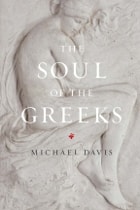
The Soul of the Greeks
An InquiryMichael Davis
University of Chicago Press, 2011
The understanding of the soul in the West has been profoundly shaped by Christianity, and its influence can be seen in certain assumptions often made about the soul: that, for example, if it does exist, it is separable from the body, free, immortal, and potentially pure. The ancient Greeks, however, conceived of the soul quite differently. In this ambitious new work, Michael Davis analyzes works by Homer, Herodotus, Euripides, Plato, and Aristotle to reveal how the ancient Greeks portrayed and understood what he calls “the fully human soul.”
Beginning with Homer’s Iliad, Davis lays out the tension within the soul of Achilles between immortality and life. He then turns to Aristotle’s De Anima and Nicomachean Ethics to explore the consequences of the problem of Achilles across the whole range of the soul’s activity. Moving to Herodotus and Euripides, Davis considers the former’s portrayal of the two extremes of culture—one rooted in stability and tradition, the other in freedom and motion—and explores how they mark the limits of character. Davis then shows how Helen and Iphigeneia among the Taurians serve to provide dramatic examples of Herodotus’s extreme cultures and their consequences for the soul. The book returns to philosophy in the final part, plumbing several Platonic dialogues—the Republic, Cleitophon, Hipparchus, Phaedrus, Euthyphro, and Symposium—to understand the soul’s imperfection in relation to law, justice, tyranny, eros, the gods, and philosophy itself. Davis concludes with Plato’s presentation of the soul of Socrates as self-aware and nontragic, even if it is necessarily alienated and divided against itself.
The Soul of the Greeks thus begins with the imperfect soul as it is manifested in Achilles’ heroic, but tragic, longing and concludes with its nontragic and fuller philosophic expression in the soul of Socrates. But, far from being a historical survey, it is instead a brilliant meditation on what lies at the heart of being human.
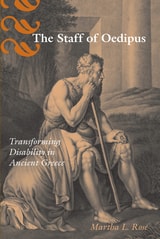
The Staff of Oedipus
Transforming Disability in Ancient GreeceMartha L. Rose
University of Michigan Press, 2013
Ancient Greek images of disability permeate the Western consciousness: Homer, Teiresias, and Oedipus immediately come to mind. But The Staff of Oedipus looks at disability in the ancient world through the lens of disability studies, and reveals that our interpretations of disability in the ancient world are often skewed. These false assumptions in turn lend weight to modern-day discriminatory attitudes toward disability.
Martha L. Rose considers a range of disabilities and the narratives surrounding them. She examines not only ancient literature, but also papyrus, skeletal material, inscriptions, sculpture, and painting, and draws upon modern work, including autobiographies of people with disabilities, medical research, and theoretical work in disability studies. Her study uncovers the realities of daily life for people with disabilities in ancient Greece and challenges the translation of the term adunatos (unable) as "disabled," with all its modern associations.
The Stillborn
Notebooks of a Woman from the Student-Movement Generation in EgyptArwa Salih
Seagull Books, 2017
A poignant reckoning with the Marxism of a generation and its militant postcolonial intellectuals.
Arwa Salih was a member of the political bureau of the Egyptian Communist Workers Party, founded in the wake of the Arab–Israeli War and the vibrant Egyptian student movement of the early 1970s. Written more than a decade after Salih quit the party and left political life—and published shortly after she tragically took her own life—The Stillborn offers a devastatingly honest look at the tragic failure of both the national liberation and communist projects in Egypt.
This powerful, unflinching critique speaks not only to and about Salih’s own generation of left-wing activists, but also extends its gaze outward. The Stillborn addresses the broader, still fiercely salient dilemmas of revolutionary politics that continue to echo throughout the developing world in the postcolonial era.
The Stranger's Welcome
Oral Theory and the Aesthetics of the Homeric Hospitality SceneSteve Reece
University of Michigan Press, 1993
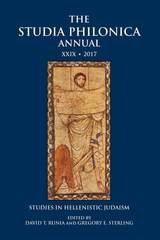
The Studia Philonica Annual XXIX, 2017
Studies in Hellenistic JudaismDavid T. Runia
SBL Press, 2017
The best current research on Philo and Hellenistic Judaism
The Studia Philonica Annual is a scholarly journal devoted to the study of Hellenistic Judaism, particularly the writings and thought of the Hellenistic-Jewish writer Philo of Alexandria (circa 15 BCE to circa 50 CE). This volume includes a soecial section on Philo's De plantatione.
Features:
- Articles on aspects of Hellenistic Judaism written by experts in the field
- Bibliography
- Book reviews
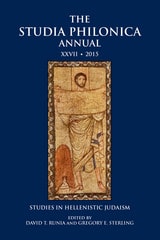
The Studia Philonica Annual XXVII, 2015
Studies in Hellenistic JudaismDavid T. Runia
SBL Press, 2015
The best current research on Philo and Hellenistic Judaism
The Studia Philonica Annual is a scholarly journal devoted to the study of Hellenistic Judaism, particularly the writings and thought of the Hellenistic-Jewish writer Philo of Alexandria (circa 15 BCE to circa 50 CE).
Features:
- Articles on aspects of Hellenistic Judaism written by experts in the field
- Bibliography
- Book reviews
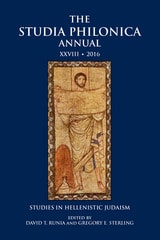
The Studia Philonica Annual XXVIII, 2016
Studies in Hellenistic JudaismDavid T. Runia
SBL Press, 2016
Celebrate the contributions of David T. Runia
The Studia Philonica Annual is a scholarly journal devoted to the study of Hellenistic Judaism, particularly the writings and thought of the Hellenistic-Jewish writer Philo of Alexandria. More than fifteen scholars from around the world offer contributions to this special edition of the Annual in honor of Professor David T. Runia on the occasion of his 65th birthday and retirement from his post as Master of Queens College, University of Melbourne. Professor Runia is internationally recognized as one of the world's foremost experts on Philo of Alexandria. As founder of The Studia Philonica Annual, he has been editor or coeditor for twenty-seven years. He initiated a Philo Bibliography project prior to the Annual and incorporated the bibliography into the Annual from the outset. It serves as the primary bibliography for Philonic studies worldwide.
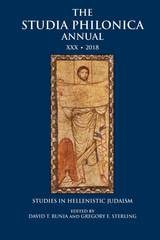
The Studia Philonica Annual XXX, 2018
Studies in Hellenistic JudaismDavid T. Runia
SBL Press, 2018
Studies on Philo and Hellenistic Judaism from experts in the field
The Studia Philonica Annual is a scholarly journal devoted to the study of Hellenistic Judaism, particularly the writings and thought of the Hellenistic-Jewish writer Philo of Alexandria. This volume includes five articles on topics ranging from preserved fragments of Philo to travel in Philo’s works. Nine book reviews cover recent books on Philo, Josephus, and ancient pedagogy.
Features:
- Articles on aspects of Hellenistic Judaism written by scholars from around the world
- Comprehensive bibliography and book reviews
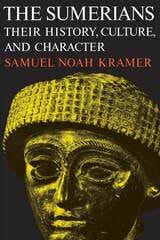
The Sumerians
Their History, Culture, and CharacterSamuel Noah Kramer
University of Chicago Press, 1963
The Sumerians, the pragmatic and gifted people who preceded the Semites in the land first known as Sumer and later as Babylonia, created what was probably the first high civilization in the history of man, spanning the fifth to the second millenniums B.C. This book is an unparalleled compendium of what is known about them.
In this classic work, Samuel Noah Kramer communicates his enthusiasm for his subject as he outlines the history of the Sumerian civilization and describes their cities, religion, literature, education, scientific achievements, social structure, and psychology. Finally, he considers the legacy of Sumer to the ancient and modern world.
The Taste for Nothingness
A Study of Virtus and Related Themes in Lucan's Bellum CivileR. Sklenar
University of Michigan Press, 2003
The Taste for Nothingness traces Lucan's own analytical method by showing how virtus and related concepts operate--or rather, fail to operate--in Lucan's appropriations and distortions of the traditional epic-battle narrative; in the philosophical commitment of Cato the Younger; and in the personalities of the two antagonists, Pompey and Caesar. Much recent scholarship has reached a consensus that Lucan's literary method is mimetic, that his belief in a chaotic cosmos produces a poetics of chaos. While accepting many of the recent findings about Lucan's view of language and the universe, The Taste for Nothingness also allows an even bolder Lucan to emerge: a committed aesthete who regards art as the only realm in which order is possible.
Robert Sklenár is Visiting Assistant Professor of Classical Studies, Tulane University.
The Ties That Bind
The Economic Relationships of Twelve Tebtunis FamiliesEdited by Ryosuke Takahashi
University of London Press, 2021
Tebtunis, an ancient village formerly located in lower Egypt, is one of the most enduring subjects of study from the civilization's Roman era. This fascinating volume details a dozen newly-discovered family papers that have survived from the second century AD. Belonging to families of various different classes, this unique documentation provides a rare opportunity to explore how local elites under Roman rule exploited their wealth in the countryside and interacted with its rural inhabitants.
Ties That Bind is the first book to investigate these family papers holistically, focusing on the economic activities in which the families engaged: land leases, loans in cash and kind, and the employment of managers and laborers on landed estates. This study also addresses strategy and decision-making among both elite families and villagers, the complexity of interfamilial relationships, and the implications of this social networking. This micro-historical study elucidates the diversity of socio-economic life in a village where no single family dominated.
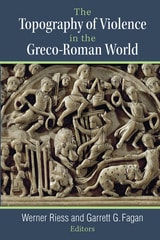
The Topography of Violence in the Greco-Roman World
Werner Riess and Garrett G. Fagan, editors
University of Michigan Press, 2016
The contributors to The Topography of Violence in the Greco-Roman World take on a task not yet addressed in classical scholarship: they examine how topography shaped the perception and interpretation of violence in Greek and Roman antiquity. After an introduction explaining the “spatial turn” in the theoretical study of violence, “paired” chapters review political assassination, the battlefield, violence against women and slaves, and violence at Greek and Roman dinner parties. No other book either adopts the spatial theoretical framework or pairs the examination of different classes of violence in classical antiquity in this way.
Both undergraduate and graduate students of classics, history, and political science will benefit from the collection, as will specialists in those disciplines. The papers are original and stimulating, and they are accessible to the educated general reader with some grounding in classical history.
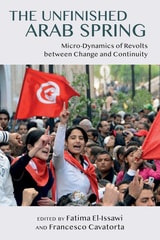
The Unfinished Arab Spring
Micro-Dynamics of Revolts between Change and ContinuityEdited by Fatima El Issawi and Francesco Cavatorta
Gingko, 2020
The Voting Districts of the Roman Republic
The Thirty-five Urban and Rural TribesLily Ross Taylor
University of Michigan Press, 2013

The Western Bahr Al Ghazal under British Rule, 1898–1956
Mis Af#57Ahmad Alawad Sikainga
Ohio University Press, 1991
The Whole Book
Cultural Perspectives on the Medieval MiscellanyStephen G. Nichols and Siegfried Wenzel, Editors
University of Michigan Press, 1996
This group of papers, edited by two well-known scholars of the medieval world, offers both general and particular approaches to the issues surrounding manuscripts produced in the medieval habit of "miscellany," works of seemingly diverse natures bound together into one volume. Julia Boffey investigates how certain poetical miscellanies came to be assembled, for example, while Sylvia Huot suggests that the miscellany had many different sorts of function and significance. Siegfried Wenzel considers a taxonomy of such collections, and A. S. G. Edwards' paper considers Bodleian Selden B.24 as an example of how the notions of canon, authorship, and attribution might come into play. Ann Matter's final chapter offers the notion that what we call "miscellanies" are likely to have an internal logic that we have been trained to miss, but can come to understand. Other contributors are Ralph Hanna III, Georg Knauer, Stephen Nichols, James J. O'Donnell, and Barbara A. Shailor.
Because The Whole Book deals not only with the content of miscellanies but also with contemporary literary principles, this volume will be of interest to a wide circle of literary critics and historians, as well as to students of the survival of literature and of cultural values.
Stephen G. Nichols is James M. Beall Professor of French and Chair of the Department of French, The Johns Hopkins University. Siegfried Wenzel is Professor of English, University of Pennsylvania.
The Witchcraft Series Maqlu
Tzvi Abusch
SBL Press, 2015
A new reconstruction and translation of the Maqlû text
The Akkadian series Maqlû, “Burning,” is one of the most significant and interesting magical texts from the Ancient Near East. The incantations and accompanying rituals are directed against witches and witchcraft and ctually represent a single complex ceremony. The ceremony was performed during a single night and into the following morning at the end of the month Abu (July/August), a time when spirits were thought to move back and forth between the netherworld and the world of the living.
Features:
- English translation of approximately 100 incantations and rituals
- Annotated transcription
- Introduction places the series in historical context and shows how it is a product of a complex literary and ceremonial development.
The Works and Days; Theogony; The Shield of Herakles
Hesiod
University of Michigan Press, 1991
The World of Roman Costume
Edited by Judith Lynn Sebesta and Larissa Bonfante
University of Wisconsin Press, 1994
Theater and Society in the Classical World
Ruth Scodel, Editor
University of Michigan Press, 1993
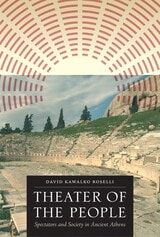
Theater of the People
Spectators and Society in Ancient AthensBy David Kawalko Roselli
University of Texas Press, 2011
Greek drama has been subject to ongoing textual and historical interpretation, but surprisingly little scholarship has examined the people who composed the theater audiences in Athens. Typically, scholars have presupposed an audience of Athenian male citizens viewing dramas created exclusively for themselves—a model that reduces theater to little more than a medium for propaganda. Women's theater attendance remains controversial, and little attention has been paid to the social class and ethnicity of the spectators. Whose theater was it?
Producing the first book-length work on the subject, David Kawalko Roselli draws on archaeological and epigraphic evidence, economic and social history, performance studies, and ancient stories about the theater to offer a wide-ranging study that addresses the contested authority of audiences and their historical constitution. Space, money, the rise of the theater industry, and broader social forces emerge as key factors in this analysis. In repopulating audiences with foreigners, slaves, women, and the poor, this book challenges the basis of orthodox interpretations of Greek drama and places the politically and socially marginal at the heart of the theater. Featuring an analysis of the audiences of Aeschylus, Sophocles, Euripides, Aristophanes, and Menander, Theater of the People brings to life perhaps the most powerful influence on the most prominent dramatic poets of their day.
Themistius and the Imperial Court
Oratory, Civic Duty, and Paideia from Constantius to TheodosiusJohn Vanderspoel
University of Michigan Press, 1995
Theodoret of Cyrrhus
The Bishop and the Holy ManTheresa Urbainczyk
University of Michigan Press, 2002
With the conversion of Constantine and his subsequent championing of the Christian cause, the Church rapidly began to increase its wealth and status. As coins filled the coffers of God, some Christians came to feel that their religion had become corrupted. They fled to the desert wastes, seeking a purer, holier life. These recluses and ascetics are the subjects of Theodoret's Religious History. The Syrian bishop had known many of them, some for all his life.
Urbainczyk argues that Theodoret's work was not merely written as an act of piety, but was in fact a very political treatise, addressing the theological disputes of his day. The main tensions of the early fifth century lay between the sees of Syrian Antioch and Egyptian Alexandria. One of Theodoret's aims was to show that Syria had produced individuals as pious as those of Egypt, about whom much had already been written. Urbainczyk studies the social background of these Syrian ascetics, describes the relationship between Theodoret's heroes and the Church community, and investigates how Theodoret presents his own personal relationship with the holy men.
This book is the first to examine Theodoret's role in his own work. Urbainczyk argues that the intimate details of Theodoret's life were not let slip accidentally but were inserted deliberately to buttress his own threatened position and to show how these independent men of God deferred to no one but himself.
Theodoret of Cyrrhus is an invaluable study for students of late antiquity, scholars of early Church history, early medieval historiographers and hagiographers.
Theresa Urbainczyk is College Lecturer in Classics, University College, Dublin.
Theoretical Approaches to the Archaeology of Ancient Greece
Manipulating Material CultureLisa C. Nevett, Editor
University of Michigan Press, 2017
An introductory section exploring the emergence and growth of theoretical approaches is followed by examinations of the potential insights these approaches provide. The authors probe some of the meanings attached to ancient objects, townscapes, and cemeteries, for those who created, and used, or inhabited them.
The range of contexts stretches from the early Greek communities during the eighth and seventh centuries BCE, through Athens between the eighth and fifth centuries BCE, and on into present day Turkey and the Levant during the third and second centuries BCE. The authors examine a range of practices, from the creation of individual items such as ceramic vessels and figurines, through to the construction of civic buildings, monuments, and cemeteries. At the same time they interrogate a range of spheres, from craft production, through civic and religious practices, to funerary ritual.
They Wrote on Clay
The Babylonian Tablets Speak TodayEdward Chiera
University of Chicago Press, 1956
"The book presents, briefly and clearly, a vivid picture of a long-dead people who in numerous ways were very like ourselves."—L. M. Field, New York Times
"No mystery story can be as exciting."—Harper's
"Plainly and fetchingly written."—New Republic
Thomas Heywood's Art of Love
The First Complete English Translation of Ovid's Ars AmatoriaEdited, with Introduction, Notes, and Commentary by M. L. Stapleton
University of Michigan Press, 2000
The present edition represents the first instance in which the translation has been edited in a scholarly manner. Besides a full Introduction that accounts for the history of Loues Schoole, Ovid in the English Renaissance, and the editorial method, each of the three books of the poem includes a Commentary that provides cross-references within the text; glosses for unusual, archaic, or regional forms peculiar to Heywood's English; annotations from sourcebooks that Heywood used to identify or understand characters from classical history, literature, and mythology; and explanations for any emendations the editor deemed necessary. In his efforts to make the Ars a seventeenth-century poem, Heywood contemporizes Ovid's references to dress, behavior, courtship, marriage, games, theater, agriculture, horsemanship, war, literature --all of which the Commentary explains at great length.
Loues Schoole will find readership in these areas: early modern history, literature, and culture; classical studies; Renaissance drama; the history of sexuality; and translation theory.
M. L. Stapleton is Associate Professor of English and Philosophy, Stephen F. Austin State University.