4531 books match the query 'Cultural & Ethnic Studies' and 804 start with t

cover of The Bottom Rung: African American Family Life on Southern Farms

The Bottom Rung

African American Family Life on Southern Farms

Stewart E. Tolnay

University of Illinois Press, 1999

The Bottom Rung presents an in-depth investigation of a population that is becoming extinct in American society: the black farmer.
 
Tracing patterns of marriage and childbearing among both whites and blacks during the first decades of this century, Stewart Tolnay pursues questions about how black southern farm families were formed and dissolved, how they educated their children or put them to work in the fields, and how they migrated in search of opportunity. Further, he considers the possible legacy of these experiences for family life in contemporary urban environments.
 
Making revealing and innovative use of public records from the early part of the twentieth century, Tolnay challenges the widely held idea that southern migrants to northern cities carried with them a dysfunctional family culture. He demonstrates the powerful impact of economic conditions on family life and views patterns of marriage and childbearing as responsive to prevailing social, economic, and political conditions. In a provocative extension of this perspective, Tolnay argues that current high levels of single-parenthood among urban African American families likewise reflect rational responses to the socio-economic environment and government policies.
 
By placing post-World War II demographic developments in a wider historical perspective, The Bottom Rung sheds new light on recent discussions of the difficulties faced by the modern black urban family. The text is enhanced by Dorothea Lange's and Russell Lee's poignant photographs.
 
[more]
cover of The Boundaries of Blackness: AIDS and the Breakdown of Black Politics

The Boundaries of Blackness

AIDS and the Breakdown of Black Politics

Cathy Cohen

University of Chicago Press, 1999

Last year, more African Americans were reported with AIDS than any other racial or ethnic group. And while African Americans make up only 13 percent of the U.S. population, they account for more than 55 percent of all newly diagnosed HIV infections. These alarming developments have caused reactions ranging from profound grief to extreme anger in African-American communities, yet the organized political reaction has remained remarkably restrained.

The Boundaries of Blackness is the first full-scale exploration of the social, political, and cultural impact of AIDS on the African-American community. Informed by interviews with activists, ministers, public officials, and people with AIDS, Cathy Cohen unflinchingly brings to light how the epidemic fractured, rather than united, the black community. She traces how the disease separated blacks along different fault lines and analyzes the ensuing struggles and debates.

More broadly, Cohen analyzes how other cross-cutting issues—of class, gender, and sexuality—challenge accepted ideas of who belongs in the community. Such issues, she predicts, will increasingly occupy the political agendas of black organizations and institutions and can lead to either greater inclusiveness or further divisiveness.

The Boundaries of Blackness, by examining the response of a changing community to an issue laced with stigma, has much to teach us about oppression, resistance, and marginalization. It also offers valuable insight into how the politics of the African-American community—and other marginal groups—will evolve in the twenty-first century.
[more]
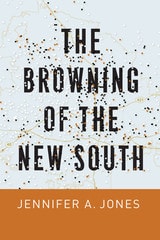
cover of The Browning of the New South

The Browning of the New South

Jennifer A. Jones

University of Chicago Press, 2019

Studies of immigration to the United States have traditionally focused on a few key states and urban centers, but recent shifts in nonwhite settlement mean that these studies no longer paint the whole picture. Many Latino newcomers are flocking to places like the Southeast, where typically few such immigrants have settled, resulting in rapidly redrawn communities. In this historic moment, Jennifer Jones brings forth an ethnographic look at changing racial identities in one Southern city: Winston-Salem, North Carolina. This city turns out to be a natural experiment in race relations, having quickly shifted in the past few decades from a neatly black and white community to a triracial one. Jones tells the story of contemporary Winston-Salem through the eyes of its new Latino residents, revealing untold narratives of inclusion, exclusion, and interracial alliances. The Browning of the New South reveals how one community’s racial realignments mirror and anticipate the future of national politics.
 
[more]
cover of The Buddhist Poetry of the Great Kamo Priestess: Daisaiin Senshi and Hosshin Wakashu

The Buddhist Poetry of the Great Kamo Priestess

Daisaiin Senshi and Hosshin Wakashu

Edward Kamens

University of Michigan Press, 1991
Senshi was born in 964 and died in 1035, in the Heian period of Japanese history (794–1185). Most of the poems discussed here are what may loosely be called Buddhist poems, since they deal with Buddhist scriptures, practices, and ideas. For this reason, most of them have been treated as examples of a category or subgenre of waka called Shakkyoka, “Buddhist poems.”
Yet many Shakkyoka are more like other poems in the waka canon than they are unlike them. In the case of Senshi’s “Buddhist poems,” their language links them to the traditions of secular verse. Moreover, the poems use the essentially secular public literary language of waka to address and express serious and relatively private religious concerns and aspirations. In reading Senshi’s poems, it is as important to think about their relationship to the traditions and conventions of waka and to other waka texts as it is to think about their relationship to Buddhist thoughts, practices, and texts.
The Buddhist Poetry of the Great Kamo Priestess creates a context for the reading of Senshi’s poems by presenting what is known and what has been thought about her and them. As such, it is a vital source for any reader of Senshi and other literature of the Heian period.
[more]
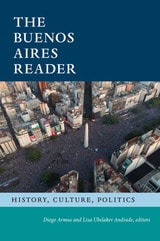
cover of The Buenos Aires Reader: History, Culture, Politics

The Buenos Aires Reader

History, Culture, Politics

Diego Armus and Lisa Ubelaker Andrade, editors

Duke University Press, 2024
The Buenos Aires Reader offers an insider’s look at the diverse lived experiences of the people, politics, and culture of Argentina’s capital city primarily from the nineteenth century to the present. Refuting the tired cliché that Buenos Aires is the “Paris of South America,” this book gives a nuanced view of a city that has long been attentive to international trends yet never ceases to celebrate its local culture. The vibrant opinions, reflections, and voices of Buenos Aires come to life through selections that range from songs, poems, letters, and essays to interviews, cartoons, paintings, and historical documents, many of which have been translated into English for the first time. These selections tell the story of the city’s culture of protest and celebration, its passion for soccer and sport, its gastronomy and food traditions, its legendary nightlife, and its musical, literary, and artistic cultures. Providing an unparalleled look at Buenos Aires’s history, culture, and politics, this volume is an ideal companion for anyone interested in this dynamic, disruptive, and inventive city.
[more]
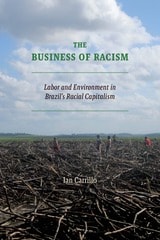
cover of The Business of Racism: Labor and Environment in Brazil's Racial Capitalism

The Business of Racism

Labor and Environment in Brazil's Racial Capitalism

Ian Carrillo

Duke University Press, 2026

In The Business of Racism, Ian Carrillo employs a case study from Brazil’s sugarcane industry to show how racial capitalism is promulgated and maintained through politics and business. As Carrillo recounts, in the mid-2000s, Brazil embarked on a state-led project to improve environmental and labor conditions in sugarcane production. He describes how, seeing increased government regulation of their worksite as a threat to their power, the elites of Brazil’s sugar-ethanol industry repurposed long-standing racial ideologies to undermine progressive institutions and elevate their own leaders. Carrillo’s extensive ethnographic fieldwork in mills and plantations, as well as interviews with federal labor regulators and sugar-ethanol industry elites in Brazil, weaves together an account of how Brazil’s labor and environmental regulations are forged through racial and class struggles at worksites and within the state. The Business of Racism contributes to ongoing sociological debates about race, development, and the environment while highlighting future pathways for achieving racial justice, labor equality, and climate sustainability.
[more]
cover of The Butte Irish: Class and Ethnicity in an American Mining Town, 1875-1925

The Butte Irish

Class and Ethnicity in an American Mining Town, 1875-1925

David M. Emmons

University of Illinois Press, 1989

In this pioneering study, David Emmons tells the story of Butte's large and assertive population of Irish immigrants. He traces their backgrounds in Ireland, the building  of an ethnic community in Butte, the nature and hazards of their work in the copper mines, and the complex interplay between Irish nationalism and worker consciousness.

From a treasure trove of "Irish stuff," the reports, minutes, and correspondence of the major Irish-American organizations in Butte, Emmons shows how the stalwart supporters of the RELA and the Ancient Order of Hiberians marched and drilled for Irish freedom---and how, as they ran the town, the miners' union, and the largest mining companies, they used this tradition of ethnic cooperation to ensure safe and steady work, Irish mines taking care of Irish miners. Butte was new, overwhelmingly Irish, and extraordinarily dangerous---the ideal place to test the seam between class and ethnicity.

 

[more]
cover of The Cancer Within: Reproduction, Cultural Transformation, and Health Care in Romania

The Cancer Within

Reproduction, Cultural Transformation, and Health Care in Romania

Cristina A. Pop

Rutgers University Press, 2022

The Cancer Within examines cervical cancer in Romania as a point of entry into an anthropological reflection on contemporary health care. Cervical cancer prevention reveals the inner workings of emerging post-communist medicine, which aligns the state and the market, public and private health care providers, policy makers, and ordinary women. Fashioned by patriarchal relations, lived religion, and the historical trauma of pronatalism, Romanian women’s responses to reproductive medicine and cervical cancer prevention are complicated by neoliberal reforms to medical care. Cervical cancer prevention – and especially the HPV vaccination – provided Romanians a legitimate instance to express their conflicting views of post-communist medicine. What sets Romania apart is that pronatalism, patriarchy, lived religion, medical reforms, and moral contestation of preventive medicine bring into line systemic contingencies that expose the historical, social, and cultural trajectories of cervical cancer.
 
[more]
cover of The Cape Cod Bicycle War: and Other Stories

The Cape Cod Bicycle War

and Other Stories

Billy Kahora

Ohio University Press, 2020
Each of the realistic worlds Billy Kahora brings us in the short stories and novella that make up The Cape Cod Bicycle War and Other Stories explores the tensions and transitions of characters moving between youthful folly and a precarious adulthood. In the title story, immigrant workers with varying ambitions work at a Wendy’s in wintry Cape Cod. Sharing one house, they must also share, or rather compete for, bicycles—crucial transportation—which are in short supply. In other stories, a young man caught between a broken family and political violence befriends an aged gorilla in a Nairobi zoo; a pastor struggles to come to terms with the arrest of his brother, who is suspected of terrorism; and a dissolute bank employee on a serious bender returns to work to face a review board. The Cape Cod Bicycle War and Other Stories is Billy Kahora’s long-awaited debut collection. Stories in this volume have appeared in Granta and McSweeney’s and have been shortlisted for the Caine Prize for African Writing.
[more]
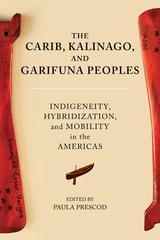
cover of The Carib, Kalinago, and Garifuna Peoples: Indigeneity, Hybridization, and Mobility in the Americas

The Carib, Kalinago, and Garifuna Peoples

Indigeneity, Hybridization, and Mobility in the Americas

Edited by Paula Prescod

University of Illinois Press, 2026

The Indigenous peoples of the Lesser Antilles used the sea and waterways to sow a diaspora across the Caribbean basin and beyond. Their histories all-too-often reflect colonial viewpoints and stereotypes dating back to the region’s imperial era. Paula Prescod edits a collection of studies that examine the intermingling and interdependencies of indigenous Caribbean populations and the groups they encountered following the European conquest of the Americas. Works in the first section explore the historical entwinement of the Indigenous, European, and African populations thrown together in the region, and the agency and power each group invested in itself to survive. In part 2, contributors illuminate the complex and dynamic natures of interrelatedness and identification of the descendants of Indigenous populations while seeing the Carib, Kalinago, and Garifuna peoples as a heterogeneous group.

An overdue and wide-ranging reconsideration, The Carib, Kalinago, and Garifuna Peoples presents an invaluable collection of multidisciplinary studies that reposition the three groups’ history and experiences.

Contributors: Fernando Y. Alvarado Benítez, Sarah England, Nicholas Faraclas, Adrian Fraser, Sarah-Lee R. Gonsalves, Silke Jansen, Andrea E. Leland, Melinda Maxwell-Gibb, Ernesto Mercado-Montero, Lauren Madrid Poluha, Paula Prescod, Santiago J. Ruiz, and Cesar Andoni Vargas Sabio
[more]
cover of The Center Cannot Hold: Decolonial Possibility in the Collapse of a Tanzanian NGO

The Center Cannot Hold

Decolonial Possibility in the Collapse of a Tanzanian NGO

Jenna N. Hanchey

Duke University Press, 2023

In The Center Cannot Hold Jenna N. Hanchey examines the decolonial potential emerging from processes of ruination and collapse. Drawing on ethnographic fieldwork in rural Tanzania at an internationally funded NGO as it underwent dissolution, Hanchey traces the conflicts between local leadership and Western paternalism as well as the unstable subjectivity of Western volunteers—including the author—who are unable to withstand the contradictions of playing the dual roles of decolonializing ally and white savior. She argues that Western institutional and mental structures must be allowed to fall apart to make possible the emergence of decolonial justice. Hanchey shows how, through ruination, privileged subjects come to critical awareness through repeated encounters with their own complicity, providing an opportunity to delink from and oppose epistemologies of coloniality. After things fall apart, Hanchey posits, the creation of decolonial futures depends on the labor required to imagine impossible futures into being.
[more]
cover of The Challenge of Modernity: German Social and Cultural Studies, 1890-1960

The Challenge of Modernity

German Social and Cultural Studies, 1890-1960

Adelheid von Saldern

University of Michigan Press, 2002

Adelheid von Saldern is one of the most productive, thoughtful, and innovative researchers in the field of twentieth-century German history. Her already long career has been distinguished by a willingness to take intellectual risks by participating in new historiographical movements, borrowing from cultural anthropology, focusing on the social and cultural history of everyday life, and demonstrating the importance of gender history. In this volume, she expressly focuses on the various challenges modernity posed to German society between 1900 and 1960. Throughout, von Saldern is particularly concerned with public perceptions, debates, and attitudes.
The essays contained in The Challenge of Modernity cover three distinct subject areas: the history of the Social Democratic labor movement, housing, and popular and mass culture. More specifically, von Saldern addresses the self-modernizing Social Democratic Party; Social Democrats' and Communists' opposing views of modernization; social rationalization in the private sphere (particularly with regard to women and hygiene); sport; the arrival of "trashy" literature, movies, and radio in Germany; and cultural conservatives' attempts to enhance a national and Volks-culture in opposition to mass-culture, Americanization, and the avant-garde. The variety of responses to the modernization process, as well as von Saldern's focus on social agents, makes this book unique.
Required reading for scholars of social, cultural, and gender history, The Challenge of Modernity will also find an audience among urban anthropologists, political scientists, and sociologists. Von Saldern's ability to combine a strong theoretical framework with concrete historical examples will also make this outstanding reading for undergraduate and graduate students seeking to familiarize themselves with the history of German society and culture.
Adelheid von Saldern is Professor of Modern History and Director, Historisches Seminar, Universität Hanover.
[more]
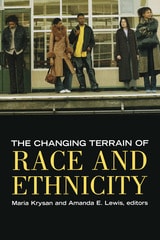
cover of The Changing Terrain of Race and Ethnicity

The Changing Terrain of Race and Ethnicity

Maria Krysan

Russell Sage Foundation, 2004

The legal institutions of overt racism in the United States have been eliminated, but social surveys and investigations of social institutions confirm the continuing significance of race and the enduring presence of negative racial attitudes. This shift from codified and explicit racism to more subtle forms comes at a time when the very boundaries of race and ethnicity are being reshaped by immigration and a rising recognition that old systems of racial classification inadequately capture a diverse America. In The Changing Terrain of Race and Ethnicity, editors Maria Krysan and Amanda Lewis bring together leading scholars of racial dynamics to study the evolution of America's racial problem and its consequences for race relations in the future. The Changing Terrain of Race and Ethnicity opens by attempting to answer a puzzling question: how is it that so many whites think racism is no longer a problem but so many nonwhites disagree? Sociologist Lawrence Bobo contends that whites exhibit what he calls "laissez faire racism," which ignores historical and structural contributions to racial inequality and does nothing to remedy the injustices of the status quo. Tyrone Forman makes a similar case in his chapter, contending that an emphasis on "color blindness" allows whites to be comforted by the idea that all races are on a level playing field, while not recognizing the advantages they themselves have reaped from years of inequality. The book then moves to a discussion of the new ways that Americans view race. Eduardo Bonilla-Silva and Karen Glover argue that the United States is moving from a black-white divide to a tripartite system, where certain light-skinned, non-threatening minority groups are considered "honorary whites." The book's final section reexamines the theoretical underpinnings of scholarship on race and ethnicity. Joe Feagin argues that research on racism focuses too heavily on how racial boundaries are formed and needs to concentrate more on how those boundaries are used to maintain privileges for certain groups at the expense of others. Manning Marable contends that racism should be addressed at an institutional level to see the prevalence of "structural racism"—deeply entrenched patterns of inequality that are coded by race and justified by stereotypes. The Changing Terrain of Race and Ethnicity provides an in-depth view of racism in modern America, which may be less conspicuous but not necessarily less destructive than its predecessor, Jim Crow. The book's rich analysis and theoretical insight shed light on how, despite many efforts to end America's historic racial problem, it has evolved and persisted into the 21st century.
[more]
cover of The Chasers

The Chasers

Renato Rosaldo

Duke University Press, 2019
Renato Rosaldo's new prose poetry collection shares his experiences and those of his group of twelve Mexican American Tucson High School friends known as the Chasers as they grew up, graduated, and fell out of touch. Derived from interviews with the Chasers and three other friends conducted after their fiftieth high school reunion, Rosaldo's poems present a chorus of distinct voices and perspectives that convey the realities of Chicano life on the borderlands from the 1950s to the present.
[more]
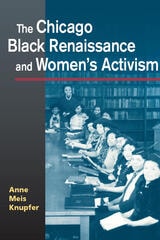
cover of The Chicago Black Renaissance and Women's Activism

The Chicago Black Renaissance and Women's Activism

Anne Meis Knupfer

University of Illinois Press, 2006

Following on the heels of the Harlem Renaissance, the Chicago Renaissance was a resonant flourishing of African American arts, literature, theater, music, and intellectualism, from 1930 to 1955. Anne Meis Knupfer's The Chicago Black Renaissance and Women's Activism demonstrates the complexity of black women's many vital contributions to this unique cultural flowering.

The book examines various groups of black female activists, including writers and actresses, social workers, artists, school teachers, and women's club members to document the impact of social class, gender, nativity, educational attainment, and professional affiliations on their activism. Together, these women worked to sponsor black history and literature, to protest overcrowded schools, and to act as a force for improved South Side housing and employment opportunities. Knupfer also reveals the crucial role these women played in founding and sustaining black cultural institutions, such as the first African American art museum in the country; the first African American library in Chicago; and various African American literary journals and newspapers. As a point of contrast, Knupfer also examines the overlooked activism of working-class and poor women in the Ida B. Wells and Altgeld Gardens housing projects.
[more]
cover of The Chican@ Hip Hop Nation: Politics of a New Millennial Mestizaje

The Chican@ Hip Hop Nation

Politics of a New Millennial Mestizaje

Pancho McFarland

Michigan State University Press, 2013
The population of Mexican-origin peoples in the United States is a diverse one, as reflected by age, class, gender, sexuality, and religion. Far from antiquated concepts of mestizaje, recent scholarship has shown that Mexican@/Chican@ culture is a mixture of indigenous, African, and Spanish and other European peoples and cultures. No one reflects this rich blend of cultures better than Chican@ rappers, whose lyrics and iconography can help to deepen our understanding of what it means to be Chican@ or Mexican@ today. While some identify as Mexican mestizos, others identify as indigenous people or base their identities on their class and racial/ethnic makeup. No less significant is the intimate level of contact between Chican@s and black Americans. Via a firm theoretical foundation, Pancho McFarland explores the language and ethos of Chican@/Mexican@ hip hop and sheds new light on three distinct identities reflected in the music: indigenous/Mexica, Mexican nationalist/immigrant, and street hopper. With particular attention to the intersection of black and Chicano cultures, the author places exciting recent developments in music forms within the context of progressive social change, social justice, identity, and a new transnational, polycultural America.
[more]
cover of The Chicana Motherwork Anthology

The Chicana Motherwork Anthology

Edited by Cecilia Caballero, Yvette Martínez-Vu, Judith Pérez-Torres, Michelle Téllez, Christine Vega; Foreword by Ana Castillo

University of Arizona Press, 2019

The Chicana M(other)work Anthology weaves together emerging scholarship and testimonios by and about self-identified Chicana and Women of Color mother-scholars, activists, and allies who center mothering as transformative labor through an intersectional lens. Contributors provide narratives that make feminized labor visible and that prioritize collective action and holistic healing for mother-scholars of color, their children, and their communities within and outside academia.

The volume is organized in four parts: (1) separation, migration, state violence, and detention; (2) Chicana/Latina/WOC mother-activists; (3) intergenerational mothering; and (4) loss, reproductive justice, and holistic pregnancy. Contributors offer a just framework for Chicana and Women of Color mother-scholars, activists, and allies to thrive within and outside of the academy. They describe a new interpretation of motherwork that addresses the layers of care work needed for collective resistance to structural oppression and inequality.

This anthology is a call to action for justice. Contributions are both theoretical and epistemological, and they offer an understanding of motherwork through Chicana and Women of Color experiences.
[more]
cover of The Chicano Worker

The Chicano Worker

By Vernon M. Briggs, Jr., Walter Fogel, and Fred H. Schmidt

University of Texas Press, 1977

The Chicano Worker is an incisive analysis of the labor-market experiences of Mexican American workers in the late twentieth century. The authors—each established in the fields of labor economics and research on Chicano workers—describe the major employment patterns of the Chicano labor force and discuss the historical and institutional factors determining these patterns. This work speaks to the continuing widespread public interest in Mexican immigration, migrant farm labor, unionization of farm workers, Chicano education and training needs, and the legacy of discriminatory treatment against Chicanos. The authors treat the convergence of these issues and their public policy implications.

Drawing from census data as well as other sources, The Chicano Worker reports on Chicano unemployment, labor-force participation, occupational and industrial distributions of employment, and various indices of earnings. It also deals with such issues as history, family size, health, and culture. The Chicano Worker is likely to open new areas of interest, discussion, and criticism concerning Chicanos in the United States.
[more]
cover of The Chicanos: As We See Ourselves

The Chicanos

As We See Ourselves

Edited by Arnulfo D. Trejo

University of Arizona Press, 1979

Thirteen Chicano scholars draw upon their personal experiences and expertise to paint a vivid, colorful portrait of what it means to be a Chicano.

“We have come a long way,” says Arnulfo D. Trejo, editor of this volume, “from the time when the Mexicano silently accepted the stereotype drawn of him by the outsider.” He identifies himself as a Chicano, and his “promised land” is Aztlán, home of the ancient Aztecs, which now provides spiritual unity and a vision of the future for Chicanos.

In these twelve original compositions, says Trejo, “our purpose is not to talk to ourselves, but to open a dialogue among all concerned people.” The personal reactions to Chicano women’s struggles, political experiences, bicultural education and history provide a wealth of information for laymen as well as scholars. In addition, the book provides the most complete recorded definition of the Chicano Movement, what it has accomplished, and its goals for the future.

Contributors:
 
Fausto Avendaño
Roberto R. Bacalski-Martínez
David Ballesteros
José Antonio Burciaga
Rudolph O. de la Garza
Ester Gallegos y Chávez
Sylvia Alicia Gonzales
Manuel H. Guerra
Guillermo Lux
Martha A. Ramos
Reyes Ramos
Carlos G. Vélez-Ibáñez
Maurilio E. Vigil

[more]
cover of The Child Now

The Child Now

Julian Gill-Peterson, Rebekah Sheldon, and Kathryn Bond Stockton, special issue editors

Duke University Press, 2016

A special issue of GLQ: A Journal of Lesbian and Gay Studies

Futurity, innocence, and childish subversion—as concepts, as frameworks—have yet to catch up to where the child has moved in the present century. The contributors to this issue explore topics that are both vital and challenging for current queer studies, including paradoxical exportations of the U.S. "innocent" child abroad, the queer child under same-sex marriage law, child revolutionaries' actions in Egypt, and the colonial afterlife of the boarding school for indigenous children. Following the twists and turns of children now, contributors confront how race, gender, and sexuality are made to live and grow in children’s bodies.

Contributors
Paul Amar, Julian Gill-Peterson, Clifford J. Rosky, Rebekah Sheldon, Kathryn Bond Stockton, Mary Zaborskis
[more]
cover of The Children of 1965: On Writing, and Not Writing, as an Asian American

The Children of 1965

On Writing, and Not Writing, as an Asian American

Min Hyoung Song

Duke University Press, 2013
Since the 1990s, a new cohort of Asian American writers has garnered critical and popular attention. Many of its members are the children of Asians who came to the United States after the Immigration and Nationality Act of 1965 lifted long-standing restrictions on immigration. This new generation encompasses writers as diverse as the graphic novelists Adrian Tomine and Gene Luen Yang, the short story writer Nam Le, and the poet Cathy Park Hong. Having scrutinized more than one hundred works by emerging Asian American authors and having interviewed several of these writers, Min Hyoung Song argues that collectively, these works push against existing ways of thinking about race, even as they demonstrate how race can facilitate creativity. Some of the writers eschew their identification as ethnic writers, while others embrace it as a means of tackling the uncertainty that many people feel about the near future. In the literature that they create, a number of the writers that Song discusses take on pressing contemporary matters such as demographic change, environmental catastrophe, and the widespread sense that the United States is in national decline.
[more]
cover of The China Journal, volume 87 number 1 (January 2022)

The China Journal, volume 87 number 1 (January 2022)

The University of Chicago Press

University of Chicago Press Journals, 2022
This is volume 87 issue 1 of The China Journal. The China Journal is a cutting-edge source of scholarship, information and analysis about China and Taiwan. TCJ has published informed and insightful commentary from China scholars worldwide and stimulated the scholarly debate on contemporary China for more than thirty years. With its reputation for quality and clarity, the journal has proven itself invaluable for instruction and research about one of the most significant regions in the world. Interdisciplinary in scope, TCJ provides deep coverage of important anthropological, sociological, and political science topics. In addition to a wide range of articles, TCJ also publishes high-quality reviews of recent books published on modern China.
[more]
cover of The China Journal, volume 88 number 1 (July 2022)

The China Journal, volume 88 number 1 (July 2022)

The University of Chicago Press

University of Chicago Press Journals, 2022
This is volume 88 issue 1 of The China Journal. The China Journal is a cutting-edge source of scholarship, information and analysis about China and Taiwan. TCJ has published informed and insightful commentary from China scholars worldwide and stimulated the scholarly debate on contemporary China for more than thirty years. With its reputation for quality and clarity, the journal has proven itself invaluable for instruction and research about one of the most significant regions in the world. Interdisciplinary in scope, TCJ provides deep coverage of important anthropological, sociological, and political science topics. In addition to a wide range of articles, TCJ also publishes high-quality reviews of recent books published on modern China.
[more]
cover of The China Journal, volume 89 number 1 (January 2023)

The China Journal, volume 89 number 1 (January 2023)

The University of Chicago Press

University of Chicago Press Journals, 2023
This is volume 89 issue 1 of The China Journal. The China Journal is a cutting-edge source of scholarship, information and analysis about China and Taiwan. TCJ has published informed and insightful commentary from China scholars worldwide and stimulated the scholarly debate on contemporary China for more than thirty years. With its reputation for quality and clarity, the journal has proven itself invaluable for instruction and research about one of the most significant regions in the world. Interdisciplinary in scope, TCJ provides deep coverage of important anthropological, sociological, and political science topics. In addition to a wide range of articles, TCJ also publishes high-quality reviews of recent books published on modern China.
[more]
cover of The China Journal, volume 90 number 1 (July 2023)

The China Journal, volume 90 number 1 (July 2023)

The University of Chicago Press

University of Chicago Press Journals, 2023
This is volume 90 issue 1 of The China Journal. The China Journal is a cutting-edge source of scholarship, information and analysis about China and Taiwan. TCJ has published informed and insightful commentary from China scholars worldwide and stimulated the scholarly debate on contemporary China for more than thirty years. With its reputation for quality and clarity, the journal has proven itself invaluable for instruction and research about one of the most significant regions in the world. Interdisciplinary in scope, TCJ provides deep coverage of important anthropological, sociological, and political science topics. In addition to a wide range of articles, TCJ also publishes high-quality reviews of recent books published on modern China.
[more]
cover of The China Journal, volume 91 number 1 (January 2024)

The China Journal, volume 91 number 1 (January 2024)

The University of Chicago Press

University of Chicago Press Journals, 2024
This is volume 91 issue 1 of The China Journal. The China Journal is a cutting-edge source of scholarship, information and analysis about China and Taiwan. TCJ has published informed and insightful commentary from China scholars worldwide and stimulated the scholarly debate on contemporary China for more than thirty years. With its reputation for quality and clarity, the journal has proven itself invaluable for instruction and research about one of the most significant regions in the world. Interdisciplinary in scope, TCJ provides deep coverage of important anthropological, sociological, and political science topics. In addition to a wide range of articles, TCJ also publishes high-quality reviews of recent books published on modern China.
[more]
cover of The China Journal, volume 92 number 1 (July 2024)

The China Journal, volume 92 number 1 (July 2024)

The University of Chicago Press

University of Chicago Press Journals, 2024
This is volume 92 issue 1 of The China Journal. The China Journal is a cutting-edge source of scholarship, information and analysis about China and Taiwan. TCJ has published informed and insightful commentary from China scholars worldwide and stimulated the scholarly debate on contemporary China for more than thirty years. With its reputation for quality and clarity, the journal has proven itself invaluable for instruction and research about one of the most significant regions in the world. Interdisciplinary in scope, TCJ provides deep coverage of important anthropological, sociological, and political science topics. In addition to a wide range of articles, TCJ also publishes high-quality reviews of recent books published on modern China.
[more]
cover of The China Journal, volume 93 number 1 (January 2025)

The China Journal, volume 93 number 1 (January 2025)

The University of Chicago Press

University of Chicago Press Journals, 2025
This is volume 93 issue 1 of The China Journal. The China Journal is a cutting-edge source of scholarship, information and analysis about China and Taiwan. TCJ has published informed and insightful commentary from China scholars worldwide and stimulated the scholarly debate on contemporary China for more than thirty years. With its reputation for quality and clarity, the journal has proven itself invaluable for instruction and research about one of the most significant regions in the world. Interdisciplinary in scope, TCJ provides deep coverage of important anthropological, sociological, and political science topics. In addition to a wide range of articles, TCJ also publishes high-quality reviews of recent books published on modern China.
[more]
cover of The China Journal, volume 94 number 1 (July 2025)

The China Journal, volume 94 number 1 (July 2025)

The University of Chicago Press

University of Chicago Press Journals, 2025
This is volume 94 issue 1 of The China Journal. The China Journal is a cutting-edge source of scholarship, information and analysis about China and Taiwan. TCJ has published informed and insightful commentary from China scholars worldwide and stimulated the scholarly debate on contemporary China for more than thirty years. With its reputation for quality and clarity, the journal has proven itself invaluable for instruction and research about one of the most significant regions in the world. Interdisciplinary in scope, TCJ provides deep coverage of important anthropological, sociological, and political science topics. In addition to a wide range of articles, TCJ also publishes high-quality reviews of recent books published on modern China.
[more]
cover of The China Journal, volume 95 number 1 (January 2026)

The China Journal, volume 95 number 1 (January 2026)

The University of Chicago Press

University of Chicago Press Journals, 2026
This is volume 95 issue 1 of The China Journal. The China Journal is a cutting-edge source of scholarship, information and analysis about China and Taiwan. TCJ has published informed and insightful commentary from China scholars worldwide and stimulated the scholarly debate on contemporary China for more than thirty years. With its reputation for quality and clarity, the journal has proven itself invaluable for instruction and research about one of the most significant regions in the world. Interdisciplinary in scope, TCJ provides deep coverage of important anthropological, sociological, and political science topics. In addition to a wide range of articles, TCJ also publishes high-quality reviews of recent books published on modern China.
[more]
cover of The China Journal, volume 96 number 1 (July 2026)

The China Journal, volume 96 number 1 (July 2026)

The University of Chicago Press

University of Chicago Press Journals, 2026
This is volume 96 issue 1 of The China Journal. The China Journal is a cutting-edge source of scholarship, information and analysis about China and Taiwan. TCJ has published informed and insightful commentary from China scholars worldwide and stimulated the scholarly debate on contemporary China for more than thirty years. With its reputation for quality and clarity, the journal has proven itself invaluable for instruction and research about one of the most significant regions in the world. Interdisciplinary in scope, TCJ provides deep coverage of important anthropological, sociological, and political science topics. In addition to a wide range of articles, TCJ also publishes high-quality reviews of recent books published on modern China.
[more]
cover of The Chinese Diaspora on American Screens: Race, Sex, and Cinema

The Chinese Diaspora on American Screens

Race, Sex, and Cinema

Gina Marchetti

Temple University Press, 2012

The Chinese Diaspora on American Screens looks at the way in which issues of race and sexuality have become central concerns in cinema generated by and about Chinese communities in America after the mid-1990s. This companion volume to Marchetti's From Tian'anmen to Times Square looks specifically at the Chinese diaspora in relation to ethnic, racial, gender, and sexual identity as depicted in the cinema.

Examining films from the United States and Canada, as well as transnational co-productions, The Chinese Diaspora on American Screens includes analyses of films such as The Wedding Banquet and Double Happiness in addition to interviews with celebrated filmmakers such as Wayne Wang.

Marchetti also reflects on how Chinese identity is presented in a multitude of media forms, including commercial cinema, documentaries, experimental films, and hybrid digital media to offer a textured look at representations of the Chinese diasporic experience after Tian'anmen.
[more]
cover of The Chinese Garden as Lyric Enclave: A Generic Study of <em>The Story of the Stone</em>

The Chinese Garden as Lyric Enclave

A Generic Study of <em>The Story of the Stone</em>

Chi Xiao

University of Michigan Press, 2012

Lyricism in poetry dominated the Chinese literary tradition for three millenia. Lyric aesthetics captured the world in verse, and compelled people to seek the totalistic behind the contingent, the abiding behind the fluid, and the perfect behind the incomplete. The development of the novel and the cultural milieu that produced it, however, rendered this lyric ideal more prosaic, both in everyday life and in literature.
The Chinese Garden as Lyric Enclave places The Story of the Stone in relation to this history. Read as an allegory of the fate of lyricism, The Stone is a parodic response to both the lyrical phenomena in the literary and social worlds and the cosmological beliefs on which Chinese lyricism is based. Thus we can trace the social life of lyricism through different cultural zones: the world where the novel was produced, the world of fiction, and the narrative universe of the story itself. The garden, in both the novel and cultural tradition, is a link between all three zones.
Chi Xiao breaks new ground in understanding The Story of the Stone, blending his extensive knowledge of traditional Chinese fiction with a remarkably crafted history of the garden as an enduring feature of elite Chinese life. By focusing on the role of the garden in The Stone, Xiao Chi reveals the special linkages between the world of fiction, the world that produced the novel, and the narrative universe of the story itself.
[more]
cover of The Chinese Postmodern: Trauma and Irony in Chinese Avant-Garde Fiction

The Chinese Postmodern

Trauma and Irony in Chinese Avant-Garde Fiction

Xiaobin Yang

University of Michigan Press, 2002

The Chinese Postmodern is a pioneering study of today's Chinese experimental fiction, exploring the works of such major writers as Can Xue, Ge Fei, Ma Yuan, Mo Yan, Xu Xiaohe, and Yu Hua from the perspective of cultural and literary postmodernity. Focusing on the interplay between historical psychology and representational mode, and between political discourse and literary rhetoric, it examines the problem of Chinese postmodernity against the background of the cultural-political reality of twentieth-century China.
The book seeks to redefine Chinese modernity and postmodernity through the analyses of both orthodox and avant-garde works. In doing so, the author draws on a number of theories, psychoanalysis and deconstruction in particular, revealing the hidden connection between the deconstructive mode of writing and the experience of history after trauma and showing how avant-garde literature brings about a varied literary paradigm that defies the dominant, subject-centered one in twentieth-century China.
The distinctiveness of The Chinese Postmodern is also found in its portrayal of the changes of literary paradigms in modern Chinese literature. By way of characterizing avant-garde fiction, it provides an overview of twentieth-century Chinese literature and offers a theorization of the intellectual history of modern China. Other issues concerning literary theory are explored, including the relationships between postmodernity and totalitarian discourse, between historical trauma and literary writing, and between psychic trauma and rhetorical irony. This book will appeal to readers in the fields of Chinese literature and culture, modern Chinese history, literary theory, and comparative literature.
Xiaobin Yang is Croft Assistant Professor, University of Mississippi.
[more]
cover of The Chinese Question: Ethnicity, Nation, and Region in and Beyond the Philippines

The Chinese Question

Ethnicity, Nation, and Region in and Beyond the Philippines

Caroline S. Hau

National University of Singapore Press, 2014

The rising strength of mainland China has spurred a revival of “Chineseness” in the Philippines. Perceived during the Cold War era as economically dominant, politically disloyal, and culturally different, the “Chinese” presented themselves as an integral part of the Filipino imagined community. Today, as Filipinos seek associations with China, many of them see the local Chinese community as key players in East Asian regional economic development.


        With the revaluing of Chineseness has come a repositioning of  “Chinese” racial and cultural identity. Philippine mestizos (people of mixed ancestry) form an important sub-group of the Filipino elite, but their Chineseness was occluded as they disappeared into the emergent Filipino nation. In the twentieth century, mestizos defined themselves and based claims to privilege on “white” ancestry, but mestizos are now actively reclaiming their “Chinese” heritage. At the same time, so-called “pure Chinese” are parlaying their connections into cultural, social, symbolic, or economic capital, and leaders of mainland Chinese state companies have entered into politico-business alliances with the Filipino national elite. As the meanings of  “Chinese” and “Filipino” evolve, intractable contradictions are appearing in the concepts of citizenship and national belonging.


        Through an examination of cinematic and literary works, The Chinese Question shows how race, class, ideology, nationality, territory, sovereignty, and mobility are shaping the discourses of national integration, regional identification, and global cosmopolitanism.
[more]
cover of The Cincinnati Human Relations Commission: A History, 1943–2013

The Cincinnati Human Relations Commission

A History, 1943–2013

Phillip J. Obermiller

Ohio University Press, 2018

In the summer of 1943, as World War II raged overseas, the United States also faced internal strife. Earlier that year, Detroit had erupted in a series of race riots that killed dozens and destroyed entire neighborhoods. Across the country, mayors and city councils sought to defuse racial tensions and promote nonviolent solutions to social and economic injustices. In Cincinnati, the result of those efforts was the Mayor’s Friendly Relations Committee, later renamed the Cincinnati Human Relations Commission (CHRC).

The Cincinnati Human Relations Commission: A History, 1943–2013, is a decade-by-decade chronicle of the agency: its accomplishments, challenges, and failures. The purpose of municipal human relations agencies like the CHRC was to give minority groups access to local government through internal advocacy, education, mediation, and persuasion—in clear contrast to the tactics of lawsuits, sit-ins, boycotts, and marches adopted by many external, nongovernmental organizations.

In compiling this history, Phillip J. Obermiller and Thomas E. Wagner have drawn on an extensive base of archival records, reports, speeches, and media sources. In addition, archival and contemporary interviews provide first-person insight into the events and personalities that shaped the agency and the history of civil rights in this midwestern city.
[more]
cover of The Cinema and Its Shadow: Race and Technology in Early Cinema

The Cinema and Its Shadow

Race and Technology in Early Cinema

Alice Maurice

University of Minnesota Press, 2013


The Cinema and Its Shadow argues that race has defined the cinematic apparatus since the earliest motion pictures, especially at times of technological transition. In particular, this work explores how racial difference became central to the resolving of cinematic problems: the stationary camera, narrative form, realism, the synchronization of image and sound, and, perhaps most fundamentally, the immaterial image—the cinema’s “shadow,” which figures both the material reality of the screen image and its racist past.


Discussing early “race subjects,” Alice Maurice demonstrates that these films influenced cinematic narrative in lasting ways by helping to determine the relation between stillness and motion, spectacle and narrative drive. The book examines how motion picture technology related to race, embodiment, and authenticity at specific junctures in cinema’s development, including the advent of narratives, feature films, and sound. In close readings of such films as The Cheat, Shadows, and Hallelujah!, Maurice reveals how the rhetoric of race repeatedly embodies film technology, endowing it with a powerful mix of authenticity and magic. In this way, the racialized subject became the perfect medium for showing off, shoring up, and reintroducing the cinematic apparatus at various points in the history of American film.


Moving beyond analyzing race in purely thematic or ideological terms, Maurice traces how it shaped the formal and technological means of the cinema.


[more]
cover of The Cinema of Robert Rodriguez

The Cinema of Robert Rodriguez

By Frederick Luis Aldama

University of Texas Press, 2014

Robert Rodriguez stands alone as the most successful U.S. Latino filmmaker today, whose work has single-handedly brought U.S. Latino filmmaking into the mainstream of twenty-first-century global cinema. Rodriguez is a prolific (eighteen films in twenty-one years) and all-encompassing filmmaker who has scripted, directed, shot, edited, and scored nearly all his films since his first breakout success, El Mariachi, in 1992. With new films constantly coming out and the launch of his El Rey Network television channel, he receives unceasing coverage in the entertainment media, but systematic scholarly study of Rodriguez’s films is only just beginning.

The Cinema of Robert Rodriguez offers the first extended investigation of this important filmmaker’s art. Accessibly written for fans as well as scholars, it addresses all of Rodriguez’s feature films through Spy Kids 4 and Machete Kills, and his filmmaking process from initial inspiration, to script, to film (with its myriad visual and auditory elements and choices), to final product, to (usually) critical and commercial success. In addition to his close analysis of Rodriguez’s work, Frederick Luis Aldama presents an original interview with the filmmaker, in which they discuss his career and his relationship to the film industry. This entertaining and much-needed scholarly overview of Rodriguez’s work shines new light on several key topics, including the filmmaker’s creative, low-cost, efficient approach to filmmaking; the acceptance of Latino films and filmmakers in mainstream cinema; and the consumption and reception of film in the twenty-first century.
[more]
cover of The Circle of Mountains: A Basque Shepherding Community

The Circle of Mountains

A Basque Shepherding Community

Sandra Ott

University of Nevada Press, 1993

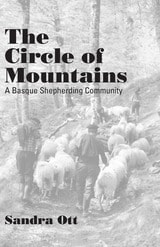
Ott provides an excellent ethnography of a French Basque agrarian and sheepherding community. The commune of Sainte-Engrâce extends along a mountain valley in the southeastern corner of Soule, one of the three Basque provences in France. In The Circle of Mountains, Sandra Ott examines the importance of cooperation and reciprocity as the essential basis for the main institutions within this community. These French Basques visualize their community as a circle, and their vision of living in "the circle of mountians," rather than in a valley, reflects their perspective on the society in which they live. The first half of the book incorporates material on history, ecology and economy, and delves deeply into the domestic organization, kinship, and neighborliness of this Basque community. In the second half of the book, the author introduces the males' customary roles as shepherds and cheesemakers. Following a detailed commentary on these vocations, Ott suggests that these seemingly prosaic activities represent the male attempt at symbolic fulfillment of the female procreative and nurturing roles. In a new afterword, Ott discusses developments that have impacted life in the pastoral community of Sainte-Engrâce since the original publication of the book—including the acquisition of telephones and the construction of roads to nearly every home.The Circle of Mountains will be of interest not only to social anthropologists but also to those concerned with the Basque language and culture and to scholars and students of ethnology, international studies, and political science.
[more]
cover of The City after Property: Abandonment and Repair in Postindustrial Detroit

The City after Property

Abandonment and Repair in Postindustrial Detroit

Sara Safransky

Duke University Press, 2023
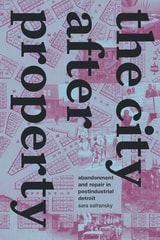
In The City after Property, Sara Safransky examines how postindustrial decline generates new forms of urban land politics. In the 2010s, Detroit government officials classified a staggering 150,000 lots—more than a third of the city—as “vacant” or “abandoned.” Analyzing subsequent efforts to shrink the Motor City’s footprint and budget, Safransky presents a new way of conceptualizing urban abandonment. She challenges popular myths that cast Detroit as empty along with narratives that reduce its historical decline to capital and white flight. In connecting contemporary debates over neoliberal urbanism to Cold War histories and the lasting political legacies of global movements for decolonization and Black liberation, she foregrounds how the making of—and challenges to—modern property regimes have shaped urban policy and politics. Drawing on critical geographical theory and community-based ethnography, Safransky shows how private property functions as a racialized construct, an ideology, and a moral force that shapes selves and worlds. By thinking the city “after property,” Safransky illuminates alternative ways of imagining and organizing urban life.
[more]
cover of The City of Our Dreaming: The Alchemy Lecture

The City of Our Dreaming

The Alchemy Lecture

Laleh Khalili, V. Mitch McEwen, Gabriela Leandro Pereira, and Leanne Betasamosake Simpson

Duke University Press, 2026

The third annual Alchemy Lecture brought together four “Alchemists”—thinkers and practitioners working across disciplines and geographies—to share a constellation of ideas for the future. Their urgent, poignant and inventive lectures compose The City of Our Dreaming, which shares their ideas for cities and how to shape them according to community needs. Together, V. Mitch McEwen, Laleh Khalili, Gabriela Leandro Pereira, and Michi Saagiig Nishnaabeg writer and musician Leanne Betasamosake Simpson offer new models for crafting architectures of freedom in disparate imagined spaces. From suggesting a city modeled on buoyancy that reconsiders displacement to a dream of radical kinship and bonds through reciprocal giving, to “projects paved by the audacity to inhabit” that are built from dreams—the site from which all Black emancipation begins—and to the ways collectives form at the thresholds between things, The City of our Dreaming is a clarion call for new conceptions of city life. The Alchemists imagine the architectures and infrastructures that make possible, inevitable and irresistible gestures of freedom, modes of sustenance, and the necessity and pleasure of breaking bread together.
[more]
cover of The Climate Trial: Law and Justice on a Melting Planet

The Climate Trial

Law and Justice on a Melting Planet

Noah Walker-Crawford

Duke University Press, 2026
Saúl Luciano Lliuya guides tours in the mountains and his family grow corn, wheat, barley, and potatoes on their farm in Huaraz, Peru, a community of more than 100,000 people in the Andes near Palcacocha, a glacial lake. Palcacocha, however, is growing, as is the major flood risk to Huaraz. Climate change through the emission of greenhouse gases continues to melt the Peruvian glaciers—greenhouse gases that come from corporate polluters not just in Peru, but across the industrialized world. So, Luciano Lliuya decided to sue. Although the German energy company RWE has never operated in Peru, Luciano Lliuya sought to hold the company, which uses coal power generation, liable for damages in a groundbreaking case that, despite being dismissed, established that major emitters can be held liable for climate harms. In The Climate Trial, anthropologist Noah Walker-Crawford draws on years of personal involvement with the lawsuit and extensive fieldwork in Peru and Germany to follow the people, legal strategies, scientific arguments, and political tensions that have shaped the trial. More than a courtroom drama, The Climate Trial is a deeply human story about moral responsibility in a changing world and what it means to be a “good neighbor” while living thousands of miles away.
[more]
cover of The Colonias Reader: Economy, Housing and Public Health in U.S.-Mexico Border Colonias

The Colonias Reader

Economy, Housing and Public Health in U.S.-Mexico Border Colonias

Edited by Angela J. Donelson and Adrian X. Esparza

University of Arizona Press, 2010

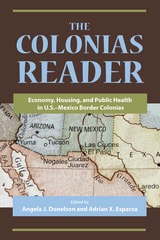
The colonias of the U.S.–Mexico border form a loose network of more than 2,500 settlements, ranging in size from villages to cities, that are home to over a million people. While varying in size, all share common features: wrenching poverty, substandard housing, and public health issues approaching crisis levels. This book brings together scholars, professionals, and activists from a wide range of disciplines to examine the pressing issues of economic development, housing and community development, and public and environmental health in colonias of the four U.S.–Mexico border states.

The Colonias Reader is the first book to present such a broad overview of these communities, offering a glimpse into life in the colonias and the circumstances that allow them to continue to exist—and even grow—in persistent poverty. The contributors document the depth of existing problems in each state and describe how government agencies, nongovernmental organizations, and community activists have mobilized resources to overcome obstacles to progress.

More than reporting problems and documenting programs, the book provides conceptual frameworks that tie poverty to institutional and class-based conflicts, and even challenges the very basis of colonia designations. Most of these contributions move beyond portraying border residents as hapless victims of discrimination and racism, showing instead their devotion to improving their own living conditions through grassroots organizing and community leadership.

These contributions show that, despite varying degrees of success, all colonia residents aspire to a livable wage, safe and decent housing, and basic health care. The Colonias Reader showcases many situations in which these people have organized to fulfill these ambitions and provides new insight into life along the border.
[more]
cover of The Color Black: Enslavement and Erasure in Iran

The Color Black

Enslavement and Erasure in Iran

Beeta Baghoolizadeh

Duke University Press, 2024

In The Color Black, Beeta Baghoolizadeh traces the twin processes of enslavement and erasure of Black people in Iran during the nineteenth and twentieth centuries. She illustrates how geopolitical changes and technological advancements in the nineteenth century made enslaved East Africans uniquely visible in their servitude in wealthy and elite Iranian households. During this time, Blackness, Africanness, and enslavement became intertwined—and interchangeable—in Iranian imaginations. After the end of slavery in 1929, the implementation of abolition involved an active process of erasure on a national scale, such that a collective amnesia regarding slavery and racism persists today. The erasure of enslavement resulted in the erasure of Black Iranians as well. Baghoolizadeh draws on photographs, architecture, theater, circus acts, newspapers, films, and more to document how the politics of visibility framed discussions around enslavement and abolition during the nineteenth and twentieth centuries. In this way, Baghoolizadeh makes visible the people and histories that were erased from Iran and its diaspora.
[more]
cover of The Color Pynk: Black Femme Art for Survival

The Color Pynk

Black Femme Art for Survival

Omise'eke Natasha Tinsley

University of Texas Press, 2022

2023 John Leo & Dana Heller Award for Best Single Work, Anthology, Multi-Authored, or Edited Book in LGBTQ Studies, Popular and American Culture Association (PACA) / Popular Culture Association (PCA)

2023 Honorable Mention, Harry Shaw and Katrina Hazzard-Donald Award for Outstanding Work in African-American Popular Culture Studies, Popular and American Culture Association (PACA) / Popular Culture Association (PCA)

2024 MPCA/ACA Best Single Work by One or More Authors, Midwest Popular Culture Association / Midwest American Culture Association (MPCA/ACA)


A celebration of the distinctive and politically defiant art of Black queer, cis-, and transfemmes, from the work of Janelle Monáe and Janet Mock to that of Indya Moore and Kelsey Lu.

The Color Pynk is a passionate exploration of Black femme poetics of survival. Sidelined by liberal feminists and invisible to mainstream civil rights movements, Black femmes spent the Trump years doing what they so often do best: creating politically engaged art, entertainment, and ideas. In the first full-length study of Black queer, cis-, and trans-femininity, Omise’eke Natasha Tinsley argues that this creative work offers a distinctive challenge to power structures that limit how we color, gender, and explore freedom.

Tinsley engages 2017–2020 Black femme cultural production that colorfully and provocatively imagines freedom in the stark white face of its impossibility. Looking to the music of Janelle Monáe and Kelsey Lu, Janet Mock’s writing for the television show Pose, the fashion of Indya Moore and (F)empower, and the films of Tourmaline and Juliana Huxtable, as well as poetry and novels, The Color Pynk conceptualizes Black femme as a set of consciously, continually rescripted cultural and aesthetic practices that disrupts conventional meanings of race, gender, and sexuality. There is an exuberant defiance in queer Black femininity, Tinsley finds—so that Black femmes continue to love themselves wildly in a world that resists their joy.
[more]
cover of The Color of Asylum: The Racial Politics of Safe Haven in Brazil

The Color of Asylum

The Racial Politics of Safe Haven in Brazil

Katherine Jensen

University of Chicago Press, 2023

An ethnography of the difficult experiences of refugees in Brazil.
 
In 2013, as Syrians desperate to escape a brutal war fled the country, Brazil took the remarkable step of instituting an open-door policy for all Syrian refugees. Why did Brazil—in contrast to much of the international community—offer asylum to any Syrian who would come? And how do Syrians differ from other refugee populations seeking status in Brazil?
 
In The Color of Asylum, Katherine Jensen offers an ethnographic look at the process of asylum seeking in Brazil, uncovering the different ways asylum seekers are treated and the racial logic behind their treatment. She focuses on two of the largest and most successful groups of asylum seekers: Syrian and Congolese refugees. While the groups obtain asylum status in Brazil at roughly equivalent rates, their journey to that status could not be more different, with Congolese refugees enduring significantly greater difficulties at each stage, from arrival through to their treatment by Brazilian officials. As Jensen shows, Syrians, meanwhile, receive better treatment because the Brazilian state recognizes them as white, in a nation that has historically privileged white immigration. Ultimately, however, Jensen reaches an unexpected conclusion: Regardless of their country of origin, even migrants who do secure asylum status find their lives remain extremely difficult, marked by struggle and discrimination.
 
[more]
cover of The Color of Family: History, Race, and the Politics of Ancestry

The Color of Family

History, Race, and the Politics of Ancestry

Michael O'Malley

University of Chicago Press, 2024

A uniquely blended personal family history and history of the changing definitions of race in America.
 
A zealous eugenicist ran Virginia’s Bureau of Vital Statistics in the first half of the twentieth century, misusing his position to reclassify people he suspected of hiding their “true” race. But in addition to being blinded by his prejudices, he and his predecessors were operating more by instinct than by science. Their whole dubious enterprise was subject not just to changing concepts of race but outright error, propagated across generations.
 
This is how Michael O’Malley, a descendant of a Philadelphia Irish American family, came to have “colored” ancestors in Virginia. In The Color of Family, O’Malley teases out the various changes made to citizens’ names and relationships over the years, and how they affected families as they navigated what it meant to be “white,” “colored,” “mixed race,” and more. In the process, he delves into the interplay of genealogy and history, exploring how the documents that establish identity came about, and how private companies like Ancestry.com increasingly supplant state and federal authorities—and not for the better.
 
Combining the history of O’Malley’s own family with the broader history of racial classification, The Color of Family is an accessible and lively look at the ever-shifting and often poisoned racial dynamics of the United States.
[more]
cover of The Color of Liberty: Histories of Race in France

The Color of Liberty

Histories of Race in France

Sue Peabody and Tyler Stovall, eds.

Duke University Press, 2003

France has long defined itself as a color-blind nation where racial bias has no place. Even today, the French universal curriculum for secondary students makes no mention of race or slavery, and many French scholars still resist addressing racial questions. Yet, as this groundbreaking volume shows, color and other racial markers have been major factors in French national life for more than three hundred years. The sixteen essays in The Color of Liberty offer a wealth of innovative research on the neglected history of race in France, ranging from the early modern period to the present.

The Color of Liberty addresses four major themes: the evolution of race as an idea in France; representations of "the other" in French literature, art, government, and trade; the international dimensions of French racial thinking, particularly in relation to colonialism; and the impact of racial differences on the shaping of the modern French city. The many permutations of race in French history—as assigned identity, consumer product icon, scientific discourse, philosophical problem, by-product of migration, or tool in empire building—here receive nuanced treatments confronting the malleability of ideas about race and the uses to which they have been put.

Contributors. Leora Auslander, Claude Blanckaert, Alice Conklin, Fred Constant, Laurent Dubois, Yaël Simpson Fletcher, Richard Fogarty, John Garrigus, Dana Hale, Thomas C. Holt, Patricia M. E. Lorcin, Dennis McEnnerney, Michael A. Osborne, Lynn Palermo, Sue Peabody, Pierre H. Boulle, Alyssa Goldstein Sepinwall, Tyler Stovall, Michael G. Vann, Gary Wilder

[more]
cover of The Color of Love: Racial Features, Stigma, and Socialization in Black Brazilian Families

The Color of Love

Racial Features, Stigma, and Socialization in Black Brazilian Families

By Elizabeth Hordge-Freeman

University of Texas Press, 2015

Winner, Section on the Sociology of Emotions Outstanding Recent Contribution (Book) Award, American Sociological Association, 2016
Charles Horton Cooley Award for Recent Book, Society for the Study of Symbolic Interaction, 2017
Best Publication Award, Section on Body and Embodiment, American Sociological Association (ASA), 2018

The Color Of Love reveals the power of racial hierarchies to infiltrate our most intimate relationships. Delving far deeper than previous sociologists have into the black Brazilian experience, Elizabeth Hordge-Freeman examines the relationship between racialization and the emotional life of a family. Based on interviews and a sixteen-month ethnography of ten working-class Brazilian families, this provocative work sheds light on how families simultaneously resist and reproduce racial hierarchies. Examining race and gender, Hordge-Freeman illustrates the privileges of whiteness by revealing how those with “blacker” features often experience material and emotional hardships. From parental ties, to sibling interactions, to extended family and romantic relationships, the chapters chart new territory by revealing the connection between proximity to whiteness and the distribution of affection within families.

Hordge-Freeman also explores how black Brazilian families, particularly mothers, rely on diverse strategies that reproduce, negotiate, and resist racism. She frames efforts to modify racial features as sometimes reflecting internalized racism, and at other times as responding to material and emotional considerations. Contextualizing their strategies within broader narratives of the African diaspora, she examines how Salvador’s inhabitants perceive the history of the slave trade itself in a city that is referred to as the “blackest” in Brazil. She argues that racial hierarchies may orchestrate family relationships in ways that reflect and reproduce racial inequality, but black Brazilian families actively negotiate these hierarchies to assert their citizenship and humanity.
[more]
cover of The Color of Mind: Why the Origins of the Achievement Gap Matter for Justice

The Color of Mind

Why the Origins of the Achievement Gap Matter for Justice

Derrick Darby and John L. Rury

University of Chicago Press, 2018

American students vary in educational achievement, but white students in general typically have better test scores and grades than black students. Why is this the case, and what can school leaders do about it? In The Color of Mind, Derrick Darby and John L. Rury answer these pressing questions and show that we cannot make further progress in closing the achievement gap until we understand its racist origins.

Telling the story of what they call the Color of Mind—the idea that there are racial differences in intelligence, character, and behavior—they show how philosophers, such as David Hume and Immanuel Kant, and American statesman Thomas Jefferson, contributed to the construction of this pernicious idea, how it influenced the nature of schooling and student achievement, and how voices of dissent such as Frederick Douglass, Frances Ellen Watkins Harper, and W. E. B. Du Bois debunked the Color of Mind and worked to undo its adverse impacts.

Rejecting the view that racial differences in educational achievement are a product of innate or cultural differences, Darby and Rury uncover the historical interplay between ideas about race and American schooling, to show clearly that the racial achievement gap has been socially and institutionally constructed. School leaders striving to bring justice and dignity to American schools today must work to root out the systemic manifestations of these ideas within schools, while still doing what they can to mitigate the negative effects of poverty, segregation, inequality, and other external factors that adversely affect student achievement. While we cannot expect schools alone to solve these vexing social problems, we must demand that they address the dignitary injustices associated with how we track, discipline, and deal with special education that reinforce long-standing racist ideas. That is the only way to expel the Color of Mind from schools, close the racial achievement gap, and afford all children the dignity they deserve.
[more]