Results by title
3390 books match the query 'Fiction' and 1041 start with t
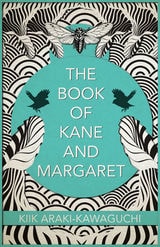
The Book of Kane and Margaret
A NovelKiik Araki-Kawaguchi, Illustrations by Gautam Rangan
University of Alabama Press, 2020
WINNER OF FC2’S RONALD SUKENICK INNOVATIVE FICTION PRIZE
A novel about two teenage lovers who disrupt a World War II internment camp in Arizona
Kane Araki and Margaret Morri are not only the names of teenage lovers living in a World War II Japanese relocation camp. Kane Araki is also the name of a man who, mysteriously, sprouts a pair of black raven’s wings overnight. Margaret Morri is the name of the aging healer who treats embarrassing conditions (smelly feet and excessive flatulence). It’s also the name of an eleven-year-old girl who communes with the devil, trading human teeth for divine wishes.
In The Book of Kane and Margaret, dozens of Kane Arakis and Margaret Morris populate the Canal and Butte camp divisions in Gila River. Amidst their daily rituals and family dramas, they find ways to stage quiet revolutions against a domestic colonial experience. Some internees slip through barbed wire fences to meet for love affairs. Others attempt to smuggle whiskey, pornography, birds, dogs, horses, and unearthly insects into their family barracks. And another seeks a way to submerge the internment camp in Pacific seawater.
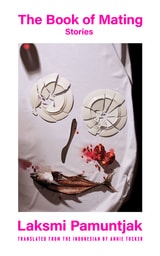
The Book of Mating
StoriesLaksmi Pamuntjak, Annie Tucker
Northwestern University Press, 2027
Winner of the Humanities in Translation Prize
The Book of Mating is a masterfully translated collection of stories in which Indonesian women explore the full spectrum of mating: marital, sexual, and spiritual; forced and free; transcendent, ruinous, and mundane. Laksmi Pamuntjak portrays both the constraints and opportunities facing women caught between the enduring restrictions of local norms and hierarchies and the tantalizing promises of globalized modern life, between internalized myths and social realities.
An experimental melding of Pamuntjak’s creative, journalistic, and activist work, these stories read as urgent dispatches from the Indonesian archipelago and diaspora—and as universal narratives of women’s lived experiences. Annie Tucker’s nuanced translation takes us from the prison island of Buru and the Bogor Botanical Gardens to Paris’s Left Bank, offering a polyphonic testament to the universal fight for women’s autonomy over their bodies and their lives.
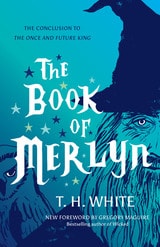
The Book of Merlyn
The Conclusion to The Once and Future KingBy T. H. White, foreword by Gregory Maguire, prologue by Sylvia Townsend Warner, illustrations by Trevor Stubley
University of Texas Press, 2018
This magical account of King Arthur’s last night on earth, rediscovered in a collection of T. H. White’s papers at the Harry Ransom Center at the University of Texas at Austin, spent twenty-six weeks on the New York Times bestseller list following its publication in 1977. While preparing for his final, fatal battle with his bastard son, Mordred, Arthur returns to the Animal Council with Merlyn, where the deliberations center on ways to abolish war. More self-revealing than any other of White’s books, Merlyn shows his mind at work as he agonized over whether to join the fight against Nazi Germany while penning the epic that would become The Once and Future King. The Book of Merlyn has been cited as a major influence by such illustrious writers as Kazuo Ishiguro, J. K. Rowling, Helen Macdonald, Neil Gaiman, and Lev Grossman.
“Arriving from beyond the curve of time and apparently from the grave, The Book of Merlyn stirs its own pages, saying, wait: you didn’t get the whole story. . . . It gives us a final glimpse of those two immortal characters, Wart and Merlyn, up close, slo-mo, with a considered and affectionate scrutiny. The book is an elegiac posting from a master storyteller of the twentieth century. Its reissue in our next century is just as welcome as when it first arrived forty years ago. . . . Certainly the moral questions about the military use of force perplex the world still. . . . The efficacy of treaties, the trading of insults among the potentates of the day, the testing of weapons, the weaponizing of trade—these strategies are still front and center. Rather terrifyingly so. We do well to revisit what that old schoolteacher of children, Merlyn, has been trying to point out to us about power and responsibility.”
—Gregory Maguire, from the foreword
The Book of Merlyn
The Unpublished Conclusion to The Once and Future KingBy T. H. White
University of Texas Press, 1977

The Book of Right and Wrong
Matt Debenham
The Ohio State University Press, 2010
The Book of Wanderers
Reyes Ramirez
University of Arizona Press, 2022
Reyes Ramirez’s dynamic short story collection follows new lineages of Mexican and Salvadoran diasporas traversing life in Houston, across borders, and even on Mars. Themes of wandering weave throughout each story, bringing feelings of unease and liberation as characters navigate cultural, physical, and psychological separation and loss from one generation to the next in a tumultuous nation.
The Book of Wanderers deeply explores Houston, a Gulf Coast metropolis that incorporates Southern, Western, and Southwestern identities near the borderlands with a connection to the cosmos. As such, each story becomes increasingly further removed from our lived reality, engaging numerous genres from emotionally touching realist fiction to action-packed speculative fiction, as well as hallucinatory realism, magical realism, noir, and science fiction.
Fascinating characters and unexpected plots unpack what it means to be Latinx in contemporary—and perhaps future—America. The characters work, love, struggle, and never stop trying to control their reality. They dream of building communities and finding peace. How can they succeed if they must constantly leave one place for another? In a nation that demands assimilation, how can they define themselves when they have to start anew with each generation? The characters in The Book of Wanderers create their own lineages, philosophies for life, and markers for their humanity at the cost of home. So they remain wanderers . . . for now.
The Book of Want
A NovelDaniel A. Olivas
University of Arizona Press, 2011
Conchita, a voluptuous, headstrong single woman of a certain age, sees nothing wrong with enjoying the company of handsome—and usually much younger—men...that is, until she encounters a widower with unusual gifts and begins to think about what she really wants out of life.
Julieta, Conchita’s younger sister, walks a more traditional path, but she and her husband each harbor secrets that could change their marriage and their lives forever. Their twin sons, both in college, struggle to find fulfillment. Mateo refuses to let anyone stand in the way of his happiness, while Rolando grapples with his sexuality and the family’s expectations. And from time to time, Belén, the family’s late matriarch, pays a visit to advise, scold, or cajole her hapless descendants.
A delightful family tapestry woven with the threads of all those whose lives are touched by Conchita, The Book of Want is an enchanting blend of social and magical realism that tells a charming story about what it means to be fully human.
The Book of the Dead
Orikuchi Shinobu
University of Minnesota Press, 2017
First published in 1939 and extensively revised in 1943, The Book of the Dead, loosely inspired by the tale of Isis and Osiris from ancient Egypt, is a sweeping historical romance that tells a gothic tale of love between a noblewoman and a ghost in eighth-century Japan. Its author, Orikuchi Shinobu, was a well-received novelist, distinguished poet, and an esteemed scholar. He is often considered one of the fathers of Japanese folklore studies, and The Book of the Dead is without a doubt the most important novel of Orikuchi’s career—and it is a book like no other.
Here, for the first time, is the complete English translation of Orikuchi’s masterwork, whose vast influence is evidenced by multiple critical studies dedicated to it and by its many adaptations, which include an animated film and a popular manga. This translation features an introduction by award-winning translator Jeffrey Angles discussing the historical background of the work as well as its major themes: the ancient origins of the Japanese nation, the development of religion in a modernizing society, and the devotion necessary to create a masterpiece. Also included are three chapters from The Mandala of Light by Japanese intellectual historian Andō Reiji, who places the novel and Orikuchi’s thought in the broader intellectual context of early twentieth-century Japan.
The Book of the Dead focuses on the power of faith and religious devotion, and can be read as a parable illustrating the suffering an artist must experience to create great art. Readers will soon discover that a great deal lies hidden beneath the surface of the story; the entire text is a modernist mystery waiting to be decoded.
The Boom Economy
Or, Scenes from Clerical LifeBrian Bouldrey
University of Wisconsin Press, 2003
Dennis Bacchus is a man who has outlived himself. HIV-positive and prepared to die at any minute, he finds himself in the late 1990s blessed with life-giving drugs, supportive friends, a boom economy, and an era of never-ending celebration—and he doesn’t know what to do with himself.
For ten years he has traveled and celebrated a curtailed life with the similarly infected Jimmy and, though Dennis was never that close to Jimmy, he decided to let the friendship run its course to the end. Now there’s no end in sight. Stuck with leftover friendships, careers, and commitments, what can a man do but become a priest? The Boom Economy covers what was supposed to be the last decade of Dennis Bacchus’ life, but turns out to be the first decade of the rest of it.
The Boom Economy is a novel about conversion—not just seroconversion or religious conversion, but all of the social, spiritual, and emotional problems of changing from one life to another. At once raucous and serious, pagan and saintly, it’s a look at the way we live now. Again.
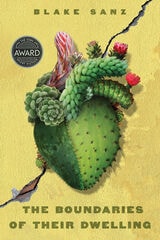
The Boundaries of Their Dwelling
Sanz, Blake
University of Iowa Press, 2021
In the collection’s second half, we follow a Veracruzan-born drifter, Manuel, and his estranged American son, Tommy. Over decades, they negotiate separate nations and personal tragicomedies on their journeys from innocence to experience. As Manuel participates in student protests in Mexico City in 1968, he drops out to pursue his art. In the 1970s, he immigrates to Louisiana, but soon leaves his wife and infant son behind after his art shop fails. Meanwhile, Tommy grows up in 1980s Louisiana, sometimes escaping his mother’s watchful eye to play basketball at a park filled with the threat of violence. In college, he seeks acceptance from teammates by writing their term papers. Years later, as Manuel nears death and Tommy reaches middle age, they reconnect, embarking on a mission to jointly interview a former riot policeman about his military days; in the process, father and son discover what it has meant to carry each other’s stories and memories from afar.
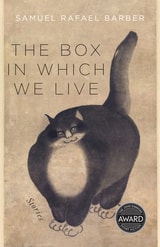
The Box in Which We Live
Barber, Samuel Rafael
University of Iowa Press, 2026
Encompassing a wide range of formal approaches and genres, Samuel Rafael Barber captures the disparate manifestations of power and powerlessness in this era of global neoliberalism. The stories in The Box in Which We Live investigate the existential torment inflicted upon marginalized people by individuals, institutions, and states complicit in oppression. Across these experiments, a comic absurdity emerges and a distance grows between the individual and the collective in a media-oversaturated world.
The Boys from Possum Grape
A novellaJudson N. Hout
Parkhurst Brothers, Inc., 2013
Set in the days of small, local banks when embarrassing entrepreneurs were the one family in town who bought a new car every year—those cars everyone else called ‘gunboats—and the bad guys came with black hats, this rollicking send-up of stupid criminals who even Barnie Fife could have outwitted makes for belly-laughs while reading and memories that will bring smiles to readers’ faces.

The Bread of Those Early Years
Heinrich Boll
Northwestern University Press, 1994
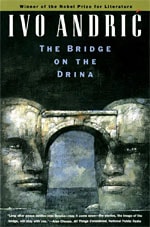
The Bridge on the Drina
Ivo Andric
University of Chicago Press, 1977
Internationally acclaimed since its original publication just after World War II, The Bridge on the Drina is a vivid historical novel that uses the Mehmed Paša Sokolović Bridge as the centerpiece of the story of Bosnia and its people from the late sixteenth century to the beginning of World War I. As we seek to make sense of the current nightmare in this region, this remarkable, timely book serves as a reliable guide to its people and history. Through powerful stories of the people who make history—and the people suffer under those who do—Ivo Andric traces the story of the Bosnian people from the Ottoman Empire through the domination of Austria-Hungary and into the rising tide of competing nationalist ideologies that set the stage for the tragedy of World War I.
Written while Andric was under house arrest during the Nazi occupation, The Bridge on the Drina is as gripping as a soap opera, bringing history down to the level of compelling individual lives and experiences. It is one of the landmark works of twentieth-century literature, as powerful today as it ever was.
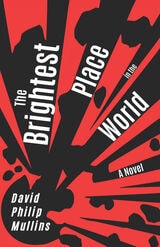
The Brightest Place in the World
A NovelDavid Philip Mullins
University of Nevada Press, 2020
Inspired by true events, The Brightest Place in the World traces the lives of four characters haunted by an industrial disaster. On an ordinary sunny morning in 2012, a series of explosions level a chemical plant on the outskirts of Las Vegas. The shock waves are felt as far away as Fremont Street. Homes and businesses suffer broken windows and caved-in roofs. Hundreds are injured, and eight employees of the plant are unaccounted for, presumed dead.
One of the missing is maintenance technician Andrew Huntley, a husband and father who is an orbital force in the novel as those who loved him grapple with his loss. Andrew’s best friend, Russell Martin—an anxiety-plagued bartender who calms his nerves with a steady inflow of weed—misses him more than he might a brother. Meanwhile Emma, Russell’s wife—a blackjack dealer at a downtown casino—tries to keep her years-long affair with Andrew hidden. Simon Addison, a manager at the plant who could have saved Andrew’s life, is afflicted by daily remorse, combined with a debilitating knowledge of his own cowardice. And then there’s Maddie, Andrew’s only child, a model high-school student whose response to the tragedy is to experiment with shoplifting and other deviant behavior.
Against the sordid backdrop of Las Vegas—and inspired by the PEPCON disaster of May 4, 1988—this engaging novel is a story of grief and regret, disloyalty and atonement, infatuation and love.
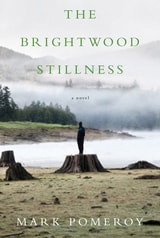
The Brightwood Stillness
Mark Pomeroy
Oregon State University Press, 2014
Meanwhile, Hieu’s family life is tested. Straining to hold form amid a police investigation into what happened in his classroom, Hieu seeks enough solitude to piece together the story of how he fled war and arrived in the US, how he came to be a father to three children in a bewildering, beloved new land—and how he’ll cope with a now uncertain future.
As their stories unfold in parallel, Hieu and Nate must confront the ways in which their pasts—each so linked to a mysterious far-off country—have left them isolated men.
With its vivid look at friendship and the challenges of cross-cultural communication, its poignant take on the legacy of Vietnam, and its Pacific Northwest setting, The Brightwood Stillness will remind readers of the best elements of A Good Scent From a Strange Mountain and Snow Falling on Cedars, while compelling them through a maze of love, betrayal, and finally, redemption.
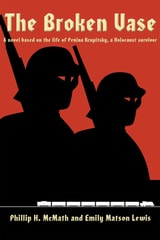
The Broken Vase
A Novel Based On the Life of Penina Krupitsky, a Holocaust SurvivorPhillip H. McMath
Butler Center for Arkansas Studies, 2010
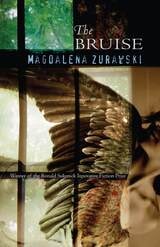
The Bruise
Magdalena Zurawski
University of Alabama Press, 2008
The Bruise is a prize-winning novel of imperative voice and raw sensation. In the sterile dormitories and on the quiet winter greens of an American university, a young woman named M— deals with the repercussions of a strange encounter with an angel, one that has left a large bruise on her forehead. Was the event real or imagined? The bruise does not disappear, forcing M— to confront her own existential fears and her wavering desire to tell the story of her imagination. As a writer, M— is breathless, desperate, and obsessive, questioning the mutations and directions of her words while writing with fevered immediacy. Using rhythmic language, suffused with allusions to literature and art, Magdalena Zurawski recasts the bildungsroman as a vibrant and moving form.
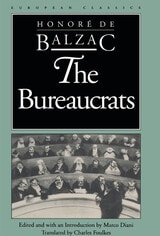
The Bureaucrats
Honore De Balzac
Northwestern University Press, 1993
The novel contains the recognizable themes of Balzac's work: obsessive ambition, conspiracy and human pettiness, and a melodramatic struggle between the social good and the evils of folly and stupidity. It is also an unusual, dramatized analysis of a developing political institution and its role in shaping social class and mentality.

The Burning And Other Stories
Jack Cady
University of Iowa Press, 1972
The Business of Being a Writer, Second Edition
Jane Friedman
University of Chicago Press, 2025
Writers talk about their work in many ways: as an art, as a calling, as a lifestyle. Too often missing from these conversations is the fact that writing is also a business, and those who want to make a living from their writing must understand the basic business principles underlying the industry. The Business of Being a Writer offers the business education writers need but so rarely receive.
Jane Friedman is one of today’s leading experts on the publishing industry. Through her website, social media presence, online courses, email newsletters, and other media, she helps writers understand how to navigate the industry with confidence and intentionality. This book advises writers on how to build a platform in a way that aligns with their values, how to spot critical mindset issues that might sabotage their efforts before they even begin, how to publish strategically, and what it means to diversify income streams beyond book sales. For this second edition, Friedman has updated every topic to reflect how the industry has evolved over the past half decade. New features include a section on business and legal issues commonly faced by writers, exercises at the end of each chapter, and a wealth of sample materials posted on a companion website.
Reaching beyond the mechanical aspects of publishing, The Business of Being a Writer will help both new and experienced writers approach their careers with the same creative spirit as their writing. Friedman is encouraging without sugarcoating reality, blending years of research with practical advice that will help writers market themselves and maximize their writing-related income. Her book will leave them empowered, confident, and ready to turn their craft into a sustainable career.
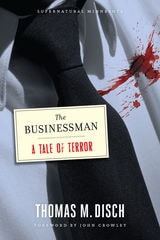
The Businessman
A Tale of TerrorThomas M. Disch
University of Minnesota Press, 2010
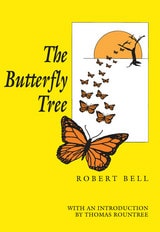
The Butterfly Tree
Robert E. Bell
University of Alabama Press, 1991
“There are four buses that leave Mobile daily for Moss Bayou. No matter what time the trains get in from New Orleans or Birmingham, you still have to wait around half the day for one of theses buses if you want to get to Moss Bayou. And a good many people do, for Moss Bayou is a lovely, easygoing resort town, located as it where Magnolia River runs into the bay with worlds of giant live oaks and sandy roads that wind forever under the trailing Spanish moss.”
So begins Robert Bell’s novel that is most of all about a love affair with a place—the legendary eastern shore of Mobile Bay. Published in 1959, the story centers on young Peter Abbott who is about to reach his 21st birthday while visiting the bay area. Peter is drawn into a search for the mythical Butterfly Tree, and finds fulfillment and an end to innocence. In his introduction, Thomas Rountree helps set the stage for a step back in time, and a slowing of pace, as we seek the timeless magic of a special locale that happens to be in Alabama, and in each of us.
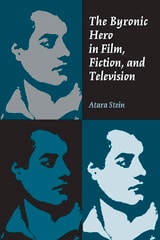
The Byronic Hero in Film, Fiction, and Television
Atara Stein
Southern Illinois University Press, 2004
The Byronic Hero in Film, Fiction, and Television bridges nineteenth- and twentieth-century studies in pursuit of an ambitious, antisocial, arrogant, and aggressively individualistic mode of hero from his inception in Byron’s Manfred, Childe Harold, and Cain, through his incarnations as the protagonists of Westerns, action films, space odysseys, vampire novels, neo-Gothic comics, and sci-fi television. Such a hero exhibits supernatural abilities, adherence to a personal moral code, ineptitude at human interaction (muddled even further by self-absorbed egotism), and an ingrained defiance of oppressive authority. He is typically an outlaw, most certainly an outcast or outsider, and more often than not, he is a he. Given his superhuman status, this hero offers no potential for sympathetic identification from his audience. At best, he provides an outlet for vicarious expressions of power and independence. While audiences may not seek to emulate the Byronic hero, Stein notes that he desires to emulate them; recent texts plot to “rehumanize” the hero or to voice through him approbation and admiration of ordinary human values and experiences.
Tracing the influence of Lord Byron’s Manfred as outcast hero on a pantheon of his contemporary progenies—including characters from Pale Rider, Unforgiven, The Terminator, Alien, The Crow, Sandman, Star Trek: The Next Generation,and Angel—Atara Stein tempers her academic acumen with the insights of a devoted aficionado in this first comprehensive study of the Romantic hero type and his modern kindred.
Atara Stein was a professor of English at California State University, Fullerton. Her articles on the development of the Byronic hero have appeared in Popular Culture Review, Romantic Circles Praxis Series, Genders, and Philological Quarterly.
The Cape Cod Bicycle War
and Other StoriesBilly Kahora
Ohio University Press, 2020
The Caravaggio Syndrome
A NovelAlessandro Giardino
Rutgers University Press, 2024
Leyla is a headstrong Brooklyn-born art historian at a prestigious upstate New York college. When she meets feckless young computer technician Pablo at a party, she quickly becomes pregnant with his child. There’s only one problem: she can’t stand him. And one more problem: her student Michael wants Pablo for himself.
Amid this love triangle, the objects of Leyla and Michael’s study take on a life of their own. Trying to learn more about Caravaggio’s masterpiece The Seven Works of Mercy, they pore over the journal and prison writings of maverick 17th-century utopian philosopher Tommaso Campanella, which, as if by enchantment, transport them back four centuries to Naples. And while the past and present miraculously converge, Leyla, Michael, and Tommaso embark on a voyage of self-discovery in search of a new life.
In this fusion of historical, queer, and speculative fiction, Alessandro Giardino combines the intellectual playfulness of Umberto Eco with the psychological finesse of Michael Cunningham.
The Career of Nicodemus Dyzma
A NovelTadeusz Dolega-Mostowicz; Translated from the Polish by Ewa Malachowska-Pasek and Megan Thomas and with an introduction by Benjamin Paloff
Northwestern University Press, 2020
Winner of the 2021 Found in Translation Award
First published in Polish in 1932, The Career of Nicodemus Dyzma was Tadeusz Dołęga-Mostowicz’s breakout novel. Dyzma is an unemployed clerk who crashes a swanky party, where he makes an offhand crass remark that sets him on a new course. Soon high society—from government ministers to drug-fueled aristocrats—wants a piece of him. As Dyzma’s status grows, his vulgarity is interpreted as authenticity and strength. He is unable to comprehend complicated political matters, but his cryptic responses are celebrated as wise introspection. His willingness to do anything to hold on to power—flip-flopping on political positions, inventing xenophobic plots, even having enemies assaulted—only leads to greater success.
Dołęga-Mostowicz wrote his novel in a newly independent Poland rampant with political corruption and populist pandering. Jerzy Kosinski borrowed heavily from the novel when he wrote Being There, and readers of both books will recognize similarities between their plots. This biting political satire—by turns hilarious and disturbing, contemptuous and sympathetic—is an indictment of a system in which money and connections matter above all else, bluster and ignorance are valorized, and a deeply incompetent man rises to the highest spheres of government.
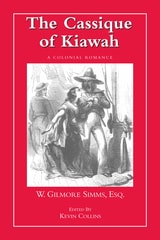
The Cassique of Kiawah
A Colonial RomanceWilliam Gilmore Simms
University of Arkansas Press, 2003
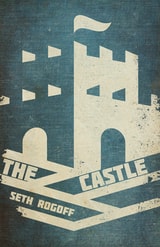
The Castle
A NovelSeth Rogoff
University of Alabama Press, 2024
A fictional return to the unsettling world of Franz Kafka’s iconic unfinished novel, The Castle.
Seth Rogoff's masterful and mesmerizing novel, The Castle, draws inspiration from the enigmatic and incomplete final sentence of Franz Kafka's influential work of the same title. Follow renowned translator Sy Kirschbaum as he finds his way into the deserted landscape of Kafka’s world where the village of Z. lies eerily silent. The inhabitants vanished like phantoms leaving only remnants of their lives.
From these fragments, Kirschbaum pieces together a vision of a world in crisis triggered by the arrival of a stranger named K. To unravel this mystery, not just for the sake of the vanished village of Z. but for the world beyond, Kirschbaum is compelled to venture where K. could not—the deepest core of the castle.
The Castle is built upon lost documents, forgotten stories, and imagined histories. Unbound by the constraints of an authoritarian and doomed reality, Kirschbaum embarks on an extraordinary journey, seeking meaning through the fertile ground of imagination and embracing the inherent paradox of existence.
The Cat Who Taught Me How to Fly
An Arab Prison NovelHashem Gharaibeh
Michigan State University Press, 2017
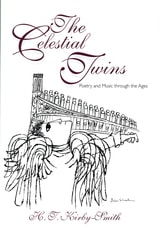
The Celestial Twins
Poetry and Music through the AgesH.T. Kirby-Smith
University of Massachusetts Press, 2000
H. T. Kirby-Smith makes his case with wit and erudition, proceeding chronologically and citing numerous examples of specific poems—from Latin, Old French, Italian, Anglo-Saxon, modern French, and English. He points out that ancient Greek poetry, including the epics, was part of a musical context. By contrast, almost no surviving Latin poetry was written for musical performance, but the meters of Latin poetry were borrowed from Greek musical meters. Similarly, in their own ways, Thomas Hardy, T. S. Eliot, and Langston Hughes all wrote out of musical contexts: Hardy from west-of-England songs and dances; Eliot from Wagnerian opera and late Beethoven chamber music; and Hughes from blues, jazz, and spirituals.
Although poets from Horace to Shakespeare to Dickinson have instinctively recognized the separation of music and poetry, there have also been well-meaning attempts to bring these allied arts back into close association with each other. But in Kirby-Smith's view, poetry of the highest order has always maintained a respectful distance from music, even while retaining some memory of musical rhythms and organization.
The Cemetery of Chua Village and Other Stories
Doan Le
Northwestern University Press, 2005
This seventh volume in the "Voices from Vietnam" series introduces U. S. readers to another major figure in modern Vietnamese letters: Doan Le. Noted for her versatility of style and her originality, she writes tales that are intensely human and universal, exploring such subjects as greed, marriage, divorce, aging and human rights. For the scholar, these stories give insight into Vietnamese culture after the "renovation". For the general reader, these are stories that explore all the subtle enigmas of the human heart.
As Wayne Karlin notes in his introduction, "[She] is a master of allegory and gently complex satire...her stories can often be fantastical—Sholom Aleichem's village of Helm channeled by Kafka through Our Town—or they can be deeply personal and realistic. In both cases they grow unabashedly from the real vicissitudes of her life."
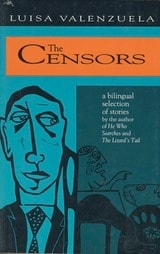
The Censors
A Bilingual Selection of StoriesLuisa Valenzuela
Northwestern University Press, 1995
The Centenary Edition of the Works of Nathaniel Hawthorne
VOL. II, THE HOUSE OF THE SEVEN GABLESNathaniel Hawthorne
The Ohio State University Press, 1965
The Centenary Edition of the Works of Nathaniel Hawthorne
VOL. IV, THE MARBLE FAUNNathaniel Hawthorne
The Ohio State University Press, 1969
Hawthorne's 'International Novel' dramatizes the confrontation of the Old World and the New and the uncertain relationship between the 'authentic' and the 'fake' in life as in art. The author's evocative descriptions of classic sites made The Marble Faun a favorite guidebook to Rome for Victorian tourists, but this richly ambiguous symbolic romance is also the story of a murder, and a parable of the Fall of Man. As the characters find their civilized existence disrupted by the awful consequences of impulse, Hawthorne leads his readers to question the value of Art and Culture and addresses the great evolutionary debate which was beginning to shake Victorian society.
The Centenary Edition of the Works of Nathaniel Hawthorne
VOL. IX, TWICE-TOLD TALESNathaniel Hawthorne
The Ohio State University Press, 1974
The Centenary Edition of the Works of Nathaniel Hawthorne
VOL. X, MOSSES FROM AN OLD MANSENathaniel Hawthorne
The Ohio State University Press, 1974
The Centenary Edition of the Works of Nathaniel Hawthorne
Vol. XI, The Snow Image and Uncollected TalesNathaniel Hawthorne
The Ohio State University Press, 1974
The Central Intelligence Agency
History and DocumentsWilliam M. Leary
University of Alabama Press, 1984
In late 1974 the U.S. Senate Select Committee on the CIA, headed by Frank Church of Idaho, began collecting documents and materials to buttress the committee hearings on the CIA’s role and activities that were to begin in the fall of 1975. Among the materials prepared for the Church Committee is History of the Central Intelligence Agency, which was written by committee staff member Anne Karalekas.
This book reproduces the History, with an introduction by Leary that establishes the historical framework for the Church Committee hearings, and also includes ten relevant documents covering events from 1944 to 1981.
The Chain of Chance
Stanislaw Lem
Northwestern University Press, 2000
On a trail leading across Europe, the ex-astronaut barely escapes numerous attempts on his life. Having set himself up as a potential victim, he realizes that he may now be the target of a conspiracy--and that the conspiracy is not the work of a criminal mind, but a manifestation of the laws of nature. Certain patterns have begun to emerge from the chaos of modern society. Some of those patterns can be fatal. . .
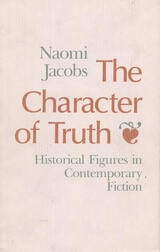
The Character of Truth
Historical Figures in Contemporary FictionNaomi Jacobs
Southern Illinois University Press, 1990
Can the novel survive in an age when tales of historical figures and contemporary personalities dominate the reading lists of the book-buying public?
Naomi Jacobs addresses this question in a study of writers such as William Styron, E. L. Doctorow, and Robert Coover, who challenge the dominance of nonfiction by populating their fictions with real people, living and dead. Jacobs explores the genesis, varieties, and implications of this trend in a prose as lively as that of the writers she critiques.
Using as a case study Robert Coover’s portrait of Richard Nixon in The Public Burning, Jacobs addresses the important legal and ethical questions raised by this trend and applies contemporary libel law to the fictionalization of living people, such as Richard Nixon. She closes her study by speculating on the future of this device and of the novel.
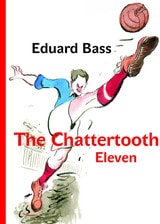
The Chattertooth Eleven
Eduard Bass
Karolinum Press, 2009
In 1922, the same year that saw the establishment of the Czechoslovak Football Association, a former singer and cabaret director from Prague published a novel about soccer. Eighty-six years later, that novel, Eduard Bass’s The Chattertooth Eleven, has been reprinted more than thirty times, has been made into a film, and has become one of the most popular works of Czech fiction.
The novel tells the extraordinary adventures of an ordinary father, Chattertooth, and his eleven sons—whom he has raised as an unbeatable soccer team. This humorous tale—set in the aftermath of World War I—celebrates fair play and perseverance while simultaneously taking a gently ironic stance towards the Czech infatuation with soccer. This edition, in a new graphic layout by Zdenek Ziegler, is accompanied by charming illustrations by Jirí Grus.
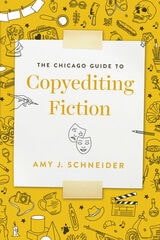
The Chicago Guide to Copyediting Fiction
Amy J. Schneider
University of Chicago Press, 2023
Although The Chicago Manual of Style is widely used by writers and editors of all stripes, it is primarily concerned with nonfiction, a fact long lamented by the fiction community. In this long-awaited book from the publisher of the Manual, Amy J. Schneider, a veteran copyeditor who’s worked on bestsellers across a wide swath of genres, delivers a companionable editing guide geared specifically toward fiction copyeditors—the first book of its type.
In a series of approachable thematic chapters, Schneider offers cogent advice on how to deal with dialogue, voice, grammar, conscious language, and other significant issues in fiction. She focuses on the copyediting tasks specific to fiction—such as tracking the details of fictional characters, places, and events to ensure continuity across the work—and provides a slew of sharp, practicable solutions drawn from her twenty-five years of experience working for publishers both large and small. The Chicago Guide to Copyediting Fiction is sure to prove an indispensable companion to The Chicago Manual of Style and a versatile tool for copyeditors working in the multifaceted landscape of contemporary fiction.

The Chimeras
A NovelJoe Fletcher
University of Alabama Press, 2026
Blending literary fiction, speculative fiction, and lyric prose, The Chimeras explores how communities create meaning in the wake of radical uncertainty. At its core, the novel is concerned with enduring human questions of belonging, family, memory, and faith in language itself. The book will appeal to readers of contemporary literary fiction, speculative literature, and works that push the boundaries of narrative form.

The Chinese Bell Murders
Robert van Gulik
University of Chicago Press, 1977
"So scrupulously in the classic Chinese manner yet so nicely equipped with everything to satisfy the modern reader."—New York Times
Robert Van Gulik (1910-67) was a Dutch diplomat and an authority on Chinese history and culture. He drew his plots from the whole body of Chinese literature, especially from the popular detective novels that first appeared in the seventeenth century.
The Chinese Lake Murders
Robert van Gulik
University of Chicago Press, 1979
"[Robert van Gulik] deftly interweaves three criminal cases involving exotic yet universally recognizable characters, then has his Judge Dee provide a surprising yet most plausible solution."—New York Times Book Review
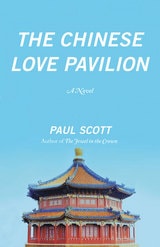
The Chinese Love Pavilion
A NovelPaul Scott
University of Chicago Press, 2013
The Chinese Love Pavilion follows a young British clerk, Tom Brent, who must track down a former friend—now suspected of murder—in Malaya. Tom faces great danger, both from the mysterious Malayan jungles and the political tensions between British officers, but the novel is perhaps most memorable for the strange, beautiful romance between Tom and a protean Eurasian beauty whom he meets in the eponymous Chinese Love Pavilion.
The Chinese Maze Murders
A Judge Dee MysteryRobert van Gulik
University of Chicago Press, 1997
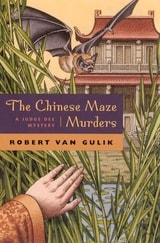
Join the T'ang Dynasty detective Judge Dee on his very first full-length mystery! Poisoned plums, a cryptic scroll picture, passionate love letters, and a hidden murderer with a penchant for torturing and killing women lead Judge Dee to the heart of the Governor’s garden maze and the answers to three interwoven mysteries. This book kicked off Robert van Gulik's long-running series and introduced countless readers to a cozy, clever series and the incredible detective at its center. Read this one and you'll quickly find yourself seeking out the whole series.
The Chinese Nail Murders
Robert van Gulik
University of Chicago Press, 1977
"So scrupulously in the classic Chinese manner yet so nicely equipped with everything to satisfy the modern reader."—New York Times
Robert Van Gulik (1910-67) was a Dutch diplomat and an authority on Chinese history and culture. He drew his plots from the whole body of Chinese literature, especially from the popular detective novels that first appeared in the seventeenth century.
The Church of Divine Electricity
Emily Mitchell
University of Wisconsin Press, 2025
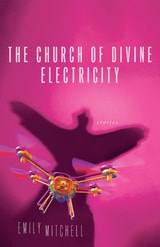
Whether being held by a giant and comforting machine, allowing micro-drones to record one’s every moment for a year to win prize money, or choosing self-mutilation in exchange for a bionic hand, these characters navigate technological and social change. The familiar can turn unrecognizable and disorienting—sometimes in a flash, sometimes gradually. Lyrical, haunting, and often funny, these stories ask us to consider what—and who—gets left out of a seemingly utopian future of technological advancements. Finely observed, thoughtful, and vivid, Mitchell’s stories get under your skin. It’s not that the best-laid plans could lead us astray—it’s that they may already have.