Results by title
22279 books match the query 'Social Science' and 4007 start with t
The Pawnshop in China
Yang Chao-yu; Translated by T. S. Whelan
University of Michigan Press, 1979
The Pedagogical Contract
The Economies of Teaching and Learning in the Ancient WorldYun Lee Too
University of Michigan Press, 2000
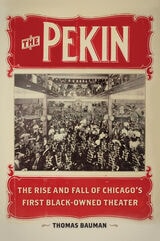
The Pekin
The Rise and Fall of Chicago's First Black-Owned TheaterThomas Bauman
University of Illinois Press, 2014
A missing chapter in African American theatrical history, Bauman's saga presents how Motts used his entrepreneurial acumen to create a successful black-owned enterprise. Concentrating on institutional history, Bauman explores the Pekin's philosophy of hiring only African American staff, its embrace of multi-racial upper class audiences, and its ready assumption of roles as diverse as community center, social club, and fundraising instrument.
The Pekin's prestige and profitability faltered after Motts' death in 1911 as his heirs lacked his savvy, and African American elites turned away from pure entertainment in favor of spiritual uplift. But, as Bauman shows, the theater had already opened the door to a new dynamic of both intra- and inter-racial theater-going and showed the ways a success, like the Pekin, had a positive economic and social impact on the surrounding community.
The Penalty Is Death
U.S. Newspaper Coverage of Women's ExecutionsMarlin Shipman
University of Missouri Press, 2002
The Penelope Project
An Arts-Based Odyssey to Change Elder CareAnne Basting, Maureen Towey, and Ellie Rose
University of Iowa Press, 2016
At Milwaukee’s Luther Manor, a team of artists from the University of Wisconsin’s theatre department and Sojourn Theatre Company, university students, staff, residents, and volunteers traded their bingo cards for copies of The Odyssey. They embarked on a two-year project to examine this ancient story from the perspective of the hero who never left home: Penelope, wife of Odysseus. Together, the team staged a play that engaged everyone and transcended the limits not just of old age and disability but also youth, institutional regulations, and disciplinary boundaries.
Inviting readers to see through the eyes of residents, students, artists, staff, family members, and experts in the fields of education, long-term care, and civically engaged arts practice, this book underscores the essential role of the arts and humanities in living richly. Waiting, as Penelope waited, need not be a time of loss and neglect. The Penelope Project boldly dreams of how to make late life a time of growth and learning. If you dream of improving people’s lives through creative endeavors, this book provides practical advice.
The Penobscot Dance of Resistance
Tradition in the History of a PeoplePauleena MacDougall
University of New Hampshire Press, 2004
Although historians predicted the demise of the Penobscot Indians early in the nineteenth century, the tribe is thriving at the opening of the twenty-first century. Having by the early 1800s been rendered all but invisible to the dominant culture, the Penobscots, by selectively adapting to changing circumstances, won back land and visibility. The vital importance of employing elements of cultural resistance as a survival mechanism has, until now, been underestimated. In a larger context, Dance of Resistance demonstrates how an examination of the history of one Indian nation provides a window on the complex interaction of cultural systems in America.
MacDougall demonstrates that Penobscot legend, linguistics, dance, and oral tradition became foundations of resistance against assimilation into the dominant culture. She thoughtfully and accessibly reconstructs from published, archival, and oral sources the tribe's metaphorical and triumphant Dance of Resistance—founded on spiritual power, reverence for homeland, and commitment to self-determination—from colonial times to the present. A decade of political activism culminated in the precedent-setting 1980 Maine Indian Land Claims settlement. Today the Penobscots run small industries, manage their natural resources, and provide health services, K through 8 education, and social services to the poor and elderly of their community.
The People Have Never Stopped Dancing
Native American Modern Dance HistoriesJacqueline Shea Murphy
University of Minnesota Press, 2007
During the past thirty years, Native American dance has emerged as a visible force on concert stages throughout North America. In this first major study of contemporary Native American dance, Jacqueline Shea Murphy shows how these performances are at once diverse and connected by common influences.
Demonstrating the complex relationship between Native and modern dance choreography, Shea Murphy delves first into U.S. and Canadian federal policies toward Native performance from the late nineteenth through the early twentieth centuries, revealing the ways in which government sought to curtail authentic ceremonial dancing while actually encouraging staged spectacles, such as those in Buffalo Bill’s Wild West shows. She then engages the innovative work of Ted Shawn, Lester Horton, and Martha Graham, highlighting the influence of Native American dance on modern dance in the twentieth century. Shea Murphy moves on to discuss contemporary concert dance initiatives, including Canada’s Aboriginal Dance Program and the American Indian Dance Theatre.
Illustrating how Native dance enacts, rather than represents, cultural connections to land, ancestors, and animals, as well as spiritual and political concerns, Shea Murphy challenges stereotypes about American Indian dance and offers new ways of recognizing the agency of bodies on stage.
Jacqueline Shea Murphy is associate professor of dance studies at the University of California, Riverside, and coeditor of Bodies of the Text: Dance as Theory, Literature as Dance.
The People Shall Rule
ACORN, Community Organizing, and the Struggle for Economic JusticeRobert Fisher
Vanderbilt University Press, 2009
The twelve chapters in this volume present the perspectives of insiders like founder Wade Rathke and leading outside practitioners and academics. The result is a thorough detailing of ACORN's founding and its changing strategies, including vivid accounts and analyses of its campaigns on the living wage, voter turnout, predatory lending, redlining, school reform, and community redevelopment, as well as a critical perspective on ACORN's place in the community organizing landscape.
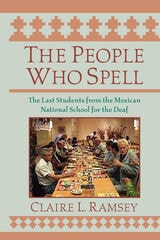
The People Who Spell
The Last Students from the Mexican National School for the DeafClaire L. Ramsey
Gallaudet University Press, 2011
The Escuela Nacional para Sordomudos (ENS), translated as the Mexican National School for the Deaf, opened its doors in the 1860s as part of the republic’s intention to educate its deaf people. The ENS did not use Lengua de Señas Mexicana (LSM), Mexico’s native sign language, for instruction, though they tolerated LSM use by the students. The school was closed permanently in 1972, thus leaving its former students still alive today as the last links to this historic institution. In this compelling social history, Claire L. Ramsey presents these unique Deaf Mexicans from their extraordinary experiences as ENS students and signers to their current personal lives.
One ENS signer, María de los Ángeles Bedolla, inspired the title of the book, The People Who Spell. In her account, she describes herself and her peers as cultured and educated compared to the young deaf people of today. The ENS signers pride themselves on el deletreo, LSM fingerspelling, which they consider key to their sophistication. Ramsey relates each of the signers’ childhoods, marriages, work experiences, and retirements. However, she brings threads of their stories together to reveal a common and abiding disappointment in modern-day Mexico’s failure to educate its deaf citizens according to the promise made more than 100 years ago. The narratives of the ENS signers detail their remarkable lives and heritage but also legitimately question the future of Mexico’s young deaf people.
The People and the Word
Reading Native NonfictionRobert Warrior
University of Minnesota Press, 2005
Focusing on autobiographical writings and critical essays, as well as communally authored and political documents, The People and the Word explores how the Native tradition of nonfiction has both encompassed and dissected Native experiences. Warrior begins by tracing a history of American Indian writing from the eighteenth century to the late twentieth century, then considers four particular moments: Pequot intellectual William Apess’s autobiographical writings from the 1820s and 1830s; the Osage Constitution of 1881; narratives from American Indian student experiences, including accounts of boarding school in the late 1880s; and modern Kiowa writer N. Scott Momaday’s essay “The Man Made of Words,” penned during the politically charged 1970s. Warrior’s discussion of Apess’s work looks unflinchingly at his unconventional life and death; he recognizes resistance to assimilation in the products of the student print shop at the Santee Normal Training School; and in the Osage Constitution, as well as in Momaday’s writing, Warrior sees reflections of their turbulent times as well as guidance for our own.
Taking a cue from Momaday’s essay, which gives voice to an imaginary female ancestor, Ko-Sahn, Warrior applies both critical skills and literary imagination to the texts. In doing so, The People and the Word provides a rich foundation for Native intellectuals’ critical work, deeply entwined with their unique experiences.
Robert Warrior is professor of English and Native American studies at the University of Oklahoma. He is author of Tribal Secrets: Recovering American Indian Intellectual Traditions (Minnesota, 1994) and coauthor, with Paul Chaat Smith, of Like a Hurricane: The Indian Movement from Alcatraz to Wounded Knee.

The People of Alor
A Social-Psychological Study of an East Indian IslandCora Du Bois
University of Minnesota Press, 1944
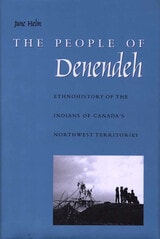
The People of Denendeh
Ethnohistory of the Indians of Canada's Northwest TerritoriesJune Helm
University of Iowa Press, 2000
Helm begins with a broad-ranging, stimulating overview of the social organization of hunter-gatherer peoples of the world, past and present, that provides a background for all she has learned about the Dene. The chapters in part 1 focus on community and daily life among the Mackenzie Dene in the middle of the twentieth century. After two historical overview chapters, Helm moves from the early years of the twentieth century to the earliest contacts between Dene and white culture, ending with a look at the momentous changes in Dene-government relations in the 1970s. Part 3 considers traditional Dene knowledge, meaning, and enjoyments, including a chapter on the Dogrib hand game. Throughout, Helm's encyclopedic knowledge combines with her personal interactions to create a collection that is unique in its breadth and intensity.

The People of the Abyss
Jack London
Pluto Press, 2001
As well as being a literary masterpiece, The People of the Abyss stands as a major sociological study. While other American writers were blindly celebrating the glories of the British Empire at its peak, Jack London was asking why such misery was to be found in the heart of a capital city of immense wealth.
This is a work of reportage - London lets his observations speak for themselves. A precursor to the writings of George Orwell, this book remains a standard-bearer critique of capitalism, as powerful today as it was then.
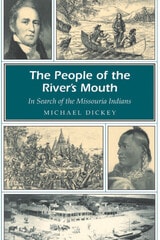
The People of the River's Mouth
In Search of the Missouria IndiansMichael E. Dickey
University of Missouri Press, 2011
The Missouria people were the first American Indians encountered by European explorers venturing up the Pekitanoui River—the waterway we know as the Missouri. This Indian nation called itself the Nyut^achi, which translates to “People of the River Mouth,” and had been a dominant force in the Louisiana Territory of the pre-colonial era. When first described by the Europeans in 1673, they numbered in the thousands. But by 1804, when William Clark referred to them as “once the most powerful nation on the Missouri River,” fewer than 400 Missouria remained. The state and Missouri River are namesakes of these historic Indians, but little of the tribe’s history is known today. Michael Dickey tells the story of these indigenous Americans in The People of the River’s Mouth.
Accessible to general readers, this book recovers the lost history of an important people. The People of the River’s Mouth sheds light on an overlooked aspect of Missouri’s past and pieces together the history of these influential Native Americans in an engaging, readable volume.
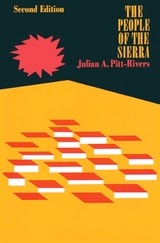
The People of the Sierra
Julian Pitt-Rivers
University of Chicago Press, 1972
For his second edition of The People of the Sierra Julian A. Pitt-River has unmasked the village of Grazalema which had been protectively cloaked in pseudonym for the original version. In addition he has added a new preface which elaborates upon his earlier theories on norms, values, and social structure, and reconsiders them in the light of current theories of other social scientists.
Because of its unique and penetrating observations, not only Hispanic, Mediterranean, and European but also Latin American scholars regard this book as one of the foundation stones of contemporary cultural studies in several disciplines. Beyond the significance of its substance and theory, this study has considerable merit as a humane work of subtle perception and artful execution.
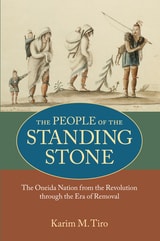
The People of the Standing Stone
The Oneida Nation from the Revolution through the Era of RemovalKarim M. Tiro
University of Massachusetts Press, 2011
The Oneidas' physical, political, and emotional division persists to this day. Even for those who stayed put, their world changed more in cultural, ecological, and demographic terms than at any time before or since. Oneidas of the post-Revolutionary decades were reluctant pioneers, undertaking more of the adaptations to colonized life than any other generation. Amid such wrenching change, maintaining continuity was itself a creative challenge. The story of that extraordinary endurance lies at the heart of this book.
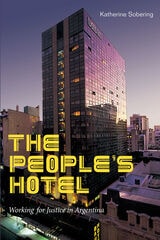
The People's Hotel
Working for Justice in ArgentinaKatherine Sobering
Duke University Press, 2022
The People's Money
Pensions, Debt, and Government ServicesEdited by Michael A. Pagano
University of Illinois Press, 2019

The People's Porn
A History of Handmade Pornography in AmericaLisa Z. Sigel
Reaktion Books, 2020
Critics tend to focus on mass-produced materials and make claims about pornography as plasticized or commodified. In contrast, eminent historian Lisa Z. Sigel looks at what people made, rather than what they bought, revealing how people thought about sexuality for themselves. She also explores periods when these sexual artifacts were pilloried, ransacked, and destroyed, providing a unique document of rare nineteenth- and twentieth-century objects. Whalers and craftsmen, prisoners and activists, African Americans and feminists—all made their own pornography. Ranging across the full sweep of this output, The People’s Porn challenges preconceptions as it tells a new and fascinating story about American sexual history.
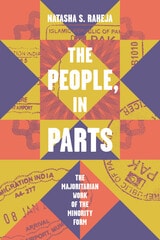
The People, in Parts
The Majoritarian Work of the Minority FormNatasha S. Raheja
University of Chicago Press, 2027
Offers a new theory of the minority as a political form and shows how majoritarian projects are built through its appropriation.
Around the world, national majorities are telling themselves a potent story: that they are the ones in danger. In the United States and Serbia, Christian and white nationalists warn of “replacement.” In Turkey and Pakistan, Muslim nationalists cast religious “others” as existential threats. In India, Hindu nationalists claim that Hindus are becoming minorities in “their own” land. These movements, and the migration and citizenship policies that accompany them, are not aberrations, but rather expressions of a logic embedded in the modern nation-state—a logic that turns people into numbers, numbers into votes, and difference into enmity.
In The People, in Parts, anthropologist Natasha S. Raheja homes in on a paradox visible along the India-Pakistan border. When Hindus cross into India from Pakistan seeking refuge, they are admitted as minorities in need of protection. Yet in India, their welcome into the putative majority is selective and conditional. How does majority-minority status shift by crossing a border? Drawing on long-term research in the Thar Desert region, across Sindh and Rajasthan, Raheja traces how caste and religion shape people's encounters with the state and argues that this bureaucratic confusion is political machinery. Where liberal democracy treats the minority as a shifting, procedural category, nation-state governance fixes it as a substantive identity. The suffering of minoritized populations becomes raw material for majoritarian projects, converted into demographic justification, electoral arithmetic, and nationalist grievance. The minority form, in other words, does majoritarian work.
The People, in Parts offers not only a searing diagnosis of minority-majority politics and the governance of migration but a reframing: the problem is not simply about who belongs and who does not, but how nationalist belonging crosses state borders, pointing to strains within liberal democracy and the nation-state order.
The Peoples Of Las Vegas
One City, Many FacesJerry L Simich
University of Nevada Press, 2005
Beneath the glitzy surface of the resorts and the seemingly cookie-cutter suburban sprawl of Las Vegas lies a vibrant and diverse ethnic life. People of varied origins make up the population of nearly two million and yet, until now, little mention of the city has been made in studies and discussion of ethnicity or immigration. The Peoples of Las Vegas: One City, Many Faces fills this void by presenting the work of seventeen scholars of history, political science, sociology, anthropology, law, urban studies, cultural studies, literature, social work, and ethnic studies to provide profiles of thirteen of the city’s many ethnic groups. The book’s introduction and opening chapters explore the historical and demographic context of these groups, as well as analyze the economic and social conditions that make Las Vegas so attractive to recent immigrants. Each group is the subject of the subsequent chapters, outlining migration motivations and processes, economic pursuits, cultural institutions and means of transmitting culture, involvement in the broader community, ties to homelands, and recent demographic trends.

The Perfect Fit
Creative Work in the Global Shoe IndustryClaudio E. Benzecry
University of Chicago Press, 2022
We know a lot about how clothing and shoes are made cheaply, but very little about the process when they are made beautifully. In The Perfect Fit, Claudio E. Benzecry looks at the craft that goes into designing shoes for women in the US market, revealing that this creative process takes place on a global scale. Based on unprecedented behind-the-scenes access, The Perfect Fit offers an ethnographic window into the day-to-day life of designers, fit models, and technicians as they put together samples and prototypes, showing how expert work is a complement to and a necessary condition for factory exploitation.
Benzecry looks at the decisions and constraints behind how shoes are designed and developed, from initial inspiration to the mundane work of making sure a size seven stays constant. In doing so, he also fosters an original understanding of how globalization works from the ground up. Drawing on five years of research in New York, China, and Brazil, The Perfect Fit reveals how creative decisions are made, the kinds of expertise involved, and the almost impossible task of keeping the global supply chain humming.
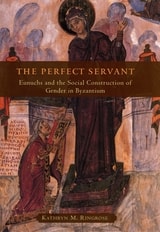
The Perfect Servant
Eunuchs and the Social Construction of Gender in ByzantiumKathryn M. Ringrose
University of Chicago Press, 2003
Accepted for generations as a legitimate and functional part of Byzantine civilization, eunuchs were prominent in both the imperial court and the church. They were distinctive in physical appearance, dress, and manner and were considered uniquely suited for important roles in Byzantine life. Transcending conventional notions of male and female, eunuchs lived outside of normal patterns of procreation and inheritance and were assigned a unique capacity for mediating across social and spiritual boundaries. This allowed them to perform tasks from which prominent men and women were constrained, making them, in essence, perfect servants.
Written with precision and meticulously researched, The Perfect Servant will immediately take its place as a major study on Byzantium and the history of gender.
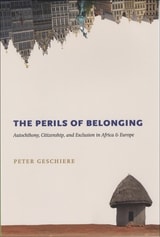
The Perils of Belonging
Autochthony, Citizenship, and Exclusion in Africa and EuropePeter Geschiere
University of Chicago Press, 2009
Despite being told that we now live in a cosmopolitan world, more and more people have begun to assert their identities in ways that are deeply rooted in the local. These claims of autochthony—meaning “born from the soil”—seek to establish an irrefutable, primordial right to belong and are often employed in politically charged attempts to exclude outsiders. In The Perils of Belonging, Peter Geschiere traces the concept of autochthony back to the classical period and incisively explores the idea in two very different contexts: Cameroon and the Netherlands.
In both countries, the momentous economic and political changes following the end of the cold war fostered anxiety over migration. For Cameroonians, the question of who belongs where rises to the fore in political struggles between different tribes, while the Dutch invoke autochthony in fierce debates over the integration of immigrants. This fascinating comparative perspective allows Geschiere to examine the emotional appeal of autochthony—as well as its dubious historical basis—and to shed light on a range of important issues, such as multiculturalism, national citizenship, and migration.
The Perils of Normalcy
George L. Mosse and the Remaking of Cultural HistoryKarel Plessini
University of Wisconsin Press, 2014
In this intellectual biography of George Mosse, Karel Plessini draws on all of Mosse's published and unpublished work to illuminate the origins and development of his groundbreaking methods of historical analysis and the close link between his life and work. He redefined the understanding of modern mass society and politics, masterfully revealing the powerful influence of conformity and political liturgies on twentieth-century history. Mosse warned against the dangers inherent in acquiescence, showing how identity creation and ideological fervor can climax in intolerance and mass murder—a message of continuing relevance.
The Perils of Populism
Sarah Tobias
Rutgers University Press, 2022
The Perils of Populism shows how a feminist lens can help diagnose the factors behind the global rise of right-wing populism and teach us how to resist the threat it presents to democracy. Featuring interdisciplinary essays about politics in the United States, the Middle East, Europe, and India from a variety of acclaimed theorists and activists, the volume contributes to a rapidly expanding literature on gender and the far right. Together, these chapters offer a truly intersectional analysis of the problem, addressing everything from how populism has thrived in a “post-truth” era to the ways it appeals to working-class voters looking for an alternative to neoliberalism. Yet the authors also find reasons to be hopeful, as they showcase forms of grassroots feminist activism that challenge right-wing populism by advocating for racial and economic justice.
The Perils of Race-Thinking
A Portrait of Ales HrdlickaMark A. Brandon
Central European University Press, 2023
Eugenics and scientific racism are experiencing a resurgence, and an understanding of the ideas of Aleš Hrdlička can help combat them. Today, the racial science of the early twentieth century is both untenable and contemptible. This book is about an arch figure of that period: Aleš Hrdlička served as Curator of Physical Anthropology at the prestigious Smithsonian Institution from 1910 to 1941. Although his ideas about race are today considered pseudoscience, the uncomfortable truth is that he was an internationally respected scientist in his own day.
The Perils of Race-Thinking advances a bold new interpretation of modern racial ideology by exploring Hrdlička’s intellectual world. Using previously untapped Czech-language sources, Brandon irrevocably alters the discussion about this important figure by placing Czech nationalism at the center of his racial thinking. Defying disciplinary categories, Perils of Race-Thinking joins critical analysis of this key American anthropologist with an incisive revisionist perspective of interwar Czechoslovakia to unearth transnational racial presumptions lurking behind the worst crimes of the twentieth century.
At the center of Hrdlička’s race beliefs was his commitment to Czech and Slovak unity and independence. From this center, his next level of concern was what he believed to be a millennial racial struggle between Germans and Slavs. On a global scale, he viewed the Slavs, and especially the Soviet Union, as a eugenic bastion of White strength holding off the “rising tide of color.”
Step by step, Perils of Race-Thinking mercilessly dismantles Hrdlička’s racial system and exposes it as mysticism dressed up in the language of science. Convinced that human individuals belonged “naturally” in racial groups, Hrdlička embraced a revolutionary program of reordering the globe according to a harrowing morality of “Darwinist” struggle. Yet despite a lifetime of measuring body parts, even Hrdlička could not decide how many races there were or how to tell them apart.
The Persistence of Masks
Surrealism and the Ethnography of the SubjectJoyce Suechun Cheng
University of Minnesota Press, 2025
An examination of surrealism’s unofficial ethnography of marginalized subjectivities
In interwar Paris, the encounter between surrealism and the nascent discipline of ethnology led to an intellectual project now known as “ethnographic surrealism.” In The Persistence of Masks, Joyce Suechun Cheng considers the ethnographic dimension of the surrealist movement in its formative years through a close look at the reviews Documents (1929–30) and Minotaure (1933–39) as well as the surrealist writer-turned-ethnographer Michel Leiris’s ethnography of possession. Analyzing surrealist aesthetic criticism, art, poetry, and field research in terms of a common interest in marginalized modes of subjectivity, Cheng argues that the surrealists used the figures of the mask, the veil, the hand, and the hat to radically reconceive the subject as nonhegemonic, nonanthropocentric, and feminine-identified.
Though ethnographic surrealism usually refers to the collaboration between professional ethnologists at the Institut de l’Ethnologie in Paris and Georges Bataille’s so-called dissident circle of surrealists, Cheng demonstrates that surrealism’s unofficial ethnography began long before the founding of the movement. Starting with André Breton’s wartime text “Subject” (1916), written when he was still a young psychiatric intern treating traumatized soldiers, she shows how the future surrealist poet shifted from a clinical to a para-ethnographic approach to subjectivity when adopting his patient’s first-person voice as a textual mask.
Revealing surrealism to be always implicitly ethnographic, Cheng uncovers deep affinities between archrivals Breton and Bataille, highlights psychiatry’s underacknowledged role in surrealism’s lay ethnography, and theorizes the surrealists’ feminine identification as a means of critiquing power. By broadening the scope of ethnographic surrealism, The Persistence of Masks offers new insights that challenge longstanding beliefs about this multifaceted movement in poetry, the arts, and culture.
The Persistence of Slavery
An Economic History of Child Trafficking in NigeriaRobin Phylisia Chapdelaine
University of Massachusetts Press, 2021
Despite efforts to abolish slavery throughout Africa in the nineteenth century, the coercive labor systems that constitute “modern slavery” have continued to the present day. To understand why, Robin Phylisia Chapdelaine explores child trafficking, pawning, and marriages in Nigeria's Bight of Biafra, and the ways in which British colonial authorities and Igbo, Ibibio, Efik, and Ijaw populations mobilized children's labor during the early twentieth century. Drawing on a wealth of primary sources that include oral interviews, British and Nigerian archival materials, newspaper holdings, and missionary and anthropological accounts, Chapdelaine argues that slavery's endurance can only be understood when we fully examine “the social economy of a child”—the broader commercial, domestic, and reproductive contexts in which children are economic vehicles.
The Persistence of Slavery provides an invaluable investigation into the origins of modern slavery and early efforts to combat it, locating this practice in the political, social, and economic changes that occurred as a result of British colonialism and its lingering effects, which perpetuate child trafficking in Nigeria today.
The Persistence of Violence
Colombian Popular CultureToby Miller
Rutgers University Press, 2020
The Persuasive Power of Campaign Advertising
Authored by Travis N. Ridout and Michael M. Franz
Temple University Press, 2011
The Persuasive Power of Campaign Advertising offers a comprehensive overview of political advertisements and their changing role in the Internet age. Travis Ridout and Michael Franz examine how these ads function in various kinds of campaigns and how voters are influenced by them.
The authors particularly study where ads are placed, asserting that television advertising will still be relevant despite the growth of advertising on the Internet. The authors also explore the recent phenomenon of outrageous ads that "go viral" on the web-which often leads to their replaying as television news stories, generating additional attention.
It also features the first analysis of the impact on voters of media coverage of political advertising and shows that televised political advertising continues to have widespread influence on the choices that voters make at the ballot box.
The Perversity of Gratitude
An Apartheid EducationFarred, Grant
Temple University Press, 2024
Unsentimental about his education, Farred’s critique recognizes the impact of four exceptional teachers—all engaging pedagogical figures who cultivated a great sense of possibility in how thinking could be learned through a disenfranchised South African education.
The Perversity of Gratitude brings to bear the work of influential philosophers such as Martin Heidegger and Jacques Derrida. The book tackles broad philosophical concepts—transgression, withdrawal, and the dialectic. This leads to the creation of a new concept, “the diaspora-in-place,” which Farred explains, “is having left a place before one physically removes oneself from this place.”
Farred’s apartheid education in South Africa instilled in him a lifelong commitment to learning thinking. “And for that I am grateful,” Farred writes in The Perversity of Gratitude. His autopoiesis is sure to provoke and inspire readers.
The Petexbatun Regional Archaeological Project
A Multidisciplinary Study of the Maya CollapseArthur A. Demarest
Vanderbilt University Press, 2006
Then, based on the project's findings, Demarest presents interpretive reconstructions of the linked histories of the Pasion River kingdoms and correlates these interpretations with the variable evidence and culture-histories of other regions of the Classic Maya lowlands. He points out that only through linking such accurate regional culture-histories can we begin to understand the eighth- through tenth-century changes in Classic Maya civilization. The volume describes how the Petexbatun project addressed this challenge in its research design, structure, and large, multicentered zone of study. Building on the previous twenty years of Harvard research in adjacent zones, the Vanderbilt projects succeeded in reconstructing events and processes throughout the Pasion River Valley, the largest single inland trade route of the ancient Maya world.
In its conclusions, this first of the Petexbatun volumes of multidisciplinary studies, evidence, analyses, and interpretations, provides answers to some long-standing questions about the "Classic Maya collapse," as well as a new, preliminary culture-history of the abandonment, decline, or transformation of the Classic Maya kingdoms of the western Peten. It is an exciting preview and summary of a decade of evidence on the debate over the fate of the Classic Maya civilization, one of the great controversies in the history of Pre-Columbian archaeology. VIMA Series #1
The Petro-state Masquerade
Oil, Sovereignty, and Power in Trinidad and TobagoRyan Cecil Jobson
University of Chicago Press, 2024
Examining the past, present, and future of Trinidad and Tobago’s oil and gas industries, anthropologist Ryan Cecil Jobson traces how a model of governance fashioned during prior oil booms is imperiled by declining fossil fuel production and a loss of state control. Despite the twin-island nation’s increasingly volatile and vulnerable financial condition, however, government officials continue to promote it as a land of inexhaustible resources and potentially limitless profits.
The result is what Jobson calls a “masquerade of permanence” whereby Trinbagonian state actors represent the nation as an interminable reserve of hydrocarbons primed for multinational investment. In The Petro-state Masquerade, Jobson examines the gulf between this narrative crafted by the postcolonial state and the vexed realities of its dwindling petroleum-fueled aspirations. After more than a century of commercial oil production, Trinidad and Tobago instructs us to regard the petro-state as less a permanent form than a fragile relation between fossil fuels and sovereign authority. Foregrounding the concurrent masquerades of oil workers, activists, and Carnival revelers, Jobson argues that the promise of decolonization lies in the disarticulation of natural resources, capital, and political power by ordinary people in the Caribbean.
The Petroglyphs and Pictographs of Missouri
Carol Diaz-Granados
University of Alabama Press, 1999
This comprehensive guide to the rock art of Missouri presents major design motifs and links those images to Native American beliefs.
Images on rocks depicting birds, serpents, deer, and other designs are haunting reminders of prehistoric peoples. This book documents Missouri's rich array of petroglyphs and pictographs, analyzing the many aspects of these rock carvings and paintings to show how such representations of ritual activities can enhance our understanding of Native American culture.
Missouri is a particularly important site for rock art because it straddles the Plains, the Ozarks, and the Southeast. Carol Diaz-Granados and James Duncan have established a model for analyzing this rock art as archaeological data and have mapped the patterning of fifty-eight major motifs across the state. Of particular importance is their analysis of motifs from Mississippi River Valley sites, including Cahokia.
The authors include interpretive discussions on iconography and ideology, drawing on years of research in the ethnographic records and literature of Native Americans linguistically related to earlier peoples. Their distribution maps show how motifs provide clues to patterns of movement among prehistoric peoples and to the range of belief systems. Rock art is an aspect of the archaeological record that has received little attention, and the art is particularly subject to the ravages of time. By documenting these fragile images, this book makes a major contribution to rock art research in North America.
The Pew and the Picket Line
Christianity and the American Working ClassEdited by Christopher D. Cantwell, Heath W. Carter, and Janine Giordano Drake
University of Illinois Press, 2016
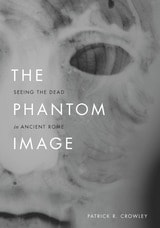
The Phantom Image
Seeing the Dead in Ancient RomePatrick R. Crowley
University of Chicago Press, 2019
The Phantom Respondents
Opinion Surveys and Political RepresentationJohn Brehm
University of Michigan Press, 1993

The Phantom Unmasked
America's First SuperheroKevin Patrick
University of Iowa Press, 2017
By tracing the publication history of The Phantom in magazines and comic books across international markets since the mid-1930s, author Kevin Patrick delves into the largely unexplored prehistory of modern media licensing industries. He also explores the interconnections between the cultural, political, economic, and historical factors that fueled the character’s international popularity. The Phantom Unmasked offers readers a nuanced study of the complex cultural flow of American comic books around the world. Equally important, to provide a rare glimpse of international comics fandom, Patrick surveyed the Phantom’s “phans”—as they call themselves—and lets them explain how and why they came to love the world’s first masked superhero.
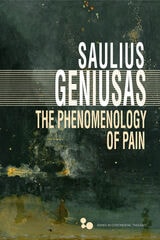
The Phenomenology of Pain
Saulius Geniusas
Ohio University Press, 2020
The Phenomenology of Pain is the first book-length investigation of its topic to appear in English. Groundbreaking, systematic, and illuminating, it opens a dialogue between phenomenology and such disciplines as cognitive science and cultural anthropology to argue that science alone cannot clarify the nature of pain experience without incorporating a phenomenological approach. Building on this premise, Saulius Geniusas develops a novel conception of pain grounded in phenomenological principles: pain is an aversive bodily feeling with a distinct experiential quality, which can only be given in original first-hand experience, either as a feeling-sensation or as an emotion.
Geniusas crystallizes the fundamental methodological principles that underlie phenomenological research. On the basis of those principles, he offers a phenomenological clarification of the fundamental structures of pain experience and contests the common conflation of phenomenology with introspectionism. Geniusas analyzes numerous pain dissociation syndromes, brings into focus the de-personalizing and re-personalizing nature of chronic pain experience, and demonstrates what role somatization and psychologization play in pain experience. In the process, he advances Husserlian phenomenology in a direction that is not explicitly worked out in Husserl’s own writings.
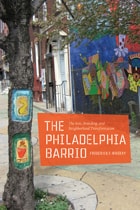
The Philadelphia Barrio
The Arts, Branding, and Neighborhood TransformationFrederick F. Wherry
University of Chicago Press, 2011
How does a so-called bad neighborhood go about changing its reputation? Is it simply a matter of improving material conditions or picking the savviest marketing strategy? What kind of role can or should the arts play in that process? Does gentrification always entail a betrayal of a neighborhood’s roots? Tackling these questions and offering a fresh take on the dynamics of urban revitalization, The Philadelphia Barrio examines one neighborhood’s fight to erase the stigma of devastation.
Frederick F. Wherry shows how, in the predominantly Latino neighborhood of Centro de Oro, entrepreneurs and community leaders forged connections between local businesses and cultural institutions to rebrand a place once nicknamed the Badlands. Artists and performers negotiated with government organizations and national foundations, Wherry reveals, and took to local galleries, stages, storefronts, and street parades in a concerted, canny effort to reanimate the spirit of their neighborhood.
Complicating our notions of neighborhood change by exploring the ways the process is driven by local residents, The Philadelphia Barrio presents a nuanced look at how city dwellers can make commercial interests serve the local culture, rather than exploit it.
The Philadelphia Irish
Nation, Culture, and the Rise of a Gaelic Public SphereMichael L. Mullan
Rutgers University Press, 2021
Using Jurgen Habermas’s concept of a public sphere, the author reveals how the Irish constructed a plebian “counter” public of Gaelic meaning through various mechanisms of communication, the ethnic press, the meeting rooms of Irish societies, the consumption of circulating pamphlets, oratory, songs, ballads, poems, and conversation.
Settled in working class neighborhoods of vast spatial separation in an industrial city, the Irish resisted a parochialism identified with neighborhood and instead extended themselves to construct a vibrant, culturally engaged network of Irish rebirth in Philadelphia, a public of Gaelic meaning.
The Philadelphia Mummers
Building Community Through PlayPatricia Anne Masters
Temple University Press, 2007
Every New Year's Day since 1901, the Philadelphia Mummers have presented a spectacular show of shows that raucously snakes and shimmies its way through city streets. The Mummers Parade features music, dance, comedy, and mime, along with dazzling costumes and floats. Although the lavish event is now televised to a wide audience, it is still rooted in the same neighborhoods where it began.
This book explores the community created and annually reaffirmed by the Philadelphia Mummers. The author spent more than five years with the Mummers, observing their lives and rituals as she took part in their preparations and parades. Writing with the fascination of a sociologist and the excitement of a participant, Masters examines the Mummers from their beginnings. Through the prism of their century-long history, we can see how communities retain their identities and how they are affected by larger cultural trends.

The Philippine Temptation
Dialectics of Philippines-U.S. Literary RelationsE. San Juan
Temple University Press, 1996
The Philosopher and His Poor
Jacques Rancière
Duke University Press, 2004
Jacques Rancière’s The Philosopher and His Poor meditates on these questions in close readings of major texts of Western thought in which the poor have played a leading role—sometimes as the objects of philosophical analysis, sometimes as illustrations of philosophical argument. Published in France in 1983 and made available here for the first time in English, this consummate study assesses the consequences for Marx, Sartre, and Bourdieu of Plato’s admonition that workers should do “nothing else” than their own work. It offers innovative readings of these thinkers’ struggles to elaborate a philosophy of the poor. Presenting a left critique of Bourdieu, the terms of which are largely unknown to an English-language readership, The Philosopher and His Poor remains remarkably timely twenty years after its initial publication.
The Philosopher of Palo Alto
Mark Weiser, Xerox PARC, and the Original Internet of ThingsJohn Tinnell
University of Chicago Press, 2023
When developers and critics trace the roots of today’s Internet of Things—our smart gadgets and smart cities—they may single out the same creative source: Mark Weiser (1952–99), the first chief technology officer at Xerox PARC and the so-called “father of ubiquitous computing.” But Weiser, who died young at age 46 in 1999, would be heartbroken if he had lived to see the ways we use technology today. As John Tinnell shows in this thought-provoking narrative, Weiser was an outlier in Silicon Valley. A computer scientist whose first love was philosophy, he relished debates about the machine’s ultimate purpose. Good technology, Weiser argued, should not mine our experiences for saleable data or demand our attention; rather, it should quietly boost our intuition as we move through the world.
Informed by deep archival research and interviews with Weiser’s family and colleagues, The Philosopher of Palo Alto chronicles Weiser’s struggle to initiate a new era of computing. Working in the shadows of the dot-com boom, Weiser and his collaborators made Xerox PARC headquarters the site of a grand experiment. Throughout the building, they embedded software into all sorts of objects—coffeepots, pens, energy systems, ID badges—imbuing them with interactive features. Their push to integrate the digital and the physical soon caught on. Microsoft’s Bill Gates flagged Weiser’s Scientific American article “The Computer for the 21st Century” as a must-read. Yet, as more tech leaders warmed to his vision, Weiser grew alarmed about where they wished to take it.
In this fascinating story of an innovator and a big idea, Tinnell crafts a poignant and critical history of today’s Internet of Things. At the heart of the narrative is Weiser’s desire for deeper connection, which animated his life and inspired his notion of what technology at its best could be.
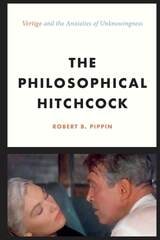
The Philosophical Hitchcock
“Vertigo” and the Anxieties of UnknowingnessRobert B. Pippin
University of Chicago Press, 2017
A bold, brilliant exploration of one of the most admired works of cinema, The Philosophical Hitchcock will lead philosophers and cinephiles alike to a new appreciation of Vertigo and its meanings.
The Philosophical Roots of Anthropology
William Adams
CSLI, 1998
Like most anthropologists, Adams had previously accepted the premise that anthropology's intellectual roots go back no further than the moral philosophy of the Enlightenment, or perhaps at the earliest to the humanism of the Renaissance. In this volume, Adams recognizes that many good ideas were anticipated in antiquity and that these ideas have had a lasting influence on anthropological models in particular. He has chosen five philosophical currents whose influence has been, and is, very widespread, particularly in North American anthropology: progressivism, primitivism, natural law, German idealism, and "Indianology". He argues that the influences of these currents in North American anthropology occur in a unique combination that is not found in the anthropologies of other countries. Without neglecting the anthropologies of other countries, this work serves as the basis for the explanation of the true historical and philosophical underpinnings of anthropology and its goals.

The Philosophy of Franz Rosenzweig
Edited by Paul Mendes-Flohr
University Press of New England, 2002
The Philosophy of Movement
An IntroductionThomas Nail
University of Minnesota Press, 2024
An influential thinker distills years of work on the philosophy of movement into one accessible account
Why are city dwellers worldwide walking on average ten percent faster than they were a decade ago? Why are newcomer immigrant groups so often maligned when migration has always constituted civilization? To analyze and understand the depth of the reasons, Thomas Nail suggests that it serves us well to turn to a philosophy of movement. Synthesizing and extending many years of his influential work, The Philosophy of Movement is a comprehensive argument for how motion is the primary force in human and natural history.
Nail critiques the bias toward stasis at the core of Western thought, asking: what would a philosophy that began with the primacy of movement look like? Interrogating the consequences of movement throughout history and in daily life in the twenty-first century, he draws connections and traces patterns between scales of reality, periods of history, and fields of knowledge. In our age of rapid movements shaped by accelerating climate change and ensuing mass global migration, as well as ubiquitous digital media, Nail provides a contemporary philosophy that helps us understand how we got here and how to grapple with these interlocking challenges.
With a foreword by philosopher Daniel W. Smith, The Philosophy of Movement: An Introduction is a must-read for scholars and students not only of philosophy but also history, anthropology, science and technology studies, mobility studies, and other fields across the humanities and social sciences.