Results by title
905 books match the query 'Literary' and 299 start with t

The Return of Philip Latinowicz
Miroslav Krleza
Northwestern University Press, 1995
The first and most enduring work by preeminent Croatian writer Miroslav Krleza, The Return of Philip Latinowicz was highly praised by Jean-Paul Sartre.
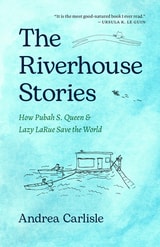
The Riverhouse Stories
How Pubah S. Queen and Lazy LaRue Save the WorldAndrea Carlisle
Oregon State University Press, 1986
40th anniversary edition of a rediscovered classic
When Pubah and Lazy LaRue move to a houseboat on an Oregon river, they find themselves immersed in a life filled with whimsical adventures. Even though their dwelling is ancient, tippy, and in need of endless repairs, their affection for it, for river life, and for one another does not wane. These linked stories teem with life and with love for their friends and for new neighbors—other houseboat people, ducks, beavers, muskrats, and all else the river has to offer. Lazy LaRue writes stories; Pubah is an apprentice electrician. Their world encompasses the mundane and the fanciful—from lassoing logs and rewiring a houseboat to dreaming of new inventions and traveling in a hot air balloon.
Filled with humor, optimism, and playful exploration, the stories in these pages bring warmth and inspiration. Illustrations by Mary Narkiewicz capture the quirky quality of the tales with splendid charm and add to the dreamlike quality of the storytelling. A new afterword by the author reflects on writing The Riverhouse Stories and on the cultural climate of the time, showing how much the world has changed over four decades.
The Road to the Open
Arthur Schnitzler
Northwestern University Press, 1991
The Round Dance
A NovelCarmine Abate
Rutgers University Press, 2024

The Rumphulus
Joseph G. Peterson
University of Iowa Press, 2020
Romulus was the founder of Rome; and those tossed outside the city-gate are not Romulus’s children but the cast-offs living in hovels, the Rumphulus. However, this isn’t ancient Rome, but rather the nature preserve of a contemporary American suburb. The outcasts don’t understand why they’ve been relegated to the
woods. Nor do they know if they will ever summon the courage to cross the roads that act as a physical and psychological barrier to their reentry into conventional society. Daily they negotiate the harsh conditions of the wild and the dangerous presence of one another while they contemplate their exiles. That is until society
comes for one of them.
The Rumphulus have grown their beards long, and when they can no longer stand life they howl like wolves; only they are not wolves but the stranded city outcasts who howl in pain.
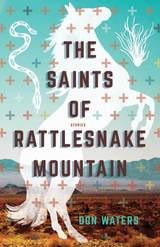
The Saints of Rattlesnake Mountain
StoriesDon Waters
University of Nevada Press, 2017
Soldiers, seekers, priests, prisoners, and surfers pursue their fate amid bizarre, sometimes overwhelming circumstances. In “La Luz de Jesús,” a gutless Los Angeles screenwriter, a believer in nothing but the god of Hollywood, must reorient after he encounters a group of penitents in New Mexico’s Sangre de Cristo Mountains. The decorated soldier in “Española” faces more chaos back home than he did during his tour in Iraq. And “The Saints of Rattlesnake Mountain” pairs a “trustee” prison inmate and a wild mustang horse, both wards of the state of Nevada, as they fumble toward a spiritual truth.
These stories capture the spirit of a region and its people. Once again Waters assembles an unconventional cast of characters, capturing their foibles and imperfections, and always rendering them with compassion as these modern-day martyrs and spiritually haunted survivors strive for some kind of redemption.
Ingenious, sometimes forbidding, often absurd, and altogether original, The Saints of Rattlesnake Mountain is a stirring tribute to the lives, loves, and hopes of the faithful and the dispossessed.
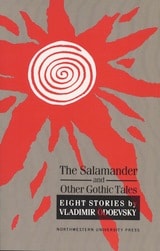
The Salamander and Other Gothic Tales
Vladimir Odoevsky
Northwestern University Press, 1992
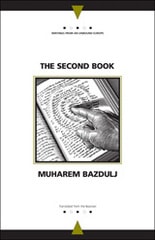
The Second Book
Muharem Bazdulj
Northwestern University Press, 2005
Muharem Bazdulj has broken from the pack of new Eastern European writers influenced by innovators such as Danilo Kiš, Milan Kundera, and Jorge Luis Borges. Employing a light touch, a daring anti-nationalist tone, and the kind of ambition that inspires nothing less than a rewriting of Bosnian and Yugoslavian history, Bazdulj weaves the imagined realities of history into fiction and fiction into history. To quote one critic, for Bazdulj history "is the sum of interpretations while imagination is the sum of facts."

The Secret Lives of Church Ladies
Deesha Philyaw
West Virginia University Press, 2020
*FINALIST for the 2020 National Book Award for Fiction*
*WINNER of the 2021 PEN/Faulkner Award*
*WINNER of the 2020 Story Prize*
*WINNER of the 2020 L.A. Times Book Prize, Art Seidenbaum Award for First Fiction*
“Beguiling.” —The New Yorker
“Tender, fierce, proudly black and beautiful, these stories will sneak inside you and take root.” —Kirkus Reviews (starred review)
“Triumphant.” —Publishers Weekly
“Cheeky, insightful, and irresistible.” —Ms. Magazine
“This collection marks the emergence of a bona fide literary treasure.” —Minneapolis Star Tribune
“Full of lived-in humanity, warmth, and compassion.” —Pittsburgh Current
The Secret Lives of Church Ladies explores the raw and tender places where Black women and girls dare to follow their desires and pursue a momentary reprieve from being good. The nine stories in this collection feature four generations of characters grappling with who they want to be in the world, caught as they are between the church’s double standards and their own needs and passions.
There is fourteen-year-old Jael, who has a crush on the preacher’s wife. At forty-two, Lyra realizes that her discomfort with her own body stands between her and a new love. As Y2K looms, Caroletta’s “same time next year” arrangement with her childhood best friend is tenuous. A serial mistress lays down the ground rules for her married lovers. In the dark shadows of a hospice parking lot, grieving strangers find comfort in each other.
With their secret longings, new love, and forbidden affairs, these church ladies are as seductive as they want to be, as vulnerable as they need to be, as unfaithful and unrepentant as they care to be, and as free as they deserve to be.
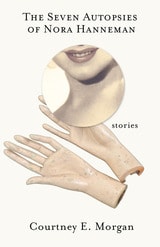
The Seven Autopsies of Nora Hanneman
StoriesCourtney E. Morgan
University of Alabama Press, 2017
In unfamiliar and sometimes bizarre narrative turns, the stories in Courtney E. Morgan’s The Seven Autopsies of Nora Hanneman traverse the gamut of female/human experience, both grounded in reality and in the irreal. Two schoolgirls culminate their sexual exploration in a surreal act of cannibalism. A sister molds her dead brother’s body into a bird. A woman gives birth to balls of twine and fur (among other things). A sex worker engages a version of herself in a brothel of prostituted body parts.
Morgan tears apart a host of archetypes and tropes of femininity—dismembering them, skinning them, and then draping them one by one over her characters like fur coats—revealing them as ill-fitting, sometimes comedic, sometimes monstrous, and always insufficient, masks. Along with these skins of the cultural “feminine,” the collection tries on an array of genres—dissecting, mutating, and breeding them together—from fairy tale to horror, surrealism to confessional (non)fiction, and erotica to (un)creation myth.
The book weaves around questions of sexuality, identity, and subjectivity. Mutability, instability, and liminality are foregrounded, both in content and form, character and language—blurring the lines between birth and death, death and sex, tugging at the transitional spaces of adolescence and gestation. Even as its treatment is essentialized, gender is muddied and obscured. Morgan shows off her linguistic range in this collection, from sharp-as-nails prose to lyrical moments of poetic reach—probing the extremes of the human condition through both narrative line and language itself.

The Shanghai Intrigue
Michael S. Koyama
Seagull Books, 2017
As the complex plot to bring down a major financial institution unfolds at a rapid pace, American and Japanese officials scramble to prevent a crisis with international implications. Set against the backdrop of the political and financial practices of Japan, China, and the US, The Shanghai Intrigue brings with it murder, betrayal, romance, even a natural disaster, as the plot races to a most unpredictable outcome. The book’s breakneck speed and thrilling twists and turns will leave readers spellbound from the first page.
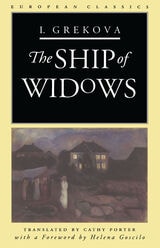
The Ship of Widows
I. Grekova
Northwestern University Press, 1994
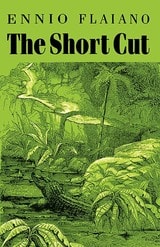
The Short Cut
Ennio Flaiano
Northwestern University Press, 1992
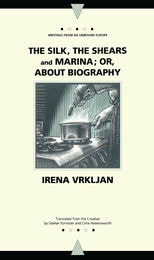
The Silk, the Shears and Marina; or, About Biography
Irena Vrkljan
Northwestern University Press, 1999
These are the first two volumes of the Croatian poet and novelist Irena Vrkljan's lyrical autobiography. Although each novel illuminates the other, they also stand alone as original and independent works of art. In The Silk, the Shears, Vrkljan traces the symbolic and moral significance of her life, and her vision of the fate of women in her mother's time and in her own. Marina continues the intense analysis of the poetic self, using the life of Marina Tsvetaeva to meditate on the processes behind biography.
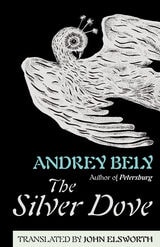
The Silver Dove
Andrei Bely
Northwestern University Press, 2000
Dissatisfied with the life of the intelligentsia, the poet Daryalsky joins a rural mystic sect, the Silver Doves. The locals, in particular the peasant woman Matryona, are fascinated by the dashing stranger. Daryalsky is in turn taken in by the Doves' intimacy with the mystical and spiritual--and by Matryona. Under the influence of Kudeyarov, the ruthless cult leader, Daryalsky is used in a bid to produce a sacred child. But in time the poet disappoints the Doves and must face their suspicions and jealousies--and his own inevitable dire fate.

The Ski Jumpers
A NovelPeter Geye
University of Minnesota Press, 2022
Now in paperback: a writer and former ski jumper facing a terminal diagnosis takes one more leap—into a past of soaring flights and broken family bonds
A brilliant ski jumper has to be fearless—Jon Bargaard remembers this well. His memories of daring leaps and risks might be the key to the book he’s always wanted to write: a novel about his family, beginning with Pops, once a champion ski jumper himself, who also took Jon and his younger brother Anton to the heights. But Jon has never been able to get past the next, ruinous episode of their history, and now that he has received a terrible diagnosis, he’s afraid he never will.
In a bravura performance, Peter Geye follows Jon deep into the past he tried so hard to leave behind, telling the story he spent his life escaping. It begins with a flourish, his father and his hard-won sweetheart fleeing Chicago, and a notoriously ruthless gangster, to land in North Minneapolis. That, at least, was the tale Jon heard, one that becomes more and more suspect as he revisits the events that eventually tore the family in two, sending his father to prison, his mother to the state hospital, and placing himself, a teenager, in charge of thirteen-year-old Anton. Traveling back and forth in time, Jon tells his family’s story—perhaps his last chance to share it—to his beloved wife Ingrid, circling ever closer to the truth about those events and his own part in them, and revealing the perhaps unforgivable violence done to the brothers’ bond.
The dream of ski jumping haunts Jon as his tale unfolds, daring time to stop just long enough to stick the landing. As thrilling as those soaring flights, as precarious as the Bargaard family’s complicated love, as tender as Jon’s backward gaze while disease takes him inexorably forward, Peter Geye’s gorgeous prose brings the brothers to the precipice of their relationship, where they have to choose: each other, or the secrets they’ve held so tightly for so long.
Cover alt text: Lightly gradiented periwinkle sky background with white cloud in upper right corner and snow in lower left. At top, a cutout black-and-white image of a ski jumper appears and is cut off at the neck. Foreground: Book title in all-caps red, with author name beneath in all-caps white and “A Novel” beneath in all-cap dark grey. All text reads at a motion slant.
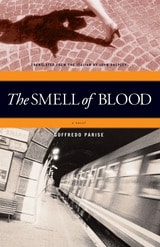
The Smell of Blood
Goffredo Parise
Northwestern University Press, 2003
"A smell very similar to that of slaughterhouses at dawn, but infinitely sweeter and slightly nauseating, or rather, to be more precise, exhilarating."
The smell of blood is really the smell of life. The psychiatrist narrating the story has the power to detect it. His young mistress hungers for it. And his middle-aged wife Silvia has just begun to emanate it--overpoweringly.
Silvia has begun an affair with a violent young idler and neofascist who despises and exploits women. At first her husband reacts with good humor--he has long been unfaithful himself. But jealousy soon colors his curiosity, and his obsession with the details of Silvia's relationship leads to fantasies that become self-fulfilling prophecies. At times coolly analytical, at others driven to know more, the narrator watches as Silvia's actions become more and more self-destructive. When she becomes a slave to her lover's wishes the smell of blood grows stronger, and the odor of life becomes an omen of death.
Goffredo Parise wrote The Smell of Blood in 1979 after suffering a heart attack. Once finished he sealed the manuscript in lead and wax and did not look at it again until a few days before his death in 1986. It was published posthumously in 1997 in Italy.

The Songs of Betty Baach
Glenn Taylor
University of Massachusetts Press, 2023
Finalist for the 2023 Weatherford Fiction Award
Some called her the Everywhen Woman. She claimed to be 321 years of age. In 2038, after the big storm and the great flood and the bad times, Betty Baach wrote these words down and sometimes spoke them aloud, at her homeplace on Freon Hill. She referred to them as songs. All stories are songs, she’d always say.
Set in West Virginia, The Songs of Betty Baach is a magical guide to resisting despair and a compendium of wisdom and rhythms by which to fortify oneself. The lives of the Baaches of Keystone and the Knoxes of Mosestown twist and connect in a tale of survival and retribution that crosses three centuries—moving from Betty’s girlhood in colonial America to a future warped by environmental collapse and political unrest. Refusing the erasure of the lives of women, Indigenous peoples, and Black people who have always called this region home, this eloquent and distinctive novel is a necessary remedy for the continued distortion of a land and its inhabitants.

The Sorrowful Eyes Of Hannah Karajich
Ivan Olbracht
Central European University Press, 1999
The Sorrowful Eyes of Hannah Karajich is a lyrical, deeply moving story of love and the pain of emancipation, set in the now vanished world of rural East European Jewish village life. Hanna is the most beautiful girl in all Polona, a Hasidic community in the remote province of Sub-Carpathian Ruthenia. Involvement in the exciting new movement of Zionism takes her away to a commune in a nearby town. But there she meets and falls in love with the strangely named Ivo Karajich: a Jew, yet not a Jew. The agonizing drama that follows, plants into her beautiful almond-shaped eyes the hard grain of sorrow that her children, too, will inherit.
Olbracht's novella is both a great love story and a marvellous portrait of a world that modernity threatened and Hitler destroyed.
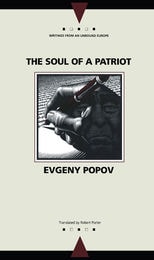
The Soul of a Patriot
Evgeny Popov, translated from the Russian by Robert Porter
Northwestern University Press, 1994
Freely parodying conformist Russian writing, this novel takes its lead as much from Sterne and Diderot as from the brilliant Russian satirist Mikhail Zoshchenko. In the offhand witticisms and jaunty humor speaks the spirit that survived the "era of stagnation" of Soviet literature.
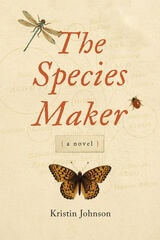
The Species Maker
A NovelKristin Johnson
University of Alabama Press, 2021
A historical novel about the role of science in modern life, set against the backdrop of the 1925 Scopes Trial.
When William Jennings Bryan began a campaign to get evolution out of American schools in the 1920s, entomologist Martin Sullivan sought refuge from the tumult in his research. Although the theory of evolution provides the foundation for his scientific work, he prefers the careful methods of observation and classification to the passion of public debate. But when Martin takes a job teaching college biology in Seattle, he finds it increasingly difficult to retreat to the haven of science. His students are taking sides in the debate over whether religion and evolution can be reconciled. Socialists are using evolution to justify revolution. Politicians are citing Darwin in defense of anti-immigration laws. And Martin’s own colleagues are insisting that only eugenic reforms will save the world. As anti-evolution legislation spreads across the country and passions flare on all sides, the effort to apply science to marriage laws and mate choice even begins to touch the lives of those he loves. By the time the state of Tennessee puts John T. Scopes on trial for teaching evolution in the summer of 1925, Martin can no longer ignore the debates that surround him and must take a stand in the fight over the role of science in American society.
Although set a hundred years ago, The Species Maker wrestles with many issues that continue to confront scientists and science watchers in the present day. Kristin Johnson draws on her experiences in the classroom and extensive knowledge of the history of science to depict what it might have been like for a careful scientist to watch the heated debates over teaching evolution in the United States in the 1920s.
Visit www.thespeciesmaker.com for supplemental material including historical essays, links to online primary sources, a glossary, and guiding questions useful for the classroom or book clubs.
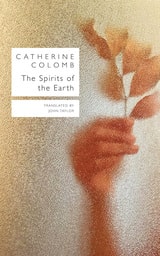
The Spirits of the Earth
Catherine Colomb
Seagull Books, 2016
The Spirits of the Earth is at heart a family drama, set at the Fraidaigue château, along the shores of Lake Geneva, and in the Maison d’en Haut country mansion, located in the hills above the lake. In these luxe locales, readers encounter upper-class characters with faltering incomes, parvenues, and even ghosts. Throughout, Colomb builds a psychologically penetrating and bold story in which the living and the dead intermingle and in which time itself is a mystery.
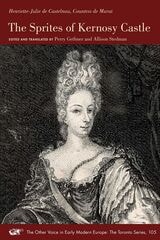
The Sprites of Kernosy Castle
Henriette-Julie de Castelnau, Countess de Murat
Iter Press, 2024
This novel reflects a shift in French values at the turn of the eighteenth century, which saw increased interest in the private lives of the aristocracy and the pre-Enlightenment questioning of political and religious orthodoxies. Novels of fiction and leisure gained popularity, and it was during this time that Henriette-Julie de Castelnau, the Countess de Murat, published her second leisure novel, The Sprites of Kernosy Castle. Combining humor, social satire, and a proto-feminist outlook, Murat crafts a well-constructed plot where the supernatural is debunked. Murat’s career was cut short when a series of “misdemeanors” related to the countess’s homosexual tendencies led to her arrest in 1702. Sprites, which was released during a partial reprieve from prison, is the final published work of this independent-minded early feminist author.
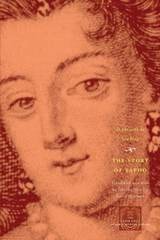
The Story of Sapho
Madeleine de Scudery
University of Chicago Press, 2003
The Story of Sapho makes available for the first time in modern English a self-contained section from Scudéry's novel Artamène ou le Grand Cyrus, best known today as the favored reading material of the would-be salonnières that Molière satirized in Les précieuses ridicules. The Story tells of Sapho, a woman writer modeled on the Greek Sappho, who deems marriage slavery. Interspersed in the love story of Sapho and Phaon are a series of conversations like those that took place in Scudéry's own salon in which Sapho and her circle discuss the nature of love, the education of women, writing, and right conduct. This edition also includes a translation of an oration, or harangue, of Scudéry's in which Sapho extols the talents and abilities of women in order to persuade them to write.
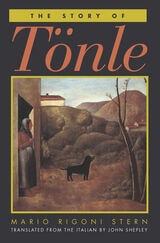
The Story of Tonle
Mario Rigoni Stern
Northwestern University Press, 1998
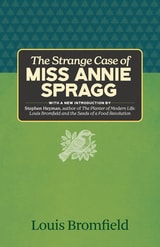
The Strange Case of Miss Annie Spragg
Louis BromfieldWith a new introduction by Stephen Heyman, author of The Planter of Modern Life: Louis Bromfield and the Seeds of a Food Revolution
The Ohio State University Press, 2026
A revived work of twentieth-century fiction that spans years and continents to satirize and explore religious fanaticism and expat life.
First published in 1928, Louis Bromfield’s The Strange Case of Miss Annie Spragg is a haunting and genre-defying tale—a thoughtful reflection on religion and human nature with the propulsion of a mystery. Set in Italy and the American Midwest, this surprisingly modern novel now has a new introduction by Bromfield biographer Stephen Heyman.
The novel opens on a ragtag community of American expats in rural Italy. When Annie Spragg, a local eccentric, dies with stigmata on her body, the diocese tasks the skeptical Mr. Winnery with investigating whether actual miracles occurred at her deathbed. From there, the novel brings us back to Annie’s origins as the child of a cult-leader and prophet on the American frontier. As the story unfolds, Bromfield traverses time and continents as he weaves together satire, mysticism, and psychological insight to explore themes of religious fanaticism, repression, and redemption.
Heyman’s new introduction situates Annie Spragg within Bromfield’s literary evolution—from chronicler of liberated women to environmental visionary—and reintroduces readers to a writer whose influence shaped both American letters and sustainable agriculture. This edition invites fans of twentieth-century fiction to rediscover a novel that remains provocative and poignant today.
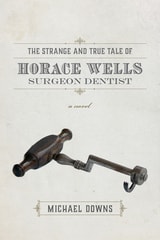
The Strange and True Tale of Horace Wells, Surgeon Dentist
A NovelMichael Downs
Acre Books, 2018
But that discovery would also thrust Wells into scandals that threatened his reputation, his family, and his sanity—hardships and triumphs that resonate in today’s struggles with what hurts us and what we take to stop the hurt.
In this novel, Michael Downs mines the gaps in the historical record and imagines the motivations and mysteries behind Wells’s morbid fascination with pain, as well as the price he and his wife, Elizabeth, paid—first through his obsession, then his addiction.
The book is a love story, but also a story of what love can’t redeem; of narcotic dreams and waking insanity; of humbug and miracle; of pain’s destruction and what pains can never be eased. Following Wells throughout New England and across the ocean to Paris, the novel immerses the reader in the nineteenth century, conveying through rich physical description and telling dialogue the tragic life of a dentist who gave everything to rid the world of suffering.
The Subtenant / To Outwit God
Hanna Krall
Northwestern University Press, 1992
The Summers
Ronya Othmann, translated by Gary Schmidt
University of Wisconsin Press, 2023
Leyla’s sexual awakening proves far less traumatic than her growing disenchantment with her German classmates and friends, who appear completely indifferent to the fate of her Yazidi community. Thoughtful and poignant, The Summers addresses issues of gender, sexuality, cultural difference, politics, and identity. Othmann draws readers into multiple worlds, ultimately revealing the hopes and dreams that bind us all together when forces threaten to tear us apart.
The Surrogate
Lynn C. Miller
University of Wisconsin Press, 2026
Alex Ross, a thirty-year-old psychologist, enjoys the benefits of a close-knit family: her mother and aunt are twins married to two close friends, and Alex and her cousins, Rolf and Stephen, grew up as if they were siblings. When Rolf is killed in a car accident, the entire family spins into grief and chaos.
Nathaniel, a mysterious art museum curator, soon enters their lives and seems to offer solace. Frannie, Rolf’s mother, becomes infatuated with the young man; Alex, who split with her long-term girlfriend in the aftermath of Rolf’s death, finds herself deeply attracted to him. Only Stephen mistrusts Nathaniel—but he soon becomes consumed with the nationwide financial crisis threatening the family’s stability. Will Alex choose Nathaniel over her loyalty to Stephen? Torn between competing desires, fueled by her lifelong but unexamined love of Rolf, she must turn her own training as a psychologist on herself in order to find peace amid the turmoil.
The Tango Player
Christoph Hein
Northwestern University Press, 1994
The Thickets
Józef Lobodowski
Central European University Press, 2026
In The Thickets, Lobodowski paints a stark, unforgettable portrait of the turmoil that engulfed the former Russian Empire after the fall of the Tsar and Kerensky’s government. For Stas, once a student at a classical gymnasium, survival now means peddling contraband on the black market. Through his eyes, the reader is plunged into the chaos of war, revolution, and occupation—rendered with visceral power and human urgency.
The Third Bank of the Jordan River
Hussein Barghouthi
Seagull Books, 2026
In this profound and evocative novel, acclaimed Palestinian author Hussein Barghouthi invites readers on an extraordinary, youthful journey through a landscape of memory, longing, alienation, and exile. Translated with great sensitivity by his son, Áthar Barghouthi, this deeply personal narrative unfurls as a stream-of-consciousness odyssey, blurring the lines between reality and dream. Haunted by a pervasive sense of loss, the prose, rich with poetic imagery, explores themes of displacement, identity, and the enduring shadows of a contested homeland.
The Third Bank of the Jordan River is a powerful, meditative work that defies conventional boundaries. With unflinching honesty, Barghouthi confronts the political through deeply human stories, capturing the restless search for meaning and the enduring human hunger for connection and freedom.
The Third Body
Helene Cixous
Northwestern University Press, 2009
The Time of Miracles
Borislav Pekic
Northwestern University Press, 1994
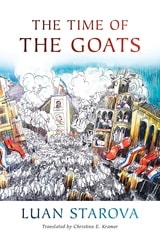
The Time of the Goats
Luan Starova; Translated by Christina E. Kramer
University of Wisconsin Press, 2012
The Time of the Goats is the second novel in Luan Starova’s acclaimed multivolume Balkan saga. It follows the main characters from My Father’s Books and the tragicomic events of their lives in Skopje as the narrator’s intellectual father and the head goatherd become friends. As local officials clumsily carry out absurd policies, Starova conveys the bonds of understanding and mutual support that form in Skopje’s poorest neighborhoods. At once historical and allegorical, folkloric and fantastic, The Time of the Goats draws lyrically on Starova’s own childhood.
The Time
NightLudmilla Petrushevskaya
Northwestern University Press, 2000
The Town of N
Leonid Dobychin
Northwestern University Press, 1998
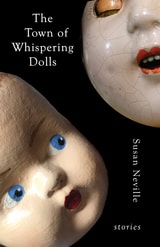
The Town of Whispering Dolls
StoriesSusan Neville, Foreword by Shelley Jackson
University of Alabama Press, 2020
WINNER OF FC2’S CATHERINE DOCTOROW INNOVATIVE FICTION PRIZE
Stories haunted by the remains of the industrial Midwest, the opioid epidemic, and the technology of war
Located somewhere in the rust belt in the early twenty-first century, residents of the town of Whispering Dolls dream of a fabled and illusory past, even as new technologies reshape their world into something different and deeply strange. Dolls walk down the streets, cradling their empty heads and letting the wind turn them into flutes. A politician heads to Washington, DC, and leaves a toxic underground plume in his wake. A woman eats car parts instead of confronting the children who have forgotten her. A young woman falls in love with the robot who took her job at the candy factory.
In The Town of Whispering Dolls, it is usually the grandmothers and the children who grieve. Feeling invisible, in the story “Here,” a woman who has buried her children looks up at the sky where commercial and military jets fly overhead and tries to express her rage to the rich and powerful: “Keep flying above us in your planes. From one coast to the other, keep right on flying over us! We test your bombs and your beloved warriors. Here. Right here. Look down.”
The Track Of The Cat
Walter Van Tilburg Clark
University of Nevada Press, 1993
The Tragic Menagerie
Lydia Zinovieva-Annibal
Northwestern University Press, 1999
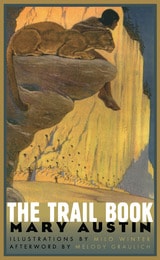
The Trail Book
Mary Austin
University of Nevada Press, 2004
This edition of The Trail Book includes an afterword by Austin scholar Melody Graulich that addresses Austin’s motives in writing the book and its significance as an early example of interdisciplinary multicultural literature. The illustrations by Milo Winter that enlivened the original edition are included, as are Austin’s appendix giving historical background and a glossary of Indian and Spanish names.
The Train Was on Time
Heinrich Boll
Northwestern University Press, 1994
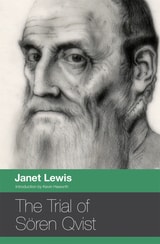
The Trial of Sören Qvist
Janet Lewis
Ohio University Press, 2013
Originally published in 1947, The Trial of Sören Qvist has been praised by a number of critics for its intriguing plot and Janet Lewis’s powerful writing. And in the introduction to this new edition, Swallow Press executive editor and author Kevin Haworth calls attention to the contemporary feeling of the story—despite its having been written more than fifty years ago and set several hundred years in the past. As in Lewis’s best-known novel, The Wife of Martin Guerre, the plot derives from Samuel March Phillips’s nineteenth-century study, Famous Cases of Circumstantial Evidence, in which this British legal historian considered the trial of Pastor Sören Qvist to be the most striking case.
The Trouble with Being Born
A NovelJeffrey DeShell
University of Alabama Press, 2008
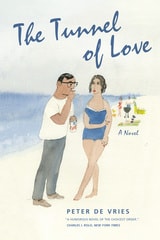
The Tunnel of Love
A NovelPeter De Vries
University of Chicago Press, 2015
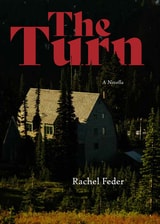
The Turn
A NovellaRachel Feder
Northwestern University Press, 2026
A contemporary gothic delving into the power of unmoored lust and familial bonds
When Baxter, a young writer and recent college graduate, accepts a live-in nanny position for an affluent professor’s family in the foothills of the Rocky Mountains, she rapidly becomes aware of strange happenings orbiting the family and their children, Quinn and Thebes. After the father becomes estranged and the mother disappears into the night with only one child, Baxter is left utterly lost and in charge of the baby, Thebes, as she struggles to make sense of the bizarre occurrences within the family, the house, and even her own body. But the unnatural occurrences are far from over, and as Baxter stumbles in the dark to protect the child, something sinister stalks the night, looking to sink in its teeth.
For fans of gothic classics such as The Turn of the Screw and Carmilla, The Turn is an eerie and magnificent modern gothic tale about the monstrous bond of love between caregiver and child.
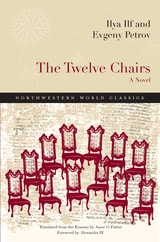
The Twelve Chairs
A NovelIlya Ilf and Evgeny Petrov, Translated from the Russian by Anne O. Fisher with a Foreword by Alexander Ilf
Northwestern University Press, 2011
Winner, 2012 Northern California Book Award for Fiction in Translation
More faithful to the original text and its deeply resonant humor, this new translation of The Twelve Chairs brings Ilf and Petrov’s Russian classic fully to life. The novel’s iconic hero, Ostap Bender, an unemployed con artist living by his wits, joins forces with Ippolit Matveyevich Vorobyaninov, a former nobleman who has returned to his hometown to look for a cache of missing jewels hidden in chairs that have been appropriated by the Soviet authorities. The search for the chairs takes them from the provinces of Moscow to the wilds of the Transcaucasus mountains. On their quest they encounter a variety of characters, from opportunistic Soviet bureaucrats to aging survivors of the old propertied classes, each one more selfish, venal, and bungling than the last. A brilliant satire of the early years of the Soviet Union, as well as the inspiration for a Mel Brooks film, The Twelve Chairs retains its universal appeal.
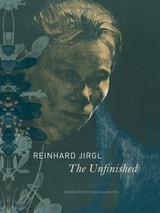
The Unfinished
Reinhard Jirgl
Seagull Books, 2020
Komotau, the Czech Republic, late summer, 1945. Four women—seventy-year-old Johanna, her two daughters Hanna and Maria, and Hanna’s daughter Anna—are ordered by the new Czech authorities to leave their homes and assemble with other Germans at the local train station. They are given thirty minutes—the “wild expulsions” of Sudeten Germans have begun. But where is Anna?
Witnessing the revenge lynching of SS and suspected collaborators on her walk home, she arrives in Komotau to find her family gone. The trek takes the older women via Munich, then Dresden and Magdeburg, to an outpost in the far northwest of the Soviet zone where they settle as farm laborers. Once united again, their hope of one day returning to the heimat—homeland—is both a source of strength and a burden, choking attachments to new surroundings and neighbors. This conflict will prove to be the story of their lives, as well as both the joy and ruin of Anna’s son.
A tale of four generations told in Reinhard Jirgl’s unique and subversively expressive idiom, The Unfinished plays out between the ruins of Nazi Germany and the rise and fall of communist East Germany, the birth of the Berlin Republic, and the shadow of a new millennium.
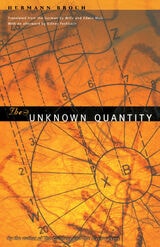
The Unknown Quantity
Hermann Broch
Northwestern University Press, 2000
Published in 1933, The Unknown Quantity is Hermann Broch's study of the underlying chaos-and finally the impossibility-of life within a society whose values are in decay. As Richard seeks to reconcile the conflicting demands of love and science, of passion and reason, societal and family values begin to undermine him and those in orbit around him.