Results by title
1677 books match the query 'Archaeology' and 332 start with t

They Wrote on Clay
The Babylonian Tablets Speak TodayEdward Chiera
University of Chicago Press, 1956
"The book presents, briefly and clearly, a vivid picture of a long-dead people who in numerous ways were very like ourselves."—L. M. Field, New York Times
"No mystery story can be as exciting."—Harper's
"Plainly and fetchingly written."—New Republic
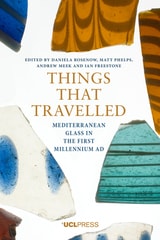
Things that Travelled
Mediterranean Glass in the First Millennium ADEdited by Daniela Rosenow, Matt Phelps, Andrew Meek, and Ian Freestone
University College London, 2018
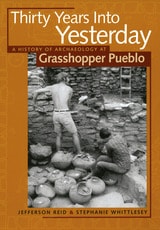
Thirty Years Into Yesterday
A History of Archaeology at Grasshopper PuebloJefferson Reid and Stephanie Whittlesey
University of Arizona Press, 2005
Like the enigmatic Mogollon culture it sought to explore and earlier University of Arizona field schools in the Forestdale Valley and at Point of Pines, Grasshopper research engendered decades of controversy that still lingers in the pages of professional journals. Jefferson Reid and Stephanie Whittlesey, players in the controversy who are intimately familiar with the field school that ended in 1992, offer a historical account of this major archaeological project and the intellectual debates it fostered.
Thirty Years Into Yesterday charts the development of the Grasshopper program under three directors and through three periods dominated by distinct archaeological paradigms: culture history, processual archaeology, and behavioral archaeology. It examines the contributions made each season, the concepts and methods each paradigm used, and the successes and failures of each. The book transcends interests of southwestern archaeologists in demonstrating how the three archaeological paradigms reinterpreted Grasshopper, illustrating larger shifts in American archaeology as a whole. Such an opportunity will not come again, as funding constraints, ethical concerns, and other issues no doubt will preclude repeating the Grasshopper experience in our lifetimes.
Ultimately, Thirty Years Into Yesterday continues the telling of the Grasshopper story that was begun in the authors’ previous books. In telling the story of the archaeologists who recovered the material residue of past Mogollon lives and the place of the Western Apache people in their interpretations, Thirty Years Into Yesterday brings the story full circle to a stunning conclusion.
Those of Little Note
Gender, Race, and Class in Historical ArchaeologyElizabeth M. Scott
University of Arizona Press, 1994
I--Introduction
1. Through the Lens of Gender: Archaeology, Inequality, and Those "Of Little Note" / Elizabeth M. Scott
II--Native American and African American Communities
2. Cloth, Clothing, and Related Paraphernalia: A Key to Gender Visibility in the Archaeological Record of Russian America / Louise M. Jackson
3. "We Took Care of Each Other Like Families Were Meant To": Gender, Social Organization, and Wage Labor Among the Apache at Roosevelt / Everett Bassett
4. The House of the Black Burghardts: An Investigation of Race, Gender, and Class at the W. E. B. DuBois Boyhood Homesite / Nancy Ladd Muller
III--All Male and Predominantly Male Communities
5. "With Manly Courage": Reading the Construction of Gender in a 19th-Century Religious Community / Elizabeth Kryder-Reid
6. The Identification of Gender at Northern Military Sites of the Late 18th Century / David R. Starbuck
7. Class, Gender Strategies, and Material Culture in the Mining West / Donald L. Hardesty
IV--Working Women in Urban Communities
8. Mrs. Starr's Profession / Donna J. Seifert
9. Diversity and 19th-Century Domestic Reform: Relationships Among Classes and Ethnic Groups / Suzanne M. Spencer-Wood
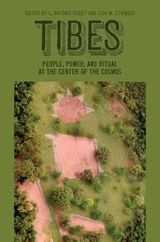
Tibes
People, Power, and Ritual at the Center of the CosmosEdited by L. Antonio Curet and Lisa M. Stringer
University of Alabama Press, 2009
The prehistoric civic-ceremonial center of Tibes is located on the southern coast of Puerto Rico, just north of the modern coastal city of Ponce. Protected on two sides by a river, and on the other two sides by hills, this approximately 10.5-acre site remains as fertile and productive today as when first occupied over 2,000 years ago. Such a rich region would have been a choice location for native peoples because of the diversity in all resources, from land, air, and sea--and also symbolically crucial as a liminal space within the landscape. It may have been regarded as a space charged with numen or cosmic energy where different parts of the cosmos (natural vs. supernatural, or world of the living vs. world of the dead) overlap. Archaeological evidence reveals a long occupation, about 1,000 years, possibly followed by an extensive period of sporadic ceremonial use after the site itself was practically abandoned.
In this volume, nineteen Caribbeanists, across a wide academic spectrum, examine the geophysical, paleoethnobotanical, faunal, lithics, base rock, osteology, bone chemistry and nutrition, social landscape, and ceremonial constructs employed at Tibes. These scholars provide a concise, well-presented, comprehensive analysis of the evidence for local level changes in household economy, internal organization, accessibility to economic, religious, and symbolic resources related to the development and internal operation of socially stratified societies in the Caribbean.
Time in Archaeology
Time Perspectivism RevisitedSimon Holdaway
University of Utah Press, 2011
The point of departure for this volume lies in the post-tumultuous times of processual archaeology, in the 1970s and 1980s, when Geoff Bailey, Lewis Binford, David Clarke, Robert Dunnell, Robert Foley, and Michael Schiffer, among others, initiated a deconstruction of time as used in archaeology. Here, the authors further this deconstruction.
Time in Archaeology was originally convened as an electronic symposium held at the Society of American Archaeology meetings in 2003. The result is a tightly focused group of papers that provide both a historical background to the development of the ideas of time perspectivism as well as a range of case studies that illustrate where scholars have taken the ideas. This book demonstrates the importance of concepts of time with excellent discussions and perspectives from twelve scholars working in vastly different arenas. It is a rigorous examination of the assumptions we make and the impacts of those assumptions. After reading this you may never think about time in quite the same way.
Time's River
Archaeological Syntheses from the Lower Mississippi ValleyEdited by Janet Rafferty and Evan Peacock
University of Alabama Press, 2008
An archaeologically rich region, in advance of impending disturbance
This volume stands as a key general resource for archaeologists working in the region extending from Louisiana through Mississippi north to Missouri and Kentucky, and it represents an opportunity to influence for decades a large part of the archaeological work to take place in the Southeast.
The book responds to a need for a comprehensive archaeological overview of the Lower Mississippi Valley that forms a portion of an interstate corridor spanning nine states that will run from southern Michigan to the Texas-Mexico border. The culturally sensitive Mississippi Delta is one of the richest archaeological areas in North America, and it is crucial that research designs be comprehensive, coordinated, and meet current preservation and future research needs. The authors are well-respected researchers from both within and outside the region with expertise in the full range of topics that comprise American archaeology. They examine matters of method and theory, the application of materials science, geophysics, and other high-tech tools in archaeology that provide for optimum data-recovery.
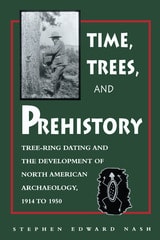
Time, Trees, and Prehistory
Tree Ring dating and the Development of NA Archaeology 1914 to 1950Stephen E Nash
University of Utah Press, 2006
Dendrochronology, the science of assigning precise calendar dates to annual growth rings in trees, provided accurate dates at a time when North American archaeologists had no absolute dating techniques available to guide their analyses. Time, Trees, and Prehistory examines the growth, development, application, and interpretive implications of North American archaeological tree-ring dating from 1914 to 1950.
The development of dendrochronology forced archaeologists to radically revise their understanding of the prehistoric past, compressing by nearly fifty percent the time scale of the archaeological record. Basketmaker sites, for instance, were once thought to be four thousand years old; tree-ring application demonstrated that these sites dated well into the present millennium. Classic sites in Chaco Canyon and Mesa Verde were believed occupied for nearly a thousand years, but tree-ring dates demonstrated that such sites were often built, occupied, and abandoned in just over a century. Other similar changes in temporal scale forced archaeologists to reconsider their interpretations of the rate of prehistoric cultural change, population growth, and the degree of social and political complexity in the Southwest.
Time, Trees, and Prehistory examines archaeological practices of the 1920s, 30s, and 40s and demonstrates that tree-ring dating set the stage that enabled revolutionary developments in archaeological method and theory in succeeding decades.
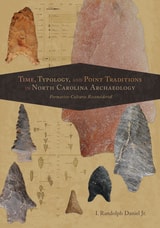
Time, Typology, and Point Traditions in North Carolina Archaeology
Formative Cultures ReconsideredI. Randolph Daniel Jr.
University of Alabama Press, 2021
Revisiting the stone tools that reshaped our understanding of North Carolina's prehistoric past.
In the 1964 landmark publication The Formative Cultures of the Carolina Piedmont, Joffre Coe established a projectile point typology and chronology that, for the first time, allowed archaeologists to identify the relative age of a site or site deposit based on the point types recovered there. Consistent with the cultural-historical paradigm of the day, the “Coe axiom” stipulated that only one point type was produced at one moment in time in a particular location. Moreover, Coe identified periods of “cultural continuity” and “discontinuity” in the chronology based on perceived similarities and differences in point styles through time.
In Time, Typology, and Point Traditions in North Carolina Archaeology: Formative Cultures Reconsidered, I. Randolph Daniel Jr. reevaluates the Coe typology and sequence, analyzing their strengths and weaknesses. Daniel reviews the history of the projectile point type concept in the Southeast and revisits both Coe’s axiom and his notions regarding cultural continuity and change based on point types. In addition, Daniel updates Coe’s typology by clarifying or revising existing types and including types unrecognized in Coe’s monograph. Daniel also adopts a practice-centered approach to interpreting types and organizes them into several technological traditions that trace ancestral-descendent communities of practice that relate to our current understanding of North Carolina prehistory.
Appealing to professional and avocational archaeologists, Daniel provides ample illustrations of points in the book as well as color versions on a dedicated website. Daniel dedicates a final chapter to a discussion of the ethical issues related to professional archaeologists using private artifact collections. He calls for greater collaboration between professional and avocational communities, noting the scientific value of some private collections.
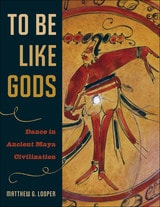
To Be Like Gods
Dance in Ancient Maya CivilizationBy Matthew G. Looper
University of Texas Press, 2009
Winner, Association for Latin American Art Book Award, 2010
The Maya of Mexico and Central America have performed ritual dances for more than two millennia. Dance is still an essential component of religious experience today, serving as a medium for communication with the supernatural. During the Late Classic period (AD 600-900), dance assumed additional importance in Maya royal courts through an association with feasting and gift exchange. These performances allowed rulers to forge political alliances and demonstrate their control of trade in luxury goods. The aesthetic values embodied in these performances were closely tied to Maya social structure, expressing notions of gender, rank, and status. Dance was thus not simply entertainment, but was fundamental to ancient Maya notions of social, religious, and political identity.
Using an innovative interdisciplinary approach, Matthew Looper examines several types of data relevant to ancient Maya dance, including hieroglyphic texts, pictorial images in diverse media, and architecture. A series of case studies illustrates the application of various analytical methodologies and offers interpretations of the form, meaning, and social significance of dance performance. Although the nuances of movement in Maya dances are impossible to recover, Looper demonstrates that a wealth of other data survives which allows a detailed consideration of many aspects of performance. To Be Like Gods thus provides the first comprehensive interpretation of the role of dance in ancient Maya society and also serves as a model for comparative research in the archaeology of performance.

Topiltzin Quetzalcoatl
The Once and Future Lord of the ToltecsH. B. Nicholson
University Press of Colorado, 2001
Professor Nicholson sorts through this wealth of material, classifying, summarizing, and analyzing all known primary accounts of the career of Topiltzin Quetzalcoatl, in the Spanish, Nahuatl, and Mayan languages, which Spanish missionaries and Spanish-educated natives recorded after the Conquest. In a new introduction, he updates the original source material presently available to scholars interested in this figure. After careful consideration of the evidence, he concludes that, in spite of the obvious myth surrounding this renowned Toltec priest-ruler, at least some of Topiltzin Quetzalcoatl's recorded life and deeds are drawn from historical fact. Nicholson also contends that the tradition of his expected return probably played a role in the peaceable reception of Cortés by Moctezuma II in Mexico's Tenochtitlan in the fall of 1519.
Including new illustrations and an index, Topiltzin Quetzalcoatl: The Once and Future Lord of the Toltecs constitutes a major contribution to Mesoamerican ethnohistory and archaeology.
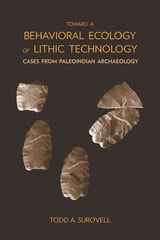
Toward a Behavioral Ecology of Lithic Technology
Cases from Paleoindian ArchaeologyTodd A. Surovell
University of Arizona Press, 2009
Because the fundamental processes of making, using, and discarding stone tools are, at root, exercises in problem solving, Todd Surovell asks what conditions favor certain technological solutions. Whether asking if a biface should be made thick or thin or if a flake should be saved or discarded, Surovell seeks answers that extend beyond a case-by-case analysis. One avenue for addressing these questions theoretically is formal mathematical modeling.
Here Surovell constructs a series of models designed to link environmental variability to human decision making as it pertains to lithic technology. To test the models, Surovell uses data from the analysis of more than 40,000 artifacts from five Rocky Mountain and Northern Plains Folsom and Goshen complex archaeological sites dating to the Younger Dryas stadial (ca. 12,600-11,500 years BP). The primary result is the production of powerful new analytical tools useful to the interpretation of archaeological assemblages.
Surovell's goal is to promote modeling and explore the general issues governing technological decisions. In this light, his models can be applied to any context in which stone tools are made and used.
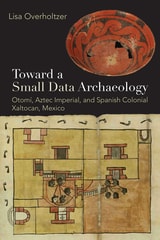
Toward a Small Data Archaeology
Otomí, Aztec Imperial, and Spanish Colonial Xaltocan, MexicoLisa Overholtzer
University Press of Colorado, 2025
Xaltocan served as the Otomí city-state capital before being conquered by the Tepanecs, subsequently incorporated into the Aztec Empire, and finally integrated into the vast Spanish colonial sphere. In reconstructing long-term household histories that bridge the pre-Hispanic and early Colonial periods, this book resists narratives that define Indigenous peoples solely through the lens of conquest and subordination. Instead, it presents richly detailed reconstructions of familial relationships and social networks, achieved through the rigorous analysis of artifacts, ecofacts, human remains, and ancient DNA. This meticulous and community-collaborative approach not only maximizes insights available from a limited archaeological record but also honors the ethical imperative to work with descendant communities.
Toward a Small Data Archaeology offers an innovative reexamination of the past by privileging the intricate, household-level narratives of Indigenous communities over the homogenizing tendencies of broad-scale "big data" approaches. By peopling the past, Overholtzer redefines methodological boundaries within archaeology, produces reconstructions and narratives that are more in line with Indigenous philosophies, and offers a compelling vision for a future in which historical narratives are reconstructed through a lens that is both deeply scientific and inherently humane.
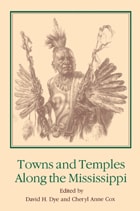
Towns and Temples Along the Mississippi
Edited by David H. Dye and Cheryl Anne Cox
University of Alabama Press, 1990
A Dan Josselyn Memorial Publication
Discover the stories, structures, and spirit that shaped life along America’s greatest river.
Specialists from archaeology, ethnohistory, physical anthropology, and cultural anthropology bring their varied points of view to this subject in an attempt to answer basic questions about the nature and extent of social change within the time period. The scholars' overriding concerns include presentation of a scientifically accurate depiction of the native cultures in the Central Mississippi Valley prior and immediately subsequent to European contact and the need to document the ensuing social and biological changes that eventually led to the widespread depopulation and cultural reorientation. Their findings lead to three basic hypotheses that will focus the scholarly research for decades to come.
Contributors include:
George J. Armelagos, Ian W. Brown, Chester B. DePratter, George F. Fielder, Jr., James B. Griffin, M. Cassandra Hill, Michael P. Hoffman, Charles Hudson, R. Barry Lewis, Dan F. Morse, Phyllis A. Morse, Mary Lucas Powell, Cynthia R. Price, James F. Price, Gerald P. Smith, Marvin T. Smith, and Stephen Williams

Traces Behind the Esmeraldas Shore
Warren DeBoer
University of Alabama Press, 1996
Although long famous for its antiquities—notably intricate goldwork, elaborate pottery, and earthen mounds—the Santiago-Cayapas region of coastal Ecuador has been relatively neglected from the standpoint of scientific archaeology. Until recently, no sound chronology was available, and even the approximate age of the region's most impressive monument, the large and much-looted site of La Tolita, remained in doubt.
Building on evidence obtained during the last decade, this book documents an eventful prehistory for Santiago-Cayapas that spans three millennia. A highlight of this prehistory was the reign of La Tolita as a regional center from 200 B.C. to A.D. 350. Archaeological data from
La Tolita's hinterland indicate a complex and changing social landscape in which La Tolita's hegemony was never absolute nor uncontested.
Abundantly illustrated and written in a crisp, witty, and occasionally irreverent style, Traces Behind the Esmeraldas Shore will stimulate debate and rankle interpretive conventions about those social formations that archaeologists gloss as 'chiefdoms.'
Traces of the Past
Classics between History and ArchaeologyKaren Bassi
University of Michigan Press, 2016
Aimed at classicists, literary scholars, ancient historians, cultural historians, and archaeological theorists, the book combines three areas of research: time as a feature of narrative structure in literary theory; the concept of “the past itself” in the philosophy of history; and the ontological status of material objects in archaeological theory. Each of five central chapters explores how specific protoarchaeological narratives—from the fate of Zeus’ stone in Hesiod’s Theogony to the contest between words and objects in Aristophanes’ Frogs—both expose and attempt to bridge this gap. Throughout, the book serves as a response to Herodotus’ task in writing the Histories, namely, to ensure that “the past deeds of men do not fade with time.”
Tracing the Relational
The Archaeology of Worlds, Spirits, and TemporalitiesMeghan E. Buchanan and B. Jacob Skousen
University of Utah Press, 2015
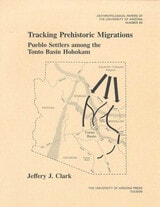
Tracking Prehistoric Migrations
Pueblo Settlers among the Tonto Basin HohokamJeffery J. Clark
University of Arizona Press, 2001
Puebloan migration was initially limited in scale, resulting in the co-residence of migrants and local groups within a single community. Once this co-residence settlement pattern is reconstructed, relations between the two groups are examined and the short-term and long-term impacts of migration are assessed. The early Classic period is associated with the appearance of the Salado horizon in the Tonto Basin. The results of this research suggest that migration and co-residence was common throughout the basins and valleys in the region defined by the Salado horizon, although each local sequence relates a unique story. The methodological and theoretical implications of Clark's work extend well beyond the Salado and the Southwest and apply to any situation in which the scale and impact of prehistoric migration are contested.
Traditional Arid Lands Agriculture
Understanding the Past for the FutureEdited by Scott E. Ingram and Robert C. Hunt
University of Arizona Press, 2015
Traditional agriculture, nonindustrial plant cultivation for human use, is practiced worldwide by millions of smallholder farmers in arid lands. Advancing an understanding of traditional agriculture can improve its practice and contribute to understanding the past. Traditional agriculture has been practiced in the U.S. Southwest and northwest Mexico for at least four thousand years and intensely studied for at least one hundred years. What is not known or well-understood about traditional arid lands agriculture in this region has broad application for research, policy, and agricultural practices in arid lands worldwide.
The authors represent the disciplines of archaeology, anthropology, agronomy, art, botany, geomorphology, paleoclimatology, and pedology. This multidisciplinary book will engage students, practitioners, scholars, and any interested in understanding and advancing traditional agriculture.
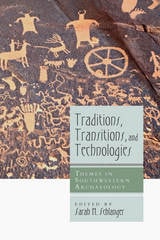
Traditions, Transitions, and Technologies
Themes in Southwestern ArchaeologySarah H. Schlanger
University Press of Colorado, 2016
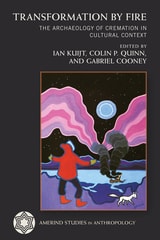
Transformation by Fire
The Archaeology of Cremation in Cultural ContextEdited by Ian Kuijt, Colin P. Quinn, and Gabriel Cooney
University of Arizona Press, 2014
Editors Ian Kuijt, Colin P. Quinn, and Gabriel Cooney’s volume examines cremation by documenting the material signatures of cremation events and processes, as well as its transformative impact on social relations and concepts of the body. Indeed, examining why and how people chose to cremate their dead serves as an important means of understanding how people in the past dealt with death, the body, and the social world.
The contributors develop new perspectives on cremation as important mortuary practices and social transformations. Varying attitudes and beliefs on cremation and other forms of burial within the same cultural paradigm help us understand what constitutes the body and what occurs during its fiery transformation. In addition, they explore issues and interpretive perspectives in the archaeological study of cremation within and between different cultural contexts.
The global and comparative perspectives on cremation render the book a unique contribution to the literature of anthropological and mortuary archaeology.
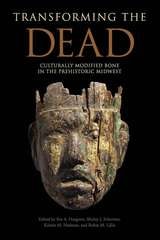
Transforming the Dead
Culturally Modified Bone in the Prehistoric MidwestEve A. Hargrave
University of Alabama Press, 2015
Revealing how the dead continued to shape the spiritual and social worlds of prehistoric North America.
Transforming the Dead is a collection of essays that examines culturally modified human bones and their roles as “cultural and ritual objects” among prehistoric Eastern Woodland cultures. Previous scholarship has explored the role of human body parts in Native American cultures as trophies of war and revered ancestors. This collection discusses new evidence that human elements were also important components of daily and ritual activities across the Eastern Woodlands. The contributors to this volume discuss each case study within the unique regional and temporal contexts of the material, rather than seeking universal answers to how these objects were used.
Most research addressing modified human bone has focused on cut marks and trauma associated with warfare, trophy taking, and burial practices. The editors and contributors of Transforming the Dead document the varied and often overlooked ways that human bone was intentionally modified through drilling, incising, cutting, and polishing for utilitarian, ornamental, spiritual, or ritual use. Examples include bracelets and gorgets to be worn, as well as musical rasps, pipe stems, masks, and protective talismans. The form and function of these objects are not unusual; their construction from the remains of “another” sets them apart.
Through a flexible but systematic analysis of the archaeological record, the contributors bring into focus how the careful selection, modification, and retention of particular bones or body parts of an individual after death offer insights into concepts of personhood, the body, life, and death among the prehistoric Native Americans in the Midwest.
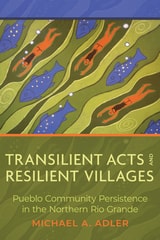
Transilient Acts and Resilient Villages
Pueblo Community Persistence in the Northern Rio GrandeMichael A. Adler
University of Arizona Press, 2026
Focusing on the Tiwa-speaking communities of Taos, Picuris, and Pot Creek Pueblos, Adler shows how social and ritual organization, architectural change, and sacred geographies were mobilized in response to disruption. He challenges conventional resilience theory, which emphasizes systemic stability, instead centering Indigenous agency, mobility, and sacred practice as key to understanding cultural endurance.
Grounded in decades of collaborative research with Pueblo communities, Transilient Acts and Resilient Villages is a vital contribution to southwestern archaeology. It offers a compelling model for how archaeology can respectfully engage with descendant communities and provides essential insights for scholars, students, and community members seeking to understand the complexities of cultural persistence in the face of change.
Transitions
Archaic and Early Woodland Research in the Ohio CountryMartha P. Otto
Ohio University Press, 2008
The late archaic and early woodland peoples lived in the Ohio region between 5,000 and 2,000 years ago. This was a time of transition, when hunters and gatherers began to grow native seed crops, establish more permanent settlements, and develop complex forms of ritual and ceremonialism, sometimes involving burial mound construction.
The focused archaeological studies described in Transitions: Archaic and Early Woodland Research in the Ohio Country shed light on this important episode in human cultural development. The authors describe important archaeological sites such as the rich Late Archaic settlements of southwestern Ohio and the early Adena Dominion Land Company enclosure in Franklin County. They present detailed accounts of Native American behavior, such as the use of smoking pipes by Adena societies and a reconstruction of mound use and ritual.
Transitions is the result of a comprehensive, long-term study focusing on particular areas of Ohio with the most up-to-date and detailed treatment of Ohio’s native cultures during this important time of change. This book will be of great value to students and other readers who wish to go beyond the general and often dated treatments of Ohio archaeology currently available.
Travels and Archaeology in South Chile
Bird, Junius B.
University of Iowa Press, 1988
Trees of Paradise and Pillars of the World
The Serial Stelae Cycle of "18-Rabbit–God K," King of CopanBy Elizabeth A. Newsome
University of Texas Press, 2001
Assemblies of rectangular stone pillars, or stelae, fill the plazas and courts of ancient Maya cities throughout the lowlands of southern Mexico, Guatemala, Belize, and western Honduras. Mute testimony to state rituals that linked the king's power to rule with the rhythms and renewal of time, the stelae document the ritual acts of rulers who sacrificed, danced, and experienced visionary ecstasy in connection with celebrations marking the end of major calendrical cycles. The kings' portraits are carved in relief on the main surfaces of the stones, deifying them as incarnations of the mythical trees of life.
Based on a thorough analysis of the imagery and inscriptions of seven stelae erected in the Great Plaza at Copan, Honduras, by the Classic Period ruler "18-Rabbit-God K," this ambitious study argues that stelae were erected not only to support a ruler's temporal claims to power but more importantly to express the fundamental connection in Maya worldview between rulership and the cosmology inherent in their vision of cyclical time. After an overview of the archaeology and history of Copan and the reign and monuments of "18-Rabbit-God K," Elizabeth Newsome interprets the iconography and inscriptions on the stelae, illustrating the way they fulfilled a coordinated vision of the king's ceremonial role in Copan's period-ending rites. She also links their imagery to key Maya concepts about the origin of the universe, expressed in the cosmologies and mythic lore of ancient and living Maya peoples.
Tribal and Chiefly Warfare in South America
Elsa M. Redmond
University of Michigan Press, 1994
This book presents new data on warfare from both ethnohistoric and ethnographic sources. The author documents principal differences between tribal and chiefly warfare; outlines the evidence archaeologists can expect to recover from warfare; and formulates testable hypotheses on the role of warfare in social and political evolution. This monograph is part of a series on Latin American Ethnohistory and Archaeology.
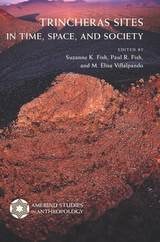
Trincheras Sites in Time, Space, and Society
Edited by Suzanne K. Fish, Paul R. Fish, and M. Elisa Villalpando
University of Arizona Press, 2008
This multi-author volume integrates a remarkable body of new data representing a textbook-like array of current research issues and methodologies in the archaeology of the region. Scholars from the United States and Mexico offer original research on trincheras sites in Chihuahua, Sonora, Arizona, and New Mexico. Scales of focus range from intensive intrasite sampling to the largest contiguous survey in the region. Authors incorporate spatial analyses, artifact studies, environmental and subsistence data, ethnographic analogs, ethnohistorical records, cross-cultural comparisons, archaeology, and archival resources.
The volume’s discussions contribute innovative approaches to worldwide interpretations of landscapes marked by hilltop sites. Contributors present meticulous research arguing that many trincheras sites were primarily used for habitation and ceremonial rites, in addition to previously predominant views of them as defensive refuges. Because trincheras occupations date from the late preceramic era to shortly before Spanish contact, authors relate them to early forms of agriculture, the emergence of village life, the appearance of differentiated settlement systems, and tendencies toward political and ritual centralization.
Detailed maps and figures illustrate the text, and close-up aerial photographs capture the visual essence of the sites, highlighted by a section that includes color photographs and an essay by renowned photographer Adriel Heisey.
Contributors:
Christian E. Downum
Paul R. Fish
Suzanne K. Fish
Robert J. Hard
Adriel Heisey
Stephen A. Kowalewski
Randall H. McGuire
Ben A. Nelson
John R. Roney
Judith Taylor
M. Elisa Villalpando
Joseph Vogel
Henry Wallace
David R. Wilcox
J. Scott Wood
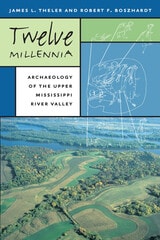
Twelve Millennia
Archaeology of the Upper Mississippi River ValleyJames L Theler
University of Iowa Press, 2003
The people of Taquile Island on the Peruvian side of beautiful Lake Titicaca, the highest navigable lake in the Americas, are renowned for the hand-woven textiles that they both wear and sell to outsiders. One thousand seven hundred Quechua-speaking peasant farmers, who depend on potatoes and the fish from the lake, host the forty thousand tourists who visit their island each year. Yet only twenty-five years ago, few tourists had even heard of Taquile. In Weaving a Future: Tourism, Cloth, and Culture on an Andean Island, Elayne Zorn documents the remarkable transformation of the isolated rocky island into a community-controlled enterprise that now provides a model for indigenous communities worldwide.
Over the course of three decades and nearly two years living on Taquile Island, Zorn, who is trained in both the arts and anthropology, learned to weave from Taquilean women. She also learned how gender structures both the traditional lifestyles and the changes that tourism and transnationalism have brought. In her comprehensive and accessible study, she reveals how Taquileans used their isolation, landownership, and communal organizations to negotiate the pitfalls of globalization and modernization and even to benefit from tourism. This multi-sited ethnography set in Peru, Washington, D.C., and New York City shows why and how cloth remains central to Andean society and how the marketing of textiles provided the experience and money for Taquilean initiatives in controlling tourism.
The first book about tourism in South America that centers on traditional arts as well as community control, Weaving a Future will be of great interest to anthropologists and scholars and practitioners of tourism, grassroots development, and the fiber arts.
Two Stratified Sites on the Door Peninsula of Wisconsin
Ronald J. Mason
University of Michigan Press, 1966
Two Terminal Archaic/Early Woodland Sites in Central Michigan
Scott G. Beld
University of Michigan Press, 1991
Typology and Structure of Roman Historical Reliefs
Mario Torelli
University of Michigan Press, 1992