Results by title
1787 books match the query 'Literary Collections' and 471 start with t
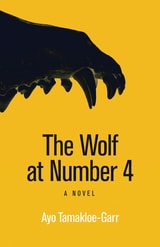
The Wolf at Number 4
A NovelAyo Tamakloe-Garr
Ohio University Press, 2018
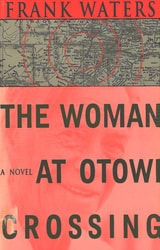
The Woman At Otowi Crossing
Frank Waters
Ohio University Press, 1987
Based on the real life of Edith Warner, who ran a tearoom at Otowi Crossing, just below Los Alamos, The Woman at Otowi Crossing is the story of Helen Chalmer, a person in tune with her adopted environment and her neighbors in the nearby Indian pueblo and also a friend of the first atomic scientists. The secret evolution of atomic research is a counterpoint to her psychic development.
In keeping with its tradition of allowing the best of its list to thrive, Ohio University Press/Swallow Press is particularly proud to reissue The Woman at Otowi Crossing by best-selling author Frank Waters. This new edition features an introduction by Professor Thomas J. Lyon and a foreword by the author’s widow, Barbara Waters.
The story is quintessential Waters: a parable for the potentially destructive materialism of the mid-twentieth century. The antidote is Helen Chalmer’s ability to understand a deeper truth of her being; beyond the Western notion of selfhood, beyond the sense of a personality distinct from the rest, she experiences a new and wider awareness.
The basis for an opera of the same name, The Woman at Otowi Crossing is the powerful story of the crossing of cultures and lives: a fable for our times.
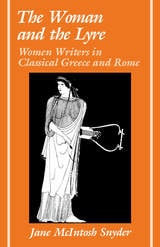
The Woman and the Lyre
Women Writers in Classical Greece and RomeJane McIntosh Snyder
Southern Illinois University Press, 1989
Beginning with Sappho in the seventh century B.C.E and ending with Egeria in the fifth century C.E., Snyder profiles ancient Greek and Roman women writers, including lyric and elegiac poets and philosophers and other prose writers. The writers are allowed to speak for themselves, with as much translation from their extant works provided in text as possible. In addition to giving readers biographical and cultural context for the writers and their works, Snyder refutes arguments representing prejudicial attitudes about women’s writing found in the scholarly literature. Covering writers from a wide historical span, this volume provides an engaging and informative introduction to the origins of the tradition of women’s writing in the West.
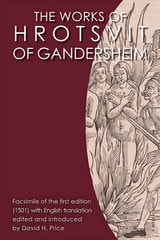
The Works of Hrotsvit of Gandersheim
Facsimile of the First Edition (1581)Hrotsvit of Gandersheim. Edited by David H. Price.
University of Illinois Press, 2017
These works by a tenth-century woman, who wrote plays when no one else in Europe was writing plays and who imitated the style of Terence when most people thought the classics had been forgotten, caused a literary sensation when they were first published in 1501.
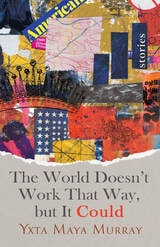
The World Doesn't Work That Way, but It Could
StoriesYxta Maya Murray
University of Nevada Press, 2025
The Millions' Most Anticipated: The Great Second-Half of 2020 Book Preview
The gripping, thought-provoking stories in Yxta Maya Murray’s latest collection find their inspiration in the headlines. Here, ordinary people negotiate tentative paths through wildfire, mass shootings, bureaucratic incompetence, and heedless government policies with vicious impacts on the innocent and helpless. A nurse volunteers to serve in catastrophe-stricken Puerto Rico after Hurricane Maria and discovers that her skill and compassion are useless in the face of stubborn governmental inertia. An Environmental Protection Agency employee, whose agricultural-worker parents died after long exposure to a deadly pesticide, finds herself forced to find justifications for reversing regulations that had earlier banned the chemical. A Department of Education employee in a dystopic future America visits a highly praised charter school and discovers the horrific consequences of academic failure. A transgender trainer of beauty pageant contestants takes on a beautiful Latina for the Miss USA pageant and brings her to perfection and the brink of victory, only to discover that she has a fatal secret.
The characters in these stories grapple with the consequences of frightening attitudes and policies pervasive in the United States today. The stories explore not only our distressing human capacity for moral numbness in the face of evil, but also reveal our surprising stores of compassion and forgiveness. These brilliantly conceived and beautifully written stories are troubling yet irresistible mirrors of our time.
The World as Presence/El mundo como ser
Marcelo Morales, Introduced and Translated by Kristin Dykstra
University of Alabama Press, 2016
Marcelo Morales was born in Cuba in 1977. He is an established, prize-winning writer, yet he is younger in comparison to most of the Cuban poets known internationally, many of whom were born prior to the 1959 revolution. While older generations of Cuban poets have wrestled in their work with social and political critique, those critiques have often been articulated through formal experimentation and abstraction, unsurprising given the censorship and the real threats of punishment that dissident writers have faced. Morales, however, directly interrogates both the Cuban past and present. References to many significant moments, people, and issues in Cuban history and culture can be found throughout his work.
Along with references to the activist group “The White Ladies,” the 1976 bombing of Cuban Airlines Flight 455, and the military aid that Cubans provided to Angola during its fight for independence, Morales’s poetry follows a timeline ranging from Martí to Guevara to the day of the 2014 announcement by Obama and Castro that diplomatic relations between the two nations would finally be restored. As Cuba experiences a series of historically remarkable transitions, Morales emerges from this context to offer an incisive poetic account of this critical moment in Cuban, as well as world, history.
The World as Presence/El mundo como ser is both the debut of this work in any language and the first English translation of a complete Morales collection. Given the bilingual format, this book will be of interest both to English and Spanish readers.
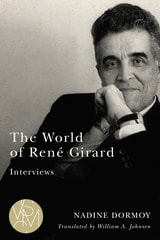
The World of René Girard
InterviewsNadine Dormoy
Michigan State University Press, 2024
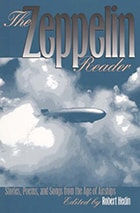
The Zeppelin Reader
Stories, Poems, and Songs from the Age Of AirshipsRobert Hedin
University of Iowa Press, 1998
Size is usually the first thing that comes to mind when we ponder the great airships. In war and peace, to most people they seem bigger than life itself, bright, wondrous, sometimes dangerous apparitions that engender a religious awe. They remain the largest crafts that have ever been launched into the sky. Tracing the history of the airship from its beginning in the nineteenth century to its fiery conclusion in 1937, Robert Hedin has gathered the finest stories, descriptions, poems, music, and illustrations about what the era was like in fact and in spirit.
Included are vivid accounts by such legendary figures as Count Ferdinand von Zeppelin, Hugo Eckener, and Alberto Santos-Dumont as well as memoirs, logs, journals, and diaries by Zeppelin commanders, crew, explorers, journalists, and survivors of ill-fated flights. The great airships inspired poets and writers old and new; here are works by such diverse writers as Robinson Jeffers, Kay Boyle, Bernard Shaw, D. H. Lawrence, Rita Dove, Richard Brautigan, and many others. There is a rich sampling of airship musical scores and lyrics; the music constitutes a kind of recovered history and helps recapture the emotional range of the era. Rounding out the gathering, The Zeppelin Reader is illustrated with stunning photographs, advertisements, drawings, and cartoons from the glorious age of airships.

The afterlife of Ovid
Edited by Peter Mack and John North
University of London Press, 2015
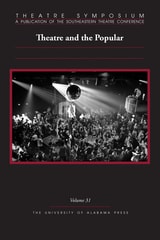
Theatre Symposium, Vol. 31
Theatre and the PopularEdited by Chase Bringardner
University of Alabama Press, 2024
A new issue of the longstanding theatre journal, documenting conversations that traverse disciplinary boundaries
The essays in the thirty-first volume of Theatre Symposium traverse disciplinary boundaries to explore what constitutes the “popular” in theater and performance in an increasingly frenetic and mediated landscape. Amid the current resurgence of populist discourse and the enduring impact of popular culture, this volume explores what is considered popular, how that determination gets made, and who makes it. The answers to these questions shape the structures and systems of performance in an interaction that is reciprocal, intricate, and multifaceted. Productions often succeed or fail based on their ability to align with what is popular—sometimes productively, sometimes clumsily, sometimes brazenly, and sometimes tragically.
In our current moment, what constitutes the popular profoundly affects the real world politically, economically, and socially. Controversies about the electoral college system hinge on the primacy of the “popular” vote. Streaming services daily update lists of their most popular content and base future decisions on opaque measures of popularity. Social media platforms broadcast popular content across the globe, triggering new products, social activism, and political revolutions.
The contributors to this volume engage with a range of contemporary and historical examples and argue with clarity and acuity the interplay of performance and the popular. Theatre and performance deeply engage with the popular at every level—from audience response to box office revenue. The variety of methodologies and sites of inquiry showcased in this volume demonstrates the breadth and depth of the popular and the importance of such work to understanding our present moment onstage and off.
CONTRIBUTORS
Mysia Anderson / Chase Bringardner / Elizabeth M. Cizmar / Chelsea Curto / Janet M. Davis / Tom Fish / Kyla Kazuschyk / Sarah McCarroll / Eleanor Owicki / Sunny Stalter-Pace / Chelsea Taylor / Chris Woodworth
Theogony and Works and Days
Hesiod
University of Michigan Press, 2006
"This Schlegel-Weinfield translation of Hesiod is superbly crafted: compelling, unforgettable poetry to be read aloud with delight and gratitude."
—Allen Mandelbaum, Endowed Kenan Professor of Humanities, Wake Forest University
"This exciting and unique collaboration between a classical philologist and a poet will not just provide insight into archaic Greek society, but also offer something new: the opportunity to experience the richness of Hesiod's style, language, and modes of thought with remarkable fidelity to the ancient Greek. Weinfield and Schlegel make Hesiod sing."
—Carole Newlands, Classics Department, University of Wisconsin
"Schlegel and Weinfield have produced one of the most remarkable of a current resurgence of translations from the classics, allowing the modern world to hear a poet who may have known Homer. Hesiod’s song makes us understand why the Greeks thought a poet could draw dolphins through the seas or raise the walls of Thebes. Weinfield translates by ear and transfers what he hears to the page, resonant fourteeners, a worthy echo of the past."
Catherine Schlegel is Associate Professor of Classics, University of Notre Dame. Henry Weinfield is Professor and Chair of Liberal Studies, University of Notre Dame, and translator of The Collected Poems of Stephane Mallarme.
Theory and Practice of American Literary Naturalism
Selected Essay and ReviewsDonald Pizer
Southern Illinois University Press, 1993
In his first book devoted exclusively to naturalism, Donald Pizer brings together thirteen essays and four reviews written over a thirty-year period that in their entirety constitute a full-scale interpretation of the basic character and historical shape of naturalism in America.
The essays fall into three groups. Some deal with the full range of American naturalism, from the 1590s to the late twentieth century, and some are confined either to the 1890s or to the twentieth century. In addition to the essays, an introduction in which Pizer recounts the development of his interest in American naturalism, reviews of recent studies of naturalism, and a selected bibliography contribute to an understanding of Pizer’s interpretation of the movement.
One of the recurrent themes in the essays is that the interpretation of American naturalism has been hindered by the common view that the movement is characterized by a commitment to Emile Zola’s deterministic beliefs and that naturalistic novels are thus inevitably crude and simplistic both in theme and method. Rather than accept this notion, Pizer insists that naturalistic novels be read closely not for their success or failure in rendering obvious deterministic beliefs but rather for what actually does occur within the dynamic play of theme and form within the work.
Adopting this method, Pizer finds that naturalistic fiction often reveals a complex and suggestive mix of older humanistic faiths and more recent doubts about human volition, and that it renders this vital thematic ambivalence in increasingly sophisticated forms as the movement matures. In addition, Pizer demonstrates that American naturalism cannot be viewed monolithically as a school with a common body of belief and value. Rather, each generation of American naturalists, as well as major figures within each generation, has responded to threads within the naturalistic impulse in strikingly distinctive ways. And it is indeed this absence of a rigid doctrinal core and the openness of the movement to individual variation that are responsible for the remarkable vitality and longevity of the movement.
Because the essays have their origin in efforts to describe the general characteristics of American naturalism rather than in a desire to cover the field fully, some authors and works are discussed several times (though from different angles) and some referred to only briefly or notat all. But the essays as a collection are "complete" in the sense that they comprise an interpretation of American naturalism both in its various phases and as a whole. Those authors whose works receive substantial discussion include Stephen Crane, Frank Norris, Theodore Dreiser, Edith Wharton, James T. Farrell, Norman Mailer, Joyce Carol Oates, and William Kennedy. Of special interest is Pizer’s essay on Ironweed, which appears here for the first time.

These Dark Skies
Reckoning with Identity, Violence, and Power from AbroadArianne Zwartjes
University of Iowa Press, 2022
The essays investigate and meditate on a broad array of related topics, including drone strikes, tear gas, and military intervention; the sugar trade, the Dutch blackface celebration of Zwarte Piet, and constructions of whiteness in Europe and the U.S.; and visual arts of Russian avant-garde painters, an Iraqi choreographer living in Belgium, and German choreographer Pina Bausch.
This is a lyrical, timely book deeply salient to the political moment we continue to find ourselves in: a moment of incredible anti-refugee and anti-immigrant sentiment, a moment of xenophobic and misogynistic violence.
They Forged the Signature of God
A NovelViriato Sención
Northwestern University Press, 1995
Sención's novel follows the lives of three seminary students who suffer from church-state oppression. The book also gives a chilling portrait of Dr. Ramos, a sinister autocrat, who manages to survive six terms as president of his country through manipulation and tyranny. This finely textured novel gives a vivid picture of the internal politics of the Dominican Republic.
Thinking Aloud
Jerry Pinto
Seagull Books, 2025
In Thinking Aloud, Jerry Pinto examines the notion of Bollywood as a national cinema in a linguistically diverse India. He traces its evolution from films from the 1940s–50s like Kismet and Mother India—which contributed to national identity through its themes of sacrifice and unity—to male-centric cinematic narratives of the 1970s–80s. Writing on Bollywood, biography, translation, and teaching with candor and empathy, Pinto argues that Bollywood's simplistic, good-versus-evil narratives have deeply influenced the public’s perception of their past.
Drawing from his translations of works such as Sachin Kunalkar’s Cobalt Blue and Daya Pawar’s Baluta, Pinto stresses the importance of biographies in providing personal insights into historical events, challenging monolithic narratives, and enriching our understanding of history through diverse, often overlooked, experiences. He delves deeply into the vital role of translation in bridging cultural and linguistic divides. This book also explores Pinto’s unconventional journey as an educator. Reflecting on his reluctant start as a teacher at fourteen and his innovative methods promoting the inclusion of marginalized voices, he offers a poignant commentary on the transformative power of education.
Thirsty
A NovelKristin Bair O’Keeffe
Ohio University Press, 2009
It is 1883, and all of Klara Bozic’s girlish dreams have come crashing down as she arrives in Thirsty, a gritty steel town carved into the slopes above the Monongahela River just outside of Pittsburgh. She has made a heartbreaking discovery. Her new husband Drago is as abusive as the father she left behind in Croatia.
In Kristin Bair O’Keeffe’s debut novel, Klara’s life unfolds over forty years as she struggles to find her place in a new country where her survival depends on the friends who nurture her: gutsy, funny Katherine Zupanovic, who isn‘t afraid of Drago’s fist; BenJo, the only black man in Thirsty to have his own shop; and strangely enough, Old Man Rupert, the town drunk.
Thirsty follows a chain of unlikely events that keep Klara’s spirit aloft: a flock of angelic butterflies descends on Thirsty; Klara gives birth to her first child in Old Man Rupert’s pumpkin patch; and BenJo gives her a talking bird. When Klara’s daughter marries a man even more brutal than Drago, Klara is forced to act. If she doesn’t finally break the cycle of violence in her family, her granddaughters will one day walk the same road, broken and bruised. As the threads that hold her family together fray and come undone, Klara has to decide if she has the courage to carve out a peaceful spot in the world for herself and her girls.
Thirteen Cents
A NovelK. Sello Duiker
Ohio University Press, 2013
Thirty Years of Phoenix Poets, 1983 to 2012
An E-SamplerSelected by University of Chicago Press Staff
University of Chicago Press, 2013
This America We Dream of
Rodo and "Ariel" One Hundred Years onEdited by Gustavo San Roman
University of London Press, 2001
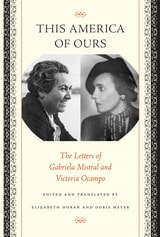
This America of Ours
The Letters of Gabriela Mistral and Victoria OcampoBy Gabriela Mistral and Victoria Ocampo
University of Texas Press, 2003
2005 — Best Book Translation Prize – New England Council of Latin American Studies
Gabriela Mistral and Victoria Ocampo were the two most influential and respected women writers of twentieth-century Latin America. Mistral, a plain, self-educated Chilean woman of the mountains who was a poet, journalist, and educator, became Latin America's first Nobel Laureate in 1945. Ocampo, a stunning Argentine woman of wealth, wrote hundreds of essays and founded the first-rate literary journal Sur. Though of very different backgrounds, their deep commitment to what they felt was "their" America forged a unique intellectual and emotional bond between them.
This collection of the previously unpublished correspondence between Mistral and Ocampo reveals the private side of two very public women. In these letters (as well as in essays that are included in an appendix), we see what Mistral and Ocampo thought about each other and about the intellectual and political atmosphere of their time (including the Spanish Civil War, World War II, and the dictatorships of Latin America) and particularly how they negotiated the complex issues of identity, nationality, and gender within their wide-ranging cultural connections to both the Americas and Europe.
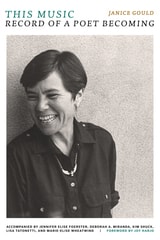
This Music
Record of a Poet BecomingJanice Gould; Edited by Jennifer Elise Foerster, Deborah A. Miranda, Kim Shuck, Lisa Tatonetti, and Marie-Elise Wheatwind; Foreword by Joy Harjo
University of Arizona Press, 2026
This Music is the final, intimate work of celebrated Koyoonk’auwi (Concow) poet and essayist Janice Gould, completed posthumously by a collective of close friends and literary scholars.
Told through lyrical prose poems and personal photographs, this memoir traces Gould’s life as a queer/Two-Spirit California Native coming of age in the late 1960s, navigating family, identity, activism, and art. With reflections on her mixed-blood heritage, her experiences in lesbian feminist circles, and her journey as a poet and musician, Gould’s voice resonates with clarity, tenderness, and fierce honesty.
The book opens with a foreword by Joy Harjo and an introduction from the editorial collective, including an essay by Gould’s spouse, Marie-Elise Wheatwind, framing the memoir as both a literary achievement and a loving tribute.
This Music is a vital contribution to Indigenous and LGBTQ+ literatures, offering readers a rare and powerful account of gender, sexuality, and Native identity in mid-century and contemporary America. As the one hundredth volume in the Sun Tracks series, this work honors Gould’s legacy while expanding the canon of poetic memoir. Ideal for readers of poetry, memoir, and Indigenous literature, this book will resonate deeply with scholars, students, and anyone drawn to stories of resilience, creativity, and the enduring power of memory.
This One Will Hurt You
Paul Crenshaw
The Ohio State University Press, 2019
With eloquence, subtle humor, and an urgent poignancy, Crenshaw delivers a powerful and moving collection of nonfiction essays, tied together by place and the violence of the world in which we live.
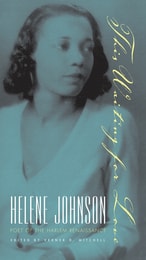
This Waiting for Love
Helene Johnson, Poet of the Harlem RenaissanceVerner D. Mitchell
University of Massachusetts Press, 2000
This volume brings together all of the known poetry and a selection of correspondence by an enormously talented but underappreciated poet of the Harlem Renaissance. Cousin of novelist Dorothy West and friend of Zora Neale Hurston, Helene Johnson (1905–1995) first gained literary prominence when James Weldon Johnson and Robert Frost selected three of her poems for prizes in a 1926 competition. During the late 1920s and early 1930s her poetry appeared in various small magazines, such as the Saturday Evening Quill, Palms, Opportunity, and Harlem. In 1933 Johnson married, and two years later her last published poem, “Let Me Sing My Song,” appeared in Challenge, the journal West had founded to revive the spirit of the Harlem Renaissance.
In his well-researched introduction, Verner D. Mitchell reconstructs Johnson's life, the details of which have long been veiled from public view, and places her in the context of a vital literary tradition. In addition to discussing her relationship with West, Hurston, and other black women writers, he explores the distinctive, at times radical, qualities of her work. Ever willing to defy the genteel conventions that governed women's writing, Johnson wrote poems on erotic themes and engaged the aesthetic, gender, and racial politics of her time.
Cheryl A. Wall's foreword also celebrates Johnson's talent, particularly the ease with which she moved among various verse forms—from the rigor of the sonnet to the improvisational creativity of free black vernacular. “An unexpected and most welcome gift,” This Waiting for Love, Wall writes, is “an enduring tribute” to “the vibrant poetry of Helene Johnson.”
Thomas Wolfe Remembered
Edited by Mark Canada and Nami Montgomery
University of Alabama Press, 2018
A collection of reminiscences captures the private life of a great American writer.
Thomas Wolfe’s life may seem to be an open book. A life that, after all, was the source for his best-known works, including the novels Look Homeward, Angel and Of Time and the River, as well as his numerous short stories and dramas. Since his death in 1938, scholars and admirers of Wolfe have relied largely on these texts to understand the man himself.
Thomas Wolfe Remembered provides something new: a rich, multifaceted portrait painted by those who knew him (casually or intimately), loved him (or didn’t), and saw, heard, and experienced the literary (and literal) giant. This volume gathers in one place for the first time dozens of reminiscences by friends, family members, colleagues, and casual acquaintances, adding color and fine details to the self-portrait the author created in his novels.
Wolfe found plenty to challenge and frustrate him throughout his life, from his boyhood in Asheville, North Carolina, to his education at the University of North Carolina and Harvard University, through his time in New York and Europe, his travels through the American West, and his death in Baltimore. He experienced two distracted parents in a loveless marriage, the premature death of a beloved brother, a minor stutter, and the difficulties of controlling a mercurial temper. Yet Wolfe’s exuberance, perceptiveness, memory, and compulsion to record virtually all that he experienced made for an extravagance of material that sometimes angered the people whose lives he used as source material.
Editors Mark Canada and Nami Montgomery have collected dozens of remembrances, many unpublished or long forgotten, including pieces from Julia Wolfe, Margaret Roberts, Frederick Koch, Maxwell Perkins, Elizabeth Nowell, Edward Aswell, and Martha Dodd. Some are endearing, others are disturbing, and many are comical. All provide glimpses into the vibrant, haunted, boyish, paranoid, disheveled, courteous, captivating, infuriating, and altogether fascinating giant who was Thomas Wolfe.

Thomas Wolfe's Civil War
Thomas Wolfe
University of Alabama Press, 2004
An anthology of Thomas Wolfe’s short stories, novel excerpts, and plays illuminating the Civil War
This collection of Thomas Wolfe’s writings demonstrates the centrality of the Civil War to Wolfe’s literary concerns and identity. From Look Homeward, Angel to The Hill Beyond and The Web and the Rock, Wolfe perpetually returned to the themes of loss, dissolution, sorrow, and romance engendered in the minds of many southerners by the Civil War and its lingering aftermath. His characters reflect time and again on Civil War heroes and dwell on ghostlike memories handed down by their mothers, fathers, and grandfathers. Wolfe and his protagonists compare their contemporary southern landscape to visions they have conjured of its appearance before and during the war, thereby merging the past with the present in an intense way. Ultimately, Wolfe’s prose style—incantatory and rhapsodic—is designed to evoke the national tragedy on an emotional level.
Selections of Wolfe’s writings in this collection include short stories ("Chickamauga," "Four Lost Men," "The Plumed Knight"), excerpts from his novels (O Lost, the restored version of Look Homeward, Angel, The Hills Beyond, and Of Time and the River) and a play, Mannerhouse, edited and introduced by David Madden. Madden, who makes the provocative claim that everything a southern writer writes derives from the Civil War experience, also highlights many issues essential to understanding Wolfe’s absorption with the Civil War.
Thoreaus Sense of Place
Essays in American Environmental WritingRichard J. Schneider
University of Iowa Press, 2000
The contributors to this stimulating collection address the ways in which Thoreau and his successors attempt to cope with the basic epistemological split between perceiver and place inherent in writing about nature; related discussions involve the kinds of discourse most effective for writing about place. They focus on the impact on Thoreau and his successors of culturally constructed assumptions deriving from science, politics, race, gender, history, and literary conventions. Finally, they explore the implications surrounding a writer's appropriation or even exploitation of places and objects.
Three Spanish Querelle Texts
Grisel and Mirabella, The Slander against Women, and The Defense of Ladies against SlanderersPere Torrellas and Juan de Flores
Iter Press, 2013
Through a Long Absence
Words from My Father's WarsJoy Passanante
The Ohio State University Press, 2017
Against the backdrop of World War II, Joy Passanante’s touching new book, Through a Long Absence: Words from My Father’s Wars, is the saga of a wartime medical unit, a passionate long-distance love, the making of a surgeon, and two first-generation American families. Told through her father’s eyes—drawing on hundreds of his letters to his beloved wife, his four-volume wartime diary, and his paintings—Passanante masterfully recreates his wartime journey and physically retraces his steps more than sixty years later in an attempt to understand a time in her parents’ lives that they’d spoken about very little.
More than just a World War II story, Through a Long Absence delves into one man’s past to explore his personal wars: a stint as a child bootlegger, a marriage between newlyweds separated by continents and strained by years apart, and his struggle late in life with his own mind. The narrative propels readers to surprising places—from a freight train through North Africa to an underground St. Louis distillery during Prohibition, from a young couple’s forbidden courtship to the chaos of surgical tents under fire in Normandy, from an underground trove of priceless artwork hidden by the Nazis to Jewish New Year services in Paris a week after its liberation. Through a Long Absence is a love story, an honest look into one man’s life, and a daughter’s moving quest to rediscover her father years later through his own words.
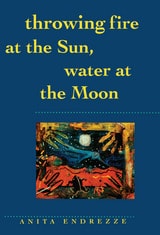
Throwing Fire at the Sun, Water at the Moon
Anita Endrezze
University of Arizona Press, 2000
Throwing Fire at the Sun, Water at the Moon is a blend of ancient myths, poetry, journal extracts, short stories, and essays that tell her people's story from the early 1500s to the present, and her family's story over the past five generations. Reproductions of Endrezze's paintings add an additional dimension to her story and illuminate it with striking visual imagery. Endrezze has combed history and legend to gather stories of her immediate family and her mythical ancient family, the two converging in the spirit of storytelling. She tells Aztec and Yaqui creation stories, tales of witches and seductresses, with recurring motifs from both Yaqui and Chicano culture. She shows how Christianity has deeply infused Yaqui beliefs, sharing poems about the Flood and stories of a Yaqui Jesus. She re-creates the coming of the Spaniards through the works of such historical personages as Andrés Pérez de Ribas. And finally she tells of those individuals who carry the Yaqui spirit into the present day. People like the Esperanza sisters, her grandmothers, and others balance characters like Coyote Woman and the Virgin of Guadalupe to show that Yaqui women are especially important as carriers of their culture.
Greater than the sum of its parts, Endrezze's work is a new kind of family history that features a startling use of language to invoke a people and their past--a time capsule with a female soul. Written to enable her to understand more about her ancestors and to pass this understanding on to her own children, Throwing Fire at the Sun, Water at the Moon helps us gain insight not only into Yaqui culture but into ourselves as well.
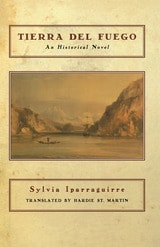
Tierra del Fuego
Sylvia Iparraguirre
Northwestern University Press, 2000
Tierra del Fuego has already won two major awards for the Spanish edition: The Sor Juana Inés de la Cruz Award for the best work of fiction written by a woman and The Best Book of the Year Award at the Buenos Aires Book Fair.
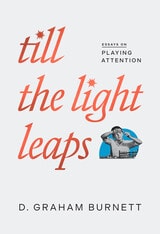
Till the Light Leaps
Essays on Playing AttentionD. Graham Burnett
University of Chicago Press, 2027
A ranging, erudite, and intimate examination of the nature of knowledge, by a thinker and creator who defies categorization.
Attention is in short supply and high demand. But when we bring our minds and time and senses to something—an idea, an object, another person—we tap into a human capacity for observation, patience, candor, and presence. Look long enough, and we can reliably catch a bright flash, a shift in the light, even a dawning.
In Till the Light Leaps, historian of science D. Graham Burnett explores the questions that have been major drivers of his intellectual life: How do we know what we know? And how are we changed by that effort? Written during a period of radical, collective, and creative experimentation with attention, the twenty-six essays collected here span topics like technology, science, art, and religion. Together, they comprise a sustained reflection on the relationship between empirical matters and the shiver-work of the human spirit. A brief history of spectroscopy offers an occasion to consider the solemn power of fire, as well as the righteous lessons of a childhood science experiment gone wrong. Skywriting invokes military might, but also the expressionistic bravura of a solo aeronaut, Art Smith. The Greek ritual of throwing plant matter in celebration is a thread connecting animal sacrifice, confetti production, and capitalist excess. In the final, previously unpublished essay, Galway Kinnell’s 1980 poem “Saint Francis and the Sow” becomes a heroic call to love and an allegory of attention in its richest sense.
Till the Light Leaps, a reference to the writings of Simone Weil, advises us to look at something “until the light leaps,” whether it yields a wink or an illumination. Burnett models the work—and the pleasure—of staying present with the world, and his essays test what science can offer, even as they feel for what it cannot.
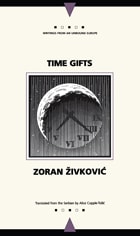
Time Gifts
Zoran Zivkovic
Northwestern University Press, 2000
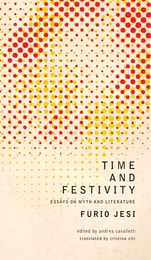
Time and Festivity
Furio Jesi
Seagull Books, 2018
In Time and Festivity, Andrea Cavalletti collects Jesi’s finest essays, ranging from his groundbreaking work on myth and politics to his reflections on time, festivity, and revolt. He explores the significance of texts by Rimbaud, Rilke, Lukács, and Pavese and the mythological language of the biblical story of Susanna. Carefully annotated and referenced, and enriched by a first-person account of Jesi’s intellectual biography, Time and Festivity provides a precious guide to the methodology and approach at the core of Jesi’s thought, displaying how his personal, vitally intense via negativa might in fact originate from his early statement: “All I have ever written is poetry.”
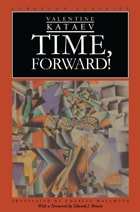
Time, Forward!
Valentin Kataev
Northwestern University Press, 1995
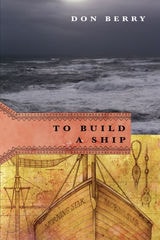
To Build a Ship
Don Berry
Oregon State University Press, 2004
In To Build a Ship, Don Berry explores the extent to which a man can betray himself and his morality for a dream or an obsession. It's the story of a handful of settlers who take up land in the fertile Tillamook Bay Valley in the early 1850s -- defiant dreamers battling the wilderness. With impenetrable mountains at their backs and the open sea as their sole road to trade, they are suddenly isolated from the outside world when the only captain willing to enter their harbor dies. With the survival of their new settlement threatened, they decide to build their own schooner.
At first the challenge brings out the best in the men, but soon the tensions inherent in this monumental task engulf them. Obstacles accumulate and complications mount: a death, a murder trial, trouble with restive Indians, and finally a travesty of justice. Excitement, shock, and gripping drama mark this story of men pushed to the point of madness as they see the Morning Star of Tillamook slowly take shape on the wild Pacific shore.
Don Berry's three novels about the Oregon Territory — Trask, Moontrap, and To Build a Ship — are as rich and compelling today as when they were first published more than 40 years ago. The new OSU Press editions of these books include an introduction by Jeff Baker, former book critic for The Oregonian.
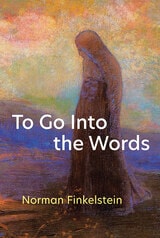
To Go Into the Words
Norman Finkelstein
University of Michigan Press, 2023
To Go Into the Words is the latest book of critical prose from renowned poet and scholar of Jewish literature Norman Finkelstein. Through a rigorous examination of poets such as William Bronk, Helen Adam, and Nathaniel Mackey, the book engages the contemporary poetic fascination with transcendence through the radical delight with language. By opening up a given poem, Finkelstein seeks the “gnosis” or insight of what it contains so that other readers can understand and appreciate the works even more.
Pulling from Finkelstein’s experience of writing thirteen books of poetry and six books of literary criticism, To Go Into the Words consistently rewards the reader with insights as transformative as they are well-considered and deftly mapped out. This volume opens the world of poetry to poets, scholars, and readers by showcasing “the gnosis that is to be found in modern poetry.”
To the Memory of Childhood
Lydia Chukovskaya
Northwestern University Press, 1988
Her father is a household name in Russia because of his tales in verse for children. But his literary accomplishments ranged far beyond bedtime stories. As a critic he wrote controversial articles and lively profiles of cultural figures; as a translator he introduced Whitman, Twain, Kipling, and Wilde to Russian readers. When his children's literature was attacked in the 1920s and 1930s, he turned to editing, scholarship, and articles on translation. A man of boundless energy, he played a vital role in his country's cultural life until his death in 1969. "I am not writing Kornei Ivanovich's biography," Chukovskaya says, "but he was the author of my childhood."
Tomorrowing
Terry Bisson
Duke University Press, 2024

Too Far on a Whim
The Limits of High-Steam Propulsion in the US NavyTyler A. Pitrof
University of Alabama Press, 2024
WINNER OF THE LYMAN BOOK AWARD FOR MARITIME AND NAVAL SCIENCE, TECHNOLOGY, AND ENVIRONMENT
Argues that the US Navy’s commitment to high-steam propulsion for its World War II fleet was a tactical, technological, and bureaucratic failure
In Too Far on a Whim, Tyler A. Pitrof presents a high-spirited revision of the US Navy’s commitment to high-steam propulsion systems, the mainstay of its World War II fleets. Pitrof’s research persuasively demonstrates that in its war against the Imperial Japanese Navy, the US Navy succeeded despite its high-steam propulsion systems rather than because of them.
War with an aggressive Japan and a resurgent Germany loomed in the dark days of the late 1930s. Rear Admiral Harold G. Bowen Sr., head of the US Navy’s Bureau of Engineering, advanced a radical vision: a new fleet based on high-steam propulsion, a novel technology that promised high speeds with smaller engines and better fuel efficiency. High-steam engines had drawbacks—smaller operational ranges and maintenance issues. Nevertheless, trusting its engineers to resolve these issues, the US Navy put high-steam propulsion at the heart of its warship design from 1938 to 1945.
The official record of high-steam technology’s subsequent performance has relied heavily on Bowen’s own memoir, in which he painted high-steam innovation in heroic colors. Pitrof’s empirical review of primary sources such as ship’s maintenance records, however, illuminates the opposite—that the heroism lay in the ability of American seamen to improvise solutions to keep these difficult engines running.
Pitrof artfully explains engineering concepts in layman’s terms and provides an account that extends far beyond technology and into matters of naval hierarchies and bureaucracy, strategic theory, and ego. He offers a cautionary tale—as relevant to any endeavor as it is to military undertakings—about how failures arise when technical experts lack managers who understand their work. Admiral Bowen wielded excessive power because no one else in the US Navy knew enough to countermand him.
Compulsively readable, Too Far on a Whim is a landmark for those interested in naval history and technology but also for readers interested in the interplay between innovation, decision-making, and engineering.
Torment and Tequila in Belle Epoque Mexico
Four Short Works of Fiction by José López Portillo y RojasJosé López Portillo y Rojas, translated and edited by Terry Rugeley
University of Alabama Press, 2025
This captivating collection of translated short works by José López Portillo y Rojas, one of Mexico’s most significant literary figures, explores themes of social frustration, loss, and heartache in late-nineteenth-century Mexico.
Torment and Tequila in Belle Epoque Mexico is the first English-language collection of selected fiction by the influential Mexican author and political figure José López Portillo y Rojas (1850–1923). His distinguished career spanned the late nineteenth century to the tumultuous years of the Mexican Revolution.
López Portillo y Rojas’s prose is characterized by rich vocabulary and fluid progression, offering readers moments of deep reflection. The stories boast finely drawn characters and evocative settings, including that of the author’s native Jalisco. He adeptly addresses the grand issues of Porfirian times, seamlessly blending social and personal themes of suffering, ambition, desire, and betrayal, and anchors his stories in the realities of human experience.
Three masterfully translated short stories and one novella make up the collection, beginning with “The Lottery Ticket,” a critique of social hypocrisy that follows a dreamer whose fortunes slip through his fingers at the hands of his own family. “The Mirror” explores the eerie depths of grief and guilt, echoing the gothic brilliance of Edgar Allan Poe. “Nieves” is a gripping novella of love and power in which a young woman’s fate becomes entangled in a decaying estate and a brewing rebellion. “The Bracelet,” examines the tragic weight of the past, as a locked piece of jewelry seals the fate of an engaged couple. These translations offer an unforgettable glimpse into one of Mexico’s most brilliant minds and restore López Portillo y Rojas to his rightful place in Mexican literary history.
Touching Feeling
Affect, Pedagogy, PerformativityEve Kosofsky Sedgwick
Duke University Press, 2003
In prose sometimes somber, often high-spirited, and always accessible and moving, Touching Feeling interrogates—through virtuoso readings of works by Henry James, J. L. Austin, Judith Butler, the psychologist Silvan Tomkins and others—emotion in many forms. What links the work of teaching to the experience of illness? How can shame become an engine for queer politics, performance, and pleasure? Is sexuality more like an affect or a drive? Is paranoia the only realistic epistemology for modern intellectuals? Ultimately, Sedgwick's unfashionable commitment to the truth of happiness propels a book as open-hearted as it is intellectually daring.
Tragic Thoughts at the End of Philosophy
Language, Literature, and Ethical TheoryGerald L. Bruns
Northwestern University Press, 1999

Trajectories
Crossing the Map of PoetryCarolyne Wright
University of Michigan Press, 2027
In Trajectories, poet, translator, human rights advocate, and world traveler Carolyne Wright maps her poetic path in the crossing of cultural, linguistic, and national boundaries. From her origins in Seattle and the Pacific Northwest through Latin America (Chile, Brazil) and South Asia (India, Bangladesh) through languages spoken in these regions (Spanish, Portuguese, and Bengali), Wright recalls and relives the poetic trajectory as well as the seeming tangents that one poet’s relatively uncommon life has taken. She pays tribute to poetic mentors of the “Northwest School,” to Bengali and Chilean women poets, to the poetry and music of Brazil, and to poets such as Elizabeth Bishop, Ted Hughes, and Sylvia Plath.
Throughout her essays and interviews and across a wide range of literary interests, Wright explores connections between family and national history, intersections of personal and public spheres, and the poetics of the era in which she moves. She connects lyricism to social engagement, witnessing contemporary and historical issues while remaining committed to the heightened, musical language of lyric poetry. Both personal and political, a compelling story and a work of criticism, Trajectories seeks essential insights into poetry as a path of discovery across the cartography of the human heart. Wright offers these experiences and insights as a map for readers who wish to share the journey.
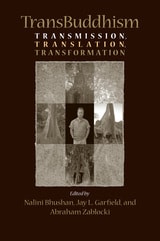
TransBuddhism
Transmission, Translation, and TransformationNalini Bhushan
University of Massachusetts Press, 2009
The chapters in the first section explore the transmission of Buddhism to the West, ranging from the writings of one of its earliest western interpreters, the Wesleyan missionary R. Spence Hardy, to the globalization of Tibetan Buddhist reincarnation, to the development and practice of Buddhism within the American prison system. The concluding chapter of this section presents a case study of a Japanese Buddhist temple in Oregon that ultimately died out—an example of a transmission that failed.
The second section looks at the complex issues that arise in the translation of Buddhist terms, texts, and concepts from one language or cultural milieu to another. Two chapters examine the challenges confronted by those who translate Buddhist texts—one exploring the contemporary translation of Tibetan Buddhism, the second analyzing an exchange of poetry in medieval Japan. The other two chapters describe the translation of Buddhist ideas into new cultural domains in America, specifically film and sports.
The final section presents case studies in the transformation of Buddhism which is resulting from its new global interconnections. Topics include the role of women in transforming Buddhist patriarchy, Buddhist-Freudian dialogue in relationship to mourning, and the interplay between Buddhism and the environmental movement.
The book also includes images created by the noted artist Meridel Rubenstein which frame the individual chapters within a nonverbal exploration of the themes discussed.
In addition to the editors, contributors include Mark Blum, Mario D'Amato, Sue Darlington, Elizabeth Eastman, Connie Kassor, Tom Rohlich, Judith Snodgrass, Jane Stangl, and Karma Lekshe Tsomo.
Transanything
EssaysEver Jones
Northwestern University Press, 2025
Transanything reveals a world in metamorphosis. A hermit crab retires its shell, lovers drift apart, and seasons churn, all amid Ever Jones’s own narrative of midlife gender transition.
Jones takes up a tradition of writing—about the American landscape, solitude, wilderness, and the West—long intertwined with colonialism and heteropatriarchy, and makes it wholly their own. A self-proclaimed “nature essay” misbehaves, wandering away from the hummingbird outside Jones’s window. In their chronicle of a week in Yellowstone, Jones navigates trails frequented by grizzlies and a campground where their identity is regarded as equally dangerous. Elk, bison, and bark spiders roam this book’s pages, but it is the gray wolf—the embattled apex predator of the American West, narrow survivor of settler colonial violence, and vessel for American myths of independence—who emerges as Jones’s shapeshifting coprotagonist.
Taking on a global web of colonial systems that seek to divide us, Jones disrupts loneliness and forges space for queerness and transness to be aliveness—to be transanything.
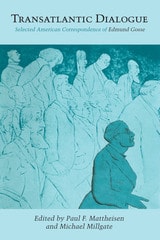
Transatlantic Dialogue
Selected American Correspondence of Edmund GosseEdited by Paul F. Mattheisen and Michael Millgate
University of Texas Press, 1965
The mauve life and times of Edmund Gosse glow warmly in these letters, delightful to even the most casual reader, engrossing to one with an interest in the distinguished correspondents or in the late-Victorian and Edwardian eras.
An obscure figure today to all but literary connoisseurs, Gosse was, in his day, a near giant in both England and the United States. Max Beerbohm, that discriminating man, in a mural of prominent figures who were also his friends, sketched Edmund Gosse large among George Bernard Shaw, John Masefield, G. K. Chesterton, John Galsworthy, and Lytton Strachey.
This volume consists primarily of a selection of the letters exchanged between Gosse and a number of American writers, notably William Dean Howells, Edmund Clarence Stedman, Oliver Wendell Holmes, Richard Watson Gilder, Edith Wharton, and Henry James. The letters, most of them previously unpublished, contain much of biographical and general historical interest, but the main theme of the book is the exploration of Anglo-American literary relations during the last quarter of the nineteenth century and the early years of the twentieth.
The letters that passed between Gosse and Stedman provide valuable evidence for the study of literary taste on the two sides of the Atlantic and also show how each man sought to enhance the other's transatlantic reputation; the correspondence between Gosse and Gilder, particularly during the period when Gosse was London editor of Gilder's Century magazine, is especially revealing of cultural attitudes and antagonisms. A central thread is provided by the warm and long-sustained friendship between Gosse and Howells, the leading American man of letters of his day.
The long introduction to the book deals with such topics as Gosse's American reputation, his immensely successful visit to the United States in the winter of 1884–1885 (based on the manuscript diary that Gosse kept during the visit), and his American friendships, with particular attention to the relationship with Howells. The thoroughness and vitality of the annotation are extremely effective in familiarizing the reader with the people and events in the book.

Transcendental Wordplay
America’s Romantic Punsters and the Search for the Language of NatureMichael West
Ohio University Press, 2000
Throughout the first half of the nineteenth century, America was captivated by a muddled notion of “etymology.” New England Transcendentalism was only one outcropping of a nationwide movement in which schoolmasters across small-town America taught students the roots of words in ways that dramatized religious issues and sparked wordplay.
Shaped by this ferment, our major romantic authors shared the sensibility that Friedrich Schlegel linked to punning and christened “romantic irony.” Notable punsters or etymologists all, they gleefully set up as sages, creating jocular masterpieces from their zest for oracular wordplay. Their search for a primal language lurking beneath all natural languages provided them with something like a secret language that encodes their meanings. To fathom their essentially comic masterpieces we must decipher it.
Interpreting Thoreau as an ironic moralist, satirist, and social critic rather than a nature-loving mystic, Transcendental Wordplay suggests that the major American Romantics shared a surprising conservatism. In this award-winning study, Professor West rescues the pun from critical contempt and allows readers to enjoy it as a serious form of American humor.
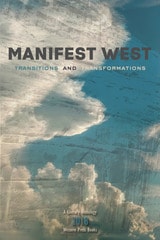
Transitions and Transformations
Elizabyth Hiscox
University Press of Colorado, 2018
What changes, alters, undergoes renewal or metamorphosis in the West? The space shared and sparred-over in urban Oregon versus remote Colorado casts doubt on the concept of a true continuity to the west. Where and when do those frontiers, borders, or alterations in course occur? Each watershed and microclimate is a slight shift from the next, each city center and community hall a locus of both change and tradition, and the emotional landscapes can be as dramatic or serene as those on the map. Language can do some of the work of capturing that flux: tracking transition and transformation to get at the heart of a life lived. The poems, short stories, and creative nonfiction essays collected here raise as many questions as they answer about that often fraught, always exciting liminal space between the proverbial here and there, the now and now again.
Contributors:Eric Aldrich, Jeffrey Alfier, Betsy Bernfeld, Heidi E. Blankenship, Kierstin Bridger, Yuan Changming, David Lavar Coy, Tim Donovan, Andrea England, Matthew Gavin Frank, Rick Kempa, Mark Haunschild, Cynthia Hogue, Caitlin Horrocks, Charles Jensen, Lisa Levine, Stephen Lottridge, Jessica McDermott, Scot Siegel, Jared Smith, Victoria Waddle, Tim Weed, Susan Brown Weitzman, Lesley Wheeler
Manifest West is Western Press Books’ literary anthology series. The press, affiliated with Western State Colorado University, produces one anthology annually and focuses on Western regional writing.
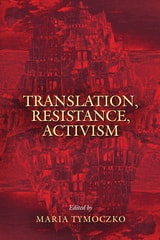
Translation, Resistance, Activism
Maria Tymoczko
University of Massachusetts Press, 2010
From silence to radical manipulation of texts, translation strategies are instrumental in significant historical interventions and cultural change. Translation plays a pivotal role in ideological dialogue and struggle, including resistance to oppression and cultural straitjackets of all types, from sexual puritanism to military dictatorships. Situated in their own space, time, history, and political contexts, translators promote ideological agendas by creating new cultural narratives, pragmatically adjusting tactics so as to maximize the social and political impact.
The essays in this volume explore ways to read translations as records of cultural contestation and ideological struggle; as means of fighting censorship, physical coercion, cultural repression, and political dominance; and as texts that foster a wide variety of goals from cultural nationalism to armed confrontation. Translations are set in relief as central cultural documents rather than derivative, peripheral, or marginalized productions. They are seen as forms of ethical, political, and ideological activity rather than as mere communicative transactions or creative literary exercises.
The contributors demonstrate that engaged and activist translations are performative acts within broader political and ideological contexts. The essays detail the initiative, resourcefulness, and courage of individual translators, whose willingness to put themselves on the line for social change can sometimes move the world.
In addition to Maria Tymoczko, contributors include Pua'ala'okalani D. Aiu, Brian James Baer, Mona Baker, Paul F. Bandia, Georges L. Bastin, Nitsa Ben-Ari, Ãngela Campo, Antonia Carcelen-Estrada, Ãlvaro Echeverri, Denise Merkle, John Milton, and Else R.P. Vieira.
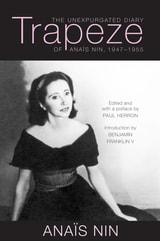
Trapeze
The Unexpurgated Diary of Anaïs Nin, 1947–1955Anaïs Nin
Ohio University Press, 2017
Anaïs Nin made her reputation through publication of her edited diaries and the carefully constructed persona they presented. It was not until decades later, when the diaries were published in their unexpurgated form, that the world began to learn the full details of Nin’s fascinating life and the emotional and literary high-wire acts she committed both in documenting it and in defying the mores of 1950s America. Trapeze begins where the previous volume, Mirages, left off: when Nin met Rupert Pole, the young man who became not only her lover but later her husband in a bigamous marriage.
It marks the start of what Nin came to call her “trapeze life,” swinging between her longtime husband, Hugh Guiler, in New York and her lover, Pole, in California, a perilous lifestyle she continued until her death in 1977. Today what Nin did seems impossible, and what she sought perhaps was impossible: to find harmony and completeness within a split existence. It is a story of daring and genius, love and pain, largely unknown until now.