Results by title
22279 books match the query 'Social Science' and 211 start with v

Victims as Offenders
The Paradox of Women's Violence in RelationshipsMiller, Susan L.
Rutgers University Press, 2005
Arrests of women for assault increased more than 40 percent over the past decade, while male arrests for this offense have fallen by about one percent. Some studies report that for the first time ever the rate of reported intimate partner abuse among men and women is nearly equal. Susan L. Miller’s timely book explores the important questions raised by these startling statistics.
Are women finally closing the gender gap on violence? Or does this phenomenon reflect a backlash shaped by men who batter? How do abusive men use the criminal justice system to increase control over their wives? Do police, courts, and treatment providers support aggressive arrest policies for women? Are these women “victims” or “offenders”?
In answering these questions, Miller draws on extensive data from a study of police behavior in the field, interviews with criminal justice professionals and social service providers, and participant observation of female offender programs. She offers a critical analysis of the theoretical assumptions framing the study of violence and provides insight into the often contradictory implications of the mandatory and pro-arrest policies enacted in the 1980s and 1990s. Miller argues that these enforcement strategies, designed to protect women, have often victimized women in different ways. Without sensationalizing, Miller unveils a reality that looks very different from what current statistics on domestic violence imply.

Victims or Villains
Jewish Images in Classic English Detective FictionMalcolm J. Turnbull
University of Wisconsin Press, 1998

Victoria County History of Cumbria
Kirkoswald and RenwickRichard Brockington and with Sarah Rose
University of London Press, 2019

Victorian Freaks
The Social Context of Freakery in BritainMarlene Tromp
The Ohio State University Press, 2008
While “freaks” have captivated our imagination since well before the nineteenth century, the Victorians flocked to shows featuring dancing dwarves, bearded ladies, “missing links,” and six-legged sheep. Indeed, this period has been described by Rosemarie Garland-Thomson as the epoch of “consolidation” for freakery: an era of social change, enormously popular freak shows, and taxonomic frenzy. Victorian Freaks: The Social Context of Freakery in Britain, edited by Marlene Tromp, turns to that rich nexus, examining the struggle over definitions of “freakery” and the unstable and sometimes conflicting ways in which freakery was understood and deployed. As the first study centralizing British culture, this collection discusses figures as varied as Joseph Merrick, “The Elephant Man”; Daniel Lambert, “King of the Fat Men”; Julia Pastrana, “The Bear Woman”; and Laloo “The Marvellous Indian Boy” and his embedded, parasitic twin. The Victorian Freaks contributors examine Victorian culture through the lens of freakery, reading the production of the freak against the landscape of capitalist consumption, the medical community, and the politics of empire, sexuality, and art. Collectively, these essays ask how freakery engaged with notions of normalcy and with its Victorian cultural context.

Victorian Ghosts in the Noontide
Women Writers and the SupernaturalVanessa D. Dickerson
University of Missouri Press, 1996
During the nineteenth century, British society was making rapid advancements in science and technology. While the men became materially productive, women were expected to be the fulcrums of society's changes. As one means of adjusting to these changes, many women focused on supernaturalism and spirituality.
In Victorian Ghosts in the Noontide, Vanessa D. Dickerson analyzes women's spirituality in a materialistic age by examining the supernatural fiction of Charlotte and Emily Brontë, Elizabeth Gaskell, and George Eliot and provides interpretive readings of familiar texts like Jane Eyre and Wuthering Heights. Other works by lesser-known authors are also examined.
Technological advances eliminated many of the jobs women were accustomed to doing. This left women looking for their place in society. A sense of "in-betweenness" developed in these women who were now expected to attend not only to the physical but also to the moral and spiritual needs of the family. As an answer to this "in-betweenness" some channeled their power toward the art of writing. Because people in the mid-1800s were so thoroughly engaged in scientific thought and advancements, supernatural folklore and spirituality were disreputable ideas for anyone, especially women, to explore. Ghosts and spirits were tied to old-wives' tales, superstitions, and legends. However, by focusing on these concepts and using fiction as an outlet, women were able to make great strides in being seen and heard. The art of writing functioned as an exploration of their spiritualism in which women discovered expression, freedom, and power.
This perceptive, well-written book will add a new dimension to our understanding of women's supernatural writings of the Victorian era. Scholars of Victorian literature, women's studies, and popular culture will benefit from its insights.

Victorian Things
Asa Briggs
University of Chicago Press, 1989

Victors’ Justice
The Tokyo War Crimes TrialRichard H. Minear
University of Michigan Press, 2001
Victory Deferred
How AIDS Changed Gay Life in AmericaJohn-Manuel Andriote
University of Chicago Press, 1999
John-Manuel Andriote chronicles the impact of the disease from the coming-out revelry of the 1970s to the post-AIDS gay community of the 1990s, showing how it has changed both individual lives and national organizations. He tells the truly remarkable story of how a health crisis pushed a disjointed jumble of local activists to become a nationally visible and politically powerful civil rights movement, a full-fledged minority group challenging the authority of some of the nation's most powerful institutions. Based on hundreds of interviews with those at the forefront of the medical, political, and cultural
responses to the disease, Victory Deferred artfully blends personal narratives with institutional histories and organizational politics to show how AIDS forced gay men from their closets and ghettos into the hallways of power to lobby and into the streets to protest.
Andriote, who has been at the center of national advocacy and AIDS politics in Washington, is judicious without being uncritical, and his account of the political maturation of the gay community is one of the most stirring civil rights stories of our time.
Victory Deferred draws on hundreds of original interviews, including first-hand accounts from: Virginia Apuzzo, Reverend Carl Bean, Marcus Conant, M.D., John D'Emilio, Anthony Fauci, M.D, Fenton Johnson, Larry Kramer, Lawrence D. Mass, M.D., Armistead Maupin, Walt Odets, Torie Osborn, Eric Rofes, Urvashi Vaid, Timothy Westmoreland, and Reggie Williams.
"[Victory Deferred] is a richly textured account of the rise of the AIDS sector, that though detailed and comprehensive, reads quickly. The thematic organization of the book works especially well. The clear chronology of the events reveals how competing models of service delivery, treatment activism and private-public cooperation were subsumed into a national AIDS movement. The book should prove excellent for teaching or recreational reading."—Jose Gabilondo, Washington Post
"[A] fine history of the epidemic. . . . Andriote shines with chapters on less-covered but no less important subjects, including the multibillion-dollar 'AIDS industry' and private fund-raising groups. He brings together in one place many facts and figures heretofore unsynthesized."—Joe R. Neel, Boston Globe
"While many books have explored aspects of the impact of AIDS, Victory Deferred is among the most comprehensive. Andriote's adroit integration of the personal and the historical results is an illustrative, analytical account of the disease and its impact on the gay civil-rights movement. His depiction of the poignant struggles, heroic responses and resultant social and political gains emanating from AIDS is a perceptive document for our time—relevant to all readers, regardless of their sexual orientation."—John R. Killacky, Minneapolis Star Tribune
"[A] well-researched and nuanced portrait of the many lives on which this grave disease has wrought both destruction and transformation."—Publishers Weekly
"Andriote combines broad strokes and telling details in this engaging history of the complicated war against both disease and bigotry."—Library Journal

Victory without Violence
The First Ten Years of the St. Louis Committee of Racial Equality (CORE), 1947-1957Mary Kimbrough & Margaret W. Dagen
University of Missouri Press, 2000
Winner, Missouri Conference on History Book Award, 2001
Victory without Violence is the story of a small, integrated group of St. Louisans who carried out sustained campaigns from 1947 to 1957 that were among the earliest in the nation to end racial segregation in public accommodations. Guided by Gandhian principles of nonviolent direct action, the St. Louis Committee of Racial Equality (CORE) conducted negotiations, demonstrations, and sit-ins to secure full rights for the African American residents of St. Louis.
The book opens with an overview of post-World War II racial injustice in the United States and in St. Louis. After recounting the genesis of St. Louis CORE, the writers vividly relate activities at lunch counters, cafeterias, and restaurants, demonstrating CORE's remarkable success in winning over initially hostile owners, manager, and service employees. A detailed review of its sixteen-month campaign at a major St. Louis department store, Stix, Baer & Fuller, illustrates the groups' patient persistence. Kimbrough and Dagen show after the passage of a public accommodations ordinance in 1961, CORE's goal of equal access was realized throughout the city of St. Louis.
On the scene reports drawn from CORE newsletters (1951-1955) and reminiscences by members appear throughout the text. In a closing chapter, the authors trace the lasting effects of the CORE experience on the lives of its members. Victory without Violence casts light on a previously obscured decade in St. Louis civil rights history.

Vida Zoo-cial
The Buenos Aires Zoo and the Making of Argentine Society, 1875–1924Ashley Elizabeth Kerr
Vanderbilt University Press, 2025
Premio al Mejor Libro en Humanidades, Latin American Studies Association, Nineteenth-Century Section, 2026
In late nineteenth- and early twentieth‑century Buenos Aires, elites attempted to tackle growing poverty and social problems with a suite of social, educational, and medical reforms, hoping to make the city and larger nation more “modern” and “progressive” on the world stage. Known as the “social question,” this turn-of-the-century preoccupation with the future of the city and nation was undergirded by a larger set of social Darwinist beliefs about the biological and racial inferiority of immigrants and the working class, linking them to higher susceptibility to alcoholism, sexual deviancy, insanity, and disease.
In Vida Zoo-cial, Ashley Elizabeth Kerr argues that the Buenos Aires Zoo and its many animal species were an important tool in attempts to remake Argentinian society. Elites used the zoo’s physical spaces, programming, and visual and literary representations of its animals to try to educate and “improve” the masses, especially immigrants and the poor, but stopped short of supporting more radical social transformations. Drawing upon extensive archival research from the zoo’s archive, including correspondence, municipal reports, receipts, and employment records, as well as a range of literary and popular culture sources, Kerr records these efforts, which included enlisting lionesses as object lessons in proper motherhood and elephants as model immigrants. Although some projects were successful, Kerr also documents the many ways others went awry when the zoo's animals and the humans who came to see them failed to cooperate.
Vida Zoo-cial is not only a story about how the poor and working class resisted elite efforts for social reform founded upon racialized beliefs and pseudoscience, but also one that challenges readers to rethink the relationship between humans and non‑humans.

Vidding
A HistoryFrancesca Coppa
University of Michigan Press, 2022
Vidding: A History emphasizes vidding as a critical, feminist form of fan practice. Working outward from interviews, VHS liner notes, convention programs, and mailing list archives, Coppa offers a rich history of vidding communities as they evolved from the 1970s through to the present. Built with the classroom in mind, the open-access electronic version of this book includes over one-hundred vids and an appendix that includes additional close readings of vids.
Video Relay Service Interpreters
Intricacies of Sign Language AccessJeremy L. Brunson
Gallaudet University Press, 2011
“Signed language interpreting is about access,” states author Jeremy L. Brunson at the outset of his new book, and no manifestation of access for deaf people can be considered more complex than video relay services (VRS). In Video Relay Service Interpreters: Intricacies of Sign Language Access, Brunson delineates exactly how complicated the service can be, first by analyzing sign language interpreting as a profession and its relation to both hearing and deaf clients. He describes how sign language interpreters function in Deaf communities and how regulatory processes imposed by VRS providers can constrain communication access based on each individual’s needs.
Brunson proceeds by acclimating readers to the environment of VRS and how the layout of the typical physical plant alters the practice of interpreting. The focus then falls upon intended VRS users, providing insights into their expectations. Interpreters shared their experiences with Brunson in 21 formal interviews and discussions. Many remarked on the differences between face-to-face interpreting and VRS training, which often runs counter to the concept of relating informally with deaf clients as a way to expand access. This thoughtful, sociological study outlines texts that originate between users and interpreters and how they can be used to develop VRS access. Video Relay Service Interpreters concludes with the implications of VRS interpreting for sign language interpreting in general and suggests where scholarship will lead in the future.

Videogames and Art
Second EditionEdited by Andy Clarke and Grethe Mitchell
Intellect Books, 2013
Together, the contributions position videogame art as an interdisciplinary mix of digital technologies and the traditional art forms. Of particular interest in this volume are machinima, game console artwork, politically oriented videogame art, and the production of digital art. This new and revised edition features an extended critical introduction from the editors and updated interviews with the foremost artists in the field. Rounding out the book is a critique of the commercial videogame industry comprising essays on the current quality and originality of videogames.
Viet Nam Expose
French Scholarship on Twentieth-Century Vietnamese SocietyGisele Bousquet and Pierre Brocheux, Editors
University of Michigan Press, 2002
The book is divided into three parts. Part I, "Vietnamese Society in the Early Twentieth Century," takes a micro approach to the study of Vietnamese society on the eve of the irreversible social transformation that occurred as the colonial infrastructure took root in Indochina. Part II, "Vietnamese Intellectuals: Contesting Colonial Power," contains biographical accounts of Vietnamese intellectuals who tried to reform their society under colonial domination. Part III, "Post-Colonial Vietnam: From Welfare State to Market-Oriented Economy," traces Vietnam's search for a viable economic model while maintaining itself as a socialist state.
The book speaks to diverse themes, including the nature of village life, the development of health care during the colonial era, the status of women, the role of Vietnamese intellectuals in the anticolonial struggle, the building of a socialist state, contemporary rural migration, labor relations, and Vietnam in an age of globalization.
Gisele Bousquet is Research Associate at the Center for Southeast Asian Studies, University of California, Berkeley. Pierre Brocheux is Maître de Conference of History, Université Denis Diderot-Paris VII.
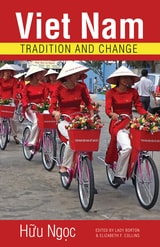
Viet Nam
Tradition and ChangeH?u Ng?c
Ohio University Press, 2016
During his twenty-year tenure as a columnist for Việt Nam News, Hà Nội’s English-language newspaper, Hữu Ngọc charmed and invigorated an international readership hungry for straightforward but elegant entrees into understanding Vietnamese culture. The essays were originally collected in the massive Wandering through Vietnamese Culture. With Viet Nam: Tradition and Change, Ohio University Press presents a selection from these many treasures, which are perfectly suited to students of Vietnamese culture and travelers seeking an introduction to the country’s rich history, culture, and daily life.
With extraordinary linguistic ability and a prodigious memory, Hữu Ngọc is among Việt Nam’s keenest observers of and writers about traditional Vietnamese culture and recent history. The author’s central theme—that all tradition is change through acculturation—twines through each of the book’s ten sections, which contain Hữu Ngọc’s ideas on Vietnamese religion, literature, history, exemplary figures, and more. Taken on its own, each brief essay is an engaging discussion of key elements of Vietnamese culture and the history of an issue confronting Việt Nam today.

Vietnam Anthology
American War LiteratureNancy Anisfield
University of Wisconsin Press, 1987
Novel excerpts include: Robert Stone’s Dog Soldiers, David Halberstam’s One Very Hot Day, and Jeff Danziger’s Lieutenant Kitt. Short stories include Asa Baber’s “The Ambush,” Tobias Wolff’s “Wingfield,” and Tim O’Brien’s “The Things They Carried.” Drama excerpts include David Rabe’s Streamers and Lanford Wilson’s The 5th of July. Poets include: Denise Levertov, Jan Barry, E. D. Ehrhart, Basil T. Paquet, Stephen Sossaman, Bryan Alec Floyd, Bruce Weigl, and Trang Thi Nga.
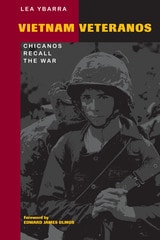
Vietnam Veteranos
Chicanos Recall the WarBy Lea Ybarra
University of Texas Press, 2004
One of the most decorated groups that served in the Vietnam War, Chicanos fought and died in numbers well out of proportion to their percentage of the United States' population. Yet despite this, their wartime experiences have never received much attention in either popular media or scholarly studies. To spotlight and preserve some of their stories, this book presents substantial interviews with Chicano Vietnam veterans and their families that explore the men's experiences in combat, the war's effects on the Chicano community, and the veterans' postwar lives.
Lea Ybarra groups the interviews topically to bring out different aspects of the Chicano vets' experiences. In addition to discussing their involvement in and views on the Vietnam War, the veterans also reflect on their place in American society, American foreign policy, and the value of war. Veterans from several states and different socioeconomic classes give the book a broad-based perspective, which Ybarra frames with sociological material on the war and its impact on Chicanos.

Vietnam and Other American Fantasies
H. Bruce Franklin
University of Massachusetts Press, 2000
There is now fairly widespread acknowledgment that the Vietnam War shattered many of the traditional narratives central to formerly prevailing vision of the United States and its history. Some people regret this and seek to restore old narratives that they consider essential to a unifying national identity, but their mighty efforts are unlikely to put Humpty Dumpty together again. Others see this shattering as a liberation from dangerous illusions, a wake-up call that forced millions of Americans toward more truthful and beneficial narratives about American history and culture. There is a third view, one that has gained considerable influence in intellectual circles, that sees any “master narrative” or “meta-narrative”—or, for that matter, any coherently structured narrative—as a socially constructed fantasy that radically falsifies the fragmentary, conflicted, and de-centered character of social experience. Although in this book the author does not engage in overt arguments about narrative theory, he does operate from a theoretical position that highly values narratives, especially coherently structures narratives—including some forms of fantasy—as crucial to comprehending, within our human limits, human reality.

Vietnam's Children in a Changing World
Rachel Burr
Rutgers University Press, 2006
Like the majority of children living in the global South today, a large number of Vietnamese youths work to help support their families. International human rights organizations have focused on these children, seeking to bring their lives into line with an understanding of childhood that is generally accepted in the developed world.
In this ethnographic study, Rachel Burr draws on her daily observations of working children in Hanoi and argues that these youngsters are misunderstood by the majority of agencies that seek to help them. Most aid programs embrace a model of childhood that is based on Western notions of individualism and bountiful resources. They further assume that this model is universally applicable even in cultures that advocate a collective sense of self and in countries that do not share the same economic advantages.
Burr presents the voices and experiences of Vietnamese children in the streets, in a reform school, and in an orphanage to show that workable solutions have become lost within the rhetoric propagated by aid organizations. The reality of providing primary education or adequate healthcare for all children, for instance, does not stand a chance of being achieved until adequate resources are put in place. Yet, organizations preoccupied with the child rights agenda are failing to acknowledge the distorted global distribution of wealth in favor of Western nations.
Offering a unique, firsthand look at the experiences of children in contemporary Vietnam, this book also provides a broad analysis of how internationally led human rights agendas are often received at the local level.
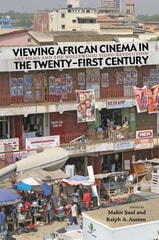
Viewing African Cinema in the Twenty-First Century
Art Films and the Nollywood Video RevolutionMahir Saul
Ohio University Press, 2010
African cinema in the 1960s originated mainly from Francophone countries. It resembled the art cinema of contemporary Europe and relied on support from the French film industry and the French state. Beginning in 1969 the biennial Festival panafricain du cinéma et de la télévision de Ouagadougou (FESPACO), held in Burkina Faso, became the major showcase for these films. But since the early 1990s, a new phenomenon has come to dominate the African cinema world: mass-marketed films shot on less expensive video cameras. These “Nollywood” films, so named because many originate in southern Nigeria, are a thriving industry dominating the world of African cinema.
Viewing African Cinema in the Twenty-first Century is the first book to bring together a set of essays offering a comparison of these two main African cinema modes.
Contributors: Ralph A. Austen and Mahir Şaul, Jonathan Haynes, Onookome Okome, Birgit Meyer, Abdalla Uba Adamu, Matthias Krings, Vincent Bouchard, Laura Fair, Jane Bryce, Peter Rist, Stefan Sereda, Lindsey Green-Simms, and Cornelius Moore

Viewpoints
Visual Anthropologists at WorkMary Strong, Text Editor, Laena Wilder, Visual Editor
University of Texas Press, 2009
Early in its history, anthropology was a visual as well as verbal discipline. But as time passed, visually oriented professionals became a minority among their colleagues, and most anthropologists used written words rather than audiovisual modes as their professional means of communication. Today, however, contemporary electronic and interactive media once more place visual anthropologists and anthropologically oriented artists within the mainstream. Digital media, small-sized and easy-to-use equipment, and the Internet, with its interactive and public forum websites, democratize roles once relegated to highly trained professionals alone. However, having access to a good set of tools does not guarantee accurate and reliable work. Visual anthropology involves much more than media alone.
This book presents visual anthropology as a work-in-progress, open to the myriad innovations that the new audiovisual communications technologies bring to the field. It is intended to aid in contextualizing, explaining, and humanizing the storehouse of visual knowledge that university students and general readers now encounter, and to help inform them about how these new media tools can be used for intellectually and socially beneficial purposes.
Concentrating on documentary photography and ethnographic film, as well as lesser-known areas of study and presentation including dance, painting, architecture, archaeology, and primate research, the book's fifteen contributors feature populations living on all of the world's continents as well as within the United States. The final chapter gives readers practical advice about how to use the most current digital and interactive technologies to present research findings.
Villa Victoria
The Transformation of Social Capital in a Boston BarrioMario Luis Small
University of Chicago Press, 2004
This book examines a neglected Puerto Rican enclave in Boston to consider the pros and cons of social scientific thinking about the true nature of ghettos in America. Mario Luis Small dismantles the theory that poor urban neighborhoods are inevitably deprived of social capital. He shows that the conditions specified in this theory are vaguely defined and variable among poor communities. According to Small, structural conditions such as unemployment or a failed system of familial relations must be acknowledged as affecting the urban poor, but individual motivations and the importance of timing must be considered as well.
Brimming with fresh theoretical insights, Villa Victoria is an elegant work of sociology that will be essential to students of urban poverty.
Village Housing
Constraints and Opportunities in Rural EnglandNick Gallent, Iqbal Hamiduddin, Phoebe Stirling, and Meiling Wu
University College London, 2022
Village Housing explores the housing challenges faced by England’s amenity villages, rooted in post-war counter-urbanization and a rising tide of investment demand for rural homes. It tracks solutions to date and considers what further actions might be taken to increase the equity of housing outcomes and thereby support rural economies and alternate rural futures. The authors examine first the interwar reliance on landowners to provide tied housing and post-war diversification of responses to rising housing access difficulties, including from the public and third sectors; second, recent community-led responses; and third, actions that disrupt established production processes: self-build, low impact development, and a re-emergence of council provision. These responses to the village housing challenges are set against a broader backdrop of structural constraints and opportunities to reduce those constraints through planning, land, and tax reforms that can broaden the social inclusivity and diversity of villages and support their economic well-being.
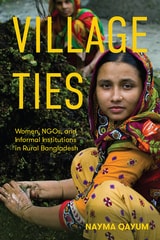
Village Ties
Women, NGOs, and Informal Institutions in Rural BangladeshNayma Qayum
Rutgers University Press, 2022
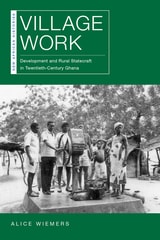
Village Work
Development and Rural Statecraft in Twentieth-Century GhanaAlice Wiemers
Ohio University Press, 2021
A robust historical case study that demonstrates how village development became central to the rhetoric and practice of statecraft in rural Ghana.
Combining oral histories with decades of archival material, Village Work formulates a sweeping history of twentieth-century statecraft that centers on the daily work of rural people, local officials, and family networks, rather than on the national governments and large-scale plans that often dominate development stories. Wiemers shows that developmentalism was not simply created by governments and imposed on the governed; instead, it was jointly constructed through interactions between them.
The book contributes to the historiographies of development and statecraft in Africa and the Global South by
- emphasizing the piecemeal, contingent, and largely improvised ways both development and the state are comprised and experienced
- providing new entry points into longstanding discussions about developmental power and discourse
- unsettling common ideas about how and by whom states are made
- exposing the importance of unpaid labor in mediating relationships between governments and the governed
- showing how state engagement could both exacerbate and disrupt inequities
Despite massive changes in twentieth-century political structures—the imposition and destruction of colonial rule, nationalist plans for pan-African solidarity and modernization, multiple military coups, and the rise of neoliberal austerity policies—unremunerated labor and demonstrations of local leadership have remained central tools by which rural Ghanaians have interacted with the state. Grounding its analysis of statecraft in decades of daily negotiations over budgets and bureaucracy, the book tells the stories of developers who decided how and where projects would be sited, of constituents who performed labor, and of a chief and his large cadre of educated children who met and shaped demands for local leaders. For a variety of actors, invoking “the village” became a convenient way to allocate or attract limited resources, to highlight or downplay struggles over power, and to forge national and international networks.
Village and Family in Contemporary China
William L. Parish and Martin King Whyte
University of Chicago Press, 1978
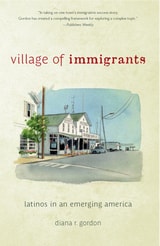
Village of Immigrants
Latinos in an Emerging AmericaGordon, Diana R
Rutgers University Press, 2015
Greenport today boasts a population that is one-third Hispanic. Gordon contends that these immigrants have effectively saved the town’s economy by taking low-skill jobs, increasing the tax base, filling local schools, and patronizing local businesses. Greenport’s seaside beauty still attracts summer tourists, but it is only with the support of the local Latino workforce that elegant restaurants and bed-and-breakfasts are able to serve these visitors. For Gordon the picture is complex, because the wave of immigrants also presents the town with challenges to its services and institutions. Gordon’s portraits of local immigrants capture the positive and the negative, with a cast of characters ranging from a Guatemalan mother of three, including one child who is profoundly disabled, to a Colombian house painter with a successful business who cannot become licensed because he remains undocumented. Village of Immigrants weaves together these people’s stories, fears, and dreams to reveal an environment plagued by threats of deportation, debts owed to coyotes, low wages, and the other bleak realities that shape the immigrant experience—even in the charming seaport town of Greenport.
A timely contribution to the national dialogue on immigration, Gordon’s book shows the pivotal role the American small town plays in the ongoing American immigrant story—as well as how this booming population is shaping and reviving rural communities.
Vilém Flusser
An IntroductionAnke Finger
University of Minnesota Press, 2010
An accessible and thorough introduction to Flusser’s thought, this book reveals his engagement with a wide array of disciplines, from communication studies, posthuman philosophy, media studies, and history to art and art history, migrant studies, anthropology, and film studies. The first to connect Flusser’s entire oeuvre, this volume shows how his works on media theory are just one part of a greater mosaic of writings that bring to the fore cultural and cognitive changes concerning all of us in the twenty-first century.
A theorist deeply influenced by his experiences as a privileged citizen of Prague, a Jew pursued by the Nazis, a European emigrant, a Brazilian immigrant, and a survivor keenly interested and invested in history and memory, Vilém Flusser was an outsider in a staunchly hierarchical and disciplined academic world.
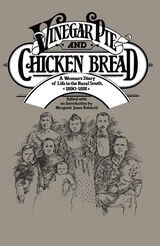
Vinegar Pie and Chicken Bread
A Woman's Diary of Life in the Rural South, 1890–1891Margeret Bolsterli
University of Arkansas Press, 1982

Vintage Moquegua
History, Wine, and Archaeology on a Colonial Peruvian PeripheryBy Prudence M. Rice
University of Texas Press, 2011
The microhistory of the wine industry in colonial Moquegua, Peru, during the colonial period stretches from the sixteenth through nineteenth centuries, yielding a wealth of information about a broad range of fields, including early modern industry and labor, viniculture practices, the cultural symbolism of alcohol consumption, and the social history of an indigenous population. Uniting these perspectives, Vintage Moquegua draws on a trove of field research from more than 130 wineries in the Moquegua Valley.
As Prudence Rice walked the remnants of wine haciendas and interviewed Peruvians about preservation, she saw that numerous colonial structures were being razed for development, making her documentary work all the more crucial. Lying far from imperial centers in pre-Hispanic and colonial times, the area was a nearly forgotten administrative periphery on an agricultural frontier. Spain was unable to supply the Peruvian viceroyalty with sufficient wine for religious and secular purposes, leading colonists to import and plant grapevines. The viniculture that flourished produced millions of liters, most of it distilled into pisco brandy. Summarizing archaeological data and interpreting it through a variety of frameworks, Rice has created a three-hundred-year story that speaks to a lost world and its inhabitants.
Violence Work
State Power and the Limits of PoliceMicol Seigel
Duke University Press, 2018
Violence against Queer People
Race, Class, Gender, and the Persistence of Anti-LGBT DiscriminationMeyer, Doug
Rutgers University Press, 2015
Selected as one of “The Best of the Best from the University Presses: Books You Should Know About” at the 2016 ALA Annual Conference
Violence against lesbians and gay men has increasingly captured media and scholarly attention. But these reports tend to focus on one segment of the LGBT community—white, middle class men—and largely ignore that part of the community that arguably suffers a larger share of the violence—racial minorities, the poor, and women. In Violence against Queer People, sociologist Doug Meyer offers the first investigation of anti-queer violence that focuses on the role played by race, class, and gender.
Drawing on interviews with forty-seven victims of violence, Meyer shows that LGBT people encounter significantly different forms of violence—and perceive that violence quite differently—based on their race, class, and gender. His research highlights the extent to which other forms of discrimination—including racism and sexism—shape LGBT people’s experience of abuse. He reports, for instance, that lesbian and transgender women often described violent incidents in which a sexual or a misogynistic component was introduced, and that LGBT people of color sometimes weren’t sure if anti-queer violence was based solely on their sexuality or whether racism or sexism had also played a role. Meyer observes that given the many differences in how anti-queer violence is experienced, the present media focus on white, middle-class victims greatly oversimplifies and distorts the nature of anti-queer violence. In fact, attempts to reduce anti-queer violence that ignore race, class, and gender run the risk of helping only the most privileged gay subjects.
Many feel that the struggle for gay rights has largely been accomplished and the tide of history has swung in favor of LGBT equality. Violence against Queer People, on the contrary, argues that the lives of many LGBT people—particularly the most vulnerable—have improved very little, if at all, over the past thirty years.
Violence and Activism at the Border
Gender, Fear, and Everyday Life in Ciudad JuarezBy Kathleen Staudt
University of Texas Press, 2008
Between 1993 and 2003, more than 370 girls and women were murdered and their often-mutilated bodies dumped outside Ciudad Juárez in Chihuahua, Mexico. The murders have continued at a rate of approximately thirty per year, yet law enforcement officials have made no breakthroughs in finding the perpetrator(s). Drawing on in-depth surveys, workshops, and interviews of Juárez women and border activists, Violence and Activism at the Border provides crucial links between these disturbing crimes and a broader history of violence against women in Mexico. In addition, the ways in which local feminist activists used the Juárez murders to create international publicity and expose police impunity provides a unique case study of social movements in the borderlands, especially as statistics reveal that the rates of femicide in Juárez are actually similar to other regions of Mexico.
Also examining how non-governmental organizations have responded in the face of Mexican law enforcement's "normalization" of domestic violence, Staudt's study is a landmark development in the realm of global human rights.
Violence and Indigenous Communities
Confronting the Past and Engaging the PresentEdited by Susan Sleeper-Smith, Jeffrey Ostler, and Joshua L. Reid
Northwestern University Press, 2021
In contrast to past studies that focus narrowly on war and massacre, treat Native peoples as victims, and consign violence safely to the past, this interdisciplinary collection of essays opens up important new perspectives. While recognizing the long history of genocidal violence against Indigenous peoples, the contributors emphasize the agency of individuals and communities in genocide’s aftermath and provide historical and contemporary examples of activism, resistance, identity formation, historical memory, resilience, and healing. The collection also expands the scope of violence by examining the eyewitness testimony of women and children who survived violence, the role of Indigenous self-determination and governance in inciting violence against women, and settler colonialism’s promotion of cultural erasure and environmental destruction.
By including contributions on Indigenous peoples in the United States, Canada, the Pacific, Greenland, Sápmi, and Latin America, the volume breaks down nation-state and European imperial boundaries to show the value of global Indigenous frameworks. Connecting the past to the present, this book confronts violence as an ongoing problem and identifies projects that mitigate and push back against it.
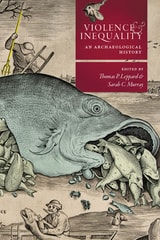
Violence and Inequality
An Archaeological HistoryThomas P. Leppard
University Press of Colorado, 2023
The assumption that violence and its threat buttressed elite social control is now challenged from various perspectives. This volume incorporates new models of the relationship between violence and social inequalities into the archaeology of social complexity, building more complicated and nuanced understandings of how different modes of social violence can militate different types of social constitution. Contributions from a variety of methodological angles—such as the bioarchaeology of health and trauma and radiogenic isotope studies and the aesthetics of violence—use a comparative perspective, drawing on data from the Southwestern US, Bronze Age China, early dynastic Egypt, ancient Mesopotamia, Roman Britain, and the Andes.
Violence and Inequality offers an original and deep history of violence and inequality. Understanding the long-term intersection of violence and inequality and how they support or erode one another is of intrinsic importance, making this work significant to the study of archaeology, economic history, and collective action.

Violence and Memory
The Mulele Rebellion in Postcolonial CongoEmery Kalema
Duke University Press, 2027
Violence and Peace
From the Atomic Bomb to Ethnic CleansingPierre Hassner
Central European University Press, 1997
Violence and Redemption, Volume 15
Candace Vogler and Patchen Markell
Duke University Press, 0
The essays examine topics such as the socioeconomic crisis in Mexico in the 1980s; continuities between plantation slavery, colonization, and the emergence of independent states as war machines in Africa; the culture of a Palestinian suicide bomber; the architecture of mass rioting and rape in Indonesia; the experience of unredeemed suffering in Herman Melville’s “Shiloh;” and the aggression of Aborigines in Australia.
Contributors. Tim Blackmore, John Borneman, Gillian Cowlishaw, Richard Falk, Ken Graves, Ghassan Hage, Abidin Kusno, Eva Lipman, Claudio Lomnitz, Patchen Markell, Achille Mbembe, Laura Nader, Steven Sampson, Nancy Scheper-Hughes, Candace Vogler, Michael Warner, Margaret Werry, Richard Ashby Wilson
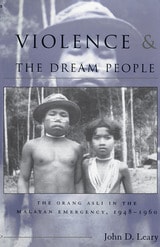
Violence and the Dream People
The Orang Asli in the Malayan Emergency, 1948-1960John D. Leary
Ohio University Press, 1995
Violence and the Dream People is an account of a little-known struggle by the Malayan government and the communist guerrillas, during the 1948-1960 Malayan Emergency, to win the allegiance of the Orang Asli, the indigenous people of the peninsular Malaya. The author argues that the use of force by both sides in their attempts to woo or coerce the jungle dwellers to support one side or the other in the conflict, caused tensions among the Orang Asli that resulted in counter violence against the interlopers and internecine killings in the tribal groups.
This study challenges the depiction of the Orang Asli as naïve innocents, unwittingly manipulated by outsiders for their own purposes. Heavily outnumbered, they looked to their own resources to survive, in the face of relocation, conscription, random bombings, and haphazard killing. Leary argues that they were shrewd enough to recognize the winning side and backed their judgment with force where necessary.
Violence and the Dream People is an important study of a much neglected facet of the Malayan Emergency and of the history of the indigenous peoples of the Malay Peninsula.
Violence and the Mimetic Unconscious, Volume 2
The Affective HypothesisNidesh Lawtoo
Michigan State University Press, 2023

Violence and the Oedipal Unconscious
vol. 1, The Catharsis HypothesisNidesh Lawtoo
Michigan State University Press, 2023
Violence in Rural South Africa, 1880–1963
Sean Redding
University of Wisconsin Press, 2023
Many violent acts attempted to reestablish and reinforce a moral, social, and political order among Africans. However, what constituted a moral order changed as white governance became more intrusive, land became scarcer, and people reconstructed their notions of “traditional” culture. State policies became obstacles around which Africans had to navigate by invoking the idea of tradition, using the state’s court system, alleging the use of witchcraft, or engaging in violent threats and acts. Redding’s use of multiple court cases and documents to discuss several types of violence provides a richer context for the scholarly conversation about the legitimation of violence in traditions, family life, and political protest.
Violence in a Time of Liberation
Murder and Ethnicity at a South African Gold Mine, 1994Donald L. Donham
Duke University Press, 2011

Violence in the Work of Composition
Recognizing, Intervening, Amelioratingedited by Scott Gage and Kristie S. Fleckenstein
Utah State University Press, 2022
This book provides a focused, nuanced, and systematic discussion of violence and its presence and influence across pedagogical and administrative sites. Violence in the Work of Composition offers a close look at the nature of violence as it emerges in the work of composition; provides strategies for identifying violence, especially covert violence, addressing its impact and preventing its eruption across many sites; and invites readers to reflect on both the presence of violence and the hope for its cessation. Contributors consider, first, how compositionists can recognize the ways their work inadvertently enacts and/or perpetuates violence and, second, how they can intervene and mitigate that violence.
Rich with the voices of myriad stakeholders, Violence in the Work of Composition initiates an essential conversation about violence and literacy education at a time when violence in its many forms continues to shape our culture, communities, and educational systems.
Contributors: Kerry Banazek, Katherine Bridgman, Eric Camarillo, Elizabeth Chilbert Powers, Joshua Daniel, Lisa Dooley, Allison Hargreaves, Jamila Kareem, Lynn C. Lewis, Trevor Meyer, Cathryn Molloy, Kellie Sharp-Hoskins, Ellen Skirvin, Krista Speicher Sarraf, Thomas Sura, James Zimmerman
Violence of Democracy
Interparty Conflict in South IndiaRuchi Chaturvedi
Duke University Press, 2023

Violence, the Body, and the South, Volume 73
Houston A. Baker Jr. and Dana D. Nelson, eds.
Duke University Press, 0
This collection represents first-rate examples of gender, critical race, genre, and material culture studies. Topics ranging from epistemological and authorial rebellions marking Frederick Douglass’s Narrative and Charles Chesnutt’s The Marrow of Tradition to the twentieth-century labors of writers, such as Francisco Goldman and Helena María Viramontes, who work to make visible the complexities of “North” and “South” with respect to subordinated Latino/a bodies. William Faulkner is revisited in an essay on the internalization of “race” in Light in August. Guess Who’s Coming to Dinner and In the Heat of the Night are analyzed in a framework of homopolitical desire. Genre and regional studies combine in an energetic essay resituating Harriet Jacobs’s Incidents in the Life of a Slave Girl with respect to “Northern” fiction.
Contributors. Houston A. Baker Jr., Jeannine DeLombard, Laura Doyle, Jennifer Rae Greeson, Andrea Levine, Dana D. Nelson, Ana Patricia Rodríguez, Bryan Wagner

Violence, the Sacred, and Things Hidden
A Discussion with René Girard at Esprit (1973)René Girard
Michigan State University Press, 2022
Violence
Analysis, Intervention, and PreventionSean Byrne
Ohio University Press, 2012
In a world desperate to comprehend and address what appears to be an ever-enlarging explosion of violence, this book provides important insights into crucial contemporary issues, with violence providing the lens. Violence: Analysis, Intervention, and Prevention provides a multidisciplinary approachto the analysis and resolution of violent conflicts. In particular, the book discusses ecologies of violence, and micro-macro linkages at the local, national, and international levels as well as intervention and prevention processes critical to constructive conflict transformation.
The causes of violence are complex and demand a deep multidimensional analysis if we are to fully understand its driving forces. Yet in the aftermath of such destruction there is hope in the resiliency, knowledge, and creativity of communities, organizations, leaders, and international agencies to transform the conditions that lead to such violence.

Violence
Analysis, Intervention, and PreventionSean Byrne
Ohio University Press, 0
In a world desperate to comprehend and address what appears to be an ever-enlarging explosion of violence, this book provides important insights into crucial contemporary issues, with violence providing the lens. Violence: Analysis, Intervention, and Prevention provides a multidisciplinary approach to the analysis and resolution of violent conflicts. In particular, the book discusses ecologies of violence, and micro-macro linkages at the local, national, and international levels as well as intervention and prevention processes critical to constructive conflict transformation.
The causes of violence are complex and demand a deep multidimensional analysis if we are to fully understand its driving forces. Yet in the aftermath of such destruction there is hope in the resiliency, knowledge, and creativity of communities, organizations, leaders, and international agencies to transform the conditions that lead to such violence.
Violent Acts and Urban Space in Contemporary Tel Aviv
Revisioning MomentsBy Tali Hatuka
University of Texas Press, 2010
Violent acts over the past fifteen years have profoundly altered civil rituals, cultural identity, and the meaning of place in Tel Aviv. Three events in particular have shed light on the global rule of urban space in the struggle for territory, resources, and power: the assassination of Prime Minister Rabin in 1995 in the city council square; the suicidal bombing at the Dolphinarium Discothèque along the shoreline in 2001; and bombings in the Neve Shaanan neighborhood in 2003.
Tali Hatuka uses an interdisciplinary framework of urban theory and sociopolitical theory to shed light on the discourse regarding violent events to include an analysis of the physical space where these events take place. She exposes the complex relationships among local groups, the state, and the city, challenging the national discourse by offering a fresh interpretation of contesting forces and their effect on the urban environment.
Perhaps the most valuable contribution of this book is its critical assessment of the current Israeli reality, which is affected by violent events that continually alter the everyday life of its citizens. Although these events have been widely publicized by the media, there is scant literature focusing on their impact on the urban spaces where people live and meet. In addition, Hatuka shows how sociopolitical events become crucial defining moments in contemporary lived experience, allowing us to examine universal questions about the way democracy, ideology, and memory are manifested in the city.