Results by title
1185 books match the query 'Travel' and 63 start with w
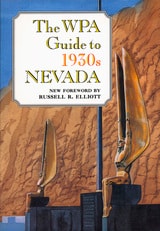
WPA Guide to 1930s Nevada
Writer's Program
University of Nevada Press, 1991
When Las Vegas boasted two motion picture theatres and the University of Nevada student population reached a high of twelve hundred, the original edition of The WPA Guide to 1930s Nevada was just coming off the press. First published in 1940 as Nevada: A Guide to the Silver State, part of the Work Projects Administration's American Guide Series, the book remains one of Nevada's premier tour and travel volumes. The WPA Guide to 1930s Nevada includes material on the state's geography and geology, plant and animal life, churches and schools. The native population is discussed, as are the arts, mining, ranching, press, sports, and recreation during the 1930s. The period photographs spread throughout the volume give an excellent picture of Nevada in the early part of the twentieth century and complement the profiles of thirty cities and eight detailed tour descriptions that follow the pattern of the major highway through the state.
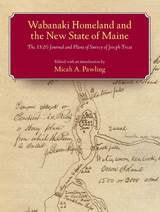
Wabanaki Homeland and the New State of Maine
The 1820 Journal and Plans of Survey of Joseph TreatMicah A. Pawling
University of Massachusetts Press, 2007
Edited, annotated, and with an introduction by Micah Pawling, this volume includes a complete transcription of Treat's journal, reproductions of dozens of hand-drawn maps, and records pertaining to the 1820 treaty between the Penobscot Nation and the governing authorities of Maine. As Pawling points out, Treat's journal offers more than the observations of a state agent conducting a survey. It re-creates a dialogue between Euro-Americans and Native peoples, showing how different perceptions of the land were negotiated and disseminated, and exposing the tensions that surfaced when assumptions and expectations clashed. In large part because of Neptune's influence, the maps, in addition to detailing the location of Wabanaki settlements, reflect a river-oriented Native perspective that would later serve as a key to Euro-American access to the region's interior.
The groundwork for cooperation between Treat and Neptune had been laid during the 1820 treaty negotiations, in which both men participated and which were successfully concluded just over a month before their expedition departed from Bangor, Maine. Despite conflicting interests and mutual suspicions, they were able to work together and cultivate a measure of trust as they traveled across northern Maine and western New Brunswick, mapping an old world together while envisioning its uncertain future.

Wake of the Unseen Object
Travels through Alaska's Native LandscapesTom Kizzia
University of Alaska Press, 2020
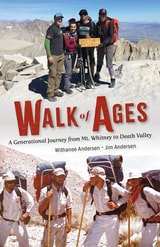
Walk of Ages
A Generational Journey from Mt. Whitney to Death ValleyWithanee Andersen
University of Nevada Press, 2024
With hopes of being listed in the Guinness Book of World Records, Jim led the first documented walk from the highest to lowest point in the contiguous United States in 1974. He lived, albeit just barely, to tell the tale to his daughter, sparking a desire in Withanee to retrace his steps in his honor. In 2017, she took on the incredible task of recreating Jim’s legacy trek of 131 miles with the help of divine intervention, ice-cold beer, and her parents, who were following along as the support party.
Walk of Ages humorously relates the parallel journey of an epic adventure told from two perspectives—a daughter’s difficult quest, and a father who supports her through it while recalling his own experiences from four decades earlier. Throughout this momentous odyssey, readers will realize how a once-in-a-generation adventure leads to life-changing transformation, and that the bond between father and daughter knows no bounds.
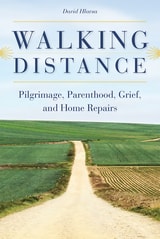
Walking Distance
Pilgrimage, Parenthood, Grief, and Home RepairsDavid Hlavsa
Michigan State University Press, 2015
Though walking more than 400 miles across the north of Spain turned out to be more difficult than they had anticipated, after a series of misadventures, including a brief stay in a Spanish hospital, they arrived in Santiago. Shortly after their return to Seattle, Lisa became pregnant, and the hardships of the Camino were no comparison to what followed: the stillbirth of their first son and Lisa’s harrowing second pregnancy.
Walking Distance is a moving and disarmingly funny book, a good story with a happy ending—the safe arrival of David and Lisa’s second son, Benjamin. David and Lisa get more than they bargained for, but they also get exactly what they wanted: a child, a solid marriage, and a richer life.
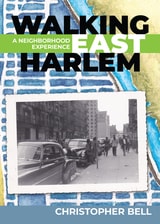
Walking East Harlem
A Neighborhood ExperienceChristopher Bell
Rutgers University Press, 2025
Now East Harlem native Christopher Bell takes you on a tour of his beloved neighborhood. He takes you on three separate walking tours, each visiting a different part of East Harlem and each full of stories about its theaters, museums, art spaces, schools, community centers, churches, mosques, and synagogues. You’ll also learn about the famous people who lived in El Barrio, such as actress Cecily Tyson, opera singer Marian Anderson, portrait artist Alice Neel, incomparable poet Julia De Burgos, and King of Latin Music Tito Puente.
Lavishly illustrated with over fifty photos, Walking East Harlem points out not only the many architectural and cultural landmarks in the neighborhood but also the historical buildings that have since been demolished. Whether you are a tourist or a resident, this guide will give you a new appreciation for El Barrio’s exciting history, cultural diversity, and continued artistic vibrancy.
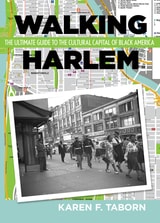
Walking Harlem
The Ultimate Guide to the Cultural Capital of Black AmericaTaborn, Karen
Rutgers University Press, 2018
This illustrated guide takes readers on five separate walking tours of Harlem, covering ninety-one different historical sites. Alongside major tourist destinations like the Apollo Theater and the Abyssinian Baptist Church, longtime Harlem resident Karen Taborn includes little-known local secrets like Jazz Age speakeasies, literati, political and arts community locales. Drawing from rare historical archives, she also provides plenty of interesting background information on each location.
This guide was designed with the needs of walkers in mind. Each tour consists of eight to twenty-nine nearby sites, and at the start of each section, readers will find detailed maps of the tour sites, as well as an estimated time for each walk. In case individuals would like to take a more leisurely tour, it provides recommendations for restaurants and cafes where they can stop along the way.
Walking Harlem gives readers all the tools they need to thoroughly explore over a century’s worth of this vital neighborhood’s cultural, political, religious, and artistic heritage. With its informative text and nearly seventy stunning photographs, this is the most comprehensive, engaging, and educational walking tour guidebook on one of New York’s historic neighborhoods.
Walking Home Ground
In the Footsteps of Muir, Leopold, and DerlethRobert Root
Wisconsin Historical Society Press, 2017
When longtime author Robert Root moves to a small town in southeast Wisconsin, he gets to know his new home by walking the same terrain traveled by three Wisconsin luminaries who were deeply rooted in place—John Muir, Aldo Leopold, and August Derleth. Root walks with Muir at John Muir State Natural Area, with Leopold at the Shack, and with Derleth in Sac Prairie; closer to home, he traverses the Ice Age Trail, often guided by such figures as pioneering scientist Increase Lapham. Along the way, Root investigates the changes to the natural landscape over nearly two centuries, and he chronicles his own transition from someone on unfamiliar terrain to someone secure on his home ground.In prose that is at turns introspective and haunting, Walking Home Ground inspires us to see history’s echo all around us: the parking lot that once was forest; the city that once was glacier. "Perhaps this book is an invitation to walk home ground," Root tells us. "Perhaps, too, it’s a time capsule, a message in a bottle from someone given to looking over his shoulder even as he tries to examine the ground beneath his feet."

Walking Pepys's London
Jacky Colliss Harvey
Haus Publishing, 2022
Samuel Pepys, the seventeenth century's best-known diarist, walked around London for miles, chronicling these walks in his diary. He made the two-and-a-half-mile trek to Whitehall from his house near the Tower of London on an almost daily basis. These streets, where many of his professional conversations took place while walking, became for him an alternative to his office.
With Walking Pepys’s London, we come to know life in London from the pavement up and see its streets from the perspective of this renowned diarist. The city was a key character in Pepys’s life, and this book draws parallels between his experience of seventeenth-century London and the lives of Londoners today. Bringing together geography, biography, and history, Jacky Colliss Harvey reconstructs the sensory and emotional experience of Pepys’s time. Full of fascinating details, Walking Pepys’s London is a sensitive exploration into the places that made the greatest English diarist of all time.
Walking Trails of Eastern and Central Wisconsin
Bob Crawford
University of Wisconsin Press, 1997
A companion to the popular Walking Trails of Southern Wisconsin, this book describes more than 200 trails in 72 locations throughout five of the state's major regions. Bob Crawford provides maps and detailed instructions to make the trails easy to locate.
With each trail description you'll find:
* details about the route and terrain, as well as geographical, biological, or historical features of interest;
* regulations including open days and hours, and rules regarding dogs, trail bikes, cross-country skiing, and other activities;
* information about available restrooms, drinking water, nature centers, and other facilities at the site;
* a description assessing degree of difficulty—slope, width, maintenance, and other such factors—and a helpful rating of "walkability" on a scale from 1 to 5.
The only comprehensive guide to hiking locations in the eastern part of the state, this book also provides lists of trail locations that include playground equipment for kids and picnic facilities for those who want to make a day trip of their hiking outing. Appendices spotlight trails that boast historical significance, ice age features, picnic areas, and cross-country skiing opportunities.
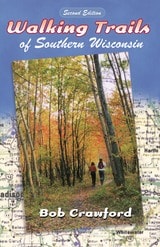
Walking Trails of Southern Wisconsin
Bob Crawford
University of Wisconsin Press, 2000
Take a walk on the wild side with the completely updated version of this popular guide.
This edition now includes coverage of Lafayette and Vernon counties, plus new information on more trails, including ones at Avoca Prairie Savanna State Natural Area, Wildcat Mountain State Park, and Blackhawk Lake Recreational Area. Author Bob Crawford has also revised eleven trail maps in nine counties and updated material throughout the book, which now describes more than 150 trails at more than sixty locations.
These trails wind across southern Wisconsin—into forests and along shores, over glacial formations and around Native American earthworks—and showcase some of the most beautiful and interesting walking trails in the nation. Walking Trails of Southern Wisconsin retains its handy, pocket-sized format plus all the other features that made the first edition so successful:
• details about routes and terrain plus geographical, biological, or historical features of interest
• regulations including open days and hours, and rules regarding dogs, trail bikes, cross-country skiing, and other activities
• information about available restrooms, drinking water, nature centers, and other facilities at the site
• a description assessing degree of difficulty—slope, width, maintenance, and other such factors—and a helpful rating of “walkability” on a scale from 1 to 5
Crawford also provides information about nearby parks, preserves, glacial formations, historical sites, tourist attractions, and other points of interest for those who want to turn a hike into a day trip or weekend outing. Staying fit was never so easy nor so much fun.
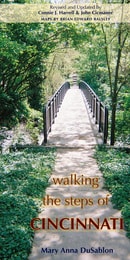
Walking the Steps Of Cincinnati
A Guide to the Queen City’s Scenic and Historic SecretsMary Anna DuSablon
Ohio University Press, 2014
Walking the Steps of Cincinnati: A Guide to the Queen City’s Scenic and Historic Secrets is a revised and updated version of Mary Anna DuSablon’s original guidebook, first published in 1998. This new edition describes and maps thirty-four walks of varying lengths and levels of difficulty around the neighborhoods of Cincinnati, following scenic or historic routes and taking in many of the city’s more than four hundred sets of steps. Some of these walks follow the same routes laid out by DuSablon in the first edition of the guide; others have been revised to reflect changes in the city and its neighborhoods, the physical condition of the steps, and the scenic views of Cincinnati that they afford; and still others are altogether new.
In writing their descriptions of the walks, authors Connie J. Harrell and John Cicmanec have retraced each path and taken all new photographs of the steps as well as architectural and natural landmarks along the way. Cartographer Brian Balsley has drawn a fresh set of maps, and Roxanne Qualls, vice-mayor of Cincinnati, has graciously written a new foreword.
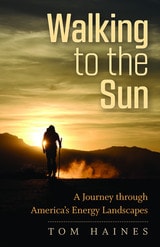
Walking to the Sun
A Journey through America's Energy LandscapesTom Haines
University Press of New England, 2018
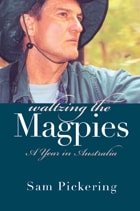
Waltzing the Magpies
A Year in AustraliaSam Pickering
University of Michigan Press, 2004
"The art of the essay as delivered by Mr. Pickering is the art of the front porch ramble."
---The New York Times Book Review
"Reading Pickering . . . is like taking a walk with your oldest, wittiest friend."
---Smithsonian
"What a joy it is to 'mess around' with Professor Sam Pickering!"
---The Chattanooga Times
"Pickering is a barefoot observer of the quotidian who revels in the spectacle and its gift for surprise, prefers the rumpled to the starched, has raised puttering and messing about to an art form, and wrings from it more than a pennyworth of happiness and a life well lived."
---Kirkus Reviews
The movie Dead Poets Society is where most Americans first met Sam Pickering, the University of Connecticut English professor. Robin Williams plays the lead character (loosely based on Pickering), an idiosyncratic instructor who employs some over-the-top teaching methods to keep his subjects fresh and his students learning.
Fewer know that Pickering is the author of more than 16 books and nearly 200 articles, or that he's inspired thousands of university students to think in new ways. And, while Williams may have captured Pickering's madcap classroom antics, he didn't uncover the other side of the author-Sam Pickering as one of our great American men of letters. Like the music of Mozart, the painting of Picasso, or the poetry of Emily Dickinson, you can spot Pickering's writing a mile away; there's no mistaking the Pickering pen. As an ample demonstration of the author's literary gifts, Waltzing the Magpies is his unabashedly lush and Technicolor travelogue from Down Under.
On the face of it, Waltzing is the chronicle of a sabbatical year spent with family in Australia. Yet beneath the surface Pickering's big themes-family, nature, seizing the moment-move in a powerful current that frequently bursts out in moments of ecstatic revelation and intense sensual flourish. Through it all Pickering weaves stories from his fictional Southern town of Carthage, Tennessee, especially when the goings of the outside world get rough.
Waltzing the Magpies is classic Pickering at the height of his literary powers, and places him in the company of such great American essayists as E. B. White and James Thurber, but with an irony and observational prowess that is pure Pickering.
Wandering Time
Western NotebooksLuis Alberto Urrea
University of Arizona Press, 1999
Fleeing a failed marriage and haunted by ghosts of his past, Luis Alberto Urrea jumped into his car and headed west. Driving cross-country with a cat named Rest Stop, Urrea wandered the West from one year’s spring through the next.
Hiking into aspen forests where leaves “shiver and tinkle like bells” and poking alongside creeks in the Rockies, he sought solace and wisdom. In the forested mountains he learned not only the names of trees—he learned how to live. As nature opened Urrea’s eyes, writing opened his heart. In journal entries that sparkle with discovery, Urrea ruminates on music, poetry, and the landscape. With wonder and spontaneity, he relates tales of marmots, geese, bears, and fellow travelers. He makes readers feel mountain air “so crisp you feel you could crunch it in your mouth” and reminds us all to experience the magic and healing of small gestures, ordinary people, and common creatures.
Urrea has been heralded as one of the most talented writers of his generation. In poems, novels, and nonfiction, he has explored issues of family, race, language, and poverty with candor, compassion, and often astonishing power. Wandering Time offers his most intimate work to date, a luminous account of his own search for healing and redemption.

Wanderlust
The Amazing Ida Pfeiffer, the First Female TouristJohn van Wyhe
National University of Singapore Press, 2019
In 1797 in Vienna, Ida Pfeiffer was born into a world that should have been too small for her dreams. The daughter of an Austrian merchant, she made clear from an early age that she would not be bound by convention, dressing in boys’ clothing and playing sports. After her tutor introduced her to stories of faraway lands, she became determined to see the world first-hand. This determination led to a lifetime of travel—much of it alone—and made her one of the most famous women of the nineteenth century.
Pfeiffer faced many obstacles, not least expectations of her gender. She was a typical nineteenth century housewife with a husband and two sons. She was not wealthy nor well connected. Yet after the death of her husband, and once her sons were grown and settled, at the age of forty-one she set off on her first journey, not telling anyone the true extent of her travel plans. Between that trip and her death in 1858, she would barely pause for breath, circling the globe twice—the first woman to do so—and publishing numerous popular books about her travels. Usually traveling solo, Pfeiffer faced storms at sea, trackless deserts, plague, malaria, earthquakes, robbers, murderers, and other risks.
In Wanderlust, John Van Wyhe tells Pfeiffer’s story, with generous excerpts from her published accounts, tell of her involvement with spies, international intrigue, and more. The result is a compelling portrait of the remarkable life of a pioneer unjustly forgotten.
Wasatch Winter Trails
John Veranth
University of Utah Press, 1991
Washtenaw County Bike Rides
A Guide to Road Rides in and around Ann ArborJoel D. Howell
University of Michigan Press, 2009
Washtenaw County Bike Rides is ideal for people who are new to the county, are new to bike riding, or simply want to expand their repertoire of rides. All routes described in the book start or end in Washtenaw County and have been selected with a preference for rides outside of the city. All the routes are paved. Joel Howell details the roads, the areas that require caution, the difficulty of the rides, and routes that can be extended for longer rides.
Includes routes and maps for Dixboro, Dexter-Chelsea, Gallup Park, Hell, Huron River Drive, Manchester, Waterloo, East Lansing, and more, as well as an overview map and ride log.
Joel D. Howell is a physician, medical historian, and avid biker who has personally ridden all of the trails featured in the book. He lives in Ann Arbor.
"Two of the strongest predictors of an active lifestyle are convenient access to exercise opportunities, and pleasant and beautiful exercise environments. Joel Howell's book has solved both of these factors with a collection of some of the most beautiful and accessible biking (and running!) routes in the upper Midwest."
---Thomas L. Schwenk, M.D., Chair of Family Medicine, University of Michigan
"This book includes all the main biking routes making it a 'must have' for any cyclist new to the Ann Arbor area. There are also great tidbits of local lore and super photographs that make it a welcome addition to the libraries of cyclists who have ridden these roads countless times."
---Mark Lovejoy, President, Ann Arbor Velo Club
"Howell has performed a genuine service for county residents and visitors. Get moving, Washtenaw!"
---Kenneth Warner, Dean, University of Michigan School of Public Health
Ways to the West
How Getting Out of Our Cars Is Reclaiming America's FrontierTim Sullivan
Utah State University Press, 2015
In Ways to the West, Tim Sullivan embarks on a car-less road trip through the Intermountain West, exploring how the region is taking on what may be its greatest challenge: sustainable transportation. Combining personal travel narrative, historical research, and his professional expertise in urban planning, Sullivan takes a critical yet optimistic and often humorous look at how contemporary Western cities are making themselves more hospitable to a life less centered on the personal vehicle.
The modern West was built by the automobile, but so much driving has jeopardized the West’s mystic hold on the American future. At first, automobility heightened the things that made the West great, but love became dependence, and dependence became addiction. Via his travels by bicycle, bus, and train through Las Vegas, Phoenix, Denver, Boise, Salt Lake City, and Portland, Sullivan captures the modern transportation evolution taking place across the region and the resulting ways in which contemporary Western communities are reinterpreting classic American values like mobility, opportunity, adventure, and freedom.
Finding a West created, lost, and reclaimed, Ways to the West will be of great interest to anyone curious about sustainable transportation and the history, geography, and culture of the American West.

We Are Important People Now
Kichwa Tourism, Indigeneity, and Masculinity in Ecuador’s AmazonErnesto J. Benitez
University of Alabama Press, 2026
How the “ecoprimitivist” tourism boom of the early 1990s reshaped the lives of young Kichwa men
We Are Important People Now illuminates the trajectories and life experiences of young Napo Kichwa men who have worked as tour guides in the Ecuadorian Upper Amazon, in the wake of the “ecoprimitivist” tourism boom of the early 1990s. Anthropologist Ernesto J. Benitez analyzes the socioeconomic situation of these men and the motivations and desires that drive them to seek service-based employment. Benitez discusses how the tour guides go through complex processes of transition and adjustment navigating tourists’ expectations, familial obligations, and desires for socioeconomic mobility. The opportunities for self-transformation are at once attractive and fraught with contradictions. They now see their indigeneity as an asset, but their urban lifestyles, pursuits of intimate relationships with foreign tourists, and sometimes-dismissive attitudes toward Kichwa people in rural Ecuador distance them socially from the broader Kichwa population.
Importantly, the book interrogates the possibilities and limitations that produce—and are produced by—such emergent forms of identity formation, situating the current period within a broader analysis of the colonial and postcolonial history of the area. It pays special attention to how different processes of interaction with and incorporation into colonial and state productive and biopolitical regimes have impacted the historical production and performance of Kichwa ethnic and gendered identities in the Upper Amazon region. A wide swath of anthropologists, Latin Americanists, and gender and Indigenous studies specialists will be edified by this timely and accessible narrative.

We Came Naked and Barefoot
The Journey of Cabeza de Vaca across North AmericaBy Alex D. Krieger
University of Texas Press, 2002
Second place, Presidio La Bahia Award, Sons of the Republic of Texas, 2003
Perhaps no one has ever been such a survivor as álvar Núñez Cabeza de Vaca. Member of a 600-man expedition sent out from Spain to colonize "La Florida" in 1527, he survived a failed exploration of the west coast of Florida, an open-boat crossing of the Gulf of Mexico, shipwreck on the Texas coast, six years of captivity among native peoples, and an arduous, overland journey in which he and the three other remaining survivors of the original expedition walked some 1,500 miles from the central Texas coast to the Gulf of California, then another 1,300 miles to Mexico City.
The story of Cabeza de Vaca has been told many times, beginning with his own account, Relación de los naufragios, which was included and amplified in Gonzalo Fernando de Oviedo y Váldez's Historia general de las Indias. Yet the route taken by Cabeza de Vaca and his companions remains the subject of enduring controversy. In this book, Alex D. Krieger correlates the accounts in these two primary sources with his own extensive knowledge of the geography, archaeology, and anthropology of southern Texas and northern Mexico to plot out stage by stage the most probable route of the 2,800-mile journey of Cabeza de Vaca.
This book consists of several parts, foremost of which is the original English version of Alex Krieger's dissertation (edited by Margery Krieger), in which he traces the route of Cabeza de Vaca and his companions from the coast of Texas to Spanish settlements in western Mexico. This document is rich in information about the native groups, vegetation, geography, and material culture that the companions encountered. Thomas R. Hester's foreword and afterword set the 1955 dissertation in the context of more recent scholarship and archaeological discoveries, some of which have supported Krieger's plot of the journey. Margery Krieger's preface explains how she prepared her late husband's work for publication. Alex Krieger's original translations of the Cabeza de Vaca and Oviedo accounts round out the volume.

We'll Always Have Paris
American Tourists in France since 1930Harvey Levenstein
University of Chicago Press, 2004
Harvey Levenstein takes us back to the 1930s, when, despite the Great Depression, France continued to be the stomping ground of the social elite of the eastern seaboard. After World War II, wealthy and famous Americans returned to the country in droves, helping to revive its old image as a wellspring of sophisticated and sybaritic pleasures. At the same time, though, thanks in large part to Communist and Gaullist campaigns against U.S. power, a growing sensitivity to French anti-Americanism began to color tourists' experiences there, strengthening the negative images of the French that were already embedded in American culture. But as the century drew on, the traditional positive images were revived, as many Americans again developed an appreciation for France's cuisine, art, and urban and rustic charms.
Levenstein, in his colorful, anecdotal style, digs into personal correspondence, journalism, and popular culture to shape a story of one nation's relationship to another, giving vivid play to Americans' changing response to such things as France's reputation for sexual freedom, haute cuisine, high fashion, and racial tolerance. He puts this tumultuous coupling of France and the United States in historical perspective, arguing that while some in Congress say we may no longer have french fries, others, like Humphrey Bogart in Casablanca, know they will always have Paris, and France, to enjoy and remember.
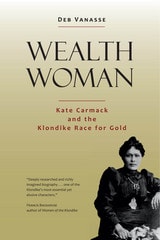
Wealth Woman
Kate Carmack and the Klondike Race for GoldDeb Vanasse
University of Alaska Press, 2016
In Wealth Woman, Deb Vanasse recounts Kate’s life from her early years on the frontier with George, through the history-making discovery of gold, and on to her subsequent fame, when she traveled alone down the West Coast through Washington and California, telling her story and fighting for her wealth, her family, and her reputation. Recovering the lost story of a true pioneer and a fiercely independent woman, Wealth Woman brings gold rush Alaska to life in all its drama and glory.
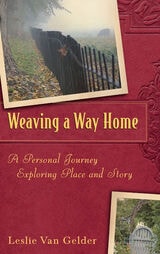
Weaving a Way Home
A Personal Journey Exploring Place and StoryLeslie Van Gelder
University of Michigan Press, 2008
An inquiry into how we engage with the world, and how solutions to environmental challenges can be found in the heart of our emotional relationships with places
"No one with a working heart will fail to be moved by Van Gelder. With passion and intelligence, she explores the way we story places and places story all life."
---Patrick Curry, Lecturer in Religious Studies, University of Kent, and author of Ecological Ethics: An Introduction and Defending Middle-Earth
"With grace and passion Leslie Van Gelder weaves together stories of her own encounters with an amazing variety of places---riverside meadows of Oxford, racially sundered Cyprus, fly-tormented Canadian muskeg, caves stroked by Paleolithic fingertips, derelict Coney Island, grasslands through which lion cubs follow the black tip of their mother’s tail---to show us how Place and Story are the warp and weft of our being as earth-dwellers."
---Tim Robinson, Folding Landscapes, and author of Connemara: Listening to the Wind
"Travel narrative, memoir, literary criticism, and anthropology fuse in this highly original and moving exploration of place and home."
---John Elder, author of Reading the Mountains of Home and Pilgrimage to Vallombrosa
"Van Gelder offers her most deeply personal stories as microcosmic examples of universal human experience, thus creating an empathic bond with her reader that conveys power and understanding simultaneously, and stimulates the reader's imagination toward reflection upon similarly personal stories of place. Van Gelder has modeled the relationship between story and place by telling placeful stories, and so has licensed the reader to do the same. Her writing throughout is rich and metaphoric. She is a gifted storyteller and a competent scholar, a combination to be treasured."
---Joseph W. Meeker, Professor Emeritus, College of Arts/Science, Union Institute and University, and author of The Spheres of Life, The Comedy of Survival, and Minding the Earth
Weaving a Way Home is an inquiry into the complex relationship between people, place, and story. In our memories and connections to a place, we are given one of the few opportunities to have deep relationships with place---relationships that cannot be described in words. Place can embody powerful emotions for us, and Leslie Van Gelder argues that we ourselves are places---geographical points possessing unique perspectives---that can feel displaced, replaced, or immovable. While the places of the external world can be accessed through maps and a good GPS system, our emotional landscapes are best reached through the sharing of stories.
In the tradition of writers Lewis Hyde, Barry Lopez, Peter Matthiessen, Joseph Meeker, Steven Mithen, Paul Shepard, Gary Snyder, and Terry Tempest Williams, Van Gelder uses both creative nonfiction narrative and evolutionary biological theory to explore complex terrain. Following Van Gelder's own travels, the book moves from the caves of the Dordogne lit only by the small beam of a flashlight, to an acacia thicket in Mozambique, to a black fly–infested bay inappropriately named Baie de Ha Ha in the inlands of Quebec, to the green line wrapped in barbed wire separating northern and southern Cyprus, to Abu Simbel's empty stone eyes in the Egyptian desert, and finally to the high road above Pelorus Sound on the rocky coasts of New Zealand. The author takes the reader to each place to create a storied landscape and explore new intellectual terrain. Van Gelder shows us that our collections of experiences, unique to us, can only be shared through the articulation of narrative.Weaving a Way Home will appeal to those deeply interested in knowing how we forge relationships with places and how that shapes who we are.
Jacket photographs: Garden gate: © iStockphoto.com/Richard Goerg. Iron fence: Christ Church Meadow in Oxford, Leslie Van Gelder.
Author photograph: Kevin Sharpe
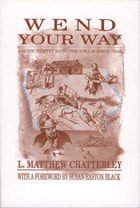
Wend Your Way
A Guide To Sites Along The Iowa Mormon TrailL. Matthew Chatterley
University of Iowa Press, 2007
Wend Your Way: A Guide to Sites Along the Mormon Trail tells the story of this great movement through Iowa. Tracing the trail from east to west through 12 counties the guide includes:
• Mormon Trail history for each county•Directs visitors to the 27 interpretive roadside panels that were constructed on the trail by U.S. National Park Service and Iowa Mormon Trails Association
•Reproduces the poignant illustrations that author L. Matthew Chatterley drew for these wayside exhibits
•Provides a map and directions by county to guide travelers to the route of the Mormon Trail, sites of Mormon camps and settlements and the interpretive roadside panels
•Lists other locations in southern Iowa that visitors will want to explore
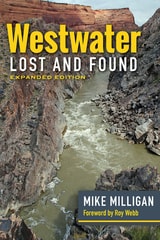
Westwater Lost and Found
Expanded EditionMike Milligan
Utah State University Press, 2024
This expanded edition brings to light historical events and explores how Westwater’s location greatly contributed to early Grand (Upper) Colorado River boaters’ knowledge and how the lush Westwater Valley and Cisco became critical stops for water, wood, and grass along the North Branch of the Old Spanish Trail. Other new additions include explorer Ellsworth Kolb’s unpublished manuscript describing his 1916–1917 boating experiences on the Grand and Gunnison Rivers; two stories relating to Outlaw Cave, one of which expands upon the mystery of the outlaw brothers; a letter from James E. Miller to Frederick S. Dellenbaugh in 1906 revealing new information about his boating excursion with Oro DeGarmo Babcock on the Grand River in 1897; and a portion of botanist Frederick Kreutzfeld’s little-known journal of 1853 that describes Captain John W. Gunnison’s railroad survey.
Loaded with extensive information and river-running history, Milligan’s guide is sure to enhance readers’ knowledge of the Upper Colorado River and Grand Canyon regions. Boaters, river guides, scholars of the American West, and historians of the Colorado, Green, and Gunnison Rivers or the Old Spanish Trail will gain much from this new edition.
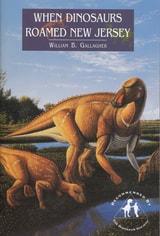
When Dinosaurs Roamed New Jersey
William B. Gallagher
Rutgers University Press, 1997
Did you know that Benjamin Franklin examined the first dinosaur bone in America from Woodbury, Gloucester County, in 1787--decades before the word dinosaur was even coined? Or that when the first reasonably complete dinosaur skeleton in the world was unearthed in Haddonfield, Camden County, in 1858, it was a major scientific breakthrough which forced paleontologists to completely revise their picture of dinosaur anatomy? Few people know that New Jersey is the nursery of American vertebrate paleontology!
When Dinosaurs Roamed New Jersey provides a succinct and readable history of the geology and paleontology of New Jersey from the time the region was covered by Cambrian seas, 543 million years ago, to the Pleistocene Ice Age only 10-15,000 years ago. William Gallagher tells the stories of professional and amateur fossil hunters, their discoveries, and their impact on the history of paleontological thought. He points out places in New Jersey and nearby where specimens characteristic of each era were found. He shows how fossil evidence found in the state is helping paleontologists uncover the ecological interactions and behavior of dinosaurs, and discusses such ongoing scientific controversies as the reason for the extinction of the dinosaurs.
From tracking dinosaur footprints across the Newark basin, to digging for the last dinosaurs in the greensands of South Jersey, to finding a mushroom in ancient amber in East Brunswick, this book is the ideal introduction to the Garden State's fossils and prehistory.
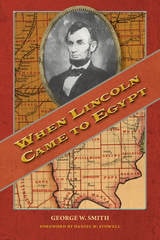
When Lincoln Came to Egypt
George W. Smith, with a Foreword by Daniel W. Stowell
Southern Illinois University Press, 2017
Where the Strange Roads Go Down
Mary del Villar and Fred del Villar; Foreword by Susan Hardy Aiken
University of Arizona Press, 1999
Where the Wind Dreams of Staying
Searching for Purpose and Place in the WestEric Dieterle
Oregon State University Press, 2016
Dieterle’s journey leads from the plateau of eastern Washington through the landscapes of seven states, ending in the shadow of the San Francisco peaks in northern Arizona. Readers will find rich, detailed explorations of western landscapes balanced with stories of personal reflection, determination, doubt, and fulfillment.
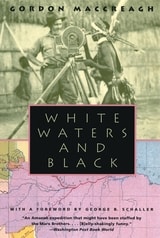
White Waters and Black
Gordon MacCreagh
University of Chicago Press, 2001
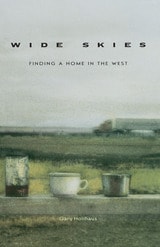
Wide Skies
Finding a Home in the WestGary Holthaus
University of Arizona Press, 1997
A true place in the world: how many people have looked for it and how many have finally found it in the American West? Here, with writer Gary Holthaus, readers will reflect upon their own sense of place as they travel the lands and enter the lives of people in small towns and on ranches all over the West from Utah to Oregon to Alaska. Farmers and merchants, writers and teachers, truckers and trappers: their stories ring with hope and fear as their wide-open spaces increasingly come under siege.
Here are reflections on a long journey, together with notes of a personal odyssey and a plea for preserving the West's natural beauty-its meadows and mountains, its bears and Golden Eagles, its antelope and wolverines. This is important, says Holthaus, because if the region is home for him and for others, too, then it is crucial for newcomers and old-timers alike not to "further foul a nest that is becoming increasingly crowded." As he finds his way and adjusts his eyes to modern realities of greed and indifference, he also comes to grips with loss and learns to balance "the harm one inevitably does" with acts of compassion and positive change.
Deep in the national consciousness, the mythical West of film and fiction continues to shape our vision of ourselves as Americans. This book is a view not from the media, not from think tanks or legislators or policy makers, but from Westerners themselves, who tell us about the circumstances of their lives. Their West is indisputably the real West, and only as we come to understand better its realities will we come to know ourselves both as individuals and as a nation.
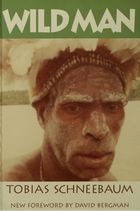
Wild Man
Tobias Schneebaum
University of Wisconsin Press, 2003
Part autobiographical journal, part social-historical novel, Wild Man tracks Tobias Schneebaum's fascinating and almost epic life story, from his earliest contemplation of homoerotic desire through his life in Peru, Borneo, and beyond. A young man from New York, Schneebaum "disappeared" in 1955 on the eastern slopes of the Andes. He was, in actuality, living for more than a year among the remote Harakhambut people, discovering a way of being that was strange, primitive, and powerfully attractive to him. This longing to find the "wild man" in other cultures—and in himself—eventually led him on an odyssey through South America, India, Tibet, Africa, Borneo, New Guinea, and Southeast Asia. He lived among isolated forest peoples, including headhunters and cannibals, in regions where few, if any, white men had ever been.
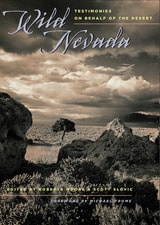
Wild Nevada
Testimonies on Behalf of the DesertRoberta Moore
University of Nevada Press, 2005
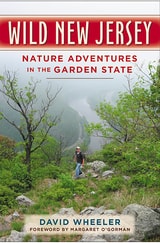
Wild New Jersey
Nature Adventures in the Garden StateDavid Wheeler
Rutgers University Press, 2011
Wild New Jersey invites readers along Wheeler’s whirlwind year-long tour of the most ecologically diverse state for its size in America. Along with the expert guidance of charismatic wildlife biologists and local conservationists, he explores mountains, valleys, beaches, pine barrens, caves, rivers, marshlands, and more—breathtaking landscapes and the state’s Noah’s Ark of fascinating creatures.
This isn’t your ordinary ride on the Jersey Turnpike. Fasten your seatbelts and join Wheeler as he . . .
- Kayaks through the Meadowlands under the watchful eye of the Empire State Building,
- Pans for cretaceous fossils in a hidden brook once home to mastodons and giant sloths,
- Rides a fishing boat in the frigid snows of winter on a high-seas quest for Atlantic puffins,
- Trudges through the eerie darkness of a bog on a mysterious night hike,
- Dogsleds across the windswept alpine slopes in the haunts of the porcupine and bobcat.
With Wheeler’s compelling narrative, in-depth background details, and eye for revealing the offbeat, you can count this as the first nature book to paint the extraordinary picture of New Jersey’s unlikely wilderness in all its glory. Come along for all the adventure and insight in Wild New Jersey!
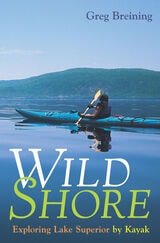
Wild Shore
Exploring Lake Superior By KayakGreg Breining
University of Minnesota Press, 2002
A real-life adventure and journey of discovery on the greatest of the Great Lakes
Over two years, Greg Breining set out to circle Lake Superior by kayak. Paddling more than one thousand miles, he camped on the lake’s islands and shorelines, visited its places of rare beauty and solitude, experienced its wildly varied moods, and explored remote historic sites and isolated communities. The result is Wild Shore, a tale of outdoor adventure, colorful characters, memorable stories, and personal discovery.
Wind River Trails
Finis Mitchell
University of Utah Press, 1999
Mitchell draws on decades of experience to describe the trails, routes, wildlife, glaciers, lakes, and streams in Wyoming's fabulous two-and-a-quarter million acre Wind River Range.
A short hike was the beginning of a long career in wilderness living for Finis Mitchell of Rock Springs, Wyoming. He has scaled 244 peaks, including four times to the trop of Gannett Peak, the highest mountain in the state. A vigorous supporter of wilderness, the mountain man pours out his philosophy at meetings and slide shows with amazing attention to detail. He has taken 105,345 pictures as a hobby and uses them in his slide shows to show people their own public lands.
He has drawn on his vast experience in the Wind Rivers to describe, in this guide book, the trails, routes, wildlife, glaciers, 4,000 lakes and 800 miles of streams in Wyoming’s fabulous two and a quarter million acre Wind River Range.

Winter Notes on Summer Impressions
Fyodor Dostoevsky
Northwestern University Press, 1997
In June 1862, Dostoevsky left Petersburg on his first excursion to Western Europe. Ostensibly making the trip to consult Western specialists about his epilepsy, he also wished to see firsthand the source of the Western ideas he believed were corrupting Russia. Over the course of his journey he visited a number of major cities, including Berlin, Paris, London, Florence, Milan, and Vienna. He recorded his impressions in Winter Notes on Summer Impressions, which were first published in the February 1863 issue of Vremya (Time), the periodical of which he was the editor.
Among other themes, Dostoevsky reveals his Pan-Slavism, rejecting European culture as corrupt and exhorting Russians to resist the temptation to emulate or adopt European ways of life.

Wisconsin Cocktails
Jeanette Hurt
University of Wisconsin Press, 2020
Beyond delving into mythic origins of several classic creations, Jeanette Hurt introduces a new generation of cocktails that offer a spin on standard concoctions. She explores the state’s unique farm-to-table ethos influenced by an abundance of locally sourced ingredients. Also included are a wealth of interviews with notable mixologists, sharing numerous favorite recipes for specialty pick-me-ups that connoisseurs and home bartenders alike will be clamoring to try. A definitive account of the beverages we love, Wisconsin Cocktails insists we order our Old Fashioneds the right way—with brandy.
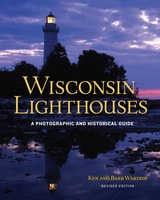
Wisconsin Lighthouses
A Photographic and Historical Guide, Revised EditionKen Wardius
Wisconsin Historical Society Press, 2013
“Lighthouses are a reflection of the human spirit and a mirror to our past.”—from the Introduction
No symbol is more synonymous with Wisconsin’s rich maritime traditions than the lighthouse. These historic beacons conjure myriad notions of a bygone era: romance, loneliness, and dependability; dedicated keepers manning the lights; eerie tales of haunted structures and ghosts of past keepers; mariners of yesteryear anxiously hoping to make safe haven around rocky shorelines. If these sentinels could talk, imagine the tales they would tell of ferocious Great Lakes storms taking their toll on vessels and people alike.
In this fully updated edition of Wisconsin Lighthouses, Ken and Barb Wardius tell those tales, taking readers on an intimate tour of lighthouses on Lake Superior, Lake Michigan, and Lake Winnebago. Both delightful storytellers and accomplished photographers, the couple complement their engaging text with more than 100 stunning color photographs, along with dozens of archival photos, maps, documents, and artifacts. Detailed “how to get there” directions, up-to-the-minute status reports on each light, and sidebars on everything from lighthouse vocabulary to the often lonely lives of lightkeepers make this the definitive book on Wisconsin’s lighthouses.
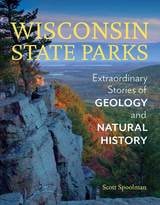
Wisconsin State Parks
Extraordinary Stories of Geology and Natural HistoryScott Spoolman
Wisconsin Historical Society Press, 2018
The impressive bluffs, valleys, waterfalls, and lakes of Wisconsin’s state parks provide more than beautiful scenery and recreational opportunities. They are windows into the distant past, offering clues to the dramatic events that have shaped the land over billions of years.
Author and former DNR journalist Scott Spoolman takes readers with him to twenty-eight parks, forests, and natural areas where evidence of the state’s striking geologic and natural history are on display. In an accessible storytelling style, Spoolman sheds light on the volcanoes that poured deep layers of lava rock over a vast area in the northwest, the glacial masses that flattened and molded the landscape of northern and eastern Wisconsin, mountain ranges that rose up and wore away over hundreds of millions of years, and many other bedrock-shaping phenomena. These stories connect geologic processes to the current landscape, as well as to the evolution of flora and fauna and development of human settlement and activities, for a deeper understanding of our state’s natural history.
The book includes a selection of detailed trail guides for each park, which hikers can take with them on the trail to view evidence of Wisconsin’s geologic and natural history for themselves.

Wisconsin's Best Breweries and Brewpubs
Searching for the Perfect PintRobin Shepard
University of Wisconsin Press, 2001
This information-packed guidebook introduces you to more than sixty breweries and brewpubs—from the Shipwrecked Brew Pub in Egg Harbor, to smaller craft breweries like Capital Brewery west of Madison, to the world-famous Miller Brewing Company of Milwaukee. Robin Shepard includes descriptions and his personal ratings of some 600 local beers, plus a taster’s chart you can use to record your own preferences.
For each brewpub and brewery site you’ll find:
• a description and brief history, plus any "Don’t miss" features
• names, comments, and ratings for all their specialty beers
• notes on the pub food, with recommendations
• suggestions of other sites to see and activities in the local area
• information about bottling and distribution
• availability of tours, tastings, gift shops, mug clubs, and "growlers"
• address and contact data, including Web sites and GPS coordinates!
Shepard also introduces novices to the brewing process and a wide variety of beer styles. And, you’ll find a list of helpful books and Web sites, as well as information on Wisconsin beer tastings and festivals. As we say in Wisconsin, "So, have a couple a two, three beers, hey?"
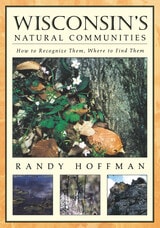
Wisconsin's Natural Communities
How to Recognize Them, Where to Find ThemRandy Hoffman
University of Wisconsin Press, 2002
Cattails grow in a marsh, pitcher plants grow in a bog, jewelweed grows in a swamp, right? Do sandhill cranes live among sandy hills? Frogs live near lakes and ponds, but can they live on prairies, too? What is a pine barrens, an oak opening, a calcareous fen?
Wisconsin’s Natural Communities is an invitation to discover, explore, and understand Wisconsin’s richly varied natural environment, from your backyard or neighborhood park to stunning public preserves.Part 1 of the book explains thirty-three distinct types of natural communities in Wisconsin—their characteristic trees, beetles, fish, lichens, butterflies, reptiles, mammals, wildflowers—and the effects of geology, climate, and historical events on these habitats. Part 2 describes and maps fifty natural areas on public lands that are outstanding examples of these many different natural communities: Crex Meadows, Horicon Marsh, Black River Forest, Maribel Caves, Whitefish Dunes, the Blue Hills, Avoca Prairie, the Moquah Barrens and Chequamegon Bay, the Ridges Sanctuary, Cadiz Springs, Devil’s Lake, and many others.
Intended for anyone who has a love for the natural world, this book is also an excellent introduction for students. And, it provides landowners, public officials, and other stewards of our environment with the knowledge to recognize natural communities and manage them for future generations.
With the Lapps in the High Mountains
A Woman among the Sami, 1907–1908Emilie Demant Hatt; Edited and translated by Barbara Sjoholm; Foreword by Hugh Beach
University of Wisconsin Press, 2013
Working Time
Essays on Poetry, Culture, and TravelJane Miller
University of Michigan Press, 1992
The essays consider notions of time, duration, narrative, documentary, and history in American poetry, and view poetry in the light of developments in feminism, postmodern theory, and contemporary poetic practice. In addition to poetry, Miller investigates a range of cultural products and art forms, including film, video, photography, painting, sculpture, music, and the Madonna phenomenon.

World Film Locations
BarcelonaEdited by Helio San Miguel and Lorenzo J. Torres Hortelano
Intellect Books, 2013
World Film Locations
DublinEdited by Jez Conolly and Caroline Whelan
Intellect Books, 2011
World Film Locations
Hong KongEdited by Linda Chiu-Han Lai and Kimburley Wing-Yee Choi
Intellect Books, 2013
World Film Locations
IstanbulEdited by Özlem Köksal
Intellect Books, 2012
World Film Locations
LiverpoolEdited by Jez Conolly and Caroline Whelan
Intellect Books, 2013