Results by title
4038 books match the query 'Social aspects' and 161 start with w
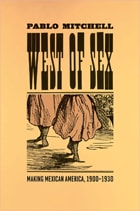
West of Sex
Making Mexican America, 1900-1930Pablo Mitchell
University of Chicago Press, 2012
Sex can be an oppressive force, a tool to shame, divide, and control a population. But it can also be a force for change, for the legal and physical challenge of inequity and injustice. In West of Sex, Pablo Mitchell uses court transcripts and criminal cases to provide the first coherent picture of Mexican-American sexuality at the turn of the twentieth century, and a truly revelatory look at sexual identity in the borderlands.
As Mexicans faced a rising tide of racial intolerance in the American West, some found cracks in the legal system that enabled them to assert their rights as full citizens, despite institutional hostility. In these chapters, Mitchell offers a rare glimpse into the inner workings of ethnicity and power in the United States, placing ordinary Mexican women and men at the center of the story of American sex, colonialism, and belonging.
Other chapters discuss topics like prostitution, same-sex intimacy, sexual violence, interracial romance, and marriage with an impressive level of detail and complexity. Written in vivid and accessible prose, West of Sex offers readers a new vision of sex and race in American history.

Wetwares
Experiments In Postvital LivingRichard Doyle
University of Minnesota Press, 2003
A dizzying tour of the ways technologies, both real and imagined, can transform humanity
The mind of the machine, the body suspended in time, organs exchanged, thought computed, genes manipulated, DNA samples abducted by aliens: the terrain between science and speculation, fraught with the possibility of technological and perhaps even evolutionary transformations, is the territory Richard Doyle explores in Wetwares. In a manner at once sober and playful, Doyle maps potentials for human transformation by new ecologies of information in the early twenty-first century.
Wetwares ranges over recent research in artificial life, cloning, cryonics, computer science, organ transplantation, and alien abduction. Moving between actual technical practices, serious speculative technology, and science fiction, Doyle shows us emerging scientific paradigms where “life” becomes more a matter of information than of inner vitality—in short, becomes “wetwares” for DNA and computer networks. Viewing technologies of immortality—from cryonics to artificial life—as disciplines for welcoming a thoroughly other future, a future of neither capital, god, human, nor organism, the book offers tools for an evolutionary, transhuman mutation in the utterly unpredictable decades to come.
What Are Stem Cells?
Definitions at the Intersection of Science and PoliticsJohn Lynch
University of Alabama Press, 2011
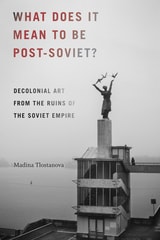
What Does It Mean to Be Post-Soviet?
Decolonial Art from the Ruins of the Soviet EmpireMadina Tiostanova
Duke University Press, 2018
What Good Is Journalism?
How Reporters and Editors Are Saving America's Way of LifeGeorge Kennedy and Daryl Moen
University of Missouri Press, 2007
To go by today’s critics of the news media—who have created a virtual cottage industry—American journalism has reached a nadir. Yet with all its well-documented faults, journalism is vital to the health of our democracy, the glue of information that holds this complex nation together. This book shows the most important roles that journalism plays in the world’s oldest democracy. Two seasoned educators and practitioners of journalism have assembled a team of writers who look beyond the critics to show that there is much to be praised about the state of American journalism today.
Journalism tells us most of what we know about the world beyond our own experience by going where its audience cannot or will not. It keeps watch on the government and other powerful institutions, exposes wrongdoing and injustice, and shares the endless fascinations of everyday life. Through stories of real people, this book forcefully argues that American journalism is better than its critics admit and a force for good in the lives of both individuals and the nation. Like the exemplary journalism it describes, it offers dozens of instances that show how good journalistic practices enrich the daily lives of citizens and enable them to play their own roles in the democracy.
These essays offer a multifaceted view of the press, tracing the development of free expression through American history and showing how the principles of journalism that we take for granted are playing a revolutionary role in emerging democracies. They report the results of a unique national survey—undertaken for this book—revealing how Americans really view and use the press, and cite the successes of good reporting, from hometown newspapers to NPR. They show how investigative journalism and computer-assisted reporting unearth important truths and even create new knowledge and suggest how citizens can demand the good journalism they need.
What good is journalism? This book spells out the answer through a conversation about journalism and democracy that offers both an antidote to the recent storm of ideologically based criticism of “liberal media” and a demonstration of the true worth of an institution essential to the protection of freedom. It provides today’s readers—and tomorrow’s journalists—a fresh perspective on the press to remind us where we would be without it.
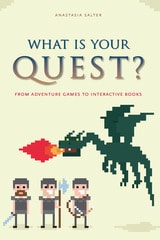
What Is Your Quest?
From Adventure Games to Interactive BooksAnastasia Salter
University of Iowa Press, 2014
One of the earliest models for this new way of telling stories was the adventure game, the kind of game centered on quests in which the characters must overcome obstacles and puzzles. After they fell out of fashion in the 1990s, fans made strenuous efforts to keep them alive and to create new games in the genre. Such activities highlight both the convergence of game and story and the collapsing distinction between reader and author. Continually defying the forces of obsolescence, fans return abandoned games to a playable state and treat stories as ever-evolving narratives. Similarly, players of massive multiplayer games become co-creators of the game experience, building characters and creating social networks that recombine a reading and gaming community.
The interactions between storytellers and readers, between programmers and creators, and among fans turned world-builders are essential to the development of innovative ways of telling stories. And at the same time that fan activities foster the convergence of digital gaming and storytelling, new and increasingly accessible tools and models for interactive narrative empower a broadening range of storytellers. It is precisely this interactivity among a range of users surrounding these new platforms that is radically reshaping both e-books and games and those who read and play with them.
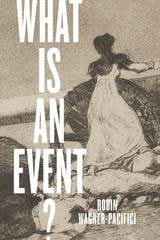
What Is an Event?
Robin Wagner-Pacifici
University of Chicago Press, 2017
What Is an Event? ranges across several disciplines, systematically analyzing the ways that events emerge, take shape, gain momentum, flow, and even get bogged down. As an exploration of how events are constructed out of ruptures, it provides a mechanism for understanding eventful forms and flows, from the micro-level of individual life events to the macro-level of historical revolutions, contemporary terrorist attacks, and financial crises. Wagner-Pacifici takes a close look at a number of cases, both real and imagined, through the reports, personal narratives, paintings, iconic images, political posters, sculptures, and novels they generate and through which they live on. What is ultimately at stake for individuals and societies in events, Wagner-Pacifici argues, are identities, loyalties, social relationships, and our very experiences of time and space. What Is an Event? provides a way for us all—as social and political beings living through events, and as analysts reflecting upon them—to better understand what is at stake in the formations and flows of the events that mark and shape our lives.
What Makes Women Sick
Gender and the Political Economy of HealthLesley Doyal
Rutgers University Press, 1995
What makes women sick? To an Ecuadorean woman, it’s nervios from constant worry about her children’s illnesses. To a woman working in a New Mexico electronics factory, it’s the solvents that leave her with a form of dementia. To a Ugandan woman, it’s HIV from her husband's sleeping with the widow of an AIDS patient. To a Bangladeshi woman, it’s a fatal infection following an IUD insertion. What they all share is a recognition that their sickness is somehow caused by situations they face every day at home and at work.
In this clearly written and compelling book, Lesley Doyal investigates the effects of social, economic, and cultural conditions on women’s health. The “fault line” of gender that continues to divide all societies has, Doyal demonstrates, profound and pervasive consequences for the health of women throughout the world. Her broad synthesis highlights variations between men and women in patterns of health and illness, and it identifies inequalities in medical care that separate groups of women from each other. Doyal’s wide-ranging arguments, her wealth of data, her use of women’s voices from many cultures—and her examples of women mobilizing to find their own solutions—make this book required reading for everyone concerned with women’s health.
What Makes Women Sick
Gender and the Political Economy of HealthLesley Doyal
Rutgers University Press, 1995
What makes women sick? To an Ecuadorean woman, it’s nervios from constant worry about her children’s illnesses. To a woman working in a New Mexico electronics factory, it’s the solvents that leave her with a form of dementia. To a Ugandan woman, it’s HIV from her husband's sleeping with the widow of an AIDS patient. To a Bangladeshi woman, it’s a fatal infection following an IUD insertion. What they all share is a recognition that their sickness is somehow caused by situations they face every day at home and at work.
In this clearly written and compelling book, Lesley Doyal investigates the effects of social, economic, and cultural conditions on women’s health. The “fault line” of gender that continues to divide all societies has, Doyal demonstrates, profound and pervasive consequences for the health of women throughout the world. Her broad synthesis highlights variations between men and women in patterns of health and illness, and it identifies inequalities in medical care that separate groups of women from each other. Doyal’s wide-ranging arguments, her wealth of data, her use of women’s voices from many cultures—and her examples of women mobilizing to find their own solutions—make this book required reading for everyone concerned with women’s health.
What Philosophy Wants from Images
D. N. Rodowick
University of Chicago Press, 2017
Rodowick here explores work by artists such as Ken Jacobs, Ernie Gehr, Victor Burgin, Harun Farocki, and others—artists who are creating forms that express a new historical consciousness of images. These forms acknowledge a complex relationship to the disappearing past even as they point toward new media that will challenge viewers’ confidence in what the images they see are or are becoming. What philosophy wants from images, Rodowick shows, is to renew itself conceptually through deep engagement with new forms of aesthetic experience.
What Poetry Brings to Business
Morgan Clare, Kristen Lange, Ted Buswick
University of Michigan Press, 2010
"Creativity is a means of controlling chaos, finding order. Business and poetry draw their waters out of the same well."
---John Barr, President, Poetry Foundation
"At last there is a book that explores the deep but unexpected connections between business and poetry. Clare Morgan and her colleagues demonstrate how the creative energy, emotional power, and communicative complexity of poetry relate directly to the practical needs for innovation and problem solving that face business managers. There has never been a book on developing managerial potential quite like this one."
---Dana Gioia, former chairman of the National Endowment for the Arts and a former corporate executive at General Foods
What does poetry bring to business? According to Clare Morgan and her coauthors, it brings complexity and flexibility of thinking, along with the ability to empathize with and better understand the thoughts and feelings of others. Through her own experiences and many examples, Morgan demonstrates that the skills necessary to talk and think about poetry can be of significant benefit to leaders and strategists, to executives who are facing infinite complexity and who are armed with finite resources in a changing world.
What Poetry Brings to Business presents ways in which reading and thinking about poetry offer businesspeople new strategies for reflection on their companies, their daily tasks, and their work environments. The goal is both to increase and broaden readers' understanding of poems and how they convey meaning, and also to help readers develop analytical and cognitive skills that will be beneficial in a business context. The unique combinations and connections made in this book will open new avenues of thinking about poetry and business alike.
Clare Morgan is Director of the graduate creative writing programme at the University of Oxford. She has run workshops and given presentations on this topic in the United States, the United Kingdom, continental Europe, and Japan. Dr. Morgan is a fiction writer and critic, and a Fellow of the Royal Society of Arts.
Kirsten Lange and Ted Buswick are employed by The Boston Consulting Group, an international management consulting firm, she as Managing Director of the Munich office, he as head of Oral History and Archiving.
What Women Want
Gender and Voting in Britain, Japan and the United StatesGill Steel
University of Michigan Press, 2022
What Women Want analyzes decades of voting preferences, values, and policy preferences to debunk some of the media and academic myths about gender gaps in voting and policy preferences. Findings show that no single theory explains when differences in women’s and men’s voting preferences emerge, when they do not, or when changes—or the lack thereof—occur over time. Steel extends existing theories to create a broader framework for thinking about gender and voting behavior to provide more analytical purchase in understanding gender and its varying effects on individual voters’ preferences. She incorporates the long-term effects of party identification and class politics on political decision-making, particularly in how they influence preferences on social provision and on expectations of the state. She also points to the importance of symbolic politics
What Workers Say
Decades of Struggle and How to Make Real Opportunity NowRoberta Rehner Iversen
Temple University Press, 2022
What have jobs really been like for the past 40 years and what do the workers themselves say about them? In What Workers Say, Roberta Iversen shows that for employees in labor market industries—like manufacturing, construction, printing—as well as those in service-producing jobs, like clerical work, healthcare, food service, retail, and automotive—jobs are often discriminatory, are sometimes dangerous and exploitive, and seldom utilize people’s full range of capabilities. Most importantly, they fail to provide any real opportunity for advancement.
What Workers Say takes its cue from Studs Terkel’s Working, as Iversen interviewed more than 1,200 workers to present stories about their labor market jobs since 1980. She puts a human face on the experiences of a broad range of workers indicating what their jobs were and are truly like. Iversen reveals how transformations in the political economy of waged work have shrunk or eliminated opportunity for workers, families, communities, and productivity. What Workers Say also offers an innovative proposal for compensated civil labor that could enable workers, their communities, labor market organizations, and the national infrastructure to actually flourish.
What's so Funny?
The Comic Conception of Culture and SocietyMurray S. Davis
University of Chicago Press, 1993
Drawing on a vast array of jokes and the work of dozens of comedians from Jay Leno and Lenny Bruce to Steve Allen and Billy Crystal, Davis reminds us of the extraordinarily subversive power of comedy. When we laugh, we accept the truth of the comic moment: that this is the way life really is. The book is in two parts. In the first, Davis explores the cultural conventions that even simple jokes take apart—the rules of logic, language, rationality, and meaning. In the second, he looks at the social systems that have been at the root of jokes for centuries: authority figures, power relations, and institutions. Whatever their style, comedians use the tools of the trade—ambiguous meanings, missed signals, incongruous characters, unlikely events—to violate our expectations about the world.
Setting comedy within a rich intellectual tradition—from Plato to Freud, Hobbes to Kant, in philosophy as well as sociology—Davis makes a convincing case for comedy as a subtle, complex, and articulated theory of culture and society. He reveals the unsuspected ways in which comedy, with its spotlight on the gap between appearance and reality, the ideal and the actual, can be a powerful mode for understanding the world we have made.
What's the Use?
On the Uses of UseSara Ahmed
Duke University Press, 2019

What’s the Matter with the Internet?
Mark Poster
University of Minnesota Press, 2001
A provocative investigation into the social and cultural implications of the Internet by a leading cultural critic.
As the Internet has become more and more a part of our daily lives, responses to its impact on culture and society have tended toward the extremes, hopeful or pessimistic. Fears that the Internet undermines community, inhibits social interaction, exacerbates economic and racial divisions, and facilitates greater state or corporate intrusion into our lives are balanced by excitement about the transformative qualities of the new medium and its potential to stimulate individual creativity, inspire new social forms, and further democratization.
In What’s the Matter with the Internet?, leading cultural theorist Mark Poster offers a sophisticated and astute assessment of the potential the new medium has to redefine culture and politics. Avoiding the mindless hype and meaningless jargon that has characterized much of the debate about the future of the Web, he details what truly distinguishes the Internet from other media and the implications these novel properties have for such vital issues as authorship, national identity and global citizenship, the fate of ethnicity and race, and democracy. Arguing that the Internet demands a social and cultural theory appropriate to the specific qualities of cyberspace, Poster reformulates the ideas of thinkers associated with our understanding of postmodern culture and the media (including Foucault, Deleuze, Heidegger, Baudrillard, and Derrida) to account for and illuminate the virtual world, paying particular attention to its political dimensions and the nature of identity. In this innovative analysis, Poster acknowledges that although the colonization of the Internet by corporations and governments does threaten to retard its capacity to bring about genuine change, the new medium is still capable of transforming both contemporary social practices and the way we see the world and ourselves.
Wheeling and Dealing
Living with Spinal Cord InjuryEsther Isabelle Wilder
Vanderbilt University Press, 2006
Meghan is a high-level quadriplegic, living alone, who uses a power wheelchair and requires daily attendant care. She laments, "There are so many people who think we're asexual, we're not pretty, and we're creeps and weirdoes." To dispel this myth, she envisions a fashion show of women in wheelchairs parading down a runway. Meghan has been involved in a number of sexual relationships since sustaining her injury. While she doesn't think her disability has diminished her sexual pleasure, she feels that it has affected her sexual performance: "Well, you can't move it. You can't, like, bump and grind."
In 32 unusually frank in-depth interviews like these, the men and women in this book freely discuss their sex lives, their beliefs about God, how they want others to treat them, and whether they want to walk again. In each chapter the author presents their complex voices and comprehensive research about different facets of spinal cord injury (SCI).
Wheeling and Dealing explores the extent to which people with spinal cord injury locate their challenges in their physical impairments or in the social environment. Some disagree with those disability activists who focus almost exclusively on the latter, but the author examines this issue in depth.
Topics include:
--Physical health from degrees of loss of function to problems like pressure sores, temperature regulation, and bladder control.
--The stages of psychological adjustment and rehabilitation.
--Obstacles to sexual intimacy, treatment of erectile dysfunction, and new sources of sexual pleasure and emotional intimacy.
--Religion and spirituality.
--Social and political beliefs, with those with SCI weighing in on everything from welfare services to embryonic stem cell research.
--Dating, marriage, and parenting.
--Friendship networks and social supports; concerns about transportation and accessibility; stigma.
--Education, employment, and economic consequences.
This book is the recipient of the 2004 Norman L. and Roselea J. Goldberg Prize from Vanderbilt University Press for the best project in the area of medicine.
When Biometrics Fail
Gender, Race, and the Technology of IdentityShoshana Amielle Magnet
Duke University Press, 2011
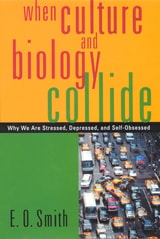
When Culture and Biology Collide
Why We are Stressed, Depressed, and Self-ObsessedE. O. Smith
Rutgers University Press, 2002
Why do we do things that we know are bad for us? Why do we line up to buy greasy fast food that is terrible for our bodies? Why do we take the potentially lethal risk of cosmetic surgery to have a smaller nose, bigger lips, or a less wrinkled face? Why do we risk life and limb in a fit of road rage to seek revenge against someone who merely cut us off in traffic? If these life choices are simply responses to cultural norms and pressures, then why did these particularly self-destructive patterns evolve in place of more sensible ones?
In When Culture and Biology Collide, E. O. Smith explores various aspects of behavior that are endemic to contemporary Western society, and proposes new ways of understanding and addressing these problems. Our physiology and behavior are the products of thousands of generations of evolutionary history. Every day we play out behaviors that have been part of the human experience for a very long time, yet these behaviors are played out in an arena that is far different from that in which they evolved. Smith argues that this discordance between behavior and environment sets up conditions in which there can be real conflict between our evolved psychological predispositions and the dictates of culture.
Topics such as drug abuse, depression, beauty and self-image, obesity and dieting, stress and violence, ethnic diversity, and welfare are all used as sample case studies. As with all of his case studies, Smith emphasizes the importance of not using an evolutionary explanation as an excuse for a particular pattern of behavior. Instead, he seeks to offer a perspective that will help us see ourselves more clearly and that may be useful in developing intelligent solutions to seemingly intractable problems. Smith provides ways of developing strategies for minimizing our self-destructive tendencies.
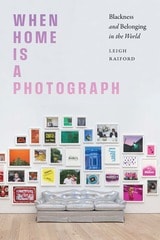
When Home Is a Photograph
Blackness and Belonging in the WorldLeigh Raiford
Duke University Press, 2026
When Media Are New
Understanding the Dynamics of New Media Adoption and UseJohn Carey and Martin C. J. Elton
University of Michigan Press, 2010
"John Carey and Martin Elton are among the most skilled and insightful researchers studying the dynamic changes in technology and the impacts on consumer attitudes and behaviors. Their comprehensive and actionable observations make this a must read for anyone interested in understanding the current (and future) media environment."
---Alan Wurtzel, President, Research and Media Development, NBC Universal
"When Media Are New should be read by every media manager faced with disruptive change brought on by new technology. The book transcends the fashionable topics and themes that are here today and gone tomorrow and instead places emphasis on those areas of research and implementation where fatal mistakes are made. They capture something universal, and therefore highly useful, by stripping away the hype and focusing relentlessly on consumers and the ways they adopt or fail to adopt new media products and technologies into their lives."
---Martin Nisenholtz, Senior Vice President, Digital Operations, The New York Times Company
"The burgeoning development of the Internet has deflected attention from a wider history of new media innovations that has shaped its success. John Carey and Martin Elton demonstrate that earlier initiatives to launch videophones, two-way interactive cable systems, videotext and other media innovations can teach us much about the present state and future course of information and communication technologies. This is a key reference on the new media, and must reading for students of the Internet---the platform for continuing the new media revolution."
---Professor William H. Dutton, Director, Oxford Internet Institute, University of Oxford
The world of communication media has undergone massive changes since the mid-1980s. Along with the extraordinary progress in technological capability, it has experienced stunning decreases in costs; a revolutionary opening up of markets (a phenomenon exemplified by but not limited to the rise of the Internet); the advent of new business models; and a striking acceleration in the rate of change. These technological, regulatory, and economic changes have attracted the attention of a large number of researchers, from industry and academe, and given rise to a substantial body of research and data. Significantly less attention has been paid to the actual and intended users of new media. When Media Are New addresses this research and publishing gap by investigating the human side of the technological changes of the last 50 years and the implications for current and future media. It will find a broad audience ranging from media scholars to policymakers to industry professionals.
John Carey is Professor of Communications and Media Management at Fordham Business School and has extensive experience in conducting research about new media for companies such as AT&T, Cablevision, NBC Universal, and the New York Times (among many others) as well as foundations and government agencies. His extensive publications have focused on user adoption of new media and how consumers actually use new technologies.
Martin C. J. Elton was Director of the Communication Studies Group in the UK, which pioneered in the study of user behavior with new media technologies, and founded the Interactive Telecommunication Program at New York University. He has published widely on user research, forecasting, and public policy and has conducted extensive research for many prominent foundations, companies, and government agencies in the USA and Europe.

When Mexicans Could Play Ball
Basketball, Race, and Identity in San Antonio, 1928–1945By Ignacio M. García
University of Texas Press, 2014
Winner, Al Lowman Memorial Prize, Texas State Historical Association, 2014
In 1939, a team of short, scrappy kids from a vocational school established specifically for Mexican Americans became the high school basketball champions of San Antonio, Texas. Their win, and the ensuing riot it caused, took place against a backdrop of shifting and conflicted attitudes toward Mexican Americans and American nationalism in the WWII era. “Only when the Mexicans went from perennial runners-up to champs,” García writes, “did the emotions boil over.”
The first sports book to look at Mexican American basketball specifically, When Mexicans Could Play Ball is also a revealing study of racism and cultural identity formation in Texas. Using personal interviews, newspaper articles, and game statistics to create a compelling narrative, as well as drawing on his experience as a sports writer, García takes us into the world of San Antonio’s Sidney Lanier High School basketball team, the Voks, which became a two-time state championship team under head coach William Carson “Nemo” Herrera. An alumnus of the school himself, García investigates the school administrators’ project to Americanize the students, Herrera’s skillful coaching, and the team’s rise to victory despite discrimination and violence from other teams and the world outside of the school. Ultimately, García argues, through their participation and success in basketball at Lanier, the Voks players not only learned how to be American but also taught their white counterparts to question long-held assumptions about Mexican Americans.
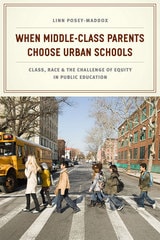
When Middle-Class Parents Choose Urban Schools
Class, Race, and the Challenge of Equity in Public EducationLinn Posey-Maddox
University of Chicago Press, 2014
Drawing on in-depth research at an urban elementary school, Posey-Maddox examines parents’ efforts to support the school through their outreach, marketing, and volunteerism. She shows that when middle-class parents engage in urban school communities, they can bring a host of positive benefits, including new educational opportunities and greater diversity. But their involvement can also unintentionally marginalize less-affluent parents and diminish low-income students’ access to the improving schools. In response, Posey-Maddox argues that school reform efforts, which usually equate improvement with rising test scores and increased enrollment, need to have more equity-focused policies in place to ensure that low-income families also benefit from—and participate in—school change.

When Peace Is Not Enough
How the Israeli Peace Camp Thinks about Religion, Nationalism, and JusticeAtalia Omer
University of Chicago Press, 2013
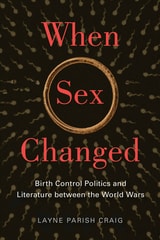
When Sex Changed
Birth Control Politics and Literature between the World WarsLayne Parish Craig
Rutgers University Press, 2013
In When Sex Changed, Layne Parish Craig analyzes the ways literary texts responded to the political, economic, sexual, and social values put forward by the birth control movements of the 1910s to the 1930s in the United States and Great Britain.
Discussion of contraception and related topics (including feminism, religion, and eugenics) changed the way that writers depicted women, marriage, and family life. Tracing this shift, Craig compares disparate responses to the birth control controversy, from early skepticism by mainstream feminists, reflected in Charlotte Perkins Gilman’s Herland, to concern about the movement’s race and class implications suggested in Nella Larsen’s Quicksand, to enthusiastic speculation about contraception’s political implications, as in Virginia Woolf’s Three Guineas.
While these texts emphasized birth control’s potential to transform marriage and family life and emancipate women from the “slavery” of constant childbearing, birth control advocates also used less-than-liberatory language that excluded the poor, the mentally ill, non-whites, and others. Ultimately, Craig argues, the debates that began in these early political and literary texts—texts that document both the birth control movement’s idealism and its exclusionary rhetoric—helped shape the complex legacy of family planning and women’s rights with which the United States and the United Kingdom still struggle.
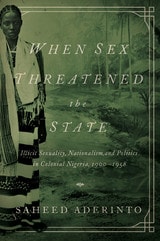
When Sex Threatened the State
Illicit Sexuality, Nationalism, and Politics in Colonial Nigeria, 1900-1958Saheed Aderinto
University of Illinois Press, 2015
As Saheed Aderinto shows, British colonizers saw prostitution as an African form of sexual primitivity and a problem to be solved as part of imperialism's "civilizing mission". He details the Nigerian response to imported sexuality laws and the contradictory ways both African and British reformers advocated for prohibition or regulation of prostitution. Tracing the tensions within diverse groups of colonizers and the colonized, he reveals how wrangling over prostitution camouflaged the negotiating of separate issues that threatened the social, political, and sexual ideologies of Africans and Europeans alike.
The first book-length project on sexuality in early twentieth century Nigeria, When Sex Threatened the State combines the study of a colonial demimonde with an urban history of Lagos and a look at government policy to reappraise the history of Nigerian public life.
When the Bones Speak
The Living, the Dead, and the Sacrifice of Contemporary OkinawaChristopher T. Nelson
Duke University Press, 2025
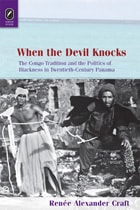
When the Devil Knocks
The Congo Tradition and the Politics of Blackness in Twentieth-Century PanamaRenée Alexander Craft
The Ohio State University Press, 2015
When the Devil Knocks analyzes the Congo tradition as a dynamic cultural, ritual, and identity performance that tells an important story about a Black cultural past while continuing to create itself in a Black cultural present. This book examines “Congo” within the history of twentieth century Panamanian etnia negra culture, politics, and representation, including its circulation within the political economy of contemporary tourism.
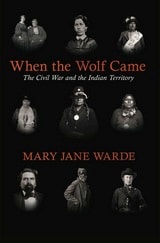
When the Wolf Came
The Civil War and the Indian TerritoryMary Jane Warde
University of Arkansas Press, 2013
Winner of the 2014 Pate Award from the Fort Worth Civil War Round Table.
When the peoples of the Indian Territory found themselves in the midst of the American Civil War, squeezed between Union Kansas and Confederate Texas and Arkansas, they had no way to escape a conflict not of their choosing--and no alternative but to suffer its consequences. When the Wolf Came explores how the war in the Indian Territory involved almost every resident, killed many civilians as well as soldiers, left the country stripped and devastated, and cost Indian nations millions of acres of land. Using a solid foundation of both published and unpublished sources, including the records of Cherokee, Choctaw, and Creek nations, Mary Jane Warde details how the coming of the war set off a wave of migration into neighboring Kansas, the Red River Valley, and Texas. She describes how Indian Territory troops in Unionist regiments or as Confederate allies battled enemies--some from their own nations--in the territory and in neighboring Kansas, Missouri, and Arkansas. And she shows how post-war land cessions forced by the federal government on Indian nations formerly allied with the Confederacy allowed the removal of still more tribes to the Indian Territory, leaving millions of acres open for homesteads, railroads, and development in at least ten states. Enhanced by maps and photographs from the Oklahoma Historical Society's photographic archives, When the Wolf Came will be welcomed by both general readers and scholars interested in the signal public events that marked that tumultuous era and the consequences for the territory's tens of thousands of native peoples.
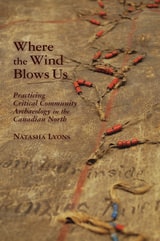
Where the Wind Blows Us
Practicing Critical Community Archaeology in the Canadian NorthNatasha Lyons
University of Arizona Press, 2013
Lyons offers an extended case study of her work with the Inuvialuit community of the Canadian Western Arctic. She documents the development of this longstanding research relationship and presents both the theoretical and practical products of the work to date. Integrating knowledge drawn from archaeology, ethnography, oral history, and community interviews, Lyons utilizes a multivocal approach that actively listens to Inuvialuit speak about their rich and textured history.
The overall significance of this volume lies in outlining a method of practicing archaeology that embraces local ways of knowing with a critically constructed and evolving methodology that is responsive to community needs. It will serve as a handbook to mine for elements of critical practice, a model of community-based archaeology, and a useful set of concepts and examples for classroom study.

White Burgers, Black Cash
Fast Food from Black Exclusion to ExploitationNaa Oyo A. Kwate
University of Minnesota Press, 2023
The long and pernicious relationship between fast food restaurants and the African American community
- James Beard Foundation: James Beard Media Award for Reference, History, and Scholarship — Winner
- Urban Affairs Association Best Book in Urban Affairs — Winner
- Association for Humanist Sociology Betty and McClung Lee Book Award — Winner
- Black Caucus of the American Library Association — Honor, Nonfiction category
- Museum of African American History Stone Book Award — Shortlist
- Business History Conference: Hagley Prize — Finalist
- Association for the Study of Food and Society: ASFS Book Award — Winner
- Society for the Study of Social Problems: Eduardo Bonilla-Silva Outstanding Book Award — Winner
- Foreword: INDIES — Silver winner, History category
Today, fast food is disproportionately located in Black neighborhoods and marketed to Black Americans through trgeted advertising. But throughout much of the twentieth century, fast food was developed specifically for White urban and suburban customers, purposefully avoiding Black spaces. In White Burgers, Black Cash, Naa Oyo A. Kwate traces the evolution in fast food from the early 1900s to the present, from its long history of racist exclusion to its current damaging embrace of urban Black communities.
Fast food has historically been tied to the country’s self-image as the land of opportunity and is marketed as one of life’s simple pleasures, but a more insidious history lies at the industry’s core. White Burgers, Black Cash investigates the complex trajectory of restaurant locations from a decided commitment to Whiteness to the disproportionate densities that characterize Black communities today. Kwate expansively charts fast food’s racial and spatial transformation and centers the cities of Chicago, New York City, and Washington, D.C., in a national examination of the biggest brands of today, including White Castle, KFC, Burger King, McDonald’s, and more.
Deeply researched, compellingly told, and brimming with surprising details, White Burgers, Black Cash reveals the inequalities embedded in America’s popular national food tradition.
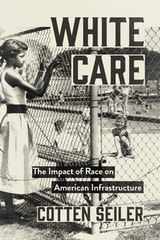
White Care
The Impact of Race on American InfrastructureCotten Seiler
University of Chicago Press, 2026
Infrastructure delivers to its users a range of benefits, from health, safety, and sanitation to mobility, energy, and education. It is, as Cotten Seiler argues, how modern states show care for their populations. White Care recounts the rise and fall of public infrastructure in the United States, unearthing its origins as an investment in those Americans deemed most highly evolved, showing the political stakes of its desegregation, and accounting for its current state of dilapidation.
From the late nineteenth century through much of the twentieth, government investments in physical (“hard”) and social (“soft”) infrastructure constituted a regime of care that Seiler calls “custodial liberalism.” This regime achieved legitimacy with the New Deal, which conferred upon white citizens a bounty of life-enhancing public works. But custodial liberalism began to unravel in the postwar decades, as Americans of color gained access to public schools, housing, swimming pools, parks, and other sites from which they had long been excluded. As the infrastructural commons were desegregated, white Americans withdrew from the social compact that had empowered them and turned toward neoliberalism, with its program of austerity and privatization. This racialized renunciation has deprived everyone—including themselves—of a cleaner, greener, healthier, safer, more affordable, and more functional environment.
White Scholars/African American Texts
Edited by Lisa A. Long
Rutgers University Press, 2005
What makes someone an authority? What makes one person's knowledge more credible than another's? In the ongoing debates over racial authenticity, some attest that we can know each other's experiences simply because we are all "human," while others assume a more skeptical stance, insisting that racial differences create unbridgeable gaps in knowledge.
Bringing new perspectives to these perennial debates, the essays in this collection explore the many difficulties created by the fact that white scholars greatly outnumber black scholars in the study and teaching of African American literature. Contributors, including some of the most prominent theorists in the field as well as younger scholars, examine who is speaking, what is being spoken and what is not, and why framing African American literature in terms of an exclusive black/white racial divide is problematic and limiting.
In highlighting the "whiteness" of some African Americanists, the collection does not imply that the teaching or understanding of black literature by white scholars is definitively impossible. Indeed such work is not only possible, but imperative. Instead, the essays aim to open a much needed public conversation about the real and pressing challenges that white scholars face in this type of work, as well as the implications of how these challenges are met.
Whiteness Interrupted
White Teachers and Racial Identity in Predominantly Black SchoolsMarcus Bell
Duke University Press, 2021
Who Counts?
The Mathematics of Death and Life after GenocideDiane M. Nelson
Duke University Press, 2015
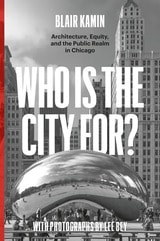
Who Is the City For?
Architecture, Equity, and the Public Realm in ChicagoBlair Kamin
University of Chicago Press, 2022
From his high-profile battles with Donald Trump to his insightful celebrations of Frank Lloyd Wright and front-page takedowns of Chicago mega-projects like Lincoln Yards, Pulitzer Prize–winning architecture critic Blair Kamin has long informed and delighted readers with his illuminating commentary. Kamin’s newest collection, Who Is the City For?, does more than gather fifty-five of his most notable Chicago Tribune columns from the past decade: it pairs his words with striking new images by photographer and architecture critic Lee Bey, Kamin’s former rival at the Chicago Sun-Times. Together, they paint a revealing portrait of Chicago that reaches beyond its glamorous downtown and dramatic buildings by renowned architects like Jeanne Gang to its culturally diverse neighborhoods, including modest structures associated with storied figures from the city’s Black history, such as Emmett Till.
At the book’s heart is its expansive approach to a central concept in contemporary political and architectural discourse: equity. Kamin argues for a broad understanding of the term, one that prioritizes both the shared spaces of the public realm and the urgent need to rebuild Black and brown neighborhoods devastated by decades of discrimination and disinvestment. “At best,” he writes in the book’s introduction, “the public realm can serve as an equalizing force, a democratizing force. It can spread life’s pleasures and confer dignity, irrespective of a person’s race, income, creed, or gender. In doing so, the public realm can promote the social contract — the notion that we are more than our individual selves, that our common humanity is made manifest in common ground.” Yet the reality in Chicago, as Who Is the City For? powerfully demonstrates, often falls painfully short of that ideal.
Whoosh Goes the Market
Algorithms, Automation, and AlienationDaniel Scott Souleles
University of Chicago Press, 2024
Markets are messy, and no one knows this better than traders who work tirelessly to predict what they will do next. In Whoosh Goes the Market, Daniel Scott Souleles takes us into the day-to-day experiences of a team at a large trading firm, revealing what it’s actually like to make and lose money on contemporary capital markets.
The traders Souleles shadows have mostly moved out of the pits and now work with automated, glitch-prone computer systems. They remember the days of trading manually, and they are suspicious of algorithmically driven machine-learning systems. Openly musing about their own potential extinction, they spend their time expressing fear and frustration in profanity-laced language. With Souleles as our guide, we learn about everything from betting strategies to inflated valuations, trading swings, and market manipulation. This crash course in contemporary finance vividly reveals the existential anxiety at the evolving front lines of American capitalism.
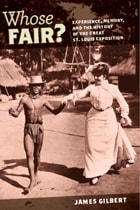
Whose Fair?
Experience, Memory, and the History of the Great St. Louis ExpositionJames Gilbert
University of Chicago Press, 2009
The 1904 St. Louis World’s Fair was a major event in early-twentieth-century America. Attracting millions of tourists, it exemplified the Victorian predilection for public spectacle. The Fair has long served as a touchstone for historians interested in American culture prior to World War I and has endured in the memories of generations of St. Louis residents and visitors. In Whose Fair? James Gilbert asks: what can we learn about the lived experience of fairgoers when we compare historical accounts, individual and collective memories, and artifacts from the event?
Exploring these differing, at times competing, versions of history and memory prompts Gilbert to dig through a rich trove of archival material. He examines the papers of David Francis, the Fair’s president and subsequent chief archivist; guidebooks and other official publications; the 1944 film Meet Me in St. Louis; diaries, oral histories, and other personal accounts; and a collection of striking photographs. From this dazzling array of sources, Gilbert paints a lively picture of how fairgoers spent their time, while also probing the ways history and memory can complement each other.
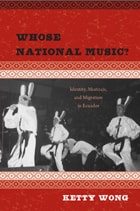
Whose National Music?
Identity, Mestizaje, and Migration in EcuadorKetty Wong
Temple University Press, 2012
Musical genres, musical instruments, and even songs can often capture the essence of a country's national character. In Whose National Music?, the first book-length study of Ecuadorian popular music, Ketty Wong explores Ecuadorians' views of their national identity in the twentieth and early twenty-first centuries through an examination of the music labels they use. Wong deftly addresses the notion of música nacional, an umbrella term for Ecuadorian popular songs often defined by the socio-economic, ethnic, racial, and generational background of people discussing the music.
Wong shows how the inclusion or exclusion of elite and working-class musics within the scope of música nacional articulate different social, ethnic, and racial configurations of the nation for white, mestizo, indigenous, and Afro-Ecuadorian populations.
Presenting a macropicture of what música nacional is—or should be—Whose National Music? provides a lively historical trajectory of a country's diverse musical scene.

Why Afterschool Matters
Nelson, Ingrid A.
Rutgers University Press, 2017
Why Afterschool Matters takes a different approach, closely following ten Mexican American students who attended the same extracurricular program in California, then chronicling its long-term effects on their lives, from eighth grade to early adulthood. Discovering that participation in the program was life-changing for some students, yet had only a minimal impact on others, sociologist Ingrid A. Nelson investigates the factors behind these very different outcomes. Her research reveals that while afterschool initiatives are important, they are only one component in a complex network of school, family, community, and peer interactions that influence the educational achievement of disadvantaged students.
Through its detailed case studies of individual students, this book brings to life the challenges marginalized youth en route to college face when navigating the intersections of various home, school, and community spheres. Why Afterschool Matters may focus on a single program, but its findings have major implications for education policy nationwide.
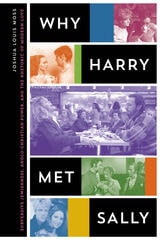
Why Harry Met Sally
Subversive Jewishness, Anglo-Christian Power, and the Rhetoric of Modern LoveBy Joshua Louis Moss
University of Texas Press, 2017
From immigrant ghetto love stories such as The Cohens and the Kellys (1926), through romantic comedies including Meet the Parents (2000) and Knocked Up (2007), to television series such as Transparent (2014–), Jewish-Christian couplings have been a staple of popular culture for over a century. In these pairings, Joshua Louis Moss argues, the unruly screen Jew is the privileged representative of progressivism, secular modernism, and the cosmopolitan sensibilities of the mass-media age. But his/her unruliness is nearly always contained through romantic union with the Anglo-Christian partner. This Jewish-Christian meta-narrative has recurred time and again as one of the most powerful and enduring, although unrecognized, mass-culture fantasies.
Using the innovative framework of coupling theory, Why Harry Met Sally surveys three major waves of Jewish-Christian couplings in popular American literature, theater, film, and television. Moss explores how first-wave European and American creators in the early twentieth century used such couplings as an extension of modernist sensibilities and the American “melting pot.” He then looks at how New Hollywood of the late 1960s revived these couplings as a sexually provocative response to the political conservatism and representational absences of postwar America. Finally, Moss identifies the third wave as emerging in television sitcoms, Broadway musicals, and “gross-out” film comedies to grapple with the impact of American economic globalism since the 1990s. He demonstrates that, whether perceived as a threat or a triumph, Jewish-Christian couplings provide a visceral, easily graspable, template for understanding the rapid transformations of an increasingly globalized world.
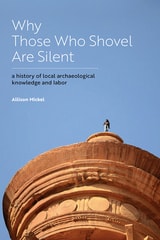
Why Those Who Shovel Are Silent
A History of Local Archaeological Knowledge and LaborAllison Mickel
University Press of Colorado, 2020
Why Those Who Shovel Are Silent is based on six years of in-depth ethnographic work with current and former site workers at two major Middle Eastern archaeological sites—Petra, Jordan, and Çatalhöyük, Turkey—combined with thorough archival research. Author Allison Mickel describes the nature of the knowledge that locally hired archaeological laborers exclusively possess about artifacts, excavation methods, and archaeological interpretation, showing that archaeological workers are experts about a wide range of topics in archaeology. At the same time, Mickel reveals a financial incentive for site workers to pretend to be less knowledgeable than they actually are, as they risk losing their jobs or demotion if they reveal their expertise.
Despite a recent proliferation of critical research examining the history and politics of archaeology, the topic of archaeological labor has not yet been substantially examined. Why Those Who Shovel Are Silent employs a range of advanced qualitative, quantitative, and visual approaches and offers recommendations for archaeologists to include more diverse expert perspectives and produce more nuanced knowledge about the past. It will appeal to archaeologists, science studies scholars, and anyone interested in challenging the concept of “unskilled” labor.
Why War?
The Cultural Logic of Iraq, the Gulf War, and SuezPhilip Smith
University of Chicago Press, 2005
Comprised of case studies of the War in Iraq, the Gulf War, and the Suez Crisis, Why War? decodes the cultural logic of the narratives that justify military action. Each nation, Smith argues, makes use of binary codes—good and evil, sacred and profane, rational and irrational, to name a few. These codes, in the hands of political leaders, activists, and the media, are deployed within four different types of narratives—mundane, tragic, romantic, or apocalyptic. With this cultural system, Smith is able to radically recast our "war stories" and show how nations can have vastly different understandings of crises as each identifies the relevant protagonists and antagonists, objects of struggle, and threats and dangers.
The large-scale sacrifice of human lives necessary in modern war, according to Smith, requires an apocalyptic vision of world events. In the case of the War in Iraq, for example, he argues that the United States and Britain replicated a narrative of impending global doom from the Gulf War. But in their apocalyptic account they mistakenly made the now seemingly toothless Saddam Hussein once again a symbol of evil by writing him into the story alongside al Qaeda, resulting in the war's contestation in the United States, Britain, and abroad.
Offering an innovative approach to understanding how major wars are packaged, sold, and understood, Why War? will be applauded by anyone with an interest in military history, political science, cultural studies, and communication.
Why We Can't Have Nice Things
Social Media’s Influence on Fashion, Ethics, and PropertyMinh-Ha T. Pham
Duke University Press, 2022

Why Would Anyone Do That?
Lifestyle Sport in the Twenty-First CenturyStephen C. Poulson
Rutgers University Press, 2016
Why the Law Is So Perverse
Leo Katz
University of Chicago Press, 2011
Conundrums, puzzles, and perversities: these are Leo Katz’s stock-in-trade, and in Why the Law Is So Perverse, he focuses on four fundamental features of our legal system, all of which seem to not make sense on some level and to demand explanation. First, legal decisions are essentially made in an either/or fashion—guilty or not guilty, liable or not liable, either it’s a contract or it’s not—but reality is rarely as clear-cut. Why aren’t there any in-between verdicts? Second, the law is full of loopholes. No one seems to like them, but somehow they cannot be made to disappear. Why? Third, legal systems are loath to punish certain kinds of highly immoral conduct while prosecuting other far less pernicious behaviors. What makes a villainy a felony? Finally, why does the law often prohibit what are sometimes called win-win transactions, such as organ sales or surrogacy contracts?
Katz asserts that these perversions arise out of a cluster of logical difficulties related to multicriterial decision making. The discovery of these difficulties dates back to Condorcet’s eighteenth-century exploration of voting rules, which marked the beginning of what we know today as social choice theory. Condorcet’s voting cycles, Arrow’s Theorem, Sen’s Libertarian Paradox—every seeming perversity of the law turns out to be the counterpart of one of the many voting paradoxes that lie at the heart of social choice. Katz’s lucid explanations and apt examples show why they resist any easy resolutions.
The New York Times Book Review called Katz’s first book “a fascinating romp through the philosophical side of the law.” Why the Law Is So Perverse is sure to provide its readers a similar experience.
Wielding the Ax
State Forestry and Social Conflict in Tanzania, 1820–2000Thaddeus Sunseri
Ohio University Press, 2009
Forests have been at the fault lines of contact between African peasant communities in the Tanzanian coastal hinterland and outsiders for almost two centuries. In recent decades, a global call for biodiversity preservation has been the main challenge to Tanzanians and their forests.
Thaddeus Sunseri uses the lens of forest history to explore some of the most profound transformations in Tanzania from the nineteenth century to the present. He explores anticolonial rebellions, the world wars, the depression, the Cold War, oil shocks, and nationalism through their intersections with and impacts on Tanzania’s coastal forests and woodlands. In Wielding the Ax, forest history becomes a microcosm of the origins, nature, and demise of colonial rule in East Africa and of the first fitful decades of independence.
Wielding the Ax is a story of changing constellations of power over forests, beginning with African chiefs and forest spirits, both known as “ax–wielders,” and ending with international conservation experts who wield scientific knowledge as a means to controlling forest access. The modern international concern over tropical deforestation cannot be understood without an awareness of the long–term history of these forest struggles.
Wikipedia and the Politics of Openness
Nathaniel Tkacz
University of Chicago Press, 2014
But what does openness mean, and what would a political theory of openness look like? With Wikipedia and the Politics of Openness, Nathaniel Tkacz uses Wikipedia, the most prominent product of open organization, to analyze the theory and politics of openness in practice—and to break its spell. Through discussions of edit wars, article deletion policies, user access levels, and more, Tkacz enables us to see how the key concepts of openness—including collaboration, ad-hocracy, and the splitting of contested projects through “forking”—play out in reality.
The resulting book is the richest critical analysis of openness to date, one that roots media theory in messy reality and thereby helps us move beyond the vaporware promises of digital utopians and take the first steps toward truly understanding what openness does, and does not, have to offer.
Wild Experiment
Feeling Science and Secularism after DarwinDonovan O. Schaefer
Duke University Press, 2022

Wild Tides
Media Infrastructure and Financial Crisis in IrelandPatrick Brodie
Duke University Press, 2026