Results by title
402 books match the query 'American poetry' and 42 start with a

A Boundless Field
American Poetry at LargeStephen Yenser
University of Michigan Press, 2002
A Boundless Field takes its title from Walt Whitman's sanguine view of the future of American poetry as he expressed it in "Democratic Vistas," a view that seems all the more pertinent today. During the later twentieth century, poetry in the United States branched out in many directions, ranging from a formalism influenced by New Criticism and a subsequent Neo-Formalism through the New York School and Language Poetry to a postmodern maximalism too diverse to categorize. The essays and reviews collected in this volume take up the work of poets writing in these different areas and writing into the twenty-first century.
Yenser's constant criteria for worthiness of attention include an alertness to the long tradition of English and American poetry, a consistent awareness of the integrity of the poetic line, a simultaneous commitment to verbal play and verbal work, and an implicit acknowledgment of two of Wallace Stevens's declarations: first that all admirable poetry is experimental poetry, and second that at first blush all good poems put up a certain resistance to the reader. Hence the usefulness of "criticism."
Stephen Yenser is Professor of English, University of California, Los Angeles. His poetry has appeared in many publications and to wide acclaim, including the Walt Whitman Award of the American Academy of Poets for his book The Fire in All Things. He is also author of The Consuming Myth: The Work of James Merrill and Circle to Circle: The Poetry of Robert Lowell.
A Cappella
Mennonite Voices in PoetryAnn Hostetler
University of Iowa Press, 2003
A Change in the Weather
Modernist Imagination, African American ImaginaryGeoffrey Jacques
University of Massachusetts Press, 2009
A Company of Poets
Louis Simpson
University of Michigan Press, 1981
A History of Free Verse
Chris Beyers
University of Arkansas Press, 2001
A Necklace of Bees
PoemsDannye Romine Powell
University of Arkansas Press, 2008
A New Geography of Poets
Edward Field
University of Arkansas Press, 1993
A Place for Humility
Whitman, Dickinson, and the Natural WorldChristine Gerhardt
University of Iowa Press, 2014
Dickinson and Whitman developed their environmentally suggestive poetics at roughly the same historical moment, at a time when a major shift was occurring in American culture’s view and understanding of the natural world. Just as they were achieving poetic maturity, the dominant view of wilderness was beginning to shift from obstacle or exploitable resource to an endangered treasure in need of conservation and preservation.
A Place for Humility examines Dickinson’s and Whitman’s poetry in conjunction with this important change in American environmental perception, exploring the links between their poetic projects within the context of developing nineteenth-century environmental thought. Christine Gerhardt argues that each author's poetry participates in this shift in different but related ways, and that their involvement with their culture’s growing environmental sensibilities constitutes an important connection between their disparate poetic projects. There may be few direct links between Dickinson’s “letter to the World” and Whitman’s “language experiment,” but via a web of environmentally-oriented discourses, their poetry engages in a cultural conversation about the natural world and the possibilities and limitations of writing about it—a conversation in which their thematic and formal choices meet on a surprising number of levels.
A Poet's Truth
Conversations with Latino/Latina PoetsBruce Allen Dick
University of Arizona Press, 2003
As Bruce Dick's insightful questions reveal, the key threads linking these writers are their connections to their families and communities and their concern for civil rights—believing like Chicana writer Pat Mora that "the work of the poet is for the people." The interviews also reveal diversity among and within the three communities, from Victor Hernández Cruz, who traces Latino collective identity to Africa and claims that all Latinos are "swimming in olive oil," to Cuban writer Gustavo Perez Firmat, who considers nationality more important than ethnicity and says that "the term Latino erases [his] nationality."
The dialogues also offer new insights on the place of Chicano/a writings in the U.S.-Mexico borderlands, on the Puerto Rican/Nuyorican establishment, and on the anti-Castro stand of Cuban-born poets. As these writers answer questions about their work, background, ethnic identity, and political ideology, they provide a wealth of biographical, intellectual, and literary material collected here for the first time. A Poet's Truth is a provocative and revealing book that not only conveys the fire of these writers' passions but also sheds important light on a whole literary movement.Interviews with:
Miguel Algarín
Martín Espada
Sandra María Esteves
Victor Hernández Cruz
Carolina Hospital and Carlos Medina
Demetria Martínez
Pat Mora
Judith Ortiz Cofer
Ricardo Pau-Llosa
Gustavo Pérez Firmat
Leroy Quintana
Aleida Rodríguez
Luis Rodríguez
Benjamin Alire Sáenz
Virgil Suárez
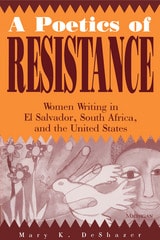
A Poetics of Resistance
Women Writing in El Salvador, South Africa, and the United StatesMary DeShazer
University of Michigan Press, 1994
Engaging the works of critics such as Chandra Mohanty, Barbara Harlow, Claribel Alegria, Albie Sachs, and Audre Lorde, among others, Mary DeShazer reconceptualizes traditional notions of resistance and literature and the relationship between them. She argues that women’s voices have been underrepresented in previous analyses of Third World resistance poetry, and that when examined collectively, their work reveals overtly gendered concerns that distinguish it from that of their male counterparts.
DeShazer defines resistance as an active quest for justice and a means of collective empowerment. She looks at the diasporic consciousness of exiled and dislocated women, examines the tensions between claims of identity and claims of difference, and explores the ways in which gender and struggle connect women across nationalities and historical imperatives. Her analysis of Salvadoran and South African women’s poetry reveal the ways in which poetic conventions can be seen as “political declarations of privilege,” casting a new light on women’s resistance poetry in the United States.
A Poetry Criticism Reader
Jerry Harp
University of Iowa Press, 2006
A Profile of Twentieth-Century American Poetry
Edited by Jack Myers and David Wojahn
Southern Illinois University Press, 1991
Seven chronologically arranged essays—each covering roughly a decade from 1908 through 1988—plus two special-focus essays on black and female poets, an introduction by Ed Folsom, and a preface by editors Jack Myers and David Wojahn, outline the critical, creative, aesthetic, and cultural forces at work in the American poetry of this century. Several contributors, including Michael Heller, Richard Jackson, and Jonathan Holden, have recently published important book-length critical studies in their essay area; all have published well-regarded collections of their own poetry.
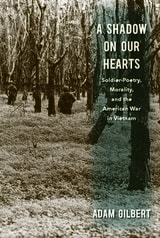
A Shadow on Our Hearts
Soldier-Poetry, Morality, and the American War in VietnamAdam Gilbert
University of Massachusetts Press, 2018
The soldier-poets provide important insights into the ethical dimensions of their physical and psychological surroundings before, during, and after the war. They also offer profound perspectives on the relationships between American soldiers and the Vietnamese people. From firsthand experiences, they reflect on what it meant to be witnesses, victims, and perpetrators of the war's violence. And they advance an uncompromising vision of moral responsibility that indicts a range of culprits for the harms caused by the conflict. Gilbert explores the powerful and perceptive work of these soldier-poets through the lens of morality and presents a radically alternative, deeply personal, and ethically penetrating account of the American war in Vietnam.

A more perfect Union
Teri Ellen Cross Davis
The Ohio State University Press, 2021
In the tender, sensual, and bracing poems of a more perfect Union, Teri Ellen Cross Davis reclaims the experience of living and mothering while Black in contemporary America, centering Black women’s pleasure by wresting it away from the relentless commodification of the White gaze. Cross Davis deploys stunning emotional range to uplift the mundane, interrogate the status quo, and ultimately create her own goddesses. Parenting, lust, household chores—all are fair game for Cross Davis’s gimlet eye. Whether honoring her grief for Prince’s passing while examining his role in midwifing her sexual awakening or contemplating travel and the gamble of being Black across this wide world, these poems tirelessly seek a path out of the labyrinth to hope.
Acts of Mind
Conversations with Contemporary PoetsRichard Jackson
University of Alabama Press, 1984
Acts of Mind grew out of interviews conducted by the author for Poetry Miscellany. The aim of which was to help develop a method for talking about the work of contemporary poets.
The poets whose views appear in this volume represent a fair cross-section of the more important tendencies and impulses to be found in contemporary poetry and poetics.
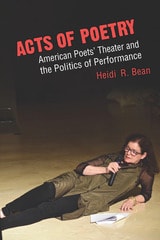
Acts of Poetry
American Poets' Theater and the Politics of PerformanceHeidi R. Bean
University of Michigan Press, 2019
American poets’ theater emerged in the postwar period alongside the rich, performance-oriented poetry and theater scenes that proliferated on the makeshift stages of urban coffee houses, shared apartments, and underground theaters, yet its significance has been largely overlooked by critics. Acts of Poetry shines a spotlight on poets’ theater’s key groups, practitioners, influencers, and inheritors, such as the Poets’ Theatre, the Living Theatre, Gertrude Stein, Bunny Lang, Frank O’Hara, Amiri Baraka, Carla Harryman, and Suzan-Lori Parks. Heidi R. Bean demonstrates the importance of poets’ theater in the development of twentieth-century theater and performance poetry, and especially evolving notions of the audience’s role in performance, and in narratives of the relationship between performance and everyday life. Drawing on an extensive archive of scripts, production materials, personal correspondence, theater records, interviews, manifestoes, editorials, and reviews, the book captures critical assessments and behind-the-scenes discussions that enrich our understanding of the intertwined histories of American theater and American poetry in the twentieth century.

African-American Poetry of the Nineteenth Century
AN ANTHOLOGYEdited by Joan R. Sherman
University of Illinois Press, 1992
from first editions and are annotated in detail.

After Urgency
Rusty Morrison
Tupelo Press, 2012
After the Death of Poetry
Poet and Audience in Contemporary AmericaVernon Shetley
Duke University Press, 1993
In exemplary case studies, Shetley identifies the very different ways in which three postwar poets—Elizabeth Bishop, James Merrill, and John Ashbery—try to restore some of the challenge and risk that characterized modernist poetry's relation to its first readers. Sure to be controversial, this cogent analysis offers poets and readers a clear sense of direction and purpose, and so, the hope of reaching each other again.
Afterfeast
Lisa Hiton
Tupelo Press, 2021
All Shook Up
Collected Poems about ElvisWill Clemens
University of Arkansas Press, 2001
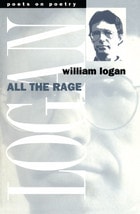
All the Rage
William Logan
University of Michigan Press, 1998
Logan was among the first critics to review a generation of poets now in creative maturity, and his comments on the early works of Jorie Graham, Gjertrud Schnackenberg, and the late Amy Clampitt show the enthusiasm of fresh discovery. But he is no respecter of old reputation, as his reviews of John Ashbery and Robert Penn Warren demonstrate. In total, his criticism considers virtues with their defects and always speaks its author's mind. Some contemporary poetry has had few better friends, and some few greater enemies, than William Logan.
William Logan is the author of Sad-Faced Men, Difficulty, Sullen Weedy Lakes, and Vain Empires. He is Alumni/ae Professor of English, University of Florida.
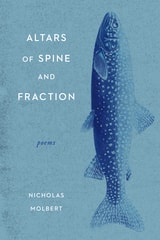
Altars of Spine and Fraction
PoemsNicholas Molbert
Northwestern University Press, 2024
A debut poetry collection set in and around Louisiana’s fishing village of Cocodrie
Altars of Spine and Fraction follows its protagonist through the joys and dangers of childhood on the rural Gulf Coast, through familial loss, and into adulthood. Refusing to romanticize what has been lost, Molbert instead interrogates how nostalgia is most often enjoyed by those with the privilege to reject or indulge it.
Violent hurricanes sweep across the landscapes of the poems, and Molbert probes the class inequalities that these climate crises lay bare. Moving from outdoor rural spaces in its first half to indoor domestic spaces in its second half, the collection explores family history, generational trauma, and the toxic masculinity that is shouldered by boys raised in the Deep South.
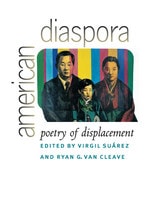
American Diaspora
Poetry of DisplacementVirgil Suarez
University of Iowa Press, 2001
Diaspora constitutes a powerful descriptor for the modern condition of the contemporary poet, the spokesperson for the psyche of America. The poems in American Diaspora: Poetry of Displacement focus on the struggles and pleasures of creating a home-physical and mental-out of displacement, exile, migration, and alienation.
To fully explore the concept of diaspora, the editors have broadened the scope of their definition to include not only the physical act of moving and immigration but also the spiritual and emotional dislocations that can occur-as for Emily Dickinson and other poets-even in a life spent entirely in one location.
v
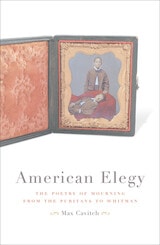
American Elegy
The Poetry of Mourning from the Puritans to WhitmanMax Cavitch
University of Minnesota Press, 2007
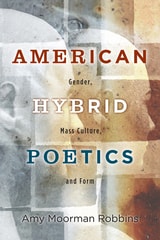
American Hybrid Poetics
Gender, Mass Culture, and FormAmy Moorman Robbins
Rutgers University Press, 2014
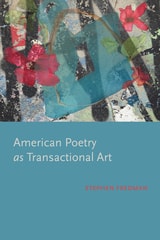
American Poetry as Transactional Art
Stephen Fredman
University of Alabama Press, 2020
Explores the ways American poetry engages with visual art, music, fiction, spirituality, and performance art
Many people think of poetry as a hermetic art, as though poets wrote only about themselves or as if the subject of poetry were finally only poetry—its forms and traditions. Indeed much of what constitutes poetry in the lyric tradition depends on a stringently controlled point of view and aims for a timeless, intransitive utterance. Stephen Fredman’s study proposes a different perspective.
American Poetry as Transactional Art explores a salient quality of much avant-garde American poetry that has so far lacked sustained treatment: namely, its role as a transactional art. Specifically Fredman describes this role as the ways it consistently engages in conversation, talk, correspondence, going beyond the scope of its own subjects and forms—its existential interactions with the outside world. Poetry operating in this vein draws together images, ideas, practices, rituals, and verbal techniques from around the globe, and across time—not to equate them, but to establish dialogue, to invite as many guests as possible to the World Party, which Robert Duncan has called the “symposium of the whole.”
Fredman invites new readers into contemporary poetry by providing lucid and nuanced analyses of specific poems and specific interchanges between poets and their surroundings. He explores such topics as poetry’s transactions with spiritual traditions and practices over the course of the twentieth century; the impact of World War II on the poetry of Charles Olson and George Oppen; exchanges between poetry and other art forms including sculpture, performance art, and ambient music; the battle between poetry and prose in the early work of Paul Auster and in Lyn Hejinian’s My Life. The epilogue looks briefly at another crucial transactional occasion: teaching American poetry in the classroom in a way that demonstrates that it is at the center of the arts and at the heart of American culture.
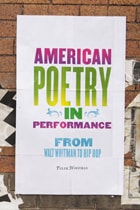
American Poetry in Performance
From Walt Whitman to Hip HopTyler Hoffman
University of Michigan Press, 2013
"Tyler Hoffman brings a fresh perspective to the subject of performance poetry, and this comes at an excellent time, when there is such a vast interest across the country and around the world in the performance of poetry. He makes important connections, explaining things in a manner that remains provocative, interesting, and accessible."
---Jay Parini, Middlebury College
American Poetry in Performance: From Walt Whitman to Hip Hop is the first book to trace a comprehensive history of performance poetry in America, covering 150 years of literary history from Walt Whitman through the rap-meets-poetry scene. It reveals how the performance of poetry is bound up with the performance of identity and nationality in the modern period and carries its own shifting cultural politics. This book stands at the crossroads of the humanities and the social sciences; it is a book of literary and cultural criticism that deals squarely with issues of "performance," a concept that has attained great importance in the disciplines of anthropology and sociology and has generated its own distinct field of performance studies. American Poetry in Performance will be a meaningful contribution both to the field of American poetry studies and to the fields of cultural and performance studies, as it focuses on poetry that refuses the status of fixed aesthetic object and, in its variability, performs versions of race, class, gender, and sexuality both on and off the page.
Relating the performance of poetry to shifting political and cultural ideologies in the United States, Hoffman argues that the vocal aspect of public poetry possesses (or has been imagined to possess) the ability to help construct both national and subaltern communities. American Poetry in Performance explores public poets' confrontations with emergent sound recording and communications technologies as those confrontations shape their mythologies of the spoken word and their corresponding notions about America and Americanness.
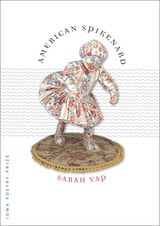
American Spikenard
Sarah Vap
University of Iowa Press, 2007
“If everyone decided to call themselves a girl / that word would stop.” In this award-winning volume of authoritative and assertive poems, Sarah Vap embarks on an emotional journey to the land of America’s female children. Questioning, contradicting, radically and restlessly demanding acceptance, she searches for a way to move from serious girlhood to womanly love. Demonstrating the seriousness of female childhood—which is as dangerous and profound as war, economics, and history, that is, as manhood, in her view—Vap reveals the extremes of self-doubt and self-righteousness inherent in being a contemporary American girl.
“When we’re overcome / by everything we think we love—then by morning / we’re adults.” Just as the oil of American spikenard may provide relief from childhood, so does Sarah Vap provide the kind of holy and extravagant love and honor that can relieve the growing pains of “everyone’s little girl.”
American Women Poets of the Nineteenth Century
Edited by Cheryl Walker
Rutgers University Press, 1992
Among Friends
Engendering the Social Site of PoetryAnne Dewey and Libbie Rifkin
University of Iowa Press, 2013
An Exaltation of Forms
Contemporary Poets Celebrate the Diversity of Their ArtAnnie Finch and Kathrine Varnes, Editors
University of Michigan Press, 2002
The forms range from hendecasyllabics to prose poetry, haiku to procedural poetry, sonnets to blues, rap to fractal verse. The range of poets included is equally impressive--from Amiri Baraka to John Frederick Nims, from Maxine Kumin to Marilyn Hacker, from Agha Shahid Ali to Pat Mora, from W. D. Snodgrass to Charles Bernstein. Achieving this level of eclecticism is a remarkable feat, especially given the strong opinions held by members of the various camps (e.g., the New Formalists, LANGUAGE poets, feminist and multicultural poets) that exist within today's poetry community. Poets who might never occupy the same room here occupy the same pages, perhaps for the first time. The net effect is a book that will surprise, inform, and delight a wide range of readers, whether as reference book, pleasure reading, or classroom text.
Poet, translator, and critic Annie Finch is director of the Stonecoast low-residency MFA program at the University of Southern Maine. She is author of The Ghost of Meter: Culture and Prosody in American Free Verse, Eve, and Calendars. She is the winner of the eleventh annual Robert Fitzgerald Prosody Award for scholars who have made a lasting contribution to the art and science of versification.
Kathrine Varnes teaches English at the University of Missouri-Columbia. She is the author of the book of poems, The Paragon. Her poems and essays have appeared in many books and journals.

Annulments
Zach Savich
University Press of Colorado, 2010
Published by the Center for Literary Publishing at Colorado State University
Another South
Experimental Writing in the SouthEdited by Bill Lavender, with an introduction by Hank Lazer
University of Alabama Press, 2002
Another South is an anthology of poetry from contemporary southern writers who are working in forms that are radical, innovative, and visionary. Highly experimental and challenging in nature, the poetry in this volume, with its syntactical disjunctions, formal revolutions, and typographic playfulness, represents the direction of a new breed of southern writing that is at once universal in its appeal and regional in its flavor.
Focusing on poets currently residing in the South, the anthology includes both emerging and established voices in the national and international literary world. From the invocations of Andy Young’s “Vodou Headwashing Ceremony” to the blues-informed poems of Lorenzo Thomas and Honorée Jeffers, from the different voicings of John Lowther and Kalamu ya Salaam to the visual, multi-genre art of Jake Berry, David Thomas Roberts, and Bob Grumman, the poetry in Another South is rich in variety and enthusiastic in its explorations of new ways to embody place and time. These writers have made the South lush with a poetic avant-garde all its own, not only redefining southern identity and voice but also offering new models of what is possible universally through the medium of poetry.
Hank Lazer’s introductory essay about “Kudzu textuality” contextualizes the work by these contemporary innovators. Like the uncontrollable runaway vine that entwines the southern landscape, their poems are hyperfertile, stretching their roots and shoots relentlessly, at once destructive and regenerative. In making a radical departure from nostalgic southern literary voices, these poems of polyvocal abundance are closer in spirit to "speaking in tongues" or apocalyptic southern folk art—primitive, astonishing, and mystic.
Antebellum American Women's Poetry
A Rhetoric of SentimentWendy Dasler Johnson
Southern Illinois University Press, 2016
Considering the logos, ethos, and pathos—aims, writing personae, and audience appeal—of poems by African American abolitionist Frances Watkins Harper, working-class prophet Lydia Huntley Sigourney, and feminist socialite Julia Ward Howe, Wendy Dasler Johnson demonstrates that sentimental poetry was an inportant component of antebellum social activism. She articulates the ethos of the poems of Harper, who presents herself as a properly domestic black woman, nevertheless stepping boldly into Northern pulpits to insist slavery be abolished; the poetry of Sigourney, whose speaker is a feisty, working-class, ambiguously gendered prophet; and the works of Howe, who juggles her fame as the reformist “Battle Hymn” lyricist and motherhood of five children with an erotic Continental sentimentalism.
Antebellum American Women's Poetry makes a strong case for restoration of a compelling system of persuasion through poetry usually dismissed from studies of rhetoric. This remarkable book will change the way we think about women’s rhetoric in the nineteenth century, inviting readers to hear and respond to urgent, muffled appeals for justice in our own day.
Anthems, Sonnets, and Chants
Recovering the African American Poetry of the 1930sJon Woodson
The Ohio State University Press, 2011
Aphrodite's Daughters
Three Modernist Poets of the Harlem RenaissanceHoney, Maureen
Rutgers University Press, 2016
Apocryphal Lorca
Translation, Parody, KitschJonathan Mayhew
University of Chicago Press, 2009
Federico García Lorca (1898–1936) had enormous impact on the generation of American poets who came of age during the cold war, from Robert Duncan and Allen Ginsberg to Robert Creeley and Jerome Rothenberg. In large numbers, these poets have not only translated his works, but written imitations, parodies, and pastiches—along with essays and critical reviews. Jonathan Mayhew’s Apocryphal Lorca is an exploration of the afterlife of this legendary Spanish writer in the poetic culture of the United States.
The book examines how Lorca in English translation has become a specifically American poet, adapted to American cultural and ideological desiderata—one that bears little resemblance to the original corpus, or even to Lorca’s Spanish legacy. As Mayhew assesses Lorca’s considerable influence on the American literary scene of the latter half of the twentieth century, he uncovers fundamental truths about contemporary poetry, the uses and abuses of translation, and Lorca himself.
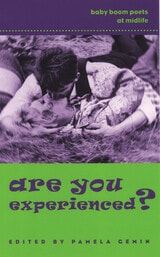
Are You Experienced? Baby Boom Poets At Midlife
Pamela Gemin
University of Iowa Press, 2003
In this timely and reflective anthology, the generation that sought to stay forever young reveals that midlife should mean more than jokes about thinning hair, creaking joints, and thickening waistlines. Midlife's insights—whether they be physical, spiritual, or emotional—are indeed startling, and who better than poets to deliver them?
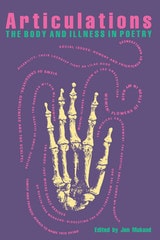
Articulations
The Body and Illness in PoetryJon Mukand
University of Iowa Press, 1994
In 1987 poet and physician Jon Mukand published Sutured Words, a volume of contemporary poems to help patients, their families and friends, and all health care professionals embrace the complexity of healing, illness, and death. Robert Coles called the collection “a wonderful source of inspiration and instruction for any of us who are trying to figure out what our work means”; Norman Cousins was impressed by the “discernment and high quality of the selections.” Now, in Articulations, Mukand adds more than a hundred new poems to the strongest poems from Sutured Words to give us a lyrical, enlightened understanding of the human dimensions of suffering and illness
Asian American Poetry
THE NEXT GENERATIONEdited by Victoria M. Chang
University of Illinois Press, 2004
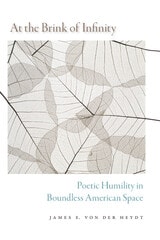
At the Brink of Infinity
Poetic Humility in Boundless American SpaceJames E. von der Heydt
University of Iowa Press, 2008
From popular culture to politics to classic novels, quintessentially American texts take their inspiration from the idea of infinity. In the extraordinary literary century inaugurated by Ralph Waldo Emerson, the lyric too seemed to encounter possibilities as limitless as the U.S. imagination. This raises the question: What happens when boundlessness is more than just a figure of speech? Exploring new horizons is one thing, but actually looking at the horizon itself is something altogether different. In this carefully crafted analysis, James von der Heydt shines a new light on the lyric craft of Emily Dickinson, Robert Frost, Elizabeth Bishop, and James Merrill and considers how their seascape-vision redefines poetry's purpose.
Emerson famously freed U.S. literature from its past and opened it up to vastness; in the following century, a succession of brilliant, rigorous poets took the philosophical challenges of such freedom all too seriously. Facing the unmarked horizon, Emersonian poets capture—and are captured by—a stark, astringent version of human beauty. Their uncompromising visions of limitlessness reclaim infinity's proper legacy—and give American poetry its edge. Von der Heydt's book recovers the mystery of their world.