Results by title
44 books match the query 'Civil Procedure'
A Crime of Self-Defense
Bernhard Goetz and the Law on TrialGeorge P. Fletcher
University of Chicago Press, 1990
A Guide to America's Sex Laws
Richard A. Posner and Katharine B. Silbaugh
University of Chicago Press, 1996
"It takes only a few minutes with A Guide to [America's] Sex to realize that the nation's laws governing what two consenting adults can do with one another are an odd jumble."—Eric Fidler, San Diego Commerce
"Especially noteworthy is how laws governing various sexual activities vary from state to state."—Library Journal
"Fascinating and often surprising facts are concisely documented and conveniently organized in A Guide."—Carlin Meyer, New York Law Journal

Antidiscrimination Law and Minority Employment
Recruitment Practices and Regulatory ConstraintsFarrell Bloch
University of Chicago Press, 1994
Bending the Law
The Story of the Dalkon Shield BankruptcyRichard B. Sobol
University of Chicago Press, 1991
"Mr. Sobol has produced a readable yet fully researched and detailed study of the operation of the bankruptcy and its effects upon all concerned—the women who were injured, the swarms of lawyers who represented parties in the bankruptcy, and the court which oversaw the bankruptcy in Richmond. . . . This book adds greatly to the current debate about how strong a managerial federal judge our system should have."—Paul D. Rheingold, New York Law Journal
"Bending the Law is polemical and relentless. It is also minutely researched, fluidly written, and persuasive."—Paul Reidinger, ABA Journal
"Bending the Law is a must read for bankruptcy practitioners, and for anyone else concerned about the use of bankruptcy law to deal with mass torts. Although its author is a civil rights lawyer, he details the subtle art of practicing bankruptcy law with a discerning eye, and is a gifted storyteller as well."—Joryn Jenkins, Federal Bar News and Journal
"This is an accessible history of the case by a veteran civil-rights lawyer."—Washington Post Book World
Confounded Expectations
The Law's Struggle with Personal ResponsibilityGeorge W. Jarecke and Nancy K. Plant
Southern Illinois University Press, 2000
George W. Jarecke and Nancy K. Plant present a selection of cases across a broad spectrum of American law to demonstrate that our society relies inappropriately on the legal system to cure ills the system was not designed to address.
Jarecke and Plant note that while we in the United States worry considerably about the problem of individual assumption of responsibility—whether for personal mistakes, financial setbacks, or pure bad luck—we appear uneasy about the concept and unclear about what it means on a daily basis. Not only are we incapable of accepting personal responsibility; we barely know what it means to do so.
Mistakenly, we turn to the legal system to solve this dilemma. Yet our laws as our legislators write them, as judges interpret them, as lawyers argue them, and as juries apply them send mixed messages about whether and how we should exercise personal responsibility.
Each chapter of Confounded Expectations features one main case to explain one legal theory, with other cases noted as examples of facets of each theory. To demonstrate the law that requires merchants to guarantee the quality of their products, for example, Jarecke and Plant discuss the case of the band mothers whose fund-raising luncheon menu included turkey salad contaminated by salmonella. Peripheral cases include a horse falsely sold as a gelding, a riding mower that tipped over when used as instructed, makeup that was guaranteed to be safe but caused a rash, and pigs sick with hog cholera.
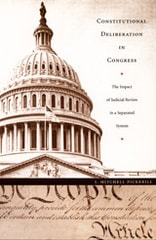
Constitutional Deliberation in Congress
The Impact of Judicial Review in a Separated SystemJ. Mitchell Pickerill
Duke University Press, 2004
Pickerill combines legislative histories, extensive empirical findings, and interviews with current and former members of Congress, congressional staff, and others. He examines data related to all of the federal legislation struck down by the Supreme Court from the beginning of the Warren Court in 1953 through the 1996–97 term of the Rehnquist Court. By looking at the legislative histories of Congressional acts that invoked the Commerce Clause and presented Tenth Amendment conflicts—such as the Child Labor Act (1916), the Civil Rights Act (1965), the Gun-Free School Zones Act (1990), and the Brady Bill (1994)—Pickerill illuminates how Congressional deliberation over newly proposed legislation is shaped by the possibility of judicial review. The Court’s invalidation of the Gun-Free School Zones Act in its 1995 ruling United States v. Lopez signaled an increased judicial activism regarding issues of federalism. Pickerill examines that case and compares congressional debate over constitutional issues in key pieces of legislation that preceded and followed it: the Violence Against Women Act of 1994 and the Hate Crimes Prevention Act of 1997. He shows that Congressional attention to federalism increased in the 1990s along with the Court’s greater scrutiny.
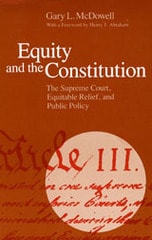
Equity and the Constitution
The Supreme Court, Equitable Relief, and Public PolicyGary L. McDowell
University of Chicago Press, 1982
In this volume, Gary McDowell considers the equity power created by Article III of the Constitution, on which the most controversial decisions of the Supreme Court have rested. He points out the equity was originally understood as an extraordinary means of offering relief to individuals in cases of fraud, accident, mistake, or trust and as a means of "confining the operation of unjust and partial laws." It has now been stretched to offer relief to broadly defined social classes. This "sociological" understanding, in McDowell's view, has undermined equity as a substantive body of law. He urges a return to the former definition as a means of restraining the reach of federal jurisdiction.
Federal Criminal Law Doctrines
The Forgotten Influence of National ProhibitionKenneth M. Murchison
Duke University Press, 1994
In this detailed examination, Murchison considers a portion of the Supreme Court’s work prior to the New Deal crisis, a period insufficiently considered until now. Among the developments he discusses are those relating to the defense of entrapment, the Fourth Amendment’s protection against unreasonable search and seizure, the Fifth Amendment’s prohibition against double jeopardy, property forfeitures, and the jury trial guarantees for criminal proceedings. His analysis reveals a court less rigid, less consistently divided along modern ideological lines, and more tolerant of governmental authority than traditional wisdom would suggest. Thus, Murchison offers a framework for a revisionist view of the Supreme Court’s activities during this period.
Exploring an important connection between the Eighteenth Amendment, the Volstead Act, and the development of federal criminal law, this book documents what was arguably the nation’s first criminal law revolution at the federal level. Explaining the modern origins of doctrines that still inform federal criminal law, Murchison also provides a case study of how legal doctrine responds to changing social conditions. Federal Criminal Law Doctrines will add immeasurably to the work of historians and legal scholars alike.
Freedom and Tenure in the Academy
William W. Van Alstyne, ed.
Duke University Press, 1993
The original 1940 Statement of Principles on Academic Freedom and Tenure, which has been influential in determining institutional practices for the last half century, has required continual redefinition since its initial declaration. The volume begins with two overview articles: the most complete examination of the 1940 Statement ever provided (shedding light on some of its most troublesome clauses) and a historical review of the extent to which academic freedom has been accepted into domestic constitutional law. Subsequent articles address a range of issues related to academic freedom: the relationship between tenure and academic freedom; tenure and labor law; ideology and faculty selection; freedom of expression and the arts on campus; the boundaries defining hate speech and offensive expression; the clash between institutional and individual claims of academic freedom; and the practices of religious colleges in the United States.
Contributors. Ralph S. Brown, Matthew W. Finkin, Jordan E. Kurland, Michael W. McConnell, Walter P. Metzger, Robert M. O'Neil, David M. Rabban, Rodney A, Smolla, Janet Sinder, Judith Jarvis Thomson, William W. Van Alstyne
Images of a Free Press
Lee C. Bollinger
University of Chicago Press, 1991
"Images of a Free Press is the natural sequel to Lee Bollinger's first book, The Tolerant Society, and is destined to become a standard in first amendment scholarship."—Rodney A. Smolla, Constitutional Commentary
"Revisiting themes he first explored some fifteen years ago, Bollinger now adds further to our understanding of the complex relationship among the First Amendment, the Supreme Court, the public, the press and the democratic process. This is a work of insight, sensitivity, and power. Bollinger has a profound knowledge of and a deep affection for his subject, and it shows."—Geoffrey R. Stone, Michigan Law Review
"This thoughtful, understated book remains a call to come join the town meeting and hammer out some new rules of order. Scholars and citizens alike could do well to read Bollinger's book and accept his challenge."—Yale Law Review
"For a number of years, Lee Bollinger has argued that the First Amendment has been applied differently to the print media than it has been to the broadcast media. In his new book, Images of a Free Press, Bollinger provides a concise, persuasive account of why this is so—and why it ought to be so."—Columbia Law Review
Judging Credentials
Nonlawyer Judges and the Politics of ProfessionalismDoris Marie Provine
University of Chicago Press, 1986
Provine presents a persuasive argument that the case against nonlawyer judges has been weighted in favor of the professional interests of lawyers, not public concerns. Her examination reveals as much about the presuppositions of legal professionals as it does about the competency of nonlawyer judges to old judicial office. To substantiate her claims, Provine has conducted the most comprehensive survey of nonlawyer and lawyer judges yet undertaken, augmenting this material with court observations and extensive interviews of judges. She integrates the results of this survey into the historical context of the lay versus lawyer judge debate, showing how the legally trained judge came to predominate in the American judicial system and analyzing in detail the campaign both in and out of the courts to make legal training a prerequisite for being a judge. Ultimately, Provine suggests, Americans are too committed to the significance of credentials and to the legal profession's vision of the judicial process to respond very favorably to nonlawyer judges, however well they might perform.
Judging Credentials will force lawyers, judges, scholars, and the public to reconsider the role nonlawyer judges play in the American judicial system. Provine's provocative views and exhaustive research adds new dimensions to our understanding of the ethics of professionalism and its consequences.
Law and Economic Policy in America
The Evolution of the Sherman Antitrust ActWilliam Letwin
University of Chicago Press, 1981
Lawsuits in a Market Economy
The Evolution of Civil LitigationStephen C. Yeazell
University of Chicago Press, 2018
Lawsuits in a Market Economy explains how contemporary civil litigation in the United States works and how it has changed over the past century. The book corrects common misconceptions—some of which have proved remarkably durable even in the face of contrary evidence—and explores how our constitutional structure, an evolving economy, and developments in procedural rules and litigation financing systems have moved us from expecting that lawsuits end in trial and judgments to expecting that they will end in settlements. Yeazell argues that today’s system has in some ways overcome—albeit inconsistently—disparities between the rich and poor in access to civil justice. Once upon a time, might regularly triumphed over right. That is slightly less likely today—even though we continue to witness enormous disparities in wealth and power.
The book concludes with an evaluation of recent changes and their possible consequences.
Mental Disorder, Work Disability, and the Law
Edited by Richard J. Bonnie and John Monahan
University of Chicago Press, 1996
This book will be of great value to scholars in law and the mental health professions and to policy makers and the administrators of disability programs.
Mr. Justice Black and His Critics
Tinsley E. Yarbrough
Duke University Press, 1988
Late in his career, however, Black's commitment to literalism and intent led him to assume apparently conservative positions in civil liberties cases. In an era characterized by growing acceptance of the belief that judges should adapt the Constitution to changing social and ethical perceptions, many came to regard Black's position as unrealistic and irrelevant.
Tinsley E. Yarbrough analyzes Black's judicial and constitutional philosophy, as well as his approach to specific cases, through the eyes of Black's critics (such as Justices Frankfurter and Harlan) and through an assessment of scholarly opinion of his jurisprudence. The result is a stimulating and provocative addition to the study of Justice Black and the Supreme Court.
Papal Justice
Subjects and Courts in the Papal State, 1500-1750Irene Fosi
Catholic University of America Press, 2011
Private Property and the Limits of American Constitutionalism
The Madisonian Framework and Its LegacyJennifer Nedelsky
University of Chicago Press, 1990

Progressive Constitutionalism
Reconstructing the Fourteenth AmemdmentRobin L. West
Duke University Press, 1994
West shows how the "equal protection" clause, far from insulating the private spheres of culture, market, and home life, as is commonly held, directly targets abuses of power within those spheres. She develops a number of arguments for the modern relevance of this understanding, from the failure of the state to provide equal protection against private domestic violence, permitting a "private sovereignty" of patriarchal power within the home, to the the state’s failure to provide equal protection against material deprivation, allowing "private sovereignty" between economically privileged and desperate people in private markets.
West’s argument extends to the "liberty" prong of the due process clause, seen here as a protection of the positive, not negative, liberty of citizens, covering rights in such typically controversial areas as welfare, education, and domestic safety. This interpretation recasts a number of contemporary constitutional issues, such as affirmative action and hate speech, and points to very different problems—notably private, unchecked criminal violence and extreme economic deprivation—as the central constitutional dilemmas of our day.
Progressive Constitutionalism urges a substantive, institutional, and jurisprudential reorientation of our understanding of the Fourteenth Amendment, one that would necessarily be pursued through Congressional rather than judicial channels. In doing so, with attention to history and both feminist and critical race scholarship, it should reinvigorate our politics and our constitutional conversations—and, perhaps, point us toward a more just society.
Punitive Damages
How Juries DecideCass R. Sunstein, Reid Hastie, John W. Payne, David A. Schkade, and W. Kip Viscu
University of Chicago Press, 2002
But how do juries actually make decisions about punitive damages? To find out, the authors-experts in psychology, economics, and the law-present the results of controlled experiments with more than 600 mock juries involving the responses of more than 8,000 jury-eligible citizens. Although juries tended to agree in their moral judgments about the defendant's conduct, they rendered erratic and unpredictable dollar awards. The experiments also showed that instead of moderating juror verdicts, the process of jury deliberation produced a striking "severity shift" toward ever-higher awards. Jurors also tended to ignore instructions from the judges; were influenced by whatever amount the plaintiff happened to request; showed "hindsight bias," believing that what happened should have been foreseen; and penalized corporations that had based their decisions on careful cost-benefit analyses. While judges made many of the same errors, they performed better in some areas, suggesting that judges (or other specialists) may be better equipped than juries to decide punitive damages.
Using a wealth of new experimental data, and offering a host of provocative findings, this book documents a wide range of systematic biases in jury behavior. It will be indispensable for anyone interested not only in punitive damages, but also jury behavior, psychology, and how people think about punishment.
Reconstructing Justice
An Agenda for Trial ReformFranklin Strier
University of Chicago Press, 1996
Franklin Strier brings this critical look at trial reform up to date with a new preface in which he discusses how the inordinate amount of public attention of the O. J. Simpson trial, and the power the attorneys had over the court in that case, shed new light on the trial system's weaknesses and inequities.
"Anyone with an interest in courtroom trials will be fascinated by Strier's analysis of the game of law and suggestions for reforming the trail system to provide justice in a greater number of cases. . . . Highly recommended."—Choice
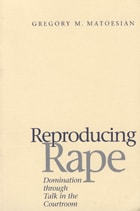
Reproducing Rape
Domination through Talk in the CourtroomGregory M. Matoesian
University of Chicago Press, 1993
Matoesian examines the language of the courtroom, focusing on how defense lawyers interpret and classify rape in a way that makes the victim's experience appear as a normal sexual encounter. He analyzes the language that defense attorneys use in cross-examination to argue that courtroom talk can shape the victim's testimony to fit male standards of legitimate sexual practice. On this view, cross-examination is an adversarial war of words through which lawyers manipulate reality and perpetuate the patriarchal domination of women.
Reproducing Rape will interest students and professionals in law, criminology, sociology, feminist theory, linguistics, and anthropology.
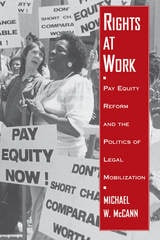
Rights at Work
Pay Equity Reform and the Politics of Legal MobilizationMichael W. McCann
University of Chicago Press, 1994
Rights at Work explores the political strategies in more than a dozen pay equity struggles since the late 1970s, including battles of state employees in Washington and Connecticut, as well as city employees in San Jose and Los Angeles. Relying on interviews with over 140 union and feminist activists, McCann shows that, even when the courts failed to correct wage discrimination, litigation and other forms of legal advocacy provided reformers with the legal discourse—the understanding of legal rights and their constraints—for defining and advancing their cause.
Rights at Work offers new insight into the relation between law and social change—the ways in which grass roots social movements work within legal rights traditions to promote progressive reform.
Securing Religious Liberty
Principles for Judicial Interpretation of the Religion ClausesJesse H. Choper
University of Chicago Press, 1995
Choper's guidelines are designed to provide maximum protection for religious freedom without granting anyone an advantage, inflicting a disadvantage, or causing an unfair burden. Though not calling for the wholesale overturning of judicial precedents or established social practices, the standards he proposes would result in significant—and controversial—modifications to existing doctrines and customs. Choper argues, for instance, that while vocal prayer and Bible reading in public schools should continue to be prohibited, we can and should allow for silent prayer and objective courses in creation science. His standards would also, among other things, eliminate the tax exemption on property used exclusively for religious purposes while allowing parochial schools to receive public funds for the non-religious component of their education.
Silent Revolution
The Transformation of Divorce Law in the United StatesHerbert Jacob
University of Chicago Press, 1988
Since 1966, divorce laws in the United States have undergone a radical transformation. No-fault divorce is now universally available. Alimony functions simply as a brief transitional payment to help a dependent spouse become independent. Most states divide assets at divorce according to a community property scheme, and, whenever possible, many courts prefer to award custody of children to the mother and the father jointly.
These changes in policy represent a profound departure from traditional American values, and yet the legislation by which they were enacted was treated as a technical correction of minor problems. No-fault divorce, for example, was a response to the increasing number of fraudulent divorce petitions. Since couples were often forced to manufacture the evidence of guilt that many states required, and since judges frequently looked the other way, legal reformers sought no more than to bring divorce statutes into line with current practice.
On the basis of such observations, Jacob formulates a new theory of routine—as opposed to conflictual—policy-making processes. Many potentially controversial policies—divorce law reforms among them—pass unnoticed in America because legislators treat them as matters of routine. Jacob's is indeed the most plausible account of the enormous number and steady flow of policy decisions made by state legislatures. It also explains why no attention was paid to the effect divorce reform would have on divorced women and their children, a subject that has become increasingly controversial and that, consequently, is not likely to be handled by the routine policy-making process in the future.
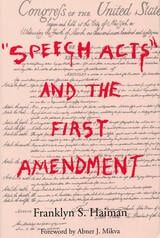
Speech Acts and the First Amendment
Franklyn S. Haiman. Foreword by Abner J. Mikva
Southern Illinois University Press, 1993
What can a democratic society reasonably do about the perplexing problems of racial intolerance, sexual harassment, incitements to violence, and invasions of privacy? Is it possible to preserve the constitutional ideal of free expression while protecting the community from those who would trample on the rights of others?
Franklyn S. Haiman critically examines the reasoning behind recent efforts to prohibit certain forms of speech and explores the possible consequences to democracy of such moves.
Speech act theory, well known to scholars of rhetoric, communication, and language, underlies this emerging trend in judicial and legislative thinking. The idea that "words are deeds," first articulated in language philosophy by Wittgenstein and elaborated by J. L. Austin and John Searle, is being invoked by some members of the legal community to target objectionable speech. For example, speech codes on some college campuses prohibit racist, sexist, and homophobic expression, and attempts have been made through local laws to classify pornography as a form of sex discrimination. By defining certain kinds of arguably immoral symbolic behavior such as hate speech, obscenity, or portrayals of violence as acts rather than as pure speech, speech act advocates make it easier to argue that such conduct should be subject to social control through the law.
Unlike totalitarian or theocratic societies that see no difference between their concept of morality and the law, however, a democracy must make a distinction between what it regards as immoral and what it makes illegal. Haiman maintains that in the realm of symbolic behavior the line between them should be drawn as closely as possible to expression that results in the most serious, direct, immediate, and physical harm to others. Thus, he joins with former Supreme Court Justice Louis Brandeis in concluding that, absent an emergency, more speech, not enforced silence, should be the aim of a free society.
Suing for Medical Malpractice
Frank A. Sloan, Penny B. Githens, Ellen Wright Clayton, Gerald B. Hickson, Dougl
University of Chicago Press, 1993
The authors survey claims filed in Florida between 1986 and 1989 by people who suffered permanent injury or death during birth or during treatment in an emergency room. How often did illegitimate claims result in financial awards? What was the relation between the injury and the amount the patient lost economically? How much did the plaintiffs actually recover? How did the claimants choose their lawyers and what kind of relationship did they have?
Contrary to common perceptions, in the majority of cases the claims were merited, and the authors found that claimants were on average substantially undercompensated—only about one-fifth of plaintiffs recovered more than their economic loss caused by injury or death. The evidence in this book suggests that placing dollar limits on malpractice cases is unjustified and that our tort system is not so faulty after all.
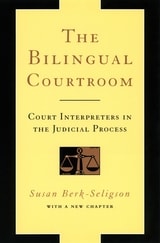
The Bilingual Courtroom
Court Interpreters in the Judicial ProcessSusan Berk-Seligson
University of Chicago Press, 2003
Drawing on more than one hundred hours of taped recordings of Spanish/English court proceedings in federal, state, and municipal courts—along with extensive psycholinguistic research using translated testimony and mock jurors—Susan Berk-Seligson's seminal book presents a systematic study of court interpreters, and raises some alarming, vitally important concerns: contrary to the assumption that interpreters do not affect the contents of court proceedings, they could potentially make the difference between a defendant being found guilty or innocent of a crime.
The Bill of Rights in the Modern State
Edited by Geoffrey R. Stone, Richard A. Epstein, and Cass R. Sunstein
University of Chicago Press, 1992
The contributors to this volume are among the most prominent constitutional scholars in the country. Most of the essays are grouped in pairs, each of which offers conflicting positions on current constitutional controversies, including property rights, freedom of religion, freedom of speech, levels of generality in constitutional interpreation, and unemumerated rights.
The contributors are: Bruce Ackerman, Mary E. Becker, Ronald Dworkin, Frank H. Easterbrook, Richard A. Epstein, Charles Fried, Mary Ann Glendon, Philip B. Kurland, Frank J. Michaelman, Michael W. McConnell, Richard A. Posner, Kathleen M. Sullivan, John Paul Stevens, David A. Strauss, and Cass R. Sunstein.
"A thoughtful and well coordinated set of exchanges between leading modern constitutional theorists about the most significant issues related to the Bill of Rights and the Welfare State. These issues are debated through penetrating essays by opposing theorists who get to the heart of these issues and provide significant answers to their debate opponents' points."—Thomas R. Van Dervort, Southeastern Political Review
The Complete Anti-Federalist
Edited by Herbert J. Storing
University of Chicago Press, 2007
The Complete Anti-Federalist, first published in 1981, contains an unprecedented collection of all the significant pamphlets, newspaper articles and letters, essays, and speeches that were written in opposition to the Constitution during the ratification debate. Storing’s work includes introductions to each entry, along with his own consideration of the Anti-Federalist thought.
This new three-volume set includes all the contents of the original seven-volume publication in a convenient, manageable format.
“A work of magnificent scholarship. Publication of these volumes is a civic event of enduring importance.”—Leonard W. Levy, New York Times Book Review
The Concept of Representation in the Age of the American Revolution
John Phillip Reid
University of Chicago Press, 1989
John Phillip Reid goes on to argue that it was generally the application, not the definition, of these rights that was disputed. The sole—and critical—exception concerned the right of representation. American perceptions of the responsibility of representatives to their constituents, the necessity of equal representation, and the constitutional function of consent had diverged gradually, but significantly, from British tradition. Drawing on his mastery of eighteenth-century legal thought, Reid explores the origins and shifting meanings of representation, consent, arbitrary rule, and constitution. He demonstrates that the controversy which led to the American Revolution had more to do with jurisprudential and constitutional principles than with democracy and equality. This book will interest legal historians, Constitutional scholars, and political theorists.
The Conservative Case for Class Actions
Brian T. Fitzpatrick
University of Chicago Press, 2019
Conservatives have opposed class actions in recent years, but Fitzpatrick argues that they should see such litigation not as a danger to the economy, but as a form of private enforcement of the law. He starts from the premise that all of us, conservatives and libertarians included, believe that markets need at least some rules to thrive, from laws that enforce contracts to laws that prevent companies from committing fraud. He also reminds us that conservatives consider the private sector to be superior to the government in most areas. And the relatively little-discussed intersection of those two beliefs is where the benefits of class action lawsuits become clear: when corporations commit misdeeds, class action lawsuits enlist the private sector to intervene, resulting in a smaller role for the government, lower taxes, and, ultimately, more effective solutions.
Offering a novel argument that will surprise partisans on all sides, The Conservative Case for Class Actions is sure to breathe new life into this long-running debate.
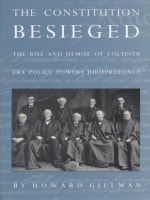
The Constitution Besieged
The Rise & Demise of Lochner Era Police Powers JurisprudenceHoward Gillman
Duke University Press, 1993
The Court vs. Congress
Prayer, Busing, and AbortionEdward Keynes and Randall Miller
Duke University Press, 1989
Edward Keynes and Randall Miller argue that Congress lacks the constitutional power to legislate away the powers of the federal courts and to prevent individuals from seeking redress for presumed infringements of their constitutional rights in these areas. They demonstrate that neither the framers nor ratifiers of the Constitution intended the Congress to exercise plenary power over the appellate jurisdiction of the Supreme Court. Throughout its history the Court has never conceded unlimited powers to Congress; and until the late 1950s Congress had not attempted to gerrymander the Court’s jurisdiction in response to specific decisions. But the authors contend this is just what the sponsors of recent legislative attacks on the Court intend, and they see such efforts as threatening the Court’s independence and authority as defined in the separation of powers clauses of the Constitution.
The Federalist Concordance
Edited by Thomas Engeman, Edward J. Erler, and Thomas B. Hofeller
University of Chicago Press, 1988
The Illusion of Equality
The Rhetoric and Reality of Divorce ReformMartha Albertson Fineman
University of Chicago Press, 1991
The Law of the Other
The Mixed Jury and Changing Conceptions of Citizenship, Law, and KnowledgeMarianne Constable
University of Chicago Press, 1994
The "mixed jury" doctrine allowed resident foreigners to have law suits against English natives tried before juries composed half of natives and half of aliens like themselves. As she traces the transformations in this doctrine from the Middle Ages to its abolition in 1870, Constable also reveals the emergence of a world where law rooted in actual practices and customs of communities is replaced by law determined by officials, where juries no longer strive to speak the truth but to ascertain the facts.
The New Politics of Pornography
Donald Alexander Downs
University of Chicago Press, 1989
The Rhetoric of Church and State
A Critical Analysis of Religion Clause JurisprudenceFrederick Mark Gedicks
Duke University Press, 1995
Gedicks suggests that the Supreme Court’s inconsistent decisions mirror a divergence in American society between an increasingly secular public culture and the primarily devout private lives of the majority of Americans. He notes that while the Court is committed to principles of secular individualism, it has repeatedly endorsed government actions that violate those principles—actions that would be far more justifiable under the discourse of religious communitarianism. The impossibility of reconciling the two discourses leaves the Court no choice but to efface—often implausibly—the religious nature of practices it deems permissible. Gedicks concludes that the road to a coherent religion clause doctrine lies neither in a return to religious communitarianism nor in its complete displacement by secular individualism, but in a yet-to-be-identified discourse that would attract popular support while protecting a meaningful measure of religious freedom.
The Struggle for Constitutional Justice in Post-Communist Europe
Herman Schwartz
University of Chicago Press, 2000
"Those who are interested in understanding the behavior of constitutional courts in transitional regimes cannot afford to ignore this important book. . . . [It] is fecund with hypotheses of interest to political scientists, and we are indebted to Professor Schwartz for his comprehensive analysis."—James L. Gibson, Law and Politics Book Review
The Transformation of Family Law
State, Law, and Family in the United States and Western EuropeMary Ann Glendon
University of Chicago Press, 1989
"Glendon is generally acknowledged to be the premier comparative law scholar in the area of family law. This volume, which offers an analytical survey of the changes in family law over the past twenty-five years, will burnish that reputation. Essential reading for anyone interested in evaluating the major changes that occurred in the law of the family. . . . [And] of serious interest to those in the social sciences as well."—James B. Boskey, Law Books in Review
"Poses important questions and supplies rich detail."—Barbara Bennett Woodhouse, Texas Law Review
"An impressive scholarly documentation of the legal changes that comprise the development of a conjugally-centered family system."—Debra Friedman, Contemporary Sociology
"She has painted a portrait of the family in which we recognize not only ourselves but also unremembered ideological forefathers. . . . It sends our thoughts out into unexpected adventures."—Inga Markovits, Michigan Law Review

Truman and the Steel Seizure Case
The Limits of Presidential PowerMaeva Marcus
Duke University Press, 1994
Violence As Obscenity
Limiting the Media's First Amendment ProtectionKevin W. Saunders
Duke University Press, 1996
Saunders examines the public debate on media violence, the arguments of professional and public interest groups urging governmental action, and the media and the ACLU’s desire for self-regulation. Citing research that links violence in the media to actual violence, Saunders argues that a present danger to public safety may be reduced by invoking the existing law on obscenity. Reviewing the justifications of that law, he finds that not only is the legal history relied on by the Supreme Court inadequate to distinguish violence from sex, but also many of the justifications apply more forcefully to instances of violence than to sexually explicit material that has been ruled obscene. Saunders also examines the actions that Congress, states, and municipalities have taken to regulate media violence as well as the legal limitations imposed on such regulations by the First Amendment protections given to speech and the press. In discussing the current operation of the obscenity exception and confronting the issue of censorship, he advocates adapting to the regulation of violent material the doctrine of variable obscenity, which applies a different standard for material aimed at youth, and the doctrine of indecency, which allows for federal regulation of broadcast material.
Cogently and passionately argued, Violence as Obscenity will attract scholars of American constitutional law and mass communication, and general readers moved by current debates about media violence, regulation, and censorship.
What the Anti-Federalists Were For
The Political Thought of the Opponents of the ConstitutionHerbert J. Storing
University of Chicago Press, 1981
Storing here offers a brilliant introduction to the thought and principles of the Anti-Federalists as they were understood by themselves and by other men and women of their time. His comprehensive exposition restores to our understanding the Anti-Federalist share in the founding its effect on some of the enduring themes and tensions of American political life. The concern with big government and infringement of personal liberty one finds in the writings of these neglected Founders strikes a remarkably timely note.
What the Anti-Federalists Were For
The Political Thought of the Opponents of the ConstitutionHerbert J. Storing
University of Chicago Press, 1981
The Anti-Federalists, in Herbert J. Storing's view, are somewhat paradoxically entitled to be counted among the Founding Fathers and to share in the honor and study devoted to the founding. "If the foundations of the American polity was laid by the Federalists," he writes, "the Anti-Federalist reservations echo through American history; and it is in the dialogue, not merely in the Federalist victory, that the country's principles are to be discovered." It was largely through their efforts, he reminds us, that the Constitution was so quickly amended to include a bill of rights.
Storing here offers a brilliant introduction to the thought and principles of the Anti-Federalists as they were understood by themselves and by other men and women of their time. His comprehensive exposition restores to our understanding the Anti-Federalist share in the founding its effect on some of the enduring themes and tensions of American political life. The concern with big government and infringement of personal liberty one finds in the writings of these neglected Founders strikes a remarkably timely note.