Results by title
49 books match the query 'Discovery'

A Plague on All Our Houses
Medical Intrigue, Hollywood, and the Discovery of AIDSBruce J. Hillman
University Press of New England, 2016
A Poetic for Sociology
Toward a Logic of Discovery for the Human SciencesRichard Harvey Brown
University of Chicago Press, 1989
By recognizing this "aesthetic" common ground between science and art, Brown demonstrates that a fusion can be achieved within the human sciences of these two principal ideals of knowledge—the scientific or positivist one and the artistic or intuitive one. A path, then, is opened for creating a knowledge of ourselves and society which is at once objective and subjective, at once valid scientifically and significantly humane.
Afterlives of Discovery
Speculative Geographies in the Settler Colonial Imaginaryheidi andrea restrepo rhodes
Duke University Press, 2025
Before Before
A Story of Discovery and Loss in Sierra LeoneBetsy Small
University of Michigan Press, 2025
2025 Foreword INDIES Finalist for Political and Social Sciences
- 2026 Nautilus Silver Book Award in World Cultures' Transformational Growth & Development
Sierra Leone is often sensationalized as a place of extreme violence and suffering—of blood diamonds, child soldiers, war amputations, and Ebola and now the highly addictive drug Kush. Before Before captures daily life in a different country, one Betsy Small first encountered as a Peace Corps worker between 1984–1987, and then rediscovered when she returned decades later with her daughter. Living in Tokpombu, a remote community of forty rice-farming families, the author faced struggles that changed her forever and witnessed the growing tensions in this rainforest village—between the young and old, between the traditions of oral history and honoring the ancestors valued by the elders and the siren call of the illicit diamond mines faced by the youth.
Before Before offers a rare portrait of everyday people, with particular focus on the lives of women and girls, before the brutal war of 1991 tore the country apart. Through Small’s account of immersion in another world as she witnessed injustice and was welcomed as a friend, readers are invited to explore the shared ground of our humanity.
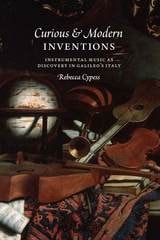
Curious and Modern Inventions
Instrumental Music as Discovery in Galileo's ItalyRebecca Cypess
University of Chicago Press, 2016
Rebecca Cypess shows that early modern thinkers were fascinated with instrumental technologies. The telescope, the clock, the pen, the lute—these were vital instruments for leading thinkers of the age, from Galileo Galilei to Giambattista Marino. No longer used merely to remake an object or repeat a process already known, instruments were increasingly seen as tools for open-ended inquiry that would lead to new knowledge. Engaging with themes from the history of science, literature, and the visual arts, this study reveals the intimate connections between instrumental music and the scientific and artisanal tools that served to mediate between individuals and the world around them.
Diagnosing the Legacy
The Discovery, Research, and Treatment of Type 2 Diabetes in Indigenous YouthLarry Krotz
University of Manitoba Press, 2018
Digging and Discovery, 2nd edition
Wisconsin ArchaeologyDiane Holliday
Wisconsin Historical Society Press, 2006
Digging and Discovery, TG, 2nd edition
Wisconsin ArchaeologyBobbie Malone
Wisconsin Historical Society Press, 2000
Discovery and Explanation in Biology and Medicine
Kenneth F. Schaffner
University of Chicago Press, 1993
Although traditional philosophy of science has regarded scientific discovery—the questions of creativity in science—as a subject for psychological rather than philosophical study, Schaffner argues that recent work in cognitive science and artificial intelligence enables researchers to rationally analyze the nature of discovery. As a philosopher of science who holds an M.D., he has examined biomedical work from the inside and uses detailed examples from the entire range of the life sciences to support the semantic approach to scientific theories, addressing whether there are "laws" in the life sciences as there are in the physical sciences. Schaffner's novel use of philosophical tools to deal with scientific research in all of its complexity provides a distinctive angle on basic questions of scientific evaluation and explanation.
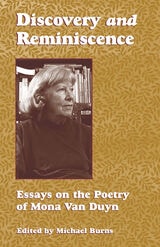
Discovery and Reminiscence
Essays on the Poetry of Mona Van DuynMichael Burns
University of Arkansas Press, 1999
A former United States Poet Laureate, winner of a Pulitzer Prize, and recipient of numerous grants and awards, Mona Van Duyn has been hailed as one of our greatest living American poets. To help broaden and uniquely inform our understanding of Van Duyn’s work, editor Michael Burns has gathered ten essays, a poem, a succinct biographical sketch, and Van Duyn’s own laureate address to the Library of Congress.
In the first section of this collection, poets Maxine Kumin and Carolyn Kizer provide tributes that elucidate the special effect Van Duyn’s poetry has had on their work and thought. Pulitzer Prize–winner Richard Howard contributes a poem that both extols the qualities of Van Duyn’s poems and lyrically places those qualities within her contemporary scene.
The second section contains eight essays exploring aspects as varied as Van Duyn’s penchant for particularity, her remarkable ability to rediscover for us the strangeness of everyday living, and her elegant style, fluid in both free verse and form. Included are contributions from Stephen Yenser, Rachel Hadas, Emily Grosholz, Sidney Burris, Ann Townsend, Michael Bugeja, Wyatt Prunty, and Jane Hoogestraat.
The final section opens with Van Duyn’s witty and incisive overview of the state of poetry in America at the close of the twentieth century. Also included is a short narrative history of Van Duyn’s literary career. Filled with keen prose by distinguished poets and critics, this collection is not only a resounding tribute to one poet’s body of work, but also a timely pulse-taking of the literary scene surrounding Van Duyn’s poetry.
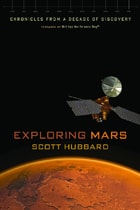
Exploring Mars
Chronicles from a Decade of DiscoveryScott Hubbard; Foreword by Bill Nye
University of Arizona Press, 2012
The Red Planet has been a subject of fascination for humanity for thousands of years, becoming part of our folklore and popular culture. The most Earthlike of the planets in our solar system, Mars may have harbored some form of life in the past and may still possess an ecosystem in some underground refuge. The mysteries of this fourth planet from our Sun make it of central importance to NASA and its science goals for the twenty-first century.
In the wake of the very public failures of the Mars Polar Lander and the Mars Climate Orbiter in 1999, NASA embarked on a complete reassessment of the Mars Program. Scott Hubbard was asked to lead this restructuring in 2000, becoming known as the "Mars Czar." His team's efforts resulted in a very successful decade-long series of missions—each building on the accomplishments of those before it—that adhered to the science adage "follow the water" when debating how to proceed. Hubbard's work created the Mars Odyssey mission, the twin rovers Spirit and Opportunity, the Mars Reconnaissance Orbiter, the Phoenix mission, and most recently the planned launch of the Mars Science Laboratory.
Now for the first time Scott Hubbard tells the complete story of how he fashioned this program, describing both the technical and political forces involved and bringing to life the national and international cast of characters engaged in this monumental endeavor. Blending the exciting stories of the missions with the thrills of scientific discovery, Exploring Mars will intrigue anyone interested in the science, the engineering, or the policy of investigating other worlds.
Forms of Discovery
Critical and Historical Essays on the Forms of the Short Poem in EnglishYvor Winters
Ohio University Press, 1967
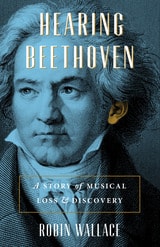
Hearing Beethoven
A Story of Musical Loss and DiscoveryRobin Wallace
University of Chicago Press, 2018
We’re all familiar with the image of a fierce and scowling Beethoven, struggling doggedly to overcome his rapidly progressing deafness. That Beethoven continued to play and compose for more than a decade after he lost his hearing is often seen as an act of superhuman heroism. But the truth is that Beethoven’s response to his deafness was entirely human. And by demystifying what he did, we can learn a great deal about Beethoven’s music. Perhaps no one is better positioned to help us do so than Robin Wallace, who not only has dedicated his life to the music of Beethoven but also has close personal experience with deafness. One day, Wallace’s late wife, Barbara, found she couldn’t hear out of her right ear—the result of radiation administered to treat a brain tumor early in life. Three years later, she lost hearing in her left ear as well. Over the eight and a half years that remained of her life, despite receiving a cochlear implant, Barbara didn’t overcome her deafness or ever function again like a hearing person.
Wallace shows here that Beethoven didn’t do those things, either. Rather than heroically overcoming his deafness, Beethoven accomplished something even more challenging: he adapted to his hearing loss and changed the way he interacted with music, revealing important aspects of its very nature in the process. Wallace tells the story of Beethoven’s creative life, interweaving it with his and Barbara’s experience to reveal aspects that only living with deafness could open up. The resulting insights make Beethoven and his music more accessible and help us see how a disability can enhance human wholeness and flourishing.
Hispanic Philosophy in the Age of Discovery
Kevin White
Catholic University of America Press, 2018
IGY
Year of DiscoverySydney Chapman
University of Michigan Press, 1959
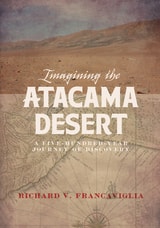
Imagining the Atacama Desert
A Five-Hundred-Year Journey of DiscoveryRichard V. Francaviglia
University of Utah Press, 2018
Beginning with the indigenous Atacameño peoples at the southern edge of the Incan empire, the volume moves through five hundred years of history, sharing accounts written by Spanish, French, German, Dutch, British, American, and other travelers—pirates, scientists, explorers, and entrepreneurs among them. The Atacama’s austere landscape hides many secrets, including vast mineral wealth, the world's oldest mummies, and the more recent remains of dissidents murdered by the regime of former Chilean dictator Augusto Pinochet in the early 1970s. Today numerous observatories operate under the Atacama’s clear night skies, astronauts train on the rugged desert floor, and tourists flock there for inspiration.
In addition to a rich set of narratives, the book features 115 images—historical maps, photographs, and natural history illustrations, most in full color—to tell a more complete and compelling story. Imagining the Atacama Desert shows how what was once a wilderness at the edges of empire became one of South America's most iconic regions, one that continues to lure those seeking adventure and the unknown.
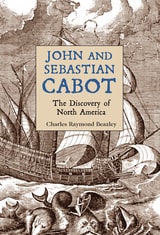
John and Sebastian Cabot
The Discovery of North AmericaCharles Raymond Beazley
Westholme Publishing, 2015
John Cabot, Giovanni Caboto in his native Italian, led an expedition to the New World in 1497 on behalf of King Henry VII of England. He is considered the first European to explore North America since the Viking voyages five hundred years earlier. Although Cabot’s exact landfall on his first voyage is not known—it could have been Nova Scotia, Newfoundland, or even Maine—his claim for England to this territory countered the Spanish and Portuguese explorations to the south, and changed world history. Cabot made three roundtrips between Bristol, England, and North America, and later, his son Sebastian, made two similar voyages. John and Sebastian Cabot: The Discovery of North America by historian Sir Charles Raymond Beazley was first published in 1898. Its enduring value in addition to its lucid, well-balanced and researched narrative is the author’s detailed history of prior voyages to the North American continent, including those from China and the Pacific Islands as well as those from the realms of mythology. The author also includes all extant references to the Cabots in historical documents.
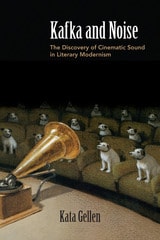
Kafka and Noise
The Discovery of Cinematic Sound in Literary ModernismKata Gellen
Northwestern University Press, 2019
Kafka and Noise offers a method for pursuing intermedial research in the humanities—namely, via the productive "misapplication" of theoretical tools, which exposes the contours, conditions, and expressive possibilities of the media in question. This book will be of interest to scholars of modernism, literature, cinema, and sound, as well as to anyone wishing to explore how artistic and technological media shape our experience of the world and the possibilities for representing it.
Literature Is a Voyage of Discovery
Tom Bishop in Conversation with Donatien GrauTom Bishop and Donatien Grau
Diaphanes, 2021
Tom Bishop has, for over sixty years, helped shape the literary, philosophical, cultural, artistic, and political conversation between Paris and New York. As professor and director of the Center for French Civilization and Culture at New York University, he made the Washington Square institution one of the great bridges between French innovation and a New York scene in full transformation. Bishop was close to Beckett, championed Robbe-Grillet in the United States, befriended Marguerite Duras and Hélène Cixous, and organized historic public encounters—such as the one between James Baldwin and Toni Morrison. He was also a scholar, a recognized specialist in the avant-garde, notably the Nouveau Roman and the Nouveau Théâtre.
In 2012, Bishop invited Donatien Grau to give a talk at NYU. This invitation led to conversations—many of which are presented in this book—and a friendship. Literature Is a Voyage of Discovery gathers their dialogues, retracing Bishop’s career, his own history, his departure from Vienna, his studies, his meetings, his choices, his conception of literature and life, his relationship to the political and economic world, and the way he helped define the profession of “curator” as it is practiced today, offering a thought-provoking look into one of the leading minds of our time.
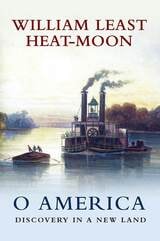
O America
Discovery in a New LandWilliam Least Heat-Moon
University of Missouri Press, 2027
Traveling by foot, horse, stage, canal boat, and steamer, Nathaniel and Nicodemus explore the backcountry and forge a deep friendship as they encounter a host of memorable characters who reveal the nature of the American experiment, one still in its early stages but already under the stress of social injustices and economic inequities.
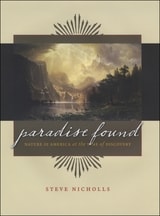
Paradise Found
Nature in America at the Time of DiscoverySteve Nicholls
University of Chicago Press, 2009
The first Europeans to set foot on North America stood in awe of the natural abundance before them. The skies were filled with birds, seas and rivers teemed with fish, and the forests and grasslands were a hunter’s dream, with populations of game too abundant and diverse to even fathom. It’s no wonder these first settlers thought they had discovered a paradise of sorts. Fortunately for us, they left a legacy of copious records documenting what they saw, and these observations make it possible to craft a far more detailed evocation of North America before its settlement than any other place on the planet.
Here Steve Nicholls brings this spectacular environment back to vivid life, demonstrating with both historical narrative and scientific inquiry just what an amazing place North America was and how it looked when the explorers first found it. The story of the continent’s colonization forms a backdrop to its natural history, which Nicholls explores in chapters on the North Atlantic, the East Coast, the Subtropical Caribbean, the West Coast, Baja California, and the Great Plains. Seamlessly blending firsthand accounts from centuries past with the findings of scientists today, Nicholls also introduces us to a myriad cast of characters who have chronicled the changing landscape, from pre–Revolutionary era settlers to researchers whom he has met in the field.
A director and writer of Emmy Award–winning wildlife documentaries for the Smithsonian Channel, Animal Planet, National Geographic, and PBS, Nicholls deploys a cinematic flair for capturing nature at its most mesmerizing throughout. But Paradise Found is much more than a celebration of what once was: it is also a reminder of how much we have lost along the way and an urgent call to action so future generations are more responsible stewards of the world around them. The result is popular science of the highest order: a book as remarkable as the landscape it recreates and as inspired as the men and women who discovered it.
Plato's "Laws"
The Discovery of BeingSeth Benardete
University of Chicago Press, 2001
An insightful commentary on Plato’s Laws, his complex final work.
The Laws was Plato’s last work, his longest, and one of his most difficult. In contrast to the Republic, which presents an abstract ideal, the Laws appears to provide practical guidelines for the establishment and maintenance of political order in the real world. Classicist Seth Benardete offers a rich analysis of each of the twelve books of the Laws, which illuminates Plato’s major themes and arguments concerning theology, the soul, justice, and education.
Most importantly, Benardete shows how music in a broad sense, including drama, epic poetry, and even puppetry, mediates between reason and the city in Plato’s philosophy of law. Benardete also uncovers the work’s concealed ontological dimension, explaining why it is hidden and how it can be brought to light. In establishing the coherence and underlying organization of Plato’s last dialogue, Benardete makes a significant contribution to Platonic studies.
Plato's Moral Realism
The Discovery of the Presuppositions of EthicsJohn M. Rist
Catholic University of America Press, 2012
Reality Exploration and Discovery
Pattern Interaction in Language and LifeEdited by Linda Ann Uyechi and Lian-Hee Wee
CSLI, 2009
The twenty-five papers in this volume present current analyses of a variety of data and, more significantly, illustrate the various analytical tools available to linguists in the quest for deeper comprehension of the puzzles, questions, and problems they confront in natural language. The distinguished authors collected here explore interactions between linguistic structure and sound patterns across a diverse set of languages. The integrating theme of the volume is the influence of K. P. Mohanan’s philosophy of inquiry, derived not only from his rich body of diverse work but also from the fresh perspectives and intellectual vitality that he has shared with colleagues and students in a career spanning over three decades.
Seven Iron Men
The Merritts and the Discovery of the Mesabi RangePaul de Kruif
University of Minnesota Press, 2007
In the tradition of great American rags to riches stories, Seven Iron Men weaves together the history of how the seven Merritt brothers discovered iron ore on the Mesabi Range. In 1890 they were poised to become one of the wealthiest families in America but lost it all to industrialist John D. Rockefeller.
“The tale of their long and furious quest makes for one of the most melodramatic stories in American history. . . . The Merritts leap from the chronicle in all the colors of life—especially Lon, the king of them all, with his maudlin poetizing, his childlike faith in mankind, and his incredible tropical hat. It is a tale full of thrills, shot with sardonic humors.” —H. L. Mencken, The Nation
“Certainly it is no small contribution to the history of the American people to unfold the tale of the discovery and development of those huge iron deposits of the Mesabi Range flanking much of Lake Superior. To these perhaps quite as much as to any other one factor the country owes its industrial supremacy in the ago of steel.” —New York Herald Tribune
Paul de Kruif (1890–1971) was a microbiologist, served as a contributing editor to Reader’s Digest, and was the best-selling author of Microbe Hunters.

The Age of Discovery
Alan Michael Parker
Tupelo Press, 2020
The Age of Discovery and Other Stories
Becky Hagenston
The Ohio State University Press, 2021
“These ingenious stories are so funny and sparkling and slyly inventive that their pain catches you by surprise, like a sunburn after a day at the beach.”—Eric Puchner
Winner, 2022 Mississippi Institute for Arts and Letters Prize for Best Fiction
In Becky Hagenston’s fourth collection, the real and the fantastic collide in stories that span from Mississippi to Europe, and from the recent past to the near future. The characters are sex-toy sellers, internet trolls, parents, students, and babysitters—all trying to make sense of a world where nothing is quite what it appears to be. A service robot makes increasingly disturbing requests. A middle school teacher is accused of witchcraft—and realizes the accusations might be true. Two college students devise a way to avoid getting hit on in bars. A baker finds bizarre anomalies in his sourdough. A librarian follows her dead ex-husband through the Atlanta airport. In these stories, men and women confront grief, danger, loneliness, and sometimes—the strangest discovery of all—unexpected joy. Hagenston delivers a collection that is, at its weird and shining heart, about people discovering what—for better or worse—they are capable of.
The Dancing Bees
Karl von Frisch and the Discovery of the Honeybee LanguageTania Munz
University of Chicago Press, 2016
The Dancing Bees draws on previously unexplored archival sources in order to reveal von Frisch’s full story, including how the Nazi government in 1940 determined that he was one-quarter Jewish, revoked his teaching privileges, and sought to prevent him from working altogether until circumstances intervened. In the 1940s, bee populations throughout Europe were facing the devastating effects of a plague (just as they are today), and because the bees were essential to the pollination of crops, von Frisch’s research was deemed critical to maintaining the food supply of a nation at war. The bees, as von Frisch put it years later, saved his life. Munz not only explores von Frisch’s complicated career in the Third Reich, she looks closely at the legacy of his work and the later debates about the significance of the bee language and the science of animal communication.
This first in-depth biography of von Frisch paints a complex and nuanced portrait of a scientist at work under Nazi rule. The Dancing Bees will be welcomed by anyone seeking to better understand not only this chapter of the history of science but also the peculiar waggles of our garden visitors.
The Discovery and Conquest of Peru
Pedro de Cieza de León
Duke University Press, 1998
Alexandra Parma Cook and Noble David Cook present this recently discovered third book of a four-part chronicle that provides the most thorough and definitive record of the birth of modern Andean America. It describes with unparalleled detail the exploration of the Pacific coast of South America led by Francisco Pizarro and Diego de Almagro, the imprisonment and death of the Inca Atahualpa, the Indian resistance, and the ultimate Spanish domination.
Students and scholars of Latin American history and conquest narratives will welcome the publication of this volume.
The Discovery of America
Cesare Pascarella
University of Arkansas Press, 1991
Winner of the Harold Morton Landon Translation Award from the Academy of American Poets
The Discovery of Being and Thomas Aquinas
Christopher M. Cullen, SJ
Catholic University of America Press, 2019
The collection of essays within The Discovery of Being and Thomas Aquinas is divided into three major parts: the first set of essays concerns the foundation of metaphysics within Thomism; the second set exemplifies the use of metaphysics in fundamental philosophical issues within Thomism; and the third set employs metaphysics in central theological issues.
The Discovery of Being and Thomas Aquinas allows major scholars of the different types of Thomism to engage in a full-scale defense of their position, as well as expanding Thomistic metaphysics to the discipline of theology in important ways.
The Discovery of Freedom in Ancient Greece
Revised and Updated EditionKurt Raaflaub
University of Chicago Press, 2003
To find out, Raaflaub analyses ancient Greek texts from Homer to Thucydides in their social and political contexts. Archaic Greece, he concludes, had little use for the idea of political freedom; the concept arose instead during the great confrontation between Greeks and Persians in the early fifth century BCE. Raaflaub then examines the relationship of freedom with other concepts, such as equality, citizenship, and law, and pursues subsequent uses of the idea—often, paradoxically, as a tool of domination, propaganda, and ideology.
Raaflaub's book thus illuminates both the history of ancient Greek society and the evolution of one of humankind's most important values, and will be of great interest to anyone who wants to understand the conceptual fabric that still shapes our world views.
The Discovery of Insulin
Michael Bliss
University of Chicago Press, 1982
The Discovery of Insulin
Enlarged EditionMichael Bliss
University of Chicago Press, 2021
When insulin was discovered in the early 1920s, even jaded professionals marveled at how it brought starved, sometimes comatose patients with diabetes back to life. Defying the average timeline, the 1923 Nobel Prize in Physiology or Medicine was awarded for its discovery. To recount the fascinating story behind the discovery of insulin, in this classic work Michael Bliss draws on archival records and personal interviews with witnesses to the events. He unearths scientists’ memoirs and confidential appraisals of insulin by members of the Nobel Committee, bringing science to life and resolving a longstanding controversy about scientific collaboration at its most fractious and fascinating: who among the Canadian team of Frederick Banting, Charles Best, James Collip, and John Macleod ultimately deserves credit for the discovery of insulin? Or is credit due farther afield—to Georg Zuelzer in Berlin, E.L. Scott in Chicago, Israel Kleiner in New York, Nicolas Paulescu in Bucharest, John Murlin in Rochester?
Bliss’s life-and-death saga illuminates one of the most important breakthroughs in the history of medicine. With a new preface by the author and a foreword by historian Alison Li, this enlarged edition celebrates the lasting impact of insulin’s discovery and ongoing importance.
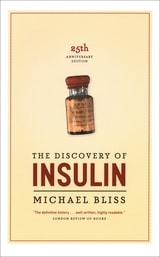
The Discovery of Insulin
Twenty-fifth Anniversary EditionMichael Bliss
University of Chicago Press, 2007
The Discovery of New Mexico by the Franciscan Monk Friar Marcos de Niza in 1539
Adolph F. Bandelier; Translated and Edited by Madeleine Turrell Rodack
University of Arizona Press, 1980
The Discovery of Time
Stephen Toulmin and June Goodfield
University of Chicago Press, 1982
The Discovery of the Fact
Clifford Ando and William P. Sullivan, Editors
University of Michigan Press, 2020

The Discovery of the World
Maps of the Earth and the CosmosElizabeth Hale
University of Chicago Press, 1985
The Great Ages of Discovery
How Western Civilization Learned About a Wider WorldStephen J. Pyne
University of Arizona Press, 2021
Historian and MacArthur Fellow Stephen J. Pyne identifies three great ages of discovery in his fascinating new book. The first age of discovery ranged from the early 15th to the early 18th century, sketched out the contours of the globe, aligned with the Renaissance, and had for its grandest expression the circumnavigation of the world ocean. The second age launched in the latter half of the 18th century, spanning into the early 20th century, carrying the Enlightenment along with it, pairing especially with settler societies, and had as its prize achievement the crossing of a continent. The third age began after World War II, and, pivoting from Antarctica, pushed into the deep oceans and interplanetary space. Its grand gesture is Voyager’s passage across the solar system. Each age had in common a galvanic rivalry: Spain and Portugal in the first age, Britain and France—followed by others—in the second, and the USSR and USA in the third.
With a deep and passionate knowledge of the history of Western exploration, Pyne takes us on a journey across hundreds of years of geographic trekking. The Great Ages of Discovery is an interpretive companion to what became Western civilization’s quest narrative, with the triumphs and tragedies that grand journey brought, the legacies of which are still very much with us.
The Longest Voyage
Circumnavigators in the Age of DiscoveryRobert Silverberg
Ohio University Press, 1997
From the intense and brooding Magellan and the glamorous and dashing Sir Francis Drake; to Thomas Cavendish, who set off to plunder Spain’s American gold and the Dutch circumnavigators, whose numbers included pirates as well as explorers and merchants, Robert Silverberg captures the adventures and seafaring exploits of a bygone era.
Over the course of a century, European circumnavigators in small ships charted the coast of the New World and explored the Pacific Ocean. Characterized by fierce nationalism, competitiveness, and bloodshed, The Longest Voyage: Circumnavigators in the Age of Discovery captures the drama, danger, and personalities in the colorful story of the first voyages around the world. These accounts begin with Magellan’s unprecedented 1519–22 circumnavigation, providing an immediate, exciting, and intimate glimpse into that historic venture. The story includes frequent threats of mutiny; the nearly unendurable extremes of heat, cold, hunger, thirst, and fatigue; the fear, tedium, and moments of despair; the discoveries of exotic new peoples and strange new lands; and, finally, Magellan’s own dramatic death during a fanatical attempt to convert native Philippine islanders to Christianity.
Capturing the total context of political climate and historical change that made the Age of Discovery one of excitement and drama, Silverberg brings a motley crew of early ocean explorers vividly to life.

The Ozone Layer
From Discovery to RecoveryGuy P. Brasseur
American Meteorological Society, 2020
This first complete study of ozone research demonstrates the key role fundamental research plays in solving global environmental, climate, and human health problems. More importantly, it shows that the scientific method works. Convincing decision makers of research results that do not correspond to their values, or to the interests of certain business groups, stands to be the highest hurdle in using science to benefit humanity. Students, early-career scientists, and even specialists who do not know much about the history of their field will benefit from this big picture view, offered by a researcher who has played leadership roles in stewarding this science through decades of discovery.
The Planet Mars
A History of Observation and DiscoveryWilliam Sheehan
University of Arizona Press, 1996
In this timely and vividly written account, William Sheehan traces human fascination with Mars back to the naked-eye observers of the planet. He recalls the early telescopic observers who first made out enigmatic markings and polar caps on its surface. Through lively historical anecdotes, he describes in detail the debate over the so-called canals of Mars, which encouraged speculation that the planet might be inhabited. Finally, Sheehan describes more recent theories about the planet, leading up to the present, when unmanned spacecraft have enabled us to make giant strides in exploration.
Well documented and sparked with human interest, this book will be a useful companion and guide in interpreting the barrage of headlines about Mars that is sure to come over the next few years. Amateurs will appreciate the contributions that have been made to Martian studies by people like themselves, and professionals will find much original material that has never before been published. The American Mars Global Surveyor is scheduled for launch in November 1996, and soon after the American Mars Pathfinder will make its way toward the red planet. A Russian mission consisting of an orbiter and two landers will be launched in October 1997. These space travelers will write a whole new chapter in the dramatic story of Mars, a planet whose exploration has only just begun. Astronomy Book Club main selection and selections of Book-of-the-Month Club and Quality Paperback Book Club.
The Silent Deep
The Discovery, Ecology, and Conservation of the Deep SeaTony Koslow
University of Chicago Press, 2007
The Silent Deep tells the story of the exploration and discovery of the deep sea, the ecology of its diverse environments, and the impact of humans, highlighting the importance of global stewardship in keeping this delicate ecosystem alive and well. Written by world renowned deep-sea ecologist Tony Koslow, this book is a comprehensive and authoritative overview of the state of the deep sea today, accessible to anyone interested in ocean science, the story of scientific discovery, and conservation of the earth’s most threatened ecosystems.
“Koslow deals a decisive blow to the notion that the deep sea can ever be immune from unregulated human activities. . . . The historical review of deep-sea biology is the most comprehensive I have ever read.”—Adrian Glover, Times Literary Supplement
“Deeply informed by history and rendered in straightforward, careful prose.”—Anthony Doerr, Boston Globe
“This beautifully produced book tells an urgent story with clarity and grace.”—Choice
“Stands apart from other books about life in the abyss due to Tony Koslow’s thoughtful accounts. . . . [He] succeeds in painting a picture of the deep sea as an environment with inherent and threatened value.”—Science
“Textbook depth on all aspects of deep-sea science and conservation. . . . [An] exhaustively researched and referenced volume with a historical review stretching back to Socrates.”—Mark Schrope, Nature
“An important textbook and viewpoint that is highly recommended for anyone with a professional or personal interest in deep-sea ecosystems.”—Quarterly Review of Biology
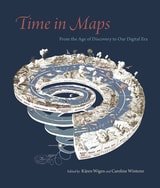
Time in Maps
From the Age of Discovery to Our Digital EraEdited by Kären Wigen and Caroline Winterer
University of Chicago Press, 2020
Focusing on maps created in Spanish America, Europe, the United States, and Asia, these essays take us from the Aztecs documenting the founding of Tenochtitlan, to early modern Japanese reconstructing nostalgic landscapes before Western encroachments, to nineteenth-century Americans grappling with the new concept of deep time. The book also features a defense of traditional paper maps by digital mapmaker William Rankin. With more than one hundred color maps and illustrations, Time in Maps will draw the attention of anyone interested in cartographic history.

Toxic and Intoxicating Oil
Discovery, Resistance, and Justice in Aotearoa New ZealandPatricia Widener
Rutgers University Press, 2021
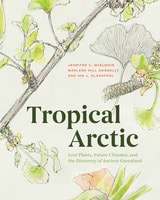
Tropical Arctic
Lost Plants, Future Climates, and the Discovery of Ancient GreenlandJennifer McElwain, Marlene Hill Donnelly, and Ian Glasspool
University of Chicago Press, 2021
While today’s Greenland is largely covered in ice, in the time of the dinosaurs the area was a lushly forested, tropical zone. Tropical Arctic tracks a ten-million-year window of Earth’s history when global temperatures soared and the vegetation of the world responded.
A project over eighteen years in the making, Tropical Arctic is the result of a unique collaboration between two paleobotanists, Jennifer C. McElwain and Ian J. Glasspool, and award-winning scientific illustrator Marlene Hill Donnelly. They began with a simple question: “What was the color of a fossilized leaf?” Tropical Arctic answers that question and more, allowing readers to experience Triassic Greenland through three reconstructed landscapes and an expertly researched catalog of extinct plants. A stunning compilation of paint and pencil art, photos, maps, and engineered fossil models, Tropical Arctic blends art and science to bring a lost world to life. Readers will also enjoy a front-row seat to the scientific adventures of life in the field, with engaging anecdotes about analyzing fossils and learning to ward off polar bear attacks.
Tropical Arctic explains our planet’s story of environmental upheaval, mass extinction, and resilience. By looking at Earth’s past, we see a glimpse of the future of our warming planet—and learn an important lesson for our time of climate change.

Victors for Dentistry (1962–2017)
Decades of Innovation and DiscoverySharon K. Grayden, Editor; Jerry Mastey, Contributor
Michigan Publishing Services, 2018
This book celebrates all that the professional community known as the U-M School of Dentistry has accomplished. Through good times and times of change, it has always been about the people—the drivers, the visionaries, and the innovators—who persisted regardless of the usual obstacles and inertia that often stand in the path of progress in higher education. They elevated the school to a world-class prominence that most definitely exemplifies the university’s history as home to the “leaders and best.”
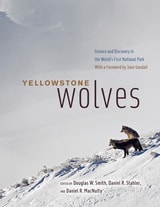
Yellowstone Wolves
Science and Discovery in the World's First National ParkEdited by Douglas W. Smith, Daniel R. Stahler, and Daniel R. MacNulty
University of Chicago Press, 2020
Here, for the first time in a single book, is the incredible story of the wolves’ return to Yellowstone National Park as told by the very people responsible for their reintroduction, study, and management. Anchored in what we have learned from Yellowstone, highlighting the unique blend of research techniques that have given us this knowledge, and addressing the major issues that wolves still face today, this book is as wide-ranging and awe-inspiring as the Yellowstone restoration effort itself. We learn about individual wolves, population dynamics, wolf-prey relationships, genetics, disease, management and policy, newly studied behaviors and interactions with other species, and the rippling ecosystem effects wolves have had on Yellowstone’s wild and rare landscape. Perhaps most importantly of all, the book also offers solutions to ongoing controversies and debates.
Featuring a foreword by Jane Goodall, beautiful images, a companion online documentary by celebrated filmmaker Bob Landis, and contributions from more than seventy wolf and wildlife conservation luminaries from Yellowstone and around the world, Yellowstone Wolves is a gripping, accessible celebration of the extraordinary Yellowstone Wolf Project—and of the park through which these majestic and important creatures once again roam.