Results by title
19 books match the query 'Indian mythology'
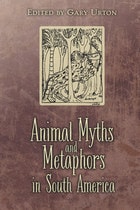
Animal Myths and Metaphors in South America
URTON
University of Utah Press, 1985
The contributors to this anthology have not limited themselves to the notion that clans and moieties are the only sources and objects of metaphorical comparisons between humans and animals. They suggest a shift in perspective that has metaphorical comparisons generated by conceived similarities and differences between animals and particular types of human beings. Some examples of this include macaw fledglings as adolescents; pumas as fully initiated men, and foxes as young married men. With this shift of emphasis, a significantly different analytic focus in the study of human-animal relations is produced.

Badger and Coyote Were Neighbors
Melville Jacobs on Northwest Indian Myths and TalesWilliam R. Seaburg
Oregon State University Press, 2000

Cuchama and Sacred Mountains
Walter Y. Evans-Wentz
Ohio University Press, 1981
W. Y. Evans–Wentz, great Buddhist scholar and translator of such now familiar works as the Tibetan Book of the Dead and the Tibetan Book of the Great Liberation, spent his final years in California. There, in the shadow of Cuchama, one of the Earth’s holiest mountains, he began to explore the astonishing parallels between the spiritual teaching of America’s native peoples and that of the deeply mystical Hindus and Tibetans. Cuchama and Sacred Mountains, a book completed shortly before his death in 1965, is the fruit of those explorations.
To Cuchama, “Exalted High Place,” came the young Cochimi and Yuma boys for initiation into the mystic rites for their people. In solitude they sought and received guidance and wisdom. In this same way, the peoples of ancient Greece, the Hebrews, the early Christians, and the Hindus had found access to inner truth on their own holy mountains: and in this same way must the modern person find the path to inner knowing.
Surveying many of the most Sacred Mountains in North America, South America, Europe, and Asia, Evans–Wentz expresses the belief that the secret power of these high places has not passed away but only awaits the coming of a New Age. This new age, in accord with the oldest prophecies of our continent, will be a time of renaissance, the long–waited era of harmony and peace among all peoples.
This renaissance shall be uniquely American, a renewal based on the values so long honored by the Americans before Columbus, and so ruthlessly trampled by the “civilized” Europeans who overran them. No other race of people has been as spiritual in their way of life than the original Americans, notes Evans–Wentz. Perhaps none other has known such martyrdom. Yet the secret greatness of the Indian religion still lives, ancient as the Earth itself, yet ageless in its power to renew.
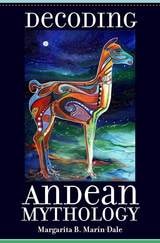
Decoding Andean Mythology
Margarita Marín-Dale
University of Utah Press, 2016
Decoding Andean Mythology is a comprehensive analysis of Native Andean oral tradition spanning five centuries. Based on twenty years of research and a wide range of scholarship, this book departs from the Cuzco-centered focus of many published Andean narratives and includes myths, stories, and folktales from diverse regions and ethnic groups. Among them are full translations of thirty-two ancient and modern Native Andean stories. Colorful illustrations and a comprehensive glossary of Quechua, Aymara, and Spanish loan words supplement the text.
In an accessible and engaging discussion suitable for students, the author explores a number of recurring themes and characters in Andean stories. These include shape-shifting animals, the inversion of time-space (pachacuti), anthropomorphic and supernatural beings, and conflicting attitudes toward sexuality. The text also presents a fresh perspective on traditional, non-Western concepts such as huacas (sacred objects and places), suggesting some act as portals or mediating spaces between the natural and supernatural worlds. Of particular significance for current events is a lengthy chapter on social protest, explaining the rise of indigenous movements in the Andes and highlighting the contemporary use of Native Andean folktales as an avenue for social and political dissent.
Winner of the 2018 Wayland D. Hand Prize by the American Folklore Society.
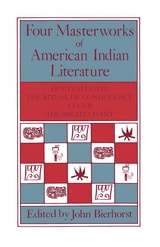
Four Masterworks of American Indian Literature
Quetzalcoatl, the Ritual of Condolence, Cuceb, the Night ChantEdited by John Bierhorst
University of Arizona Press, 1984
"This comparative application of the epic poetry tradition to Amerind literature is a scholarly success.... this book is a most noteworthy item in the field of American Indian studies, and is not to be missed by any serious devotee." --Library Journal
"Biehorst's introductions and notes are brilliant, thorough, and an important contribution to the scholarship on these works. His new translation of the Quetzalcoatl is also excellent." --Choice
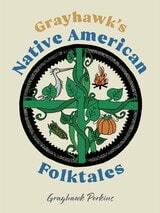
Grayhawk's Native American Folktales
Grayhawk Perkins
University of Alabama Press, 2025
Beloved Houma/Choctaw storyteller Grayhawk Perkins shares age-old wisdom in an unforgettable collection of folktales.
Grayhawk’s Native American Folktales is the eagerly awaited collection of stories by Grayhawk Perkins, a noted Houma storyteller from Louisiana. Drawing on traditional Indigenous tales, Grayhawk transforms these narratives into stories that captivate contemporary readers and audiences.
The collection features universal animal characters such as Deer, Rabbit, Bobcat, Turtle, and Snake that embody a variety of traits. Their adventures and challenges in the natural world reveal human behavior and lessons about how to treat others. Creation stories explain how the world and its inhabitants came to be, including the diligent Crawfish, the origin of skunk stripes, and why opossums are white. Although written for children ages 7 to 12 and their families, all will be charmed by Grayhawk’s contributions to Indigenous literature.
Indigenous and Popular Thinking in América
Rodolfo Kusch
Duke University Press, 2010
Indigenous and Popular Thinking in América is a record of Kusch's attempt to immerse himself in the indigenous ways of knowing and being. At first glance, his methodology resembles ethnography. He speaks with and observes indigenous people and mestizos in Peru, Bolivia, and Argentina. He questions them about their agricultural practices and economic decisions; he observes rituals; he asks women in the market the meaning of indigenous talismans; he interviews shamans; he describes the spatial arrangement and the contents of shrines, altars, and temples; and he reproduces diagrams of archaeological sites, which he then interprets at length. Yet he does not present a "them" to a putative "us." Instead, he offers an inroad to a way of thinking and being that does not follow the logic or fit into the categories of Western social science and philosophy. In his introduction, Walter D. Mignolo discusses Kusch's work and its relation to that of other twentieth-century intellectuals, Argentine history, and contemporary scholarship on the subaltern and decoloniality.
Landscapes of Origin in the Americas
Creation Narratives Linking Ancient Places and Present CommunitiesEdited and with an introduction by Jessica Joyce Christie
University of Alabama Press, 2009
By linking ancient places with present communities, Landscapes of Origin in the Americas explores how cultural landscapes sustain the continuity of origin narratives.
Landscape is a powerful factor in the operation of memory because of the associations narrators make between the local landscape and the events of the stories they tell. Ancestors and mythological events often become fixed in a specific landscape and act as timeless reference points.
In conventional anthropological literature, "landscape" is the term applied to the meaning local people bestow on their cultural and physical surroundings. In this work, the authors explore the cultural and physical landscapes an individual or cultural group has constructed to define the origins or beginnings of that cultural group as revealed through shared or traditional memory. The cultural landscapes of origins in diverse sites throughout the Americas are investigated through multidisciplinary research, not only to reveal the belief system and mythologies but also to place these origin beliefs in context and relationship to each other. In a continual interaction between the past, present, and future, time is subordinate to place, and history, as defined in Western academic terms, does not exist.

Legends of the Capilano
E. Pauline Johnson
University of Manitoba Press, 2023
Looking for Lost Lore
Studies in Folklore, Ethnology, and IconographyGeorge E. Lankford
University of Alabama Press, 2008
Mother Earth
An American StorySam D. Gill
University of Chicago Press, 1987
Attributed to Tecumseh in the early 1800s, this statement is frequently cited to uphold the view, long and widely proclaimed in scholarly and popular literature, that Mother Earth is an ancient and central Native American figure. In this radical and comprehensive rethinking, Sam D. Gill traces the evolution of female earth imagery in North America from the sixteenth century to the present and reveals how the evolution of the current Mother Earth figure was influenced by prevailing European-American imagery of America and the Indians as well as by the rapidly changing Indian identity.
Gill also analyzes the influential role of scholars in creating and establishing the imagery that underlay the recent origins of Mother Earth and, upon reflection, he raises serious questions about the nature of scholarship.
"Mother Earth might be modern, stressing the supposed biological ground of native life and its rich mythic tradition, but it hardly frees the native people from their long, lamentable involvement with the white man. For making this point clear, Gill deserves high praise."—Bernard W. Sheehan, Journal of the American Academy of Religion
"In one of the finest studies of recent years we have an ambitious attempt to satisfy scholar, Native American, popular reader, and truth."—Thomas McElwain, Western Folklore
RETHINKING HISTORY
Indigenous South American Perspectives on the PastEdited by Jonathan D. Hill
University of Illinois Press, 2000
Examining specific cultural and linguistic traditions that shape the social consciousness of native South Americans, the authors show that historical and mythic consciousness work together in forming new symbolic strategies that allow indigenous peoples to understand their societies as at least partially autonomous groups within national and global power structures. This complex process is used to interpret the history of interethnic relations, allowing both individuals and groups to change themselves and alter their own circumstances.
Reachable Stars
Patterns in the Ethnoastronomy of Eastern North AmericaGeorge E. Lankford
University of Alabama Press, 2007
The Jealous Potter
Claude Lévi-Strauss
University of Chicago Press, 1988
"Electrifying. . . . A brilliant demonstration of structural analysis in action. . . . Can be read with pleasure and profit by anyone interested in that aspect of self-discovery that comes through knowledge of the universal and timeless myths that live on in all of us."—Jonathan Sharp, San Francisco Examiner-Chronicle
"A characteristic tour de force. . . . One remains awed by him."—Colin Thubron, Sunday Times
"With all its epistemological depth, the book reads at times like a Simenon or a Lewis Carroll, fusing concise methodology with mastery of style."—Bernadette Bucher, American Ethnologist
"[An] engagingly provocative exploration of mythology in the Americas. . . . Always a good read."—Choice
"A playful, highly entertaining book, fluently and elegantly translated by Bénédicte Chorier."—Wendy Doniger O'Flaherty, New York Times Book Review
The Naked Man
Mythologiques, Volume 4Claude Lévi-Strauss
University of Chicago Press, 1990
"Lévi-Strauss uses the structural method he developed to analyze and 'decode' the mythology of native North Americans, focusing on the area west of the Rockies. . . . [The author] takes the opportunity to refute arguments against his method; his chapter 'Finale' is a defense of structural analysis as well as the closing statement of this four-volume opus which started with an 'Ouverture' in The Raw and the Cooked."—Library Journal
"The culmination of one of the major intellectual feats of our time."—Paul Stuewe, Quill and Quire
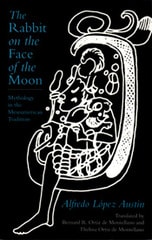
The Rabbit on the Face of the Moon
Mythology in the Mesoamerican TraditionAlfredo Lopez Austin
University of Utah Press, 1996
Eighteen essays provide an accessible, entertaining look into a system of millennia-old legends and beliefs.
Mythology is one of the great creations of humankind. It forms the core of sacred books and reflects the deepest preoccupations of human beings, their most intimate secrets, their glories, and their infamies.
In 1990, Alfredo López Austin, one of the foremost scholars of ancient Mesoamerican thought, began a series of essays about mythology in the Mesoamerican tradition, published in México Indígena. Although his articles were written for general readers, they were also intended to engage specialists. They span a divers subject matter: myths and names, eclipses, stars, left and right, Méxican origins, Aztec incantations, animals, and the incorporation of Christian elements into the living mythologies of Mexico. The title essay relates the Mesoamerican myth explaining why there is a rabbit o the moon’s face to a Buddhist image and suggests the importance of the profound mythical concepts presented by each image.
The eighteen essays in this volume are unified by their basis in Mesoamerican tradition and provide an accessible, entertaining look into a system of millennia-old legends and beliefs.

The Raw and the Cooked
Mythologiques, Volume 1Claude Lévi-Strauss
University of Chicago Press, 1983
The Return of the Native
Indians and Myth-Making in Spanish America, 1810–1930Rebecca Earle
Duke University Press, 2007
Starting with the anti-Spanish wars of independence in the early nineteenth century, Earle charts the changing importance elite nationalists ascribed to the pre-Columbian past through an analysis of a wide range of sources, including historical writings, poems and novels, postage stamps, constitutions, and public sculpture. This eclectic archive illuminates the nationalist vision of creole elites throughout Spanish America, who in different ways sought to construct meaningful national myths and histories. Traces of these efforts are scattered across nineteenth-century culture; Earle maps the significance of those traces. She also underlines the similarities in the development of nineteenth-century elite nationalism across Spanish America. By offering a comparative study focused on Mexico, Guatemala, Colombia, Peru, Chile, and Ecuador, The Return of the Native illustrates both the common features of elite nation-building and some of the significant variations. The book ends with a consideration of the pro-indigenous indigenista movements that developed in various parts of Spanish America in the early twentieth century.
Tracing the Relational
The Archaeology of Worlds, Spirits, and TemporalitiesMeghan E. Buchanan and B. Jacob Skousen
University of Utah Press, 2015