Results by title
39 books match the query 'School integration'
A Question of Justice
New South Governors and Education, 1968-1976Gordon E. Harvey
University of Alabama Press, 2005
The governors who used education to transform the modern South.
In southern politics, 1970 marked a watershed. A group of southern governors entered office that year and changed both the way the nation looked at the South and the way the constituents of those states viewed themselves. Reubin Askew in Florida, John West in South Carolina, Jimmy Carter in Georgia, and Albert Brewer in Alabama all represented a new breed of progressive moderate politician that helped demolish Jim Crow segregation and the dual economies, societies, and educational systems notorious to the Sunbelt South. Historian Gordon Harvey explores the political lives and legacies of three of these governors, examining the conditions that led to such a radical change in political leadership, the effects their legislative agendas had on the identity of their states, and the aftermath of their terms in elected office.
A common thread in each governor's agenda was educational reform. Albert Brewer's short term as Alabama governor resulted in a sweeping education package that still stands as the most progressive the state has seen. Reubin Askew, far more outspoken than Brewer, won the Florida gubernatorial election through a campaign that openly promoted desegregation, busing, and tax reform as a means of equal school funding. John West's commitment to a policy of inclusion helped allay fears of both black and white parents and made South Carolina's one of the smoothest transitions to integrated schools.
As members of the first generation of New South governors, Brewer, Askew, and West played the role of trailblazers. Their successful assaults on economic and racial injustice in their states were certainly aided by such landmark events as Brown v. Board of Education, the civil rights movement, and the expansion of voting rights-all of which sounded the death knell for the traditional one-party segregated South. But in this critical detailing of their work for justice, we learn how these reform-minded men made education central to their gubernatorial terms and, in doing so, helped redefine the very character of the place they called home.
A Troubled Dream
The Promise and Failure of School Desegregation in LouisianaCarl L. Bankston
Vanderbilt University Press, 2002
Winner, Louisiana Literary Award 2003
Fifty years after Brown v. Board of Education, the United States still has a long way to go to attain true integration of our educational system.
Using extensive interviews and a wealth of statistical information, Bankston and Caldas examine the failed desegregation efforts in Louisiana as a case study to show how desegregation has followed the same unsuccessful pattern across the United States. Strong supporters of the dream of integration, Bankston and Caldas show that the practical difficulty with desegregation is that academic environments are created by all the students in a school from the backgrounds that all the students bring with them. Unfortunately, the disadvantages that minority children have to overcome affect schools more than schools can help remedy these disadvantages.
An Epitaph for Little Rock
A Fiftieth Anniversary Retrospective on the Central High CrisisJohn A. Kirk
University of Arkansas Press, 2008
An Unexpected Minority
White Kids in an Urban SchoolMorris, Edward
Rutgers University Press, 2005
In An Unexpected Minority, sociologist Edward Morris addresses these far-reaching questions by exploring attitudes about white identity in a Texas middle school composed predominantly of African Americans, Latinos, and Asians. Based on his ethnographic research, Morris argues that lower-income white students in urban schools do not necessarily maintain the sort of white privilege documented in other settings. Within the student body, African American students were more frequently the "cool" kids, and white students adopted elements of black culture-including dress, hairstyle, and language-to gain acceptance. Morris observes, however, that racial inequalities were not always reversed. Stereotypes that cast white students as better behaved and more academically gifted were often reinforced, even by African American teachers.
Providing a new and timely perspective to the significant role that non-whites play in the construction of attitudes about whiteness, this book takes an important step in advancing the discussion of racial inequality and its future in this country.

Becoming Educated
A Midwest StorySimone C. Drake
The Ohio State University Press, 2026
Becoming Educated is Simone C. Drake’s engaging and bold memoir about race, class, gender, and the meaning of education in the urban Midwest. Drake, a scholar of literature, culture, and law, uses her own story as a Black girl attending recently desegregated Columbus public schools in the 1980s and 1990s to explore the United States’ most entrenched social problems and how local systems have tried to combat them. From starting kindergarten the year after an Ohio court decision called for busing to end school segregation, to climbing the ranks of academia, to her decision to send her sons to highly rated but largely white suburban schools, Drake weaves a lively and erudite accounting of her identity formation as an “integration guinea pig.” She punctuates her story with rich evocations of the music, TV, and film that shaped her generation, powerful reflections on relevant works by Black writers and artists from Dawoud Bey to Jay-Z, and images of her own artwork. This prismatic book is a must-read for Gen Xers, Midwesterners, and Americans of any race wanting to think more deeply about how our nation’s educational systems—and by extension, all of us—must reckon with inequalities past and present.
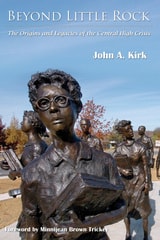
Beyond Little Rock
The Origins and Legacies of the Central High CrisisJohn A. Kirk
University of Arkansas Press, 2007
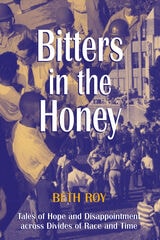
Bitters in the Honey
Tales of Hope and Disappointment across Divides of Race and TimeBeth Roy
University of Arkansas Press, 1999
Civil Obedience
An Oral History of School Desegregation in Fayetteville, Arkansas, 1954–1965Julianne Lewis Adams
University of Arkansas Press, 1994
While school desegregation generated much noise and some violence elsewhere in the South, the city of Fayetteville, Arkansas confronted the issue and resolved it with a good deal of dignity and grace, becoming the first Southern city to accommodate the Brown decision.
Through this fascinating collection of interviews with those who were involved in the desegregation process—students, teachers, administrators, civic leaders, and members of local groups—we learn of the determination of citizens to obey the law of the land and to see that freedom and equality took priority over their commitment to a school system that patently discriminated against one group of citizens.
In our continuing efforts to create a society in which all races and cultures can coexist, Civil Obedience is a story worthy of our full attention.
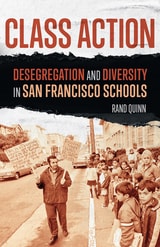
Class Action
Desegregation and Diversity in San Francisco SchoolsRand Quinn
University of Minnesota Press, 2020
A compelling history of school desegregation and activism in San Francisco
The picture of school desegregation in the United States is often painted with broad strokes of generalization and insulated anecdotes. Its true history, however, is remarkably wide ranging. Class Action tells the story of San Francisco’s long struggle over school desegregation in the wake of the 1954 U.S. Supreme Court decision Brown v. Board of Education.
San Francisco’s story provides a critical chapter in the history of American school discrimination and the complicated racial politics that emerged. It was among the first large cities outside the South to face court-ordered desegregation following the Brown rulings, and it experienced the same demographic shifts that transformed other cities throughout the urban West. Rand Quinn argues that the district’s student assignment policies—including busing and other desegregative mechanisms—began as a remedy for state discrimination but transformed into a tool intended to create diversity. Drawing on extensive archival research—from court docket files to school district records—Quinn describes how this transformation was facilitated by the rise of school choice, persistent demand for neighborhood schools, evolving social and legal landscapes, and local community advocacy and activism.
Class Action is the first book to present a comprehensive political history of post-Brown school desegregation in San Francisco. Quinn illuminates the evolving relationship between jurisprudence and community-based activism and brings a deeper understanding to the multiracial politics of urban education reform. He responds to recent calls by scholars to address the connections between ideas and policy change and ultimately provides a fascinating look at race and educational opportunity, school choice, and neighborhood schools in the aftermath of Brown v. Board of Education.
Crossing Segregated Boundaries
Remembering Chicago School DesegregationDionne Danns
Rutgers University Press, 2021
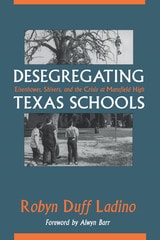
Desegregating Texas Schools
Eisenhower, Shivers, and the Crisis at Mansfield HighBy Robyn Duff Ladino
University of Texas Press, 1996
In the famous Brown v. the Board of Education decisions of 1954 and 1955, the United States Supreme Court ruled that "separate but equal" schools for black and white students were unconstitutional. Yet history records that it took more than a decade of legal battles, civil rights protests, and, tragically, violent confrontations before black students gained full access to previously white schools.
Mansfield, Texas, a small community southeast of Fort Worth, was the scene of an early school integration attempt. In this book, Robyn Duff Ladino draws on interviews with surviving participants, media reports, and archival research to provide the first full account of the Mansfield school integration crisis of 1956.
Ladino explores how power politics at the local, state, and federal levels ultimately prevented the integration of Mansfield High School in 1956. Her research sheds new light on the actions of Governor Allan Shivers—who, in the eyes of the segregationists, actually validated their cause by his political actions—and it underscores President Dwight Eisenhower's public passivity toward civil rights during his first term of office.
Despite the short-term failure, however, the Mansfield school integration crisis helped pave the way for the successful integration of Central High School in Little Rock, Arkansas, in 1957. Thus, it deserves a permanent place in the history of the civil rights movement, which this book amply provides.
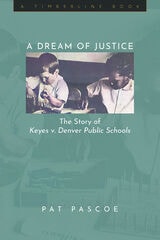
Dream of Justice
The Story of Keyes v. Denver Public Schoolsby Pat Pascoe
University Press of Colorado, 2023
Pascoe details Denver’s desegregation battle, beginning with the citizen studies that exposed the inequities of segregated schools and Rachel Noel’s resolution to integrate the system, followed by the momentous pro-integration Benton-Pascoe campaign of Ed Benton and Monte Pascoe for the school board in 1969. When segregationists won that election and reversed the integration plan for northeast Denver, Black, white, and Latino parents filed Keyes v. School District No. 1. This book follows the arguments in the case through briefs, transcripts, and decisions from district court to the Supreme Court of the United States and back, to its ultimate order to desegregate all Denver schools “root and branch.” It was the first northern city desegregation suit to be brought before the Supreme Court. However, with the end of court-ordered busing in 1995, schools quickly resegregated and are now more segregated than before Keyes was filed.
Pascoe asserts that school integration is a necessary step toward eliminating systemic racism in our country and should be the objective of every school board. A Dream of Justice will appeal to students, scholars, and readers interested in the history of civil rights in America, Denver history, and the history of US education.

Family Bible
Melissa J. Delbridge
University of Iowa Press, 2008
"Swimming and sex seemed a lot alike to me when I was growing up. You took off most of your clothes to do them and you only did them with people who were the same color as you. As your daddy got richer, you got to do them in fancier places." Starting with her father, who never met a whitetail buck he couldn't shoot, a whiskey bottle he couldn't empty, or a woman he couldn't charm, and her mother, who "invented road rage before 1960," Melissa Delbridge introduces us to the people in her own family bible. Readers will find elements of Southern Gothic and familiar vernacular characters, but Delbridge endows each with her startling and original interpretation. In this disarmingly unguarded and unapologetic memoir, she shows us what really happened in the "stew of religion and sex" that was 1960s Tuscaloosa.
Finding the Lost Year
What Happened When Little Rock Closed Its Public SchoolsSondra Gordy
University of Arkansas Press, 2009
Much has been written about the Little Rock School Crisis of 1957, but very little has been devoted to the following year—the Lost Year, 1958–59—when Little Rock schools were closed to all students, both black and white. Finding the Lost Year is the first book to look at the unresolved elements of the school desegregation crisis and how it turned into a community crisis, when policymakers thwarted desegregation and challenged the creation of a racially integrated community and when competing groups staked out agendas that set Arkansas’s capital on a path that has played out for the past fifty years.
In Little Rock in 1958, 3,665 students were locked out of a free public education. Teachers’ lives were disrupted, but students’ lives were even more confused. Some were able to attend schools outside the city, some left the state, some joined the military, some took correspondence courses, but fully 50 percent of the black students went without any schooling. Drawing on personal interviews with over sixty former teachers and students, black and white, Gordy details the long-term consequences for students affected by events and circumstances over which they had little control.
“Fifty years ago segregationists trying to keep black students out of Little Rock Central High inadvertently broke up one of the country’s greatest football dynasties. . . . Wait a minute. . . . Who said you can’t have a high school football team just because you don’t have a high school? Canceling football, Faubus decreed, would be ‘a cruel and unnecessary blow to the children.’ O.K. then, everyone agreed. Play ball!”
—“Blinded by History,” Sports Illustrated
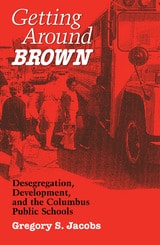
Getting around Brown
Desegregation, Development, and the Columbus Public SchoolsGregory S. Jacobs
The Ohio State University Press, 1998
Getting Around Brown is both the first history of school desegregation in Columbus, Ohio, and the first case study to explore the interplay of desegregation, business, and urban development in America.
Drawing on a broad range of sources, including over sixty interviews, the book details the causes and consequences of Penick v. Columbus Board of Education (1977). Gregory S. Jacobs argues that school desegregation in Columbus failed to produce equal educational opportunity, not because it was inherently detrimental to learning, but because it was incompatible with urban development. As a consequence, the long-term health of the city school district was sacrificed to preserve the growth of the city itself. The resulting middle-class abandonment of urban education in Columbus produced an increasingly poor, African-American city school system and a powerful form of defensive activism within the overwhelmingly white suburban systems.
The title of the book refers not only to the elaborate tools used to circumvent the spirit of the Supreme Court’s landmark 1954 Brown v. Board of Education decision but also to the need to move beyond the flawed dichotomies and failed policies that have come to define desegregation. The book calls for a reconsideration of the complicated relationship race, class, and housing patterns have with city school reform efforts, a relationship obscured by this country’s vitriolic and occasionally violent battle over busing. Jacobs concludes his study with a “modest proposal,” in which he recommends the abolition of the Columbus Public School District, the dispersal of its students throughout surrounding suburban systems, and the creation of a choice-based “experimental education zone” within the old city school district boundaries.
Readable and relevant, Getting around Brownis essential reading for scholars of recent American history, urban studies, civil rights and race relations, and educational policy, as well as anyone interested in public education and politics.
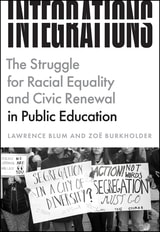
Integrations
The Struggle for Racial Equality and Civic Renewal in Public EducationLawrence Blum and Zoë Burkholder
University of Chicago Press, 2021
Integrations focuses on multiple marginalized groups in American schooling: African Americans, Native Americans, Latinxs, and Asian Americans. The authors show that in order to grapple with integration in a meaningful way, we must think of integration in the plural, both in its multiple histories and in the many possible definitions of and courses of action for integration. Ultimately, the authors show, integration cannot guarantee educational equality and justice, but it is an essential component of civic education that prepares students for life in our multiracial democracy.
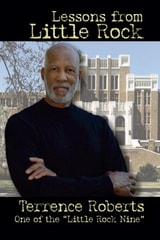
Lessons from Little Rock
Terrance Roberts
Butler Center for Arkansas Studies, 2009
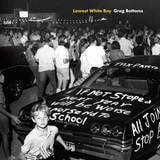
Lowest White Boy
Greg Bottoms
West Virginia University Press, 2019
An innovative, hybrid work of literary nonfiction, Lowest White Boy takes its title from Lyndon Johnson’s observation during the civil rights era: “If you can convince the lowest white man he’s better than the best colored man, he won’t notice you’re picking his pocket.”
Greg Bottoms writes about growing up white and working class in Tidewater, Virginia, during school desegregation in the 1970s. He offers brief stories that accumulate to reveal the everyday experience of living inside complex, systematic racism that is often invisible to economically and politically disenfranchised white southerners—people who have benefitted from racism in material ways while being damaged by it, he suggests, psychologically and spiritually. Placing personal memories against a backdrop of documentary photography, social history, and cultural critique, Lowest White Boy explores normalized racial animus and reactionary white identity politics, particularly as these are collected and processed in the mind of a child.
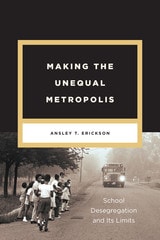
Making the Unequal Metropolis
School Desegregation and Its LimitsAnsley T. Erickson
University of Chicago Press, 2016
Taking Nashville as her focus, Erickson uncovers the hidden policy choices that have until now been missing from popular and legal narratives of inequality. In her account, inequality emerges not only from individual racism and white communities’ resistance to desegregation, but as the result of long-standing linkages between schooling, property markets, labor markets, and the pursuit of economic growth. By making visible the full scope of the forces invested in and reinforcing inequality, Erickson reveals the complex history of, and broad culpability for, ongoing struggles in our schools.

Marketing Schools, Marketing Cities
Who Wins and Who Loses When Schools Become Urban AmenitiesMaia Bloomfield Cucchiara
University of Chicago Press, 2013
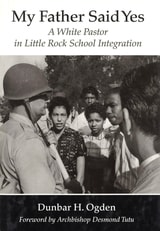
My Father Said Yes
A White Pastor in Little Rock School IntegrationDunbar H. Ogden
Vanderbilt University Press, 2008
My Father Said Yes is the untold story of the Reverend Dunbar Ogden, who became the pro-integration leader in Little Rock's white community. He responded to a call for support from Daisy Bates, co-owner of the town's black newspaper. Both faced fierce opposition from within as well as from outside. Reverend Ogden lost his church and Daisy Bates lost her newspaper.
This memoir is also a moving father-son story. In this frank account, the author discusses the depression his father battled for most of his life, as well as the family tragedy of his brother's suicide.
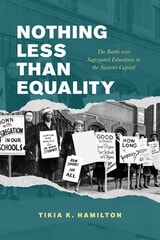
Nothing Less Than Equality
The Battle over Segregated Education in the Nation’s CapitalTikia K. Hamilton
University of Chicago Press, 2026
The landmark Brown v. Board of Education case, which barred racial segregation in American public schools, wasn’t the only path for Black parents, teachers, and activists who sought equality of educational opportunity. Some believed that the solution to inequality lay in pressing the federal government to live up to the Jim Crow doctrine of “separate but equal” by providing more resources to Black schools. And for a time, this seemed true in Washington, DC, where Black activists leveraged their status as residents of the nation’s capital to advocate on behalf of Black education. However, disappointments with the “separate but equal” strategy and a sea change in activism led to an embrace of integration.
In Nothing Less Than Equality, Tikia K. Hamilton reveals the rich and complex history of educational activism in Washington prior to Brown v. Board of Education, illuminating complex dynamics that provide a counterpoint and backdrop to the landmark Supreme Court case. Hamilton thoroughly examines the multipronged strategies employed by parents, teachers, attorneys, and activists to democratize education, demonstrating that there was no linear path to Brown.
Race and Education, 1954-2007
Raymond Wolters
University of Missouri Press, 2008
In this compelling study, a scholar who has long observed the traumas of school desegregation uncovers the changes and difficulties with which public education has dealt over the last fifty years—and argues that some judicial decisions were ill-advised. Dealing candidly with matters usually considered taboo in academic discourse, Wolters argues that the Supreme Court acted correctly and in accordance with public sentiment in Brown but that it later took a wrong turn by equating desegregation with integration.
Retracing the history of desegregation and integration in America’s schools, Wolters distinguishes between several Court decisions, explaining that while Brown called for desegregation by requiring that schools deal with students on a racially nondiscriminatory basis, subsequent decisions—Green, Swann, Keyes—required actual integration through racial balancing. He places these decisions in the context of educational reform in the 1950s that sought to encourage bright students through advanced placement and honors courses—courses in which African American and Hispanic students were less likely to be enrolled. Then with the racial unrest of the 1960s, the pursuit of academic excellence yielded to concerns for uplifting disadvantaged youths and ensuring the predominance of middle-class peer groups in schools.
Wolters draws on rich historical records to document the devastating consequences of requiring racial balance and sheds new light on America’s legal, social, and cultural landscapes. He reexamines the educational theories of Kenneth Clark and James Coleman, and he challenges statistics that support the results of racial balancing by describing how school desegregation and integration actually proceeded in several towns, cities, and counties.
Race and Education is a bold challenge to political correctness in education and a corrective to the now widely accepted notion that desegregation and racially balanced integration are one and the same. It is essential reading for scholars of law and education and a wake-up call for citizens concerned about the future of America’s schools.
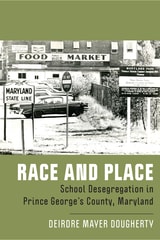
Race and Place
School Desegregation in Prince George's County, MarylandDeirdre Mayer Dougherty
Rutgers University Press, 2025
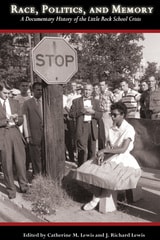
Race, Politics, and Memory
A Documentary History of the Little Rock School CrisisCatherine M. Lewis
University of Arkansas Press, 2007
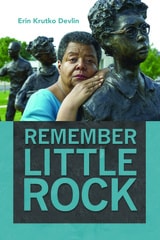
Remember Little Rock
Erin Krutko Devlin
University of Massachusetts Press, 2017
In Remember Little Rock Erin Krutko Devlin explores public memories surrounding the iconic Arkansas school desegregation crisis of 1957 and shows how these memories were vigorously contested and sometimes deployed against the cause. Delving into a wide variety of sources, from memoirs to televised docudramas, commemoration ceremonies, and the creation of Little Rock High museums, Devlin reveals how many white moderates proclaimed Little Rock a victory for civil rights and educational equality even as segregation persisted. At the same time, African American activists, students, and their families asserted their own stories in the ongoing fight for racial justice.
Devlin also demonstrates that public memory directly bears on law and policy. She argues that the triumphal narrative of civil rights has been used to stall school desegregation, support tokenism, and to roll back federal court oversight of school desegregation, voter registration, and efforts to promote diversity in public institutions. Remember Little Rock examines the chasm between the rhetoric of the “post–civil rights” era and the reality of enduring racial inequality.
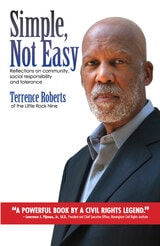
Simple Not Easy
Reflections on community social responsibility and toleranceTerrence Roberts
Parkhurst Brothers, Inc., 2010
HE MADE HISTORY. HE TELLS THE TRUTHS HE KNOWS.
LEAD TITLE/Our National Conversation Series
----Margot Stern Strom, Executive Director, Facing History and Ourselves, Inc.
"Terrence Roberts challenges all of us to make the world more inclusive by adjusting our 'mental maps.' He reminds us that we will not achieve that long-sought beloved community until we recognize the value of each individual-until we affirm each other. Simple, NotEasy is one trailblazer's mingling of history and contemporary mattersto engage a new conversations on community, social responsibility and tolerance. A powerful book by a civil rights legend."
--- Lawrence J. Pijeaux, Jr., Ed.D.,
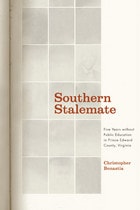
Southern Stalemate
Five Years without Public Education in Prince Edward County, VirginiaChristopher Bonastia
University of Chicago Press, 2011
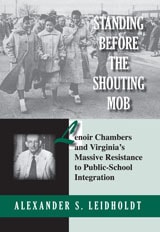
Standing Before the Shouting Mob
Lenoir Chambers and Virginia's Massive Resistance to Public School IntegrationAlex Leidholdt
University of Alabama Press, 2007
A southern journalist campaigns for racial understanding during the
struggle over school desegregation in Virginia.
In 1958 the nation's attention was focused on Norfolk,
Virginia, where nearly ten thousand students were locked out of their schools.
Rather than comply with the desegregation mandate of Brown v. Board
of Education, Governor J. Lindsay Almond, supported by the powerful
political machine of Senator Harry F. Byrd, Sr., had closed Norfolk's white
secondary schools.
Massive resistance to integration transformed Norfolk
into a civil rights arena. Although the process by which Norfolk's schools
were integrated was far from orderly, the transition was characterized
by debate, political maneuvering, and judicial action--not violence. Lenoir
Chambers, editor of the Norfolk Virginian-Pilot, conducted a five-year
editorial campaign supporting the peaceful implementation of the Court's
order. The Pilot was Virginia's only white newspaper to take this
position. Chambers was later awarded a Pulitzer Prize for his editorials.
Utilizing a wide range of primary and secondary sources,
Standing before the Shouting Mob examines Chambers's campaign, explores
the influences that shaped his racial views, and places him within the
context of southern journalism. The book also provides a detailed analysis
of Virginia's massive resistance and Norfolk's school closing.
Ten Years After
A History of Roma School Desegregation in Central and Eastern EuropeIulius Rostas
Central European University Press, 2012
Texas Mexican Americans and Postwar Civil Rights
By Maggie Rivas-Rodriguez
University of Texas Press, 2015
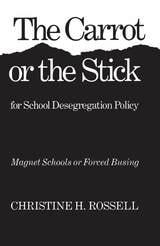
The Carrot or the Stick for School Desegregation Policy
Magnet Schools or Forced BusingChristine H. Rossell
Temple University Press, 1991
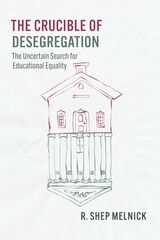
The Crucible of Desegregation
The Uncertain Search for Educational EqualityR. Shep Melnick
University of Chicago Press, 2023
In 1954, the Supreme Court delivered the landmark decision of Brown v. Board of Education—establishing the right to attend a desegregated school as a national constitutional right—but the decision contained fundamental ambiguities. The Supreme Court has never offered a clear definition of what desegregation means or laid out a framework for evaluating competing interpretations. In The Crucible of Desegregation, R. Shep Melnick examines the evolution of federal school desegregation policy from 1954 through the termination of desegregation orders in the first decades of the twenty-first century, combining legal analysis with a focus on institutional relations, particularly the interactions between federal judges and administrators. Melnick argues that years of ambiguous, inconsistent, and meandering Court decisions left lower court judges adrift, forced to apply contradictory Supreme Court precedents in a wide variety of highly charged political and educational contexts. As a result, desegregation policy has been a patchwork, with lower court judges playing a crucial role and with little opportunity to analyze what worked and what didn’t. The Crucible of Desegregation reveals persistent patterns and disagreements that continue to roil education policy.
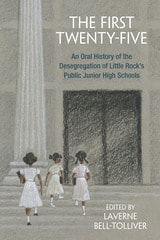
The First Twenty-Five
An Oral History of the Desegregation of Little Rock’s Public Junior High SchoolsLaVerne Bell-Tolliver
University of Arkansas Press, 2018
“It was one of those periods that you got through, as opposed to enjoyed. It wasn’t an environment that . . . was nurturing, so you shut it out. You just got through it. You just took it a day at a time. You excelled if you could. You did your best. You felt as though the eyes of the community were on you.”—Glenda Wilson, East Side Junior High
Much has been written about the historical desegregation of Little Rock Central High School by nine African American students in 1957. History has been silent, however, about the students who desegregated Little Rock’s five public junior high schools—East Side, Forest Heights, Pulaski Heights, Southwest, and West Side—in 1961 and 1962.
The First Twenty-Five gathers the personal stories of these students some fifty years later. They recall what it was like to break down long-standing racial barriers while in their early teens—a developmental stage that often brings emotional vulnerability. In their own words, these individuals share what they saw, heard, and felt as children on the front lines of the civil rights movement, providing insight about this important time in Little Rock, and how these often painful events from their childhoods affected the rest of their lives.

The Future of Meta-Analysis
Kenneth W. Wachter
Russell Sage Foundation, 1990
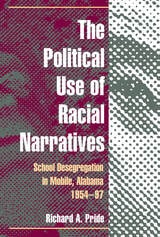
The Political Use of Racial Narratives
School Desegregation in Mobile, Alabama, 1954-97Richard A. Pride
University of Illinois Press, 2002
Exploring who benefits and who pays when different narratives are accepted as true, Pride offers a step-by-step account of how Mobile's culture changed each time a new and more forceful narrative was used to justify inequality. More than a retelling of Mobile's story of desegregation, The Political Use of Racial Narratives promotes the value of rhetorical and narrative analysis in the social sciences and history.
The Pursuit of Racial and Ethnic Equality in American Public Schools
Mendez, Brown, and BeyondKristi L. Bowman
Michigan State University Press, 2015
Understanding the Little Rock Crisis
An Exercise in Remembrance and ReconciliationElizabeth Jacoway
University of Arkansas Press, 1999
Wake
Why the Battle over Diverse Public Schools Still MattersKarey Alison Harwood
Rutgers University Press, 2024