Results by title
41 books match the query 'Selections'
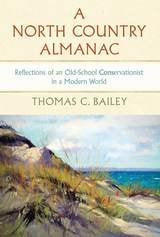
A North Country Almanac
Reflections of an Old-School Conservationist in a Modern WorldThomas C Bailey
Michigan State University Press, 2018
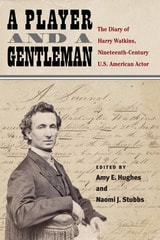
A Player and a Gentleman
The Diary of Harry Watkins, Nineteenth-Century U.S. American ActorEdited by Amy E. Hughes and Naomi J. Stubbs
University of Michigan Press, 2018
Hardworking actor, playwright, and stage manager Harry Watkins (1825–94) was also a prolific diarist. For fifteen years Watkins regularly recorded the plays he saw, the roles he performed, the books he read, and his impressions of current events. Performing across the U.S., Watkins collaborated with preeminent performers and producers, recording his successes and failures as well as his encounters with celebrities such as P. T. Barnum, Junius Brutus Booth, Edwin Forrest, Anna Cora Mowatt, and Lucy Stone. His is the only known diary of substantial length and scope written by a U.S. actor before the Civil War—making Watkins, essentially, the antebellum equivalent of Samuel Pepys. Theater historians Amy E. Hughes and Naomi J. Stubbs have selected, edited, and annotated excerpts from the diary in an edition that offers a vivid glimpse of how ordinary people like Watkins lived, loved, struggled, and triumphed during one of the most tumultuous periods in U.S. history. The selections in A Player and a Gentleman are drawn from a more expansive digital archive of the complete diary. The book, like its digital counterpart, will richly enhance our knowledge of antebellum theater culture and daily life in the U.S. during this period.
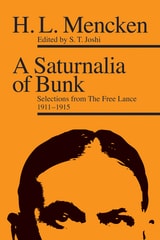
A Saturnalia of Bunk
Selections from The Free Lance, 1911–1915H. L. Mencken
Ohio University Press, 2017
H. L. Mencken’s reputation as a journalist and cultural critic of the twentieth century has endured well into the twenty-first. His early contributions as a writer, however, are not very well known. He began his journalistic career as early as 1899 and in 1910 cofounded the Baltimore Evening Sun. The next year he initiated a column—The Free Lance—that ran six days a week for four and a half years, until the Sun discontinued it, partially in response to Mencken’s controversial defense of Germany during World War One.
In this early forum for his renowned wit, Mencken broached many of the issues to which he would return again and again over his career, establishing himself as a fearless iconoclast willing to tackle the most divisive subjects and apply a heady mix of observation, satire, and repartee to clear away what he regarded as the “saturnalia of bunk” that clouded American thinking. The Free Lance reveals Mencken at his scintillating best as a journalist, polemicist, and satirist.
These columns are collected here for the first time, edited and annotated by Mencken expert and critic S. T. Joshi. This extraordinary collection is an invaluable resource for Mencken scholars and fans and provides an entertaining immersion into the early twentieth-century American zeitgeist.

America, the Dream of My Life
Selections from the Federal Writers' Project's New Jersey Ethnic SurveyCohen, David Steven
Rutgers University Press, 1990
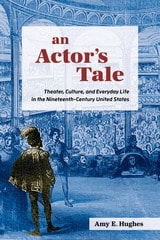
An Actor's Tale
Theater, Culture, and Everyday Life in the Nineteenth-Century United StatesAmy Hughes
University of Michigan Press, 2025
Ultimately, Hughes reveals how this actor’s tale illuminates the widespread tendency to ignore, deny, and forgive White male mediocrity in US culture, and how a deeper understanding of people like Watkins can transform our understanding of the past—and our understanding of ourselves.
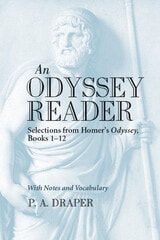
An Odyssey Reader
Selections from Homer's Odyssey, Books 1-12P. A. Draper
University of Michigan Press, 2012
Homer's Odyssey has captivated readers and influenced writers and artists for more than 2,000 years. Reading the poem in its original language provides an experience as challenging as it is rewarding. Most students encountering Homeric Greek for the first time need considerable help, especially with vocabulary and constructions that differ from the more familiar Attic forms. For anyone who has completed studies in elementary Greek, this edition provides the assistance necessary to read, understand, and appreciate the first book of the Odyssey in its original language.
Structured to maximize reading ease, P. A. Draper's volume stands out among introductions to the Greek Odyssey. Readers of this edition will appreciate the positioning of all notes facing the Greek text; the frequent vocabulary entries; the complete glossary; the appendix on basic Homeric forms and grammar; and the copious annotations on vocabulary, grammar, meter, historical and mythological allusions, and literary interpretation.
Primarily designed as a textbook, this volume will be an effective classroom tool and a useful acquisition for any library supporting a classics program. The book will find readers among high school and college Greek students, advanced students in Homer or epic poetry classes, graduate students working on reading-list requirements, and anyone interested in maintaining Greek reading skills.
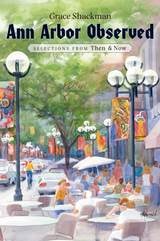
Ann Arbor Observed
Selections from Then and NowGrace Shackman
University of Michigan Press, 2010
Packed with photographs from Ann Arbor of yesteryear and the present day, Ann Arbor Observed compiles the best of Shackman’s articles in one book divided into eight sections: public buildings and institutions, the University of Michigan, transportation, industry, downtown Ann Arbor, recreation and culture, social fabric and communities, and architecture.
For long-time residents, Ann Arbor expatriates, University of Michigan alumni, and visitors alike, Ann Arbor Observed provides a rare glimpse of the bygone days of a town with a rich and varied history.
Grace Shackman is a history columnist for the Ann Arbor Observer, the Community Observer, and the Old West Side News, as well as a writer for University of Michigan publications. She is the author of two previous books: Ann Arbor in the 19th Century and Ann Arbor in the 20th Century.
Augustine in His Own Words
William Harmless
Catholic University of America Press, 2010
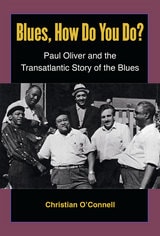
Blues, How Do You Do?
Paul Oliver and the Transatlantic Story of the BluesChristian O’Connell
University of Michigan Press, 2015
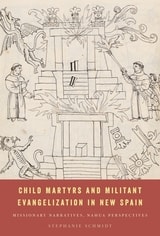
Child Martyrs and Militant Evangelization in New Spain
Missionary Narratives, Nahua PerspectivesStephanie Schmidt
University of Texas Press, 2025
Examines the many iterations of a story of child martyrdom in colonial Mexico.
A cornerstone of the evangelization of early New Spain was the conversion of Nahua boys, especially the children of elites. They were to be emissaries between Nahua society and foreign missionaries, hastening the transmission of the gospel. Under the tutelage of Franciscan friars, the boys also learned to act with militant zeal. They sermonized and smashed sacred objects. Some went so far as to kill a Nahua religious leader. For three boys from Tlaxcala, the reprisals were just as deadly.
In Child Martyrs and Militant Evangelization in New Spain, Stephanie Schmidt sheds light on a rare manuscript about Nahua child converts who were killed for acts of zealotry during the late 1520s. This is the Nahuatl version of an account by an early missionary-friar, Toribio de Benavente Motolinía. To this day, Catholics venerate the slain boys as Christian martyrs who suffered for their piety. Yet Franciscan accounts of the boys’ sacrifice were influenced by ulterior motives, as the friars sought to deflect attention from their missteps in New Spain. Illuminating Nahua perspectives on this story and period, Schmidt leaves no doubt as to who drove this violence as she dramatically expands the knowledgebase available to students of colonial Latin America.
Conserving Walt Whitman's Fame
Selections from Horace Traubel's Conservator, 1890-1919Schmidgall, Gary
University of Iowa Press, 2006
Customs and Culture in Poland under the Last Saxon King
Selections from Opis obyczajów za panowania Augusta III by father Jedrzej Kitowicz, 1728-1804Translated and with a preface and commentary by Oscar E. Swan
Central European University Press, 2019
Early American Poetry
Selections from Bradstreet, Taylor, Dwight, Freneau, and BryantEdited by Jane Donahue Eberwein
University of Wisconsin Press, 1978
Here is the first major-figure anthology of American poetry of the colonial and early national periods, an indispensable volume for both students and scholars of American literature and civilization.
Five major literary figures are spotlighted: Anne Bradstreet (1612-1672), Edward Taylor (1642?"-1729), Timothy Dwight (1752-1817), Philip Freneau (1752-1832), and William Cullen Bryant (1794-1878). An introduction to each chapter summarizes the life of the poet, reviews his or her literary career, describes and evaluates artistic achievement, and places the poet in an intellectual context. The writer's relationship to changing religious, philosophical, political, and cultural patters is established. The contemporary perspective is augmented by the inclusion of an appendix which presents three important poems by other writers: Micheal Wigglesworth's "God's Controversy with New England," Ebenezer Cook's The Sot-Weed Factor, and Joel Barlow's "Hasty Pudding."
Eberwein goes beyond the most popular and familiar works to include those of unrecognized literary merit, presenting a thoroughly unique approach which illuminates the full range of the writers' themes, forms and poetic voices.
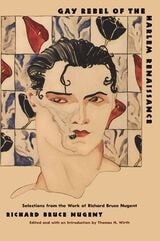
Gay Rebel of the Harlem Renaissance
Selections from the Work of Richard Bruce NugentRichard Bruce Nugent
Duke University Press, 2002
Thomas H. Wirth, a close friend of Nugent’s during the last years of the artist’s life, has assembled a selection of Nugent’s most important writings, paintings, and drawings—works mostly unpublished or scattered in rare and obscure publications and collected here for the first time. Wirth has written an introduction providing biographical information about Nugent’s life and situating his art in relation to the visual and literary currents which influenced him. A foreword by Henry Louis Gates Jr. emphasizes the importance of Nugent for African American history and culture.
God and The End of Satan / Dieu and La Fin de Satan
Selections: In a Bilingual EditionVictor Hugo
Swan Isle Press, 2014
This book brings together abbreviated editions of these two book-length poems—unfinished and unpublished at the time of the author’s death—comprised of selections that capture their visionary and mystical essence. The poems are accompanied by an introduction framing them within the author’s experience as an exile and tracing their publication history.
Victor Hugo is one of the most important figures in the history of French literature, and this beautifully rendered translation brings two of his lesser-known works deservedly to the forefront.

How to Read Barthes' Image-Music-Text
Ed White
Pluto Press, 2012
Roland Barthes remains one of the most influential cultural theorists of the postwar period and Image-Music-Text collects his most influential essays. Ed White provides students with a clear guide to this essential but difficult text.
As students are increasingly expected to write across a range of media, Barthes' work can be understood as an early mapping of what we now call interdisciplinary or multidisciplinary study. The book's detailed section-by-section readings makes Barthes' most important writings accessible to undergraduate readers.
This book is a perfect companion for teaching and learning Barthes' ideas in cultural studies and literary theory.
I've Had to Think Up a Way to Survive
On Trauma, Persistence, and Dolly PartonLynn Melnick
University of Texas Press, 2022
A moving and essential exploration of what it takes to find your voice as a woman, a survivor, an artist, and an icon.
The first time Lynn Melnick listened to a Dolly Parton song in full, she was 14 years old, in the triage room of a Los Angeles hospital, waiting to be admitted to a drug rehab program. Already in her young life as a Jewish teen in the 1980s, she had been the victim of rape, abuse, and trauma, and her path to healing would be long. But in Parton’s words and music, she recognized a fellow survivor.
In this powerful, incisive work of social and self-exploration, Melnick blends personal essay with cultural criticism to explore Parton’s dual identities as feminist icon and objectified sex symbol, identities that reflect the author’s own fraught history with rape culture and the arduous work of reclaiming her voice. Each chapter engages with the artistry and impact of one of Parton’s songs, as Melnick reckons with violence, misogyny, creativity, parenting, friendship, sex, love, and the consolations and cruelties of religion. Bold and inventive, I’ve Had to Think Up a Way to Survive gives us an accessible and memorable framework for understanding our times and a revelatory account of survival, persistence, and self-discovery.
Mother India
Selections from the Controversial 1927 Text, Edited and with an Introduction by Mrinalini SinhaKatherine Mayo
University of Michigan Press, 2000
Mrinalini's Sinha's edition provides selections of this controversial book and commentary on the Mother India phenomenon. It also reprints a range of responses from Mayo's contemporaries. Sinha's edition works to locate the book and the controversy it incited in the context of U.S. domestic, British Imperial, and Indian nationalist politics. Unlike previous editions, Sinha's examines the history of cultural feminisms and the relations between women's movements in the United States, Britain, and India; the examination of these different movements reveals intriguing insights into the nature of the varied reactions to Mayo's book. The edition includes several formerly obscure contemporary responses to Mother India from representatives of the women's movement and of the anti-caste movement in India.
Intended as a tool for students and teachers alike, this book will be an important text in the field of women's studies, cultural studies, political science, history, and religion, among others.
Mrinalini Sinha is Associate Professor of History, Southern Illinois University. She is the author of Colonial Masculinity: The 'Manly Englishman' and the 'Effeminate Bengali' in the Late Nineteenth Century.
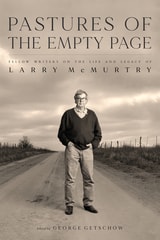
Pastures of the Empty Page
Fellow Writers on the Life and Legacy of Larry McMurtryGeorge Getschow, editor
University of Texas Press, 2023
A collection of essays that offers an intimate view of Larry McMurtry, America’s preeminent western novelist, through the eyes of a pantheon of writers he helped shape through his work over the course of his unparalleled literary life.
When he died in 2021, Larry McMurtry was one of America’s most revered writers. The author of treasured novels such as Lonesome Dove and The Last Picture Show, and coauthor of the screenplays for Brokeback Mountain and Streets of Laredo, McMurtry created unforgettable characters and landscapes largely drawn from his life growing up on the family’s hardscrabble ranch outside his hometown of Archer City, Texas. Pastures of the Empty Page brings together fellow writers to honor the man and his impact on American letters.
Paulette Jiles, Stephen Harrigan, Stephanie Elizondo Griest, and Lawrence Wright take up McMurtry’s piercing and poetic vision—an elegiac literature of place that demolished old myths of cowboy culture and created new ones. Screenwriting partner Diana Ossana reflects on their thirty-year book and screenwriting partnership; other contributors explore McMurtry’s reading habits and his passion for bookselling. And brother Charlie McMurtry shares memories of their childhood on the ranch. In contrast to his curmudgeonly persona, Larry McMurtry emerges as a trustworthy friend and supportive mentor. McMurtry was famously self-deprecating, but as his admirers attest, this self-described “minor regional writer” was an artist for the ages.
Patience and Salvation in Third Century North Africa
A Christian Latin ReaderSarah Wear
Catholic University of America Press, 2022
Peasant Customs and Savage Myths
Selections from the British FolkloristsEdited by Richard M. Dorson
University of Chicago Press, 1969
Professor Dorson traces the historical development of folklore as a field of learning, beginning with sixteenth-century antiquarians whose studies encompassed the preservation of local customs and reaching its climax with the "Great Team" of Andrew Lang and his co-workers from the 1870's to the First World War.
Plato and Tradition
The Poetic and Cultural Context of PhilosophyPatricia Fagan
Northwestern University Press, 2013
Plato’s dialogues are some of the most widely read texts in Western philosophy, and one would imagine them fully mined for elemental material. Yet, in Plato and Tradition, Patricia Fagan reveals the dialogues to be continuing sources of fresh insight. She recovers from them an underappreciated depth of cultural reference that is crucial to understanding their central philosophical concerns. Through careful readings of six dialogues, Fagan demonstrates that Plato’s presentation of Socrates highlights the centrality of tradition in political, erotic, and philosophic life. Plato embeds Socrates’s arguments and ideas in traditional references that would have been familiar to contemporaries of Socrates or Plato but that today’s reader typically passes over. Fagan’s book unpacks this cultural and literary context for the proper and full understanding of the philosophical argument of the Platonic dialogues. She concludes that, as Socrates demonstrates in word and deed, tradition is essential to successful living. But we must take up tradition with a critical openness to questioning its significance and future. Her original and compelling analyses may change the views of many readers who think themselves already well versed in the dialogues.
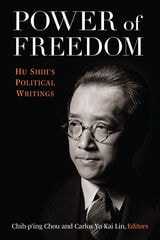
Power of Freedom
Hu Shih's Political WritingsChih-p'ing Chou and Carlos Yu-Kai Lin, Editors
University of Michigan Press, 2022
For decades—and today to a certain extent—Hu Shih’s political writings were considered sensitive and even dangerous. As a strident critic of the Chinese Communist Party’s oligarchical practices, he was targeted by the CCP in a concerted national campaign to smear his reputation, cast aspersions on his writings, and generally destroy any possible influence he might have in China. This volume brings together a collection of Hu Shih’s most important, mostly unpublished, English-language speeches, interviews, and commentaries on international politics, China-U.S. relations, and the International Communist Movement. Taken together, these works provide an insider’s perspective on Sino-American relations and the development of the International Communist Movement over the course of the 20th century.
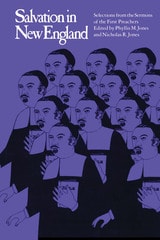
Salvation in New England
Selections from the Sermons of the First PreachersEdited by Phyllis M. Jones and Nicholas R. Jones
University of Texas Press, 1977
The sermon as crafted by the early New England preachers was the most prominent literary form of its day, yet the earliest Puritan texts have as a rule been available only in rare-book collections. This anthology of sermons of the first generation of preachers fills a serious gap in American literature. The preachers collected here, the most widely published of their time, were among the eighty or more who emigrated to Massachusetts Bay during the 1630s. They are John Cotton of Boston, Thomas Shepard of Cambridge, and Thomas Hooker of Hartford, the three foremost "lights of the western churches," and two eminent colleagues, Peter Bulkeley of Concord and John Davenport, first of New Haven and later of Boston.
The selections are chosen to be representative of the lengthy works from which they are drawn, to reflect the major concerns and styles of the preachers' work as a whole, and to demonstrate the genre of the sermon as developed by the early American Puritans. Not only does this anthology represent an important contribution to literary history, but the sermons also illustrate a doctrine uniquely elaborated in this period—a consistent and emphatic narrative, mythlike in its repetition and heroics, of the progress of the soul from a state of nature to a state of salvation. This theme may be seen as a three-stage-development, although individual sermons may vary. These stages—preparation, vocation, and regeneration—determine the order of the selections.
The editors' introductory material supplies a comprehensive and thorough discussion of the early New England sermons, concentrating on their role, history, structure, style, and subject matter. A separate essay on the texts of the sermons describes the relationship between the early printed versions and their form as delivered in the pulpit. The introduction preceding each selection presents original research on the historical circumstances of the preaching and publication of the work from which the sermon is drawn. The editors have also provided brief biographies of the preacfiers represented here, an annotated list of recommended background reading, and the most exhaustive checklist available of authoritative editions of the sermons of these five preachers.
This book will be useful to colonial specialists as well as to students of early American literature, religion, and history. The texts are critically edited for readability, with modernized spelling and annotations of unfamiliar phrases and allusions.

Selections from The Distribution and Abundance of Animals
H. G. Andrewartha and L. C. Birch
University of Chicago Press, 1982
Selections from the Writings of James Nayler, 3rd ed.
Nayler James
QuakerPress, 2013
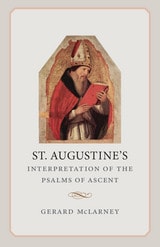
St. Augustine's Interpretaion of the Psalms of Ascent
Gerard McLarney
Catholic University of America Press, 2014
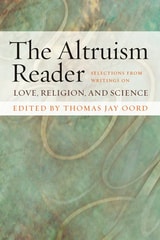
The Altruism Reader
Selections from Writings on Love, Religion, and ScienceThomas Oord
Templeton Press, 2007
This anthology brings together, for the first time, leading essays and book chapters from theologians, philosophers, and scientists on their research on ethics, altruism, and love. Because the general consensus today is that scholarship in moral theory requires empirical research, the arguments of the leading scholars presented in this book will be fundamental to those examining issues in love, ethics, religion, and science.
The first half of The Altruism Reader offers essential selections from religious texts, leading contemporary scholars, and cutting-edge ethicists. Buddhism, Christianity, Hinduism, Islam, and Judaism are represented. Among the highly respected writers are Thomas Aquinas, the Dalai Lama, Thich Nhat Hanh, John Polkinghorne, Stephen Pope, Louis Fischer, Amira Shamma Abdin, Katharine Doob Sakenfeld, and Daniel Day Williams.
The book’s second half features primary readings on love and altruism from the sciences. Here the focus is on anthropology, psychology, sociology, biology, and neurology, with material written by Daniel C. Batson, David Sloan Wilson, Robert Wright, Stephen G. Post, Robert Axelrod, Richard Dawkins, Holmes Rolston III, and other renowned scientists and philosophers.
“Virtually all people act—and often talk—as if they have some clue about love. We speak about loving food, falling in love, loving God, feeling loved, and loving a type of music. We say that love hurts, love waits, love stinks, and love means never having to say you’re sorry. We use the word and its derivatives in a wide variety of ways . . . . My definition of love is this: To love is to act intentionally, in sympathetic response to others (including God), to promote well-being.” —Thomas Jay Oord
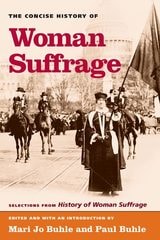
The Concise History of Woman Suffrage
Selections from History of Woman Suffrage, by Elizabeth Cady Stanton, Susan B. Anthony, Matilda Joslyn Gage, and the National American Woman Suffrage AssociationEdited and with an Introduction by Mari Jo Buhle and Paul Buhle
University of Illinois Press, 2005
In their Concise History of Woman Suffrage, Mari Jo Buhle and Paul Buhle have revitalized this classic text by carefully selecting from among its best material. The eighty-two chosen documents, now including interpretative introductory material by the editors, give researchers easy access to material that the original work's arrangement often caused readers to ignore or to overlook.
The volume contains the work of many reform agitators, among them Angelina Grimké, Lucy Stone, Carrie Chapman Catt, Charlotte Perkins Gilman, Anna Howard Shaw, Jane Addams, Sojourner Truth, and Victoria Woodhull, as well as Elizabeth Cady Stanton, Susan B. Anthony, Matilda Joslyn Gage, and Ida Husted Harper.
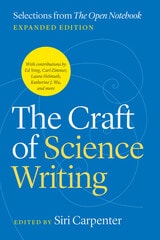
The Craft of Science Writing
Selections from “The Open Notebook,” Expanded EditionEdited by Siri Carpenter
University of Chicago Press, 2024
Science writing has never been so critical to our world, and the demands on writers have never been greater. On any given day, a writer might need to explain the details of AI, analyze developments in climate change research, or serve as a watchdog helping to ensure the integrity of the scientific enterprise. At the same time, writers must spin tales that hook and keep readers, despite the endless other demands on their attention. How does one do it? The Craft of Science Writing is the authoritative guide.
With pieces curated from the archives of science writers’ go-to online resource, The Open Notebook, this book explores strategies for finding and shaping story ideas, pitching editors, and building a specialty in science writing. It delves into fundamental skills that every science writer must learn, including planning their reporting; identifying, interviewing, and quoting sources; organizing interview notes; and crafting stories that engage and inform audiences. This expanded edition includes new introductory material and nine new essays focusing on such topics as how to establish a science beat, how to find and use quotes, how to critically evaluate scientific claims, how to use social media for reporting, and how to do data-driven reporting. In addition, there are essays on inclusivity in science writing, offering strategies for eradicating ableist language from stories, working with sensitivity readers, and breaking into English-language media for speakers of other languages.
Through interviews with leading journalists offering behind-the-scenes inspiration as well as in-depth essays on the craft offering practical advice, readers will learn how the best science stories get made, from conception to completion.
Contributors:
Humberto Basilio, Siri Carpenter, Jeanne Erdmann, Dan Ferber, Tina Casagrand Foss, Geoffrey Giller, Laura Helmuth, Jane C. Hu, Alla Katsnelson, Roxanne Khamsi, Betsy Ladyzhets, Jyoti Madhusoodanan, Amanda Mascarelli, Robin Meadows, Kate Morgan, Tiên Nguyễn, Michelle Nijhuis, Aneri Pattani, Rodrigo Pérez Ortega, Mallory Pickett, Kendall Powell, Tasneem Raja, Sandeep Ravindran, Marion Renault, Julia Rosen, Megha Satyanarayana, Christina Selby, Knvul Sheikh, Abdullahi Tsanni, Alexandra Witze, Katherine J. Wu, Wudan Yan, Ed Yong, Rachel Zamzow, Sarah Zhang, and Carl Zimmer
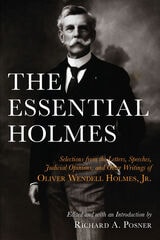
The Essential Holmes
Selections from the Letters, Speeches, Judicial Opinions, and Other Writings of Oliver Wendell Holmes, Jr.Oliver Wendell Holmes
University of Chicago Press, 1992
"A first-rate prose stylist, [Holmes] was perhaps the most quotable of all judges, as this ably edited volume shows."—Washington Post Book World
"Brilliantly edited, lucidly organized, and equipped with a compelling introduction by Judge Posner, [this book] is one of the finest single-volume samplers of any author's work I have seen. . . . Posner has fully captured the acrid tang of him in this masterly anthology."—Terry Teachout, National Review
"Excellent. . . . A worthwhile contribution to current American political/legal discussions."—Library Journal
"The best source for the reader who wants a first serious acquaintance with Holmes."—Thomas C. Grey, New York Review of Books
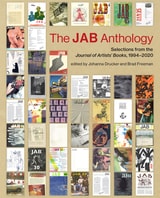
The JAB Anthology
Selections from the Journal of Artists' Books, 1994-2020Johanna Drucker
University of Iowa Press, 2023
The JAB Anthology contains contributions by many renowned figures in the field including: Anne Moeglin-Delcroix, Janet Zweig, Monica Carroll, Adam Dickerson, Alisa Scudamore, Mary Jo Pauly, April Sheridan, Doro Boehme, Gerrit Jan de Rook, Océane Delleaux, Brandon Graham, Jérôme Dupeyrat, Ward Tietz, Paulo Silveira, Philip Cabau, Leszek Brogowski, Lyn Ashby, Tim Mosely, Debra Parr, Pedro Moura, Levi Sherman, Catarina Figueiredo Cardoso, Isabel Baraona, and the editors.
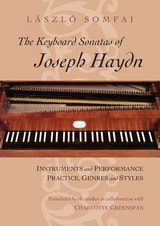
The Keyboard Sonatas of Joseph Haydn
Instruments and Performance Practice, Genres and StylesLászló Somfai
University of Chicago Press, 1995
Laszlo Somfai begins with a thorough study of Haydn's keyboard instruments and their development. After recommending instruments appropriate for modern use, he discusses performance practice and style, explains the peculiarities of Haydn's manuscripts in the context of eighteenth-century notation, and provides specific suggestions for playing ornaments, improvising, slurring, and dynamics. He also investigates Haydn's sonata genres within their historical context and discusses the problems of establishing a chronology of their composition. Finally, Somfai analyzes the organization and style of each musical form. The book includes an index listing the sonatas by date of first publication, and an extensive bibliography.
The Questions on the Octateuch, Volume 1
John F. Theodoret of Cyrus
Catholic University of America Press, 2007
The Questions on the Octateuch, Volume 2
John F. Theodoret of Cyrus
Catholic University of America Press, 2007
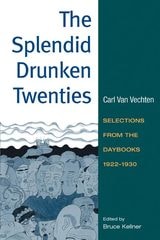
The Splendid Drunken Twenties
Selections from the Daybooks, 1922 - 30Carl Van Vechten
University of Illinois Press, 2002
Between 1922 and 1930, Carl Van Vechten--one of the most significant figures of the Harlem Renaissance--kept a daily record of his activities. The records recount his day-to-day life, as well as the alliances, drinking habits, feuds, and affairs of a wide number of the period's luminaries, providing a rich resource for reconstructing the culture of 1920s New York and the social milieu during Prohibition. Bruce Kellner has provided copious informative notes identifying central figures and clarifying details.
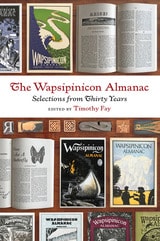
The Wapsipinicon Almanac
Selections from Thirty YearsTimothy Fay
University of Iowa Press, 2023
Treatises on Noah and David
Brian P. St. Ambrose
Catholic University of America Press, 2020
The first treatise presents Noah as a model just man, as Ambrose pairs the literal and the higher or spiritual meaning of the Genesis flood narrative to address topics ranging from the Genesis narrative to Stoic ethics to the Incarnation. In his defense of David to the emperor Theodosius, Ambrose ties David’s sin and repentance to his own close reading of Psalm 51(50), David’s plea for himself in his famous “Miserere.” While the authenticity of the third treatise included in the volume, the Second Apology of David, has long been challenged, recent scholarship suggests that it transmits Ambrose’s own preaching, which applies the lessons of David’s life to the situation of gentile unbelievers, Jews, and the church; even if it is the work of a later imitator, the Second Apology is a compelling and systematic treatment of the David’s sin and repentance as relevant to Christian morality and doctrine.
The three treatises, previously unavailable in English translation, broaden our understanding of exegesis in the Latin West and our interpretation of Ambrose as preacher and exegete.
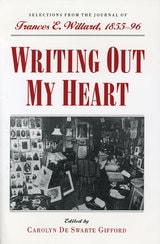
Writing Out My Heart
Selections from the Journal of Frances E. Willard, 1855-96Edited by Carolyn De Swarte Gifford
University of Illinois Press, 1995
Frances E. Willard's powerful leadership of the Woman's Christian Temperance Union (WCTU) made her one of the most commanding figures in the reform movements of the nineteenth century. World renowned and a force to be reckoned with, Willard grappled publicly and private with difficult issues, including temperance, slavery, women's rights, and her own sexuality. These selections from her forty-nine-volume journal reveal the private and confidential side of Willard for the first time. She comes to life in these pages--a person of character, passion, and self-determination who came to represent the woman of the dawning era.
Supplemented by an in-depth introduction and generous annotations, Writing Out My Heart sheds new light on an extraordinary individual and the lives of women in nineteenth-century America.
Writing Under
Selections From the Internet TextAlan Sondheim
West Virginia University Press, 2012
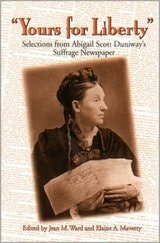
Yours for Liberty
Selections from Abigail Scott Duniway's Suffrage NewspaperJean M. Ward
Oregon State University Press, 2000