Results by title
36 books match the query 'Territorial expansion'
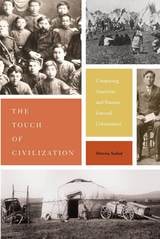
"The Touch of Civilization"
Comparing American and Russian Internal ColonizationSteven Sabol
University Press of Colorado, 2017
This critical examination of internal colonization—a form of contiguous continental expansion, imperialism, and colonialism that incorporated indigenous lands and peoples—draws a corollary between the westward-moving American pioneer and the eastward-moving Russian peasant. Sabol examines how and why perceptions of the Sioux and Kazakhs as ostensibly uncivilized peoples and the Northern Plains and the Kazakh Steppe as “uninhabited” regions that ought to be settled reinforced American and Russian government sedentarization policies and land allotment programs. In addition, he illustrates how both countries encountered problems and conflicts with local populations while pursuing their national missions of colonization, comparing the various forms of Sioux and Kazakh martial, political, social, and cultural resistance evident throughout the nineteenth century.
Presenting a nuanced, in-depth history and contextualizing US and Russian colonialism in a global framework, The Touch of Civilization will be of significant value to students and scholars of Russian history, American and Native American history, and the history of colonization.
A Fire Bell in the Past
The Missouri Crisis at 200, Volume I, Western Slavery, National ImpasseJeffrey L. Pasley
University of Missouri Press, 2021
Drawing on the participants in two landmark conferences held at the University of Missouri and the City University of New York, this first of two volumes finds myriad new perspectives on the Missouri Crisis. Celebrating Missouri’s bicentennial the scholarly way, with fresh research and unsparing analysis, this eloquent collection of essays from distinguished historians gives the epochal struggle over Missouri statehood its due as a major turning point in American history.
Contributors include the editors, Christa Dierksheide, David N. Gellman, Sarah L. H. Gronningsater, Robert Lee, Donald Ratcliffe, Andrew Shankman, Anne Twitty, John R. Van Atta, and David Waldstreicher.
A Fire Bell in the Past
The Missouri Crisis at 200, Volume II: “The Missouri Question” and Its AnswersJeffrey L. Pasley
University of Missouri Press, 2021
Drawn from the of participants in two landmark conferences held at the University of Missouri and the City University of New York, those who contributed original essays to this second of two volumes—a group that includes young scholars and foremost authorities in the field—answer the Missouri “Question,” in bold fashion, challenging assumptions both old and new in the long historiography by approaching the event on its own terms, rather than as the inevitable sequel of the flawed founding of the republic or a prequel to its near destruction.
This second volume of A Fire Bell in the Past features a foreword by Daive Dunkley. Contributors include Dianne Mutti Burke, Christopher Childers, Edward P. Green, Zachary Dowdle, David J. Gary, Peter Kastor, Miriam Liebman, Matthew Mason, Kate Masur, Mike McManus, Richard Newman, and Nicholas Wood.
American Boundaries
The Nation, the States, the Rectangular SurveyBill Hubbard Jr.
University of Chicago Press, 2009
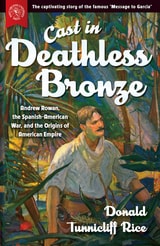
Cast in Deathless Bronze
Andrew Rowan, the Spanish-American War, and the Origins of American EmpireDonald Tunnicliff Rice
West Virginia University Press, 2016
Donald Tunnicliff Rice reveals the facts behind the story of “A Message to García” while using Rowan’s biography as a window into the history of the Spanish-American War, the Philippine War, and the Moro Rebellion. The result is a compellingly written narrative containing many details never before published in any form, and also an accessible perspective on American diplomatic and military history in the late nineteenth and early twentieth centuries.
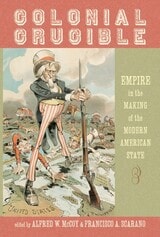
Colonial Crucible
Empire in the Making of the Modern American StateEdited by Alfred W. McCoy and Francisco A. Scarano
University of Wisconsin Press, 2009
Moving well beyond theory, this volume takes the next step, adding a fine-grained, empirical texture to the study of U.S. imperialism by analyzing its specific consequences. Across a broad range of institutions—policing and prisons, education, race relations, public health, law, the military, and environmental management—this formative experience left a lasting institutional imprint. With each essay distilling years, sometimes decades, of scholarship into a concise argument, Colonial Crucible reveals the roots of a legacy evident, most recently, in Washington’s misadventures in the Middle East.

Cultures of United States Imperialism
Amy Kaplan and Donald Pease, editors
Duke University Press, 1994
Drawing on a broad range of interpretive practices, these essays range across American history, from European representations of the New World to the mass media spectacle of the Persian Gulf War. The volume breaks down the boundary between the study of foreign relations and American culture to examine imperialism as an internal process of cultural appropriation and as an external struggle over international power. The contributors explore how the politics of continental and international expansion, conquest, and resistance have shaped the history of American culture just as much as the cultures of those it has dominated. By uncovering the dialectical relationship between American cultures and international relations, this collection demonstrates the necessity of analyzing imperialism as a political or economic process inseparable from the social relations and cultural representations of gender, race, ethnicity, and class at home.
Contributors. Lynda Boose, Mary Yoko Brannen, Bill Brown, William Cain, Eric Cheyfitz, Vicente Diaz, Frederick Errington, Kevin Gaines, Deborah Gewertz, Donna Haraway, Susan Jeffords, Myra Jehlen, Amy Kaplan, Eric Lott, Walter Benn Michaels, Donald E. Pease, Vicente Rafael, Michael Rogin, José David Saldívar, Richard Slotkin, Doris Sommer, Gauri Viswanathan, Priscilla Wald, Kenneth Warren, Christopher P. Wilson
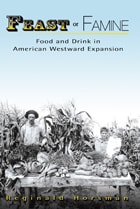
Feast or Famine
Food and Drink in American Westward ExpansionReginald Horsman
University of Missouri Press, 2008
Feast or Famine is the first comprehensive account of food and drink in the winning of the West, describing the sustenance of successive generations of western pioneers. Drawing on journals of settlers and travelers—as well as a lifetime of research on the American West—Reginald Horsman examines more than one hundred years of history, from the first advance of explorers into the Mississippi valley to the movement of ranchers and farmers onto the Great Plains, recording not only the components of their diets but food preparation techniques as well.
Most settlers were able to obtain food beyond the dreams of ordinary Europeans, for whom meat was a luxury. Not only were buffalo, deer, and wild turkey there for the taking, pioneers also gathered greens such as purslane, dandelion, and pigweed—as well as wild fruits, berries, and nuts. They replaced sugar with wild honey or maple syrup, and when they had no tea, they made drinks out of sage, sassafras, and mint. Horsman also reveals the willingness of Indians to convey their knowledge of food to newcomers, sharing salmon in the Pacific Northwest, agricultural crops in the arid Southwest.
Horsman tells how agricultural expansion and transportation opened a veritable cornucopia and how the development of canning soon made it possible for meals to transcend simple frontier foods, with canned oysters and crystallized eggs in airtight cans on merchants’ shelves. He covers food on different regional frontiers, as well as the cuisines of particular groups such as fur traders, soldiers, miners, and Mormons. He also discusses food shortages that resulted from poor preparation, temporary scarcity of game, marginal soil, or simply bad luck. At times, as with the ill-fated Donner Party, pioneers starved.
Engagingly written and meticulously researched, Feast or Famine is a one-of-a-kind look at a subject too long ignored in histories of the West. By revealing the spectrum of frontier fare across years and regions, it shows us that the land of opportunity was often a land of plenty.

Filibusters and Expansionists
Jeffersonian Manifest Destiny, 1800-1821Frank L. Owsley
University of Alabama Press, 2004
Uncover the untold story of America’s 19th-century adventurers and their quest for empire.
The first two decades of the 19th century found many Americans eager to move away from the crowded eastern seaboard and into new areas where their goals of landownership might be realized. Such movement was encouraged by Presidents Jefferson, Madison, and Monroe—collectively known as the Jeffersonians—who believed that the country's destiny was to have total control over the entire North American continent. Migration patterns during this time changed the country considerably and included the roots of the slavery controversy that ultimately led to the Civil War. By the end of the period, although expansionists had not succeeded in moving into British Canada, they had obtained command of large areas from the Spanish South and Southwest, including acreage previously controlled by Native Americans.
Utilizing memoirs, diaries, biographies, newspapers, and vast amounts of both foreign and domestic correspondence, Frank Lawrence Owsley Jr. and Gene A. Smith reveal an insider’s view of the filibusters and expansionists, the colorful—if not sometimes nefarious—characters on the front line of the United States’s land grab. Owsley and Smith describe in detail the actions and characters involving both the successful and the unsuccessful efforts to expand the United States during this period—as well as the outspoken opposition to expansion, found primarily among the Federalists in the Northeast.
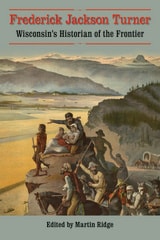
Frederick Jackson Turner
Wisconsin’s Historian of the FrontierMartin Ridge
Wisconsin Historical Society Press, 1986
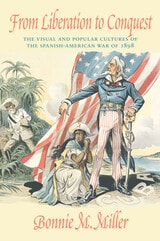
From Liberation to Conquest
The Visual and Popular Cultures of the Spanish-American War of 1898Bonnie M. Miller
University of Massachusetts Press, 2011
Although media campaigns initially advocated for the United States to step in to rescue Cuba from the horrors of colonial oppression, the war ended just months later with the U.S. acquisition of Spain's remaining empire, including Cuba, Puerto Rico, Guam, and the Philippines. President William McKinley heeded the call for war, with the American people behind him, and then proceeded to use the conflict to further his foreign policy agenda of expanding U.S. interests in the Caribbean and Far East.
Miller examines the shifting media portrayals of U.S. actions for the duration of the conflict, from liberation to conquest. She shows how the media capitalized on the public's thirst for drama, action, and spectacle and adapted to emerging imperial possibilities. Growing resistance to American imperialism by the war's end unraveled the consensus in support of U.S policy abroad and produced a rich debate that found expression in American visual and popular culture.
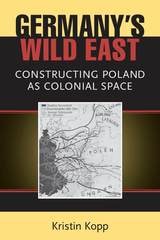
Germany's Wild East
Constructing Poland as Colonial SpaceKristin Kopp
University of Michigan Press, 2012
While conventional definitions locate colonial space overseas, Kristin Kopp argues that it was possible to understand both distant continents and adjacent Eastern Europe as parts of the same global periphery dependent upon Western European civilizing efforts. However, proximity to the source of aid translated to greater benefits for Eastern Europe than for more distant regions.
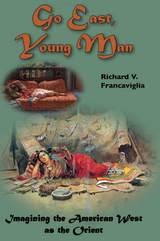
Go East, Young Man
Imagining the American West as the OrientRichard Francaviglia
Utah State University Press, 2011
Transference of orientalist images and identities to the American landscape and its inhabitants, especially in the West—in other words, portrayal of the West as the “Orient”—has been a common aspect of American cultural history. Place names, such as the Jordan River or Pyramid Lake, offer notable examples, but the imagery and its varied meanings are more widespread and significant. Understanding that range and significance, especially to the western part of the continent, means coming to terms with the complicated, nuanced ideas of the Orient and of the North American continent that European Americans brought to the West. Such complexity is what historical geographer Richard Francaviglia unravels in this book.
Since the publication of Edward Said’s book, Orientalism, the term has come to signify something one-dimensionally negative. In essence, the orientalist vision was an ethnocentric characterization of the peoples of Asia (and Africa and the “Near East”) as exotic, primitive “others” subject to conquest by the nations of Europe. That now well-established point, which expresses a postcolonial perspective, is critical, but Francaviglia suggest that it overlooks much variation and complexity in the views of historical actors and writers, many of whom thought of western places in terms of an idealized and romanticized Orient. It likewise neglects positive images and interpretations to focus on those of a decadent and ostensibly inferior East.
We cannot understand well or fully what the pervasive orientalism found in western cultural history meant, says Francaviglia, if we focus only on its role as an intellectual engine for European imperialism. It did play that role as well in the American West. One only need think about characterizations of American Indians as Bedouins of the Plains destined for displacement by a settled frontier. Other roles for orientalism, though, from romantic to commercial ones, were also widely in play. In Go East, Young Man, Francaviglia explores a broad range of orientalist images deployed in the context of European settlement of the American West, and he unfolds their multiple significances.
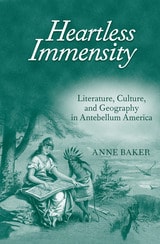
Heartless Immensity
Literature, Culture, and Geography in Antebellum AmericaAnne Baker
University of Michigan Press, 2010
Building on extensive archival research as well as insights from cultural geographers and theorists of nationhood, Heartless Immensity demonstrates that national expansion had a far more complicated, multifaceted impact on antebellum American culture than has previously been recognized. Baker shows that Americans developed a variety of linguistic strategies for imagining the form of the United States and its position in relation to other geopolitical entities. Comparisons
to European empires, biblical allusions, body politic metaphors, and metaphors derived from science all reflected—and often attempted to assuage—fears that the nation was becoming either monstrously large or else misshapen in ways that threatened cherished beliefs and national self-images.
Heartless Immensity argues that, in order to understand the nation’s shift from republic to empire and to understand American culture in a global context, it is first necessary to pay close attention to the processes by which the physical entity known as the United States came into being. This impressively thorough study will make a valuable contribution to the fields of American studies and literary studies.
Anne Baker is Assistant Professor of English at North Carolina State University.
How the Incas Built Their Heartland
State Formation and the Innovation of Imperial Strategies in the Sacred Valley, PeruR. Alan Covey
University of Michigan Press, 2006
In How the Incas Built Their Heartland R. Alan Covey supplements an archaeological approach with the tools of a historian, forming an interdisciplinary study of how the Incas became sufficiently powerful to embark on an unprecedented campaign of territorial expansion and how such developments related to earlier patterns of Andean statecraft. In roughly a hundred years of military campaigns, Inca dominion spread like wildfire across the Andes, a process traditionally thought to have been set in motion by a single charismatic ruler, Pachacuti Inca Yupanqui. Taking nearly a century of archaeological research in the region around the Inca capital as his point of departure, Covey offers an alternative description of Inca society in the centuries leading up to imperial expansion. To do so, Covey proposes a new reading of the Spanish chronicles, one that focuses on processes, rather than singular events, occurring throughout the region surrounding Cusco, the Inca capital. His focus on long-term regional changes, rather than heroic actions of Inca kings, allows the historical and archaeological evidence to be placed on equal interpretive footing. The result is a narrative of Inca political origins linking Inca statecraft to traditions of Andean power structures, long-term ecological changes, and internal social transformations. By reading the Inca histories in a compatible way, Covey shows that it is possible to construct a unified theory of how the Inca heartland was transformed after AD 1000.
R. Alan Covey is Assistant Professor of Anthropology at Southern Methodist University.
Imperial Designs, Postimperial Extremes
Studies in Interdisciplinary and Comparative History of Russia and Eastern EuropeAndrei Cusco
Central European University Press, 2023
Anchored in the Russian Empire, but not limited to it, the eight studies in this volume explore the nineteenth-century imperial responses to the challenge of modernity, the dramatic disruptions of World War I, the radical scenarios of the interwar period and post-communist endgames at the different edges of Eurasia. The book continues and amplifies the historiographic momentum created by Alfred J. Rieber’s long and fruitful scholarly career.
First, the volume addresses the attempts of Russian imperial rulers and elites to overcome the economic backwardness of the empire with respect to the West. The ensuing rivalry of several interest groups (entrepreneurs, engineers, economists) created new social forms in the subsequent rounds of modernization. The studies explore the dynamics of the metamorphoses of what Rieber famously conceptualized as a “sedimentary society” in the pre-revolutionary and early Soviet settings.
Second, the volume also expands and dwells on the concept of frontier zones as dynamic, mutable, shifting areas, characterized by multi-ethnicity, religious diversity, unstable loyalties, overlapping and contradictory models of governance, and an uneasy balance between peaceful co-existence and bloody military clashes. In this connection, studies pay special attention to forced and spontaneous migrations, and population politics in modern Eurasia.
Indian Wars
The Campaign for the American WestBill Yenne
Westholme Publishing, 2006
A Chronicle of the Longest Military Action in American History
"Splendid. . . .a book that has the rare quality of being both an excellent reference work and a pleasure to read."—Wall Street Journal
"As complete and balanced an overview of nearly a century of fighting between the U.S. Army and dozens of Indian nations as there is." —Martin Naparsteck, Salt Lake Tribune
"Excellent. . . . Indian Wars is an outstanding introduction to the 'longest campaign ever waged by any of the United States armed forces.' It also has the virtue of speaking eloquently to the past while offering valuable guidance for the future."—Military.com
The Indian wars remain the most misunderstood campaign ever waged by the U. S. Army. From the first sustained skirmishes west of the Mississippi River in the 1850s to the sweeping clashes of hundreds of soldiers and warriors along the upper plains decades later, these wars consumed most of the active duty resources of the army for the greater part of the nineteenth century and resulted in the disruption of nearly all of the native cultures in the West. Yet the popular understanding of the Indian wars is marred by stereotypes and misinformation as well as a tendency to view these individual wars—the battles against the Sioux, the Cheyenne, the Nez Perce, the Apache, and other groups—as distinct incidents rather than parts of a single overarching campaign. Dispelling notions that American Indians were simply attempting to stop encroachment on their homelands or that they shared common views on how to approach the Europeans, Bill Yenne explains in Indian Wars: The Campaign for the American West, that these wars, fought for more than five decades across a landscape the size of continental Europe, were part of a general long-term strategy by the U. S. Army to control the West as well as extensions of conflicts among native peoples that predated European contact.
Complete with a general history of Indian and European relations from the earliest encounters to the opening of the west, and featuring legendary figures from both sides, including Crazy Horse, Chief Joseph, Sitting Bull, Geronimo, George Custer, Kit Carson, and George Crook, Indian Wars allows the reader to better understand the sequence of events that transformed the West and helped define the American temperament.
Intermediate Elites in Pre-Columbian States and Empires
Edited by Christina M. Elson and R. Alan Covey
University of Arizona Press, 2006
This is the first volume to consider how individuals subordinate to imperial rulers helped to shape specific forms of state and imperial organization. Taking a broader scope than previous studies, it is one of the few works to systematically address these issues in both Mesoamerica and the Central Andes. It considers how these individuals influenced the long-term development of the largest civilizations of the ancient Americas, opening a new window on the role of intermediate elites in the rise and fall of ancient states and empires worldwide.
The authors demonstrate how such evidence as settlement patterns, architecture, decorative items, and burial patterns reflect the roles of intermediate elites in their respective societies, arguing that they were influential actors whose interests were highly significant in shaping the specific forms of state and imperial organization. Their emphasis on provincial elites particularly shifts examination of early states away from royal capitals and imperial courts, explaining how local elites and royal bureaucrats had significant impact on the development and organization of premodern states.
Together, these papers demonstrate that intricate networks of intermediate elites bound these ancient societies together—and that competition between individuals and groups contributed to their decline and eventual collapse. By addressing current theoretical concerns with agency, resistance to state domination, and the co-option of local leadership by imperial administrators, it offers valuable new insight into the utility of studying intermediate elites.
Into New Territory
American Historians and the Concept of US ImperialismJames G. Morgan
University of Wisconsin Press, 2014
Tracing the emergence of the concept of US imperialism, James G. Morgan shows how radical and revisionist scholars in the 1950s and 1960s first challenged the paradigm of denying an American empire. As the Vietnam War created a critical flashpoint, bringing the idea of American imperialism into the US mainstream, radical students of the New Left turned toward Marxist critiques, admiring revolutionaries like Che Guevara. Simultaneously, a small school of revisionist scholars, led by historian William Appleman Williams at the University of Wisconsin, put forward a progressive, nuanced critique of American empire grounded in psychology, economics, and broader historical context. It is this more sophisticated strand of thinking, Morgan argues, which demonstrated that empire can be an effective analytical framework for studying US foreign policy, thus convincing American scholars to engage with the subject seriously for the first time.
Land Hunger
Ohio and the Western FrontiersMansel G. Blackford
Ohio University Press, 2025
Latin American Indigenous Warfare and Ritual Violence
Edited by Richard J. Chacon and Rubén G. Mendoza
University of Arizona Press, 2007
All of the chapters advance our knowledge of the causes, extent, and consequences of indigenous violence—including ritualized violence—in Latin America. Each major historical/cultural group in Latin America is addressed by at least one contributor. Incorporating the results of dozens of years of research, this volume documents evidence of warfare, violent conflict, and human sacrifice from the fifteenth century to the twentieth, including incidents that occurred before European contact. Together the chapters present a convincing argument that warfare and ritual violence have been woven into the fabric of life in Latin America since remote antiquity.
For the first time, expert subject-area work on indigenous violence—archaeological, osteological, ethnographic, historical, and forensic—has been assembled in one volume. Much of this work has heretofore been dispersed across various countries and languages. With its collection into one English-language volume, all future writers—regardless of their discipline or point of view—will have a source to consult for further research.
CONTENTS
Acknowledgments
Introduction
Richard J. Chacon and Rubén G. Mendoza
1. Status Rivalry and Warfare in the Development and Collapse of Classic Maya Civilization
Matt O’Mansky and Arthur A. Demarest
2. Aztec Militarism and Blood Sacrifice: The Archaeology and Ideology of Ritual Violence
Rubén G. Mendoza
3. Territorial Expansion and Primary State Formation in Oaxaca, Mexico
Charles S. Spencer
4. Images of Violence in Mesoamerican Mural Art
Donald McVicker
5. Circum-Caribbean Chiefly Warfare
Elsa M. Redmond
6. Conflict and Conquest in Pre-Hispanic Andean South America: Archaeological Evidence from Northern Coastal Peru
John W. Verano
7. The Inti Raymi Festival among the Cotacachi and Otavalo of Highland Ecuador: Blood for the Earth
Richard J. Chacon, Yamilette Chacon, and Angel Guandinango
8. Upper Amazonian Warfare
Stephen Beckerman and James Yost
9. Complexity and Causality in Tupinambá Warfare
William Balée
10. Hunter-Gatherers’ Aboriginal Warfare in Western Chaco
Marcela Mendoza
11. The Struggle for Social Life in Fuego-Patagonia
Alfredo Prieto and Rodrigo Cárdenas
12. Ethical Considerations and Conclusions Regarding Indigenous Warfare and Ritual Violence in Latin America
Richard J. Chacon and Rubén G. Mendoza
References
About the Contributors
Index
Lincoln Looks West
From the Mississippi to the PacificEdited by Richard W. Etulain
Southern Illinois University Press, 2010
This first-ever volume to comprehensively explore President Abraham Lincoln’s ties to the American West brings together a variety of scholars and experts who offer a fascinating look at the sixteenth president’s lasting legacy in the territory beyond the Mississippi River. Editor Richard W. Etulain’s extensive introductory essay treats these western connections from Lincoln’s early reactions to Texas, Oregon, and the Mexican War in the 1840s, through the 1850s, and during his presidency, providing a framework for the nine essays that follow.
Each of these essays offers compelling insight into the many facets of Lincoln’s often complex interactions with the American West. Included in this collection are a provocative examination of Lincoln’s opposition to the Mexican War; a discussion of the president’s antislavery politics as applied to the new arena of the West; new perspectives on Lincoln’s views regarding the Thirteenth Amendment and his reluctance regarding the admission of Nevada to the Union; a fresh look at the impact of the Radical Republicans on Lincoln’s patronage and appointments in the West; and discussion of Lincoln’s favorable treatment of New Mexico and Arizona, primarily Southern and Democratic areas, in an effort to garner their loyalty to the Union. Also analyzed is “The Tribe of Abraham”—Lincoln’s less-than-competent appointments in Washington Territory made on the basis of political friendship—and the ways in which Lincoln’s political friends in the Western Territories influenced his western policies. Other essays look at Lincoln’s dealings with the Mormons of Utah, who supported the president in exchange for his tolerance, and American Indians, whose relations with the government suffered as the president’s attention was consumed by the crisis of the Civil War.
In addition to these illuminating discussions, Etulain includes a detailed bibliographical essay, complete with examinations of previous interpretations and topics needing further research, as well as an extensive list of resources for more information on Lincoln's ties west of the Mississippi. Loaded with a wealth of information and fresh historical perspectives, Lincoln Looks West explores yet another intriguing dimension to this dynamic leader and to the history of the American West.
Contributors:
Richard W. Etulain
Michael S. Green
Robert W. Johannsen
Deren Earl Kellogg
Mark E. Neely Jr.
David A. Nichols
Earl S. Pomeroy
Larry Schweikart
Vincent G. Tegeder
Paul M. Zall
Model-Minority Imperialism
Victor Bascara
University of Minnesota Press, 2006
Nation Within
The History of the American Occupation of Hawai'iTom Coffman
Duke University Press, 2009
Nationalizing Empires
Stefan Berger
Central European University Press, 2015
Rational Empires
Institutional Incentives and Imperial ExpansionLeo J. Blanken
University of Chicago Press, 2012
The nineteenth century marked the high point of imperialism, when tsarist Russia expanded to the Pacific and the sun was said never to set on the British Empire. Imperialism remains a perennial issue in international relations today, and nowhere is this more evident than in the intensifying competition for global resources.
Leo J. Blanken explains imperialism through an analysis of the institutions of both the expanding state and its targets of conquest. While democratic states favoring free trade generally resort to imperialism only to preempt aggressive rivals—or when they have reason to believe another state’s political institutions will not hold up when making bargains—authoritarian states tend toward imperialism because they don’t stand to benefit from free trade. The result is three distinct strategies toward imperialism: actors fighting over territory, actors peaceably dividing territory among themselves, and actors refraining from seizing territory altogether. Blanken examines these dynamics through three case studies: the scramble for Africa, the unequal treaties imposed on Qing Dynasty China, and the evolution of Britain’s imperial policy in India. By separating out the different types of imperialism, Blanken provides insight into its sources, as well as the potential implications of increased competition in the current international arena.
Settler Garrison
Debt Imperialism, Militarism, and Transpacific ImaginariesJodi Kim
Duke University Press, 2022
Soviet Occupation of Romania, Hungary, and Austria 1944/45–1948/49
László Borhi
Central European University Press, 2015
The Empire of Civilization
The Evolution of an Imperial IdeaBrett Bowden
University of Chicago Press, 2009
The term “civilization” comes with considerable baggage, dichotomizing people, cultures, and histories as “civilized”—or not. While the idea of civilization has been deployed throughout history to justify all manner of interventions and sociopolitical engineering, few scholars have stopped to consider what the concept actually means. Here, Brett Bowden examines how the idea of civilization has informed our thinking about international relations over the course of ten centuries.
From the Crusades to the colonial era to the global war on terror, this sweeping volume exposes “civilization” as a stage-managed account of history that legitimizes imperialism, uniformity, and conformity to Western standards, culminating in a liberal-democratic global order. Along the way, Bowden explores the variety of confrontations and conquests—as well as those peoples and places excluded or swept aside—undertaken in the name of civilization. Concluding that the “West and the rest” have more commonalities than differences,this provocative and engaging bookultimately points the way toward an authentic intercivilizational dialogue that emphasizes cooperation over clashes.
The Federalist Frontier
Settler Politics in the Old Northwest, 1783-1840Kristopher Maulden
University of Missouri Press, 2023
Historians of early American politics will have a chance to read about Federalists in the Northwest, and they will see the early American state in action in fighting Indians, shaping settler understandings of space and social advancement, and influencing political ideals among the citizens. For historians of the early American West, Maulden’s work demonstrates that the origins of state-led expansion reach much further back in time than generally understood.
The Frontier in American History
Frederick Jackson Turner
University of Arizona Press, 1986
The Frontiers of Women's Writing
Women's Narratives and the Rhetoric of Westward ExpansionBrigitte Georgi-Findlay
University of Arizona Press, 1996
Brigitte Georgi-Findlay presents a range of writings that reflects the diversity of the western experience. Beginning with the narratives of Caroline Kirkland and other women of the early frontier, she reviews the diaries of the overland trails; letters and journals of the wives of army officers during the Indian wars; professional writings, focusing largely on travel, by women such as Caroline Leighton from the regional publishing cultures that emerged in the Far West during the last quarter of the century; and late-nineteenth- and early-twentieth-century accounts of missionaries and teachers on Indian reservations. Most of the writers were white, literate women who asserted their own kind of cultural authority over the lands and people they encountered. Their accounts are not only set in relation to a masculine frontier myth but also investigated for clues about their own involvement with territorial expansion. By exploring the various ways in which women writers actively contributed to and at times rejected the development of a national narrative of territorial expansion based on empire building and colonization, the author shows how their accounts are implicated in expansionist processes at the same time that they formulate positions of innocence and detachment.
Georgi-Findlay has drawn on American studies scholarship, feminist criticism, and studies of colonial discourse to examine the strategies of women's representation in writing about the West in ways that most theorists have not. She critiques generally accepted stereotypes and assumptions--both about women's writing and its difference of view in particular, and about frontier discourse and the rhetoric of westward expansion in general--as she offers a significant contribution to literary studies of the West that will challenge scholars across a wide range of disciplines.
The New Kingdom of Granada
The Making and Unmaking of Spain's Atlantic EmpireSantiago Muñoz-Arbeláez
Duke University Press, 2025
The Spires Still Point to Heaven
Cincinnati's Religious Landscape, 1788–1873Matthew Smith
Temple University Press, 2023
A case study about the formation of American pluralism and religious liberty, The Spires Still Point to Heaven explores why—and more importantly how—the early growth of Cincinnati influenced the changing face of the United States. Matthew Smith deftly chronicles the urban history of this thriving metropolis in the mid-nineteenth century. As Protestants and Catholics competed, building rival domestic missionary enterprises, increased religious reform and expression shaped the city. In addition, the different ethnic and religious beliefs informed debates on race, slavery, and immigration, as well as disease, temperance reform, and education.
Specifically, Smith explores the Ohio Valley’s religious landscape from 1788 through the nineteenth century, examining its appeal to evangelical preachers, abolitionists, social critics, and rabbis. He traces how Cincinnati became a battleground for newly energized social reforms following a cholera epidemic, and how grassroots political organizing was often tied to religious issues. He also illustrates the anti-immigrant sentiments and anti-Catholic nativism pervasive in this era.
The first monograph on Cincinnati’s religious landscape before the Civil War, The Spires Still Point to Heaven highlights Cincinnati’s unique circumstances and how they are key to understanding the cultural and religious development of the nation.
To the Wide Missouri
Traveling in America During the First Decades of Westward ExpansionLouis A. Garavaglia
Westholme Publishing, 2011
The Fascinating History of the Rapid Expansion of Roads, Canals, and Railways in the First Decades of the United States
While the great overland migration routes to America’s far west are well known and documented—the California, Oregon, Mormon, and Santa Fe Trails, the Central Overland and Pony Express—less attention has been given to how Americans in the first decades of the republic traveled across the western frontiers of the original colonies. Following the revolution, Americans began to seek their fortunes to the west in greater numbers. Land grants to veterans inspired others to move, including tradesmen, merchants, and tavern owners. With the Louisiana Purchase in 1803, the country doubled in size, and the rate of migration became extraordinary, with wider and more durable roads built, ferries installed at river crossings, canals cut to move goods, regular stage routes established, and ultimately the first railroad tracks laid down. Entire regions that supported few communities in the 1790s exploded in population, and as a result seven new states were admitted to the Union in the decade following the War of 1812. John Bradbury, who traveled through the United States between 1809 and 1811, wrote that “In passing through the upper parts of Virginia, I observed a great number of farms that had been abandoned, on many of which good houses had been erected, and fine apple and peach orchards had been planted. On enquiring the reason, I was always informed that the owners had gone to the western country.” In Maryland, a newspaper reporter wrote, “The time is close at hand when the region west of the Allegheny mountains will sway the destinies of the nation.” By 1839, the National Road extended more than 700 miles from Washington, DC, to central Illinois, New York’s Erie Canal operated from Albany to Buffalo, and the Baltimore and Ohio Railroad carried passengers briskly west, ultimately to the Ohio River.
Urbanism and Empire in Roman Sicily
By Laura Pfuntner
University of Texas Press, 2019
Sicily has been the fulcrum of the Mediterranean throughout history. The island’s central geographical position and its status as ancient Rome’s first overseas province make it key to understanding the development of the Roman Empire. Yet Sicily’s crucial role in the empire has been largely overlooked by scholars of classical antiquity, apart from a small number of specialists in its archaeology and material culture.
Urbanism and Empire in Roman Sicily offers the first comprehensive English-language overview of the history and archaeology of Roman Sicily since R. J. A. Wilson’s Sicily under the Roman Empire (1990). Laura Pfuntner traces the development of cities and settlement networks in Sicily in order to understand the island’s political, economic, social, and cultural role in Rome’s evolving Mediterranean hegemony. She identifies and examines three main processes traceable in the archaeological record of settlement in Roman Sicily: urban disintegration, urban adaptation, and the development of alternatives to urban settlement. By expanding the scope of research on Roman Sicily beyond the bounds of the island itself, through comparative analysis of the settlement landscapes of Greece and southern Italy, and by utilizing exciting evidence from recent excavations and surveys, Pfuntner establishes a new empirical foundation for research on Roman Sicily and demonstrates the necessity of including Sicily in broader historical and archaeological studies of the Roman Empire.