
 A SCHOLARLY BOOK REPOSITORY
1888 start with A start with A
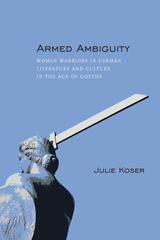
Armed Ambiguity is a fascinating examination of the tropes of the woman warrior constructed by print culture—including press reports, novels, dramatic works, and lyrical texts—during the decades-long conflict in Europe around 1800.
In it, Julie Koser sheds new light on how women’s bodies became a battleground for competing social, cultural, and political agendas in one of the most pivotal periods of modern history. She traces the women warriors in this work as reflections of the social and political climate in German-speaking lands, and she reveals how literary texts and cultural artifacts that highlight women’s armed insurrection perpetuated the false dichotomy of "public" versus "private" spheres along a gendered fault line. Koser illuminates how reactionary visions of "ideal femininity" competed with subversive fantasies of new femininities in the ideological battle being waged over the restructuring of German society.
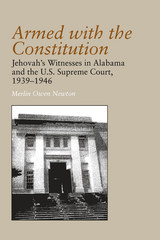
Armed with the Constitution stresses the courage of a black man, Rosco Jones, and a white woman, Grace Marsh, who dared to challenge the status quo in Alabama in the early 1940s. These two Jehovah’s Witnesses helped to lay a foundation for testing the constitutionality of state and local laws, establishing precedents that the Civil Rights movement, the feminist movement, and similar forces could follow. Newton has prepared a finely woven tale of oral, legal, and social history that opens a window on the world of the Jehovah’s Witnesses in Alabama.
More than a legal study, this book is also a dramatic history of two powerful personalities whose total commitment to their faith enabled them to carry the Jehovah’s Witnesses’ battle from rural Alabama to the halls of the U.S. Supreme Court.

Hewsen has divided the maps into five sections, each of which begins with a chronology of important dates and a historical introduction to the period. Specialized maps include Ptolemy's second-century map of Armenia, as well as maps of Roman, Cilician, Ottoman, tsarist, and Soviet Armenia. Other maps show the Persian khanate of Erevan, the Caucasian campaigns of World War I, the Armenian Genocide, the Armenian monuments in Turkey and Transcaucasia, the worldwide diaspora, ground plans of selected cities, and plans of the great monastery of Echmiadzin in 1660, 1890, and 1990. The atlas concludes with maps portraying the Karabagh war and the new Armenian Republic, and an extensive bibliography compiles references to the vast historical, ethnological, and travel literature on the region.
The first comprehensive and authoritative atlas of any of the former Soviet republics, this book does not treat Armenia in isolation, but instead sets it within the context of Caucasia as a whole, providing detailed information on neighboring regions such as Georgia and Azerbaijan. Armenia: A Historical Atlas will be an essential reference and an important teaching tool for generations to come.
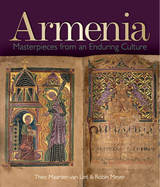
Published to accompany an exhibition at the Bodleian Library, Armenia: Masterpieces from an Enduring Culture draws on the Libraries’ magnificent collection of Armenian manuscripts and early printed books, as well as works of art and religious artifacts to tell the story of the region. The book contains nearly two hundred color illustrations of some of the most treasured masterpieces, from philosophical treatises to splendidly illuminated gospel manuscripts. Also including four essays by experts in the field, the book affords ample insight into the perseverance of the Armenian people in the face of tremendous adversity.
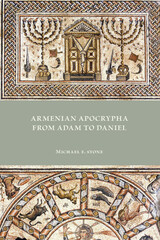
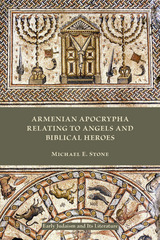
Explore how the vivid and creative Armenian spiritual tradition shaped biblical stories to serve new needs
Michael E. Stone’s latest book includes texts from Armenian manuscripts that are relevant to the development and growth of biblical themes and subjects. Most of these texts have not been published previously. Stone has collected a fascinating corpus of texts about biblical heroes, such as Joseph and Jonah, Nathan the Prophet, and Asaph the Psalmist. In addition, he has included documents illustrating particular points of the biblical story. This work reflects not just on how the Bible was interpreted in medieval times, but also how its stories and details were shaped by and served the needs of the vivid and creative Armenian spiritual tradition.
Features:
- Expanded stories from Exodus
- Introductions,translations, and notes
- Insights into the Armenian "Embroidered Bible," through which many biblical incidents were known to Armenian literature, art, and thought
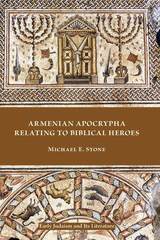
Explore richly embellished Armenian tales of biblical heroes
This fifth book of Michael E. Stone's English translations of stories from medieval Armenian manuscripts illustrates how authors transmitted and transformed accounts of biblical heroes. Texts focus on important figures such as Adam, Noah, Abraham, Solomon, Daniel and Susanna, and more. This collection reflects not only the richness of Armenian creativity stimulated by piety and learning but also Michael E. Stone's career-long search for reworkings of biblical traditions, stories, and persons in the Armenian tradition.
Features:
- A rich tradition of biblical exegesis and commentary, much of it in genres of the older apocryphal and pseudepigraphical literature
- Reflections on the roots of Armenian texts in ancient Judaism and earliest Christianity
- Texts, translations, and a critical apparatus

In 1915, the Ottoman government, then run by the Young Turks, deported most of its Armenian citizens from their eastern Anatolian lands. According to reliable estimates, close to forty percent of the prewar population perished, many in brutal massacres. Armenians call it the first genocide of the twentieth century. Turks speak of an instance of intercommunal warfare and wartime relocation made necessary by the treasonous conduct of their Armenian minority.
The voluminous literature on this tragic episode of World War I is characterized by acrimony and distortion in which both sides have simplified a complex historical reality and have resorted to partisan special pleading.
The Armenian Massacres in Ottoman Turkey examines the rich historical evidence without political preconceptions. Relying on archival materials as well as eye-witness testimony, Guenter Lewy avoids the sterile “was-it-genocide-or-not” debate and presents a detailed account of what actually happened. The result is a book that will open a new chapter in this contentious controversy and may help achieve a long-overdue reconciliation of Armenians and Turks.
Before World War I, the ancient city of Van in southeastern Anatolia had a population of approximately 100,000 people, while the population of Van Province was about 500,000. Armenians formed a large minority, with Kurdish tribes and Turks in the majority.
The Armenian Rebellion at Van presents a long-overdue examination of Van from the 1870s to 1919. As the authors state, "The Armenian Revolt was an integral part of the great disaster that overcame the people of the Ottoman East. The slaughter of Muslims that accompanied the Armenian revolt in Van Province inexorably led first to Kurdish reprisals on the Armenians, then to a general and mutual massacre of the people of the East."
The actions at Van offer a window into the far-reaching events that soon followed in other parts of Anatolia.
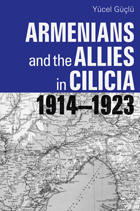
Güçlü bases his claim largely on evidence from state and military archives in Turkey, Britain, France, and the United States that look specifically into the Ottoman version of history, placing the whole question of forced population displacements in a wider and more nuanced perspective than that in which it is usually depicted. According to the author, revolutionary Armenian forces were threatening the Ottoman Empire from within as it was simultaneously threatened by external forces. Armenians were also actively involved with Allied forces throughout World War I. In response, the Ottoman government ordered the movement of the Armenian population away from protected and sensitive war zones. The actions taken by the Ottoman Empire to control the Armenian population were those of relocation, not extermination.
Working to explain why the Armenian conflict emerged and how it was eventually resolved, this book discusses the Armenian revolutionary and separatist movements, Turkish measures of self defense, and Allied schemes regarding the region during the period. It places special emphasis on the influence of Allied forces on the actions of Armenians in Cilicia.

--Richard H. Kohn
"In my opinion Arms and Men is a splendid piece of work, clearly organized, well argued and beautifully written. We have long needed an informed and intelligent commentary on the evolution of American military policy; and in Mr. Millis' book we have it. I think that his book will awaken great interest and be widely used. I am sure also that professional students of the subject will find it possible, after reading this book, to see the course of American military affairs with a new perspective. That is one of the great services performed by Mr. Millis. He has covered the whole subject with authority, but - thank heaven - in a short book, in which the arguments are not blunted by unnecessary detail."
--Gordon A. Craig
"This author knows weapons, politics and human nature. His perceptive grasp of these complexes shines in the writing."
--The New York Times

Arms and the People explores the impact of profound social polarisation on the internal cohesion of the state’s ‘armed bodies of men’ and on the contested loyalties of soldiers. The different contributors examine a series of historical moments in which a crisis in the military institution has reflected a deeper social crisis which has penetrated that institution and threatened to disable it.
With a range of international contributors who have either studied or been directly involved in such social upheavals, Arms and the People is a pioneering contribution to the study of revolutionary change and will appeal to students and academics in history, politics and sociology.
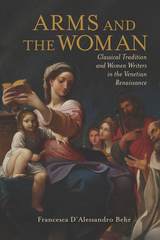
Arms and the Woman: Classical Tradition and Women Writers in the Venetian Renaissance by Francesca D’Alessandro Behr focuses on the classical reception in the works of female authors active in Venice during the Early Modern Age. Even in this relatively liberal city, women had restricted access to education and were subject to deep-seated cultural prejudices, but those who read and wrote were able, in part, to overcome those limitations.
In this study, Behr explores the work of Moderata Fonte and Lucrezia Marinella and demonstrates how they used knowledge of texts by Virgil, Ovid, and Aristotle to systematically reanalyze the biased patterns apparent both in the romance epic genre and contemporary society. Whereas these classical texts were normally used to bolster the belief in female inferiority and the status quo, Fonte and Marinella used them to envision societies structured according to new, egalitarian ethics. Reflecting on the humanist representation of virtue, Fonte and Marinella insisted on the importance of peace, mercy, and education for women. These authors took up the theme of the equality of genders and participated in the Renaissance querelle des femmes, promoting women’s capabilities and nature.
This volume, the fifth in the Journal of the Swedenborg Society series, contains the following seven essays:
• Czeslaw Milosz, “Swedenborg the Mystic”
• Ariel Hessayon, “Jacob Boehme, Swedenborg and Their Readers”
• Gary Lachman, “Swedenborg, Rudolf Steiner and the Hypnagogic State”
• Richard Lines, “The Feminine Mysticism of Madame Guyon”
• Reuben Bell, “Swedenborg and the Kabbalah”
• James Wilson, “Swedenborg and Paracelsus”
• José Antonio Antón-Pacheco, “Ibn ‘Arabi and Swedenborg”
Also included are a preface by Stephen McNeilly, a chronology of Swedenborg, biographies of the subjects of the essays, and an index.
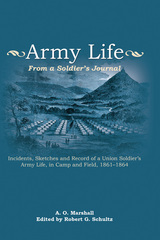
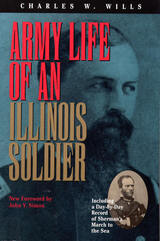
A high-spirited idealist who craved excitement when he enlisted in the Eighth Illinois Volunteers for three months and reenlisted for three years, Charles W. Wills of Canton, Illinois, wrote frequently to his sister Mary Emily Wills and kept a diary of General William T. Sherman’s campaigns during the last year of the war. In the beginning of his service, Wills could boast that his company refused to enlist "roughs." He reported that he and his comrades "drink no liquors and keep ourselves as cleanly as possible.... Almost all are reading or writing, and I defy anyone to find 75 men without any restraint, paying more attention to the Sabbath. . . . Health generally excellent in our company, because we are all careful."
A student and store clerk before enlisting, Wills found that army life "beats clerking." He enlisted as a private at the age of twenty-one and by twenty-four was a major. He had thought he might receive an infantry commission eventually, but when the opportunity arose for promotion to first lieutenant in the Seventh Illinois Cavalry, "cupidity and ambition" caused him to abandon the Eighth, enabling him to hold rank "without so much walking." For a while, though, he seriously rued his lack of action. "Haven’t I a brilliant record," he wrote. "Thirty-three months in service and not a battle." As Simon points out, however, "in the year ahead, Wills would have more than his fill of battles." Battle starved once, his enthusiasm for carnage waned as he marched with Sherman to the sea. Yet Major Wills was impressed by his troops’ "endurance, spirit and recklessness."
Wills matured in the army. He joined solely to preserve the Union, and his early comments on slaves "lacked sympathy, even decency," according to Simon. Later he came to the point where he would arm blacks—in part, with an eye toward gaining rank by leading the new regiments. Yet he was not blind to the anomalies of a slave society.
Wills died in 1883. To preserve his memory, his sister (now Mary Kellogg) printed his diary in 1904. Two years later, Kellogg combined the diary with the letters Wills had written to her earlier in the war. Simon renders this assessment: "Wills had a sparkling, witty style that contrasted sharply with that of both his contemporaries in the field and the seven regimental veterans who compiled their diaries. In assembling this book, Mary E. Kellogg wisely allowed her brother to speak for himself; rarely intruding a comment of her own, excising from his letters home inevitable expressions of concern for his sister and her welfare but leaving intact the sparkling flow of camp gossip and military speculation."
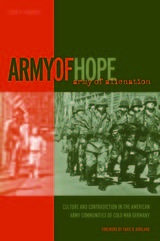
Army life has always been known as a life of sacrifice, challenge, and frustration, yet one filled also with deep satisfactions. This is so for the soldiers’ families as much as for the soldiers themselves. Over the years, military and civilian leaders of the US Army have tried to reduce the hardships of military life by creating an array of community services designed to provide social support for soldiers and families and help them live satisfying lives in military communities.
Unfortunately, this effort has not been particularly successful, and frustration, dissatisfaction, and alienation persist among soldiers and family member in the US Army communities in Germany. Discontent continues because the underlying sources of alienation in the Army and among its families are highly complex, poorly understood, and therefore hardly addressed by the Army’s quality-of-life programs that are intended to make soldier and family life more bearable.
In Army of Hope, Army of Alienation: Culture and Contradiction in the American Army Communities of Cold War Germany, the author seeks to penetrate the logic, social structure, and daily practice of life in the American military communities that lay scattered along the frontier between East and West Germany during the final years of the Cold War. In coming to understand the life and thought of these American soldiers and families, ordinary American citizens can learn much about their military forces and about their own society and culture. In addition, a greater understanding about how people work and live around an institution that is at once so important and yet tasked with a mission so different from that of ordinary pursuits can stimulate social scientists and concerned citizens to think differently about culture, society, and behavior in general.


One of Norway’s most celebrated literary figures of the nineteenth century, Henrik Wergeland worked tirelessly for the civil rights of Jews in Norway. He used the words and structure of his poetry to enliven the ideals of truth, freedom, and equality. This translated volume, containing several of Wergeland’s most prominent poems, beautifully encapsulates the compelling force of his message, allowing its enduring influence to benefit a wider contemporary audience.
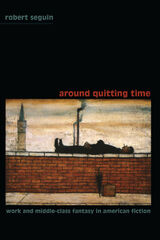
Tracing connections between the reconstruction of the labor process and the aesthetic dilemmas of modernism, between the emergence of the modern state and the structure of narrative, Seguin analyzes the work of Nathanael West, Ernest Hemingway, Willa Cather, John Barth, and others. These fictional narratives serve to demonstrate for Seguin the pattern of social sites and cultural phenomenon that have emerged where work and leisure, production and consumption, and activity and passivity coincide. He reveals how, by creating pathways between these seemingly opposed domains, the middle-class imaginary at once captures and suspends the dynamics of social class and opens out onto a political and cultural terrain where class is both omnipresent and invisible.
Around Quitting Time will interest critics and historians of modern U.S. culture, literary scholars, and those who explore the interaction between economic and cultural forms.

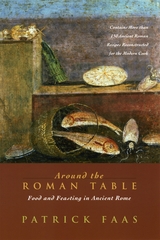
Faas guides readers through the culinary conquests of Roman invasions—as conquerors pillaged foodstuffs from faraway lands—to the decadence of Imperial Rome and its associated table manners, dining arrangements, spices, seasonings, and cooking techniques. With recipes for such appetizing dishes as chicken galantine with lambs' brains and fish relish, Around the Roman Table is ideal for food aficionados who wish to understand how the desire for power and conquest was manifested in Roman appetites.
"There are many misconceptions about the food of ancient Rome that Faas sets out to correct. The result is half cookbook, half history book and is entirely fascinating to both chef and antiquarian alike."—Washington Times

When Lyndon Baines Johnson wanted to go somewhere, there was no stopping him. This dynamic president called for Air Force One as others summon a taxi—at a moment's notice, whatever the hour or the weather. And the man who made sure that LBJ got his ride was General James U. Cross, the president's hand-picked pilot, top military assistant, and personal confidante. One of the few Air Force One pilots to have a position, simultaneously, in the White House, General Cross is also the only member of LBJ's inner circle who has not publicly offered his recollections of the president. In this book, he goes on the record, creating a fascinating, behind-the-scenes portrait of America's complex, often contradictory, always larger-than-life thirty-sixth president.
General Cross tells an engrossing story. In addition to piloting Air Force One around the globe, he served President Johnson in multiple capacities, including directing the Military Office in the White House; managing a secret two-million-dollar presidential emergency fund; supervising the presidential retreat at Camp David, the president's entire transportation fleet, and the presidential bomb shelters; running the White House Mess; hiring White House social aides, including the president's future son-in-law, Charles Robb; and writing condolence letters to the families of soldiers killed in Vietnam. This wide-ranging, around-the-clock access to President Johnson allowed Cross to witness events and share moments that add color and depth to our understanding of America's arguably most demanding and unpredictable president.
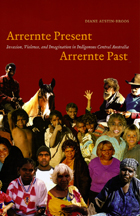
Employing ethnographic and archival research, Diane Austin-Broos traces the history of the Arrernte as they have transitioned from a society of hunter-gatherers to members of the Hermannsburg Mission community to their present, marginalized position in the modern Australian economy. While she concludes that these wrenching structural shifts led to the violence that now marks Arrernte communities, she also brings to light the powerful acts of imagination that have sustained a continuing sense of Arrernte identity.
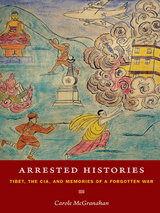
Drawing on rich ethnographic and historical research, McGranahan tells the story of the Tibetan resistance and the social processes through which this history is made and unmade, and lived and forgotten in the present. Fulfillment of veterans’ desire for recognition hinges on the Dalai Lama and “historical arrest,” a practice in which the telling of certain pasts is suspended until an undetermined time in the future. In this analysis, struggles over history emerge as a profound pain of belonging. Tibetan cultural politics, regional identities, and religious commitments cannot be disentangled from imperial histories, contemporary geopolitics, and romanticized representations of Tibet. Moving deftly from armed struggle to nonviolent hunger strikes, and from diplomatic offices to refugee camps, Arrested Histories provides powerful insights into the stakes of political engagement and the cultural contradictions of everyday life.
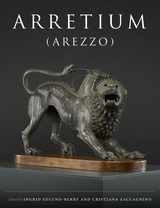
A comprehensive examination of the history and excavation of the Etruscan city of Arretium.
Beneath the Italian city of Arezzo lie the remains of Etruscan Arretium. This volume, the first comprehensive treatment of excavations at Arretium, gathers the most up-to-date scholarship on the city and delves into key archaeological discoveries and the stories they tell about life in the Etruscan world.
Chapters explore local history—including the city’s complex political exchanges with Rome—Etruscan religion, Arretium’s role as a center of the arts, and the challenges of excavation amid the bustle of European urban modernity. Editors Ingrid Edlund-Berry and Cristiana Zaccagnino have gathered chapters by expert contributors that detail Arretium’s material culture, including the city’s famed pottery, Arretine ware, which was known across the Mediterranean; terracotta pieces depicting gods and other supernatural beings; and exquisite bronze-work, most notably the piece now known as the Chimaera of Arezzo. One of the few Etruscan cities that continued flourishing after the Roman takeover, Arretium proves to be a trove of archaeological riches and of the historical insights they reveal.
During the first centuries of the Roman Empire, Greek intellectuals wrote a great many texts modeled on the dialect and literature of Classical Athens, some 500 years prior. Among the most successful of these literary figures were sophists, whose highly influential display oratory has been the prevailing focus of scholarship on Roman Greece over the past fifty years. Often overlooked are the period’s historians, who spurned sophistic oral performance in favor of written accounts. One such author is Arrian of Nicomedia.
Daniel W. Leon examines the works of Arrian to show how the era's historians responded to their sophistic peers’ claims of authority and played a crucial role in theorizing the past at a time when knowledge of history was central to defining Greek cultural identity. Best known for his history of Alexander the Great, Arrian articulated a methodical approach to the study of the past and a notion of historical progress that established a continuous line of human activity leading to his present and imparting moral and political lessons. Using Arrian as a case study in Greek historiography, Leon demonstrates how the genre functioned during the Imperial Period and what it brings to the study of the Roman world in the second century.
In the early twentieth century communities made creative use of the new theories of heredity in circulation at the time, including the now largely forgotten mutation theory of Hugo de Vries. Science fiction writers, socialists, feminists, and utopians are among those who seized on the amazing possibilities of rapid and potentially controllable evolution. De Vries’s highly respected scientific theory only briefly captured the attention of the scientific community, but its many fans appropriated it for their own wildly imaginative ends. Writers from H.G. Wells and Edith Wharton to Charlotte Perkins Gilman, J.B.S. Haldane, and Aldous Huxley created a new kind of imaginary future, which Jim Endersby calls the biotopia. It took the ambiguous possibilities of biology—utopian and dystopian—and reimagined them in ways that still influence the public’s understanding of the life sciences. The Arrival of the Fittest recovers the fascinating, long-forgotten origins of ideas that have informed works of fiction from Brave New World to the X-Men movies, all while reflecting on the lessons—positive and negative—that this period might offer us.
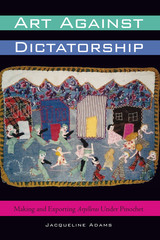
Art can be a powerful avenue of resistance to oppressive governments. During the dictatorship of Augusto Pinochet in Chile, some of the country’s least powerful citizens—impoverished women living in Santiago’s shantytowns—spotlighted the government’s failings and use of violence by creating and selling arpilleras, appliquéd pictures in cloth that portrayed the unemployment, poverty, and repression that they endured, their work to make ends meet, and their varied forms of protest. Smuggled out of Chile by human rights organizations, the arpilleras raised international awareness of the Pinochet regime’s abuses while providing income for the arpillera makers and creating a network of solidarity between the people of Chile and sympathizers throughout the world.
Using the Chilean arpilleras as a case study, this book explores how dissident art can be produced under dictatorship, when freedom of expression is absent and repression rife, and the consequences of its production for the resistance and for the artists. Taking a sociological approach based on interviews, participant observation, archival research, and analysis of a visual database, Jacqueline Adams examines the emergence of the arpilleras and then traces their journey from the workshops and homes in which they were made, to the human rights organizations that exported them, and on to sellers and buyers abroad, as well as in Chile. She then presents the perspectives of the arpillera makers and human rights organization staff, who discuss how the arpilleras strengthened the resistance and empowered the women who made them.

Despite the city's sometimes notorious political and social history, art practices that challenge authority have thrived in Chicago. Art Against the Law examines the creative tactics of the city’s activist artists and their ways of addressing the broad definitions of the law—from responses to excessive policing to inequities in public policy. These include creative forms of protest, rebellion against the law through illegal art practices, and using the political system itself as an art medium to alter existing laws. The essays and conversations in this volume also address the boundaries between art and creative activism and question whether lines should be drawn at all. Through these texts and interviews, Art Against the Law proves that creative imagination can be formidable in challenging the status quo.
Art Against the Law is part of the new Chicago Social Practice History series, edited by Mary Jane Jacob and Kate Zeller in the Department of Exhibitions and Exhibition Studies at the School of the Art Institute of Chicago (SAIC).
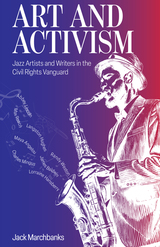
Explore how jazz legends and literary icons united art and activism, shaping the civil rights movement and transforming American culture during the pivotal period between 1955 and 1965.
Art and Activism explores the powerful, symbiotic relationships among artists such as Nina Simone, Abbey Lincoln, and Lena Horne and their literary counterparts—Lorraine Hansberry, Maya Angelou, and Langston Hughes. These creative figures positioned themselves as cultural thought leaders within the evolving civil rights movement. While the Jim Crow South was the movement’s operational front, Jack Marchbanks argues that New York City’s intellectual, cultural, and fundraising communities functioned as its strategic command center.
Readers who admire jazz legends like Duke Ellington, Dave Brubeck, Miles Davis, and Charles Mingus—and those fascinated by prominent African American writers like James Baldwin and Ralph Ellison—will discover how these artists intertwined their work with the civil rights struggle. The book examines their involvement in pivotal confrontations and their connections with key leaders such as the Reverend Dr. Martin Luther King Jr., Daisy Bates, Ella Baker, and Malcolm X.
By illuminating the intersection of art and activism, this study offers a fresh perspective on the pivotal decade from 1955 to 1965. It is an essential resource for undergraduate courses and an engaging read for anyone seeking to understand the civil rights era through a cultural lens.
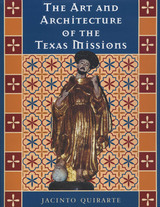
Winner, Presidio La Bahia Award, Sons of the Republic of Texas
Built to bring Christianity and European civilization to the northern frontier of New Spain in the seventeenth and eighteenth centuries...secularized and left to decay in the nineteenth century...and restored in the twentieth century, the Spanish missions still standing in Texas are really only shadows of their original selves. The mission churches, once beautifully adorned with carvings and sculptures on their façades and furnished inside with elaborate altarpieces and paintings, today only hint at their colonial-era glory through the vestiges of art and architectural decoration that remain.
To paint a more complete portrait of the missions as they once were, Jacinto Quirarte here draws on decades of on-site and archival research to offer the most comprehensive reconstruction and description of the original art and architecture of the six remaining Texas missions—San Antonio de Valero (the Alamo), San José y San Miguel de Aguayo, Nuestra Señora de la Purísima Concepción, San Juan Capistrano, and San Francisco de la Espada in San Antonio and Nuestra Señora del Espíritu Santo in Goliad. Using church records and other historical accounts, as well as old photographs, drawings, and paintings, Quirarte describes the mission churches and related buildings, their decorated surfaces, and the (now missing) altarpieces, whose iconography he extensively analyzes. He sets his material within the context of the mission era in Texas and the Southwest, so that the book also serves as a general introduction to the Spanish missionary program and to Indian life in Texas.
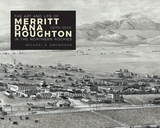
This lavishly illustrated biography details Houghton’s life and work from his birth in Michigan in 1846 to his death in 1919 in Spokane through extensive genealogical records, newspaper accounts, and his illustrations—including historic ranches and bird’s-eye views of Fort Collins, Colorado; Dillon, Montana; and Spokane, Washington and the only known illustrations of long-lost places like Pearl, Colorado, and Rambler, Wyoming. Also included is reproduction of a four-foot-by-eight-foot view of Sheridan, Wyoming and a sixty-image sample portfolio of his best-preserved illustrations organized by type.
Houghton’s work depicts the infrastructure of the new settler society that was remaking the West in the late nineteenth century and early twentieth century, and Amundson demonstrates how Houghton’s vision of the American West remains active today.
Starting with an analysis of the censorship of the play My Name is Rachel Corrie, which was withdrawn from production by a major New York theater due to a political pressure, Davis shows how all art that challenges the mainstream is either suppressed or distorted to suit the politics of our time---one that will not recognize the truth of human experience and the disorder at the heart of all civilization.

A sustained engagement between contemporary art and philosophy relating to our place in, and responsibility to, the nonhuman world
How do contemporary art and theory contemplate the problem of the “bio” of biopolitics and bioart? How do they understand the question of “life” that binds human and nonhuman worlds in their shared travail? In Art and Posthumanism, Cary Wolfe argues for the reconceptualization of nature in art and theory to turn the idea of the relationship between the human and the planet upside down.
Wolfe explores a wide range of contemporary artworks—from Sue Coe’s illustrations of animals in factory farms and Eduardo Kac’s bioart to the famous performance pieces of Joseph Bueys and the video installations of Eija-Liisa Ahtila, among others—examining how posthumanist theory can illuminate, and be illuminated by, artists’ engagement with the more-than-human world. Looking at biological and social systems, the question of the animal, and biopolitics, Art and Posthumanism explores how contemporary art rivets our attention on the empirically thick, emotionally charged questions of “life” and the “living” amid ecological catastrophe.
One of the foremost theorists of posthumanism, Wolfe pushes that philosophy out of the realm of the purely theoretical to show how a posthumanist engagement with particular works and their conceptual underpinnings help to develop more potent ethical and political commitments.
Derived from the internal struggles of Soviet Constructivism, as it confronted the massive problems of cultural transformation after 'War Communism', Arvatov's writing is a major force in the split that occurred in the revolutionary horizons of Constructivism in the early 1920s. Critical of early Constructivism's social-aesthetic process of art's transformation of daily life - epitomised in studio-based painting, photography and object making - Arvatov polemicises for the devolution of artistic skills directly into the relations of production and the factory.
Whilst acknowledging the problems of a pure factory-based Productivism, Arvatov remains overwhelmingly committed to a new role and function for art outside the conventional studio and traditional gallery. Addressing issues such as artistic labour and productive labour, the artist as technician, art and multidisciplinarity and a life for art beyond 'art' - finding new relevance amidst the extensive social turn of contemporary participatory art - Art and Production offers a timely and compelling manifesto.

In this text, French art historian Anne Lafont examines the complexities and contradictions in Enlightenment-era ideas about race, focusing on the figurations of Africans and other people of color. Through studies of a wide range of eighteenth-century art, Lafont grounds her analysis in the objects themselves and, by doing so, highlights how visual works can reveal the values of the culture that produced them.
While Lafont locates—unsurprisingly—instances of the marginalization and objectification of Black people, she also draws attention to depictions that present African sitters as subjects in their own right. For example, Anne-Louis Girodet’s Portrait of Jean-Baptiste Belley (1797) offers a dignified, individualized representation of this formerly enslaved French politician from Saint-Domingue; and portraits of anonymous sitters show them as actual persons whose costumes and poses demonstrate their agency.
Ultimately, Lafont moves beyond artworks to consider the broader intellectual context of the Enlightenment, particularly ideas about freedom, equality, and universal human rights, which were anchored in visual culture and indexed by it. She reveals how these ideals often conflicted with the realities of colonialism and the shifting status of Black people during this era.
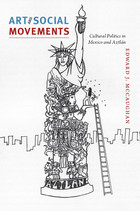
McCaughan argues that the social power of activist artists emanates from their ability to provoke people to see, think, and act in innovative ways. Artists, he claims, help to create visual languages and spaces through which activists can imagine and perform new collective identities and forms of meaningful citizenship. The artists' work that he discusses remains vital today—in movements demanding fuller democratic rights and social justice for working people, women, ethnic communities, immigrants, and sexual minorities throughout Mexico and the United States. Integrating insights from scholarship on the cultural politics of representation with structural analyses of specific historical contexts, McCaughan expands our understanding of social movements.

Fitzpatrick captures the emotions of artists and riders alike, as she explores paintings, photographs, performance art, graffiti, and public art by artists such as Walker Evans, Bruce Davidson, DONDI, Keith Haring, Yayoi Kusama, Jacob Lawrence, Reginald Marsh, Elizabeth Murray, and many others. She also considers representations of the subway in film, on song sheet covers, and in illustration. By examining the cultural, technological, and social contexts for these creative interpretations, Fitzpatrick illuminates in fresh ways the contradictions and harmonies between public and private space.
Featuring 17 color plates and 80 black-and-white images, Art and the Subway takes readers on a fascinating ride through the visual history of one of the twentieth century's greatest urban planning endeavors as it grew, changed form, and reinvented itself with passion and vitality.
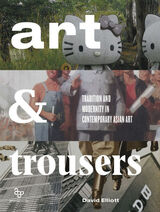
An illustrated collection of more than thirty essays and 640 color images, Art and Trousers moves deftly between regional analysis, portraits of individual artists, and a metaphorical history of trousers. This book presents a panoramic view of modern and contemporary Asian art, varying its focus on the impacts of invention, tradition, exchange, colonization, politics, social development, and gender. David Elliott spotlights the practice of many leading global artists of the early twenty-first century, including Hiroshi Sugimoto, Cai Guo-Qiang, Ai Weiwei, Xu Bing, Rashid Rana, Bharti Kher, Makoto Aida, Chatchai Puipia, and Yeesookyung, among many others. Art and Trousers offers insight into the development of a key curatorial practice for our times, and it will be an essential resource for anyone seeking to understand contemporary art and the way it operates across borders.
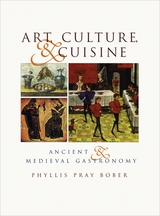
Bober draws on archaeology and art history to examine prehistoric eating customs in ancient Turkey; traditions of the great civilizations of Egypt, Mesopotamia, Greece, and Rome; and rituals of the Middle Ages. Both elegant and entertaining, Art, Culture, and Cuisine reveals cuisine and dining's place at the heart of cultural, religious, and social activities that have shaped Western sensibilities.
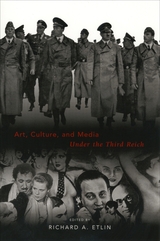
Contributors address nearly every facet of the arts and mass media under the Third Reich—efforts to define degenerate music and art; the promotion of race hatred through film and public assemblies; views of the racially ideal garden and landscape; race as portrayed in popular literature; the reception of art and culture abroad; the treatment of exiled artists; and issues of territory, conquest, and appeasement. Familiar subjects such as the Munich Accord, Nuremberg Party Rally Grounds, and Lebensraum (Living Space) are considered from a new perspective. Anyone studying the history of Nazi Germany or the role of the arts in nationalist projects will benefit from this book.
Contributors:
Ruth Ben-Ghiat
David Culbert
Albrecht Dümling
Richard A. Etlin
Karen A. Fiss
Keith Holz
Kathleen James-Chakraborty
Paul B. Jaskot
Karen Koehler
Mary-Elizabeth O'Brien
Jonathan Petropoulos
Robert Jan van Pelt
Joachim Wolschke-Bulmahn and Gert Gröning
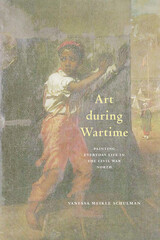
While the Civil War raged on, many northern artists depicted everyday life rather than grand battles or landscapes of noble sacrifice. Amidst a conflict that was upending antebellum social norms, these artists created realistic scenes of mundane events, known as genre paintings. While many of the paintings seem merely to show everyday incidents, Vanessa Meikle Schulman argues that artists connected the visuals to larger concerns.
With attention to how the war shaped new definitions of gender, race, and disability, Art during Wartime uncovers the complexity of these genre paintings. Schulman uses seven case studies of prominent and lesser-known artists who explored how the war instigated social change and shaped northern opinions about current events, including George Cochran Lambdin, Vincent Colyer, and Eastman Johnson. Utilizing detailed visual analysis and extensive historical research, Art during Wartime reframes our narrative of Civil War visual culture, placing genre painting in a central ideological role.
Contributors: Chloe Aridjis, Tash Aw, Claire-Louise Bennett, Teju Cole, Geoff Dyer, Sheila Heti, Katie Kitamura, Chris Kraus, Jhumpa Lahiri, Ben Lerner, Orhan Pamuk, Ali Smith, Zadie Smith, Heidi Sopinka, Hanya Yanagihara
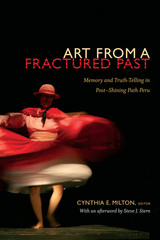
Contributors. Ricardo Caro Cárdenas, Jesús Cossio, Ponciano del Pino, Cynthia M. Garza, Edilberto Jímenez Quispe, Cynthia E. Milton, Jonathan Ritter, Luis Rossell, Steve J. Stern, María Eugenia Ulfe, Víctor Vich, Alfredo Villar
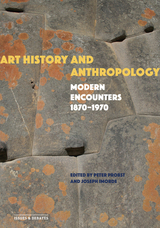
While today we are experiencing a revival of world art and the so-called global turn of art history, encounters between art historians and anthropologists remain rare. Even after a century and a half of interactions between these epistemologies, a skeptical distance prevails with respect to the disciplinary other. This volume is a timely exploration of the roots of this complex dialogue, as it emerged worldwide in the colonial and early postcolonial periods, between 1870 and 1970.
Exploring case studies from Australia, Austria, Brazil, France, Germany, and the United States, this volume addresses connections and rejections between art historians and anthropologists—often in the contested arena of “primitive art.” It examines the roles of a range of figures, including the art historian–anthropologist Aby Warburg, the modernist artist Tarsila do Amaral, the curator-impresario Leo Frobenius, and museum directors such as Alfred Barr and René d’Harnoncourt. Entering the current debates on decolonizing the past, this collection of essays prompts reflection on future relations between these two fields.
Employing an accessible, essayistic style, Pietrasik offers a new look at life in the ten years following the outbreak of World War II and features artists—including Marian Bogusz, Jadwiga Simon-Pietkiewicz, and Józef Szajna—whose work has not yet found substantial audiences in the English-speaking world. Her reading of the art and artists of this period strives to capture their autonomous artistic language and poses critical questions about the ability of traditional art history writing to properly accommodate artworks created in direct response to traumatic experiences.
Tracing the various movements of realism through the major metropolitan centers of Europe and America, Boime strikingly evokes the milieus that shaped the lives and works of Gustave Courbet, Edouard Manet, Émile Zola, Honoré Daumier, Walt Whitman, Abraham Lincoln, and the earliest photographers, among countless others. In doing so, he spearheads a powerful new way of reassessing how art emerges from the welter of cultural and political events and the artist’s struggle to interpret his surroundings. Boime supports this multifaceted approach with a wealth of illustrations and written sources that demonstrate the intimate links between visual culture and social change. Culminating at the transition to impressionism, Art in an Age of Civil Struggle makes historical sense of a movement that paved the way for avant-garde aesthetics and, more broadly, of how a particular style emerges at a particular moment.
This volume focuses on the astonishing range of art forms currently understood to fall within the broad category of Romanticism. Drawing on visual media and popular imagery of the time, this generously illustrated work examines the art of Romanticism as a reaction to the social and political events surrounding it. Boime reinterprets canonical works by such politicized artists as Goya, Delacroix, Géricault, Friedrich, and Turner, framing their work not by personality but by its sociohistorical context. Boime's capacious approach and scope allows him to incorporate a wide range of perspectives into his analysis of Romantic art, including Marxism, social history, gender identity, ecology, structuralism, and psychoanalytic theory, a reach that parallels the work of contemporary cultural historians and theorists such as Edward Said, Pierre Bourdieu, Eric Hobsbawm, Frederic Jameson, and T. J. Clark.
Boime ultimately establishes that art serves the interests and aspirations of the cultural bourgeoisie. In grounding his arguments on their work and its scope and influence, he elucidates how all artists are inextricably linked to history. This book will be used widely in art history courses and exert enormous influence on cultural studies as well.
Now that art is getting its due. Art in Chicago is a magisterial account of the long history of Chicago art, from the rupture of the Great Fire in 1871 to the present, Manierre Dawson, László Moholy-Nagy, and Ivan Albright to Chris Ware, Anne Wilson, and Theaster Gates. The first single-volume history of art and artists in Chicago, the book—in recognition of the complexity of the story it tells—doesn’t follow a single continuous trajectory. Rather, it presents an overlapping sequence of interrelated narratives that together tell a full and nuanced, yet wholly accessible history of visual art in the city. From the temptingly blank canvas left by the Fire, we loop back to the 1830s and on up through the 1860s, tracing the beginnings of the city’s institutional and professional art world and community. From there, we travel in chronological order through the decades to the present. Familiar developments—such as the founding of the Art Institute, the Armory Show, and the arrival of the Bauhaus—are given a fresh look, while less well-known aspects of the story, like the contributions of African American artists dating back to the 1860s or the long history of activist art, finally get suitable recognition. The six chapters, each written by an expert in the period, brilliantly mix narrative and image, weaving in oral histories from artists and critics reflecting on their work in the city, and setting new movements and key works in historical context. The final chapter, comprised of interviews and conversations with contemporary artists, brings the story up to the present, offering a look at the vibrant art being created in the city now and addressing ongoing debates about what it means to identify as—or resist identifying as—a Chicago artist today. The result is an unprecedentedly inclusive and rich tapestry, one that reveals Chicago art in all its variety and vigor—and one that will surprise and enlighten even the most dedicated fan of the city’s artistic heritage.
Part of the Terra Foundation for American Art’s year-long Art Design Chicago initiative, which will bring major arts events to venues throughout Chicago in 2018, Art in Chicago is a landmark publication, a book that will be the standard account of Chicago art for decades to come. No art fan—regardless of their city—will want to miss it.
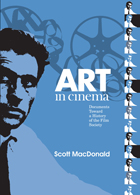
Scott MacDonald's Art in Cinema presents complete programs presented by the legendary society; dozens of previously unavailable letters between Stauffacher, his collaborators, and filmmakers including Maya Deren, Hans Richter, Vincent Minelli, and Man Ray; a reprint of the society's original catalog, which features essays by Henry Miller and others; and a wide range of other remarkable historical documents.
A companion to Cinema 16 (Temple), a documentary history of the first west coast film society, Art in Cinema provides cineastes, students, teachers, and scholars with extensive and fascinating documentation of one of the most important film societies in American history. Together or separately, the books provide an indispensable reference source for the beginning of this country's love affair with independent film.
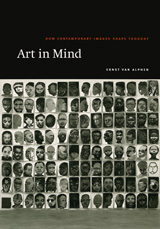
Examining a broad range of works, van Alphen—a renowned art historian and cultural theorist—demonstrates how art serves a socially constructive function by actually experimenting with the parameters of thought. Employing work from artists as diverse as Picasso, Watteau, Francis Bacon, Marlene Dumas, and Matthew Barney, he shows how art confronts its viewers with the "pain points" of cultural experience-genocide, sexuality, diaspora, and transcultural identity-and thereby transforms the ways in which human existence is conceived. Van Alphen analyzes how art visually "thinks" about these difficult cultural issues, tapping into an understudied interpretation of art as the realm where ideas and values are actively created, given form, and mobilized. In this way, van Alphen's book is a work of art in itself as it educates us in a new mode of thought that will forge equally new approaches and responses to the world.

After a brief look at the development of a tradition in museum architecture, this study examines Kahn’s three art museums: the Yale University Art Gallery, the Kimbell Art Museum, and the Yale Center for British Art. It traces the development of each museum through museum through its various stages: the background of the institutions and the commissions, the programs for the buildings, their designs and evolutions, their constructions, and the evaluations of the completed buildings. Material on Kahn’s plans for a museum for the De Menil collection, begun shortly before his death, is also included.
Accompanying the text are illustrations of the buildings, including Kahn’s personal sketches, architectural plans and sections, and presentation perspective drawings. Photographs of the finished buildings present the transformed vision of the architect in tangible form, showing that the museums, while related, are individualized accomplishments. This is the first comprehensive study of Kahn’s museums.
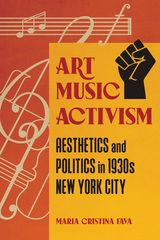
Maria Cristina Fava explores the rich creative milieu shaped by artists dedicated to using music and theater to advance the promotion, circulation, and acceptance of leftist ideas in 1930s New York City. Despite tensions between aesthetic and pragmatic goals, the people and groups produced works at the center of the decade’s sociopolitical and cultural life. Fava looks at the Composers’ Collective of New York and its work on proletarian music and workers’ songs before turning to the blend of experimentation and vernacular idioms that shaped the political use of music within the American Worker’s Theater Movement. Fava then reveals how composers and theater practitioners from these two groups achieved prominence within endeavors promoted by the Works Project Administration.
Fava’s history teases out fascinating details from performances and offstage activity attached to works by composers such as Marc Blitzstein, Charles Seeger, Ruth Crawford Seeger, Elie Siegmeister, and Harold Rome. Endeavors encouraged avant-garde experimentation while nurturing innovations friendly to modernist approaches and an interest in non-western music. Blitzstein’s The Cradle Will Rock offered a memorable example that found popular success, but while the piece achieved its goals, it became so wrapped up in myths surrounding workers’ theater that critics overlooked Blitzstein’s musical ingenuity.
Provocative and original, Art Music Activism considers how innovative classical composers of the 1930s balanced creative aims with experimentation, accessible content, and a sociopolitical message to create socially meaningful works.
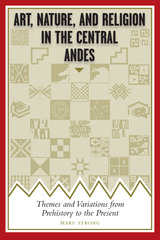
From prehistory to the present, the Indigenous peoples of the Andes have used a visual symbol system—that is, art—to express their sense of the sacred and its immanence in the natural world. Many visual motifs that originated prior to the Incas still appear in Andean art today, despite the onslaught of cultural disruption that native Andeans have endured over several centuries. Indeed, art has always been a unifying power through which Andeans maintain their spirituality, pride, and culture while resisting the oppression of the dominant society.
In this book, Mary Strong takes a significantly new approach to Andean art that links prehistoric to contemporary forms through an ethnographic understanding of Indigenous Andean culture. In the first part of the book, she provides a broad historical survey of Andean art that explores how Andean religious concepts have been expressed in art and how artists have responded to cultural encounters and impositions, ranging from invasion and conquest to international labor migration and the internet. In the second part, Strong looks at eight contemporary art types—the scissors dance (danza de tijeras), home altars (retablos), carved gourds (mates), ceramics (ceramica), painted boards (tablas), weavings (textiles), tinware (hojalateria), and Huamanga stone carvings (piedra de Huamanga). She includes prehistoric and historic information about each art form, its religious meaning, the natural environment and sociopolitical processes that help to shape its expression, and how it is constructed or performed by today’s artists, many of whom are quoted in the book.
By focusing on the provincial tales as they were originally conceived--as a narrative cycle--Thompson is able to recover intertextual references that reveal Hawthorne's preoccupation with framing strategies and variations on authorial presence. The author shows how Hawthorne deliberately constructs sentimental narratives, only to deconstruct them. Thompson's analysis provides a new aesthetic context for understanding the whole shape of Hawthorne's career as well as the narrative, ethical, and historical issues within individual works.
Revisionary in its view of one of America's greatest authors, The Art of Authorial Presence also offers invaluable insight into the problems of narratology and historiography, ethics and psychology, romanticism and idealism, and the cultural myths of America.
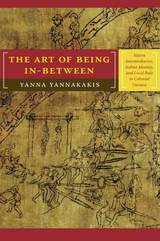
Through interpretation of a wide array of historical sources—including descriptions of public rituals, accounts of indigenous rebellions, idolatry trials, legal petitions, court cases, land disputes, and indigenous pictorial histories—Yannakakis weaves together an elegant narrative that illuminates political and cultural struggles over the terms of local rule. As cultural brokers, native intermediaries at times reconciled conflicting interests, and at other times positioned themselves in opposing camps over the outcome of municipal elections, the provision of goods and labor, landholding, community ritual, the meaning of indigenous “custom” in relation to Spanish law, and representations of the past. In the process, they shaped an emergent “Indian” identity in tension with other forms of indigenous identity and a political order characterized by a persistent conflict between local autonomy and colonial control. This innovative study provides fresh insight into colonialism’s disparate cultures and the making of race, ethnicity, and the colonial state and legal system in Spanish America.
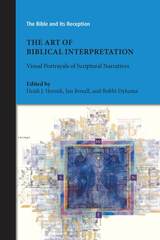
A richly illustrated collection of essays on visual biblical interpretation
For centuries Christians have engaged their sacred texts as much through the visual as through the written word. Yet until recent decades, the academic disciplines of biblical studies and art history largely worked independently. This volume bridges that gap with the interdisciplinary work of biblical scholars and art historians. Focusing on the visualization of biblical characters from both the Old and New Testaments, essays illustrate the potential of such collaboration for a deeper understanding of the Bible and its visual reception. Contributions from Ian Boxall, James Clifton, David B. Gowler, Jonathan Homrighausen, Heidi J. Hornik, Jeff Jay, Christine E. Joynes, Yohana A. Junker, Meredith Munson, and Ela Nuțu foreground diverse cultural contexts and chronological periods for scholars and students of the Bible and art.
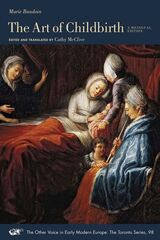
In 1671, Marie Baudoin (1625–1700), head midwife and governor of the Hôtel-Dieu of Clermont-Ferrand, sent a treatise on the art of childbirth to her powerful Parisian patron, Dr. Vallant. The story of how Baudoin’s knowledge and expertise as a midwife came to be expressed, recorded, and archived raises the question: Was Baudoin exceptional because she was herself extraordinary, or because her voice has reached us through Vallant’s careful archival practices? Either way, Baudoin’s treatise invites us to reconsider the limits of what we thought we knew midwives “could be and do” in seventeenth-century France. Grounding Marie Baudoin’s text in a microanalysis of her life, work, and the Jansenist network between Paris and Clermont-Ferrand, this book connects historiographies of midwifery, Jansenism, hospital administration, public health, knowledge and record-keeping, and women’s work, underscoring both Baudoin’s capabilities and the archival accidents and intentions behind the preservation of her treatise in a letter.
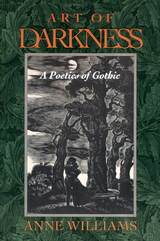
Building on the psychoanalytic and feminist theory of Julia Kristeva, Williams argues that Gothic conventions such as the haunted castle and the family curse signify the fall of the patriarchal family; Gothic is therefore "poetic" in Kristeva's sense because it reveals those "others" most often identified with the female. Williams identifies distinct Male and Female Gothic traditions: In the Male plot, the protagonist faces a cruel, violent, and supernatural world, without hope of salvation. The Female plot, by contrast, asserts the power of the mind to comprehend a world which, though mysterious, is ultimately sensible. By showing how Coleridge and Keats used both Male and Female Gothic, Williams challenges accepted notions about gender and authorship among the Romantics. Lucidly and gracefully written, Art of Darkness alters our understanding of the Gothic tradition, of Romanticism, and of the relations between gender and genre in literary history.

In order to both demystify and complicate our understanding of the practice of graffiti writing, this book pushes past the narrative that links the origins of graffiti to criminal gangs and instead offers a detailed portrait of graffiti as a rich urban culture with its own rules and practices. To do so, it examines the cultural history of graffiti in Philadelphia from the early 1970s onward and explores what it is like to be a graffiti writer in the city today. Ultimately, Tyson Mitman aims to humanize graffiti writers and to show that what they do is not merely destructive or puerile, but, rather, adds something important to the urban experience that is a conscious and deliberate act on the part of its practitioners.
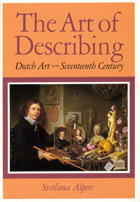
"There is no doubt that thanks to Alpers's highly original book the study of the Dutch masters of the seventeenth century will be thoroughly reformed and rejuvenated. . . . She herself has the verve, the knowledge, and the sensitivity to make us see familiar sights in a new light."—E. H. Gombrich, New York Review of Books

The Art of Eastern India, 300–800 was first published in 1980. Minnesota Archive Editions uses digital technology to make long-unavailable books once again accessible, and are published unaltered from the original University of Minnesota Press editions.
Though scholars have extensive knowledge of the art that flourished during Pala rule in Eastern India (ca. 800-1200), little is known about Eastern Indian art during the preceding 500 years. This half-millennium includes the period of the Gupta dynasty and the two centuries that bridge Gupta and Pala rule, when no single dynasty long maintained control of Eastern India. In this study, Frederick M. Asher challenges arthistorical assumptions about Pala art — that it is a new school virtually without links to earlier art 00 by demonstrating that sculpture during the Gupta period and the subsequent three centuries evolved along lines that connect it with Pala art. In so doing, he draws attention to important sculptures, most of them never previously studied, that tell us not only about an unexplored period in Indian art but also about broader aspects of the cultural history and geography of Eastern India.
Asher's work is based on field research in Bihar, West Bengal, and Bangladesh. There he gave special attention to the sites of once-flourishing Buddhist monasteries and to Hindu images still worshipped in village India. The author's photographs of the bronze, terra cotta, and stone sculptures, and his detailed text, provide a virtual catalogue raisonne of the known works of the period.
Asher's analyses of the images and his attributions of dates to them are based upon close attention to artistic style and iconography, and the study of dynastic and social history, contemporary travelers' reports, and religious history. Drawing together these diverse strands of information, he describes the evolution of art forms over a long period in which there was little apparent historic unity. John M. Rosenfield, professor of art history at Harvard University and author of The Art of the Kushans, says, of The Art of Eastern India,"The scholarship is scrupulously detailed and careful . . . [The book] is in the finest tradition of classical scholarship, and will be consulted or several generations."
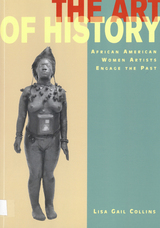
“This important study is the first to confront head-on the avoidance of the visual that has plagued black studies in the United States. The Art of History opens the often hermetic world of black visual culture to a much broader realm in which questions central to contemporary feminism, black studies, and cultural theory are brought to bear.”—Judith Wilson, University of California, Irvine
“The Art of History is an important book that expands the significance of visual culture to African American studies debates. It provides cogent and insightful explorations of the work of contemporary African American women artists. Scholars and general readers alike are sure to be compelled by this original and innovative study.”—Valerie Smith, author of Not Just Race, Not Just Gender: Black Feminist Readings
In this lively and engaging book, Lisa Gail Collins examines the work of contemporary African American women artists. Her study comes at a time when an unprecedented number of these artists—photographers, filmmakers, painters, installation and mixed-media artists—have garnered the attention and imagination of the art-viewing public.
To better understand the significance of this particular historical moment in American visual arts, Collins focuses on four “problems” that recur when these artists confront their histories: the documentation of truth; the status of the black female body; the relationship between art and cultural contact and change; and the relationship between art and black girlhood. By examining the social and cultural histories which African American women artists engage, Collins illuminates a dialogue between past and present imagemakers.
The Art of History is a major contribution to the study of American visual culture. It will be of use to both scholars and students in art history, African American studies, American studies, and women’s studies.
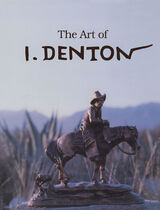
The remarkable detail and subtly stylized lines characterizing the artistry of celebrated woodcarver Ivan Denton are in abundant evidence in this beautifully illustrated volume of The Art of I. Denton. Behind each carving presented here, is its story from a piece of wood to a work of art, told in the words of Mr. Denton himself.
This is, in fact, a tour guided by Ivan Denton covering the best of his efforts, his love for the wood, and the process which turns a craftsman into an artist. As he says in describing his work: “Art exists only when you share it. When a tree falls in the woods, in school they said, ‘This tree doesn’t make a noise if someone doesn’t hear it.’ Because, you know, the sound waves don’t bump against the eardrum . . . The idea of not being able to get rid of a piece is basically the concept of an amateur. Not only does a professional need the money, and not only does he need his ego flattered, it’s just that the art doesn’t really exist until it’s shared. That’s an even deeper joy than the ego.”
Chosen from collections across the country, these pieces represent the masterworks from one of a disappearing breed of artisans. But The Art of I. Denton is more than a document of our cultural heritage, it is a tribute to the man and his art.
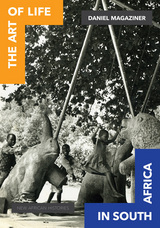
From 1952 to 1981, South Africa’s apartheid government ran an art school for the training of African art teachers at Indaleni, in what is today KwaZulu-Natal. The Art of Life in South Africa is the story of the students, teachers, art, and politics that circulated through a small school, housed in a remote former mission station. It is the story of a community that made its way through the travails of white supremacist South Africa and demonstrates how the art students and teachers made together became the art of their lives.
Daniel Magaziner radically reframes apartheid-era South African history. Against the dominant narrative of apartheid oppression and black resistance, as well as recent scholarship that explores violence, criminality, and the hopeless entanglements of the apartheid state, this book focuses instead on a small group’s efforts to fashion more fulfilling lives for its members and their community through the ironic medium of the apartheid-era school.
There is no book like this in South African historiography. Lushly illustrated and poetically written, it gives us fully formed lives that offer remarkable insights into the now clichéd experience of black life under segregation and apartheid.

With The Art of Living in Avant-Garde Paris, Rachel Silveri takes a fresh look at the desire to unify art and life, an ambition long regarded as foundational to the European historical avant-gardes. She reveals how many early twentieth-century artists saw their own everyday lives—their bodies, identities, and relationships—as a type of creative material and a central component to their avant-garde practice. These artists abandoned traditional forms of artmaking and venues of art viewing, instead aspiring to integrate art with everyday life, creating an “art of living.”
Considering Tristan Tzara’s performances of Dadaist identity, Sonia Delaunay’s simultaneous fashions and self-branding, and the collective endeavor to open and operate the Surrealist Research Bureau, Silveri offers a new narrative about how the artists of interwar Paris developed experiential life practices that resisted dominant forms of “lifestyle” and normative discourses surrounding gender, ethnicity, and office work. This book argues that ethical questions of “How should I live?” and “How should I relate to others?” were as important to the avant-garde as politics, and that aspirations to change the world played out in daily practices of self-making.
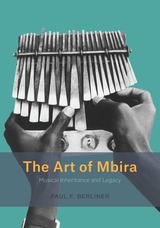
In this book, Berliner provides insight into the communities of study, performance, and worship that surround mbira. He chronicles how master player Cosmas Magaya and his associates have developed their repertory and practices over more than four decades, shaped by musical interaction, social and political dynamics in Zimbabwe, and the global economy of the music industry. At once a detailed exposition of the music’s forms and practices, it is also an indispensable historical and cultural guide to mbira in a changing world.
Together with Berliner and Magaya's compendium of mbira compositions, Mbira’s Restless Dance, The Art of Mbira breaks new ground in the depth and specificity of its exploration of an African musical tradition, and in the entwining of the authors’ collaborative voices. It is a testament to the powerful relationship between music and social life—and the rewards of lifelong musical study, performance, and friendship.
The Art of Mechanical Reproduction weaves a rich history of the experimental networks in which artists as diverse as Paul Klee, Hans Bellmer, Ellsworth Kelly, Robert Smithson, Gerhard Richter, Chris Marker, and Tacita Dean have worked, and it shows for the first time how extensively technological innovations of the moment have affected their work. Original and broad-ranging, The Art of Mechanical Reproduction challenges some of the most respected and entrenched criticism of the past several decades—and allows us to think about these artists anew.
Since ancient times people have depended on medical practitioners to enhance life, to treat illness and injuries, and to help reduce pain and suffering. The scientifically based discipline that we know today stands beside diverse traditions, belief systems, and bodies of medical knowledge that have evolved in fascinating ways across cultures and continents. Throughout this history, successive generations have created artistic representations of these varied aspects of medicine, illustrating instruction manuals, documenting treatments, and creating works of art that enable individuals to express their feelings and ideas about medicine, health, and illness. From ancient wall paintings and tomb carvings to sculpture, installations, and digitally created artworks, the results are extraordinary and pay tribute to how medicine has affected our lives and the lives of our ancestors.
Drawing on the remarkable holdings of the Wellcome Collection in London, The Art of Medicine offers a unique gallery of rarely seen paintings, artifacts, drawings, prints, and extracts from manuscripts and manuals to provide a fascinating visual insight into our knowledge of the human body and mind, and how both have been treated with medicine. Julie Anderson, Emm Barnes, and Emma Shackleton take readers on a fascinating visual journey through the history of medical practice, exploring contemporary biomedical images, popular art, and caricature alongside venerable Chinese scrolls, prehistoric Mesoamerican drawings, paintings of the European Renaissance, medieval Persian manuscripts, and more. The result is a rare and remarkable visual account of what it was and is to be human in sickness and health.
In this classic study of how people learned to retain vast stores of knowledge before the invention of the printed page, Frances A. Yates traces the art of memory from its treatment by Greek orators, through its Gothic transformations in the Middle Ages, to the occult forms it took in the Renaissance, and finally to its use in the seventeenth century. This book, the first to relate the art of memory to the history of culture as a whole, was revolutionary when it first appeared and continues to mesmerize readers with its lucid and revelatory insights.
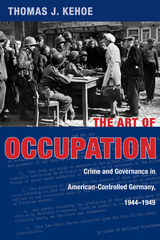
The literature describing social conditions during the post–World War II Allied occupation of Germany has been divided between seemingly irreconcilable assertions of prolonged criminal chaos and narratives of strict martial rule that precluded crime. In The Art of Occupation, Thomas J. Kehoe takes a different view on this history, addressing this divergence through an extensive, interdisciplinary analysis of the interaction between military government and social order.
Focusing on the American Zone and using previously unexamined American and German military reports, court records, and case files, Kehoe assesses crime rates and the psychology surrounding criminality. He thereby offers the first comprehensive exploration of criminality, policing, and both German and American fears around the realities of conquest and potential resistance, social and societal integrity, national futures, and a looming threat from communism in an emergent Cold War. The Art of Occupation is the fullest study of crime and governance during the five years from the first Allied incursions into Germany from the West in September 1944 through the end of the military occupation in 1949. It is an important contribution to American and German social, military, and police histories, as well as historical criminology.
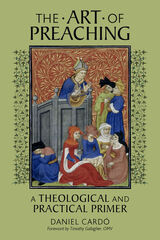
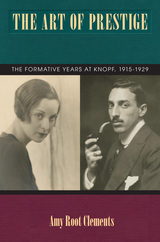
Capturing the little-known early history of Knopf, The Art of Prestige explores the origins of the company's rise to success during the Jazz Age, when Alfred and Blanche established themselves as literary impresarios on both sides of the Atlantic. Drawing on key archival documents from all phases of the publishing process, Amy Root Clements reconstructs the turning points and rhetorical exchanges that made Knopf's initial books noteworthy, from the acquisitions process to design, consumer marketing, and bookselling.
Lasting cornerstones of the young firm include alliances with pivotal figures in the world of graphic arts and book production and with European publishers who brought numerous Nobel Prize winners to the Borzoi list during the company's first fifteen years. Other featured luminaries include the American authors Willa Cather, Dashiell Hammett, and Langston Hughes. The Art of Prestige also examines Alfred Knopf's ancestry, up-bringing, and formal education at Columbia, as well as his apprenticeships with Frank Nelson Doubleday and Mitchell Kennerley—factors that would influence his business decisions for years to come.
The result is a portrait of innovative branding that seamlessly merged book production with book promotion in a literary landscape that was ripe for transformation.
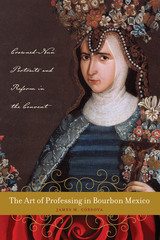
In the eighteenth century, New Spaniards (colonial Mexicans) so lauded their nuns that they developed a local tradition of visually opulent portraits, called monjas coronadas or “crowned nuns,” that picture their subjects in regal trappings at the moment of their religious profession and in death. This study identifies these portraits as markers of a vibrant and changing society that fused together indigenous and Euro-Christian traditions and ritual practices to construct a new and complex religious identity that was unique to New Spain.
To discover why crowned-nun portraits, and especially the profession portrait, were in such demand in New Spain, this book offers a pioneering interpretation of these works as significant visual contributions to a local counter-colonial discourse. James M. Córdova demonstrates that the portraits were a response to the Spanish crown’s project to modify and modernize colonial society—a series of reforms instituted by the Bourbon monarchs that threatened many nuns’ religious identities in New Spain. His analysis of the portraits’ rhetorical devices, which visually combined Euro-Christian and Mesoamerican notions of the sacred, shows how they promoted local religious and cultural values as well as client-patron relations, all of which were under scrutiny by the colonial Church. Combining visual evidence from images of the “crowned nun” with a discussion of the nuns’ actual roles in society, Córdova reveals that nuns found their greatest agency as Christ’s brides, a title through which they could, and did, challenge the Church’s authority when they found it intolerable.
"The historical aspect of this book is splendid, but where it excels is in its fearless and thought-provoking critical judgements. . . . it will lead both beginners and experts to new joys."—David Ekserdjian, Times Literary Supplement
In this innovative work, James Meyer turns to art criticism, theory, memoir, and fiction to examine the fascination with the long sixties and contemporary expressions of these cultural memories across the globe. Meyer draws on a diverse range of cultural objects that reimagine this revolutionary era stretching from the 1950s to the 1970s, including reenactments of civil rights, antiwar, and feminist marches, paintings, sculptures, photographs, novels, and films. Many of these works were created by artists and writers born during the long Sixties who were driven to understand a monumental era that they missed. These cases show us that the past becomes significant only in relation to our present, and our remembered history never perfectly replicates time past. This, Meyer argues, is precisely what makes our contemporary attachment to the past so important: it provides us a critical opportunity to examine our own relationship to history, memory, and nostalgia.
The Cold War claimed many lives and inflicted tremendous psychological pain throughout the Americas. The extreme polarization that resulted from pitting capitalism against communism held most of the creative and productive energy of the twentieth century captive. Many artists responded to Cold War struggles by engaging in activist art practice, using creative expression to mobilize social change. The Art of Solidarity examines how these creative practices in the arts and culture contributed to transnational solidarity campaigns that connected people across the Americas from the early twentieth century through the Cold War and its immediate aftermath.
This collection of original essays is divided into four chronological sections: cultural and artistic production in the pre–Cold War era that set the stage for transnational solidarity organizing; early artistic responses to the rise of Cold War polarization and state repression; the centrality of cultural and artistic production in social movements of solidarity; and solidarity activism beyond movements. Essay topics range widely across regions and social groups, from the work of lesbian activists in Mexico City in the late 1970s and 1980s, to the exchanges and transmissions of folk-music practices from Cuba to the United States, to the uses of Chilean arpilleras to oppose and protest the military dictatorship. While previous studies have focused on politically engaged artists or examined how artist communities have created solidarity movements, this book is one of the first to merge both perspectives.
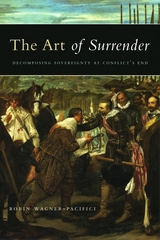
The Art of Surrender explores these ritual concessions as acts of warfare, performances of submission, demonstrations of power, and representations of shifting, unstable worlds. Wagner-Pacifici analyzes three significant military surrenders in the history of warfare—the Thirty Years' War of the seventeenth century, the American Civil War, and World War II—through the use of period documents and forms, maps, literature, witness accounts, photographs, and paintings that were left as proof of victory and defeat. In her analyses of such archival material and iconic works of art, she considers the limits of sovereignty at conflict's end, showing how the ways we concede loss can be as important as the ways we claim victory.

This is the first English-language monograph on the early history of maps in China, centering on those found in three tombs that date from the fourth to the second century BCE and constitute the entire known corpus of early Chinese maps (ditu). More than a millennium separates them from the next available map in the early twelfth century CE. Unlike extant studies that draw heavily from the history of cartography, this book offers an alternative perspective by mobilizing methods from art history, archaeology, material culture, religion, and philosophy. It examines the diversity of forms and functions in early Chinese ditu to argue that these pictures did not simply represent natural topography and built environments, but rather made and remade worlds for the living and the dead. Wang explores the multifaceted and multifunctional diagrammatic tradition of rendering space in early China.
Michelle P. Brown remedies this oversight, presenting an extensively illustrated art historical overview of this formative period in the region’s history. Describing the interactions between the region’s inhabitants, she also explores the formation of national and regional identities. Brown ranges across works as diverse as the Book of Kells, the Tara Brooch, the Aberlemno Stone, the Lindisfarne Gospels, the Alfred Jewel, and the Benedictional of St. Ethelwold, showing how their complex imagery can be best interpreted. She also considers the impact of the art of this period upon the history of art in general, exploring how it has influenced many movements since, from the Carolingian Renaissance and the Romanesque style to the nineteenth-century Arts and Crafts movement.
Each chapter creates a biography of a single woman through an object, offering a new methodology that looks past texts alone to material culture in order to further understand early Jewish American women’s lives and restore their agency as creators of Jewish identity. While much of the available history was written by men, the objects that Leibman studies were made for and by Jewish women. Speaking to American Jewish life, women’s studies, and American history, The Art of the Jewish Family sheds new light on the lives and values of these women, while also revealing the social and religious structures that led to Jewish women being erased from historical archives.
The Art of the Jewish Family was the winner of three 2020 National Jewish Book Awards: the Celebrate 350 Award for American Jewish Studies, the Gerrard and Ella Berman Memorial Award for History, and the Barbara Dobkin Award for Women's Studies.
READERS
Browse our collection.
PUBLISHERS
See BiblioVault's publisher services.
STUDENT SERVICES
Files for college accessibility offices.
RECENTLY PUBLISHED



UChicago Accessibility Resources
home | accessibility | search | about | contact us
BiblioVault ® 2001 - 2026
The University of Chicago Press