
 A SCHOLARLY BOOK REPOSITORY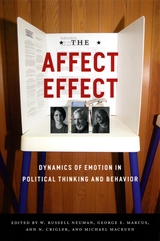
In sixteen seamlessly integrated essays, thirty top scholars approach this topic from a broad array of angles that address four major themes. The first section outlines the philosophical and neuroscientific foundations of emotion in politics, while the second focuses on how emotions function within and among individuals. The final two sections branch out to explore how politics work at the societal level and suggest the next steps in modeling, research, and political activity itself. Opening up new paths of inquiry in an exciting new field, this volume will appeal not only to scholars of American politics and political behavior, but also to anyone interested in political psychology and sociology.
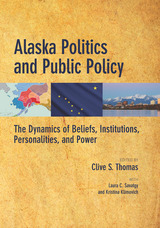
This book, the most comprehensive on the subject to date, focuses on the question of how beliefs, institutions, personalities, and power interact to shape Alaska politics and public policy. Drawing on these interactions, the contributors explain how and why certain issues get dealt with successfully and others unsuccessfully, and why some issues are taken up quickly while others are not addressed at all. This comprehensive guide to the political climate of Alaska will be essential to anyone studying the politics of America’s largest—and in some ways most unusual—state.

Truth, reason, and objectivity--can we survive without them? What happens to law, science, and the pursuit of social justice when such ideas and ideals are rejected? These questions are at the heart of the controversies between traditionalists and "postmodernists" that Barbara Herrnstein Smith examines in her wide-ranging book, which also offers an original perspective on the perennial--perhaps eternal--clash of belief and skepticism, on our need for intellectual stability and our experience of its inevitable disruption.
Focusing on the mutually frustrating impasses to which these controversies often lead and on the charges--"absurdity," "irrationalism," "complicity," "blindness," "stubbornness"--that typically accompany them, Smith stresses our tendency to give self-flattering reasons for our own beliefs and to discount or demonize the motives of those who disagree with us. Her account of the resulting cognitive and rhetorical dynamics of intellectual conflict draws on recent research and theory in evolutionary biology, neuroscience, developmental psychology, and the history and sociology of science, as well as on contemporary philosophy and language theory.
Smith's analyses take her into important ongoing debates over the possibility of an objective grounding of legal and political judgments, the continuing value of Enlightenment rationalism, significant challenges to dominant ideas of scientific truth, and proper responses to denials of the factuality of the Holocaust. As she explores these and other controversies, Smith develops fresh ways to understand their motives and energies, and more positive ways to see the operations of intellectual conflict more generally.

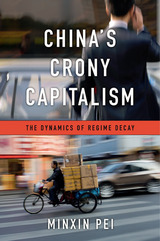
When Deng Xiaoping launched China on the path to economic reform in the late 1970s, he vowed to build “socialism with Chinese characteristics.” More than three decades later, China’s efforts to modernize have yielded something very different from the working people’s paradise Deng envisioned: an incipient kleptocracy, characterized by endemic corruption, soaring income inequality, and growing social tensions. China’s Crony Capitalism traces the origins of China’s present-day troubles to the series of incomplete reforms from the post-Tiananmen era that decentralized the control of public property without clarifying its ownership.
Beginning in the 1990s, changes in the control and ownership rights of state-owned assets allowed well-connected government officials and businessmen to amass huge fortunes through the systematic looting of state-owned property—in particular land, natural resources, and assets in state-run enterprises. Mustering compelling evidence from over two hundred corruption cases involving government and law enforcement officials, private businessmen, and organized crime members, Minxin Pei shows how collusion among elites has spawned an illicit market for power inside the party-state, in which bribes and official appointments are surreptitiously but routinely traded. This system of crony capitalism has created a legacy of criminality and entrenched privilege that will make any movement toward democracy difficult and disorderly.
Rejecting conventional platitudes about the resilience of Chinese Communist Party rule, Pei gathers unambiguous evidence that beneath China’s facade of ever-expanding prosperity and power lies a Leninist state in an advanced stage of decay.
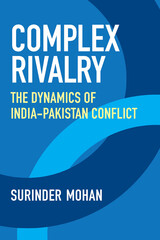
While a substantial body of research explains how the conflict between India and Pakistan originated and developed over time, a systematic and multivariate inquiry cutting across different IR paradigms to understand this rivalry is rare or limited. Surinder Mohan contributes to the understanding of India and Pakistan’s rivalry by presenting a new type of framework, also known as complex rivalry model. This comprehensive model, by not limiting its theoretical tool-kit to any single paradigm, is unique in its approach and better positioned to debate and answer baffling questions that the single-paradigm-based studies address rather inadequately and in isolation.
This book, through an examination of fifty-seven militarized disputes between 1947 and 2021, explains the life cycle of India-Pakistan rivalry in four phases: initiation; development; maintenance; and a possible transformation/termination. Mohan delineates five specific conditions that evolved the subcontinental conflict into a complex rivalry: first, its survival in spite of the Bangladesh War and the end of the Cold War; second, its linkage with other rivalries; third, the inclusion of nuclear factor; fourth, the dyadic stability in the militarized disputes and hostility level despite changes in the regime type; and fifth, the dyad’s involvement in a multilayered conflict pattern. To break this deadlock and mitigate their longstanding differences, Mohan proposes that India and Pakistan must reframe their national priorities and political goals so that the new situation or combinations of conditions would assist their peace strategists to downgrade the dyadic hostility and implement risky policies to make headway to a promising transformation.

Suzanne M. Waldman views well-known poems and artworks such as Christina Rossetti’s Goblin Market and Dante Gabriel Rossetti’s The Blessed Damozel and Venus Verticordia in new ways that expose their authors’ savvy anticipation of concepts that would come to be known as narcissism, fetishism, and the symbolic and imaginary orders, among many others. Waldman makes a strong case for the particular psychoanalytic importance of the Rossettis by looking at how the two Rossetti siblings’ own psyches were divided by conflicts between the period’s religious scruples and its taste for gothic sensationalism.
The Demon and the Damozel is a close and contextualized reading of their writings and artwork that displays, for the first time, continuity between the medieval cosmologies these Pre-Raphaelites drew upon and the psychoanalytic theories they looked ahead to—and locates the intricate patterns of proto-psychoanalytic understanding in the rich tapestry of Pre-Raphaelite aestheticism.


This edited collection highlights the foundations and evolution of research by widely influential Fields Medalist Gregory Margulis. Margulis is unusual in the degree to which his solutions to particular problems have opened new vistas of mathematics; his ideas were central, for example, to developments that led to the recent Fields Medals of Elon Lindenstrauss and Maryam Mirzhakhani. Dynamics, Geometry, Number Theory introduces these areas, their development, their use in current research, and the connections between them. Divided into four broad sections—“Arithmeticity, Superrigidity, Normal Subgroups”; “Discrete Subgroups”; “Expanders, Representations, Spectral Theory”; and “Homogeneous Dynamics”—the chapters have all been written by the foremost experts on each topic with a view to making them accessible both to graduate students and to experts in other parts of mathematics. This was no simple feat: Margulis’s work stands out in part because of its depth, but also because it brings together ideas from different areas of mathematics. Few can be experts in all of these fields, and this diversity of ideas can make it challenging to enter Margulis’s area of research. Dynamics, Geometry, Number Theory provides one remedy to that challenge.

The Dynamics of Deterrence is the first comprehensive treatment of deterrence theory since the mid-1960s. Frank C. Zagare introduces a new theoretical framework for deterrence that is rigorous, consistent, and illuminating. By placing the deterrence relationship in a "theory of moves" framework, Zagare is able to remedy the defects of other models. His approach is illustrated by and applied to a number of complex deterrence situations: the Berlin crisis of 1948, the Middle East crises of 1967 and 1973, and The Falkland/Malvinas crisis of 1980. He also examines the strategic relationship between the United States and the Soviet Union from 1945 to the present.
Zagare studies the dynamics of both mutual and unilateral deterrence games in nuclear and non-nuclear situations, and the impact of credibility, capability, and power asymmetries on deterrence stability. He shows that his theory is applicable for analyzing deterrence situations between allies as well as between hostile states. One of the additional strengths of his model, however, is its general usefulness for other levels and settings, such as deterrence games played by husband and wife, parent and child, employer and employee, and the state and its citizens. With its lucid prose and illustrative examples, The Dynamics of Deterrence will be of interest to a wide audience in international relations, peace studies, and political science.



One of the most comprehensive and widely praised introductions to folklore ever written. Toelken's discussion of the history and meaning of folklore is delivered in straightforward language, easily understood definitions, and a wealth of insightful and entertaining examples.
Toelken emphasizes dynamism and variety in the vast array of folk expressions he examines, from "the biology of folklore," to occupational and ethnic lore, food ways, holidays, personal experience narratives, ballads, myths, proverbs, jokes, crafts, and others. Chapters are followed by bibliographical essays, and over 100 photographs illustrate the text. This new edition is accessible to all levels of folklore study and an essential text for classroom instruction.
A pathbreaking history of early modern education argues that Europe’s oldest university, often seen as a bastion of traditionalism, was in fact a vibrant site of intellectual innovation and cultural exchange.
The University of Bologna was among the premier universities in medieval Europe and an international magnet for students of law. However, a long-standing historiographical tradition holds that Bologna—and Italian university education more broadly—foundered in the early modern period. On this view, Bologna’s curriculum ossified and its prestige crumbled, due at least in part to political and religious pressure from Rome. Meanwhile, new ways of thinking flourished instead in humanist academies, scientific societies, and northern European universities.
David Lines offers a powerful counternarrative. While Bologna did decline as a center for the study of law, he argues, the arts and medicine at the university rose to new heights from 1400 to 1750. Archival records show that the curriculum underwent constant revision to incorporate contemporary research and theories, developed by the likes of René Descartes and Isaac Newton. From the humanities to philosophy, astronomy, mathematics, and medicine, teaching became more systematic and less tied to canonical texts and authors. Theology, meanwhile, achieved increasing prominence across the university. Although this religious turn reflected the priorities and values of the Catholic Reformation, it did not halt the creation of new scientific chairs or the discussion of new theories and discoveries. To the contrary, science and theology formed a new alliance at Bologna.
The University of Bologna remained a lively hub of cultural exchange in the early modern period, animated by connections not only to local colleges, academies, and libraries, but also to scholars, institutions, and ideas throughout Europe.
Dynamic Syntax is a formal model of utterance description that attempts to articulate and substantiate the claim that human linguistic knowledge is essentially the ability to process language in context. The model provides an explicit demonstration of how interpretation is built up incrementally from the information provided by the words as they are encountered. Drawing from a range of analyses of natural language data, the authors use formal definitions, step-by-step derivations, and detailed lexical definitions to illustrate this new form of syntactic analysis and to show how the model can be applied to a broad range of constructions and languages.
The importance of the rich corpus of “Masters Literature” that developed in early China since the fifth century BCE has long been recognized. But just what are these texts? Scholars have often approached them as philosophy, but these writings have also been studied as literature, history, and anthropological, religious, and paleographic records. How should we translate these texts for our times?
This book explores these questions through close readings of seven examples of Masters Literature and asks what proponents of a “Chinese philosophy” gained by creating a Chinese equivalent of philosophy and what we might gain by approaching these texts through other disciplines, questions, and concerns. What happens when we remove the accrued disciplinary and conceptual baggage from the Masters Texts? What neglected problems, concepts, and strategies come to light? And can those concepts and strategies help us see the history of philosophy in a different light and engender new approaches to philosophical and intellectual inquiry? By historicizing the notion of Chinese philosophy, we can, the author contends, answer not only the question of whether there is a Chinese philosophy but also the more interesting question of the future of philosophical thought around the world.
Chapter 1 introduces the notion of dynamic semantics and discusses in detail the phenomena that have been used to motivate it, such as "donkey" sentences and adverbs of quantification. The second chapter explores in greater depth the interpretation of indefinites and issues related to presuppositions of uniqueness and the "E-type strategy." In Chapter 3, Chierchia extends the dynamic approach to the domain of syntactic theory, considering a range of empirical problems that includes backwards anaphora, reconstruction effects, and weak crossover. The final chapter develops the formal system of dynamic semantics to deal with central issues of definites and presupposition. Chierchia shows that an approach based on a principled enrichment of the mechanisms dealing with meaning is to be preferred on empirical grounds over approaches that depend on an enrichment of the syntactic apparatus.
Dynamics of Meaning illustrates how seemingly abstract stances on the nature of meaning can have significant and far-reaching linguistic consequences, leading to the detection of new facts and influencing our understanding of the syntax/semantics/pragmatics interface.

The Dynamics of Migration and Settlement in Europe explores the causes and consequences of such massive changes in demography. Researchers at the IMISCOE–Network of Excellence (Immigration, Integration and Social Cohesion in Europe) bring together a wealth of theoretical and analytical research in this collection of essays addressing the many crucial questions that have arisen in the past two decades. Underlying these essays is a key concern for the healthy management of these new migration processes, as well as the eventual shape of the new societies that are just beginning to emerge.
International migration and the ensuing questions about integration continue to be subjects of intense debate, and this book will be welcomed among those involved in migration studies and international development.

Kerry McCallum and Lisa Waller critically examine how Indigenous health, bilingual education, and controversial legislation are portrayed through public media, and they look closely at how Indigenous people are both being excluded from policy and media discussion, as well as using the media to their advantage.


Efficiency. Innovation. Results. Accountability. These, advocates claim, are the fruits of performance management. In recent decades government organizations have eagerly embraced the performance model—but the rush to reform has not delivered as promised.
Drawing on research from state and federal levels, Moynihan illustrates how governments have emphasized some aspects of performance management—such as building measurement systems to acquire more performance data—but have neglected wider organizational change that would facilitate the use of such information. In his analysis of why and how governments in the United States have made the move to performance systems, Moynihan identifies agency leadership, culture, and resources as keys to better implementation, goal-based learning, and improved outcomes.
How do governments use the performance information generated under performance systems? Moynihan develops a model of interactive dialogue to highlight how performance data, which promised to optimize decision making and policy change for the public's benefit, has often been used selectively to serve the interests of particular agencies and individuals, undermining attempts at interagency problem solving and reform.
A valuable resource for public administration scholars and administrators, The Dynamics of Performance Management offers fresh insight into how government organizations can better achieve their public service goals.

Brian Skyrms constructs a theory of “dynamic deliberation” and uses it to investigate rational decision-making in cases of strategic interaction. This illuminating book will be of great interest to all those in many disciplines who use decision theory and game theory to study human behavior and thought.
Skyrms begins by discussing the Bayesian theory of individual rational decision and the classical theory of games, which at first glance seem antithetical in the criteria used for determining action. In his effort to show how methods for dealing with information feedback can be productively combined, the author skillfully leads us through the mazes of equilibrium selection, the Nash equilibria for normal and extensive forms, structural stability, causal decision theory, dynamic probability, the revision of beliefs, and, finally, good habits for decision.
The author provides many clarifying illustrations and a handy appendix called “Deliberational Dynamics on Your Personal Computer.” His powerful model has important implications for understanding the rational origins of convention and the social contract, the logic of nuclear deterrence, the theory of good habits, and the varied strategies of political and economic behavior.
Through a modified Kantian approach to epistemology and philosophy of science, this book opposes both Quinean naturalistic holism and the post-Kuhnian conceptual relativism that has dominated recent literature in science studies. Focussing on the development of "scientific philosophy" from Kant to Rudolf Carnap, along with the parallel developments taking place in the sciences during the same period, the author articulates a new dynamical conception of relativized a priori principles. This idea applied within the physical sciences aims to show that rational intersubjective consensus is intricately preserved across radical scientific revolutions or "paradigm-shifts and how this is achieved.
Millions of scientific articles are published each year, making it difficult to stay abreast of advances within even the smallest subdisciplines. Traditional approaches to the study of science, such as the history and philosophy of science, involve closely reading a relatively small set of journal articles. And yet many questions benefit from casting a wider net: Is most scientific change gradual or revolutionary? What are the key sources of scientific novelty? Over the past several decades, a massive effort to digitize the academic literature and equip computers with algorithms that can distantly read and analyze a digital database has taken us one step closer to answering these questions. The Dynamics of Science brings together a diverse array of contributors to examine the largely unexplored computational frontiers of history and philosophy of science. Together, they reveal how tools and data from automated textual analysis, or machine “reading,” combined with methods and models from game theory and cultural evolutionary theory, can begin to answer fundamental questions about the nature and history of science.
The Dynamics of Soviet Politics is the result of reflective and thorough research into the centers of a system whose inner debates are not open to public discussion and review, a system which tolerates no public opposition parties, no prying congressional committees, and no investigative journalists to ferret out secrets. The expert authors offer an inside view of the workings of this closed system a view rarely found elsewhere in discussions of Soviet affairs. Their work, building as it does on the achievements of Soviet studies over the last thirty years, is firmly rooted in established knowledge and covers sufficient new ground to enable future studies of Soviet politics and social practices to move ahead unencumbered by stereotypes, sensationalism, or mystification.
Among the subjects included are: attitudes toward leadership and a general discussion of the uses of political history; the dramatic cycles of officially permitted dissent; the legitimacy of leadership within a system that has no constitutional provision for succession; the gradual adoption of Western-inspired administrative procedures and "systems management"; a study of group competition, and bureaucratic bargaining; Khrushchev's virgin-lands experiment and its subsequent retrenchment; the apolitical values of adolescents; the problems of integrating Central Asia into the Soviet system; a history of peaceful coexistence and its current importance in Soviet foreign policy priorities, and, finally, an overview of Soviet government as an extension of prerevolutionary oligarchy, with an emphasis on adaptation to political change.


Praise for The Fabric of the Heavens:
"I cannot remember when I last went through a book, any book, with such all-devouring zest. What is more, even the most complex technicalities are reduced to a positively crystalline clarity: If I can understand them, anyone can. The Fabric of the Heavens is, in every sense of the word, an eye-opener."—Peter Green, The Yorkshire Post
"Not until the last chapter of the book is [the reader] allowed to think again wholly as a modern man has become accustomed, by common sense, to think. The discipline is admirably suited to the authors' task, and cunningly devised for the reader's edification—and, indeed, for his delight."—Physics Today
Praise for The Architecture of Matter:
"The Architecture of Matter is to be warmly recommended. It is that rare achievement, a lively book which at the same time takes the fullest possible advantage of scholarly knowledge."—Charles C. Gillespie, New York Times Book Review
"One is impressed by the felicity of the examples and by the lively clarity with which significant experiments and ideas are explained. . . . No other history of science is so consistently challenging."—Scientific American
Praise for The Discovery of Time:
"A subject of absorbing interest . . . is presented not as a history of science, but as a chapter in the history of ideas from the ancient Greeks to our own time."—Times Literary Supplement

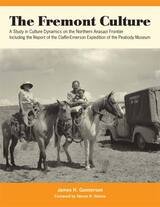
Early expedition surveys and excavations conducted by Noel Morss would lead to a definition of the Fremont culture; later research would augment existing data on the Fremont by adding entirely new traits, disclosing new variations in architecture and basketry, and providing new information on the distribution of previously known traits.
In The Fremont Culture: A Study in Culture Dynamics on the Northern Anasazi Frontier, archaeologist James H. Gunnerson provides the results of his 1950s survey and excavation in the Utah area. He presents a functional synthesis of the Fremont culture and discusses the dynamics of its growth and decline.
Gunnerson’s report also uses the original field notes, maps, plans, photographs, sketches, and unpublished preliminary reports of the Claflin-Emerson expedition. Together, the reports of Morss and Gunnerson offer the most important and complete overview of the expedition available. They are fitting tributes to the men of that expedition, scientists who recognized the importance of an ancient people who once wrested a meager living from the rugged canyon country of the Green and Colorado Rivers.
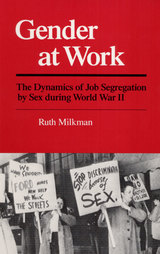
Women's entry into so-called men's work during World War II sparked conflicts at the time and when men returned at war's end. Ruth Milkman delves into the issues in play and the prewar origins of traditional patterns of gender segregation in the workplace. Ranging from the dynamics on the shop floor to hiring patterns, Milkman pays particular attention to automobile and electrical manufacturing. She analyzes a number of persistent questions, including management's decision to re-embrace gender segregation after the war; women's lack of protest; the failure of unions to protect women; and how related employer strategies helped control labor by maintaining women's place as workers paid less than men.

Exploring ways of conceiving the complexity and multiplicity of humans’ many interactive relationships with the environment, the contributors provide in-depth case studies of the interweaving of culture and nature in socio-historical processes. The case studies focus on the origin of environmental movements, the politicization of environmental issues in city politics, the development of a local energy production system, and the convergence of forest management practices toward a dominant scheme. They are supported by explorations of big-picture issues: recurring themes in studies of social and environmental dynamics, the difficulties of deliberative democracy, and the potential gains for socio-ecological research offered by developmental systems theory and Pierre Bourdieu’s theory of intentionality.
How Nature Speaks includes a helpful primer, “On Thinking Dynamically about the Human Ecological Condition,” which explains the basic principles of complexity and nonlinear thinking.
Contributors. Chuck Dyke, Yrjö Haila, Ari Jokinen, Ville Lähde, Markus Laine, Iordanis Marcoulatos, John O’Neill, Susan Oyama, Taru Peltola, Lasse Peltonen, John Shotter, Peter Taylor
Something is not right in the world of Tom Sawyer and Huckleberry Finn. The unease is less evident to Tom, the manipulator, than to the socially marginal Huck. The trouble is most dramatically revealed when Huck, whose “sivilized” Christian conscience is developing, faces the choice between betraying his black friend Jim—which he believes is his moral duty—and letting him escape, as his heart tells him to do.
“Bad faith” is Forrest Robinson's name for the dissonance between what we profess to believe, how we act, and how we interpret our own behavior. There is bad faith in the small hypocrisies of daily living, but Robinson has a much graver issue in mind—namely slavery, which persisted for nearly a century in a Christian republic founded on ideals of freedom, equality, and justice. Huck, living on the fringes of small-town society, recognizes Jim's humanity and understands the desperateness of his plight. Yet Huck is white, a member of the dominant class; he is at once influenced and bewildered by the contradictions of bad faith in the minds of his fully acculturated contemporaries.
Robinson stresses that “bad faith” is more than a theme with Mark Twain; his bleak view of man's social nature (however humorously expressed), his nostalgia, his ambivalence about the South, his complex relationship to his audience, can all be traced back to an awareness of the deceits at the core of his culture—and he is not himself immune. This deeply perceptive book will be of interest to students of American literature and history and to anyone concerned with moral issues.
Although authoritarian countries often repress independent citizen activity, lobbying by civil society organizations is actually a widespread phenomenon. Using case studies such as China, Russia, Belarus, Cambodia, Malaysia, Montenegro, Turkey, and Zimbabwe, Lobbying the Autocrat shows that citizen advocacy organizations carve out niches in the authoritarian policy process, even influencing policy outcomes. The cases cover a range of autocratic regime types (one-party, multi-party, personalist) on different continents, and encompass different systems of government to explore citizen advocacy ranging from issues such as social welfare, women’s rights, election reform, environmental protection, and land rights. They show how civil society has developed adaptive capacities to the changing levels of political repression and built resilience through ‘tactful contention’ strategies. Thus, within the bounds set by the authoritarian regimes, adaptive lobbying may still bring about localized responsiveness and representation.
However, the challenging conditions of authoritarian advocacy systems identified throughout this volume present challenges for both advocates and autocrats alike. The former are pushed by an environment of constant threat and uncertainty into a precarious dance with the dictator: just the right amount of acquiescence and assertiveness, private persuasion and public pressure, and the flexibility to change quickly to suit different situations. An adaptive lobbyist survives and may even thrive in such conditions, while others often face dire consequences. For the autocrat on the other hand, the more they stifle the associational sphere in an effort to prevent mass mobilization, the less they will reap the informational benefits associated with it. This volume synthesizes the findings of the comparative cases to build a framework for understanding how civil society effectively lobbies inside authoritarian countries.

The Fifth edition of this classic textbook includes a solutions manual. Extensive supplemental instructor resources are forthcoming in the Fall of 2022.
Mechanical Vibration: Theory and Application presents comprehensive coverage of the fundamental principles of mechanical vibration, including the theory of vibration, as well as discussions and examples of the applications of these principles to practical engineering problems. The book also addresses the effects of uncertainties in vibration analysis and design and develops passive and active methods for the control of vibration. Many example problems with solutions are provided. These examples as well as compelling case studies and stories of real-world applications of mechanical vibration have been carefully chosen and presented to help the reader gain a thorough understanding of the subject.There is a solutions manual for instructors who adopt this book. Request a solutions manual here (https://www.rutgersuniversitypress.org/mechanical-vibration).

The past decade has been characterized by remarkable advances in meteorological observation, computing techniques, and data-visualization technology. However, the benefit of these advances can only be fully realized with the introduction of a systematic, applied approach to meteorological education that allows well-established theoretical concepts to be applied to modernized observational and numerical datasets.



Old Fields brings together leading experts from around the world to synthesize past and current work on old fields, providing an up-to-date perspective on the ecological dynamics of abandoned land. The book gives readers a broad understanding of why agricultural land is abandoned, the factors that determine the ecological recovery of old fields, and how this understanding contributes to theoretical and applied ecology.
Twelve case studies from diverse geographical and climatic areas—including Australian rainforest, Brazilian Amazonia, New Jersey piedmont, and South African renosterveld—offer a global perspective on the causes and results of land abandonment. Concluding chapters consider the similarities and differences among the case studies, examine them in the context of ecological concepts, and discuss their relevance to the growing field of restoration ecology.
Old Fields is the first book to draw together studies on old fields from both a theoretical and practical perspective. It represents an important contribution to the development of theory on old field dynamics and the practice of ecological restoration on abandoned farmland, and the broader implications of old field dynamics to ecology and restoration.
The department of Puno in southern Peru is an area oriented to livestock and agricultural production, peopled by an Indian peasant mass and a dominant minority of culturally Westernized mestizos. A small but growing hybrid group, the cholos, bridged the cultural gap and collaborated with dissident merchant elements within the mestizo group to challenge the economic, social, and political order of the altiplano (high plateau) system. Politics in the Altiplano analyzes the sources of conflict and political change in the plural society as it underwent socioeconomic development through a period of recurring natural disasters.
In the period under study (1956–1966), a prolonged drought precipitated a series of crises. The mismanagement of American aid, sent to the suffering peasants, became a national cause célèbre. As migration to Peru’s coastal cities reached large-scale proportions, several peasant movements were launched in the department. To rechannel local discontent, an autonomous development corporation was created for Puno by the Peruvian Congress. This, plus the institution of local elections in 1963, provided ample opportunity for the coalition of dissident mestizos, cholos, and peasants to pursue their “revolutionary” goals.
A rivalry between two major towns, Puno (the department’s capital) and Juliaca (the commercial center), furthered the conflict between conservative mestizos and the peasant-cholo movement. Juliaca’s attempt to secede from the department in November 1965 set off a series of violent strikes and counterstrikes in both cities. Intervention from the national level by government troops put an end to the crisis for the time being. But the continued need for land reform in the department, combined with institutionalized means for political participation, kept the peasants mobilized and the atmosphere of conflict alive.
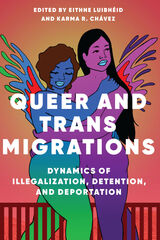
Bridging voices and works from inside and outside of the academy, and international in scope, Queer and Trans Migrations illuminates new perspectives in the field of queer and trans migration studies.
Contributors: Andrew J. Brown, Julio Capó, Jr., Anna Carastathis, Jack Cáraves, Karma R. Chávez, Ryan Conrad, Elif, Katherine Fobear, Monisha Das Gupta, Jamila Hammami, Edward Ou Jin Lee, Leece Lee-Oliver, Eithne Luibhéid, Hana Masri, Yasmin Nair, Bamby Salcedo, Fadi Saleh, Rafael Ramirez Solórzano, José Guadalupe Herrera Soto, Myrto Tsilimpounidi, Suyapa Portillo Villeda, Sasha Wijeyeratne, Ruben Zecena

Lynn Chancer advances the provocative thesis that sadomasochism is far more prevalent in contemporary societies like the United States than we realize. According to Chancer, sexual sadomasochism is only the best-known manifestation of what is actually a much more broadly based social phenomenon. Moving from personal relationships to school, the workplace, and other interactions, Chancer uses a variety of examples that are linked by a recurrent pattern of behavior. She goes beyond the predominantly individualistic and psychological explanations generally associated with sadomasochism (including those popularized in the "how to" literature of the recent Women Who Love Too Much genre) toward a more sociological interpretation. Chancer suggests that the structure of societies organized along male-dominated and capitalistic lines reflects and perpetuates a sadomasochistic social psychology, creating a culture steeped in everyday experiences of dominance and subordination.
In the first part of the book, Chancer discusses the prevalence of sadomasochistic cultural imagery in contemporary America and examines sadomasochism through several perspectives. She develops a set of definitional traits both through existential analysis of an instance of S/M sex and by incorporating a number of Hegelian and psychoanalytic concepts. In the second part of the book, she places sadomasochism in a broader context by exploring whether and how it appears in the workplace and how it relates to gender and race.
Scale and Scope is Alfred Chandler’s first major work since his Pulitzer Prize–winning The Visible Hand. Representing ten years of research into the history of the managerial business system, this book concentrates on patterns of growth and competitiveness in the United States, Germany, and Great Britain, tracing the evolution of large firms into multinational giants and orienting the late twentieth century’s most important developments.
This edition includes the entire hardcover edition with the exception of the Appendix Tables.

Building on the groundwork laid by the classic Serengeti: Dynamics of an Ecosystem, published in 1979 by the University of Chicago Press, this new book integrates studies of the ecosystem at every level—from the plants at the bottom of the visible food chain, to the many species of herbivores and predators, to the system as a whole. Drawing on new data from many long-term studies and from more recent research initiatives, and applying new theory and computer technology, the contributors examine the large-scale processes that have produced the Serengeti's extraordinary biological diversity, as well as the interactions among species and between plants and animals and their environment. They also introduce computer modeling as a tool for exploring these interactions, employing this new technology to test and anticipate the effects of social, political, and economic changes on the entire ecosystem and on particular species, and so to shape future conservation and management strategies.


"The genius of this work is the integration of the linguistic analysis with the cultural and political analysis."—Latin American Anthropology Review

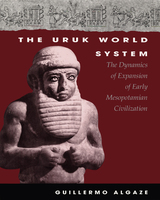
In The Uruk World System, Guillermo Algaze concentrates instead on the unprecedented and wide-ranging process of external expansion that coincided with the rapid initial crystallization of Mesopotamian civilization. He contends that the rise of early Sumerian polities cannot be understood without also taking into account developments in surrounding peripheral areas.
Algaze reviews an extensive body of archaeological evidence for cross-cultural exchange between the nascent city-states in the Mesopotamian lowlands and communities in immediately surrounding areas. He shows that at their very inception the more highly integrated lowland centers succeeded in establishing a variety of isolated, far-flung outposts in areas at the periphery of the Mesopotamian lowlands. Embedded in an alien hinterland characterized by demonstrably less complex societies, the outposts were commonly established at the apex of preexisting regional settlement hierarchies and invariably at focal nodes astride important trade routes. Algaze argues that these early colonial out-posts served as collection points for coveted peripheral resources acquired in exchange for core manufactures and that they reflect an inherently asymmetrical system of economic hegemony that extended far beyond areas under the direct political control of Sumerian polities in southern Mesopotamia. From this he concludes that economic exploitation of less developed peripheral areas was integral to the earliest development of civilization in the ancient Near East.
"John Carey and Martin Elton are among the most skilled and insightful researchers studying the dynamic changes in technology and the impacts on consumer attitudes and behaviors. Their comprehensive and actionable observations make this a must read for anyone interested in understanding the current (and future) media environment."
---Alan Wurtzel, President, Research and Media Development, NBC Universal
"When Media Are New should be read by every media manager faced with disruptive change brought on by new technology. The book transcends the fashionable topics and themes that are here today and gone tomorrow and instead places emphasis on those areas of research and implementation where fatal mistakes are made. They capture something universal, and therefore highly useful, by stripping away the hype and focusing relentlessly on consumers and the ways they adopt or fail to adopt new media products and technologies into their lives."
---Martin Nisenholtz, Senior Vice President, Digital Operations, The New York Times Company
"The burgeoning development of the Internet has deflected attention from a wider history of new media innovations that has shaped its success. John Carey and Martin Elton demonstrate that earlier initiatives to launch videophones, two-way interactive cable systems, videotext and other media innovations can teach us much about the present state and future course of information and communication technologies. This is a key reference on the new media, and must reading for students of the Internet---the platform for continuing the new media revolution."
---Professor William H. Dutton, Director, Oxford Internet Institute, University of Oxford
The world of communication media has undergone massive changes since the mid-1980s. Along with the extraordinary progress in technological capability, it has experienced stunning decreases in costs; a revolutionary opening up of markets (a phenomenon exemplified by but not limited to the rise of the Internet); the advent of new business models; and a striking acceleration in the rate of change. These technological, regulatory, and economic changes have attracted the attention of a large number of researchers, from industry and academe, and given rise to a substantial body of research and data. Significantly less attention has been paid to the actual and intended users of new media. When Media Are New addresses this research and publishing gap by investigating the human side of the technological changes of the last 50 years and the implications for current and future media. It will find a broad audience ranging from media scholars to policymakers to industry professionals.
John Carey is Professor of Communications and Media Management at Fordham Business School and has extensive experience in conducting research about new media for companies such as AT&T, Cablevision, NBC Universal, and the New York Times (among many others) as well as foundations and government agencies. His extensive publications have focused on user adoption of new media and how consumers actually use new technologies.
Martin C. J. Elton was Director of the Communication Studies Group in the UK, which pioneered in the study of user behavior with new media technologies, and founded the Interactive Telecommunication Program at New York University. He has published widely on user research, forecasting, and public policy and has conducted extensive research for many prominent foundations, companies, and government agencies in the USA and Europe.
READERS
Browse our collection.
PUBLISHERS
See BiblioVault's publisher services.
STUDENT SERVICES
Files for college accessibility offices.
RECENTLY PUBLISHED






UChicago Accessibility Resources
home | accessibility | search | about | contact us
BiblioVault ® 2001 - 2024
The University of Chicago Press