
 A SCHOLARLY BOOK REPOSITORY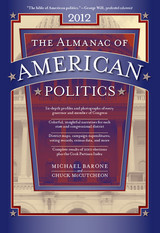
No matter how you voted in the 2010 election, both Democrats and Republicans can agree that there is one indispensable guide to people, politics, and power in Washington. The Almanac of American Politics is the gold standard—the book everyone involved, invested, or interested in American politics must have on their reference shelf.
As in previous editions, the 2012 Almanac includes profiles of every member of Congress and every governor. It offers in-depth and completely up-to-date narrative profiles of all 50 states and 435 House districts, covering everything from economics to history to, of course, politics. The new edition also contains Michael Barone’s sharp-eyed analysis of the 2010 congressional elections, detailing significant trends, redistricting initiatives, and the like.
Full of maps, census data, and information on topics ranging from campaign expenditures to voting records to interest group ratings, the 2012 Almanac of American Politics presents everything you need to know about American politics in snappy prose and framed by cogent analysis.
“Real political junkies get two Almanacs: one for the home and one for the office.”—Chuck Todd, NBC
“It’s simply the oxygen of the political world. We have the most dog-eared copy in town.”—Judy Woodruff, PBS News Hour
“Michael Barone is to politics what statistician-writer Bill James is to baseball, a mix of historian, social observer, and numbers cruncher who illuminates his subject with perspective and a touch of irreverence.”—Chicago Tribune
“Indispensable . . . this compendium of statistics and information has gone as far as humanly possible.”—Washington Post
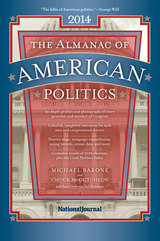
Like every edition since the almanac first appeared in 1972, the 2014 edition is helmed by veteran political analyst Michael Barone. Together with Chuck McCutcheon, collaborator since 2012, and two new editors, Sean Trende, senior elections analyst for RealClearPolitics, and Josh Kraushaar, managing editor at National Journal, Barone offers an unparalleled perspective on contemporary politics.
Full of maps, census data, and detailed information about the American political landscape, the 2014 Almanac of American Politics remains the most comprehensive resource for journalists, politicos, business people, and academics.
While the poems in Steve Straight’'s new collection lead the reader "into the dark forest of memory / or onto the carnival ride of hypothesis, / or even right off the cliff of surprise," they maintain a sure course through the din and distraction of modern life. Bits of news from the natural sciences, chance encounters, and even convicted felon and crafting queen Martha Stewart all fall under Straight’s observant eye. The result is a collection of conversational poems that lend a sense of wonder to the commonplace.

Honorable Mention, 2006 The Society of Midland Authors Adult Fiction Award
For decades, Richard Stern has been acclaimed as one of the American masters of the short story. Almonds to Zhoof: Collected Stories brings together for the first time forty-nine of Stern's best short works and novellas-from "Dr. Cahn's Visit," which The New Republic praised as "the very best very short story in the English language," to classics like "Teeth" and "Wanderers."
Stern's stories-witty, moving, always full of energy-never sacrifice storytelling to mere elegance or wandering wisdom. This collection demonstrates Stern's astonishing ability to portray people from all walks of life, their flawed relationships to ideas, their sometimes bizarre relationships with lovers and friends, their often brilliant, if skewed, appraisals of themselves. The stories always reflect an abiding compassion for his characters whoever they are and whatever their origins. All exist within the politics and workplaces and bedrooms of the real world. All are incorrigibly human.

The Almoravid Maghrib uncovers the richness and complexity of a neglected past. A pivotal moment in the history of North Africa, the rise of the Almoravids brought a corner of the Maghrib into closer contact with the world around. From the Cid to the Seljuqs, the Almoravids impressed contemporaries in ways no Maghribi regime had, signalling a transformation of western North Africa through burgeoning trans-Saharan and trans-Mediterranean commerce, urbanization (two of Morocco's four imperial cities were founded), and the epic encounter with the Christian, Muslim, and Jewish cultures of Iberia. The Almoravids witnessed a series of key transformations and beginnings, including the introduction of one of the area's most successful gold currencies, the formulation of a new religious orthodoxy, the parallel rise of counter-movements (popular, messianic, and spiritual), and the inception of pan-Maghribi-Andalusi artistic, literary, and architectural styles.

A feminist who made lifelong enemies almost as readily as she made friends, Royer was never able to undertake formal, advanced education and was a product of her own self-study efforts. Only in her last few years was she formally recognized by several professional societies and awarded the French Legion of Honor. Harvey includes an overview of earlier biographical treatments, the text of an 1874 communication on "Women, Science, and the Birth Rate," and extensive notes.
Now nearly ten years later as our fascination with post-Deng China continues to develop, Shen's story and the updated material he provides are weighted with increasing significance. Coupled with much of the recent analysis, Shen's firsthand account vividly contextualizes the Chinese government's opposition to democracy and offers meaningful insight into a country that promises to occupy an increasingly prominent position in the world.
"A cause for celebration . . . an important contribution to China's newly discovered historical memory." --New York Times Book Review
Shen Tong is a doctoral student in political sociology at Boston University and the founder of the Democracy for China Fund, which aims to support and publicize dissent networks in China. Marianne Yen is a former New York correspondent for the Washington Post.
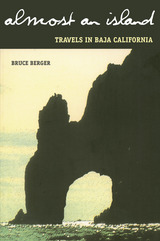
Eight hundred miles long, Baja California is the remotest region of the Sonoran desert, a land of volcanic cliffs, glistening beaches, fantastical boojum trees, and some of the greatest primitive murals in the Western Hemisphere. In Almost an Island, Berger recounts tales from his three decades in this extraordinary place, enriching his account with the peninsula's history, its politics, and its probable future—rendering a striking panorama of this land so close to the United States, so famous, and so little known.
Readers will meet a cast of characters as eccentric as the place itself: Brandy, who ranges the desert in a sand buggy while breathing from an oxygen tank; Katie, the chanteuse; nuns illegally raising pigs. They will encounter the tourist madness of a total eclipse, the story of the heir to an oasis, a musical Mata Hari, rare pronghorn antelope, and a pet tarantula. In prose as glittering as this desert engulfed by the sea, Almost an Island is a fascinating journey into the human heart of a spectacular land.
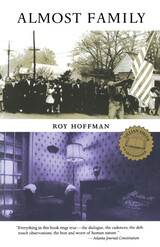
Nebraska Waters is black. Vivian Gold is Jewish. In an Alabama kitchen where, for nearly thirty years, they share cups of coffee, fret over their children, and watch the civil rights movement unfold out their window, and into their homes, they are like family—almost.
As Nebraska makes her way, day in and out, to Vivian’s house to cook and help tend the Gold children, the “almost” threatens to widen into a great divide. The two women’s husbands affect their relationship, as do their children, Viv Waters and Benjamin Gold, born the same year and coming of age in a changing South. The bond between the women both strengthens and frays.
Winner of the Lillian Smith Book Award and Alabama Library Association Award for fiction, Roy Hoffman’s Almost Family explores the relationship that begins when one person goes to work for another, and their friendship—across lines of race, income, and religion—develops degrees of understanding yet growing misunderstanding.

Nebraska Waters is black. Vivian Gold is Jewish. In an Alabama kitchen where, for nearly thirty years, they share cups of coffee, fret over their children, and watch the civil rights movement unfold out their window, and into their homes, they are like family—almost.
As Nebraska makes her way, day in and out, to Vivian’s house to cook and help tend the Gold children, the “almost” threatens to widen into a great divide. The two women’s husbands affect their relationship, as do their children, Viv Waters and Benjamin Gold, born the same year and coming of age in a changing South. The bond between the women both strengthens and frays.
Winner of the Lillian Smith Book Award and Alabama Library Association Award for fiction, Roy Hoffman’s Almost Family explores the relationship that begins when one person goes to work for another, and their friendship—across lines of race, income, and religion—develops degrees of understanding yet growing misunderstanding. This edition commemorates the 35th anniversary of the book’s publication and features a foreword by the author and includes a discussion guide for readers and book clubs.
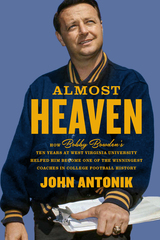
Sports journalist John Antonik covers Bowden’s entire WVU tenure from 1966–75 and the circumstances, issues, difficulties, and obstacles that he had to overcome that were unique to this period in Mountaineer sports history. Additionally, Almost Heaven examines what transpired on WVU’s campus and in its athletic programs as well as nationally during the Vietnam War, campus protests, desegregation, and the complexities of the shifting NCAA landscape. Antonik paints a vivid picture of how Bowden’s time at WVU enriched him personally and professionally while putting athletics on a path toward the much greater successes that it enjoyed in the 1980s when Don Nehlen arrived. By the time he left Morgantown in the winter of 1976, following the Mountaineers’ 13–10 Peach Bowl victory over North Carolina State, which culminated in an outstanding 9–3 season, he was a far wiser and much better-prepared football coach. Those difficult lessons that Bowden learned at West Virginia led him down a path to greatness at Florida State.
Almost Heaven draws from an impressive array of primary sources, including newspaper articles; football team rosters; internal documents on recruiting; and interviews with former players, assistants, staffers, sports reporters, Bowden’s sons Tommy and Terry, and Bowden himself, prior to his passing in 2021. The year 2025 represents the 50th anniversary of his final season coaching the Mountaineers, and many of his players are now entering their golden years, making this the optimal time to tell this story.
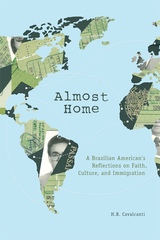
Due to both his family background and the prevalence of U.S. media in Latin America, Cavalcanti already felt immersed in U.S. culture before arriving in Kentucky in 1981 to complete graduate studies. At that time, opportunities for advancement in the United States exceeded those in Brazil, and in an era of military dictatorships throughout much of Latin America, Cavalcanti sought in the United States a nation of laws. In this memoir, he reflects on the dynamics of acculturation, immigrant parenting, interactions with native-born U.S. citizens, and the costs involved in rejecting his country of birth for an adopted nation. He also touches on many of the factors that contribute to migration in both the “sending” and “receiving” countries and explores the contemporary phenomenon of accelerated immigration.
With its blend of personal anecdotes and scholarly information, Almost Home addresses both individual and policy-related issues to provide a moving portrait of the impact of migration on those who, like Cavalcanti, confront both the wonder and the disorientation inherent in the immigrant experience.
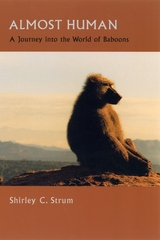
Vividly written and filled with fascinating insights, Almost Human chronicles the first fifteen years of Strum's fieldwork with the Pumphouse Gang. From the first paragraph, the reader is drawn along with Strum into the world of the baboons, learning about the tragedies and triumphs of their daily lives—and the lives of the scientists studying them. This edition includes a new introduction and epilogue that place Strum's research in the context of the current global conservation crisis and tell us what has happened to the Pumphouse Gang since the book was first published.
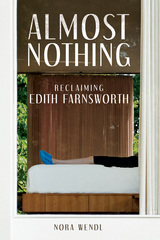
Nora Wendl’s audacious work of creative nonfiction explodes the sex-and-real-estate myth surrounding the Edith Farnsworth House and its two central figures. An eminent physician and woman of letters, Farnsworth left a rich trove of correspondence, memoirs, and photographs that Wendl uses to reconstruct her voice. Farnsworth’s memories and experiences alternate with Wendl’s thoughts on topics like misogyny and professional ambition to fashion a lyrical examination of love, loneliness, beauty, and the search for the divine.
Eloquent and confessional, Almost Nothing restores Edith Farnsworth to her place in architectural history and the masterpiece that bears her name.

Alms for Oblivion was first published in 1967. Minnesota Archive Editions uses digital technology to make long-unavailable books once again accessible, and are published unaltered from the original University of Minnesota Press editions.
This volume makes available in book form a collection of seventeen essays by Edward Dahlberg, who has been called one of the great unrecognized writers of our time. Some of the selections have never been published before; others have appeared previously only in magazines of limited circulation. There is a foreword by Sir Herbert Read.
The individual essays are on a wide range of subjects: literary, historical, philosophical, personal. The longest is a discussion of Herman Melville's work entitled "Moby-Dick - A Hamitic Dream." The fate of authors at the hands of reviewers is the subject of the essay called "For Sale." In "No Love and No Thanks" the author draws a characterization of our time. He presents a critique of the poet William Carlos Williams in "Word-Sick and Place- Crazy," and a discussion of F. Scott Fitzgerald in "Peopleless Fiction." In "My Friends Stieglitz, Anderson, and Dreiser" he discusses not only Alfred Stieglitz, Sherwood Anderson, and Theodore Dreiser but other personalities as well. He also writes of Sherwood Anderson in "Midwestern Fable." In "Cutpurse Philosopher" the subject is William James. "Florentine Codex" is about the conquistadores. Other essays in the collection are the following: "Randolph Bourne," "Our Vanishing Cooperative Colonies," "Chivers and Poe," "Domestic Manners of Americans," "Robert McAlmon: A Memoir," "The Expatriates: A Memoir," and an essay on Allen Tate.

The Muwaṭṭaʾ, written in the eighth century CE by Mālik b. Anas—known as the Imam of Medina—is the first written treatise of Islamic law. The Prophet Muḥammad and his earliest followers immigrated to the city of Medina after they experienced severe persecution in their hometown of Mecca, establishing the first Muslim community in Medina. As the Muslim community rapidly expanded, Medina lost some of its political importance, but retained its position as the leading Muslim center of learning for over one hundred years after the Prophet Muḥammad’s death. Imam Mālik’s Muwaṭṭaʾ provides an unparalleled window into the life of this early Muslim community, and the rituals, laws, and customs they upheld.
This translation is based on the recently published critical edition of the Muwaṭṭaʾ, The Royal Moroccan Edition (2013). With its extensive notes, this edition is intended to make this important early legal text widely accessible to a broad spectrum of readers, including those interested in both legal history and Islamic Studies.
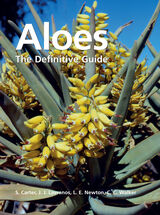
Aloe vera is one of the most important cultivated medicinal plants and a key component of the floras of Africa, Arabia, and Madagascar. Here, for the first time since the 1960s, is a comprehensive account of all currently accepted aloe taxa in an easy-to-use and accessible format. Organized by habitat and size, entries for more than five hundred species each include descriptions, illustrations, and diagnostic features, accompanied by information on distribution, habitat, and relationship to other Aloe species. This volume is a must-have not only for succulent plant enthusiasts but for all who need a well-illustrated and comprehensive academic reference to the Aloe genus.
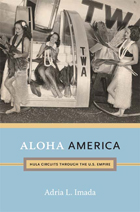
At vaudeville theaters, international expositions, commercial nightclubs, and military bases, Hawaiian women acted as ambassadors of aloha, enabling Americans to imagine Hawai'i as feminine and benign, and the relation between colonizer and colonized as mutually desired. By the 1930s, Hawaiian culture, particularly its music and hula, had enormous promotional value. In the 1940s, thousands of U.S. soldiers and military personnel in Hawai'i were entertained by hula performances, many of which were filmed by military photographers. Yet, as Adria L. Imada shows, Hawaiians also used hula as a means of cultural survival and countercolonial political praxis. In Aloha America, Imada focuses on the years between the 1890s and the 1960s, examining little-known performances and films before turning to the present-day reappropriation of hula by the Hawaiian self-determination movement.

Aloha Compadre: Latinxs in Hawaiʻi is the first book to examine the collective history and contemporary experiences of the Latinx population of Hawaiʻi. This study reveals that contrary to popular discourse, Latinx migration to Hawaiʻi is not a recent event. In the national memory of the United States, for example, the Latinx population of Hawaiʻi is often portrayed as recent arrivals and not as long-term historical communities with a presence that precedes the formation of statehood itself. Historically speaking, Latinxs have been voyaging to the Hawaiian Islands for over one hundred and ninety years. From the early 1830s to the present, they continue to help shape Hawaiʻi’s history, yet their contributions are often overlooked. Latinxs have been a part of the cultural landscape of Hawaiʻi prior to annexation, territorial status, and statehood in 1959. Aloha Compadre also explores the expanding boundaries of Latinx migration beyond the western hemisphere and into Oceania.
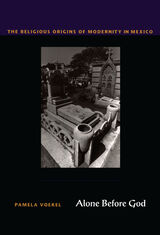
Drawing on the archival research of wills, public documents, and other texts from late-colonial and early-republican Mexico, Voekel describes the marked scaling-down of the pomp and display that had characterized baroque Catholic burials and the various devices through which citizens sought to safeguard their souls in the afterlife. In lieu of these baroque practices, the new enlightened Catholics, claims Voekel, expressed a spiritually and hygienically motivated preference for extremely simple burial ceremonies, for burial outside the confines of the church building, and for leaving their earthly goods to charity. Claiming that these changes mirrored a larger shift from an external, corporate Catholicism to a more interior piety, she demonstrates how this new form of Catholicism helped to initiate a cultural and epistemic shift that placed the individual at the center of knowledge.
Breaking with the traditional historiography to argue that Mexican liberalism had deeply religious roots, Alone Before God will be of interest to specialists in Latin American history, modernity, and religion.

Friedman argues that intelligent life is probably rare in the universe (maybe even uniquely on Earth) but that simple life is likely abundant on millions or billions of planets waiting now to be discovered. He asserts that studying and searching for extraterrestrial life cannot be done by interstellar probes—due to the vastness of space and the comparative brevity of human lifespans—but it can be done remotely by a new technique involving the solar gravity lens that can magnify exoplanets by tens of billions. This technique will allow humankind to explore exoplanets and open up an exciting new field of comparative astrobiology.
Wide-ranging in scope, this book discusses the history of searching for extraterrestrial life, the scientific evidence thereof, and finally his own conclusions on what’s next. Included in the book are three appendices: an explanation of interstellar messaging, a reprint of a debate between Carl Sagan and Ernst Mayr on extraterrestrial intelligence, and an opinion essay on the search for extraterrestrial intelligence.
Robert A. Ferguson investigates the nature of loneliness in American fiction, from its mythological beginnings in Rip Van Winkle to the postmodern terrors of 9/11. At issue is the dark side of a trumpeted American individualism. The theme is a vital one because a greater percentage of people live alone today than at any other time in U.S. history.
The many isolated characters in American fiction, Ferguson says, appeal to us through inward claims of identity when pitted against the social priorities of a consensual culture. They indicate how we might talk to ourselves when the same pressures come our way. In fiction, more visibly than in life, defining moments turn on the clarity of an inner conversation.
Alone in America tests the inner conversations that work and sometimes fail. It examines the typical elements and moments that force us toward a solitary state—failure, betrayal, change, defeat, breakdown, fear, difference, age, and loss—in their ascending power over us. It underlines the evolving answers that famous figures in literature have given in response. Figures like Mark Twain’s Huck Finn and Toni Morrison’s Sethe and Paul D., or Louisa May Alcott’s Jo March and Marilynne Robinson’s John Ames, carve out their own possibilities against ruthless situations that hold them in place. Instead of trusting to often superficial social remedies, or taking thin sustenance from the philosophy of self-reliance, Ferguson says we can learn from our fiction how to live alone.
This volume is the first-ever English translation of the memoirs of Karl Heller, a twenty-year-old aspiring Austrian botanist who traveled to Mexico in 1845 to collect specimens. He passed through the Caribbean, lived for a time in the mountains of Veracruz, and journeyed to Mexico City through the cities of Puebla and Cholula. After a brief residence in the capital, Heller moved westward to examine the volcanoes and silver mines near Toluca. When the United States invaded Mexico in 1846–47 conditions became chaotic, and the enterprising botanist was forced to flee to Yucatán. Heller lived in the port city of Campeche, but visited Mèrida, the ruins of Uxmal, and the remote southern area of the Champotòn River. From there Heller, traveling by canoe, journeyed through southern Tabasco and northern Chiapas and finally returned to Vienna through Cuba and the United States bringing back thousands of samples of Mexican plants and animals.
Heller's account is one of the few documents we have from travelers who visited Mexico in this period, and it is particularly useful in describing conditions outside the capital of Mexico City. In 1853 Heller published his German-language account as Reisen in Mexiko, but the work has remained virtually unknown to English or Spanish readers. This edition now provides a complete, annotated, and highly readable translation.

When Gina Oliva first went to school in 1955, she didn’t know that she was “different.” If the kindergarten teacher played a tune on the piano to signal the next exercise, Oliva didn’t react because she couldn’t hear the music. So began her journey as a “solitary,” her term for being the only deaf child in the entire school. Gina felt alone because she couldn’t communicate easily with her classmates, but also because none of them had a hearing loss like hers. It wasn’t until years later at Gallaudet University that she discovered that she wasn’t alone and that her experience was common among mainstreamed deaf students. Alone in the Mainstream recounts Oliva’s story, as well as those of many other solitaries.
In writing this important book, Oliva combined her personal experiences with responses from the Solitary Mainstream Project, a survey that she conducted of deaf and hard of hearing adults who attended public school. Oliva matched her findings with current research on deaf students in public schools and confirmed that hearing teachers are ill-prepared to teach deaf pupils, they don’t know much about hearing loss, and they frequently underestimate deaf children. The collected memories in Alone in the Mainstream add emotional weight to the conviction that students need to be able to communicate freely, and they also need peers to know they are not alone.
In Alone in the Mainstream, author Gina A. Oliva documents her experience as a “solitaire,” the only deaf or hard of hearing student in her school. Oliva felt alone because she couldn’t communicate easily with her classmates and because she had no peers who shared a similar experience. As an adult, when she began her career at Gallaudet University, she realized that she wasn’t alone and that her experience was widely shared with other mainstreamed students. She decided to write about this commonality and invited other solitaires to reflect on their own experiences in emails and essays. Collective themes of isolation, low expectations, and low self-esteem emerged. Alone in the Mainstream blends Oliva’s personal narrative with the reflections of sixty other solitaires and makes the case that deaf and hard of hearing children need each other.
This twentieth anniversary edition is a reminder that little has changed for deaf and hard of hearing students in public school settings. Oliva brings this new edition up to date with observations, resources, and discussion questions that accompany her appeal for all deaf and hard of hearing children and their families to have access to sign language, to develop a deaf identity, and to be part of a deaf community.

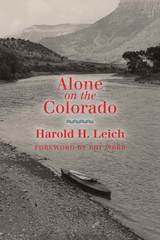
Alone on the Colorado takes readers on the adventure of running rivers and riding the rails, while painting a unique and optimistic portrait of Depression-era America.

When Admiral Richard E. Byrd set out on his second Antarctic expedition in 1934, he was already an international hero for having piloted the first flights over the North and South Poles. His plan for this latest adventure was to spend six months alone near the bottom of the world, gathering weather data and indulging his desire “to taste peace and quiet long enough to know how good they really are.” But early on things went terribly wrong. Isolated in the pervasive polar night with no hope of release until spring, Byrd began suffering inexplicable symptoms of mental and physical illness. By the time he discovered that carbon monoxide from a defective stovepipe was poisoning him, Byrd was already engaged in a monumental struggle to save his life and preserve his sanity.
When Alone was first published in 1938, it became an enormous bestseller. This edition keeps alive Byrd’s unforgettable narrative for new generations of readers.

Most observers agree that marriage in America has been changing. Some think it is in decline, that the growth of individualism has made it increasingly difficult to achieve satisfying and stable relationships. Others believe that changes, such as increasing gender equality, have made marriage a better arrangement for men as well as women.
Based on two studies of marital quality in America twenty years apart, this book takes a middle view, showing that while the divorce rate has leveled off, spouses are spending less time together—people may be “bowling alone” these days, but married couples are also eating alone. Indeed, the declining social capital of married couples—including the fact that couples have fewer shared friends—combined with the general erosion of community ties in American society has had pervasive, negative effects on marital quality.
At the same time, family income has increased, decision-making equality between husbands and wives is greater, marital conflict and violence have declined, and the norm of lifelong marriage enjoys greater support than ever.
The authors conclude that marriage is an adaptable institution, and in accommodating the vast changes that have occurred in society over the recent past, it has become a less cohesive, yet less confining arrangement.

Notable shipwrecks of Lake Michigan throughout a century of enterprise, industry, heroism, and disaster on the Great Lakes
The Great Lakes are graveyards of a vast number of shipwrecks (30,000 by some estimates), and Lake Michigan has more than the other four lakes combined. The stories of those wrecks tell the history of that mighty lake in its endless, mercurial challenge to human endeavor.
Surveying the wreckage throughout the decades, from the fiery end of the twin propeller–driven Phoenix in 1847 to the failure of the Anna Minch to outrun the infamous 1940 Armistice Day storm, Michael Schumacher charts the course of shipping disasters great and small on Lake Michigan. He illuminates the details of maritime weather and shipcraft, the lives devoted to and lost on the water, and the mistakes and monumental failures that led to these ships’ watery ends.
Schumacher’s deft storytelling, drawing from deep research and comprehensive knowledge, brings forth the vivid details of the last minutes of these doomed ships, along with the circumstances surrounding their voyages. Here are tragic tales like that of the Eastland, the deadliest shipwreck in Great Lakes history, lost while docked in the Chicago River; the Rouse Simmons, a wooden schooner loaded with Christmas trees; the train ferry Milwaukee and the Wisconsin, a package freighter, gone within one week of each other in October 1929; and the passenger vessel the Lady Elgin, a devastating loss met with incredible heroism.
Liberally illustrated with historical photographs, the stories of these shipwrecks, spanning a full century of commercial traffic on Lake Michigan, document the myriad forms of bravery and misfortune that mark our encounters with the Great Lakes.
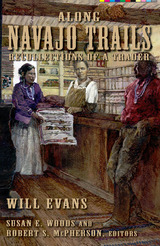
Several sacred artifacts have gone missing from the Minnesota Red Earth Reservation and the suspect list is continuously growing. While it could be the racists from the bordering town, or a young man struggling with problems at home, or the county coroner and his cronies, the need for answers and apprehending the culprit is amplified when Jed Morriseau, the Tribal Chairman, is murdered. Investigating these mysterious occurrences because of tribal traditions and the honor of her family, Renee LaRoche works to track down the people responsible. But can she maintain her intense investigation as well as her new relationship with Samantha Salisbury, the visiting women’s studies professor at the white college nearby? Renee is caught between the traditions of her tribe and efforts to help her chimook lover accept their cultural differences.
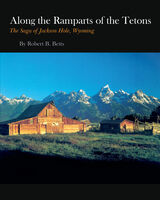
In these pages, the reader will witness the dramatic creation of the Tetons; the arrival of the first humans, bands of fur-clad Early Hunters who ventured into the valley some 10,000 years ago; the coming and going of the later Indian tribes; and the nearly incredible journey of John Colter, who back in 1807 is said to have been the first white man to have found his way through the wilderness and into Jackson Hole.
Here, too, the reader will meet the boisterous mountain men, trappers such as Jim Bridger and the former slave, Jim Beckwourth, who roamed the Rockies when St. Louis was still a frontier village; a little Mormon boy who ran away from home and lived with the Indians before becoming a Pony Express rider; a most unusual Englishman who describes a terrible tragedy that befell his Indian wife and half-breed children; a glory-seeking lieutenant who led six cavalrymen on a foolhardy expedition that almost cost them their lives; and a nineteenth-century president of the United States who took a pack trip through Jackson Hole, allegedly leaving a trail of empty bottles behind.
And there is more, much more--the story of the pioneers, those hardy few who dared to settle in this high and inhospitable land; the story of outlaws, a shoot-out, vigilance committees and an Indian "massacre" that embarrassed the New York Times; the story of the deliverance of the world's largest elk herd from the many perils that threatened it with extinction; and, finally, the story of the long and angry controversy over the preservation of the Tetons and Jackson Hole as a national park, a struggle called "one of the most remarkable conservation fights of the twentieth century."
All these and still other episodes in the long and colorful cavalcade of Jackson Hole are woven together to form a work of Western Americana rich in anecdotes and portraits of delightfully eccentric characters.
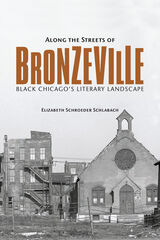
In this significant recovery project, Elizabeth Schroeder Schlabach investigates the institutions and streetscapes of Black Chicago that fueled an entire literary and artistic movement. She argues that African American authors and artists--such as Gwendolyn Brooks, Richard Wright, Langston Hughes, painter Archibald Motley, and many others--viewed and presented black reality from a specific geographic vantage point: the view along the streets of Bronzeville. Schlabach explores how the particular rhythms and scenes of daily life in Bronzeville locations, such as the State Street "Stroll" district or the bustling intersection of 47th Street and South Parkway, figured into the creative works and experiences of the artists and writers of the Black Chicago Renaissance. She also covers in detail the South Side Community Art Center and the South Side Writers' Group, two institutions of art and literature that engendered a unique aesthetic consciousness and political ideology for which the Black Chicago Renaissance would garner much fame.
Life in Bronzeville also involved economic hardship and social injustice, themes that resonated throughout the flourishing arts scene. Schlabach explores Bronzeville's harsh living conditions, exemplified in the cramped one-bedroom kitchenette apartments that housed many of the migrants drawn to the city's promises of opportunity and freedom. Many struggled with the precariousness of urban life, and Schlabach shows how the once vibrant neighborhood eventually succumbed to the pressures of segregation and economic disparity. Providing a virtual tour South Side African American urban life at street level, Along the Streets of Bronzeville charts the complex interplay and intersection of race, geography, and cultural criticism during the Black Chicago Renaissance's rise and fall.

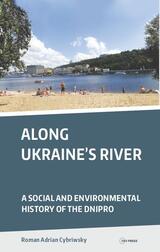
The River Dnipro (formerly better known by the Russian name of Dnieper) is intimately linked to the history and identity of Ukraine. Cybriwsky discusses the history of the river, from when it was formed and its many uses and modifications by human agencies from ancient times to the present.
From key vantage points along the river’s course—its source in western Russia, through Belarus and Ukraine, to the Black Sea—interesting stories shed light on past and present life in Ukraine. Scenes set along the river from Russian and Ukrainian literature are evoked, as well as musical compositions and works of art. Topics include the legacy of the region’s cultural ancestors as the Kyivan Rus, the period of Cossack dominion, the epic battles for the river’s bridges in World War II, the building of dams and huge reservoirs by the Soviet Union, and the crisis of Chornobyl (Chernobyl). The author argues that the Dnipro and the farmlands along it are Ukraine’s chief natural resources, and that the country's future depends on putting both to good use.
Written without academic pretence in an informal style with dashes of humor, Along Ukraine's River is illustrated with original line drawings, maps, and photographs.
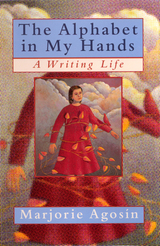
Marjorie Agosín writes of a beloved childhood nanny: "Since I was Jewish she baptized me with holy water brought forth from the fonts of nearby churches. She told me to stay very still so I wouldn't sprout horns. . . . I was somewhere between taciturn and happy gazing into the mirror as if approaching the edge of a cliff . . . and I watched myself in the deep, transparent veil of this night of all nights." Many of the themes expressed in this vignette—cultural dissonance, family, and community—are poetically intertwined throughout The Alphabet in My Hands. Agosín takes us on a personal journey of discovery that is as much internal reflection as it is an exodus across continents and decades.
Agosín's childhood and early adolescence were spent with her Jewish family in Chile. While her family raised her to regard her Jewish heritage with loving awareness, they also participated in the dominant Catholic culture—an aunt organized Easter egg hunts and her mother admired the beauty of Chile's Catholic churches. The young Agosín became keenly aware of her dual identity in her country, both as a participant and an outsider.
The second half of The Alphabet in My Hands recounts the events that forced her family to emigrate to America: the overthrow of Salvador Allende by General Augusto Pinochet. Agosín writes of her new life in Athens, Georgia, of the sudden loss of all that was familiar. Ostracized as an emigrant—a "non-white" with a strange foreign accent—her high school years were made even more painful by the news from Chile: prisoners taken and classmates disappearing or shot.
Years later, Agosín goes back to Chile and she travels there with her own children. As she stares down at her old homeland from the plane, she writes: "Why do I love this place that forced us into exile, that punished my father for being a Jew?" And in the final chapter of The Alphabet in My Hands, this award-winning poet addresses two important topics: her current residence in New England and the central role of writing and literature in her life.
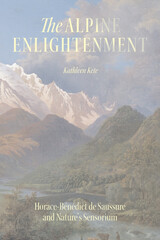
In The Alpine Enlightenment, historian Kathleen Kete takes us into the world of the Genevan geologist, physicist, inventor, and mountaineer Horace-Bénédict de Saussure. During his prodigious climbs into the upper ranges of the Alps, Saussure focused intensely on the natural phenomena he encountered—glaciers, crevasses, changes in the weather, and shifts in the color of the sky—and he described with great precision what he saw, heard, and touched. Kete uses Saussure’s evocative writings, which emphasized above all physical engagement with the earth, to uncover not just how people during the Enlightenment thought about nature, but how they experienced it. As Kete shows, Saussure thought with and through his body: he harnessed his senses to understand the forces that shaped the world around him. In so doing, he offered a vision of nature as worthy of respect independent of human needs, anticipating present-day concerns about the environment and our shared place within it.

Features include:
- More than 200 color photographs
- Small size perfect for use in the field
- In-depth scientific information on 150 species, including some recently discovered and most not found outside alpine or Arctic habitats
- Division of species into ecological groups to aid with searching and identification
- Coverage of the Rocky Mountains of Montana, Wyoming, and Colorado, with extensions into British Columbia and Alaska, with many of the same mushrooms also found in the Arctic
- Tips on collecting for both professional researchers and amateur enthusiasts
- A conservation-based approach aimed at the general public, mycologists, researchers, naturalists, land managers, and others
Easy to use and charged with cutting-edge science, Alpine Mushrooms of North America is an expert guide to mycology’s final frontier.

Alpines, From mountain to garden is a refreshing new perspective on the many stunning plant species that make their home above the treeline. Where most guides to alpine plants have favored collecting and rare species, Richard Wilford offers a holistic approach that describes their discovery and introduction into cultivation and why these factors must be taken in to consideration when planting these mountain dwellers in your garden.
Organized geographically, Alpines, From mountain to garden covers the conditions—drainage, climate, light levels, temperature, and precipitation—and species native to each of nine regions, including the United States and Canada, South America, China, Europe, and Africa. In all, over three hundred plants are described and prolifically illustrated. Additional chapters cover cultivation, conservation, and the impact of indiscriminate collecting on the many species that are now on the verge of extinction. With its wealth of insight into where alpine plants come from and how this affects their cultivation, this new book from Kew’s Botanical Magazine Monograph series is sure to be a hit with gardeners, collectors, travelers, and photographers alike.

An award-winning novelist’s vibrant portrayal of the struggle to create a more unified society in medieval Egypt and how this has shaped Egypt today.
Brimming with intrigue, adventure, and romance, Al-Qata’i: Ibn Tulun’s City Without Walls tells the epic story of visionary Egyptian leader Ahmad Ibn Tulun who built Al-Qata’i (now Cairo) into a thriving multicultural empire.
The novel begins with the rediscovery of the Ibn Tulun Mosque in 1918 and recounts Ibn Tulun’s life and legacy in the ninth and tenth centuries. Bassiouney presents Ibn Tulun’s benevolent vision to unify all Egyptians in a new city, Al-Qata’i. He becomes so focused on his vision, however, that he cannot see the impact it has on his family or the fate of Egypt. When a betrayal leads to his demise, the rival Abbasid caliph threatens to regain control of Al-Qata’i. In the aftermath of Ibn Tulun’s death, his daughter Aisha emerges as a pivotal figure, bravely taking a stand against the Abbasids to preserve her life, the city, and the iconic mosque.
This contemporary Egyptian writer forces us to consider universal themes, such as diversity and equality, through both a historical and intercultural lens that enriches our understanding of these issues in our world today.
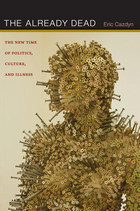
To resist the exploitative crisis state, which Cazdyn terms "the global abyss," he posits the concept of "the already dead," a condition in which the subject (medical, political, psychological) has been killed but has yet to die. Embracing this condition, he argues, allows for a revolutionary consciousness open to a utopian future. Woven into Cazdyn's analysis are personal anecdotes about his battle with leukemia and his struggle to obtain Canadian citizenship during his illness. These narratives help to illustrate his systemic critique, one that reconfigures the relationship between politics, capitalism, revolution, and the body.
The first annotated edition of Syrian writer Nihad Sirees's The Silence and the Roar, created for the Arabic language classroom
Al-Samt wa-al-Sakhab (The Silence and the Roar) is an award-winning novella by Syrian author Nihad Sirees. This edition—abridged and in the original Arabic with vocabulary aids, reading questions, and supplementary materials—introduces intermediate and advanced Arabic language students to the world of contemporary Arab literature.
In Al-Samt wa-al-Sakhab, Sirees weaves an Orwellian tale of freedom, love, and resistance amid a backdrop of bureaucracy and despotism. Fathi Sheen is a writer living in an unnamed Middle Eastern country whose work has been silenced by the ruling government and its despotic leader. On the twentieth anniversary of the regime, Fathi decides to leave the roar of the parade snaking its way through the city and visit his mother and his girlfriend, but when he stops to help a student being beaten by the police, his ID is confiscated. With no choice but to report to the police station, Fathi fights to stay sane against the oppressive—and increasingly absurd—state bureaucracy. This political satire, originally published in 2004 but no less relevant to our times, shows how to remain free even in captivity.
In this abridged and annotated edition for the Arabic language classroom, editor Hanadi Al-Samman includes a historical and cultural preface in Arabic, a biography of Sirees, footnotes for vocabulary aid, and pre- and postreading questions and activities to guide students through the book's literary concepts and to teach literary analysis skills. An interview with Sirees and excerpt readings in his voice are available on the publisher's website. Authorized by Sirees, this edition preserves the author's original style while making the novella easy to use in the classroom or to read independently.


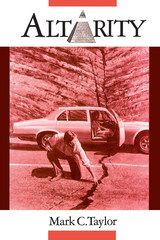
In Altarity, Taylor develops a genealogy of otherness and difference that is based on the principle of creative juxtaposition. Rather than relying on a historical or chronological survey of crucial moments in modern philosophical thinking, he explores the complex question of difference through the strategies of contrast, resonance, and design. Taylor brings together the work of thinkers as diverse as Hegel, Heidegger, Merleau-Ponty, Lacan, Bataille, Kristeva, Levinas, Blanchot, Derrida, and Kierkegaard to fashion a broad intellectual scheme.
Situated in an interdisciplinary discourse, Altarity signifies a harnessing of continental and American habits of intellectual thought and illustrates the singularity that emerges from such a configuration. As such, the book functions as a mirror of our intellectual moment and offers the academy a rigorous way of acknowledging the limitations of its own interpretive practices.
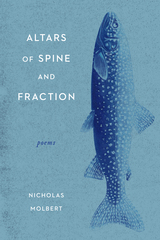
A debut poetry collection set in and around Louisiana’s fishing village of Cocodrie
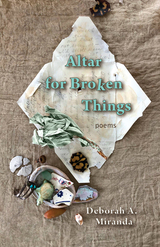
Altars of Spine and Fraction follows its protagonist through the joys and dangers of childhood on the rural Gulf Coast, through familial loss, and into adulthood. Refusing to romanticize what has been lost, Molbert instead interrogates how nostalgia is most often enjoyed by those with the privilege to reject or indulge it.
Violent hurricanes sweep across the landscapes of the poems, and Molbert probes the class inequalities that these climate crises lay bare. Moving from outdoor rural spaces in its first half to indoor domestic spaces in its second half, the collection explores family history, generational trauma, and the toxic masculinity that is shouldered by boys raised in the Deep South.

A leading bioethicist offers critical insights into the scientific, ethical, and political implications of human genome editing.
Designer babies, once found only in science fiction, have become a reality. We are entering a new era of human evolution with the advent of a technology called CRISPR, which allows scientists to modify our genes. Although CRISPR shows great promise for therapeutic use, it raises thorny ethical, legal, political, and societal concerns because it can be used to make permanent changes to future generations. What if changes intended for the good turn out to have unforeseen negative effects? What if the divide between the haves and have-nots widens as a result? Who decides whether we genetically modify human beings and, if so, how?
Françoise Baylis insists that we must all have a role in determining our future as a species. The scientists who develop and use genome-editing tools should not be the only ones making decisions about future uses of the technology. Such decisions must be the fruit of a broad societal consensus. Baylis argues that it is in our collective interest to assess and steer the development and implementation of biomedical technologies. Members of the public with different interests and diverse perspectives must be among the decision makers; only in this way can we ensure that societal concerns are taken into account and that responsible decisions are made. We must be engaged and informed, think critically, and raise our voices as we create our future together.
Sharp, rousing, timely, and thought-provoking, Altered Inheritance is essential reading. The future of humanity is in our hands.
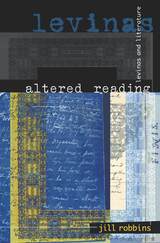
With an attitude at once respectful and interrogative, closely attentive to Levinas's texts while in dialogue with readings by Derrida, Blanchot, and Bataille, Altered Reading shows how the thread of the literary leads directly to the internal tensions of Levinas's ethical discourse. Jill Robbins provides a comprehensive critical account of Levinas's early and mature philosophy as well as later key transitional essays. In an invaluable appendix, she includes her own translation of an important, previously untranslated essay by Bataille on Levinas.
Altered Reading will interest philosophers, literary critics, scholars of religion, and others drawn to Levinas's work.

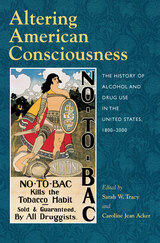
Yet, if the use of drugs is a constant in American history, the way they have been perceived has varied extensively. Just as the corrupting cigarettes of the early twentieth century ("coffin nails" to contemporaries) became the glamorous accessory of Hollywood stars and American GIs in the 1940s, only to fall into public disfavor later as an unhealthy and irresponsible habit, the social significance of every drug changes over time.
The essays in this volume explore these changes, showing how the identity of any psychoactive substance—from alcohol and nicotine to cocaine and heroin—owes as much to its users, their patterns of use, and the cultural context in which the drug is taken, as it owes to the drug's documented physiological effects. Rather than seeing licit drugs and illicit drugs, recreational drugs and medicinal drugs, "hard" drugs and "soft" drugs as mutually exclusive categories, the book challenges readers to consider the ways in which drugs have shifted historically from one category to another.
In addition to the editors, contributors include Jim Baumohl, Allan M. Brandt, Katherine Chavigny, Timothy Hickman, Peter Mancall, Michelle McClellan, Steven J. Novak, Ron Roizen, Lori Rotskoff, Susan L. Speaker, Nicholas Weiss, and William White.
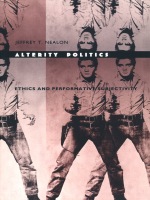
While discussing the work of others who have refused to thematize difference in terms of the possibility or impossibility of sameness—Levinas, Butler, Derrida, Foucault, Deleuze, Guattari, Zizek, Jameson, Heidegger, Bakhtin—Nealon argues that ethics is constituted as inexorable affirmative response to different identities, not through an inability to understand or totalize the other. Alterity Politics combines this theoretical itinerary with crucial discussions of specific and diverse sites of literary and cultural production—the work of William S. Burroughs, Amiri Baraka, Andy Warhol, Ishmael Reed, Rush Limbaugh, and Vincent Van Gogh—along with analyses of the social formation of subjects as found in identity politics, and in multicultural and whiteness studies. In the process, Nealon takes on a wide variety of issues including white male anger, the ethical questions raised by drug addiction, the nature of literary meaning, and the concept of “becoming-black.”
In seeking to build an ethical structure around poststructuralist discourse and to revitalize the applied use of theoretical concepts to notions of performative identity, Alterity Politics marks a decisive intervention in literary theory, cultural studies, twentieth-century philosophy, and performance studies.
An Alternate Pragmatism for Going Public interrogates composition’s most prominent responses to contemporary K–16 education reform. By “going public,” teachers, scholars, and administrators rightfully reassert their expertise against corporate-political standards and assessments like the Common Core, Complete College America, and the Collegiate Learning Assessment. However, author Jim Webber shows that composition’s professional imperative for self-defense only partly fulfils the broader aims of “going public,” which include fostering public participation that can assess and potentially affirm the public good of professional judgment.
Drawing on the pragmatic/democratic tradition, Webber envisions an alternate rhetoric of professionalism, one that not only reasserts compositionists’ expertise but also expands opportunities for publics to authorize this expertise. While this public inquiry and engagement may not safeguard professional standing against neoliberal reform, it reorients composition toward an equally important goal, enabling publics to gauge the adequacy of the educational standardization so often advocated by contemporary reform.
An Alternate Pragmatism for Going Public shows how public engagement can serve composition’s efforts related to “going public.”
The classic road toward nuclear disarmament appears to be closed for the foreseeable future, but there may be another route. In the last fifty years, well-conceived regional treaties have been developed in Latin America, the South Pacific, Africa, Southeast Asia, and Central Asia. These arrangements have developed for many and varied political and security reasons, but now virtually all of the Southern Hemisphere and important parts of the Northern Hemisphere are legally nuclear-weapon-free. These regional nuclear weapon disarmament treaties are formally respected by the five states recognized under the Non-Proliferation Treaty (NPT) as nuclear weapon states: the United States, the United Kingdom, Russia, France, and China—often referred to collectively as the P-5 states.
Variations of these regional treaties might eventually be negotiated in the Middle East, Northeast Asia, and South Asia, setting aside the P-5 states until the very end of the process. With regional agreements in place around the globe, negotiation among the P-5 states would be all that stands between the world community and the banishment of nuclear weapons, verifiably and effectively worldwide. By the time this point is reached, Russia and the United States might be able to cooperate.
Essential reading for policy advisors, foreign service professionals, and scholars in political science, The Alternate Route examines the possibilities of nuclear-weapon-free zones as a pathway to worldwide nuclear disarmament.
Alternative Alcott includes works never before reprinted, including "How I Went Out to Service," "My Contraband," and "Psyche's Art." It also contains Behind a Mask, her most important sensation story; the full and correct text of her last unfinished novel, Diana and Persis; "Transcendental Wild Oats"; Hospital Sketches; and Alcott's other important texts on nineteenth-century social history. This anthology brings together for the first time a variety of Louisa May Alcott's journalistic, satiric, feminist, and sensation texts. Elaine Showalter has provided an excellent introduction and notes to the collection.

Through vivid and searching portraits of these three redoubtable journalists, prize-winning historian John L. Thomas traces for the first time the evolving ideologies of the most significant reformers of their age.
Henry George’s Progress and Poverty, Edward Bellamy’s Looking Backward, and Henry Lloyd’s Wealth against Commonwealth each in its turn became an international bestseller, championing a course of national policy and social reform that owed allegiance neither to the large-scale capitalist model then emerging, nor to the bureaucratic socialism espoused on the left. Also common to the vast writings of all three were a deep distrust of partisan machine politics and a mounting sense of social crisis which neither spoilsmanship nor materialism seemed able to address.
Seeking instead diversity and cooperation within society, small economic units, and simplicity in government, the authors of these works were moved to defend strikes during the heyday of industrial capitalism. They spoke out for international peace when imperialism was rampant. They called for the preservation of community values in the face of urban sprawl. And they urged the goals of brotherhood and interdependence in an age when survival of the fittest was seen as holy writ.
They failed magnificently as apostles of a radical culture based on the ideal of a community, yet their intellectual legacy was not lost: their heirs include the broad movement that took the name Progressive, the New Deal, and the hopeful crusades of the 1960s. This magnificent book is their memorial and their history.


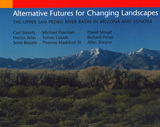
Leading landscape architect and planner Carl Steinitz has developed an innovative GIS-based simulation modeling strategy that considers the demographic, economic, physical, and environmental processes of an area and projects the consequences to that area of various land-use planning and management decisions. The results of such projections, and the approach itself, are known as "alternative futures."
Alternative Futures for Changing Landscapes presents for the first time in book form a detailed case study of one alternative futures project—an analysis of development and conservation options for the Upper San Pedro River Basin in Arizona and Sonora, Mexico. The area is internationally recognized for its high levels of biodiversity, and like many regions, it is facing increased pressures from nearby population centers, agriculture, and mining interests. Local officials and others planning for the future of the region are seeking to balance the needs of the natural environment with those of local human communities.
The book describes how the research team, working with local stakeholders, developed a set of scenarios which encompassed public opinion on the major issues facing the area. They then simulated an array of possible patterns of land uses and assessed the resultant impacts on biodiversity and related environmental factors including vegetation, hydrology, and visual preference. The book gives a comprehensive overview of how the study was conducted, along with descriptions and analysis of the alternative futures that resulted. It includes more than 30 charts and graphs and more than 150 color figures.
Scenario-based studies of alternative futures offer communities a powerful tool for making better-informed decisions today, which can help lead to an improved future. Alternative Futures for Changing Landscapes presents an important look at this promising approach and how it works for planners, landscape architects, local officials, and anyone involved with making land use decisions on local and regional scales.
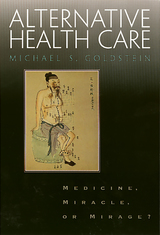
Michael S. Goldstein's Alternative Health Care is the first comprehensive account of the growing presence of alternative medicine in American society. Beginning with the basic premises of alternative medicine, Goldstein's book examines the clinical, economic, and political realities of the broad range of alternative care options and practices in the United States and explains why alternative medicine has become a viable choice for so many people who are ill or who seek to remain healthy.
Bringing history, policy, practice, personal experience, and in-depth sociological analysis together into one comprehensive volume, Goldstein -- one of the first recipients of funding from the National Institute of Health for research on alternative medicine -- also studies the complexities of the relationship between spirituality and alternative medicine and the changing role of alternative medicine in the larger context of American health care. Probing such issues as the corporatization of medicine, the role of alternative medicine in health care, and the dynamic relationship between conventional and alternative treatments, Goldstein's Alternative Health Care is more than the long-awaited introduction to the many forms of alternative medicine. It is also the measure of the implications of such care for practitioners, businesses, policymakers, and patients alike.
Alternative Health Care is the definitive guide for the millions of Americans interested in alternative medicine and treatment, American health care, the sociology of medicine, and American social issues.

Matthew Smith asserts that those scientific conclusions were, in fact, flawed. An Alternative History of Hyperactivity explores the origins of the Feingold diet, revealing why it became so popular, and the ways in which physicians, parents, and the public made decisions about whether it was a valid treatment for hyperactivity. Arguing that the fate of Feingold's therapy depended more on cultural, economic, and political factors than on the scientific protocols designed to test it, Smith suggests the lessons learned can help resolve medical controversies more effectively.
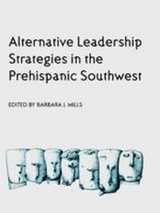
In considerations of societal change, the application of classic evolutionary schemes to prehistoric southwestern peoples has always been problematic for scholars. Because recent theoretical developments point toward more variation in the scale, hierarchy, and degree of centralization of complex societies, this book takes a fresh look at southwestern prehistory with these new ideas in mind.
This is the first book-length work to apply new theories of social organization and leadership strategies to the prehispanic Southwest. It examines leadership strategies in a number of archaeological contexts—from Chaco Canyon to Casas Grandes, from Hohokam to Zuni—to show striking differences in the way that leadership was constructed across the region.
These case studies provide ample evidence for alternative models of leadership in middle-range societies. By illustrating complementary approaches in the study of political organization, they offer new insight into power and inequality. They also provide important models of how today's archaeologists are linking data to theory, providing a basis for comparative analysis with other regions.
CONTENTSAlternative Models, Alternative Strategies: Leadership in the Prehispanic Southwest / Barbara J. Mills
Political Leadership and the Construction of Chacoan Great Houses, A.D. 1020-1140 / W. H. Wills
Leadership, Long-Distance Exchange, and Feasting in the Protohistoric Rio Grande / William M. Graves and Katherine A. Spielmann
Ritual as a Power Resource in the American Southwest / James M. Potter and Elizabeth M. Perry
Ceramic Decoration as Power: Late Prehistoric Design Change in East-Central Arizona / Scott Van Keuren
Leadership Strategies in Protohistoric Zuni Towns / Keith W. Kintigh
Organizational Variability in Platform Mound-Building Groups of the American Southwest / Mark D. Elson and David R. Abbott
Leadership Strategies among the Classic Period Hohokam: A Case Study / Karen G. Harry and James M. Bayman
The Institutional Contexts of Hohokam Complexity and Inequality / Suzanne K. Fish and Paul R. Fish
Leadership at Casas Grandes, Chihuahua, Mexico / Michael E. Whalen and Paul E. Minnis
Reciprocity and Its Limits: Considerations for a Study of the Prehispanic Pueblo World / Timothy A. Kohler, Matthew W. Van Pelt, and Lorene Y. L. Yap
Dual-Processual Theory and Social Formations in the Southwest / Gary M. Feinman
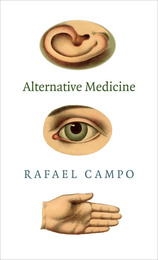

In the United States, the entanglement of sports and education has persisted for over a century. Multimillion-dollar high school football stadiums, college coaches whose salaries are many times those of their institutions’ presidents, psychological and educational tolls on student-athletes, and high-profile academic scandals are just symptoms of a system that has come under increasing fire. Institutions large and small face persistent quandaries: which do they value more, academic integrity or athletic success? Which takes precedence: prioritizing elite teams and athletes, or making it possible for all students to participate in sports? How do we create opportunities for academic—not just athletic—development for players?
In Alternative Models of Sports Development in America, B. David Ridpath—a leading sports development researcher who has studied both the US system and the European club model—offers clear steps toward creating a new status quo. He lays out four possible alternative models that draw various elements from academic, athletic, and European approaches. His proposals will help increase access of all young people to the benefits of sports and exercise, allow athletes to also thrive as students, and improve competitiveness. The result is a book that will resonate with sports development professionals, academic administrators, and parents.
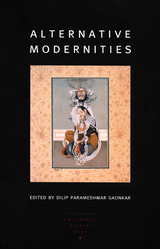
The idea of “alternative modernities” holds that modernity always unfolds within specific cultures or civilizations and that different starting points of the transition to modernity lead to different outcomes. Without abandoning the Western discourse on the subject, the contributors to this volume write from the standpoint that modernity is in truth a richly mulitiplicitous concept. Believing that the language and lessons of Western modernity must be submitted to comparative study of its global receptions, they focus on such sites as China, Russia, India, Trinidad, and Mexico. Other essays treat more theoretical aspects of modernity, such as its self-understanding and the potential reconcilability of cosmopolitanism and diversity.
Contributors. Homi Bhabha, William Cunningham Bissell, Dipesh Chakrabarty, Dilip Parameshwar Gaonkar, Michael Hanchard, Beatriz Jaguaribe, Leo Ou-fan Lee, Claudio Lomnitz, Thomas McCarthy, Tejaswini Niranjana, Elizabeth A. Povinelli, Shahzia Sikander, Charles Taylor, Andrew Wachtel

A group of highly distinguished scholars takes up important issues, theories, and methods stemming from the nascent body of research on comparative archaeology to showcase and apply important theories of households, power, and how the development of complex societies can be extended and refined. Drawing on the archaeological, ethnohistorical, and ethnographic records, the chapters in this volume contain critical investigations on the role of collective action, economics, and corporate cognitive codes in structuring complex societies.
Alternative Pathways to Complexity is an important addition to theoretical development and empirical research on Mesoamerica, the Old World, and cross-cultural studies. The theoretical implications addressed in the chapters will have broad appeal for scholars grappling with alternative pathways to complexity in other regions as well as those addressing diverse cross-cultural research.
Contributors: Sarah B. Barber, Cynthia L. Bedell, Christopher S. Beekman, Frances F. Berdan, Tim Earle, Carol R. Ember, Gary M. Feinman, Arthur A. Joyce, Stephen A. Kowalewski, Lisa J. LeCount, Linda M. Nicholas, Peter N. Peregrine, Peter Robertshaw, Barbara L. Stark, T. L. Thurston, Deborah Winslow, Rita Wright
Alternative Realities explores how these distinctions between cinematic fantasy and filmic realism are more porous than we might think. Through a close analysis of CGI-heavy blockbusters like Wonder Woman and Guardians of the Galaxy, it considers how even popular fantasies are grounded in emotional and social realities. Conversely, it examines how mockumentaries like This is Spinal Tap satirically call attention to the highly stylized techniques documentarians use to depict reality.
Alternative Realities takes us on a journey through many different genres of film, from the dream-like and subjective realities depicted in movies like Eternal Sunshine of the Spotless Mind and Memento, to the astonishing twists of movies like Shutter Island and The Matrix, which leave viewers in a state of epistemic uncertainty. Ultimately, it shows us how the power of cinema comes from the unique way it fuses together the objective and the subjective, the fantastical and the everyday.


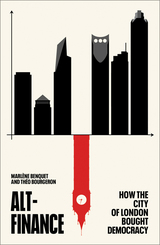
Powerful financial forces have supported the neoliberal project since the 1980s to advance their interests, but there are now signs that these forces have a new face and a new strategy.
The majority of the British finance sector threw its support behind Britain leaving the European Union, a flagship institution of neoliberalism. Beyond this counterintuitive move, what was really happening and why? Alt-Finance examines a new authoritarian turn in financialised democracies, focusing on the City of London, revealing a dangerous alternative political project in the making.
In a clash with traditional finance, the new behemoths of financial capital - hedge funds, private equity firms, and real estate funds - have started to cohere around a set of political beliefs, promoting libertarian, authoritarian, climate-denying, and Eurosceptic views. Protecting investments, suppressing social dissent, and reducing state interference is at the core of their mission for a new world order.
By following the money, the authors provide indisputable evidence of these worrying developments. Through a clear analysis of the international dealings of this new authoritarian-libertarian regime, not just in Britain but in the US and Brazil, we can understand how our world is being shaped against our will by struggles between dominant groups.

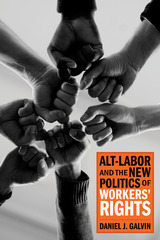
Alt-labor groups have long offered their members services and organizing opportunities to contest their unfair treatment on the job. But many groups have grown frustrated by the limited impact of these traditional strategies and have turned to public policy to scale up their work. They have successfully led campaigns to combat wage theft, raise the minimum wage, improve working conditions, strengthen immigrants’ rights, and more. These successes present something of a puzzle: relative to their larger, wealthier, and better-connected opponents, alt-labor groups are small, poor, and weak. Their members are primarily low-wage immigrant workers and workers of color who are often socially, economically, and politically marginalized. With few exceptions, the groups lack large dues-paying memberships and are dependent on philanthropic foundations and other unpredictable sources of funding. How, given their myriad challenges, have alt-labor groups managed to make gains for their members?
Galvin reveals that alt-labor groups are leveraging their deep roots in local communities, their unique position in the labor movement, and the flexibility of their organizational forms to build their collective power and extend their reach. A growing number of groups have also become more politically engaged and have set out to alter their political environments by cultivating more engaged citizens, influencing candidate selection processes, and expanding government capacities. These efforts seek to enhance alt-labor groups’ probabilities of success in the near term while incrementally shifting the balance of power over the long term.
Alt-Labor and the New Politics of Workers’ Rights comprehensively details alt-labor’s turn to policy and politics, provides compelling insights into the dilemmas the groups now face, and illuminates how their efforts have both invigorated and complicated the American labor movement.

Journalist Mike Wendling knows. He’s been following the Alt-Right closely for years, and with this book he shares the deep knowledge he’s gleaned. Media accounts to the contrary, the Alt-Right didn’t just burst out of nowhere in 2016—rather, they have been building their network quietly for years, using bulletin boards and social media to spread a toxic hybrid of technological utopianism, reactionary philosophy, and racial hatred. Wendling traces clearly the rise of the movement and the evolution of its ideas, and he introduces us to some of its key figures—many of whom he interviewed personally for the book. He explores links between Alt-Right rhetoric and hate crimes and terrorism, showing that the evidence connecting them is undeniable. Ultimately, however, he builds a strong case that the movement’s lack of a coherent base and its contradictory tendencies are already sapping its strength and will lead to its downfall.
A shocking exposé of a movement whose emergence stunned the world, Alt-Right presents a disturbing picture of our current political moment.
In 1830 philosopher Auguste Comte coined the term altruism to provide a general definition for the act of selflessly caring for others. But does this modern conception of sacrificing one's own interests for the well-being of others apply to the charitable behaviors encouraged by all world religions? In Altruism in World Religions prominent scholars from an array of religious perspectives probe the definition of altruism to determine whether it is a category that serves to advance the study of religion.
Exploring a range of philosophical and religious thought from Greco-Roman philia to Judaism, Christianity, and Islam, from Hinduism in India to Buddhism and the religions of China and Japan, the authors find that altruism becomes problematic when applied to religious studies because it is, in fact, a concept absent from religion. Chapters on Judaism, Christianity, and Islam reveal that followers of these religions cannot genuinely perform self-sacrificing acts because God has promised to reward every good deed. Moreover, the separation between the self and the other that self-sacrifice necessarily implies, runs counter to Buddhist thought, which makes no such distinction.
By challenging our assumptions about the act of self-sacrifice as it relates to religious teachings, the authors have shown altruism to be more of a secular than religious notion. At the same time, their findings highlight how charitable acts operate with the values and structures of the religions studied.
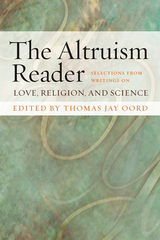
This anthology brings together, for the first time, leading essays and book chapters from theologians, philosophers, and scientists on their research on ethics, altruism, and love. Because the general consensus today is that scholarship in moral theory requires empirical research, the arguments of the leading scholars presented in this book will be fundamental to those examining issues in love, ethics, religion, and science.
The first half of The Altruism Reader offers essential selections from religious texts, leading contemporary scholars, and cutting-edge ethicists. Buddhism, Christianity, Hinduism, Islam, and Judaism are represented. Among the highly respected writers are Thomas Aquinas, the Dalai Lama, Thich Nhat Hanh, John Polkinghorne, Stephen Pope, Louis Fischer, Amira Shamma Abdin, Katharine Doob Sakenfeld, and Daniel Day Williams.
The book’s second half features primary readings on love and altruism from the sciences. Here the focus is on anthropology, psychology, sociology, biology, and neurology, with material written by Daniel C. Batson, David Sloan Wilson, Robert Wright, Stephen G. Post, Robert Axelrod, Richard Dawkins, Holmes Rolston III, and other renowned scientists and philosophers.
“Virtually all people act—and often talk—as if they have some clue about love. We speak about loving food, falling in love, loving God, feeling loved, and loving a type of music. We say that love hurts, love waits, love stinks, and love means never having to say you’re sorry. We use the word and its derivatives in a wide variety of ways . . . . My definition of love is this: To love is to act intentionally, in sympathetic response to others (including God), to promote well-being.” —Thomas Jay Oord
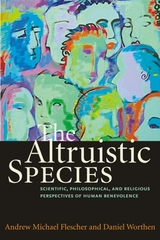
What motivates altruism? How essential is the phenomenon of altruism to the human experience? Is altruism readily accessible to the ordinary person? In The Altruistic Species, Andrew Michael Flescher and Daniel L. Worthen explore these questions through the lenses of four disciplinary perspectives—biology, psychology, philosophy, and religion. In their investigation, they make an extended argument for the existence of altruism against competing theories that construe all ostensible cases of benevolence as self-interest in disguise. The authors consider theories of egoism; the role of genetics and evolutionary biology; the psychological that induce altruistic behavior; philosophical theories of altruism in normative ethics such as Kantian, utilitarian, and Aristotelian models of moral action; and accounts of love of the neighbor in Christianity and Buddhism. Additionally, they offer a new, comprehensive definition of altruism that includes the insights of each of these perspectives.
The Altruistic Species reinvigorates the debate over the prevalence of selfless motivation in human behavior—whether it is a rare or ubiquitous phenomenon—something considered exceptional or a capacity that members of any community could potentially develop. This noteworthy interdisciplinary examination of altruism balances science, virtue theory, and theology. It is ideal for ethics, human behavior, and evolutionary biology courses as an educational resource for other multidisciplinary studies and interested lay readers.
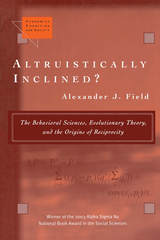
Altruistically Inclined? examines the implications of recent research in the natural sciences for two important social scientific approaches to individual behavior: the economic/rational choice approach and the sociological/anthropological. It considers jointly two controversial and related ideas: the operation of group selection within early human evolutionary processes and the likelihood of modularity—domain-specific adaptations in our cognitive mechanisms and behavioral predispositions.
Experimental research shows that people will often cooperate in one-shot prisoner's dilemma (PD) games and reject positive offers in ultimatum games, contradicting commonly accepted notions of rationality. Upon first appearance, predispositions to behave in this fashion could not have been favored by natural selection operating only at the level of the individual organism.
Emphasizing universal and variable features of human culture, developing research on how the brain functions, and refinements of thinking about levels of selection in evolutionary processes, Alexander J. Field argues that humans are born with the rudiments of a PD solution module—and differentially prepared to learn norms supportive of it. His emphasis on failure to harm, as opposed to the provision of affirmative assistance, as the empirically dominant form of altruistic behavior is also novel.
The point of departure and principal point of reference is economics. But Altruistically Inclined? will interest a broad range of scholars in the social and behavioral sciences, natural scientists concerned with the implications of research and debates within their fields for the conduct of work elsewhere, and educated lay readers curious about essential features of human nature.
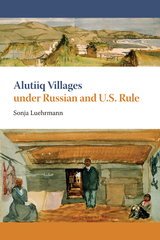
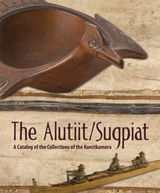
This beautifully photographed book catalogs the collection of nearly five hundred Alutiiq cultural items held by the Peter the Great Museum of Anthropology and Ethnography, or the Kunstkamera, in St. Petersburg, Russia. Gathered between 1780 and 1867, many of the artifacts are composed of fur, feathers, gut, hair, and other delicate materials, which prevent their transport for display or study.

Born between 1568 and 1580, Alva Ixtlilxochitl was a direct descendant of Ixtlilxochitl I and Ixtlilxochitl II, who had been rulers of Texcoco, one of the major city-states in pre-Conquest Mesoamerica. After a distinguished education and introduction into the life of the empire of New Spain in Mexico, Ixtlilxochitl was employed by the viceroy to write histories of the indigenous peoples in Mexico. Engaging with this history and delving deep into the resultant archives of this life's work, Amber Brian addresses the question of how knowledge and history came to be crafted in this era.
Brian takes the reader through not only the history of the archives itself, but explores how its inheritors played as crucial a role in shaping this indigenous history as the author. The archive helped inspire an emerging nationalism at a crucial juncture in Latin American history, as Creoles and indigenous peoples appropriated the history to give rise to a belief in Mexican exceptionalism. This belief, ultimately, shaped the modern state and impacted the course of history in the Americas. Without the work of Ixtlilxochitl, that history would look very different today.
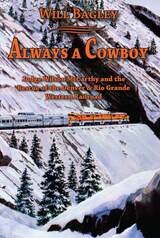
Cowboy, judge, federal official, then business executive, Wilson McCarthy mirrored change and growth in the twentieth-century West. Leading the Denver & Rio Grande back from the brink saved a vital link in the national transportation system. The D&RGW ran over and through the scenic Rockies, developing mineral resources, fighting corporate wars, and helping build communities. The Depression brought it to its knees. Accepting federal assignment to save the line, McCarthy turned it into a paragon of mid-century railroading, represented by the streamlined, Vista-Domed California Zephyr, although success hauling freight was of more economic importance. Prior to that, McCarthy’s life had taken him from driving livestock in Canada to trying to drive the national economy as a director of the Reconstruction Finance Corporation, the first line of federal attack on the Depression. Always a Cowboy positions McCarthy’s story in a rich historical panorama..
Will Bagley is the author of Blood of the Prophets: Brigham Young and the Massacre at Mountain Meadows

Always an Academic Immigrant is a collective memoir that gives voice to eighty-one academics who immigrated from thirty-seven countries for a career in an institution of higher education, in either the United States or one of ten other countries. Through in-depth interviews and observations from her own experiences as an immigrant scholar, Dafna Lemish shares the highs and the lows that academic immigrants feel as they search for both a country and an institution they can call home. She discovers the formative events that led these scholars to pursue careers outside their native lands and details the challenges they faced adapting to unspoken expectations in their new countries and workplaces. Ultimately, this book reveals the strategies that immigrant professors use to bridge their native and adoptive cultures while highlighting the vital contributions they have made to academia as scholars, teachers, and leaders.

Compelling narratives are integral to successful foreign policy, military strategy, and international relations. Yet often narrative is conceived so broadly it can be hard to identify. The formation of strategic narratives is informed by the stories governments think their people tell, rather than those they actually tell. This book examines the stories told by a broad cross-section of British society about their country’s past, present, and future role in war, using in-depth interviews with 67 diverse citizens. It brings to the fore the voices of ordinary people in ways typically absent in public opinion research.
Always at War complements a significant body of quantitative research into British attitudes to war, and presents an alternative case in a field dominated by US public opinion research. Rather than perceiving distinct periods between war and peace, British citizens see their nation as so frequently involved in conflict that they consider the country to be continuously at war. At present, public opinion appears to be a stronger constraint on Western defense policy than ever.
READERS
Browse our collection.
PUBLISHERS
See BiblioVault's publisher services.
STUDENT SERVICES
Files for college accessibility offices.
RECENTLY PUBLISHED





UChicago Accessibility Resources
home | accessibility | search | about | contact us
BiblioVault ® 2001 - 2025
The University of Chicago Press