
 A SCHOLARLY BOOK REPOSITORY
First published in 1967, Rufus Spain’s thorough investigation into Southern Baptist attitudes set the stage for research on religion in the American South. In At Ease in Zion, Spain questions the titular “ease” with society that Southern Baptists seemed to maintain following the Civil War. His analysis of denominational newspapers, as well as reports from the Southern Baptist Convention and state conventions, paint a compelling picture of the subjects’ complacency with their social existence, even as they criticized personal and recreational ethics.
While the South faced significant social, economic, and political changes after the Civil War, religion remained the primary moral influence. As the Southern Baptist denomination made up a significant majority of the population at that time, its leaders and attitudes had a clear and undeniable impact on social norms. Rufus Spain was one of the first writers to actively demonstrate the relationship between Southern religion and Southern society, and his work displays meticulous attention to the ways in which we are affected by complacency. He asserts that Southern Baptists viewed the American South as a version of God’s ideal society; any issues they wished to address were caused by individuals (such as those who did not conform to societal norms) or external attitudes (such as those in differing religions or regions).
At Ease in Zion is a critical part of the scholarly discussion on religion in society. Spain’s research offers a bold analysis of the American South and its citizens during one of the most tumultuous times in its history while providing a basis for arguments on “social Christianity” and its ever-shifting role in the world.

The poems of Dannye Romine Powell take ordinary moments and transform them into rare and luminous epiphanies. These poems have the air of real places and real people who go about the perilous business of living in this world.
Powell is a poet of candor and clarity, and she has a wit that moves in surprising ways. These are poems not only to admire, but to relish and share; the pleasure they bring is closer to that of an old leather jacket than of a new pair of shoes. Powell writes like no one else, and she’s a joy to read.

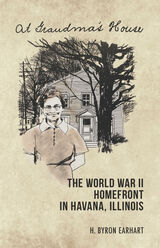
When H. Byron Earhart’s father enlisted in the U.S. Navy in 1942, young Byron and his family moved into his grandparents' old-fashioned home with a coal-fired range and potbelly stove, and his mother took charge of the family business, a frozen food locker. Grandma was the undisputed head of the family. While his father served on the battleship USS Missouri, his grandparents and mother held the family and the business together. At Grandma’s House is a tribute to everyday Americans who provided the social glue for a country at war as they balanced fear and anxiety for loved ones with the challenges and pleasures of daily life. The experiences of the Earhart family and this Midwestern community, supplemented by contemporary documents, family photos, and professional illustrations, recount with vivid local color the drama that played out on the national and international stage.

At Home Among Strangers presents an engrossing portrait of the Deaf community as a complex, nationwide social network that offers unique kinship to deaf people across the country. Schein depicts in striking detail the history and culture of the Deaf community, its structural underpinnings, the intricacies of family life, issues of education and rehabilitation, economic factors, and interaction with the medical and legal professions. This book is a fascinating, provocative exploration of the Deaf community in the United States for scholars and lay people alike.
In At Home: Historic Houses of Central and Western Massachusetts, Beth Luey examines the lives and homes of acclaimed poets and writers, slaves who won their freedom, Civil War enlistees, socialites, and leading merchants. Drawing on architectural and genealogical texts, wills, correspondence, and diaries, Luey situates the stories of these notable homes and the people who inhabited them in the context of broader economic, social, and political transformations. Filled with vivid details and fresh perspectives, each chapter is sure to inspire first-time visitors and seasoned travelers alike. All the homes are open to the public.
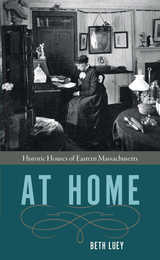
In At Home: Historic Houses of Eastern Massachusetts, Beth Luey uses architectural and genealogical texts, wills, correspondences, and diaries to craft delightful narratives of these notable abodes and the people who variously built, acquired, or renovated them. Filled with vivid details and fresh perspectives that will surprise even the most knowledgeable aficionados, each chapter is short enough to serve as an introduction for a visit to its house. All the homes are open to the public.
In At Home in Diaspora, Wendy Walters investigates the work of Himes, Cliff, and three other twentieth-century black international writers—Caryl Phillips, Simon Njami, and Richard Wright—who have lived in and written from countries they do not call home. Unlike other authors in exile, those of the African diaspora are doubly displaced, first by the discrimination they faced at home and again by their life abroad. Throughout, Walters suggests that in the absence of a recoverable land of origin, the idea of diaspora comes to represent a home that is not singular or exclusionary. In this way, writing in exile is much more than a literary performance; it is a profound political act.
Wendy W. Walters is assistant professor of literature at Emerson College.
By employing the tenets of posthumanism, compassionate conservation, and entangled empathy—and making them accessible through storytelling and narrative—Propen offers new perspectives about how to more compassionately and productively understand ideas about home, connectivity, and coexistence across a range of places and ecosystems. Uniquely conceptualized to include narrative related to the Anthropause, as well as travel and nature writing amidst COVID-19, At Home in the Anthropocene engages with questions about home and belonging in generative ways that attempt to open up possibilities for sustainable futures in which we may productively coexist with our more-than-human kin.

Something of a nomad himself, having lived in New Zealand, Sierra Leone, England, France, Australia, and the United States, Jackson is deft at capturing the ambiguities of home as a lived experience among the Warlpiri. Blending narrative ethnography, empirical research, philosophy, and poetry, he focuses on the existential meaning of being at home in the world. Here home becomes a metaphor for the intimate relationship between the part of the world a person calls "self" and the part of the world called "other." To speak of "at-homeness," Jackson suggests, implies that people everywhere try to strike a balance between closure and openness, between acting and being acted upon, between acquiescing in the given and choosing their own fate. His book is an exhilarating journey into this existential struggle, responsive at every turn to the political questions of equity and justice that such a struggle entails.
A moving depiction of an aboriginal culture at once at home and in exile, and a personal meditation on the practice of ethnography and the meaning of home in our increasingly rootless age, At Home in the World is a timely reflection on how, in defining home, we continue to define ourselves.

“It is quite incorrect to believe that the dead are gone forever and never return to speak to the living. They return to speak to the living all the time; indeed, it is their main activity.” Thus writes Sylvie Weil in this illuminating memoir, in which contemporary readers can hear the voices of her famed philosopher aunt Simone and mathematician father André.
Born into a freethinking Jewish family in France in 1909, Simone Weil was one of the twentieth century’s most original philosophers, influencing Albert Camus, T. S. Eliot, Simone de Beauvoir, Pope John XXIII, Czesław Miłosz, and Susan Sontag. She fought for workers’ rights and, later, the Spanish Republican cause. Before her death at age thirty-four, Simone Weil turned increasingly to mysticism and religion, especially Roman Catholicism, exploring themes of sacrifice, asceticism, and the virtues of manual labor. She never converted, however, and Sylvie Weil writes from a Jewish perspective, emphasizing Simone’s Jewish heritage.
Using previously unpublished family correspondence and conversations, Sylvie Weil paints the most vivid, private portrait of her aunt in print. The book illuminates Simone’s relationship with others, especially with her brother, André. Loving and unsparing, affectionate and incisive, At Home with André and Simone Weil is an insightful memoir about a family of intellectual luminaries.
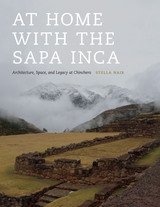
By examining the stunning stone buildings and dynamic spaces of the royal estate of Chinchero, Nair brings to light the rich complexity of Inca architecture. This investigation ranges from the paradigms of Inca scholarship and a summary of Inca cultural practices to the key events of Topa Inca’s reign and the many individual elements of Chinchero’s extraordinary built environment.
What emerges are the subtle, often sophisticated ways in which the Inca manipulated space and architecture in order to impose their authority, identity, and agenda. The remains of grand buildings, as well as a series of deft architectural gestures in the landscape, reveal the unique places that were created within the royal estate and how one space deeply informed the other. These dynamic settings created private places for an aging ruler to spend time with a preferred wife and son, while also providing impressive spaces for imperial theatrics that reiterated the power of Topa Inca, the choice of his preferred heir, and the ruler’s close relationship with sacred forces.
This careful study of architectural details also exposes several false paradigms that have profoundly misguided how we understand Inca architecture, including the belief that it ended with the arrival of Spaniards in the Andes. Instead, Nair reveals how, amidst the entanglement and violence of the European encounter, an indigenous town emerged that was rooted in Inca ways of understanding space, place, and architecture and that paid homage to a landscape that defined home for Topa Inca.
Anthony Powell’s universally acclaimed epic A Dance to the Music of Time offers a matchless panorama of twentieth-century London. Now, for the first time in decades, readers in the United States can read the books of Dance as they were originally published—as twelve individual novels—but with a twenty-first-century twist: they’re available only as e-books.
As the fourth book, At Lady Molly’s (1957), opens, the heady pleasures of the 1920s have begun to give way to the austerity and worries of the 1930s. Even so, the whirl of London life continues: friends commit to causes and to spouses, confess adulteries, and fall victim to dissipation and disillusion. As Nick moves ever more comfortably in the worlds of art, culture, and society, Powell’s palette broadens: old friends make appearances, but new ones take places on the stage as well—including Isobel Tolland, whom Nick knows at first sight he’s destined to marry.
"Anthony Powell is the best living English novelist by far. His admirers are addicts, let us face it, held in thrall by a magician."--Chicago Tribune
"A book which creates a world and explores it in depth, which ponders changing relationships and values, which creates brilliantly living and diverse characters and then watches them grow and change in their milieu. . . . Powell's world is as large and as complex as Proust's."--Elizabeth Janeway, New York Times
"One of the most important works of fiction since the Second World War. . . . The novel looked, as it began, something like a comedy of manners; then, for a while, like a tragedy of manners; now like a vastly entertaining, deeply melancholy, yet somehow courageous statement about human experience."--Naomi Bliven, New Yorker
“The most brilliant and penetrating novelist we have.”--Kingsley Amis
“Women of faith, discussing complicated things.” That’s how authors Susan Hinckley and Cynthia Winward describe At Last She Said It, and they don’t expect the knots to untangle themselves. Even with two very different personalities and a decade or so between them, as their friendship developed they kept stumbling onto what felt like an uncanny amount of common ground in their church experiences. Often their conversations ended with, “Why isn’t anyone talking about this? Someone should do a podcast!” So they did. They had a hunch they weren’t the only women wishing they had a place to discuss the things they were thinking about, a lot of which they’d never said—or heard—out loud. That hunch was right. Their 200-and-counting recorded conversations have been downloaded some two million times. Hinckley and Winward have learned, right along with their listeners, that there’s no power quite like finding out you’re not alone.
Their book now asks Latter-day Saints to think about old ideas in new ways. Stretching can be uncomfortable, but the willingness to consider diverse perspectives—even on the things we hold most dear—feels essential in an evolving world. So does being open to changing our minds, including how we think about ourselves. Faith is alive when it’s growing, and growing means change. Hopefully, these conversations will be the beginning of thousands more.

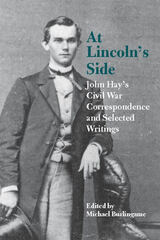
John Hay believed that “real history is told in private letters,” and the more than 220 surviving letters and telegrams from his Civil War days prove that to be true, showing Abraham Lincoln in action: “The Tycoon is in fine whack. I have rarely seen him more serene & busy. He is managing this war, the draft, foreign relations, and planning a reconstruction of the Union, all at once. I never knew with what tyrannous authority he rules the Cabinet, till now. The most important things he decides & there is no cavil.”
Along with Hay’s personal correspondence, Burlingame includes his surviving official letters. Though lacking the “literary brilliance of [Hay’s] personal letters,” Burlingame explains, “they help flesh out the historical record.” Burlingame also includes some of the letters Hay composed for Lincoln’s signature, including the celebrated letter of condolence to the Widow Bixby.
More than an inside glimpse of the Civil War White House, Hay’s surviving correspondence provides a window on the world of nineteenth-century Washington, D.C.
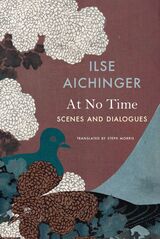
A member of the Gruppe 47 writers’ group which sought to renew German-language literature after World War II, Ilse Aichinger (1921–2016) achieved great acclaim as a writer of fiction, poetry, prose, and radio drama. The vignettes in At No Time each begin in recognizable situations, often set in Vienna or other Austrian cities, but immediately swerve into bizarre encounters, supernatural or fantastical situations. Precisely drawn yet disturbingly skewed, they are both naturalistic and disjointed, like the finest surrealist paintings. Created to be experienced on the page or on the radio rather than the stage, they echo the magic realism of her short stories. Even though they frequently take a dark turn, they remain full of humor, agility, and poetic freedom.

In 1790, two events marked important points in the development of two young American institutions—Congress decided that the new nation's seat of government would be on the banks of the Potomac, and John Carroll of Maryland was consecrated as America's first Catholic bishop. This coincidence of events signalled the unexpectedly important role that Maryland's Catholics, many of them by then fifth- and sixth-generation Americans, were to play in the growth and early government of the national capital. In this book, William W. Warner explores how Maryland's Catholics drew upon their long-standing traditions—advocacy of separation of church and state, a sense of civic duty, and a determination "to live at peace with all their neighbors," in Bishop Carroll's phrase—to take a leading role in the early government, financing, and building of the new capital.
Beginning with brief histories of the area's first Catholic churches and the establishment of Georgetown College, At Peace with All Their Neighbors explains the many reasons behind the Protestant majority's acceptance of Catholicism in the national capital in an age often marked by religious intolerance. Shortly after the capital moved from Philadelphia in 1800, Catholics held the principal positions in the city government and were also major landowners, property investors, and bankers. In the decade before the 1844 riots over religious education erupted in Philadelphia, the municipal government of Georgetown gave public funds for a Catholic school and Congress granted land in Washington for a Catholic orphanage.
The book closes with a remarkable account of how the Washington community, Protestants and Catholics alike, withstood the concentrated efforts of the virulently anti-immigrant and anti-Catholic American nativists and the Know-Nothing Party in the last two decades before the Civil War.
This chronicle of Washington's Catholic community and its major contributions to the growth of the nations's capital will be of value for everyone interested in the history of Washington, D.C., Catholic history, and the history of religious toleration in America.
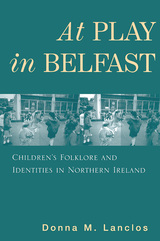
For Lanclos, children's experiences stimulate discussions about culture and society. In her words, "Children's everyday lives are more than just preparation for their futures, but are life itself."
At Play in Belfast is a volume in the Rutgers Series in Childhood Studies, edited by Myra Bluebond-Langner.
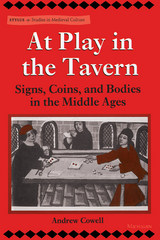
Drawing on recent work in medieval literature, history, popular culture, gender studies, and sign theory, Andrew Cowell employs a wide range of traditional and, until now, little known sources to show the unity and importance of a countercultural literary mode.
Andrew Cowell is Assistant Professor, Department of French and Italian, University of Colorado at Boulder.
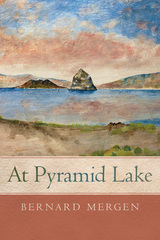
For the Paiute, it was a spiritual center that provided life-sustaining resources, such as the cui-ui, a fish unique to the lake and now endangered. For the ranchers and farmers who settled on tribal lands, the waters that flowed into it were necessary to raise cattle and crops. Mergen tells how these competing interests have interacted with the lake and with each other, from the Paiute War of 1860 to the present. The lake’s very existence was threatened by dams and water diversion; it was saved by tribal claims, favorable court decisions, improved water laws, and the rise of environmentalism.
At Pyramid Lake is about more than Indians and water wars, however. It is the story of railroads on the reservation and the role of federal, state, and private groups interested in sportfishing. It is about scientists, artists, and tourists who were captivated by the lake’s beauty. Finally, it is also a story of the lake as a place of spiritual renewal and celebration. Mergen grew up near its shores in the 1940s and returned frequently through the years. In this cultural history, he combines his personal remembrances with other source material, including novels, poetry, newspaper and magazine journalism, unpublished manuscripts, and private conversations, to paint a fascinating portrait of one of Nevada’s natural wonders.

At Risk explores how young people living with HIV have developed risk-reduction practices that seem to contradict public health recommendations for HIV prevention. Putting forward a rhetoric of deviance to frame these instances, McKinley Green argues that they represent intentional healthcare decisions that help young people mitigate the health risks that are most pressing in their daily lives. While current HIV risk-reduction priorities in the US are framed around a finite spectrum of sexual behaviors and medical technologies, those living with HIV often encounter a broader spectrum of risks shaped by structural inequities like racism, housing insecurity, queer and transphobia, HIV stigma, trauma in medical settings, and addiction, all of which create conditions that increase the risk of HIV transmission and present other threats to safety and autonomy.
Drawing from more than sixty hours of interviews with young people living with HIV, frontline healthcare workers, and HIV activists, Green highlights how those living with HIV have developed agency and expertise in navigating, mitigating, and communicating about risk. In doing so, he offers alternative epistemologies of sexual health risk that point toward more patient-centered HIV prevention frameworks.
In a study that is at once an analysis of popular culture, a polemic on religious and secular rhetoric, and an ethics of representation, Edward Ingebretsen searches for answers. At Stake explores the social construction of monstrousness in public discourse-tabloids, television, magazines, sermons, and popular fiction. Ingebretsen argues that the monster serves a moralizing function in our culture, demonstrating how not to be in order to enforce prevailing standards of behavior and personal conduct. The boys who shot up Columbine High School, for instance, personify teen rebellion taken perilously too far. Susan Smith, the South Carolinian who murdered her two children, embodies the hazards of maternal neglect. Andrew Cunanan, who killed Gianni Versace, among others, characterizes the menace of predatory sexuality. In a biblical sense, monsters are not unlike omens from the gods. The dreadful consequences of their actions inspire fear in our hearts, and warn us by example.
Maverick gay poetic icon Thom Gunn (1929–2004) and his body of work have long dared the British and American poetry establishments either to claim or disavow him. To critics in the UK and US alike, Gunn demonstrated that formal poetry could successfully include new speech rhythms and open forms and that experimental styles could still maintain technical and intellectual rigor. Along the way, Gunn’s verse captured the social upheavals of the 1960s, the existential possibilities of the late twentieth century, and the tumult of post-Stonewall gay culture.
The first book-length study of this major poet, At the Barriers surveys Gunn’s career from his youth in 1930s Britain to his final years in California, from his earliest publications to his later unpublished notebooks, bringing together some of the most important poet-critics from both sides of the Atlantic to assess his oeuvre. This landmark volume traces how Gunn, in both his life and his writings, pushed at boundaries of different kinds, be they geographic, sexual, or poetic. At the Barriers will solidify Gunn’s rightful place in the pantheon of Anglo-American letters.
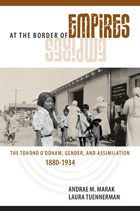
Beginning in the 1880s, the US government implemented programs to eliminate “vice” among the Tohono O’odham and to encourage the morals of the majority culture as the basis of a process of “Americanization.” During the next fifty years, tribal norms interacted with—sometimes conflicting with and sometimes reinforcing—those of the larger society in ways that significantly shaped both government policy and tribal experience. This book examines the mediation between cultures, the officials who sometimes developed policies based on personal beliefs and gender biases, and the native people whose lives were impacted as a result. These issues are brought into useful relief by comparing the experiences of the Tohono O’odham on two sides of a border that was, from a native perspective, totally arbitrary.
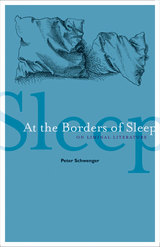
At the Borders of Sleep is a unique exploration of the connections between literature and the liminal states between waking and sleeping—from falling asleep and waking up, to drowsiness and insomnia, to states in which sleeping and waking mix. Delving into philosophy as well as literature, Peter Schwenger investigates the threshold between waking and sleeping as an important and productive state between the forced march of rational thought and the oblivion of unconsciousness.
While examining literary representations of the various states between waking and sleeping, At the Borders of Sleep also analyzes how writers and readers alike draw on and enter into these states. To do so Schwenger reads a wide range of authors for whom the borders of sleep are crucial, including Marcel Proust, Stephen King, Paul Valéry, Fernando Pessoa, Franz Kafka, Giorgio de Chirico, Virginia Woolf, Philippe Sollers, and Robert Irwin. Considering drowsiness, insomnia, and waking up, he looks at such subjects as the hypnagogic state, the experience of reading and why it is different from full consciousness, the relationships between insomnia and writing and why insomnia is often a source of creative insight, and the persistence of liminal elements in waking thought. A final chapter focuses on literature that blurs dream and waking life, giving special attention to experimental writing.
Ultimately arguing that, taking place on the edges of consciousness, both the reading and writing of literature are liminal experiences, At the Borders of Sleep suggests new ways to think about the nature of literature and consciousness.
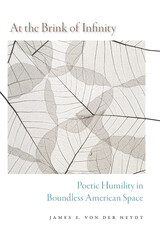
From popular culture to politics to classic novels, quintessentially American texts take their inspiration from the idea of infinity. In the extraordinary literary century inaugurated by Ralph Waldo Emerson, the lyric too seemed to encounter possibilities as limitless as the U.S. imagination. This raises the question: What happens when boundlessness is more than just a figure of speech? Exploring new horizons is one thing, but actually looking at the horizon itself is something altogether different. In this carefully crafted analysis, James von der Heydt shines a new light on the lyric craft of Emily Dickinson, Robert Frost, Elizabeth Bishop, and James Merrill and considers how their seascape-vision redefines poetry's purpose.
Emerson famously freed U.S. literature from its past and opened it up to vastness; in the following century, a succession of brilliant, rigorous poets took the philosophical challenges of such freedom all too seriously. Facing the unmarked horizon, Emersonian poets capture—and are captured by—a stark, astringent version of human beauty. Their uncompromising visions of limitlessness reclaim infinity's proper legacy—and give American poetry its edge. Von der Heydt's book recovers the mystery of their world.
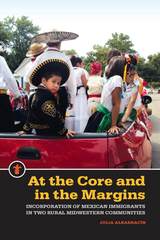
Based on 260 surveys and 47 in-depth interviews, this study combines quantitative and qualitative research to explore the level and characteristics of immigrant incorporation in Beardstown and Monmouth. It assesses the advancement of immigrants in the immigration/ residency/citizenship process, the immigrants’ level of cultural integration (via language, their connectedness with other members of society, and their relationships with neighbors), the degree and characteristics of discrimination against immigrants in these two towns, and the extent to which immigrants participate in different social and political activities and trust government institutions.
Immigrants in new destinations are likely to be poorer, to be less educated, and to have weaker English-language skills than immigrants in traditional destinations. Studying how this population negotiates the obstacles to and opportunities for incorporation is crucial.
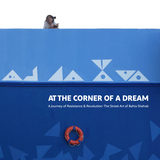
At the Corner of a Dream offers extensive documentation of Shehab’s powerful street paintings. It also chronicles the stories of the people she meets along her journeys and includes her observations from the streets of each new city she visits. Shehab’s work is a manifesto, a cry for freedom and dignity, and a call to never stop dreaming.

This memoir relates previously untold stories about major Civil Rights campaigns that helped put an end to voting rights violations and Jim Crow education; explains how Green has helped urban school districts improve academic achievement levels; and explains why this history should inform our choices as we attempt to reform and improve American education. Green’s quest began when he helped the Kennedy Administration resolve a catastrophic education-related impasse and has continued through his service as one of the participants at an Obama administration summit on a current academic crisis.
It is commonly said that education is the new Civil Rights battlefield. Green’s memoir, At the Crossroads of Fear and Freedom: The Fight for Social and Educational Justice, helps us understand that educational equity has always been a central objective of the Civil Rights movement.

This kaleidoscopic biography offers readers a compelling microhistory of a revolutionary moment in art and politics through its portrait of an enigmatic but influential figure: Ivan Aksyonov authored the first book-length study about Pablo Picasso, translated Elizabethan drama, and was a literary adviser to Vsevolod Meyerhold, as well as a teacher of Sergei Eisenstein in Meyerhold’s institute and an important critic, before dying in 1935. Lars Kleberg traces Aksyonov’s influences, interlocutors, and creative output in multiple genres and media to bring a complicated and fascinating character back to life. Kleberg invites us to reconsider the avant-garde and to understand the political and artistic ferment of the revolutionary era and its aftermath in new, deeper ways.
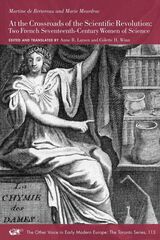
The writings of mineralogist and hydrogeologist Martine de Bertereau (ca. 1584–ca. 1643) and alchemist and chemist Marie Meurdrac (ca. 1610–80) stand at the crossroads of the Scientific Revolution, a significant period between Copernicus and Newton that oversaw a new ferment in both the theoretical and empirical investigation of the natural world. Bertereau’s writings appear at the interface of a negotiation between an older form of knowledge, dating back to Aristotle, and a new scientific empiricism. She brilliantly addresses the relationship between knowledge and mining applications, as well as the roles of the king, the state, the market, and the public. Meurdrac published the first so-called chemistry book by a woman, which contributed to the various areas of scientific knowledge generally associated with alchemy in its development into chemistry, particularly medical cookery, botany, pharmacology, and cosmetology.
Bertereau’s and Meurdrac’s works illustrate this age of transition, a spectacular time of growth in ideas and discoveries for both men and women. This first-time translation of their works is an important step in restoring the voices of these early modern French women scientists.
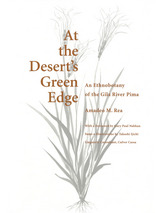
At the Desert's Green Edge weaves the Pima view of the plants found in their environment with memories of their own history and culture, creating a monumental testament to their traditions and way of life. Rea first discusses the Piman people, environment, and language, then proceeds to share their botanical knowledge in entries for 240 plants that systematically cover information on economic botany, folk taxonomy, and linguistics. The entries are organized according to Pima life-form categories such as plants growing in water, eaten greens, and planted fruit trees. All are anecdotal, conveying the author's long personal involvement with the Pimas, whether teaching in their schools or learning from them in conversations and interviews.
At the Desert's Green Edge is an archive of otherwise unavailable plant lore that will become a benchmark for botanists and anthropologists. Enhanced by more than one hundred brush paintings of plants, it is written to be equally useful to nonspecialists so that the Pimas themselves can turn to it as a resource regarding their former lifeways. More than an encyclopedia of facts, it is the Pimas' own story, a witness to a changing way of life in the Sonoran Desert.

Finalist for 2012 National Jewish Book Award in the Holocaust category
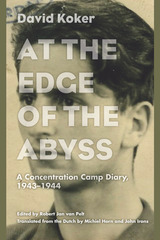
David Koker's diary is one of the most notable accounts of life in a German concentration camp written by a Jew during the years of the Holocaust. First brought to attention when the Dutch historian Jacob Presser-Koker's history teacher in high school-quoted from Koker's diary in his monumental history, published in English as The Destruction of the Dutch Jews (1968), the diary itself became a part of the Dutch literary canon when it was published in 1977 as Dagboek geschreven in Vught (Diary Written in Vught). It has remained in print ever since, and is notable for its literary qualities, weaving poetry and powerful observations of the emotional life of a camp prisoner, including reflections after an in-person visit by Heinrich Himmler. Surprisingly, the book has never before been translated into English.
During his time in the Vught concentration camp, the 21-year-old David recorded on an almost daily basis his observations, thoughts, and feelings. He mercilessly probed the abyss that opened around him and, at times, within himself. David's diary covers almost a year, both charting his daily life in Vught as it developed over time and tracing his spiritual evolution as a writer. Until early February 1944, David was able to smuggle some 73,000 words from the camp to his best friend Karel van het Reve, a non-Jew.
With an informative introduction, annotation, and list of dramatis personae by Robert Jan van Pelt, At the Edge of the Abyss offers an immediate and wholly original look into the life of a concentration camp prisoner.

Combining science writing, environmental history, and first-hand accounts from a longtime resident, At the Glacier’s Edge offers a unique narrative natural history of Long Island. Betsy McCully tells the story of how the island was formed at the end of the last ice age, how its habitats evolved, and how humans in the last few hundred years have radically altered and degraded its landscape. Yet as she personally recounts the habitat losses and species declines she has witnessed over the past few decades, she describes the vital efforts that environmental activists are making to restore and reclaim this land—from replanting salt marshes, to preserving remaining grasslands and forests, to cleaning up the waters. At the Glacier’s Edge provides an in-depth look at the flora, fauna and geology that make Long Island so special.

Delving into the everyday lives of real, everyday people, Walt Harrington skillfully draws the reader into an intimate relationship with the men and women profiled in this powerful collection of stories--people like V. I. Smith, a homicide detective; Deane Guy, a stock car racer; Jackie Jordan, a social worker in family services; and Sheri D'Amato, a girls' soccer coach.
Originally appearing in the Washington Post Magazine, these stories, which capture a cross section of Americans, stand out in the field of journalism because of the unique way in which Walt Harrington uses unheralded, individual lives to elaborate on the great human issues of the day. In "Mothers and Daughters" three generations of women discuss how society affected the choices they made and who they became. "The Mystery of Goodness" follows a Harvard-educated lawyer who handles death-row cases for very little money because he feels the system is unfair to African Americans. In "To Have and Have Not" a young couple with two small children struggle to make ends meet. Harrington describes in detail the creation of a poem by Rita Dove, then United States Poet Laureate, in "The Shape of Her Dreaming."
Harrington has adeptly combined sociology and journalism into beautiful prose. As "literary journalism," the stories employ scene, dialogue, and physical description within a narrative framework. At the same time, they also adhere to all the traditional journalistic standards of accuracy, fairness, and balance. As a result, At the Heart of It represents a subgenre that is rarely practiced and seldom understood even within the profession of journalism.
All of these stories are snapshots, pieces of everyday life in America that are intended to be a mirror held to the lives of readers. These are not stories about which you can remain neutral; even the most casual readers will be moved by the glimpses Walt Harrington provides us of ourselves.

Against the common view, which restricts the range of reason to logic and truth-theory alone, Romano advocates "big-hearted rationality," including in it what is only ostensibly its opposite, that is, sensibility, and locating in sensibility itself the roots of the categorical forms of thought. Contrary to what was claimed by the "linguistic turn," language is not a self-enclosed domain; it cannot be conceived in its specificity unless it is led back to its origin in the pre-predicative or pre-linguistic structure of experience itself.
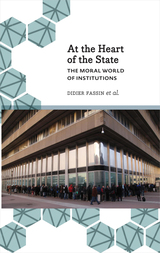
The state is often regarded as an abstract and neutral bureaucratic entity. Against this common sense idea, At the Heart of the State argues that it is also a concrete and situated reality, embodied in the work of its agents and inscribed in the issues of its time.
The result of a five-year investigation conducted by ten scholars, this book describes and analyses the police, the court system, the prison apparatus, the social services, and mental health facilities in France. Combining genealogy and ethnography, its authors show that these state institutions do not simply implement laws, rules and procedures: they mobilise values and affects, judgements and emotions. In other words, they reflect the morality of the state.
Of immense interest to both social scientists and political theorists, this work will make an important contribution to the ever expanding literature on the contemporary state.
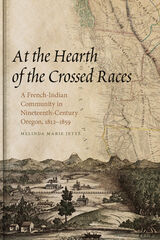
Jetté’s study focuses on the “hearth” of this contact: French Prairie, so named for the French-Indian families who resettled the homeland of the Ahantchuyuk Kalapuyans. Although these families sought a middle course in their relations with their various neighbors, their presence ultimately contributed to the Anglo-American colonization of the region. By establishing farming and husbandry operations in the valley, the French-Indian settlers enhanced the Willamette Valley’s appeal as a destination of choice for the Anglo-Americans who later emigrated to the Pacific Northwest via the Oregon Trail.
Upon these emigrants’ arrival, the social space for the people of the “crossed races” diminished considerably, as the Anglo-Americans instituted a system of settler colonialism based on racial exclusion. Like their Native kin, the French-Indian families pursued various strategies to navigate the changing times and Jetté’s study of French Prairie takes on the relationships among all three: the French-Indian families, the indigenous peoples, and the Anglo-American settlers.
With At the Hearth of the Crossed Races, Jetté delivers a social history that deepens our understanding of the Oregon Country in the nineteenth century. This history of French Prairie provides a window into the multi-racial history of the Pacific Northwest and offers an alternative vision of early Oregon in the lives of the biracial French-Indian families whose community challenged notions of white supremacy, racial separation, and social exclusion.
As German-language literature turned in the mid-nineteenth century to the depiction of the profane, sensual world, a corresponding anxiety emerged about the terms of that depiction—with consequences not only for realist poetics but also for the conception of the material world itself. At the Limit of the Obscene examines the roots and repercussions of this anxiety in German realist and postrealist literature. Through analyses of works by Adalbert Stifter, Gustav Freytag, Theodor Fontane, Arno Holz, Gottfried Benn, and Franz Kafka, Erica Weitzman shows how German realism’s conflicted representations of the material world lead to an idea of the obscene as an excess of sensual appearance beyond human meaning: the obverse of the anthropocentric worldview that German realism both propagates and pushes to its crisis. At the Limit of the Obscene thus brings to light the troubled and troubling ontology underlying German realism, at the same time demonstrating how its works continue to shape our ideas about representability, alterity, and the relationship of human beings to the non-human well into the present day.

At the Moon’s Inn, first published in 1941, provides a fictional account of De Soto’s famous Spanish expedition to La Florida and through the southeastern United States between 1539 and 1543. The novel begins in Spain in 1538, where De Soto and his chief lieutenants, veterans of the campaigns in South America, pledge themselves to a new enterprise to explore and exploit La Florida. The narrative follows them on their voyage to Cuba, where they rest and obtain additional supplies, then set sail for the area now known as Tampa Bay. Lytle’s brilliant historical novel takes the readers with the conquistadores through the hot, humid land, where despite their advantage in military technology they found they must rely on the Indians for food. The author explores the cultural confrontation that seriously weakened the Indians, while the Spaniards’ dreams of gold gradually turned to hopes of survival in the hostile environment.
Drawing his facts from the 1939 United States De Soto Commission Report and from the surviving historical chronicles of the expedition, Lytle weaves a fascinating tale that brings to life the history of Spanish efforts to establish a controlling presence in the New World during the first half of the 16th century.
In his introduction, Douglas Jones places At the Moon’s Inn within the context of the documentary record, as well as within the framework of its distinguished author’s career.

At the Movies, Film Reviewing, and Screenwriting discusses the interplay between film criticism and screenwriting, providing a different view on how reviewers engage with story and dialogue. Steven Maras draws on Pierre Bourdieu’s theories of cultural taste to examine film reviewing as a key site of cultural production, analyzing ten years of television scripts from At the Movies (2004–2014). Hosted by Australia’s most influential film critics Margaret Pomeranz and David Stratton, this long-running program shaped public discourse on cinema and left an indelible mark on Australian screen culture.
Studying the program’s broadcast scripts, this book addresses how film reviewing operates as both critique and storytelling. Of particular interest to media scholars, screenwriting researchers, and cinephiles alike, it provides fresh insights into the evolving role of criticism in contemporary screen culture. Engaging and deeply researched, this work rightfully emphasizes the cultural significance of movie criticism in film culture in Australia and beyond.
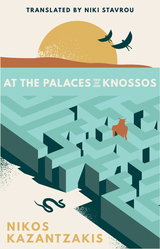
A captivating retelling—newly translated—of the rise and fall of the Minoan civilization interwoven with some of ancient Greece’s most enduring myths
At the Palaces of Knossos is a vivid reimagining of ancient Crete, blending history and mythology into an epic tale of heroism, love, and destiny. Set against the grandeur of the Minoan court, the novel brings to life the legendary stories of Theseus, the Minotaur, Ariadne, Daedalus, and Icarus.
The story follows Theseus, the prince of Athens, who arrives in Crete as part of the annual tribute of young Athenians sent to feed the monstrous Minotaur. Determined to end this brutal cycle, he infiltrates the labyrinthine palace of Knossos, where he crosses paths with Princess Ariadne. Struggling between loyalty to her people and her love for the courageous stranger, Ariadne risks everything to help Theseus in his quest.
Through the eyes of palace attendants, acrobats, and the inventor Daedalus and his son Icarus, Kazantzakis transports readers into the splendor of Minoan culture—its sacred rituals, breathtaking bull-leaping ceremonies, and vibrant city life. But as Theseus prepares to face his destiny, a tragic chain of events unfolds, leading to heartbreak, betrayal, and the downfall of a once-mighty civilization.
Rich with philosophical depth and lyrical prose, At the Palaces of Knossos is more than a mythological retelling—it is a meditation on power, freedom, and the eternal struggle between fate and human will. Perfect for fans of historical fiction and Greek mythology, this novel offers a compelling journey into one of the ancient world’s most fascinating eras.
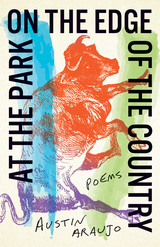

The First World War and its aftermath were significant events with widespread consequences that impacted everyday people. This book is the first comprehensive analysis of the various ways in which the Great War affected urban life, extending beyond the typically recognized regions such as the European great powers, the United States, and US colonies and spheres of influence. It explores the impacts on peripheral cities in East Asia, South Europe, Latin America, and Africa, which have often been overlooked in the historiography of the 1914 to 1918 conflict. Despite their historical neglect, these urban areas felt the repercussions of the war as it reshaped their structures, rhythms, and daily routines. This transformation influenced both private and public life, highlighting the crucial role these cities played as actors during wartime.
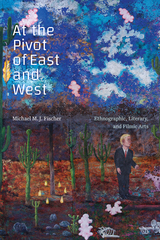
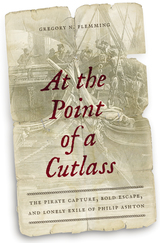
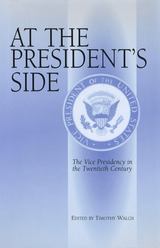
The nation's first vice president, John Adams, called his job "the most insignificant office ever the invention of man contrived or his imagination conceived." And many of the forty-four men who succeeded him in the office have said much worse. Perhaps the biggest problem is that the job has a fancy title, but few responsibilities. Other than presiding over the Senate, the vice president of the United States has no constitutional duties. In fact, it is not even clear that the founders of the republic ever intended that the vice president would succeed to the presidency upon the death of an incumbent.
Yet, despite the relative obscurity of the position, few politicians turn down the opportunity to serve as vice president of the United States. Being elected vice president is often a stepping-stone to the presidency. Since World War II, five vice presidents—Harry Truman, Richard Nixon, Lyndon Johnson, Gerald Ford, and George Bush—have gone on to become president. While it may not be glamorous, the vice presidency is an important training ground for national leadership.
The essays in this book trace the evolution of the vice presidency in the twentieth century from Theodore Roosevelt to Dan Quayle. The first five chapters tell the stories of a colorful collection of the men chosen because of their native states or their political acumen, but not their leadership abilities. The next four chapters form a mosaic of tragedy. Richard Nixon rose from the vice presidency to the presidency only to be forced from office. Lyndon Johnson's tenure ended unhappily because of the prolonged fighting in Vietnam. Hubert Humphrey was humiliated as vice president by a man who should have known better. And Spiro Agnew was rousted from the office by petty greed.
The following four chapters tell the story of a new vice presidency. Nelson Rockefeller, Walter Mondale, George Bush, and Dan Quayle redefined the job that not many people wanted but that few could refuse. In a particularly valuable essay, Quayle reflects on the checkered past of his predecessors, gives credit to Walter Mondale for rehabilitating the vice presidency, and tells of his working relationship with George Bushþoffering a unique glimpse of an office that is quickly becoming the second most powerful in the nation.
Addressing the future of the office, Richard E. Neustadt provides a detailed analysis of the nucleus of vice presidential powerþproximity to the president. To whit, we have Neustadt's maxim: "The power and influence of a vice president is inversely proportional to the political distance between that vice president and his president. The greater the distance the less the power."
At the President's Side includes anecdotal and informative essays by presidential scholars John Milton Cooper Jr., Robert H. Ferrell, Elliot A. Rosen, Richard S. Kirkendall, Richard Norton Smith, Robert Dallek, Joel K. Goldstein, John Robert Greene, and Steven M. Gillon. Also included are incisive commentaries by such Washington insiders as Hugh Sidey, R. W. Apple Jr., James Cannon, and Chase Untermeyer. This book will inform and entertain general readers and also challenge scholars interested in the presidency and the vice presidency.
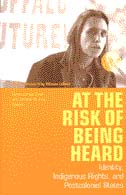
Combining rich ethnographic descriptions with clear theoretical analyses, At the Risk of Being Heard considers the paradoxical challenges and opportunities confronting indigenous peoples at the dawn of the twenty-first century. In the face of state-sanctioned violence, indigenous peoples encounter considerable risks when asserting their rights, especially to self-determination. Yet, if they remain silent or absent from new arenas of power, hiding in marginalized homelands or cultural practices, they risk being invisible to those allies that would aid them in their struggles for survival.
At the Risk of Being Heard offers needed insights for individuals working on issues of governance, sustainable development, resource management, globalization, and indigenous affairs. It will undoubtedly appeal to undergraduate and graduate students in anthropology, sociology, history, political science, peace studies, and to those students in courses that explore relationships among postcolonial states, indigenous peoples, and human rights.
Bartholomew Dean is Assistant Professor of Anthropology, University of Kansas. Jerome M. Levi is Associate Professor of Anthropology, Carleton College.

At the VA offers an unflinching and deeply humane portrait of combat veterans—primarily from the Vietnam era—as they seek care within Veterans Affairs hospitals. These imagistic, lyrical pieces focus not on the battlefield but on its aftermath.
Author H. Lee Barnes, a veteran himself, addresses familiar wounds such as PTSD, moral injury, and survivor’s guilt while also bringing attention to underexamined experiences, including those of women veterans who have survived sexual assault. The collection honors sacrifice without sentimentality and resilience without oversimplifying the challenges veterans face.
At its center is a quiet irony: the VA can be frustrating and imperfect, yet to be there at all is to have survived. In that tension, Barnes finds a measured sense of hope that will resonate with readers who understand any type of trauma and recovery. Thoughtful and timely, At the VA asks what we owe our veterans long after their service ends.


The book’s protagonist, Stas, finds himself the guest of the Cossack Jakov Antonovich, a scholar as well as a military leader and an agricultural potentate. His time at Antonovich’s stanitsa provides him with an incomparable education in the history of the old Polish Commonwealth of nations, which at its height encompassed Poland, Ukraine, Belarus, Lithuania, Latvia and Estonia. It is a lesson all the more engaging to the reader in that it is presented from a perspective that is neither Polish nor Russian, but Cossack. Through Lobodowski’s interweaving of historical reflection with sumptuous descriptions of agricultural life on the well-ordered stanitsa, At the Village is sometimes compared to the Polish national epic, Adam Mickiewicz’s Pan Tadeusz (1834), upon which Lobodowski is said to have consciously modelled the novel.

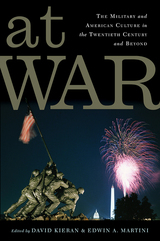
At War offers short, accessible essays addressing the central issues in the new military history—ranging from diplomacy and the history of imperialism to the environmental issues that war raises and the ways that war shapes and is shaped by discourses of identity, to questions of who serves in the U.S. military and why and how U.S. wars have been represented in the media and in popular culture.

All I know is it’s the season
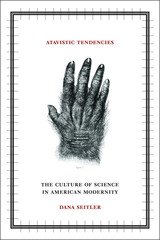
A provocative exploration of the impact of the human sciences on literature, politics, and culture
The post-Darwinian theory of atavism forecasted obstacles to human progress in the reappearance of throwback physical or cultural traits after several generations of absence. In this original and stimulating work, Dana Seitler explores the ways in which modernity itself is an atavism, shaping a historical and theoretical account of its dramatic rise and impact on Western culture and imagination.
Examining late nineteenth- and early twentieth-century science, fiction, and photography, Seitler discovers how modern thought oriented itself around this paradigm of obsolescence and return—one that served to sustain ideologies of gender, sexuality, and race. She argues that atavism was not only a discourse of violence—mapping racial and sexual divisions onto the boundary between human and animal—but was also an illustration of how modern science understood human being as a temporal category. On one hand, atavism positioned some humans as more advanced than others on an evolutionary scale. On the other, it undermined such progressivism by suggesting that because all humans had evolved from animals they were therefore not purely human. Atavism thus reveals how scientific theories of a recurrent past were a significant feature of modernity.At the beginning of the twentieth century, atavistic theory had widespread social and economic effects on the taxonomies of medicine, the logic of the welfare state, conceptions of the modern family, and images of the abnormal. Investigating the cultural logic of science in conjunction with naturalist, feminist, and popular narratives, Seitler exposes the influence of atavism: a fundamental shift in ways of knowing—and telling stories about—the modern human.
Stone highlights the importance of how the circulation of the physical videos, and not just their content, promotes the social movement. More broadly she shows how videographers perform their activism, navigating the tensions between neoliberal personhood or ego and an ethos of compañerismo that privileges community. Grounded in the lived experiences of Atenco's activists and allied filmmakers, Atenco Lives! documents the making and circulating of films as an ethical and political practice purposefully used to transform human relationships.
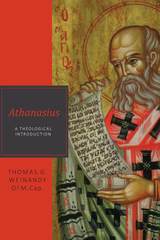
"A reliable, concise introduction to the theology of Athanasius." - International Journal of Systematic Theology
"A sustained and intelligent introduction to Athanasius and his literature, and will rightly appear on all undergraduate patristic bibliographies." - The Journal of Theological Studies
"A very fine theological (as its subtitle emphasizes) introduction to the Alexandrian bishop…[an] accessible, intelligent, and worthy volume, which offers the reader an overview of Athanasius's thought within the context of his full, if at times harried, ecclesiastical life." - Nova et Vetera
"Weinandy offers a summary of Athanasius' central works and a balanced assessment of his theology's merits and contemporary significance…No student of Athanasius should overlook this reliable guidebook to the little Alexandrian's great life and works." - Religious Studies Review
"Weinandy's introduction to Athanasius is an important work, familiarizing the reader with Athanasius' life, writings, and fundamental concerns. Throughout, the centrality of soteriology clearly emerges, whether the topic is the doctrine of the Trinity or the life of Antony. Hopefully this book will serve to bring Athanasius' soteriology more prominently into contemporary discussions alongside the other great masterpieces on this doctrine." - Themelios
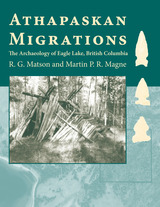
In Athapaskan Migrations, authors R. G. Matson and Martin P. R. Magne use a variety of methods to identify and describe the arrival of the Athapaskan-speaking Chilcotin Indians in west central British Columbia. By contrasting two similar geographic areas—using the parallel direct historical approach—the authors define this aspect of Athapaskan culture. They present a sophisticated model of Northern Athapaskan migrations based on extensive archaeological, ethnographic, and dendrochronological research.
A synthesis of 25 years of work, Athapaskan Migrations includes detailed accounts of field research in which the authors emphasize ethnic group identification, settlement patterns, lithic analysis, dendrochronology, and radiocarbon dating. Their theoretical approach will provide a blueprint for others wishing to establish the ethnic identity of archaeological materials. Chapter topics include basic methodology and project history; settlement patterns and investigation of both the Plateau Pithouse and British Columbia Athapaskan Traditions; regional surveys and settlement patterns; excavated Plateau Pithouse Tradition and Athapaskan sites and their dating; ethnic identification of recovered material; the Chilcotin migration in the context of the greater Pacific Athapaskan, Navajo, and Apache migrations; and summaries and results of the excavations. The text is abundantly illustrated with more than 70 figures and includes access to convenient online appendixes. This substantial work will be of special importance to archaeologists, anthropologists, linguists, and scholars in Athapaskan studies and Canadian First Nation studies.


A comprehensive biography of the Treatise of the Three Impostors, a controversial nonexistent medieval book.
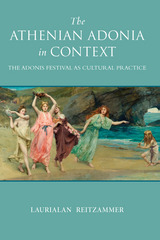
Reitzammer uncovers correlations of the Adonia to Athenian wedding rituals and civic funeral oration and provides illuminating evidence that the festival was a significant cultural template for such diverse works as Aristophanes’ drama Lysistrata and Plato’s dialogue Phaedrus. Her fresh approach is a timely contribution to studies of the ways gender and sexuality intersect with religion and ritual in ancient Greece.
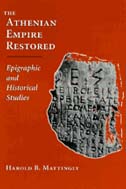
This volume collects Harold B. Mattingly's most important essays on the question, and offers them in updated form together with a new introduction and notes, and a concordance of inscriptions. A preface by Mortimer Chambers helps place the volume amid the decades- long controversy about events in and around Athens, and describes the scientific technique that has proven Mattingly's argument.
In the process of establishing a sounder methodology for investigating this crucial period of Greek--and Western--history, Mattingly in these groundbreaking essays turns a beacon of light on many aspects of Greek and Athenian society and history.
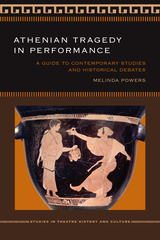
A case study of Euripides’s Bacchae, which provides more information about performance than any other extant tragedy, demonstrates possible methods for reconstructing the play’s historical performance and also the inevitable challenges inherent in that task, from the limited sources and the difficulty of interpreting visual material, to the risks of conflating actor with character and extrapolating backward from contemporary theatrical experience.
As an inquiry into the study of theatre and performance, an introduction to historical writing, a reference for further reading, and a clarification of several general misconceptions about Athenian tragedy and its performance, this historiographical analysis will be useful to specialists, practitioners, and students alike.
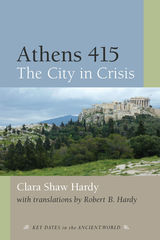
On a summer night in 415 BCE, unknown persons systematically mutilated most of the domestic “herms”—guardian statues of the god Hermes—in Athens. The reaction was immediate and extreme: the Athenians feared a terrifying conspiracy was underway against the city and its large fleet—and possibly against democracy itself. The city established a board of investigators, which led to informants, accusations, and flight by many of the accused. Ultimately, dozens were exiled or executed, their property confiscated.
This dramatic period offers the opportunity to observe the city in crisis. Sequential events allow us to see the workings of the major institutions of the city (assembly, council, law courts, and theater, as well as public and private religion). Remarkably, the primary sources for these tumultuous months name conspirators and informants from a very wide range of status-groups: citizens, women, slaves, and free residents. Thus the incident provides a particularly effective entry-point into a full multifaceted view of the way Athens worked in the late fifth century.
Designed for classroom use, Athens 415 is no potted history, but rather a source-based presentation of ancient urban life ideal for the study of a people and their institutions and beliefs. Original texts—all translated by poet Robert B. Hardy—are presented along with thoughtful discussion and analyses by Clara Shaw Hardy in an engaging narrative that draws students into Athens’ crisis.
For more than two thousand years, philosophers and theologians have wrestled with the irreconcilable opposition between Greek rationality (Athens) and biblical revelation (Jerusalem). In Athens and Jersusalem, Lev Shestov—an inspiration for the French existentialists and the foremost interlocutor of Edmund Husserl, Martin Heidegger, and Martin Buber during the interwar years—makes the gripping confrontation between these symbolic poles of ancient wisdom his philosophical testament, an argumentative and stylistic tour de force.
Although the Russian-born Shestov is little known in the Anglophone world today, his writings influenced many twentieth-century European thinkers, such as Albert Camus, D. H. Lawrence, Thomas Mann, Czesław Miłosz, and Joseph Brodsky. Athens and Jerusalem is Shestov’s final, groundbreaking work on the philosophy of religion from an existential perspective. This new, annotated edition of Bernard Martin’s classic translation adds references to the cited works as well as glosses of passages from the original Greek, Latin, German, and French. Athens and Jerusalem is Shestov at his most profound and most eloquent and is the clearest expression of his thought that shaped the evolution of continental philosophy and European literature in the twentieth century.
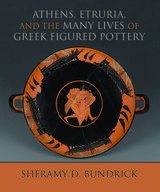
Thousands of Greek painted vases have emerged from excavations of tombs, sanctuaries, and settlements throughout Etruria, from southern coastal centers to northern communities in the Po Valley. Using documented archaeological assemblages, especially from tombs in southern Etruria, Bundrick challenges the widely held assumption that Etruscans were hellenized through Greek imports. She marshals evidence to show that Etruscan consumers purposefully selected figured pottery that harmonized with their own local needs and customs, so much so that the vases are better described as etruscanized. Athenian ceramic workers, she contends, learned from traders which shapes and imagery sold best to the Etruscans and employed a variety of strategies to maximize artistry, output, and profit.
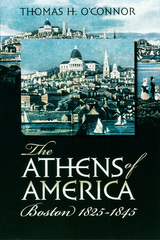
Many people are generally familiar with the fact that Boston was once known as “the Athens of America.” Very few, however, are clear about exactly why, except for their recollections of the famous writers and poets who gave the city a reputation for literature and learning.
In this book, historian Thomas H. O'Connor sets the matter straight by showing that Boston's eminence during the first half of the nineteenth century was the result of a much broader community effort. After the nation emerged from its successful struggle for independence, most Bostonians visualized their city not only as the Cradle of Liberty, but also as the new world's Cradle of Civilization.
According to O'Connor, a leadership elite, composed of men of prominent family background, Unitarian beliefs, liberal education, and managerial experience in a variety of enterprises, used their personal talents and substantial financial resources to promote the cultural, intellectual, and humanitarian interests of Boston to the point where it would be the envy of the nation. Not only did writers, scholars, and philosophers see themselves as part of this process, but so did physicians and lawyers, ministers and teachers, merchants and businessmen, mechanics and artisans, all involved in creating a well-ordered city whose citizens would be committed to the ideals of social progress and personal perfectibility.
To accomplish their noble vision, leading members of the Boston community joined in programs designed to cleanse the old town of what they felt were generations of accumulated social stains and human failures, and then to create new programs and more efficient institutions that would raise the cultural and intellectual standards of all its citizens. Like ancient Athens, Boston would be a city of great statesmen, wealthy patrons, inspiring artists, and profound thinkers, headed by members of the “happy and respectable classes” who would assume responsibility for the safety, welfare, and education of the “less prosperous portions of the community.”
Designed for the general reader and the historical enthusiast, The Athens of America is an interpretive synthesis that explores the numerous secondary sources that have concentrated on individual subjects and personalities, and draws their various conclusions into a single comprehensive narrative.

Two hundred years ago, Rufus Putnam, leader of the Ohio Company, sent eleven men west into the Ohio Country to found what is now the City of Athens. As one of the oldest communities in Ohio, Athens has a heritage rich in history and lore. Now, as Athens looks ahead to its third century, historian and raconteur Robert L. Daniel provides a timely assessment of the community’s past.
Drawing on reminiscences by Athens residents over the past two centuries, and on newspaper accounts, institutional archives, census records, and a host of historic photographs and drawings, Daniel illustrates how the Athens community grew, how it changed over the years, and what it was like to have lived in Athens in the past, from the times before white settlement to 1920. He identifies the problems the community faced and how it went about resolving them—its efforts to provide local government, the changing ways its people earned a living, the ways they worshipped, their efforts to establish Ohio University, how they coped during times of war, and what they did to amuse themselves.
In a lively style peppered with firsthand accounts by the people who made Athens, Daniel narrates his tale with wry humor and a sharp eye for detail. Always focusing on the people who lived there, he brings Athens to life during its village years.
Two hundred years ago, Rufus Putnam, leader of the Ohio Company, sent eleven men west into the Ohio Country to found what is now the City of Athens. As one of the oldest communities in Ohio, Athens has a heritage rich in history and lore. Now, as Athens looks ahead to its third century, historian and raconteur Robert L. Daniel provides a timely assessment of the community’s past.
Drawing on reminiscences by Athens residents over the past two centuries, and on newspaper accounts, institutional archives, census records, and a host of historic photographs and drawings, Daniel illustrates how the Athens community grew, how it changed over the years, and what it was like to have lived in Athens in the past, from the times before white settlement to 1920. He identifies the problems the community faced and how it went about resolving them—its efforts to provide local government, the changing ways its people earned a living, the ways they worshipped, their efforts to establish Ohio University, how they coped during times of war, and what they did to amuse themselves.
In a lively style peppered with firsthand accounts by the people who made Athens, Daniel narrates his tale with wry humor and a sharp eye for detail. Always focusing on the people who lived there, he brings Athens to life during its village years.

Athlete and Activist highlights sports figures who risked their popularity and even their careers to stand against injustice. Each profile takes readers inside the issues that motivated an athlete’s activism. Striking portraits by award-winning illustrator Martin French add a visual dimension to the dramatic stories. Throughout, the authors show athletes using different kinds of activism. Some spoke out. Others performed silent gestures. Still others let their success speak for itself.
A different kind of sports history, Athlete and Activist is an inspiring look at heroic acts beyond our favorite games.

His words and actions were prominent during a nationally-reported incident involving student athletes. When the Rutgers Women’s Basketball team players were slandered by racist remarks from a popular radio talk show host, Mulcahy met it head on. With the coach and players, he set an inspiring example for defending character and values.
Though Mr. Mulcahy left Rutgers in 2009, his memoir reflects continued devotion to intercollegiate athletics and student athletes. His insights for addressing several leading issues confronting Division I sports today offer guidelines for present and future athletic directors to follow.
Efforts to develop an economic base within the Black community began even before the Civil War. These efforts gained new meaning in the post-Reconstruction period as Blacks strove to adapt to radically changing economic circumstances and the emergence of the Jim Crow South. In Atlanta, shortly after the turn of the century, Alonzo Franklin Herndon, a former slave, joined a long line of Black entrepreneurs by creating Atlanta Life Insurance Company. More than three-quarters of a century later, it remains an important enterprise that is the nation’s largest Black-controlled shareholder insurance company. The firm is today a significant example of the efforts of Black Americans to achieve economic independence and dignity in America.
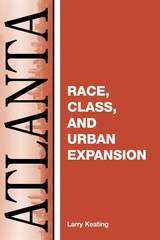
Despite African American success in winning the mayor's office and control of the City Council, development plans have remained in the control of private business interests. Keating tells a number of troubling stories. The development of the Underground Atlanta, the construction of the rapid rail system (MARTA), the building of a new stadium for the Braves, the redevelopment of public housing, and the arrangements for the Olympic Games all share a lack of democratic process. Business and political elites ignored protests from neighborhood groups, the interests of the poor, and the advice of planners.
READERS
Browse our collection.
PUBLISHERS
See BiblioVault's publisher services.
STUDENT SERVICES
Files for college accessibility offices.
RECENTLY PUBLISHED






UChicago Accessibility Resources
home | accessibility | search | about | contact us
BiblioVault ® 2001 - 2026
The University of Chicago Press