
 A SCHOLARLY BOOK REPOSITORY
141 start with B start with B
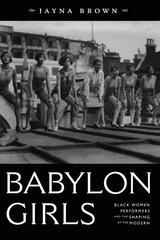
Investigating both well-known performers such as Ada Overton Walker and Josephine Baker and lesser-known artists such as Belle Davis and Valaida Snow, Brown weaves the histories of specific singers and dancers together with incisive theoretical insights. She describes the strange phenomenon of blackface performances by women, both black and white, and she considers how black expressive artists navigated racial segregation. Fronting the “picaninny choruses” of African American child performers who toured Britain and the Continent in the early 1900s, and singing and dancing in The Creole Show (1890), Darktown Follies (1913), and Shuffle Along (1921), black women variety-show performers of the early twentieth century paved the way for later generations of African American performers. Brown shows not only how these artists influenced transnational ideas of the modern woman but also how their artistry was an essential element in the development of jazz.
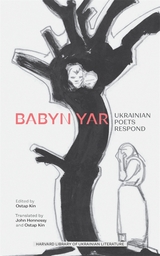

Over the past several decades, the history of the American Revolution in the South has undergone a transformation to better incorporate regional events into the greater narrative of the war. Among these events was the vicious “backcountry” war from the Georgia border, across the South Carolina wilderness, to the North Carolina Piedmont between rebel Americans and loyalist and British forces. Centered in South Carolina, this running battle saw some of the most intense and continuous fighting of the war, and from its skirmishes, feints, and sieges, three key leaders emerged: American partisans Francis “Swamp Fox” Marion and Thomas “Gamecock” Sumter, and British Legion commander Banastre “Bloody Ban” Tarleton.
For the first time, Backcountry War: The Rise of Francis Marion, Banastre Tarleton, and Thomas Sumter by Andrew Waters frames the history of these three men into in a single narrative, focusing on the events of 1780 in South Carolina that witnessed their collective ascendance from common soldiers to American legends. It was a time when British victories at Charleston and Camden left the Continental Army in tatters and the entire American South vulnerable to British conquest. Yet in those dark hours, Sumter, Marion, and others like them rose in the swamps and hills of the South Carolina wilderness. Fighting a wildly successful partisan war against better trained and better equipped British forces, including Tarleton’s British Legion, with victories at lesser-known places like Hanging Rock and Nelson’s Ferry, they gained precious months for the reorganizing Continental Army. Their collective efforts led to the stunning American victory at Cowpens and a stalemate at Guilford’s Courthouse the following year that finally convinced British general Charles Cornwallis to abandon the Carolinas for Virginia.
With background biographies of its three main protagonists, a thorough sketch of Great Britain’s Southern Strategy, and a sociocultural examination of the South Carolina frontier in the years leading up to the American Revolution, Backcountry War offers a fresh perspective on an extraordinary chapter of American history and a compelling account of the deadly contest between three of the war’s most charismatic leaders.
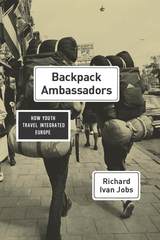
From the Berlin Wall to the beaches of Spain, the Spanish Steps in Rome to the Pudding Shop in Istanbul, Jobs tells the stories of backpackers whose personal desire for freedom of movement brought the people and places of Europe into ever-closer contact. As greater and greater numbers of young people trekked around the continent, and a truly international youth culture began to emerge, the result was a Europe that, even in the midst of Cold War tensions, found its people more and more connected, their lives more and more integrated. Drawing on archival work in eight countries and five languages, and featuring trenchant commentary on the relevance of this period for contemporary concerns about borders and migration, Backpack Ambassadors brilliantly recreates a movement that was far more influential and important than its footsore travelers could ever have realized.

Published by University of Delaware Press. Distributed worldwide by Rutgers University Press.

This book is the first comprehensive introduction to Badiou’s thought to appear in any language. Assuming no prior knowledge of his work, it provides a thorough and searching overview of all the main components of his philosophy, from its decisive political orientation through its startling equation of ontology with mathematics to its resolute engagement with its principal competition (from Wittgenstein, Heidegger, and Deleuze, among others). The book draws on all of Badiou’s published work and a wide sampling of his unpublished work in progress, along with six years of correspondence with the author.
Peter Hallward pays careful attention to the aspect of Badiou’s work most liable to intimidate readers in continental philosophy and critical theory: its crucial reliance on certain key developments in modern mathematics. Eschewing unnecessary technicalities, Hallward provides a highly readable discussion of each of the basic features of Badiou’s ontology, as well as his more recent account of appearance and “being-there.”
Without evading the difficulties, Peter Hallward demonstrates in detail and in depth why Badiou’s ongoing philosophical project should be recognized as the most resourceful and inspiring of his generation.
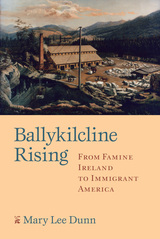
In 1847, in the third year of Ireland's Great Famine and the thirteenth year of their rent strike against the Crown, hundreds of tenant farmers in Ballykilcline, County Roscommon, were evicted by the Queen's agents and shipped to New York. Mary Lee Dunn tells their story in this meticulously researched book. Using numerous Irish and U.S. sources and with descendants' help, she traces dozens of the evictees to Rutland, Vermont, as railroads and marble quarries transformed the local economy. She follows the immigrants up to 1870 and learns not only what happened to them but also what light American experience and records cast on their Irish “rebellion.”
Dunn begins with Ireland's pre-Famine social and political landscape as context for the Ballykilcline strike. The tenants had rented earlier from the Mahons of Strokestown, whose former property now houses Ireland's Famine Museum. In 1847, landlord Denis Mahon evicted and sent nearly a thousand tenants to Quebec, where half died before or just after reaching the Grosse Ile quarantine station. Mahon was gunned down months later. His murder provoked an international controversy involving the Vatican. An early suspect in the case was a man from Ballykilcline.
In the United States, many of the immigrants resettled in clusters in several locations, including Vermont, Illinois, Iowa, Maryland, and New York. In Vermont they found jobs in the marble quarries, but some of them lost their homes again in quarry labor actions after 1859. Others prospered in their new lives. A number of Ballykilcline families who stopped in Rutland later moved west; one had a son kidnapped by Indians in Minnesota. Readers who have Irish Famine roots will gain a sense of their own “back story” from this account of Ireland and the native Irish, and scholars in the field of immigration studies will find it particularly useful.

As readers of classic Russian literature know, the nineteenth century was a time of pervasive financial anxiety. With incomes erratic and banks inadequate, Russians of all social castes were deeply enmeshed in networks of credit and debt. The necessity of borrowing and lending shaped perceptions of material and moral worth, as well as notions of social respectability and personal responsibility. Credit and debt were defining features of imperial Russia’s culture of property ownership. Sergei Antonov recreates this vanished world of borrowers, bankrupts, lenders, and loan sharks in imperial Russia from the reign of Nicholas I to the period of great social and political reforms of the 1860s.
Poring over a trove of previously unexamined records, Antonov gleans insights into the experiences of ordinary Russians, rich and poor, and shows how Russia’s informal but sprawling credit system helped cement connections among property owners across socioeconomic lines. Individuals of varying rank and wealth commonly borrowed from one another. Without a firm legal basis for formalizing debt relationships, obtaining a loan often hinged on subjective perceptions of trustworthiness and reputation. Even after joint-stock banks appeared in Russia in the 1860s, credit continued to operate through vast networks linked by word of mouth, as well as ties of kinship and community. Disputes over debt were common, and Bankrupts and Usurers of Imperial Russia offers close readings of legal cases to argue that Russian courts—usually thought to be underdeveloped in this era—provided an effective forum for defining and protecting private property interests.
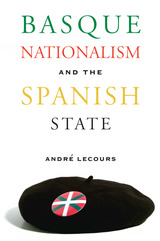
An examination of Basque nationalism from a historical perspective. Basque nationalism has been extensively examined from the perspectives of Basque culture and internal conditions in the Basque Country, but André Lecours is among the first to demonstrate how Basque nationalism was shaped by the many forms and historical phases of the Spanish state. His discussion employs one of the most debated approaches in the social sciences—historical institutionalism—and it includes an up-to-date examination of the circumstances for, and consequences of, recent events such as ETA's announcement in 2006 of a permanent cease-fire. Lecours also analyzes other aspects of Basque nationalism, including the international relations of the Basque Autonomous Government, as well as the responses of the contemporary Spanish state and how it deploys its own brand of nationalism. Finally, the book offers a comparative discussion of Basque, Catalan, Scottish, Flemish, and Quebecois nationalist movements, suggesting that nationalism in the Basque Country, despite the historical presence of violence, is in many ways similar to nationalism in other industrialized democracies. Basque Nationalism and the Spanish State is an original and provocative discussion that is essential reading for anyone interested in the Basques or in the development of modern nationalist movements.
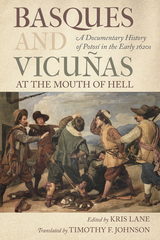
As mines flooded and Indigenous workers died or fled, the city descended into a maelstrom of swordfights, gun battles, ambushes, sniper attacks, and summary executions. Though its roots were economic, the Basque-Vicuña conflict strained the sinews of Habsburg global governance even as it exposed festering local tensions, only some of which were unique to Potosí.
This rich collection of original sources, all of them archival documents housed in Bolivia, Spain, the United Kingdom, and the United States, consists of contemporary eyewitness accounts from several perspectives, allowing readers to play historian. All sources have been expertly translated and carefully annotated in a manner that will engage students and scholars alike. Basques and Vicuñas at the Mouth of Hell includes an extensive introduction, seven vital documents in translation, and appendices on everyday life in 1620s Potosí and on the historiography of this watershed episode of colonial violence.

In March 1896 a well-disciplined and massive Ethiopian army did the unthinkable-it routed an invading Italian force and brought Italy's war of conquest in Africa to an end. In an age of relentless European expansion, Ethiopia had successfully defended its independence and cast doubt upon an unshakable certainty of the age-that sooner or later all Africans would fall under the rule of Europeans. This event opened a breach that would lead, in the aftermath of world war fifty years later, to the continent's painful struggle for freedom from colonial rule.
Raymond Jonas offers the first comprehensive account of this singular episode in modern world history. The narrative is peopled by the ambitious and vain, the creative and the coarse, across Africa, Europe, and the Americas-personalities like Menelik, a biblically inspired provincial monarch who consolidated Ethiopia's throne; Taytu, his quick-witted and aggressive wife; and the Swiss engineer Alfred Ilg, the emperor's close advisor. The Ethiopians' brilliant gamesmanship and savvy public relations campaign helped roll back the Europeanization of Africa.
Figures throughout the African diaspora immediately grasped the significance of Adwa, Menelik, and an independent Ethiopia. Writing deftly from a transnational perspective, Jonas puts Adwa in the context of manifest destiny and Jim Crow, signaling a challenge to the very concept of white dominance. By reopening seemingly settled questions of race and empire, the Battle of Adwa was thus a harbinger of the global, unsettled century about to unfold.
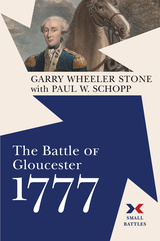
In The Battle of Gloucester, 1777, archaeological historian Garry Wheeler Stone, with the assistance of historian Paul W. Schopp, recreates this minor but important clash during the Philadelphia campaign. Relying on both primary source documents and the latest archaeological interpretations, the authors have determined the course of this fascinating “battle,” as Benjamin Franklin later proclaimed it to be. As a result of this action, when Washington requested that Lafayette be given a division, Congress agreed. On December 4, 1777, the marquis, promoted to major-general, took command of the brigades of Generals Woodford and Scott to begin what would be a glorious career in American service.
Small Battles: Military History as Local History
Mark Edward Lender and James Kirby Martin, Series Editors
Small Battles offers a fresh and important new perspective on the story of America’s early conflicts. It was the small battles, not the clash of major armies, that truly defined the fighting during the colonial wars, the American Revolution, the War of 1812, and the hostilities on the frontiers. This is dramatic military history as seen through the prism of local history—history with a depth of detail, a feeling for place, people, and the impact of battle and its consequences that the story of major battles often cannot convey. The Small Battles series focuses on America’s military conflicts at their most intimate and revealing level.
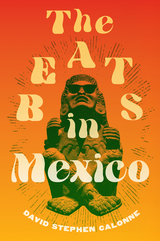
The first book-length study of why the Beats were so fascinated by Mexico and how they represented its culture in their work, this volume examines such canonical figures as Kerouac, Burroughs, Ginsberg, Lamantia, McClure, and Ferlinghetti. It also devotes individual chapters to women such as Margaret Randall, Bonnie Bremser, and Joanne Kyger, who each made Mexico a central setting of their work and interrogated the misogyny they encountered in both American and Mexican culture.
The Beats in Mexico not only considers individual Beat writers, but also places them within a larger history of countercultural figures, from D.H. Lawrence to Antonin Artaud to Jim Morrison, who mythologized Mexico as the land of the Aztecs and Maya, where shamanism and psychotropic drugs could take you on a trip far beyond the limits of the American imagination.
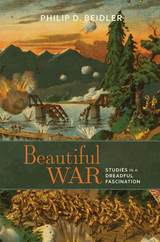
Beautiful War: Studies in a Dreadful Fascination is a wide-ranging exploration of armed conflict as depicted in art that illustrates the constant presence of war in our everyday lives. Philip D. Beidler investigates the unending assimilation and pervasive presence of the idea of war in popular culture, the impulses behind the making of art out of war, and the unending and debatably aimless trajectories of war itself.
Beidler’s critical scope spans from Shakespeare’s plays, through the Victorian battle paintings of Lady Butler, into the post-World War I writings of F. Scott Fitzgerald and Virginia Woolf, and up to twenty-first-century films such as The Hurt Locker and Extremely Loud and Incredibly Close. As these works of art have become ubiquitous in contemporary culture, the many faces of war clearly spill over into our art and media, and Beidler argues that these portrayals in turn shift the perception of war from a savage truth to a concept.
Beautiful War argues that the representation of war in the arts has always been, and continues to be, an incredibly powerful force. Incorporating painting, music, photography, literature, and film, Beidler traces a disturbing but fundamental truth: that war has always provided an aesthetic inspiration while serving ends as various and complex as ideological or geopolitical history, public memory, and mass entertainment.
Beautiful War is a bold and vivid account of the role of war and military conflict as a subject of art that offers much of value to literary and cultural critics, historians, veterans, students of art history and communication studies, and those interested in expanding their understanding of art and media’s influence on contemporary values and memories of the past.

The Other Voice in Early Modern Europe: The Toronto Series volume 74

Becoming Dickens tells the story of how an ambitious young Londoner became England’s greatest novelist. In following the twists and turns of Charles Dickens’s early career, Robert Douglas-Fairhurst examines a remarkable double transformation: in reinventing himself Dickens reinvented the form of the novel. It was a high-stakes gamble, and Dickens never forgot how differently things could have turned out. Like the hero of Dombey and Son, he remained haunted by “what might have been, and what was not.”
In his own lifetime, Dickens was without rivals. He styled himself simply “The Inimitable.” But he was not always confident about his standing in the world. From his traumatized childhood to the suicide of his first collaborator and the sudden death of the woman who had a good claim to being the love of his life, Dickens faced powerful obstacles. Before settling on the profession of novelist, he tried his hand at the law and journalism, considered a career in acting, and even contemplated emigrating to the West Indies. Yet with The Pickwick Papers, Oliver Twist, and a groundbreaking series of plays, sketches, and articles, he succeeded in turning every potential breakdown into a breakthrough.
Douglas-Fairhurst’s provocative new biography, focused on the 1830s, portrays a restless and uncertain Dickens who could not decide on the career path he should take and would never feel secure in his considerable achievements.
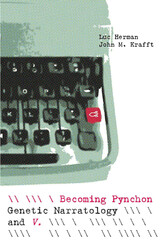
The 1963 publication of Thomas Pynchon’s V. changed the landscape of American fiction. Becoming Pynchon: Genetic Narratology and V. offers a detailed examination of the dramatic transformations that took place as Pynchon’s foundational novel went from typescript to published work. Luc Herman and John M. Krafft develop and deploy a rich theory of genetic narratology to examine the performance of genre in the novel. Pushing back against the current dominance of cognitive narratology, they discuss focalization, character construction, and evocation of consciousness as clues to Pynchon’s developing narratology of historical fiction. Their theoretical interventions offer an important and timely corrective to the field of narratology with a method that brings the author back into the analytical frame.
Herman and Krafft use as their guide the typescript of V. that surfaced in 2001, when it was acquired by the Harry Ransom Humanities Research Center, as well as Pynchon’s editorial correspondence with Corlies Smith, his first editor at J. B. Lippincott. Becoming Pynchon assembles a comprehensive and unequaled picture of Pynchon’s writing process that will appeal both to Pynchonians and to postmodernism scholars more broadly.
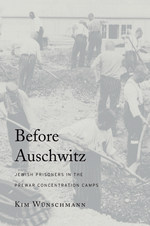
Winner of the Yad Vashem International Book Prize for Holocaust Research
Auschwitz—the largest and most notorious of Hitler’s concentration camps—was founded in 1940, but the Nazis had been detaining Jews in camps ever since they came to power in 1933. Before Auschwitz unearths the little-known origins of the concentration camp system in the years before World War II and reveals the instrumental role of these extralegal detention sites in the development of Nazi policies toward Jews and in plans to create a racially pure Third Reich.
Investigating more than a dozen camps, from the infamous Dachau, Buchenwald, and Sachsenhausen to less familiar sites, Kim Wünschmann uncovers a process of terror meant to identify and isolate German Jews in the period from 1933 to 1939. The concentration camp system was essential to a regime then testing the limits of its power and seeking to capture the hearts and minds of the German public. Propagandized by the Nazis as enemies of the state, Jews were often targeted for arbitrary arrest and then routinely subjected to the harshest treatment and most punishing labor assignments in the camps. Some of them were murdered. Over time, shocking accounts of camp life filtered into the German population, sending a message that Jews were different from true Germans: they were portrayed as dangerous to associate with and fair game for acts of intimidation and violence.
Drawing on a wide range of previously unexplored archives, Before Auschwitz explains how the concentration camps evolved into a universally recognized symbol of Nazi terror and Jewish persecution during the Holocaust.

The 2017 Grenfell tower fire in London was a “slow disaster,” the product of a long accumulation of faults and errors that resulted from erroneous assumptions and organizational and governmental decision-making. This book offers a critical perspective on the systematic failures that lead to one of the greatest tragedies in Britain in our time.
Before Grenfell is a poignant and timely analysis of risk, fire, and safety in postwar Britain. Tracing the evolution of state housing policy in relation to multistory housing since the mid-1950s, the book adds to a burgeoning history of the British experience of fire and safety in high-rises and investigates a latent housing crisis in contemporary Britain against a backdrop of increasingly deregulated urban building development. Drawing on public inquiries, newspaper accounts, and oral histories, Shane Ewen details other avoidable disasters, including the Ronan Point tower block explosion in 1968, the Summerland leisure center fire in 1972, and the Bradford City Football Club fire in 1985. The book closes with a powerful chapter on fire safety campaigners, including survivor groups, who are seeking justice for the victims of fire disasters. Before Grenfell aims to exert pressure on policy-makers to act on the lessons of fatal disasters in order to both prevent future casualties and establish a legacy for those who lost their lives.

During the struggle for decolonization, Frantz Fanon argued that artists who mimicked European aestheticism were “beginning at the end,” skipping the inventive phase of youth for a decadence thought more typical of Europe’s declining empires. Robert Stilling takes up Fanon’s assertion to argue that decadence became a key idea in postcolonial thought, describing both the failures of revolutionary nationalism and the assertion of new cosmopolitan ideas about poetry and art.
In Stilling’s account, anglophone postcolonial artists have reshaped modernist forms associated with the idea of art for art’s sake and often condemned as decadent. By reading decadent works by J. K. Huysmans, Walter Pater, Henry James, and Oscar Wilde alongside Chinua Achebe, Derek Walcott, Agha Shahid Ali, Derek Mahon, Yinka Shonibare, Wole Soyinka, and Bernardine Evaristo, Stilling shows how postcolonial artists reimagined the politics of aestheticism in the service of anticolonial critique. He also shows how fin de siècle figures such as Wilde questioned the imperial ideologies of their own era.
Like their European counterparts, postcolonial artists have had to negotiate between the imaginative demands of art and the pressure to conform to a revolutionary politics seemingly inseparable from realism. Beginning at the End argues that both groups—European decadents and postcolonial artists—maintained commitments to artifice while fostering oppositional politics. It asks that we recognize what aestheticism has contributed to politically engaged postcolonial literature. At the same time, Stilling breaks down the boundaries around decadent literature, taking it outside of Europe and emphasizing the global reach of its imaginative transgressions.
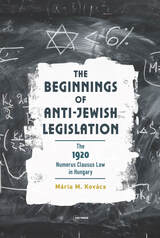
The Nazi 1933 Civil Service Law and the 1935 Nuremberg Laws are often considered the first anti-Jewish decrees in interwar Europe. Mária M. Kovács convincingly argues that Hungary’s numerus clausus law of 1920, which introduced a Jewish quota at Hungary’s institutions of higher learning, was, in fact, interwar Europe’s first antisemitic law. By defining—and discriminating against—Jews as a separate “racial” or “national” group, it abrogated the principle of equal rights that had been enshrined into law; as such, it marked an abrupt reversal of Jewish emancipation in Hungary. Moreover, the numerus clausus law set the stage for subsequent “Jewish Laws” (in the late 1930s and early 1940s) that sought to solve Hungary’s “Jewish Question” by means of extraordinary legal measures that targeted Jews alone. This book examines the origins and implementation of the numerus clausus, as well as the attempts to dampen its impact on Hungary’s international reputation, focusing on the debates surrounding it promulgation (1920), its modification (1928) and its eventual application to other areas of Jewish life (1938–45).
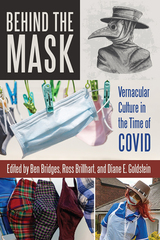
Despite vernacular’s potential nod to dominant or external culture, it is the strong connection to the local that grounds the vernacular within the experiential context that it occupies. Exploring the nature and shape of vernacular responses to the ongoing public health crisis, Behind the Mask documents processes that are otherwise likely to be forgotten. Including different ethnographic presents, contributors capture moments during the pandemic rather than upon reflection, making the work important to students and scholars of folklore and ethnology, as well as general readers interested in the COVID pandemic.
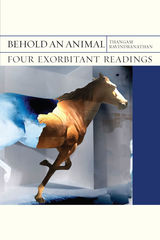
As animals recede from our world, what tale is being told by literature’s creatures? Behold an Animal: Four Exorbitant Readings examines incongruous animals in the works of four major contemporary French writers: an airborne horse in a novel by Jean-Philippe Toussaint, extinct orangutans in Éric Chevillard, stray dogs in Marie NDiaye, vanishing (bits of) hedgehogs in Marie Darrieussecq. Resisting naturalist assumptions that an animal in a story is simply—literally or metaphorically—an animal, Thangam Ravindranathan understands it rather as the location of something missing. The animal is a lure: an unfinished figure fleeing the frame, crossing bounds of period, genre, even medium and language. Its flight traces an exorbitant (self-)portrait in which thinking admits to its commerce with life and flesh. It is in its animals, at the same time unbearably real and exquisitely unreal, that literature may today be closest to philosophy.
This book’s primary focus is the contemporary French novel and continental philosophy. In addition to Toussaint, Chevillard, NDiaye, and Darrieussecq, it engages the work of Jean de La Fontaine, Eadweard Muybridge, Edgar Allan Poe, Lewis Carroll, Samuel Beckett, and Francis Ponge.
A new history illuminates the Society of Jesus in its first century from the perspective of those who knew it best: the early Jesuits themselves.
The Society of Jesus was established in 1540. In the century that followed, thousands sought to become Jesuits and pursue vocations in religious service, teaching, and missions. Drawing on scores of unpublished biographical documents housed at the Roman Jesuit Archive, Camilla Russell illuminates the lives of those who joined the Society, building together a religious and cultural presence that remains influential the world over.
Tracing Jesuit life from the Italian provinces to distant missions, Russell sheds new light on the impact and inner workings of the Society. The documentary record reveals a textual network among individual members, inspired by Ignatius of Loyola’s Spiritual Exercises. The early Jesuits took stock of both quotidian and spiritual experiences in their own records, which reflect a community where the worldly and divine overlapped. Echoing the Society’s foundational writings, members believed that each Jesuit’s personal strengths and inclinations offered a unique contribution to the whole—an attitude that helps explain the Society’s widespread appeal from its first days.
Focusing on the Jesuits’ own words, Being a Jesuit in Renaissance Italy offers a new lens on the history of spirituality, identity, and global exchange in the Renaissance. What emerges is a kind of genetic code—a thread connecting the key Jesuit works to the first generations of Jesuits and the Society of Jesus as it exists today.

Drawing on evidence from a wide collection of surviving family papers, Beloved Children is a valuable contribution to literature available concerning childhood history in pre-industrial Central Europe.
With the aid of detailed case studies, the volume illustrates every aspect of Hungarian childhood in the early modern age from a variety of contrasting perspectives—birth, care, education, marriage, orphanhood and death. The book also includes a unique portrayal of family life in the Hungarian aristocracy.
Beloved Children is a comprehensive study examining topics such as family intimacy, paternal and maternal attitudes, providing the reader with a valuable insight into a child’s life in Hungary during the sixteenth and seventeenth centuries.
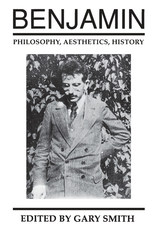
A balance of original work by Benjamin and important commentary on his works, this volume includes the crucial chapter from Benjamin's magnum opus The Arcades Project, his "Program of the Coming Philosophy," and "Central Park," as well as essays by leading scholars (including Theodor W. Adorno, Leo Lowenthal, and Rolf Tiedemann) that treat single philosophical themes and relate his ideas to those of other thinkers such as Gadamer, Goodmann, and Rosenzweig. Gary Smith's introduction to the volume provides an extremely useful and sophisticated entrée for readers unaccustomed to the breadth of Benjamin's philosophical allusions, as well as an informative summation of the contents of the volume. This book will be of interest to philosophers, literary theorists, art historians, anthropologists, and other social scientists.
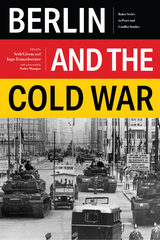

Step into Ernst Wolzogen's Motley Theater, Max Reinhardt's Sound and Smoke, Rudolf Nelson's Chat noir, and Friedrich Hollaender's Tingel-Tangel. Enjoy Claire Waldoff's rendering of a lower-class Berliner, Kurt Tucholsky's satirical songs, and Walter Mehring's Dadaist experiments, as Peter Jelavich spotlights Berlin's cabarets from the day the curtain first went up, in 1901, until the Nazi regime brought it down.
Fads and fashions, sexual mores and political ideologies--all were subject to satire and parody on the cabaret stage. This book follows the changing treatment of these themes, and the fate of cabaret itself, through the most turbulent decades of modern German history: the prosperous and optimistic Imperial age, the unstable yet culturally inventive Weimar era, and the repressive years of National Socialism. By situating cabaret within Berlin's rich landscape of popular culture and distinguishing it from vaudeville and variety theaters, spectacular revues, prurient "nude dancing," and Communist agitprop, Jelavich revises the prevailing image of this form of entertainment.
Neither highly politicized, like postwar German Kabarett, nor sleazy in the way that some American and European films suggest, Berlin cabaret occupied a middle ground that let it cast an ironic eye on the goings-on of Berliners and other Germans. However, it was just this satirical attitude toward serious themes, such as politics and racism, that blinded cabaret to the strength of the radical right-wing forces that ultimately destroyed it. Jelavich concludes with the Berlin cabaret artists' final performances--as prisoners in the concentration camps at Westerbork and Theresienstadt.
This book gives us a sense of what the world looked like within the cabarets of Berlin and at the same time lets us see, from a historical distance, these lost performers enacting the political, sexual, and artistic issues that made their city one of the most dynamic in Europe.
"I am sure [this] is the best introduction of any length to Russell, and I suspect that it might serve as one of the best introductions to modern philosophy. . . . Ayer begins with a brief, austere, and balanced account of Russell's life: as in Russell's autobiography this means his thought, books, women, and politics. Tacitus (and Russell) would have found the account exemplary. Ayer ends with a sympathetic and surprisingly detailed survey of Russell's social philosophy. But the bulk of this book consists of a chapter on Russell's work in logic and the foundations of mathematics, followed by a chapter on his epistemological views and one on metaphysics. . . . I find it impossible to imagine that this book will not remain indefinitely the very best book of its sort."—Review of Metaphysics
"The confrontation or conjunction of Ayer and Russell is a notable event and has produced a remarkable book—brilliantly argued and written."—Martin Lebowitz, The Nation
Published by Bucknell University Press. Distributed worldwide by Rutgers University Press.
The Best World War I Story I Know: On the Point in the Argonne is the breath-taking story of three US Army divisions tasked with capturing the Côte de Châtillon during the Meuse-Argonne offensive in autumn 1918. Readers will first follow in the footsteps of Missouri-Kansas Guard troops who were repulsed in the opening days of the battle; their courage in the face of heavy fire was not enough to overcome poor leadership.
They were replaced by the 1st Division, the “best of the Regular Army.” This fine unit became physically and mentally exhausted after suffering horrendous casualties. Unable to fight on, “The Big Red One” was exchanged at the base of Côte de Châtillon, with the 42nd, the Rainbow Division. It too struggled to gain ground on the heavily-contested hill until General Douglas MacArthur’s determined 84th Brigade of “Alabama cotton pickers and Iowa corn growers” forced their way past the Germans. The Côte was finally in American hands and the war all but over.
As Hitler consolidated power, Jews and their allies in Germany began efforts to leave the country. Among them was the organization, Youth Aliyah. Based on abundant archival sources and a thorough use of secondary literature, Brian Amkraut details the story of the organization from its origins through its alliances and antagonisms with other Jewish organizations, and the challenges that vexed its efforts from every side, perhaps the greatest being sheer human naiveté ("surely things will get better").
Amkraut also discusses the identity dilemma for Jews who grew up feeling German, and then had to alter their self-image in the face of growing discrimination. He highlights the internal disagreements of Jewish agencies who wrestled with myriad problems. The author explores how German Jews were ideologically heterogeneous, and details how different groups coped with increasing antagonism in a variety of ways.
To this day, Youth Aliyah is considered by Israelis as a major contributor to the foundation of a Jewish presence leading to the modern state of Israel. Between Home and Homeland is an essential account of an important episode in the history of the Holocaust and the founding of the Isreali state.
Electrifying when first delivered in 1973, legendary in the years since, Dieter Henrich's lectures on German Idealism were the first contact a major German philosopher had made with an American audience since the onset of World War II. They remain one of the most eloquent explanations and interpretations of classical German philosophy and of the way it relates to the concerns of contemporary philosophy. Thanks to the editorial work of David Pacini, the lectures appear here with annotations linking them to editions of the masterworks of German philosophy as they are now available.
Henrich describes the movement that led from Kant to Hegel, beginning with an interpretation of the structure and tensions of Kant's system. He locates the Kantian movement and revival of Spinoza, as sketched by F. H. Jacobi, in the intellectual conditions of the time and in the philosophical motivations of modern thought. Providing extensive analysis of the various versions of Fichte's Science of Knowledge, Henrich brings into view a constellation of problems that illuminate the accomplishments of the founders of Romanticism, Novalis and Friedrich Schlegel, and of the poet Hölderlin's original philosophy. He concludes with an interpretation of the basic design of Hegel's system.
Published by Bucknell University Press. Distributed worldwide by Rutgers University Press.
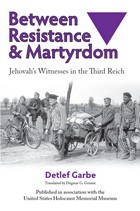
Although persecuted and banned from practicing their beliefs by the Nazi regime in 1933, the Jehovah’s Witnesses’ unified resistance has been largely forgotten. Basing his work on a wide range of sources, including documents and archives previously unconsidered as well as critical analyses of Jehovah’s Witness literature and survivor interviews, Detlef Garbe chronicles the Nazi’s relentless persecution of this religious group before and during World War II.
The English translation of this important work features a series of original photographs not published in the German edition. These striking images bring a sense of individual humanity to this story and help readers comprehend the reality of the events documented. Between Resistance and Martyrdom is an indispensable work that will introduce an English-speaking audience to this important but lesser-known part of Holocaust history.
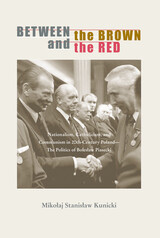
Between the Brown and the Red captures the multifaceted nature of church-state relations in communist Poland, relations that oscillated between mutual confrontation, accommodation, and dialogue. Ironically, under communism the bond between religion and nation in Poland grew stronger. This happened in spite of the fact that the government deployed nationalist themes in order to portray itself as more Polish than communist. Between the Brown and the Red also introduces one of the most fascinating figures in the history of twentieth-century Poland and the communist world.
In this study of the complex relationships between nationalism, communism, authoritarianism, and religion in twentieth-century Poland, Mikołaj Kunicki shows the ways in which the country’s communist rulers tried to adapt communism to local traditions, particularly ethnocentric nationalism and Catholicism. Focusing on the political career of Bolesław Piasecki, a Polish nationalist politician who began his surprising but illuminating journey as a fascist before the Second World War and ended it as a procommunist activist, Kunicki demonstrates that Polish communists reinforced an ethnocentric self-definition of Polishness and—as Piasecki’s case demonstrates—thereby prolonged the existence of Poland’s nationalist Right.
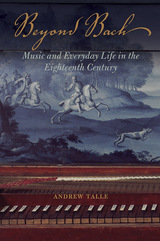
Eschewing the great composer style of music history, Andrew Talle takes us on a journey that looks at how ordinary people made music in Bach's Germany. Talle focuses in particular on the culture of keyboard playing as lived in public and private. As he ranges through a wealth of documents, instruments, diaries, account ledgers, and works of art, Talle brings a fascinating cast of characters to life. These individuals--amateur and professional performers, patrons, instrument builders, and listeners--inhabited a lost world, and Talle's deft expertise teases out the diverse roles music played in their lives and in their relationships with one another. At the same time, his nuanced re-creation of keyboard playing's social milieu illuminates the era's reception of Bach's immortal works.
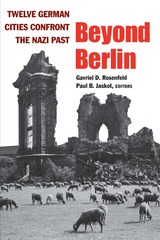
Beyond Berlin breaks new ground in the ongoing effort to understand how memorials, buildings, and other spaces have figured in Germany's confrontation with its Nazi past. The contributors challenge reigning views of Germany's postwar memory work by examining how specific urban centers apart from the nation's capital have wrestled with their respective Nazi legacies. A wide range of West and East German cities is profiled in the volume: prominent metropolises like Hamburg, dynamic regional centers like Dresden, gritty industrial cities like Wolfsburg, and idyllic rural towns like Quedlinburg. In employing historical, art historical, anthropological, and geographical methodologies to examine these and other important urban centers, the volume's case studies shed new light upon the complex ways in which the confrontation with the Nazi past has directly shaped the German urban landscape since the end of the Second World War.
"Beyond Berlin is one of the most fascinating, deeply probing collections ever published on Germany's ongoing confrontation with its Nazi past. Its editors, Gavriel Rosenfeld and Paul Jaskot, have taken the exploration of Germany's urban memorial landscape to its highest level yet."
---James E. Young, Professor and Chair, Department of Judaic and Near Eastern Studies, University of Massachusetts Amherst, and author of The Texture of Memory and At Memory's Edge
"This is a top-notch collection of essays that positions itself in the populated field of memory studies by bringing together original contributions representing the best of new scholarship on architecture, urban design, monuments, and memory in East and West Germany. Taken together, the essays remind readers that the Nazi past is always present when German architects, urban planners, and politicians make decisions to tear down, rebuild, restore, and memorialize."
---S. Jonathan Wiesen, Department of History, Southern Illinois University, Carbondale
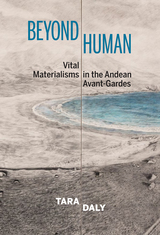
Published by Bucknell University Press. Distributed worldwide by Rutgers University Press.
Exposing the traditional view—which restricts the moral realm to autonomous, fully fledged "persons"—as having horrific implications for the treatment of many humans, Pluhar goes on to argue positively that sentient individuals of any species are no less morally significant than the most automomous human. Her position provides the ultimate justification that is missing from previous defenses of the moral status of nonhuman animals. In the process of advancing her position, Pluhar discusses the implications of determining moral significance for children and "abnormal" humans as well as its relevance to population policies, the raising of animals for food or product testing, decisions on hunting and euthanasia, and the treatment of companion animals. In addition, the author scrutinizes recent assertions by environmental ethicists that all living things or that natural objects and ecosystems be considered highly morally significant. This powerful book of moral theory challenges all defenders of the moral status quo—which decrees that animals decidedly do not count—to reevaluate their convictions.
Explaining that we have arrived at a great historic divide, De Santis asserts that the old modern order is giving way to an age of "mutualism." He draws on world history and the study of international relations to explore the emerging future, in which new forms of social and political identity and regional associations and alignments will be needed to solve global problems. Demonstrating that mutualism will require a dramatic change in the way states, international institutions, corporations, and local communities interact, De Santis argues that this transformation will be especially difficult for the United States, which will have to abandon its exceptionalist identity and rejoin a world it can no longer escape.
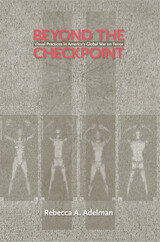
Tracing the connections between citizenship and spectatorship, and moving beyond the close reading of visual representations, this book focuses on the institutions and actors that create, monitor, and regulate the visual landscape of the GWOT. Adelman looks around and through common images to follow the complex patterns of practice by which institutions and audiences engage them in various contexts. In the process, she proposes a new methodology for studying visual cultures of conflict, and related phenomena like violence, terror, and suffering that are notoriously difficult to represent.
Attending to previously unanalyzed dimensions of this conflict, this book illustrates the complexity of GWOT visual culture and the variegated experiences of citizenship that result as Americans navigate this terrain.
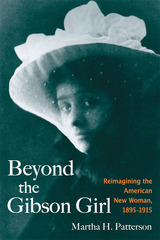
Challenging monolithic images of the New Woman as white, well-educated, and politically progressive, this study focuses on important regional, ethnic, and sociopolitical differences in the use of the New Woman trope at the turn of the twentieth century. Using Charles Dana Gibson's "Gibson Girls" as a point of departure, Martha H. Patterson explores how writers such as Pauline Hopkins, Margaret Murray Washington, Sui Sin Far, Mary Johnston, Edith Wharton, Ellen Glasgow, and Willa Cather challenged and redeployed the New Woman image in light of other “new” conceptions: the "New Negro Woman," the "New Ethics," the "New South," and the "New China."
As she appears in these writers' works, the New Woman both promises and threatens to effect sociopolitical change as a consumer, an instigator of evolutionary and economic development, and (for writers of color) an icon of successful assimilation into dominant Anglo-American culture. Examining a diverse array of cultural products, Patterson shows how the seemingly celebratory term of the New Woman becomes a trope not only of progressive reform, consumer power, transgressive femininity, modern energy, and modern cure, but also of racial and ethnic taxonomies, social Darwinist struggle, imperialist ambition, assimilationist pressures, and modern decay.
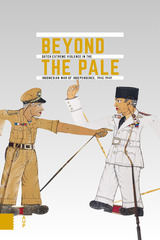
In 2005, the Dutch government declared that the Netherlands should never have waged the war. The government’s 1969 position on the violence used by the Dutch armed forces during the war remained unchanged, however: although there had been ‘excesses’, on the whole the armed forces had behaved ‘correctly’. As the indications of Dutch extreme violence mounted, this official position proved increasingly difficult to maintain. In 2016, the Dutch government therefore decided to fund a broad study on the dynamics of the violence. The most important conclusions of that research programme are summarized in this book. The authors show that the Dutch armed forces used extreme violence on a structural basis, and that this was concealed both at the time and for many years after the war by the Dutch government and by society more broadly. All of this – like the entire colonial history – is at odds with the rose-tinted self-image of the Netherlands.
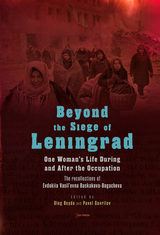
This memoir about the experiences of German occupation during the siege of Leningrad (now Saint Petersburg) was written by Moscow-born Evdokiia Vasil’evna Baskakova-Bogacheva (1888–1976), an émigré in Australia, at the age of eighty-one. The text had been forgotten in the Museum of Russian Culture in San Francisco since 1970 until the editors of this volume discovered it.
In the memoirs, after accounting on her youth spent against the background of the First World War and of the two Russian revolutions of 1917, Evdokiia describes the inferno of the Nazi occupation as experienced in a suburb of Leningrad in 1941-43. She survived for nearly two years almost on the front line, within a few kilometers of the blockade ring. As a medical practitioner, she became useful for the occupational authorities and the ever-shrinking town population, until her family was evacuated to the west in October 1943. Besides hunger, discord, disease, the hunt for food and firewood, along with violence and death, Evdokiia’s account deals with various forms of cooperation between Soviet citizens and the new authorities.
All the events she recalls can be confirmed through other sources. The introduction and the detailed notes to the text help the reader to locate Evdokiia’s recollections in time and place, and situate them in their historical context.
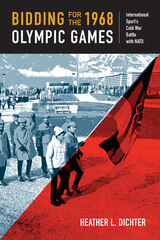
During the Cold War, political tensions associated with the division of Germany came to influence the world of competitive sport. In the 1950s, West Germany and its NATO allies refused to recognize the communist East German state and barred its national teams from sporting competitions. The construction of the Berlin Wall in 1961 further exacerbated these pressures, with East German teams denied travel to several world championships. These tensions would only intensify in the run-up to the 1968 Olympics.
In Bidding for the 1968 Olympic Games, Heather L. Dichter considers how NATO and its member states used sport as a diplomatic arena during the height of the Cold War, and how international sport responded to political interference. Drawing on archival materials from NATO, foreign ministries, domestic and international sport functionaries, and newspapers, Dichter examines controversies surrounding the 1968 Summer and Winter Olympic Games, particularly the bidding process between countries to host the events. As she demonstrates, during the Cold War sport and politics became so intertwined that they had the power to fundamentally transform each other.

Hobbes's Leviathan, Hegel's Phenomenology of Spirit, and Heidegger's Being and Time dramatize conscience's relation to language and knowledge, morality and duty, and ontology. Feldman investigates how, within these works, conscience is described as binding upon us while at the same time asking how texts themselves may be read as binding.
Honorable Mention for the DAAD/GSA Book Prize for the Best Book in Germanistik or Cultural Studies
Biological Modernism identifies an intellectual current in the Weimar Republic that drew on biology, organicism, vitalism, and other discourses associated with living nature in order to redefine the human being for a modern, technological age. Contrary to the assumption that any turn toward the organic indicated a reactionary flight from modernity or a longing for wholeness, Carl Gelderloos shows that biology and other discourses of living nature offered a nuanced way of theorizing modernity rather than fleeing from it. Organic life, instead of representing a stabilizing sense of wholeness, by the 1920s had become a scientific, philosophical, and disciplinary problem. In their work, figures such as Alfred Döblin, Ernst Jünger, Helmuth Plessner, and August Sander interrogated the relationships between technology, nature, and the human and radically reconsidered the relationship between the disciplines as well as the epistemological and political consequences for defining the human being. Biological Modernism will be of interest to scholars of German literature and culture, literary modernism, photography, philosophical anthropology, twentieth-century intellectual history, the politics of culture, and the history of science.

On the subject of science in Nazi Germany, we are apt to hear about the collaboration of some scientists, the forced emigration of talented Jewish scientists, the general science phobia of leaders of the Third Reich--but little detail about what actually transpired. Biologists under Hitler is the first book to examine the impact of Nazism on the lives and research of a generation of German biologists. Drawing on previously unutilized archival material, Ute Deichmann, herself a biologist, explores not only what happened to the biologists forced to emigrate but also the careers, science, and crimes of those who stayed in Germany.
Biologists under Hitler combines exhaustive research with capsule biographies of key scientists to overturn certain assumptions about science under the Nazi regime. Biological research, for instance, was neither neglected nor underfunded during World War II; funding by the German Research Association (DFG) in fact increased tenfold between 1933 and 1938, and genetic research in particular flourished. Deichmann shows that the forced emigration of Jews had a less significant impact in biology than in other fields. Furthermore, she reveals that the widely observed decline in German biology after 1945 was not caused primarily by the Third Reich's science policy or by the expulsion of biologists but was due to the international isolation of German scientists as part of the legacy of National Socialism. Her book also provides overwhelming evidence of German scientists' conscious misrepresentation after the war of their wartime activities. In this regard, Deichmann's capsule biography of Konrad Lorenz is particularly telling.
Certain to be regarded as the most thorough and comprehensive account of biological science in Nazi Germany, Biologists under Hitler will interest historians of science, historians of the Nazi era, and biologists, as well as those who wish to learn about the relationship between scientific truth and political realities.
Situating biopower as a radical alternative to traditional conceptions of power—what Foucault called “sovereign power”—the contributors examine a host of matters centered on life, the body, and the subject as a living citizen. Altogether, they pay testament to the lasting relevance of biopower in some of our most important contemporary debates on issues ranging from health care rights to immigration laws, HIV prevention discourse, genomics medicine, and many other topics.

In this book, Makarychev and Medvedev examine the importance of biopolitics in fueling Russia’s confrontation with the West. In their view, the development of Putin’s illiberal authoritarianism was largely triggered by what they call a biopolitical turn. This shift is exemplified by the use of an increasing number of regulatory mechanisms to discipline and constrain the human body. Such political practices concern issues of sexuality, reproductive behavior, adoption, fertility, family planning, public hygiene, and demography. This turn created a new disciplinary framework for the population and the elite. Bans and restrictions of a biopolitical nature, became one of the main tools for articulating the rules of belonging in the political community and drawing its political boundaries. Biopolitical discourses have taken up the core of the Russian identity formation, which contrasts a positive “conservative Russia” with a supposedly vicious “liberal West.”
The presentation of the political genealogy of the body-centric structures of power and hegemony in Russia implies their transformation from bio- to necropolitics. Necropolitical (repressive and life-depriving) components are inscribed in the biopolitical regimes of power: they form the core of Putin’s rule over Russia and are a key factor behind the war against Ukraine.
By uncovering these theoretical filiations across time, The Birth of Theory will not only change the way we read Hegel, but also the way we think about the histories of theory. With chapters that powerfully reanimate the overly familiar topics of ideology, commodity fetishism, and political economy, along with a groundbreaking reinterpretation of Hegel’s famous master/slave dialectic, The Birth of Theory places the disciplines of philosophy, literature, and history in conversation with one another in an unprecedented way. Daring to reconcile the sworn enemies of Hegelianism and Deleuzianism, this timely book will revitalize dialectics for the twenty-first century.
A new account of the life and policies of the first German chancellor, Otto von Bismarck, this concise historical-biography reflects, for the first time in English, the historical shift in emphasis from the traditional political-economic approach to the more complex social-economic one of post—World War II scholarship.
Since the middle of the 1950s, much new material on Bismarck and nineteenth-century Germany and new interpretations of existing material have been published in Germany, Great Britain, and the United States. Professor George O. Kent’s brilliant synthesis, drawing on this mass of material, examines changes in emphasis in post—World War II scholarship. The book, particularly in the historiographical notes and bibliographical essay, provides the serious student with an invaluable guide to the intricacies of recent Bismarckian scholarship. For the general reader, the main text presents a picture of the man, the issues, and the age in the light of modern scholarship.
The major shift in historical emphasis described in this new account is the importance scholars give to the period 1877–79, the years of change from free trade to protectionism, rather than to 1870–71 the founding of the Reich. Bismarck’s political machinations, particularly his willingness to explore the possibilities of a coup d’état, are more fully discussed here than in any other book.

Beginning in 1950, the state of Israel prosecuted and jailed dozens of Holocaust survivors who had served as camp kapos or ghetto police under the Nazis. At last comes the first full account of the kapo trials, based on records newly declassified after forty years.
In December 1945, a Polish-born commuter on a Tel Aviv bus recognized a fellow rider as the former head of a town council the Nazis had established to manage the Jews. When he denounced the man as a collaborator, the rider leapt off the bus, pursued by passengers intent on beating him to death. Five years later, to address ongoing tensions within Holocaust survivor communities, the State of Israel instituted the criminal prosecution of Jews who had served as ghetto administrators or kapos in concentration camps.
Dan Porat brings to light more than three dozen little-known trials, held over the following two decades, of survivors charged with Nazi collaboration. Scouring police investigation files and trial records, he found accounts of Jewish policemen and camp functionaries who harassed, beat, robbed, and even murdered their brethren. But as the trials exposed the tragic experiences of the kapos, over time the courts and the public shifted from seeing them as evil collaborators to victims themselves, and the fervor to prosecute them abated.
Porat shows how these trials changed Israel’s understanding of the Holocaust and explores how the suppression of the trial records—long classified by the state—affected history and memory. Sensitive to the devastating options confronting those who chose to collaborate, yet rigorous in its analysis, Bitter Reckoning invites us to rethink our ideas of complicity and justice and to consider what it means to be a victim in extraordinary circumstances.
Already famous throughout Europe, this international bestseller plumbs recently opened archives in the former Soviet bloc to reveal the actual, practical accomplishments of Communism around the world: terror, torture, famine, mass deportations, and massacres. Astonishing in the sheer detail it amasses, the book is the first comprehensive attempt to catalogue and analyze the crimes of Communism over seventy years.
"Revolutions, like trees, must be judged by their fruit," Ignazio Silone wrote, and this is the standard the authors apply to the Communist experience—in the China of "the Great Helmsman," Kim Il Sung's Korea, Vietnam under "Uncle Ho" and Cuba under Castro, Ethiopia under Mengistu, Angola under Neto, and Afghanistan under Najibullah. The authors, all distinguished scholars based in Europe, document Communist crimes against humanity, but also crimes against national and universal culture, from Stalin's destruction of hundreds of churches in Moscow to Ceausescu's leveling of the historic heart of Bucharest to the widescale devastation visited on Chinese culture by Mao's Red Guards.
As the death toll mounts—as many as 25 million in the former Soviet Union, 65 million in China, 1.7 million in Cambodia, and on and on—the authors systematically show how and why, wherever the millenarian ideology of Communism was established, it quickly led to crime, terror, and repression. An extraordinary accounting, this book amply documents the unparalleled position and significance of Communism in the hierarchy of violence that is the history of the twentieth century.
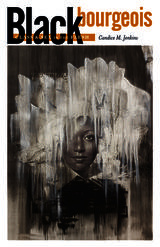
Exploring the forces that keep black people vulnerable even amid economically privileged lives
At a moment in U.S. history with repeated reminders of the vulnerability of African Americans to state and extralegal violence, Black Bourgeois is the first book to consider the contradiction of privileged, presumably protected black bodies that nonetheless remain racially vulnerable. Examining disruptions around race and class status in literary texts, Candice M. Jenkins reminds us that the conflicted relation of the black subject to privilege is not, solely, a recent phenomenon.
Focusing on works by Toni Morrison, Spike Lee, Danzy Senna, Rebecca Walker, Reginald McKnight, Percival Everett, Colson Whitehead, and Michael Thomas, Jenkins shows that the seemingly abrupt discursive shift from post–Civil Rights to Black Lives Matter, from an emphasis on privilege and progress to an emphasis on vulnerability and precariousness, suggests a pendulum swing between two interrelated positions still in tension. By analyzing how these narratives stage the fraught interaction between the black and the bourgeois, Jenkins offers renewed attention to class as a framework for the study of black life—a necessary shift in an age of rapidly increasing income inequality and societal stratification.
Black Bourgeois thus challenges the assumed link between blackness and poverty that has become so ingrained in the United States, reminding us that privileged subjects, too, are “classed.” This book offers, finally, a rigorous and nuanced grasp of how African Americans live within complex, intersecting identities.

In this masterful account, a historian of science surveys the molecular biology revolution, its origin and continuing impact.
Since the 1930s, a molecular vision has been transforming biology. Michel Morange provides an incisive and overarching history of this transformation, from the early attempts to explain organisms by the structure of their chemical components, to the birth and consolidation of genetics, to the latest technologies and discoveries enabled by the new science of life. Morange revisits A History of Molecular Biology and offers new insights from the past twenty years into his analysis.
The Black Box of Biology shows that what led to the incredible transformation of biology was not a simple accumulation of new results, but the molecularization of a large part of biology. In fact, Morange argues, the greatest biological achievements of the past few decades should still be understood within the molecular paradigm. What has happened is not the displacement of molecular biology by other techniques and avenues of research, but rather the fusion of molecular principles and concepts with those of other disciplines, including genetics, physics, structural chemistry, and computational biology. This has produced decisive changes, including the discoveries of regulatory RNAs, the development of massive scientific programs such as human genome sequencing, and the emergence of synthetic biology, systems biology, and epigenetics.
Original, persuasive, and breathtaking in its scope, The Black Box of Biology sets a new standard for the history of the ongoing molecular revolution.
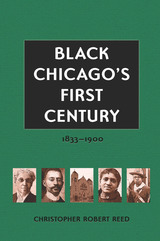
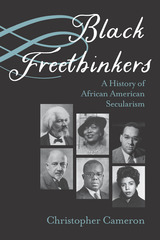
Christopher Cameron suggests an alternative origin of nonbelief and religious skepticism in America, namely the brutality of the institution of slavery. He also traces the growth of atheism and agnosticism among African Americans in two major political and intellectual movements of the 1920s: the New Negro Renaissance and the growth of black socialism and communism. In a final chapter, he explores the critical importance of freethought among participants in the civil rights and Black Power movements of the 1960s and 1970s.
Examining a wealth of sources, including slave narratives, travel accounts, novels, poetry, memoirs, newspapers, and archival sources such as church records, sermons, and letters, the study follows the lives and contributions of well-known figures, including Frederick Douglass, Zora Neale Hurston, James Baldwin, and Alice Walker, as well as lesser-known thinkers such as Louise Thompson Patterson, Sarah Webster Fabio, and David Cincore.
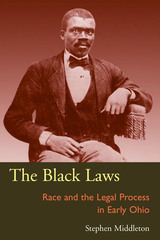
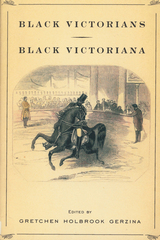
The essays taken as a whole also highlight prevailing Victorian attitudes toward race by focusing on the ways in which empire building spawned a "subculture of blackness" consisting of caricature, exhibition, representation, and scientific racism absorbed by society at large. This misrepresentation made it difficult to be both black and British while at the same time it helped to construct British identity as a whole. Covering many topics that detail the life of blacks during this period, Black Victorians/Black Victoriana will be a landmark contribution to the emergent field of black history in England.
Black, White, and in Color offers a long-awaited collection of major essays by Hortense Spillers, one of the most influential and inspiring black critics of the past twenty years. Spanning her work from the early 1980s, in which she pioneered a broadly poststructuralist approach to African American literature, and extending through her turn to cultural studies in the 1990s, these essays display her passionate commitment to reading as a fundamentally political act-one pivotal to rewriting the humanist project.
Spillers is best known for her race-centered revision of psychoanalytic theory and for her subtle account of the relationships between race and gender. She has also given literary criticism some of its most powerful readings of individual authors, represented here in seminal essays on Ralph Ellison, Gwendolyn Brooks, and William Faulkner. Ultimately, the essays collected in Black, White, and in Color all share Spillers's signature style: heady, eclectic, and astonishingly productive of new ideas. Anyone interested in African American culture and literature will want to read them.

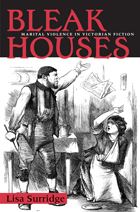
The Offenses Against the Person Act of 1828 opened magistrates' courts to abused working-class wives. Newspapers in turn reported on these proceedings, and in this way the Victorian scrutiny of domestic conduct began. But how did popular fiction treat “private” family violence? Bleak Houses: Marital Violence in Victorian Fiction traces novelists' engagement with the wife-assault debates in the public press between 1828 and the turn of the century.
Lisa Surridge examines the early works of Charles Dickens and reads Dombey and Son and Anne Brontë's The Tenant of Wildfell Hall in the context of the intense debates on wife assault and manliness in the late 1840s and early 1850s. Surridge explores George Eliot's Janet's Repentance in light of the parliamentary debates on the 1857 Divorce Act. Marital cruelty trials provide the structure for both Wilkie Collins's The Woman in White and Anthony Trollope's He Knew He Was Right.
Locating the New Woman fiction of Mona Caird and the reassuring detective investigations of Sherlock Holmes in the context of late-Victorian feminism and the great marriage debate in the Daily Telegraph, Surridge illustrates how fin-de-siècle fiction brought male sexual violence and the viability of marriage itself under public scrutiny. Bleak Houses thus demonstrates how Victorian fiction was concerned about the wife-assault debates of the nineteenth century, debates which both constructed and invaded the privacy of the middle-class home.
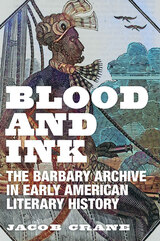
In the late eighteenth and early nineteenth centuries, Algerian piracy in the Mediterranean loomed large in the American imagination. An estimated seven hundred American citizens, sailors, and naval officers were taken captive over the course of the Barbary Crises (1784–1815), and this overseas danger threatened to grow and irreparably harm the young republic.
Blood and Ink reconstructs the largely forgotten influence of these early American conflicts with North Africa on notions of publicity, print culture, and racial and national identity from independence to the Civil War. Exploring the extensive archive of texts inspired by the conflicts—from captivity narratives, novels, plays, and poems to broadsides, travel narratives, children’s literature, newspaper articles, and visual ephemera—Jacob Crane connects anxieties surrounding North African piracy and white slavery to both the development of American abolitionism and representations of transatlantic African and Jewish identities in the early national and antebellum periods.
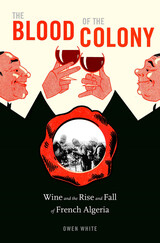
The surprising story of the wine industry’s role in the rise of French Algeria and the fall of empire.
“We owe to wine a blessing far more precious than gold: the peopling of Algeria with Frenchmen,” stated agriculturist Pierre Berthault in the early 1930s. In the last decades of the nineteenth century, Europeans had displaced Algerians from the colony’s best agricultural land and planted grapevines. Soon enough, wine was the primary export of a region whose mostly Muslim inhabitants didn’t drink alcohol.
Settlers made fortunes while drawing large numbers of Algerians into salaried work for the first time. But the success of Algerian wine resulted in friction with French producers, challenging the traditional view that imperial possessions should complement, not compete with, the metropole. By the middle of the twentieth century, amid the fight for independence, Algerians had come to see the rows of vines as an especially hated symbol of French domination. After the war, Algerians had to decide how far they would go to undo the transformations the colonists had wrought—including the world’s fourth-biggest wine industry. Owen White examines Algeria’s experiment with nationalized wine production in worker-run vineyards, the pressures that resulted in the failure of that experiment, and the eventual uprooting of most of the country’s vines.
With a special focus on individual experiences of empire, from the wealthiest Europeans to the poorest laborers in the fields, The Blood of the Colony shows the central role of wine in the economic life of French Algeria and in its settler culture. White makes clear that the industry left a long-term mark on the development of the nation.
In the years after World War II, to be a black writer was to face a stark predicament. The contest between the Soviet Union and the United States was a global one—an ideological battle that dominated almost every aspect of the cultural agenda. On the one hand was the Soviet Union, espousing revolutionary communism that promised egalitarianism while being hostile to conceptions of personal freedom. On the other hand was the United States, a country steeped in racial prejudice and the policies of Jim Crow.
Black writers of this time were equally alienated from the left and the right, Jesse McCarthy argues, and they channeled that alienation into remarkable experiments in literary form. Embracing racial affect and interiority, they forged an aesthetic resistance premised on fierce dissent from both US racial liberalism and Soviet communism. From the end of World War II to the rise of the Black Power movement in the 1960s, authors such as Richard Wright, James Baldwin, Gwendolyn Brooks, and Paule Marshall defined a distinctive moment in American literary culture that McCarthy terms the Blue Period.
In McCarthy’s hands, this notion of the Blue Period provides a fresh critical framework that challenges long-held disciplinary and archival assumptions. Black writers in the early Cold War went underground, McCarthy argues, not to depoliticize or liberalize their work, but to make it more radical—keeping alive affective commitments for a future time.
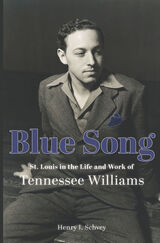
The question of this paradox lies at the heart of this book, an attempt not so much to correct the record about Williams’s well-chronicled dislike of the city, but rather to reveal how the city was absolutely indispensable to his formation and development both as a person and artist. Unlike the prevailing scholarly narrative that suggests that Williams discovered himself artistically and sexually in the deep South and New Orleans, Blue Song reveals that Williams remained emotionally tethered to St. Louis for a host of reasons for the rest of his life.
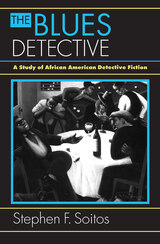
This illuminating book makes the case for a tradition of African American detective fiction—novels written by black Americans about black detectives and incorporating distinctly African American tropes and themes. Beginning with Pauline Hopkins in 1901, black authors consciously altered and subverted the formulas of detective fiction in significant ways. Such writers as J. E. Bruce, Rudolph Fisher, Chester Himes, Ishmael Reed, and Clarence Major created a new genre that responded to the social and political concerns of the black community.
Examining the work of these authors, Stephen Soitos frames his analysis in terms of four uniquely African American tropes: altered detective personas, double-consciousness detection, black vernaculars, and hoodoo. He argues that black writers created sleuths who were in fact “blues detectives,” engaged not only in solving crimes, but also in exploring the mysteries of black life and culture.
Soitos grounds his study in African American literary theory, particularly the work of Houston Baker, Bernard Bell, and Henry Louis Gates, Jr. He offers both a new way of conceiving black detective fiction and a series of insightful readings of books in this genre.
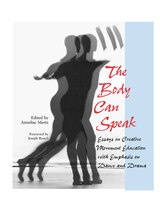
Movement is our first language, our universal language. Expression of body movement is the very basis of life as the nineteen contributors to The Body Can Speak: Essays on Creative Movement Education with Emphasis on Dance and Drama attest. Students use their bodies as an instrument of expression, and movement as medium; this means investigating space, energy, time, and motion in order to gain insight into these basic principles. At the same time they gain essential awareness of the self. Such work stimulates the senses and intellect, and develops a tangible new vision to satisfy the human need for aesthetic and artistic expression.
As editor of this collection, accomplished dancer and artistic director Annelise Mertz provides both an aesthetic appreciation for creative movement education as well as practical pedagogy for incorporating dance and drama into contemporary curriculum. Mertz has assembled here a definitive body of work from fellow artists and former students that speaks to the need to actively promote art as part of education.
The book gives voice to accomplished teachers, actors, dancers, directors, authors, and choreographers who share their experiences while they address creative movement education from preschool through college. Forty-eight photographs add an illuminating visual dimension to this wealth of stimulating ideas. The Body Can Speak provides a balanced and varied mosaic, with each essay offering evidence that creative movement education is vital for human development.
Contributors include Becky Engler-Hicks, Ruth Grauert, Anna Halprin, Joanna G. Harris, Margaret N. H’Doubler, Michael Hoeye, Murray Louis, Annelise Mertz, Jaime Nisenbaum, Carol North, Jeff Rehg, Shirley Ririe, G. Hoffman Soto, Emma D. Sheehy, Harold Taylor, Branislav Tomich, Dorothy M. Vislocky, and Joan J. Woodbury.
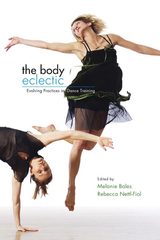
This rich collection of essays and interviews explores modern-dance technique training from the last fifty years. Focusing on the culture of dance, editors Melanie Bales and Rebecca Nettl-Fiol examine choreographic process and style, dancer agency and participation in the creative process, and changes in the role and purpose of training. Bringing recent writings on dance into dialogue with dance practice, The Body Eclectic: Evolving Practices in Dance Training asks readers to consider the relationship between training practices and choreographic style and content. The contributors explore how technique training both guides and reflects the art of dance.
Contributors include Melanie Bales, Glenna Batson, Wendell Beavers, Veronica Dittman, Natalie Gilbert, Joshua Monten, Martha Myers, and Rebecca Nettl-Fiol.
Dance professionals interviewed include David Dorfman, Ralph Lemon, Bebe Miller, Tere O’Connor, and Shelley Washington.

Body Language examines the complex intersections of British eighteenth-century comic fiction and medical discourse. By engaging medical writings of renowned and widely-read physicians of the Enlightenment such as John Freind, Thomas Sydenham, Albrecht von Haller, John Whytt, and William Cullen, with novels of humor by Henry Fielding, Tobias Smollett, Laurence Sterne, and Charlotte Lennox, Alves explains how medicine shaped comic language by dramatizing female-specific phenomena like menstruation, hysteria, nervous disorders, and pregnancy. In these novels, the medical belief that women are incapable of bodily self-regulation becomes an imperative for policing women’s bodies and highlights the enduring shortcomings of patriarchal systems. Ultimately, these comic representations offer a counternarrative of women’s bodies, agency, and selfhood, exposing masculine anxieties about the effectiveness of marriage to regulate women’s sexuality.
Published by Bucknell University Press. Distributed worldwide by Rutgers University Press.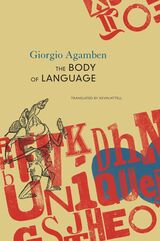
An erudite exploration of transgressive language from the Renaissance by one of Europe’s greatest living philosophers.
This book explores how early modern authors broke linguistic boundaries, creating new words and languages that challenged traditional grammar and lexicon, providing historical insight into today’s debates on the politics of language. Through a scholarly analysis by Giorgio Agamben, the text delves into the boundary-shifting language of the Renaissance, exemplified by giants like Pantagruel and Gargantua, whose outsized bodies mirror the vastness of their speech. The macaronic language invented by Teofilo Folengo, blending Latin and vernacular, embodies a linguistic rebellion that transforms language into a tangible, unruly force. Featuring illustrations from the Songes drolatiques de Pantagruel and Folengo’s Baldo, this volume offers a vivid portrayal of language as a physical, dynamic entity that defies grammatical norms.
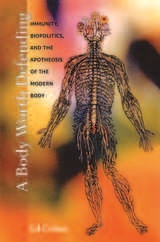
Inspired by Michel Foucault’s writings about biopolitics and biopower, Cohen traces the migration of immunity from politics and law into the domains of medicine and science. Offering a genealogy of the concept, he illuminates a complex of thinking about modern bodies that percolates through European political, legal, philosophical, economic, governmental, scientific, and medical discourses from the mid-seventeenth century through the twentieth. He shows that by the late nineteenth century, “the body” literally incarnates modern notions of personhood. In this lively cultural rumination, Cohen argues that by embracing the idea of immunity-as-defense so exclusively, biomedicine naturalizes the individual as the privileged focus for identifying and treating illness, thereby devaluing or obscuring approaches to healing situated within communities or collectives.

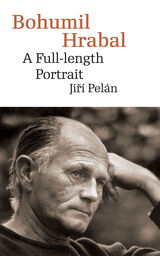
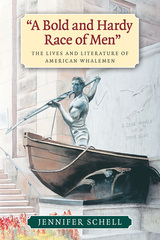
In his novel Miriam Coffin, or The Whale-Fishermen (1834), Joseph C. Hart proclaimed that his characters were “a bold and hardy race of men,” who deserved the “expressive title of American Whale-Fishermen.” Hart was not the only American author to applaud these physical laborers as the embodiment of national manhood. Heroic portraits of whalers first appeared in American literature during the 1780s, and they proliferated across time. Writers as various as Lydia Howard Huntley Sigourney, Frederick Douglass, and Walt Whitman celebrated the talents of the seafarers who transformed the New England whale fishery into a globally dominant industry. But these images did not go unchallenged. Alternative visions—some of which undermined the iconic status of the trade and its workers—began to proliferate. Even so, these depictions did very little to dismantle the notion that whaling men were prime exemplars of a proud American work ethic.
To explain why this industry had such a widespread and enduring impact on American literature, Jennifer Schell juxtaposes and analyzes a wide array of eighteenth- and nineteenth-century whaling narratives. Drawing on various studies of masculinity, labor history, and transnationalism, Schell shows how this particular type of maritime work, and the traits and values associated with it, helped to shape the American literary, cultural, and historical imagination. In the process, she reveals the diverse, flexible, and often contradictory meanings of gender, class, and nation in nineteenth-century America.
Leslie Anne Hadfield compellingly demonstrates how these women were able to successfully carve out their own professional space and reshape notions of health and healing in the Eastern Cape. Bringing forth the stories of these nurses in their own voices, A Bold Profession is an homage to their dedication to the well-being of their communities. Hadfield sheds light on the struggles of balancing commitment to career and family lives during an oppressive apartheid. The volume fills an important gap for scholars studying the history of women, nursing, and health care in South Africa, illuminating the humanity of health care workers.

Bombs are as old as hatred itself. But it was the twentieth century--one hundred years of incredible scientific progress and terrible war--that brought forth the Big One, the Bomb, humanity's most powerful and destructive invention. In The Bomb: A Life, Gerard DeGroot tells the story of this once unimaginable weapon that--at least since 8:16 a.m. on August 6, 1945--has haunted our dreams and threatened our existence.
The Bomb has killed hundreds of thousands outright, condemned many more to lingering deaths, and made vast tracts of land unfit for life. For decades it dominated the psyches of millions, becoming a touchstone of popular culture, celebrated or decried in mass political movements, films, songs, and books. DeGroot traces the life of the Bomb from its birth in turn-of-the-century physics labs of Europe to a childhood in the New Mexico desert of the 1940s, from adolescence and early adulthood in Nagasaki and Bikini, Australia and Kazakhstan to maturity in test sites and missile silos around the globe. His book portrays the Bomb's short but significant existence in all its scope, providing us with a portrait of the times and the people--from Oppenheimer to Sakharov, Stalin to Reagan--whose legacy still shapes our world.
Bombay Modern uncovers an alternative and provincial modernism through poetry, a genre that is marginal to postcolonial studies, and through bilingual scholarship across English and Marathi texts, a methodology that is currently peripheral at best to both modernist studies and postcolonial literary criticism in India. Eschewing any attempt to define an overarching or universal modernism, Bombay Modern delimits its sphere of study to "Bombay" and to the "post-1960" (the sathottari period) in an attempt to examine at close range the specific way in which this poetry redeployed the regional, the national, and the international to create a very tangible yet transient local.
Patrice Gueniffey is the leading French historian of the Revolutionary and Napoleonic age. This book, hailed as a masterwork on its publication in France, takes up the epic narrative at the heart of this turbulent period: the life of Napoleon himself, the man who—in Madame de Staël’s words—made the rest of “the human race anonymous.” Gueniffey follows Bonaparte from his obscure boyhood in Corsica, to his meteoric rise during the Italian and Egyptian campaigns of the Revolutionary wars, to his proclamation as Consul for Life in 1802. Bonaparte is the story of how Napoleon became Napoleon. A future volume will trace his career as emperor.
Most books approach Napoleon from an angle—the Machiavellian politician, the military genius, the life without the times, the times without the life. Gueniffey paints a full, nuanced portrait. We meet both the romantic cadet and the young general burning with ambition—one minute helplessly intoxicated with Josephine, the next minute dominating men twice his age, and always at war with his own family. Gueniffey recreates the violent upheavals and global rivalries that set the stage for Napoleon’s battles and for his crucial role as state builder. His successes ushered in a new age whose legacy is felt around the world today.
Averse as we are now to martial glory, Napoleon might seem to be a hero from a bygone time. But as Gueniffey says, his life still speaks to us, the ultimate incarnation of the distinctively modern dream to will our own destiny.
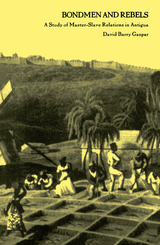

“How many a man has dated a new era in his life from the reading of a book,” wrote Henry David Thoreau in Walden. Today that book continues to provoke, inspire, and change lives all over the world, and each rereading is fresh and challenging. Yet as Thoreau's countless admirers know, there is more to the man than Walden. An engineer, poet, teacher, naturalist, lecturer, and political activist, he truly had multiple lives to lead, and each one speaks forcefully to us today.
Sponsored by the Thoreau Society, the brief, handsomely presented books in this series offer the thoughts of a great writer on a variety of topics, some that we readily associate with him, some that may be surprising. Each volume includes selections from his familiar published works as well as from less well known lectures, letters, and journal entries. The books include original engravings by renowned illustrator and book artist Barry Moser.

The question of how Islam arrived in India remains markedly contentious in South Asian politics. Standard accounts center on the Umayyad Caliphate’s incursions into Sind and littoral western India in the eighth century CE. In this telling, Muslims were a foreign presence among native Hindus, sowing the seeds of a mutual animosity that presaged the subcontinent’s partition into Pakistan and India many centuries later.
But in a compelling reexamination of the history of Islam in India, Manan Ahmed Asif directs attention to a thirteenth-century text that tells the story of Chach, the Brahmin ruler of Sind, and his kingdom’s later conquest by the Muslim general Muhammad bin Qasim in 712 CE. The Chachnama has long been a touchstone of Indian history, yet it is seldom studied in its entirety. Asif offers a close and complete analysis of this important text, untangling its various registers and genres in order to reconstruct the political vision at its heart.
Asif challenges the main tenets of the Chachnama’s interpretation: that it is a translation of an earlier Arabic text and that it presents a history of conquest. Debunking both ideas, he demonstrates that the Chachnama was originally Persian and, far from advancing a narrative of imperial aggression, is a subtle and sophisticated work of political theory, one embedded in both the Indic and Islamic ethos. This social and intellectual history of the Chachnama is an important corrective to the divisions between Muslim and Hindu that so often define Pakistani and Indian politics today.
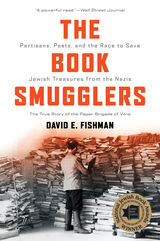

Two French Protestant refugees in eighteenth-century Amsterdam gave the world an extraordinary work that intrigued and outraged readers across Europe. In this captivating account, Lynn Hunt, Margaret Jacob, and Wijnand Mijnhardt take us to the vibrant Dutch Republic and its flourishing book trade to explore the work that sowed the radical idea that religions could be considered on equal terms.
Famed engraver Bernard Picart and author and publisher Jean Frederic Bernard produced The Religious Ceremonies and Customs of All the Peoples of the World, which appeared in the first of seven folio volumes in 1723. They put religion in comparative perspective, offering images and analysis of Jews, Catholics, Muslims, the peoples of the Orient and the Americas, Protestants, deists, freemasons, and assorted sects. Despite condemnation by the Catholic Church, the work was a resounding success. For the next century it was copied or adapted, but without the context of its original radicalism and its debt to clandestine literature, English deists, and the philosophy of Spinoza.
Ceremonies and Customs prepared the ground for religious toleration amid seemingly unending religious conflict, and demonstrated the impact of the global on Western consciousness. In this beautifully illustrated book, Hunt, Jacob, and Mijnhardt cast new light on the profound insight found in one book as it shaped the development of a modern, secular understanding of religion.

Author Laura Vilardell examines documents including firsthand witness accounts, correspondence, memoirs, censorship files, newspapers, original interviews, and unpublished material housed in various Spanish archives. As such, Books against Tyranny opens up the field and serves as an informative tool for scholars of Franco's Spain, Catalan social movements, and censorship more generally.

Originally published in French by an Argentine ex-pat living in Paris, Borges includes the Argentine specificities of Borges’s work—specificities that are often unrecognized or glossed over in Anglophone readings.
This book is a boon for university students of philosophy and literature, teachers and researchers in these fields who are looking to better understand this complex author, and anyone interested in the advanced study of literature. Somewhere between a guidebook and an exhaustive work of advanced research, Borges is the ultimate stepping-stone into the deeper Borgesian world.

Borges and Kafka, Bolaño and Bloom is a parsing not simply of these authors' reactions to a canon, but of the notion of canon writ large and the inequities and erasures therein. It concludes with a look at the testimonial and autobiographical writings of Rigoberta Menchú and Lurgio Gavilán, who arguably represent the trajectory of Indigenous testimonial and autobiographical writing during the last forty years, noting how their texts represent alternative ways of relating to national and, on occasion, Western cultures. This study is a new attempt to map writers' diverse ways of thinking about locality and universality from within and without what is known as the canon.
READERS
Browse our collection.
PUBLISHERS
See BiblioVault's publisher services.
STUDENT SERVICES
Files for college accessibility offices.
RECENTLY PUBLISHED
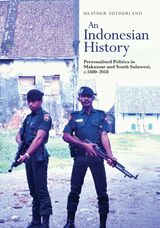
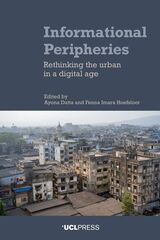



UChicago Accessibility Resources
home | accessibility | search | about | contact us
BiblioVault ® 2001 - 2026
The University of Chicago Press