
 A SCHOLARLY BOOK REPOSITORY
2150 start with C start with C

Our early ancestors lived in small groups and worked actively to preserve social equality. As they created larger societies, however, inequality rose, and by 2500 bce truly egalitarian societies were on the wane. In The Creation of Inequality, Kent Flannery and Joyce Marcus demonstrate that this development was not simply the result of population increase, food surplus, or the accumulation of valuables. Instead, inequality resulted from conscious manipulation of the unique social logic that lies at the core of every human group.
A few societies allowed talented and ambitious individuals to rise in prestige while still preventing them from becoming a hereditary elite. But many others made high rank hereditary, by manipulating debts, genealogies, and sacred lore. At certain moments in history, intense competition among leaders of high rank gave rise to despotic kingdoms and empires in the Near East, Egypt, Africa, Mexico, Peru, and the Pacific.
Drawing on their vast knowledge of both living and prehistoric social groups, Flannery and Marcus describe the changes in logic that create larger and more hierarchical societies, and they argue persuasively that many kinds of inequality can be overcome by reversing these changes, rather than by violence.
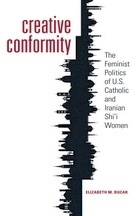
Much feminist scholarship has viewed Catholicism and Shi'i Islam as two religious traditions that, historically, have greeted feminist claims with skepticism or outright hostility. Creative Conformity demonstrates how certain liberal secular assumptions about these religious traditions are only partly correct and, more importantly, misleading. In this highly original study, Elizabeth Bucar compares the feminist politics of eleven US Catholic and Iranian Shi'i women and explores how these women contest and affirm clerical mandates in order to expand their roles within their religious communities and national politics.
Using scriptural analysis and personal interviews, Creative Conformity demonstrates how women contribute to the production of ethical knowledge within both religious communities in order to expand what counts as feminist action, and to explain how religious authority creates an unintended diversity of moral belief and action. Bucar finds that the practices of Catholic and Shi‘a women are not only determined by but also contribute to the ethical and political landscape in their respective religious communities. She challenges the orthodoxies of liberal feminist politics and, ultimately, strengthens feminism as a scholarly endeavor.
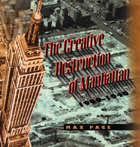
"It'll be a great place if they ever finish it," O. Henry wrote about New York City. This laconic remark captures the relentlessly transitory character of New York, and it points toward Max Page's synthetic perspective. Against the prevailing motif of a naturally expanding metropolis, Page argues that the early-twentieth-century city was dominated by the politics of destruction and rebuilding that became the hallmark of modern urbanism.
The oxymoron "creative destruction" suggests the tensions that are at the heart of urban life: between stability and change, between particular places and undifferentiated spaces, between market forces and planning controls, and between the "natural" and "unnatural" in city growth. Page investigates these cultural counterweights through case studies of Manhattan's development, with depictions ranging from private real estate development along Fifth Avenue to Jacob Riis's slum clearance efforts on the Lower East Side, from the elimination of street trees to the efforts to save City Hall from demolition.
In these examples some New Yorkers celebrate planning by destruction or marvel at the domestication of the natural environment, while others decry the devastation of their homes and lament the passing of the city's architectural heritage. A central question in each case is the role of the past in the shaping of collective memory—which buildings are preserved? which trees are cut down? which fragments are enshrined in museums? Contrary to the popular sense of New York as an ahistorical city, the past—as recalled by powerful citizens—was, in fact, at the heart of defining how the city would be built.
Beautifully illustrated and written in clear, engaging prose, The Creative Destruction of Manhattan offers a new way of viewing the development of the American city.
"An excellent, multifaceted analysis of the process of urban development-not the inevitability of development but the choices individuals, organizations, and developers made that transformed Manhattan. The politics of place was, Max Page convincingly argues, an ongoing battle to define and thereby control the evolving shape of the city."—David Schuyler, author of Apostle of Taste: Andrew Jackson Downing 1815-1852
"Max Page transcends the usual dichotomy between those who glorify destruction for the sake of change and those who would avoid both at all cost. The sizeable borderland between architecture and preservation reveals new dimensions about science and history, innovation and memory, the cities that have been, and those yet to come."—Gwendolyn Wright, author of The Politics of Design in French Colonial Urbanism
"A sober, humane explanation of how and why New York City became a place of continuous rebuilding. . . . For real or armchair New Yorkers, the whole package is a treat."—Kirkus Reviews


“A brilliant travel guide to the coming world of AI.”
—Jeanette Winterson
What does it mean to be creative? Can creativity be trained? Is it uniquely human, or could AI be considered creative?
Mathematical genius and exuberant polymath Marcus du Sautoy plunges us into the world of artificial intelligence and algorithmic learning in this essential guide to the future of creativity. He considers the role of pattern and imitation in the creative process and sets out to investigate the programs and programmers—from Deep Mind and the Flow Machine to Botnik and WHIM—who are seeking to rival or surpass human innovation in gaming, music, art, and language. A thrilling tour of the landscape of invention, The Creativity Code explores the new face of creativity and the mysteries of the human code.
“As machines outsmart us in ever more domains, we can at least comfort ourselves that one area will remain sacrosanct and uncomputable: human creativity. Or can we?…In his fascinating exploration of the nature of creativity, Marcus du Sautoy questions many of those assumptions.”
—Financial Times
“Fascinating…If all the experiences, hopes, dreams, visions, lusts, loves, and hatreds that shape the human imagination amount to nothing more than a ‘code,’ then sooner or later a machine will crack it. Indeed, du Sautoy assembles an eclectic array of evidence to show how that’s happening even now.”
—The Times
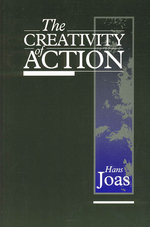
Joas argues for adding a third model of action to the two predominant models of rational and normative action—one that emphasizes the creative character of human action. This model encompasses the other two, allowing for a more comprehensive theory of action. Joas elaborates some implications of his model for theories of social movements and social change and for the status of action theory in sociology in the face of competition from theories advanced by Luhmann and Habermas.
The problem of action is of crucial importance in both sociology and philosophy, and this book—already widely debated in Germany—will add fresh impetus to the lively discussions current in the English-speaking world.
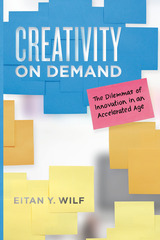
In Creativity on Demand, cultural anthropologist Eitan Wilf seeks to answer these questions by returning to the fundamental and pervasive expectation of continual innovation. Wilf focuses a keen eye on how our obsession with ceaseless innovation stems from the long-standing value of acceleration in capitalist society. Based on ethnographic work with innovation consultants in the United States, he reveals, among other surprises, how routine the culture of innovation actually is. Procedures and strategies are repeated in a formulaic way, and imagination is harnessed as a new professional ethos, not always to generate genuinely new thinking, but to produce predictable signs of continual change. A masterful look at the contradictions of our capitalist age, Creativity on Demand is a model for the anthropological study of our cultures of work.
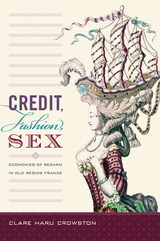
Credit economies constituted "economies of regard" in which reputation depended on embodied performances of credibility. Crowston explores the role of fashionable appearances and sexual desire in leveraging credit and reconstructs women's vigorous participation in its gray markets. The scandalous relationship between Queen Marie Antoinette and fashion merchant Rose Bertin epitomizes the vertical loyalties and deep social divides of the credit regime and its increasingly urgent political stakes.
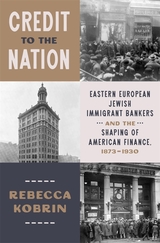
From a leading historian, the story of how entrepreneurial Jewish immigrants transformed commercial banking and enabled the economic and social advancement of Jews in America.
What are immigrants to do when business opportunities abound in their new home, but banks refuse essential financial support? How could they make the journey in the first place without helping hands? In this lively history, Rebecca Kobrin chronicles the turn-of-the-twentieth-century Jewish immigrants who stepped up by doing the lending themselves. Arriving from the Russian Empire and settling primarily in New York, they made livelihoods by assisting fellow Jews so they could purchase passage to the United States and, after arriving, obtain credit that other lenders would not dare provide.
Credit to the Nation traces the novel practices of bankers who not only enabled the flourishing of American Jewry but also revolutionized the US financial industry. Drawing on previously unexamined archival materials in Russian, Yiddish, German, and English, Kobrin tells a story that is also crucial to the history of New York, as immigrant bankers’ financing of real estate transformed wide swathes of the city. Lenders drove a boom in the prices of tenement buildings, but heavy speculation eventually precipitated the downfall of immigrant banking. Kobrin notes in particular the case of the Bank of United States—a private lender catering primarily to Jewish businessmen—which the Federal Reserve refused to bail out from bankruptcy in 1930.
Immigrants’ grasping for credit, and the rise and fall of immigrant banks, gave way to a contemporary banking industry that, ironically, refuses credit to today’s immigrants. Kobrin reminds us that now, as before, the denial of credit pushes entrepreneurial Americans into unregulated money-lending and the trap of endless debt.

Wherry, Seefeldt, and Alvarez tell the story of the Mission Asset Fund, a San Francisco-based organization that assists mostly low- and moderate-income people of color with building credit. The Mission Asset Fund facilitates zero-interest lending circles, which have been practiced by generations of immigrants, but have gone largely unrecognized by mainstream financial institutions. Participants decide how the circles are run and how they will use their loans, and the organization reports their clients’ lending activity to credit bureaus. As the authors show, this system not only helps clients build credit, but also allows them to manage debt with dignity, have some say in the creation of financial products, and reaffirm their sense of social membership. The authors delve into the history of racial wealth inequality in the U.S. to show that for many black and Latino households, credit invisibility is not simply a matter of individual choices or inadequate financial education. Rather, financial marginalization is the result of historical policies that enabled predatory lending, discriminatory banking and housing practices, and the rollback of regulatory protections for first-time homeowners.
To rectify these inequalities, the authors propose common sense regulations to protect consumers from abuse alongside new initiatives that provide seed capital for every child, create affordable short-term loans, and ensure that financial institutions treat low- and moderate-income clients with equal respect. By situating the successes of the Mission Asset Fund in the larger history of credit and debt, Credit Where It’s Due shows how to prioritize financial citizenship for all.

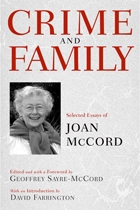

A provocative analysis of how Christianity helped legitimize the death penalty in early modern Europe, then throughout the Christian world, by turning execution into a great cathartic public ritual and the condemned into a Christ-like figure who accepts death to save humanity.
The public execution of criminals has been a common practice ever since ancient times. In this wide-ranging investigation of the death penalty in Europe from the fourteenth to the eighteenth century, noted Italian historian Adriano Prosperi identifies a crucial period when legal concepts of vengeance and justice merged with Christian beliefs in repentance and forgiveness.
Crime and Forgiveness begins with late antiquity but comes into sharp focus in fourteenth-century Italy, with the work of the Confraternities of Mercy, which offered Christian comfort to the condemned and were for centuries responsible for burying the dead. Under the brotherhoods’ influence, the ritual of public execution became Christianized, and the doomed person became a symbol of the fallen human condition. Because the time of death was known, this “ideal” sinner could be comforted and prepared for the next life through confession and repentance. In return, the community bearing witness to the execution offered forgiveness and a Christian burial. No longer facing eternal condemnation, the criminal in turn publicly forgave the executioner, and the death provided a moral lesson to the community.
Over time, as the practice of Christian comfort spread across Europe, it offered political authorities an opportunity to legitimize the death penalty and encode into law the right to kill and exact vengeance. But the contradictions created by Christianity’s central role in executions did not dissipate, and squaring the emotions and values surrounding state-sanctioned executions was not simple, then or now.

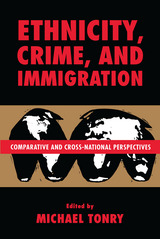
ethnic differences in criminal offending, victimization by crime, and
disparities and discrimination in justice systems. These nine essays
provide comrehensive up-to-date summaries of research and experience
concerning those subjects in Australia, Canada, England and Wales,
France, Germany, the Netherlands, Sweden, Switzerland, and the United
States. Population migration has reached an all time high in Europe and
with it, "immigration and crime" has become the single most volatile and
topical crime control issue in most of these countries.
The nine essays in this book are written by the leading specialists in
each country. Contributors include Roderic Broadhurst, Julian V. Roberts
and Anthony N. Doob, David J. Smith, Pierre Tournier, Hans-Jörg
Albrecht, Josine Junger-Tas, Peter L. Martens, Martin Killias, Robert J.
Sampson and Janet L. Lauritsen.
Michael Tonry is Sonosky Professor of Law and Public Policy at the
University of Minnesota.
Featuring articles by leading American and European scholars from many fields, Youth Violence provides a reliable, up-to-date, authoritative and comprehensive overview of policy issues and research developments concerning crime and violence among the young.
Featuring articles by Alfred Blumstein and Allen Beck, Joan Petersilia, Anthony Bottoms, Douglas McDonald and others, Prisons provides reliable, up-to-date, and comprehensive overviews of policy issues and research developments concerning prisons and imprisonment. This timely collection of essays will benefit scholars, administrators, and policy makers alike.
Volume 30 is a survey volume of recent research on criminal justice issues, with a careful balance of research, theory, and practice.
Contributors:
Alfred Blumstein
Rick Brown
Ronald V. Clarke
Anthony N. Doob
Manuel Eisner
David P. Farrington
Rosemary Gartner
James Jacobs
Candace Kruttschnitt
Ellen Peters
Alex R. Piquero
Tom R. Tyler
Cheryl Marie Webster
Contributors:
Hans-Jörg Albrecht
Anthony Bottoms
James Dignan
Anthony N. Doob
Carl-Gunnar Janson
Josine Junger-Tas
Britta Kyvsgaard
Allison Morris
Julian V. Roberts
Jane B. Sprott
Lode Walgrave
Volume 32 covers criminal justice issues, with a careful balance of research, theory, and practice. Topics in this volume include: environmental crime, the effects of wrongful imprisonment, the assessment of macro-level predictors and theories of crime, ethnic differences in intergenerational crime patterns, sentencing guidelines in Minnesota from 1978 to 2003, and the results of five decades of neutralization research.
Contributors:
Heith Copes
Francis T. Cullen
Richard S. Frase
Adrian Grounds
Shadd Maruna
Travis C. Pratt
Aaron S. Routhe
Neal Shover
David J. Smith
The contributors to this volume include Marcelo Aebi, Andromachi Tseloni, Eric Baumer, Manuel Eisner, Graham Farrell, Janne Kivivuori, Tapio Lappi-Seppälä, Suzy McElrath, Richard Rosenfeld, Rossella Selmini, Nick Tilley, and Kevin T. Wolff.
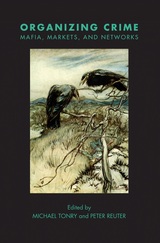
For most Americans, The Godfather, The Sopranos, and the Cosa Nostra exemplify organized crime. In Asia the term conjures up images of Japanese yakuza and Chinese triads, in Italy the Cosa Nostra and ‘Ndrangheta, in Latin America Mexican narco-gangs and Colombian drug cartels, in the Netherlands transnational drug and human trafficking, and in Scandinavia outlaw motorcycle gangs. Some but not all those organizations are “mafias” with centuries-long histories, distinctive cultures, and complicated relationships with local communities and governments. Others are new, large but transitory and with no purpose other than maximizing profits from illegal markets.
Organized crime organizations have existed for centuries. Serious scholarly, as opposed to journalistic or law enforcement, efforts to understand them, however, date back only a few decades. Authoritative overviews were, until very recently, impossible. Rigorous, analytically acute, and methodologically sophisticated literatures did not exist. They have begun to emerge. They have developed in many countries, involve work in different languages and disciplines, and deploy a wide range of methods.
Organizing Crime: Mafias, Markets, and Networks provides the most exhaustive overview ever published of knowledge about organized crime. It provides intensive accounts of American, Italian, and Dutch developments, covers both national mafias and transnational criminality, and delves in depth into gender, human capital, and money laundering issues. The writers are based in seven countries. To a person they are, or are among, the world’s most distinguished specialists in their subjects. At last, credible explanations and testable hypotheses are available concerning when, why, and under what circumstances mafias and other organized crime organizations come into being, what makes them distinctive, what they do and with what effects, and how to contain them.
Since 1979, Crime and Justice has presented a review of the latest international research, providing expertise to enhance the work of sociologists, psychologists, criminal lawyers, justice scholars, and political scientists. The series explores a full range of issues concerning crime, its causes, and its cures. In both the review and the thematic volumes, Crime and Justice offers an interdisciplinary approach to address core issues in criminology.
Since 1979, Crime and Justice: A Review of Research has presented reviews of the latest international research in criminology and criminal justice, providing expertise to enhance the work of sociologists, psychologists, criminal lawyers, criminologists, and political scientists. Volume 54 publishes first-rate review essays by leading scholars that summarize what is known about both cutting-edge and enduring subjects, what needs to be known, and how that might be accomplished. The wide-ranging, multidisciplinary topics covered include crime trends, immigration and crime, mass incarceration, money laundering, penal policy in Eastern and Central Europe, criminal frauds, the concept of lesser eligibility, and W. E. B. Du Bois’s unheralded contributions to criminology.
Examining the ways in which communities both affect crime and are affected by it, this volume seeks to explain the wide variation of crime levels among different communities. As it attempts to redress the bias toward describing crime in terms of individuals, Communities and Crime brings concentrated attention to crime at a community level, suggesting ways in which neighborhoods can change their crime patterns.
While disassociating law from a strictly legalist approach, the volume showcases a number of highly original studies on topics such as the role of law in processes of state formation and social and political conflict, the resonance between legal and cultural phenomena, and the contested nature of law-enforcing discourses and practices. Treating law as an ambiguous and malleable arena of struggle, the contributors to this volume—scholars from North and Latin America who represent the new wave in legal history that has emerged in recent years-- demonstrate that law not only produces and reformulates culture, but also shapes and is shaped by larger processes of political, social, economic, and cultural change. In addition, they offer valuable insights about the ways in which legal systems and cultures in Latin America compare to those in England, Western Europe, and the United States.
This volume will appeal to scholars in Latin American studies and to those interested in the social, cultural, and comparative history of law and legal phenomena.
Contributors. Carlos Aguirre, Dain Borges, Lila Caimari, Arlene J. Díaz, Luis A. Gonzalez, Donna J. Guy, Douglas Hay, Gilbert M. Joseph, Juan Manuel Palacio, Diana Paton, Pablo Piccato, Cristina Rivera Garza, Kristin Ruggiero, Ricardo D. Salvatore, Charles F. Walker
The Chinese were writing detective stories at least three hundred years before Edgar Allan Poe and courtroom drama about two hundred years before that. In the thirteenth and fourteenth centuries, courtroom drama was a popular sub-genre—with the judge-hero Pao Cheng of the Sung dynasty as a principal character—and crime and punishment as its most important themes.
In Crime and Punishment in Medieval Chinese Drama George A. Hayden translates three Judge Pao plays: "Selling Rice at Ch'ien-chu," "The Ghost of the Pot," and "The Flower in the Back Courtyard." In his introduction Professor Hayden explains the structure of the dramas, which were sung as well as spoken, and their moral significance in the light of traditional Chinese ethics. He also traces the legend of the wise and incorruptible but very human Judge Pao through the years to its high point in Yuan and early Ming drama. The book is annotated for the general reader as well as for the specialist and contains a list of twenty-seven courtroom plays and a list of late Ming anthologies in which these plays appear.
In this collection, Amy Louise Wood and Natalie J. Ring present nine groundbreaking essays about the carceral system and its development over time. Topics range from activism against police brutality to the peculiar path of southern prison reform to the fraught introduction of the electric chair. The essays tell nuanced stories of rapidly changing state institutions, political leaders who sought to manage them, and African Americans who appealed to the regulatory state to protect their rights.
Contributors: Pippa Holloway, Tammy Ingram, Brandon T. Jett, Seth Kotch, Talitha L. LeFlouria, Vivien Miller, Silvan Niedermeier, K. Stephen Prince, and Amy Louise Wood
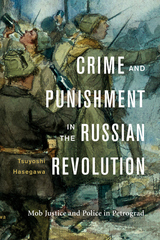
Russians from all walks of life poured into the streets of the imperial capital after the February Revolution of 1917, joyously celebrating the end of Tsar Nicholas II’s monarchy. One year later, with Lenin’s Bolsheviks now in power, Petrograd’s deserted streets presented a very different scene. No celebrations marked the Revolution’s anniversary. Amid widespread civil strife and lawlessness, a fearful citizenry stayed out of sight.
In Crime and Punishment in the Russian Revolution, Tsuyoshi Hasegawa offers a new perspective on Russia’s revolutionary year through the lens of violent crime and its devastating effect on ordinary people. When the Provisional Government assumed power after Nicholas II’s abdication, it set about instituting liberal reforms, including eliminating the tsar’s regular police. But dissolving this much-hated yet efficient police force and replacing it with a new municipal police led rapidly to the breakdown of order and services. Amid the chaos, crime flourished. Gangs of criminals, deserters, and hooligans brazenly roamed the streets. Mass prison escapes became common. And vigilantism spread widely as ordinary citizens felt compelled to take the law into their own hands, often meting out mob justice on suspected wrongdoers.
The Bolsheviks swept into power in the October Revolution but had no practical plans to reestablish order. As crime continued to escalate and violent alcohol riots almost drowned the revolutionary regime, they redefined it as “counterrevolutionary activity,” to be dealt with by the secret police, whose harshly repressive, extralegal means of enforcement helped pave the way for a Communist dictatorship.
Crime and Social Justice in Indian Country calls to attention the need for culturally appropriate research protocols and critical discussions of social and criminal justice in Indian Country. The contributors come from the growing wave of Native American as well as non-Indigenous scholars who employ these methods. They reflect on issues in three key areas: crime, social justice, and community responses to crime and justice issues. Topics include stalking, involuntary sterilization of Indigenous women, border-town violence, Indian gaming, child welfare, and juvenile justice. These issues are all rooted in colonization; however, the contributors demonstrate how Indigenous communities are finding their own solutions for social justice, sovereignty, and self-determination.
Thanks to its focus on community responses that exemplify Indigenous resilience, persistence, and innovation, this volume will be valuable to those on the ground working with Indigenous communities in public and legal arenas, as well as scholars and students. Crime and Social Justice in Indian Country shows the way forward for meaningful inclusions of Indigenous peoples in their own justice initiatives.
Contributors
Alisse Ali-Joseph
William G. Archambeault
Cheryl Redhorse Bennett
Danielle V. Hiraldo
Lomayumptewa K. Ishii
Karen Jarratt-Snider
Eileen Luna-Firebaugh
Anne Luna-Gordinier
Marianne O. Nielsen
Linda M. Robyn
Real-life crime, crime reconstruction and crime as entertainment are categories that are now so interdependent that the media itself is in danger of confusing the genres as it seeks to profit from their undoubted appeal. This intertextuality is a key theme in this collection. The contributors highlight and theorise the symbiosis that exists between real crime and its representations, from media moral panics, policing the crisis and representing order to the postmodern confusion of crime and spectacle, trial by media and trials on media. As recent debates have shown all too starkly, the media's neutrality in this critical area is ever more problematic.
This is an invaluable introduction to new thinking in a pressing contemporary debate.

Analyses of crime and justice in an unprecedented time
While COVID-19 lockdowns affected nearly everyone worldwide, feelings of anxiety and fear were exacerbated for those already entangled in the criminal justice system. Scholars recognized the unique opportunity to study crime and the justice system’s response during this period, though they soon realized that determining the pandemic’s effects would be a complicated, nuanced process.
Crime, Corrections, and the COVID-19 Pandemic features analyses and findings from more than thirty contributors in eleven essays. The collection examines the multifaceted social, economic, cultural, legislative, and policy responses to COVID-19 and their impacts on crime and justice. It also explores how professionals across the criminal justice system—police officers, campus police officers, attorneys, judges, correctional staff, and community supervision agents—adapted to unprecedented challenges.
The book provides real-world evidence of how unconventional solutions and groundbreaking practices were implemented in response to a global crisis. Contributors analyze how incarcerated individuals, their families, and their supervisors dealt with the fear of transmission, medical care, and death. Their findings, which are necessarily dependent on timing, place, measurement, and operationalization, include both change and stasis, both negative and positive outcomes. For instance, while minor and property-related offenses initially declined, violent crimes like homicide and intimate partner violence increased. Drug usage patterns changed, leading to a rise in opioid overdoses, and despite the rise in digital interactions, there was no significant difference in self-reported cybervictimization. Furthermore, rates of gang-related crimes did not decrease. Policy and public health responses reshaped criminal activities, influencing the methods and motivations behind theft, child and elder abuse, and other offenses. This volume includes in-depth examinations of certain often-overlooked crimes, such as labor trafficking, and provides direct insights into the job challenges faced by criminal justice professionals, from probation personnel to labor rights advocates.
Emerging innovations in health risk management within correctional facilities led to increased awareness and focus on specific types of crime. Responses to the pandemic revealed significant challenges, such as burnout among justice system personnel, difficulties in adapting and innovating, and challenges in providing services to vulnerable populations.
Through diverse perspectives and empirical approaches ranging from advanced statistical analysis to qualitative interviews, Crime, Corrections, and the COVID-19 Pandemic offers a comprehensive exploration of the complexities that affect research results. It showcases the resilience and innovation within the criminal justice field and details the challenges professionals in this area tackled during a universally trying time, presenting valuable lessons for future crises.
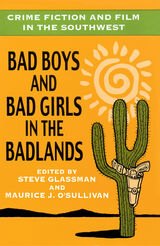
When Joe Leaphorn and Jim Chee, Tony Hillerman’s oddly matched tribal police officers, patrol the mesas and canyons of their Navajo reservation, they join a rich traditon of Southwestern detectives. In Crime Fiction and Film in the Southwest, a group of literary critics tracks the mystery and crime novel from the Painted Desert to Death Valley and Salt Lake City. In addition, the book includes the first comprehensive bibliography of mysteries set in the Southwest and a chapter on Southwest film noir from Humphrey Bogart’s tough hood in The Petrified Forest to Russell Crowe’s hard-nosed cop in L.A. Confidential.
Crime in the U.S. and the institutions for its control are deeply embedded in and shaped by history. The historical origins have often become invisible, and their recovery difficult, but any understanding of the contemporary situation requires historical context. For over twenty-five years Eric H. Monkkonen has worked on some of the puzzles and problems in recovering the history of crime and police.
Much of his work has appeared in articles, often in specialized journals or not in English, which this book collects for the first time. In addition to Monkkonen’s major published articles, this volume includes several new ones. The topics embrace violence, public disorder, policing, popular culture, and contrasts between the U.S. and Europe. Some articles illuminate special methodological and source issues that challenge historians of criminal justice. As well as dealing with serious crime, this book includes several articles on specifically urban problems and solutions associated with disorder, crime, and poverty.
In contrast to the more technical articles, several chapters, which originally appeared as op-ed pieces, show how historical understanding can help address current policy issues in crime and crime control. All too often, current policy debates occur without proper historical background. As a result, old ideas that have been tried and rejected are re-introduced, or new and sometimes simple ideas are ignored.
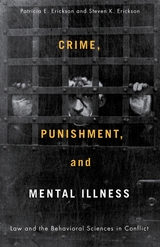
In Crime, Punishment, and Mental Illness, Patricia E. Erickson and Steven K. Erickson explore how societal beliefs about free will and moral responsibility have shaped current policies and they identify the differences among the goals, ethos, and actions of the legal and health care systems. Drawing on high-profile cases, the authors provide a critical analysis of topics, including legal standards for competency, insanity versus mental illness, sex offenders, psychologically disturbed juveniles, the injury and death rates of mentally ill prisoners due to the inappropriate use of force, the high level of suicide, and the release of mentally ill individuals from jails and prisons who have received little or no treatment.

Assembling a cast of notable crime fiction experts, including Stephen Knight and Carolyn Beasley, the book covers characters from the whole world of international noir—Giorgio Scerbanenco’s Duca Lambert, Léo Malet’s Nestor Burma, and many more. Including essays on the genealogy and emergence of the protagonist in nineteenth-century fiction; interviews with crime writers Leigh Redhead, Nick Quantrill, and Fernando Lalana; and analyses of the transatlantic exchanges that helped to develop public perception of a literary icon, Crime Uncovered: Private Investigator will redefine what we think we know about the figure of the P. I.
Rolls and Franks have engaged here the tension between the popular and scholarly that is inherent in any critical examination of a literary type, along the way unraveling the mystery of the alluring, enigmatic private investigator. Crime Uncovered: Private Investigator will be a handy companion for any crime fiction fan.
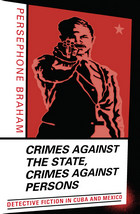
An interpretation of the ideologies and kinships of detective fiction in Cuba and Mexico
The transplanted, inherently modern detective genre serves as an especially effective lens for exposing the fissures and divergences of modernity in post-1968 Mexico and revolutionary Cuba.
Combining in-depth critical analyses with the theoretical insights of current literary and cultural theory and Latin American postmodern studies, Crimes against the State, Crimes against Persons shows how the Cuban novela negra examines the Revolution through an incisive chronicle of life under a decaying regime, and how the Mexican neopoliciaco reveals the oppressive politics of modernization and globalization in Latin America.International in scope, comparative in approach, Braham’s study presents a unique inquiry into the ethical and aesthetic complexities that Latin American authors face in adapting genre detective fiction—a modern, metropolitan model—to radically diverse creative and ideological programs. Considering the work of writers such as Leonardo Padura Fuentes and Paco Ignacio Taibo II, as well as such English-language influences as G. K. Chesterton and Chester Himes, Braham also addresses Marxist critiques of the culture industry and emergent Latin American concepts of postmodernity.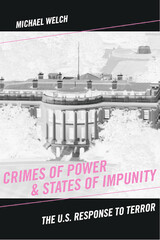
Welch continues the work he began in Scapegoats of September 11th and argues that current U.S. policies, many enacted after the attacks, undermine basic human rights and violate domestic and international law. He recounts these offenses and analyzes the system that sanctions them, offering fresh insight into the complex relationship between power and state crime. Welch critically examines the unlawful enemy combatant designation, Guantanamo Bay, recent torture cases, and collateral damage relating to the war in Iraq. This book transcends important legal arguments as Welch strives for a broader sociological interpretation of what transpired early this century, analyzing the abuses of power that jeopardize our safety and security.
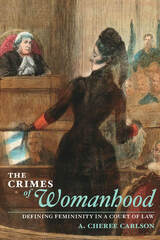
Carlson analyzes the situations of several women of varying historical stature, from the insanity trials of Mary Todd Lincoln and Lizzie Borden's trial for the brutal slaying of her father and stepmother, to lesser-known trials involving insanity, infidelity, murder, abortion, and interracial marriage. The insanity trial of Elizabeth Parsons Ware Packard, the wife of a minister, resulted from her attempts to change her own religion, while a jury acquitted Mary Harris for killing her married lover, suggesting that loss of virginity to an adulterous man was justifiable grounds for homicide. The popular conception of abortion as a "woman's crime" came to the fore in the case of Ann Loman (also known as Madame Restell), who performed abortions in New York both before and after it became a crime. Finally, Alice Rhinelander was sued for fraud by her new husband Leonard for "passing" as white, but the jury was more moved by the notion of Alice being betrayed as a woman by her litigious husband than by the supposed defrauding of Leonard as a white male. Alice won the case, but the image of womanhood as in need of sympathy and protection won out as well.
At the heart of these cases, Carlson reveals clearly just how narrow was the line that women had to walk, since the same womanly virtues that were expected of them--passivity, frailty, and purity--could be turned against them at any time. These trials of popular status are especially significant because they reflect the attitudes of the broad audience, indicate which forms of knowledge are easily manipulated, and allow us to analyze how the verdict is argued outside the courtroom in the public and press. With gripping retellings and incisive analysis of these scandalous criminal and civil cases, this book will appeal to historians, rhetoricians, feminist researchers, and anyone who enjoys courtroom drama.
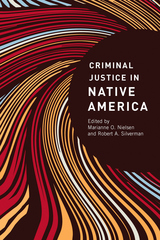
Each of the fourteen chapters of Criminal Justice in Native America was commissioned specifically for this volume. Contributors—many of whom are Native Americans—rank among the top scholars in their fields. Some of the chapters treat broad subjects, including crime, police, courts, victimization, corrections, and jurisdiction. Others delve into more specific topics, including hate crimes against Native Americans, state-corporate crimes against Native Americans, tribal peacemaking, and cultural stresses of police officers. Separate chapters are devoted to women and juveniles.
The well-known scholar Marianne Nielsen provides a context-setting introduction, in which she addresses the history of the legal treatment of Native Americans in the United States as well as a provocative conclusion that details important issues for current and future research in Native American criminal justice studies. Intended to introduce students to the substantive concerns of a range of disciplines that contribute to Native American Studies—among them, criminal justice and criminology, law, sociology, and anthropology—Criminal Justice in Native America will interest all readers who are concerned about relationships between Native peoples and prevailing criminal justice systems.
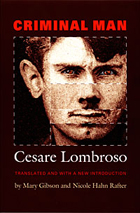
Originally published in 1876, Criminal Man went through five editions during Lombroso’s lifetime. In each edition Lombroso expanded on his ideas about innate criminality and refined his method for categorizing criminal behavior. In this new translation, Mary Gibson and Nicole Hahn Rafter bring together for the first time excerpts from all five editions in order to represent the development of Lombroso’s thought and his positivistic approach to understanding criminal behavior.
In Criminal Man, Lombroso used modern Darwinian evolutionary theories to “prove” the inferiority of criminals to “honest” people, of women to men, and of blacks to whites, thereby reinforcing the prevailing politics of sexual and racial hierarchy. He was particularly interested in the physical attributes of criminals—the size of their skulls, the shape of their noses—but he also studied the criminals’ various forms of self-expression, such as letters, graffiti, drawings, and tattoos. This volume includes more than forty of Lombroso’s illustrations of the criminal body along with several photographs of his personal collection. Designed to be useful for scholars and to introduce students to Lombroso’s thought, the volume also includes an extensive introduction, notes, appendices, a glossary, and an index.

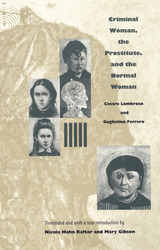
Lombroso’s research took him to police stations, prisons, and madhouses where he studied the tattoos, cranial capacities, and sexual behavior of criminals and prostitutes to establish a female criminal type. Criminal Woman, the Prostitute, and the Normal Woman anticipated today’s theories of genetic criminal behavior. Lombroso used Darwinian evolutionary science to argue that criminal women are far more cunning and dangerous than criminal men. Designed to make his original text accessible to students and scholars alike, this volume includes extensive notes, appendices, a glossary, and more than thirty of Lombroso’s own illustrations. Nicole Hahn Rafter and Mary Gibson’s introduction, locating his theory in social context, offers a significant new interpretation of Lombroso’s place in criminology.

Eggers-Barison uncovers the narratives of economically disadvantaged, Indigenous, and immigrant women who broke the Chilean law by terminating a pregnancy. Their stories reveal how laws and policies that regulate and control women’s reproductive lives also construct women as criminals. As Eggers-Barison shows, systems of inequality legitimize and sustain harmful attitudes and practices while creating concrete expressions of discrimination and other forms of violence against women. Their experience with abortion remains hidden within spaces of illegality and only becomes visible due to health or legal consequences. Yet despite the obstacles, women used individual and collective forms of group action to resist anti-abortion laws.
Timely and vivid, Criminalization of Women shows how abortion’s illegality inscribes itself on a woman’s body and reality.
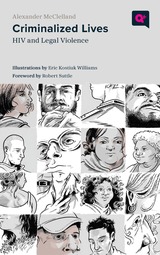
Canada has been known as a hot spot for HIV criminalization where the act of not disclosing one’s HIV-positive status to sex partners has historically been regarded as a serious criminal offence. Criminalized Lives describes how this approach has disproportionately harmed the poor, Black and Indigenous people, gay men, and women in Canada. In this book, people who have been criminally accused of not disclosing their HIV-positive status, detail the many complexities of disclosure, and the violence that results from being criminalized.
Accompanied by portraits from artist Eric Kostiuk Williams, the profiles examine whether the criminal legal system is really prepared to handle the nuances and ethical dilemmas faced everyday by people living with HIV. By offering personal stories of people who have faced criminalization first-hand, Alexander McClelland questions common assumptions about HIV, the role of punishment, and the violence that results from the criminal legal system’s legacy of categorizing people as either victims or perpetrators.
Note: A regrettable error appears on page 22. The number 240 should be 206 when referring to the number of people prosecuted in relation to allegations of HIV nondisclosure. This will be fixed in future reprints.

In 1971, 586 patients were released from a Pennsylvania maximum-security hospital for the criminally insane. They were not considered officially "cured," but a federal court held that their commitments had been unconstitutional. Through exhaustive examination of hospital and police records and interviews with hospital administrators and the subjects themselves, Thornberry and Jacoby assess the processes by which the patients had been retained in confinement, the impact of their release upon their communities, and their ability to adjust to the freedom of community life.
The authors demonstrate that the patients did not display a significant level of violent behavior during confinement, nor did they pose a major threat to society after release. In fact, their social and psychological adjustment to community life is shown to have been comparable to that of non-criminal mental patients. Yet despite these findings the subjects had been retained in maximum-security confinement for an average of fourteen years because they were predicted to be violent and "dangerous" to society. The authors explain this inaccuracy by a process called "political prediction," in which clinicians avoid any potential risks to the community, the reputation of their hospitals, and their careers by consistently overpredicting dangerous behavior.
The Criminally Insane will stimulate response from professionals in a wide variety of fields, including law, criminology, psychiatry, and sociology, and from anyone concerned with society's responsibility to the mentally ill offender.
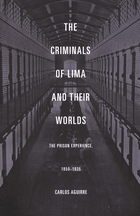
Drawing on a large collection of prison and administrative records archived at Peru’s Ministry of Justice, Aguirre offers a detailed account of the daily lives of men incarcerated in Lima’s jails. In showing the extent to which the prisoners actively sought to influence prison life, he reveals the dynamic between prisoners and guards as a process of negotiation, accommodation, and resistance. He describes how police and the Peruvian state defined criminality and how their efforts to base a prison system on the latest scientific theories—imported from Europe and the United States—foundered on the shoals of financial constraints, administrative incompetence, corruption, and widespread public indifference. Locating his findings within the political and social mores of Lima society, Aguirre reflects on the connections between punishment, modernization, and authoritarian traditions in Peru.
In the field of criminal justice, public policy is designed to address the problems brought on by criminal behavior and the response to that behavior. However, too often, the theories carefully developed in the academy fail to make their way into programs and policy. The editors and contributors to this second edition of Criminology and Public Policy highlight the recent development of “translational criminology” to address the growing movement in criminology to use the results of criminological research and theory to better inform policy and practice.
The essays in Criminology and Public Policy propose an in-depth look at both theory and practice and how they are integrated across a number of key criminal justice problems—from racial and environmental concerns to gun control and recidivism rates as well as police use of force and mass incarceration. The end result is an essential volume that blends both theory and practice in an effort to address the critical problems in explaining, preventing, responding to, and correcting criminal behavior.
Contributors include: Robert K. Ax, Michelle N. Block, Anthony A. Braga, Rod K. Brunson, Jennifer Carlson, Ronald V. Clarke, Shea Cronin, Megan Denver, Kevin M. Drakulich, Grant Duwe, Amy Farrell, Cheryl Jonson, Charis E. Kubrin, Justin Kurland, Megan Kurlychek, Shannon Magnuson, Daniel P. Mears, Robert D. Morgan, Kathleen Powell, Danielle Rudes, Cassia Spohn, Cody Telep, Natalie Todak, Glenn Trager, Jillian J. Turanovic, Sara Wakefield, Patricia Warren, David Weisburd, Michael D. White, Rob White, Lauren Wilson and the editors
In applying theories to real world issues—such as reducing crime and violence, prisoner reentry policies, gang behavior, and treatment courts—the contributors take both a macro and micro level approach. They find, too, that it is often difficult to turn theory into practice. Still, the very attempt pushes the criminal justice system toward workable solutions rather than ideological approaches, an orientation the editors believe will lead to greater progress in combating one of our society’s greatest difficulties.
Contributors include: Robert Agnew, Ronald L. Akers, Gordon Bazemore, Ronald V. Clarke, J. Heith Copes, Frank Cullen, Marcus Felson, Marie Griffin, Scott Jacques, David Kauzlarich, Jean McGloin, Steven Messner, Alex Piquero, Nicole Leeper Piquero, Nancy Rodriguez, Richard B. Rosenfeld, Dawn Rothe, Andrea Schoepfer, Neal Shover, Cassia Spohn, Katherine Tellis, Charles Tittle, Richard Wright, and the editors.

In 1931 a group from Harvard University’s Peabody Museum accomplished something that had never been attempted in the history of American archaeology: a six-week, four-hundred-mile horseback survey of Fremont prehistoric sites through some of the West’s most rugged terrain. The expedition was successful, but a report on the findings was never completed. What should have been one of the great archaeological stories in American history was relegated to boxes and files in the basement of the Peabody Museum at Harvard.
Now, based on over a thousand pages of documents (field journals, correspondence, and receipts) and over four hundred photographs, this book recounts the remarkable day-to-day adventures of this crew of one professor, five students, and three Utah guides who braved heat, fatigue, and the dangerous canyon wilderness to reveal vestiges of the Fremont culture in the Tavaputs Plateau and Uinta Basin areas. To better tell this story, authors Spangler and Aton undertook extensive fieldwork to confirm the sites; their recent photographs and those of the original expedition are shared on these pages. This engaging narrative situates the 1931 survey and its discoveries within the history of American archaeology.
Click here for a podcast with the APEX hour and Jim Aton about The Crimson Cowboys.
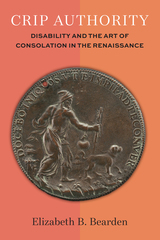
Disabled authors include Francesco Petrarca, Teresa de Cartagena, Giovani Paolo Lomazzo, Miguel de Cervantes Saavedra, Robert Burton, and John Milton. They all explore their experiences of disability, but their work has rarely or never been considered from a disability studies perspective. Bearden thus brings today’s models of disability studies and crip theory together with early modern articulations of disability based on ancient and Renaissance models of military, political, biblical, and literary authority. In sum, Crip Authority makes a significant contribution to the growing field of early modern disability studies and invites us to rethink the extent of crip history and the endurance of disability gain.
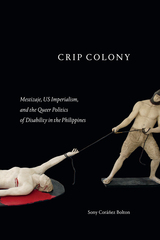
Contributors. Suzanne Bost, Mel Y. Chen, Sony Coráñez Bolton, Natalia Duong, Lezlie Frye, Magda García, Alison Kafer, Eunjung Kim, Yoo-suk Kim, Kateřina Kolářová, James Kyung-Jin Lee, Stacey Park Milbern, Julie Avril Minich, Tari Young-Jung Na, Therí A. Pickens, Leah Lakshmi Piepzna-Samarasinha, Jasbir K. Puar, Sami Schalk, Faith Njahîra Wangarî


As disability representation increases, though, new possibilities are emerging. Crip Love Onscreen also draws attention to the exceptional through a close reading of screen narratives (such as 50 First Dates,Love and Other Drugs,American Horror Story: Freak Show, and more) that push against neoliberal, heteronormative, and ableist values. Drawing on the work of queer/crip scholars and activists, Rainey-Smithback uncovers glimpses of what Tobin Siebers calls a “sexual culture for disabled people”—a space and way of being that expands sexual access and sexual experience.

Imagining anti-ableist liberation beyond the rubrics of access and inclusion
In the thirty years since the Americans with Disabilities Act was signed into law, the lives of disabled people have not improved nearly as much as activists and politicians had hoped. In Crip Negativity, J. Logan Smilges shows us what’s gone wrong and what we can do to fix it.
Leveling a strong critique of the category of disability and liberal disability politics, Smilges asks and imagines what horizons might exist for the liberation of those oppressed by ableism—beyond access and inclusion. Inspired by models of negativity in queer studies, Black studies, and crip theory, Smilges proposes that bad crip feelings might help all of us to care gently for one another, even as we demand more from the world than we currently believe to be possible.
Forerunners: Ideas First is a thought-in-process series of breakthrough digital publications. Written between fresh ideas and finished books, Forerunners draws on scholarly work initiated in notable blogs, social media, conference plenaries, journal articles, and the synergy of academic exchange. This is gray literature publishing: where intense thinking, change, and speculation take place in scholarship.



By closely examining the ways that disabled girls represent themselves, Anastasia Todd goes beyond a critique of the figure of the privileged, disabled girl subject in the national imagination to explore how disabled girls circulate their own capacious re-envisioning of what it means to be a disabled girl. In analyzing a range of cultural sites, including YouTube, TikTok, documentaries, and GoFundMe campaigns, Todd shows how disabled girls actively upend what we think we know about them and their experience, recasting the meanings ascribed to their bodyminds in their own terms. By analyzing disabled girls’ self-representational practices and cultural productions, Todd shows how disabled girls deftly theorize their experiences of ableism, sexism, racism, and ageism, and cultivate communities online, creating archives of disability knowledge and politicizing other disabled people in the process.

Jenifer L. Barclay and Stefanie Hunt-Kennedy edit a collection of interdisciplinary essays that consider how and why physical, sensory, intellectual, and psychological disabilities are underrepresented, erased, or distorted in the historical record. The contributors draw on the methodology and practice of cripping to uncover disability in contested archives and explore ways to build inclusive archives accountable to, and centered on, disabled people and disability justice. Throughout, they show ableness informing the politics of the archive as a physical space, a discriminatory record, and a collection of silences.
An essential contribution to research methods and disability justice, Cripping the Archive offers a blueprint for intersectional and interdisciplinary approaches that bridge disability studies, history, and archival studies.

Crisis and Control explains how neoliberal transformations of political and economic systems are militarising the policing of protest, based on a compelling empirical study of police agencies and practices from 1995 until the present.
Lesley J. Wood shows that the increasing role of the security and defense industries, professional police associations, anti-terrorism initiatives and ‘best practices’ in policing networks have accelerated the use of less lethal weapons, pre-emptive arrests, infiltration and barricading strategies against protesters.
The book uses Bourdieu and Boltanski to analyse court transcripts, police reports, policy, training materials and the conference programs of professional police organisations to argue that police agencies are neither omnipotent strategists, nor simple tools of the elite, but institutions struggling to maintain legitimacy, resources and autonomy in a changing field.
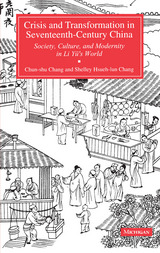
The main thread of the book follows the life and works of a remarkable figure of the period, Li Yü (1611-80), whose vast array of accomplishments and experiences mirror seventeenth-century China in all its complexity and excitement. Li Yü's China was a world of unprecedented changes in almost all spheres of life. A thriving commercial and industrial economy, stupendous population growth, and the emergence of a new age of science and technology were accompanied by intense urbanization, radical views on money, wealth, and luxury, liberal attitudes toward sexuality, and developments that would change the nature of the literary and intellectual world. The Changs' exhaustive exploration of Chinese historical and literary sources of the sixteenth and seventeenth centuries is combined with a selective application of interpretive insights and analytic techniques from the major theoretical schools.
An important resource for scholars in history, literature, and Asian studies, Crisis and Transformation extends its appeal to those interested in the history of science, issues of gender and social transformation, and popular culture movements.
Chun-shu Chang is Professor of History, University of Michigan, and Honorary Professor of Chinese History, China. Shelley Hsueh-lun Chang is Visiting Associate Professor of History and Research Associate, Center for Chinese Studies, University of Michigan.

Children are central figures in narratives of “migration crises.” They are often depicted as either essentially vulnerable and in need of special protections, or suspiciously adult-like and a threat to national borders. This bilingual book, written in English and Spanish, challenges these simplistic narratives. Drawing on collaborations between young migrants, researchers, artists, and activists, this collection asks new questions about how crises are produced, mobility is controlled, and childhood is conceptualized. Answers to these questions have profound implications for resources, infrastructures, and relationships of care. The chapters offer insights from diverse global contexts, painting a rich and insightful tapestry about child migration. They stress that children are more than recipients of care and that the crises they face are multiple and stratifying, with long historical roots. Readers are invited to understand migration as an act of concern and love and to attend to how the solidarities between citizens and “others,” adults and children, and between children, are understood and forged.
READERS
Browse our collection.
PUBLISHERS
See BiblioVault's publisher services.
STUDENT SERVICES
Files for college accessibility offices.
RECENTLY PUBLISHED


UChicago Accessibility Resources
home | accessibility | search | about | contact us
BiblioVault ® 2001 - 2025
The University of Chicago Press