
 A SCHOLARLY BOOK REPOSITORY
2476 start with C start with C
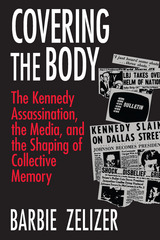
Covering the Body (the title refers to the charge given journalists to follow a president) is a powerful reassessment of the media's role in shaping our collective memory of the assassination—at the same time as it used the assassination coverage to legitimize its own role as official interpreter of American reality. Of the more than fifty reporters covering Kennedy in Dallas, no one actually saw the assassination. And faced with a monumentally important story that was continuously breaking, most journalists had no time to verify leads or substantiate reports. Rather, they took discrete moments of their stories and turned them into one coherent narrative, blurring what was and was not "professional" about their coverage.
Through incisive analyses of the many accounts and investigations in the years since the shooting, Zelizer reveals how journalists used the assassination not just to relay the news but to address the issues they saw as central to the profession and to promote themselves as cultural authorities. Indeed, argues Zelizer, these motivations are still alive and are at the core of the controversy surrounding Oliver Stone's movie, JFK.
At its heart, Covering the Body raises serious questions about the role of the media in defining our reality, and shaping our myths and memories. In tracing how journalists attempted to answer questions that still trouble most Americans, Zelizer offers a fascinating analysis of the role of the media as cultural authorities.
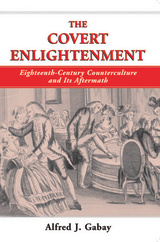
The European Enlightenment in the latter half of the eighteenth century heralded a grave conflict between theological and scientific modes of thought, starkly revealing the ancient tensions between spiritual knowledge and rationalism. Yet there was another, lesser-known movement during this time---a "covert" Enlightenment---that sought to bring fresh perspectives on the soul, and by extension, on the human mind and on consciousness. This work examines the influence of Emanuel Swedenborg and Anton Mesmer on the budding movement toward psychology in the late-eighteenth century and also spiritualism and millennialism in the nineteenth century.
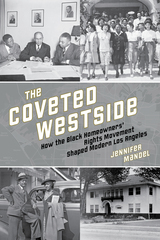
Mandel exposes the enduring struggle between Whites determined to establish their hegemony and create residential heterogeneity in the growing city, and people of color equally determined to obtain full access to the city and the opportunities, including residential, that it offered. Not only does this book document the Black homeowners’ fight against housing discrimination, it shares personal accounts of Blacks’ efforts to settle in the highly desirable Westside of Los Angeles. Mandel explores the White-derived social and legal mechanisms that created this segregated city and the African American-led movement that challenged efforts to block access to fair housing.
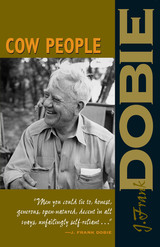
Cow People records the fading memories of a bygone Texas, the reminiscences of the cow people themselves. These are the Texans of the don't-fence-me-in era, their faces pinched by years of squinting into the desert glare, tanned by the sun and coarsened by the dust of the Chisholm Trail. Their stories are often raucous but just as often quiet as hot plains under a pale Texan sky.
A native Texan, J. Frank Dobie had an inborn knowledge of the men and customs of the trail camps. Cattlemen were as various as the country was big. Ab Blocker was a tall, quiet man who belonged totally to the cattle and the silent plains. But big men often had big lungs. "Shanghai Pierce was the loudest man in the country. He would sit at one end of a day coach and in normal voice hold conversation with some man at the other end of the coach, who of course had to yell, while the train was clanking along. He knew everybody, yelled at everybody he saw."
Texas bred tall men and taller stories. There was Findlay Simpson, who played havoc with fact but whiled away the drivers' long, lonely evenings with his tales. Old Findlay told of a country so wet that it bogged down the shadow of a buzzard, and of cattle that went into hibernation during rugged winters; he once spun yarns for three days straight, outlasting his listeners in a marathon of endurance.
All real cow people—from the cattle drivers to the cattle owners—lived by a simple code based on the individual's integrity. Bothering anyone else's poke or business uninvited was strictly forbidden, and enforcement of this unwritten law was as easy as pulling a trigger. Honesty was taken for granted, and a cowman's name on a check made it negotiable currency.
Yet Texas had its "bad guys"—the crooks, the thieves, even the tightwads. "A world big enough to hold a rattlesnake and a purty woman is big enough for all kinds of people," wrote Dobie. This is the world whose vast and various population the reader will find in Cow People.
Anthony W. Ivins (1852-1934) migrated to St. George, Utah, at age nine where he later became an influential civic and ecclesiastical leader. He married Elizabeth A. Snow, daughter of apostle Erastus F. Snow. Ivins was a first cousin of Heber J. Grant, and served as his counselor while Grant was LDS president. Ivins filled several Mormon missions to Mexico and presided as the Juarez, Mexico stake president where he performed post-manifesto marriages. He was appointed by the U.S. government as an Indian agent, and was warmly acquainted with Porfirio Diaz, president of Mexico. Involved in politics in St. George, Ivins held aspirations of running as a Democrat for governor of Utah. In 1907, he was ordained an apostle and later advanced to the First Presidency. Tone, as he called himself, was an accomplished horseman who worked with, and invested in, livestock. He was a game-hunting cowboy who became a statesman for both his country and his expanding religious community.
Though in his correspondence Ivins expressed paramount concern for members of his family, he rarely mentions them in his journals. Rather, his diaries chronicle his business and religious observations including meetings with the Quorum of the Twelve and others. He records meetings of the apostles where decisions were made to remove Church leaders from office who had entered into polygamy after 1904, and details the Church’s dealings with the Mexican government to safeguard the Mormon colonists. There are also discussions where doctrinal principles were clarified. For example, in 1912, Ivins reported that President Joseph F. Smith addressed Brigham Young’s Adam God teachings and affirmed that it was “not a doctrine of the Church.” Ivins clearly loved the ruggedness of outdoor life, as evidenced in his passion for hunting, but was also intrigued with the curiosities at the Utah State Fair, the entertaining showmanship of Buffalo Bill, and the refinement of the theater. Tragedy became commonplace as he recorded vigilante-like justice against Indians and Mexicans who were killed for stealing food, and witnessing the execution of John D. Lee, a once favored son of Mormonism. Appendices of Cowboy Apostle include Ivins Record Book of Marriage and an essay by Ivins son, H. Grant Ivins titled “Polygamy in Mexico as Practiced by the Mormon Church, 1895-1905.”

Using the history of the cowboy story from 1820 to 1970 as an extended example, Alf H. Walle combines popular culture scholarship with marketing theory to provide a hybrid analysis. Wall examines major authors and genres of Western American literature and film; he also explores why certain respected authors were unable to significantly impact the cowboy story even though their innovations were embraced by later generations. Finally Wall provides a hybrid analysis combining business and popular culture theory in an overarching analysis.
No president today is more controversial than Venezuela's Hugo Chávez Frías. Elected in a landslide in 1998, he promised a peaceful revolution. That peaceful dream became a nightmare when Chávez was overthrown in a coup d'état in 2002. Surprisingly, he was brought back to power by his supporters, mostly barrio dwellers, within forty-eight hours. Although Chávez continues to be dogged by controversy, he stays in power because of these supporters who see themselves as active participants in a democratic revolution.
As a former Catholic priest who has lived in Venezuela for the past twenty years and spent eight of those years in a cardboard-and-tin shack in one of Caracas' barrios, Charles Hardy is in a unique position to explain what is taking place. Cowboy in Caracas: A North American's Memoir of Venezuela's Democratic Revolution gives the reader insight into the Venezuelan reality, using an anecdotal presentation drawn from the writer's personal experiences.
A born storyteller with a flair for words, Collins breathes life into the geology, history, and interdependency of land, water, and native and introduced plants and animals. He conjures indelible portraits of the hardworking, dedicated people he comes to know. With both humor and humility, he recounts the day-to-day challenges of ranch life such as how to build a productive herd, distribute your cattle evenly across a rough and rocky landscape, and establish a grazing system that allows pastures enough time to recover. He also intimately recounts a battle over the endangered Gila topminnow and how he and his neighbors worked with university range scientists, forest service conservationists, and funding agencies to improve their ranches as well as the ecological health of the Redrock Canyon watershed.
Ranchers who want to stay in the game don’t dominate the landscape; instead, they have to continually study the land and the animals it supports. Collins is a keen observer of both. He demonstrates that patience, resilience, and a common-sense approach to conservation and range management are what counts, combined with an enduring affection for nature, its animals, and the land. Cowboy is a Verb is not a romanticized story of cowboy life on the range, rather it is a complex story of the complicated work involved with being a rancher in the twenty-first-century West.
The central figure in American mythology, the cowboy can be seen everywhere: in films, novels, advertisements, TV, sports, and music. Though his image holds little resemblance to the historical cowboy, it is important because it represents many qualities with which Americans identify, including bravery, honor, chivalry, and individualism.
Accounts by Joseph G. McCoy, Richard Irving Dodge, Charles A. Siringo, and many others detail the daily trials and tribulations of cowboy life on the southern Great Plains-particularly Texas, Indian Territory, and Kansas-from the 1860s to around 1900. And in a new Afterword, editor William W. Savage, Jr. discusses the directions the cowboy myth has taken in the past two decades, as well as the impact the "new Western history" and films such as Lonesome Dove have had on popular culture.
This edition contains a new preface and afterword by the author.


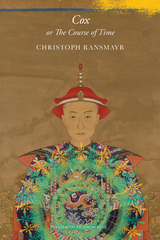
The world’s most powerful man, Qiánlóng, emperor of China, invites the famous eighteenth-century clockmaker Alister Cox to his court in Beijing. There, in the heart of the Forbidden City, the Englishman and his assistants are to build machines that mark the passing of time as a child or a condemned man might experience it and that capture the many shades of happiness, suffering, love, and loss that come with that passing.
Mystified by the rituals of a rigidly hierarchical society dominated by an unimaginably wealthy, god-like ruler, Cox musters all his expertise and ingenuity to satisfy the emperor’s desires. Finally, Qiánlóng, also known by the moniker Lord of Time, requests the construction of a clock capable of measuring eternity—a perpetuum mobile. Seizing this chance to realize a long-held dream and honor the memory of his late beloved daughter, yet conscious of the impossibility of his task, Cox sets to work. As the court is suspended in a never-ending summer, festering with evil gossip about the monster these foreigners are creating, the Englishmen wonder if they will ever escape from their gilded cage. More than a meeting of two men, one isolated by power, the other by grief, this is an exploration of mortality and a virtuoso demonstration that storytelling alone can truly conquer time.
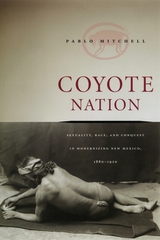
Coyote Nation considers these questions as it explores how New Mexicans evaluated and categorized racial identities through bodily practices. Where ethnic groups were numerous and—in the wake of miscegenation—often difficult to discern, the ways one dressed, bathed, spoke, gestured, or even stood were largely instrumental in conveying one's race. Even such practices as cutting one's hair, shopping, drinking alcohol, or embalming a deceased loved one could inextricably link a person to a very specific racial identity.
A fascinating history of an extraordinarily plural and polyglot region, Coyote Nation will be of value to historians of race and ethnicity in American culture.
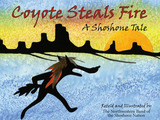
"Coyote was tired of being cold," says this traditional Shoshone tale about the arrival of fire in the northern Wasatch region.
Members of the Northwestern Band of the Shoshone Nation developed the concept for this retelling in collaboration with book arts teacher Tamara Zollinger. Together, they wrote and illustrated the book.
Bright watercolor-and-salt techniques provide a winning background to the hand-cut silhouettes of the characters. The lively, humorous story about Coyote and his friends is complemented perfectly by later pages written by Northwestern Shoshone elders on the historical background and cultural heritage of the Shoshone nation.
An audio CD with the voice of Helen Timbimboo telling the story in Shoshone and singing two traditional songs makes this book not only good entertainment but an important historical document, too.
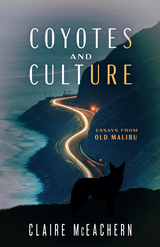
This unique collection of essays offers a gripping exploration of the precarious beauty and peril of California’s iconic coastline. Through essays blending personal narrative, cultural analysis, and history, author Claire McEachern takes us behind the scenes of surf and celebrities to paint a vivid portrait of life on the edge —both literally and metaphorically. From the rugged Santa Monica Mountains to the shimmering Pacific, this work captures the paradoxes of Old Malibu: a place of luxury and risk, natural splendor and ecological vulnerability.
As an East Coast academic married to a fifth-generation Californian cowboy, McEachern brings a wry yet tender lens to the modern American story, delving into what happens to love and community in a land of both devastating wildfires and extravagant wildflowers. Her reflections weave together questions of beauty, resilience, and humanity’s uneasy relationship with nature, creating an unforgettable narrative of place and survival. Readers drawn to the drama of human stories set against larger cultural and environmental forces will find this book both thought-provoking and deeply moving.

The 1960s in America were a time of revolt against the stifling conformism embodied in the sprawling, uniform suburbs of the 1950s. Typically, the reforms of the Catholic Church’s Second Vatican Council, which aimed to make the Church more modern and accessible, are seen as one result of that broader cultural liberalization. Yet in Crabgrass Catholicism, Stephen M. Koeth demonstrates that the liberalization of the Church was instead the product of the mass suburbanization that began some fifteen years earlier. Koeth argues that postwar suburbanization revolutionized the Catholic parish, the relationship between clergy and laity, conceptions of parochial education, and Catholic participation in US politics, and thereby was a significant factor in the religious disaffiliation that only accelerated in subsequent decades.
A novel exploration of the role of Catholics in postwar suburbanization, Crabgrass Catholicism will be of particular interest to urban historians, scholars of American Catholicism and religious studies, and Catholic clergy and laity.
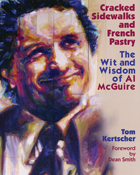
Al McGuire was the Mark Twain of college basketball. Never was there a figure in the game so quoted and so quotable, on sports and on the human condition. This book collects more than a hundred of McGuire’s most colorful quotations, plus photographs from his life and career, in a tribute that is funny, poignant, and brimming with his streetwise sagacity.
McGuire, a brash and fiery New Yorker who grew up working in his parents’ saloon, played a rough and tumble game of basketball at St. John’s University and briefly in the NBA before entering the coaching ranks. He reached the pinnacle of his profession and gained national fame at Marquette University in Milwaukee, where in thirteen seasons he compiled a 295-80 record, appeared in nine NCAA tournaments, and won eighty-one home games in a row. He was a fine coach who cared deeply about his players and was beloved by his teams and fans alike, but his flamboyance and his mouth sometimes got him into trouble. The end of his coaching career captivated the nation: McGuire wept on the bench as his Marquette Warriors won the national title.
McGuire then began a ground-breaking career in network broadcasting, adding a zest and unconventionality that the college game had never seen. His sometimes bizarre and always entertaining commentary kept viewers tuned in even after the outcome of a lopsided game was a foregone conclusion. When Al McGuire died of leukemia in 2001, the sports world lost a true original.
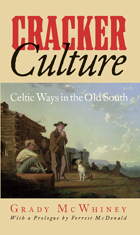
Cracker Culture is a provocative study of social life in the Old South that probes the origin of cultural differences between the South and the North throughout American history.
Among Scotch-Irish settlers the term “Cracker” initially designated a person who boasted, but in American usage the word has come to designate poor whites. McWhiney uses the term to define culture rather than to signify an economic condition. Although all poor whites were Crackers, not all Crackers were poor whites; both, however, were Southerners.
The author insists that Southerners and Northerners were never alike. American colonists who settled south and west of Pennsylvania during the 17th and 18th centuries were mainly from the “Celtic fringe” of the British Isles. The culture that these people retained in the New World accounts in considerable measure for the difference between them and the Yankees of New England, most of whom originated in the lowlands of the southeastern half of the island of Britain. From their solid base in the southern backcountry, Celts and their “Cracker” descendants swept westward throughout the antebellum period until they had established themselves and their practices across the Old South. Basic among those practices that determined their traditional folkways, values, norms, and attitudes was the herding of livestock on the open range, in contrast to the mixed agriculture that was the norm both in southeastern Britain and in New England. The Celts brought to the Old South leisurely ways that fostered idleness and gaiety. Like their Celtic ancestors, Southerners were characteristically violent; they scorned pacifism; they considered fights and duels honorable and consistently ignored laws designed to control their actions. In addition, family and kinship were much more important in Celtic Britain and the antebellum South than in England and the Northern United States. Fundamental differences between Southerners and Northerners shaped the course of antebellum American history; their conflict in the 1860s was not so much brother against brother as culture against culture.
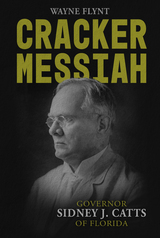
The definitive biography of Sidney J. Catts—Florida’s fiery governor who fused pulpit rhetoric with populist politics in the early twentieth century.
Cracker Messiah by Wayne Flynt is a riveting portrait of Sidney J. Catts, one of the most controversial figures in Southern political history. Catts rose from Baptist pulpits and Chautauqua stages to Florida’s governor’s mansion in 1916, riding a wave of rural populism, prohibition fervor, and anti-Catholic rhetoric. His fiery oratory and outsider persona electrified “Florida crackers” at a time when industrial and urban forces were reshaping the South. Yet Catts was more than a demagogue. His administration championed progressive reforms—good roads, penal improvements, vocational education, and even women’s political participation—while his career oscillated between idealism and opportunism.
Wayne Flynt’s meticulously documented biography illuminates this complicated politician, tracing Catts’s battles with the Democratic establishment, his failed Senate bid, and his later flirtations with gambling and real estate during Florida’s boom years. Drawing on interviews, archival sources, and legislative records, Cracker Messiah illuminates the tensions between nativism and reform, faith and hypocrisy, populism and progressivism in the early twentieth-century South. This new edition will appeal to readers of Southern history, political biography, and Progressive Era studies, as well as anyone interested in the roots of American populism and the enduring complexities of cultural and political identity in the Deep South.

Albert Einstein’s theory of general relativity describes the effect of gravitation on the shape of space and the flow of time. But for more than four decades after its publication, the theory remained largely a curiosity for scientists; however accurate it seemed, Einstein’s mathematical code—represented by six interlocking equations—was one of the most difficult to crack in all of science. That is, until a twenty-nine-year-old Cambridge graduate solved the great riddle in 1963. Roy Kerr’s solution emerged coincidentally with the discovery of black holes that same year and provided fertile testing ground—at long last—for general relativity. Today, scientists routinely cite the Kerr solution, but even among specialists, few know the story of how Kerr cracked Einstein’s code.
Fulvio Melia here offers an eyewitness account of the events leading up to Kerr’s great discovery. Cracking the Einstein Code vividly describes how luminaries such as Karl Schwarzschild, David Hilbert, and Emmy Noether set the stage for the Kerr solution; how Kerr came to make his breakthrough; and how scientists such as Roger Penrose, Kip Thorne, and Stephen Hawking used the accomplishment to refine and expand modern astronomy and physics. Today more than 300 million supermassive black holes are suspected of anchoring their host galaxies across the cosmos, and the Kerr solution is what astronomers and astrophysicists use to describe much of their behavior.
By unmasking the history behind the search for a real world solution to Einstein’s field equations, Melia offers a first-hand account of an important but untold story. Sometimes dramatic, often exhilarating, but always attuned to the human element, Cracking the Einstein Code is ultimately a showcase of how important science gets done.
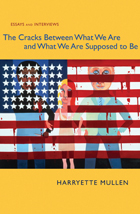
The Cracks Between What We Are and What We Are Supposed to Be forms an extended consideration not only of Harryette Mullen’s own work, methods, and interests as a poet, but also of issues of central importance to African American poetry and language, women’s voices, and the future of poetry.
Together, these essays and interviews highlight the impulses and influences that drive Mullen’s work as a poet and thinker, and suggest unique possibilities for the future of poetic language and its role as an instrument of identity and power.
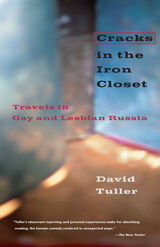
"Tuller's observant reporting and personal experiences make for absorbing reading: the human comedy rendered in unexpected ways."—New Yorker
"Anyone who thinks San Francisco is the world capital of sexual polymorphism should read this book."—Adam Goodheart, Washington Post
"[This book is] is profoundly moving."—Jim Van Buskirk, San Francisco Chronicle

But while the situation on the ground is bleak, Ben White argues that there are widening cracks in Israel's traditional pillars of support. Opposition to Israeli policies and even critiques of Zionism are growing in Jewish communities, as well as amongst Western progressives. The election of Donald Trump has served as a catalyst for these processes, including the transformation of Israel from a partisan issue into one that divides the US establishment. Meanwhile, the Palestinian-led boycott campaign is gathering momentum, prompting a desperate backlash by Israel and its allies.
With sharp analysis, Ben White says now is the time to plot a course that avoids the mistakes of the past - a way forward beyond apartheid in Palestine. The solution is not partition and ethnic separation, but equality and self-determination - for all.
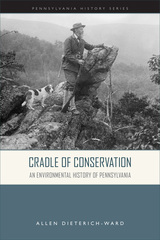
Cradle of Conservation moves across time and place, from the Haudenosaunee people of the Susquehanna Valley, to the iron furnaces of nineteenth-century Pittsburgh, to the diesel trucks on the twentieth-century Pennsylvania Turnpike. In addition, Dieterich-Ward explores the histories of Philadelphia’s Schuylkill River and the state’s anthracite region and traces the environmental movements and crises that have led to public policy changes in the face of climate change.
Cradle of Conservation deepens our understanding of how Pennsylvanians have conserved and consumed.
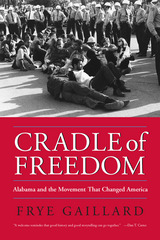
Cradle of Freedom puts a human face on the story of the black American struggle for equality in Alabama during the 1960s.
While exceptional leaders such as Martin Luther King Jr., Rosa Parks, Fred Shuttlesworth, Ralph Abernathy, John Lewis, and others rose up from the ranks and carved their places in history, the burden of the movement was not carried by them alone. It was fueled by the commitment and hard work of thousands of everyday people who decided that the time had come to take a stand.
Cradle of Freedom is tied to the chronology of pivotal events occurring in Alabama the Montgomery bus boycott, the Freedom Rides, the Letter from the Birmingham Jail, the bombing of the 16th Street Baptist Church, Bloody Sunday, and the Black Power movement in the Black Belt. Gaillard artfully interweaves fresh stories of ordinary people with the familiar ones of the civil rights icons. We learn about the ministers and lawyers, both black and white, who aided the movement in distinct ways at key points. We meet Vernon Johns, King's predecessor at the Dexter Avenue Baptist Church in Montgomery, who first suggested boycotting the buses and who wrote later, "It is a heart strangely un-Christian that cannot thrill with joy when the least of men begin to pull in the direction of the stars." We hear from John Hulett who tells how terror of lynching forced him down into ditches whenever headlights appeared on a night road. We see the Edmund Pettus Bridge beatings from the perspective of marcher JoAnne Bland, who was only a child at the time. We learn of E. D. Nixon, a Pullman porter who helped organize the bus boycott and who later choked with emotion when, for the first time in his life, a white man extended his hand in greeting to him on a public street.
How these ordinary people rose to the challenges of an unfair system with a will and determination that changed their times forever is a fascinating and extraordinary story that Gaillard tells with his hallmark talent. Cradle of Freedom unfolds with the dramatic flow of a novel, yet it is based on meticulous research. With authority and grace, Gaillard explains how the southern state deemed the cradle of the Confederacy became with great struggle, some loss, and much hope the cradle of freedom.
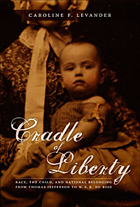
Reading texts by John Adams, Thomas Paine, Harriet Beecher Stowe, Augusta J. Evans, Mark Twain, Pauline Hopkins, William James, José Martí, W. E. B. Du Bois, and others, Levander traces the child as it figures in writing about several defining events for the United States. Among these are the Revolutionary War, the US-Mexican War, the Civil War, and the US expulsion of Spain from the Caribbean and Cuba. She charts how the child crystallized the concept of self—a self who could affiliate with the nation—in the early national period, and then follows the child through the rise of a school of American psychology and the period of imperialism. Demonstrating that textual representations of the child have been a potent force in shaping public opinion about race, slavery, exceptionalism, and imperialism, Cradle of Liberty shows how a powerful racial logic pervades structures of liberal democracy in the United States.
In ancient Mediterranean cultures, diamonds were thought to endow their owners with invincibility. In contemporary United States culture, a foreign-made luxury car is believed to give its owner status and prestige. Where do these beliefs come from?
In this study of craft production and long-distance trade in traditional, nonindustrial societies, Mary W. Helms explores the power attributed to objects that either are produced by skilled artisans and/or come from "afar." She argues that fine artisanship and long-distance trade, both of which are more available to powerful elites than to ordinary people, are means of creating or acquiring tangible objects that embody intangible powers and energies from the cosmological realms of gods, ancestors, or heroes. Through the objects, these qualities become available to human society and confer honor and power on their possessors.
Helms’ novel approach equates trade with artistry and emphasizes acquisition rather than distribution. She rejects the classic Western separation between economics and aesthetics and offers a new paradigm for understanding traditional societies that will be of interest to all anthropologists and archaeologists.
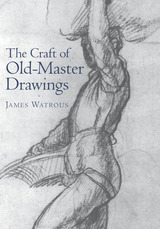
A comprehensive study of the techniques of drawing, this is both a historical work, covering the period from the late Middle Ages to the present, and a useful manual for contemporary artists. It presents the old masters’ techniques by means of a thorough study of the historical and written evidence of the tools and materials used. The author also includes a series of workshop procedures he has developed with which the contemporary artist may produce the equivalents of the techniques of earlier draughtsmen. This book comprises a body of knowledge that is essential to students of art history, curators, collectors and artists, and is a significant addition to the literature on drawing.
In addition to his scholarly investigation of earlier practices, the author identifies materials and processes used by such important artists as Rembrandt, Van Gogh, Romney, Picasso, Michelangelo, Watteau, Holbein, Tiepolo, and Delacroix. For the artist interested in reproducing the effects achieved by these and many other acknowledged masters, there are full discussions and specific directions concerning the making of inks, styluses, reed and quill pens, fabricated chalks, and instructions for preparing grounds for metalpoint drawings. At every step, the discussion is supplemented with illustrations from laboratory experiments and from drawings by both old and contemporary artists. Of the more than sixty illustrations included, thirty-six are reproductions of master works, and among the others there are microphotographic enlargements of detail showing the differences in density and texture produced by various tools on different papers or grounds. Thus, as a collection of master drawings, the book is worthy of the art lover’s library; as a technical study, it is an indispensable aid to the art student and practicing artist.
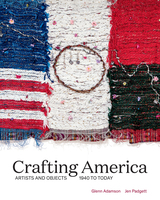
Craft is a diverse, democratic art form practiced by Americans of every gender, age, ethnicity, and class. Crafting America traces this expansive range of skilled making in a variety of forms, from ceramics and wood to performance costume and community-based practice. In exploring the intertwining of craft and American experience, this volume reveals how artists leverage their craft to realize the values of life, liberty, and the pursuit of happiness.
Accompanying an exhibition of the same title organized by Crystal Bridges Museum of American Art, Crafting America features contributions from scholars that illuminate craft’s relationship to ritual and memory, personal independence, abstraction, and Native American histories. The richly illustrated catalog section—with more than a hundred color images accompanied by lively commentary—presents a vivid picture of American craft over the past eight decades, offering fresh insights on the relationships between objects.
Building upon recent advances in craft scholarship and encouraging more inclusive narratives, Crafting America presents a bold statement on the vital role of craft within the broader context of American art and identity.
Drawing upon little studied speeches, newspapers, magazines, and other public discourse, Condit and Lucaites survey the shifting meaning of equality from 1760 to the present as a process of interaction and negotiation among different social groups in American politics and culture. They make a powerful case for the critical role of black Americans in actively shaping what equality has come to mean in our political conversation by chronicling the development of an African-American rhetorical community. The story they tell supports a vision of equality that embraces both heterogeneity and homogeneity as necessary for maintaining the balance between liberty and property.
A compelling revision of an important aspect of America's history, Crafting Equality will interest anyone wanting to better understand the role public discourse plays in affecting the major social and political issues of our times. It will also interest readers concerned with the relationship between politics and culture in America's increasingly multi-cultural society.
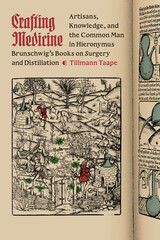
Between 1497 and 1512, Hieronymus Brunschwig (ca. 1450–ca. 1530), an obscure craftsman from Strasbourg, wrote books on surgery and pharmacy that transformed medical expertise, how it was codified in print, and how it was communicated to new audiences. Brunschwig was an unlikely author. He apprenticed as a surgeon in the local guild and dispensed medicines from his own shop. But he was remarkably well-read in surgery, alchemy, and medical theory, even if he lacked a university education. His unique authorial voice spoke to the healing practices of craftsmen and common people in a down-to-earth German dialect.
Crafting Medicine, by Tillmann Taape, is the first in-depth study of Brunschwig and his works. In it, Taape argues that Brunschwig’s writings shaped a nascent tradition of vernacular medicine. Brunschwig’s books represent a key moment in the history of medical print, for they conveyed medical expertise to a new readership of nonacademic practitioners, who became a key audience for a flood of vernacular medical publications during the sixteenth century. Using Brunschwig’s books as a unique window into the past, Crafting Medicine beautifully reconstructs the world of science inhabited by Brunschwig, his fellow craftsmen, his translators, and his readers.
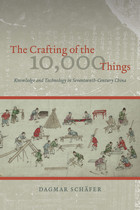
The last decades of the Ming dynasty, though plagued by chaos and destruction, saw a significant increase of publications that examined advances in knowledge and technology. Among the numerous guides and reference books that appeared during this period was a series of texts by Song Yingxing (1587–1666?), a minor local official living in southern China. His Tiangong kaiwu, the longest and most prominent of these works, documents the extraction and processing of raw materials and the manufacture of goods essential to everyday life, from yeast and wine to paper and ink to boats, carts, and firearms.
In The Crafting of the 10,000 Things, Dagmar Schäfer probes this fascinating text and the legacy of its author to shed new light on the development of scientific thinking in China, the purpose of technical writing, and its role in and effects on Chinese history. Meticulously unfolding the layers of Song’s personal and cultural life, Schäfer chronicles the factors that motivated Song to transform practical knowledge into written culture. She then examines how Song gained, assessed, and ultimately presented knowledge, and in doing so articulates this era’s approaches to rationality, truth, and belief in the study of nature and culture alike. Finally, Schäfer places Song’s efforts in conjunction with the work of other Chinese philosophers and writers, before, during, and after his time, and argues that these writings demonstrate collectively a uniquely Chinese way of authorizing technology as a legitimate field of scholarly concern and philosophical knowledge.
Offering an overview of a thousand years of scholarship, The Crafting of the 10,000 Things explains the role of technology and crafts in a culture that had an outstandingly successful tradition in this field and was a crucial influence on the technical development of Europe on the eve of the Industrial Revolution.
By contextualizing classes and their kinship behavior within the overall political economy, Crafting Prehispanic Maya Kinship provides an example of how archaeology can help to explain the formation of disparate classes and kinship patterns within an ancient state-level society.
"Kondo's work is significant because she goes beyond disharmony, insisting on complexity. Kondo shows that inequalities are not simply oppressive-they are meaningful ways to establish identities."—Nancy Rosenberger, Journal of Asian Studies

Decorative needlework was a key medium through which American women constructed femininity and its relationship to public and political concerns in the nineteenth and early twentieth centuries. Through samplers, needlecases, lace coats, silk sofas, cotton scraps, banners, and other textile things, scholars can see the ways in which women and girls related to education, property-holding, slavery and freedom, labor, and women’s right to vote. Needlework’s durable association with “traditional” notions about womanhood made it a potent resource through which to make gender in expansive and meaningful ways that had profound public, political implications as educational opportunities for girls and women were expanding, and the antislavery and women's suffrage movements were growing. Indeed, needlework's very conventionality and relationship to the past made it a useful tool for crafting womanhood anew.
Winner of the 2013 Award of Merit by the American Association for State and Local History Leadership in History awards committee
Winner of the 2013 New Jersey Studies Academic Alliance, Author Awards, Non-fiction Popular Category
One of the oldest towns in New Jersey, Cranbury has a long and noteworthy history that is in part distinctive and in part broadly representative of larger themes in the development of the state and the nation. In this beautifully illustrated book sponsored by Cranbury Landmarks, Inc., historian John Whiteclay Chambers II links the narrative of this remarkable place to contemporary debates about suburbanization and land-use planning.
Founded in 1697 and soon featuring an inn, a gristmill, and a church, the village prospered due to its strategic location on important transportation routes between New York and Philadelphia and its fertile, productive farmland. David Brainerd, a famous and controversial young missionary, came there to preach to the Lenape Indians. In 1778, George Washington and his army stayed there on their way to the Battle of Monmouth. In the nineteenth century, roadways, railroads, and turnpikes spurred the town’s commerce and agriculture. Yet unlike many old agricultural centers transformed by suburbanization in the twentieth century, Cranbury has retained its picturesque, small-town image and much of its charm.
Cranbury has the feel of a well-preserved nineteenth-century village, remarkable for its intact and cohesive domestic and commercial architecture—a status recognized when it was placed on the State and National Registers of Historic Places. In the last several decades, an active citizenry has innovatively linked the historic preservation of the town center with the maintenance of adjoining farmland, stream corridors, and wildlife habitats. How Cranbury preserved much of its character while accommodating economic growth provides a central theme in this book. Preserving the best of the past while astutely meeting the challenges of the present, Cranbury’s history offers an inspiration for active civic participation, a model for enlightened development, and an engaging American story.
A project of Cranbury Landmarks, Inc.
In Crap: A History of Cheap Stuff in America, Wendy A. Woloson takes seriously the history of objects that are often cynically-made and easy to dismiss: things not made to last; things we don't really need; things we often don't even really want. Woloson does not mock these ordinary, everyday possessions but seeks to understand them as a way to understand aspects of ourselves, socially, culturally, and economically: Why do we—as individuals and as a culture—possess these things? Where do they come from? Why do we want them? And what is the true cost of owning them?
Woloson tells the history of crap from the late eighteenth century up through today, exploring its many categories: gadgets, knickknacks, novelty goods, mass-produced collectibles, giftware, variety store merchandise. As Woloson shows, not all crap is crappy in the same way—bric-a-brac is crappy in a different way from, say, advertising giveaways, which are differently crappy from commemorative plates. Taking on the full brilliant and depressing array of crappy material goods, the book explores the overlooked corners of the American market and mindset, revealing the complexity of our relationship with commodity culture over time.
By studying crap rather than finely made material objects, Woloson shows us a new way to truly understand ourselves, our national character, and our collective psyche. For all its problems, and despite its disposability, our crap is us.
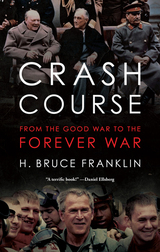
Now, after fifty years as a renowned cultural historian, Franklin offers a set of hard-learned lessons about modern American history. Crash Course is essential reading for anyone who wonders how America ended up where it is today: with a deeply divided and disillusioned populace, led by a dysfunctional government, and mired in unwinnable wars. It also finds startling parallels between America’s foreign military exploits and the equally brutal tactics used on the home front to crush organized labor, antiwar, and civil rights movements.
More than just a memoir or a history book, Crash Course gives readers a unique firsthand look at the building of the American empire and the damage it has wrought. Shocking and gripping as any thriller, it exposes the endless deception of the American public, and reveals from inside how and why many millions of Americans have been struggling for decades against our own government in a fight for peace and justice.
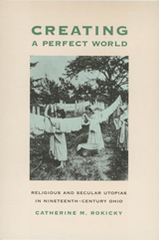
Powerful currents of religious revival and political and social reform swept nineteenth-century America. Many people expressed their radical religious and social ideals by creating or joining self-contained utopian communities. These utopianists challenged the existing social and economic order with alternative notions about religion, marriage, family, sexuality, property ownership, and wage labor.
Between 1787 and 1919, approximately 270 utopian communities existed in the United States. Due to its unique location on the young nation’s frontier, the state of Ohio was the site of much of this activity.
Creating a Perfect World examines Ohio’s utopian movements, both religious and secular. These include the United Society of Believers in Christ’s Second Coming, or Shakers; the Society of Separatists at Zoar; the Mormons, who stopped in the state for several years on their way west; and several societies based on the philosophies of European social reformers Robert Owen and Charles Fourier.
In this detailed account of a unique and fascinating chapter in Ohio’s history, Catherine M. Rokicky profiles these communities and explores their ideals, how and why they were established, their leaders, and their members’ reasons for joining and sometimes leaving. She also examines the roles men and women played, their approaches to communal living and community property, their economic activities, their relations with surrounding communities and the state, and the various reasons for their success or failure.
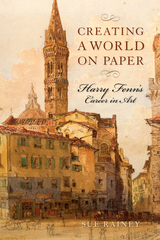
Arriving in New York from London in 1857 as a young wood engraver, Fenn soon forged a career in illustration. His tiny black-and-white wood engravings for Whittier's Snow-Bound (1868) surprised critics with their power, and his bold, innovative compositions for Picturesque America (1872–74) were enormously popular and expanded the field for illustrators and publishers. In the 1880s and '90s, his illustrations appeared in many of the finest magazines and newspapers, depicting the places and events that interested the public—from post–Civil War national reconciliation to the World's Columbian Exposition in 1893 to the beginnings of imperialism in the Spanish-American War.
This handsomely designed volume documents Fenn's prolific career from the 1860s until his death in 1911. Sue Rainey also recounts his adventurous sketching trips in the western United States, Europe, and the Middle East, which enhanced his reputation for depicting far-flung places at a time when the nation was taking a more prominent role on the world stage.
“Shumway has written a penetrating and provocative account of the making of American civilization as an academic field.”
Gerald GraffUniversity of ChicagoDavid R. Shumway contends that American literature is the product of study - the deliberate invention of a discipline seeking to define the character and legitimate the existence of a specifically American civilization. He traces the various reconstitutions of American literature by examining the discipline’s practices and techniques, discourses and structures, paradigms and unstated assumptions.This genealogy begins around 1890, when American literature as defined by institutions outside the academy, such as magazines and publishing houses, acquired much of the ideology it would display in later phases, including sexism, racism, and class bias. Singular in its treatment of American literary study as a discipline rather than as criticism and in its insistence on the cultural and political work carried on by this discipline, Creating American Civilization will engage literary theorists and historians as well as individuals with an interest in American literature.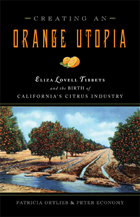
California’s citrus industry owes a huge debt to the introduction of the navel orange tree—in fact, to two trees in particular, the parent trees of the vast groves of navel oranges that exist in California today. Those trees were planted by a woman named Eliza Lovell Tibbets.
Born in Cincinnati in1823, Eliza’s Swedenborgian faith informed her ideals. Surrounded by artists and free thinkers, her personal journey took her first to New York City, then south to create a better environment for newly freed slaves in racially divided Virginia, and onward to Washington, DC, where she campaigned for women’s rights. But it was in California where she left her true mark, launching an agricultural boom that changed the course of California’s history.
Eliza’s story of faith and idealism will appeal to anyone who is curious about US history, women’s rights, abolitionism, Spiritualism, and California’s early pioneer days. Follow Eliza through loves and fortunes lost and found until she finally finds her paradise in a little town called Riverside.

This final performance in many ways exemplified the power of Carmen Miranda. The actress, singer, and dancer pursued a relentless mission to demonstrate the provocative theatrical force of her cultural roots in Brazil. Armed with bare-midriff dresses, platform shoes, and her iconic fruit-basket headdresses, Miranda stole the show in films like That Night in Rio and The Gang's All Here. For American film audiences, her life was an example of the exoticism of a mysterious, sensual South America. For Brazilian and Latin American audiences, she was an icon. For the gay community, she became a work of art personified and a symbol of courage and charisma.
In Creating Carmen Miranda, Kathryn Bishop-Sanchez takes the reader through the myriad methods Miranda consciously used to shape her performance of race, gender, and camp culture, all to further her journey down the road to becoming a legend.

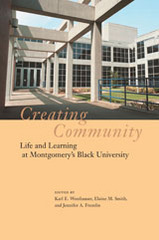
The story of dairying in Wisconsin is the story of how our very landscape and way of life were created. By making cows the center of our farm life and learning how to care for them, our ancestors launched a revolution that changed much more than the way farmers earned their living — it changed us.
The story of dairying in Wisconsin is the story of how our very landscape and way of life were created. By making cows the center of our farm life and learning how to care for them, our ancestors launched a revolution that changed much more than the way farmers earned their living — it changed us.

The story of dairying in Wisconsin is the story of how our very landscape and way of life were created. By making cows the center of our farm life and learning how to care for them, our ancestors launched a revolution that changed much more than the way farmers earned their living — it changed us.
When World War I brought an end to German colonial rule in Namibia, much of the German population stayed on. The German community, which had managed to deal with colonial administration, faced new challenges when the region became a South African mandate under the League of Nations in 1919. One of these was the issue of Germanness, which ultimately resulted in public conversations and expressions of identity.
In Creating Germans Abroad, Daniel Walther examines this discourse and provides striking new insights into the character of the German populace in both Germany and its former colony, Southwest Africa, known today as Namibia. In addition to German colonialism, Walther considers issues of race, class, and gender and the activities of minority groups. He offers new perspectives on German cultural and national identity during the Empire, the Weimar Republic, and the Third Reich.
In a larger context, Creating Germans Abroad acts as a model for investigating the strategies and motivations of groups and individuals engaged in national or ethnic engineering and demonstrates how unforeseen circumstances can affect the nature and outcome of these endeavors.
"Thought-provoking and important. . .Drawing on and consolidating the ideas of a range of authors, Horwitz challenges the existing use of the term mental illness and the psychiatric ideas and practices on which this usage is based. . . . Horwitz enters this controversial territory with confidence, conviction, and clarity."—Joan Busfield, American Journal of Sociology
"Horwitz properly identifies the financial incentives that urge therapists and drug companies to proliferate psychiatric diagnostic categories. He correctly identifies the stranglehold that psychiatric diagnosis has on research funding in mental health. Above all, he provides a sorely needed counterpoint to the most strident advocates of disease-model psychiatry."—Mark Sullivan, Journal of the American Medical Association
"Horwitz makes at least two major contributions to our understanding of mental disorders. First, he eloquently draws on evidence from the biological and social sciences to create a balanced, integrative approach to the study of mental disorders. Second, in accomplishing the first contribution, he provides a fascinating history of the study and treatment of mental disorders. . . from early asylum work to the rise of modern biological psychiatry."—Debra Umberson, Quarterly Review of Biology
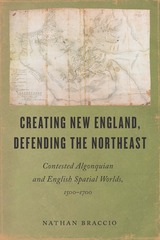
Between 1500 and 1700, Indigenous and English mapmakers across the North Atlantic depicted present-day New England in markedly distinct ways, highlighting how differently their communities understood the landscape. While English cartographers relied on new mathematics and other developing scientific knowledge from Europe, as well as an overhead perspective of the world, Algonquian mapmakers drew on deep knowledge of the landscape, derived from their communities’ long history upon it. Nathan Braccio refers to this phenomenon as “parallel landscapes.”
Creating New England, Defending the Northeast asserts that Algonquian knowledge of the landscape represented a powerful and persistent alternative to English surveying and mapmaking in the Northeast. When English colonists and explorers recognized the unsuitability of their techniques for understanding New England’s unfamiliar landscape, they attempted to appropriate Indigenous knowledge and maps. Algonquian sachems used this as an opportunity to control and benefit from their new English neighbors. Later, as the English became insecure in their dependence on Indigenous people, they began to remake and mark the landscape. Algonquians adapted, maintaining control of important spatial knowledge, even in a place no longer entirely of their making. This story complicates narratives of conquest and highlights the Indigenous spatial knowledge too often overlooked.
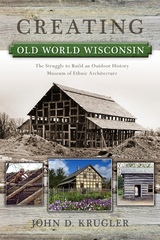
Visionaries, researchers, curators, and volunteers launched a massive preservation initiative to salvage fast-disappearing immigrant and migrant architecture. Dozens of historic buildings in the 1970s were transported from locations throughout the state to the Kettle Moraine State Forest. These buildings created a backdrop against which twenty-first-century interpreters demonstrate nineteenth- and early twentieth-century agricultural techniques and artisanal craftsmanship. The site, created and maintained by the Wisconsin Historical Society, offers visitors a unique opportunity to learn about the state’s rich and ethnically diverse past through depictions of the everyday lives of its Norwegian, Danish, Finnish, German, Polish, African American, and Yankee inhabitants.
Creating Old World Wisconsin chronicles the fascinating and complex origins of this outdoor museum, highlighting the struggles that faced its creators as they worked to achieve their vision. Even as Milwaukee architect and preservationist Richard W. E. Perrin, the Society's staff, and enthusiastic volunteers opened the museum in time for the national bicentennial in 1976, the site was plagued by limited funds, bureaucratic tangles, and problems associated with gaining public support. By documenting the engaging story of the challenges, roadblocks, false starts, and achievements of the site's founders, Krugler brings to life the history of the dedicated corps who collected and preserved Wisconsin's diverse social history and heritage.
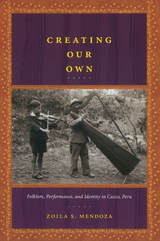
Mendoza draws on early-twentieth-century newspapers and other archival documents as well as interviews with key artistic and intellectual figures and their descendants. She offers vivid descriptions of the Peruvian Mission of Incaic Art, a tour undertaken by a group of artists from Cuzco, at their own expense, to represent Peru to Bolivia, Argentina, and Uruguay in 1923–24, as well as of the origins in the 1920s of the Qosqo Center of Native Art, the first cultural institution dedicated to regional and national folkloric art. She highlights other landmarks, including both The Charango Hour, a radio show that contributed to the broad acceptance of rural Andean music from its debut in 1937, and the rise in that same year of another major cultural institution, the American Art Institute of Cuzco. Throughout, she emphasizes the intricate local, regional, national, and international pressures that combined to produce folkloric art, especially the growing importance of national and international tourism in Cuzco.
Please visit the Web site http://nas.ucdavis.edu/creatingbook for samples of the images and music discussed in this book.
LASA Visual Culture Studies Section Book Prize, Latin American Studies Association (LASA)
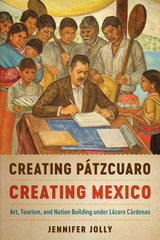
Winner, Arthur P. Whitaker Prize, Middle Atlantic Council of Latin American Studies, 2019In the 1930s, the artistic and cultural patronage of celebrated Mexican president Lázaro Cárdenas transformed a small Michoacán city, Pátzcuaro, into a popular center for national tourism. Cárdenas commissioned public monuments and archeological excavations; supported new schools, libraries, and a public theater; developed tourism sites and infrastructure, including the Museo de Artes e Industrias Populares; and hired artists to paint murals celebrating regional history, traditions, and culture. The creation of Pátzcuaro was formative for Mexico; not only did it provide an early model for regional economic and cultural development, but it also helped establish some of Mexico’s most enduring national myths, rituals, and institutions.
In Creating Pátzcuaro, Creating Mexico, Jennifer Jolly argues that Pátzcuaro became a microcosm of cultural power during the 1930s and that we find the foundations of modern Mexico in its creation. Her extensive historical and archival research reveals how Cárdenas and the artists and intellectuals who worked with him used cultural patronage as a guise for radical modernization in the region. Jolly demonstrates that the Pátzcuaro project helped define a new modern body politic for Mexico, in which the population was asked to emulate Cárdenas by touring the country and seeing and embracing its land, history, and people. Ultimately, by offering Mexicans a means to identify and engage with power and privilege, the creation of Pátzcuaro placed art and tourism at the center of Mexico’s postrevolutionary nation building project.
Creating Spaniards is a cultural and intellectual history that explains the intersection of politics and culture, and the formation of a national identity, during Spain’s Second Republic and Civil War. It counters recent scholarship claiming that leaders of the Second Republic had no programs for "inventing traditions" to encourage a Spanish national identity.
Focusing on the Second Republic, 1931–1936, Sandie Holguín illustrates how various intellectuals and politicians of the Republican–Socialist coalition used theater, literature, and film to aid the construction of a unified Spanish culture and history. She uses memoirs, journals, newspapers, parliamentary debates, and archival sources in her examination of the impact that cultural reforms had on the transformation of one of Europe’s oldest states.
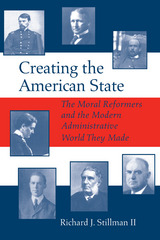
In this illuminating and provocative study, Stillman provides a new understanding of the foundation of the American state.
Whether renewing a driver's license, traveling on an airplane, or just watching in fascination as a robot probes Mars, we all participate in the everyday workings of the modern administrative state. As Stillman demonstrates in this study, however, we have not, until now, fully investigated or appreciated this administrative stateÕs origins or its evolution into the entity that so affects our lives today.
Stillman reveals that this modern enterprise emerged from a complex foundation of ideas and ideals rather than as a result of a simple, rational plan or cataclysmic event, as previously contended. In fact, he finds that the basis for our current administrative state lies in the lives of the seven individuals who, during the late 19th and early 20th centuries, invented its various elements.
Stillman also finds that although they lived at different times, these seven founders-George William Curtis, Charles Francis Adams, Jr., Emory Upton, Jane Addams, Frederick W. Taylor, Richard Childs, and Louis Brownlow-had much in common: all were products of intensely Protestant, small-town America, and all were motivated by strong moral idealism. Indeed, Stillman finds that state making in the United States has been a continuation of the Protestant goal to "protest and purify."
Some names are more recognizable than others, but all, through remarkable moral fervor and exceptional leadership skills, invented the administrative practices and procedures so familiar today.
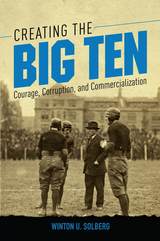
Winton U. Solberg explores the relationship between higher education and collegiate football in the Big Ten's first fifty years. This formative era saw debates over eligibility and amateurism roil the sport. In particular, faculty concerned with academics clashed with coaches, university presidents, and others who played to win. Solberg follows the conference's successful early efforts to put the best interests of institutions and athletes first. Yet, as he shows, commercial concerns undid such work after World War I as sports increasingly eclipsed academics. By the 1940s, the Big Ten's impact on American sports was undeniable. It had shaped the development of intercollegiate athletics and college football nationwide while serving as a model for other athletic conferences.

In Creating the College Man Daniel A. Clark argues that the dominant mass media of the era—popular magazines such as Cosmopolitan and the Saturday Evening Post—played an integral role in shaping the immediate and long-term goals of this select group of men. In editorials, articles, fiction, and advertising, magazines depicted the college man as simultaneously cultured and scientific, genteel and athletic, polished and tough. Such depictions underscored the college experience in powerful and attractive ways that neatly united the incongruous strains of American manhood and linked a college education to corporate success.
What does it mean to save nature and rural life? Do people know what they are trying to save and what they mean by "save"? As the answers to these questions become more and more unclear, so, too do the concepts of "environment," "wilderness," and "country."
From the abuse of the Amazon rain forest to how Vermont has been marketed as the ideal rural place, this collection looks at what the countryside is, should be, or can be from the perspective of people who are actively involved in such debates. Each contributor examines the underlying tendencies–and subsequent policies–that separate country from city, developed land from wilderness, and human activity from natural processes. The editors argue in their introduction that these dualistic categories limit our ability to think about environmental and rural problems and hamper our ability to formulate practical, realistic, and just solutions.
This book's interpretive approach to the natural world explores why people make artificial distinctions between nature and culture, and how people can create new forms of sustainable development in terms of real problems and real places.
In the series Conflicts in Urban and Regional Development, edited by John R. Logan and Todd Swanstrom.
Combining archival research with an engaging literary style, Vaughan juxtaposes extensive analysis of court records with examinations of the logs of slave ships and of colonial correspondence and travel accounts. The result is a close reading of life on the island, power relations, colonialism, and the process of cultural creolization. Vaughan brings to light complexities of language, sexuality, and reproduction as well as the impact of the French Revolution. Illuminating a crucial period in the history of Mauritius, Creating the Creole Island is a major contribution to the historiography of slavery, colonialism, and creolization across the Indian Ocean.
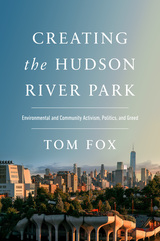
The 4-mile-long, 550-acre Hudson River Park is nearing completion and is the largest park built in Manhattan since Central Park opened more than 150 years ago. It has transformed a derelict waterfront, protected the Hudson River estuary, preserved commercial maritime activities, created new recreational opportunities for millions of New Yorkers, enhanced tourism, stimulated redevelopment in adjacent neighborhoods, and set a precedent for waterfront redevelopment. The Park attracts seventeen million visitors annually. Creating the Hudson River Park is a first-person story of how this park came to be. Working together over three decades, community groups, civic and environmental organizations, labor, the real estate and business community, government agencies, and elected officials won a historic victory for environmental preservation, the use and enjoyment of the Hudson River, and urban redevelopment. However, the park is also the embodiment of a troubling trend toward the commercialization of America’s public parks.
After the defeat of the $2.4 billion Westway plan to fill 234 acres of the Hudson in 1985, the stage was set for the revitalization of Manhattan’s West Side waterfront. Between 1986 and 1998 the process focused on the basics like designing an appropriate roadway, removing noncompliant municipal and commercial activities from the waterfront, implementing temporary improvements, developing the Park’s first revenue-producing commercial area at Chelsea Piers, completing the public planning and environmental review processes, and negotiating the 1998 Hudson River Park Act that officially created the Park. From 1999 to 2009 planning and construction were funded with public money and focused on creating active and passive recreation opportunities on the Tribeca, Greenwich Village, Chelsea, and Hell’s Kitchen waterfronts.
However, initial recommendations to secure long term financial support for the Park from the increase in adjacent real estate values that resulted from the Park’s creation were ignored. City and state politicians had other priorities and public funding for the Park dwindled. The recent phase of the project, from 2010 to 2021, focused on “development” both in and adjacent to the Park. Changes in leadership, and new challenges provide an opportunity to return to a transparent public planning process and complete the redevelopment of the waterfront for the remainder of the 21st-century. Fox’s first-person perspective helps to document the history of the Hudson River Park, recognizes those who made it happen and those who made it difficult, and provides lessons that may help private citizens and public servants expand and protect the public parks and natural systems that are so critical to urban well-being.
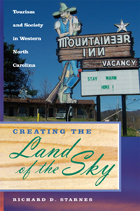
A sophisticated inquiry into tourism's social and economic power across the South.
In the early 19th century, planter families from South Carolina, Georgia, and eastern North Carolina left their low-country estates during the summer to relocate their households to vacation homes in the mountains of western North Carolina. Those unable to afford the expense of a second home relaxed at the hotels that emerged to meet their needs. This early tourist activity set the stage for tourism to become the region's New South industry. After 1865, the development of railroads and the bugeoning consumer culture led to the expansion of tourism across the whole region.
Richard Starnes argues that western North Carolina benefited from the romanticized image of Appalachia in the post-Civil War American consciousness. This image transformed the southern highlands into an exotic travel destination, a place where both climate and culture offered visitors a myriad of diversions. This depiction was futher bolstered by partnerships between state and federal agencies, local boosters, and outside developers to create the atrtactions necessary to lure tourists to the region.
As tourism grew, so did the tension between leaders in the industry and local residents. The commodification of regional culture, low-wage tourism jobs, inflated land prices, and negative personal experiences bred no small degree of animosity among mountain residents toward visitors. Starnes's study provides a better understanding of the significant role that tourism played in shaping communities across the South.
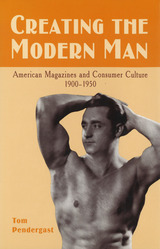
In the late nineteenth century, general-interest magazines began to reach an unprecedented number of readers and conveyed to those readers diverse messages about the meaning of masculinity in America. Over the next fifty years, these messages narrated a shift from Victorian masculinity, which valued character, integrity, hard work, and duty, to modern masculinity, which valued personality, self-realization, and image. In Creating the Modern Man, Tom Pendergast studies the multifaceted ways that masculinity is represented in magazines published during this transitional period.
Pendergast focuses on the rise of mass consumer culture, demonstrating that consumerism was a key factor in reshaping American notions of masculinity as presented in popular magazines. Whereas much scholarship has decried the effects of consumerism, Pendergast treats consumer culture as an energizing force in the American magazine market. He suggests that such magazines offered men new and meaningful visions of masculine identity and argues that men actively participated in restructuring the masculine ideal. Engaging a wide range of magazines from American Magazine to Esquire to True, Pendergast demonstrates how these publications presented masculinity in ways that reflected the magazines' relationship to advertisers, contributors, and readers.
This fascinating study includes such African American magazines as the Colored American, Crisis, Opportunity, and Ebony. Pendergast reasons that the rise of modern masculinity opened the way for African American men to identify with normative masculine values. As white men reinvented the idea of the "self-made man" for a new era, black men struggled to negotiate a meaningful place for black masculinity in a culture intent on denying them access.
The first complete investigation of the representation of men in American magazines, Creating the Modern Man makes an important contribution to our understanding of these publications, both as elements of mass culture and as interesting institutions in their own right. Pendergast takes readers inside the complex world of magazine publishing, demonstrating how magazines slowly yet surely help create the cultural images that shape societal gender roles.
Regionally distinct yet influenced by national trends, women's progressive culture in Texas offers a valuable opportunity to analyze the evolution of women's voluntary associations, their challenges to southern conventions of race and class, and their quest for social change and political power.
Judith McArthur traces how general concerns of national progressive organizations about pure food, prostitution, and education reform shaped programs at the state and local levels. Southern women differed from their Northern counterparts by devising new approaches to settlement work and taking advantage of World War I to challenge southern gender and racial norms. McArthur's original analysis details how women in Texas succeeded in securing partial voting rights before passage of the Nineteenth Amendment. She also provides valuable comparisons between North and South, among various southern states, and between black and white, and male and female, progressives.

Creating with Roots offers a detailed breakdown of key terms and concepts necessary for understanding Chinese national folk dance and analyzes 37 examples of choreography dating from the 1940s to 2000. The author situates these explanations within the longer history of cultural practice and theory in China and in relation to the international dance discourses of the former Soviet Union, Eastern Europe, Western Europe, and North America.
Analyzing the development of a Swedish American identity
The Creation of an Ethnic Identity: Being Swedish American in the Augustana Synod, 1860–1917 analyzes how Swedish American identity was constructed, maintained, and changed in the late nineteenth and early twentieth centuries. The Augustana Synod, the largest religious-based organization created by Swedish immigrants in the United States, played an important role in establishing what it meant to be Swedish American.
In this study, author Dag Blanck poses three fundamental questions: How did an ethnic identity develop in the Augustana Synod? What was that identity? Why was an ethnic identity formed? Based on primary sources formerly unknown or neglected, The Creation of an Ethnic Identity examines the Lutheran Augustana Synod, Augustana College, and the Augustana Book Concern to provide insights into how ethnic identity is constructed within a major religious body, a central educational institution, and a major publishing house.
Starting from the concept of ethnicity as something created or invented, Blanck goes on to explore how it was possible for a white European immigrant group like the Swedes to use its ethnicity as a tool of integration into American society. The nature of their ethnicity, says Blanck, was both determined by their cultural origins and also the values and nature of American society as they perceived it. Becoming Swedish American was also a way of becoming American.
The volume, which is augmented by illustrations, integrates the most critical scholarship on immigration and ethnicity over the past half century and provides a strong argument about how ethnicity is shaped over time within an immigrant group.
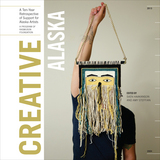
Creative Alaska profiles the award winners from 2004 to 2013 in three categories: Distinguished Artists, Fellowships, and Project Awards. Richly illustrated accounts of each of the artists and their work illuminate the challenges and opportunities of the artistic life in Alaska and the powerful impact of the Rasmuson Foundation’s support.
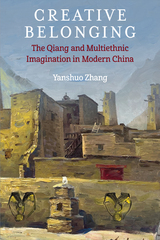
China is a multicultural country home to fifty-five ethnic minority groups, yet due to linguistic and cultural barriers many of these groups remain understudied or unknown in the West. The Qiang, one of modern China’s officially recognized ethnic minorities, is also China’s longest-standing ethnoracial identity marker that has existed since the earliest recorded history of China. Creative Belonging investigates the formation and evolution of the Qiang as a people, a concept, and a cultural history in China. It further examines how the contemporary Qiang ethnic group interacts strategically with mainstream Chinese society, challenging the historically entrenched hierarchies between the sociocultural “centers” of China and its ethnic “peripheries.”
This book is based on years of ethnographic and textual-archival research in the Himalayan regions of southwest China, where the contemporary Qiang group resides. Drawing on a diverse range of official and local political discourses and previously unstudied literary, historiographical, and cinematic works, Yanshuo Zhang illuminates how the Qiang have carved out spaces of “creative belonging” within the parameters of multiculturalism in contemporary China. Rooted in ethnographic and textual-archival research, the book presents original materials produced by Qiang indigenous writers, scholars, artists, grassroots village cultural activists, and entrepreneurs at both the local and the global levels. Creative Belonging invites readers to rethink ethnicity and national belonging in China by centering minority groups’ efforts to expand the meanings and implications of “Chinese culture.”
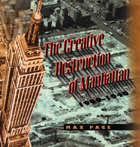
"It'll be a great place if they ever finish it," O. Henry wrote about New York City. This laconic remark captures the relentlessly transitory character of New York, and it points toward Max Page's synthetic perspective. Against the prevailing motif of a naturally expanding metropolis, Page argues that the early-twentieth-century city was dominated by the politics of destruction and rebuilding that became the hallmark of modern urbanism.
The oxymoron "creative destruction" suggests the tensions that are at the heart of urban life: between stability and change, between particular places and undifferentiated spaces, between market forces and planning controls, and between the "natural" and "unnatural" in city growth. Page investigates these cultural counterweights through case studies of Manhattan's development, with depictions ranging from private real estate development along Fifth Avenue to Jacob Riis's slum clearance efforts on the Lower East Side, from the elimination of street trees to the efforts to save City Hall from demolition.
In these examples some New Yorkers celebrate planning by destruction or marvel at the domestication of the natural environment, while others decry the devastation of their homes and lament the passing of the city's architectural heritage. A central question in each case is the role of the past in the shaping of collective memory—which buildings are preserved? which trees are cut down? which fragments are enshrined in museums? Contrary to the popular sense of New York as an ahistorical city, the past—as recalled by powerful citizens—was, in fact, at the heart of defining how the city would be built.
Beautifully illustrated and written in clear, engaging prose, The Creative Destruction of Manhattan offers a new way of viewing the development of the American city.
"An excellent, multifaceted analysis of the process of urban development-not the inevitability of development but the choices individuals, organizations, and developers made that transformed Manhattan. The politics of place was, Max Page convincingly argues, an ongoing battle to define and thereby control the evolving shape of the city."—David Schuyler, author of Apostle of Taste: Andrew Jackson Downing 1815-1852
"Max Page transcends the usual dichotomy between those who glorify destruction for the sake of change and those who would avoid both at all cost. The sizeable borderland between architecture and preservation reveals new dimensions about science and history, innovation and memory, the cities that have been, and those yet to come."—Gwendolyn Wright, author of The Politics of Design in French Colonial Urbanism
"A sober, humane explanation of how and why New York City became a place of continuous rebuilding. . . . For real or armchair New Yorkers, the whole package is a treat."—Kirkus Reviews
By turning our attention to ambiguity and indecision in science, Menachem Fisch, in Creatively Undecided, offers a new way to look at how scientific understandings change. Following Kuhn, Fisch argues that scientific practice depends on the framework in which it is conducted, but he also shows that those frameworks can be understood as the possible outcomes of the rational deliberation that Popper viewed as central to theory change. How can a scientist subject her standards to rational appraisal if that very act requires the use of those standards? The way out, Fisch argues, is by looking at the incentives scientists have to create alternative frameworks in the first place. Fisch argues that while science can only be transformed from within, by people who have standing in the field, criticism from the outside is essential. We may not be able to be sufficiently self-critical on our own, but trusted criticism from outside, even if resisted, can begin to change our perspective—at which point transformative self-criticism becomes a real option.

This book also investigates the impact of managerialism, marketization, and globalization on university cultures, asking what critical cultural scholarship can do in such increasingly adversarial conditions. Experiments in Asian universities are emphasized as exemplary of what can or could be achieved in other contexts of globalized university policy.
Contributors. Tony Bennett, Stephen Ching-Kiu Chan, Kuan-Hsing Chen, Douglas Crimp, Dai Jinhua, John Nguyet Erni, Mette Hjort, Josephine Ho, Koichi Iwabuchi, Meaghan Morris, Tejaswini Niranjana, Wang Xiaoming, Audrey Yue
This book also investigates the impact of managerialism, marketization, and globalization on university cultures, asking what critical cultural scholarship can do in such increasingly adversarial conditions. Experiments in Asian universities are emphasized as exemplary of what can or could be achieved in other contexts of globalized university policy.
Contributors. Tony Bennett, Stephen Ching-Kiu Chan, Kuan-Hsing Chen, Douglas Crimp, Dai Jinhua, John Nguyet Erni, Mette Hjort, Josephine Ho, Koichi Iwabuchi, Meaghan Morris, Tejaswini Niranjana, Wang Xiaoming, Audrey Yue
“Creativity” is a word that excites and dazzles us. It promises brilliance and achievement, a shield against conformity, a channel for innovation across the arts, sciences, technology, and education, and a mechanism for economic revival and personal success. But it has not always evoked these ideas. The Creativity Complex traces the history of how creativity has come to mean the things it now does, and explores the ethical implications of how we use this term today for both the arts and for the social world more broadly. Richly researched, the book explores how creativity has been invoked in arenas as varied as Enlightenment debates over the nature of cognition, Victorian-era intelligence research, the Cold War technology race, contemporary K-12 education, and even modern electoral politics. Ultimately, The Creativity Complex asks how our ideas about creativity are bound up with those of self-fulfillment, responsibility, and the individual, and how these might seduce us into joining a worldview and even a set of social imperatives that we might otherwise find troubling.
"Walter Raleigh . . . was one of those Elizabethan all-rounders who still seem staggeringly larger than life. . . . Mr. Nicholl's cogent reconstruction of the journey uses Raleigh's own account, 'The Discoverie of Guiana'—part truth, part advertising, part rhapsody—and much well-found ancillary material."—Anthony Bailey, New York Times
"Like The Reckoning, his brilliant account of the murder of Christopher Marlowe, Nicholl's new book might be called an exercise in historical conjuring. The Creature in the Map is an effort not only to analyse but also to call into presence the lived experience of the voyage Raleigh undertook in 1595 to the Orinoco Delta in what is now Venezuela."—Stephen Greenblatt, Times Literary Supplement
"Charles Nicholl belongs to an elite company, that of historians who know how to make research into arcane matters and distant times as engrossing as In Cold Blood or All the President's Men."—Michael Dirda, Washington Post
The work in Creatures is centered on the imaginative and playful idea of the Dabloids, foot-shaped creatures of all sizes and colors who emerge magically from the Dablus, a sausage-like object that appears one misty morning in the fields of a collective farm. Tishkov’s drawings, paintings, and sculptures recount the history of the Dablus and the Dabloids. These mystical creatures are at once pets and gods, beings immensely wise and yet foolish. They are surreal manifestations of the artistic consciousness even as they are symbols of human isolation. In this sense, Tishkov’s roots in surrealism are charged with humorous social commentary often reminiscent of Hogarth, Red Grooms, and Robert Crumb.
Tishkov explores other mythological and absurdist themes in a series of elephant watercolors in which people live within an elephant trunk. The book also features a translation of the text of Tishkov’s play "Dabloids—A Fantasy," as well as brief essays that provide an introduction to the artist and his work, his mythology, and his roots in Russian folk culture.
Creatures introduces a major contemporary Russian artist to the western world. It should delight all who enter its world and should expand the horizons of all who delight in its artistic merits.

Often experienced as universal and incorporeal, music seems an innocent art form. The air, the very medium by which music constitutes itself, shares with music a claim to invisibility. In Creatures of the Air, J. Q. Davies interrogates these claims, tracing the history of music’s elemental media system in nineteenth-century Atlantic worlds. He posits that air is a poetic domain, and music is an art of that domain.
From West Central African ngombi harps to the European J. S. Bach revival, music expressed elemental truths in the nineteenth century. Creatures of the Air tells these truths through stories about suffocation and breathing, architecture and environmental design, climate strife, and racial turmoil. Contributing to elemental media studies, the energy humanities, and colonial histories, Davies shows how music, no longer just an innocent luxury, is implicated in the struggle for control over air as a precious natural resource. What emerges is a complex political ecology of the global nineteenth century and beyond.
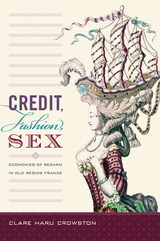
Credit economies constituted "economies of regard" in which reputation depended on embodied performances of credibility. Crowston explores the role of fashionable appearances and sexual desire in leveraging credit and reconstructs women's vigorous participation in its gray markets. The scandalous relationship between Queen Marie Antoinette and fashion merchant Rose Bertin epitomizes the vertical loyalties and deep social divides of the credit regime and its increasingly urgent political stakes.
Credulity tells the fascinating story of mesmerism’s spread from the plantations of the French Antilles to the textile factory cities of 1830s New England. As it proliferated along the Eastern seaboard, this occult movement attracted attention from Ralph Waldo Emerson’s circle and ignited the nineteenth-century equivalent of flame wars in the major newspapers. But mesmerism was not simply the last gasp of magic in modern times. Far from being magicians themselves, mesmerists claimed to provide the first rational means of manipulating the credulous human tendencies that had underwritten past superstitions. Now, rather than propping up the powers of oracles and false gods, these tendencies served modern ends such as labor supervision, education, and mediated communication. Neither an atavistic throwback nor a radical alternative, mesmerism was part and parcel of the modern. Credulity offers us a new way of understanding the place of enchantment in secularizing America.
An essential narrative preserving the cultural memory, social life, and internal conflicts of the Creek people from an author within the tribe.
George Stiggins, a Creek Indian half blood living in Alabama, wrote this history more than 150 years ago. Raised in the white culture by his father, an English trader, Stiggins nevertheless lived in close contact with the Creeks because his mother was a full blood of the Natchez tribe, part of the Creek Confederacy.
Stiggins writes with firsthand knowledge of the tribes in the central southeast—the Alabamas, Natchez, Abekas, Uchees, and others. He tells of their origins, their towns and chiefs, and their way of life, he traces critical events leading to the Creek War—the battles of Burnt Corn and Fort Mims—and details the roles of the Indian leaders involved. In “Tecumseh and the Age of Prophecy,” he describes how the powerful influence of prophets, such as Josiah Francis and Jim Boy, who incited the Creeks to civil war as the confederacy split into war and peace factions. Stiggin’s account of William Weatherford’s controversial role in the Creek War has special value because Weatherford was Stiggins’s brother-in-law. His descriptions of religious and social aspects of the Creek lifeways make this work prime source material.
William Wyman’s notes and introduction put the Stiggins account into historical perspective and trace its circuitous route to publication. First issued in 1989, Creek Indian History has become an important primary document for the study of Native American history and culture.
This standard account of one of the most controversial wars in which Americans have fought is again available, with introductory materials and a bibliography revised to reflect the advances in scholarship since the 1969 edition.
The first edition of Halbert and Ball's Creek War was published in 1895, and a new edition containing an introductory essay, supplementary notes, a bibliography, and an index by Frank L. Owsley Jr., was published in 1969. This standard account of one of the most controversial wars in which Americans have fought is again available, with introductory materials and a bibliography revised to reflect the advances in scholarship since the 1969 edition. This facsimile reproduction of the 1895 original provides a full and sympathetic account of the Indians' point of view, from the earliest visit of the great Shawnee chief Tecumseh to the southern tribes in 1811, through the buildup of apprehension and hostilities leading to the fateful battles at Burnt Corn, Fort Mims, and Holy Ground.
The Creighton Century, 1907–2007 offers a selection of ten classic lectures on history from the first hundred years of the University of London’s prestigious Creighton Lecture series.
This volume offers a chance to revisit some of the great lectures of our time, including previously unpublished lectures by R. H. Tawney, Lucy Sutherland, Donald Coleman, Eric Hobsbawm, and Keith Thomas, published here with commentaries by Virginia Berridge, Justin Champion, Julian Hoppit, and Jinty Nelson, among others. This volume provides a fascinating insight into the development of the discipline of history over the twentieth and early twenty-first century, with lectures on the meaning of truth and modern mythologies, revealing some significant changes in approach and emphasis as well as some surprising continuities.

What do the trickster Rabbit, slave descendants, off-the-books economies, and French citizens have to do with each other? Plenty, says Katherine Browne in her anthropological investigation of the informal economy in the Caribbean island of Martinique. She begins with a question: Why, after more than three hundred years as colonial subjects of France, did the residents of Martinique opt in 1946 to integrate fully with France, the very nation that had enslaved their ancestors? The author suggests that the choice to decline sovereignty reflects the same clear-headed opportunism that defines successful, crafty, and illicit entrepreneurs who work off the books in Martinique today.
Browne draws on a decade of ethnographic fieldwork and interview data from all socioeconomic sectors to question the common understanding of informal economies as culture-free, survival strategies of the poor. Anchoring her own insights to longer historical and literary views, the author shows how adaptations of cunning have been reinforced since the days of plantation slavery. These adaptations occur, not in spite of French economic and political control, but rather because of it. Powered by the "essential tensions" of maintaining French and Creole identities, the practice of creole economics provides both assertion of and refuge from the difficulties of being dark-skinned and French.
This powerful ethnographic study shows how local economic meanings and plural identities help explain work off the books. Like creole language and music, creole economics expresses an irreducibly complex blend of historical, contemporary, and cultural influences.
During the colonial period in Guyana, the country’s coastal lands were worked by enslaved Africans and indentured Indians. In Creole Indigeneity, Shona N. Jackson investigates how their descendants, collectively called Creoles, have remade themselves as Guyana’s new natives, displacing indigenous peoples in the Caribbean through an extension of colonial attitudes and policies.
Looking particularly at the nation’s politically fraught decades from the 1950s to the present, Jackson explores aboriginal and Creole identities in Guyanese society. Through government documents, interviews, and political speeches, she reveals how Creoles, though unable to usurp the place of aboriginals as First Peoples in the New World, nonetheless managed to introduce a new, more socially viable definition of belonging, through labor. The very reason for bringing enslaved and indentured workers into Caribbean labor became the organizing principle for Creoles’ new identities.
Creoles linked true belonging, and so political and material right, to having performed modern labor on the land; labor thus became the basis for their subaltern, settler modes of indigeneity—a contradiction for belonging under postcoloniality that Jackson terms “Creole indigeneity.” In doing so, her work establishes a new and productive way of understanding the relationship between national power and identity in colonial, postcolonial, and anticolonial contexts.
READERS
Browse our collection.
PUBLISHERS
See BiblioVault's publisher services.
STUDENT SERVICES
Files for college accessibility offices.
RECENTLY PUBLISHED



UChicago Accessibility Resources
home | accessibility | search | about | contact us
BiblioVault ® 2001 - 2026
The University of Chicago Press