
 A SCHOLARLY BOOK REPOSITORY
577 start with C start with C
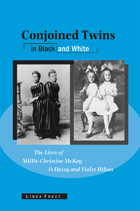
Conjoined Twins in Black and White provides contemporary readers with the twins’ autobiographies, the first two “show histories” to be republished since their original appearance, a previously unpublished novella, and a nineteenth-century medical examination, each of which attempts to define these women and reveal the issues of race, gender, and the body prompted by the twins themselves. The McKoys, born slaves, were kidnapped and taken to Britain, where they worked as entertainers until they were reunited with their mother in an emotional chance encounter. The Hiltons, cast away by their horrified mother at birth, worked the carnival circuit as vaudeville performers until the WWII economy forced them to the burlesque stage. The hardships, along with the triumphs, experienced by these very different sister sets lend insight into our fascination with conjoined twins.
In the tradition of Uncle Remus, the conjure tale listens in on a poor black southerner, speaking strong dialect, as he recounts a local incident to a transplanted northerner for the northerner's enlightenment and edification. But in Chesnutt's hands the tradition is transformed. No longer a reactionary flight of nostalgia for the antebellum South, the stories in this book celebrate and at the same time question the folk culture they so pungently portray, and ultimately convey the pleasures and anxieties of a world in transition. Written in the late nineteenth century, a time of enormous growth and change for a country only recently reunited in peace, these stories act as the uneasy meeting ground for the culture of northern capitalism, professionalism, and Christianity and the underdeveloped southern economy, a kind of colonial Third World whose power is manifest in life charms, magic spells, and ha'nts, all embodied by the ruling figure of the conjure woman.
Humorous, heart-breaking, lyrical, and wise, these stories make clear why the fiction of Charles W. Chesnutt has continued to captivate audiences for a century.
2022 Honorable Mention, John Leo & Dana Heller Award for Best Single Work, Anthology, Multi-Authored, or Edited Book in LGBTQ Studies, Popular Culture Association (PCA)
2023 Honorable Mention, Outstanding Book, Latinx Studies Section of Latin American Studies Association (LASA)
2024 Honorable Mention — Best LGBTQ+ Themed Book, Empowering Latino Futures’ International Latino Book Awards
This study argues that powerful authorities and institutions exploit the ambiguity of Latinidad in ways that obscure inequalities in the United States.
Is Latinidad a racial or an ethnic designation? Both? Neither? The increasing recognition of diversity within Latinx communities and the well-known story of shifting census designations have cast doubt on the idea that Latinidad is a race, akin to white or Black. And the mainstream media constantly cover the “browning” of the United States, as though the racial character of Latinidad were self-evident.
Many scholars have argued that the uncertainty surrounding Latinidad is emancipatory: by queering race—by upsetting assumptions about categories of human difference—Latinidad destabilizes the architecture of oppression. But Laura Grappo is less sanguine. She draws on case studies including the San Antonio Four (Latinas who were wrongfully accused of child sex abuse); the football star Aaron Hernandez’s incarceration and suicide; Lorena Bobbitt, the headline-grabbing Ecuadorian domestic-abuse survivor; and controversies over the racial identities of public Latinx figures to show how media institutions and state authorities deploy the ambiguities of Latinidad in ways that mystify the sources of Latinx political and economic disadvantage. With Latinidad always in a state of flux, it is all too easy for the powerful to conjure whatever phantoms serve their interests.

In the 1990s at Fort Bragg and Fayetteville, North Carolina, the city's dominant political coalition of white civic and business leaders had lost control of the city council. Amid accusations of racism in the police department, two white council members joined black colleagues in support of the NAACP's demand for an investigation. George Baca's ethnographic research reveals how residents and politicians transformed an ordinary conflict into a "crisis" that raised the specter of chaos and disaster. He explores new territory by focusing on the broader intersection of militarization, urban politics, and civil rights.
Reflecting the structure of the ring shout—the counterclockwise song, dance, drum, and story in African American history and culture—Conjuring Freedom offers three new concepts to cultural studies in order to describe the practices, techniques, and implications of the troop’s performance: (1) Black Communal Conservatories, borrowing from Robert Farris Thompson’s “invisible academies” to describe the structural but spontaneous quality of black music-making, (2) Listening Hermeneutics, which accounts for the generative and material affects of sound on meaning-making, and (3) Sonic Politics, which points to the political implications of music’s use in contemporary representations of race and history.
In a series of revisionary readings, Nicholls studies how the "folk" is shaped by the ideology of form. He examines the presence of a spectral "folk" in Toomer's modernist pastiche, Cane. He explores how Hurston presents folklore as a contemporary language of resistance in her ethnography, Mules and Men. In Claude McKay's naturalistic romance, Banana Bottom, Nicholls discovers the figuration of an alternative modernity in the heroine's recovery of her lost "folk" identity. He unearths the individualist ethos of Booker T. Washington in two novels by George Wylie Henderson. And he reveals how Richard Wright's photo-documentary history, 12 Million BlackVoices, places the "folk" in a Marxian narrative of modernization toward class-consciousness.
A provocative rereading of the cultural politics of the Harlem Renaissance, Conjuring the Folk offers a new way of understanding literary responses to migration, modernization, and the concept of the "folk" itself.
David G. Nicholls is a post-doctoral fellow in the Center for the Study of Race, Politics, and Culture, University of Chicago.
Consolation Miracle is a book of visceral, image-driven poems that search for the miraculous in the seemingly ordinary. This collection fashions art out of artless objects as a consolation, or perhaps compensation, for their smallness. Yawns and pears, cockroaches and crows resonate against historically conflated backdrops, while our own hands seem suddenly strange as they hide themselves in our pockets, balance a burning cigarette between two fingers, or grip the gun that shot Lincoln. Other poems address the destruction of empire, the end of old Hollywood, and the hyperbolic fizzling out of entire centuries. Here, consolation miracles are rarely the ones sought after, yet they radiate in their neglect. Davidson’s poems help us understand the inner life of cows, imagine the plight of a banished Kama Sutra illustrator, speculate about Cleopatra’s lingerie. With a title borrowed from Gabriel García Márquez, Consolation Miracle contains a magical realism for the twenty-first century.
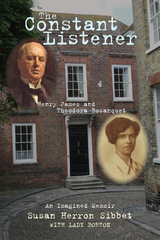
In 1907, in a quiet English village, Theodora Bosanquet answered Henry James’s call for someone to transcribe his edits and additions to his formidable body of work. The aging James had agreed to revise his novels and tales into the twenty-four-volume New York Edition. Enter Bosanquet, a budding writer who would record the dictated revisions and the prefaces that would become a lynchpin of his legacy.
Embracing the role of amanuensis and creative counterpoint cautiously at first, Bosanquet kept a daily diary over the nine years that she worked with James, as their extraordinary partnership evolved. Bosanquet became the first audience for James’s compositions and his closest literary associate—and their relationship ultimately resulted in James’s famed “deathbed dictations.” At the same time, the homosexuality of each was an unspoken but important influence on their mutual support and companionship.
Susan Herron Sibbet’s posthumous novel gifts us with the voice of a young woman writer drawn into the intimate circle of an aging master, and is a moving addition to previous literary treatments of James and Bosanquet, even as it hews closer to fact than other works do. The Constant Listener is itself the work of an accomplished poet, and will speak to fans of James, historical fiction, and themes of art, love, sexuality, and identity.
Winner of the 2024 Winifred Bryan Horner Outstanding Book Award
Winner of the 2023 NCA Diamond Anniversary Book Award
Winner of the Innovations in Community Writing Book Award from the Conference on Community Writing
Constellating Home: Trans and Queer Asian American Rhetorics explores how race, migration, gender, and disability entwine in conceptions of deserving citizens. V. Jo Hsu explores three archives of trans and queer Asian American (QTAPI) rhetorics, considering a range of texts including oral histories, photography, personal essays, and performance showcases. To demonstrate how QTAPI use personal narrative to critique and revise the conditions of their exclusion, Hsu forwards a critical approach to storytelling, homing, which deliberately engages sites of alienation and belonging. Through a practice of diasporic listening, Hsu tracks confluences among seemingly divergent journeys and locates trans and queer Asian American experiences within broader US and global politics.
The stories at the heart of Constellating Home center the voices of trans and nonbinary people, disabled people, and others often overlooked in conceptions of US citizenry. Hsu’s analyses demonstrate the inextricability of Asian American activism from queer politics, disability activism, and racial justice, and they consider how stories network individual experiences with resonant histories and struggles. Finding unlikely intimacies among individual and communal histories, Constellating Home provides tools for fostering mutual care, revealing harmful social patterns, and orienting shared values and politics.
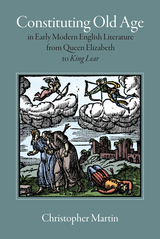
How did Shakespeare and his contemporaries, whose works mark the last quarter century of Elizabeth I's reign as one of the richest moments in all of English literature, regard and represent old age? Was late life seen primarily as a time of withdrawal and preparation for death, as scholars and historians have traditionally maintained? In this book, Christopher Martin examines how, contrary to received impressions, writers and thinkers of the era—working in the shadow of the kinetic, long-lived queen herself—contested such prejudicial and dismissive social attitudes.
In late Tudor England, Martin argues, competing definitions of and regard for old age established a deeply conflicted frontier between external, socially “constituted” beliefs and a developing sense of an individual's “constitution” or physical makeup, a usage that entered the language in the mid-1500s. This space was further complicated by internal divisions within the opposing camps. On one side, reverence for the elder's authority, rooted in religious and social convention, was persistently challenged by the discontents of an ambitious younger underclass. Simultaneously, the aging subject grounded an enduring social presence and dignity on a bodily integrity that time inevitably threatened. In a historical setting that saw both the extended reign of an aging monarch and a resulting climate of acute generational strife, this network of competition and accommodation uniquely shaped late Elizabethan literary imagination. Through fresh readings of signature works, genres, and figures, Martin redirects critical attention to this neglected aspect of early modern studies.

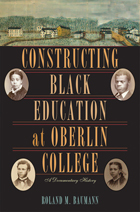
In 1835 Oberlin became the first institute of higher education to make a cause of racial egalitarianism when it decided to educate students “irrespective of color.” Yet the visionary college’s implementation of this admissions policy was uneven. In Constructing Black Education at Oberlin College: A Documentary History, Roland M. Baumann presents a comprehensive documentary history of the education of African American students at Oberlin College.
Following the Reconstruction era, Oberlin College mirrored the rest of society as it reduced its commitment to black students by treating them as less than equals of their white counterparts. By the middle of the twentieth century, black and white student activists partially reclaimed the Oberlin legacy by refusing to be defined by race. Generations of Oberlin students, plus a minority of faculty and staff, rekindled the college’s commitment to racial equality by 1970. In time, black separatism in its many forms replaced the integrationist ethic on campus as African Americans sought to chart their own destiny and advance curricular change.
Oberlin’s is not a story of unbroken progress, but rather of irony, of contradictions and integrity, of myth and reality, and of imperfections. Baumann takes readers directly to the original sources by including thirty complete documents from the Oberlin College Archives. This richly illustrated volume is an important contribution to the college’s 175th anniversary celebration of its distinguished history, for it convincinglydocuments how Oberlin wrestled over the meaning of race and the destiny of black people in American society.
A Choice Outstanding Academic Book, 2002
The formation of a group identity has always been a major preoccupation of Mexican American political organizations, whether they seek to assimilate into the dominant Anglo society or to remain separate from it. Yet organizations that sought to represent a broad cross section of the Mexican American population, such as LULAC and the American G.I. Forum, have dwindled in membership and influence, while newer, more targeted political organizations are prospering—clearly suggesting that successful political organizing requires more than shared ethnicity and the experience of discrimination.
This book sheds new light on the process of political identity formation through a study of the identity politics practiced by four major Mexican American political organizations—the Southwest Network for Environmental and Economic Justice, the Southwest Industrial Areas Foundation, the Texas Association of Mexican American Chambers of Commerce, and the Mexican American Women's National Association (now known as MANA—A National Latina Organization). Through interviews with activists in each organization and research into their records, Benjamin Marquez clarifies the racial, class-based, and cultural factors that have caused these organizations to create widely differing political identities. He likewise demonstrates why their specific goals resonate only with particular segments of the Mexican American community.
The thirteen essays in this collection combine to offer a complex and deeply nuanced picture of Samuel Clemens. With the purpose of straying from the usual notions of Clemens (most notably the Clemens/Twain split that has ruled Twain scholarship for over thirty years), the editors have assembled contributions from a wide range of Twain scholars. As a whole, the collection argues that it is time we approach Clemens not as a shadow behind the literary persona but as a complex and intricate creator of stories, a creator who is deeply embedded in the political events of his time and who used a mix of literary, social, and personal experience to fuel the movements of his pen.
The essays illuminate Clemens's connections with people and events not usually given the spotlight and introduce us to Clemens as a man deeply embroiled in the process of making literary gold out of everyday experiences. From Clemens's wonderings on race and identity to his looking to family and domesticity as defining experiences, from musings on the language that Clemens used so effectively to consideration of the images and processes of composition, these essays challenge long-held notions of why Clemens was so successful and so influential a writer. While that search itself is not new, the varied approaches within this collection highlight markedly inventive ways of reading the life and work of Samuel Clemens.
Highlighting their chronic objectification under the gaze of white eyes, Wallace argues that black men suffer a social and representational crisis in being at once seen and unseen, fetish and phantasm, spectacle and shadow in the American racial imagination. Invisible and disregarded on one hand, black men, perceived as potential threats to society, simultaneously face the reality of hypervisibility and perpetual surveillance. Paying significant attention to the sociotechnologies of vision and image production over two centuries, Wallace shows how African American men—as soldiers, Freemasons, and romantic heroes—have sought both to realize the ideal image of the American masculine subject and to deconstruct it in expressive mediums like modern dance, photography, and theatre. Throughout, he draws on the experiences and theories of such notable figures as Frederick Douglass, W. E. B. Du Bois, Booker T. Washington, and James Baldwin.
In her engaging book, Constructing the Enemy, Rajini Srikanth probes the concept of empathy, attempting to understand its different types and how it is—or isn't—generated and maintained in specific circumstances.
Using literary texts to illuminate issues of power and discussions of law, Srikanth focuses on two case studies— the internment of Japanese citizens and Japanese Americans in World War II, after the bombing of Pearl Harbor, and the detainment of Muslim Americans and individuals from various nations in the U.S. prison at Guantanamo Bay.
Through primary documents and interviews that reveal why and how lawyers become involved in defending those who have been designated “enemies,” Srikanth explores the complex conditions under which engaged citizenship emerges. Constructing the Enemy probes the seductive promise of legal discourse and analyzes the emergence and manifestation of empathy in lawyers and other concerned citizens and the wider consequences of this empathy on the institutions that regulate our lives.
Contributors. Constance Cortez, Karen Mary Davalos, Carmen Febles, M. Esther Fernández, Christine Laffer, Ann Marie Leimer, Amalia Mesa-Bains, Robert Milnes, Jenell Navarro, Laura E. Pérez, Marcos Pizarro, Verónica Reyes, Clara Román-Odio, Carol Sauvion, Cristina Serna, Emily Zaiden

James Merrill is now widely recognized as one of the essential poets of our time, one of those whose achievement will define postwar American literature. The Consuming Myth is a discerning account of his work that will well serve amateur and initiate alike. Stephen Yenser ranges over all of Merrill’s writing to date, from a precocious book printed when its author was fifteen to his most recent publication, a verse play. He writes about both of the poet’s novels and pays particular attention to the epic poem The Changing Light at Sandover. His close readings shed light on Merrill’s boldly and subtly original techniques, his kinship with Mallarmé, Proust, Yeats, Stevens, and others, and the network of connections among his diverse undertakings.
Yenser suggests that Merrill’s special power springs in part from transactions between evidently opposing perceptions. On the one hand—as the result of some poetic version of what physicists call “pair production”—whatever Merrill looks at hard yields its contraries. All about him, and within him too, he discovers duality and division. On the other hand, he is profoundly aware of the interconnectedness of things, whether they be his life and his art (which we might think of as aspects of his work), or humanity and nature, or good and evil. It is out of quarrels with ourselves that we make poetry, Yeats observed; and it is in striving to accommodate intuitions of both difference and identity that Merrill has fashioned his distinctive manner.
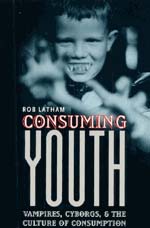
Inspired by Marx's use of the cyborg vampire as a metaphor for the objectification of physical labor in the factory, Latham shows how contemporary images of vampires and cyborgs illuminate the contradictory processes of empowerment and exploitation that characterize the youth-consumer system. While the vampire is a voracious consumer driven by a hunger for perpetual youth, the cyborg has incorporated the machineries of consumption into its own flesh. Powerful fusions of technology and desire, these paired images symbolize the forms of labor and leisure that American society has staked out for contemporary youth.
A startling look at youth in our time, Consuming Youth will interest anyone concerned with film, television, and popular culture.
A collection of essays and stories written in Spanish by students for students.
Contar Historias: Escritura creativa en el aula es una colección de ensayos e historias de no ficción escritas por estudiantes de grado y pregrado que tomaron cursos y/o asistieron a talleres de escritura impartidos el Departamento de Español y Portugués en la Universidad de Texas en Austin. El libro es una muestra del trabajo creativo de estudiantes que hablan español en casa pero que nunca escribieron un texto creativo en esta lengua; estudiantes para quienes el español es su segunda, tercera e incluso cuarta lengua, y estudiantes para quienes es su lengua materna. La diversidad de voces y la amplia raigambre cultural, lingüística y geográfica de la que emergen se juntan en este volumen que refleja la multiplicidad de maneras en que el español apela a las nuevas generaciones de estudiantes, no solo en UT sino en todo el país.
Contar historias: Escritura creativa en el aula (Telling Stories: Creative Writing in the Classroom) is a remarkable collection of topical essays and poignant stories written by undergraduate and graduate students who took courses and/or writing workshops offered by the Spanish Creative Writing Initiative in the Department of Spanish and Portuguese at the University of Texas at Austin. The book showcases an abundance of amazingly creative work and includes heritage speakers who have never before written a creative work in Spanish; students for whom Spanish is a second, third, and even fourth language; and native speakers. The diversity of voices from an array of cultural, linguistic, and geographical backgrounds collected in this volume reflects the multiplicity of ways in which Spanish appeals to students, not just at UT, but everywhere.
The stories include—but are not limited to—intimate tales of attending college; personal testimonials on the effects of climate change, experiences navigating the US health system, and accounts of many beautiful memories from childhood. They reveal the moving and diverse ways of communicating in Spanish and are themselves potent arguments for the importance of using creativity, working collaboratively, and telling stories in the classroom.
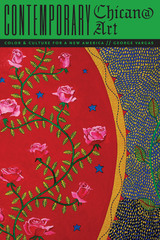
From its inception in the 1960s to its present form, contemporary Mexican American or Chicano art has developed as an art of identity, asserting the uniqueness of Chicanos and their dual Mexican and U.S. American cultural backgrounds. Because it emerged as a social phenomenon, however, many people outside the Chicano community have perceived Chicano art as merely protest art or social commentary, and Mexican American artists have been largely ignored in mainstream museums and absent in art history texts on American art. Yet more than ever before, Chicano art is diverse in medium, style, technique, and content—the cutting edge of a bold attempt to redefine and advance the American experience through new ideas of who we are as Americans and what American art is.
Contemporary Chican@ Art is a general introduction and guide to one of the most exciting and meaningful expressions in contemporary American art. Intended for the casual reader as well as for art history scholars and students, the book provides an overview of work created from the 1960s to the present. George Vargas follows the dramatic evolution of Chicano art within the broader context of American cultural history. He shows that while identity politics was and still is a prevailing force in Chicano expression, Chicano art has undergone a remarkable transformation, shifting from a strict Chicano perspective to a more universal one, while still remaining a people's art. In the concluding chapter, Vargas takes an in-depth look at selected Chicano artists who share their thoughts about the Chicano artistic enterprise and their own work.
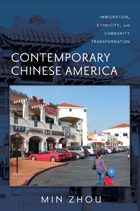
Contemporary Chinese America is the most comprehensive sociological investigation of the experiences of Chinese immigrants to the United States—and of their offspring—in the late twentieth and early twenty-first centuries. The author, Min Zhou, is a well-known sociologist of the Chinese American experience. In this volume, she collects her original research on a range of subjects, including the causes and consequences of emigration from China, demographic trends of Chinese Americans, patterns of residential mobility in the U.S., Chinese American "ethnoburbs," immigrant entrepreneurship, ethnic enclave economies, gender and work, Chinese language media, Chinese schools, and intergenerational relations. The concluding chapter, "Rethinking Assimilation," ponders the future for Chinese Americans. Also included are an extensive bibliography and a list of recommended documentary films.
While the book is particularly well-suited for college courses in Chinese American studies, ethnic studies, Asian studies, and immigration studies, it will interest anyone who wants to more fully understand the lived experience of contemporary Chinese Americans.
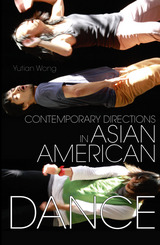
The contributors to this volume address such topics as the role of the 1960s Asian American Movement in creating Japanese American taiko groups, and the experience of internment during World War II influencing butoh dance in Canada. Essays about artists such as Jay Hirabayashi, Alvin Tolentino, Shen Wei, Kun-Yang Lin, Yasuko Yokoshi, Eiko & Koma, Sam Kim, Roko Kawai, and Denise Uyehara look closely at the politics of how Asian aesthetics are set into motion and marketed. The volume includes first-person narratives, interviews, ethnography, cultural studies, performance studies, and comparative ethnic studies.
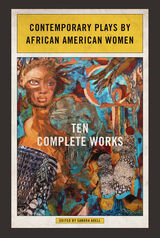
Selections: Blue Door, by Tanya Barfield; Levee James, by S. M. Shephard-Massat; Hoodoo Love, by Katori Hall; Carnaval, by Nikkole Salter; Single Black Female, by Lisa B. Thompson; Fabulation, or The Re-Education of Undine, by Lynn Nottage; BlackTop Sky, by Christina Anderson; Voyeurs de Venus, by Lydia Diamond; Fedra, by J. Nicole Brooks; and Uppa Creek: A Modern Anachronistic Parody in the Minstrel Tradition, by Keli Garrett.
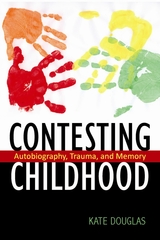
Drawing on trauma and memory studies and theories of authorship and readership, Contesting Childhood offers commentary on the triumphs, trials, and tribulations that have shaped this genre. Douglas examines the content of the narratives and the limits of their representations, as well as some of the ways in which autobiographies of youth have become politically important and influential. This study enables readers to discover how stories configure childhood within cultural memory and the public sphere.
In this study of Gilded Age literature and culture, Ben Railton proposes that in the years after Reconstruction, America’s identity was often contested through distinct and competing conceptions of the nation’s history. He argues that the United States moved toward unifying and univocal historical narratives in the years between the Centennial and Columbian Expositions, that ongoing social conflict provided sites for complications of those narratives, and that works of historical literature offer some of the most revealing glimpses into the nature of those competing visions.
Gilded Age scholarship often connects the period to the 20th-century American future, but Railton argues that it is just as crucial to see how the era relates to the American past. He closely analyzes the 1876 and 1893 Expositions, finding that many of the period’s central trends, from technology to imperialism, were intimately connected to particular visions of the nation’s history. Railton’s concern is with four key social questions: race, Native Americans, women, and the South. He provides close readings of a number of texts for the ways they highlight these issues. He examines established classics (The Adventures of Huck Finn and The Bostonians); newer additions to the canon (The Conjure Woman, Life Among the Piutes, The Story of Avis); largely forgotten best-sellers (Uncle Remus, The Grandissimes); unrecovered gems (Ploughed Under, Where the Battle Was Fought); and autobiographical works by Douglass and Truth, poems by Harper and Piatt, and short stories by Woolson and Cook.
These readings, while illuminating the authors themselves, contribute to ongoing conversations over historical literature’s definition and value, and a greater understanding of not only American society in the Gilded Age, but also debates on our shared but contested history that remain very much alive in the present.
North America is more a political and an economic invention than a place people call home. Nonetheless, the region shared by the United States and its closest neighbors, North America, is an intriguing frame for comparative American studies. Continental Divides is the first book to study the patterns of contact, exchange, conflict, and disavowal among cultures that span the borders of Canada, the United States, and Mexico.
Rachel Adams considers a broad range of literary, filmic, and visual texts that exemplify cultural traffic across North American borders. She investigates how our understanding of key themes, genres, and periods within U.S. cultural study is deepened, and in some cases transformed, when Canada and Mexico enter the picture. How, for example, does the work of the iconic American writer Jack Kerouac read differently when his Franco-American origins and Mexican travels are taken into account? Or how would our conception of American modernism be altered if Mexico were positioned as a center of artistic and political activity? In this engaging analysis, Adams charts the lengthy and often unrecognized traditions of neighborly exchange, both hostile and amicable, that have left an imprint on North America’s varied cultures.
Applying a broad geographical approach to comparative Latino literary and cultural studies, Continental Shifts illuminates how the discursive treatment of Latinos changed dramatically following the enactment of NAFTA—a shift exacerbated by 9/11. While previous studies of immigrant representation have focused on single regions (the US/Mexico border in particular), specific genres (literature vs. political rhetoric), or individual groups, Continental Shifts unites these disparate discussions in a provocative, in-depth examination.
Bringing together a wide range of groups and genres, this intercultural study explores novels by Latin American and Latino writers, a border film by Tommy Lee Jones and Guillermo Arriaga, “viral” videos of political speeches, popular television programming (particularly shows that feature incarceration and public shaming), and user-generated YouTube videos. These cultural products reveal the complexity of Latino representations in contemporary discourse. While tropes of Latino migrants as threatening, diseased foreign bodies date back to the nineteenth century, Continental Shifts marks the more pernicious, recent images of Latino laborers (legal and not) in a variety of contemporary media. Using vivid examples, John Riofrio demonstrates the connections between rhetorical and ideological violence and the physical and psychological violence that has more intensely plagued Latino communities in recent decades. Culminating with a consideration of the “American” identity, this eye-opening work ultimately probes the nation’s ongoing struggle to uphold democratic ideals amid dehumanizing multiethnic tension.
From Emerson to Rorty, American criticism has grappled in one way or another with the problem of modernity—specifically, how to determine critical and cultural standards in a world where every position seems the product of an interpretation. Part intellectual history, part cultural critique, this provocative book is an effort to shake American thought out of the grip of the nineteenth century—and out of its contingency blues.
Paul Jay focuses his analysis on two strands of American criticism. The first, which includes Richard Poirier and Giles Gunn, has attempted to revive what Jay insists is an anachronistic pragmatism derived from Emerson, James, and Dewey. The second, represented most forcefully by Richard Rorty, tends to reduce American criticism to a metadiscourse about the contingent grounds of knowledge. In chapters on Emerson, Whitman, Santayana, Van Wyck Brooks, Dewey, and Kenneth Burke, Jay examines the historical roots of these two positions, which he argues are marked by recurrent attempts to reconcile transcendentalism and pragmatism. A forceful rejection of both kinds of revisionism, Contingency Blues locates an alternative in the work of the “border studies” critics, those who give our interest in contingency a new, more concrete form by taking a more historical, cultural, and anthropological approach to the invention of literature, subjectivity, community, and culture in a pan-American context.
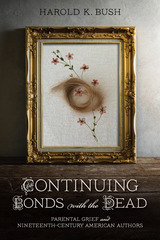
Grief transformed into legacy—how loss shaped the soul of American literature.
Harold K. Bush's Continuing Bonds with the Dead examines the profound transfiguration that the death of a child wrought on the literary work of nineteenth-century American writers. Taking as his subjects Harriet Beecher Stowe, Abraham Lincoln, William Dean Howells, Mark Twain, and W. E. B. Du Bois, Bush demonstrates how the death of a child became the defining "before-and-after moment" in their lives as adults and as artists. In narrating their struggles, Bush maps the intense field of creative energy induced by reverberating waves of parental grief and the larger nineteenth-century culture of mortality and grieving.
Bush explores in detail how each of these five writers grappled with and were altered by the loss of a child. He writes, for example, with moving insights about how the famed author of Adventures of Huckleberry Finn found himself adrift on a river of grief when meningitis struck down his daughter, Susy. In his deeply learned exploration of Twain's subsequent work, Bush illuminates how Twain wrote to cope with Susy's death, to make sense of her persistent presence in his life, and possibly to redeem her loss. Passionate and personal, Bush's insightful prose traces the paths of personal transformation each of these emblematic American writers took in order to survive the spiritual trauma of loss.
The savage Civil War was America's shared "before and after moment," the pivot upon which the nation's future swung. Bush's account of these five writers' grief amplifies our understanding of America's evolving, national relationship to mourning from then to the present.
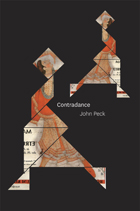

In Control Bird Alt Delete, the reader is invited to explore strange landscapes: some based on the ruins of New England and others following the architectural prints of the unconscious. The reader walks through woods filled with cellar holes, rock walls, and lilac bushes, and is made to think of people gone missing. Robert Frost meets Times Square. Nature intrudes in unexpected ways on domestic settings—and vice versa—domestic and industrial settings appear in bits inside the pastoral. Birds, one-dimensional but strangely wise, flit back and forth and rebelliously tape up their songs. The senses are thoroughly blended, leading to strange combinations and sensory experiences, to states of mindfulness and blizzard distraction.
All the while, the unconscious threatens to intrude, with its underlined places, its trap doors inside ordinary conversations, the mazes it hangs up like “welcome home” banners next to people’s mouths while they speak. The reader follows the first-person I through mazes, office spaces, and coils of highway traffic, hoping for some redemption, some sort of answer to all the deletion.

Controlling Anger examines the dilemmas facing rural people who live within the broader context of political instability. Following Uganda’s independence from Britain in 1962, the Bagisu men of Southeastern Uganda developed a reputation for extreme violence.
Drawing on a wide range of historical sources including local court records, statistical survey analysis, and intensive fieldwork, Suzette Heald portrays and analyzes the civil violence that grew out of intense land shortage, the marginalization of the Gisu under British rule, and the construction of male gender identity among the Gisu. Now available in a paperback edition with a new preface by the author, Controlling Anger is an important contribution to rural sociology in Africa.
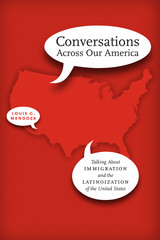
In the summer of 2007, Louis G. Mendoza set off on a bicycle trip across the United States with the intention of conducting a series of interviews along the way. Wanting to move beyond the media’s limited portrayal of immigration as a conflict between newcomers and “citizens,” he began speaking with people from all walks of life about their views on Latino immigration. From the tremendous number of oral histories Mendoza amassed, the resulting collection offers conversations with forty-three different people who speak of how they came to be here and why they made the journey. They touch upon how Latino immigration is changing in this country, and how this country is being changed by Latinoization. Interviewees reflect upon the concerns and fears they’ve encountered about the transformation of the national culture, and they relate their own experiences of living and working as “other” in the United States.
Mendoza’s collection is unique in its vastness. His subjects are from big cities and small towns. They are male and female, young and old, affluent and impoverished. Many are political, striving to change the situation of Latina/os in this country, but others are “everyday people,” reflecting upon their lives in this country and on the lives they left behind. Mendoza’s inclusion of this broad swath of voices begins to reflect the diverse nature of Latino immigration in the United States today.
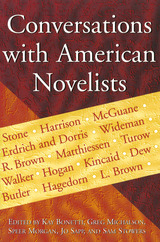
Readers of fine novels cherish the opportunity to hear their favorite novelists speak directly, without commentary or interpretation, about how their lives and concerns drive their fiction writing. For twenty years The Missouri Review has brought these readers some of the most compelling and thought- provoking literary interviews in print. In this collection of fifteen in-depth interviews with contemporary novelists, the authors discuss the style and themes of their work, their writing habits, their cultural and social backgrounds, and larger aesthetic issues with refreshing insight about themselves and their art.
Originally conducted for the American Audio Prose Library, the interviews were then edited for publication in The Missouri Review. Here they are reproduced with an introduction and with a brief biographical and bibliographical headnote for each writer. These candid interviews with some of our favorite novelists are sure to delight all readers.
Authors Interviewed in This Volume:Robert Stone
Jamaica Kincaid
Jim Harrison
Tom McGuane
Louise Erdrich and Michael Dorris
John Edgar Wideman
Robb Forman Dew
Rosellen Brown
Peter Matthiessen
Scott Turow
Margaret Walker
Linda Hogan
Robert Olen Butler
Jessica Hagedorn
Larry Brown
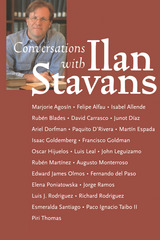
Spontaneous and surprising, these conversations reflect Latino life in the United States in all its facets. Among the more than two dozen selections, Edward James Olmos talks about Hispanics in Hollywood; John Leguizamo describes how he shapes a stage show; author Richard Rodriguez reflects on his gang background; Esmeralda Santiago takes on the Puerto Rican stereotype; and Piri Thomas shares thoughts on the writing of Down These Mean Streets. "A conversation is a tango," writes Stavans, "for it takes two to dance it." Conversations with Ilan Stavans invites readers to catch the rhythm and enjoy these unique meetings of minds.

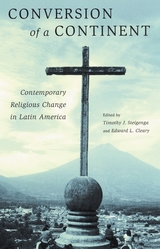
Conversion of a Continent brings together twelve original essays that document and explore competing explanations for how and why conversion has occurred. Contributors draw on various insights from social movement theory to religious studies to help outline its impact on national attitudes and activities, gender relations, identity politics, and reverse waves of missions from Latin America aimed at the American immigrant community.
Unlike other studies on religious conversion, this volume pays close attention to who converts, under what circumstances, the meaning of conversion to the individual, and how the change affects converts’ beliefs and actions. The thematic focus makes this volume important to students and scholars in both religious studies and Latin American studies.
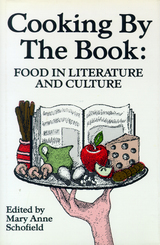
The second part of Cooking by the Book turns to the more diverse food rhetorics of the marketplace. What, for example, is the fast food rhetoric? Why are there so many eating disorders in our society? Is it possible to teach philosophy through cookery? How long has vegetarianism been popular?

Cooking Plain, Illinois Country Style by Helen Walker Linsenmeyer presents a collection of family recipes created prior to 1900 and perfected from generation to generation, mirroring the delicious and distinctive kind of cookery produced by the mix of people who settled the Illinois Country during this period. Some recipes reflect a certain New England or Southern influence, while others echo a European heritage. All hark back to a simpler style of living, when cooking was plain yet flavorful.
The recipes specify the use of natural ingredients (including butter, lard, and suet) rather than synthetic or ready-mixed foods, which were unavailable in the 1800s. Cooking at the time was pure and unadulterated, and portions were large. Strength-giving food was essential to health and endurance; thus fare was pure, hearty, flavorful, and wholesome.
The many treasures of Cooking Plain, Illinois Country Style include
• basic recipes for mead, originally served to the militiamen of Jackson County; sumac lemonade, made the Indian way; root beer, as it was originally made;
• soups of many kinds—from wholesome vegetable to savory sorrel leaf, enjoyed by the Kaskaskia French;
• old-fashioned fried beefsteak, classic American pot roast and gravy, as well as secret marinades to tenderize the tougher but more flavorful cuts of meat;
• methods for preparing and cooking rabbit, squirrel, wild turkey, venison, pheasant, rattlesnake, raccoon, buffalo, and fish;
• over one hundred recipes for wheat breads, sweet breads, corn breads, and pancakes;
• an array of delectable desserts and confections, including puddings, ice cream, taffy, and feathery-light cakes and pies;
• sections on the uses of herbs, spices, roots, and weeds; instructions for making sausage, jerky, and smoked fish and for drying one’s own fruits and vegetables; and household hints on everything from making lye soap to cooking for the sick.
And there are extra-special nuggets, too, for Mrs. Linsenmeyer laces her cookbook with interesting biographical notes on a number of the settlers and the origin of many of the foods they used. There is also a wealth of historical information on lifestyles and cooking before 1900, plus helpful tips on the use of old-fashioned cooking utensils.
A working cookbook complete in its coverage of every area of food preparation, Cooking Plain, Illinois Country Style will be used and treasured as much today as its recipes were by families of an earlier century. The recipes are not gourmet, but they are certain to please today’s cooks, especially those interested in using local ingredients and getting back to a more natural way of cooking and eating.

Just remembering the crispy fried chicken and luscious peach cobblers a grandmother or aunt used to make can set your mouth watering. And since remembering is no substitute for eating, cooks across the country have turned to Cooking Texas Style to find recipes for the comfort foods we love best. Thirty years after its first publication, popular acclaim has made this collection of favorite family recipes the standard source for traditional Texas cooking.
Here are over three hundred tasty recipes from the kitchens of Candy Wagner and Sandra Marquez. You’ll find classic Texas dishes such as chicken-fried steak, barbecue, chili, guacamole, and cornbread hot with jalapeños, as well as novel, exciting ways to prepare old favorites such as Tortilla Soup, Fajitas, and Chicken and Dumplings. Organized for easy reference, all the recipes are clearly explained, simple to prepare, and simply delicious. Cooking Texas Style is an invaluable addition to the kitchen bookshelf of anyone interested in cooking—and eating—Texas style.
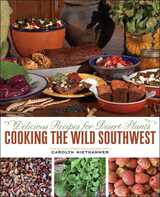
Many people’s idea of cooking with southwestern plants begins and ends with prickly pear jelly. With this update to the classic Tumbleweed Gourmet, master cook Carolyn Niethammer opens a window on the incredible bounty of the southwestern deserts and offers recipes to help you bring these plants to your table. Included here are sections featuring each of twenty-three different desert plants. The chapters include basic information, harvesting techniques, and general characteristics. But the real treat comes in the form of some 150 recipes collected or developed by the author herself. Ranging from every-day to gourmet, from simple to complex, these recipes offer something for cooks of all skill levels. Some of the recipes also include stories about their origin and readers are encouraged to tinker with the ingredients and enjoy desert foods as part of their regular diet.
Featuring Paul Mirocha’s finely drawn illustrations of the various southwestern plants discussed, this volume will serve as an indispensible guide from harvest to table. Whether you’re looking for more ways to prepare local foods, ideas for sustainable harvesting, or just want to expand your palette to take in some out-of-the-ordinary flavors, Cooking the Wild Southwest is sure to delight.
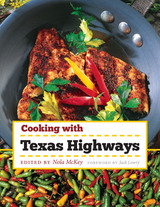
Whether you're hungry for down-home barbecue and Tex-Mex, or you want to try more exotic dishes such as Paella Valenciana and Thai Pesto, Texas Highways has long been a trusted source for delicious recipes that reflect wide-ranging Lone Star tastes. The state's official travel magazine published its first Texas Highways Cookbook, which has sold 20,000 copies, in 1986. Responding to the public's demand for a new collection of the magazine's recipes, the editors are pleased to bring you Cooking with Texas Highways, a compilation of more than 250 recipes that are as richly diverse and flavorful as Texas itself.
Cooking with Texas Highways samples all the major ethnic cuisines of the state with recipes from home cooks, well-known chefs, and popular restaurants. It offers a varied and intriguing selection of snacks and beverages, breads, soups and salads, main dishes, vegetables and sides, sauces and spreads, desserts, and more. A special feature of this cookbook is a chapter on Dutch-oven cooking, which covers all the basics for cooking outdoors with live coals, including seventeen mouth-watering recipes. In addition, you'll find dozens of the lovely color photographs that have long made Texas Highways such a feast for the eyes, along with tips on cooking techniques and sources for ingredients and stories about some of the folks who created the recipes. If you want to sample all the tastes of Texas, there's no better place to start than Cooking with Texas Highways.
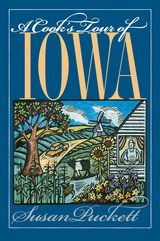

Charting a new course in the criticism of postwar fiction, Cool Characters examines the changing status of irony in American cultural and political life from World War II to the present, showing how irony migrated from the countercultural margins of the 1950s to the cultural mainstream of the 1980s. Along the way, irony was absorbed into postmodern theory and ultimately became a target of recent writers who have sought to create a practice of “postirony” that might move beyond its limitations.
As a concept, irony has been theorized from countless angles, but Cool Characters argues that it is best understood as an ethos: an attitude or orientation toward the world, embodied in different character types, articulated via literary style. Lee Konstantinou traces five such types—the hipster, the punk, the believer, the coolhunter, and the occupier—in new interpretations of works by authors including Ralph Ellison, William S. Burroughs, Thomas Pynchon, Kathy Acker, Dave Eggers, William Gibson, Jennifer Egan, Jonathan Lethem, and Rachel Kushner.
For earlier generations of writers, irony was something vital to be embraced, but beginning most dramatically with David Foster Wallace, dissatisfaction with irony, especially with its alleged tendency to promote cynicism and political passivity, gained force. Postirony—the endpoint in an arc that begins with naive belief, passes through irony, and arrives at a new form of contingent conviction—illuminates the literary environment that has flourished in the United States since the 1990s.

Only by understanding the enduring poverty of Brazil can one hope to understand the recent growth of Protestant evangelical churches there, Cecília Loreto Mariz contends. Her study investigates how religious groups support individualism and encourage the poor to organize. Groups with shared values are then able to develop strategies to cope with poverty and, ultimately, to transform the social structure.
Interviews with members and leaders of religious groups, accounts of meetings, and close readings of religious literature contribute to a realistic account of Christian base communities and Assembly of God churches, folk Catholic tradition, and Afro Brazilian Spiritism.
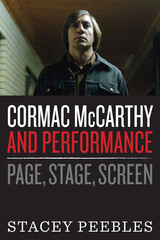
Cormac McCarthy is renowned as the author of popular and acclaimed novels such as Blood Meridian, All the Pretty Horses, and The Road. Throughout his career, however, McCarthy has also invested deeply in writing for film and theater, an engagement with other forms of storytelling that is often overlooked. He is the author of five screenplays and two plays, and he has been significantly involved with three of the seven film adaptations of his work. In this book, Stacey Peebles offers the first extensive overview of this relatively unknown aspect of McCarthy’s writing life, including the ways in which other artists have interpreted his work for the stage and screen.
Drawing on many primary sources in McCarthy’s recently opened archive, as well as interviews, Peebles covers the 1977 televised film The Gardener’s Son; McCarthy’s unpublished screenplays from the 1980s that became the foundation for his Border Trilogy novels and No Country for Old Men; various successful and unsuccessful productions of his two plays; and all seven film adaptations of his work, including John Hillcoat’s The Road (2009) and the Coen brothers’ Oscar-winning No Country for Old Men (2007). Emerging from this narrative is the central importance of tragedy—the rich and varied portrayals of violence and suffering and the human responses to them—in all of McCarthy’s work, but especially his writing for theater and film.
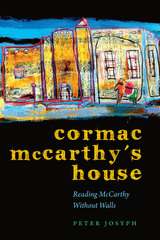
Novelist Cormac McCarthy’s brilliant and challenging work demands deep engagement from his readers. In Cormac McCarthy’s House, author, painter, photographer, and actor-director Peter Josyph draws on a wide range of experience to pose provocative, unexpected questions about McCarthy’s work, how it is achieved, and how it is interpreted.
As a visual artist, Josyph wrestles with the challenge of rendering McCarthy’s former home in El Paso as a symbol of a great writer’s workshop. As an actor and filmmaker, he analyzes the high art of Tommy Lee Jones in The Sunset Limited and No Country for Old Men. Invoking the recent suicide of a troubled friend, he grapples with the issue of “our brother’s keeper” in The Crossing and The Sunset Limited. But for Josyph, reading the finest prose-poet of our day is a project into which he invites many voices, and his investigations include a talk with Mark Morrow about photographing McCarthy while he was writing Blood Meridian; an in-depth conversation with director Tom Cornford on the challenges of staging The Sunset Limited and The Stonemason; a walk through the streets, waterfronts, and hidden haunts of Suttree with McCarthy scholar and Knoxville resident Wesley Morgan; insights from the cast of The Gardener’s Son about a controversial scene in that film; actress Miriam Colon’s perspective on portraying the Dueña Alfonsa opposite Matt Damon in All the Pretty Horses; and a harsh critique of Josyph’s views on The Crossing by McCarthy scholar Marty Priola, which leads to a sometimes heated debate. Illustrated with thirty-one photographs, Josyph’s unconventional journeys into the genius of Cormac McCarthy form a new, highly personal way of appreciating literary greatness.
In the continuing redefinition of the American West, few recent writers have left a mark as indelible as Cormac McCarthy. A favorite subject of critics and fans alike despite—or perhaps because of—his avoidance of public appearances, the man is known solely through his writing. Thanks to his early work, he is most often associated with a bleak vision of humanity grounded in a belief in man's primordial aggressiveness.
McCarthy scholar Barcley Owens has written the first book to concentrate exclusively on McCarthy's acclaimed western novels: Blood Meridian, National Book Award winner All the Pretty Horses, The Crossing, and Cities of the Plain. In a thought-provoking analysis, he explores the differences between Blood Meridian and the Border Trilogy novels and shows how those differences reflect changing conditions in contemporary American culture.
Owens captures both Blood Meridian's wanton violence and the Border Trilogy's fond remembrance of the Old West. He shows how this dramatic shift from atavistic brutality to nostalgic Americana suggests that McCarthy has finally given his readers what they most want—the stuff of their mythic dreams.
Owens's study is both an incisive look at one of our most important and demanding authors and a penetrating analysis of violence and myth in American culture. Fans of McCarthy's work will find much to consider for ongoing discussions of this influential body of work.
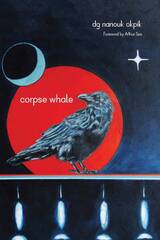
A self-proclaimed “vessel in which stories are told from time immemorial,” poet dg nanouk okpik seamlessly melds both traditional and contemporary narrative, setting her apart from her peers. The result is a collection of poems that are steeped in the perspective of an Inuit of the twenty-first century—a perspective that is fresh, vibrant, and rarely seen in contemporary poetics.
Fearless in her craft, okpik brings an experimental, yet poignant, hybrid aesthetic to her first book, making it truly one of a kind. “It takes all of us seeing, hearing, touching, tasting, and smelling to be one,” she says, embodying these words in her work. Every sense is amplified as the poems, carefully arranged, pull the reader into their worlds. While each poem stands on its own, they flow together throughout the collection into a single cohesive body.
The book quickly sets up its own rhythms, moving the reader through interior and exterior landscapes, dark and light, and other spaces both ecological and spiritual. These narrative, and often visionary, poems let the lives of animal species and the power of natural processes weave into the human psyche, and vice versa.
Okpik’s descriptive rhythms ground the reader in movement and music that transcend everyday logic and open up our hearts to the richness of meaning available in the interior and exterior worlds.
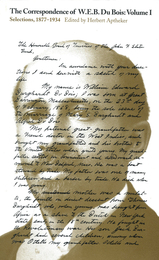
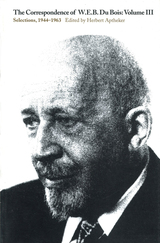
Scholar, author, editor, teacher, reformer, and civil rights leader, W.E.B. Du Bois (1868–1963) was a major figure in American life and one of the earliest proponents of equality for Black Americans. He was a founder and leader of the Niagara Movement, the NAACP, and the Pan-African Movement; a progenitor of the 1920s Harlem Renaissance; an advocate of anticolonialism, anti-imperialism, unionism, and equality for women; and a champion of the rights of oppressed people around the world.
The three-volume Correspondence of W.E.B. Du Bois offers a unique perspective on Du Bois's experiences and views. In recognition of the significance of the Correspondence, the final volume was named a Best Book of the Year by the New York Times Book Review.
Herbert Aptheker has provided an introduction and notes to each volume, illuminating the circumstances and identifying the personalities involved in the correspondence. A long time friend and colleague of Du Bois, Aptheker is a well-known historian of the African American experience. In 1939 and again in 1969, he won the history award given by the Association for the Study of Negro Life and History. Among his most prominent works are American Negro Slave Revolts and the three-volume Documentary History of the Negro People in the United States.
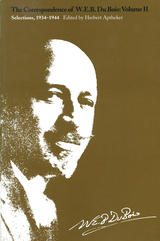
Scholar, author, editor, teacher, reformer, and civil rights leader, W.E.B. Du Bois (1868–1963) was a major figure in American life and one of the earliest proponents of equality for black Americans. He was a founder and leader of the Niagara Movement, the NAACP, and the Pan-African Movement; a progenitor of the 1920s Harlem Renaissance; an advocate of anticolonialism, anti-imperialism, unionism, and equality for women; and a champion of the rights of oppressed people around the world.
The three-volume Correspondence of W.E.B. Du Bois offers a unique perspective on Du Bois's experiences and views. In recognition of the significance of the Correspondence, the final volume was named a Best Book of the Year by the New York Times Book Review.
Herbert Aptheker has provided an introduction and notes to each volume, illuminating the circumstances and identifying the personalities involved in the correspondence. A long time friend and colleague of Du Bois, Aptheker is a well-known historian of the African American experience. In 1939 and again in 1969, he won the history award given by the Association for the Study of Negro Life and History. Among his most prominent works are American Negro Slave Revolts and the three-volume Documentary History of the Negro People in the United States.
Scholar, author, editor, teacher, reformer, and civil rights leader, W.E.B. Du Bois (1868–1963) was a major figure in American life and one of the earliest proponents of equality for black Americans. He was a founder and leader of the Niagara Movement, the NAACP, and the Pan-African Movement; a progenitor of the 1920s Harlem Renaissance; an advocate of anticolonialism, anti-imperialism, unionism, and equality for women; and a champion of the rights of oppressed people around the world.
The three-volume Correspondence of W.E.B. Du Bois offers a unique perspective on Du Bois's experiences and views. In recognition of the significance of the Correspondence, the final volume was named a Best Book of the Year by the New York Times Book Review.
Herbert Aptheker has provided an introduction and notes to each volume, illuminating the circumstances and identifying the personalities involved in the correspondence. A long time friend and colleague of Du Bois, Aptheker is a well-known historian of the African American experience. In 1939 and again in 1969, he won the history award given by the Association for the Study of Negro Life and History. Among his most prominent works are American Negro Slave Revolts and the three-volume Documentary History of the Negro People in the United States.
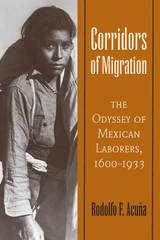
In the San Joaquin Valley Cotton Strike of 1933, frenzied cotton farmers murdered three strikers, intentionally starved at least nine infants, wounded dozens of people, and arrested more. While the story of this incident has been recounted from the perspective of both the farmers and, more recently, the Mexican workers, this is the first book to trace the origins of the Mexican workers’ activism through their common experience of migrating to the United States.
Rodolfo F. Acuña documents the history of Mexican workers and their families from seventeenth-century Chihuahua to twentieth-century California, following their patterns of migration and describing the establishment of communities in mining and agricultural regions. He shows the combined influences of racism, transborder dynamics, and events such as the industrialization of the Southwest, the Mexican Revolution, and World War I in shaping the collective experience of these people as they helped to form the economic, political, and social landscapes of the American Southwest in their interactions with agribusiness and absentee copper barons.
Acuña follows the steps of one of the murdered strikers, Pedro Subia, reconstructing the times and places in which his wave of migrants lived. By balancing the social and geographic trends in the Mexican population with the story of individual protest participants, Acuña shows how the strikes were in fact driven by choices beyond the Mexican workers’ control. Their struggle to form communities graphically retells how these workers were continuously uprooted and their organizations destroyed by capital. Corridors of Migration thus documents twentieth-century Mexican American labor activism from its earliest roots through the mines of Arizona and the Great San Joaquin Valley cotton strike.
From a founding scholar of Chicano studies and the author of fifteen books comes the culmination of three decades of dedicated research into the causes and effects of migration and labor activism. The narrative documents how Mexican workers formed communities against all odds.
A debut full-length poetry collection from Sarah Lyn Rogers rewriting girlhood and summoning mischief
Sarah Lyn Rogers’s debut full-length collection is a tragicomic exploration of codependent and transactional relationships: economies of shame, gifts as debts, businesses run like families, and families run like businesses. What transgressions and abuses do we believe are acceptable fees for safety or love, and who upholds these myths? The poems in Cosmic Tantrum examine how our most intimate relationships shape the way we move through the wider world—and what happens when we reject the stories we’ve inherited about our worth.
Mariano Siskind’s groundbreaking debut book redefines the scope of world literature, particularly regarding the place of Latin America in its imaginaries and mappings. In Siskind’s formulation, world literature is a modernizing discursive strategy, a way in which cultures negotiate their aspirations to participate in global networks of cultural exchange, and an original tool to reorganize literary history. Working with novels, poems, essays, travel narratives, and historical documents, Siskind reads the way Latin American literary modernity was produced as a global relation, from the rise of planetary novels in the 1870s and the cosmopolitan imaginaries of modernism at the turn of the twentieth century, to the global spread of magical realism. With its unusual breadth of reference and firm but unobtrusive grounding in philosophy, literary theory, and psychoanalysis, Cosmopolitan Desires will have a major impact in the fields of Latin American studies and comparative literature.
During World War II and the early Cold War period, factors such as race, gender, sexual orientation, or class made a number of American writers feel marginalized in U.S. society. Cosmopolitan Minds focuses on a core of transnational writers—Kay Boyle, Pearl S. Buck, William Gardner Smith, Richard Wright, and Paul Bowles—who found themselves prompted to seek experiences outside of their home country, experiences that profoundly changed their self-understanding and creative imagination as they encountered alternative points of views and cultural practices in Europe, Asia, and Africa.
Alexa Weik von Mossner offers a new perspective on the affective underpinnings of critical and reflexive cosmopolitanism by drawing on theories of emotion and literary imagination from cognitive psychology, philosophy, and cognitive literary studies. She analyzes how physical dislocation, and the sometimes violent shifts in understanding that result from our affective encounters with others, led Boyle, Buck, Smith, Wright, and Bowles to develop new, cosmopolitan solidarities across national, ethnic, and religious boundaries. She also shows how, in their literary texts, these writers employed strategic empathy to provoke strong emotions such as love, sympathy, compassion, fear, anger, guilt, shame, and disgust in their readers in order to challenge their parochial worldviews and practices. Reading these texts as emotionally powerful indictments of institutionalized racism and national violence inside and outside of the United States, Weik von Mossner demonstrates that our emotional engagements with others—real and imagined—are crucially important for the development of transnational and cosmopolitan imaginations.
Cosmopolitan Publics focuses on China's "cosmopolitans," Western-educated intellectuals who returned to Shanghai in the late 1920s to publish in English and who, ultimately, became both cultural translators and citizens of the wider world. Shuang Shen highlights their work in publications such as The China Critic and T'ien Hsia, providing readers with a broader understanding of the role and function of cultural mixing, translation, and multilingualism in China's cultural modernity.
Decades later, as nationalist biases and political restrictions emerged within China, the influence of the cosmopolitans was neglected and the significance of cosmopolitan practice was underplayed. Shen's encompassing study revisits and presents the experience of Chinese modernity as far more heterogeneous, emergent, and transnational than it has been characterized until now.
The first modern biography of Cotton Mather, David Levin's narrative makes clear the development of Mather's character and experience during forty years in which he was able to identify his own personal life with the fortunes of Congregational New England. On his relationship to his eminent father, the Puritan divine and Massachusetts statesman, Increase Mather, the history and cure of his stammer, his experience as a child prodigy at Harvard, his religious conversion, his vision of an angel, his leadership in the Glorious Revolution in Massachusetts, his encounters with the Devil during the witchcraft crises in Boston and Salem—on all these matters and more, Levin's account provides new interpretations that make this permanently controversial and legendary figure accessible and comprehensible in human as well as historical terms.
It is the triumph of Levin's biography that his subject's personal and literary lives are more closely woven into the fabric of the political history of his place and time than in any previous study. Mather's character, though seen sympathetically, develops in a narrative that deliberately avoids the constraints of prosecution and defense.
With sections that vary between poetry, science, Indigenous storytelling, numerical measurement, and narration, Valerie Martínez’s new work results in an epic panorama infused with the timely urgency of facing an apocalyptic future. This beautiful, tragic, and unusual poem is a testimonial, a warning, and a call to action that will captivate lovers of contemporary poetry and ecopoetry, environmentalists, and climate activists alike. Count skillfully calls on our collective desire to leave a livable world, filled with the potential for healing, as a legacy to the generations of children that come after us.
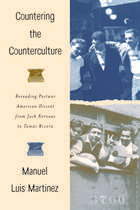
Rebelling against bourgeois vacuity and taking their countercultural critique on the road, the Beat writers and artists have long symbolized a spirit of freedom and radical democracy. Manuel Martinez offers an eye-opening challenge to this characterization of the Beats, juxtaposing them against Chicano nationalists like Raul Salinas, Jose Montoya, Luis Valdez, and Oscar Acosta and Mexican migrant writers in the United States, like Tomas Rivera and Ernesto Galarza.
In an innovative rereading of American radical politics and culture of the 1950s and 1960s, Martinez uncovers reactionary, neoromantic, and sometimes racist strains in the Beats’ vision of freedom, and he brings to the fore the complex stances of Latinos on participant democracy and progressive culture. He analyzes the ways that Beats, Chicanos, and migrant writers conceived of and articulated social and political perspectives. He contends that both the Beats’ extreme individualism and the Chicano nationalists’ narrow vision of citizenship are betrayals of the democratic ideal, but that the migrant writers presented a distinctly radical and inclusive vision of democracy that was truly countercultural.
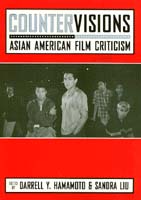
One of the anthology's key contributions is to trace the evolution of Asian American independent film practice over thirty years. Essays on the Japanese American internment and historical memory, essays on films by women and queer artists, and the reflections of individual film makers discuss independent productions as subverting or opposing the conventions of commercial cinema. But Countervisions also resists simplistic readings of "mainstream" film representations of Asian Americans and enumerations of negative images. Writing about Hollywood stars Anna May Wong and Nancy Kwan, director Wayne Wang, and erotic films, several contributors probe into the complex and ambivalent responses of Asian American audiences to stereotypical roles and commercial success. Taken together, the spirited, illuminating essays in this collection offer an unprecedented examination of a flourishing cultural production.


"The Courtesy is really an admirable book: it shows up the unreality of a lot of the other poetry one reads, dealing honestly and with that perversity which is a sign of thoughfulness, with the slight but heavy matter of our everyday defeats."—Michael Hoffman, Poetry Nation Review


"At forty-years-old and already the author of four superbly written books of poems, Shapiro has produced a work of such authority and originality that he has permanently enlarged my hopes and expectations for contemporary poetry. His risk-loving swiftness of perception and his affinity for stories that up-end convention and taboo have enabled him to reclaim, for poets of my generation, areas of feeling and linguistic virtuosity that originated with William Carlos Williams, Elizabeth Bishop, J. V. Cunningham, and Ivor Winters. It is hard for me to see how an ideal anthologist of the future will be able to include their names without gratefully including his."—Tom Sleigh, Boston Phoenix

The detainment and deportation of Martínez-Leyva’s brother grounds this exquisite collection in the all-too-common familial tragedy of political violence and discrimination. Martínez-Leyva honors the people, language, culture, and traditions that shaped him, revealing the indignities, large and small, experienced by a community that is too often misrepresented and maligned. “My voice was the only thing keeping us warm,” he writes, and the warmth from this striking debut collection is beautiful to behold.
Katelyn Hale Wood interprets these artists not as tokens in a white, male-dominated field, but as part of a continuous history of Black feminist performance and presence. Broadly, Cracking Up frames stand-up comedy as an important platform from which to examine citizenship in the United States, articulate Black feminist political thought, and subvert structures of power. Wood also champions comedic performance and theatre history as imperative contexts for advancing historical studies of race, gender, and sexuality. From the comedy routines popular on Black vaudeville circuits to stand-up on contemporary social media platforms, Cracking Up excavates an overlooked history of Black women who have made the art of joke-telling a key part of radical performance and political engagement.
Stephen Kampa’s poems are witty and restless in their pursuit of an intelligent modern faith. They range from a four-line satire of office inspirational posters to a lengthy meditation on the silence of God. The poems also revel in the prosodic possibilities of English’shigh and low registers: a twenty–one line homageto Lord Byron that turns on three rhymes (one of which is “eisegesis”); a sestina whose end words include “sentimental,” “Marseilles,” and “Martian;” sapphics on the death of Ray Charles; and intricately modulated stanzas on the 1931 Spanish–language movie version of Dracula.
Despite the metaphysical seriousness, there is alwaysan undercurrent of stylistic levity — a panoply of puns, comic rhymes, and loving misquotations of canonical literature — that suggests comedy and tragedy are inextricably bound in human experience.
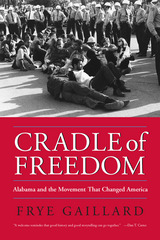
Cradle of Freedom puts a human face on the story of the black American struggle for equality in Alabama during the 1960s. While exceptional leaders such as Martin Luther King Jr., Rosa Parks, Fred Shuttlesworth, Ralph Abernathy, John Lewis, and others rose up from the ranks and carved their places in history, the burden of the movement was not carried by them alone. It was fueled by the commitment and hard work of thousands of everyday people who decided that the time had come to take a stand.
Cradle of Freedom is tied to the chronology of pivotal events occurring in Alabama the Montgomery bus boycott, the Freedom Rides, the Letter from the Birmingham Jail, the bombing of the 16th Street Baptist Church, Bloody Sunday, and the Black Power movement in the Black Belt. Gaillard artfully interweaves fresh stories of ordinary people with the familiar ones of the civil rights icons. We learn about the ministers and lawyers, both black and white, who aided the movement in distinct ways at key points. We meet Vernon Johns, King's predecessor at the Dexter Avenue Baptist Church in Montgomery, who first suggested boycotting the buses and who wrote later, "It is a heart strangely un-Christian that cannot thrill with joy when the least of men begin to pull in the direction of the stars." We hear from John Hulett who tells how terror of lynching forced him down into ditches whenever headlights appeared on a night road. We see the Edmund Pettus Bridge beatings from the perspective of marcher JoAnne Bland, who was only a child at the time. We learn of E. D. Nixon, a Pullman porter who helped organize the bus boycott and who later choked with emotion when, for the first time in his life, a white man extended his hand in greeting to him on a public street.
How these ordinary people rose to the challenges of an unfair system with a will and determination that changed their times forever is a fascinating and extraordinary story that Gaillard tells with his hallmark talent. Cradle of Freedom unfolds with the dramatic flow of a novel, yet it is based on meticulous research. With authority and grace, Gaillard explains how the southern state deemed the Cradle of the Confederacy became with great struggle, some loss, and much hope the Cradle of Freedom.
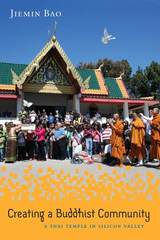
In Creating a Buddhist Community, Jiemin Bao shows how the Wat Thai participants practice Buddhism and rework gender relationships in the course of organizing temple space, teaching meditation, schooling children in Thai language and culture, merit making, fundraising, and celebrating festivals.
Bao’s detailed account of the process of creating an inclusive temple community with Thai immigrants as the majority helps to deconstruct the exoticized view of Buddhism in American culture. Creating a Buddhist Community also explores Wat Thai’s identification with both the United States and Thailand and how this transnational perspective reimagines and reterritorializes what is called American Buddhism.
“Shumway has written a penetrating and provocative account of the making of American civilization as an academic field.”
Gerald GraffUniversity of ChicagoDavid R. Shumway contends that American literature is the product of study - the deliberate invention of a discipline seeking to define the character and legitimate the existence of a specifically American civilization. He traces the various reconstitutions of American literature by examining the discipline’s practices and techniques, discourses and structures, paradigms and unstated assumptions.This genealogy begins around 1890, when American literature as defined by institutions outside the academy, such as magazines and publishing houses, acquired much of the ideology it would display in later phases, including sexism, racism, and class bias. Singular in its treatment of American literary study as a discipline rather than as criticism and in its insistence on the cultural and political work carried on by this discipline, Creating American Civilization will engage literary theorists and historians as well as individuals with an interest in American literature.
Using the idea that lowriding is an Indigenous way of being in the world, artist and historian Dylan A. T. Miner discusses the multiple roles that Aztlán has played at various moments in time, from the pre-Cuauhtemoc codices through both Spanish and American colonial regimes, past the Chicano Movement and into the present day. Across this “migration story,” Miner challenges notions of mestizaje and asserts Aztlán, as visualized by Xicano artists, as a form of Indigenous sovereignty.
Throughout this book, Miner employs Indigenous and Native American methodologies to show that Chicano art needs to be understood in the context of Indigenous history, anticolonial struggle, and Native American studies. Miner pays particular attention to art outside the U.S. Southwest and includes discussions of work by Nora Chapa Mendoza, Gilbert “Magú” Luján, Santa Barraza, Malaquías Montoya, Carlos Cortéz Koyokuikatl, Favianna Rodríguez, and Dignidad Rebelde, which includes Melanie Cervantes and Jesús Barraza.
With sixteen pages of color images, this book will be crucial to those interested in art history, anthropology, philosophy, and Chicano and Native American studies. Creating Aztlán interrogates the historic and important role that Aztlán plays in Chicano and Indigenous art and culture.
Corresponding to a particular form of popular culture, each section features two essays, one by an African American scholar and one by a Latino/a scholar, as well as a short response by each scholar to the other’s essay. The essays and responses are lively, varied, and often personal. One contributor puts forth a “brown” theology of hip hop that celebrates hybridity, contradiction, and cultural miscegenation. Another analyzes the content of the message transmitted by African American evangelical preachers who have become popular sensations through television broadcasts, video distribution, and Internet promotions. The other essays include a theological reading of the Latina body, a consideration of the “authenticity” of representations of Jesus as white, a theological account of the popularity of telenovelas, and a reading of African American ideas of paradise in one of Toni Morrison’s novels. Creating Ourselves helps to make popular culture available as a resource for theology and religious studies and for facilitating meaningful discussions across racial and ethnic boundaries.
Contributors. Teresa Delgado, James H. Evans Jr., Joseph De León, Cheryl Kirk-Duggan, Angel F. Méndez Montoya, Alexander Nava, Anthony B. Pinn, Mayra Rivera, Suzanne E. Hoeferkamp Segovia, Benjamín Valentín, Jonathan L. Walton, Traci C. West, Nancy Lynne Westfield, Sheila F. Winborne
Combining his skills as both a professional reviewer of theatre and a literary critic, Robert J. Andreach finds himself in a unique position to provide coherence to what most observers perceive as an unrelated welter of contemporary theatrical experiences. Exploring the theatre from the 1960s to the present, he shows the various ways in which the contemporary American theatre creates a personal, theatrical, and national self.
Andreach argues that the contemporary American theatre creates multiple selves that reflect and give voice to the many communities within our multicultural society. These selves are fragmented and enclaved, however, which makes necessary a counter movement that seeks, through interaction among the various parts, to heal the divisions within, between, and among them.
In his examination of the contemporary theatre, Andreach demonstrates that the plays and the performance art of the feminist, African-American, Hispanic-American, Asian-American, and Native American theatres are equal to the works created within the dominant Eurocentric culture.
He then turns to comparable works created within the culture of what performance artist Karen Finley calls the "one male god," works that reflect the breakup of an old order. He discusses the experimental theatre, which turns to the imagination to reveal the nature of the self, and concludes with an examination of recent American works, pointing out in each either the presence or absence of resolution within the divisions of self.

Credulity tells the fascinating story of mesmerism’s spread from the plantations of the French Antilles to the textile factory cities of 1830s New England. As it proliferated along the Eastern seaboard, this occult movement attracted attention from Ralph Waldo Emerson’s circle and ignited the nineteenth-century equivalent of flame wars in the major newspapers. But mesmerism was not simply the last gasp of magic in modern times. Far from being magicians themselves, mesmerists claimed to provide the first rational means of manipulating the credulous human tendencies that had underwritten past superstitions. Now, rather than propping up the powers of oracles and false gods, these tendencies served modern ends such as labor supervision, education, and mediated communication. Neither an atavistic throwback nor a radical alternative, mesmerism was part and parcel of the modern. Credulity offers us a new way of understanding the place of enchantment in secularizing America.
READERS
Browse our collection.
PUBLISHERS
See BiblioVault's publisher services.
STUDENT SERVICES
Files for college accessibility offices.
RECENTLY PUBLISHED



UChicago Accessibility Resources
home | accessibility | search | about | contact us
BiblioVault ® 2001 - 2025
The University of Chicago Press