
 A SCHOLARLY BOOK REPOSITORY
122 start with D start with D

Damn the Old Tinderbox! is the gripping tale of one of the Gilded Age’s forgotten calamities, a fire that remains among the deadliest unsolved arsons in American history, and a significant chapter in both the history of Milwaukee and the Midwest.
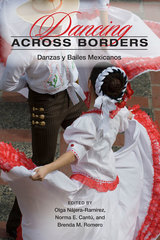
Contributors are Norma E. Cantú, Susan Cashion, María Teresa Ceseña, Xóchitl C. Chávez, Adriana Cruz-Manjarrez, Renée de la Torre Castellanos, Peter J. García, Rudy F. García, Chris Goertzen, Martha González, Elisa Diana Huerta, Sydney Hutchinson, Marie "Keta" Miranda, Olga Nájera-Ramírez, Shakina Nayfack, Russell Rodríguez, Brenda M. Romero, Nancy Lee Chalfa Ruyter, José Sánchez Jiménez, and Alberto Zárate Rosales.
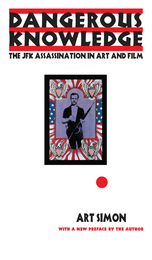
In his new Preface to this edition of Dangerous Knowledge, Art Simon discusses public fascination with celebrity deaths and recent assassination-related media-from documentaries to scholarly books to the scandalous video game JFK Reloaded-to show that the assassination continues to inspire writers, artists, and filmmakers.
Dangerous Knowledge examines the seminal works of art associated with the assassination, including Andy Warhol's silk screens, the underground films of Bruce Conner, and provocative Hollywood films like The Parallax View and JFK. Simon's investigation places assassination art and images within a historical context-one that helps us understand what the assassination has meant to American culture.

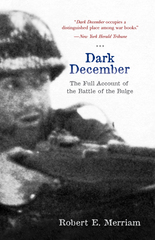
One of the Most Important Histories of the Greatest Battle on the Western Front in World War II
“Dark December occupies a distinguished place among war books. Every paragraph is based upon evidence, not flimsy wartime rumors. Technical enough for the professional, accurate enough for the historian (in fact, it is history of the best), it is lucid and understandable for the general reader.”—New York Herald Tribune
“If other veterans of the Army’s historical division can maintain Mr. Merriam’s high standard of stimulating, critical and painstaking work, we will be fortunate. Dark December can be heartily recommended to anyone faintly interested in the war.”—New York Times
“The book explodes a number of myths which have been winning their improper way into general belief.” —Arthur Schlesinger, Jr., Booklist
The massive German counteroffensive through Belgium’s Ardennes forest in December 1944 took the American and British armies by surprise and changed the outcome of the war. With whole divisions destroyed and decimated, the American army scrambled to contain the German threat, while also trying to determine how such an attack had gone undetected. The Americans succeeded in winning the month-long battle, commonly known as the Battle of the Bulge, through the tenacity of several pockets of troops, notably those in the Belgian town of Bastogne, and the remarkable rapid movement of Patton’s Third Army to seal the breech in the American lines. The battle stalled the British and American advances and lengthened the war with the result that the Soviet Union was able to make greater gains in Europe than previously anticipated. Dark December is a thorough and engrossing examination of the Battle of the Bulge by a historian who had the opportunity to prepare notes as the battle was occurring and consult classified American as well as German records. Notably, the book contains unique and critical information, including details gleaned from interviews conducted by the author with commanding officers on both sides, some of which are the only reports gathered from these sources. Originally published in 1947, this the first paperback edition with the complete original text and maps.
Neo-noir films exert their fascination not only through their suspense, shadowy atmosphere, and moral ambiguity, but also through their registration of the experience of American life in the long twilight of the American Dream. With a sharp curatorial eye and an elegant critical voice, Vernon Shetley interprets landmark works from the noir revival of the early 1970s to the present, showing how neo-noir reflects the darkening national mood as postwar prosperity gave way to economic stagnation and inequality, social alienation, and a deepening sense of crisis.
Through close readings of key films and overviews of neo-noir’s treatment of the genre’s defining themes and archetypes—desire and betrayal, corruption and alienation, the private detective and the femme fatale—Shetley delineates neo-noir’s exploration of anxieties about work, money, trust, and exchange. From Chinatown to Mulholland Drive, from Night Moves to Nightmare Alley, neo-noir’s marginalized characters and extreme situations emerge in Shetley’s account as powerful representations of concerns central to economic and social life. Combining illuminating analysis with lucid prose, this book offers scholars and general readers alike a fresh, penetrating understanding of the dynamics of neo-noir filmmaking and its continually renewed vitality over the last five decades.
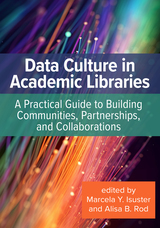
In five parts, Data Culture in Academic Libraries: A Practical Guide to Building Communities, Partnerships, and Collaborations can help you foster an institutional culture that favors the curation, creation, and wider use of datasets.
- Data at all Levels
- Data Services and Instruction
- Data Outreach
- Data Communities
- Data Partnerships

The contributors address issues such as accessibility needs; gaps regarding data collection and the need for more research; additional training for attorneys, court personnel, and prison staff; the need for more qualified sign language interpreters, including Certified Deaf Interpreters who provide services in court, prison, and juvenile facilities; substance use disorders; the school to prison nexus; and the need for advocacy. Students in training programs, researchers, attorneys, mental health professionals, sign language interpreters, family members, and advocates will be empowered by this much-needed resource to improve the experiences and outcomes for deaf people in the criminal justice system.
The Indian village of Deorala in Rajasthan, the northwestern Indian state that borders Pakistan, is neither remote nor feudal in the strictest sense. A tarmac road links the population of 10,000 to neighboring villages and towns, there is running water and electricity, and the villagers have had television for more than twenty years. On September 4, 1987, Deorala found itself in the center of a furor that awoke age-old conflicts in Indian society. Before a crowd of several thousand people, mostly men, a young woman dressed in her bridal finery was burned alive on her husband’s funeral pyre. The apparent revival of an ancient tradition opened old wounds in Indian society and focused world attention on the status and treatment of women in modern India.
The ancient practice of sati — the self-immolation of a woman on her husband’s funeral pyre — was outlawed by the British administration in India in 1829, and sati was widely believed to have died out. The fate of 18-year-old Roop Kanwar changed that perception. Mala Sen explores the reality of life and death for women in modern India in a study that is both illuminating and terrifying. The book is part journey through the India that the author knows and loves, and part exploration of the enigma that India still remains in the minds of many. Starting with Kanwar, Sen enters the worlds of three women: a goddess, a burned bride, and a woman accused of killing her daughter, and shows how, in this society in which ancient and modern apparently co-exist comfortably, there is increasingly cause for real alarm. She creates an image of a state in which political turmoil is constantly at the surface, and in which the role of women is constantly being redefined.

In A Death in Harlem, famed scholar Karla FC Holloway weaves a mystery in the bon vivant world of the Harlem Renaissance. Taking as her point of departure the tantalizingly ambiguous “death by misadventure” at the climax of Nella Larsen’s Passing, Holloway accompanies readers to the sunlit boulevards and shaded sidestreets of Jazz Age New York. A murder there will test the mettle, resourcefulness, and intuition of Harlem’s first “colored” policeman, Weldon Haynie Thomas.
Clear glass towers rising in Manhattan belie a city where people are often not what they seem. For some here, identity is a performance of passing—passing for another race, for another class, for someone safe to trust. Thomas’s investigation illuminates the societies and secret societies, the intricate code of manners, the world of letters, and the broad social currents of 1920s Harlem.
A Death in Harlem is an exquisitely crafted, briskly paced, and impeccably stylish journey back to a time still remembered as a peak of American glamour. It introduces Holloway as a fresh voice in storytelling, and Weldon Haynie Thomas as an endearing and unforgettable detective.
Japan, 1980s: A special police squad is tracking down one of the “afflicted” to recover the “stuff.” Although the operation seems like a drug bust, the “stuff” is actually some kind of text. Death Sentences—a work of science fiction that shares its conceit with the major motion picture The Ring—tells the story of a mysterious surrealist poem, penned in the 1940s, which, through low-tech circulation across time, kills its readers, including Arshile Gorky and Antonin Artaud, before sparking a wave of suicides after its publication in 1980s Japan. Mixing elements of Japanese hard-boiled detective story, horror, and science fiction, the novel ranges across time and space, from the Left Bank of Paris to the planet Mars.
Paris, 1948: André Breton anxiously awaits a young poet, Who May. He recalls their earlier encounter in New York City and the mysterious effects of reading Who May’s poem “Other World.” Upon meeting, Who May gives Breton another poem, “Mirror,” an even more unsettling work. Breton shares it with his fellow surrealists. Before Breton can discuss the poem with him, Who May vanishes. Who May contacts Breton about a third poem, “The Gold of Time,” and then slips into a coma and dies (or enters another dimension). Copies of the poem are mailed to all of Who May’s friends—Breton, Gorky, Paul Éluard, Marcel Duchamp, and other famous surrealists and dadaists. Thus begins the “magic poem plague.”
Death Sentences is the first novel by the popular and critically acclaimed science fiction author Kawamata Chiaki to be published in English. Released in Japan in 1984 as Genshi-gari (Hunting the magic poems), Death Sentences was a best seller and won the Japan Science Fiction Grand Prize. With echoes of such classic sci-fi works as George Orwell’s 1984, Ray Bradbury’s Fahrenheit 451, William Gibson’s Neuromancer, and Philip K. Dick’s Martian Time-Slip, Death Sentences is a fascinating mind-bender with a style all its own.

Why is fear a dominant emotion in contemporary society? Why are politicians using words like 'terror', 'evil' and 'fundamentalism', and what effect is it having on public consciousness?
Answering these questions, Walter A. Davis taps into the cultural psyche to explore the link between ideology and emotional and psychological manipulation. Starting with the three topics that have preoccupied social discourse since 9-11 -- terror, evil and fundamentalism -- he shows that the Bush administration has been hugely successful in controlling and developing a new political climate through the creation of an almost hypnotic mass consciousness.
Davis's findings take us to the heart of the ideological paralysis of the Left, while offering an innovative approach to understanding contemporary history.
Davis fuses a psychoanalytic and philosophical framework to explain the relation between culture and political events, from the sado-masochist hysteria of Mel Gibson's The Passion of the Christ' to the atrocities at Abu Ghraib prison; and from the genocidal use of depleted uranium in Iraq to the apocalyptic language driving the Christian Right's assault on basic human rights.
He exposes the motives and belief-systems of this new American psyche and shows how it sustains the Bush administration's agenda. Illuminating how psychological needs govern political action, Davis reveals why the relationship between politics and public consciousness has massive implications for all of us beyond America's borders.
Walter A. Davis is Professor Emeritus in the Department of English at Ohio State University. He is the author of six previous books, including Inwardness and Existence: Subjectivity in/and Hegel, Heidegger, Marx and Freud (University of Wisconsin Press, 1989) and Deracination: Historicity, Hiroshima, and the Tragic Imperative (SUNY Press, 2001).
During the drafting of the Declaration of Independence in 1776, Thomas Jefferson and enslaved valet Robert Hemmings spent several months at 700 Market Street in Philadelphia. The editors and contributors to Declaration House reflect on the history of this site and illuminate the entangled legacy of freedom and enslavement at the core of our nation’s founding. They expand our history by revisiting and mapping this historic place in the city and nation, past and present, as a way to tend to our democracy today.
At the center of the book is artist Sonya Clark’s revelatory public artwork “The Descendants of Monticello,” a multichannel video installation created in collaboration with Hemmings’ collateral descendants and others who are related to the hundreds of people enslaved at Monticello. Interviews and essays about the project and the site consider history, memory, and the founding of our country. Like Clark’s project, Declaration House asks the timely question, "What does the Declaration of Independence mean to us today?"
Contributors: Niya Bates, Kerry Bickford, Paul Buchanan, Sonya Clark, Andrew M. Davenport, Kai Davis, Husnaa Haajarah Hashim, J. Calvin Jefferson Sr., Jabari Jefferson, Jane Kamensky, Matthew Kenyatta, Salamishah Tillet, Gayle Jessup White, Auriana Woods, and the editors
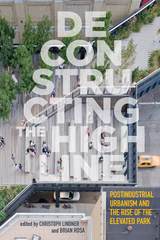
The High Line, an innovative promenade created on a disused elevated railway in Manhattan, is one of the world’s most iconic new urban landmarks. Since the opening of its first section in 2009, this unique greenway has exceeded all expectations in terms of attracting visitors, investment, and property development to Manhattan’s West Side. Frequently celebrated as a monument to community-led activism, adaptive re-use of urban infrastructure, and innovative ecological design, the High Line is being used as a model for numerous urban redevelopment plans proliferating worldwide.
Deconstructing the High Line is the first book to analyze the High Line from multiple perspectives, critically assessing its aesthetic, economic, ecological, symbolic, and social impacts. Including several essays by planners and architects directly involved in the High Line’s design, this volume also brings together a diverse range of scholars from the fields of urban studies, geography, anthropology, sociology, and cultural studies. Together, they offer insights into the project’s remarkable success, while also giving serious consideration to the critical charge that the High Line is “Disney World on the Hudson,” a project that has merely greened, sanitized, and gentrified an urban neighborhood while displacing longstanding residents and businesses.
Deconstructing the High Line is not just for New Yorkers, but for anyone interested in larger issues of public space, neoliberal redevelopment, creative design practice, and urban renewal.
Geoffrey Malaterra's Deeds of Count Roger is the most important extant account of the Norman conquest of Muslim Silicy (1061-91). This volume includes a translation of the Latin original as well as an introduction, notes, and maps.
The Deeds of Count Roger fills a gap in the primary literature pertaining to the earliest phase of Latin Christian expansion at the expense of Islam, since the Norman conquests in Sicily were more or less contemporary with the First Crusade and the beginnings of the Spanish Reconquista. The account also illustrates the complexity of medieval historical writing, with Malaterra on the one hand praising the Normans for their military achievements and on the other subtly criticising the "lust for domination" that inspired them.
Kenneth Baxter Wolf is Professor of History at Pomona College.
Deep River elucidates how spirituals, African American concert music, the blues, and jazz became symbolic sites of social memory and anticipation during the Harlem Renaissance. Anderson traces the roots of this period’s debates about music to the American and European tours of the Fisk Jubilee Singers in the 1870s and to W. E. B. Du Bois’s influential writings at the turn of the century about folk culture and its bearing on racial progress and national identity. He details how musical idioms spoke to contrasting visions of New Negro art, folk authenticity, and modernist cosmopolitanism in the works of Du Bois, Alain Locke, Zora Neale Hurston, Langston Hughes, Jean Toomer, Sterling Brown, Roland Hayes, Paul Robeson, Carl Van Vechten, and others. In addition to revisiting the place of music in the culture wars of the 1920s, Deep River provides fresh perspectives on the aesthetics of race and the politics of music in Popular Front and Swing Era music criticism, African American critical theory, and contemporary musicology.
Deep River offers a sophisticated historical account of American racial ideologies and their function in music criticism and modernist thought. It will interest general readers as well as students of African American studies, American studies, intellectual history, musicology, and literature.
Roe was the principal trial lawyer of the Free Speech League—a precursor of the American Civil Liberties Union. His cases involved such activists as Emma Goldman, Lincoln Steffens, Margaret Sanger, Max Eastman, Upton Sinclair, John Reed, and Eugene Debs, as well as the socialist magazine The Masses and the New York City Teachers Union. A friend of Wisconsin's progressive senator Robert La Follette since their law partnership as young men, Roe defended "Fighting Bob" when the Senate tried to expel him for opposing America's entry into World War I.
In articulating and upholding Americans' fundamental right to free expression against charges of obscenity, libel, espionage, sedition, or conspiracy during turbulent times, Roe was rarely successful in the courts. But his battles illuminate the evolution of free speech doctrine and practice in an era when it was under heavy assault. His greatest victory, including the 1917 decision by Judge Learned Hand in The Masses Publishing Co. v. Patten, is still influential today.

Historians have long argued that the Great War eradicated German culture from American soil. Degrees of Allegiance examines the experiences of German-Americans living in Missouri during the First World War, evaluating the personal relationships at the local level that shaped their lives and the way that they were affected by national war effort guidelines. Spared from widespread hate crimes, German-Americans in Missouri did not have the same bleak experiences as other German-Americans in the Midwest or across America. But they were still subject to regular charges of disloyalty, sometimes because of conflicts within the German-American community itself.
Degrees of Allegiance updates traditional thinking about the German-American experience during the Great War, taking into account not just the war years but also the history of German settlement and the war’s impact on German-American culture.
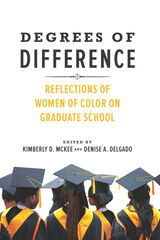
In Degrees of Difference, women of color from diverse backgrounds give frank, unapologetic accounts of their battles—both internal and external—to navigate grad school and fulfill their ambitions. At the same time, the authors offer strategies for surviving the grind via stories of their own hard-won successes with self-care, building supportive communities, finding like-minded mentors, and resisting racism and unsupportive faculty and colleagues.
Contributors: Aeriel A. Ashlee, Denise A. Delgado, Nwadiogo I. Ejiogu, Delia Fernández, Regina Emily Idoate, Karen J. Leong, Kimberly D. McKee, Délice Mugabo, Carrie Sampson, Arianna Taboada, Jenny Heijun Wills, and Soha Youssef

Frank Dale, who has lived near the Delaware all of his life, has burrowed into old newspaper files and archives and traced down eyewitnesses o the life of the Delaware. Rivers were the highways of choice in early America, and the Delaware presented much greater challenges than the nearby Hudson. Filled with rapid, falls, and inconvenient rocks, the river refused to accommodate itself easily to the needs of commerce. The rivermen who ventured down the Delaware on massive timber rafts or Durham boats filled with iron ore earned a deserved reputation for pure ornery courage. Later entrepreneurs tried steamboats, canals, and bridges to attempt to harness and exploit this most unexploitable river, with decidedly mixed results. In recent times, the Tocks Island Dam was defeated by a community that had come to admire the river's stubborn resistance to being conquered and harnesses to human ends. Canoeists and waterside strollers can now appreciate its unspoiled beauties.
The analysis of film music is emerging as one of the fastest-growing areas of interest in film studies. Yet scholarship in this up-and-coming field has been beset by the lack of a common language and methodology between film and music theory. Drawing on the philosophy of Gilles Deleuze, film studies scholar Gregg Redner provides a much-needed analysis of the problem which then forms the basis of his exploration of the function of the film score and its relation to film's other elements. Not just a groundbreaking examination of persistent difficulties in this new area of study, Deleuze and Film Music also offers a solution—a methodological bridge—that will take film music analysis to a new level.
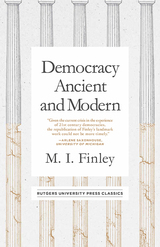
This classic study of democratic principles is thus now more relevant than ever. A renowned historian of antiquity and political philosophy, Sir M.I. Finley offers a comparative analysis of Greek and modern conceptions of democracy. As he puts the ancient Greeks in dialogue with their contemporary counterparts, Finley tackles some of the most pressing issues of our day, including public apathy, partisanship, consensus politics, distrust of professional politicians, and the limits of free speech.
Including three lectures that Finley delivered at Rutgers University, plus two additional essays that further illuminate his thinking, Democracy Ancient and Modern explores the dramatic differences between the close-knit civil society of the ancient Greeks and our own atomized mass societies. By mapping out democracy’s past and its present manifestations, this book helps us plot a course for democracy’s future.
The two new essays, "Athenian Dialogues" and "Censorship in Classical Antiquity" combine with "Leaders and Followers," "Democracy, Consensus, and the National Interest," "Socrates and After" to make this book an unusual inquiry. Few contemporary writers are able to bring to the subject the depth of learning and the persuasive power of language that Sir M. I. Finley brings.
What’s the solution? More democracy. More opportunities for citizens to shape what their government does. To repair our democracy, Page and Gilens argue, we must change the way we choose candidates and conduct our elections, reform our governing institutions, and curb the power of money in politics. By doing so, we can reduce polarization and gridlock, address pressing challenges, and enact policies that truly reflect the interests of average Americans.
Updated with new information, this book lays out a set of proposals that would boost citizen participation, curb the power of money, and democratize the House and Senate.
How did we get here? Through decades of dysfunctional government. In Democracy in America? veteran political observers Benjamin I. Page and Martin Gilens marshal an unprecedented array of evidence to show that while other countries have responded to a rapidly changing economy by helping people who’ve been left behind, the United States has failed to do so. Instead, we have actually exacerbated inequality, enriching corporations and the wealthy while leaving ordinary citizens to fend for themselves.
What’s the solution? More democracy. More opportunity for citizens to shape what their government does. To repair our democracy, Page and Gilens argue, we must change the way we choose candidates and conduct our elections, reform our governing institutions, and curb the power of money in politics. By doing so, we can reduce polarization and gridlock, address pressing challenges, and enact policies that truly reflect the interests of average Americans.
This book presents a damning indictment. But the situation is far from hopeless. With increased democratic participation as their guide, Page and Gilens lay out a set of proposals that would boost citizen participation, curb the power of money, and democratize the House and Senate. The only certainty is that inaction is not an option. Now is the time to act to restore and extend American democracy.

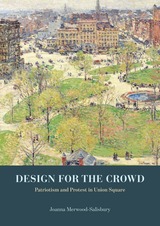
In this sweeping history of an iconic urban square, Merwood-Salisbury gives us a review of American political activism, philosophies of urban design, and the many ways in which a seemingly stable landmark can change through public engagement and design.
Published with the support of Furthermore: a program of the J. M. Kaplan Fund.
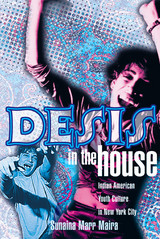
New York City, long the destination for immigrants and migrants, today is home to the largest Indian American population in the United States. Coming of age in a city remarkable for its diversity and cultural innovation, Indian American and other South Asian youth draw on their ethnic traditions and the city's resources to create a vibrant subculture. Some of the city's hottest clubs host regular bhangra parties, weekly events where young South Asians congregate to dance to music that mixes rap beats with Hindi film music, bhangra (North Indian and Pakistani in origin), reggae, techno, and other popular styles. Many of these young people also are active in community and campus organizations that stage performances of "ethnic cultures."
In this book Sunaina Maira explores the world of second-generation Indian American youth to learn how they manage the contradictions of gender roles and sexuality, how they handle their "model minority" status and expectations for class mobility in a society that still racializes everyone in terms of black or white. Maira's deft analysis illuminates the ways in which these young people bridge ethnic authenticity and American "cool."
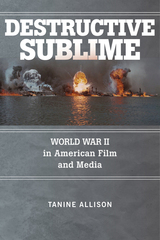
Destructive Sublime traces a new aesthetic history of the World War II combat genre by looking back at it through the lens of contemporary video games like Call of Duty. Allison locates some of video games’ glorification of violence, disruptive audiovisual style, and bodily sensation in even the most canonical and seemingly conservative films of the genre. In a series of case studies spanning more than seventy years—from wartime documentaries like The Battle of San Pietro to fictional reenactments like The Longest Day and Saving Private Ryan to combat video games like Medal of Honor—this book reveals how the genre’s aesthetic forms reflect (and influence) how American culture conceives of war, nation, and representation itself.

Contributors. Hōkūlani K. Aikau, Malia Akutagawa, Adele Balderston, Kamanamaikalani Beamer, Ellen-Rae Cachola, Emily Cadiz, Iokepa Casumbal-Salazar, David A. Chang, Lianne Marie Leda Charlie, Greg Chun, Joy Lehuanani Enomoto, S. Joe Estores, Nicholas Kawelakai Farrant, Jessica Ka‘ui Fu, Candace Fujikane, Linda H. L. Furuto, Sonny Ganaden, Cheryl Geslani, Vernadette Vicuña Gonzalez, Noelani Goodyear-Ka‘ōpua, Tina Grandinetti, Craig Howes, Aurora Kagawa-Viviani, Noelle M. K. Y. Kahanu, Haley Kailiehu, Kyle Kajihiro, Halena Kapuni-Reynolds, Terrilee N. Kekoolani-Raymond, Kekuewa Kikiloi, William Kinney, Francesca Koethe, Karen K. Kosasa, N. Trisha Lagaso Goldberg, Kapulani Landgraf, Laura E. Lyons, David Uahikeaikalei‘ohu Maile, Brandy Nālani McDougall, Davianna Pōmaika‘i McGregor, Laurel Mei-Singh, P. Kalawai‘a Moore, Summer Kaimalia Mullins-Ibrahim, Jordan Muratsuchi, Hanohano Naehu, Malia Nobrega-Olivera, Katrina-Ann R. Kapā‘anaokalāokeola Nākoa Oliveira, Jamaica Heolimelekalani Osorio, No‘eau Peralto, No‘u Revilla, Kalaniua Ritte, Maya L. Kawailanaokeawaiki Saffery, Dean Itsuji Saranillio, Noenoe K. Silva, Ty P. Kāwika Tengan, Stephanie Nohelani Teves, Stan Tomita, Mehana Blaich Vaughan, Wendy Mapuana Waipā, Julie Warech
This project on developing country debt, undertaken by the National Bureau of Economic Research, provides a detailed analysis of the ongoing developing country debt crisis. The project focuses on the middle-income developing countries, particularly those in Latin America and East Asia, although many lessons of the study should apply as well to other, poorer debtor countries. The project analyzes the crisis from two perspectives, that of the international financial system as a whole (volume 1) and that of individual debtor countries (volumes 2 and 3).
This third volume contains lengthy and detailed case studies of four very different Asian countries—Turkey, Indonesia, Korea, and the Philippines.

Developmental Programming for Infants and Young Children: Volume 3 provides a reservoir of ideas for carrying out planned program objectives. Each developmental area contains sequenced develop mental behaviors that would be expected in a normal child, with adaptations for specific handicapping conditions noted. This volume describes ways to handle, stimulate, and interact with a young child functioning in the developmental age range 0-to-36 months. It can be used by parents for at-home activities.
This volume is available as a set in combination with Volumes 1 and 2.
Developmental Programming for Infants and Young Children has proven to be an invaluable tool for teachers, therapists, and other professionals who assess and facilitate the development of children functioning primarily in the 0-to-60 month range. The authors address six areas of development: perceptual/fine motor, cognition, language, social/emotional, self-care, and gross motor. Volumes 1, 2, and 3 are designed for use with children functioning in the 0-to-36-month developmental age range, while Volumes 4 and 5 extend assessment and programming guidelines to 5-year (preschool) levels.
Carefully designed and tested by the University of Michigan's Institute for the Study of Mental Retardation and Related Disabilities, all volumes bridge the gap between assessment and program implementation.

Contributors. David P. Conradt, Russell J. Dalton, Kenneth Dyson, Klaus H. Goetz, Simon Green, Adrian Hyde-Price, Charlie Jeffery, Stephen Padgett, William E. Paterson, Wolfgang Rüdig, Martin Seeleib-Kaiser, Gordon Smith, Roland Sturm
Contributors. David P. Conradt, Russell J. Dalton, Kenneth Dyson, Klaus H. Goetz, Simon Green, Adrian Hyde-Price, Charlie Jeffery, Stephen Padgett, William E. Paterson, Wolfgang Rüdig, Martin Seeleib-Kaiser, Gordon Smith, Roland Sturm

Proposition 8, the 2008 California ballot initiative that overturned the state’s legalization of same-sex marriage, looms large in volume 3 of Carol Lynn Pearson’s diaries. The intense lobbying in favor of the measure by the Church of Jesus Christ of Latter-day Saints caused widespread protests against the church and rifts within congregations, families, and friendships that felt like they might never heal. Pearson documented it all.
When she learned through friends close to church leaders that members of the First Presidency and Quorum of Twelve Apostles were shocked by the backlash, she wondered, “How do 15 prophets, seers, and revelators not see this coming when the rest of us did?”
A lifelong feminist, Pearson’s diaries also reveal her concerns for gender equality. She chronicles her observations of Ordain Women, a movement by a group of Latter-day Saint feminists who lobbied to change the church’s all-male priesthood. At the end of this volume, Pearson takes on yet another issue: the ongoing Mormon doctrine that polygamy is practiced in the eternities. Pearson heard from thousands of women who feared that they would be forced to share their husbands in the afterlife. The pain of these women propelled her forward into her next book project, challenging the doctrine of “eternal polygamy.”
Even as she faced her own struggles, Pearson buoyed up those around her. She took phone calls, answered letters, and comforted visitors who were hurting because of the church’s policies. She was, for many, a symbol of hope.
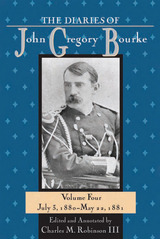

A newly restored edition of Judith Malina’s legendary diaries narrating a key moment of social, political, and cultural upheaval
Originally published by Judith Malina as The Enormous Despair, this slim, gripping collection of diaries from a pivotal period between 1968 and 1969 follows The Living Theatre’s return to the United States after their years of self-exile in Europe, their increasing notoriety and frequent arrests, and their cross-country touring. In these pages, Malina wrestles with the company’s artistic and political efforts during a moment of societal crisis and grapples with their future. Kate Bredeson’s introduction contextualizes Malina’s life and work in this period, while additional historical context and never-before-published photographs add new detail and depth to a stirring account of American social and political history.
The Diaries of Judith Malina is a four-volume set that publishes for the first time together the edited diaries of radical theater director, actor, and activist Judith Malina from 1947 to 1971, the most influential period of her remarkable and storied career. A committed anarchist and pacifist, Malina made theater as a way to engage in revolutionary action. Her diaries showcase her political and social observations, her cultural commentary, her self-reflection, and her wit. This expertly prepared set invites us to recognize Malina for her accomplishments not only as an artist and an activist but as one of the great literary diarists.
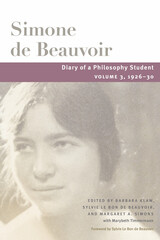
In addition, the editors include a wealth of important supplementary material. Barbara Klaw provides a detailed consideration of the Diary’s role in the development of Beauvoir’s writing style by exploring her use of metanarrative and other literary techniques, part of a process of literary creation that saw Beauvoir use the notebooks to cultivate her talent. Margaret A. Simons’s essay places the assault by Sartre within an appraisal of Beauvoir’s complicated legacy for #MeToo while suggesting readers engage with the diary through the lens of trauma.

Experts from a variety of fields—anthropology, sociology, history, literature, and African, Hispanic, and Jewish studies—examine specific diasporas, immigrant communities, and “border identities” ranging from Muslims in Europe to Chicanos in Texas, from Chinese immigrants in California to the "peach blossom diaspora" in Taiwan. They discuss the Jewish Diaspora and the creation of the State of Israel, as well as two centuries of Irish diasporic experiences in Australia and America. Following testimonies by German, Filipino, Italian American, and South African Israeli academics, who scrutinize their respective "personal diasporas," this special issue concludes with some afterthoughts on diaspora and the potential for global unity in the face of today's global diversity.
Contributors. Jean Bazin, Louis Shabat Bethlehem, Gordon H. Chang, Ngwarsungu Chiwengo, Eileen Cheng-yin Chow, Christopher Davis, Marcel Detienne, Sabine Engel, Daphna Golan, Hans Ulrich Gumbrecht, Ramón A. Gutiérrez, Daniel Itzkovitz, Riva Kastoryano, Vassilis Lambropoulos, V. Y. Mudimbe, Peter Murphy, Richard Roberts, Aron Rodrigue, Ramón Saldívar, Kenneth J. Surin, Neferti Xina M. Tadiar, Marianna De Marco Torgovnick, Danielle Trudeau, Candice Ward, Steven Zipperstein
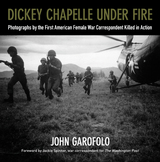
Striking photographs and stories from more than two decades on the frontlines by a groundbreaking photojournalist—and the first female American war correspondent to be killed in action.
In 1941, twenty-two-year-old Georgette "Dickey" Chapelle sold her first photo essay to Look magazine. A year later, with World War II underway, she was photographing American soldiers in combat training in Panama. By the end of the war, she had captured the devastation at Iwo Jima and Okinawa, and in the ensuing decades, Dickey and her camera were on the scene at many of the world’s hotspots—from Cuba and the Dominican Republic to Algeria and Lebanon to Vietnam and Laos. Dickey Chapelle Under Fire exposes her remarkable story and shares over 150 stunning images from her extraordinary career as a photojournalist.
In the male-dominated world of war journalism, Chapelle fought to be taken seriously. She eventually earned the respect of many of her male colleagues and broke down barriers for future generations of female journalists. She embedded herself with military units on frontlines around the globe, capturing not only the horrors of war but also the camaraderie and everyday routines of service men and women.
Always one to follow the action, Chapelle traveled with Algerian rebels across the North African desert and with Fidel Castro through the jungles of Cuba. She spent two months in a Hungarian prison after being caught smuggling aid to refugees fleeing a Soviet invasion. Beginning in 1961, Chapelle set her lens and viewfinder on Southeast Asia, capturing the growing conflict there, until she was killed while on patrol with marines in Vietnam in April 1965—making her the first female American war correspondent to be killed in action.
For twenty-five years, Chapelle's photographs graced the pages of National Geographic, the National Observer, Life, and other major publications. Despite her tragic end, Chapelle’s tenacity, courage, and compassion shine throughout her work, highlighting the human impact of war while revealing the larger stories beyond the battlefield. Her legacy lives on through this powerful collection.
A surprising and original application of theories of new media art
In this intellectually groundbreaking work, Timothy Murray investigates a paradox embodied in the book’s title: What is the relationship between digital, in the form of new media art, and baroque, a highly developed early modern philosophy of art? Making an exquisite and unexpected connection between the old and the new, Digital Baroque analyzes the philosophical paradigms that inform contemporary screen arts.
Examining a wide range of art forms, Murray reflects on the rhetorical, emotive, and social forces inherent in the screen arts’ dialogue with early modern concepts. Among the works discussed are digitally oriented films by Peter Greenaway, Jean-Luc Godard, and Chris Marker; video installations by Thierry Kuntzel, Keith Piper, and Renate Ferro; and interactive media works by Toni Dove, David Rokeby, and Jill Scott. Sophisticated readings reveal the electronic psychosocial webs and digital representations that link text, film, and computer. Murray puts forth an innovative Deleuzian psychophilosophical approach—one that argues that understanding new media art requires a fundamental conceptual shift from linear visual projection to nonlinear temporal folds intrinsic to the digital form.
Stephen Prince offers a clear, concise account of how digital cinema both extends longstanding traditions of filmmaking and challenges some fundamental assumptions about film. It is essential reading for anyone interested in understanding how movies are shot, produced, distributed, and consumed in the twenty-first century.
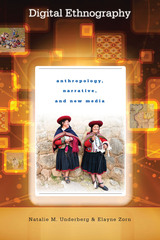
Digital ethnography can be understood as a method for representing real-life cultures through storytelling in digital media. Enabling audiences to go beyond absorbing facts, computer-based storytelling allows for immersion in the experience of another culture. A guide for anyone in the social sciences who seeks to enrich ethnographic techniques, Digital Ethnography offers a groundbreaking approach that utilizes interactive components to simulate cultural narratives.
Integrating insights from cultural anthropology, folklore, digital humanities, and digital heritage studies, this work brims with case studies that provide in-depth discussions of applied projects. Web links to multimedia examples are included as well, including projects, design documents, and other relevant materials related to the planning and execution of digital ethnography projects. In addition, new media tools such as database development and XML coding are explored and explained, bridging the literature on cyber-ethnography with inspiring examples such as blending cultural heritage with computer games.
One of the few books in its field to address the digital divide among researchers, Digital Ethnography guides readers through the extraordinary potential for enrichment offered by technological resources, far from restricting research to quantitative methods usually associated with technology. The authors powerfully remind us that the study of culture is as much about affective traits of feeling and sensing as it is about cognition—an approach facilitated (not hindered) by the digital age.
In the popular imagination, archives are remote, largely obsolete institutions: either antiquated, inevitably dusty libraries or sinister repositories of personal secrets maintained by police states. Yet the archive is now a ubiquitous feature of digital life. Rather than being deleted, e-mails and other computer files are archived. Media software and cloud storage allow for the instantaneous cataloging and preservation of data, from music, photographs, and videos to personal information gathered by social media sites.
In this digital landscape, the archival-oriented media theories of Wolfgang Ernst are particularly relevant. Digital Memory and the Archive, the first English-language collection of the German media theorist’s work, brings together essays that present Ernst’s controversial materialist approach to media theory and history. His insights are central to the emerging field of media archaeology, which uncovers the role of specific technologies and mechanisms, rather than content, in shaping contemporary culture and society.
Ernst’s interrelated ideas on the archive, machine time and microtemporality, and the new regimes of memory offer a new perspective on both current digital culture and the infrastructure of media historical knowledge. For Ernst, different forms of media systems—from library catalogs to sound recordings—have influenced the content and understanding of the archive and other institutions of memory. At the same time, digital archiving has become a contested site that is highly resistant to curation, thus complicating the creation and preservation of cultural memory and history.
As these videos have proliferated online, they have become more widely accessible than ever before. In Digital Music Videos, Steven Shaviro examines the ways that music videos interact with and change older media like movies and gallery art; the use of technologies like compositing, motion control, morphing software, and other digital special effects in order to create a new organization of time and space; how artists use music videos to project their personas; and how less well known musicians use music videos to extend their range and attract attention.
Surveying a wide range of music videos, Shaviro highlights some of their most striking innovations while illustrating how these videos are creating a whole new digital world for the music industry.
A timely look at a dynamic media landscape, The Digital NBA shows how the games we love became content first and sport a distant second.
2007 — A Choice Magazine Outstanding Academic Book
Sicilian historian Diodorus Siculus (ca. 100-30 BCE) is our only surviving source for a continuous narrative of Greek history from Xerxes' invasion to the Wars of the Successors following the death of Alexander the Great. Yet this important historian has been consistently denigrated as a mere copyist who slavishly reproduced the works of earlier historians without understanding what he was writing. By contrast, in this iconoclastic work Peter Green builds a convincing case for Diodorus' merits as a historian. Through a fresh English translation of a key portion of his multi-volume history (the so-called Bibliotheke, or "Library") and a commentary and notes that refute earlier assessments of Diodorus, Green offers a fairer, better balanced estimate of this much-maligned historian.
The portion of Diodorus' history translated here covers the period 480-431 BCE, from the Persian invasion of Greece to the outbreak of the Peloponnesian War. This half-century, known as the Pentekontaetia, was the Golden Age of Periclean Athens, a time of unprecedented achievement in drama, architecture, philosophy, historiography, and the visual arts. Green's accompanying notes and commentary revisit longstanding debates about historical inconsistencies in Diodorus' work and offer thought-provoking new interpretations and conclusions. In his masterful introductory essay, Green demolishes the traditional view of Diodorus and argues for a thorough critical reappraisal of this synthesizing historian, who attempted nothing less than a "universal history" that begins with the gods of mythology and continues down to the eve of Julius Caesar's Gallic campaigns.
Only one surviving source provides a continuous narrative of Greek history from Xerxes' invasion to the Wars of the Successors following the death of Alexander the Great—the Bibliotheke, or "Library," produced by Sicilian historian Diodorus Siculus (ca. 90–30 BCE). Yet generations of scholars have disdained Diodorus as a spectacularly unintelligent copyist who only reproduced, and often mangled, the works of earlier historians. Arguing for a thorough critical reappraisal of Diodorus as a minor but far from idiotic historian himself, Peter Green published Diodorus Siculus, Books 11-12.37.1, a fresh translation, with extensive commentary, of the portion of Diodorus's history dealing with the period 480–431 BCE, the so-called "Golden Age" of Athens.
This is the only recent modern English translation of the Bibliotheke in existence. In the present volume—the first of two covering Diodorus's text up to the death of Alexander—Green expands his translation of Diodorus up to Athens' defeat after the Peloponnesian War. In contrast to the full scholarly apparatus in his earlier volume (the translation of which is incorporated) the present volume's purpose is to give students, teachers, and general readers an accessible version of Diodorus's history. Its introduction and notes are especially designed for this audience and provide an up-to-date overview of fifth-century Greece during the years that saw the unparalleled flowering of drama, architecture, philosophy, historiography, and the visual arts for which Greece still remains famous.
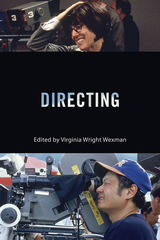
The latest volume in the Behind the Silver Screen series, this collection provides the first comprehensive overview of how directing, as both an art and profession, has evolved in tandem with changing film industry practices. Each chapter is written by an expert on a different period of Hollywood, from the silent film era to today’s digital filmmaking, providing in-depth examinations of key trends like the emergence of independent production after World War II and the rise of auteurism in the 1970s. Challenging the myth of the lone director, these studies demonstrate how directors work with a multitude of other talented creative professionals, including actors, writers, producers, editors, and cinematographers.
Directing examines a diverse range of classic and contemporary directors, including Orson Welles, Tim Burton, Cecil B. DeMille, Steven Soderbergh, Spike Lee, and Ida Lupino, offering a rich composite picture of how they have negotiated industry constraints, utilized new technologies, and harnessed the creative contributions of their many collaborators throughout a century of Hollywood filmmaking.
With a film industry divided by linguistic heritage, African directors do not have the luxury of producing comedies, thrillers, horror films, or even love stories, except perhaps as DVDs that do not travel far outside their country of production. Instead, African directors tend to cover serious sociopolitical ground, even under the cover of comedy, in the hopes of finding funds outside Africa. Contributors to this volume draw on filmic representations of the continent to consider the economic role of women, rural exodus, economic migration, refugees, and diasporas, culture, religion, and magic as well as representations of children, music, languages, and symbols.
A survey of national cinemas in one volume, DirectoryofWorldCinema: Africa is a necessary addition to the bookshelf of any cinephile and world traveler.
With its sprawling celebrity homes, the Walk of Fame, and the iconic sign on the hill, Hollywood is truly the land of stars. Glamorous and larger than life, many of the most memorable motion pictures of all time have emanated from its multimillion-dollar film industry, which exports more films per capita than that of any other nation.
Directory of World Cinema: American Hollywood lays out the cinematic history of Tinseltown—the industry, the audiences, and, of course, the stars—highlighting important thematic and cultural elements throughout. Profiles and analyses of many of the industry’s most talented and prolific directors give insights into their impact on Hollywood and beyond. A slate of blockbuster successes—and notable flops—are here discussed, providing insight into the ever-shifting aesthetic of Hollywood’s enormous global audience.
User-friendly and concise yet containing an astonishing amount of information, Directory of World Cinema: American Hollywood shows how truly indispensable the Hollywood film industry is and provides a fascinating account of its cultural and artistic significance as it marks its centennial.
A complementary edition rather than an update of its predecessor, the book offers essays on war and family films, as well as on LGBT cinema and representations of disability in British films. Contributors consider established British directors such as Ken Loach and Danny Boyle as well as newcomer Ben Wheatley, who directed the fabulously strange A Field in England. This volume also shines the spotlight on the British Film Institute and its role in funding, preservation, and education in relation to British cinema.
A must read for any fan of film, the history of the United Kingdom, or international artistic traditions, Directory of World Cinema: Britain 2 will find an appreciative audience both within and outside academia.
A survey of a vibrant—and expanding—industry, Directory of World Cinema: China 2 examines, among other themes, China’s desire for success and fulfillment in the United States, as well as the extensive history of representing China—and the Chinese in America—on US movie screens. With contributions from some of the leading academics in the field, this volume will be essential reading for all fans of Chinese film.
Artistic, intellectual, and appreciably avant-garde, the French film industry has, perhaps more than any other national cinema, been perennially at the center of international filmmaking. With its vigorous business and wide-ranging film culture, France has also been home historically to some of the most influential filmmakers and movements – and, indeed, the very first motion picture was screened in Paris in 1895.
This volume addresses the great directors and key artistic movements, but also ventures beyond these well-established films and figures, broadening the canon through an examination of many neglected but intriguing French films. Framing essays explore the salient stylistic elements, cultural contexts, and the various conceptions of cinema in France, from avant-gardes to filmmaking by women, from documentary and realism to the Tradition of Quality, as well as genres like comedy, crime film, and horror. Illustrated by screen shots, film reviews by leading international experts offer original approaches to both overlooked titles and acknowledged classics. Readers wishing to explore particular topics in greater depth will be grateful for the book’s reading recommendations and comprehensive filmography.
A visually engaging journey through one of the most dynamic, variegated, and idiosyncratic film industries, Directory of World Cinema: France is a must-have for Francophiles and cinema savants.
Iranian cinema has an extraordinary history that has been marked by religion and ever-shifting political, economic, and social environments. This addition to Intellect’s Directory of World Cinema series turns the spotlight on the award-winning cinema of that nation, with particular attention to the major movements, historical turning points, and prominent figures that have helped shape it. A wide range of genres are presented, including comedy, Film Farsi, new wave, children’s films, art house film, and women’s cinema. For the film studies scholar, students working on alternative or national cinema, or for all those who love Persian cinema and wish to learn more, Directory of World Cinema: Iran will be an essential companion to this prolific and prominent film industry.
Though the spotlight is on the filmmakers, this new volume continues to consider a wide range of genres associated with Japanese cinema, including animation, contemporary independent cinema, J-Horror, the New Wave, period drama, science fiction, and yakuza.
Like its predecessors, Directory of World Cinema: Japan 3 endeavors to move scholarly criticism of Japanese film out of the academy and into the hands of cinephiles the world over. This volume will be warmly welcomed by those with an interest in Japanese cinema that extends beyond its established names to equally remarkable filmmakers who have yet to receive such rigorous attention.
Directory of World Cinema: Scotland provides an introduction to many of Scottish cinema’s most important and influential themes and issues, films, and filmmakers, while adding to the ongoing discussion concerning how to make sense of Scotland’s cinematic traditions and contributions. Chapters on filmmakers range from Murray Grigor to Ken Loach, and Gaelic filmmaking, radical and engaged cinema, production, finance, and documentary are just a few of the topics explored. Film reviews range from popular box office hits such as Braveheart, and Trainspotting to lesser known but equally engaging independent and lower budget productions, such as Shell and Orphans. This book is both a stimulating and accessible resource for a wide range of readers interested in Scottish film.
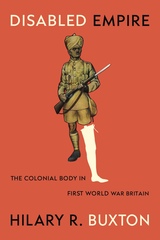
Disabled Empire examines how imperial precedents and racial ideologies shaped the medical treatments that the British state offered to several million Black and brown servicemen during World War I. In recovering the voices and experiences of these soldiers, Hilary R. Buxton illustrates how they navigated the institutional culture of the imperial military and how they helped to shape health and welfare systems well beyond the interwar period.
The Great War was the first time that troops and volunteers from nearly all reaches of the Empire participated in the war effort side-by-side. Despite official attempts at segregation, colonial troops met in trenches, mobile camps, casualty clearing stations, hospital ships, and convalescent homes. Just as importantly, those organizing treatment encountered men of different ethnicities, religions, and cultures from across and beyond the British Empire. For British officials, this moment offered an opportunity to remake colonial efficiency and medical knowledge. Yet, as Buxton shows, colonial servicemen were not passive subjects in a wartime laboratory: they were vocal participants who demanded a say in the therapies prescribed to them, the rations they required, the psychiatric care they received, and the prosthetics with which they were fitted. Together, these encounters profoundly remade colonial relations, reshaping imperial science, administration, and colonial understandings of subjecthood.
Disabled Empire pushes literature on the war and medicine outside its national, Eurocentric focus to confront the colonial logic of global health inequity.


An urgent examination of the threat posed to social media by user disconnection, and the measures websites will take to prevent it
No matter how pervasive and powerful social media websites become, users always have the option of disconnecting—right? Not exactly, as Tero Karppi reveals in this disquieting book. Pointing out that platforms like Facebook see disconnection as an existential threat—and have undertaken wide-ranging efforts to eliminate it—Karppi argues that users’ ability to control their digital lives is gradually dissipating.
Taking a nonhumancentric approach, Karppi explores how modern social media platforms produce and position users within a system of coded relations and mechanisms of power. For Facebook, disconnection is an intense affective force. It is a problem of how to keep users engaged with the platform, but also one of keeping value, attention, and desires within the system. Karppi uses Facebook’s financial documents as a map to navigate how the platform sees its users. Facebook’s plans to connect the entire globe through satellites and drones illustrates the material webs woven to keep us connected. Karppi analyzes how Facebook’s interface limits the opportunity to opt-out—even continuing to engage users after their physical death. Showing how users have fought to take back their digital lives, Karppi chronicles responses like Web2.0 Suicide Machine, an art project dedicated to committing digital suicide.
For Karppi, understanding social media connectivity comes from unbinding the bonds that stop people from leaving these platforms. Disconnection brings us to the limit of user policies, algorithmic control, and platform politics. Ultimately, Karppi’s focus on the difficulty of disconnection, rather than the ease of connection, reveals how social media has come to dominate human relations.

Each chapter explores a different facet of the war and masculinity in depth. Joanna Bourke discovers that those who were dismembered and disabled by the war were not viewed as passive or weak, like their civilian counterparts, but were the focus of much government and public sentiment. Those suffering from disease were viewed differently, often finding themselves accused of malingering.
Joanna Bourke argues convincingly that military experiences led to a greater sharing of gender identities between men of different classes and ages. Dismembering the Male concludes that ultimately, attempts to reconstruct a new type of masculinity failed as the threat of another war, and with it the sacrifice of a new generation of men, intensified.
A ground-level look at the entertainment giant, The Disney Animation Renaissance profiles the people and purpose behind a little-known studio during a historic era.
The long-awaited follow-up to The Key to the City—a finalist for the National Book Critics Circle Award in 1986—Anne Winters's The Displaced of Capital emanates a quiet and authoritative passion for social justice, embodying the voice of a subtle, sophisticated conscience.
The "displaced" in the book's title refers to the poor, the homeless, and the disenfranchised who populate New York, the city that serves at once as gritty backdrop, city of dreams, and urban nightmare. Winters also addresses the culturally, ethnically, and emotionally excluded and, in these politically sensitive poems, writes without sentimentality of a cityscape of tenements and immigrants, offering her poetry as a testament to the lives of have-nots. In the central poem, Winters witnesses the relationship between two women of disparate social classes whose friendship represents the poet's political convictions. With poems both powerful and musical, The Displaced of Capital marks Anne Winters's triumphant return and assures her standing as an essential New York poet.
Over the last two decades, the field of audiovisual media has changed dramatically. Until recently, there was only a small number of technologies, distribution channels were few, and moving images were largely limited to cinemas, televisions, galleries, or art museums. Also, both the producers and the audiences of such content clearly identified as human beings. Those days are over.
The digitization of image production and distribution ushered in a massive disruption to the traditional landscape of the moving image that had existed since the advent of the audiovisual industry. Touching on discussions such as child producers, the marketing interests of big corporations, and the origins of new media formats and practices, Display, Distribute, Disrupt maps the new conditions for creative work in the ever-widening sphere of audiovisual media.
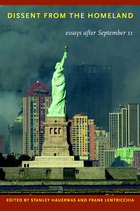
Whether illuminating the narratives that have been used to legitimate the war on terror, reflecting on the power of American consumer culture to transform the attack sites into patriotic tourist attractions, or insisting that to be a Christian is to be a pacifist, these essays refuse easy answers. They consider why the Middle East harbors a deep-seated hatred for the United States. They argue that the U.S. drive to win the cold war made the nation more like its enemies, leading the government to support ruthless anti-Communist tyrants such as Mobutu, Suharto, and Pinochet. They urge Americans away from the pitfall of national self-righteousness toward an active peaceableness—an alert, informed, practiced state of being—deeply contrary to both passivity and war. Above all, the essays assembled in Dissent from the Homeland are a powerful entreaty for thought, analysis, and understanding. Originally published as a special issue of the journal South Atlantic Quarterly, Dissent from the Homeland has been expanded to include new essays as well as a new introduction and postscript.
Contributors. Srinivas Aravamudan, Michael J. Baxter, Jean Baudrillard, Robert N. Bellah, Daniel Berrigan, Wendell Berry, Vincent J. Cornell, David James Duncan, Stanley Hauerwas, Fredric Jameson, Frank Lentricchia, Catherine Lutz, Jody McAuliffe, John Milbank, Peter Ochs, Donald E. Pease, Anne R. Slifkin, Rowan Williams, Susan Willis, Slavoj Zizek
Addressing such questions as why the Middle East harbors a deep-seated hatred for the U.S., the contributors refuse to settle for the easy answers preferred by the mass media. "Thoughts in the Presence of Fear" urges Americans away from the pitfall of national self-righteousness toward an active peaceableness—an alert, informed, practiced state of being—deeply contrary to both passivity and war. Another essay argues that the U.S. drive to win the Cold War made the nation more like its enemies, leading the government to support ruthless anti-Communist tyrants such as Mobutu, Suharto, and Pinochet. "Groundzeroland" offers a sharp commentary on the power of American consumer culture to absorb the devastation and loss of life by transforming the attack sites into patriotic tourist attractions. James Nachtwey’s photo essay provides a visual document of the devastation of the attacks.
Contributors. Michael Baxter, Jean Baudrillard, Robert Bellah, Daniel Berrigan, Wendell Berry, Vincent Cornell, Stanley Hauerwas, Fredric Jameson, Frank Lentricchia, Catherine Lutz, Jody McAuliffe, John Milbank, James Nachtwey, Peter Ochs, Anne Rosalind Slifkin, Rowan Williams, Susan Willis, Slavoj Zizek
For more information about SAQ, please visit http://www.dukeupress.edu/saq/
Winner of the Richard L. Wentworth Prize in American History, Byron Caldwell Smith Book Prize, and the William Rockhill Nelson Award
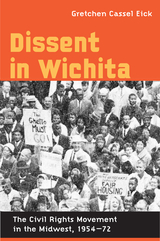
On a hot summer evening in 1958, a group of African American students in Wichita, Kansas, quietly entered Dockum's Drug Store and sat down at the whites-only lunch counter. This was the beginning of the first sustained, successful student sit-in of the modern civil rights movement, instigated in violation of the national NAACP's instructions.
Dissent in Wichita traces the contours of race relations and black activism in this unexpected locus of the civil rights movement. Based on interviews with more than eighty participants in and observers of Wichita's civil rights struggles, this powerful study hones in on the work of black and white local activists, setting their efforts in the context of anticommunism, FBI operations against black nationalists, and the civil rights policies of administrations from Eisenhower through Nixon.
Through her close study of events in Wichita, Eick reveals the civil rights movement as a national, not a southern, phenomenon. She focuses particularly on Chester I. Lewis, Jr., a key figure in the local as well as the national NAACP. Lewis initiated one of the earliest investigations of de facto school desegregation by the Department of Health, Education, and Welfare and successfully challenged employment discrimination in the nation's largest aircraft industries.
Dissent in Wichita offers a moving account of the efforts of Lewis, Vivian Parks, Anna Jane Michener, and other courageous individuals to fight segregation and discrimination in employment, public accommodations, housing, and schools. This volume also offers the first extended examination of the Young Turks, a radical movement to democratize and broaden the agenda of the NAACP for which Lewis provided critical leadership.
Through a close study of personalities and local politics in Wichita over two decades, Eick demonstrates how the tenor of black activism and white response changed as economic disparities increased and divisions within the black community intensified. Her analysis, enriched by the words and experiences of men and women who were there, offers new insights into the civil rights movement as a whole and into the complex interplay between local and national events.
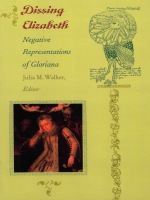
As editor Julia M. Walker suggests, the breadth of dissent considered in this collection points to a dark side of the Cult of Elizabeth. Reevaluating neglected texts that had not previously been perceived as critical of the queen or worthy of critical appraisal, contributors consider dissent in a variety of forms, including artwork representing (and mocking) the queen, erotic and pornographic metaphors for Elizabeth in the popular press, sermons subtly critiquing her actions, and even the hostility encoded in her epitaph and in the placement of her tomb. Other chapters discuss gossip about Elizabeth, effigies of the queen, polemics against her marriage to the Duke of Alençon, common verbal slander, violence against emblems of her authority, and the criticism embedded in the riddles, satires, and literature of the period.

The New York Japanese American community was a composite of several micro communities divided along status, class, geographic, and religious lines. Using a wealth of primary sources—oral histories, memoirs, newspapers, government documents, photographs, and more—Daniel H. Inouye tells the stories of the business and professional elites, mid-sized merchants, small business owners, working-class families, menial laborers, and students that made up these communities. The book presents new knowledge about the history of Japanese immigrants in the United States and makes a novel and persuasive argument about the primacy of class and status stratification and relatively weak ethnic cohesion and solidarity in New York City, compared to the pervading understanding of nikkei on the West Coast. While a few prior studies have identified social stratification in other nikkei communities, this book presents the first full exploration of the subject and additionally draws parallels to divisions in German American communities.
Distant Islands is a unique and nuanced historical account of an American ethnic community that reveals the common humanity of pioneering Japanese New Yorkers despite diverse socioeconomic backgrounds and life stories. It will be of interest to general readers, students, and scholars interested in Asian American studies, immigration and ethnic studies, sociology, and history.
Winner- Honorable Mention, 2018 Immigration and Ethnic History Society First Book Award
The New Deal introduced sweeping social, political, and cultural change across the United States, which Hollywood embraced enthusiastically. Then, when the heady idealism of the 1930s was replaced by the paranoia of the postwar years, Hollywood became an easy target for the anticommunists. A Divided World examines some of the important programs of the New Deal and the subsequent response of the film community—especially in relation to social welfare, women’s rights, and international affairs. The book also provides an analysis of the major works of three European directors—Billy Wilder, Ernst Lubitsch, and Fritz Lang—compared and contrasted with the products of mainstream Hollywood. This is a new interpretation of an influential period in American film history and it is sure to generate further debate and scholarship.
Divine Providence is one of the major works of the Enlightenment scientist and religious seer Emanuel Swedenborg. It provides a coherent and satisfying solution to what has been called “the problem of evil”: How are God’s goodness and power reconcilable with evil’s presences in the larger world and in the human mind and heart? By tackling an array of issues that commonly undermine belief in God, including war, suffering, and inequality—and by revealing the wise and loving laws that lie hidden behind these seemingly senseless phenomena—Divine Providence aims to restore our faith in the meaningfulness of the world. Despite its universal focus, Divine Providence is also a highly practical book on the personal level, demonstrating how we can put aside negative attitudes and behaviors and grow into positive thought and action.
The New Century Edition of the Works of Emanuel Swedenborg is a modern-language, scholarly translation of Swedenborg’s theological works. The series’ easy-to-read style retains the dignity, variety, clarity, and gender-inclusive language of Swedenborg’s original Latin, bringing his thought to life.
This portable edition contains the text of the New Century Edition translation, but not the introduction, annotations, or other supplementary materials found in the deluxe editions.

Divine Providence is one of the major works of the Enlightenment scientist and religious seer Emanuel Swedenborg. It provides a coherent and satisfying solution to what has been called “the problem of evil”: How are God’s goodness and power reconcilable with evil’s presences in the larger world and in the human mind and heart? By tackling an array of issues that commonly undermine belief in God, including war, suffering, and inequality—and by revealing the wise and loving laws that lie hidden behind these seemingly senseless phenomena—Divine Providence aims to restore our faith in the meaningfulness of the world. Despite its universal focus, Divine Providence is also a highly practical book on the personal level, demonstrating how we can put aside negative attitudes and behaviors and grow into positive thought and action.
The New Century Edition of the Works of Emanuel Swedenborg is a modern-language, scholarly translation of Swedenborg’s theological works. The series’ easy-to-read style retains the dignity, variety, clarity, and gender-inclusive language of Swedenborg’s original Latin, bringing his thought to life.
This portable edition contains the text of the New Century Edition translation, but not the introduction, annotations, or other supplementary materials found in the deluxe editions.
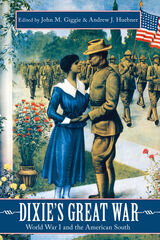
Examining the First World War through the lens of the American South
How did World War I affect the American South? Did southerners experience the war in a particular way? How did regional considerations and, more generally, southern values and culture impact the wider war effort? Was there a distinctive southern experience of WWI?
Scholars considered these questions during “Dixie’s Great War,” a symposium held at the University of Alabama in October 2017 to commemorate the centenary of the American intervention in the war. With the explicit intent of exploring iterations of the Great War as experienced in the American South and by its people, organizers John M. Giggie and Andrew J. Huebner also sought to use historical discourse as a form of civic engagement designed to facilitate a community conversation about the meanings of the war.
Giggie and Huebner structured the panels thematically around military, social, and political approaches to the war to encourage discussion and exchanges between panelists and the public alike. Drawn from transcriptions of the day’s discussions and lightly edited to preserve the conversational tone and mix of professional and public voices, Dixie’s Great War: World War I and the American South captures the process of historians at work with the public, pushing and probing general understandings of the past, uncovering and reflecting on the deeper truths and lessons of the Great War—this time, through the lens of the South.
This volume also includes an introduction featuring a survey of recent literature dealing with regional aspects of WWI and a discussion of the centenary commemorations of the war. An afterword by noted historian Jay Winter places “Dixie’s Great War”—the symposium and this book—within the larger framework of commemoration, emphasizing the vital role such forums perform in creating space and opportunity for scholars and the public alike to assess and understand the shifting ground between cultural memory and the historical record.
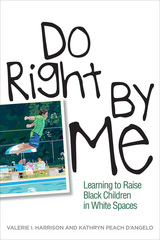
For decades, Katie D’Angelo and Valerie Harrison engaged in conversations about race and racism. However, when Katie and her husband, who are white, adopted Gabriel, a biracial child, Katie’s conversations with Val, who is black, were no longer theoretical and academic. The stakes grew from the two friends trying to understand each other’s perspectives to a mother navigating, with input from her friend, how to equip a child with the tools that will best serve him as he grows up in a white family.
Through lively and intimate back-and-forth exchanges, the authors share information, research, and resources that orient parents and other community members to the ways race and racism will affect a black child’s life—and despite that, how to raise and nurture healthy and happy children. These friendly dialogues about guarding a child’s confidence and nurturing positive racial identity form the basis for Do Right by Me. Harrison and D’Angelo share information on transracial adoption, understanding racism, developing a child’s positive racial identity, racial disparities in healthcare and education, and the violence of racism.
Do Right by Me also is a story about friendship and kindness, and how both can be effective in the fight for a more just and equitable society.
Pulitzer Prize-winning historian Michael Kammen has noted that The Documentary History of the Ratification of the Constitution series "will be of enduring value centuries hence" and described it as "one of the most interesting documentary publications we have ever had." The American Bar Association Journal has stated, "Each new volume now fills another vital part of the mosaic of national history."
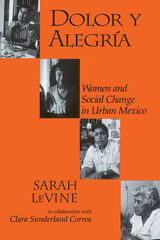
While many earlier publications have focused on the poor of Latin America who live at the margins of urban life, Dolor y Alegría explores the experiences of ordinary working and lower-middle class women, most of them transplants from villages and small towns to a densely populated city neighborhood. In their early years, many experienced family disruption, emotional deprivation, and economic hardship; but steadily increasing educational opportunities, improved health care, and easily available contraception have significantly altered how the younger women relate to their families and the larger society.
Today’s Mexican schoolgirl, LeVine shows, is encouraged to apply herself to her studies for her own benefit, and the longer she remains in school, the greater the self-confidence she will carry with her into the world of work and later into marriage and motherhood. Hard economic times have forced many married women into the workplace where their sense of personal efficacy is enhanced; at the same time, in the domestic sphere, their earnings allow them greater negotiating power with husbands and male relatives. Changes are not confined to the younger generation. Older women are enjoying better health and living longer; but with adult children either less able or willing to accept responsibility for aged parents than they were in the past, anxiety runs high and family relations are often strained.
Dolor y Alegría takes a close look at the efforts of three generations of Mexican women to redefine themselves in both family and workplace; it shows that today’s young woman has very different expectations of herself and others from those that her grandmother or even her mother had.
READERS
Browse our collection.
PUBLISHERS
See BiblioVault's publisher services.
STUDENT SERVICES
Files for college accessibility offices.
RECENTLY PUBLISHED


UChicago Accessibility Resources
home | accessibility | search | about | contact us
BiblioVault ® 2001 - 2026
The University of Chicago Press