
 A SCHOLARLY BOOK REPOSITORY
541 start with F start with F


No sitting federal judge has ever written so trenchant a critique of the federal judiciary as Richard A. Posner does in this, his most confrontational book. Skewering the politicization of the Supreme Court, the mismanagement of judicial staff, the overly complex system of appeals, the threat of originalism, outdated procedures, and the backward-looking traditions of law schools and the American judicial system, Posner has written a cri de coeur and a battle cry. With the prospect that the Supreme Court will soon be remade in substantial, potentially revanchist, ways, The Federal Judiciary exposes the American legal system’s most troubling failures in order to instigate much-needed reforms.
Posner presents excerpts from legal texts and arguments to expose their flaws, incorporating his own explanation and judgment to educate readers in the mechanics of judicial thinking. This rigorous intellectual work separates sound logic from artful rhetoric designed to subvert precedent and open the door to oblique interpretations of American constitutional law. In a rebuke of Justice Antonin Scalia’s legacy, Posner shows how originalists have used these rhetorical strategies to advance a self-serving political agenda. Judicial culture adheres to an antiquated traditionalism, Posner argues, that inhibits progressive responses to threats from new technologies and other unforeseen challenges to society.
With practical prescriptions for overhauling judicial practices and precedents, The Federal Judiciary offers an unequaled resource for understanding the institution designed by the founders to check congressional and presidential power and resist its abuse.

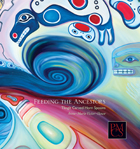
Feeding the Ancestors presents an exquisite group of carved spoons from the Pacific Northwest that resides in the collections of Harvard's Peabody Museum of Archaeology and Ethnology. Carved from the horns of mountain goats and Dall sheep, and incorporating elements of abalone shell and metal, most of the spoons were collected in Alaska in the late nineteenth century and were made and used by members of the Tlingit tribe. Hillel Burger's beautiful color photographs reveal every nuance of the carvers' extraordinary artistry.
Anne-Marie Victor-Howe introduces the collectors and describes the means by which these and other ethnographic objects were acquired. In the process, she paints a vivid picture of the "Last Frontier" just before and shortly after the United States purchased Alaska. A specialist in the ethnography of the Native peoples of the Northwest Coast, Victor-Howe provides a fascinating glimpse into these aboriginal subsistence cultures as she explains the manufacture and function of traditional spoons. Her accounts of the clan stories associated with specific carvings and of the traditional shamanic uses of spoons are the result of extensive consultation with Tlingit elders, scholars, and carvers.
Feeding the Ancestors is the first scholarly study of traditional feast spoons and a valuable contribution to our knowledge of Pacific Northwest Coast peoples and their art.
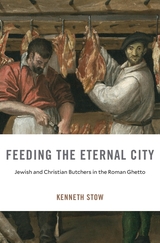
A surprising history of interfaith collaboration in the Roman Ghetto, where for three centuries Jewish and Christian butchers worked together to provision the city despite the proscriptions of Church law.
For Rome’s Jewish population, confined to a ghetto between 1555 and 1870, efforts to secure kosher meat were fraught with challenges. The city’s papal authorities viewed kashrut—the Jewish dietary laws—with suspicion, and it was widely believed that kosher meat would contaminate any Christian who consumed it. Supplying kosher provisions entailed circumventing canon law and the institutions that regulated the butchering and sale of meat throughout the city.
Kenneth Stow finds that Jewish butchers collaborated extensively with their Christian counterparts to ensure a supply of kosher meat, regardless of the laws that prohibited such interactions. Jewish butchers sold nonkosher portions of slaughtered animals daily to Christians outside the ghetto, which in turn ensured the affordability of kosher meat. At the same time, Christian butchers also found it profitable to work with Jews, as this enabled them to sell good meat otherwise unavailable at attractive prices. These relationships could be warm and almost intimate, but they could also be rife with anger, deception, and even litigation. Nonetheless, without this close cooperation—and the willingness of authorities to turn a blind eye to it—meat-eating in the ghetto would have been nearly impossible. Only the rise of the secular state in the late nineteenth century brought fundamental change, putting an end to canon law and allowing the kosher meat market to flourish.
A rich social history of food in early modern Rome, Feeding the Eternal City is also a compelling narrative of Jewish life and religious acculturation in the capital of Catholicism.
Feeling Backward weighs the costs of the contemporary move to the mainstream in lesbian and gay culture. While the widening tolerance for same-sex marriage and for gay-themed media brings clear benefits, gay assimilation entails other losses--losses that have been hard to identify or mourn, since many aspects of historical gay culture are so closely associated with the pain and shame of the closet.
Feeling Backward makes an effort to value aspects of historical gay experience that now threaten to disappear, branded as embarrassing evidence of the bad old days before Stonewall. It looks at early-twentieth-century queer novels often dismissed as "too depressing" and asks how we might value and reclaim the dark feelings that they represent. Heather Love argues that instead of moving on, we need to look backward and consider how this history continues to affect us in the present.
Through elegant readings of Walter Pater, Willa Cather, Radclyffe Hall, and Sylvia Townsend Warner, and through stimulating engagement with a range of critical sources, Feeling Backward argues for a form of politics attentive to social exclusion and its effects.
Because emotion is assumed to depend on subjectivity, the "death of the subject" described in recent years by theorists such as Derrida, de Man, and Deleuze would also seem to mean the death of feeling. This revolutionary work transforms the burgeoning interdisciplinary debate on emotion by suggesting, instead, a positive relation between the "death of the subject" and the very existence of emotion.
Reading the writings of Derrida and de Man--theorists often seen as emotionally contradictory and cold--Terada finds grounds for construing emotion as nonsubjective. This project offers fresh interpretations of deconstruction's most important texts, and of Continental and Anglo-American philosophers from Descartes to Deleuze and Dennett. At the same time, it revitalizes poststructuralist theory by deploying its methodologies in a new field, the philosophy of emotion, to reach a startling conclusion: if we really were subjects, we would have no emotions at all.
Engaging debates in philosophy, literary criticism, psychology, and cognitive science from a poststructuralist and deconstructive perspective, Terada's work is essential for the renewal of critical thought in our day.
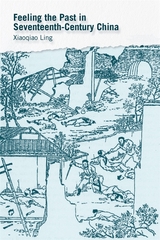
During the Manchu conquest of China (1640s–1680s), the Qing government mandated that male subjects shave their hair following the Manchu style. It was a directive that brought the physical body front and center as the locus of authority and control. Feeling the Past in Seventeenth-Century China highlights the central role played by the body in writers’ memories of lived experiences during the Ming-Qing cataclysm. For traditional Chinese men of letters, the body was an anchor of sensory perceptions and emotions. Sight, sound, taste, and touch configured ordinary experiences next to traumatic events, unveiling how writers participated in an actual and imagined community of like-minded literary men.
In literature from this period, the body symbolizes the process by which individual memories transform into historical knowledge that can be transmitted across generations. The ailing body interprets the Manchu presence as an epidemic to which Chinese civilization is not immune. The bleeding body, cast as an aesthetic figure, helps succeeding generations internalize knowledge inherited from survivors of dynastic conquest as a way of locating themselves in collective remembrance. This embodied experience of the past reveals literature’s mission of remembrance as, first and foremost, a moral endeavor in which literary men serve as architects of cultural continuity.
This biographical study of one of China's leading social scientists follows his history from birth until the present moment, and includes a bibliography of his books and articles. Trained in London under Malinowski, Fei Xiaotong achieved eminence in the 1930s and 1940s for his pioneering studies of Chinese peasant life and for his popular articles, which stirred a wide audience in China to an awareness of social and political problems. A non-Marxist who came to sympathize with the Communists, Fei was gradually constrained in his activities after the Revolution until, in the 1950s, a massive propaganda campaign vilified him as a bourgeois rightist intellectual. Almost twenty years of silence and disgrace followed. Only recently, following the death of Mao, has Fei suddenly reemerged as a leader in the effort to revitalize the social sciences in China.
The story of Fei's life told here is, in a sense, the story of Westernized intellectuals in China at a time of peasant revolution. His writings enunciate the views of a sensitive observer of Chinese and Western society during that period of dramatic change.
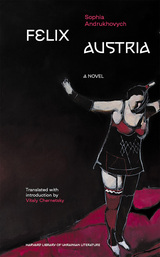
At the turn of the twentieth century, two young women find themselves in Stanyslaviv under Austro-Hungarian rule. Adela, the daughter of a wealthy German doctor, and Stefania, her orphan Ukrainian servant, could not be further apart socially and economically; but their fates intertwine in the cityscape of the late Habsburg Empire, densely inhabited by Ukrainians, Poles, Germans, and Jews for centuries. The intricate relationship between the two women—told by an unreliable narrator—unfolds against the backdrop of a rich ethnic, social, and cultural fabric that seems almost implausible to today’s reader who knows it to be irretrievably lost.
In Felix Austria, Sophia Andrukhovych uses techniques from Gothic literature to reconstruct with astonishing detail the atmosphere and the everyday life of Stanyslaviv. As if foreshadowing the wars to come and their devastation, the city’s population delights in earthly pleasures: extravagant dinner parties and receptions, mass celebrations, exotic theater performances, art exhibitions, glitzy shows of stars and starlets from near and far, local rituals of soap making, competition among fashionable dames, and much more. Felix Austria is a must-read for all those who seek to understand Ukraine’s deep ties with Western Europe and its struggle to break away from Russia’s orbit.
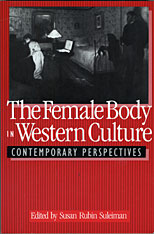
The female body has occupied a central place in the Western imagination, its images pervading poetry and story, mythology and religious doctrine, the visual arts, and scientific treatises. It has inspired both attraction and fear, been perceived as beautiful and unclean, alluring and dangerous, a source of pleasure and nurturing but also a source of evil and destruction.
In The Female Body in Western Culture, twenty-three internationally noted scholars and critics, in specially commissioned essays, explore these representations and their consequences for contemporary art and culture. Ranging from Genesis to Gertrude Stein and Angela Carter, from ancient Greek ritual to the Victorian sleeping cure, from images of the Madonna to modern film and Surrealist art, the essays cover a wide spectrum of approaches and subject mailer. They all converge, however, around questions of power and powerlessness, voice and silence, subjecthood and objectification. And they point the way to the new possibilities and displacements of traditional male-female oppositions. Androgyny in a new key? This book demonstrates that a blurring of gender boundaries does not have to deny difference.
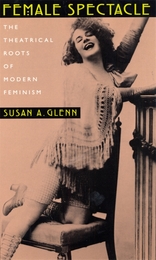
When the French actress Sarah Bernhardt made her first American tour in 1880, the term "feminism" had not yet entered our national vocabulary. But over the course of the next half-century, a rising generation of daring actresses and comics brought a new kind of woman to center stage. Exploring and exploiting modern fantasies and fears about female roles and gender identity, these performers eschewed theatrical convention and traditional notions of womanly modesty. They created powerful images of themselves as ambitious, independent, and sexually expressive "New Women."
Female Spectacle reveals the theater to have been a powerful new source of cultural authority and visibility for women. Ironically, theater also provided an arena in which producers and audiences projected the uncertainties and hostilities that accompanied changing gender relations. From Bernhardt's modern methods of self-promotion to Emma Goldman's political theatrics, from the female mimics and Salome dancers to the upwardly striving chorus girl, Glenn shows us how and why theater mattered to women and argues for its pivotal role in the emergence of modern feminism.
With Sigmund Freud notoriously flummoxed about what women want, any encounter between psychoanalysis and feminism would seem to promise a standoff. But in this lively, often surprising history, Mari Jo Buhle reveals that the twentieth century’s two great theories of liberation actually had a great deal to tell each other. Starting with Freud’s 1909 speech to an audience that included the feminist and radical Emma Goldman, Buhle recounts all the twists and turns this exchange took in the United States up to the recent American vogue of Jacques Lacan. While chronicling the contributions of feminism to the development of psychoanalysis, she also makes an intriguing case for the benefits psychoanalysis brought to feminism.
From the first, American psychoanalysis became the property of freewheeling intellectuals and popularists as well as trained analysts. Thus the cultural terrain that Buhle investigates is populated by literary critics, artists and filmmakers, historians, anthropologists, and sociologists—and the resulting psychoanalysis is not so much a strictly therapeutic theory as an immensely popular form of public discourse. She charts the history of feminism from the first wave in the 1910s to the second in the 1960s and into a variety of recent expressions. Where these paths meet, we see how the ideas of Freud and his followers helped further the real-life goals of a feminism that was a widespread social movement and not just an academic phenomenon. The marriage between psychoanalysis and feminism was not pure bliss, however, and Buhle documents the trying moments; most notably the “Momism” of the 1940s and 1950s, a remarkable instance of men blaming their own failures of virility on women.
An ambitious and highly engaging history of ideas, Feminism and Its Discontents brings together far-flung intellectual tendencies rarely seen in intimate relation to each other—and shows us a new way of seeing both.
Catharine A. MacKinnon, noted feminist and legal scholar, explores and develops her original theories and practical proposals on sexual politics and law. These discourses, originally delivered as speeches, have been brilliantly woven into a book that retains all the spontaneity and accessibility of a live presentation. MacKinnon offers a unique retrospective on the law of sexual harassment, which she designed and has worked for a decade to establish, and a prospectus on the law of pornography, which she proposes to change in the next ten years. Authentic in voice, sweeping in scope, startling in clarity, urgent, never compromised and often visionary, these discourses advance a new theory of sex inequality and imagine new possibilities for social change.
Through these engaged works on issues such as rape, abortion, athletics, sexual harassment, and pornography, MacKinnon seeks feminism on its own terms, unconstrained by the limits of prior traditions. She argues that viewing gender as a matter of sameness and difference—as virtually all existing theory and law have done—covers up the reality of gender, which is a system of social hierarchy, an imposed inequality of power. She reveals a political system of male dominance and female subordination that sexualizes power for men and powerlessness for women. She analyzes the failure of organized feminism, particularly legal feminism, to alter this condition, exposing the way male supremacy gives women a survival stake in the system that destroys them.
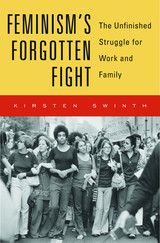
A spirited defense of feminism, arguing that the lack of support for working mothers is less a failure of second-wave feminism than a rejection by reactionaries of the sweeping changes they campaigned for.
When people discuss feminism, they often lament its failure to deliver on the promise that women can “have it all.” But as Kirsten Swinth argues in this provocative book, it is not feminism that has betrayed women, but a society that balked at making the far-reaching changes for which activists fought. Feminism’s Forgotten Fight resurrects the comprehensive vision of feminism’s second wave at a time when its principles are under renewed attack.
Through compelling stories of local and national activism and crucial legislative and judicial battles, Swinth’s history spotlights concerns not commonly associated with the movement of the 1960s and 1970s. We see liberals and radicals, white women and women of color, rethinking gender roles and redistributing housework. They brought men into the fold, and together demanded bold policy changes to ensure job protection for pregnant women and federal support for child care. Many of the creative proposals they devised to reshape the workplace and rework government policy—such as guaranteed incomes for mothers and flex time—now seem prescient.
Swinth definitively dispels the notion that second-wave feminists pushed women into the workplace without offering solutions to issues they faced at home. Feminism’s Forgotten Fight examines activists’ campaigns for work and family in depth, and helps us see how feminism’s opponents—not feminists themselves—blocked the movement’s aspirations. Her insights offer key lessons for women’s ongoing struggle to achieve equality at home and work.

Embattled and belittled, demonized and deemed passé, feminism today seems becalmed without being calm. This is as true in literary criticism as elsewhere in the culture--yet it is in literary criticism that these essays locate the renewed promises, possibilities, and applications of feminist thought. In fresh readings of a wide array of texts--legal, literary, cinematic, philosophical, and psychoanalytical--renowned literary theorist Barbara Johnson demonstrates that the conflicts and uncertainties that beset feminism are signs not of a dead end, but of a creative turning-point.
Employing surprising juxtapositions, The Feminist Difference looks at fiction by black writers from a feminist/psychoanalytic perspective; at poetry from Phillis Wheatley to Baudelaire and Marceline Desbordes-Valmore; and at feminism and law, particularly in the work of Patricia Williams and the late Mary Joe Frug. Toni Morrison and Sigmund Freud, John Keats and Jane Campion, Charlotte Perkins Gilman and Nathaniel Hawthorne, Nella Larson and Heinz Kohut are among the many occasions for Johnson's rich, stimulating, unfailingly close reading of moments at which feminism seems to founder in its own contradictions--moments that re-emerge here as sources of a revitalized critical awareness.
In the final analysis, Johnson argues, literature is essential for feminism because it is the place where impasses can be kept and opened for examination, where questions can be guarded and not forced into a premature validation of the available paradigms. In her book literature appears not as a predetermined set of works but as a mode of cultural work, the work of making readable those impossible and necessary things that cannot yet be spoken.

For over a dozen years, the Vectors Lab has experimented with digital scholarship through its online publication, Vectors, and through Scalar, a multimedia authoring platform. The history of this software lab intersects a much longer tale about computation in the humanities, as well as tensions about the role of theory in related projects.
Tara McPherson considers debates around the role of cultural theory within the digital humanities and addresses Gary Hall’s claim that the goals of critical theory and of quantitative or computational analysis may be irreconcilable (or at the very least require “far more time and care”). She then asks what it might mean to design—from conception—digital tools and applications that emerge from contextual concerns of cultural theory and, in particular, from a feminist concern for difference. This path leads back to the Vectors Lab and its ongoing efforts at the intersection of theory and praxis.
An acclaimed political theorist offers a fresh, interdisciplinary analysis of the politics of refusal, highlighting the promise of a feminist politics that does not simply withdraw from the status quo but also transforms it.
The Bacchae, Euripides’s fifth-century tragedy, famously depicts the wine god Dionysus and the women who follow him as indolent, drunken, mad. But Bonnie Honig sees the women differently. They reject work, not out of laziness, but because they have had enough of women’s routine obedience. Later they escape prison, leave the city of Thebes, explore alternative lifestyles, kill the king, and then return to claim the city. Their “arc of refusal,” Honig argues, can inspire a new feminist politics of refusal.
Refusal, the withdrawal from unjust political and economic systems, is a key theme in political philosophy. Its best-known literary avatar is Herman Melville’s Bartleby, whose response to every request is, “I prefer not to.” A feminist politics of refusal, by contrast, cannot simply decline to participate in the machinations of power. Honig argues that a feminist refusal aims at transformation and, ultimately, self-governance. Withdrawal is a first step, not the end game.
Rethinking the concepts of refusal in the work of Giorgio Agamben, Adriana Cavarero, and Saidiya Hartman, Honig places collective efforts toward self-governance at refusal’s core and, in doing so, invigorates discourse on civil and uncivil disobedience. She seeks new protagonists in film, art, and in historical and fictional figures including Sophocles’s Antigone, Ovid’s Procne, Charlie Chaplin’s Tramp, Leonardo da Vinci’s Madonna, and Muhammad Ali. Rather than decline the corruptions of politics, these agents of refusal join the women of Thebes first in saying no and then in risking to undertake transformative action.

Festivals and the French Revolution—the subject conjures up visions of goddesses of Liberty, strange celebrations of Reason, and the oddly pretentious cult of the Supreme Being. Every history of the period includes some mention of festivals, although most historians have been content either to ridicule them as ineffectual or to bemoan them as repugnant examples of a sterile, official culture. Mona Ozouf shows us that they were much more than bizarre marginalia to the revolutionary process. Festivals offer critical insights into the meaning of the French Revolution; they show a society in the process of creating itself anew.
Historians have recognized the importance of the revolutionary festival as a symbol of the Revolution. But they have differed widely in their interpretations of what that symbol meant and have considered the festivals as diverse as the rival political groups that conceived and organized them. Against this older vision, Ozouf argues for the fundamental coherence and profound unity of the festival as both event and register of reference and attitude. By comparing the most ideologically opposed festivals (those of Reason and the Supreme Being, for instance), she shows that they clearly share a common aim, which finds expression in a mutual ceremonial and symbolic vocabulary. Through a brilliant discussion of the construction, ordering, and conduct of the festival Ozouf demonstrates how the continuity of the images, allegories, ceremonials, and explicit functions can be seen as the Revolution’s own commentary on itself.
A second and important aim of this book is to show that this system of festivals, often seen as destructive, was an immensely creative force. The festival was the mirror in which the Revolution chose to see itself and the pedagogical tool by which it hoped to educate future generations, Far from being a failure, it embodied, socialized, and made sacred a new set of values based on the family, the nation, and mankind—the values of a modern, secular, liberal world.
Here is a brief and authoritative account of human physical growth, beautifully written by one of the world's foremost experts. In Fetus into Man Professor Tanner tells the story of growth in language that is both accessible to the nonbiologist and acceptable to the biologist.
The book begins with the basics of growth: cell division, hormonal control and differential growth of body tissues. It then builds on these basics to provide a picture of individual growth--from the fetus in utero to the development of sex differences at puberty. Tanner pays special attention along the way to the psychological and social problems faced by children who mature either too soon or too late, and he concludes with a full description of the major growth disorders and current methods of treatment.
Fetus into Man will be an important reference for parents, educators, students of development, and indeed anyone who must deal with the growing child.
Consider two polar images of the same medical condition: the pale and fragile Camille ensconced on a chaise in a Victorian parlor, daintily coughing a small spot of blood onto her white lace pillow, and a wretched poor man in a Bowery flophouse spreading a dread and deadly infection. Now Katherine Ott chronicles how in one century a romantic, ambiguous affliction of the spirit was transformed into a disease that threatened public health and civic order. She persuasively argues that there was no constant identity to the disease over time, no “core” tuberculosis.
What we understand today as pulmonary tuberculosis would have been largely unintelligible to a physician or patient in the late nineteenth century. Although medically the two terms described the same disease of the lungs, Ott shows that “tuberculosis” and “consumption” were diagnosed, defined, and treated distinctively by both lay and professional health workers. Ott traces the shift from the pre-industrial world of 1870, in which consumption was conceived of primarily as a middle-class malaise that conferred virtue, heightened spirituality, and gentility on the sufferer, to the post-industrial world of today, in which tuberculosis is viewed as a microscopic enemy, fought on an urban battleground and attacking primarily the outcast poor and AIDS patients.
Ott’s focus is the changing definition of the disease in different historical eras and environments. She explores its external trappings, from the symptoms doctors chose to notice (whether a pale complexion or a tubercle in a dish) to the significance of the economic and social circumstances of the patient. Emphasizing the material culture of disease—medical supplies, advertisements for faraway rest cures, outdoor sick porches, and invalid hammocks—Ott provides insight into people’s understanding of illness and how to combat it. Fevered Lives underscores the shifting meanings of consumption/tuberculosis in an extraordinarily readable cultural history.

In Fiction and Repetition, one of our leading critics and literary theorists offers detailed interpretations of seven novels: Emily Brontë's Wuthering Heights, Thackeray's Henry Esmond, Hardy's Tess of the d'Urbervilles and The Well-Beloved, Conrad's Lord Jim, and Woolf's Mrs. Dalloway and Between the Acts. Miller explores the multifarious ways in which repetition generates meaning in these novels—repetition of images, metaphors, motifs; repetition on a larger scale of episodes, characters, plots; and repetition from one novel to another by the same or different authors. While repetition creates meanings, it also, Miller argues, prevents the identification of a single determinable meaning for any of the novels; rather, the patterns made by the various repetitive sequences offer alternative possibilities of meaning which are incompatible. He thus sees “undecidability” as an inherent feature of the novels discussed.
His conclusions make a provocative contribution to current debates about narrative theory and about the principles of literary criticism generally. His book is not a work of theory as such, however, and he avoids the technical terminology dear to many theorists; his book is an attempt to interpret as best he can his chosen texts. Because of his rare critical gifts and his sensitivity to literary values and nuances, his readings send one back to the novels with a new appreciation of their riches and their complexities of form.

The early decades of the nineteenth century in Imperial Russia embraced a sequence of catastrophic events—the assassination of Paul I, Napoleon’s invasion, the Decembrist rebellion, the cholera epidemic, the Polish uprising—along with radical changes in the fabric of society. Yet, far from exhausted by these convulsions, Russian literature blossomed as never before, producing the first in the long line of novels now regarded as masterpieces throughout the world. With all the sentimentality, nostalgia, and mythic echoes the term evokes, posterity has called this the golden age of Russian letters.
William Mills Todd describes the ideology of the educated westernized gentry (obshchestvo) of the time, then charts the various possibilities for literary life: first patronage, the salons, popular literature; then the rapid emergence of an incipient literary profession, which was encouraged by copyright laws, journals and booksellers, and an increasing readership. Through an examination of three brilliant fictions—Pushkin’s Eugene Onegin, Lermontov’s A Hero of Our Time, and Gogol’s Dead Souls—he explores the complicated interactions of literature and society as these writers “discovered” their own milieu and were discovered by it, confronting the fragility, exclusiveness, and potential for hypocrisy and self-delusion in Russian culture. Todd’s interdisciplinary approach will ensure his book’s appeal to students of comparative and other national literatures as well as of Russian culture.


Creators of fiction demand that we venture into alien spaces, into the worlds of Antigone, Don Quixote, Faust, Sherlock Holmes. Created worlds may resemble the actual world, but they can just as easily be deemed incomplete, precarious, or irrelevant. Why, then, does fiction continue to pull us in and, more interesting perhaps, how? In this beautiful book Thomas Pavel provides a poetics of the imaginary worlds of fiction, their properties, and their reason for being.
Pavel is a noted literary theorist and a novelist as well. His genial, graceful book has a polemical edge: he notes that structuralism started as a project to infuse new life into literary studies through the devices of linguistics. That project undercut referential issues, however, and is now obsolete. Pavel argues that what matters about fiction is its relation to the human capacity of invention and the complex requirements of imagination. He moves decisively beyond the constraints of formalism and textualism toward a diverse theory of fiction that is sensitive to both literary and philosophical concerns. Along the way he takes us through special landscapes that reveal the inextricability of art, religion, and myth. This is a venturesome book of the first order.

What is meant by "romantic irony"? What is specifically romantic about this kind of irony? How does it relate to--and differ from--ordinary, traditional irony? Is it a variant of traditional irony, or an independent phenomenon? Are its lines of demarcation primarily historical or modal? How does it become manifest in a text? What is its impact on the art of narration?
These are the questions that Fictions of Romantic Irony addresses. It makes a new approach to romantic irony by envisaging it in a broad European context in relation both to earlier concepts of irony and to traditional uses of irony in narration. Fictions of Romantic Irony shows how irony was transformed in the hands of Friedrich Schlegel, Hegel and Kierkegaard. Through an analysis of six major European narratives of the mid-eighteenth to the mid-nineteenth century it illustrates the reciprocal interplay of theory and practice, and the complex and central role that irony assumes as a shaping aesthetic factor. Using a wide perspective and an original synchronic disposition of texts within its historical framework, it identifies the distinctive philosophical and literary features of romantic irony.
Fictions of Romantic Irony presents an important theory of romantic irony, distinguishing it from traditional irony in the handling of fictional illusion and in the dynamics of the tripartite relationship between narrator, narrative and reader. It dispels many common, limiting fictions about romantic irony, and offers a robust understanding of its workings in narrative and its significance for modern fiction.

Once in a great while, as the New York Times noted recently, a naturalist writes a book that changes the way people look at the living world. John James Audubon’s Birds of America, published in 1838, was one. Roger Tory Peterson’s 1934 Field Guide to the Birds was another. How does such insight into nature develop?
Pioneering a new niche in the study of plants and animals in their native habitat, Field Notes on Science and Nature allows readers to peer over the shoulders and into the notebooks of a dozen eminent field workers, to study firsthand their observational methods, materials, and fleeting impressions.
What did George Schaller note when studying the lions of the Serengeti? What lists did Kenn Kaufman keep during his 1973 “big year”? How does Piotr Naskrecki use relational databases and electronic field notes? In what way is Bernd Heinrich’s approach “truly Thoreauvian,” in E. O. Wilson’s view? Recording observations in the field is an indispensable scientific skill, but researchers are not generally willing to share their personal records with others. Here, for the first time, are reproductions of actual pages from notebooks. And in essays abounding with fascinating anecdotes, the authors reflect on the contexts in which the notes were taken.
Covering disciplines as diverse as ornithology, entomology, ecology, paleontology, anthropology, botany, and animal behavior, Field Notes offers specific examples that professional naturalists can emulate to fine-tune their own field methods, along with practical advice that amateur naturalists and students can use to document their adventures.

The persistence of deep moral disagreements—across cultures as well as within them—has created widespread skepticism about the objectivity of morality. Moral relativism, moral pessimism, and the denigration of ethics in comparison with science are the results. Fieldwork in Familiar Places challenges the misconceptions about morality, culture, and objectivity that support these skepticisms, to show that we can take moral disagreement seriously and yet retain our aspirations for moral objectivity.
Michele Moody-Adams critically scrutinizes the anthropological evidence commonly used to support moral relativism. Drawing on extensive knowledge of the relevant anthropological literature, she dismantles the mystical conceptions of “culture” that underwrite relativism. She demonstrates that cultures are not hermetically sealed from each other, but are rather the product of eclectic mixtures and borrowings rich with contradictions and possibilities for change. The internal complexity of cultures is not only crucial for cultural survival, but will always thwart relativist efforts to confine moral judgments to a single culture. Fieldwork in Familiar Places will forever change the way we think about relativism: anthropologists, psychologists, historians, and philosophers alike will be forced to reconsider many of their theoretical presuppositions.
Moody-Adams also challenges the notion that ethics is methodologically deficient because it does not meet standards set by natural science. She contends that ethics is an interpretive enterprise, not a failed naturalistic one: genuine ethical inquiry, including philosophical ethics, is a species of interpretive ethnography. We have reason for moral optimism, Moody-Adams argues. Even the most serious moral disagreements take place against a background of moral agreement, and thus genuine ethical inquiry will be fieldwork in familiar places. Philosophers can contribute to this enterprise, she believes, if they return to a Socratic conception of themselves as members of a rich and complex community of moral inquirers.
Helena Wall shows what life was like in colonial America, a culture where individuals and family were subordinated to the demands of the community. Using local town, church, and especially court records from every colony, she examines the division of authority between family and community throughout colonial America.
Although this close relationship and its consequences for private life bred many tensions and conflicts, the premises and conditions of that interdependent association persisted even into the nineteenth century. Wall sketches the subsequent changes and outlines the new arrangements of family and community life as the colonies moved toward the formation of a new nation.
Can a good school help its students overcome the adverse effects of economic disadvantage and family adversity? Recent educational assessment suggests that the answer may be a painful no. Here, however, is a book that contradicts the prevailing pessimism about the possibilities of education. In Fifteen Thousand Hours, Michael Rutter and his colleagues show conclusively that schools can make a difference.
In a three-year study of a dozen secondary schools in a large urban area, Rutter's team found that some schools were demonstrably better than others at promoting the academic and social success of their students. Moreover, there were clear and interesting differences between the schools that promote success and the schools that promote failure. As Rutter shows, these differences provide important clues to the kind of educational reform that might allow inner-city schools to act more uniformly as a positive and protective influence on students who must grow up in an otherwise disordered and difficult world.
For a dozen years during their formative period of development, children spend as many of their working hours at school as at home—some 15,000 hours in all. To suggest that this tremendous amount of time has no effect on development seems irrational. To settle for schools that simply act as institutions of containment for disadvantaged children seems a strategy of despair. The importance of this major book in education is its clear demonstration that these are not the only alternatives.

How can decisionmakers charged with protecting the environment and the public’s health and safety steer clear of false and misleading scientific research? Is it possible to give scientists a stronger voice in regulatory processes without yielding too much control over policy, and how can this be harmonized with democratic values? These are just some of the many controversial and timely questions that Sheila Jasanoff asks in this study of the way science advisers shape federal policy.
In their expanding role as advisers, scientists have emerged as a formidable fifth branch of government. But even though the growing dependence of regulatory agencies on scientific and technical information has granted scientists a greater influence on public policy, opinions differ as to how those contributions should be balanced against other policy concerns. More important, who should define what counts as good science when all scientific claims incorporate social factors and are subject to negotiation?
Jasanoff begins by describing some significant failures—such as nitrites, Love Canal, and alar—in administrative and judicial decisionmaking that fed the demand for more peer review of regulatory science. In analyzing the nature of scientific claims and methods used in policy decisions, she draws comparisons with the promises and limitations of peer review in scientific organizations operating outside the regulatory context. The discussion of advisory mechanisms draws on the author’s close scrutiny of two highly visible federal agencies—the Environmental Protection Agency and the Food and Drug Administration. Here we see the experts in action as they deliberate on critical issues such as clean air, pesticide regulation, and the safety of pharmaceuticals and food additives.
Jasanoff deftly merges legal and institutional analysis with social studies of science and presents a strong case for procedural reforms. In so doing, she articulates a social-construction model that is intended to buttress the effectiveness of the fifth branch.
The Fifth Prapāṭhaka of the Vādhūla Śrautasūtra includes a critical edition, followed by a translation and a commentary, of the fifth chapter (prapāṭhaka) of the Vādhūla Śrautasūtra. This chapter is dedicated to the description of the so-called “independent” animal sacrifice (nirūḍhapaśubandha) in Vedic ritual. This series of short monographs relates to particular aspects of the animal sacrifice described in the Veda and to problems of exegesis of Vedic texts.
The first part of this edition presents the translation and commentary, while the critical edition makes up the second part. The commentary highlights the peculiarities of the Vādhūla version of the nirūḍhapaśubandha. In the conclusion of the first part, the ancientness of the Vādhūla school is discussed, as well as its place within the corpus of Taittirīya texts.
Well known as an abolitionist stronghold before the Civil War, Massachusetts had taken steps to eliminate slavery as early as the 1780s. Nevertheless, a powerful racial caste system still held sway, reinforced by a law prohibiting “amalgamation”—marriage between whites and blacks. The Fight for Interracial Marriage Rights in Antebellum Massachusetts chronicles a grassroots movement to overturn the state’s ban on interracial unions. Assembling information from court and church records, family histories, and popular literature, Amber D. Moulton recreates an unlikely collaboration of reformers who sought to rectify what, in the eyes of the state’s antislavery constituency, appeared to be an indefensible injustice.
Initially, activists argued that the ban provided a legal foundation for white supremacy in Massachusetts. But laws that enforced racial hierarchy remained popular even in Northern states, and the movement gained little traction. To attract broader support, the reformers recalibrated their arguments along moral lines, insisting that the prohibition on interracial unions weakened the basis of all marriage, by encouraging promiscuity, prostitution, and illegitimacy. Through trial and error, reform leaders shaped an appeal that ultimately drew in Garrisonian abolitionists, equal rights activists, antislavery evangelicals, moral reformers, and Yankee legislators, all working to legalize interracial marriage.
This pre–Civil War effort to overturn Massachusetts’ antimiscegenation law was not a political aberration but a crucial chapter in the deep history of the African American struggle for equal rights, on a continuum with the civil rights movement over a century later.
The French Resistance has an iconic status in the struggle to liberate Nazi-occupied Europe, but its story is entangled in myths. Gaining a true understanding of the Resistance means recognizing how its image has been carefully curated through a combination of French politics and pride, ever since jubilant crowds celebrated Paris’s liberation in August 1944. Robert Gildea’s penetrating history of resistance in France during World War II sweeps aside “the French Resistance” of a thousand clichés, showing that much more was at stake than freeing a single nation from Nazi tyranny.
As Fighters in the Shadows makes clear, French resistance was part of a Europe-wide struggle against fascism, carried out by an extraordinarily diverse group: not only French men and women but Spanish Republicans, Italian anti-fascists, French and foreign Jews, British and American agents, and even German opponents of Hitler. In France, resistance skirted the edge of civil war between right and left, pitting non-communists who wanted to drive out the Germans and eliminate the Vichy regime while avoiding social revolution at all costs against communist advocates of national insurrection. In French colonial Africa and the Near East, battle was joined between de Gaulle’s Free French and forces loyal to Vichy before they combined to liberate France.
Based on a riveting reading of diaries, memoirs, letters, and interviews of contemporaries, Fighters in the Shadows gives authentic voice to the resisters themselves, revealing the diversity of their struggles for freedom in the darkest hours of occupation and collaboration.

Historians have long believed that Catholics were late and ambivalent supporters of the German nation. Rebecca Ayako Bennette’s bold new interpretation demonstrates definitively that from the beginning in 1871, when Wilhelm I was proclaimed Kaiser of a unified Germany, Catholics were actively promoting a German national identity for the new Reich.
In the years following unification, Germany was embroiled in a struggle to define the new nation. Otto von Bismarck and his allies looked to establish Germany as a modern nation through emphasis on Protestantism and military prowess. Many Catholics feared for their future when he launched the Kulturkampf, a program to break the political and social power of German Catholicism. But these anti-Catholic policies did not destroy Catholic hopes for the new Germany. Rather, they encouraged Catholics to develop an alternative to the Protestant and liberal visions that dominated the political culture. Bennette’s reconstruction of Catholic thought and politics sheds light on several aspects of German life. From her discovery of Catholics who favored a more “feminine” alternative to Bismarckian militarism to her claim that anti-socialism, not anti-Semitism, energized Catholic politics, Bennette’s work forces us to rethink much of what we know about religion and national identity in late nineteenth-century Germany.
Decades after President Johnson initiated the War on Poverty, it is time for an unbiased assessment of its effects. In this book a distinguished group of economists, sociologists, political scientists, and social policy analysts provide that assessment. Spending on social programs has greatly increased, yet poverty has declined only slightly. Do the numbers alone give an accurate picture? Have the government's efforts, as some critics claim, done more harm than good? The authors of this volume provide a balanced and wide-ranging analysis of antipoverty policies since the 1960s, including both successes and failures.
The evidence shows that simple comparisons of spending levels and poverty trends do not tell the whole story: they obscure the diversity of the poor population and the many complex issues involved in evaluating policies. The authors address such questions as: How do economic growth, social movements, and changes in thewelfare system affect the poor? What economic and political factors influence antipoverty programs, and conversely, what implications do these programs have for employment, education, health care, family structure, and civil rights?The authors' account of past failures and their agenda for the next decade show clearly that much remains to be done. Yet they are not as pessimistic as some writers, who maintain that nothing will work. Rather, they say, nothing will work miracles.
As a guide to the economics and politics of antipoverty programs, this volume is peerless. It is certain to become an important reference for students and scholars in the field, for policy analysts and policymakers, and for program administrators.

Despair at Gallipoli. Victory at Vimy Ridge. A European generation lost, an American spirit found. The First World War, the deadly herald of a new era, continues to captivate readers. In this lively book, Michael Neiberg offers a concise history based on the latest research and insights into the soldiers, commanders, battles, and legacies of the Great War.
Tracing the war from Verdun to Salonika to Baghdad to German East Africa, Neiberg illuminates the global nature of the conflict. More than four years of mindless slaughter in the trenches on the western front, World War I was the first fought in three dimensions: in the air, at sea, and through mechanized ground warfare. New weapons systems--tanks, bomber aircraft, and long-range artillery--all shaped the battle environment. Moving beyond the standard portrayal of the war's generals as "butchers and bunglers," Neiberg offers a nuanced discussion of officers constrained by the monumental scale of complex events. Diaries and letters of men serving on the front lines capture the personal stories and brutal conditions--from Alpine snows to Mesopotamian sands--under which these soldiers lived, fought, and died.
Generously illustrated, with many never-before-published photographs, this book is an impressive blend of analysis and narrative. Anyone interested in understanding the twentieth century must begin with its first global conflict, and there is no better place to start than with Fighting the Great War.
Ubiquitous in the streets and brothels of nineteenth-century Paris, the prostitute was even more so in the novels and paintings of the time. Charles Bernheimer discusses how these representations of the sexually available woman express male ambivalence about desire, money, class, and the body. Interweaving close textual readings with historical anecdote and theoretical speculation, Bernheimer demonstrates how the formal properties of art can serve strategically to control anxious fantasies about female sexual power.
Bernheimer looks first at the supposed objectivity of the official discourse on prostitution, where he pinpoints revealing strategies for legitimizing private fantasies and linking female sexuality to pathology and disease. He then traces the development of modernist artistic techniques as a response to the increasing virulence of these fantasies of organic decay. The objects of Bernheimer's analyses range from works scandalous in their time, such as Maner's Olympia and Zola's Nana, to great popular successes, such as Sue's Mysteries of Paris, to "in" books praised by connoisseurs, such as Haubert's Sentimental Education and Huysmans's Against Nature, to works made for private enjoyment, such as Degas's brothel images. Intriguing and highly readable, these analyses offer new insights into the ideological function of art in structuring attitudes toward sex, gender, and power.

Film noir remains one of the most enduring legacies of 1940s and ’50s Hollywood. Populated by double-crossing, unsavory characters, this pioneering film style explored a shadow side of American life during a period of tremendous prosperity and optimism. Edward Dimendberg compellingly demonstrates how film noir is preoccupied with modernity—particularly the urban landscape.
The originality of Dimendberg’s approach lies in his examining these films in tandem with historical developments in architecture, city planning, and modern communications systems. He confirms that noir is not simply a reflection of modernity but a virtual continuation of the spaces of the metropolis. He convincingly shows that Hollywood’s dark thrillers of the postwar decades were determined by the same forces that shaped the city itself.
Exploring classic examples of film noir such as The Asphalt Jungle, Double Indemnity, Kiss Me Deadly, and The Naked City alongside many lesser-known works, Dimendberg masterfully interweaves film history and urban history while perceptively analyzing works by Raymond Chandler, Edward Hopper, Siegfried Kracauer, and Henri Lefebvre. A bold intervention in cultural studies and a major contribution to film history, Film Noir and the Spaces of Modernity will provoke debate by cinema scholars, urban historians, and students of modern culture—and will captivate admirers of a vital period in American cinema.
This ninth title in the series Studies in the Modernization of the Republic of Korea offers new insights into the role of finance in a rapidly developing country. Combining history and theory, it provides a rigorous test of previous theoretical propositions. The study illustrates the complexity of the Korean financial system and the danger of easy generalization from partial evidence.
The two major components of the financial system are brought into focus—one regulated and statistically recorded, the other unregulated, unrecorded. The burden of financial intermediation shifts from one to the other largely in response to government policy measures. By looking only at the regulated sector, previous studies have often misperceived the role of the financial system and the effects of government policies. The financial scandal in Seoul in May 1982 vividly demonstrated that the unregulated part of the system is still important and that overregulation of the “modern” part generates strong pressures for perpetuating the illegal, unregulated, “traditional” financial institutions.

Since the early 1980s, Korea’s financial development has been a tale of liberalization and opening. After the 1997 financial crisis, great strides were made in building a market-oriented financial system through sweeping reforms for deregulation and the opening of financial markets. However, the new system failed to steer the country away from a credit card boom and bust in 2003, a liquidity crisis in 2008, and a run on its savings banks in 2011, and has been severely tested again by the ongoing COVID-19 pandemic crisis. Financial liberalization, clearly, has been no panacea.
This study analyzes the deepening of and structural changes in Korea’s financial system since the early 1980s and presents the empirical results of the effects of financial development on economic growth, stability, and the distribution of income. It finds that, contrary to conventional wisdom, financial liberalization has contributed little to fostering the growth and stability of the Korean economy and has exacerbated income distribution problems. Are there any merits in financial liberalization? The authors answer this query through empirical examinations of the theories of finance and growth. They point to a clear need to further improve the efficiency, soundness, and stability of Korean financial institutions and markets.
Recently, a volatile global economy has challenged the United States to rethink its financial policies toward economically troubled countries. Emily Rosenberg suggests that perplexing questions about how to standardize practices within the global financial system, and thereby strengthen market economies in unstable areas of the world, go back to the early decades of this century. Then, dollar diplomacy--the practice of extending private U.S. bank loans in exchange for financial supervision over other nations--provided America's major approach to stabilizing economies overseas and expanding its influence.
Policymakers, private bankers, and the members of the emerging profession of international economic advising cooperated in devising arrangements by which U.S. banks would extend foreign loans on the condition that the countries hire U.S. experts to revamp financial systems and exercise some supervision. Rosenberg demonstrates that these arrangements were not simply technical and shows how they became central to foreign policy debates during the 1920s, when increasingly vocal critics at home and abroad assailed dollar diplomacy as a new imperialism. She explores how loan-for-supervision arrangements interrelated with broad cultural notions of racial destiny, professional expertise, and the virtues of manliness. An innovative, interdisciplinary study, Financial Missionaries to the World illuminates the dilemmas of public/private cooperation in foreign economic policy and the incalculable consequences of exercising financial power in the global marketplace.
Among the most serious challenges facing health systems in lower and middle income countries is establishing efficient, fair, and sustainable financing mechanisms that offer universal protection. Lack of financial protection forces families to suffer the burden not only of illness but also of economic ruin and impoverishment. In Latin America, financial protection for health continues to be segmented and fragmented; health is mainly financed through out-of-pocket payments.
Financing Health in Latin America presents new and important insight into the crucial issue of financial protection in health systems. The book analyzes the level and determinants of catastrophic health expenditures among households in Argentina, Brazil, Chile, Colombia, Costa Rica, the Dominican Republic, Mexico, and Peru, applying both descriptive and econometric analyses. The results demonstrate that out-of-pocket health spending is pushing large segments of the population into impoverishment and that the poorest and most vulnerable segments of the population are most at risk of financial catastrophe. This work is a product of the collaboration between more than 25 researchers and 18 institutions associated with the Research for Health Financing in Latin America and the Caribbean Network, with support from the International Development Research Centre of Canada.
Approaching the study of literature as a unique form of the philosophy of language and mind—as a study of how we produce nonsense and imagine it as sense—this is a book about our human ways of making and losing meaning. Brett Bourbon asserts that our complex and variable relation with language defines a domain of meaning and being that is misconstrued and missed in philosophy, in literary studies, and in our ordinary understanding of what we are and how things make sense. Accordingly, his book seeks to demonstrate how the study of literature gives us the means to understand this relationship.
The book itself is framed by the literary and philosophical challenges presented by Joyce’s Finnegans Wake and Wittgenstein’s Philosophical Investigations. With reference to these books and the problems of interpretation and meaning that they pose, Bourbon makes a case for the fundamental philosophical character of the study of literature, and for its dependence on theories of meaning disguised as theories of mind. Within this context, he provides original accounts of what sentences, fictions, non-fictions, and poems are; produces a new account of the logical form of fiction and of the limits of interpretation that follow from it; and delineates a new and fruitful domain of inquiry in which literature, philosophy, and science intersect.
“Ambitious, fast-paced, fact-filled, and accessible.”
—Science
“A compelling case for why achieving the right balance of time with our families…is vital to the economic success and prosperity of our nation… A must read.”
—Maria Shriver
From backyard barbecues to the blogosphere, working men and women across the country are raising the same worried question: How can I get ahead at my job while making sure my family doesn’t suffer? A visionary economist who has looked at the numbers behind the personal stories, Heather Boushey argues that resolving the work–life conflict is as vital for us personally as it is essential economically. Finding Time offers ingenious ways to help us carve out the time we need, while showing businesses that more flexible policies can actually make them more productive.
“Supply and demand curves are suddenly ‘sexy’ when Boushey uses them to prove that paid sick days, paid family leave, flexible work schedules, and affordable child care aren’t just cutesy women’s issues for families to figure out ‘on their own time and dime,’ but economic issues affecting the country at large.”
—Vogue
“Boushey argues that better family-leave policies should not only improve the lives of struggling families but also boost workers’ productivity and reduce firms’ costs.”
—The Economist
In 2005 Michael Ignatieff left his life as a writer and professor at Harvard University to enter the combative world of politics back home in Canada. By 2008, he was leader of the country’s Liberal Party and poised—should the governing Conservatives falter—to become Canada’s next Prime Minister. It never happened. Today, after a bruising electoral defeat, Ignatieff is back where he started, writing and teaching what he learned.
What did he take away from this crash course in political success and failure? Did a life of thinking about politics prepare him for the real thing? How did he handle it when his own history as a longtime expatriate became a major political issue? Are cynics right to despair about democratic politics? Are idealists right to hope? Ignatieff blends reflection and analysis to portray today’s democratic politics as ruthless, unpredictable, unforgiving, and hyper-adversarial.
Rough as it is, Ignatieff argues, democratic politics is a crucible for compromise, and many of the apparent vices of political life, from inconsistency to the fake smile, follow from the necessity of bridging differences in a pluralist society. A compelling account of modern politics as it really is, the book is also a celebration of the political life in all its wild, exuberant variety.

Walter Tschinkel's passion for fire ants has been stoked by over thirty years of exploring the rhythm and drama of Solenopsis invicta's biology. Since South American fire ants arrived in Mobile, Alabama, in the 1940s, they have spread to become one of the most reviled pests in the Sunbelt.
In Fire Ants Tschinkel provides not just an encyclopedic overview of S. invicta--how they found colonies, construct and defend their nests, forage and distribute food, struggle among themselves for primacy, and even relocate entire colonies--but a lively account of how research is done, how science establishes facts, and the pleasures and problems of a scientific career.
Between chapters detailed enough for experts but readily accessible to any educated reader, "interludes" provide vivid verbal images of the world of fire ants and the people who study them. Early chapters describe the several failed, and heavily politically influenced, eradication campaigns, and later ones the remarkable spread of S. invicta's "polygyne" form, in which nests harbor multiple queens and colonies reproduce by "budding." The reader learns much about ants, the practice of science, and humans' role in the fire ant's North American success.

In a compelling history of the Jewish community in New York during four decades of mass immigration, Tony Michels examines the defining role of the Yiddish socialist movement in the American Jewish experience.
The movement, founded in the 1880s, was dominated by Russian-speaking intellectuals, including Abraham Cahan, Mikhail Zametkin, and Chaim Zhitlovsky. Socialist leaders quickly found Yiddish essential to convey their message to the Jewish immigrant community, and they developed a remarkable public culture through lectures and social events, workers’ education societies, Yiddish schools, and a press that found its strongest voice in the mass-circulation newspaper Forverts.
Arguing against the view that socialism and Yiddish culture arrived as Old World holdovers, Michels demonstrates that they arose in New York in response to local conditions and thrived not despite Americanization, but because of it. And the influence of the movement swirled far beyond the Lower East Side, to a transnational culture in which individuals, ideas, and institutions crossed the Atlantic. New York Jews, in the beginning, exported Yiddish socialism to Russia, not the other way around.
The Yiddish socialist movement shaped Jewish communities across the United States well into the twentieth century and left an important political legacy that extends to the rise of neoconservatism. A story of hopeful successes and bitter disappointments, A Fire in Their Hearts brings to vivid life this formative period for American Jews and the American left.

Today pentecostalism claims nearly 500 million followers worldwide. An early stronghold was the American South, where believers spoke in unknown tongues, worshipped in free-form churches, and broke down social barriers that had long divided traditional Protestants. Thriving denominations made their headquarters in the region and gathered white and black converts from the Texas plains to the Carolina low country.
Pentecostalism was, in fact, a religious import. It came to the South following the post-Civil War holiness revival, a northern-born crusade that emphasized sinlessness and religious empowerment. Adherents formed new churches in the Jim Crow South and held unconventional beliefs about authority, power, race, and gender. Such views set them at odds with other Christians in the region. By 1900 nearly all southern holiness folk abandoned mainline churches and adopted a pessimistic, apocalyptic theology. Signs of the last days, they thought, were all around them.
The faith first took root among anonymous religious zealots. It later claimed southern celebrities and innovators like televangelists Oral Roberts, Jimmy Swaggart, T. D. Jakes, and John Hagee; rock-and-roll icons Elvis Presley, Jerry Lee Lewis, and Little Richard; and, more recently, conservative political leaders such as John Ashcroft.
With the growth of southern pentecostal denominations and the rise of new, affluent congregants, the movement moved cautiously into the evangelical mainstream. By the 1980s the once-apolitical faith looked entirely different. Many still watched and waited for spectacular signs of the end. Yet a growing number did so as active political conservatives.

Of all the horrors of the last century—perhaps the bloodiest century of the past millennium—ethnic cleansing ranks among the worst. The term burst forth in public discourse in the spring of 1992 as a way to describe Serbian attacks on the Muslims of Bosnia-Herzegovina, but as this landmark book attests, ethnic cleansing is neither new nor likely to cease in our time.
Norman Naimark, distinguished historian of Europe and Russia, provides an insightful history of ethnic cleansing and its relationship to genocide and population transfer. Focusing on five specific cases, he exposes the myths about ethnic cleansing, in particular the commonly held belief that the practice stems from ancient hatreds. Naimark shows that this face of genocide had its roots in the European nationalism of the late nineteenth century but found its most virulent expression in the twentieth century as modern states and societies began to organize themselves by ethnic criteria. The most obvious example, and one of Naimark’s cases, is the Nazi attack on the Jews that culminated in the Holocaust. Naimark also discusses the Armenian genocide of 1915 and the expulsion of Greeks from Anatolia during the Greco–Turkish War of 1921–22; the Soviet forced deportation of the Chechens-Ingush and the Crimean Tatars in 1944; the Polish and Czechoslovak expulsion of the Germans in 1944–47; and Bosnia and Kosovo.
In this harrowing history, Naimark reveals how over and over, as racism and religious hatreds picked up an ethnic name tag, war provided a cover for violence and mayhem, an evil tapestry behind which nations acted with impunity.

Pompeii is the most famous archaeological site in the world, visited by more than two million people each year. Yet it is also one of the most puzzling, with an intriguing and sometimes violent history, from the sixth century BCE to the present day.
Destroyed by Vesuvius in 79 CE, the ruins of Pompeii offer the best evidence we have of life in the Roman Empire. But the eruptions are only part of the story. In The Fires of Vesuvius, acclaimed historian Mary Beard makes sense of the remains. She explores what kind of town it was—more like Calcutta or the Costa del Sol?—and what it can tell us about “ordinary” life there. From sex to politics, food to religion, slavery to literacy, Beard offers us the big picture even as she takes us close enough to the past to smell the bad breath and see the intestinal tapeworms of the inhabitants of the lost city. She resurrects the Temple of Isis as a testament to ancient multiculturalism. At the Suburban Baths we go from communal bathing to hygiene to erotica.
Recently, Pompeii has been a focus of pleasure and loss: from Pink Floyd’s memorable rock concert to Primo Levi’s elegy on the victims. But Pompeii still does not give up its secrets quite as easily as it may seem. This book shows us how much more and less there is to Pompeii than a city frozen in time as it went about its business on 24 August 79.

Conservative opponents of LGBT equality in the United States often couch their opposition in claims of free speech, free association, and religious liberty. It is no surprise, then, that many LGBT supporters equate First Amendment arguments with resistance to their cause. The First Amendment and LGBT Equality tells another story, about the First Amendment’s crucial yet largely forgotten role in the first few decades of the gay rights movement.
Between the 1950s and 1980s, when many courts were still openly hostile to sexual minorities, they nonetheless recognized the freedom of gay and lesbian people to express themselves and associate with one another. Successful First Amendment cases protected LGBT publications and organizations, protests and parades, and individuals’ right to come out. The amendment was wielded by the other side only after it had laid the groundwork for major LGBT equality victories.
Carlos A. Ball illuminates the full trajectory of this legal and cultural history. He argues that, in accommodating those who dissent from LGBT equality on grounds of conscience, it is neither necessary nor appropriate to depart from the established ways in which American antidiscrimination law has, for decades, accommodated equality dissenters. But he also argues that as progressives fight the First Amendment claims of religious conservatives and other LGBT opponents today, they should take care not to erode the very safeguards of liberty that allowed LGBT rights to exist in the first place.

In determining the news that’s fit to print, U.S. courts have traditionally declined to second-guess professional journalists. But in an age when news, entertainment, and new media outlets are constantly pushing the envelope of acceptable content, the consensus over press freedoms is eroding. The First Amendment Bubble examines how unbridled media are endangering the constitutional privileges journalists gained in the past century.
For decades, judges have generally affirmed that individual privacy takes a back seat to the public’s right to know. But the growth of the Internet and the resulting market pressures on traditional journalism have made it ever harder to distinguish public from private, news from titillation, journalists from provocateurs. Is a television program that outs criminals or a website that posts salacious videos entitled to First Amendment protections based on newsworthiness? U.S. courts are increasingly inclined to answer no, demonstrating new resolve in protecting individuals from invasive media scrutiny and enforcing their own sense of the proper boundaries of news.
This judicial backlash now extends beyond ethically dubious purveyors of infotainment, to mainstream journalists, who are seeing their ability to investigate crime and corruption curtailed. Yet many—heedless of judicial demands for accountability—continue to push for ever broader constitutional privileges. In so doing, Amy Gajda warns, they may be creating a First Amendment bubble that will rupture in the courts, with disastrous consequences for conventional news.
Ralph Waldo Emerson celebrated the individualism, rebelliousness, anti-authoritarianism, and the spirit of nonconformity within all of us. In The First Amendment, Democracy, and Romance, Steven Shiffrin argues that romantics like Emerson have more to teach us about freedom of speech and democracy than does Justice Oliver Wendell Holmes: if the first amendment is to have a single organizing symbol, let it be the image of the dissenter. A major purpose of the first amendment, says Shiffrin, is to protect those who would break out of orthodox forms.
Although the Emersonian ideal of freedom of speech has deep roots in the nation's culture, it has been subtly denigrated in recent first-amendment theory and seriously abused in practice. Yet Shiffrin believes that the first amendment can provide a sensible accommodation among a host of conflicting values in a changing world, and can also stand as a national symbol—in short, it can allow for both social construction and romance.
Blending insights from literature, philosophy, political science, history, rhetoric, and law, Shiffrin maintains that the romantic tradition sheds light not only on a range of free-speech issues, such as libel, flag burning, and the commercialization of the mass media, but also on subjects of broader theoretical controversy, including liberalism, pragmatism, and the republican revival. In addition to its original approach to the law, this book brings new observations and fresh insights to its discussions of the role of the first amendment in American culture. It will interest a general audience as well as lawyers, journalists, and scholars in a variety of academic fields.

Addressing a host of hot-button issues, from the barring of Christian student groups and military recruiters from law schools and universities to churches’ immunity from civil rights legislation in hiring and firing ministers, Paul Horwitz proposes a radical reformation of First Amendment law. Arguing that rigidly doctrinal approaches can’t account for messy, real-world situations, he suggests that the courts loosen their reins and let those institutions with a stake in First Amendment freedoms do more of the work of enforcing them.
Universities, the press, libraries, churches, and various other institutions and associations are a fundamental part of the infrastructure of public discourse. Rather than subject them to ill-fitting, top-down rules and legal categories, courts should make them partners in shaping public discourse and First Amendment law, giving these institutions substantial autonomy to regulate their own affairs. Self-regulation and public criticism should be the key restraints on these institutions, not judicial fiat. Horwitz suggests that this approach would help the law enhance the contribution of our “First Amendment institutions” to social and political life. It would also move us toward a conception of the state as a participating member of our social framework, rather than a reigning and often overbearing sovereign.
First Amendment Institutions offers a new vantage point from which to evaluate ongoing debates over topics ranging from campaign finance reform to campus hate speech and affirmative action in higher education. This book promises to promote—and provoke—important new discussions about the shape and future of the First Amendment.

“Essential reading.” —Erika Lee, author of The Making of Asian America
“A broadly thought-provoking book.” —Asian Review of Books
“Fascinating…[this book] indicates new avenues of research…[and] stands as a bellwether for shifting trajectories of analysis that invite micro-historical follow-up.” —H-Net Reviews
“[This book] offers an invaluable perspective… [it] not only intellectually satisfies the reader with a necessary and innovative view . . . but also makes us want to learn more about this essential and still insufficiently explored topic...will become a fundamental pillar within the discipline.” —Colonial Latin American Review
Between 1565 and 1815, the so-called Manila galleons monopolized trade between Spain’s Asian and American colonies. Sailing from the Philippines to Mexico and back, these Spanish ships also facilitated the earliest migrations and displacements of Asian peoples to the Americas. Hailing from Gujarat, Nagasaki, and many places in between, both free and enslaved Asians made the treacherous transpacific journey each year.
Diego Javier Luis chronicles this first sustained wave of Asian mobility to the Americas, shedding new light on the daily lives of those who disembarked at Acapulco. There, diverse ethnolinguistic populations officially became “chinos,” racialized as members of a single caste under colonial control. Luis shows how Asians resisted legal strictures, forging new connections across ethnic groups and continually adapting to adverse conditions.
Detailing an important era in the construction of race, The First Asians in the Americas vividly unfolds what it meant to be “chino” in the early modern Spanish empire and reveals the significance of colonial Latin America to Asian diasporic history.
“The most significant contribution to rethinking the origins and course of the First Crusade for a generation.”
—Mark Whittow, Times Literary Supplement
“Filled with Byzantine intrigue, in every sense this book is important, compellingly revisionist and impressive. It refocuses the familiar western story through the eyes of the emperor of the east and fills in the missing piece of the puzzle of the Crusades.”
—Simon Sebag Montefiore, author of Jerusalem: The Biography
“Highly readable…its presentation of political machinations, compromises, and betrayals seems utterly convincing.”
—Michael Dirda, Washington Post
“A dazzling book, perfectly combining deep scholarship and easy readability. The most important addition to Crusading literature since Steven Runciman.”
—John Julius Norwich, author of Byzantium
“Fluent and dramatic…Frankopan rightly places the Emperor Alexios at the heart of the First Crusade, skillfully adding a dimension frequently missing from our understanding of this seminal event.”
—Jonathan Phillips, author of Holy Warriors
In 1096, an expedition of extraordinary scale and ambition set off from western Europe on a mass pilgrimage to Jerusalem. Three years later, after a journey that saw acute hardship, the most severe dangers, and thousands of casualties, the knights of the First Crusade found themselves storming the fortifications and capturing the Holy City. Against all odds, the expedition had returned Jerusalem to Christian hands.
In this groundbreaking book, Peter Frankopan paints a vivid picture of this infamous confrontation between Christianity and Islam. Basing his account on long-ignored eastern sources, he gives a provocative and highly original explanation of the world-changing events that followed. The Vatican’s victory cemented papal power, while Constantinople, the heart of the still-vital Byzantine Empire, never recovered. Frankopan’s revolutionary work shows how the taking of Jerusalem set the stage for western Europe’s dominance and shaped the modern world.
Standing guard around the tomb of Qin Shihuangdi, the ranks of a terracotta army bear silent witness to the vast power of the First Emperor of the Qin Dynasty, who unified China in 221 BCE. Six thousand warriors and horses make up the army, while chariots, a military guard, and a command post complete the host. A new look at one of the most spectacular finds in the annals of archaeology, this book also considers the historical and archaeological context of the Terracotta Army, as well as the extensive research and excavation carried out since its discovery in 1974.
In richly illustrated chapters, experts in the field describe the Qin's rise and military conquest, the empire's ideology and practices, and the emperor's achievements and legacy. The authors examine the site itself, including new discoveries such as terracotta bureaucrats, acrobats, and strongmen, life-size bronze birds, hundreds of suits of stone armor, and terracotta warriors with colored faces preserved with new technology.
From explorations of the massive mausoleum and the rituals that surrounded it, to explanations of the actual manufacture of the Terracotta Army, the book offers a detailed and authoritative tour of one of ancient history's most eloquent memorials, with all it says of China's long and coherent cultural past--and future potential.
The exploits of Alexander the Great were so remarkable that for centuries after his death the Macedonian ruler seemed a figure more of legend than of history. Thinkers of the European Enlightenment, searching for ancient models to understand contemporary affairs, were the first to critically interpret Alexander’s achievements. As Pierre Briant shows, in the minds of eighteenth-century intellectuals and philosophes, Alexander was the first European: a successful creator of empire who opened the door to new sources of trade and scientific knowledge, and an enlightened leader who brought the fruits of Western civilization to an oppressed and backward “Orient.”
In France, Scotland, England, and Germany, Alexander the Great became an important point of reference in discourses from philosophy and history to political economy and geography. Voltaire, Montesquieu, and Robertson asked what lessons Alexander’s empire-building had to teach modern Europeans. They saw the ancient Macedonian as the embodiment of the rational and benevolent Western ruler, a historical model to be emulated as Western powers accelerated their colonial expansion into Asia, India, and the Middle East.
For a Europe that had to contend with the formidable Ottoman Empire, Alexander provided an important precedent as the conqueror who had brought great tyrants of the “Orient” to heel. As The First European makes clear, in the minds of Europe’s leading thinkers, Alexander was not an aggressive militarist but a civilizing force whose conquests revitalized Asian lands that had lain stagnant for centuries under the lash of despotic rulers.

A single species of fly, Drosophila melanogaster, has been the subject of scientific research for more than one hundred years. Why does this tiny insect merit such intense scrutiny?
Drosophila’s importance as a research organism began with its short life cycle, ability to reproduce in large numbers, and easy-to-see mutant phenotypes. Over time, laboratory investigation revealed surprising similarities between flies and other animals at the level of genes, gene networks, cell interactions, physiology, immunity, and behavior. Like humans, flies learn and remember, fight microbial infection, and slow down as they age. Scientists use Drosophila to investigate complex biological activities in a simple but intact living system. Fly research provides answers to some of the most challenging questions in biology and biomedicine, including how cells transmit signals and form ordered structures, how we can interpret the wealth of human genome data now available, and how we can develop effective treatments for cancer, diabetes, and neurodegenerative diseases.
Written by a leader in the Drosophila research community, First in Fly celebrates key insights uncovered by investigators using this model organism. Stephanie Elizabeth Mohr draws on these “first in fly” findings to introduce fundamental biological concepts gained over the last century and explore how research in the common fruit fly has expanded our understanding of human health and disease.

Between 1875 and 1920, Chicago's homicide rate more than quadrupled, making it the most violent major urban center in the United States--or, in the words of Lincoln Steffens, "first in violence, deepest in dirt." In many ways, however, Chicago became more orderly as it grew. Hundreds of thousands of newcomers poured into the city, yet levels of disorder fell and rates of drunkenness, brawling, and accidental death dropped. But if Chicagoans became less volatile and less impulsive, they also became more homicidal.
Based on an analysis of nearly six thousand homicide cases, First in Violence, Deepest in Dirt examines the ways in which industrialization, immigration, poverty, ethnic and racial conflict, and powerful cultural forces reshaped city life and generated soaring levels of lethal violence. Drawing on suicide notes, deathbed declarations, courtroom testimony, and commutation petitions, Jeffrey Adler reveals the pressures fueling murders in turn-of-the-century Chicago. During this era Chicagoans confronted social and cultural pressures powerful enough to trigger surging levels of spouse killing and fatal robberies. Homicide shifted from the swaggering rituals of plebeian masculinity into family life and then into street life.
From rage killers to the "Baby Bandit Quartet," Adler offers a dramatic portrait of Chicago during a period in which the characteristic elements of modern homicide in America emerged.

When Jefferson Davis became president of the Confederacy, his wife, Varina Howell Davis, reluctantly became the First Lady. For this highly intelligent, acutely observant woman, loyalty did not come easily: she spent long years struggling to reconcile her societal duties to her personal beliefs. Raised in Mississippi but educated in Philadelphia, and a long-time resident of Washington, D.C., Mrs. Davis never felt at ease in Richmond. During the war she nursed Union prisoners and secretly corresponded with friends in the North. Though she publicly supported the South, her term as First Lady was plagued by rumors of her disaffection.
After the war, Varina Davis endured financial woes and the loss of several children, but following her husband's death in 1889, she moved to New York and began a career in journalism. Here she advocated reconciliation between the North and South and became friends with Julia Grant, the widow of Ulysses S. Grant. She shocked many by declaring in a newspaper that it was God's will that the North won the war.
A century after Varina Davis's death in 1906, Joan E. Cashin has written a masterly work, the first definitive biography of this truly modern, but deeply conflicted, woman. Pro-slavery but also pro-Union, Varina Davis was inhibited by her role as Confederate First Lady and unable to reveal her true convictions. In this pathbreaking book, Cashin offers a splendid portrait of a fascinating woman who struggled with the constraints of her time and place.

For many years, Roger Brown and his colleagues have studied the developing language of pre-school children--the language that ultimately will permit them to understand themselves and the world around them. This longitudinal research project records the conversational performances of three children, studying both semantic and grammatical aspects of their language development.
These core findings are related to recent work in psychology and linguistics--and especially to studies of the acquisition of languages other than English, including Finnish, German, Korean, and Samoan. Roger Brown has written the most exhaustive and searching analysis yet undertaken of the early stages of grammatical constructions and the meanings they convey.
The five stages of linguistic development Brown establishes are measured not by chronological age-since children vary greatly in the speed at which their speech develops--but by mean length of utterance. This volume treats the first two stages.
Stage I is the threshold of syntax, when children begin to combine words to make sentences. These sentences, Brown shows, are always limited to the same small set of semantic relations: nomination, recurrence, disappearance, attribution, possession, agency, and a few others.
Stage II is concerned with the modulations of basic structural meanings--modulations for number, time, aspect, specificity--through the gradual acquisition of grammatical morphemes such as inflections, prepositions, articles, and case markers. Fourteen morphemes are studied in depth and it is shown that the order of their acquisition is almost identical across children and is predicted by their relative semantic and grammatical complexity.
It is, ultimately, the intent of this work to focus on the nature and development of knowledge: knowledge concerning grammar and the meanings coded by grammar; knowledge inferred from performance, from sentences and the settings in which they are spoken, and from signs of comprehension or incomprehension of sentences.
From the Big-Game Hunters who appeared on the continent as far back as 12,000 years ago to the Inuits plying the Alaskan waters today, the Native peoples of North America produced a culture remarkable for its vibrancy, breadth, and diversity--and for its survival in the face of almost inconceivable trials. This book is at once a history of that culture and a celebration of its splendid variety. Rich in historical testimony and anecdotes and lavishly illustrated, it weaves a magnificent tapestry of Native American life reaching back to the earliest human records.
A recognized expert in North American studies, Jonathan King interweaves his account with Native histories, from the arrival of the first Native Americans by way of what is now Alaska to their later encounters with Europeans on the continent's opposite coast, from their exchanges with fur traders to their confrontations with settlers and an ever more voracious American government. To illustrate this history, King draws on the extensive collections of the British Museum--artwork, clothing, tools, and artifacts that demonstrate the wealth of ancient traditions as well as the vitality of contemporary Native culture. These illustrations, all described in detail, form a pictorial document of relations between Europeans and Native American peoples--peoples as profoundly different and as deeply related as the Algonquians and the Iroquois, the Chumash of California and the Inuipat of Alaska, the Cree and the Cherokee--from their first contact to their complicated coexistence today.
This is a relatively brief, interpretive treatment of the man whom Bakunin called “the greatest conspirator of the century” but whom most English-speaking scholars know, if at all, as an obscure, misspelled name. This is the only English biography of Buonarroti and the only book in any language to treat him as “the first professional revolutionist.” It provides a detailed historiographical analysis of recent Italian Buonarrotian research, bearing on a wide variety of different special aspects of modern European history. It throws light on the conspiratorial underground of the early nineteenth century, on the relationship between the French Revolution and nineteenth century radical movements, on the historiography of the French Revolution, and on the development of the ideology of the totalitarian Left. Perhaps the main contribution made by this study is to provide precise factual data on aspects of pre-Marxian radicalism that have been heretofore treated in a vague, overgeneralized fashion.
Buonarroti is regarded as the focal point for a preliminary investigation into the origins of an important but neglected profession which developed during the early nineteenth century. In the introduction, a distinction is drawn between the “amateur” revolutionist—the doctor, lawyer, or merchant who played a prominent role in various particular revolutions—and the frequently unemployed professional who attempted to create a situation that would make possible the practice of his craft and who had a vested interest in “revolution” in general but did not necessarily play a part in any particular revolution.
In the following chapters, the entire course of Buonarroti’s long career is surveyed chronologically, in an effort to account for the emergence of this new type of man. He is viewed as a youthful disciple of Rousseau, studying law at the University of Pisa; as a follower of Robespierre who served as a Jacobin agent in Corsica and Oneglia and was granted French citizenship by the National Convention; as a colleague of Babeuf and later author of the classic account of the Conspiracy of the Equals; as a political prisoner during the Empire who was involved in anti-Bonapartist plots; as the arch-conspirator whose agents infiltrated the revolutionary secret societies of Metternich’s Europe; as Mazzini’s rival in the Risorgimento; and finally, as the patriarch venerated by radical Frenchmen, who indoctrinated a new generation of young Parisians while directing political propaganda and agitation against the Orleanist Regime and reshaping the mythology of the French Revolution. At each of these stages of Buonarroti’s career, his ideological orientation is analyzed, his present position in historiography examined, and his actual historical contribution suggested.
The concluding chapter offers a reappraisal of the historical significance of Buonarroti’s life and work. As a secular fundamentalist who took the words of the eighteenth-century philosophers literally and as a devout Jacobin who had seen in the First Republic his “heavenly city” materialize on earth, Buonarroti was incapable of coming to terms with the post-Thermidorian world. He achieved a new career by remaining frozen in the heroic pose of 1793 while outliving his times by over four decades. Although he dedicated his life to preparing for the great day that would restore the First Republic and thus shake the world, he failed to accomplish the mission he had set himself. However, he succeeded as a prototype. Others were eventually inspired by his example to adopt a similar vocation, with fateful consequence to all of Western civilization.
The study concludes with a bibliographical essay containing a brief note on the probable role of the Italian Communist Party in stimulating Buonarrotian research in Italy and extensive critical discussion of selected scholarly literature on the various phases of Buonarroti’s career.

Daniel Stern's pathbreaking video-based research into the intimate complexities of mother-infant interaction has had an enormous impact on psychotherapy and developmental psychology. His minute analyses of the exchanges between mothers and babies have offered empirical support and correction for many theories of development. In the complex and instinctive choreography of "conversations," including smiles, gestures, and gazing, Stern discerned patterns of both emotional harmony and emotional incongruity that illuminate children's relationships with others in the larger world.
Now a noted authority on early development, Stern first reviewed his unique methods and observations in The First Relationship. Intended for parents as well as for therapists and researchers, it offers a lucid and nontechnical overview of the author's key ideas and encapsulates the major themes of his subsequent books.
"When I reread The First Relationship I was astonished to find in it almost all the ideas that have guided my work in the subsequent decades. At first I didn't know whether to be depressed or delighted. As I thought it over, I am encouraged by the realization that I had some basic perspective at the very beginning that was sufficiently well founded to guide twenty-five years of observation and ideas...This book makes it possible to see, or foresee, the unfolding of an intrinsic design."
--from the new introduction by Daniel Stern

The enthralling, forgotten story of how the world’s first social democracy took shape in the wake of the Russian Revolution.
Following the collapse of the Russian Empire, the small nation of Georgia established its independence in May 1918. Its leaders surprised the world by creating the first social democratic state. Based on a combination of parliamentarianism and direct democracy, it was a representative government of the peasants and workers themselves, with ballots in their hands.
The First Social Democracy is the definitive history of a government that should inspire social democrats today. Stephen F. Jones chronicles how the founders of the new state navigated myriad challenges, including territorial threats from abroad, internal ethnic conflicts, and geopolitical rivalries between the imperial Ottomans, the British, and the Germans. In the midst of these existential challenges, Georgia’s social democrats set about writing a constitution to put the country on a distinctive path of genuine self-government—protecting democratic rights, promoting political pluralism, and championing equality. Jones brings to life the passionate debates that shaped Georgia’s democracy during a moment of acute global instability.
The Democratic Republic of Georgia was strangled in its crib. Just four days after the constitution was ratified, the capital fell to the Red Army. Under Soviet rule, the republic was lost to history. Soviet scholars were forbidden to research this Georgian story, and Western scholars had little interest in a small and peripheral state that was independent for only three years. Recovering a forgotten experiment in democratic citizenship and statecraft, Jones reminds us of those audacious times when Georgians created and defended political freedom against the rise of Soviet communism.

The First Socialist Society is the compelling and often tragic history of what Soviet citizens lived through from 1917 to 1993, told with great sympathy and perception. Tracing the evolution of the Soviet political system from its origins in 1917, Geoffrey Hosking shows how power has rarely been transmitted outside a tightly knit ruling elite and explains the forms of contact that have existed between rulers and ruled. He emphasizes the experience of the peasantry, urban workers, and professional people, showing how, more often than is commonly realized in the West, they have resisted repression and deprivation. He ranges over the character and role of religion, law, education, and literature within Soviet society; and the significance and fate of various national groups. As the story unfolds, we come to understand how the ideas of Marxism changed, taking on almost unrecognizable forms by unique political and economic circumstances.
Hosking’s analysis of this vast and complex country begins by asking how it was that the first socialist revolution took place in backward, autocratic Russia. Why were the Bolsheviks able to seize power and hold on to it? The core of the book lies in the years of Stalin’s rule: how did he exercise such unlimited power, and how did the various strata of society survive and come to terms with his tyranny? Later chapters recount Khrushchev’s efforts to reform the worst features of Stalinism and the unpredictable effects of his attempts within the East European satellite countries, bringing out elements of socialism that had been obscured or overlaid in the Soviet Union itself.
In this second enlarged edition, Hosking charts the remarkable events following the fall of the Berlin Wall in November 1989 through the formation of the Commonwealth of Independent States in December 1991, relating these momentous changes to earlier Soviet history. From changes in style in the early days of glasnost to changes in substance as the reforms under perestroika transformed the political system, Hosking shows the boldness of Gorbachev’s program as well as its ultimate result: the dissolution of the Soviet Union.

In 1994, the late James E. Walsh reported that the Harvard collection of fifteenth-century printed books, the third largest in North America, “comprises 3,517 editions in 4,187 copies.” Ten years later the count has risen to 3,627 editions in 4,389 copies. Walsh’s pioneering catalogue was published in five volumes between 1991 and 1997. This supplement describes 202 new incunabula at Harvard: 67 complete or nearly complete copies and 135 single leaves or fragments, representing a total of 173 editions, including 110 not in Walsh’s original five volumes.
The initial section of the First Supplement consists of selected additions and corrections to the Walsh catalogue. The following section, “New Entries,” details single leaves and fragments which were previously given only highly selective coverage. The supplement concludes with cumulative references, indices, and concordances. The apparatus follows the Walsh model, and the book is designed to be used both on its own and in conjunction with the five original volumes.
READERS
Browse our collection.
PUBLISHERS
See BiblioVault's publisher services.
STUDENT SERVICES
Files for college accessibility offices.
RECENTLY PUBLISHED



UChicago Accessibility Resources
home | accessibility | search | about | contact us
BiblioVault ® 2001 - 2026
The University of Chicago Press