
 A SCHOLARLY BOOK REPOSITORY
This volume, based on the forty-third annual Georgetown University Round Table, covers a variety of topics ranging from the relationship of language and philosophy; through language policy; to discourse analysis.
The papers in this volume examine strategies for language acquisition and language teaching, focusing on applications of the strategic interaction method.
The essays in this volume explore communication across cultures using an interdisciplinary approach to language teaching and learning, mediated by the growing field of educational linguistics. Topics include the use of English as a medium of wider communication and the growth of national varieties of English throughout the world. An international array of distinguished contributors includes scholars from China, Great Britain, Hong Kong, India, Israel, Nigeria, Singapore, Taiwan, Ukraine, and the United States. This collection suggests that language diversity is a unifying force in a globally interdependent world.
This volume examines linguistics, language acquisition, and language variation, emphasizing their implications for teacher education and language education. A majority of the essays consider issues in second language acquisition, dealing specifically with learners and instructors, or concentrating on the larger social and societal context in which learning and acquisition occur.
Topics highlighted include the current and often controversial debate over bilingual education, language variation, and the past, present, and future role of linguistics in language pedagogy.
Marking the return — after a two-year hiatus — of this annual collection of essays on linguistics and language education, the 1999 volume speaks to the most pressing social issues of our time. More than thirty contributors from around the world take up longstanding debates about language diversity, language standardization, and language policy. They tackle such controversial issues as the Official English movement, bilingual education, and ideological struggles over African American Vernacular English.
The 2000 Georgetown University Round Table on Languages and Linguistics brought together distinguished linguists from around the globe to discuss applications of linguistics to important and intriguing real-world issues within the professions. With topics as wide-ranging as coherence in operating room communication, involvement strategies in news analysis roundtable discussions, and jury understanding of witness deception, this resulting volume of selected papers provides both experts and novices with myriad insights into the excitement of cross-disciplinary language analysis. Readers will find—in the words of one contributor—that in such cross-pollination of ideas, "there's tremendous hope, there's tremendous power and the power to transform."
GURT is nationally and internationally recognized as one of the world's star gatherings for scholars in the fields of language and linguistics. In 2001, the best from around the world in the disciplines of anthropological linguistics and discourse analysis meet to present and share the latest research on linguistic analysis and to address real-world contexts in private and public domains. The result is this newest, invaluable 2001 edition of the Georgetown University Round Table on Languages and Linguistics. This volume brings together the plenary speakers only, all leaders in their fields, showcasing discourse contexts that range from medical interactions to political campaigns, from classroom discourse and educational policy to current affairs, and to the importance of everyday family conversations. The contributors expand the boundaries of discourse to include narrative theory, music and language, laughter in conversation, and the ventriloquizing of voices in dialogue.
Frederick Erickson explores the musical basis of language in an elementary school classroom; Wallace Chafe analyzes laughter in conversation. William Labov examines narratives told to South Africa's Truth and Reconciliation Commission, while Deborah Schiffrin compares multiple accounts of Holocaust narratives, and Alessandro Duranti considers competing speaker and audience interpretations during a political candidate's campaign tour. Robin Lakoff uncovers contrasting narratives shared by different cultural groups with respect to such current events as the O.J. Simpson trial. Deborah Tannen examines the integration of power and connection in family relationships, while Heidi Hamilton considers accounts that diabetic patients give their doctors. Shirley Brice Heath looks at discourse strategies used by policymakers to deny research findings, and G. Richard Tucker and Richard Donato report on a successful bilingual program.
Observations on the new American republic by an early president of Georgetown University
Father Giovanni Antonio Grassi was the ninth president of Georgetown University and pioneered its transition into a modern institution, earning him the moniker Georgetown’s Second Founder. Originally published in Italian in 1818 and translated here into English for the first time, his News on the Present Condition of the Republic of the United States of North America records his rich observations of life in the young republic and the Catholic experience within it.
When Grassi assumed his post as president in 1812, he found the university, known then as Georgetown College, to be in a “miserable state.” He immediately set out to enlarge and improve the institution, increasing the number of non-Catholics in the school, adding to the library’s holdings, and winning authority from Congress to confer degrees. Upon his return to Italy, Grassi published his News, which introduced Italians to the promise and contradictions of the American experiment in self-governance and offered perspectives on the social reality for Catholics in America.
This book is a fascinating work for historians of Catholicism and of the Jesuits in particular.

The historical works of Georgette Heyer inspire a fiercely loyal, international readership, including literary figures such as A. S. Byatt and Stephen Fry. This book brings together an eclectic range of scholars to explore the contexts of Heyer’s career. Drawing upon scholarship on Heyer and her contemporaries, the volume illustrates the ways in which her work sits in a chain of influence and why it remains pertinent to current conversations on books and publishing in the twenty-first century. From the gothic to data science, there is something for everyone in this volume, which celebrates Heyer’s esteemed status amongst historical novelists.
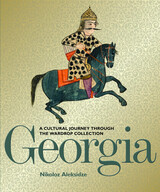
Becoming increasingly fascinated by Georgian history and culture, the Wardrops gathered a significant collection of manuscripts dating from the eleventh to the twentieth century, including a seventeenth-century manuscript of Georgia’s national epic poem The Man in the Panther’s Skin, which Marjory famously translated. Through the items of the Waldrop collection—manuscripts, royal charters, correspondence, notebooks, and a draft of the 1918 declaration of independence—Nikoloz Aleksidze narrates a history of Georgian literature and culture, moving from epic and folk tales, to the Georgian Church’s battle against persecution, to the political activism of women in Georgia at the end of the nineteenth century.
Richly illustrated with rare and previously unpublished images from the collection, this book offers unique insight into Georgian culture and political history through the remarkable lens of an eccentric English diplomat and his talented sister.

A Dan Josselyn Memorial Publication
This facsimile edition of Moore's Georgia and South Carolina expeditions includes an extensive new introduction from Georgia's senior archaeologist.
This compilation of Clarence Bloomfield Moore's investigations along the rich coastal and river drainages of Georgia and South Carolina makes
available in a single volume valuable works published a century ago. By modern standards Moore's excavation techniques were crude, but his results were nothing less than spectacular. He recorded data with care, and much information can be learned from his works. In some cases his publications are the only documentation extant for sites that have since been destroyed. In one case, relic collectors had destroyed six mounds at Mason's Plantation—the largest Mississippian center in the Savannah River valley—by the time Moore visited the site in 1897.
Moore also documented prehistoric urn burials, a ritual widely practiced in eastern North America but more frequently on the Gulf Coastal Plain
of Alabama and coastal sites in Georgia and South Carolina. In the introduction, Lewis Larson discusses Moore's investigations within the framework of the current understanding of Georgia and South Carolina coastal archaeological chronology.

Almost from the time of Georgia’s settlement by Oglethorpe in 1733, both Georgians and Carolinians had made periodic unsuccessful attempts to conquer the Spanish Castillo San Marcos in St. Augustine; and during the American Revolution (in 1776, 1777, and 1778) the rebels tried without success to take the fortification, which was then a British stronghold. Each of the three expeditions was less successful than the preceding one, and between the formal campaigns vicious partisan warfare between loyalists and rebels devastated much of the area between the Altamaha and St. Johns rivers.
This book presents a detailed history of the three Georgia-Florida campaigns. Indecisive and lacking the glamour of either the contemporary campaigns in the North, or the later campaigns in the South, they appeared isolated from the mainstream of the revolutionary struggle. The rebels were handicapped by divided command, personal quarrels, difficult terrain, and miserable weather. While Searcy emphasizes the military aspects of the period, she also treats the conflict between civil and military authorities, the effects of war on the civilian populace, and the interaction of economic matters with military affairs. Her work clarifies the importance of these military activities in the subsequent British strategy in the occupation of Georgia and the Carolinas.
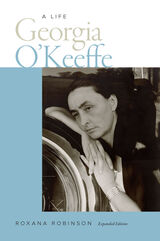
When Roxana Robinson’s definitive biography of O’Keeffe was first published in 1989, it received rave reviews and was named a New York Times Notable Book of the Year. This new edition features a new foreword by the author setting O’Keefe in an artistic context over the last thirty years since the book was first published, as well as previously unpublished letters of the young O’Keeffe to her lover, Arthur MacMahon. It also relates the story of Robinson’s own encounter with the artist. As interest in O’Keeffe continues to grow among museum-goers and scholars alike, this book remains indispensable for understanding her life and art.

The 2008 Ossetia War underlined the fact that Georgia is caught in a political struggle between East and West. Per Gahrton analyses American and Russian policy towards the country and provides a firsthand account of the Rose Revolution of 2003, its origin and aftermath.
The book traces the increasing US involvement in Georgia and the Russian reaction of anger, sanctions and, eventually, invasion. Gahrton's analysis is based on interviews with key politicians and his experience as the rapporteur of the European Parliament on South Caucasus. At centre stage is the growing opposition against authoritarian aspects of President Mikheil Saakashvili’s regime and the mysterious death of Prime Minister Zhvania in 2005. The book also asks if the Rose Revolution was a conspiracy or a genuine popular uprising.
This truly authoritative account of Georgia is a must for students studying international relations in the aftermath of The Cold War.

A riveting introduction to the complex and evolving field of geospatial intelligence.
Although geospatial intelligence is a term of recent origin, its underpinnings have a long and interesting history. Geospatial Intelligence: Origins and Evolution shows how the current age of geospatial knowledge evolved from its ancient origins to become ubiquitous in daily life across the globe. Within that framework, the book weaves a tapestry of stories about the people, events, ideas, and technologies that affected the trajectory of what has become known as GEOINT.
Author Robert M. Clark explores the historical background and subsequent influence of fields such as geography, cartography, remote sensing, photogrammetry, geopolitics, geophysics, and geographic information systems on GEOINT. Although its modern use began in national security communities, Clark shows how GEOINT has rapidly extended its reach to other government agencies, NGOs, and corporations. This global explosion in the use of geospatial intelligence has far-reaching implications not only for the scientific, academic, and commercial communities but for a society increasingly reliant upon emerging technologies. Drones, the Internet of things, and cellular devices transform how we gather information and how others can collect that information, to our benefit or detriment.

Lily, King's best known novel, was originally published by Harper and Brothers in 1855. In this work, King skewers the rituals of courtship that propel its wealthy young heroine toward marriage and a melodramatic death. Gerald Gray's Wife, King's last novel, plays out the ironies of a plain woman who survives—but barely—the revelations that destroy her seemingly perfect marriage and acquired beauty. In both novels, women's jealousies and men's deceptions are the forces that propel King's often satirical pen. Largely lacking the moral instruction so common among nineteenth-century domestic novelists, King's novels are differentiated by their critical perspective on women's position, their exploration of themes of failure and frustration, and their focus on the drawing room and ballroom rather than the kitchen and nursery.
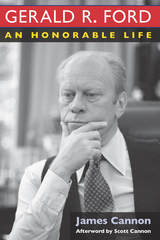
“Not since Harry Truman succeeded Franklin D. Roosevelt twenty-nine years earlier had the American people known so little about a man who had stepped forward from obscurity to take the oath of office as President of the United States.”
—from Chapter 4
This is a comprehensive narrative account of the life of Gerald Ford written by one of his closest advisers, James Cannon. Written with unique insight and benefiting from personal interviews with President Ford in his last years, Gerald R. Ford: An Honorable Lifeis James Cannon’s final look at the simple and honest man from the Midwest.

Kuiper was an acclaimed astronomer of binary stars and white dwarfs when he accidentally discovered that Titan, the massive moon of Saturn, had an atmosphere. This turned our understanding of planetary atmospheres on its head, and it set Kuiper on a path of staggering discoveries: Pluto was not a planet, planets around other stars were common, some asteroids were primary while some were just fragments of bigger asteroids, some moons were primary and some were captured asteroids or comets, the atmosphere of Mars was carbon dioxide, and there were two new moons in the sky, one orbiting Uranus and one orbiting Neptune.
He produced a monumental photographic atlas of the Moon at a time when men were landing on our nearest neighbor, and he played an important part in that effort. He also created some of the world’s major observatories in Hawai‘i and Chile. However, most remarkable was that the keys to his success sprang from his wartime activities, which led him to new techniques. This would change everything.
Sears shows a brilliant but at times unpopular man who attracted as much dislike as acclaim. This in-depth history includes some of the twentieth century’s most intriguing scientists, from Harold Urey to Carl Sagan, who worked with—and sometimes against—the father of modern planetary science. Now, as NASA and other space agencies explore the solar system, they take with them many of the ideas and concepts first described by Gerard P. Kuiper.
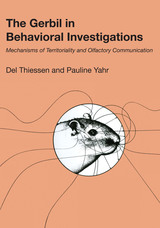
In this comprehensive account of olfactory communication and territorial behavior in the Mongolian gerbil, Del Thiessen and PaulineYahr provide the first detailed study of the neurological and physiological mechanisms that control these basic functions. In addition to explaining the links between hormones, genes, olfactory cues, and territorial acts, they also offer a more general picture of gerbil behavior, as well as a brief look at other mammalian species that communicate social status by way of olfactory messages.
Territorial behavior, as defined by the authors, includes all acts that are restricted to a particular area and are crucial for successful reproduction. In the Mongolian gerbil, and probably in other mammals as well, territoriality is controlled by sex hormones acting on specific areas of the central nervous system. Hormones from the gonads apparently act in the brain by altering the genetic apparatus controlling biochemicals used in neural communication. Without these hormones, the animal is socially inert and unable to transmit genes to the next generation. The authors conclude from the results of over ten years of investigation that the most complex social interactions depend on the integrity of the hormone system and its constant tuning by olfactory stimuli.
The book incorporates a review of all previously known studies of gerbil behavior and representative data for many other scent-marking species. A stereotaxic brain atlas for the gerbil is a feature that will be especially helpful to other researchers. The book's eclectic nature should make it valuable to anyone concerned with territorial behavior, hormones and behavior, or brain processes, as well as to those who are specifically interested in the Mongolian gerbil.

Gerhard Richter is one of the most important and influential artists of the post-war era. For decades he has sought innovative ways to make painting more relevant, often through a multifaceted dialogue with photography. Today Richter is most widely recognized for the photo-paintings he made during the 1960s that rely on images culled from mass media and pop culture. Always fascinated with the limits and uncertainties of representation, he has since then produced landscapes, abstractions, glass and mirror constructions, prints, sculptures, and installations.
Though Richter has been known in the United States for quite some time, the highly successful retrospective of his work at the MoMA in 2002 catapulted him to unprecedented fame. Enter noted curator Dietmar Elger, who here presents the first biography of this contemporary artist. Written with full access to Richter and his archives, this fascinating book offers unprecedented insight into his life and work. Elger explores Richter’s childhood in Nazi Germany; his years as a student and mural painter in communist East Germany; his time in the West during the turbulent 1960s and ’70s, when student protests, political strife, and violence tore the Federal Republic of Germany apart; and his rise to international acclaim during the 1980s and beyond.
Richter has always been a difficult personality to parse and the seemingly contradictory strands of his artistic practice have frustrated and sometimes confounded critics. But the extensive interviews on which this book is based disclose a Richter who is far more candid, personal, and vivid than ever before. The result is a book that will be the foundational portrait of this artist for years to come.
Gerhard von Rad's study of biblical wisdom literature in Weisheit in Israel (1970) is widely regarded as one of the most important studies in the field of ancient Israelite wisdom literature. More than fifty years later, contributors to Gerhard von Rad and the Study of Wisdom Literature reevaluate the significance and shortcomings of the late scholar's work and engage new methods and directions for wisdom studies today. Contributors include George J. Brooke, Ariel Feldman, Edward L. Greenstein, Arthur Jan Keefer, Jennifer L. Koosed, Will Kynes, Christl M. Maier, Timothy J. Sandoval, Bernd U. Schipper, Mark Sneed, Hermann Spieckermann, Anne W. Stewart, Raymond C. Van Leeuwen, Stuart Weeks, and Benjamin G. Wright III. This collection of essays is essential reading not only for specialists in wisdom studies but also for scholars and advanced students of the Hebrew Bible in general.
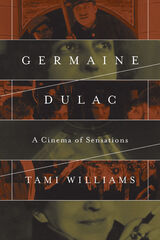
Best known for directing the Impressionist classic The Smiling Madame Beudet and the first Surrealist film The Seashell and the Clergyman, Germaine Dulac, feminist and pioneer of 1920s French avant-garde cinema, made close to thirty fiction films as well as numerous documentaries and newsreels. Through her filmmaking, writing, and cine-club activism, Dulac’s passionate defense of the cinema as a lyrical art and social practice had a major influence on twentieth century film history and theory.
In Germaine Dulac: A Cinema of Sensations, Tami Williams makes unprecedented use of the filmmaker's personal papers, production files, and archival film prints to produce the first full-length historical study and critical biography of Dulac. Williams's analysis explores the artistic and sociopolitical currents that shaped Dulac's approach to cinema while interrogating the ground breaking techniques and strategies she used to critique conservative notions of gender and sexuality. Moving beyond the director’s work of the 1920s, Williams examines Dulac's largely ignored 1930s documentaries and newsreels establishing clear links with the more experimental impressionist and abstract works of her early period.
This vivid portrait will be of interest to general readers, as well as to scholars of cinema and visual culture, performance, French history, women’s studies, queer cinema, in addition to studies of narrative avant-garde, experimental, and documentary film history and theory.
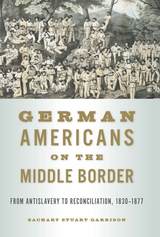
Liberal German immigrants, having escaped the European aristocracy who undermined their revolution and the formation of a free nation, viewed slaveholders as a specter of European feudalism. During the antebellum years, many liberal German Americans feared slavery would inhibit westward progress, and so they embraced the Free Soil and Free Labor movements and the new Republican Party. Most joined the Union ranks during the Civil War.
After the war, in a region largely opposed to black citizenship and Radical Republican rule, German Americans were seen as dangerous outsiders. Facing a conservative resurgence, liberal German Republicans employed the same line of reasoning they had once used to justify emancipation: A united nation required the end of both federal occupation in the South and special protections for African Americans. Having played a role in securing the Union, Germans largely abandoned the freedmen and freedwomen. They adopted reconciliation in order to secure their place in the reunified nation. Garrison’s unique transnational perspective to the sectional crisis, the Civil War, and the postwar era complicates our understanding of German Americans on the middle border.
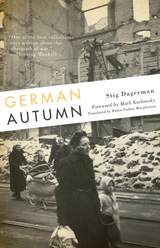
In late 1946, Stig Dagerman was assigned by the Swedish newspaper Expressen to report on life in Germany immediately after the fall of the Third Reich. First published in Sweden in 1947, German Autumn, a collection of the articles written for that assignment, was unlike any other reporting at the time. While most Allied and foreign journalists spun their writing on the widely held belief that the German people deserved their fate, Dagerman disagreed and reported on the humanness of the men and women ruined by the war—their guilt and suffering. Dagerman was already a prominent writer in Sweden, but the publication and broad reception of German Autumn throughout Europe established him as a compassionate journalist and led to the long-standing international influence of the book.
Presented here in its first American edition with a compelling new foreword by Mark Kurlansky, Dagerman’s essays on the tragic aftermath of war, suffering, and guilt are as hauntingly relevant today amid current global conflict as they were sixty years ago.
This study of the German community of early twentieth-century Buenos Aires is a major contribution to the literature on Argentine history and on the New World immigrant experience. Beginning with the first wave of immigration in the late nineteenth century and continuing to the outbreak of World War II, Ronald C. Newton reconstructs the growth, development, and influence of a powerful foreign population in what was then the largest city in South America.
In the three decades before World War I, Argentina became a major food-producing and exporting country. Through the port of Buenos Aires was funneled the bulk of the Pampas’ foodstuff and fiber in one direction and Europe’s capital, technology, and surplus labor in the other. The German speakers made up one of the smaller Western European communities within the Argentine metropolis, but their cultural and economic influence was far out of proportion to their numbers. Based in a large and occupationally diverse middle class, the German community was represented at all social levels. Newton analyzes the experience of this well-demarcated group during a period of rapid demographic growth and increasing pressure to assimilate. He constructs working hypotheses that may be applied and refined in further investigations.
The book draws substantially on materials from within the Buenos Aires German community—newspapers, memoirs, the records of associations and welfare agencies—to reconstruct its intense daily life. The author highlights, for instance, the sharp economic reversals German-speaking residents suffered during World War I and shows how their fortunes declined further after continued Germanic immigration in the 1920s. Especially significant is his finding that the German community, which until 1914 had seemed impervious to the currents of Argentine nationalism, became susceptible to assimilation into Argentine society. In concluding chapters Newton demonstrates the way the German economic elite came to terms with the Nazis for opportunistic reasons; thus, the volume also serves as an introduction to the question of Nazism’s diffusion in Argentina.
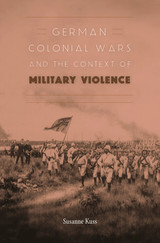
Germany fought three major colonial wars from 1900 to 1908: the Boxer War in China, the Herero and Nama War in Southwest Africa, and the Maji Maji War in East Africa. Recently, historians have emphasized the role of German military culture in shaping the horrific violence of these conflicts, tracing a line from German atrocities in the colonial sphere to those committed by the Nazis during World War II. Susanne Kuss dismantles such claims in a close examination of Germany’s early twentieth-century colonial experience. Despite acts of unquestionable brutality committed by the Kaiser’s soldiers, she finds no direct path from Windhoek, site of the infamous massacre of the Herero people, to Auschwitz.
In German Colonial Wars and the Context of Military Violence Kuss rejects the notion that a distinctive military culture or ethos determined how German forces acted overseas. Unlike rival powers France and Great Britain, Germany did not possess a professional colonial army. The forces it deployed in Africa and China were a motley mix of volunteers, sailors, mercenaries, and native recruits—all accorded different training and motivated by different factors. Germany’s colonial troops embodied no esprit de corps that the Nazis could subsequently adopt.
Belying its reputation for Teutonic efficiency, the German military’s conduct of operations in Africa and China was improvisational and often haphazard. Local conditions—geography, climate, the size and capabilities of opposing native populations—determined the nature and extent of the violence German soldiers employed. A deliberate policy of genocide did not guide their actions.
Contributors. Dirk Bönker, Jeff Bowersox, David Ciarlo, Sebastian Conrad, Christian S. Davis, Geoff Eley, Jennifer Jenkins, Birthe Kundus, Klaus Mühlhahn, Bradley Naranch, Deborah Neill, Heike Schmidt, J. P. Short, George Steinmetz, Dennis Sweeney, Brett M. Van Hoesen, Andrew Zimmerman
German Colonialism Revisited brings together military historians, art historians, literary scholars, cultural theorists, and linguists to address a range of issues surrounding colonized African, Asian, and Oceanic people’s creative reactions to and interactions with German colonialism. This scholarship sheds new light on local power dynamics; agency; and economic, cultural, and social networks that preceded and, as some now argue, ultimately structured German colonial rule. Going beyond issues of resistance, these essays present colonialism as a shared event from which both the colonized and the colonizers emerged changed.

The contributions presented here include Fredric Jameson’s “Ramblings in Old Berlin,” Günter Grass’s “Lonesome Capitalism,” and Peter Weiss’s “Aesthetics of Resistance.” Among the topics discussed in the volume are the debate over Holocaust memorials in Germany and the significance of their connections to the German past, the problematic continuity that identifies the new unified Germany with the former Federal Republic; the dangers to women posed by the neoliberal project; the legacy of the avant-garde in today’s media theory; Ars nova and Doktor Faustus; nostalgia for the old German Democratic Republic; and reflections on traumatic memory and history as trauma.
Contributors. Ulrich Baer, Michael Geyer, Günter Grass, Frigga Haug, Julia Hell, Fredric Jameson, Juliet Koss, Andreas Michel, Martin Morris, Arkady Plotnitsky, Pierra Vidal-Naquet, Peter Weiss, James E. Young
German Empires and Decolonial Fantasies, 1492–1942 draws from a wide range of sources, from a seventeenth-century Brandenburg fort on the coast of Ghana to a novella about a beleaguered colonial administrator in German East Africa, to advance an interdisciplinary discourse at the nexus of colonial narratives and national imaginaries. Through detailed case studies, Simpson argues for the inclusion of voices that pushed back against imperialist expansion or intervention, as well as those historical actors who disputed the supremacy of whiteness and the persuasive power of German-centric national history.
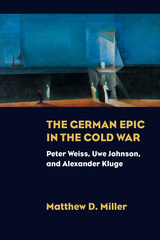
Matthew Miller’s The German Epic in the Cold War explores the literary evolution of the modern epic in postwar German literature. Examining works by Peter Weiss, Uwe Johnson, and Alexander Kluge, it illustrates imaginative artistic responses in German fiction to the physical and ideological division of post–World War II Germany.
Miller analyzes three ambitious German-language epics from the second half of the twentieth century: Weiss’s Die Ästhetik des Widerstands (The Aesthetics of Resistance), Johnson’s Jahrestage (Anniversaries), and Kluge’s Chronik der Gefühle (Chronicle of Feelings). In them, he traces the epic’s unlikely reemergence after the catastrophes of World War II and the Shoah and its continuity across the historical watershed of 1989–91, defined by German unification and the dissolution of the Soviet Union.
Building on Franco Moretti’s codification of the literary form of the modern epic, Miller demonstrates the epic’s ability to understand the past; to come to terms with ethical, social, and political challenges in the second half of the twentieth century in German-speaking Europe and beyond; and to debate and envision possible futures.



This is a book about their paradoxical situation and about the dilemmas all advocates of change face when they become powerful enough to negotiate with the status quo. The critical essays by German social scientists and activists also provide a detailed picture of the dynamics of the German Greens -- where their support has come from, the nature of the competing factions, and the place of feminism. The editors provide a substantial introduction.
The flavor and texture of the Greens -- including their raucous public arguments and their innovative campaign tactics -- are suggested by the political posters included in the book and by a whole section of primary documents.
The documents and the essays (except for one originally written in English) have been translated from the German. The result is to make available to English-speaking readers a view of a complex movement whose very name and color have become synonymous with social action in favor of the environment and the empowerment of people.
Beginning with the publication of Kant’s Critique of Pure Reason and extending through to Hegel’s death, the period known as German Idealism signaled the end of an epoch of rationalism, empiricism, and enlightenment—and the beginning of a new “critical” period of philosophy. The most comprehensive anthology of this vital tradition to date, German Idealism brings together an expansive selection of readings from the tradition’s major figures like Kant, Hegel, Fichte, and Schelling.
Arranged thematically into sections on topics such as the relationships between self and knowledge, freedom and morality, law and state, and nature and science, to name a few, German Idealism discloses many of the contrasts that helped to differentiate each of the tradition’s key thinkers. Each expertly translated text comes with an editorial introduction to guide readers through many of the problems the texts specifically deal with, as well as their historical context.
The most accessible and expansive introduction to German Idealism ever, this anthology will be hailed by instructors and scholars as the most dependable guide to the tradition for years to come.
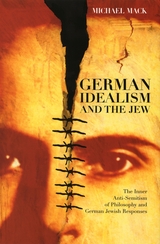
Offering the first analytical account of the connection between anti-Semitism and philosophy, Mack begins his exploration by showing how the fundamental thinkers in the German idealist tradition—Kant, Hegel, and, through them, Feuerbach and Wagner—argued that the human world should perform and enact the promises held out by a conception of an otherworldly heaven. But their respective philosophies all ran aground on the belief that the worldly proved incapable of transforming itself into this otherworldly ideal. To reconcile this incommensurability, Mack argues, philosophers created a construction of Jews as symbolic of the "worldliness" that hindered the development of a body politic and that served as a foil to Kantian autonomy and rationality.
In the second part, Mack examines how Moses Mendelssohn, Heinrich Heine, Franz Rosenzweig, and Freud, among others, grappled with being both German and Jewish. Each thinker accepted the philosophies of Kant and Hegel, in varying degrees, while simultaneously critiquing anti-Semitism in order to develop the modern Jewish notion of what it meant to be enlightened—a concept that differed substantially from that of Kant, Hegel, Feuerbach, and Wagner. By speaking the unspoken in German philosophy, this book profoundly reshapes our understanding of it.
Since ancient Greece philosophers have tried to know the world in itself, an effort that Kant believed had failed. His alternative strategy—which came to be known as the Copernican revolution—was that the world as we experience and know it depends on the mind. Rockmore shows that this project was central to Kant’s critical philosophy and the later German idealists who would follow him. He traces the different ways philosophers like Fichte, Schelling, and Hegel formulated their own versions of constructivism. Offering a sweeping but deeply attuned analysis of a crucial part of the legacy of German idealism, Rockmore reinvigorates this school of philosophy and opens up promising new avenues for its study.

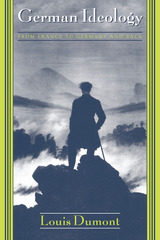
Anyone interested in the fate of national ideology and the concept of the individual will benefit from this radical reinterpretation of modern values and the place of modernity in history.
"What François Furet did for French history, Dumont did for anthropology, turning it away from engaged politics and towards the sober study of the modern age." —Mark Lilla, London Review of Books
"There are many fine things in Dumont's study. Beyond any doubt, his cultural anthropology of the modern spirit highlights some of the key energies of the of the last two centuries. . . . [An] impressive . . . detailed analysis." —Martin Swales, Times Higher Education Supplement
"[An] unsettling, rich, demanding, profound study." —Publishers Weekly
The theoretical background for these essays can be found in Information-Based Syntax and Semantics and Head-Driven Phrase Structure Grammar, both by Pollard and Sag and both available from the University of Chicago Press.

Operation Sealion was the codename for the Nazi invasion of Britain that Hitler ordered his generals to plan after France fell in June 1940. Although the plan ultimately never came to fruition, a few sets of the Germans’ detailed strategy documents are housed in the rare book rooms of libraries across Europe. But now the Bodleian Library has made documents from their set available for all to peruse in this unprecedented collection of the invasion planning materials.
The planned operation would have involved landing 160,000 German soldiers along a forty-mile stretch of coast in southeast England. Packets of reconnaissance materials were put together for the invading forces, and the most intriguing parts are now reproduced here. Each soldier was to be given maps and geographical descriptions of the British Isles that broke down the country by regions, aerial photographs pinpointing strategic targets, an extensive listing of British roads and rivers, strategic plans for launching attacks on each region, an English dictionary and phrase book, and even a brief description of Britain’s social composition.
Augmenting the fascinating documents is an informative introduction that sets the materials in their historical and political context. A must-have for every military history buff, German Invasion Plans for the British Isles, 1940 is a remarkable revelation of the inner workings of Hitler’s most famous unrealized military campaign.
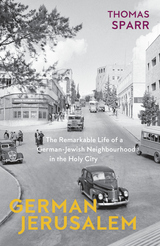
In the 1920s, before the establishment of Israel, a group of German Jews settled in a garden city on the outskirts of Jerusalem. During World War II, their quiet community, nicknamed Grunewald on the Orient, emerged as both an immigrant safe haven and a lively expatriate hotspot, welcoming many famous residents including poet-playwright Else Lasker-Schüler, historian Gershom Scholem, and philosopher Martin Buber. It was an idyllic setting, if fraught with unique tensions on the fringes of the long-divided holy city. After the war, despite the weight of the Shoah, the neighborhood miraculously repaired shattered bonds between German and Israeli residents. In German Jerusalem, Thomas Sparr opens up the history of this remarkable community and the forgotten borderland they called home.

German Jews Beyond Judaism was, in Mosse’s own estimation, his “most personal book, almost a confession of faith.” David J. Sorkin’s new critical introduction illustrates how Mosse’s life and values both shaped and exemplified his historical analysis and offers potential meanings of his intellectual legacy for the present day.


German Literature on the Middle East explores the dynamic between German-speaking and Middle Eastern states and empires from the time of the Crusades to the end of the Cold War. This insightful study illuminates the complex relationships among literary and other writings on the one hand, and economic, social, and political processes and material dimensions on the other. Focusing on German-language literary and nonfiction writings about the Middle East (including historical documents, religious literature, travel writing, essays, and scholarship), Nina Berman evaluates the multiple layers of meaning contained in these works by emphasizing the importance of culture contact; a wide web of political, economic, and social practices; and material dimensions as indispensible factors for the interpretive process.
This analysis of literary and related writing reveals that German views about the Middle East evolved over the centuries and that various forms of action toward the Middle East differed substantially as well. Ideas about religion, culture, race, humanism, nation, and modernity, which emerged successively but remain operative to this day, have fashioned Germany's changed attitudes toward the Middle East. Exploring the interplay between textual discourses and social, political, and economic practices and materiality, German Literature on the Middle East offers insights that challenge accepted approaches to the study of literature, particularly approaches that insist on the centrality of the linguistic construction of the world. In addition, Berman presents evidence that the German encounter with the Middle East is at once distinct and yet at the same time characterized by patterns shared with other European countries. By addressing the individual nature of the German encounter in the larger European context, this study fills a considerable gap in current scholarship.
The interdisciplinary approach of German Literature on the Middle East will be of interest to the humanities in general, and specifically to scholars of German studies, comparative literature, Middle Eastern studies, and history.
Nina Berman is Professor of Comparative Studies at The Ohio State University.
Jacket image: Map of Europe by Giovanni Magini, from his “Geography.” Venice, [1598]. From the University of Michigan Map Library.
Political Map of the World, April 2008. From the University of Texas Perry-Castañeda Library, Map Collection.

German Memorials, Motifs, and Meanings offers a unique cultural history of German memorialization. The book focuses not on a single, isolated era, but rather on enduring memorial motifs—enchanted stones, magical trees, raised fists, stone circles, and similar evocative symbols derived from myth, folklore, Christianity, national iconography, and post-Holocaust imagery. It thus takes a long-duration perspective, sweeping across the centuries to explore abiding themes such as death, rebirth, and redemption; violence and reconciliation; and sacrifice, identity, and community. Along with a consideration of the historical and social circumstances of each memorial and its motifs, author Jennifer Hansen-Glucklich answers the questions of why and how these cultural markers survive the passage of time and how they endure amidst cultural, social, and political upheavals that include the rise and fall of empires, catastrophes of war and occupation, and genesis of new national identities. She uniquely focuses on lesser-known or unknown memorials found either in smaller German cities or tucked away in villages and hamlets.
These memorials tell colorful, often ambiguous and problematic stories in contrast to the vaunted monuments of Germany’s post-WWII era, such as Berlin’s Memorial to the Murdered Jews of Europe. Through vivid descriptions and deep analysis of the narratives and aesthetics of key monuments and motifs, Hansen-Glucklich details the remarkable story of German memorial culture from medieval times to the present day.

German Memorials, Motifs, and Meanings offers a unique cultural history of German memorialization. The book focuses not on a single, isolated era, but rather on enduring memorial motifs—enchanted stones, magical trees, raised fists, stone circles, and similar evocative symbols derived from myth, folklore, Christianity, national iconography, and post-Holocaust imagery. It thus takes a long-duration perspective, sweeping across the centuries to explore abiding themes such as death, rebirth, and redemption; violence and reconciliation; and sacrifice, identity, and community. Along with a consideration of the historical and social circumstances of each memorial and its motifs, author Jennifer Hansen-Glucklich answers the questions of why and how these cultural markers survive the passage of time and how they endure amidst cultural, social, and political upheavals that include the rise and fall of empires, catastrophes of war and occupation, and genesis of new national identities. She uniquely focuses on lesser-known or unknown memorials found either in smaller German cities or tucked away in villages and hamlets.
These memorials tell colorful, often ambiguous and problematic stories in contrast to the vaunted monuments of Germany’s post-WWII era, such as Berlin’s Memorial to the Murdered Jews of Europe. Through vivid descriptions and deep analysis of the narratives and aesthetics of key monuments and motifs, Hansen-Glucklich details the remarkable story of German memorial culture from medieval times to the present day.

-Russell Berman, Stanford University
"Intellectually rigorous and conceptually nuanced, Todd Kontje's German Orientalisms is a valuable contribution to the debate on identity politics in German cultural history. Through an erudite and insightful analysis of the German fictions of a broadly defined 'Orient' from the Middle Ages to the present, Kontje illustrates how German literature situated itself within a 'symbolic geography,' whose coordinates are defined by both its representations of the Orient and its affiliation with the Occident. German Orientalisms offers not only an admirable synthesis of the scholarship on German linguistic and cultural nationalism but also sophisticated interpretive strategies for a better understanding of our perceptions and misconceptions of alterity."
-Azade Seyhan, Bryn Mawr College
"This is a fascinating topic, and the book opens new scholarly vistas. In an age of increased specialization, Kontje takes a macro view, looking at German literature almost
from its beginnings to the present, from Wolfram to Özdamar. He also has the courage to link his well-researched work to topics like globalization, the culture wars, and canon formation. He doesn't merely proclaim literature's importance, he shows by example how the literary imagination-creative as it is, dodging dogmatism, and able to confound ideologies-can thrive in an era of cultural studies."
-Sara Friedrichsmeyer, University of Cincinnati
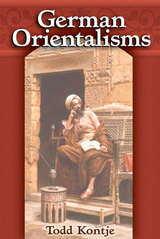
Todd Kontje's German Orientalisms offers a fresh examination of the role of the East in German literary imagination, ranging from the Middle Ages to the present. In its wide historical sweep, this book offers important new insights into many of the most famous writers in the German language, from Goethe to Thomas Mann to Günter Grass.
Building on Edward Said's Orientalism-which defined Orientalism as a form of Western knowledge directly linked to imperial power-Kontje offers a more nuanced version as seen through the lens of German literature of the last thousand years.
Said's focus was on British and French Orientalists-two nations with colonial interests in the East. Germany was different in that it had no stake in the Orient. Far from diminishing an Orientalist perspective, however, the absence of a German empire in the East produced a peculiarly German brand of Orientalism, one in which German writers alternated between identification with the rest of Europe and allying themselves with parts of the East against the West.
Above all, Kontje asks how German writers conceived of their place in "the land of the center" (das Land der Mitte) and how their literary works help to create the imagined community of the German nation.
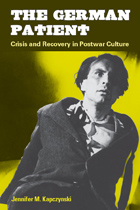
The German Patient takes an original look at fascist constructions of health and illness, arguing that the idea of a healthy "national body"---propagated by the Nazis as justification for the brutal elimination of various unwanted populations---continued to shape post-1945 discussions about the state of national culture. Through an examination of literature, film, and popular media of the era, Jennifer M. Kapczynski demonstrates the ways in which postwar German thinkers inverted the illness metaphor, portraying fascism as a national malady and the nation as a body struggling to recover. Yet, in working to heal the German wounds of war and restore national vigor through the excising of "sick" elements, artists and writers often betrayed a troubling affinity for the very biopolitical rhetoric they were struggling against. Through its exploration of the discourse of collective illness, The German Patient tells a larger story about ideological continuities in pre- and post-1945 German culture.
Jennifer M. Kapczynski is Assistant Professor of Germanic Languages and Literatures at Washington University in St. Louis. She is the coeditor of the anthology A New History of German Cinema.
Cover art: From The Murderers Are Among Us (1946). Reprinted courtesy of the Deutsche Kinemathek.
"A highly evocative work of meticulous scholarship, Kapczynski's deftly argued German Patient advances the current revaluation of Germany's postwar reconstruction in wholly original and even exciting ways: its insights into discussions of collective sickness and health resonate well beyond postwar Germany."
---Jaimey Fischer, University of California, Davis
"The German Patient provides an important historical backdrop and a richly specific cultural context for thinking about German guilt and responsibility after Hitler. An eminently readable and engaging text."
---Johannes von Moltke, University of Michigan
"This is a polished, eloquently written, and highly informative study speaking to the most pressing debates in contemporary Germany. The German Patient will be essential reading for anyone interested in mass death, genocide, and memory."
---Paul Lerner, University of Southern California
Surrounding this indisputable phenomena, questions of the role and place of a "popular" German culture continue to trigger heated debate. Embraced by some as a welcome means to break out of the German monocultural mind-set, American-shaped "pop" culture is rejected by others as "polluting" established values, leveling necessary differentiation, and ultimately being driven by a capitalist consumer society rather than by moral or aesthetic standards.
This collaborative volume addresses a number of intriguing questions: What do Germans envisage when they speak of the "Americanization" of their literature and music? How do artists respond to today's media culture? What does this mean for the current political dimension of German-American relations? Can one speak meaningfully of an "Americanized" German culture? In addressing these and other questions, this work fills a gap in existing scholarship by investigating German popular culture from a multidisciplinary, international perspective.
Contributors to this volume:
Winfried Fluck, Gerd Gemünden, Lutz Koepnick, Barbara Kosta, Sara Lennox, Thomas Meinecke, Uta Poiger, Matthias Politycki, Thomas Saunders, Eckhard Schumacher, Marc Silberman, Frank Trommler, Sabine von Dirke

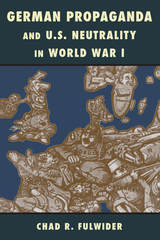
In the fading evening light of August 4, 1914, Great Britain’s H.M.S. Telconia set off on a mission to sever the five transatlantic cables linking Germany and the United States. Thus Britain launched its first attack of World War I and simultaneously commenced what became the war’s most decisive battle: the battle for American public opinion.
In this revealing study, Chad Fulwider analyzes the efforts undertaken by German organizations, including the German Foreign Ministry, to keep the United States out of the war. Utilizing archival records, newspapers, and “official” propaganda, the book also assesses the cultural impact of Germany’s political mission within the United States and comments upon the perception of American life in Europe during the early twentieth century.

Fascination with the evil of the Nazi regime has not diminished in the decades since Hitler assumed power in Germany, but the story of internal resistance to Nazism has not been as fully realized as have the innumerable tales of horror. In this compact book Peter Hoffmann examines the growing recognition by some Germans in the 1930s of the malign nature of the Nazi regime, the ways in which these people became involved in the resistance, and the views of those who staked their lives in the struggle against tyranny and murder.
The earliest postwar accounts of the resistance by survivors and witnesses were followed by a variety of investigations and evaluations. Peter Hoffrnann here presents a complete reconstruction of this baffling and intriguing story. After several decades of study of the German resistance to Nazism, he has unlocked the secrets of its inner history. Hoffmann recounts the methods of Hitler's rise to power in the tumultuous days of January and February 1933, the consolidation of his power as a result of the Röhm Massacre in 1934, and his growing criminality as evidenced by the rape of Czechoslovakia and the pogrom of 1938. The author describes the several attempts in 1938 and during the war years to dislodge Hitler from within; the desperation of the luckless opponents over the carnage of war and the mass murders that threatened to engulf them; and finally, the attempt to assassinate Hitler on July 20, 1944. Throughout, he probes the motives of the resisters. Some, for example, found it difficult to justify assassination, even for the purpose of bringing an end to mass killing. Hoffmann examines and discounts the accusation that the principal motive of those who resisted was to preserve their class privileges. The resisters, he concludes, acted not so much in the hope of personal gain as from a moral obligation to challenge the evils they saw before them.

Terry Jordan explores how German immigrants in the nineteenth century influenced and were influenced by the agricultural life in the areas of Texas where they settled. His findings both support the notion of ethnic distinctiveness and reveal the extent to which German Texans adopted the farming techniques of their Southern Anglo neighbors.

German immigrants came to America for two main reasons: to seek opportunities in the New World, and to avoid political and economic problems in Europe. In German Settlement in Missouri, Robyn Burnett and Ken Luebbering demonstrate the crucial role that the German immigrants and their descendants played in the settlement and development of Missouri's architectural, political, religious, economic, and social landscape. Relying heavily on unpublished memoirs, letters, diaries, and official records, the authors provide important new narratives and firsthand commentary from the immigrants themselves.
Between 1800 and 1919, more than 7 million people came to the United States from German-speaking lands. The German immigrants established towns as they moved up the Missouri River into the frontier, resuming their traditional ways as they settled. As a result, the culture of the frontier changed dramatically. The Germans farmed differently from their American neighbors. They started vineyards and wineries, published German-language newspapers, and entered Missouri politics.
The decades following the Civil War brought the golden age of German culture in the state. The populations of many small towns were entirely German, and traditions from the homeland thrived. German-language schools, publications, and church services were common. As the German businesses in St. Louis and other towns flourished, the immigrants and their descendants prospered. The loyalty of the Missouri Germans was tested in World War I, and the anti-immigrant sentiment during the war and the period of prohibition after it dealt serious blows to their culture. However, German traditions had already found their way into mainstream American life.
Informative and clearly written, German Settlement in Missouri will be of interest to all readers, especially those interested in ethnic history.

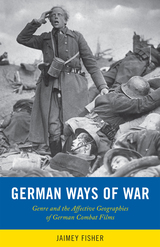

In confrontation and sometimes cooperation with men over their place in the colonial project, German women launched nationalist and colonialist campaigns for increased settlement and new state policies. Wildenthal analyzes recently accessible Colonial Office archives as well as mission society records, periodicals, women’s memoirs, and fiction to show how these women created niches for themselves in the colonies. They emphasized their unique importance for white racial “purity” and the inculcation of German culture in the family. While pressing for career opportunities for themselves, these women also campaigned against interracial marriage and circulated an image of African and Pacific women as sexually promiscuous and inferior. As Wildenthal discusses, the German colonial imaginary persisted even after the German colonial empire was no longer a reality. The women’s colonial movement continued into the Nazi era, combining with other movements to help turn the racialist thought of the late-nineteenth and early-twentieth centuries into the hierarchical evaluation of German citizens as well as colonial subjects.
Students and scholars of women’s history, modern German history, colonial politics and culture, postcolonial theory, race/ethnicity, and gender will welcome this groundbreaking study.

Germania, USA was first published in 1967. Minnesota Archive Editions uses digital technology to make long-unavailable books once again accessible, and are published unaltered from the original University of Minnesota Press editions.
An unusual community in southern Minnesota, New Ulm, a town of about 12,000 inhabitants, is the subject of this sociological study. New Ulm was founded in 1856 by a group of German immigrants who came to the United States as refugees from the revolution of 1848 in Germany. They were members of the Turnverein, a society of liberal thinkers who were a political minority in Germany. In founding New Ulm they established a "utopian" ethnic community, became the town's status elite, and for a long time monopolized its economic, political, and cultural life.
Professor Iverson analyzes four aspects of sociological change in the community—class, status, power, and assimilation. Each aspect is viewed according to the differences found between two generations of the upper status group, the Turners, and two corresponding generations of non-Turners.
In addition to its substantive contribution to our knowledge of ethnic settlements, the study demonstrates a gain in methodological precision over many earlier studies of ethnic communities. Its chief methodological innovation is in the use of scales to verify and measure the changing structure of class, status, and power, and to gauge the extent of assimilation.
The book is of interest not only to sociologists, especially those concerned with the study of community change, but also to political scientists interested in the study of community power structures. Also, the methodology will be instructive to those interested in the design of community studies.
Germanic Accentology was first published in 1982. Minnesota Archive Editions uses digital technology to make long-unavailable books once again accessible, and are published unaltered from the original University of Minnesota Press editions.
The Scandinavian languages are among the few living Indo-European languages that possess a ramified system of special tones or accents. Such accents are widespread in the languages of Africa and Asia (creating, for example, the singsong character of Chinese and Vietnamese), but in the vast territory occupied by the Indo-European family only the Scandinavian languages, some German dialects, Lithuanian, Latvian, and Serbo- Croatian have similar accetologies. The function and origin of the Scandinavian accents are central problems facing linguists and are the issues that Anatoly Liberman confronts in this book.
Liberman uses the methods of synchronic and diachronic phonology to explore the current status of Scandinavian accentology and to reconstruct its historical development. In the first, synchronic, group of chapters he analyzes the accents and accent-like phenomena in all the modern Scandinavian languages, comparing the literary languages with spoken dialects, and drawing from all of the published descriptions of and theories about Scandinavian prosody. In the final, diachronic, chapter he presents a new hypothesis on the origins of Scandinavian accentology based upon his descriptive material. Throughout, his theoretical approach is that of a functionalist.
The book is especially concerned with the grouping of the Germanic languages: with the research history of this much-debated question and with a discussion of the methods applied to past attempts and indeed applicable to future research in the field.
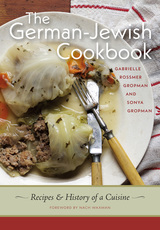
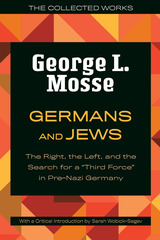
This innovative perspective has implications for understanding not only the rise of fascism and Nazism in Germany but also the rise and fall of the New Left in the United States and Europe, which was occurring at the time of Mosse’s writing. A new critical introduction by Sarah Wobick-Segev, research associate at the University of Hamburg, places Mosse’s work in its historical and intellectual contexts and draws lessons for students and scholars today.
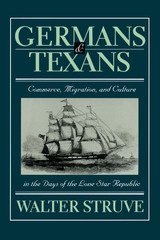
During the brief history of the Republic of Texas (1836-1845), over 10,000 Germans emigrated to Texas. Perhaps best remembered today are the farmers who settled the Texas Hill Country, yet many of the German immigrants were merchants and businesspeople who helped make Galveston a thriving international port and Houston an early Texas business center. This book tells their story.
Drawing on extensive research on both sides of the Atlantic, Walter Struve explores the conditions that led nineteenth-century Europeans to establish themselves on the North American frontier. In particular, he traces the similarity in social, economic, and cultural conditions in Germany and the Republic of Texas and shows how these similarities encouraged German emigration and allowed some immigrants to prosper in their new home. Particularly interesting is the translation of a collection of letters from Charles Giesecke to his brother in Germany which provide insight into the business and familial concerns of a German merchant and farmer.
This wealth of information illuminates previously neglected aspects of intercontinental migration in the nineteenth century. The book will be important reading for a wide public and scholarly audience.
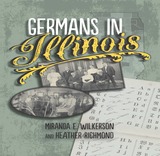
The promise of cheap land and fertile soil in rural areas and emerging industries in cities attracted three major waves of German-speaking immigrants to Illinois in search of freedom and economic opportunities. Before long the state was dotted with German churches, schools, cultural institutions, and place names. German churches served not only as meeting places but also as a means of keeping language and culture alive. Names of Illinois cities and towns of German origin include New Baden, Darmstadt, Bismarck, and Hamburg. In Chicago, many streets, parks, and buildings bear German names, including Altgeld Street, Germania Place, Humboldt Park, and Goethe Elementary School. Some of the most lively and ubiquitous organizations, such as Sängerbunde, or singer societies, and the Turnverein, or Turner Society, also preserved a bit of the Fatherland.
Exploring the complex and ever-evolving German American identity in the growing diversity of Illinois’s linguistic and ethnic landscape, this book contextualizes their experiences and corrects widely held assumptions about assimilation and cultural identity. Federal census data, photographs, lively biographical sketches, and newly created maps bring the complex story of German immigration to life. The generously illustrated volume also features detailed notes, suggestions for further reading, and an annotated list of books, journal articles, and other sources of information.
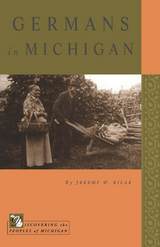
Germans are the largest ancestral group in Michigan, representing over 2.6 million descendants or 22% of the state’s population. Yet, unlike other immigrant groups, Germans have not retained their linguistic and cultural traditions as part of a distinct ethnic identity. The Bavarian villages of Frankenmuth and Gaylord stand as testaments to the once proud and vigorous German communities that dotted both rural and urban Michigan landscapes. Jeremy W. Kilar explores the social forces that transformed Germans from inward-looking immigrants to citizens in the cultural mainstream. Germans in Michigan is a story of assimilation and renewal and as such reveals the complexities of Americanization and immigration as social forces.
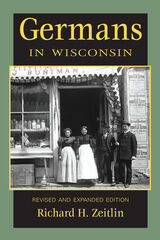
Between 1820 and 1910, nearly five and a half million German-speaking immigrants came to the United States in search of new homes, new opportunities, and freedom from European tyrannies. Most settled in the Midwest, and many came to Wisconsin, whose rich farmlands and rising cities attracted three major waves of immigrants. By 1900, German farmers, merchants, manufacturers, editors, and educators—to say nothing of German churches (both Catholic and Lutheran), cultural institutions, food, and folkways—had all set their mark upon Wisconsin. In the most recent census (1990), more than 53 percent of the state's residents considered themselves "German"—the highest of any state in the Union.
In this best-selling book, now with updated text and additional historical photographs, Richard H. Zeitlin describes the values and ideas the Germans brought with them from the Old Country; highlights their achievements on the farm, in the workplace, and in the academy over the course of 150 years; and explains why their impact has been so profound and pervasive.
Why did ordinary Germans vote for Hitler? In this dramatically plotted book, organized around crucial turning points in 1914, 1918, and 1933, Peter Fritzsche explains why the Nazis were so popular and what was behind the political choice made by the German people.
Rejecting the view that Germans voted for the Nazis simply because they hated the Jews, or had been humiliated in World War I, or had been ruined by the Great Depression, Fritzsche makes the controversial argument that Nazism was part of a larger process of democratization and political invigoration that began with the outbreak of World War I.
The twenty-year period beginning in 1914 was characterized by the steady advance of a broad populist revolution that was animated by war, drew strength from the Revolution of 1918, menaced the Weimar Republic, and finally culminated in the rise of the Nazis. Better than anyone else, the Nazis twisted together ideas from the political Left and Right, crossing nationalism with social reform, anti-Semitism with democracy, fear of the future with hope for a new beginning. This radical rebelliousness destroyed old authoritarian structures as much as it attacked liberal principles.
The outcome of this dramatic social revolution was a surprisingly popular regime that drew on public support to realize its horrible racial goals. Within a generation, Germans had grown increasingly self-reliant and sovereign, while intensely nationalistic and chauvinistic. They had recast the nation, but put it on the road to war and genocide.

This book offers lively description and convincing interpretation of the most significant events, cruxes and ongoing themes in German history from the end of the Second World War up to the present. The main features of the last fifty years are not only succinctly and vividly presented and interpreted, they are also placed in the context of international political developments.
The chronologies that accompany each chapter record the most important dates, facts and names occurring in the narrative. Jürgen Weber’s text supplies the reader with a combination of vivid descriptive history, easily absorbed chronology, and a reliable reference work for the parallel lives of the two Germanies, a product of the Cold War.

In one concise volume, Hagen Schulze brilliantly conveys the full sweep of German history, from the days of the Romans to the fall of the Berlin Wall. A story two thousand years in the making, it rings with battle, murmurs with intrigue, and hums with the music of everyday life. This richly various legacy, often overshadowed and distorted by the nation's recent past, offers a hopeful answer to the perennial question of what kind of country Germany is and will be.
From the revolt of the indigenous tribes against Roman domination, Schulze leads us through the events that have defined a nation at the center of European culture--the Thirty Years' War and the decline of the Holy Roman Empire, Luther's Reformation and Bismarck's attendance at the birth of modern Germany, the Great War and its aftermath, the nationalistic megalomania under Hitler, the division of the nation after World War II and its reunification. Throughout, we see what these developments have meant for the German people, in the arena of private life and on the stage of world history. A lavish array of illustrations provides a lively counterpoint to Schulze's elegantly written narrative.
As it follows the threads of German language, nationalism, and culture to the present day, this dramatic account provides ample reassurance that recent history will not repeat itself. Germany: A New History will prove indispensable to our understanding of Germany, past and present, and the future of Europe.
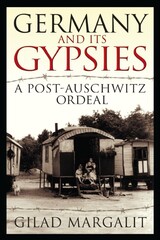
Historian Gilad Margalit eloquently fills a tragic gap in the historical record with this sweeping examination of the plight of Gypsies in Germany before, during, and since the era of the Third Reich.
Germany and Its Gypsies reveals the painful record of the official treatment of the German Gypsies, a people whose future, in the shadow of Auschwitz, remains uncertain. Margalit follows the story from the heightened racism of the nineteenth century to the National Socialist genocidal policies that resulted in the murder of most German Gypsies, from the shifting attitudes in the two Germanys in 1945 through reunification and up to the present day.
Drawing upon a rich variety of sources, Margalit considers the pivotal historic events, legal arguments, debates, and changing attitudes toward the status of the German Gypsies and shines a vitally important light upon the issue of ethnic groups and their victimization in society. The result is a powerful and unforgettable testament.
Using documents only recently available, this pioneering book explores the interaction of German, British, French, and American policy at a time when the great depression and the growing political power of the Nazis had created a European crisis—the only such crisis between 1910 and 1941 in which the United States played a leading role.
The author uses contemporary records to rectify the later accounts of such participants as Herbert Hoover, Julius Curtius, and Paul Schmidt. He describes the negotiations of the major powers arising out of the Austro-German plans for a customs union, and relates this problem to the question of terminating reparations and war debts. He shows how the Governor of the Bank of England directed British foreign policy into bitter opposition to France and how the German government sought to exploit the German private debt to Wall Street.
Edward Bennett comes to the conclusion that the Brüning government, contrary to widely held opinion, received fully as much help as it deserved, while the Western powers were already showing the disunity and irresponsibility which proved so disastrous in later years. Although primarily a diplomatic history, this book also offers fresh information on pre-Hitler Germany, MacDonald's Britain, the Hoover administration, and the early career of Pierre Laval.

Moving away from state-centered and Marxist approaches to the study of the European monetary integration process, Karl Kaltenthaler offers a new analytical framework to assess the dynamics within and among the participating countries. Using official and unofficial documents as well as interviews with players ranging from presidents of the Bundesbank to functionaries in the trade unions, Kaltenthaler argues that the number of decision makers negotiating policy and their accountability to interest groups, political parties, government ministries, and Germany’s central bank have made Germany’s fluctuations in policy inevitable. Germany and the Politics of Europe’s Money examines twenty years of German policy through an analysis of four key episodes: the creation of the European Monetary System, the creation of the Franco-German Economic and Financial Council, the establishment of policy toward the European Monetary Union, and the institutional transformation of the EMS in the 1990s. It thus brings a new understanding to Germany’s dynamic policies and the political forces behind them.

Beginning with Bismarck's forging of a nation with "iron and blood," Gatzke tells of Germany's relentless struggle for domination in Europe and in the West, its defeat in two world wars, its division, East Germany's travail, and West Germany's search for identity as a modern democratic state.
A discerning statement about Germany and other nations, this book reevaluates for the general reader and the historian the impact of rapid industrialization, the origins of the world wars, the question of war guilt, the decade of Weimar democracy, and the rise and fall of Hitler. Gatzke looks anew at the economic miracle in West Germany and the consequences of making prosperity the cornerstone of a new republic.
It is to the realities of these German characteristics as an evolving nation-state that Gatzke relates American foreign policy and perceptions. He recounts the American fluctuations, from favorable to hostile to friendly, as Germany's policies and fortunes changed, and he places the division of Germany in historical perspective.
Contributors. Kendall L. Baker, Karl H. Cerny, David P. Conradt, Arthur B. Gunlicks, Alice McGillivray, Peter H. Merkl, Ferdinand Muller-Rommel, Helmut Norpoth, Richard M. Scammon, Donald Schoonmaker, Christian Soe

Analyzes the German role in Central American domestic and international relations
Using previously untapped resources including private collections, the records of cultural institutions, and federal and state government archives, Schoonover analyzes the German role in Central American domestic and international relations.Of the four countries most active in independent Central America-Britain, the United States, France, and Germany- historians know the least about the full extent of the involvement of the Germans.German colonial expansion was based on its position as an industrialized state seeking economic well-being and security in a growing world market. German leaders were quick to recognize that ties to the cheap labor of overseas countries could compensate for some of the costs and burdens of conceding material and social privileges to their domestic labor force. The Central American societies possessed limited resource bases; smaller and poorly educated populations; and less capital, communications, and technological development than Germany. They saw the borrowing of development as a key to their social, economic, and political progress. Wary Central American leaders also saw the influx of German industrialists as assurance against excessive U.S. presence in their political economies and cultures.
Although the simplistic bargain to trade economic development for cheap labor appeared to succeed in the short term, complex issues of German domestic unemployment and social disorder filtered to Central American countries and added to their own burdens. By 1929, Germany had recovered most of its pre-World War I economic position.

Adolf Hitler, writing in Mein Kampf, was scathing in his condemnation of German propaganda in the First World War, declaring that Germany had failed to recognize propaganda as a weapon of the first order. This despite the fact that propaganda had been regarded, arguably for the first time, as an intrinsic part of the war effort.
David Welch has written the first book to fully examine German society — politics, propaganda, public opinion, and total war — in the Great War. Drawing on a wide range of sources — from posters, newspapers, journals, film, parliamentary debates, police and military reports, and private papers — Welch argues that the moral collapse of Germany was due less to the failure to disseminate propaganda than to the inability of the military authorities and the Kaiser to reinforce this propaganda, and to acknowledge the importance of public opinion in forging an effective link between leadership and the people.
READERS
Browse our collection.
PUBLISHERS
See BiblioVault's publisher services.
STUDENT SERVICES
Files for college accessibility offices.
RECENTLY PUBLISHED




UChicago Accessibility Resources
home | accessibility | search | about | contact us
BiblioVault ® 2001 - 2025
The University of Chicago Press