
 A SCHOLARLY BOOK REPOSITORY
Each section of the book includes a discrete task called a Building Block, which requires students to apply the skills learned toward the development of their own paper. This step-by-step approach allows students to construct knowledge as they become more familiar with the process, making writing a research paper a less intimidating task.
Special features:
- This guide uses simple direct language for those for whom writing a research paper is new.
- Most example writing is from international students in an ESL program or first-year writing class, including two sample papers—one in APA and one in MLA.
- A section on responding to instructor feedback to provide students with the tools to read and understand comments and use them to improve the first draft.
- A subsection dedicated to constructing clear and cohesive paragraphs and sentences.
- The guide includes citation and style examples in MLA 8th edition.
This study raises questions about how to support international students:
- In what ways can it inform our practices and policies relative to the internationalization of education and the development of global perspectives and competencies?
- What does it reveal that could impact daily instruction of L2 writing, particularly when it comes to international students’ need to meet the expectations of “university-level writing” in U.S. institutions of higher education?
- On an individual level, what can we learn from these students and about ourselves as a result of our interactions?

In International Surrogacy as Disruptive Industry in Southeast Asia, Andrea Whittaker traces the development of this industry and its movement across Southeast Asia following a sequence of governmental bans in India, Nepal, Thailand, and Cambodia. Through a case study of the industry in Thailand, the book offers a nuanced and sympathetic examination of the industry from the perspectives of the people involved in it: surrogates, intended parents, and facilitators. The industry offers intended parents the opportunity to form much desired families, but also creates vulnerabilities for all people involved. These vulnerabilities became evident in cases of trafficking, exploitation, and criminality that emerged in southeast Asia, leading to greater scrutiny on the industry as a whole. Yet the trade continues in new flexible hybrid forms, involving the circulation of reproductive gametes, embryos, surrogates, and ova donors across international borders to circumvent regulations. The book demonstrates the need for new forms of regulation to protect those involved in international surrogacy arrangements.


The missing link between the international trade regime and human rights has become one of the key concerns of critics of the WTO. The World Trade Forum 2001 at the World Trade Institute in Berne provided a unique framework for considering the manifold issues relevant to this topic. This book goes beyond listing the different arguments in favor of or against globalization and offers recommendations to the international community for possible reforms so as to better account for the human rights interests affected by the process of globalization.
Frederick M. Abbott is the Edward Ball Eminent Scholar Professor of International Law at Florida State University College of Law. He is the editor of China in the World Trading System: Defining the Principles of Engagement (1998) and author of The International Intellectual Property System: Commentary and Materials (with Thomas Cottier and Francis Gurry, 1999).
Christine Breining-Kaufmann is Professor of Law at the University of Zurich and Senior Research Fellow as well as a member of the Board of the World Trade Institute in Berne. Her publications include Hunger als Rechtsproblem: Völkerrechtliche Aspekte eines Rechtes auf Nahrung (1991) and Globalization and Labour Rights: The Conflicting Relationship between Core Labour Rights and International Economic Institutions (2006).
Thomas Cottier is Managing Director of the World Trade Institute and Professor of Law at the University of Berne. He has co-edited the previous four volumes of the World Trade Forum series.

Comprised of twelve fascinating studies, International Trade in East Asia highlights many of the trading practices between countries within the region as well as outside of it. The contributors bring into focus some of the region's endemic and external barriers to international trade and discuss strategies for improving productivity and fostering trade relationships. Studies on some of the factors that drive exports, the influence of research and development, the effects of foreign investment, and the ramifications of different types of protectionism will particularly resonate with the financial and economic communities who are trying to keep pace with this dramatically altered landscape.
Quantitative measures of international exchange have historically focused on trade in tangible products or capital. However, services have recently become a larger portion of developed economies and international trade, and will only increase in the future. In International Trade in Services and Intangibles in the Era of Globalization, Marshall Reinsdorf and Matthew J. Slaughter examine new and emerging patterns of trade, especially the growing importance of transactions involving services or intangible assets such as intellectual property.
A distinguished team of contributors analyzes the challenges involved in measuring trade in intangibles, the comparative advantages enjoyed by United States service industries, and the heightened international competition for jobs, capital investment, economic growth, and tax revenue that results from trade in services. This comprehensive volume will be necessary reading for scholars seeking to understand the rapidly changing global economy.
The authors construct a consistent data base of information for eight countries and design a theoretically sound model to test and evaluate competing hypotheses incorporating the most recent theoretical developments. Additional chapters address an impressive variety of issues that complement and corroborate the core of the study. They answer such questions as these: Can countries conduct an independent monetary policy under fixed exchange rates? How closely tied are product prices across countries? How are disturbances transmitted across countries?
The International Transmission of Inflation is an important contribution to international monetary economics in furnishing an invaluable empirical foundation for future investigation and discussion.

Renowned scholar Robert J. Alexander has amassed, from disparate sources, an unprecedented amount of primary and secondary material to provide a documentary history of the origins, development, and nature of the Trotskyist movement around the world. Drawing on interviews and correspondence with Trotskyists, newspaper reports and pamphlets, historical writings including the annotated writings of Trotsky in both English and French, historical memoirs of Trotskyist leaders, and documents of the Fourth International, Alexander recounts the history of the movement since Trotsky’s exile from the Soviet Union in 1929.
Organized alphabetically in a double-column, country-by-country format this book charts the formation and growth of Trotskyism in more than sixty-five countries, providing biographic information about its most influential leaders, detailed accounts of Trotsky’s personal involvement in the development of the movement in each country, and thorough reports of its various factions and splits. Multiple chapters are reserved for countries where the movement was more active or fully developed and various chapters are organized around crucial thematic issues, such as the Fourth International. The chapters are followed by extensive name, organization, publication, and subject indexes, which provide optimal access to the wealth of information contained in the main body of the work.

For more than two decades, the Convention on International Trade in Endangered Species of Wild Fauna and Flora, known as CITES, has been one of the largest and most effective conservation agreements in the world. By regulating international commerce in certain species -- from African elephants and exotic birds to hardwoods and bulbs -- the treaty limits trade in species that are in genuine need of protection while allowing controlled trade in species that can withstand some level of exploitation.
In addition to explaining how CITES operates, this definitive reference includes:
- the full text of the CITES treaty
- CITES Appendices I, II, and III
- a list of Parties as of March 1994
- a list of reservations by Parties as of October 1993
International Wildlife Trade provides a valuable overview of wildlife trade issues, and of the strengths and weaknesses of the current treaty.
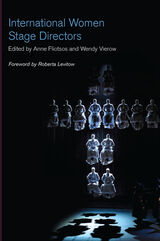
A fascinating study of women in the arts, International Women Stage Directors is a comprehensive examination of women directors in twenty-four diverse countries. Organized by country, chapters provide historical context and emphasize how social, political, religious, and economic factors have impacted women's rise in the theatre, particularly in terms of gender equity. Contributors tell the stories of their home country's pioneering women directors and profile the most influential women directors practicing today, examining their career paths, artistry, and major achievements.
Contributors are Ileana Azor, Dalia Basiouny, Kate Bredeson, Mirenka Cechová, Marié-Heleen Coetzee, May Farnsworth, Anne Fliotsos, Laura Ginters, Iris Hsin-chun Tuan, Maria Ignatieva, Adam J. Ledger, Roberta Levitow, Jiangyue Li, Lliane Loots, Diana Manole, Karin Maresh, Gordon McCall, Erin B. Mee, Ursula Neuerburg-Denzer, Claire Pamment, Magda Romanska, Avra Sidiropoulou, Margaretta Swigert-Gacheru, Alessandra Vannucci, Wendy Vierow, Vessela S. Warner, and Brenda Werth.

Internationalism and Its Betrayal was first published in 1995. Minnesota Archive Editions uses digital technology to make long-unavailable books once again accessible, and are published unaltered from the original University of Minnesota Press editions.
A new world order, proclaimed Western leaders after the cold war, could extend liberal democracy and human rights around the globe. Yet the specter of nationalism once again haunts the world, threatening to extinguish the spirit of internationalism.
Although internationalism is typically understood to be diametrically opposed to nationalism, Micheline Ishay argues to the contrary, maintaining that internationalism often incorporates an individualist element that manifests itself as nationalism during critical periods such as war. For example, the new liberal internationalism invoked after the cold war is now revealing its limits-as reflected by the UN's inability to interfere promptly to stop ethnic and nationalist conflicts in Bosnia, Rwanda, and elsewhere.
Internationalism and Its Betrayal explores the tensions and contradictions between ideas of nationalism and internationalism, focusing on the major political thinkers from the early modern period into the nineteenth century. Ishay examines the writings of Vico, Grotius, Rousseau, Kant, Paine, Robespierre, Burke, Fichte, de Maistre, and Hegel. She speaks to an audience of individuals interested in the spread of democracy, students of human rights and international relations, historians of the French Revolution, and political theorists.
“The age of transnational humanities has arrived.” According to Steven Salaita, the seemingly disparate fields of Palestinian Studses and American Indian studies have more in common than one may think. In Inter/Nationalism, Salaita argues that American Indian and Indigenous studies must be more central to the scholarship and activism focusing on Palestine.
Salaita offers a fascinating inside account of the Boycott, Divestment, and Sanctions (BDS) movement—which, among other things, aims to end Israel’s occupation of Palestinian land. In doing so, he emphasizes BDS’s significant potential as an organizing entity as well as its importance in the creation of intellectual and political communities that put Natives and other colonized peoples such as Palestinians into conversation. His discussion includes readings of a wide range of Native poetry that invokes Palestine as a theme or symbol; the speeches of U.S. President Andrew Jackson and early Zionist thinker Ze’ev Jabotinsky; and the discourses of “shared values” between the United States and Israel.
Inter/Nationalism seeks to lay conceptual ground between American Indian and Indigenous studies and Palestinian studies through concepts of settler colonialism, indigeneity, and state violence. By establishing Palestine as an indigenous nation under colonial occupation, this book draws crucial connections between the scholarship and activism of Indigenous America and Palestine.
Eight essays examine such issues as the current extent of international market integration, gains to U.S. investors through international diversification, home-country bias in investing, the role of time and location around the world in stock trading, and the behavior of country funds. Other, long-standing questions about equity markets are also addressed, including market efficiency and the accuracy of models of expected returns, with a particular focus on variances, covariances, and the price of risk according to the Capital Asset Pricing Model.

Based on more than 300 extensive interviews with major players in governments, foundations, law firms, universities, and think tanks, Dezalay and Garth examine both the production of northern exports such as neoliberal economics and international human rights law and the ways they are received south of the United States. They find that the content of what is exported and how it fares are profoundly shaped by domestic struggles for power and influence—"palace wars"—in the nations involved. For instance, challenges to the eastern intellectual establishment influenced the Reagan-era export of University of Chicago-style neoliberal economics to Chile, where it enjoyed a warm reception from Pinochet and his allies because they could use it to discredit the previous regime.
Innovative and sophisticated, The Internationalization of Palace Wars offers much needed concrete information about the transnational processes that shape our world.
The Internationalization of US Writing Programs illuminates the role writing programs and WPAs play in defining goals, curriculum, placement, assessment, faculty development, and instruction for international student populations. The volume offers multiple theoretical approaches to the work of writing programs and illustrates a wide range of well-planned writing program–based empirical research projects.
As of 2016, over 425,000 international students were enrolled as undergraduates in US colleges and universities, part of a decade-long trend of increasing numbers of international students coming to the United States for both undergraduate and graduate degrees. Writing program administrators and writing teachers across the country are beginning to recognize this changing demographic as a useful catalyst for change in writing programs, which are tasked with preparing all students, regardless of initial level of English proficiency, for academic and professional writing.
The Internationalization of US Writing Programs is the first collection to focus specifically on this crucial aspect of the roles and responsibilities of WPAs, who are leading efforts to provide all students on their campuses, regardless of nationality or first language, with competencies in writing that will serve them in the academy and beyond.
Contributors: Jonathan Benda, Michael Dedek, Christiane Donahue, Chris W. Gallagher, Kristi Girdharry, Tarez Samra Graban, Jennifer E. Haan, Paula Harrington, Yu-Kyung Kang, Neal Lerner, David S. Martins, Paul Kei Matsuda, Heidi A. McKee, Libby Miles, Susan Miller-Cochran, Matt Noonan, Katherine Daily O’Meara, Carolina Pelaez-Morales, Stacey Sheriff, Gail Shuck, Christine M. Tardy, Stanley Van Horn, Daniel Wilber, Margaret Willard-Traub

In the Spring of 1996, hundreds of international leaders in business, law, government, and education gathered at Harvard University to discuss the growing and future impact of the Internet: one of the most potent technological innovations of this century. This volume, which includes the writings, discussion transcripts, and computer demonstrations from this ground-breaking forum, provides an expert assessment of the impact of this rapidly changing technology on business, government, media, and education for the next decade and into the new millennium.
CEOs and leaders of Microsoft, Apple Computer, Sun Microsystems, and Digital Equipment Corporation join dozens of business leaders in providing both first-hand accounts of current revolutionary changes in the computer industry, as well as their attending influence on the future of the organization, its workers, its customer relations, and the creation and ownership of products themselves. While these pieces serve as an excellent source for understanding today's hottest Internet technologies, they also explore the important issues regarding precisely what is at stake for a society with greater and growing ties to cyberspace.
Topics in this timely collection include privacy and security, property rights, censorship, telecommunications regulation, and the global impact of emerging Internet technologies.
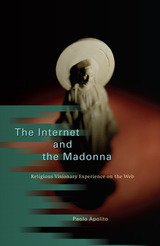
But how has this potent new mix of technology and religiosity changed the way Catholics view their faith? And what challenges do the autonomous qualities of the Internet pose to the broader authority of Catholicism? Does the democratic nature of access to digital technologies constitute a return to a more archaic and mystical form of Catholicism that predates the modernizing reforms of the Second Vatican Council?
In working through these questions, Apolito considers visions of Mary on the Web over the past two decades, revealing a great deal about religion as it is now experienced through new information technologies. The Internet, he explains, has made possible a decentralized community of the devoted, even as it has absorbed God into the shifts and complexities of electronic circuitry. And this profound development in religious life will only accelerate as use of the Internet spreads around the world.
An indispensable guide to the future of Catholicism, The Internet and the Madonna offers a compelling glimpse into the spiritual life of the connected soul.


After a half-century of glacial creep, television technology has begun to change at the same dizzying pace as computer software. What this will mean--for television, for computers, and for the popular culture where these video media reign supreme--is the subject of this timely book. A noted communications economist, Bruce Owen supplies the essential background: a grasp of the economic history of the television industry and of the effects of technology and government regulation on its organization. He also explores recent developments associated with the growth of the Internet. With this history as a basis, his book allows readers to peer into the future--at the likely effects of television and the Internet on each other, for instance, and at the possibility of a convergence of the TV set, computer, and telephone.
The digital world that Owen shows us is one in which communication titans jockey to survive what Joseph Schumpeter called the "gales of creative destruction." While the rest of us simply struggle to follow the new moves, believing that technology will settle the outcome, Owen warns us that this is a game in which Washington regulators and media hyperbole figure as broadly as innovation and investment. His book explains the game as one involving interactions among all the players, including consumers and advertisers, each with a particular goal. And he discusses the economic principles that govern this game and that can serve as powerful predictive tools.
A complete history and theory of internet daemons brings these little-known—but very consequential—programs into the spotlight
We’re used to talking about how tech giants like Google, Facebook, and Amazon rule the internet, but what about daemons? Ubiquitous programs that have colonized the Net’s infrastructure—as well as the devices we use to access it—daemons are little known. Fenwick McKelvey weaves together history, theory, and policy to give a full account of where daemons come from and how they influence our lives—including their role in hot-button issues like network neutrality.
Going back to Victorian times and the popular thought experiment Maxwell’s Demon, McKelvey charts how daemons evolved from concept to reality, eventually blossoming into the pandaemonium of code-based creatures that today orchestrates our internet. Digging into real-life examples like sluggish connection speeds, Comcast’s efforts to control peer-to-peer networking, and Pirate Bay’s attempts to elude daemonic control (and skirt copyright), McKelvey shows how daemons have been central to the internet, greatly influencing everyday users.
Internet Daemons asks important questions about how much control is being handed over to these automated, autonomous programs, and the consequences for transparency and oversight.

The Internet is for Cats examines how animal images are employed to create a lighter, more playful mood, uniting users within online spaces that can otherwise easily become fractious and toxic. Placing today’s pet videos, photos, and memes within a longer history of mediated animal images, communication scholar Jessica Maddox also considers the factors that make them unique. She explores the roles that animals play within online economies of cuteness and attention, as well as the ways that animal memes and videos respond to common experiences of life under neoliberalism.
Conducting a rich digital ethnography, Maddox combines observations and textual analysis with extensive interviews of the people who create, post and share animal media, including TikTok influencers seeking to make their pets famous, activists tweeting about wildlife conservation, and Redditors upvoting every cute cat photo. The Internet is for Cats will leave you with a new appreciation for the human social practices behind the animal images you encounter online.

‘The Internet is broken and Paolo Bory knows how we got here. In a powerful book based on original research, Bory carefully documents the myths, imaginaries, and ideologies that shaped the material and cultural history of the Internet. As important as this book is to understand our shattered digital world, it is essential for those who would fix it.’ — Vincent Mosco, author of The Smart City in a Digital World
The Internet Myth retraces and challenges the myth laying at the foundations of the network ideologies – the idea that networks, by themselves, are the main agents of social, economic, political and cultural change. By comparing and integrating different sources related to network histories, this book emphasizes how a dominant narrative has extensively contributed to the construction of the Internet myth while other visions of the networked society have been erased from the collective imaginary. The book decodes, analyzes and challenges the foundations of the network ideologies looking at how networks have been imagined, designed and promoted during the crucial phase of the 1990s.
Three case studies are scrutinized so as to reveal the complexity of network imaginaries in this decade: the birth of the Web and the mythopoesis of its inventor; and the histories of two Italian networking projects, the infrastructural plan Socrate and the civic network Iperbole, the first to give free Internet access to citizens.
The Internet Myth thereby provides a compelling and hidden sociohistorical narrative in order to challenge one of the most powerful myths of our time.
This title has been published with the financial assistance of the Fondazione Hilda e Felice Vitali, Lugano, Switzerland.
Through the lens of culture, The Internet of Elsewhere looks at the role of the Internet as a catalyst in transforming communications, politics, and economics. Cyrus Farivar explores the Internet's history and effects in four distinct and, to some, surprising societies—Iran, Estonia, South Korea, and Senegal. He profiles Web pioneers in these countries and, at the same time, surveys the environments in which they each work. After all, contends Farivar, despite California's great success in creating the Internet and spawning companies like Apple and Google, in some areas the United States is still years behind other nations.
Surprised? You won't be for long as Farivar proves there are reasons that:
- Skype was invented in Estonia—the same country that developed a digital ID system and e-voting;
- Iran was the first country in the world to arrest a blogger, in 2003;
- South Korea is the most wired country on the planet, with faster and less expensive broadband than anywhere in the United States;
- Senegal may be one of sub-Saharan Africa's best chances for greater Internet access.
The Internet of Elsewhere brings forth a new complex and modern understanding of how the Internet spreads globally, with both good and bad effects.

EVE Online is a socially complex, science-fiction-themed universe simulation and massively multiplayer online game (MMOG) first released in 2003. Notorious for its colossal battles and ruthless player culture, it has hundreds of thousands of players today. In this fascinating book, scholars, players, and EVE’s developer (CCP Games) examine the intricate world of EVEOnline--providing authentic accounts of lived experience within a game with more than a decade of history and millions of “real” dollars behind it.
Internet Spaceships Are Serious Business features contributions from outstanding EVE Online players, such as The Mittani, an infamous member of the game’s community, as well as academics from around the globe. They cover a wide range of subjects: the game’s technicalities and its difficulty; its projection of humanity’s future in space; the configuration of its unique, single-server game world; the global nature of warfare in its “nullsec” territory (and how EVE players have formed a global concept of time); stereotypes of Russian players; espionage play; in-game memorials to Vile Rat (aka U.S. State Department official Sean Smith, murdered in the 2012 Benghazi attack); its gendered playing experience; and CCP Games’ relationship with players; and its history and legacy.
Internet Spaceships Are Serious Business is a must for EVE Online players interested in a broad perspective on their all-consuming game. It is also accessible to scholars, game designers seeking to understand and replicate the successful aspects unique to EVE Online, and even those who have never played this notoriously complex game.
Contributors: William Sims Bainbridge, National Science Foundation; Chribba; Jedrzej Czarnota; Kjartan Pierre Emilsson; Dan Erdman; Rebecca Fraimow; Martin R. Gibbs, U of Melbourne; Catherine Goodfellow; Kathryn Gronsbell; Keith Harrison; Kristin MacDonough; Mantou (Zhang Yuzhou); Oskar Milik; The Mittani (Alexander Gianturco); Joji Mori; Richard Page; Christopher Paul, Seattle U; Erica Titkemeyer, U of North Carolina at Chapel Hill; Nick Webber, Birmingham City U.
Every year, college students across the country seek internships to build experience in their chosen fields. In this highly competitive job market, students and recent graduates need to seek out every possible opportunity to differentiate themselves and demonstrate that they are ready to roll up their sleeves and get to work. One important way to do so is an internship in the private sector, which can lead to a full-time job with a well-regarded organization. Yet the process of finding an internship can appear challenging. This book can make it easier.
For more than a decade, finance professional Charles Fishkin has been preparing students to thrive in internship programs. In this book, he shares his advice for those who are seeking a private-sector internship. With insights relevant to a variety of fields—from finance to the tech sector—he covers the process from start to finish, beginning with exploring the range of internship opportunities available. Several chapters offer advice on best practices for crafting effective resumes, networking, and interviewing to get the position. Fishkin offers checklists, action items, real-life scenarios, and practical suggestions, each arising from the experiences of former interns and hiring managers. The heart of the book focuses on the nine to twelve weeks of the internship itself, with tips on how to interact with supervisors and colleagues, how to learn and apply new skills, and how to solve problems and address challenges that arise.
Internships in the Private Sector is the first full-length guide to securing and making the most of an internship. This book will help level the playing field, providing students with the tools and support they need to perform to the fullest extent of their abilities and lay the foundation for a strong start to their careers.

What do social critics do? I How do they go about doing it? Where do their principles come from? How do critics establish their distance from the people and institutions they criticize?
Michael Walzer addresses these problems in succinct and engaging fashion, providing a philosophical framework for understanding social criticism as a social practice. Walzer maintains that social criticism is an ordinary activity—less the offspring of scientific knowledge than the “educated cousin of common complaint”—and does not depend for its force or accuracy upon any sort of high theory. In his view, the social critic is not someone radically detached and disinterested, who looks at society as a total stranger and applies objective and universal principles. The true social critic must stand only a little to the side of his society—unlike Jean-Paul Sartre during the Algerian war, for example, who described himself as an enemy of his own people. And unlike Lenin, who judged Russian society against a standard worked out with reference to other places far away.
The “connected” critic is the model Walzer offers, one whose distance is measured in inches but who is highly critical nevertheless. John Locke is one example of the connected critic who argued for religious toleration not as a universal right ordained by reason but as a practical consequence of Protestant theology. The biblical prophets, such as Amos, were also men of their own day, with a particular quarrel to conduct with their fellows; the universalism of that quarrel is our own extrapolation. Walzer explains where critical principles come from, how much distance is “critical distance,” and what the historical practice of criticism has actually been like in the work of social philosophers such as Marx, Gramsci, Koestler, Lenin, Habermas, and Rawls.
Walzer posits a moral world already in existence, a historical product, that gives structure to our lives but whose ordinances are always uncertain and in need of scrutiny, argument, and commentary. The social critic need bring to his task only the ordinary tools of interpretation. Philosophers, political theorists, and all readers seriously interested in the possibility of a moral life will find sustenance and inspiration in this book.
Gagnon may be best known as the coauthor of Sexual Conduct—a book that introduced the seminal concept of sexual scripting—and as one of the coauthors of The Social Organization of Sexuality, a foundational work that is widely considered to be the most important study of human sexual behavior since the Kinsey report. The essays collected here first trace the influence of scripting theory on Gagnon, outlining the radical departure he took from the dominant biological and psychiatric models of sex research. The volume then turns to more recent essays that consider such vexed issues as homosexuality, the theories of Sigmund Freud, HIV, hazardous sex, and the social aspects of sexually transmitted diseases.

Without a doubt, the teaching of American history has changed since George Billias and Gerald Grob first issued Interpretations of American History, a comprehensive introduction to the major debates and schools of thought within the field of American history. For this ninth edition, Francis G. Couvares has thoroughly updated the text to include both developments in scholarly debate and changes in the format. He has consolidated two chapters on the revolutionary era into one, and he has also merged formerly separate chapters on profit and commerce in the trading of human beings and the complex and resilient culture that enslaved people sustained. Additionally, he has written a completely new chapter on environmental history and updated the final chapters of the text to include recent scholarship that connects the history of the Civil Rights Movement to the Black Lives Matter Movement; scholarship that discusses intersectionality within feminism, and recent work on political realignment and fragmentation.
In a major revision to the format, Couvares has omitted excerpts of scholarly articles. However, for curious students or research assignments, he includes ample current references. Further, this updated edition anticipates electronic reading of discrete chapters rather than the entire book, and each chapter stands alone well enough to be assigned individually.
Miller's study of the ethics of war could not be more timely.
Miller brings together the opposed traditions of pacifism and
just-war theory and puts them into a much-needed dialogue
on the ethics of war.
Beginning with the duty of nonviolence as a point of
convergence between the two rival traditions, Miller provides
an opportunity for pacifists and just-war theorists to refine
their views in a dialectical exchange over a set of ethical
and social questions. From the interface of these two long-
standing and seemingly incompatible traditions emerges a
surprisingly fruitful discussion over a common set of values,
problems, and interests: the presumption against harm, the
relation of justice and order, the ethics of civil
disobedience, the problem of self-righteousness in moral
discourse about war, the ethics of nuclear deterrence, and
the need for practical reasoning about the morality of war.
Miller pays critical attention to thinkers such as Augustine
and Thomas Aquinas, as well as to modern thinkers like H.
Richard Niebuhr, Paul Ramsey, Martin Luther King, Jr., James
Douglass, the Berrigans, William O'Brien, Michael Walzer, and
James Childress. He demonstrates how pacifism and just-war
tenets can be joined around both theoretical and practical
issues.
Interpretations of Conflict is a work of massive
scholarship and careful reasoning that should interest
philosophers, theologians, and religious ethicists alike. It
enhances our moral literacy about injury, suffering, and
killing, and offers a compelling dialectical approach to
ethics in a pluralistic society.
Richard B. Miller is assistant professor of religious
studies at Indiana University.
The first part of Interpretations is an attempt to understand modernity’s break with the past, the repudiation of Scholasticism and the classical tradition. Dougherty does this by referencing the dominant preoccupations of the Middle Ages, of the Renaissance, of the Reformation, of eighteenth-century British empiricism, and of nineteenth-century German philosophy, drawing upon the readings of Remi Brague, Pierre Manent, and others. What unifies these reflections is the role of religion (both in Christianity and Islam) in society and its impact on the culture, as well as looking at what is called “modernity” where this role becomes reduced or absent.
The second part of the volume examines selected addresses by Pope Emeritus Benedict XVI from a philosophical point of view. Benedict, like others through the course of history, has recognized the role of religion in producing cultural unity. These essays are an appreciation primarily of the subtlety of the former pontiff’s thought.
The third part of Interpretations collects essays and addresses on the practice and nature of philosophy that Dean Dougherty has given throughout his career at The Catholic University of America, and reflects the trajectory of his career and the development of his thought.

Interpretazioni is an intermediate- to advanced-level Italian textbook that aims to teach language through film, focusing on Italian movies from 2010 to 2017. Teaching language through cinema is a widespread and proven practice that engages all four main language skills (speaking, listening, reading, writing), and Interpretazioni utilizes the proven format and pedagogy of Pausini and Antonello Borra's previous book, Italian Through Film (Yale UP, 2003), which is regarded highly among teachers. Films featured in Interpretazioni span genres, address a wide range of themes, and are set in various parts of Italy, encouraging students and teachers to more fully engage with the complexity of Italian cinema. As in Italian through Film, the activities based on the films are divided into three main categories (before, during, and after viewing the film) with a natural progression from warm-up questions to closed and controlled exercises to open-ended and creative tasks–both oral and written–including grammar practice, all within the context of each single film. An instructor's manual with answer keys and suggestions on using apps for teaching is available on the www.press.georgetown.edu website.
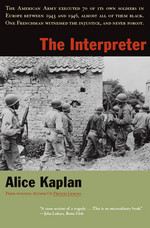
No story of World War II is more triumphant than the liberation of France, made famous in countless photos of Parisians waving American flags and kissing GIs as columns of troops paraded down the Champs Élysées. But one of the least-known stories from that era is also one of the ugliest chapters in the history of Jim Crow. In The Interpreter, celebrated author Alice Kaplan recovers this story both as eyewitnesses first saw it, and as it still haunts us today.
The American Army executed 70 of its own soldiers between 1943 and 1946—almost all of them black, in an army that was overwhelmingly white. Through the French interpreter Louis Guilloux’s eyes, Kaplan narrates two different trials: one of a white officer, one of a black soldier, both accused of murder. Both were court-martialed in the same room, yet the outcomes could not have been more different.
Kaplan’s insight into character and setting creates an indelible portrait of war, race relations, and the dangers of capital punishment.
“A nuanced historical account that resonates with today’s controversies over race and capital punishment.” Publishers Weekly
“American racism could become deadly for black soldiers on the front. The Interpreter reminds us of this sad component of a heroic chapter in American military history.” Los Angeles Times
“With elegance and lucidity, Kaplan revisits these two trials and reveals an appallingly separate and unequal wartime U.S. military justice system.” Minneapolis Star Tribune
“Kaplan has produced a compelling look at the racial disparities as they were played out…She explores both cases in considerable and vivid detail.” Sacramento Bee
Initiatives described in this collection range from the implementation of on-demand interpreting using iPad technology to create personalized, small-group, multidimensional models suited to digital media for 160 languages; introducing students to interpreting in a 3D world through an IVY virtual environment; applying gaming principles to interpreter education; assessing the amenability of the digital pen in the hybrid mode of interpreting; developing multimedia content for both open access and structured interpreter education environments; to preparing interpreting students for interactions in social media forums, and more. Interpreter Education in the Digital Age provides a context for the application of technologies in interpreter education from an international viewpoint across languages and modalities.
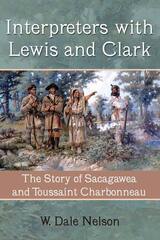
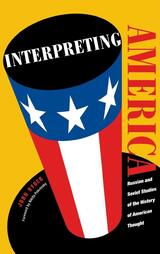
In his pioneering new book Interpreting America John Ryder makes available for the first time to English-speaking readers Russian views of the full range of American philosophical thought: from seventeenth-century Puritanism through the colonial and revolutionary periods, nineteenth- century idealism, pragmatism, naturalism, and other twentieth-century movements and figures. Using his own accurate translations, he clearly reconstructs a chain of core ideas, emphasizes the most essential concepts of each writer's work, and gives a multidimensional reconstruction of the arguments of each author.
By taking mainstream Soviet philosophical commentators like Baskin, Bogomolov, Karimsky, Melvil, Pokrovsky, Sidorov, and Yulina seriously and letting them speak for themselves, Ryder shows not only what Soviet philosophers and scholars thought of American philosophy (and why they were so interested in the first place) but also the nuances of the internal disagreements among Soviet thinkers about what American philosophers were saying. He also reveals a strong continuity between contemporary, post-Soviet Russian philosophy and earlier Soviet work.
Perhaps no other book has ever explored in such a systematic manner the ways in which one philosophical system has regarded another. Ryder's revealing study of how others have viewed us helps to clarify the depth, richness, and complexity of our own American philosophical heritage.

It would be difficult to go through life without ever encountering a Disney product. Since the first Mickey Mouse cartoon premiered in 1928, Disney has played a central role in shaping American popular culture, and it has expanded to the global market. The company positioned itself as a titan of family entertainment, and many of its offerings, from films to consumable products, have become embedded in the minds of children and adults, woven into many of our life experiences. Fans of Disney build connections with their favorite characters and franchises, fueled by Disney’s marketing practices. Others have developed a near-cult-like relationship with the brand, equating its products with religious icons and theme park visits with pilgrimages.
This edited volume looks beyond the movies and merchandise to peer into the very heart of the Disney phenomenon: how the fan response drives the corporation’s massive marketing machine and how the corporate response, in turn, shapes the fan experience.
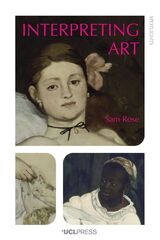
How do people make sense of works of art? And how do they write to make others see the same way? There are many guides to looking at art, histories of art history and art criticism, and accounts of various theories and methods, but this book offers something very unlike the normal search for difference and division: it examines the general and largely unspoken norms shared by interpreters of many kinds.
Interpreting Art highlights the norms, premises, and patterns that tend to guide interpretation along the way. Why, for example, is the concept of artistic intention at once so reviled and so hard to let go of? What is involved when an interpretation appeals to an artwork’s reception? How can context be used by some to keep things under control and by others to make the interpretation of art seem limitless? And how is it that artworks only seem to grow in complexity over time?
This volume reveals subtle features of art writing central to the often unnoticed interpretative practices through which we understand works of art. In doing so, the book also sheds light on possible alternatives, pointing to how writers on art might choose to operate differently in the future.
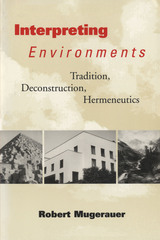
In this pioneering book, Robert Mugerauer seeks to make deconstruction and hermeneutics accessible to people in the environmental disciplines, including architecture, planning, urban studies, environmental studies, and cultural geography.
Mugerauer demonstrates each methodology through a case study. The first study uses the traditional approach to recover the meaning of Jung's and Wittgenstein's houses by analyzing their historical, intentional contexts. The second case study utilizes deconstruction to explore Egyptian, French neoclassical, and postmodern attempts to use pyramids to constitute a sense of lasting presence. And the third case study employs hermeneutics to reveal how the American understanding of the natural landscape has evolved from religious to secular to ecological since the nineteenth century.
The work of interpreters in legal settings, whether they are spoken or signed language interpreters, is filled with enormous complexity and challenges. This engrossing volume presents six, data-based studies from both signed and spoken language interpreter researchers on a diverse range of topics, theoretical underpinnings, and research methodologies.
In the first chapter, Ruth Morris analyzes the 1987 trial of Ivan (John) Demjanjuk in Jerusalem, and reveals that what might appear to be ethical breaches often were no more than courtroom dynamics, such as noise and overlapping conversation. Waltraud Kolb and Franz Pöchhacker studied 14 asylum appeals in Austria and found that interpreters frequently aligned themselves with the adjudicators. Bente Jacobsen presents a case study of a Danish-English interpreter whose discourse practices expose her attempts to maintain, mitigate, or enhance face among the participants.
In the fourth chapter, Jemina Napier and David Spencer investigate the effectiveness of interpreting in an Australian courtroom to determine if deaf citizens should participate as jurors. Debra Russell analyzed the effectiveness of preparing sign language interpreter teams for trials in Canada and found mixed results. The final chapter presents Zubaidah Ibrahim-Bell’s research on the inadequate legal services in Malaysia due to the fact that only seven sign interpreters are available. Taken together, these studies point to a “coming of age” of the field of legal interpreting as a research discipline, making Interpreting in Legal Settings an invaluable, one-of-a-kind acquisition.
The Seventh Volume in the Studies in Interpretation Series
Nineteen international authorities contribute their research and findings to Interpreting in Multilingual, Multicultural Contexts, probing the complex nature of interpreted interaction involving Deaf and hearing people of diverse linguistic and cultural backgrounds. They also analyze the contextualized interpreting practices and considerations that transpire from this diversity.
In three parts, this trenchant collection shows how Deaf and hearing people use language in fluctuating ways to connect with each other. The chapters in Part 1 — Expanding Frontiers: ASL-English-Spanish Interpreting in the United States — consider sign language interpreting at the border between Baja California and the state; trilingual video relay service (VRS) interpreting; and constructing a valid, reliable trilingual interpreting testing instrument. Part 2 — Mediating Indigenous Voices — explores how to construct roles in a Maori Deaf trilingual context; considerations for interpreting signed languages of American Indian Communities; and interpreting for indigenous Deaf clients in far north Queensland, Australia.
In the final section, Part 3 — Globalizing: Interpreting in International Contexts — protocols for interpreting in multilingual international conferences are analyzed. The last chapter describes the arduousness of sign language interpreting in multilingual, international settings. It acts as a fitting conclusion to this examination of the challenges to the sociolinguistic repertoire of interpreters mediating across multiplex combinations of culture and language.
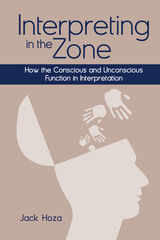
Jack Hoza’s newest research examines the components that enable interpreters to perform successfully, looking at literature in interpretation, cognitive science, education, psychology, and neuroscience, as well as reviewing the results of two qualitative studies he conducted. He seeks to uncover what it means to interpret in the zone by understanding exactly how the brain works in interpretation scenarios. He explores a range of dichotomies that influence interpretation outcomes, such as:
- Intuition vs. rational thought
- Left brain vs. right brain
- Explicit vs. implicit learning
- Novice vs. master
- Spoken vs. signed languages
- Emotion vs. reasoning
Interpreting in the Zone shows that cognitive research can help us better understand the intricacies of the interpreting process and has implications for how to approach the interpreting task. This resource will be of value to both the interpreter-in-training as well as the seasoned practitioner.
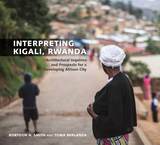
Interpreting Kigali, Rwanda explores the pressing challenges and opportunities to be found in planning, designing, and constructing a healthy, equitable, and sustainable city. Asking “what is an authentic-yet-modern, prosperous-yet-feasible African city, Rwandan city?” Smith, Berlanda, and colleagues conducted research on Rwandan activities of daily living and how these routines are connected to space-making practices and the Kinyarwanda terms that describe them.
Through a culturally informed view of urban and rural lifestyles and spaces, Interpreting Kigali, Rwanda presents principles and proposals for neighborhood development in the challenging context of Kigali’s informal settlements. With one billion people living in informal settlements worldwide, a number expected to double by 2030, the lessons learned in Rwanda provide a complex, fascinating, and urgent study for scholars and practitioners across disciplines and around the world.
"Contemporary theory has usefully analyzed how alternative modes of interpretation produce different meanings, how reading itself is constituted by the variable perspectives of readers, and how these perspectives are in turn defined by prejudices, ideologies, interests, and so forth. Some theorists gave argued persuasively that textual meaning, in literature and in literary interpretation, is structured by repression and forgetting, by what the literary or critical text does not say as much as by what it does. All these claims are directly relevant to legal hermeneutics, and thus it is no surprise that legal theorists have recently been turning to literary theory for potential insight into the interpretation of law. This collection of essays is designed to represent the especially rich interactive that has taken place between legal and literary hermeneutics during the past ten years."
With the Supreme Court's retreat from the aggressive protection of individual rights, state courts have begun to interpret state constitutions to provide broader protection of liberties. This development has reversed the polarity of constitutional politics, as liberals advocate unimpeded state power while conservatives lobby for state subordination to a constitutional law controlled centrally by the Supreme Court.
James A. Gardner here lays out the first fully developed theory of subnational constitutional interpretation. He argues that states are integral components of a national system of overlapping and mutually checking authority and that the purpose of this system is to protect liberty and defend against federal domination. The resulting account provides valuable prescriptive advice to state courts, showing them how to fulfill their responsibilities to the federal system in a way that strengthens American constitutional discourse.

A nuanced study of early Christian exegesis
Miriam DeCock analyzes four important early Christian treatments of the Gospel of John, including commentaries by Origen and Cyril from the Alexandrian tradition and the homilies of John Chrysostom and the commentary of Theodore of Mopsuestia, which represent Antiochian traditions. DeCock maintains that the traditional distinction between nonliteral and literal interpretations in these two early Christian centers remains helpful despite recent challenges to the paradigm. She argues that a major and abiding distinction between the two schools lies in the manner in which Alexandrian and Antiochian authors apply the gospel text to their respective communities. DeCock demonstrates that the Antiochenes find primarily literal moral examples and doctrinal teachings in John's Gospel, whereas the Alexandrians find both these and nonliteral teachings concerning the immediate situation of the church and of its individual members.
Features
- An examination of each author's interpretations of a selection of texts
- Focused explorations of John 2; 4; and 9-11 in early Christian exegesis
- A study of early literal non-literal interpretations of John's Gospel
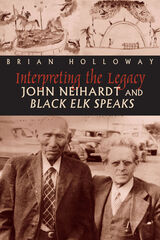
Using Neihardt's original handwritten notes and early manuscript drafts, Holloway demonstrates the poet's careful and deliberate re-creation of Black Elk's spiritual world in order to induce a transcendent experience in the reader. Through exhaustive research into Neihardt's biographical materials, published philosophical and metaphysical writings, and volumes of taped lectures, Holloway examines the sources of the book's production as well as the reactions to and the implications of his literary portrayal of the spiritual world of the Oglala.
Restoring Neihardt's reputation as a faithful witness to Black Elk's sacred landscape, Interpreting the Legacy: John Neihardt and Black Elk Speaks will be of interest to Neihardt scholars and students of literature, religious studies, and Native American studies.
"A refreshingly welcome approach to this intriguing topic. . . . [Bjorklund's] extensive and systematic approach to her source material is impressive and enriches our understanding of this essential subject."—Virginia Quarterly Review
"Bjorklund studies both famous and obscure writers, and her clear prose style and copious quotations provide insight into the many aspects of the changing American self." —Library Journal
In Interpretive Quantification, ten highly regarded scholars in the field of International Relations apply quantitative methods and formal models to specific constructivist and critical research questions. In this way, each chapter serves not only as evidence that methods can productively be applied across paradigms, but also as a guide as to how this may be done. In sum, the contributors make a compelling case that when researchers cordon off particular methods for merely ideological reasons, they circumscribe their own paradigms and hinder their own research agenda.
Interracial Housing was first published in 1951. Minnesota Archive Editions uses digital technology to make long-unavailable books once again accessible, and are published unaltered from the original University of Minnesota Press editions.
One of the most crucial strains on democracy today is the practice of racial segregation. In the press, in local, state, and federal government agencies, in fact, wherever people thrash out the problems of democratic living, the question is being discussed.
This book offers facts which throw new light on an important issue in the overall problem of racial segregation. Here are the results of a study comparing two kinds of public housing—segregated and non-segregated.
Two low-rent, public housing projects in which Negroes and whites live as next door neighbors were compared with two similar housing developments in which Negroes and whites are assigned to separate buildings or areas. The study reveals how the people living in these contrasting ways differ in their social relations, community morale, racial attitudes, and other significant social aspects. The research procedures used are explained, and general conclusions about changing prejudices are offered.
Social scientists, psychologists, housing officials, and community leaders concerned with the problems not only of housing but of race relations in general will find helpful guidance here.
In addition to providing much-needed data on an important social problem, the book offers a valuable demonstration of research techniques in social science.
"A good introduction to an issue too often overlooked. . . . The writing is clear and accessible, the evidence is evocative, and the ideas are challenging."—Beth Kiyoko Jamieson, Law and Politics Book Review
"U. S. government bodies have tried to regulate interracial intimacy from the day Pocahontas married John Rolfe up through Loving v. Virginia, which found antimiscegentation laws unconstitutional in 1967. . . . The weirder anecdotes from our racial history enliven this study, which is likely to become a classic in its field."—Publishers Weekly
"Moran examines the history of U. S. regulation of cross-racial romance, considering the impact of that regulation on the autonomy of individuals and families as well as on racial identity and equality. . . . She is attuned to the nuances of race in this polyglot nation, and supplies thoughtful analysis of these nuances."—Booklist
Agricultural planning, individual or national, depends on an understanding of competition in farm products between one region of the United States and another. The agriculture of different parts of the United States competes constantly with that of other parts—as, for example, the early competition in cotton between the northern frontier and southern growers, later between the southwest frontier and the Old South, and recently between California and the South. There is equally strong competition between potato-growing regions. It is this inter-regional competition in a country with no trade barriers which two outstanding economists analyze in this book.
They present the results of a concrete study of one outstanding example: competition in dairy production between the Northeastern States and the Lake States of the central Midwest for the New England market for fluid milk and cream. Six selected sample areas were analyzed carefully in each region in 1935–36 and predictions were made about future production and marketing of dairy products in each of these areas. Ten years later these areas were surveyed and the production changes compared with the predictions.
The authors’ conclusions about the conditions under which New England will be able to continue to compete with the lake states for the New England market are significant in themselves. Even more important, however, is the development of a method of analysis which can be widely employed to furnish the information which is needed to guide future developments in the agriculture of the United States or in any other country. This study is therefore an important contribution to the theory of interregional and international trade.
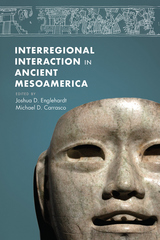
Archaeologists have long recognized the crucial role of interregional interaction in the development and cultural dynamics of ancient societies, particularly in terms of the evolution of sociocultural complexity and economic systems. Recent research has further expanded the archaeological, art historical, ethnographic, and epigraphic records in Mesoamerica, permitting a critical reassessment of the complex relationship between interaction and cultural dynamics. This volume builds on and amplifies earlier research to examine sociocultural phenomena—including movement, migration, symbolic exchange, and material interaction—in their role as catalysts for variability in cultural systems.
Interregional cultural exchange in pre-Columbian Mesoamerica played a key role in the creation of systems of shared ideologies, the production of regional or “international” artistic and architectural styles, shifting sociopolitical patterns, and changes in cultural practices and meanings. Interregional Interaction in Ancient Mesoamerica highlights, engages with, and provokes questions pertinent to understanding the complex relationship between interaction, sociocultural processes, and cultural innovation and change in the ancient societies and cultural histories of Mesoamerica and will be of interest to archaeologists, linguists, and art historians.
Contributors: Philip J. Arnold III, Lourdes Budar, José Luis Punzo Diaz, Gary Feinman, David Freidel, Elizabeth Jiménez Garcia, Guy David Hepp, Kerry M. Hull, Timothy J. Knab, Charles L. F. Knight, Blanca E. Maldonado, Joyce Marcus, Jesper Nielsen, John M. D. Pohl, Iván Rivera, D. Bryan Schaeffer, Niklas Schulze

These chapters engage common narratives about the ways in which gender in healthcare is secondary and highlights the stories of people who have battled to prioritize their own bodies through extraordinary difficulties. Employing a multiplicity of voices, the book represents a number of different perspectives on what it might look like to return health and medical data to embodied experience, to consider the effects of gendered and intersectional biomedical norms on lived realities, and to subvert the power of institutions in ways that move us toward biomedical justice.
This collection contributes to the burgeoning field of health and medical rhetorics by rhetorically and theoretically intervening in what are often seen as objective and neutral decisions related to the body and to scientific and medical data about bodies. Interrogating Gendered Pathologies will be of interest to feminist scholars in the field of rhetoric and writing studies, specifically those in the rhetorics of health and medicine, as well as scholars of technical communication, feminist studies, gender studies, technoscience studies, and bioethics.
Contributors: Leslie Anglesey, Mary Assad, Beth Boser, Lillian Campbell, Marleah Dean, Lori Beth De Hertogh, Leandra Hernandez, Elizabeth Horn-Walker, Caitlin Leach, Jordan Liz, Miriam Mara, Cathryn Molloy, Kerri Morris, Maria Novotny, Sage Perdue, Colleen Reilly

Using touchstones of public memory, including events surrounding men’s World Cup soccer and the record-breaking success of a book blaming Muslims for Germany’s decline, Zambon examines persistent problems in European conceptions of race, where racializing projects take place under an “ideology of racelessness” and the atrocities of historical and transnational racisms are used to deny current local forms of racism.

Essays by feminist film, media, and literature scholars based in the United States and United Kingdom provide an array of perspectives on the social and political implications of postfeminism. Examining magazines, mainstream and independent cinema, popular music, and broadcast genres from primetime drama to reality television, contributors consider how postfeminism informs self-fashioning through makeovers and cosmetic surgery, the “metrosexual” male, the “black chick flick,” and more. Interrogating Postfeminism demonstrates not only the viability of, but also the necessity for, a powerful feminist critique of contemporary popular culture.
Contributors. Sarah Banet-Weiser, Steven Cohan, Lisa Coulthard, Anna Feigenbaum, Suzanne Leonard, Angela McRobbie, Diane Negra, Sarah Projansky, Martin Roberts, Hannah E. Sanders, Kimberly Springer, Yvonne Tasker, Sadie Wearing
Interrogating Privilege is a welcome combination of personal essays and academic research, blending theory, analysis, and narrative to explore the function and consequences of privilege in second language education.
While teachers’ focus on the learning process and class goals are quite important, there is not enough attention paid to the types of privilege—or lack thereof—that individuals bring to the classroom. Through chapters that can either stand alone or be read together, with topics such as gender, age, and colonialism (the author is the daughter of missionary parents) in second language teaching, this book seeks to address the experiences of teachers, scholars, and students as “whole persons” and to observe the workings of identity and privilege in the educational setting.
Contributors. José Atiles, Bárbara Abadía Rexach, Yarimar Bonilla, daniela crespo-miró, Marie Cruz Soto, Yomaira Figueroa-Vásquez, Marcela Guerrero, Gustavo García López, Mónica Jiménez, Lawrence LaFountain Stokes, Marisol LeBrón, Pedro Lebrón Ortiz, Beatriz Llenín Figueroa, Jorell Meléndez-Badillo, Sarah Molinari, Marisel Moreno, Daniel Nevárez Araújo, Aurora Santiago Ortiz, Karrieann Soto Vega, Daniel Vázquez Sanabria, Roberto Vélez-Vélez, Joaquín Villanueva, Jacqueline Villarrubia-Mendoza
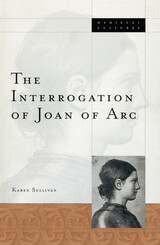
A radical reassessment of the trial of Joan of Arc that gives a new sense of Joan in her time.
The transcripts of Joan of Arc’s trial for heresy at Rouen in 1431 and the minutes of her interrogation have long been recognized as our best source of information about the Maid of Orleans. Historians generally view these legal texts as a precise account of Joan’s words and, by extension, her beliefs. Focusing on the minutes recorded by clerics, however, Karen Sullivan challenges the accuracy of the transcript. In The Interrogation of Joan of Arc, she re-reads the record not as a perfect reflection of a historical personality’s words, but as a literary text resulting from the collaboration between Joan and her interrogators.
Sullivan provides an illuminating and innovative account of Joan’s trial and interrogation, placing them in historical, social, and religious context. In the fifteenth century, interrogation was a method of truth-gathering identified not with people like Joan, who was uneducated, but with clerics, like those who tried her. When these clerics questioned Joan, they did so as scholastics educated at the University of Paris, as judges and assistants to judges, and as pastors trained in hearing confessions.The Interrogation of Joan of Arc traces Joan’s conflicts with her interrogators not to differing political allegiances, but to fundamental differences between clerical and lay cultures. Sullivan demonstrates that the figure depicted in the transcripts as Joan of Arc is a complex, multifaceted persona that results largely from these cultural differences. Discerning and innovative, this study suggests a powerful new interpretive model and redefines our sense of Joan and her time.
The involvement of health professionals in human rights and humanitarian law violations has again become a live issue as a consequence of the U.S. prosecution of conflicts with al Qaeda, the Taliban, and Iraq. Health professionals—including M.D.s trained in psychiatry and Ph.D.s trained in behavioral psychology—have reportedly advised and assisted in coercive interrogation. Health professionals have also been involved in forced feedings. Such practices would not be unique to the United States nor the most extreme forms of abuse in the world. The direct involvement of medical professionals in torture, covering up extrajudicial killings, and other extreme conduct is a phenomenon common to many societies and periods of national crisis. Indeed, the widespread and repeated nature of this problem has led to the development of important legal and ethical codes on the subject. Those codes, however, are notoriously insufficient in many cases. A reexamination of the international norms, as developed in human rights law, humanitarian law, and professional ethics can shed light on these issues. However, in addition to those instruments, the struggle to end such violations requires understanding human behavior and the role of formal and informal institutional pressures.
In this volume, a wide range of prominent practitioners and scholars explore these issues. Their insights provide significant potential for reforming institutions to assist health professionals maintain their legal and ethical obligations in times of national crisis.
This book closes the gap in research on this subject. By developing the frameworks of Head Driven Phrase Structure Grammar and Situation Semantics, the authors provide an account that rigorously integrates syntactic, semantic, and contextual dimensions of interrogatives. The challenge of providing exhaustive coverage of the interrogative constructions of English, including various constructions that occur solely in dialogue interaction, leads to new insights about a variety of contentious theoretical issues. These include matters of semantic ontology, the quantificational status of wh-phrases, the semantic effect of wh-fronting, the status of constructions in grammatical theory, the integration of illocutionary information in the grammar, and the nature of ellipsis resolution in dialogue. The account is stated with sufficient rigor to enable fairly direct computational implementation.
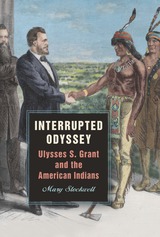
In the late 1860s, before becoming president, Grant collaborated with Ely Parker, a Seneca Indian who became his first commissioner of Indian affairs, on a plan to rescue the tribes from certain destruction. Grant hoped to save the Indians from extermination by moving them to reservations, where they would be guarded by the U.S. Army, and welcoming them into the nation as American citizens. By so doing, he would restore the executive branch’s traditional authority over Indian policy that had been upended by Jackson.
In Interrupted Odyssey, Stockwell rejects the common claim in previous Grant scholarship that he handed the reservations over to Christian missionaries as part of his original policy. In part because Grant’s plan ended political patronage, Congress overturned his policy by disallowing Army officers from serving in civil posts, abandoning the treaty system, and making the new Board of Indian Commissioners the supervisors of the Indian service. Only after Congress banned Army officers from the Indian service did Grant place missionaries in charge of the reservations, and only after the board falsely accused Parker of fraud before Congress did Grant lose faith in his original policy.
Stockwell explores in depth the ousting of Parker, revealing the deep-seated prejudices that fueled opposition to him, and details Grant’s stunned disappointment when the Modoc murdered his peace commissioners and several tribes—the Comanche, Kiowa, Cheyenne, and Sioux—rose up against his plans for them.
Though his dreams were interrupted through the opposition of Congress, reformers, and the tribes themselves, Grant set his country firmly toward making Indians full participants in the national experience. In setting Grant’s contributions against the wider story of the American Indians, Stockwell’s bold, thoughtful reappraisal reverses the general dismissal of Grant’s approach to the Indians as a complete failure and highlights the courage of his policies during a time of great prejudice.
A history of fragmentary—or interrupted—writing in avant-garde poetry and prose by a renowned literary critic.
In Interruptions: The Fragmentary Aesthetic in Modern Literature, Gerald L. Bruns explores the effects of parataxis, or fragmentary writing as a device in modern literature. Bruns focuses on texts that refuse to follow the traditional logic of sequential narrative. He explores numerous examples of self-interrupting composition, starting with Friedrich Schlegel's inaugural theory and practice of the fragment as an assertion of the autonomy of words, and their freedom from rule-governed hierarchies.
Bruns opens the book with a short history of the fragment as a distinctive feature of literary modernism in works from Gertrude Stein to Paul Celan to present-day authors. The study progresses to the later work of Maurice Blanchot and Samuel Beckett, and argues, controversially, that Blanchot's writings on the fragment during the 1950s and early 1960s helped to inspire Beckett’s turn toward paratactic prose.
The study also extends to works of poetry, examining the radically paratactic arrangements of two contemporary British poets, J. H. Prynne and John Wilkinson, focusing chiefly on their most recent, and arguably most abstruse, works. Bruns also offers a close study of the poetry and poetics of Charles Bernstein.
Interruptions concludes with two chapters about James Joyce. First, Bruns tackles the language of Finnegans Wake, namely the break-up of words themselves, its reassembly into puns, neologisms, nonsense, and even random strings of letters. Second, Bruns highlights the experience of mirrors in Joyce’s fiction, particularly in Dubliners, Portrait of the Artist as a Young Man, and Ulysses, where mirrored reflections invariably serve as interruptions, discontinuities, or metaphorical displacements and proliferations of self-identity.
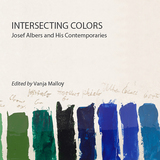



How can a society call itself inclusive while systematically excluding those who do not fit the norm? Intersectional Challenges to Cohesion? critically examines how people are marked as “not belonging” based on multiple, intersecting dimensions of identity: race, gender, disability, migration status, and more.
By bringing together diverse academic perspectives, this volume brings to light the lived realities of marginalized individuals at personal and social levels, depicting how systemic exclusion persists despite democratic ideals. Through interdisciplinary research and case studies, the contributors analyze the structures that enforce non-normativity and limit participation and ultimately question the very fabric of social cohesion. Through mapping these intersectional challenges, this book provides crucial insights for scholars and policymakers striving for genuine inclusion.

Aída Hurtado, a leading Chicana feminist and scholar, traces the origins of Chicanas’ efforts to bring attention to the effects of gender in Chicana and Chicano studies. Highlighting the innovative and pathbreaking methodologies developed within the field of Chicana feminisms—such as testimonio, conocimiento, and autohistoria—this book offers an accessible introduction to Chicana theory, methodology, art, and activism. Hurtado also looks at the newest developments in the field and the future of Chicana feminisms.
The book includes short biographies of key Chicana feminists, additional suggested readings, and exercises with each chapter to extend opportunities for engagement in classroom and workshop settings.
Ragin and Fiss begin by taking up the controversy regarding the relative importance of test scores versus socioeconomic background on life chances, a debate that has raged since the 1994 publication of Richard Herrnstein and Charles Murray’s TheBell Curve. In contrast to prior work, Ragin and Fiss bring an intersectional approach to the evidence, analyzing the different ways that advantages and disadvantages combine in their impact on life chances. Moving beyond controversy and fixed policy positions, the authors propose sophisticated new methods of analysis to underscore the importance of attending to configurations of race, gender, family background, educational achievement, and related conditions when addressing social inequality in America today.
CURRENTLY UNAVAILABLE
Coined by Kimberlé Crenshaw in the late 1980s, intersectionality makes the case that dimensions of identity, such as gender and race, cannot be understood in isolation from each other because they work together to shape lived experience. As digital humanities has expanded in scope and content, questions of how to negotiate the overlapping influences of race, class, gender, sexuality, nation, and other dimensions that shape data, archives, and methodologies have come to the fore. Taking up these concerns, the authors in this volume explore their effects on the methodological, political, and ethical practices of digital humanities. Essays examine intersectionality from a range of positions: the influence of overlapping identities on scholars within the digital humanities community; how the fields in which they work are subject to competing tensions created by intersecting power structures within digital humanities and academia; and the methodological possibilities and scholarly potential for intersectionality as a framing theory in digital humanities scholarship.

These 17 essays from the seventh annual J. Lloyd Eaton Conference examine the relationship between fantasy and science fiction.
They propose that fantasy and science fiction are not isolated commercial literary forms, but instead are literary forms worthy of the recognition reserved for traditional literature. Discussion of genre identification ranges from the standard forms of literary criticism embodied in Aristotle’s mimesis and poesis to innovative and possibly controversial points of view such as a theory of humor, a philosophy of time, and a detailed analysis of Dr. Seuss’s Cat in the Hat.
The essays provide not only a detailed study of literary elements but also the historical treatment of the material, its commercial use, and its relationship to similar literary forms such as the gothic tale and horror fiction. While few of the essayists agree with one another, they all contribute creative insights to the debate.
Intersections in Turkish Literature is a collection of essays on Turkish literature by former students of James Stewart-Robinson. The topics and methods cover a broad range--from a careful thematic analysis of a traditional Turkish folktale, which reveals its resemblance to well-known Western tales; to an analysis of the "saint tales" recounted by present-day Albanian Bektasi adepts; to a study of narrative rhythm in Nazim Hikhmet's rendition of an account of a fifteenth-century popular uprising.
Walter G. Andrews has assembled the writings of a number of scholars who bridge traditional chasms, inviting us to rethink our approaches to the study of Turkish and Ottoman literature. This collection forms a nucleus that clearly demonstrates the great potential now existing for study in this area, the essays displaying a variety of unusual approaches that bring together seemingly disparate materials: the Turkish story "The Pomegranate Seed" and Disney's "Snow White"; a fifteenth-century chronicle and the poetry of a modern socialist poet; Albanian dervishes in Detroit; a modern Turkish novel; Virginia Woolf; a Yale critic; traditional Japanese poetry; and Ottoman lyrics.
Intersections in Turkish Literature will provide an important stimulus to work that reaches beyond the limits of area studies, intersecting with the interests of scholars and students of literary theory, folklore studies, anthropology, French, Japanese, and Persian.
Walter G. Andrews is Affiliate Professor of Near Eastern Languages and Civilization, University of Washington.
Contributors. Thomas J. Berghuis, Lee Weng Choy, Patrick Flores, Joan Kee, Alice Ming Wai Jim, Sheldon Lu, Gao Minglu, Reiko Tomii

In one essay, two prominent intersex activists reflect on their often controversial work on behalf of the Intersex Society of North America to achieve change in medical policy over the last ten years. Other essays explore the impact of the categorization of intersexuality as a “disorder of sex development” and of the treatment guidelines published in 2006 by the Consortium on the Management of Disorders of Sex Development. An essay by the issue’s guest editor takes a comprehensive look at the relationship between intersexuality and the study of gender and sexuality. The issue also includes a portfolio of photographs as well as a roundtable discussion that brings together intersex experts from medicine, law, psychology, and the humanities.
Contributors. Sarah M. Creighton, Alice D. Dreger, Ellen K. Feder, Julie A. Greenberg, April Herndon, Iain Morland, Katrina Roen, Vernon A. Rosario, Nikki Sullivan, Del LaGrace Volcano
READERS
Browse our collection.
PUBLISHERS
See BiblioVault's publisher services.
STUDENT SERVICES
Files for college accessibility offices.
RECENTLY PUBLISHED




UChicago Accessibility Resources
home | accessibility | search | about | contact us
BiblioVault ® 2001 - 2025
The University of Chicago Press