
 A SCHOLARLY BOOK REPOSITORY
54 start with O start with O
"Objectivist" writers, conjoined through a variety of personal, ideological, and literary-historical links, have, from the late 1920s to the present, attracted emulation and suspicion. Representing a nonsymbolist, postimagist poetics and characterized by a historical, realist, antimythological worldview, Objectivists have retained their outsider status. Despite such status, however, the formal, intellectual, ideological, and ethical concerns of the Objectivist nexus have increasingly influenced poetry and poetics in the United States.
Thus, argue editors Rachel Blau DuPlessis and Peter Quartermain, the time has come for an anthology that unites essential works on Objectivist practices and presents Objectivist writing as an enlargement of the possibilities of poetry rather than as a determinable and definable literary movement. The authors' collective aim is to bring attention to this group of poets and to exemplify and specify cultural readings for poetic texts--readings alert to the material world, politics, society, and history, and readings concerned with the production, dissemination, and reception of poetic texts.
The contributors consider Basil Bunting, Lorine Niedecker, George Oppen, Carl Rakosi, Charles Reznikoff, and Louis Zukofsky within both their historical milieu and our own. The essays insist on poetry as a mode of thought; analyze and evaluate Objectivist politics; focus on the ethical, spiritual, and religious issues raised by certain Objectivist affiliations with Judaism; and explore the dissemination of poetic texts and the vagaries of Objectivist reception. Running throughout the book are two related threads: Objectivist writing as generally a practice aware of its own historical and social contingency and Objectivist writing as a site of complexity, contestation, interrogation, and disagreement.
Addressing subjects as wide-ranging as angelology, the court masque, pop art, caricature, the cult of the ruin, hip-hop, Spense’'s Irish policy, and the aesthetics of silence, Brian McHale pulls varied threads together to identify a repertoire of postmodernist elements characteristic of the long poems he examines.
As critic Jed Rasula explains, “McHale is wonderfully resourceful in changing the subject from chapter to chapter to fit the poems discussed, and while his approach adheres to the conventions of textual exegesis, the chapters really shine as orchestrations of issues. For instance, James Merrill’s The Changing Light at Sandover works unexpectedly well in raising the subject of found poetry and procedural composition; Melvin Tolso’'s Harlem Gallery and Edward Dorn's Gunslinger are effectively paired to demonstrate the period flavor of pastiche; Geoffrey Hill’s Mercian Hymns and Armand Schwerner’s The Tablets explode the modernist fixation with depth; John Ashbery’s work is given a nuanced reading as proto-theory; Letter to an Imaginary Friend by Thomas McGrath provides a lucid backdrop to raise the question of political efficacy in approaching language poet Bruce Andrews; and Susan Howe's The Europe of Trusts is explored for its intertextual tapestry.”
McHale shows how elements from these long poems overlap, interfere, pull in different directions, jar against, and even contradict each other; and he demonstrates how they also echo, amplify, and reinforce each other. They do not slot smoothly together like pieces in a jigsaw puzzle, but they do form (what else?) a difficult whole.
As MacDonald says, “I think what I’m after in the stories as well as in the video work is finding an experiential moment, nothing really stable, something pleasantly unstable, or uncomfortable . . . purposefully pleasant uncomfortable instability with moments of tenderness and definitely humor. Certainly nothing concrete, unless it needs that. A certain fear of and respect for banality. I’m after a good time, which can often turn into a really bad time, but either way, one we’ll remember forever.”
Despite the range of circumstances they reveal, these stories are unified by a brightness of vision, deft observation, and consistently sharp, funny, and unbridled language.
For most of its history, Australian pearling was a shore-based activity. But from the mid-1880s until the World War I era, the industry was dominated by highly mobile, heavily capitalized, schooner-based fleets of pearling luggers, known as floating stations, that exploited Australia’s northern continental shelf and the nearby waters of the Netherlands Indies. Octopus Crowd: Maritime History and the Business of Australian Pearling in Its Schooner Age is the first book-length study of schooner-based pearling and explores the floating station system and the men who developed and employed it.
Steve Mullins focuses on the Clark Combination, a syndicate led by James Clark, Australia’s most influential pearler. The combination honed the floating station system to the point where it was accused of exhausting pearling grounds, elbowing out small-time operators, strangling the economies of pearling ports, and bringing the industry to the brink of disaster. Combination partners were vilified as monopolists—they were referred to as an “octopus crowd”—and their schooners were stigmatized as hell ships and floating sweatshops.
Schooner-based floating stations crossed maritime frontiers with impunity, testing colonial and national territorial jurisdictions. The Clark Combination passed through four fisheries management regimes, triggering significant change and causing governments to alter laws and extend maritime boundaries. It drew labor from ports across the Asia-Pacific, and its product competed in a volatile world market. Octopus Crowd takes all of these factors into account to explain Australian pearling during its schooner age. It argues that the demise of the floating station system was not caused by resource depletion, as was often predicted, but by ideology and Australia’s shifting sociopolitical landscape
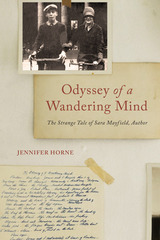
A carefully rendered portrait of a brilliant but troubled daughter of the Old South who struggled against the conventions of gender, class, family, and ultimately of sanity, yet survived to define a creative life of her own
Sara Mayfield was born into Alabama’s governing elite in 1905 and grew up in a social circle that included Zelda Sayre, Sara Haardt, and Tallulah and Eugenia Bankhead. After winning a Goucher College short story contest judged by H. L. Mencken, Mayfield became friends with Mencken and his circle, then visited with Scott and Zelda Fitzgerald and hobnobbed with the literati while traveling in Europe after a failed marriage. Returning to Alabama during the Depression, she briefly managed the family landholdings before departing for New York City where she became involved in the theater. Inventing a plastic compound while working on theatrical sets, she applied for a patent and set her sights on a livelihood as an inventor and businesswoman. With the advent of World War II, Mayfield returned to her family home in Tuscaloosa where she expanded her experiments, freelanced as a journalist, and doggedly pursued a bizarre series of military and intelligence schemes, prompting temporary hospitalization. In 1945, she mingled with a host of cultural figures, including Frida Kahlo, Diego Rivera, Orson Welles, Rita Hayworth, and even a young John F. Kennedy, while reporting on the creation of the United Nations from Mexico and California. Back in Tuscaloosa after the war, however, she struggled to find her way with both work and family, becoming increasingly paranoid about perceived conspiracies arrayed against her. Finally, her mother and brother committed her to Bryce Hospital for the Insane, where she remained for the next seventeen years.
Throughout her life, Mayfield kept journals, wrote fiction, and produced thousands of letters while nursing the ambition that had driven her since childhood: to write and publish books. During her confinement, Mayfield assiduously recorded her experiences and her determined efforts—sometimes delusional, always savvy—to overturn her diagnosis and return to the world as a sane, independent adult. At 59, she was released from Bryce and later obtained a decree of “having been restored to sanity,” enabling her to manage her own financial affairs and to live how and where she pleased. She went on to publish noteworthy literary biographies of the Menckens and the Fitzgeralds plus a novel based on the life of Mona Lisa, finally achieving her quest to become the author of books and her own life. In Odyssey of a Wandering Mind, noted writer Jennifer Horne draws on years of research and an intimate understanding of the vast archive Sara Mayfield left behind to sensitively render Mayfield’s struggle to move through the world as the person she was—and her ultimate success in surviving to define the terms of her story.
Ancient human groups in the Eastern Woodlands of North America were long viewed as homogeneous and stable hunter-gatherers, changing little until the late prehistoric period when Mesoamerican influences were thought to have stimulated important economic and social developments. The authors in this volume offer new, contrary evidence to dispute this earlier assumption, and their studies demonstrate the vigor and complexity of prehistoric peoples in the North American Midwest and Midsouth. These peoples gathered at favored places along midcontinental streams to harvest mussels and other wild foods and to inter their dead in the shell mounds that had resulted from their riverside activities. They created a highly successful, pre-maize agricultural system beginning more than 4,000 years ago, established far-flung trade networks, and explored and mined the world's longest cave—the Mammoth Cave System in Kentucky.
Contributors include:
Kenneth C. Carstens, Cheryl Ann Munson, Guy Prentice, Kenneth B. Tankersley, Philip J. DiBlasi, Mary C. Kennedy, Jan Marie Hemberger, Gail E. Wagner, Christine K. Hensley, Valerie A. Haskins, Nicholas P. Herrmann, Mary Lucas Powell, Cheryl Claassen, David H. Dye, and Patty Jo Watson
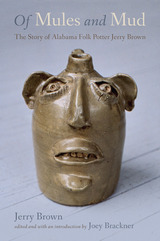
Born in 1942, Jerry Brown helped out in his father’s pottery shop as a young boy. There he learned the methods and techniques for making pottery in a family tradition dating back to the 1830s. His responsibilities included tending the mule that drove the mill that was used to mix clay (called “mud” by traditional potters). Business suffered as demand for stoneware churns, jugs, and chamber pots waned in the postwar years, and manufacture ceased following the deaths of Brown’s father and brother in the mid-1960s. Brown turned to logging for his livelihood, his skill with mules proving useful in working difficult and otherwise inaccessible terrain. In the early 1980s, he returned to the family trade and opened a new shop that relied on the same methods of production with which he had grown up, including a mule-powered mill for mixing clay and the use of a wood-fired rather than gas-fueled kiln.
Folklorist Joey Brackner met Brown in 1983, and the two quickly became close friends who collaborated together on a variety of documentary and educational projects in succeeding years—efforts that led to greater exposure, commercial success, and Brown’s recognition as a National Heritage Fellow by the National Endowment for the Arts. For years, Brown spoke of the urge to write his life story, but he never set pen to paper. In 2015, Brackner took the initiative and interviewed Brown, recording his life story over the course of a weekend at Brown’s home. Of Mules and Mud is the result of that marathon interview session, conducted one year before Brown passed away.
Brackner has captured Jerry Brown’s life in his own words as recounted that weekend, lightly edited and elaborated. Of Mules and Mud is illustrated with photos from all phases of Brown’s life, including a color gallery of 28 photos of vessel forms made by Brown throughout his career that collectors of folk pottery will find invaluable.

José Kozer is one of the most influential contemporary Cuban poets working today. A key figure in the neobaroque movement within contemporary Latin American poetry, he is one of only three Cubans to ever win the Pablo Neruda Prize given by the Neruda Foundation in Chile. He is the author of close to ninety books, including Este judío de números y letras, Bajo este cien, La garza sin sombras, Carece de causa, and Y del esparto la invariabilidad. Kozer is also noteworthy as a key poet of the Cuban diaspora, having left Cuba in 1960 and residing ever since in the United States.
Of Such a Nature/Índole is a bilingual edition translated into English by Peter Boyle. In addition, Boyle provides an extensive introduction placing Kozer’s work in a critical context.
The Spanish word “índole” can be translated as: “a type,” “a sort,” or “that sort of thing.” The title, Índole, therefore suggests that the poems gathered in this collection, are all instances of specific types of situations, things, or experiences. Kozer has gathered a collection of poems about everyday life—cleaning one’s dentures, a woman leaning over a bowl of oatmeal, a salamander glimpsed while eating breakfast—but always with death not far away.
Of Such a Nature/Índole is a remarkable collection of poems published in Cuba in 2012, covering such materials as Kozer’s Jewish heritage, his Cuban childhood and ongoing connection to the Island, Buddhist and East Asian traditions of spiritual practice, his everyday life in Florida with Guadalupe, ageing, illness, and the shadow of death. Irony and humor are there as well, and to read these poems is to be in the presence of the full seriousness of poetry and its playfulness, its ability to undercut all pretensions.
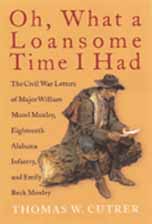
Most surviving correspondence of the Civil War period was written by members of a literate, elite class; few collections exist in which the woman's letters to her soldier husband have been preserved. Here, in the exchange between William and Emily Moxley, a working-class farm couple from Coffee County, Alabama, we see vividly an often-neglected aspect of the Civil War experience: the hardships of civilian life on the home front.
Emily's moving letters to her husband, startling in their immediacy and detail, chronicle such difficulties as a desperate lack of food and clothing for her family, the frustration of depending on others in the community, and her growing terror at facing childbirth without her husband, at the mercy of a doctor with questionable skills. Major Moxley's letters to his wife reveal a decidedly unromantic side of the war, describing his frequent encounters with starvation, disease, and bloody slaughter.
O’Hearn is the story of the story the man tells himself in confused chronology as he struggles to make sense of a world and a landscape where things have stopped making sense.
The laws of causation are absent or profoundly obscured in this explanatory narrative, but then so is all individual motivation. Action seems to end only in a world of winners and losers and occurs solely to reinforce that world by further enriching the winners at the, sometimes willful, expense of the losers.
O’Hearn is funny, contradictory, satiric, heartbreaking—a work unlike anything in our contemporary literature.

Oktoberfest in Brazil leads readers on a tour through German Brazilian home gardens, folk dance performances, and the largest Oktoberfest in Brazil. These sensory-rich spaces of interaction provide access to different perspectives and types of identity negotiation at multiple levels from the local to the transnational. Ricke illustrates how the emotions and sensory experiences of these sensescapes associated with German cultural heritage function as a means for German Brazilians to negotiate senses of belonging as Brazilians as well as their ethnic and transnational identities.
This book also provides historical and contemporary insights into the politics of citizenship associated with cultural heritage. As politics become more polarized, the need to analyze different ways of communicating through sensory experiences increases. The unique contribution of the economy of aesthetics framework is its ability to capture the influential power of sensory experience in the negotiation of identity and senses of belonging and citizenship more broadly. It provides new insights into how and why some sensory experiences within domestic tourism foster belonging and identity while other experiences reinforce social distinctions and national divisions.

Old Alabama Town is a visual and historical chronicle of one of the South's important architectural landmarks—four blocks of 19th-century buildings restored to their original condition, collectively forming an educational village that preserves and displays life as it was lived in Alabama from the 1830s through the 1890s. A creation of the Landmarks Foundation of Montgomery, a nonprofit organization developed in 1967, Old Alabama Town displays the lifestyles and environment of the time period through architecture, decorative arts, and living history. The "town" has been made available for students, secondary school educators for field trips, and to tourists for entertainment and family excursions.
More than 50 historic structures, all formerly in danger of demolition, have been transported from around central Alabama and restored on site. The Living Block of the village allows visitors to explore a log cabin, dogtrot house, carriage house, "shotgun" house, pole barn, schoolhouse, tavern, grange hall, and grocery. The Working Block allows patrons to visit a blacksmith's shop, drugstore, grist mill, cotton gin, woodcarver's shop, print shop, and cookhouse. Additional regions of the village present some of the most significant historic homes to be preserved in the state: the Cram-Lakin House, Thompson Mansion, and the Ordeman-Mitchell-Shaw House, among others.
Designed in full color, this paperback guide is introduced by the author's historical, sociological, and cultural overview of Montgomery. The 45 individual entries detail the history and features of each structure and are supplemented by a map, archival photographs of the buildings, and 60 contempo-rary color photographs. This book will be useful to tourists, preservationists, students and scholars of Alabama history and architecture, and all those interested in an interpretive museum of southern life.
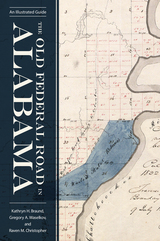
Forged through the territory of the Creek Nation by the United States federal government, the Federal Road was developed as a communication artery linking the east coast of the United States with Louisiana. Its creation amplified already tense relationships between the government, settlers, and the Creek Nation, culminating in the devastating Creek War of 1813–1814, and thereafter it became the primary avenue of immigration for thousands of Alabama settlers.
Central to understanding Alabama’s territorial and early statehood years, the Federal Road was both a physical and symbolic thoroughfare that cut a swath of shattering change through the land and cultures it traversed. The road revolutionized Alabama’s expansion, altering the course of its development by playing a significant role in sparking a cataclysmic war, facilitating unprecedented American immigration, and enabling an associated radical transformation of the land itself.
The first half of The Old Federal Road in Alabama: An Illustrated Guide offers a narrative history that includes brief accounts of the construction of the road, the experiences of historic travelers, and descriptions of major changes to the road over time. The authors vividly reconstruct the course of the road in detail and make use of a wealth of well-chosen illustrations. Along the way they give attention to the very terrain it traversed, bringing to life what traveling the road must have been like and illuminating its story in a way few others have ever attempted.
The second half of the volume is divided into three parts—Eastern, Central, and Southern—and serves as a modern traveler’s guide to the Federal Road. This section includes driving tours and maps, highlighting historical sites and surviving portions of the old road and how to visit them.
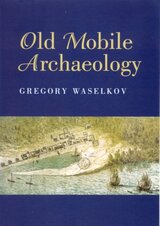
An archaeological guide to the earliest French settlement on the northern Gulf Coast. Archaeological excavations since 1989 have uncovered exciting evidence of the original townsite of Mobile, first capital of the Louisiana colony, and remnants of the colony's port on Dauphin Island.
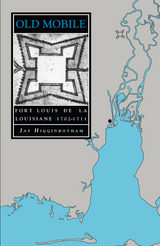
“Higginbotham has given to American historiography a microcosmic view of one of the earliest and most important outposts in the colonial new world. The Latin South can henceforth not be ignored.” —Alabama Historical Quarterly
“The definitive account . . . superbly recounted.” —Journal of Southern History
“Meticulously documented. . . . Recommended for libraries interested in the colonial period.” —Choice
“Mind-boggling . . . a stupendous job of research. It is amazing that Higginbotham can recreate in such detail the lives of these people. All history books should be written like this.” —BirminghamMagazine
Roderick P. Hart Outstanding Book Award for the National Communication Association's Political Communication Division
A fascinating survey of the history of political and economic ideas in the US that have led to an increasingly entrenched ultra-rich class of oligarchs.
To an American, oligarchy is something that happens somewhere else. In Oligarchy in America, Luke Winslow reveals oligarchy’s deep intellectual roots and alarming growth in America. The book provides conceptual tools the lack of which have prevented Americans from recognizing oligarchy at home.
Winslow argues that generic labels like “billionaires” for a class of ultra-rich masks the pervasive structures that entrench their power. He introduces instead the concept of democratic oligarchy—an institutional arrangement in which the ultra-rich form a class consciously creating and leveraging state power to accumulate wealth.
Like a master class in political ideas, Winslow traces the intellectual lineage of oligarchy in the US. His lively and compulsively readable survey examines key rhetorical sources such as Herbert Spencer, Andrew Carnegie, Friedrich Hayek, Lewis Powell, Milton Friedman, Charles Koch, Donald Trump, Tucker Carlson, and others.
Oligarchy in America maps the connective web of oligarchic ideas uniting these disparate figures. By offering a lucid framework through which to view oligarchic ideas ambient in American culture, Winslow makes a vital contribution to readers and scholars of communication and rhetorical studies, public address, economics, and political science.
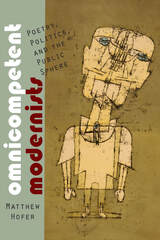
“It is difficult / to get the news from poems / yet men die miserably every day / for lack / of what is found there,” as the poet William Carlos Williams memorably declared. In Omnicompetent Modernists: Poetry, Politics, and the Public Sphere, Matthew Hofer examines, through a multilayered literary critique of interwar modernist poetry, what it might mean to get the news, and more, from a poet.
Using pragmatist ideas about the public sphere as a tool, Hofer reveals how Langston Hughes, Ezra Pound, and Mina Loy sought to use literature to both express and enable thought. In Hughes, Pound, and Loy, Hofer attends to poets whose work vigorously imagined possible new relationships between language, thinking, and public society. Each poet had different goals and used different methods, but all found both inspiration and encouragement in popular political theory. Hughes advocated for a more just vision of color and class in the United States. Pound sought to condemn those whom he associated with public harm, linguistically, socially, economically, and politically. Loy championed the “psycho-democratic” representation of women, in both public and private life.
Although Hughes, Pound, and Loy are rarely considered together, what unites these three writers is how each reconceived the public realm, and revolutionized aesthetic form to articulate those visions. Hofer combines sharp intellectual historiography with rigorous literary criticism and the result is a study that reinvigorates both the poems and poets under consideration and speaks to the immense power of language in manipulating public opinion—with pertinent implications for the politics of the present.
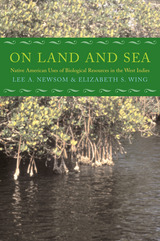
During the vast stretches of early geologic time, the islands of the Caribbean archipelago separated from continental land masses, rose and sank many times, merged with and broke from other land masses, and then by the mid-Cenozoic period settled into the current pattern known today. By the time Native Americans arrived, the islands had developed complex, stable ecosystems. The actions these first colonists took on the landscape—timber clearing, cultivation, animal hunting and domestication, fishing and exploitation of reef species—affected fragile land and sea biotic communities in both beneficial and harmful ways.
On Land and Sea examines the condition of biosystems on Caribbean islands at the time of colonization, human interactions with those systems through time, and the current state of biological resources in the West Indies. Drawing on a massive data set collected from long-term archaeological research, the study reconstructs past lifeways on these small tropical islands. The work presents a wide range of information, including types of fuel and construction timber used by inhabitants, cooking techniques for various shellfish, availability and use of medicinal and ritual plants, the effects on native plants and animals of cultivation and domestication, and diet and nutrition of native populations.
The islands of the Caribbean basin continue to be actively excavated and studied in the quest to understand the earliest human inhabitants of the New World. This comprehensive work will ground current and future studies and will be valuable to archaeologists, anthropologists, botanists, ecologists, Caribbeanists, Latin American historians, and anyone studying similar island environments.
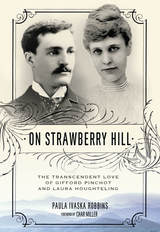
At its core, Paula Ivaska Robbins’s On Strawberry Hill: The Transcendent Love of Gifford Pinchot and Laura Houghteling is a human interest story that cuts a neat slice across nineteenth-century America by bringing into juxtaposition a wide array of topics germane to the period—the national fascination with spiritualism, the death scourge that was tuberculosis, the rise of sanitariums and tourism in the southern highlands, the expansion of railroad travel, the rage for public parklands and playgrounds, and the development of professional forestry and green preservation―all through the very personal love story of two young blue bloods.
Born into a wealthy New York family, Gifford Pinchot (1865–1946) served two terms as Pennsylvania’s governor and was the first chief of the US Forest Service, which today manages 192 million acres across the country. Pinchot also created the Society of American Foresters, the organization that oversees his chosen profession, and the Yale School of Forestry and Environmental Studies, the oldest forestry school in America. Ultimately, he and his friend President Theodore Roosevelt made forestry the focus of a national land conservation movement.
But before these accomplishments, Gifford Pinchot fell in love with Laura Houghteling, daughter of the head of the Chicago Board of Trade, while she recuperated from “consumption” at Strawberry Hill, the family retreat in Asheville, North Carolina. In his twenties at the time and still a budding forester, Pinchot was working just across the French Broad River at George Vanderbilt’s great undertaking, the Biltmore Estate, when the young couple’s relationship blossomed. Although Laura would eventually succumb to the disease, their brief romance left an indelible mark on Gifford, who recorded his ongoing relationship, and mental conversations, with Laura in his daily diary entries long after her death. He steadfastly remained a bachelor for twenty years while accomplishing the major highlights of his career.
This poignant book focuses on that phenomenon of devotion and inspiration, providing a unique window into the private practice of spiritualism in the context of Victorian mores, while offering new perspectives on Pinchot and early American forestry. In addition, preeminent Pinchot biographer Char Miller contributes an excellent foreword.
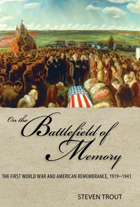
This work is a detailed study of how Americans in the 1920s and 1930s interpreted and remembered the First World War. Steven Trout asserts that from the beginning American memory of the war was fractured and unsettled, more a matter of competing sets of collective memories—each set with its own spokespeople— than a unified body of myth. The members of the American Legion remembered the war as a time of assimilation and national harmony. However, African Americans and radicalized whites recalled a very different war. And so did many of the nation’s writers, filmmakers, and painters.
Trout studies a wide range of cultural products for their implications concerning the legacy of the war: John Dos Passos’s novels Three Soldiers and 1919, Willa Cather’s One of Ours, William March’s Company K, and Laurence Stallings’s Plumes; paintings by Harvey Dunn, Horace Pippin, and John Steuart Curry; portrayals of the war in The American Legion Weekly and The American Legion Monthly; war memorials and public monuments like the Tomb of the Unknown Soldier; and commemorative products such as the twelve-inch tall Spirit of the American Doughboy statue.
Trout argues that American memory of World War I was not only confused and contradictory during the ‘20s and ‘30s, but confused and contradictory in ways that accommodated affirmative interpretations of modern warfare and military service. Somewhat in the face of conventional wisdom, Trout shows that World War I did not destroy the glamour of war for all, or even most, Americans and enhanced it for many.
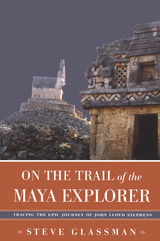
A Mesoamerican travel book from two perspectives and two centuries.
In 1839 John Lloyd Stephens, then 31 years old, and his traveling companion, artist Frederick Catherwood, disappeared into the vast rain forest of eastern Guatemala. They had heard rumors that remains of a civilization of incomparable artistic and cultural merit were moldering in the steamy lowland jungles. They braved Indian uprisings, road agents, heat, and biting insects to eventually encounter what is today known as the lost civilization of the Maya.
In 1841 Stephens published Incidents of Travel in Central America, Chiapas, and Yucatan to instant acclaim with both American and international audiences. His conversational style was fresh and crisp and his subject matter, the search for lost cities on the Central American isthmus, was romantic and adventurous. Stephens's book has been characterized as the "great American nonfiction narrative of the 19th century." Indeed, what Stephens wrote about the Maya makes a major contribution to Maya studies.
Steve Glassman retraces Stephens's route, visiting the same archaeological sites, towns, markets, and churches and meeting along the way the descendants of those people Stephens described, from mestizo en route to the cornfields to town elders welcoming the Norte Americanos. Glassman's work interlaces discussion of the history, natural environment, and architecture of the region with descriptions of the people who live and work there. Glassman compares his 20th-century experience with Stephens's 19th-century exploration, gazing in awe at the same monumental pyramids, eating similar foods, and avoiding the political clashes that disrupt the governments and economies of the area.
Stephens's books are still widely available, but his importance to literary professionals has been overlooked. With this new travelogue, Glassman reaffirms Stephens's reputation and brings his work to wider critical and public attention.

The 1830s is an overlooked period in American naval history and is usually overshadowed by the more dramatic War of 1812 and the Civil War. Nevertheless, the personnel, operations, technologies, policies, and vision of the Navy of that era, which was emerging from the “Age of Sail,” are important components of its evolution, setting it on the long path to its status as a global maritime power. On Wide Seas: The US Navy in the Jacksonian Era details the ways in which the US Navy transformed from an antiquated arm of the nation’s military infrastructure into a more dynamic and effective force that was soon to play a pivotal role in a number of national and international conflicts.
By Andrew Jackson’s inauguration in 1829, the Navy had engaged with two major powers, defended American shipping, conducted antipiracy operations, and provided a substantive, long-term overseas presence. The Navy began to transform during Jackson’s administration due in part to the policies of the administration and to the emerging officer corps, which sought to professionalize its own ranks, modernize the platforms on which it sailed, and define its own role within national affairs and in the broader global maritime commons. Jackson had built his reputation as a soldier, but he quickly recognized as president the necessity for a navy that could foster his policies. To expand American commerce, he needed a navy that could defend shipping as well as conduct punitive raids or deterrence missions.
Jackson developed a clear, concise naval strategy that policymakers and officers alike could seize and execute. He also provided a vision for the Navy, interceded to resolve naval disciplinary challenges, and directed naval operations. Also, given Jackson’s own politics, junior officers were emboldened by the populist era to challenge traditional, conservative thinking. They carried out a collective vision that coincided with the national literary movement that recognized America’s future would rely upon the Navy.
A manga artist who is afraid that she herself is slipping into a cartoon version of life, a lab technician who makes art with the cloning technology she uses at work, a sociologist hunting for the gene that makes some people want to take risks—these are some of the characters that populate the stories in Once Human. Exploring the spaces where life is shaped by science and the technologies we bring into being, Steve Tomasula’s characters often find that the harder they look at the world, the less they can say. The map that emerges from these stories charts the territory of human longing and the failure of poetry, science, and technology to explain the “why” of the world, if not its “how.”
Stories that explore the potent and captivating boundaries between the real and the imaginary
Aurelie Sheehan’s Once into the Night is a collection of 57 brief stories—a fictional autobiography made of assumed identities and what-ifs. What is the difference between fiction and a lie? These stories dwell in a netherworld between memory and the imagination, exploring the nature of truthtelling.
Here the inner life is granted pride of place with authenticity found in misremembered childhood notebooks, invisible tattoos, and the love life of icemen. Radical in its conception of story, this collection blurs the line between fiction, poetry, and essay, reconceiving contemporary autofiction in its own witty, poignant vernacular. The stories intersect with and deviate from a “provable” life—a twin distinction that becomes the source of their power.
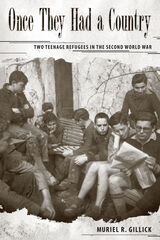
Muriel Gillick draws from a remarkable set of primary source materials, including letters, telegrams, and police records to relate the story of two teenage refugees during World War II. Once They Had a Country conveys well what it was like to establish a new life in a foreign country—over and over again and in constant fear for one’s life. The work tells of the extraordinary experiences of the author’s parents in Europe and demonstrates how citizens and the governments of Belgium, France, Switzerland, Brazil, America, China, and postwar Germany treated refugees. This story also reveals the origins of the Convention Relating to the Status of Refugees, the basis of contemporary international law affecting refugees in many countries today.
In addition to the dramatic human story it tells, this work brings the plight of refugees home to the reader—and with over 8 million refugees worldwide today, the subject of how individuals and nation states respond to these individuals is indeed timely.
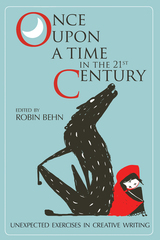
Fun and innovative exercises and prompts for creative writing students
Once Upon a Time in the Twenty-First Century: Unexpected Exercises in Creative Writing is a unique creative writing text that will appeal to a wide range of readers and writers—from grade nine through college and beyond. Successful creative writers from numerous genres constructed these exercises, including poetry, fiction, and creative nonfiction to one-act plays, song lyrics, genre fiction, travel guides, comics and beyond. The exercises use a broad range of creative approaches, aesthetics, and voices, all with an emphasis on demystifying the writing process and having fun.
Editor Robin Behn has divided the book into three writing sections: Genres and Forms, Sources and Methods, and Style and Subject. In each section, Behn offers a brief introduction which explains how to get started and specific ways to develop one’s writing. Each introduction is followed by extensive exercises that draw on literature from classic to contemporary, as well as other art forms and popular culture. Examples range from Flannery O’Connor and Langston Hughes to Allen Ginsberg and Gertrude Stein, from Jamaica Kincaid and James Joyce to Arlo Guthrie and Harryette Mullen. Integrated within the exercises are apt examples of student writings that have emerged from actual use of the exercises in both the classroom and in writing groups. The book concludes with general advice and direction on how to get published.
Based on years of hands-on experiences in the teaching of creative writing in high schools, colleges, and after-school writing clubs, this volume of exercises offers inestimable value to students and teachers in the traditional classroom, as well as a growing number of homeschoolers, those who are part of a writing club or group, and independent writers and learners of all ages.
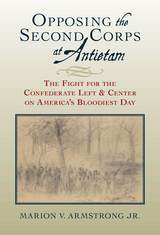
Eminent Civil War historians consider Antietam the turning point of the war. Hoping to maintain the initiative they had gained at the Second Battle of Bull Run, Confederate leaders looked to a stunning victory on Northern soil to sour Northern sentiment on the war as well as to coax European powers to recognize the fledgling Confederacy. Having examined McClellan’s command and role at Antietam in Unfurl Those Colors!, Armstrong now recounts in riveting detail Lee’s command decisions and their execution in the field, drawing on a superlative collection of first-person accounts by Confederate veterans to narrate the cataclysmic struggle between Lee and McClellan.
Armstrong sets the stage with a lively recap of the political and military events leading up to the early fall of 1862 and foreshadowing the conflagration to come on September 17. Each chapter then traces a critical section of the battle, the fight for the West Woods and the bloody engagement of the Sunken Road. Armstrong augments this collection with an exceptional set of maps, which will be valued by scholars, readers, and visitors to the battlefield. These unique maps delineate troop movements in intervals as brief as fifteen minutes, bringing to life the fluid, mutable lines that characterize the glory and horror of Antietam.
Either together with Unfurl Those Colors! or as a stand-alone account of the Confederate side of the battle, Opposing the Second Corps at Antietam provides the fullest possible understanding of the experience of Confederate soldiers at Antietam.

Foodie-scholar extraordinaire Ken Albala offers adventurous cooks a treasury of innovative recipes to transform noshing

"As befits a state in which coal, iron, and steel were the bulwarks of its industrial sector, Taft stresses that history of unionism among coal miners and iron and steel workers. Here we learn much about the experiences of the United Mine Workers of America and the Steel Workers Organizing Committee—United Steelworkers of America in the Deep South. Yet Taft does not neglect the history of other Alabama workers. Building tradesmen, railroad employees, textile millhands, and Gadsden’s rubber workers all appear in the pages of this book. Here we have the most complete and modern history of a state labor movement in the South written from the perspective of its institutional leaders." —American Historical Review

"This is a pioneering study and represents a major undertaking. . . . Stieg succeeds in making intelligible the diffuse and highly diversified nature of the historical periodical. At minimum, this title should be required reading of all history graduate students in methodology courses. Many senior historians would also benefit from a review of its contents. . . . Information and library science students specializing in scholarly communication should digest the entire study." —Journal of Education for Library and Information Science
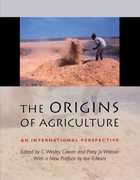
The eight case studies in this book -- each a synthesis of available knowledge about the origins of agriculture in a specific region of the globe -- enable scholars in diverse disciplines to examine humanity's transition to agricultural societies. Contributors include: Gary W. Crawford, Robin W. Dennell, and Jack R. Harlan.
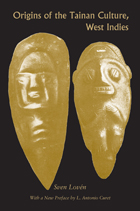
When originally published in German in 1924, this volume was hailed as the first modern, comprehensive archaeological overview of an emerging area of the world. Yes, the Caribbean islands had long been known and owned, occupied, or traded among by the economically advanced nations of the world. However, the original inhabitants—as well as their artifacts, languages, and culture—had been treated by explorers and entrepreneurs alike as either slaves or hindrances to progress, and were used or eliminated. There was no publication that treated seriously the region and the peoples until this work. In the following ten years, additional pertinent publications emerged, along with a request to translate the original into Spanish. Based on those recent publications, Loven decided to update and reissue the work in English, which he thought to be the future international language of scholarship. This work is a classic, with enduring interpretations, broad geographic range, and an eager audience.

WINNER OF THE ELIZABETH AGEE PRIZE IN AMERICAN LITERATURE
Orphic Bend: Music and Innovative Poetics explores the impact of music on recent pioneering literary practices in the United States. Adopting the myth of Orpheus as its framework, Robert L. Zamsky argues that works by Charles Bernstein, Robert Creeley, John Taggart, Tracie Morris, and Nathaniel Mackey restage ancient debates over the relationship between poetry and music even as they develop work that often sharply diverges from traditional literary forms. Opening each chapter with a consideration of the orphic roots of lyric, Zamsky integrates contemporary debates over the prospects and limitations of humanism, the meaningfulness of gesture and performance, and the nature of knowledge with the poetics of the writers under consideration, grounding his analysis in close readings of their work.
The myth of Orpheus is used as a lens throughout the book, its different facets illuminating sometimes dramatically different aspects of the shared framework of poetry and music. In the case of Bernstein, for instance, Zamsky highlights Ezra Pound’s meditations on the relationship between poetry and music (the ground upon which Pound seeks to recapture the lost possibilities of the Renaissance) and Bernstein’s incisive critique of Pound. For her part, Morris emphasizes the performative power of spoken language, foregrounding the fact that all spoken language bears cultural, communal, and personal marks of the speaker, improving an ensemble self even within the most elemental features of language. Meanwhile, in Mackey’s work, the orphic voice of the poet powerfully reaches toward an order of knowledge in which poetry and music are nearly indecipherable from one another. In this sense, music and the musicality of poetic language are the gateways for Mackey’s Gnosticism, the mechanisms of initiation into a realm, not of secrets to be learned, but of visionary knowing that continuously unfolds.
The text explores a range of musical influences on the writers under consideration, from opera to different iterations of jazz, and underscores the variety of ways in which music informs their work. Many of these writers effectively present a theory of music in their invocations of it as an inspiration for, or as an analog to, poetic practice. Zamsky’s focus on poetry and music echoes important interdisciplinary studies on literary modernism, a period for which the importance of music to literary practice is well established and extends that discussion to the contemporary context. In doing so, Orphic Bend provides an important opportunity to consider both the specific legacy of modernism, and to situate contemporary writers in broader historical contexts.
Siouan peoples who migrated from the Atlantic coastal region and settled in the central portion of the North American continent long before the arrival of Europeans are now known as Osage. Because the Osage did not possess a written language, their myths and cultural traditions were handed down orally through many generations. With time, only those elements deemed vital were preserved in the stories, and many of these became highly stylized. The resulting verbal recitations of the proper life of an Osage—from genesis myths to body decoration, from star songs to child-naming rituals, from war party strategies to medicinal herbs—constitute this comprehensive volume.
Osage myths differ greatly from the myths of Western Civilization, most obviously in the absence of individual names. Instead, “younger brother,” “the messenger,” “Little Old Men,” or a clan name may serve as the allegorical embodiment of the central player. Individual heroic feats are also missing because group life took precedence over individual experience in Osage culture.
Supplementing the work of noted ethnographer Francis La Flesche who devoted most of his professional life to recording detailed descriptions of Osage rituals, Louis Burns’s unique position as a modern Osage—aware of the white culture’s expectations but steeped in the traditions himself is able to write from an insider’s perspective.
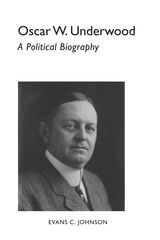
Although Oscar W. Underwood was considered a titan of his age, few American political figures have suffered such neglect as he. Except for his candidacy for the Democratic nomination in 1924, his political career is largely forgotten even in Alabama. The one place in which Underwood is well remembered is in the folklore of Congress, where he is widely regarded as a great party leader who had mastered the rules perhaps as thoroughly as any member of Congress. This mastery, together with steady work, personal magnetism, and a willingness to compromise, made him effective as chairman of the Ways and Means Committee in formulating a majority program after the Democrats seized control of the House in 1910. Pat Harrison, Underwood's lieutenant as minority leader, referred to Underwood as the "greatest natural parliamentarian, the greatest leader of a law-making body that I ever saw."
--from the Preface to Oscar W. Underwood: A Political Biography
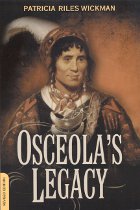
A bestselling, re-evaluation of a major Native American resistance leader. Named an Outstanding Book by the Gustavus Myers Center for the Study of Human Rights.
Born in Alabama to a Muscogee/Creek Indian mother and an English father, Osceola, born Billy Powell, came to prominence in the 1830s for resisting the U. S. government's sweep into Florida. He protested the government's Florida Indian removal, killed a pro-emigration Indian leader and then made war on the US government.
Osceola's Legacy draws on a wealth of sources, including letters, diaries, and artifacts to bring this fascinating figure and the central role he played in the Second Seminole War into vivid focus. Of particular interest is a chapter on the forensic report on Osceola's grave as well as descriptions and the illustrations of his personal property at the time of his death.
Osceola's Legacy is significant for its genealogy and archaeological study of this Native American and his interaction with the federal government during the 1800s. The catalog of photographs of Osceola portraits and his personal possessions makes this a worthwhile reference book as well.

With the poems provided in a bilingual format, the collection will be of interest both to English readers in general (this will be the first English translation of a complete Rodríguez collection not excerpted from a larger work) and to Spanish readers unable to obtain the collection in any form, given the difficulty of distributing Cuban literature outside that country.
As an introduction to the book, Dykstra has included a critical commentary. It clarifies many of the author’s references, such as details pertaining to her family history—items Dykstra learned during lengthy discussions with the author about her work—and influences about her choices in the translation.
Available directly from the University of Alabama Press is a deluxe edition that includes a handmade, limited-edition color linocut print and letterpress-printed poem signed by both Rodríguez and artist Alejandro Sainz. To purchase a copy of this unique item, select the "Other Book" above.
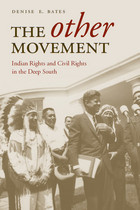
In recalling political activism in the post-World War II South, rarely does one consider the political activities of American Indians as they responded to desegregation, the passing of the Civil Rights Acts, and the restructuring of the American political party system. Native leaders and activists across the South created a social and political movement all their own, which drew public attention to the problems of discrimination, poverty, unemployment, low educational attainment, and poor living conditions in tribal communities.
While tribal-state relationships have historically been characterized as tense, most southern tribes—particularly non-federally recognized ones—found that Indian affairs commissions offered them a unique position in which to negotiate power. Although individual tribal leaders experienced isolated victories and generated some support through the 1950s and 1960s, the creation of the inter-tribal state commissions in the 1970s and 1980s elevated the movement to a more prominent political level. Through the formalization of tribal-state relationships, Indian communities forged strong networks with local, state, and national agencies while advocating for cultural preservation and revitalization, economic development, and the implementation of community services.
This book looks specifically at Alabama and Louisiana, places of intensive political activity during the civil rights era and increasing Indian visibility and tribal reorganization in the decades that followed. Between 1960 and 1990, U.S. census records show that Alabama’s Indian population swelled by a factor of twelve and Louisiana’s by a factor of five. Thus, in addition to serving as excellent examples of the national trend of a rising Indian population, the two states make interesting case studies because their Indian commissions brought formerly disconnected groups, each with different goals and needs, together for the first time, creating an assortment of alliances and divisions.
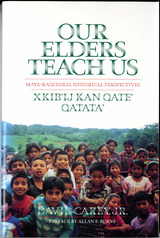
In this rich and dynamic work, David Carey Jr. provides a new perspective on contemporary Guatemalan history by allowing the indigenous peoples to speak for themselves.
Combining the methodologies of anthropology and history, Carey uses both oral interviews and meticulous archival research to construct a history of the last 130 years in Guatemala from the perspective of present-day Mayan people. His research took place over five years, including intensive language study, four summers of fieldwork, and a year-long residence in Comalapa, during which he conducted most of the 414 interviews. By casting a wide net for his interviews—from tiny hamlets to bustling Guatemala City—Carey gained insight into more than a single community or a single group of Maya.
The Maya-Kaqchikel record their history through oral tradition; thus, few written accounts exist. Comparing the Kaqchikel point of view to that of the western scholars and Ladinos who have written most of the history texts, Carey reveals the people and events important to the Maya, which have been virtually written out of the national history.
A motto of the Guatemalan organization Maya Decinio para el Pueblo Indigena (Maya Decade for the Indigenous People) is that people who do not know their past cannot build a future. By elucidating what the Kaqchikel think of their own past, Carey also illuminates the value of non-Western theoretical and methodological approaches that can be applied to the history of other peoples. Valuable to historians, anthropologists, archaeologists, or anyone interested in Mayan and Latin American studies, this book will inform as well as enchant.
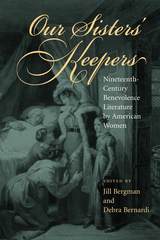
American culture has long had a conflicted relationship with assistance to the poor. Cotton Mather and John Winthrop were staunch proponents of Christian charity as fundamental to colonial American society, while transcendentalists harbored deep skepticism towards benevolence in favor of Emersonian self-reliance and Thoreau’s insistence on an ascetic life. Women in the 19th century, as these essays show, approached issues of benevolence far differently than their male counterparts, consistently promoting assistance to the impoverished, in both their acts and their writings.
Three centuries of faith, intellect, and resilience—Calvinism’s quiet power in the Southern low country.
The South Carolina low country has long been regarded—not only in popular imagination and paperback novels but also by respected scholars—as a region dominated by what earlier historians called “a cavalier spirit” and by what later historians have simply described as “a wholehearted devotion to amusement and the neglect of religion and intellectual pursuits.” Such images of the low country have been powerful interpreters of the region because they have had some foundation in social and cultural realities. It is a thesis of this study, however, that there has been a strong Calvinist community in the Carolina low country since its establishment as a British colony and that this community (including in its membership both whites and after the 1740s significant numbers of African Americans) contradicts many of the images of the "received version" of the region. Rather than a devotion to amusement and a neglect of religion and intellectual interests, this community has been marked throughout most of its history by its disciplined religious life, its intellectual pursuits, and its work ethic.
Normal0falsefalsefalseEN-USX-NONEX-NONEMicrosoftInternetExplorer4

Where ghosts speak and memory listens, nothing becomes everything.
The ghosts—literal and figurative—that drive our deepest impulses, disturb our most precious memories, and haunt the passages of our daily lives are present in this collection of sublime meditations on the unbelievable, the coincidental, and the apparitional. Often containing reflections on the art of storytelling, Caryl Pagel’s essays blend memoir, research, and reflection, and are driven by a desire to observe connections between the visual and the invisible. The narrator of Pagel’s essays explores each enigma or encounter (a football coach’s faked death, the faces of women walking, historical accounts of hallucinations, a city’s public celebration gone wrong) as an intellectual detective ascending a labyrinthine tower of clues in pursuit of a solution to an unreachable problem: always curious, and with a sense of profound wonder.
Out of Nowhere Into Nothing is a sprawling, highly associative consideration of the ways in which the observed material world recalls us to larger narrative and aesthetic truths. Interspersed with documentary-style photographs, Pagel’s first collection of prose is a radiant, obsessive investigation into the mysteries at the center of our seemingly mundane lives.
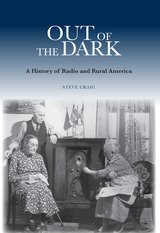
Out of the Dark is a comprehensive study of radio's impact on rural America in the three decades between its inception and the arrival of television.
In the 1920s, the USDA asked farmers about the impact the new medium of radio was having on their lives. One farmer summed it up this way: “Radio brought me out of the dark.” The coming of radio broadcasting had a profound impact on the lives of many Americans, but none more so than those who lived in rural America. Radio provided isolated families with something they had never known before--an instantaneous connection with news, entertainment, and the rapidly evolving lifestyles and mores of the entire nation.
This study documents the social changes radio helped bring about, such as the effects of advertising and entertainment in creating a more uniform set of values across the nation and, consequently, a stronger national identity. Out of the Dark also addresses the political and economic impact the rural audience had on the development of the broadcasting industry and its regulation; the role played by the USDA in the promotion and development of rural radio; and an analysis of how radio entertainment and advertising contributed to the growing demand for consumer goods among rural families, thus speeding their entry into the modern American lifestyle.
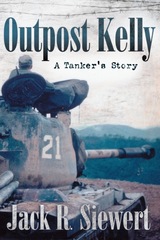
Heavy rains turned the mountainous terrain around Outpost Kelly into shin-deep mud and muck. At the height of the fighting, Siewert was able to bring to bear the guns of only one of his five tanks against the enemy. Forced to abandon traditional tank warfare doctrine, he improvised. Allowing members of the 15th Infantry to retake Outpost Kelly, Siewert offers an excellent analysis of how theory and experience come together in a point-of-the-spear military situation.
Outpost Kelly also paints a fascinating picture of the type of fighting, often overlooked, that characterized the second and third years of the Korean War. With truce talks proceeding in Panmunjom, both sides fought to claim incremental pieces of real estate along the demarcation line between North and South.
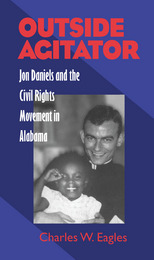
Outside Agitator tells the dramatic, largely forgotten storybehind the 1965 killing of civil rights worker Jonathan Myrick "Jon" Daniels in Lowndes County, Alabama, detailing the lives of the killer and the victim. A white Episcopal seminary student from New Hampshire, Jon Daniels helped organize blacks in Selma during the events that led to the Selma-to-Montgomery march. In August 1965 he was fatally shot in neighboring Lowndes County by Tom Coleman, a highway department engineer and steadfast segregationist, who was later acquitted by an all-white jury.
Lowndes County was a bastion of white minority dominance. For half a century, no black had voted or served on a jury there. Known for the violence used by whites to maintain their control, "bloody" Lowndes presented Daniels and other civil rights workers with almost insurmountable obstacles. Tom Coleman, a Lowndes County native, represented the consensus among local whites that violent resistance to racial change was justified. To defend his community and to prevent change, he resorted to violence against "outside agitators."
Following the deaths of a score of other civil rights workers, the killing of Jon Daniels was in many ways the last atrocity of the first, southern, nonviolent phase of the Civil Rights movement. This exploration of how Daniels and Coleman came to be at opposite ends of a shotgun outside a county store captures the mechanics and emotions of forces promoting and resisting change in southern race relations. Charles Eagles reminds us that however representative Daniels and Coleman may have been of larger forces, they were nevertheless real individuals with distinctive personalities caught up in specific circumstances.
Winner of the Alabama Library Author Award
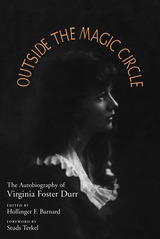
Outside the Magic Circle tells the remarkable story of Virginia Foster Durr, a southern white woman born into privilige who (along with her husband Clifford Durr, a lawyer best known for defending Rosa Parks), nonetheless devoted her life to Civil Rights activism.
Outside the Magic Circle is the powerful and deeply personal autobiography of Virginia Foster Durr, a Southern woman who defied the expectations of her privileged upbringing to become one of the most courageous voices for civil rights and social justice in 20th-century America. Born into a wealthy, white Alabama family, Durr was raised in a world steeped in segregation and conservative values. Yet through a journey marked by moral reckoning, intellectual awakening, and political activism, she stepped outside the “magic circle” of Southern gentility to confront the injustices that shaped her world.
With a foreword by renowned oral historian Studs Terkel, this memoir captures Durr’s transformation from reluctant conformist to outspoken advocate. Her story spans decades of American history—from the Great Depression and New Deal politics to the McCarthy era and the Civil Rights Movement. Alongside her husband, attorney Clifford Durr, Virginia became a key figure in progressive circles, working to abolish the poll tax, defend civil liberties, and support Black activists in the segregated South.
Told in Durr’s own voice, the narrative is rich with anecdotes, reflections, and encounters with historical figures such as Eleanor Roosevelt, Rosa Parks, and Martin Luther King Jr. It is both a personal reckoning and a political document, offering rare insight into the inner conflicts of white Southern liberals and the cost of dissent in a deeply divided society.
Outside the Magic Circle is more than a memoir—it is a testament to the power of conscience, the courage of transformation, and the enduring fight for justice. It remains a vital resource for readers interested in civil rights history, feminist thought, and the complexities of Southern identity.

READERS
Browse our collection.
PUBLISHERS
See BiblioVault's publisher services.
STUDENT SERVICES
Files for college accessibility offices.
RECENTLY PUBLISHED



UChicago Accessibility Resources
home | accessibility | search | about | contact us
BiblioVault ® 2001 - 2025
The University of Chicago Press