
 A SCHOLARLY BOOK REPOSITORY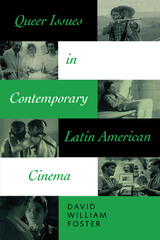
Viewing contemporary Latin American films through the lens of queer studies reveals that many filmmakers are exploring issues of gender identity and sexual difference, as well as the homophobia that attempts to defeat any challenge to the heterosexual norms of patriarchal culture. In this study of queer issues in Latin American cinema, David William Foster offers highly perceptive queer readings of fourteen key films to demonstrate how these cultural products promote the principles of an antiheterosexist stance while they simultaneously disclose how homophobia enforces the norms of heterosexuality.
Foster examines each film in terms of the ideology of its narrative discourse, whether homoerotic desire or a critique of patriarchal heterosexism and its implications for Latin American social life and human rights. His analyses underscore the difficulties involved in constructing a coherent and convincing treatment of the complex issues involved in critiquing the patriarchy from perspectives associated with queer studies. The book will be essential reading for everyone working in queer studies and film studies.
The films discussed in this book are:
- De eso no se habla (I Don't Want to Talk about It)
- El lugar sin límites (The Place without Limits)
- Aqueles dois (Those Two)
- Convivencia (Living Together)
- Conducta impropia (Improper Conduct)
- The Disappearance of García Lorca
- La Virgen de los Sicarios (Our Lady of the Assassins)
- Doña Herlinda y su hijo (Doña Herlinda and Her Son)
- No se lo digas a nadie (Don't Tell Anyone)
- En el paraíso no existe el dolor (There Is No Suffering in Paradise)
- A intrusa (The Interloper)
- Plata quemada (Burnt Money)
- Afrodita (Aphrodite)
- Fresa y chocolate (Strawberry and Chocolate)

Challenging the myths about LGBTQ+ kids and bullying: what it means to protect queer kids in schools
Conversations around LGBTQ+ kids in school have become dominated by the subject of bullying. Although this may be due to good-faith efforts to protect vulnerable students, Queer Kids and Social Violence demonstrates that a focus on bullying as acts of individual peer aggression fails to address the social norms that perpetuate the violence. Considering the broader contexts of bullying, this volume offers ways to engage with queer youth that are both more humanizing and more likely to create sustainable change.
Essays by leading international scholars analyze how bullying discourse shapes policy and practice, using in-depth case studies, research findings, and examinations of political policy to guide readers through the various forms of violence, identity regulation, and identity erasure in schools. Offering conversation-shifting interventions to respond to a difficult and frightening political moment for LGBTQ+ youth, Queer Kids and Social Violence is a rounded, empathetic picture that does queer youth justice and points the way toward safer schools for all.
Contributors: Ana María Amigo-Ventureira, Durell M. Callier, Cristyn Davies, Renée DePalma, Tania Ferfolja, Jessica Fields, Elliot Fonarev, Jen Gilbert, Tristan Gleason, Dominique C. Hill, Angela Ingram, Laurie Gutmann Kahn, Cris Mayo, Mollie McQuillan, Aoife Neary, C.J. Pascoe, Victoria Rawlings, EJ Renold, Jessica Ringrose, Kerry H. Robinson, Dorte Marie Søndergaard, Cris Townley, Jacqueline Ullman, Boni Wozolek.
Retail e-book files for this title are screen-reader friendly with images accompanied by short alt text and/or extended descriptions.

Interweaving the narratives of multiple family members, including parents and siblings of her queer and trans informants, Amy Brainer analyzes the strategies that families use to navigate their internal differences. In Queer Kinship and Family Change in Taiwan, Brainer looks across generational cohorts for clues about how larger social, cultural, and political shifts have materialized in people’s everyday lives. Her findings bring light to new parenting and family discourses and enduring inequalities that shape the experiences of queer and heterosexual kin alike.
Brainer’s research takes her from political marches and support group meetings to family dinner tables in cities and small towns across Taiwan. She speaks with parents and siblings who vary in whether and to what extent they have made peace with having a queer or transgender family member, and queer and trans people who vary in what they hope for and expect from their families of origin. Across these diverse life stories, Brainer uses a feminist materialist framework to illuminate struggles for personal and sexual autonomy in the intimate context of family and home.
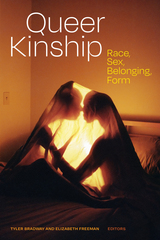
Contributors. Aqdas Aftab, Leah Claire Allen, Teagan Bradway, Juliana Demartini Brito, Judith Butler, Dilara Çalışkan, Christopher Chamberlin, Aobo Dong, Brigitte Fielder, Elizabeth Freeman, John S. Garrison, Nat Hurley, Joseph M. Pierce, Mark Rifkin, Poulomi Saha, Kath Weston

Contributors. Pei Jean Chen, John (Song Pae) Cho, Chung-kang Kim, Todd A. Henry, Merose Hwang, Ruin, Layoung Shin, Shin-ae Ha, John Whittier Treat
“An outstanding addition to the growing body of scholarship around queer imagery.”
—Jim Van Buskirk, The Bay Area Reporter
“A tour de force. . . . A profound collective story of creativity, joy and resistance.”
—Emma Jacob, Aesthetica Magazine
“Potent and inspiring. . . . An empowering photography retrospective that reflects American queer communities.”
—Aleena Ortiz, Foreword Reviews
“A deeply significant and beautifully produced volume."
—All About Photo.com
“Eye-catching."
—Matthew Wexler, Queerty.com
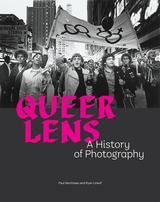
Photography’s power to capture a subject—representing reality, or a close approximation—has inherently been linked with the construction and practice of identity. Since the camera’s invention in 1839, and despite periods of severe homophobia, the photographic art form has been used by and for individuals belonging to dynamic LGBTQ+ communities, helping shape and affirm queer culture and identity across its many intersections.
Queer Lens explores this transformative force of photography, which has played a pivotal role in increasing queer visibility. Lively essays by scholars and artists explore myriad manifestations of queer culture, both celebrating complex interpretations of people and relationships and resisting rigid definitions. Featuring a rich selection of images—including portraits of queer individuals, visual records of queer kinship, and documentary photographs of early queer groups and protests—this volume investigates the medium’s profound role in illuminating the vibrant tapestry of LGBTQ+ communities.
This volume is published to accompany an exhibition on view at the J. Paul Getty Museum at the Getty Center from June 17 to September 28, 2025.
Queer Livability: German Sexual Sciences and Life Writing will be of interest to anyone who wants to learn more about LGBTQ+ history and literature. It also provides a fascinating insight into the historical roots for our thinking about gender and sexuality today. The book will be of relevance to an academic readership of students and faculty in German studies, literary studies, European history, and the interdisciplinary fields of gender and sexuality studies, medical humanities, and the history of sexuality.
Cyril's story is Matt Houlbrook's point of entry into the queer worlds of early twentieth-century London. Drawing on previously unknown sources, from police reports and newspaper exposés to personal letters, diaries, and the first queer guidebook ever written, Houlbrook here explores the relationship between queer sexualities and modern urban culture that we take for granted today. He revisits the diverse queer lives that took hold in London's parks and streets; its restaurants, pubs, and dancehalls; and its Turkish bathhouses and hotels—as well as attempts by municipal authorities to control and crack down on those worlds. He also describes how London shaped the culture and politics of queer life—and how London was in turn shaped by the lives of queer men. Ultimately, Houlbrook unveils the complex ways in which men made sense of their desires and who they were. In so doing, he mounts a sustained challenge to conventional understandings of the city as a place of sexual liberation and a unified queer culture.
A history remarkable in its complexity yet intimate in its portraiture, Queer London is a landmark work that redefines queer urban life in England and beyond.
Winner of History Today’s Book of the Year Award, 2006

At the centre of this book is the concept of 'queer regeneration.' Haritaworn sees the queer lover as a transitional object which allows the present-day neoliberal regime to make punishment and neglect appear as signs of care and love for diversity. Alongside this shift, in the wake of older moral panics over crime, violence, patriarchy, integration, and segregation, the new Other, that is, the homophobic migrant appears. To understand this transition, Queer Lovers and Hateful Others looks at the environments in which queer bodies have become worthy of protection, and the everyday erasures that shape life in the inner city, and how queer activists actively seek out and dispel the myths of sites of nostalgia for the 'invented traditions' of women-and-gay-friendliness.
Haritaworn guides the reader through a rich archive of media, arts, policy, and activism, including posters, newspaper reports, hate crime action plans, urban projects, psychological studies, demonstrations, kiss-ins, political speeches, and films. In the process, queer lovers, drag kings, criminalised youth, homosexuals persecuted under National Socialism, and other figures of degeneracy and regeneration appear on a shared plane, where new ways of sharing space become imaginable.
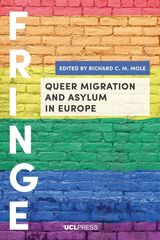
Europe is a popular destination for LGBTQ people seeking to escape discrimination and persecution. Yet, while European institutions have done much to promote the legal equality of sexual minorities and a number of states pride themselves on their acceptance of sexual diversity, the image of European tolerance is often quite different from the reality faced by LGBTQ migrants and asylum seekers. Queer Migration and Asylum in Europe brings together scholars from politics, sociology, urban studies, anthropology, and law to analyze how and why queer individuals migrate to Europe, as well as the legal, social, and political frameworks they are forced to navigate in the destination societies. The subjects covered include LGBTQ Latino migrants in queer and diasporic spaces in London; the diasporic consciousness of queer Polish, Russian, and Brazilian migrants in Berlin; the role of the Council of Europe in shaping legal and policy frameworks relating to queer migration and asylum; the challenges facing bisexual asylum seekers; queer asylum and homonationalism in the Netherlands; and the role of space, faith, and LGBTQ organizations in Germany, Italy, the UK, and France in supporting queer asylum seekers.
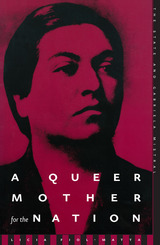
Chilean writer Gabriela Mistral (1889-1957), the first Latin American to win theNobel Prize for Literature, was a poetic idol for generations of Latin Americans who viewed her as Womanhood incarnate, the national schoolteacher-mother. How this distinctly masculine woman who never gave birth came to occupy this role, and what Mistral’s image, poetry, and life have to say about the relations-and realities-of race, gender, and sexual politics in her time, are the questions Licia Fiol-Matta pursues in this book, recreating the story of a woman whose misrepresentation is at least as intriguing, and as instructive, as her fame.
A Queer Mother for the Nation weaves a nuanced understanding of how Mistral cooperated with authority and fashioned herself as the figure of Motherhood in collaboration with the state. Drawing on Mistral’s little-known political and social essays, her correspondence and photographs, Fiol-Matta reconstructs Mistral’s relationship to state politics. Her work questions the notion of queer bodies as outlaws, and insists on the many ways in which queer subjects have participated in and sustained the normative discourses they seem to rebel against
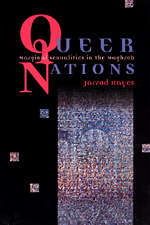
In this incisive postcolonial study, Jarrod Hayes uses literary analysis to examine how Francophone novelists from the Maghreb engaged in a diametric nation-building project. Their works imagined a diverse nation peopled by those who were excluded by the dominant political discourses, especially those who did not conform to traditional sexual norms. By incorporating representations of marginal sexualities, sexual dissidence, and gender insubordination, Maghrebian novelists imagined an anticolonial struggle that would result in sexual liberation and envisioned nations that could be defined and developed inclusively.
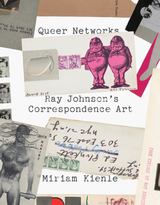
How the queer correspondence art of Ray Johnson disrupted art world conventions and anticipated today’s highly networked culture
Once regarded as “New York’s most famous unknown artist,” Ray Johnson was a highly visible outlier in the art world, his mail art practice reflecting the changing social relations and politics of queer communities in the 1960s. A vital contribution to the growing scholarship on this enigmatic artist, Queer Networks analyzes how Johnson’s practice sought to undermine the dominant mechanisms of the art market and gallery system in favor of unconventional social connections.
Utilizing the postal service as his primary means of producing and circulating art, Johnson cultivated an international community of friends and collaborators through which he advanced his idiosyncratic body of work. Applying both queer theory and network studies, Miriam Kienle explores how Johnson’s radical correspondence art established new modes of connectivity that fostered queer sensibilities and ran counter to the conventional methods by which artists were expected to develop their reputation.
While Johnson was significantly involved with the Pop, conceptual, and neo-Dada art movements, Queer Networks crucially underscores his resistance to traditional art historical systems of categorization and their emphasis on individual mastery. Highlighting his alternative modes of community building and playful antagonism toward art world protocols, Kienle demonstrates how Ray Johnson’s correspondence art offers new ways of envisioning togetherness in today’s highly commodified and deeply networked world.
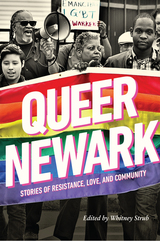
Histories of gay and lesbian urban life typically focus on major metropolitan areas like San Francisco and New York, opportunity-filled destinations for LGBTQ migrants from across the country. Yet there are many other queer communities in economically depressed cities with majority Black and Hispanic populations that receive far less attention. Though just a few miles from New York, Newark is one of these cities, and its queer histories have been neglected—until now.
Queer Newark charts a history in which working-class people of color are the central actors and in which violence, poverty, and homophobia could never suppress joy, resistance, love, and desire. Drawing from rare archives that range from oral histories to vice squad reports, this collection’s authors uncover the sites and people of Newark’s queer past in bars, discos, ballrooms, and churches. Exploring the intersections of class, race, gender, and sexuality, they offer fresh perspectives on the HIV/AIDS epidemic, community relations with police, Latinx immigration, and gentrification, while considering how to best tell the rich and complex stories of queer urban life. Queer Newark reveals a new side of New Jersey’s largest city while rewriting the history of LGBTQ life in America.
The mass shooting at a queer Latin Night in Orlando in July 2016 sparked a public conversation about access to pleasure and selfhood within conditions of colonization, violence, and negation. Queer Nightlife joins this conversation by centering queer and trans people of color who apprehend the risky medium of the night to explore, know, and stage their bodies, genders, and sexualities in the face of systemic and social negation. The book focuses on house parties, nightclubs, and bars that offer improvisatory conditions and possibilities for “stranger intimacies,” and that privilege music, dance, and sexual/gender expressions. Queer Nightlife extends the breadth of research on “everynight life” through twenty-five essays and interviews by leading scholars and artists. The book’s four sections move temporally from preparing for the night (how do DJs source their sounds, what does it take to travel there, who promotes nightlife, what do people wear?); to the socialities of nightclubs (how are social dance practices introduced and taught, how is the price for sex negotiated, what styles do people adopt to feel and present as desirable?); to the staging and spectacle of the night (how do drag artists confound and celebrate gender, how are spaces designed to create the sensation of spectacularity, whose bodies become a spectacle already?); and finally, how the night continues beyond the club and after sunrise (what kinds of intimacies and gestures remain, how do we go back to the club after Orlando?).
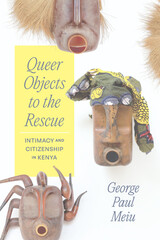
Campaigns calling on police and citizens to purge their countries of homosexuality have taken hold across the world. But the “homosexual threat” they claim to be addressing is not always easy to identify. To make that threat visible, leaders, media, and civil society groups have deployed certain objects as signifiers of queerness. In Kenya, for example, bead necklaces, plastics, and even diapers have come to represent the danger posed by homosexual behavior to an essentially “virile” construction of national masculinity.
In Queer Objects tothe Rescue, George Paul Meiu explores objects that have played an important and surprising role in both state-led and popular attempts to rid Kenya of various imagined threats to intimate life. Meiu shows that their use in the political imaginary has been crucial to representing the homosexual body as a societal threat and as a target of outrage, violence, and exclusion, while also crystallizing anxieties over wider political and economic instability. To effectively understand and critique homophobia, Meiu suggests, we must take these objects seriously and recognize them as potential sources for new forms of citizenship, intimacy, resistance, and belonging.
A new paradigm for queer theory
Michael Snediker offers a much-needed counterpoint to queer theoretical discourse, which has long privileged melancholy, self-shattering, incoherence, shame, and the death drive. Recovering the forms of positive affect that queer theory has jettisoned, Snediker insists that optimism must itself be taken beyond conventional tropes of hope and futurity and reimagined as necessary for critical engagement.
Through fresh, perceptive, and sensitive readings of the poetry of Emily Dickinson, Hart Crane, Jack Spicer, and Elizabeth Bishop, Snediker reveals that each of these poets demonstrated an interest in the durability of positive affects. Dickinson, Snediker argues, expresses joy and grace as much as pain and loss, and the myriad cryptic smiles in Hart Crane’s White Building contradict prevailing narratives of Crane’s apocryphal literary failures and eventual suicide. Snediker’s ambitious and sophisticated study, informed by thinkers such as Winnicott, Deleuze, and de Man, both supplements and challenges the work of queer theory’s leading figures, including Judith Butler, Leo Bersani, Eve Kosofsky Sedgwick, and Lee Edelman. Queer Optimism revises our understanding of queer love and affiliation, examining Spicer’s serial collusion with matinee idol Billy the Kid as well as the critically neglected force of Bishop’s epistolary and poetic reparations of the drowned figure of Hart Crane. In doing so, Snediker persuasively reconceives a theoretical field of optimism that was previously unavailable to scrupulous critical inquiry and provides a groundbreaking approach to modern American poetry and poetics.
A brilliantly savage story, Queer People is, according to Budd Schulberg, “a racy testament to an era as totally vanished as the civilization of the Aztecs,” and if not the Hollywood novel is “at least a truly seminal work.”
Today’s readers will recognize in this long-forgotten Hollywood novel the seeds of three longer-lived ones, The Day of the Locust, What Makes Sammy Run?,and The Last Tycoon. They may also recognize Whitey, the hero of the Grahams’ novel, as a forerunner of F. Scott Fitzgerald’s Pat Hobby.
The central figure in the novel is an archetypal newspaper reporter who drifts to Hollywood. Whitey discovers the social microcosm of the studio-people, and finds himself in his element. He penetrates strange places and encounters queer people—the story conference, the three-day party, the titans and the moguls. When a murder ends his interlude he leaves Hollywood as casually as he discovered it.
Originally published in 1930 Queer People was a scandalous roman à clef, irreverent to the “industry,” and totally amoral—qualities lacking in later Hollywood fiction. Hence itis at once an important social document and an exciting original work.
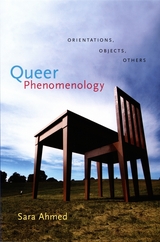
Ahmed proposes that a queer phenomenology might investigate not only how the concept of orientation is informed by phenomenology but also the orientation of phenomenology itself. Thus she reflects on the significance of the objects that appear—and those that do not—as signs of orientation in classic phenomenological texts such as Husserl’s Ideas. In developing a queer model of orientations, she combines readings of phenomenological texts—by Husserl, Heidegger, Merleau-Ponty, and Fanon—with insights drawn from queer studies, feminist theory, critical race theory, Marxism, and psychoanalysis. Queer Phenomenology points queer theory in bold new directions.
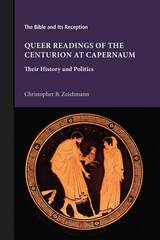
The first-ever monograph on the history of queer biblical interpretation of a controversial biblical passage
Since the 1950s, homoerotic readings of the pericope in which Jesus heals a Roman centurion’s slave have been built upon three of the account’s features: the specific Greek word pais, which can refer to youth, slave, or the junior partner in a sexual relationship between two men; Luke’s characterization of the young man as “dear” (entimos) to the centurion; and commonplace homoeroticism in the Roman army. Rather than affirming or denying the historical reality of a sexual relationship between the centurion and the young man, Christopher B. Zeichmann instead traces the shifting patterns of queer readings of the text and the influences of the sexual, political, and theological discourses of late twentieth- and early twenty-first-century Europe, the United States, and Australia. Readers will see how distinct political contexts have led interpreters to find very different meanings about the sexual subtexts of this story.
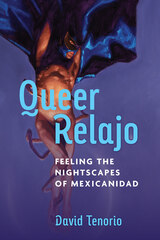
Combining readings of film, digital media, and performance with drag autoethnography, Queer Relajo quite literally plays with how relajo (or playfulness) structures the spaces of queer nightlife in urban contexts by revealing how nighttime intimacy can minimize the paralyzing effects of violence and precarity in a neoliberal Mexico. Considering the political implications of when a queer/trans person is present at night, Tenorio argues that queer feelings of play are not only essential to sexual liberation, but also resist neoliberal commodification and heteronormative extraction.

Highlighting cultural and political resistance within Puerto Rico’s gay, lesbian, bisexual, and transgender subcultures, La Fountain-Stokes pays close attention to differences of gender, historical moment, and generation, arguing that Puerto Rican queer identity changes over time and is experienced in very different ways. He traces an arc from 1960s Puerto Rico and the writings of Luis Rafael Sánchez to New York City in the 1970s and 1980s (Manuel Ramos Otero), Philadelphia and New Jersey in the 1980s and 1990s (Luz María Umpierre and Frances Negrón-Muntaner), and Chicago (Rose Troche) and San Francisco (Erika López) in the 1990s, culminating with a discussion of Arthur Avilés and Elizabeth Marrero’s recent dance-theater work in the Bronx.
Proposing a radical new conceptualization of Puerto Rican migration, this work reveals how sexuality has shaped and defined the Puerto Rican experience in the United States.
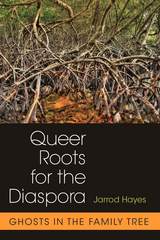
The central argument of Queer Roots for the Diaspora is that, in spite of these debates, ultimately the desire for roots contains the “roots” of its own deconstruction. The book considers alternative root narratives that acknowledge the impossibility of returning to origins with any certainty; welcome sexual diversity; acknowledge their own fictionality; reveal that even a single collective identity can be rooted in multiple ways; and create family trees haunted by the queer others patrilineal genealogy seems to marginalize.
The roots narratives explored in this book simultaneously assert and question rooted identities within a number of diasporas—African, Jewish, and Armenian. By looking at these together, one can discern between the local specificities of any single diaspora and the commonalities inherent in diaspora as a global phenomenon. This comparatist, interdisciplinary study will interest scholars in a diversity of fields, including diaspora studies, postcolonial studies, LGBTQ studies, French and Francophone studies, American studies, comparative literature, and literary theory.

The central argument of Queer Roots for the Diaspora is that, in spite of these debates, ultimately the desire for roots contains the “roots” of its own deconstruction. The book considers alternative root narratives that acknowledge the impossibility of returning to origins with any certainty; welcome sexual diversity; acknowledge their own fictionality; reveal that even a single collective identity can be rooted in multiple ways; and create family trees haunted by the queer others patrilineal genealogy seems to marginalize.
The roots narratives explored in this book simultaneously assert and question rooted identities within a number of diasporas—African, Jewish, and Armenian. By looking at these together, one can discern between the local specificities of any single diaspora and the commonalities inherent in diaspora as a global phenomenon. This comparatist, interdisciplinary study will interest scholars in a diversity of fields, including diaspora studies, postcolonial studies, LGBTQ studies, French and Francophone studies, American studies, comparative literature, and literary theory.
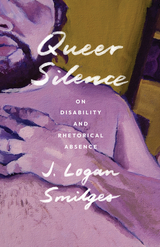
Championing the liberatory potential of silence to address the fraught disability politics of queerness
In queer culture, silence has been equated with voicelessness, complicity, and even death. Queer Silence insists, however, that silence can be a generative and empowering mode of survival. Triangulating insights from queer studies, disability studies, and rhetorical studies, J. Logan Smilges explores what silence can mean for people whose bodyminds signify more powerfully than their words.
Queer Silence begins by historicizing silence’s negative reputation, beginning with the ways homophile activists rejected medical models pathologizing homosexuality as a disability, resulting in the silencing of disability itself. This silencing was redoubled by HIV/AIDS activism’s demand for “out, loud, and proud” rhetorical activities that saw silence as capitulation.
Reading a range of cultural artifacts whose relative silence has failed to attract queer attachment, from anonymous profiles on Grindr to ex-gays to belated gender transitions to disability performance art, Smilges argues for silence’s critical role in serving the needs of queers who are never named as such. Queer Silence urges queer activists and queer studies scholars to reconcile with their own ableism by acknowledging the liberatory potential of silence, a mode of engagement that disattached queers use every day for resistance, sociality, and survival.
Retail e-book files for this title are screen-reader friendly with images accompanied by short alt text and/or extended descriptions.
Cover alt text: Background detail of a painting on canvas shows a partial view of the upper body and face of a figure, bearded and naked; title in painted script.
The selections presented here are by turns entertaining, informative, sophisticated, and polemical, reflecting the author's dual citizenship as rigorous scholar and engaging theater critic. This book also provides a model for a kind of queer historical materialism that will prove useful to a wide range of disciplines, including theater and performance, gender and sexuality, queer/gay/lesbian/transgender studies, American studies, and popular culture.
David Savran is Professor of Theater, the Graduate Center, the City University of New York, and author of Cowboys, Communists, and Queers and Taking It Like a Man.

Queer Subjects in Modern Japanese Literature: Male Love, Erotics, and Intimacy, 1886–2014 is an anthology of translated Japanese literature about men behaving lovingly, erotically, and intimately with other men. Covering more than 125 years of modern and contemporary Japanese history, this book aims to introduce a diverse array of authors to an English-speaking audience and provide further context for their works. While no anthology can comprehensively represent queer Japanese literature, these selections nonetheless expand our understanding of queerness in Japanese culture.

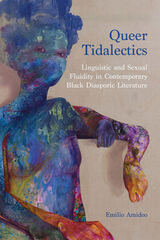
Amideo engages and extends the work of Black queer studies, Oceanic studies, ecocriticism, phenomenology, and new materialism through the theorizations of Sara Ahmed, Omise’eke Natasha Tinsley, M. Jacqui Alexander, Édouard Glissant, José Esteban Muñoz, and Edward Kamau Brathwaite, among others. Ambitious in scope and captivating to read, Queer Tidalectics brings Caribbean writers like Glissant and Brathwaite into queer literary analysis—a major scholarly contribution.
John Leo and Dana Heller Award for Best Single Work, Anthology, Multi-Authored or Edited Book in LGBTQ Studies, Popular Culture Association (PCA), 2020
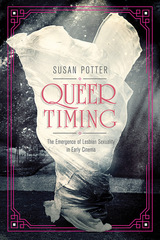
In Queer Timing, Susan Potter offers a counter-history that reorients accepted views of lesbian representation and spectatorship in early cinema. Potter sees the emergence of lesbian figures as only the most visible but belated outcome of multiple sexuality effects. Early cinema reconfigured older erotic modalities, articulated new--though incoherent--sexual categories, and generated novel forms of queer feeling and affiliation.
Potter draws on queer theory, silent film historiography, feminist film analysis, and archival research to provide an original and innovative analysis. Taking a conceptually oriented approach, she articulates the processes of filmic representation and spectatorship that reshaped, marginalized, or suppressed women's same-sex desires and identities. As she pursues a sense of "timing," Potter stages scenes of the erotic and intellectual encounters shared by historical spectators, on-screen figures, and present-day scholars. The result is a daring revision of feminist and queer perspectives that foregrounds the centrality of women's same-sex desire to cinematic discourses of both homo- and heterosexuality.

Essays explore a range of geographical areas and cover topics that include an autoethnographic account of a queer traveler in Cuba, the development of gay and lesbian tourism in Madrid and Mexico, and gay and lesbian tourist events such as World Pride 2001 in Rome. The collection also includes an essay focusing on lesbian tourism—a study of the history of lesbian tourism on Eresos, Lesvos.
Contributors. Lionel Cantú, Gabriel Giorgi, Venetia Kantsa, Lawrence La Fountain-Stokes, Michael Luongo, Kevin Markwell, Jasbir Kaur Puar, Dereka Rushbrook


In the first section of this issue, Race and Queer Sexuality, international authors address topics ranging from Asian American queer identity and its relation to transnational and diasporic concerns to homophobia and its relationship to black nationalism in South Africa. Other subjects include, sexuality, race, and public space; lesbian pedagogy and the nation in Latin America; and an analysis of cross-race and cross-gender drag in the work of L.A. drag queen Vaginal Creme Davis. In the second section, The Politics of Transgression, contributors focus on transgression and its relationship to power and history. One essay explores Irish immigration in the U.S. and the Irish female body as a figure of transnational contagion and blood panic, while another focuses on Oscar Wilde, race, and queer sexuality. Other pieces include a meditation on British filmmaker and writer Derek Jarman’s film, Blue.
Race and Queer Sexuality confronts the limitations of prior work in queer theory while providing a starting point for discussion of race, queer sexuality, and the politics of transgression that will be part of queer theory of the future.
Contributors. Judith Butler, David Eng, Licia Fiol-Mata, Judith Halberstam, Phillip Brian Harper, Neville Hoad, Rachel Holmes, Don Kulick, Tim Lawrence, Rosalind Morris, José Esteban Muñoz, Ben Singer, David Valentine, Priscilla Wald, Riki Anne Wilchins
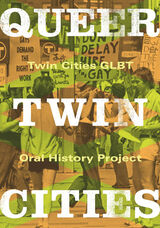
A pioneering look at the queer history, politics, and spaces of the Twin Cities
The Twin Cities is home to one of the largest and most vital GLBT populations in the nation—and one of the highest percentages of gay residents in the country. Drawn from the pioneering work of the Twin Cities GLBT Oral History Project—a collective organization of students, scholars, and activists devoted to documenting and interpreting the lives of GLBT people in Minneapolis and St. Paul—Queer Twin Cities is a uniquely critical collection of essays on Minnesota’s vibrant queer communities, past and present.
A rich blend of oral history, archival research, and ethnography, Queer Twin Cities uses sexuality to chart connections between people’s lives in Minnesota. Topics range from turn-of-the-century Minneapolis amid moral reform—including the highly publicized William Williams murder trial and efforts to police Bridge Square, aka ‘skid row’—to northern Minnesota and the importance of male companionship among lumber workers, and to postwar life, when the increased visibility of queer life went hand in hand with increased regulation, repression, and violence. Other essays present a portrait of early queer spaces in the Twin Cities, such as Kirmser’s Bar, the Viking Room, and the Persian Palms, and the proliferation of establishments like the Dugout and the 19 Bar. Exploring the activism of GLBT Two-Spirit indigenous people, the antipornography movements of the 1980s, and the role of gay men in the gentrification of Minneapolis neighborhoods, this volume brings the history of queer life and politics in the Twin Cities into fascinating focus.Engaging and revelatory, Queer Twin Cities offers a critical analysis of local history and community and fills a glaring omission in the culture and history of Minnesota, looking not only to a remarkable past but to our collective future.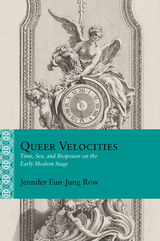
The twin innovations of precise, portable timepieces and the development of the theater as a state institution together ignited new types of embodiments, orderly and disorderly pleasures, and normative and wayward rhythms of life. Row leverages a painstakingly formalist and rhetorical analysis of tragedies by Jean Racine and Pierre Corneille to show how the staging of delay or haste can critically interrupt the normative temporalities of marriage, motherhood, mourning, or sovereignty—the quotidian rhythms and paradigms so necessary for the biopolitical management of life. Row’s approach builds on the queer turn to temporality and Elizabeth Freeman’s notion of the chronobiopolitical to wager that queerness can also be fostered by the sensations of disruptive speed and slowness. Ultimately, Row suggests that the theater not only contributed to the glitter of Louis XIV’s absolutist spectacle but also ignited new forms of knowing and feeling time, as well as new modes of loving, living, and being together.

Queer Wars limns this new gay right, offering the first extended consideration of gay conservatism and its more trenchant critics. Here celebrated historian of gay culture Paul Robinson draws particular attention to three features of this new political movement. First, he explores how gay conservatives have rejected the idea that commitment to gay freedom should involve equal dedication to the causes of other marginalized people, be they racial minorities, women, or the poor. Second, Robinson demonstrates why gay conservatives embrace more traditional gender ideals—why they are hostile to effeminacy among men and mannishness among women. Finally, exploring the support for sexual restraint among gay conservatives, Robinson dissects their condemnation of promiscuity and their assault on behavior they deem dissolute.
Timely and rich in suggestive propositions, Queer Wars will prove to be essential reading for anyone interested in gay culture and contemporary politics.
The first section draws upon the contributors’ unique and situated experiences of mentorship in academia. Essays explore their past and current experiences with feminist mentorship in relationships that take many forms: faculty members with fellow faculty members; faculty members with undergraduate and graduate students; and faculty members who feel as if they have become family with their mentors and mentees. In the second section, the contributors deeply interrogate the practices of feminist mentoring by problematizing practices and offering new ways, places, and formats that make space and consider new possibilities. A conclusion reflects on the future of feminist mentorship amidst contemporary debates and concerns in higher education.
Enriching and hopeful, Queer, Women of Color, and Critical Approaches to Feminist Mentorship and Pedagogy is a much-needed challenge to traditional forms of mentorship.
In this first-ever comprehensive examination of queerbaiting, fan studies scholar Joseph Brennan and his contributors examine cases that shed light on the sometimes exploitative industry practice of teasing homoerotic possibilities that, while hinted at, never materialize in the program narratives. Through a nuanced approach that accounts for both the history of queer representation and older fan traditions, these essayists examine the phenomenon of queerbaiting across popular TV, video games, children’s programs, and more.
Contributors: Evangeline Aguas, Christoffer Bagger, Bridget Blodgett, Cassie Brummitt, Leyre Carcas, Jessica Carniel, Jennifer Duggan, Monique Franklin, Divya Garg, Danielle S. Girard, Mary Ingram-Waters, Hannah McCann, Michael McDermott, E. J. Nielsen, Emma Nordin, Holly Eva Katherine Randell-Moon, Emily E. Roach, Anastasia Salter, Elisabeth Schneider, Kieran Sellars, Isabela Silva, Guillaume Sirois, Clare Southerton
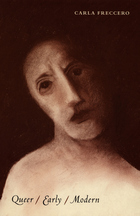
Combining feminist theory, queer theory, psychoanalysis, deconstruction, and literary criticism, Freccero takes up a series of theoretical and historical issues related to debates in queer theory, feminist theory, the history of sexuality, and early modern studies. She juxtaposes readings of early and late modern texts, discussing the lyric poetry of Petrarch, Louise Labé, and Melissa Ethridge; David Halperin’s take on Michel Foucault via Apuleius’s The Golden Ass and Boccaccio’s Decameron; and France’s domestic partner legislation in connection with Marguerite de Navarre’s Heptameron. Turning to French cleric Jean de Léry’s account, published in 1578, of having witnessed cannibalism and religious rituals in Brazil some twenty years earlier and to the twentieth-century Brandon Teena case, Freccero draws on Jacques Derrida’s concept of spectrality to propose both an ethics and a mode of interpretation that acknowledges and is inspired by the haunting of the present by the past.
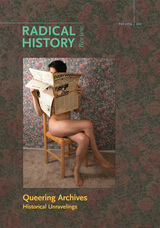
This issue explores the evolution of grassroots LGBT archives, debates over queer migrations, nationalism and the institutionalization of LGBT memory, the archiving of transgender activism, digitization and the classificatory systems of the archive, performances of the colonial archive, museums as archives, and everyday objects as archivable texts.
Daniel Marshall is Senior Lecturer in the Faculty of Arts and Education at Deakin University, Melbourne. Kevin P. Murphy is Associate Professor of History at the University of Minnesota and a member of the Radical History Review editorial collective. Zeb Tortorici is Assistant Professor of Spanish and Portuguese Languages and Literatures at New York University.
Contributors: Rustem Ertug Altinay, Anjali Arondekar, Elspeth H. Brown, Elise Chenier, Howard Chiang, Ben Cowan, Ann Cvetkovich, Sara Davidmann, Leah DeVun, Peter Edelberg, Licia Fiol-Matta, Jack Jen Gieseking, Christina Hanhardt, Robb Hernandez, Kwame Holmes, Regina Kunzel, A. J. Lewis, Martin F. Manalansan IV, María Elena Martínez, Michael Jay McClure, Caitlin McKinney, Katherine Mohrman, Joan Nestle, Mimi Thi Nguyen, Tavia Nyong’o, Anthony M. Petro, K. J. Rawson, Barry Reay, Juana María Rodríguez, Don Romesburg, Rebecka Sheffield, Marc Stein, Margaret Stone, Susan Stryker, Robert Summers, Jeanne Vaccaro, Dale Washkansky, Melissa White
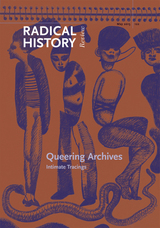
This issue considers how archives allow historical traces of sexuality and gender to be sought, identified, recorded, and assembled into accumulations of meaning. Contributors explore conundrums in contemporary queer archival methods, probing some of them in essays on the Catholic Church and the Church of Jesus Christ of Latter-Day Saints. This issue also includes a series of intergenerational interviews reflecting on histories of LGBT archives, a roundtable discussion about legacies of queer studies of the archive, and a closing reflection by Joan Nestle, a founding figure in the practice of international queer archiving.
Daniel Marshall is Senior Lecturer in the Faculty of Arts and Education at Deakin University, Melbourne. Kevin P. Murphy is Associate Professor of History at the University of Minnesota and a member of the Radical History Review editorial collective. Zeb Tortorici is Assistant Professor of Spanish and Portuguese Languages and Literatures at New York University.
Contributors: Rustem Ertug Altinay, Anjali Arondekar, Elspeth H. Brown, Elise Chenier, Howard Chiang, Ben Cowan, Ann Cvetkovich, Sara Davidmann, Leah DeVun, Peter Edelberg, Licia Fiol-Matta, Jack Jen Gieseking, Christina Hanhardt, Robb Hernandez, Kwame Holmes, Regina Kunzel, A. J. Lewis, Martin F. Manalansan IV, María Elena Martínez, Michael Jay McClure, Caitlin McKinney, Katherine Mohrman, Joan Nestle, Mimi Thi Nguyen, Tavia Nyong’o, Anthony M. Petro, K. J. Rawson, Barry Reay, Juana María Rodríguez, Don Romesburg, Rebecka Sheffield, Marc Stein, Margaret Stone, Susan Stryker, Robert Summers, Jeanne Vaccaro, Dale Washkansky, Melissa White
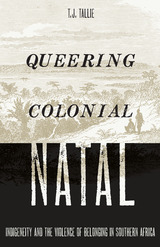
How were indigenous social practices deemed queer and aberrant by colonial forces?
In Queering Colonial Natal, T.J. Tallie travels to colonial Natalestablished by the British in 1843, today South Africa’s KwaZulu-Natal provinceto show how settler regimes “queered” indigenous practices. Defining them as threats to the normative order they sought to impose, they did so by delimiting Zulu polygamy; restricting alcohol access, clothing, and even friendship; and assigning only Europeans to government schools.
Using queer and critical indigenous theory, this book critically assesses Natal (where settlers were to remain a minority) in the context of the global settler colonial project in the nineteenth century to yield a new and engaging synthesis. Tallie explores the settler colonial history of Natal’s white settlers and how they sought to establish laws and rules for both whites and Africans based on European mores of sexuality and gender. At the same time, colonial archives reveal that many African and Indian people challenged such civilizational claims.
Ultimately Tallie argues that the violent collisions between Africans, Indians, and Europeans in Natal shaped the conceptions of race and gender that bolstered each group’s claim to authority.
In this pioneering new study, Thomas Piontek provides a critical analysis of the development of gay and lesbian studies alongside the development of queer theory, the disputes between them, and criticism of their activities from both in and outside of the gay academic community. Examining disputes about transgendering, gay male promiscuity, popular culture, gay history, political activism, and non-normative sexual practices, Piontek argues that it is vital to queer gay and lesbian studies--opening this emerging discipline to queer critical interventions without, however, further institutionalizing queer theory.

Co-Winner of the 2015 Charles Tilly Award for Best Book of the Collective Behavior and Social Movements section from the American Sociological Association
Over four thousand gay and lesbian couples married in the city of San Francisco in 2004. The first large-scale occurrence of legal same-sex marriage, these unions galvanized a movement and reignited the debate about whether same-sex marriage, as some hope, challenges heterosexual privilege or, as others fear, preserves that privilege by assimilating queer couples.
In Queering Marriage, Katrina Kimport uses in-depth interviews with participants in the San Francisco weddings to argue that same-sex marriage cannot be understood as simply entrenching or contesting heterosexual privilege. Instead, she contends, these new legally sanctioned relationships can both reinforce as well as disrupt the association of marriage and heterosexuality.
During her deeply personal conversations with same-sex spouses, Kimport learned that the majority of respondents did characterize their marriages as an opportunity to contest heterosexual privilege. Yet, in a seeming contradiction, nearly as many also cited their desire for access to the normative benefits of matrimony, including social recognition and legal rights. Kimport’s research revealed that the pattern of ascribing meaning to marriage varied by parenthood status and, in turn, by gender. Lesbian parents were more likely to embrace normative meanings for their unions; those who are not parents were more likely to define their relationships as attempts to contest dominant understandings of marriage.
By posing the question—can queers “queer” marriage?—Kimport provides a nuanced, accessible, and theoretically grounded framework for understanding the powerful effect of heterosexual expectations on both sexual and social categories.
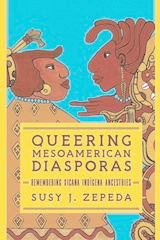
A fascinating exploration of hidden Indígena histories and silences, Queering Mesoamerican Diasporas blends scholarship with spirit practices to reimagine the root work, dis/connection to land, and the political decolonization of Xicana/x peoples.
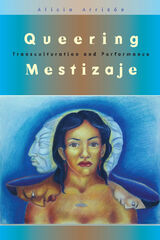
Queering Mestizaje employs theories of postcolonial cultural studies (including performance studies, queer and feminist theory) to examine the notion of mestizaje---the mixing of races, and specifically indigenous peoples, with European colonizers---and how this phenomenon manifests itself in three geographically diverse spaces: the United States, Latin America, and the Philippines. Alicia Arrizón argues that, as an imaginary site for racialized, gendered, and sexualized identities, mestizaje raises questions about historical transformation and cultural memory across Spanish postcolonial sites.
Arrizón offers new, queer readings of the hybrid, the intercultural body, and the hyphenated self, building on the work of Gloria Anzaldúa, Antonio Benitez-Rojo, Walter Mignolo, and Vera Kutzinski, while challenging accepted discourses about the relationship between colonizer and colonized. Queering Mestizaje is unique in the connections it makes between the Spanish colonial legacy in the Philippines and in the Americas. An engagingly eclectic array of cultural materials---including examples from performance art, colonial literature, visual art, fashion, and consumer products---are discussed, and included in the book's twenty-nine illustrations.
"Arrizón takes as her point of departure the connections and distinctions between the four keywords in the title (each with a long, specific, and convoluted history in its own right) while bringing together the Philippines, the Hispanophone Caribbean, and the United States to configure a map carved by the same blade of colonialism and imperialism. In its conjoining of queer, mestizaje, transculturation and performance, the pleasurable and enlightening variety of its textual examples, and its commitment to theorize desire from the space of queer mestizaje, her book makes a unique and accomplished contribution."
---Yvonne Yarbro-Bejarano, Stanford University
Alicia Arrizón is Professor of Women's Studies at the University of California, Riverside. She is author of Latina Performance: Traversing the Stage and co-editor of Latinas on Stage: Practice and Theory.
Illustration: Judith F. Baca, La Mestizaje (1991), pastel on paper. © SPARC.
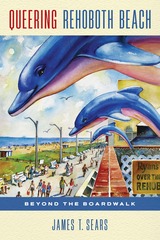
Sears draws upon extensive oral history accounts, archival material, and personal narratives to chronicle “the Battle for Rehoboth,” which unfolded in the late 20th century, as conservative town leaders and homeowners opposed progressive entrepreneurs and gay activists. He recounts not just the emergence of the gay and lesbian bars, dance clubs, and organizations that drew the queer community to the region, but also the efforts of local politicians and homeowners, among other groups who fought to develop and protect the traditional identity of this beach town. Moreover, issues of race, class, and gender and sexuality informed opinions as residents and visitors struggled with the AIDS crisis and the legacy of Jim Crow.
Queering Rehoboth Beach is more than just an inspiring story about a community’s resilience and determination to establish a safe space for itself in the wake of the era of Don’t Ask, Don’t Tell. It is also a terrific beach read.
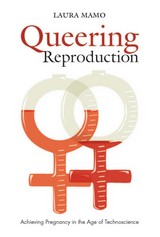
Mamo provides an overview of a shift within some lesbian communities from low-tech methods of self-insemination to a reliance on outside medical intervention and fertility treatments. Reflecting on the issues facing lesbians who become parents through assisted reproductive technologies, Mamo explores questions about the legal rights of co-parents, concerns about the genetic risks of choosing an anonymous sperm donor, and the ways decisions to become parents affect sexual and political identities. In doing so, she investigates how lesbians navigate the medical system with its requisite range of fertility treatments, diagnostic categories, and treatment trajectories. Combining moving narratives and insightful analysis, Queering Reproduction reveals how medical technology reconfigures social formations, individual subjectivity, and notions of kinship.
At about the same time that the 1896 Supreme Court Plessy v. Ferguson decision hardened the racialized boundary between black and white, prominent trials were drawing the public’s attention to emerging categories of sexual identity. Somerville argues that these concurrent developments were not merely parallel but in fact inextricably interrelated and that the discourses of racial and sexual “deviance” were used to reinforce each other’s terms. She provides original readings of such texts as Havelock Ellis’s late nineteenth-century work on “sexual inversion,” the 1914 film A Florida Enchantment, the novels of Pauline E. Hopkins, James Weldon Johnson’s Autobiography of an Ex-Coloured Man, and Jean Toomer’s fiction and autobiographical writings, including Cane. Through her analyses of these texts and her archival research, Somerville contributes to the growing body of scholarship that focuses on discovering the intersections of gender, race, and sexuality.
Queering the Color Line will have broad appeal across disciplines including African American studies, gay and lesbian studies, literary criticism, cultural studies, cinema studies, and gender studies.
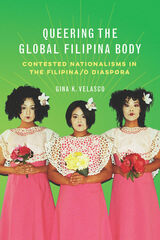
Using a queer diasporic analysis, Velasco examines the politics of nationalism within Filipina/o American cultural production to consider an essential question: can a queer and feminist imagining of the diaspora reconcile with gendered tropes of the Philippine nation? Integrating a transnational feminist analysis of globalized gendered labor with a consideration of queer cultural politics, Velasco envisions forms of feminist and queer diasporic belonging, while simultaneously foregrounding nationalist movements as vital instruments of struggle.
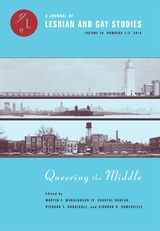
The introduction provides a discussion of the theoretical and critical motivations for understanding the middle as a queer vantage, while the six articles focus on social movements, queer community networks, Midwest-based expressive cultures, and local and diasporic rearticulations of racial, gender, and sexual politics.
At the University of Illinois at Urbana-Champaign, Martin Manalansanis Associate Professor in the Department of Anthropology, Chantal Nadeau is Professor and Chair of Gender and Women’s Studies, and Richard T. Rodríguez and Siobhan B. Somerville are Associate Professors in the Department of English.
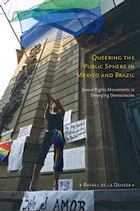
De la Dehesa studied the archives of activists, social-movement organizations, political parties, religious institutions, legislatures, and state agencies, and he interviewed hundreds of individuals, not only LGBT activists, but also feminists, AIDS and human-rights activists, party militants, journalists, academics, and state officials. He marshals his prodigious research to reveal the interplay between evolving representative institutions and LGBT activists’ entry into the political public sphere in Latin America, offering a critical analysis of the possibilities opened by emerging democratic arrangements, as well as their limitations. At the same time, exploring activists’ engagement with the international arena, he offers new insights into the diffusion and expression of transnational norms inscribing sexual rights within a broader project of liberal modernity. Queering the Public Sphere in Mexico and Brazil is a landmark examination of LGBT political mobilization.
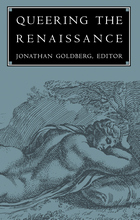
The presence of contemporary history can be felt throughout the volume, beginning with an investigation of the uses of Renaissance precedents in the 1986 U.S. Supreme Court decision Bowers v. Hardwick, to a piece on the foundations of 'our' national imaginary, and an afterword that addresses how identity politics has shaped the work of early modern historians. The volume examines canonical and noncanonical texts, including highly coded poems of the fifteenth-century Italian poet Burchiello, a tale from Marguerite de Navarre's Heptameron, and Erasmus's letters to a young male acolyte. English texts provide a central focus, including works by Spenser, Shakespeare, Bacon, Donne, Beaumont and Fletcher, Crashaw, and Dryden. Broad suveys of the complex terrains of friendship and sodomy are explored in one essay, while another offers a cross-cultural reading of the discursive sites of lesbian desire.
Contributors. Alan Bray, Marcie Frank, Carla Freccero, Jonathan Goldberg, Janet Halley, Graham Hammill, Margaret Hunt, Donald N. Mager, Jeff Masten, Elizabeth Pittenger, Richard Rambuss, Alan K. Smith, Dorothy Stephens, Forrest Tyler Stevens, Valerie Traub, Michael Warner
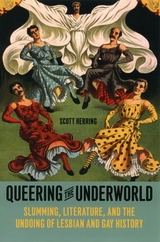
In this major rethinking of American literature and culture, Scott Herring explores how a key group of authors manipulated this genre to paradoxically evade the confines of sexual identification. Queering the Underworld examines a range of writers, from Jane Addams and Willa Cather to Carl Van Vechten and Djuna Barnes, revealing how they fulfilled the conventions of slumming literature but undermined its goals, and in the process, queered the genre itself. Their work frustrated the reader’s desire for sexual knowledge, restored the inscrutability of sexual identity, and cast doubt on the value of a homosexual subculture made visible and therefore subject to official control.
Herring is persuasive and polemical in connecting these writers to ongoing debates about lesbian and gay history and politics, and Queering the Underworld will be widely read by students and scholars of literature, history, and sexuality.

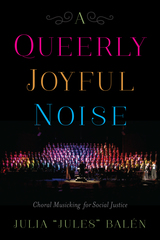
Honorable Mention, 2019 Herndon Book Prize - (SEM-GST)
A Queerly Joyful Noise examines how choral singing can be both personally transformative and politically impactful. As they blend their different voices to create something beautiful, LGBTIQ singers stand together and make themselves heard. Comparing queer choral performances to the uses of group singing within the civil rights and labor movements, Julia “Jules” Balén maps the relationship between different forms of oppression and strategic musical forms of resistance. She also explores the potential this queer communal space creates for mobilizing progressive social action.
A proud member of numerous queer choruses, Balén draws from years of firsthand observations, archival research, and extensive interviews to reveal how queer chorus members feel shared vulnerability, collective strength, and even moments of ecstasy when performing. A Queerly Joyful Noise serves as a testament to the power of music, intimately depicting how participation in a queer chorus is more than a pastime, but a meaningful form of protest through celebration.
The issue, featuring essays by both established and emerging scholars, situates queer migration within global processes of colonization, globalization, capitalism, nationalism, and slavery. One contributor argues that a queer Atlantic history emerged during the Middle Passage experience of slavery, connecting this history to the contemporary movement of Haitian refugees and Dominican migrant laborers. Another contributor considers how the policing of queer migrant bodies and of “unnatural offenses” by colonial administrations in the Nicobar and Andaman islands ultimately reconfigured the ecology of the entire Indian Ocean archipelago. Still another contributor theorizes how gay couples composed of young Asian émigrés and considerably older white citizens negotiate Australian immigration policy to subvert dominant forms of nationalism and citizenship embedded in long histories of inequality between Australia and Asia. Other essays explore how transgender histories and theories transform queer migration scholarship; how “queer complicities” with contemporary neoliberal migration politics uphold regimes of violence and inequality; and how migration regimes and settlement policies in various parts of the world identify individuals as “queer,” “deviant,” or “abnormal” within racial, gender, class, cultural, and geopolitical hierarchies.
Contributors. Bobby Benedicto, Carlos Ulises Decena, Kale Bantigue Fajardo, Maja Horn, Adi Kuntsman, Eithne Luibhéid, Clare Sears, Omise’eke Natasha Tinsley, Kath Weston, Audrey Yue
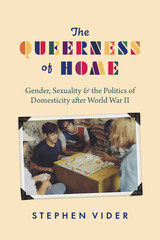
From the Stonewall riots to the protests of ACT UP, histories of queer and trans politics have almost exclusively centered on public activism. In The Queerness of Home, Stephen Vider turns the focus inward, showing that the intimacy of domestic space has been equally crucial to the history of postwar LGBTQ life.
Beginning in the 1940s, LGBTQ activists looked increasingly to the home as a site of connection, care, and cultural inclusion. They struggled against the conventions of marriage, challenged the gendered codes of everyday labor, reimagined domestic architecture, and contested the racial and class boundaries of kinship and belonging. Retelling LGBTQ history from the inside out, Vider reveals the surprising ways that the home became, and remains, a charged space in battles for social and economic justice, making it clear that LGBTQ people not only realized new forms of community and culture for themselves—they remade the possibilities of home life for everyone.
Contributors: Aliyyah Abdur-Rahman, Cynthia Barounis, Tyler Bradway, Ramzi Fawaz, Jennifer James, Martin Joseph Ponce, Natalie Prizel, Shanté Paradigm Smalls, Samuel Solomon.


These outstanding texts exemplify the glittering variety of styles, themes, settings, and subjects addressed by openly queer authors who write in German today. They explore identity, sexuality, history, fantasy, loss, and discovery. Their authors, narrators, and characters explore gender nonconformity and living queer everywhere from city centers to rural communities. They are gay, lesbian, bisexual, trans, and nonbinary. They are exiles, immigrants, and travelers through time and space.
Witty, titillating, and a delight to read, Quertext opens up new worlds of experience for readers interested in queer life beyond the Anglophone world.
Featuring work by Jürgen Bauer • Ella Blix • Claudia Breitsprecher • Lovis Cassaris • Gunther Geltinger • Joachim Helfer • Odile Kennel • Friedrich Kröhnke • Anja Kümmel • Marko Martin • Hans Pleschinski • Christoph Poschenrieder • Peter Rehberg • Michael Roes • Sasha Marianna Salzmann • Angela Steidele • Antje Rávik Strubel • Alain Claude Sulzer • Antje Wagner • J. Walther • Tania Witte • Yusuf Yeşilöz
The definitive social history of the Disciples of Christ in the 19th century
The Disciples of Christ, led by reformers such as Alexander Campbell and Barton W. Stone, was one of a number of early-19th-century primitivist religious movements seeking to “restore the ancient order of things.” The Disciples movement was little more than a loose collection of independent congregations until the middle of the 19th century, but by 1900 three clear groupings of churches had appeared. Today, more than 5 million Americans—members of the modern-day Disciples of Christ (Christian Church), Independent Christian Churches, and Churches of Christ, among others—trace their religious heritage to this “Restoration Movement.”



Contrary to those who regard the professions as exemplary and up-to-date specimens of social modernization or economic monopoly, Haber argues that they bring both preindustrial and predemocratic ideals and standards into our modern world. He proposes that the values embedded in the professions—authority and honor, fused with duty and responsibility—have their origins in the class position and occupational prescriptions of eighteenth-century English gentlemen. Such an argument has implications for the understanding of American society; it underscores the cumulative and variegated nature of our culture and suggests the drawbacks of trying to describe society as a system. It also accords with Haber's endeavor to write a history that rescues for description and analysis mixed motives, composite conditions, and persons and parties acting upon contradictory explanatory schemes.
Haber traces the cultural evolution of the professions through three stages—establishment (1750-1830), disestablishment (1830-1880), and reestablishment (1880-1900). He shows that when the gentlemanly class declined in the United States, the professions maintained status even in somewhat hostile settings. The professions thus came to be seen as a middle way between the pursuits of laborers and those of capitalists. Massive in scale and ambition, this book will have a formidable impact among scholars newly attuned to the history of American middle-class culture.

In 1948, when “Mrs. G.,” hospitalized with debilitating rheumatoid arthritis, became the first person to receive a mysterious new compound—cortisone—her physicians were awestruck by her transformation from enervated to energized. After eighteen years of biochemical research, the most intensively hunted biological agent of all time had finally been isolated, identified, synthesized, and put to the test. And it worked. But the discovery of a long-sought “magic bullet” came at an unanticipated cost in the form of strange side effects. This fascinating history recounts the discovery of cortisone and pulls the curtain back on the peculiar cast of characters responsible for its advent, including two enigmatic scientists, Edward Kendall and Philip Hench, who went on to receive the Nobel Prize. The book also explores the key role the Mayo Clinic played in fostering cortisone’s development, and looks at drugs that owe their heritage to the so-called “King of Steroids.”

The Constitutional Revolution of 1906 launched Iran as a pioneer in a broad-based movement to establish democratic rule in the non-Western world. In a book that provides essential context for understanding modern Iran, Fakhreddin Azimi traces a century of struggle for the establishment of representative government.
The promise of constitutional rule was cut short in the 1920s with the rise of the Pahlavi dynasty. Reza Shah, whose despotic rule Azimi deftly captures, maintained the façade of a constitutional monarch but greeted any challenge with an iron fist: “I will eliminate you,” he routinely barked at his officials. In 1941, fearful of losing control of the oil-rich region, the Allies forced Reza Shah to abdicate but allowed Mohammad Reza to succeed his father. Though promising to abide by the constitution, the new Shah missed no opportunity to undermine it.
The Anglo-American–backed coup of 1953, which ousted reformist premier Mohammed Mosaddeq, dealt a blow to the constitutionalists. The Shah’s repressive policies and subservience to the United States radicalized both secular and religious opponents, leading to the revolution of 1979. Azimi argues that we have fundamentally misunderstood this event by characterizing it as an “Islamic” revolution when it was in reality the expression of a long-repressed desire for popular sovereignty. This explains why the clerical rulers have failed to counter the growing public conviction that the Islamic Republic, too, is impervious to political reform—and why the democratic impulse that began with the Constitutional Revolution continues to be a potent and resilient force.

As the United States championed principles of freedom and equality during World War II, it denied fundamental rights to many non-white citizens. In the wake of President Franklin Roosevelt’s “Good Neighbor” policy with Latin America, African American and Mexican American civil rights leaders sought ways to make that policy of respect and mutual obligations apply at home as well as abroad. They argued that a whites-only democracy not only denied constitutional protection to every citizen but also threatened the war effort and FDR’s aims.
Neil Foley examines the complex interplay among regional, national, and international politics that plagued the efforts of Mexican Americans and African Americans to find common ground in ending employment discrimination in the defense industries and school segregation in the war years and beyond. Underlying differences in organizational strength, political affiliation, class position, and level of assimilation complicated efforts by Mexican and black Americans to forge strategic alliances in their fight for economic and educational equality. The prospect of interracial cooperation foundered as Mexican American civil rights leaders saw little to gain and much to lose in joining hands with African Americans.
Over a half century later, African American and Latino civil rights organizations continue to seek solutions to relevant issues, including the persistence of de facto segregation in our public schools and the widening gap in wealth and income in America. Yet they continue to grapple with the difficulty of forging solidarity across lines of cultural, class, and racial-ethnic difference, a struggle that remains central to contemporary American life.


The creators of Superman (Jerry Siegel and Joe Shuster), Batman (Bob Kane and Bill Finger), and the Marvel superheroes (Stan Lee and Jack Kirby), were Jewish, as was the founding editor of Mad magazine (Harvey Kurtzman). They often adapted Jewish folktales (like the Golem) or religious stories (such as the origin of Moses) for their comics, depicting characters wrestling with supernatural people and events. Likewise, some of the most significant graphic novels by Jews or about Jewish subject matter deal with questions of religious belief and Jewish identity. Their characters wrestle with belief—or nonbelief—in God, as well as with their own relationship to the Jews, the historical role of the Jewish people, the politics of Israel, and other issues related to Jewish identity.
In The Quest for Jewish Belief and Identity in the Graphic Novel, Stephen E. Tabachnick delves into the vivid kaleidoscope of Jewish beliefs and identities, ranging from Orthodox belief to complete atheism, and a spectrum of feelings about identification with other Jews. He explores graphic novels at the highest echelon of the genre by more than thirty artists and writers, among them Harvey Pekar (American Splendor), Will Eisner (A Contract with God), Joann Sfar (The Rabbi’s Cat), Miriam Katin (We Are On Our Own), Art Spiegelman (Maus), J. T. Waldman (Megillat Esther), Aline Kominsky Crumb (Need More Love), James Sturm (The Golem’s Mighty Swing), Leela Corman (Unterzakhn), Ari Folman and David Polonsky (Waltz with Bashir), David Mairowitz and Robert Crumb’s biography of Kafka, and many more. He also examines the work of a select few non-Jewish artists, such as Robert Crumb and Basil Wolverton, both of whom have created graphic adaptations of parts of the Hebrew Bible.
Among the topics he discusses are graphic novel adaptations of the Bible; the Holocaust graphic novel; graphic novels about the Jews in Eastern and Western Europe and Africa, and the American Jewish immigrant experience; graphic novels about the lives of Jewish women; the Israel-centered graphic novel; and the Orthodox graphic novel. The book concludes with an extensive bibliography.
No study of Jewish literature and art today can be complete without a survey of the graphic novel, and scholars, students, and graphic novel fans alike will delight in Tabachnick’s guide to this world of thought, sensibility, and artfulness.

"This is a fascinating, brilliantly written book, as interesting in its description of the author's journeys as it is in its investigation of the reality that lies behind 'the finest novel in the English language with an Indian theme,'" as Kim has been described by Nirad Chaudhuri." --T. J. Binyon, Times Literary Supplement
"In an original combination of autobiography, travel writing, and literary detective work, Hopkirk manages accessibly to tell the story of Kim and his own obsession with it. Hopkirk illustrates how creatively and thoroughly the reading of a work of fiction can shape a whole life's experience." -- John R. Bradley, Independent on Sunday
". . . a reminder of just how absorbing was the world Kipling knew, and how fabulous was his transformation of it into literature." --Richard Bernstein, New York Times
Peter Hopkirk has traveled widely over many years in the regions where his books are set--Central Asia, Russia, China, India, Pakistan, and the Middle East. His nearly twenty years with The Times included work as an Asian affairs specialist. His previous books include The Great Game, Foreign Devils on the Silk Road, Trespassers on the Roof of the World, Setting the East Ablaze, and Our Secret Service East of Constantinople. His works have been translated into twelve languages.

A concise, yet engaging introduction to the field of ethics, this volume offers a systematic study of the foundations of moral responsibility. Montague Brown guides the reader on an examination of a wide range of ethical positions, including relativism, emotivism, egoism, utilitarianism, Kantian formalism, and natural law.
Brown explains not only the history behind the development of each position, but also the roles science, democracy, and religion play in moral thinking today.
Students and teachers of philosophy, ethics, and religion, as well as the general reader, will find that this book tackles the serious issues and offers an insightful, accessible introduction to major ethical positions and the great moral philosophers.
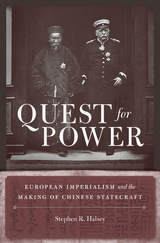
China’s history in the nineteenth and early twentieth centuries has often been framed as a long coda of imperial decline, played out during its last dynasty, the Qing. Quest for Power presents a sweeping reappraisal of this narrative. Stephen Halsey traces the origins of China’s great-power status in the twentieth century to this era of supposed decadence and decay. Threats from European and Japanese imperialism and the growing prospect of war triggered China’s most innovative state-building efforts since the Qing dynasty’s founding in the mid-1600s.
Through a combination of imitation and experimentation, a new form of political organization took root in China between 1850 and 1949 that shared features with modern European governments. Like them, China created a military-fiscal state to ensure security in a hostile international arena. The Qing Empire extended its administrative reach by expanding the bureaucracy and creating a modern police force. It poured funds into the military, commissioning ironclad warships, reorganizing the army, and promoting the development of an armaments industry. State-built telegraph and steamship networks transformed China’s communication and transportation infrastructure. Increasingly, Qing officials described their reformist policies through a new vocabulary of sovereignty—a Western concept that has been a cornerstone of Chinese statecraft ever since. As Halsey shows, the success of the Chinese military-fiscal state after 1850 enabled China to avoid wholesale colonization at the hands of Europe and Japan and laid the foundation for its emergence as a global power in the twentieth century.
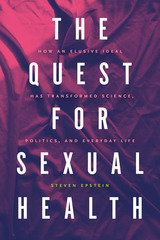
Since the 1970s, health professionals, researchers, governments, advocacy groups, and commercial interests have invested in the pursuit of something called "sexual health." Under this expansive banner, a wide array of programs have been launched, organizations founded, initiatives funded, products sold—and yet, no book before this one asks: What does it mean to be sexually healthy? When did people conceive of a form of health called sexual health? And how did it become the gateway to addressing a host of social harms and the reimagining of private desires and public dreams?
Conjoining "sexual" with "health" changes both terms: it alters how we conceive of sexuality and transforms what it means to be healthy, prompting new expectations of what medicine can provide. Yet the ideal of achieving sexual health remains elusive and open-ended, and the benefits and costs of promoting it are unevenly distributed across genders, races, and sexual identities. Rather than a thing apart, sexual health is intertwined with nearly every conceivable topical debate—from sexual dysfunction to sexual violence, from reproductive freedom to the practicalities of sexual contact in a pandemic. In this book Steven Epstein analyzes the rise, proliferation, uptake, and sprawling consequences of sexual health activities, offering critical tools to assess those consequences, expand capacities for collective decision making, and identify pathways that promote social justice.
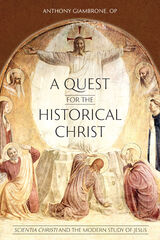
"Each of these essays contains insights which will be fruitful and challenging for professional students of religion, but at the same time they all retain the kind of cultural relevance and clarity of style which makes them accessible to anyone seriously concerned with man and his religious possibilities."—Joseph M. Kitagawa, Religious Education

Alenka Zupančič soutient que la sexualité est à la limite d’un « circuit court » entre ontologie et épistémologie. La sexualité et le savoir sont structurés autour d‘une négativité fondamentale qui les unit au point de l’inconscient. L’inconscient (en tant que lien avec la sexualité) est le concept d‘un lien inhérent entre l’être et la connaissance dans leur négativité même.
READERS
Browse our collection.
PUBLISHERS
See BiblioVault's publisher services.
STUDENT SERVICES
Files for college accessibility offices.
RECENTLY PUBLISHED




UChicago Accessibility Resources
home | accessibility | search | about | contact us
BiblioVault ® 2001 - 2025
The University of Chicago Press