
 A SCHOLARLY BOOK REPOSITORY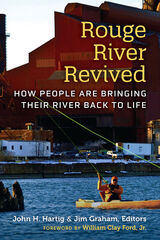
Rouge River Revived describes the river’s history from pre-European times into the 21st century. Chapters cover topics such as Native American life on the Rouge; indigenous flora and fauna over time; the river’s role in the founding of local cities; its key involvement in Detroit’s urban development and intensive industrialization; and the dramatic clean-up arising from citizen concern and activism. This book is not only a history of the environment of the Rouge River, but also of the complex and evolving relationship between humans and natural spaces.

Tina Ontiveros was born into timber on both sides of the family. Her mother spent summers driving logging trucks for her family’s operation, and her father was the son of an itinerant logger, raised in a variety of lumber towns, as Tina herself would be.
A story of growing up in turmoil, rough house recounts a childhood divided between a charming, mercurial, abusive father in the forests of the Pacific Northwest and a mother struggling with small-town poverty. It is also a story of generational trauma, especially for the women—a story of violent men and societal restrictions, of children not always chosen and frequently raised alone.
Ontiveros’s father, Loyd, looms large. Reflecting on his death and long absence from her life, she writes, “I had this ridiculous hope that I would get to enjoy a functional relationship with my father, on my own terms, now that I was an adult.” In searingly honest, straightforward prose, rough house is her attempt to carve out this relationship, to understand her father and her family from an adult perspective.
While some elements of Ontiveros’s story are universal, others are indelibly grounded in the logging camps of the Pacific Northwest at the end of the twentieth century, as the lumber industry shifted and contracted. Tracing her childhood through the working-class towns and forests of Washington and Oregon, Ontiveros explores themes of love and loss, parents and children, and her own journey to a different kind of adulthood.

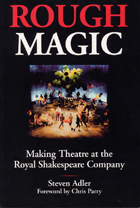
Steven Adler examines the dynamic life and workings of the theatre company responsible for some of the world’s most compelling performances and influential productions of the last forty years, including Marat/Sade, A Midsummer Night’s Dream, Les Misérables, Les Liaisons Dangereuses, and Nicholas Nickleby.
Rough Magic provides a thorough analysis of the many strands of theatrical activity on both sides of the footlights that coalesce in the artistic vigor of the Royal Shakespeare Company. Adler traces the company’s evolution from its origins in 1879 as a week-long festival presented by Stratford-upon-Avon as a birthday homage to its native son, to its current incarnation as one of the world’s most distinguished institutional theatres. He probes the aspirations and achievements of the RSC’s four successive artistic directors: Peter Hall, Trevor Nunn, Terry Hands, and Adrian Noble. He offers a comprehensive view of the design and aesthetics of the RSC’s five theatres in Stratford and London, and explores the intricate process of crafting a repertoire at home and on tour that responds to the needs of the artists as well as the demands of the box office.
Vivid illustrations, personal observation, research, and dozens of interviews with current and former members of the Royal Shakespeare Company unite to produce Rough Magic.
A powerful case for why anthropology should study outsiders of thought and their speculative ideas
What sort of thinking is needed to study anomalies in thought? In this trenchantly argued and beautifully written book, anthropologist Peter Skafish explores this provocative question by examining the writings of the medium and “rough metaphysician” Jane Roberts (1929–1984). Through a close interpretation of her own published texts as well as those she understood herself to have dictated for her cohort of channeled personalities—including one, named “Seth,” who would inspire the New Age movement—Skafish shows her intuitive and dreamlike work to be a source of rigorously inventive ideas about science, ontology, translation, and pluralism. Arguing that Roberts’s writings contain philosophies ahead of their time, he also asks: How might our understanding of speculative thinking change if we consider the way untrained writers, occult visionaries, and their counterparts in other cultural traditions undertake it? What can outsider thinkers teach us about the limitations of even our most critical intellectual habits?
Rough Metaphysics is at once an ethnography of the books of a strange and yet remarkable writer, a commentary on the unlikely philosophy contained in them, and a call for a new way of doing (and undoing) philosophy through anthropology, and vice versa. In guiding the reader through Roberts’s often hallucinatory “world of concepts,” Skafish also develops a series of original interpretations of thinkers—from William James to Claude Lévi-Strauss to Paul Feyerabend—who have been vital to anthropologists and their fellow travelers.
Seductively written and surprising in its turns of thought, Rough Metaphysics is a feast for anyone who wants to learn how to think something new, especially about thought.
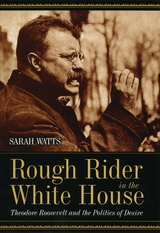
In this book, Sarah Watts probes this dark side of the Rough Rider, presenting a fascinating psychological portrait of a man whose personal obsession with masculinity profoundly influenced the fate of a nation. Drawing on his own writings and on media representations of him, Watts attributes the wide appeal of Roosevelt's style of manhood to the way it addressed the hopes and anxieties of men of his time. Like many of his contemporaries, Roosevelt struggled with what it meant to be a man in the modern era. He saw two foes within himself: a fragile weakling and a primitive beast. The weakling he punished and toughened with rigorous, manly pursuits such as hunting, horseback riding, and war. The beast he unleashed through brutal criticism of homosexuals, immigrants, pacifists, and sissies—anyone who might tarnish the nation's veneer of strength and vigor. With his unabashed paeans to violence and aggressive politics, Roosevelt ultimately offered American men a chance to project their longings and fears onto the nation and its policies. In this way he harnessed the primitive energy of men's desires to propel the march of American civilization—over the bodies of anyone who might stand in its way.
Written with passion and precision, this powerful revisioning of an American icon will forever alter the way we see Theodore Roosevelt and his political legacy.
"A superb scholarly study of how Roosevelt built his political base on the aspiration and fears of men in a rapidly changing nation and world."—Charles K. Piehl, Library Journal
"A thought-provoking and innovative study of the dark side of Roosevelt's personality. . . . [Watt's] arguments are clear, passionate, and thoroughly supported."—Elizabeth A. Bennion, Journal of Interdisciplinary History

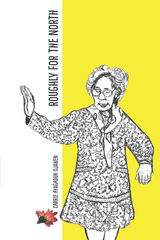
Roughly for the North is a tender and complex portrait of an Arctic and sub-arctic world. Full of lush language and imagery, each poem is an act of devotion and love to one’s family and land. Carrie Ayaġaduk Ojanen weaves a moving portrait of grief, of the rippling effects of historical trauma on succeeding generations, of resilience in the face of adversity, of respect for the Alaska Native traditions she grew up in. With vivid imagery, she draws the reader into Northern life, where the spiritual and industrial collide. She uses formalism and lyrical free verse to explore the natural world and to conjure a place of staggering beauty that hides death around every corner.
A member of the Ugiuvamiut tribe, Ojanen grounds her work in a web of familial relationships. Especially important is her connection with her grandparents, members of the last generation to make their home on Ugiuvak (King Island), Alaska. With heartfelt verse, her poems reflect the staggering cultural changes her grandparents faced and the way traditional art forms continue to unite her community and help them connect to the past.

New York Times bestselling author, humorist, and newspaper columnist Michael Perry returns with a new collection of bite-sized essays from his Sunday Wisconsin State Journal column, “Roughneck Grace.” Perry’s perspectives on everything from cleaning the chicken coop to sharing a New York City elevator with supermodels will have you snorting with laughter on one page, blinking back tears on the next, and--no matter your zip code--nodding in recognition throughout.
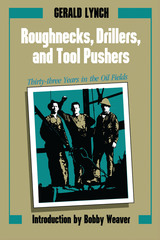
Oil, the black gold of Texas, has given rise to many a myth. Oil could turn a man overnight into a millionaire—and did, for some. But these myths have obscured what life was really like in the oil patch, a place that was neither the El Dorado of legend nor quite the unredeemed den of sin and iniquity that some feared.
In Roughnecks, Drillers, and Tool Pushers, Gerald Lynch provides a much-needed insider's view of the oil industry, describing life in various oil fields in and around Texas. He also chronicles changes in drilling methods and oil-field technology and how these changes affected him and his fellow oil-field workers. No one else has written a working-class history of the oil fields as colorful and articulate as this one.




Viewing our past through the eyes of maturity can reveal insights that our younger selves could not see. Lessons that eluded us become apparent. Encounters that once felt like misfortunes now become understood as valued parts of who we are. We realize what we’ve learned and what we have to teach. And we’re encouraged to chart a future that is rich with purpose.
In A Round of Golf with My Father, William Damon introduces us to the “life review.” This is a process of looking with clarity and curiosity at the paths we’ve traveled, examining our pasts in a frank yet positive manner, and using what we’ve learned to write purposeful next chapters for our lives.
For Damon, that process began by uncovering the mysterious life of his father, whom he never met and never gave much thought to. What he discovered surprised him so greatly that he was moved to reassess the events of his own life, including the choices he made, the relationships he forged, and the career he pursued.
Early in his life, Damon was led to believe that his father had been killed in World War II. But the man survived and went on to live a second life abroad. He married a French ballerina, started a new family, and forged a significant Foreign Service career. He also was an excellent golfer, a bittersweet revelation for Damon, who wishes that his father had been around to teach him the game.
We follow Damon as he struggles to make sense of his father’s contradictions and how his father, even though living a world apart, influenced Damon’s own development in crucial ways. In his life review, Damon uses what he learned about his father to enhance his own newly emerging self-knowledge.
Readers of this book may come away inspired to conduct informal life reviews for themselves. By uncovering and assembling the often overlooked puzzle pieces of their pasts, readers can seek present-day contentment and look with growing optimism to the years ahead.


Rounding It Out is not only about these themes, but also, through reflection, about its own chosen form. Each of the poems is a cross between a sonnet and a villanelle, a formal innovation Pack calls a sonnetelle. Employing meter and rhyme, assonance and alliteration, Pack takes delight and finds consolation in the sensuousness of the English language even in the face of mortality and ongoing personal loss.
These essays capture the historical circumstances of these countries—their traditions, customs, and the balance of influence between competing factions—that often took precedence over constitutional ideals. In five country-specific reports, senior scholars provide detailed accounts of the talks in Bulgaria, Poland, Hungary, Czechoslovakia, and the German Democratic Republic. Also included is an essay on the political factors underlying the failure of negotiations between reform groups and the Chinese regime, providing an illuminating counterpoint to the path taken in Eastern Europe.
This book is an invaluable resource for scholars of constitutional design and democratization and for specialists in Eastern Europe.

This is the first book in English which provides comprehensive analysis and documentary history on the Roundtable talks, the major event of the “negotiated revolution” of Hungary. These negotiations occurred during the summer months of 1989 between the representatives of the Communist Party, the Opposition Roundtable, and the so-called Third Side (which brought some pro-Communist satellite organizations together).
The authors offer much more than just a detailed account on the negotiations: they also put the process of constitutional revolution into a comparative and historical perspective. They believe that the Roundtable Talks amounted to much more than just a sideshow and in fact they constituted the hub of the revolutionary transformation.

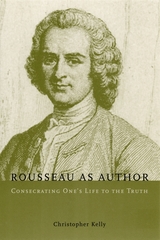
Unlike many other writers of his day, Rousseau refused to publish anonymously, even though he risked persecution for his writings. But Rousseau felt that authors must be self-restrained, as well as bold, and must carefully consider the potential political effects of what they might publish: sometimes seeking the good conflicts with writing the truth. Kelly shows how this understanding of public authorship played a crucial role in Rousseau's conception—and practice—of citizenship and political action.
Rousseau as Author will be a groundbreaking book not just for Rousseau scholars, but for anyone studying Enlightenment ideas about authorship and responsibility.

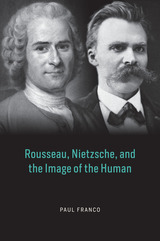
In Rousseau, Nietzsche, and the Image of the Human, Paul Franco examines the relationship between Jean-Jacques Rousseau and Friedrich Nietzsche, arguably the two most influential shapers and explorers of the moral and cultural imagination of late modernity. Both thinkers leveled radical critiques of modern life, but those critiques differed in important respects. Whereas Rousseau focused on the growing inequality of modern society and the hypocrisy, self-division, and loss of civic virtue it spawned, Nietzsche decried the democratic equality he identified with Rousseau and the loss of individual and cultural greatness it entailed. Franco argues, however, that Rousseau and Nietzsche are more than mere critics; they both put forward powerful alternative visions of how we ought to live. Franco focuses specifically on their views of the self and its realization, their understandings of women and the relation between the sexes, and their speculative conceptions of politics. While there are many similarities in their positive visions, Franco argues that it is the differences between them from which we have most to learn.
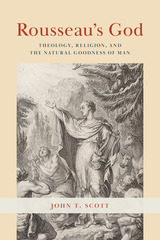
John T. Scott offers a comprehensive interpretation of Rousseau’s theological and religious thought, both in its own right and in relation to Rousseau’s broader oeuvre. In chapters focused on different key writings, Scott reveals recurrent themes in Rousseau’s views on the subject and traces their evolution over time. He shows that two concepts—truth and utility—are integral to Rousseau’s writings on religion. Doing so helps to explain some of Rousseau’s disagreements with his contemporaries: their different views on religion and theology stem from different understandings of human nature and the proper role of science in human life. Rousseau emphasizes not just what is true, but also what is useful—psychologically, morally, and politically—for human beings. Comprehensive and nuanced, Rousseau’s God is vital to understanding key categories of Rousseau’s thought.
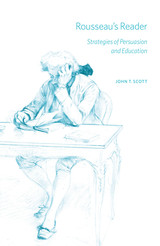
In Rousseau’s Reader, John T. Scott looks at the different strategies Rousseau used to engage and persuade the readers of his major philosophical works, including the Social Contract, Discourse on Inequality, and Emile. Considering choice of genre; textual structure; frontispieces and illustrations; shifting authorial and narrative voice; addresses to readers that alternately invite and challenge; apostrophe, metaphor, and other literary devices; and, of course, paradox, Scott explores how the form of Rousseau’s writing relates to the content of his thought and vice versa. Through this skillful interplay of form and content, Rousseau engages in a profoundly transformative dialogue with his readers.
While most political philosophers have focused, understandably, on Rousseau’s ideas, Scott shows convincingly that the way he conveyed them is also of vital importance, especially given Rousseau’s enduring interest in education. Giving readers the key to Rousseau’s style, Scott offers fresh and original insights into the relationship between the substance of his thought and his literary and rhetorical techniques, which enhance our understanding of Rousseau’s project and the audiences he intended to reach.

Even before there was a road, there was a route. Buffalo trails, Indian paths, the old Santa Fe trace—all led across the Great Plains and the western mountains to the golden oasis of California. America’s insatiable westering urge culminated in Route 66, the highway that ran from Chicago to Los Angeles. Opened in 1926, Route 66 became the quintessential American road. It offered the chance for freedom and a better life, whether you were down-and-out Okies fleeing the Dust Bowl in the 1930s or cool guys cruising in a Corvette in the 1960s. Even though the interstates long ago turned Route 66 into a bylane, it still draws travelers from around the world who long to experience the freedom of the open road.
A Route 66 Companion gathers fiction, poetry, memoir, and oral history to present a literary historical portrait of America’s most storied highway. From accounts of pioneering trips across the western plains to a sci-fi fantasy of traveling Route 66 in a rocket, here are stories that explore the mystique of the open road, told by master storytellers ranging from Washington Irving to Raymond Chandler, Joan Didion, Sylvia Plath, Leslie Marmon Silko, and John Steinbeck. Interspersed among them are reminiscences that, for the first time, honor the varied cultures—Native American, Mexican American, and African American, as well as Anglo—whose experiences run through the Route 66 story like the stripe down the highway. So put the top down, set the cruise control, and “make that California trip” with A Route 66 Companion.
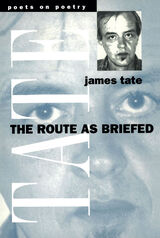
In typical Tate style, the book continually straddles the line between fiction and autobiography, entertaining readers with amusing accounts of the poet's own experiences while drawing on these to narrate the fictional stories as well.
James Tate is Professor of Poetry, University of Massachusetts. He is the author of a number of books of poetry, including Worshipful Company of Fletchers: Poems, 1994; Selected Poems, 1991; Distance from Loved Ones, 1990. He has received several awards for his work, including the Pulitzer Prize for poetry in 1992.
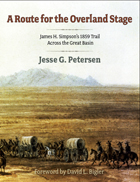
The 1859 exploration of the Great Basin by army topographical engineer James Simpson opened up one of the West's most important transportation and communication corridors, a vital link between the Pacific Coast and the rest of the nation. It became the route of the Pony Express and the Overland Mail and Stage, the line of the Pacific telegraph, a major wagon road for freighters and emigrants, and, later, the first transcontinental auto road, the Lincoln Highway, now Highway 50.
No one has accurately tracked or mapped Simpson's original route, until now. Jesse Petersen shows in words, maps, and photos exactly where the explorer went. Sharing his detective-like reasoning as he walked or drove the entire trail west and Simpson's variant route returning east, Petersen takes readers on a mountain and desert trek through some of America's most remote and striking landscapes.

Routes of Passage provides a conceptual, substantive, and empirical orientation to the study of African people worldwide. The book addresses issues of geographical mobility and geosocial displacement; changing culture, political, and economic relationships between Africa and its diaspora; interdiaspora relations; political and economic agency and social mobilization, including cultural production and psychocultural transformation; existence in hostile and oppressive political and territorial space; and confronting interconnected relations of social inequality, especially class, gender, nationality, and race.
Routes of Passage provides a conceptual, substantive, and empirical orientation to the study of African people worldwide. Routes of Passage addresses issues of geographical mobility and geosocial displacement; changing cultural, political, and economic relationships between Africa and its diaspora; interdiaspora relations; political and economic agency and social mobilization, including cultural production and psychocultural transformation; existence in hostile and oppressive political and territorial space; and confronting interconnected relations of social inequality, especially class, gender, nationality, and race.

The fossil fuel revolution is usually rendered as a tale of historic advances in energy production. In this perspective-changing account, Christopher F. Jones instead tells a story of advances in energy access—canals, pipelines, and wires that delivered power in unprecedented quantities to cities and factories at a great distance from production sites. He shows that in the American mid-Atlantic region between 1820 and 1930, the construction of elaborate transportation networks for coal, oil, and electricity unlocked remarkable urban and industrial growth along the eastern seaboard. But this new transportation infrastructure did not simply satisfy existing consumer demand—it also whetted an appetite for more abundant and cheaper energy, setting the nation on a path toward fossil fuel dependence.
Between the War of 1812 and the Great Depression, low-cost energy supplied to cities through a burgeoning delivery system allowed factory workers to mass-produce goods on a scale previously unimagined. It also allowed people and products to be whisked up and down the East Coast at speeds unattainable in a country dependent on wood, water, and muscle. But an energy-intensive America did not benefit all its citizens equally. It provided cheap energy to some but not others; it channeled profits to financiers rather than laborers; and it concentrated environmental harms in rural areas rather than cities.
Today, those who wish to pioneer a more sustainable and egalitarian energy order can learn valuable lessons from this history of the nation’s first steps toward dependence on fossil fuels.
Routes of Remembrance tackles these questions by analyzing the slave trade’s absence from public versions of coastal Ghanaian family and community histories, its troubled presentation in the country’s classrooms and nationalist narratives, and its elaboration by the transnational tourism industry. Bayo Holsey discovers that in the past, African involvement in the slave trade was used by Europeans to denigrate local residents, and this stigma continues to shape the way Ghanaians imagine their historical past. Today, however, due to international attention and the curiosity of young Ghanaians, the slave trade has at last entered the public sphere, transforming it from a stigmatizing history to one that holds the potential to contest global inequalities.
Holsey’s study will be crucial to anyone involved in the global debate over how the slave trade endures in history and in memory.

The Civil War thrust millions of men and women-rich and poor, soldiers and civilians, enslaved and free-onto the roads of the South. During four years of war, Southerners lived on the move. In the hands of Yael A. Sternhell, movement becomes a radically new means to perceive the full trajectory of the Confederacy's rise, struggle, and ultimate defeat.
By focusing not only on the battlefield and the home front but also on the roads and woods that connected the two, this pioneering book investigates the many roles of bodies in motion. We watch battalions of young men as they march to the front, galvanizing small towns along the way, creating the Confederate nation in the process. We follow deserters straggling home and refugees fleeing enemy occupation, both hoping to escape the burdens of war. And in a landscape turned upside down, we see slaves running toward freedom, whether hundreds of miles away or just beyond the plantation's gate.
Based on a vast array of documents, from slave testimonies to the papers of Confederate bureaucrats to the private letters of travelers from all walks of life, Sternhell unearths the hidden connections between physical movements and their symbolic meanings, individual bodies and entire armies, the reinvention of a social order and the remaking of private lives. Movement, as means of liberation and as vehicle of subjugation, lay at the heart of the human condition in the wartime South.

When culture makes itself at home in motion, where does an anthropologist stand? In a follow-up to The Predicament of Culture, one of the defining books for anthropology in the last decade, James Clifford takes the proper measure: a moving picture of a world that doesn't stand still, that reveals itself en route, in the airport lounge and the parking lot as much as in the marketplace and the museum.
In this collage of essays, meditations, poems, and travel reports, Clifford takes travel and its difficult companion, translation, as openings into a complex modernity. He contemplates a world ever more connected yet not homogeneous, a global history proceeding from the fraught legacies of exploration, colonization, capitalist expansion, immigration, labor mobility, and tourism. Ranging from Highland New Guinea to northern California, from Vancouver to London, he probes current approaches to the interpretation and display of non-Western arts and cultures. Wherever people and things cross paths and where institutional forces work to discipline unruly encounters, Clifford's concern is with struggles to displace stereotypes, to recognize divergent histories, to sustain "postcolonial" and "tribal" identities in contexts of domination and globalization.
Travel, diaspora, border crossing, self-location, the making of homes away from home: these are transcultural predicaments for the late twentieth century. The map that might account for them, the history of an entangled modernity, emerges here as an unfinished series of paths and negotiations, leading in many directions while returning again and again to the struggles and arts of cultural encounter, the impossible, inescapable tasks of translation.
Anthropologist Sarah Muir offers a cogent meditation on the limits of critique at this historical moment, drawing on deep experience in Argentina but reflecting on a truly global condition. If we feel things are being upended in a manner that is ongoing, tumultuous, and harmful, what would we need to do—and what would we need to give up—to usher in a revitalized critique for today's world? Routine Crisis is an original provocation and a challenge to think beyond the limits of exhaustion and reimagine a form of criticism for the twenty-first century.
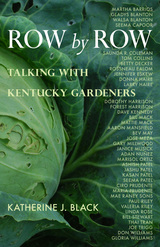
For two and a half years, Katherine J. Black crisscrossed Kentucky, interviewing home vegetable gardeners from a rich variety of backgrounds. Row by Row: Talking with Kentucky Gardeners is the result, a powerful compilation of testimonies on the connections between land, people, culture, and home.
The people profiled here share a Kentucky backdrop, but their life stories, as well as their gardens, have as many colors, shapes, and tastes as heirloom tomatoes do. Black interviewed those who grow in city backyards, who carve out gardens from farmland, and who have sprawling plots in creek bottoms and former pastures. Many of the gardeners in Row by Row speak eloquently about our industrialized food system’s injuries to the land, water, and health of people. But more often they talk about what they are doing in their gardens to reverse this course.
Row by Row is as sure to appeal to historians, food studies scholars, and sustainability advocates as it is to gardeners and local food enthusiasts. These eloquent portraits, drawn from oral histories and supplemented by Deirdre Scaggs’ color photographs, form a meditation on how gardeners make sense of their lives through what they grow and how they grow it.
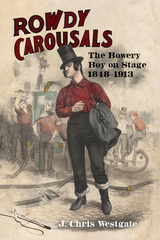
The book’s examination of working-class whiteness on stage, in the theatre, and in print culture invites theatre historians and critics to check the impulse to downplay or ignore questions about race and ethnicity in discussion of the Bowery Boy. J. Chris Westgate further explores links between the Bowery Boy’s rowdyism in the nineteenth century and the resurgence of white supremacy in the early twenty-first century.
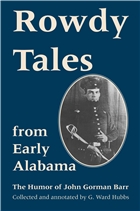
The rollicking tales of Old Southwestern humor were a distinctive contribution to American folk culture provided by the frontiersmen of the South and Southwest, a tradition brought to its highest form in the work of Mark Twain. Among the precursors of Twain was John Gorman Barr of Tuscaloosa, Alabama. Like Twain, Barr grew up in a river town, worked in a printing office, and traveled widely; and again like Twain, Barr drew upon the people and places of his home region as the primary sources for his tales.
In addition to the pure entertainment Barr’s stories provide, they also furnish a comprehensive picture of Tuscaloosa and western Alabama in the 1850s—the roaring river town coexisting uneasily with the intellectual sophistication of the recently established University of Alabama.

Emily Dickinson wrote a "letter to the world" and left it lying in her drawer more than a century ago. This widely admired epistle was her poems, which were never conventionally published in book form during her lifetime. Since the posthumous discovery of her work, general readers and literary scholars alike have puzzled over this paradox of wanting to communicate widely and yet apparently refusing to publish. In this pathbreaking study, Martha Nell Smith unravels the paradox by boldly recasting two of the oldest and still most frequently asked questions about Emily Dickinson: Why didn't she publish more poems while she was alive? and Who was her most important contemporary audience?
Regarding the question of publication, Smith urges a reconception of the act of publication itself. She argues that Dickinson did publish her work in letters and in forty manuscript books that circulated among a cultured network of correspondents, most important of whom was her sister-in-law, Susan Huntington Gilbert Dickinson. Rather than considering this material unpublished because unprinted, Smith views its alternative publication as a conscious strategy on the poet's part, a daring poetic experiment that also included Dickinson's unusual punctuation, line breaks, stanza divisions, calligraphic orthography, and bookmaking—all the characteristics that later editors tried to standardize or eliminate in preparing the poems for printing.
Dickinson's relationship with her most important reader, Sue Dickinson, has also been lost or distorted by multiple levels of censorship, Smith finds. Emphasizing the poet-sustaining aspects of the passionate bonds between the two women, Smith shows that their relationship was both textual and sexual. Based on study of the actual holograph poems, Smith reveals the extent of Sue Dickinson's collaboration in the production of poems, most notably "Safe in Their Alabaster Chambers." This finding will surely challenge the popular conception of the isolated, withdrawn Emily Dickinson.
Well-versed in poststructuralist, feminist, and new textual criticism, Rowing in Eden uncovers the process by which the conventional portrait of Emily Dickinson was drawn and offers readers a chance to go back to original letters and poems and look at the poet and her work through new eyes. It will be of great interest to a wide audience in literary and feminist studies.
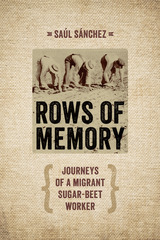
Rows of Memory tells his story and the story of his family and other migrant farm laborers like them, people who endured dangerous, dirty conditions and low pay, surviving because they took care of each other. Facing racism both on the road and at home, they lived a largely segregated life only occasionally breached by friendly employers.
Despite starting school late and leaving early every year and having to learn English on the fly, young Saúl succeeded academically. At the same time that Mexican Americans in South Texas upended the Anglo-dominated social order by voting their own leaders into local government, he upended his family’s order by deciding to go to college. Like many migrant children, he knew that his decision to pursue an education meant he would no longer be able to help feed and clothe the rest of his family. Nevertheless, with his parents’ support, he went to college, graduating in 1967 and, after a final display of his skill with a short hoe for his new friends, abandoned migrant labor for teaching.
In looking back at his youth, Sánchez invites us to appreciate the largely unrecognized and poorly rewarded strength and skill of the laborers who harvest the fruits and vegetables we eat. A first-person portrait of life on the bottom rung of the food system, this coming-of-age tale illuminates both the history of Latinos in the United States and the human consequences of industrial agriculture.

“[A] wry and rambunctious fable….The book offers brief and staggered visions of family, in all its complex permutations. Here, flocks settle into wonderfully unlikely formations. It’s possible that the most dangerous thing for anyone, harpy or human, is the decision to fly alone.”
— Hilary Leichter, New York Times Book Review
Sisters Roxy and Coco are two glamorous harpies—mythical bird women—attempting to outrun extinction and fix the planet by preventing child abuse, one child at a time.
When Roxy is suddenly attracted to her human supervisor at a social work agency a hundred years too early, Coco is very suspicious. Luring Roxy with his scent, Tim is also on the payroll of a fake conservationist intent on her less-than-legal collection. Coco swoops in to vet Tim, but Interpol is hot on her trail for a series of curious homicides. (Surveillance has a very hard time convincing his boss of what he’s monitoring.) When the sisters find themselves trapped, Chris, a bipolar skateboarding truant, tries his best to rescue them but it’s Stewie, Coco’s colleague, who turns the story inside out. Roxy and Coco climaxes at a gala of egg fanciers who scramble to escape the harpies’ talons.
Action figure–worthy, for readers of Neil Gaiman and Karen Russell, this modern take on these fabled women touches on mental illness, racism, animal rights, and the rights of children.

Vibrant color was essential to the paintings of the American pop artist Roy Lichtenstein (1923–1997), and when he began exploring the creation of outdoor sculpture in the late 1970s, vivid hues remained an important part of his artistic vocabulary. Today, preserving these remarkable works after they have endured decades in outdoor environments around the world is an issue of pressing concern.
This abundantly illustrated volume is based on extensive archival research of Lichtenstein’s studio materials, interviews with his assistants, and a thorough technical analysis of the sculpture Three Brushstrokes. The book concludes with a chapter showing various options for the care, conservation, and restoration of his sculptural works, making this an essential resource for conservators, curators, and others interested both in the iconic artist and modern sculpture in general.


Many of the injustices that Reuther fought continue to plague America today. This book provides important context for the current efforts of workers to organize, for the Black Lives Matter movement, and for efforts to reform the filibuster rule and stop voter suppression. It shows how dedicated individuals can overcome enormous odds to win great victories for social justice and emphasizes the potential connections between the labor and civil rights movements, offering hope for a more just future.

In this book, Strong recounts his early years and the stirrings of what would become a lifelong passion for art. During a childhood spent in suburban North London, Strong recalls himself as a shy and solitary boy who spent his time painting Elizabethan miniatures and Shakespearean set designs. The book follows his progression through grammar school, which he attended alongside Alan Bennett and David Hockney, and university, where he developed a love of learning and enjoyed visits to the theater, opera, and ballet. With remarkable honesty, he explores the important relationships in his life—family, friends, and a schoolteacher with whom he maintained a long correspondence—as well as his debt to figures like Cecil Beaton, Frances Yates, C. V. Wedgwood, and A. L. Rowse.
Richly illustrated throughout with photographs, drawings, and letters, this book offers a compelling look at a young man poised for success.


A fresh exploration of apologetic material that pushes beyond form criticism
Andrew Knapp applies modern genre theory to seven ancient Near Eastern royal apologies that served to defend the legitimacy of kings who came to power under irregular circumstances. Knapp examines texts and inscriptions related to Telipinu, Hattusili III, David, Solomon, Hazael, Esarhaddon, and Nabonidus to identify transhistorical common issues that unite each discourse.
Features:
- Compares Hittite, Israelite, Aramean, Assyrian, and Babylonian apologies
- Examination of apologetic as a mode instead of a genre
- Charts and illustrations
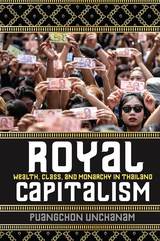
The kingdom positioned itself to connect business elites, patronize local industries, and form strategic partnerships with global corporations. Instead of restraining or regulating royal power, white-collar workers joined with the crown to form a dynamic, symbiotic force that has left the lower classes to struggle in their wake. Unchanam presents a surprising case study that kings and queens live long and large in cooperation with the bourgeoisie's interests and ideology.
Garcilaso de la Vega, the first native of the New World to attain importance as a writer in the Old, was born in Cuzco in 1539, the illegitimate son of a Spanish cavalier and an Inca princess. Although he was educated as a gentleman of Spain and won an important place in Spanish letters, Garcilaso was fiercely proud of his Indian ancestry and wrote under the name EI Inca.
Royal Commentaries of the Incas is the account of the origin, growth, and destruction of the Inca empire, from its legendary birth until the death in 1572 of its last independent ruler. For the material in Part One of Royal Commentaries—the history of the Inca civilization prior to the arrival of the Spaniards—Garcilaso drew upon "what I often heard as a child from the lips of my mother and her brothers and uncles and other elders . . . [of] the origin of the Inca kings, their greatness, the grandeur of their empire, their deeds and conquests, their government in peace and war, and the laws they ordained so greatly to the advantage of their vassals."
The conventionalized and formal history of an oral tradition, Royal Commentaries describes the gradual imposition of order and civilization upon a primitive and barbaric world. To this Garcilaso adds facts about the geography and the flora and fauna of the land; the folk practices, religion, and superstitions; the agricultural and the architectural and engineering achievements of the people; and a variety of other information drawn from his rich store of traditional knowledge, personal observation, or speculative philosophy.
Important though it is as history, Garcilaso's classic is much more: it is also a work of art. Its gracious and graceful style, skillfully translated by Harold V. Livermore, succeeds in bringing to life for the reader a genuine work of literature.
Part One covers the history of the Incas up to the arrival of the Spanish.
Garcilaso de la Vega, the first native of the New World to attain importance as a writer in the Old, was born in Cuzco in 1539, the illegitimate son of a Spanish cavalier and an Inca princess. Although he was educated as a gentleman of Spain and won an important place in Spanish letters, Garcilaso was fiercely proud of his Indian ancestry and wrote under the name El Inca.
Royal Commentaries of the Incas is the account of the origin, growth, and destruction of the Inca empire, from its legendary birth until the death in 1572 of its last independent ruler. For the material in Part One of Royal Commentaries—the history of the Inca civilization prior to the arrival of the Spaniards—Garcilaso drew upon "what I often heard as a child from the lips of my mother and her brothers and uncles and other elders . . . [of] the origin of the Inca kings, their greatness, the grandeur of their empire, their deeds and conquests, their government in peace and war, and the laws they ordained so greatly to the advantage of their vassals."
The conventionalized and formal history of an oral tradition, Royal Commentaries describes the gradual imposition of order and civilization upon a primitive and barbaric world. To this Garcilaso adds facts about the geography and the flora and fauna of the land; the folk practices, religion, and superstitions; the agricultural and the architectural and engineering achievements of the people; and a variety of other information drawn from his rich store of traditional knowledge, personal observation, or speculative philosophy.
Important though it is as history, Garcilaso's classic is much more: it is also a work of art. Its gracious and graceful style, skillfully translated by Harold V. Livermore, succeeds in bringing to life for the reader a genuine work of literature.
Part Two covers the Spanish conquest of the Incas.
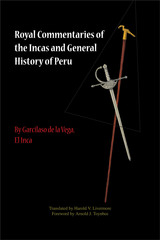
Garcilaso de la Vega, the first native of the New World to attain importance as a writer in the Old, was born in Cuzco in 1539, the illegitimate son of a Spanish cavalier and an Inca princess. Although he was educated as a gentleman of Spain and won an important place in Spanish letters, Garcilaso was fiercely proud of his Indian ancestry and wrote under the name El Inca.
Royal Commentaries of the Incas is the account of the origin, growth, and destruction of the Inca empire, from its legendary birth until the death in 1572 of its last independent ruler. For the material in Part One of Royal Commentaries—the history of the Inca civilization prior to the arrival of the Spaniards—Garcilaso drew upon "what I often heard as a child from the lips of my mother and her brothers and uncles and other elders . . . [of] the origin of the Inca kings, their greatness, the grandeur of their empire, their deeds and conquests, their government in peace and war, and the laws they ordained so greatly to the advantage of their vassals."
The conventionalized and formal history of an oral tradition, Royal Commentaries describes the gradual imposition of order and civilization upon a primitive and barbaric world. To this Garcilaso adds facts about the geography and the flora and fauna of the land; the folk practices, religion, and superstitions; the agricultural and the architectural and engineering achievements of the people; and a variety of other information drawn from his rich store of traditional knowledge, personal observation, or speculative philosophy.
Important though it is as history, Garcilaso's classic is much more: it is also a work of art. Its gracious and graceful style, skillfully translated by Harold V. Livermore, succeeds in bringing to life for the reader a genuine work of literature.

Beginning its narrative in 1961, when Albanian King Zog I died in a Paris hospital after 22 years in exile, this book tells the colourful story of this Balkan country's first and only monarch. The road to becoming Europe's youngest president in 1925 and then king of Albania in 1928 was paved with feuds and assassinations, a political career-path common in the region. He craved the throne for several reasons; the Balkans were mostly run by kings, and Zog wanted to impress his mother and also give his six sisters an easy social rise.
Once king, his accomplishments were decidedly meagre. He spent most of his time keeping up appearances as a monarch despite the obvious fraud he had imposed on an illiterate and uninterested population. His one great success was that he had almost all his opponents assassinated, usually in broad daylight abroad.
Zog retained his power until his "friend" Mussolini ousted him in 1939. On the surface a Westernizer, this self-proclaimed ruler left Albania almost as he found it, with almost no roads or trains, thoroughly uneducated and utterly impoverished.
In his book, Robert Austin combines Zog’s adventurous life story with a studious analysis of Albania's political history from the fall of the Ottoman Empire to the threshold of Euro-Atlantic integration.
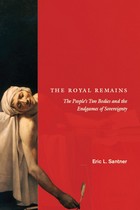
"The king is dead. Long live the king!" In early modern Europe, the king's body was literally sovereign—and the right to rule was immediately transferrable to the next monarch in line upon the king's death. In The Royal Remains, Eric L. Santner argues that the "carnal" dimension of the structures and dynamics of sovereignty hasn't disappeared from politics. Instead, it migrated to a new location—the life of the people—where something royal continues to linger in the way we obsessively track and measure the vicissitudes of our flesh.
Santner demonstrates the ways in which democratic societies have continued many of the rituals and practices associated with kingship in displaced, distorted, and usually, unrecognizable forms. He proposes that those strange mental activities Freud first lumped under the category of the unconscious—which often manifest themselves in peculiar physical ways—are really the uncanny second life of these "royal remains," now animated in the body politic of modern neurotic subjects. Pairing Freud with Kafka, Carl Schmitt with Hugo von Hofmannsthal,and Ernst Kantorowicz with Rainer Maria Rilke, Santner generates brilliant readings of multiple texts and traditions of thought en route to reconsidering the sovereign imaginary. Ultimately, The Royal Remains locates much of modernity—from biopolitical controversies to modernist literary experiments—in this transition from subjecthood to secular citizenship.
This major new work will make a bold and original contribution to discussions of politics, psychoanalysis, and modern art and literature.
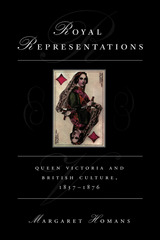
Arguing that being, seeming, and appearing were crucial to Victoria's "rule," Homans explores the variability of Victoria's agency and of its representations using a wide array of literary, historical, and visual sources. Along the way she shows how Victoria provided a deeply equivocal model for women's powers in and out of marriage, how Victoria's dramatic public withdrawal after Albert's death helped to ease the monarchy's transition to an entirely symbolic role, and how Victoria's literary self-representations influenced debates over political self-representation.
Homans considers versions of Victoria in the work of Elizabeth Barrett Browning, George Eliot, John Ruskin, Margaret Oliphant, Lewis Carroll, Alfred Lord Tennyson, and Julia Margaret Cameron.




Winner of the Society of the Cincinnati History Prize, Society of the Cincinnati in the State of New Jersey
Finalist, George Washington Prize
A Choice Outstanding Academic Title of 2015
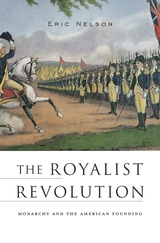
Generations of students have been taught that the American Revolution was a revolt against royal tyranny. In this revisionist account, Eric Nelson argues that a great many of our “founding fathers” saw themselves as rebels against the British Parliament, not the Crown. The Royalist Revolution interprets the patriot campaign of the 1770s as an insurrection in favor of royal power—driven by the conviction that the Lords and Commons had usurped the just prerogatives of the monarch.
“The Royalist Revolution is a thought-provoking book, and Nelson is to be commended for reviving discussion of the complex ideology of the American Revolution. He reminds us that there was a spectrum of opinion even among the most ardent patriots and a deep British influence on the political institutions of the new country.”
—Andrew O’Shaughnessy, Wall Street Journal
“A scrupulous archaeology of American revolutionary thought.”
—Thomas Meaney, The Nation
“A powerful double-barrelled challenge to historiographical orthodoxy.”
—Colin Kidd, London Review of Books
“[A] brilliant and provocative analysis of the American Revolution.”
—John Brewer, New York Review of Books

Street-smart, wickedly funny, piercingly perceptive, and eloquent enough to win a Pulitzer Prize, Mike Royko continues to have legions of devoted fans who still wonder “what Royko would have said” about some outrageous piece of news. One thing he hardly ever wrote or talked about, though, was his private life, especially the time he shared with his first wife, Carol. She was the love of his life, and her premature death at the age of forty-four shook him to his soul. Mike’s unforgettable public tribute to Carol was a heart-wrenching column written on what would have been her forty-fifth birthday, “November Farewell.” His most famous and requested piece, it was the end of an untold story.
Royko in Love offers that story’s moving and utterly beguiling beginning in letters that “Mick” Royko, then a young airman, wrote to his childhood sweetheart, Carol Duckman. He had been in love with her since they were kids on Chicago’s northwest side, but she was a beauty and he was, well, anything but. Before leaving for Korea, he was crushed to hear she was getting married, but after returning to Blaine Air Force Base in Washington, he learned she was getting a divorce. Mick soon began to woo Carol in a stream of letters that are as fervent as they are funny. Collected here for the first time, Royko’s letters to Carol are a mixture of sweet seduction, sarcastic observations on military life, a Chicago kid’s wry view of rural folk, the pain of self-doubt, and the fear of losing what is finally so close, but literally so far. His only weapons against Carol’s many suitors were his pen, his ardor, and his brilliance. And they won her heart.

Winner, 2020-2021 Northeastern Minnesota Book Award
In this long poem—almost a novel-in-verse—Jayson Iwen examines the intimate thoughts and feelings of two would-be poets: Roze Mertha, a teenage girl growing up in a trailer park, and William Blud, a veteran navigating age and loneliness in an apartment he shares with an Afghan refugee. Deftly crafting distinct voices for these characters in the upper midwestern terrain they inhabit, Iwen explores the quiet heartbreak and tenderly treasured experiences of two apparently unremarkable people using poetry to understand a world that doesn’t make much space for them.
The contributors examine trends in women’s participation in the labor market, focusing on how working both shapes and is shaped by women’s roles within their families. Tanya Byker investigates the so-called “opt-out revolution” and finds that, surpringly, the rate of “opting out” has been constant for the last twenty years even as women’s labor-force participation and pay has increased. Ipshita Pal and Jane Waldfogel show that the “motherhood penalty” is shrinking and may even reversing for mothers who are married, white, or highly educated. And while marriages in which women out-earned their husbands were once more susceptible to divorce, Christine Schwartz and Pilar Gonalons-Pons show that this relationship has essentially disappeared, suggesting that the growing economic advantage of a high-earning wife has facilitated a revolution in traditional gender roles. Despite these gains, Kim Weeden and co-authors show that the growth of jobs requiring more than 50 hours of work per week, which are disproportionately filled by men, has played an increasing role in perpetuating the gender pay gap. Similarly, Katherine Michelmore and Sharon Sassler find that within STEM fields, a gender pay gap persists partly because women are still more likely to work in lower-paid occupations.
The rapid advancement of women in education and the workforce was a distinguishing feature of the twentieth century, even though barriers to opportunities for women still exist. . Together, the articles in this issue of RSF provide insightful context for these achievements and describe women’s evolving status in society.
Administrative burdens are the learning, compliance, and psychological costs that individuals incur during encounters with public services. While some burdens are created unintentionally, others are deliberately constructed as barriers to limit claims to programs and services. Often, burdens fall most heavily on marginalized groups, preventing them from resources they need. In this double issue of RSF public administration scholar Pamela Herd, economist Hilary Hoynes, political scientists Jamila Michener and Donald Moynihan, and an interdisciplinary group of contributors explore how administrative burdens shape inequality.
Issue 1 examines how administrative burdens impact Medicaid and health inequality, student loan repayment programs, and immigration to the U.S. Emily Rauscher and Ailish Burns find that combinations of reforms to reduce administrative burdens in the late 1980s increased Medicaid enrollment and improved infant health nearly as much as Medicaid expansion. Adam Goldstein and colleagues show that administrative burdens in enrolling in income-driven repayment student loan programs causes borrowers with lower socioeconomic status to be disproportionately excluded from these programs. Lilly Yu finds that dramatic changes to immigration law and policy during the Trump Administration led immigration lawyers to inadvertently exacerbate inequality among undocumented and vulnerable immigrants’ access to legal representation.
Issue 2 looks at the role of administrative burdens in experiences with child and family support programs, the child welfare system, disaster and housing relief programs, and housing support programs. Carolyn Barnes and colleagues find that mothers’ perceptions of the costs and benefits of participation in the Special Supplemental Nutrition Assistance Program for Women, Infants, and Children (WIC) vary over time and influence whether they choose to enroll or continue participating in the program. Ethan J. Raker and Tyler M. Woods find applications from poor communities of color for Federal Emergency Management Agency (FEMA) housing aid after Hurricanes Katrina and Rita were disproportionately denied or delayed due to burdensome program requirements and implementation. Stephanie Casey Pierce and Stephanie Moulton reveal that reforms to reduce administrative burden in foreclosure programs are associated with a significant increase in the rate of benefit receipt and decrease in the foreclosure rate. Frank Edwards and colleagues show child welfare system-involved parents must navigate considerable administrative burdens in order to retain custody of their children.
This volume of RSF sheds light on the origins, experiences, and consequences of administrative burdens.
Administrative burdens are the learning, compliance, and psychological costs that individuals incur during encounters with public services. While some burdens are created unintentionally, others are deliberately constructed as barriers to limit claims to programs and services. Often, burdens fall most heavily on marginalized groups, preventing them from resources they need. In this double issue of RSF public administration scholar Pamela Herd, economist Hilary Hoynes, political scientists Jamila Michener and Donald Moynihan, and an interdisciplinary group of contributors explore how administrative burdens shape inequality.
Issue 1 examines how administrative burdens impact Medicaid and health inequality, student loan repayment programs, and immigration to the U.S. Emily Rauscher and Ailish Burns find that combinations of reforms to reduce administrative burdens in the late 1980s increased Medicaid enrollment and improved infant health nearly as much as Medicaid expansion. Adam Goldstein and colleagues show that administrative burdens in enrolling in income-driven repayment student loan programs causes borrowers with lower socioeconomic status to be disproportionately excluded from these programs. Lilly Yu finds that dramatic changes to immigration law and policy during the Trump Administration led immigration lawyers to inadvertently exacerbate inequality among undocumented and vulnerable immigrants’ access to legal representation.
Issue 2 looks at the role of administrative burdens in experiences with child and family support programs, the child welfare system, disaster and housing relief programs, and housing support programs. Carolyn Barnes and colleagues find that mothers’ perceptions of the costs and benefits of participation in the Special Supplemental Nutrition Assistance Program for Women, Infants, and Children (WIC) vary over time and influence whether they choose to enroll or continue participating in the program. Ethan J. Raker and Tyler M. Woods find applications from poor communities of color for Federal Emergency Management Agency (FEMA) housing aid after Hurricanes Katrina and Rita were disproportionately denied or delayed due to burdensome program requirements and implementation. Stephanie Casey Pierce and Stephanie Moulton reveal that reforms to reduce administrative burden in foreclosure programs are associated with a significant increase in the rate of benefit receipt and decrease in the foreclosure rate. Frank Edwards and colleagues show child welfare system-involved parents must navigate considerable administrative burdens in order to retain custody of their children.
This volume of RSF sheds light on the origins, experiences, and consequences of administrative burdens.
Over 40 million Americans live in poverty with limited opportunities for upward mobility. With an economy characterized by large numbers of unstable and low-wage jobs, a fraying social safety net, and stagnant wages, what public policy reforms might increase the number of low-income families and individuals escaping poverty? This special double issue of RSF, edited by poverty researchers Lawrence M. Berger, Maria Cancian, and Katherine A. Magnuson, includes many innovative, evidence-based anti-poverty policy proposals crafted by leading social science researchers and policy analysts.
The first issue highlights initiatives that restructure tax and transfer programs to extend greater support to low-income families, regardless of work status. H. Luke Shaefer and colleagues would replace the current child tax credit and child tax exemption in the federal income tax with an unconditional universal child allowance. They estimate that this would reduce child poverty by about 40 percent. Maria Cancian and Daniel Meyer propose a new child support initiative that institutes a guaranteed minimum monthly support payment for every child living with a single parent, using public funds to bridge the gap when that amount exceeds what the noncustodial parent can reasonably pay. Sara Kimberlin and colleagues propose a renter’s tax credit in the federal income tax for poor households facing increasing rental costs that would benefit 70 percent of renters struggling with high rents.
The second issue analyzes policies that would reduce the extent of low-wage work by boosting education, training, and access to better jobs. Teresa Eckrich Sommer and colleagues propose expanding the Head Start program to combine parental education, job training, and employment opportunities along with existing early childhood education programs to better serve the needs of both parents and children. Mark Paul and colleagues propose a federal jobs guarantee of full-time employment, at a living wage and with benefits, for all adults seeking work. Diana Strumbos and colleagues propose a national community college program, based on a successful model used by the City University of New York, to provide disadvantaged students who enroll full-time with advising, academic, career, and financial supports.
Together, the policies proposed in this double issue provide an evidence-based blueprint for anti-poverty reforms that would benefit millions of people in need.
Over 40 million Americans live in poverty with limited opportunities for upward mobility. With an economy characterized by large numbers of unstable and low-wage jobs, a fraying social safety net, and stagnant wages, what public policy reforms might increase the number of low-income families and individuals escaping poverty? This special double issue of RSF, edited by poverty researchers Lawrence M. Berger, Maria Cancian, and Katherine A. Magnuson, includes many innovative, evidence-based anti-poverty policy proposals crafted by leading social science researchers and policy analysts.
The first issue highlights initiatives that restructure tax and transfer programs to extend greater support to low-income families, regardless of work status. H. Luke Shaefer and colleagues would replace the current child tax credit and child tax exemption in the federal income tax with an unconditional universal child allowance. They estimate that this would reduce child poverty by about 40 percent. Maria Cancian and Daniel Meyer propose a new child support initiative that institutes a guaranteed minimum monthly support payment for every child living with a single parent, using public funds to bridge the gap when that amount exceeds what the noncustodial parent can reasonably pay. Sara Kimberlin and colleagues propose a renter’s tax credit in the federal income tax for poor households facing increasing rental costs that would benefit 70 percent of renters struggling with high rents.
The second issue analyzes policies that would reduce the extent of low-wage work by boosting education, training, and access to better jobs. Teresa Eckrich Sommer and colleagues propose expanding the Head Start program to combine parental education, job training, and employment opportunities along with existing early childhood education programs to better serve the needs of both parents and children. Mark Paul and colleagues propose a federal jobs guarantee of full-time employment, at a living wage and with benefits, for all adults seeking work. Diana Strumbos and colleagues propose a national community college program, based on a successful model used by the City University of New York, to provide disadvantaged students who enroll full-time with advising, academic, career, and financial supports.
Together, the policies proposed in this double issue provide an evidence-based blueprint for anti-poverty reforms that would benefit millions of people in need.
Rather than treating Asian Americans as a monolithic group, the contributors use the 2016 National Asian American Survey to pinpoint areas of convergence and divergence within the U.S. Asian population. Despite their diversity, Asian Americans share many attitudes, behavior, and experiences in ways that exceed expectations based on socioeconomic status alone— what Lee and Ramakrishnan refer to as the “diversity-convergence paradox.” This paradox — of convergence despite divergence in national origins and socioeconomic status — is the animating question of this issue of RSF.
Contributors Janelle Wong and Sono Shah find strong political consensus within the Asian American population, particularly with regard to a robust government role in setting public policies ranging from environmental protection to gun control to higher taxation and social service provision, and even affirmative action. Wong and Shah posit that political differences within the Asian American community are between progressives and those who are even more progressive. Analyzing where policy opinions converge and diverge, Sunmin Kim finds that while many Asian Americans support government interventions in health care, education, and racial justice, some diverge sharply with regard to Muslim immigration. Lucas G. Drouhot and Filiz Garip construct a novel typology of five subgroups of Asian immigrants spanning class, gender, region, and immigrant generation to examine varied experiences of immigrant inclusion. They show how different subgroups contend with the effects of racialized othering and inclusion simultaneously at play. Van C. Tran and Natasha Warikoo analyze both interracial and intra-Asian attitudes toward immigration and find diversity among Asians’ views by national origin: As labor migrants, Filipinos support Congress increasing the number of annual work visas; as economic migrants, Chinese and Indians support an increase in annual family visas; and as refugees, Vietnamese are least supportive of pro-immigration policies.
Placing Asian Americans at the center of their analyses, the contributors illuminate how such a broadly diverse population shares similar attitudes and experiences in often surprising ways. By turning a lens on the richly diverse U.S. Asian population, this issue of RSF unveils comprehensive, compelling narratives about Asian Americans and advances our understanding of race and immigrant integration in the 21st century.
Among other topics, the articles in this issue demonstrate how large-scale data sources can be used to analyze campaign contributions and political participation. Adam Bonica outlines the development of a comprehensive “map” of the American political system that collects, processes, and organizes data on politicians’ campaign finances, policy positions, and voting records, and makes such information available to voters. Drew Dimmery and Andrew Peterson show how web-based data-gathering techniques can augment such a map to include political contributions made by nonprofits, which are often overlooked or not fully transparent. Deniz Igan links campaign contribution data to both policymakers’ voting records and financial institutions’ lending behavior and shows that legislators who were heavily lobbied by institutions engaging in risky lending, such as subprime lenders, were more likely to vote for deregulation. Chris Tausanovitch connects big data on voters’ income and policy preferences to the voting records of their congressional representatives in order to study how effectively the political system represents voters of different income levels. And Sharyn O’Halloran and coauthors discuss how big data can augment traditional observational research by replacing tedious hand coding of volumes of text with automated procedures.
As research in political economy increasingly focuses on the role of money in shaping the outcomes of elections and policymaking, new methods of aggregating and examining financial data have become central. Together, the papers in this volume show how big data provides unprecedented opportunities for social scientists to better understand the links between politics and markets.
Several articles explore the effects of disadvantage and discrimination on individuals’ health. Douglas Massey and colleagues find that residential segregation and concentrated poverty—which disproportionately affects African Americans—contribute to more rapid cellular aging, a condition associated with a higher risk of disorders such as diabetes and heart disease. Bridget Goosby and colleagues track the sleep patterns of adolescents and find that compared to their white peers, African American and biracial youth who report experiencing frequent discrimination have worse sleep, which is associated with longer-term negative physical and mental health outcomes.
Other contributors explore the extent to which social and family environments influence biological processes. Yang Qu and colleagues study the cognitive development of Mexican American youth, focusing on the hippocampus, a region of the brain that produces improved memory and learning. They find that teens who were able to navigate between the cultural values of their parents and fitting in with their peers had different hippocampus volume and higher academic achievement. Other researchers explore the relationship between individuals’ genes and their environments. Melinda Mills and colleagues examine the role of genes in reproductive behavior. They find that while social and behavioral factors are strongly associated with when mothers first give birth and how many children they have, genetic factors are related to other fertility traits, such as childlessness and menopause.
The findings in this issue demonstrate the value of integrating the social and biological sciences for understanding how biological mechanisms influence, and are influenced by, socioeconomic conditions and lay the foundation for further advances in biosocial scholarship.

Slavery in the United States was a brutal, racialized system of forced labor which helped provide the startup capital for the U.S. economy’s meteoric rise. Post-slavery legal race discrimination produced segregation not only the Jim Crow South but also in northern states, where Blacks were denied many benefits of the New Deal that helped lift whites into the middle class. The 60 years since the passage of the Civil Rights Act of 1964 have witnessed mass incarceration, ongoing police killings of unarmed Blacks, continued discrimination in housing, employment, and credit markers, and a persistent devaluation of Black lives. This history of enslavement and discrimination has yielded disastrous intergenerational consequences for Black wealth and socioeconomic well-being, and calls for reparations have gained currency as a way to redress these historical wrongs. This special double issue of RSF brings together the most current social science research and policy options with regard to reparations for Black Americans.
While reparations have been issued to many peoples around the world, including in the U.S., reparations to Black Americans remain highly contested. Contributor Kathryn Anne Edwards and co-authors use case studies of previous reparations policies to offer important insights into the features that might shape reparations policy for Black Americans. Trina Shanks and colleagues argue that the structure of existing child development accounts provides a practical framework for delivering reparations payments to recipients of all ages through structured savings plans that promote asset growth and fiscal autonomy.
The political feasibility of reparations programs will largely depend on public opinion. Jesse Rhodes and colleagues draw on surveys administered between 2021 and 2023 to show that up to 28 percent of White Americans support cash reparations, up from a tiny 4 percent in 2000. Kamri Hudgins and co-authors suggest that public education on racial disparities may increase the feasibility of a reparations program. Thus, education on real-existing racial disparities in intergenerational wealth, income, health, homeownership, and education may prove to be crucial to affect a federal Black reparations program.
This important double issue of RSF employs rigorous social science research to shed new light on one of the most pressing and contentious policy proposals of our times. Engaging the debate over reparations from the past to the present and from the global to the local, this double issue of RSF provides a valuable roadmap to the issues at stake in the Black American reparations movement.
Slavery in the United States was a brutal, racialized system of forced labor which helped provide the startup capital for the U.S. economy’s meteoric rise. Post-slavery legal race discrimination produced segregation not only the Jim Crow South but also in northern states, where Blacks were denied many benefits of the New Deal that helped lift whites into the middle class. The 60 years since the passage of the Civil Rights Act of 1964 have witnessed mass incarceration, ongoing police killings of unarmed Blacks, continued discrimination in housing, employment, and credit markers, and a persistent devaluation of Black lives. This history of enslavement and discrimination has yielded disastrous intergenerational consequences for Black wealth and socioeconomic well-being, and calls for reparations have gained currency as a way to redress these historical wrongs. This special double issue of RSF brings together the most current social science research and policy options with regard to reparations for Black Americans.
While reparations have been issued to many peoples around the world, including in the U.S., reparations to Black Americans remain highly contested. Contributor Kathryn Anne Edwards and co-authors use case studies of previous reparations policies to offer important insights into the features that might shape reparations policy for Black Americans. Trina Shanks and colleagues argue that the structure of existing child development accounts provides a practical framework for delivering reparations payments to recipients of all ages through structured savings plans that promote asset growth and fiscal autonomy.
The political feasibility of reparations programs will largely depend on public opinion. Jesse Rhodes and colleagues draw on surveys administered between 2021 and 2023 to show that up to 28 percent of White Americans support cash reparations, up from a tiny 4 percent in 2000. Kamri Hudgins and co-authors suggest that public education on racial disparities may increase the feasibility of a reparations program. Thus, education on real-existing racial disparities in intergenerational wealth, income, health, homeownership, and education may prove to be crucial to affect a federal Black reparations program.
This important double issue of RSF employs rigorous social science research to shed new light on one of the most pressing and contentious policy proposals of our times. Engaging the debate over reparations from the past to the present and from the global to the local, this double issue of RSF provides a valuable roadmap to the issues at stake in the Black American reparations movement.
In recent decades, the social sciences have struggled to predict, monitor, and understand ongoing social crises. This is due in part to a lack of infrastructure to adequately do so. The American Voices Project (AVP), an experimental public-use platform for collecting qualitative data, was designed to expand the capacity of social science research by complementing existing research methods examining the everyday lives of Americans. The AVP was fielded in 2019-2022 as the country’s first nationally-representative, large-scale, multiple-domain qualitative data collection effort. In this double issue of RSF, sociologists Kathryn J. Edin, Corey D. Fields, David B. Grusky, Marybeth J. Mattingly, Kristen Olson, and Charles Varner, computer scientist Jure Leskovec, and an interdisciplinary group of contributors utilize data from the AVP to determine whether the platform can provide insight into the lives of Americans and address social science’s current shortcomings.
Issue 1 examines Americans’ experiences during the COVID-19 pandemic, identifies and explores emerging crises in the U.S., and includes the first set of classical interpretive studies based on a public-use dataset. Kyle Fee and colleagues find that job loss during the pandemic was associated with declines in financial and mental wellbeing, that expanded safety net programs did not disincentivize work, and that existing survey-based monitoring is missing important pockets of deprivation. Katherine Cramer and colleagues discover a more thoroughgoing “disaffection crisis” than has been appreciated to date, a crisis in which low- and middle-income earners often feel profoundly disconnected from politics and have little confidence in their ability to meaningfully effect change. Josephina Flores Morales shows that healthcare costs – even after recent and ongoing reforms in healthcare – remain insurmountable for many Latinx Americans, who must then rely on family for unexpected medical costs. Brandon A. Jackson finds that higher income gig workers hold surprisingly positive views of platform work as a way to explore their community, while lower income gig workers are less keen and focus on the financial benefits of gig work.
Issue 2 illustrates how the AVP can be used to uncover hidden populations and to explore how some types of crises, mindsets, or sensibilities can have cascading effects that impact multiple areas of people’s lives. Corey M. Abramson and colleagues use the AVP to uncover the population of Americans experiencing physical pain, showing that while pain is very prevalent, it has larger negative effects on the life trajectories of women and those without a college degree than on other groups. James Hiebert and colleagues uncover the large population of individuals who left the labor market due to a health condition and describe their strategies for reducing stigma when explaining why they are no longer working. Shira Zilberstein and colleagues discover that when individuals discuss their lives they feature “agentic moments” in which they can claim agency despite facing constraints that could be seen as limiting choice and agency.
This volume of RSF provides compelling insights into the lives of Americans and convincingly makes the case for building a permanent public-use platform for qualitative research.
In recent decades, the social sciences have struggled to predict, monitor, and understand ongoing social crises. This is due in part to a lack of infrastructure to adequately do so. The American Voices Project (AVP), an experimental public-use platform for collecting qualitative data, was designed to expand the capacity of social science research by complementing existing research methods examining the everyday lives of Americans. The AVP was fielded in 2019-2022 as the country’s first nationally-representative, large-scale, multiple-domain qualitative data collection effort. In this double issue of RSF, sociologists Kathryn J. Edin, Corey D. Fields, David B. Grusky, Marybeth J. Mattingly, Kristen Olson, and Charles Varner, computer scientist Jure Leskovec, and an interdisciplinary group of contributors utilize data from the AVP to determine whether the platform can provide insight into the lives of Americans and address social science’s current shortcomings.
Issue 1 examines Americans’ experiences during the COVID-19 pandemic, identifies and explores emerging crises in the U.S., and includes the first set of classical interpretive studies based on a public-use dataset. Kyle Fee and colleagues find that job loss during the pandemic was associated with declines in financial and mental wellbeing, that expanded safety net programs did not disincentivize work, and that existing survey-based monitoring is missing important pockets of deprivation. Katherine Cramer and colleagues discover a more thoroughgoing “disaffection crisis” than has been appreciated to date, a crisis in which low- and middle-income earners often feel profoundly disconnected from politics and have little confidence in their ability to meaningfully effect change. Josephina Flores Morales shows that healthcare costs – even after recent and ongoing reforms in healthcare – remain insurmountable for many Latinx Americans, who must then rely on family for unexpected medical costs. Brandon A. Jackson finds that higher income gig workers hold surprisingly positive views of platform work as a way to explore their community, while lower income gig workers are less keen and focus on the financial benefits of gig work.
Issue 2 illustrates how the AVP can be used to uncover hidden populations and to explore how some types of crises, mindsets, or sensibilities can have cascading effects that impact multiple areas of people’s lives. Corey M. Abramson and colleagues use the AVP to uncover the population of Americans experiencing physical pain, showing that while pain is very prevalent, it has larger negative effects on the life trajectories of women and those without a college degree than on other groups. James Hiebert and colleagues uncover the large population of individuals who left the labor market due to a health condition and describe their strategies for reducing stigma when explaining why they are no longer working. Shira Zilberstein and colleagues discover that when individuals discuss their lives they feature “agentic moments” in which they can claim agency despite facing constraints that could be seen as limiting choice and agency.
This volume of RSF provides compelling insights into the lives of Americans and convincingly makes the case for building a permanent public-use platform for qualitative research.
As a result of technological changes and outsourcing, unpredictable and uncertain work schedules are now widespread. Contributors Cathy Yang Liu and Luísa Nazareno demonstrate that workers in nonstandard employment arrangements earn less and work fewer hours than full-time workers. Susan Lambert, Julia Henly, and Jaesung Kim demonstrate that in addition to the financial insecurity caused by precarious work schedules, those who experience shortfalls in hours are increasingly distrustful of societal institutions. Other contributors examine job quality for women and people of color. David S. Pedulla and Katariina Mueller-Gastell study the rates at which various groups of workers apply for nonstandard jobs, and find that black and Hispanic workers are overrepresented in such positions. Michael Schultz examines mobility out of low-wage work and finds that women and nonwhites are the most entrenched in such jobs. He shows that there is greater mobility out of low-wage work where unions foster the use of job ladders and pay scales.
The issue recommends a slate of policies for creating better jobs, including increasing the federal minimum wage; strengthening collective and individual bargaining, especially through unions; and widening access to health insurance, paid sick and family leave, and childcare. In the absence of family-friendly policies at the federal level, sociologists Rachel Dwyer and Erik Olin Wright propose investments in the “social and solidarity” economy, including NGOs, nonprofit organizations, social enterprises, and worker cooperatives.
Given the centrality of work to human welfare, enhancing the quality of jobs is of urgent concern to workers, employers, and society at large. This issue of RSF helps us better understand the reasons for and consequences of declining job quality and suggests policies that would protect the most vulnerable workers.
Several articles explore the ramifications of ongoing surveillance. Amanda Geller and Jeffrey Fagan survey adolescents who come into contact with law enforcement and find that intrusive police stops contribute to heightened cynicism toward the legal system, suggesting that aggressive policing weakens youths’ deference to law and legal authorities. Robert Vargas and coauthors study police-dispatcher radio communications and show that data breaches where the dispatcher reveals confidential identifying information about individuals reporting criminal activity are more common in predominantly black and Latino neighborhoods. Because police scanners are accessible by the public, these breaches make residents more vulnerable to criminals, gangs, or predatory businesses. Other contributors explore the effects of criminal justice contact on family life. Frank Edwards examines how families’ interactions with the child welfare system differ by race and shows that black and Native American families living in counties with high arrest rates are more likely to be investigated for child abuse and neglect than similar families in counties with low arrest rates. For whites, by contrast, poverty—rather than arrests—is the strongest predictor for contact with the child welfare system. In an ethnographic study of bail bond agents, Joshua Page and coauthors find that this industry uses predatory methods to extract bail from the female relatives and partners of incarcerated individuals, increasing financial hardship particularly among low-income women of color.
The criminal justice system is an institution of social stratification in the United States. By documenting how regimes of punishment and surveillance extend far beyond prison, this issue advances our understanding of how social inequalities are perpetuated by a supposedly impartial system.
Drawing on accumulated insights of empirical work from several social science disciplines, including sociology, psychology, and economics, the editors provide a nuanced consideration of theoretical approaches and methodological challenges in identifying unequal impacts. They argue that variation in the effects of disruptive events depends on different, and sometimes offsetting, mechanisms. For example, Martha Bailey and colleagues find that more disadvantaged male youth were less negatively impacted by the macroeconomic shock of the Great Depression than more advantaged youth. Black youth, however, were more negatively impacted. Anna Baranowska-Rataj and colleagues find little evidence that parental job loss leads to worse birth outcomes or that effects vary across regions with different unemployment levels in Sweden, a nation with a relatively generous safety net and universal health care. Regarding the household disruption of parental incarceration, Kristin Turney and colleagues find that some children seamlessly step into new responsibilities, while others, especially older children who had witnessed their fathers’ frequent entanglements with the criminal legal system, consciously step away from these responsibilities. Stefanie DeLuca and colleagues argue that as youth grow accustomed to disruptive events, these exposures become less remarkable and impactful on their life outcomes. Looking at the disruption to education caused by the COVID-19 pandemic, Douglas Harris and colleagues find that \high school graduation has remained remarkably steady since the onset of the pandemic, but entry into two-year colleges was hard hit, especially for colleges serving more people of color and those from low-income families. Finally, considering environmental disruptions, Nazar Khalid and colleagues show that severe floods in India have a stronger impact on the educational outcomes of children from marginalized communities.
Through its systematic examination of the variation in the consequences of disruption, especially in early life, this volume of RSF provides an insightful and practical resource for both researchers and policymakers.
Several contributors evaluate the Dodd-Frank bill which mandated greater federal oversight of banks, increased regulation of credit rating agencies, and established the Consumer Financial Protection Bureau (CFPB), among other measures. Martin Baily and coauthors conclude that measures that require greater transparency and oversight in derivatives transactions have made financial institutions more resilient. Yet, the bill’s attempts to consolidate the fragmented financial regulatory system have not gone far enough.
Lauren Willis argues that instead of simply issuing disclosures, financial service providers should be required to meet more rigorous performance standards, such as proving through third-party testing that customers understand their fees and surcharges. John Macey advocates reforms that would afford home mortgage borrowers the same protections as investors in the securities market, including regulations that prevent brokers from encouraging borrowers to refinance their mortgages to collect fees.
The issue also addresses global financial regulation. Viral Achara examines the financial sectors in the U.S., Europe, and Asia, and assesses their vulnerability to capital shortfalls in the event of a future crisis. Niamh Moloney finds that institutions established in the wake of the crash, such as the European Supervisory Authorities, have improved European-level prudential and consumer financial regulations and have the potential to increase the EU’s influence in international financial governance.
The effects of the financial crisis continue to reverberate around the world today. Together, the articles in this issue document the steps necessary for creating a more robust financial system that works better for all consumers, investors and the financial system itself.
Nearly 46 million Americans live in rural counties – areas with small populations that are often located far from large cities. Yet we know relatively little about how living in a rural area influences child and adolescent life trajectories and adult outcomes when compared to their urban counterparts. In this special double issue of RSF, sociologist Shelley Clark, epidemiologist Sam Harper, and agricultural economist Bruce Weber, and an interdisciplinary group of contributors provide a comprehensive look at the impact that growing up rural has across the lifespan, examining both the challenges and advantages of growing up in rural America.
The 15 articles in this double issue explore the effects of rural life on family, educational attainment, economic security, and health. Issue 1 looks at the impact of rural families and schools on children’s and adolescents’ educational aspirations and wellbeing. Contributors Jennifer Sherman and Kai A. Schafft find that while rural gentrification brings needed resources to struggling communities, it can also exacerbate educational inequality. Jessica C. Drescher and colleagues reveal that only modest differences in educational outcomes exist between rural and non-rural students overall and that socioeconomic status is less predictive of academic achievement in rural areas compared to non-rural areas. Ryan Parsons shows that rural students with college aspirations, particularly students of color, incur social and emotional costs in pursuing upward mobility not experienced by their urban counterparts, such as having to permanently relocate to more advantaged areas.
Issue 2 examines transitions to adulthood in rural areas and the longer-term influences of growing up in rural areas on adults’ health and economic attainment. Emily Miller and Kathryn Edin find that low-income rural young adults have children and marry earlier than their peers, but achieve other markers of adulthood, such as leaving the parental home, more slowly and often only tentatively. Robert D. Francis shows that rural, working-class men will employ various strategies to improve their employment opportunities in ways that support their identities as rural, working-class men. For example, they pursue additional education and training in fields that will allow them to continue to hold traditionally masculine, working-class jobs, such as obtaining credentials to be truck drivers or mechanics. Evan Roberts and colleagues find that growing up on or moving to a farm were associated with better health outcomes. Emily Parker and colleagues find that rural residents who live in counties that receive a higher amount of federal funding and moved from their home county in adulthood were more likely to achieve higher educational attainment and earnings than those in counties that received less funding.
This volume of RSF provides a more nuanced understanding of the advantages and disadvantage of growing up in rural areas and how it shapes the life trajectories of rural Americans.
Nearly 46 million Americans live in rural counties – areas with small populations that are often located far from large cities. Yet we know relatively little about how living in a rural area influences child and adolescent life trajectories and adult outcomes when compared to their urban counterparts. In this special double issue of RSF, sociologist Shelley Clark, epidemiologist Sam Harper, and agricultural economist Bruce Weber, and an interdisciplinary group of contributors provide a comprehensive look at the impact that growing up rural has across the lifespan, examining both the challenges and advantages of growing up in rural America.
The 15 articles in this double issue explore the effects of rural life on family, educational attainment, economic security, and health. Issue 1 looks at the impact of rural families and schools on children’s and adolescents’ educational aspirations and wellbeing. Contributors Jennifer Sherman and Kai A. Schafft find that while rural gentrification brings needed resources to struggling communities, it can also exacerbate educational inequality. Jessica C. Drescher and colleagues reveal that only modest differences in educational outcomes exist between rural and non-rural students overall and that socioeconomic status is less predictive of academic achievement in rural areas compared to non-rural areas. Ryan Parsons shows that rural students with college aspirations, particularly students of color, incur social and emotional costs in pursuing upward mobility not experienced by their urban counterparts, such as having to permanently relocate to more advantaged areas.
Issue 2 examines transitions to adulthood in rural areas and the longer-term influences of growing up in rural areas on adults’ health and economic attainment. Emily Miller and Kathryn Edin find that low-income rural young adults have children and marry earlier than their peers, but achieve other markers of adulthood, such as leaving the parental home, more slowly and often only tentatively. Robert D. Francis shows that rural, working-class men will employ various strategies to improve their employment opportunities in ways that support their identities as rural, working-class men. For example, they pursue additional education and training in fields that will allow them to continue to hold traditionally masculine, working-class jobs, such as obtaining credentials to be truck drivers or mechanics. Evan Roberts and colleagues find that growing up on or moving to a farm were associated with better health outcomes. Emily Parker and colleagues find that rural residents who live in counties that receive a higher amount of federal funding and moved from their home county in adulthood were more likely to achieve higher educational attainment and earnings than those in counties that received less funding.
This volume of RSF provides a more nuanced understanding of the advantages and disadvantage of growing up in rural areas and how it shapes the life trajectories of rural Americans.
Beginning with the editors’ authoritative introduction, the contributors assess the effectiveness of U.S. higher education at the national, state, campus, and classroom levels. Several focus on the effects of the steep decline in state funding in recent years, which has contributed to rising tuition at most state universities. Steven Hemelt and David Marcotte find that the financial burdens of attendance, even at public institutions, is a significant and growing impediment for students from low-income families. John Witte, Barbara Wolfe, and Sara Dahill-Brown analyze 36 years of enrollment trends at the University of Wisconsin, Madison, and find increased enrollment of upper-income students, suggesting widening inequality of access.
James Rosenbaum and his coauthors examine the effectiveness of “college for all” policies and find that on a wide range of economic and job satisfaction measures, holders of sub-baccalaureate credentials outperform those who start but do not complete four-year colleges. Two papers – by Kevin Dougherty and coauthors and Michael Kurlaender and coauthors – find that the use of new regulatory mechanisms such as performance funding and rating systems are plagued by unintended consequences that can provide misleading measures of institutional effectiveness. Lynn Reimer and co-authors examine the effectiveness of the “promising practices” in STEM education (science, technology, engineering, and mathematics) promoted by the National Academy of Sciences, and find that they can increase completion rates among low-income, first-generation, and under-represented students.
Expanding college access and effectiveness is a key way to promote economic mobility. The important findings in this issue illuminate the strengths and weaknesses of the U.S. system of higher education and suggest new avenues for improving student outcomes.
Several articles examine the incorporation of the foreign-born into American politics. Katharine Donato and Samantha Perez track differences in Latinos’ political ideologies by gender and find that among new immigrants, women tend to hold more conservative political views than men. However, after living in the U.S. for five years, Latinas report themselves as more liberal; after fifteen years of U.S. residence, Latino men view themselves as more conservative. Frank D. Bean and Susan K. Brown show that due to “membership exclusion”—or significant relegation to the margins of society—undocumented immigrants have less political knowledge than those with green cards or driver’s licenses, regardless of how long they have resided here. Melissa Michelson explores how politicians’ expanded outreach to Latino communities during the 2012 election season helped reverse a decades-long trend of declining trust in the government among Latinos.
Other articles compare the political behavior of Latinos to that of other ethnic groups. Jan Leighley and Jonathan Nagler find that while the demographic patterns central to predicting whites’ political engagement—such as income and education levels—do not predict Latinos’ voting turnout, increased political outreach to Latinos has led to greater turnout. Leonie Huddy, Lily Mason, and Nechama Horwitz find that, similar to African Americans, Latino immigrants who both strongly identify with a minority group (in this case, Hispanic) and perceive discrimination against that group are more likely to align themselves with the Democratic Party.
With Latinos constituting an increasing percentage of the population, understanding how and when they participate in our political system is vital for policymakers, scholars, and advocates. The analyses in this issue of RSF provide contribute to our understanding of how immigrants and their descendants navigate American democracy.
Several articles explore how immigrants negotiate their positions in the racial hierarchy and how they perceive themselves in relation to native-born groups. Michael Jones-Correa and coauthors find that while Mexican immigrants are more likely to identify as Americans the more they report positive interactions with both native-born whites and blacks, Indian immigrants’ identification with being American is largely shaped by positive interactions just with whites. Prema Kurien shows that in response to the wave of hate crimes after 9/11, Sikh Americans sought to be recognized as an American religious minority, as well as an ethnic group distinct from Indian Americans. In their study of the children of immigrants in middle adulthood, Cynthia Feliciano and Rubén G. Rumbaut find that some second-generation immigrants retain a strong attachment to an ethnic identity into their late thirties, but that ethnic identification for others wanes as their social identities as parents, workers, or spouses become more important.
Other contributors investigate the extent to which longer-established Americans respond to increased immigration. Maureen Craig and Jennifer Richeson show that whites living in areas with large or increasing racial minority populations are more likely to believe that anti-white discrimination is on the rise. Deborah Schildkraut and Satia Morotta similarly find that when millennials—particularly those who identify as white and Republican—are exposed to information on the changing racial makeup of the U.S., they express more conservative political views.
At a time when questions of immigration and national identity are at the forefront of our political and public discourse, understanding how immigrants and their offspring influence—and are influenced by—conceptions of race and identity is critical for social scientists. This issue provides key insights into the challenges of a rapidly changing population.
Contributors George Borjas and Richard Freeman analyze how the introduction of industrial robots and the influx of immigrants have affected jobs and earnings in the manufacturing industry. They find that the effects of robots are greater than those of immigrants in terms of depressing earnings and reducing employment, suggesting the need for policies that can help workers adjust to automation. Thomas Kochan and William Kimball note the lower density of unions and their declining impact on wages, even as surveys show strong worker preference for union representation and other forms of “voice” regarding wages, compensation, training, and other working conditions.
Informal work, which includes traditional activities like babysitting as well as newer ones like driving for an online platform, is an important means of helping families make ends meet. Katharine Abraham and Susan Houseman show that over a quarter of the workforce hold jobs aside from their main employment, and a higher share of less-educated, minority, low-income, and unemployed workers rely on informal work. Lawrence Katz and Alan Krueger show a modest upward trend in the share of the U.S. workforce in alternative work arrangements over the last twenty years; they also demonstrate that current survey tools miss many instances of multiple job holding.
David Weil demonstrates how the rise of “the fissured workplace”--where businesses outsource key facets of their operations to staffing agencies and other third-party entities--contributes to wage inequality. Contracted workers have lower earnings and fewer opportunities for upward mobility. The U.S. is the only industrialized country that does not provide paid leave for new parents, and low-income families with children spend 30 percent or more of their incomes on childcare expenses. Elizabeth Doran, Ann Bartel, and Jane Waldfogel propose a payroll tax to support family-friendly policies, such as paid leave and child care, as well as modest employer mandates for scheduling control and flexibility.
Editors Groshen and Holzer provide evidence-based policy recommendations that include greater support for public higher education; adjusting federal wage and hour laws as well as those governing labor relations; limiting the effects of past incarceration on workers; and stronger youth employment programs and policies. American workers face many challenges, but there are many policies analyzed in this issue of RSF that hold promise for improving employment and earnings for American workers.
READERS
Browse our collection.
PUBLISHERS
See BiblioVault's publisher services.
STUDENT SERVICES
Files for college accessibility offices.
RECENTLY PUBLISHED


UChicago Accessibility Resources
home | accessibility | search | about | contact us
BiblioVault ® 2001 - 2025
The University of Chicago Press