
 A SCHOLARLY BOOK REPOSITORY
19 start with S start with S
Explore the groundwork for a new commentary series from SBL Press
This book contains verse by verse commentary on selections from the Greek text of the Hebrew Bible known as the Septuagint. Each chapter is from a different bible book, for which there will eventually be a full commentary published in the Society of Biblical Literature Commentary on the Septuagint. The commentary series focuses on the actual process of translation, so its authors try to describe and explain the kinds of decisions the ancient Alexandrian translators made about how to render Hebrew into Greek.
Features
- Translations from and commentary on Genesis, Exodus, Leviticus, Numbers, Esther, Job, and Psalms Contributions from eight experts on the Septuagint
- Guidelines and procedures used in the production of the translations in the series

How can economics become genuinely quantitative? This is the question that French sociologist Gabriel Tarde tackled at the end of his career, and in this pamphlet, Bruno Latour and Vincent Antonin Lépinay offer a lively introduction to the work of the forgotten genius of nineteenth-century social thought. Tarde’s solution was in total contradiction to the dominant views of his time: to quantify the connections between people and goods, you need to grasp “passionate interests.” In Tarde’s view, capitalism is not a system of cold calculations—rather it is a constant amplification in the intensity and reach of passions. In a stunning anticipation of contemporary economic anthropology, Tarde’s work defines an alternative path beyond the two illusions responsible for so much modern misery: the adepts of the Invisible Hand and the devotees of the Visible Hand will learn how to escape the sterility of their fight and recognize the originality of a thinker for whom everything is intersubjective, hence quantifiable.
At a time when the regulation of financial markets is the subject of heated debate, Latour and Lépinay provide a valuable historical perspective on the fundamental nature of capitalism.

Sai Englert offers readers an accessible and global account of settler colonialism, taking in its history, some of its main characteristics, and its continued relevance today.
From the Palestinian struggle against Israel occupation to the First Nations' mass opposition to pipeline construction in North America, indigenous peoples are at the forefront of some of the most important struggles of our age. Rich with their own unique histories, characteristics, and social relations, these different struggles are connected by the enemy they face: settler colonialism.
While settler-colonial regimes differ, Englert explains how they are all defined by a fundamental conflict between themselves and the indigenous people they aim to dispossess, exploit and/or eliminate.
To understand settler colonialism as a distinct, structural, and contemporary process, is also to start engaging with a number of international social movements, political struggles, and solidarity campaigns differently. It is to start asking how decolonization – as a material struggle for freedom – might be possible.

Seven American Women Writers of the Twentieth Century was first published in 1977. Minnesota Archive Editions uses digital technology to make long-unavailable books once again accessible, and are published unaltered from the original University of Minnesota Press editions.
Seven Modern American Novelists was first published in 1964. Minnesota Archive Editions uses digital technology to make long-unavailable books once again accessible, and are published unaltered from the original University of Minnesota Press editions.
This volume provides critical introductions to seven of the most significant American novelists of this century, bringing together in convenient book form the material from some of the University of Minnesota Pamphlets on American Writers. The writers discussed and the contributing authors are Edith Wharton by Louis Auchincloss, Sinclair Lewis by Mark Schorer, F. Scott Fitzgerald by Charles E. Shain, William Faulkner by William Van O'Connor, Ernest Hemingway by Philip Young, Thomas Wolfe by C. Hugh Holman, and Nathanael West by Stanley Edgar Hyman.
In an introduction Mr. O'Connor, who is one of the editors of the pamphlet series, discusses some critical principles as they apply to fiction writers in general and to twentieth-century American novelists in particular. He is the author of many volumes of literary criticism as well as a collection of short stories and was a professor of English at the University of California, Davis.
Teachers, librarians, and others who use the material of the University of Minnesota Pamphlets on American Writers for frequent reference or as classroom texts will find this book particularly useful. Biographical information about the writers as well as critical evaluations of their writing is given. A bibliography for each writer lists his works and critical and biographical works about him.
Seven Modern American Poets was first published in 1967. Minnesota Archive Editions uses digital technology to make long-unavailable books once again accessible, and are published unaltered from the original University of Minnesota Press editions.
This volume provides concise critical introductions to seven of the most important twentieth-century American poets, bringing together in convenient book form the material from some of the University of Minnesota Pamphlets on American Writers. The poets discussed and the contributing authors are Robert Frost by Lawrance Thompson, Wallace Stevens by William York Tindall, William Carlos Williams by John Malcolm Brinnin, Ezra Pound by William Van O'Connor, John Crowe Ransom by John L. Stewart, T.S. Eliot by Leonard Unger, and Allen Tate by George Hemphill.
Biographical information about the poets as well as critical discussions of their work is provided. A selected bibliography for each poet lists his works and critical and biographical writing about him.
In an introduction Mr. Unger, who is one of the editors of the pamphlet series, discusses the poets and their place in the development of modern American poetry. Mr. Unger is a professor of English at the University of Minnesota and the author of a number of critical works, including T. S. Eliot: Moments and Patterns.
Teachers, librarians, and others who use the material of the University of Minnesota Pamphlets on American Writers for frequent reference or as classroom texts will find this book particularly useful. It serves also as an excellent guide for the general reader.
Informed answers to questions like these, critical to our understanding of ourselves and the world around us, require both a knowledge of biology and a philosophical framework within which to make sense of its findings. In this accessible introduction to philosophy of biology, Kim Sterelny and Paul E. Griffiths present both the science and the philosophical context necessary for a critical understanding of the most exciting debates shaping biology today. The authors, both of whom have published extensively in this field, describe the range of competing views—including their own—on these fascinating topics.
With its clear explanations of both biological and philosophical concepts, Sex and Death will appeal not only to undergraduates, but also to the many general readers eager to think critically about the science of life.
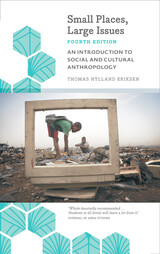
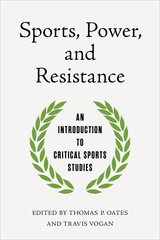
Topics range from Black coaches in the National Football League to disordered eating within distance running to transgender athletes’ fight to participate in sports. The editors have organized the contributions into three sections. Part one probes how sports build communities that foster belonging as well as exclusion. The essays in part two explore multiple forms of resistance in sports through various performances and representations. In the final section, essayists analyze more explicit efforts to use sports as a platform for activism from various political viewpoints. Throughout, the works nurture and demonstrate a sensibility that encourages humanistic, critical, and interdisciplinary inquiry.
Wide-reaching and accessible, Sports, Power, and Resistance explores timely issues while demonstrating the value of blending perspectives to better understand the games we play and watch.
Contributors: Ali Bouterse, Adrian Burgos, Jr., Michael L. Butterworth, Noah Cohan, Douglas Hartmann, Victoria E. Johnson, Abraham I. Khan, Jason Kido Lopez, Theresa Runstedtler, Jaime Schultz, Samantha N. Sheppard, and Travers
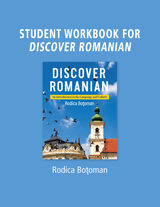
Student Workbook for Discover Romanian: An Introduction to the Language and Culture by Rodica Bot?oman
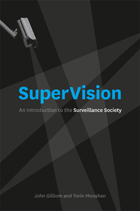
We live in a surveillance society. Anyone who uses a credit card, cell phone, or even search engines to navigate the Web is being monitored and assessed—and often in ways that are imperceptible to us. The first general introduction to the growing field of surveillance studies, SuperVision uses examples drawn from everyday technologies to show how surveillance is used, who is using it, and how it affects our world.
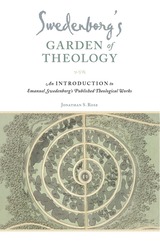
When he entered the visionary phase of his life, Swedish theologian Emanuel Swedenborg (1688-1772) set out on a journey to document all that he had seen, heard, and learned while in contact with the spirits of heaven and hell. Before his death, he wrote eighteen different works published in twenty-five volumes, totaling about three and a half million words.
Navigating that rich garden of thought has been a challenge even for scholars of Swedenborg, let alone those new to his work. In this compact guide, Jonathan S. Rose introduces readers to the basic concepts of Swedenborg’s thought, including Swedenborg’s view of God and the afterlife and his description of humanity’s spiritual history. Rose also examines how Swedenborg’s theology relates to other Christian denominations, both in his time and ours, and takes a side trip into some of Swedenborg’s more unusual ideas.
Swedenborg’s Garden of Theology provides an ideal introduction for anyone seeking a starting point to delve into Swedenborg’s religious thought.
READERS
Browse our collection.
PUBLISHERS
See BiblioVault's publisher services.
STUDENT SERVICES
Files for college accessibility offices.
RECENTLY PUBLISHED



UChicago Accessibility Resources
home | accessibility | search | about | contact us
BiblioVault ® 2001 - 2026
The University of Chicago Press