
 A SCHOLARLY BOOK REPOSITORY
158 start with W start with W
Now East Harlem native Christopher Bell takes you on a tour of his beloved neighborhood. He takes you on three separate walking tours, each visiting a different part of East Harlem and each full of stories about its theaters, museums, art spaces, schools, community centers, churches, mosques, and synagogues. You’ll also learn about the famous people who lived in El Barrio, such as actress Cecily Tyson, opera singer Marian Anderson, portrait artist Alice Neel, incomparable poet Julia De Burgos, and King of Latin Music Tito Puente.
Lavishly illustrated with over fifty photos, Walking East Harlem points out not only the many architectural and cultural landmarks in the neighborhood but also the historical buildings that have since been demolished. Whether you are a tourist or a resident, this guide will give you a new appreciation for El Barrio’s exciting history, cultural diversity, and continued artistic vibrancy.
This illustrated guide takes readers on five separate walking tours of Harlem, covering ninety-one different historical sites. Alongside major tourist destinations like the Apollo Theater and the Abyssinian Baptist Church, longtime Harlem resident Karen Taborn includes little-known local secrets like Jazz Age speakeasies, literati, political and arts community locales. Drawing from rare historical archives, she also provides plenty of interesting background information on each location.
This guide was designed with the needs of walkers in mind. Each tour consists of eight to twenty-nine nearby sites, and at the start of each section, readers will find detailed maps of the tour sites, as well as an estimated time for each walk. In case individuals would like to take a more leisurely tour, it provides recommendations for restaurants and cafes where they can stop along the way.
Walking Harlem gives readers all the tools they need to thoroughly explore over a century’s worth of this vital neighborhood’s cultural, political, religious, and artistic heritage. With its informative text and nearly seventy stunning photographs, this is the most comprehensive, engaging, and educational walking tour guidebook on one of New York’s historic neighborhoods.

In Walking in Art Education, authors explore walking and a/r/tography in their local contexts. As a result, the book finds that kinship and relationality are significant themes that permeate across a/r/tographic practices focused on ecopedagogy and learning with the land. These walking practices serve as ecopedagogical moments that attune us to human-land and more-than-human relationships, while also moving us past Western-centric understandings of land and place. More than this, the book situates this work in a/r/tographic practices taking up walking as one method for engagement.
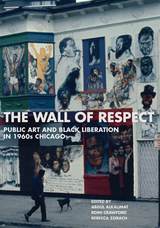
The Wall of Respect received national critical acclaim when it was unveiled on the side of a building at Forty-Third and Langley in Chicago’s Bronzeville neighborhood. Painters and photographers worked side by side on the mural's seven themed sections, which featured portraits of Black heroes and sheroes, among them John Coltrane, Nina Simone, Billie Holiday, Malcolm X, Muhammad Ali, and W. E. B. Du Bois. The Wall became a platform for music, poetry, and political rallies. Over time it changed, reflecting painful controversies among the artists as well as broader shifts in the Civil Rights and Black Liberation Movements.
At the intersection of African American culture, politics, and Chicago art history, The Wall of Respect offers, in one keepsake-quality work, an unsurpassed collection of images and essays that illuminate a powerful monument that continues to fascinate artists, scholars, and readers in Chicago and across the United States.
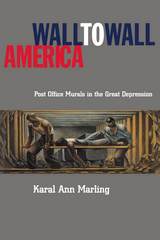
A revealing cultural history of this American art form.
In her intriguing and heavily illustrated look at post office murals of the 1930s, Karal Ann Marling examines these unique government-sponsored works of art not only as paintings but as part of American cultural history. Depicting scenes from the farm, the frontier, and the factories, these murals were commissioned by the Treasury Department during the administration of Franklin D. Roosevelt. Placed in the building where everyone in town had reason to stop, the thousand-odd paintings discussed here were truly intended to hold appeal for everyone. This spirited and often irreverent discussion offers a close look at the murals and what they represented to small-town America during the Great Depression.
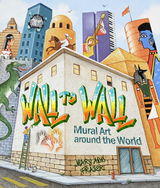
People have been drawing on walls since ancient times. They do it to create beauty, to tell a story, to make a statement, or just to say, “I was here.” You can find wall art in a remote cave in Patagonia and a desert castle in Jordan, a kingly palace in the Republic of Benin and the National Palace of Mexico, a miles-long flood channel in Los Angeles and a sky-high rooftop in Norway.
In Wall to Wall, award-winning author, illustrator, and muralist Mary Ann Fraser takes readers on a worldwide journey through time, stopping to see amazing mural art along the way. Stunning color illustrations and fascinating photographs illuminate both famous and little-known examples, and lighthearted text tells engaging stories about the people who inspired or created them. A glossary, selected bibliography, and section about the preservation of murals conclude the book. No reader will ever again pass by a mural—whether in a historic building, a museum, or out on the street—without stopping to take a closer look.
Ages ten to fourteen

Anthropologist Susan Phillips enters the lives of the African-American and Chicano gang members to write a comprehensive guide to their symbolic and visual expression. She not only decodes the graffiti—explaining how, for instance, gang boundaries are visually delimited and how "memorial" graffiti functions—but she also places it in the context of the changing urban landscapes within the city. Graffiti, she argues, is inextricably linked to political change, to race, and to art, and she demonstrates how those connections are played out in contemporary L.A. Wallbangin' is, on this level, an iconography of street imagery. But it is also a very personal narrative about entering the world of L.A. street gangs—a world of pride, enemies, affirmation, and humanity where gang members use graffiti to redefine their social and political position in society.
To many outsiders, graffiti is cryptic, senseless scribbling. But Phillips explains it as an ingenious and creative solution to the disenfranchisement felt by those who produce it. With personal narratives, provocative photography, and contemporary voices, Wallbangin' unlocks the mysteries behind street-level ideologies and their visual manifestations.
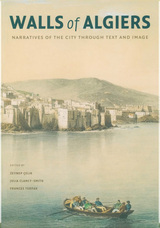
The contributors' wide-ranging but intersecting essays span the disciplines of art history, social and cultural history, urban studies, and film history. Walls of Algiers presents a multifaceted look at the social use of urban space in a North African city. Its contributors' innovative methodologies allow important insights into often overlooked aspects of life in a city whose name even today conjures up enchantment as well as incomprehensible violence.
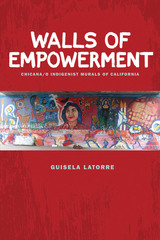
Exploring three major hubs of muralist activity in California, where indigenist imagery is prevalent, Walls of Empowerment celebrates an aesthetic that seeks to firmly establish Chicana/o sociopolitical identity in U.S. territory. Providing readers with a history and genealogy of key muralists' productions, Guisela Latorre also showcases new material and original research on works and artists never before examined in print.
An art form often associated with male creative endeavors, muralism in fact reflects significant contributions by Chicana artists. Encompassing these and other aspects of contemporary dialogues, including the often tense relationship between graffiti and muralism, Walls of Empowerment is a comprehensive study that, unlike many previous endeavors, does not privilege non-public Latina/o art. In addition, Latorre introduces readers to the role of new media, including performance, sculpture, and digital technology, in shaping the muralist's "canvas."
Drawing on nearly a decade of fieldwork, this timely endeavor highlights the ways in which California's Mexican American communities have used images of indigenous peoples to raise awareness of the region's original citizens. Latorre also casts murals as a radical force for decolonization and liberation, and she provides a stirring description of the decades, particularly the late 1960s through 1980s, that saw California's rise as the epicenter of mural production. Blending the perspectives of art history and sociology with firsthand accounts drawn from artists' interviews, Walls of Empowerment represents a crucial turning point in the study of these iconographic artifacts.
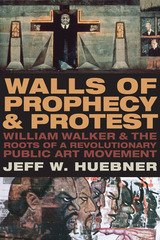
Though his art could not have been more public, Walker maintained a low profile during his working life and virtually withdrew from the public eye after his retirement in 1989. Author Jeff W. Huebner met Walker in 1990 and embarked on a series of insightful interviews that stretched over the next two decades. Those meetings and years of research form the basis of Walls of Prophecy and Protest, the story of Walker’s remarkable life and the movement that he inspired.
Featuring forty-three color images of Walker’s work, most long since destroyed or painted over, this handsome edition reveals the artist who was the primary figure behind Chicago’s famed Wall of Respect and who created numerous murals that depicted African American historical figures, protested social injustice, and promoted love, respect, racial unity, and community change.
In the frenzied final years of the Weimar Republic, amid economic collapse and mounting political catastrophe, Walter Benjamin emerged as the most original practicing literary critic and public intellectual in the German-speaking world. Volume 2 of the Selected Writings is now available in paperback in two parts.
In Part 1, Benjamin is represented by two of his greatest literary essays, "Surrealism" and "On the Image of Proust," as well as by a long article on Goethe and a generous selection of his wide-ranging commentary for Weimar Germany's newspapers.
Part 2 contains, in addition to the important longer essays, "Franz Kafka," "Karl Kraus," and "The Author as Producer," the extended autobiographical meditation "A Berlin Chronicle," and extended discussions of the history of photography and the social situation of the French writer, previously untranslated shorter pieces on such subjects as language and memory, theological criticism and literary history, astrology and the newspaper, and on such influential figures as Paul Valery, Stefan George, Hitler, and Mickey Mouse.
In the frenzied final years of the Weimar Republic, amid economic collapse and mounting political catastrophe, Walter Benjamin emerged as the most original practicing literary critic and public intellectual in the German-speaking world. Volume 2 of the Selected Writings is now available in paperback in two parts.
In Part 1, Benjamin is represented by two of his greatest literary essays, "Surrealism" and "On the Image of Proust," as well as by a long article on Goethe and a generous selection of his wide-ranging commentary for Weimar Germany's newspapers.
Part 2 contains, in addition to the important longer essays, "Franz Kafka," "Karl Kraus," and "The Author as Producer," the extended autobiographical meditation "A Berlin Chronicle," and extended discussions of the history of photography and the social situation of the French writer, previously untranslated shorter pieces on such subjects as language and memory, theological criticism and literary history, astrology and the newspaper, and on such influential figures as Paul Valery, Stefan George, Hitler, and Mickey Mouse.

"Every line we succeed in publishing today...is a victory wrested from the powers of darkness." So wrote Walter Benjamin in January 1940. Not long afterward, he himself would fall prey to those powers, a victim of suicide following a failed attempt to flee the Nazis. However insistently the idea of catastrophe hangs over Benjamin's writings in the final years of his life, the "victories wrested" in this period nonetheless constitute some of the most remarkable twentieth-century analyses of the emergence of modern society. The essays on Charles Baudelaire are the distillation of a lifetime of thinking about the nature of modernity. They record the crisis of meaning experienced by a civilization sliding into the abyss, even as they testify to Benjamin's own faith in the written word.
This volume ranges from studies of Baudelaire, Brecht, and the historian Carl Jochmann to appraisals of photography, film, and poetry. At their core is the question of how art can survive and thrive in a tumultuous time. Here we see Benjamin laying out an ethic for the critic and artist--a subdued but resilient heroism. At the same time, he was setting forth a sociohistorical account of how art adapts in an age of violence and repression.
Working at the height of his powers to the very end, Benjamin refined his theory of the mass media that culminated in the final version of his essay "The Work of Art in the Age of Its Technological Reproducibility." Also included in this volume is his influential piece "On the Concept of History," completed just before his death. The book is remarkable for its inquiry into the nature of "the modern" (especially as revealed in Baudelaire), for its ideas about the transmogrification of art and the radical discontinuities of history, and for its examples of humane life and thought in the midst of barbarism. The entire collection is eloquent testimony to the indomitable spirit of humanity under siege.


Now in paper.
At the young age of just 15, Wanda Gág received her dying father's last wish that she take up his dream of becoming a successful artist: "What papa couldn't do, Wanda would have to finish." Wanda assumed the role of head of the household and became the sole means of support for her sick mother and six siblings. Although times were tough, Wanda persevered and eventually became a celebrated artist and author living in New York City.
Karen Nelson Hoyle tells the story of Wanda Gág's eccentric life as a children's book author and traces the significant contributions she made to the genre. Drawn from extensive research of the artist's personal and professional papers and correspondence with friends and contemporaries, Hoyle presents a rich portrait of a gifted artist.
Indeed, the eight essays collected in A Wanderer in the Perfect City do soar into the realm of passion as Weschler profiles people who “were just moseying down the street one day, minding their own business, when suddenly and almost spontaneously, they caught fire, they became obsessed, they became intensely focused and intensely alive.” With keen observations and graceful prose, Weschler carries us along as a teacher of rudimentary English from India decides that his destiny is to promote the paintings of an obscure American abstract expressionist; a gifted poker player invents a more exciting version of chess; an avant-garde Russian émigré conductor speaks Latin, exclusively, to his infant daughter; and Art Spiegelman composes Maus. But simple summaries can’t do these stories justice: like music, they derive their character from digressions and details, cadence and tone. And like the upwelling of passion Weschler’s characters feel, they are better experienced than explained.
“Weschler seems so hungry for life that the rest of us become hungry for him . . . a magician, a performer, and a scholar. All in one.”—from the Foreword by Pico Iyer
“Weschler is the owner of a large dose of novelistic vision, and a particularly poetic set of ears, but . . . as important an endowment as a novelist’s eye or a poet’s ear is still the journalistic nose which led him down the proverbial alley.”—National Post (Canada)
“Weschler is a thoughtful observer and a superb storyteller.”—Minneapolis Star Tribune

Success in war ultimately depends on the consolidation of political order. Nadia Schadlow argues that the steps needed to consolidate a new political order are not separate from war. They are instead an essential component of war and victory.
The challenge of governance operations did not start with the wars in Iraq and Afghanistan. The US Army’s involvement in the political and economic reconstruction of states has been central to all its armed conflicts from large-scale conventional wars to so-called irregular or counterinsurgency wars. Yet, US policymakers and military leaders have failed to institutionalize lessons on how to consolidate combat gains into desired political outcomes. War and the Art of Governance examines fifteen historical cases of US Army military interventions, from the Mexican War through the wars in Iraq and Afghanistan. Improving future outcomes will require US policymakers and military leaders to accept that plans, timelines, and resources must be shaped to reflect this reality before they intervene in a conflict, not after things go wrong.
Schadlow provides clear lessons for students and scholars of security studies and military history, as well as for policymakers and the military personnel who will be involved in the next foreign intervention.
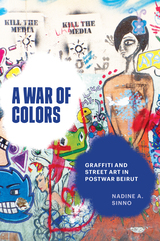
Demonstrates the role of Beirut’s postwar graffiti and street art in transforming the cityscape and animating resistance.
Over the last two decades in Beirut, graffiti makers have engaged in a fierce “war of colors,” seeking to disrupt and transform the city’s physical and social spaces. In A War of Colors, Nadine Sinno examines how graffiti and street art have been used in postwar Beirut to comment on the rapidly changing social dynamics of the country and region. Analyzing how graffiti makers can reclaim and transform cityscapes that were damaged or monopolized by militias during the war, Sinno explores graffiti’s other roles, including forging civic engagement, commemorating cultural icons, protesting political corruption and environmental violence, and animating resistance. In addition, she argues that graffiti making can offer voices to those who are often marginalized, especially women and LGBTQ people. Copiously illustrated with images of graffiti and street art, A War of Colors is a visually captivating and thought-provoking journey through Beirut, where local and global discourses intersect on both scarred and polished walls in the city.
“What are these fragments we’ve Jersey Shored against our ruin?” asks M. I. Devine, remixing T. S. Eliot, in this dizzying collection of essays that pays homage to the cultural forms that hold us steady. These fragments are stored in Warhol’s Mother’s Pantry, which takes us deep beneath the surfaces of pop to explore our shared quest for meaning today. Julia Warhola, an immigrant who arrived as the US was closing its borders a century ago, is the muse of reuse in these essays that cross boundaries—between now and then, high and low. She is the mom in pop who cut tin cans into flowers and taught Andy (and us) how to reshape and redeem our world. In essays as lyrical, witty, and experimental as the works they cover, Devine offers a new account of pop humanism. How we cut new things from the traditions we’re given, why we don’t stop believin’ (and carry on, wayward sons) when so much is stacked against us. Here are Leonard Cohen’s last songs and Molly Bloom’s last words; Vampire Weekend’s Rostam and Philip Larkin too; Stevie Smith, John Donne, and Kendrick Lamar; sonnets and selfies; early cinema and post–9/11 film, pop hooks, and pop art. In Devine’s hands, these literary and cultural artifacts are provocatively reassembled into an urgent and refreshing history that refuses to let its readers forget where pop came from and where it can go.
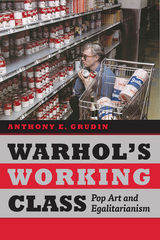
Having propelled himself from an impoverished childhood in Pittsburgh to the heights of Madison Avenue, Warhol knew both sides of this equation: the intense appeal that popular culture held for working-class audiences and the ways in which the advertising industry hoped to harness this appeal in the face of growing middle-class skepticism regarding manipulative marketing. Warhol was fascinated by these promises of egalitarian individualism and mobility, which could be profound and deceptive, generative and paralyzing, charged with strange forms of desire. By tracing its intersections with various forms of popular culture, including film, music, and television, Grudin shows us how Warhol’s work disseminated these promises, while also providing a record of their intricate tensions and transformations.
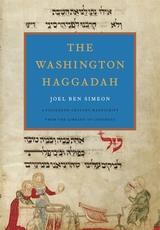
After the Bible, the Passover haggadah is the most widely read classic text in the Jewish tradition. More than four thousand editions have been published since the late fifteenth century, but few are as exquisite as the Washington Haggadah, which resides in the Library of Congress. Now, a stunning facsimile edition meticulously reproduced in full color brings this beautiful illuminated manuscript to a new generation.
Joel ben Simeon, the creator of this unusually well-preserved codex, was among the most gifted and prolific scribe-artists in the history of the Jewish book. David Stern’s introduction reconstructs his professional biography and situates this masterwork within the historical development of the haggadah, tracing the different forms the text took in the Jewish centers of Europe at the dawn of modernity.
Katrin Kogman-Appel shows how ben Simeon, more than just a copyist, was an active agent of cultural exchange. As he traveled between Jewish communities, he brought elements of Ashkenazi haggadah illustration to Italy and returned with stylistic devices acquired during his journeys. In addition to traditional Passover images, realistic illustrations of day-to-day life provide a rare window into the world of late fifteenth-century Europe.
This edition faithfully preserves the original text, with the Hebrew facsimile appearing in the original right-to-left orientation. It will be read and treasured by anyone interested in Jewish history, medieval illuminated manuscripts, and the history of the haggadah.
Watch this Space examines key emerging and evolving practices, theories, and methodologies that operate in the blurred boundary between spatial design disciplines and moving image studies more broadly. The collection is premised on the argument that the understanding of “space” in these areas continues to expand, reaching the point in which it blurs with multiple other disciplines including media art, cultural studies, art practice, and more. The result of this evolving interdisciplinary understating of space in design disciplines and moving image studies is an expanded field of haptic-visual practice and theory that can be investigated as both a material and an image-based construct.
The work engages with an evolving set of ideas, underlining how each of its primary discipline areas now increasingly incorporates tools and methodologies from each other’s fields. For example, architects routinely engage with cinematic practice as a means of exploring space; cultural theorists inspect filmic space as a two-dimensional surrogate of the real; media artists incorporate knowledge of spatial design in video installations; and filmmakers create spaces on screen that are informed by architectural theory. This all follows what can be defined as a discursive turn in our view of spatial relationships across disciplines which, by definition, is complex, eclectic, occasionally contradictory, and at times characterized by surprising confluences.
The varied essays collected here explore the diversity of how we today define, understand, and engage with notions of the body in architectural–urban space. It does so through a triadic structure that progresses from haptic relationships of the body in architectural space, through film readings of represented space in mainstream cinema, to experimental spatial projects inspired by film and the moving image. This tripartite structure specifically encourages a look across disciplines, broadening architectural, urbanist, media, and cinematic concerns through insightful case studies.
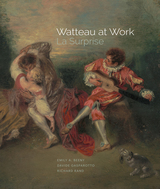
The painting La Surprise by Jean Antoine Watteau (1684–1721) belongs to a new genre of painting invented by the artist himself—the fête galante. These works, which show graceful open-air gatherings filled with scenes of courtship, music and dance, strolling lovers, and actors, do not so much tell a story as set a mood: one of playful, wistful, nostalgic reverie. Esteemed by collectors in Watteau’s day as a work that showed the artist at the height of his skill and success, La Surprise vanished from public view in 1848, not to reemerge for more than a century and a half. Acquired by the Getty Museum in 2017, it has never before been the subject of a dedicated publication. Marking the three hundredth anniversary of Watteau’s death, this book considers La Surprise within the context of the artist’s oeuvre and discusses the surprising history of collecting Watteau in Los Angeles.
This volume is published to accompany an exhibition on view at the J. Paul Getty Museum at the Getty Center from November 23, 2021, to February 20, 2022.
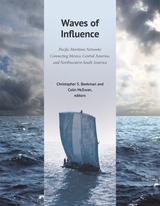
The Pacific Coast of the Americas linked Pre-Columbian complex societies from Mexico to Peru, facilitating exploration, communication, and transportation in a way that terrestrial routes could not match. Yet West Mexico, the Isthmo-Colombian Area, and Ecuador, with their great stretches of coastline, were marginalized by the definition of the Mesoamerican and Andean culture areas in the 1940s. Waves of Influence seeks to renew the inquiry into Pacific coastal contacts and bring fresh attention to connections among regions often seen as isolated from one another.
This volume reassesses the evidence for Pre-Columbian maritime contacts along the Pacific Coast, from western Mexico to northwestern South America. The authors draw upon recent models of globalization, technological style, and ritual commensality alongside methods such as computer simulation, iconographic analysis, skeletal studies, and operational chains. No single model can characterize the coastal network over 4,000 km of coastline and over 4,000 years of interaction, and authors present individual case studies to demonstrate how each region participated in its own distinct networks. Essays address the difficulty of maritime movement, the transfer of crops, technology, and knowledge, the identification of different modalities of contact, and the detection of important nodes and social actors within the coastal network.
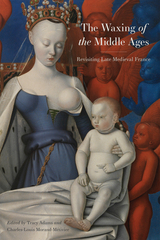
The Waxing of the Middle Ages sets out to provide a rich, complex, and diverse study of these developments and to reassert that late medieval France is crucial in its own right. The collection argues for an approach that views the late medieval period not as an afterthought, or a blind spot, but as a period that is key in understanding the fluidity of time, traditions, culture, and history. Each essay explores some “cultural form,” to borrow Huizinga’s expression, to expose the false divide that has dominated modern scholarship.

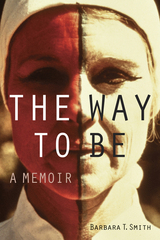
For over fifty years, Barbara T. Smith has been at the forefront of artistic movements in California. Her work across many mediums explores concepts that strike at the core of human nature, including sexuality, physical and spiritual sustenance, technology, and death. In this memoir, Smith weaves together descriptive accounts of her pioneering performances with an intimate narrative of her life.
The Way to Be covers the years 1931 to 1981, up to the artist’s fiftieth birthday, resulting in an exhaustive catalogue of her early work. It reveals the personal stories and events behind her pieces and the challenges she faced in an art world dominated by sexism and machismo. Drawing on Smith’s archive at the Getty Research Institute, this enthralling book presents previously unpublished notes, documents, photographs, and firsthand accounts of her life and practice, as well as her more recent reflections on the past. The Way to Be demonstrates Smith’s lasting contributions to the field of contemporary art and provides an engaging commentary on a recent period of great cultural and political change.
This volume is published to accompany an exhibition on view at the Getty Research Institute at the Getty Center from February 28 to July 16, 2023.
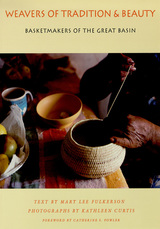
Weavers of Tradition and Beauty presents new information on contemporary Native American basketry of the Great Basin, largely from the viewpoint of the weavers themselves. In collecting their stories, Kathleen Curtis and Mary Lee Fulkerson traveled throughout Nevada, never dreaming their odyssey over back-roads and to reservations would stretch into years. Finding a deep connection to the people of the sage, the authors accompanied the weavers as they gathered and prepared their special willow, dyed the bracken fern root, and wove their baskets. Baskets—and the people who weave them—have always been revered and honored by Native Americans. Fulkerson and Curtis depict, in text and full color and black and white photographs, how their art prevails—even over adverse environmental, social, and economic conditions. Today, contemporary weavers continue their work by creating baskets in the manner of their ancestors. Teaching their children and grandchildren how to weave baskets, these artisans carry on a long and strong tradition. By documenting the basketry of Nevada's native people, the authors make a significant contribution in preserving this ancient and beautiful craft. Foreword by Catherine S. Fowler.
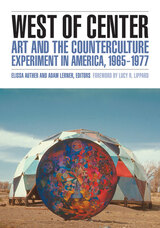
In the heady and hallucinogenic days of the 1960s and ’70s, a diverse range of artists and creative individuals based in the American West—from the Pacific coast to the Rocky Mountains and the Southwest—broke the barriers between art and lifestyle and embraced the new, hybrid sensibilities of the countercultural movement. Often created through radically collaborative artistic practices, such works as Paolo Soleri’s earth homes, the hand-built architecture of the Drop City and Libre communes, Yolanda López’s political posters, the multisensory movement workshops of Anna and Lawrence Halprin, and the immersive light shows and video-based work by the Ant Farm and Optic Nerve collectives were intended to generate new life patterns that pointed toward social and political emancipation.
In West of Center, Elissa Auther and Adam Lerner bring together a prominent group of scholars to elaborate the historical and artistic significance of these counterculture projects within the broader narrative of postwar American art, which skews heavily toward New York’s avant-garde art scene. This west of center countercultural movement has typically been associated with psychedelic art, but the contributors to this book understand this as only one dimension of the larger, artistically oriented, socially based phenomenon. At the same time, they reveal the disciplinary, geographic, and theoretical biases and assumptions that have led to the dismissal of countercultural practices in the history of art and visual culture, and they detail how this form of cultural and political activity found its place in the West.
A companion to an exhibition originating at the Museum of Contemporary Art Denver, this book illuminates how, in the western United States, the counterculture’s unique integration of art practices, political action, and collaborative life activities serves as a linchpin connecting postwar and contemporary artistic endeavors.

In 1981, the Cologne trade-fair center hosted a large exhibition titled Westkunst: Zeitgenössische Kunst seit 1939 (Western Art: Contemporary Art since 1939). Organized by art critic Laszlo Glozer and curator Kasper König, the Western-centric survey highlighted avant-garde art and politically charged themes of freedom and individual expression. By examining Westkunst’s historiographical stakes in light of the Iron Curtain division of Europe, the show is revealed as paradigmatic of the ways in which hegemonic concepts of Western art and the accompanying processes of othering were fashioned in the art world.
In this collective volume, Westkunst’s universalizing claims are scrutinized by focusing on the artistic tendencies exhibited; on exhibitionary discourses and practices of decontextualization, comparison, and appropriation; on the alleged realization of the values of progress, freedom, and autonomy; on the enacted conceptions of temporality and the architectural devices of narrativization; and on the exhibition’s blind spots and exclusions and the critical reactions it elicited. This analytic output makes fresh use of the archival materials, which are neither centralized nor systematized, with significant excerpts republished throughout the book.
Seen through the lens of exhibition history, this revisiting of Westkunst sheds light on a broader trend of cultural conservatism that was gaining strength in the 1980s, just before the end of the Cold War and the start of new forms of globalization.
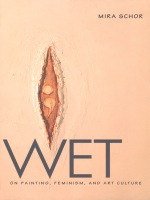
Bridging the gap between art practice, artwork, and critical theory, Wet includes some of Schor’s most influential essays that have made a significant contribution to debates over essentialism. Articles range from discussions of contemporary women artists Ida Applebroog, Mary Kelly, and the Guerrilla Girls, to "Figure/Ground," an examination of utopian modernism’s fear of the "goo" of painting and femininity. From the provocative "Representations of the Penis," which suggests novel readings of familiar images of masculinity and introduces new ones, to "Appropriated Sexuality," a trenchant analysis of David Salle’s depiction of women, Wet is a fascinating and informative collection.
Complemented by over twenty illustrations, the essays in Wet reveal Schor’s remarkable ability to see and to make others see art in a radically new light.
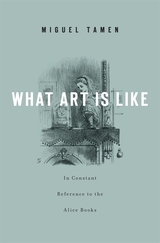
What Art Is Like is a comic, serious inquiry into the nature of art. It provides welcome relief from prevailing modes of explaining art that involve definitions, philosophical claims, and critical judgments put forth by third parties. Scrapping all such chatter, Miguel Tamen’s aphoristic lark with aesthetic questions proceeds by taking its technical vocabulary only from Lewis Carroll’s Alice’s Adventures in Wonderland and Through the Looking-Glass.
According to Tamen, it would be ridiculous to think of poems or paintings or films or any variety of artistic production as distinct from other things in the world, including people. Talking about art should be contiguous with talking about many other relevant and important matters. Tamen offers a series of analogies and similes to help us imagine these connected experiences. One, taken from the analytical table of contents where the book is writ small, suggests that “understanding a poem is like understanding a cat; neither ever says anything back and you can’t keep a conversation with them. All art is like this, but not only art is like this; nature, the past, numbers are also like this.”
Tamen takes up many central issues in aesthetics and the philosophy of art, including the connection between art and having fuzzy ideas about art, the mistake of imagining that art-decisions are put forth by art-courts where you are both judge and jury, and the notion that what happens with art also happens to you.
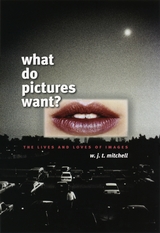
According to W. J. T. Mitchell, we need to reckon with images not just as inert objects that convey meaning but as animated beings with desires, needs, appetites, demands, and drives of their own. What Do Pictures Want? explores this idea and highlights Mitchell's innovative and profoundly influential thinking on picture theory and the lives and loves of images. Ranging across the visual arts, literature, and mass media, Mitchell applies characteristically brilliant and wry analyses to Byzantine icons and cyberpunk films, racial stereotypes and public monuments, ancient idols and modern clones, offensive images and found objects, American photography and aboriginal painting. Opening new vistas in iconology and the emergent field of visual culture, he also considers the importance of Dolly the Sheep—who, as a clone, fulfills the ancient dream of creating a living image—and the destruction of the World Trade Center on 9/11, which, among other things, signifies a new and virulent form of iconoclasm.
What Do Pictures Want? offers an immensely rich and suggestive account of the interplay between the visible and the readable. A work by one of our leading theorists of visual representation, it will be a touchstone for art historians, literary critics, anthropologists, and philosophers alike.
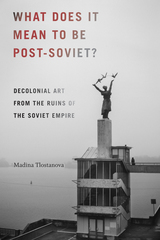
In What Editors Do, Peter Ginna gathers essays from twenty-seven leading figures in book publishing about their work. Representing both large houses and small, and encompassing trade, textbook, academic, and children’s publishing, the contributors make the case for why editing remains a vital function to writers—and readers—everywhere.
Ironically for an industry built on words, there has been a scarcity of written guidance on how to actually approach the work of editing. This book will serve as a compendium of professional advice and will be a resource both for those entering the profession (or already in it) and for those outside publishing who seek an understanding of it. It sheds light on how editors acquire books, what constitutes a strong author-editor relationship, and the editor’s vital role at each stage of the publishing process—a role that extends far beyond marking up the author’s text.
This collection treats editing as both art and craft, and also as a career. It explores how editors balance passion against the economic realities of publishing. What Editors Do shows why, in the face of a rapidly changing publishing landscape, editors are more important than ever.
In What Gardens Mean, Stephanie Ross draws on philosophy as well as the histories of art, gardens, culture, and ideas to explore the magical lure of gardens. Paying special attention to the amazing landscape gardens of eighteenth-century England, she situates gardening among the other fine arts, documenting the complex messages gardens can convey and tracing various connections between gardens and the art of painting.
What Gardens Mean offers a distinctive blend of historical and contemporary material, ranging from extensive accounts of famous eighteenth-century gardens to incisive connections with present-day philosophical debates. And while Ross examines aesthetic writings from the seventeenth and eighteenth centuries, including Joseph Addison's Spectator essays on the pleasures of imagination, the book's opening chapter surveys more recent theories about the nature and boundaries of art. She also considers gardens on their own terms, following changes in garden style, analyzing the phenomenal experience of viewing or strolling through a garden, and challenging the claim that the art of gardening is now a dead one.
Showing that an artistic lineage can be traced from gardens in the Age of Satire to current environmental installations, this book is a sophisticated account of the myriad pleasures that gardens offer and a testimony to their enduring sensory and cognitive appeal. Beautifully illustrated and elegantly written, What Gardens Mean will delight all those interested in the history of gardens and the aesthetic and philosophical issues that they invite.
"Replete with provocative musings, Ross delineates links that should prove interesting to readers engaged in pondering our capacity to relate to the natural world through the gardens we create."—Booklist
"[A]n innovative and absorbing study of the garden as an object of aesthetic interest."—Allen Carlson, Journal of Aesthetics and Art Criticism
"[P]leasantly readable. . . . A thought-provoking book for all who reflect as they dig."—Noel Kingsbury, Country Life
"[A] refreshing view of the subject. . . . Ross's book is continually illuminating in unexpected ways."—Gillian Darley, Architects' Journal
"What Gardens Mean is a wonderful intellectual combination of discussions on the interdisciplinary histories of art, gardening, and philosophy."—Choice
"In What Happened to Art Criticism?, art historian James Elkins sounds the alarm about the perilous state of that craft, which he believes is 'In worldwide crisis . . . dissolving into the background clutter of ephemeral cultural criticism' even as more and more people are doing it. 'It's dying, but it's everywhere . . . massively produced, and massively ignored.' Those who pay attention to other sorts of criticism may recognize the problems Elkins describes: 'Local judgments are preferred to wider ones, and recently judgments themselves have even come to seem inappropriate. In their place critics proffer informal opinions or transitory thoughts, and they shy from strong commitments.' What he'd like to see more of: ambitious judgment, reflection about judgment itself, and 'criticism important enough to count as history, and vice versa.' Amen to that."—Jennifer Howard, Washington Post Book World
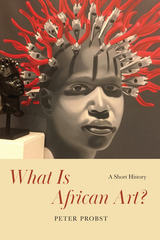
This book examines the invention and development of African art as an art historical category. It starts with a simple question: What do we mean when we talk about African art? By confronting the historically shifting answers to this question, Peter Probst identifies “African art” as a conceptual vessel that manifests wider societal transformations.
What Is African Art? covers three key stages in the field’s history. Starting with the late nineteenth through the mid-twentieth centuries, the book first discusses the colonial formation of the field by focusing on the role of museums, collectors, and photography in disseminating visual cultures as relations of power. It then explores the remaking of the field at the dawn of African independence with the shift toward contemporary art and the rise of Black Atlantic studies in the 1970s and 1980s. Finally, it examines the post- and decolonial reconfiguration of the field driven by questions of representation, repair, and restitution.
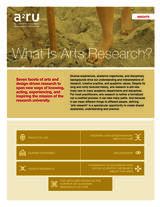
Diverse experiences, academic trajectories, and disciplinary backgrounds drive our understanding and interpretations of research, creative practice, and academic values. Despite its long and richly textured history, arts research is still relatively new to many academic departments and disciplines. For most practitioners, arts research is neither a formalized nor a codified process; it can take many paths. And because it can mean different things to different people, defining ‘arts research’ is a spectacular opportunity to create shared awareness, understanding and practice.
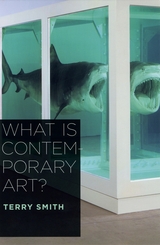
Who gets to say what counts as contemporary art? Artists, critics, curators, gallerists, auctioneers, collectors, or the public? Revealing how all of these groups have shaped today’s multifaceted definition, Terry Smith brilliantly shows that an historical approach offers the best answer to the question: What is Contemporary Art?
Smith argues that the most recognizable kind is characterized by a return to mainstream modernism in the work of such artists as Richard Serra and Gerhard Richter, as well as the retro-sensationalism of figures like Damien Hirst and Takashi Murakami. At the same time, Smith reveals, postcolonial artists are engaged in a different kind of practice: one that builds on local concerns and tackles questions of identity, history, and globalization. A younger generation embodies yet a third approach to contemporaneity by investigating time, place, mediation, and ethics through small-scale, closely connective art making. Inviting readers into these diverse yet overlapping art worlds, Smith offers a behind-the-scenes introduction to the institutions, the personalities, the biennials, and of course the works that together are defining the contemporary. The resulting map of where art is now illuminates not only where it has been but also where it is going.
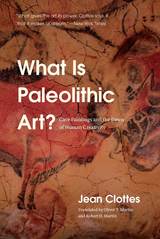
In this book, Jean Clottes, one of the most renowned figures in the study of cave paintings, pursues an answer to this “why” of Paleolithic art. While other books focus on particular sites and surveys, Clottes’s work is a contemplative journey across the world, a personal reflection on how we have viewed these paintings in the past, what we learn from looking at them across geographies, and what these paintings may have meant—what function they may have served—for their artists. Steeped in Clottes’s shamanistic theories of cave painting, What Is Paleolithic Art? travels from well-known Ice Age sites like Chauvet, Altamira, and Lascaux to visits with contemporary aboriginal artists, evoking a continuum between the cave paintings of our prehistoric past and the living rock art of today. Clottes’s work lifts us from the darkness of our Paleolithic origins to reveal, by firelight, how we think, why we create, why we believe, and who we are.
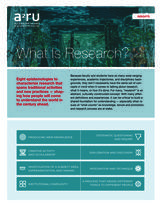
Because faculty and students have so many wide-ranging experiences, academic trajectories, and disciplinary backgrounds, they don’t necessarily have the same set of concepts in mind when it comes to talking about research, what it means, or how it’s done. For many, “research” is an abstract, culturally constructed concept. With many different definitions and experiences, it can be critical to build a shared foundation for understanding — especially when issues of “what counts” as knowledge, tenure and promotion, and research process are at stake.
Throughout the book, readers encounter scenes from over two thousand years of history, mathematics, and music: Pythagoras using pebbles to articulate didactic number games to his disciples; Galileo fretting a hill and listening with a musician’s ear to calculate the rate of acceleration under gravity; Rameau trapping Western music in a five-limit tuning system, and what could have been if he were more adept with numbers. Even when drawing on classical sources to explore canonical figures like Saint Augustine, What Music Did offers idiosyncratic critical insights that highlight our ongoing cultural reverence when answers result in simple whole number ratios like 3:2, 4:3, or 5:4. What Music Did is Tony Conrad’s extended indictment of music’s role, from the Pythagoreans to the twentieth century, in upholding the use of number as a clandestine and circumscribed armature of power.
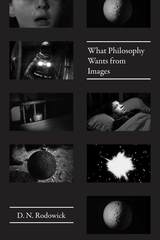
Rodowick here explores work by artists such as Ken Jacobs, Ernie Gehr, Victor Burgin, Harun Farocki, and others—artists who are creating forms that express a new historical consciousness of images. These forms acknowledge a complex relationship to the disappearing past even as they point toward new media that will challenge viewers’ confidence in what the images they see are or are becoming. What philosophy wants from images, Rodowick shows, is to renew itself conceptually through deep engagement with new forms of aesthetic experience.
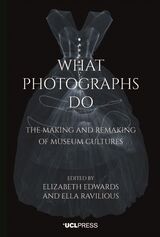
A massive quantity of museums’ photographic holdings resides not on gallery walls or archives, but outside of their formal collections, including reference photos and ephemera that are integral to the workings of museums. What Photographs Do explores how museums are defined through their photographic practices. Studied through the prism of the Victoria and Albert Museum in London, this collection asks complex and ambiguous questions about how accumulations of photographs create the values, hierarchies, histories, and knowledge systems of a museum ecosystem. Chapters are comprised of short, auto-ethnographic interventions from museum practitioners, from studio photographers and image managers to conservators and non-photographic curators, who address the significance of both historical and contemporary practices of photography in their work, providing an extensive and unique range of accounts of what photographs do in museums while also expanding the critical discourse of both photography and museums.
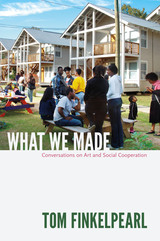
Interviewees. Naomi Beckwith, Claire Bishop, Tania Bruguera, Brett Cook, Teddy Cruz, Jay Dykeman, Wendy Ewald, Sondra Farganis, Harrell Fletcher, David Henry, Gregg Horowitz, Grant Kester, Mierle Laderman Ukeles, Pedro Lasch, Rick Lowe, Daniel Martinez, Lee Mingwei, Jonah Peretti, Ernesto Pujol, Evan Roth, Ethan Seltzer, and Mark Stern
In this highly original book, Linda Weintraub surveys the work of forty international artists who present materiality as a strategy to convert society’s environmental neglect into responsible stewardship. These bold art initiatives, enriched by their associations with philosophy, ecology, and cultural critique, bear the hallmark of a significant new art movement. This accessible text, augmented with visuals, charts, and questionnaires, invites students and a wider readership to engage in this timely arena of contemporary art.
Denise Schmandt-Besserat opened a major new chapter in the history of literacy when she demonstrated that the cuneiform script invented in the ancient Near East in the late fourth millennium BC—the world's oldest known system of writing—derived from an archaic counting device. Her discovery, which she published in Before Writing: From Counting to Cuneiform and How Writing Came About, was widely reported in professional journals and the popular press. In 1999, American Scientist chose How Writing Came About as one of the "100 or so Books that shaped a Century of Science."
In When Writing Met Art, Schmandt-Besserat expands her history of writing into the visual realm of communication. Using examples of ancient Near Eastern writing and masterpieces of art, she shows that between 3500 and 3000 BC the conventions of writing—everything from its linear organization to its semantic use of the form, size, order, and placement of signs—spread to the making of art, resulting in artworks that presented complex visual narratives in place of the repetitive motifs found on preliterate art objects. Schmandt-Besserat then demonstrates art's reciprocal impact on the development of writing. She shows how, beginning in 2700-2600 BC, the inclusion of inscriptions on funerary and votive art objects emancipated writing from its original accounting function. To fulfill its new role, writing evolved to replicate speech; this in turn made it possible to compile, organize, and synthesize unlimited amounts of information; and to preserve and disseminate information across time and space.
Schmandt-Besserat's pioneering investigation of the interface between writing and art documents a key turning point in human history, when two of our most fundamental information media reciprocally multiplied their capacities to communicate. When writing met art, literate civilization was born.

Taken from banners carried in a 1992 protest outside the Guggenheim Museum in New York, the title phrase “Where is Ana Mendieta?” evokes not only the suspicious and tragic circumstances surrounding her death but also the conspicuous absence of women artists from high-profile exhibitions. Drawing on the work of such theorists as Judith Butler, Joseph Roach, Edward Said, and Homi Bhabha, Blocker discusses the power of Mendieta’s earth-and-body art to alter, unsettle, and broaden the terms of identity itself. She shows how Mendieta used exile as a discursive position from which to disrupt dominant categories, analyzing as well Mendieta’s use of mythology and anthropology, the ephemeral nature of her media, and the debates over her ethnic, gender, and national identities.
As the first major critical examination of this enigmatic artist’s work, Where Is Ana Mendieta? will interest a broad audience, particularly those involved with the production, criticism, theory, and history of contemporary art.
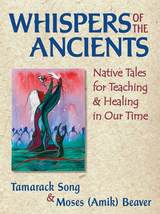
"Whispers of the Ancients helps us reconnect with the spirit of story that is a part of all our heritages. With respect for the wisdom of the past and with an eye toward the cross-cultural links that legends can make between us, Tamarack Song offers a gathering of tales and insightful comments that point the way back to the circle."
---Joseph Bruchac, author of more than 70 books for children and adults, including (with coauthor Michael J. Caduto) the best-selling Keepers of the Earth: Native American Stories and Environmental Activities for Children
It's easy to imagine yourself transported back to a time when an Elder might have told stories like those in Whispers of the Ancients around a glowing hearth. Thanks to Tamarack Song's storytelling skills, monsters, heroes, and shapeshifters come alive and open a doorway to the mysteries of life. Easily accessible to all ages, this is a book that speaks to each person at his or her own level of comprehension and need. It is as beautiful to read as it is to look at.
Stunning Aboriginal artwork by Moses (Amik) Beaver combines with provocative storytelling to renew, in all their traditional splendor, exceptional legends from around the world. Entertaining, profound, passionate, glorious---these are stories that illustrate and evoke themes common to everyone's life, with an ancient wisdom that helps the listener to cope with today's opportunities for tenderness, grief, passion, and irony.
Easily accessible to all ages, this is a book that speaks to each person at his or her own level of comprehension and need. It's as beautiful to read as it is to look at.
Tamarack Song has sought out the stories of the North African and Central Asian tribal peoples from whom he is descended, and he has listened to the tales of indigenous people from the tundra to the tropics. His books include Journey to the Ancestral Self, and he has contributed to Lois Einhorn's Forgiveness and Child Abuse. He is also a counselor, wilderness skills teacher, rites-of-passage guide, and founder of the Teaching Drum Outdoor School. Song lives in the Nicolet National Forest near Three Lakes, Wisconsin.
Moses (Amik) Beaver is an Ojibwe artist from the isolated fly-in community of Nibinamik (Summer Beaver), Ontario, three hundred miles north of Lake Superior. Grants from the Ontario Arts Council and other sources support his ongoing work with youth, and partial support for this book's illustrations comes from the District School Board of Nibinamik.
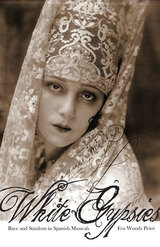
Little has been written about the Spanish film musical, a genre usually associated with the early Franco dictatorship and dismissed by critics as reactionary, escapist fare. A timely and valuable corrective, White Gypsies shows how the Spanish folkloric musical films of the 1940s and ’50s are inextricably tied to anxious concerns about race—especially, but not only, Gypsiness.
Focusing on the processes of identity formation in twentieth-century Spain—with multifaceted readings of the cinematic construction of class, gender, and sexuality—Eva Woods Peiró explores how these popular films allowed audiences to negotiate and imaginatively, at times problematically, resolve complex social contradictions. The intricate interweaving of race and modernity is particularly evident in her scrutiny of a striking popular phenomenon: how the musicals progressively whitened their stars, even as their story lines became increasingly Andalusianized and Gypsified.
White Gypsies reveals how these imaginary individuals constituted a veritable cultural barometer of how racial thinking was projected and understood across a broad swath of popular Spanish cinema.

Contributors. Zachary Bray, Deborah Gerhardt, Emily Greenfield, Randall Kennedy, Larysa Kulyvas, Sanford Levinson, Kimberly Probolus, Kermit Roosevelt III, Anna Saunders, Richard C. Shragger, Bruce Scates, Agata Tatarenko, Aleksandra Kucynskak-Zonik
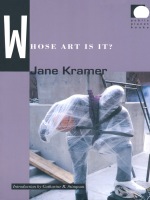
This compelling narrative raises questions about community and public art policies, about stereotypes and multiculturalism. With wit, drama, sympathy, and circumspection, Kramer draws the reader into the multicultural debate, challenging our assumptions about art, image, and their relation to community. Her portrait of the South Bronx takes the argument to its grass roots—provocative, surprising in its contradictions and complexities and not at all easy to resolve.
Accompanied by an introduction by Catharine R. Stimpson exploring the issues of artistic freedom, "political correctness," and multiculturalism, Whose Art Is It? is a lively and accessible introduction to the ongoing debate on representation and private expression in the public sphere.
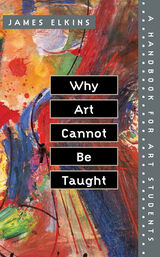
"Art can be taught, but it seems as if it can't be since so few students become outstanding artists."
"Art cannot be taught, but it can be fostered or helped along."
"Art cannot be taught or even nourished, but it is possible to teach right up to the beginnings of art so that students are ready to make art the moment they graduate."
"Great art cannot be taught, but more run-of-the-mill art can be."
Elkins traces the development (or invention) of the modern art school and considers how issues such as the question of core curriculum and the intellectual isolation of art schools affect the teaching and learning of art. He also addresses the phenomenon of art critiques as a microcosm for teaching art as a whole and dissects real-life critiques, highlighting presuppositions and dynamics that make them confusing and suggesting ways to make them more helpful.
Elkins's no-nonsense approach clears away the assumptions about art instruction that are not borne out by classroom practice. For example, he notes that despite much talk about instilling visual acuity and teaching technique, in practice neither teachers nor students behave as if those were their principal goals. He addresses the absurdity of pretending that sexual issues are absent from life-drawing classes and questions the practice of holding up great masters and masterpieces as models for students capable of producing only mediocre art. He also discusses types of art--including art that takes time to complete and art that isn't serious--that cannot be learned in studio art classes.
Why Art Cannot Be Taught is a response to Elkins's observation that "we know very little about what we do" in the art classroom. His incisive commentary illuminates the experience of learning art for those involved in it, while opening an intriguing window for those outside the discipline.
Governments around the world spend millions on art and cultural institutions, evidence of a basic human need for what the author refers to as “creating aesthetic significance.” Yet what function or purpose does art satisfy in today’s society? In this thorough and accessible text, Richard Hickman rejects the current vogue for social and cultural accounts of the nature of art-making in favor of a largely psychological approach aimed at addressing contemporary developmental issues in art education. Bringing to bear current ideas about evolutionary psychology, this second edition will be an important resource for anyone interested in arts education.
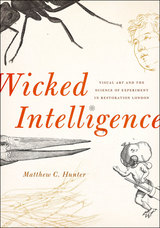

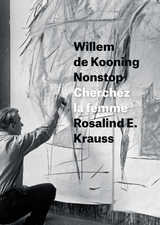
Krauss demonstrates that contrary to popular conceptions of de Kooning as an artist who painted chaotically only to finish abruptly, he was in fact constantly reworking the same subject based on a compositional template. This template informed all of his art and included a three-part vertical structure; the projection of his male point of view into the painting or sculpture; and the near-universal inclusion of the female form, which was paired with her redoubled projection onto his work. Krauss identifies these elements throughout de Kooning’s oeuvre, even in his paintings of highways, boats, and landscapes: Woman is always there. A thought-provoking study by one of America’s greatest art critics, Willem de Kooning Nonstop revolutionizes our understanding of de Kooning and shows us what has always been hiding in plain sight in his work.
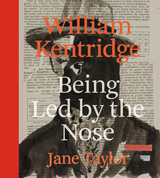
Kentridge has long been admired for his unconventional use of conventional media to produce art that is stunning, evocative, and narratively powerful—and how he works is as important as what he creates. This book is more than just a simple record of The Nose. The opera serves as a springboard into a bracing conversation about how Kentridge’s methods serve his unique mode of expression as a narrative and political artist. Taylor draws on his etchings, sculptures, and drawings to render visible the communication that occurs between his mind and hand as he thinks through the activity of making. Beautifully illustrated in color, William Kentridge offers striking insights about one of the most innovative artists of our present moment.
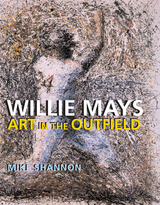
As much as any other sports figure, Willie Mays embodies the changes that racial integration brought to America’s game fields and its larger culture in the mid-20th century. Playing baseball with grace, skill, flair, and obvious delight, Willie Mays broke color barriers for more than just himself. He combined the ability to stroke majestic home runs while with an equal ability to outrun and catch what would have been home runs for opponents most famously when he turned Vic Wertz’s titantic blast into a long out in the 1954 World Series. As is often said of great players but never more true than in his case, Willie Mays could do it all.
Assembled in this work are 40 representations of how contemporary artists respond to and portray the skill, fame, and sheer love of the game that make Mays so remarkable and memorable. The art includes a broad range of styles and media from impressionistic graphite pencil drawings on paper through realistic Kodachrome photographic prints to expressionistic colored acrylics on canvas or glass. Mike Shannon offers a perceptive introductory essay on Mays’s long career and places the art in the context of his times. First curated as a traveling exhibit to honor Willie Mays’s 75th birthday, the exhibit opened at the Louisville Slugger Museum in Louisville, Kentucky, and is currently on tour.

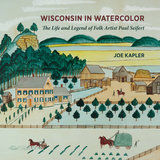
In 1867, German immigrant Paul Seifert settled in the Driftless Area of southwestern Wisconsin and began capturing the distinctive farms and landscapes of his new home in vivid, detailed watercolors. Today, these paintings are coveted by American folk art collectors across the country, but Seifert’s life remains shrouded in mystery.
In this first book written about Paul Seifert, author Joe Kapler examines the life of this enigmatic artist and provides context for his extraordinary art. The book features high-quality reproductions of twenty-two Seifert watercolors (more than half of which have never been published) and many close-ups of his characteristic details, from horses and hay wagons to dogs and dinner bells. Part art history treatment, part coffee table book, part research memoir, and part love letter to the Driftless Area, Wisconsin in Watercolor shines a long-awaited light on Seifert and the land he so carefully rendered over a hundred years ago.
Meena Kandasamy writes about the Mithuna couple, a seventeenth-century ivory sculpture from Tamil Nadu, India, depicting lovers. Kandasamy unfurls a multi-layered, multi-directional narrative built from images, questions, and contradictions evoked by the sculpture. “How can we look at this work and not talk about who produced it?” Kandasamy asks and then examines how caste and class are carved into the object as indelibly as its physical details. Such knowledge complicates easy associations of love that may be evoked by the couple.
Refusing any impulse to idealize or exoticize, Kandasamy connects the carving to personal and political stories that expose painful realities of who gets to love whom, and how. She sets the intimate alongside the institutional to interrogate terms such as decolonize, restitution, and preservation. Through an astonishing stylistic mix, including Twitter, academic discourse, poetry, and memoir, she talks back, forward, and sideways with the object.
In Without Empathy, MK Raghavendra investigates how irony and satire function in cinema by focusing on the work of eight visionary directors—Luis Buñuel, R.W. Fassbinder, Stanley Kubrick, Robert Altman, Paul Verhoeven, Aki Kaurismäki, Aleksei Balabanov, and David Lynch. At a time when irony is increasingly scrutinized as a mode of expression, this book reconsiders its role in film, revealing how these auteurs deploy wit and subversion in ways that unsettle audience expectations.
Through close readings of selected works, Raghavendra identifies layers of meaning beneath the surface of films often misread. The book situates these directors within broader traditions of cinematic satire, while simultaneously interrogating what their work has to say about society, culture, and human folly. Without Empathy is a lucid read for scholars and students of film studies and communication, providing a provocative lens on how satirical intent is not always recognizable today and how its actual targets can make society uncomfortable.
In Without Model, Theodor W. Adorno strikingly demonstrates the intellectual range for which he is known. Taking the premise of the title as his guiding principle, that artistic and philosophical thought must eschew preconceptions and instead adapt itself to its time, circumstances, and object, Adorno presents a series of essays reflecting on culture at different levels, from the details of individual products to the social conditions of their production. He shows his more nostalgic side in the childhood reminiscences of ‘Amorbach’, but also his acute sociocultural analysis on the central topic of the culture industry. He criticizes attempts to maintain tradition in music and visual art, arguing against a restorative approach by stressing the modernity and individuality of historical works in the context of their time. In all of these essays, available for the first time in English, Adorno displays the remarkable thinking of one both steeped in tradition and dedicated to seeing beyond it.
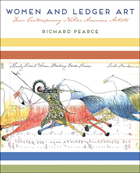
Women and Ledger Art calls attention to the extraordinary achievements of these strong women who have chosen to express themselves through ledger art. Author Richard Pearce foregrounds these contributions by focusing on four contemporary women ledger artists: Sharron Ahtone Harjo (Kiowa), Colleen Cutschall (Oglala Lakota), Linda Haukaas (Sicangu Lakota), and Dolores Purdy Corcoran (Caddo). Pearce spent six years in continual communication with the women, learning about their work and their lives. Women and Ledger Art examines the artists and explains how they expanded Plains Indian history.
With 46 stunning images of works in various mediums—from traditional forms on recovered ledger pages to simulated quillwork and sculpture, Women in Ledger Art reflects the new life these women have brought to an important transcultural form of expression.
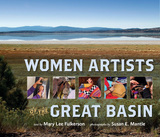
Fulkerson and Mantle, longtime artists and residents of the Great Basin themselves, offer a behind-the-scenes intimate glimpse into these women’s lives and artwork—showing not only what they create, but why they create it. Too often overlooked, the women covered here prove there is much richness, life, and creativity in what has often been dismissed as a barren desert. Their stories of overcoming great obstacles unfold right alongside images of their art. Many circle outside the conventional world of galleries, museums, and art publications and have created varied paths to their success. They are indeed true originals, rooted in a land of unique geography, a stew of cultures, and stories like no other.
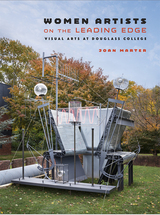
How do students develop a personal style from their instruction in a visual arts program? Women Artists on the Leading Edge explores this question as it describes the emergence of an important group of young women artists from an innovative post-war visual arts program at Douglass College.
The women who studied with avant-garde artists at Douglas were among the first students in the nation to be introduced to performance art, conceptual art, Fluxus, and Pop Art. These young artists were among the first to experience new approaches to artmaking that rejected the predominant style of the 1950s: Abstract Expressionism. The New Art espoused by faculty including Robert Watts, Allan Kaprow, Roy Lichtenstein, Geoffrey Hendricks, and others advocated that art should be based on everyday life. The phrase “anything can be art” was frequently repeated in the creation of Happenings, multi-media installations, and video art. Experimental approaches to methods of creation using a remarkable range of materials were investigated by these young women. Interdisciplinary aspects of the Douglass curriculum became the basis for performances, videos, photography, and constructions. Sculpture was created using new technologies and industrial materials. The Douglass women artists included in this book were among the first to implement the message and direction of their instructors.
Ultimately, the artistic careers of these young women have reflected the successful interaction of students with a cutting-edge faculty. From this BA and MFA program in the Visual Arts emerged women such as Alice Aycock. Rita Myers, Joan Snyder, Mimi Smith, and Jackie Winsor, who went on to become lifelong innovators. Camaraderie was important among the Douglass art students, and many continue to be instructors within a close circle of associates from their college years. Even before the inception of the women’s art movement of the 1970s, these women students were encouraged to pursue professional careers, and to remain independent in their approach to making art. The message of the New Art was to relate one’s art production to life itself and to personal experiences. From these directions emerged a “proto-feminist” art of great originality identified with women’s issues. The legacy of these artists can be found in radical changes in art instruction since the 1950s, the promotion of non-hierarchical approaches to media, and acceptance of conceptual art as a viable art form.
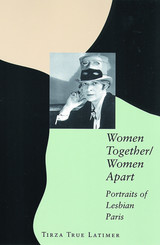
What does it mean to look like a lesbian? Though it remains impossible to conjure a definitive image that captures the breadth of this highly nuanced term, today at least we are able to consider an array of visual representations that have been put into circulation by lesbians themselves over the last six or seven decades. In the early twentieth century, though, no notion of lesbianism as a coherent social or cultural identity yet existed.
In Women Together/Women Apart, Tirza True Latimer explores the revolutionary period between World War I and World War II when lesbian artists working in Paris began to shape the first visual models that gave lesbians a collective sense of identity and allowed them to recognize each other. Flocking to Paris from around the world, artists and performers such as Romaine Brooks, Claude Cahun, Marcel Moore, and Suzy Solidor used portraiture to theorize and visualize a "new breed" of feminine subject. The book focuses on problems of feminine and lesbian self-representation at a time and place where the rights of women to political, professional, economic, domestic, and sexual autonomy had yet to be acknowledged by the law. Under such circumstances, same-sex solidarity and relative independence from men held important political implications.
Combining gender theory with visual, cultural, and historical analysis, Latimer draws a vivid picture of the impact of sexual politics on the cultural life of Paris during this key period. The book also illuminates the far-reaching consequences of lesbian portraiture on contemporary constructions of lesbian identity.

In Victorian England, virtually all women were taught to sew; needlework was allied with images of domestic economy and with traditional female roles of wife and mother- with home rather than factory. The professional seamstress, however, labored long hours for very small wages creating gowns for the upper and middle classes. In her isolation and helplessness, she provided social reformers with a powerful image of working-class suffering that appealed to the sensibilities of the upper classes and helped galvanize public opinion around the need for reform.
Women, Work, and Representation addresses the use of that image in the reform movement, underscoring the shock to the Victorian public when reports revealed that the profession of needlework was extremely hazardous, even deadly.
Author Lynn M. Alexander traces the development of the symbol of the seamstress through a variety of presentations, drawing from the writings of Charles Dickens, Elizabeth Gaskell, Charlotte Elizabeth Tonna, and George W. M. Reynolds, and on visual representations by Richard Redgrave, Thomas Benjamin Kennington, John Everett Millais, John Leech, John Tenniel, and Hubert von Herkomer.
Written to appeal to Victorian scholars, women's studies scholars, and those interested in semiotics and aestheticism, Women, Work, and Representation includes twenty illustrations, most from periodicals of the day, providing new insights into the lives of working women throughout the Victorian era.
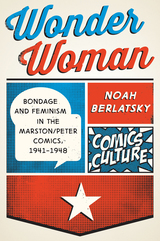
Comics expert Noah Berlatsky takes us on a wild ride through the Wonder Woman comics of the 1940s, vividly illustrating how Marston’s many quirks and contradictions, along with the odd disproportionate composition created by illustrator Harry Peter, produced a comic that was radically ahead of its time in terms of its bold presentation of female power and sexuality. Himself a committed polyamorist, Marston created a universe that was friendly to queer sexualities and lifestyles, from kink to lesbianism to cross-dressing. Written with a deep affection for the fantastically pulpy elements of the early Wonder Womancomics, from invisible jets to giant multi-lunged space kangaroos, the book also reveals how the comic addressed serious, even taboo issues like rape and incest.
Comics expert Noah Berlatsky takes us on a wild ride through the Wonder Woman comics of the 1940s, vividly illustrating how Marston’s many quirks and contradictions, along with the odd disproportionate composition created by illustrator Harry Peter, produced a comic that was radically ahead of its time in terms of its bold presentation of female power and sexuality. Himself a committed polyamorist, Marston created a universe that was friendly to queer sexualities and lifestyles, from kink to lesbianism to cross-dressing. Written with a deep affection for the fantastically pulpy elements of the early Wonder Woman comics, from invisible jets to giant multi-lunged space kangaroos, the book also reveals how the comic addressed serious, even taboo issues like rape and incest.
Wonder Woman: Bondage and Feminism in the Marston/Peter Comics 1941-1948 reveals how illustrator and writer came together to create a unique, visionary work of art, filled with bizarre ambition, revolutionary fervor, and love, far different from the action hero symbol of the feminist movement many of us recall from television.
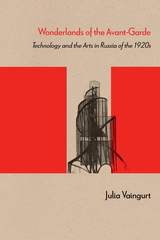
In postrevolutionary Russia, as the Soviet government pursued rapid industrialization, avant-garde artists declared their intent to serve the nascent state and to transform life in accordance with their aesthetic designs. Despite their utilitarian intentions, however, most avant-gardists rarely created works regarded as practical instruments of societal transformation. Exploring this paradox, Vaingurt claims that the artists’ fusion of technology and aesthetics prevented their creations from being fully conscripted into the arsenal of political hegemony. The purposes of avant-garde technologies, she contends, are contemplative rather than constructive. Looking at Meyerhold’s theater, Tatlin’s and Khlebnikov’s architectural designs, Mayakovsky’s writings, and other works from the period, Vaingurt offers an innovative reading of an exceptionally complex moment in the formation of Soviet culture.
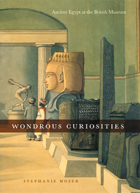
When the British Museum opened its doors more than two centuries ago, scores of visitors waited eagerly outside for a first glimpse of ancient relics from Egypt, Greece, and Rome. Even today, in this age of satellite television and high-speed Internet access, museums maintain their unique allure, continuing to play a vital role in connecting us with little-known terrains and the deep mysteries of our historical past. That’s because, as Stephanie Moser argues in Wondrous Curiosities, museum displays don’t just transmit knowledge—they actually create it.
Based on her exploration of the British Museum’s world-famous collection of Egyptian antiquities, this pioneering study reveals the powerful role of museums in shaping our understanding of science, culture, and history. Drawing on guidebooks and archival documents, Moser demonstrates that this British exhibition of ancient Egyptian artifacts was central to the way we came to define the remarkable society that produced them. And she also reveals the specific strategies—such as using pattern and symmetry, juxtaposing different types of objects, and singling out particular items—that the British Museum and others used, and still use, in representing the past. With a wealth of illustrations and a detailed account of how the museum acquired and displayed its Egyptian collections, Wondrous Curiosities will fascinate curators and scholars of British history, Egyptology, art history, archaeology, and the history of science.
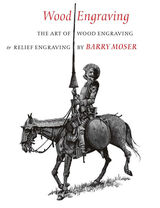
Written and illustrated by master wood engraver Barry Moser, this primer on the art of wood engraving is filled with valuable knowledge including how to prepare a printing block; how to think in the medium’s properties of line, shape, and ink; and how to transfer a drawing onto a block. It also offers practical advice on which tools to use for a project and which ink works best. A highly illustrated guide to this art form, Wood Engraving will be useful to experienced and beginner engravers alike. This book features stunning examples of Moser’s art and skill to admire and inspire.

In this study of the Japanese jeweled pagoda mandalas, Halle O’Neal reveals the entangled realms of sacred body, beauty, and salvation. Much of the previous scholarship on these paintings concentrates on formal analysis and iconographic study of their narrative vignettes. This has marginalized the intriguing interplay of text and image at their heart, precluding a holistic understanding of the mandalas and diluting their full import in Buddhist visual culture. Word Embodied offers an alternative methodology, developing interdisciplinary insights into the social, religious, and artistic implications of this provocative entwining of word and image.
O’Neal unpacks the paintings’ revolutionary use of text as picture to show how this visual conflation mirrors important conceptual indivisibilities in medieval Japan. The textual pagoda projects the complex constellation of relics, reliquaries, scripture, and body in religious doctrine, practice, and art. Word Embodied also expands our thinking about the demands of viewing, recasting the audience as active producers of meaning and offering a novel perspective on disciplinary discussions of word and image that often presuppose an ontological divide between them. This examination of the jeweled pagoda mandalas, therefore, recovers crucial dynamics underlying Japanese Buddhist art, including invisibility, performative viewing, and the spectacular visualizations of embodiment.

Conceived during the 2020 COVID-19 lockdown and the accompanying rise in anti-Asian bigotry, Word of Mouth: Asian American Artists Sharing Recipes is an artists’ cookbook featuring stories and artwork from twenty-three Asian American and Asian diaspora artists from across the United States, with contributions that range from Los Angeles–based performance artist Kristina Wong’s “Recipe for Political Action” to New Orleans–based painter Francis Wong’s family recipe for stir-fried Szechuan alligator.
Word of Mouth was first published as an online exhibition through the Virtual Asian American Art Museum. This print version features a new introduction by art historian Michelle Yee, expanded essays, and brand-new recipes. Each contribution is accompanied by an original illustration and enriched by the artist’s reflections on how their cuisine has been impacted by histories of war, migration, relocation, labor, or mixing.
A pandemic project turned illustrated cookbook, this unique collection disrupts genre expectations to celebrate how artists use food to nurture and sustain their diverse communities and artistic practices as well as to build connection during times of isolation, grief, and loss.
Wordsworth in His Major Lyrics explores the identity, role, and subjectivity of the speaker in Wordsworth's finest and best-known longer lyrics—"Tintern Abbey," "Resolution and Independence," "Ode: Intimations of Immortality," and "Elegiac Stanzas." Because Wordsworth is the most autobiographical poet of the Romantic period, and perhaps in the English language, readers naturally take the speaker to be the poet himself or, as Wordsworth says in his prefaces and essays, "the poet in his own person."
Some readers allow for a fictional dimension in the characterization of the speaker and refer to him as a persona; others treat him as a biographical self, defined in literary, political, historical, or cultural terms. Leon Waldoff examines the critical issues posed by these different understandings of the speaker's identity and argues for a conception of Wordsworth's lyrical "I" that deals with the dramatic and psychological complexities of the speaker's act of self-representation.
Taking concepts from Freud and Winnicott, this book presents a psychoanalytic model for defining the speaker and conceptualizing his subjectivity. Waldoff suggests that the lyrical "I" in each poem is a transitional self of the poet. The poem offers, in the suspended moment and cultural space of lyrical form, a self-dramatization in which the speaker attempts to act out, in the sense of both performing and attempting to achieve, a reconstitution and transformation of the self.
In a series of close readings that provide formalistic and psychological analysis, the book shows that the major lyrics contain compelling evidence that Wordsworth devoted much of his poetic art to each speaker's act of self-dramatization. The various strategies that each speaker employs and the self- dramatizing character of his utterance are theorized and assimilated into an understanding of the subjectivity he represents.
Waldoff concludes that Wordsworth's lyrical "I" requires a conception of subjectivity that gives greater recognition to its individual, psychological dimensions and to the art of self-representation in each poem than recent Wordsworth criticism has provided. This important new work will be appreciated by anyone interested in Wordsworth or in Romantic poetry.
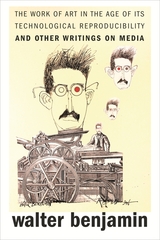
Walter Benjamin’s famous “Work of Art” essay sets out his boldest thoughts—on media and on culture in general—in their most realized form, while retaining an edge that gets under the skin of everyone who reads it. In this essay the visual arts of the machine age morph into literature and theory and then back again to images, gestures, and thought.
This essay, however, is only the beginning of a vast collection of writings that the editors have assembled to demonstrate what was revolutionary about Benjamin’s explorations on media. Long before Marshall McLuhan, Benjamin saw that the way a bullet rips into its victim is exactly the way a movie or pop song lodges in the soul.
This book contains the second, and most daring, of the four versions of the “Work of Art” essay—the one that addresses the utopian developments of the modern media. The collection tracks Benjamin’s observations on the media as they are revealed in essays on the production and reception of art; on film, radio, and photography; and on the modern transformations of literature and painting. The volume contains some of Benjamin’s best-known work alongside fascinating, little-known essays—some appearing for the first time in English. In the context of his passionate engagement with questions of aesthetics, the scope of Benjamin’s media theory can be fully appreciated.
Ranging across the fields of art history, visual studies, the history of technology, and American studies, Work Sights captures both the richness of nineteenth-century American visual culture and the extent to which Americans had begun to perceive their country as a modern nation connected by a web of interlocking technological systems.

The aesthetic politics of social movements turn public life into a public stage, where mutual displays of performance often trump rational debate, and urban streets become sites of festivals and carnival. In his penetrating new book, Workers of the World, Enjoy!, Kenneth Tucker provides a new model for understanding social change in our image-saturated and aesthetically charged world. As emotional and artistic images inform our perceptions and evaluation of politics, art and performance often provide new and creative ways of understanding self and society.
Spanning the nineteenth, twentieth, and twenty-first centuries, Workers of the World, Enjoy! uses examples from major social movements that have dramatically changed the dominant capitalist society—often in the name of labor. Tucker investigates how class and culture develop as he raises questions about what it means for public life and social movements when politics and drama come together.
Tucker catalogues how aesthetic politics influences social movements—from French Revolutionary syndicalism and fascism to the selling of the President and the street theater of the contemporary global justice movement. He also discusses the work of political theorists including Jurgen Habermas, Jeffrey Alexander, and Nancy Fraser to critique the ways public sphere has been studied.
READERS
Browse our collection.
PUBLISHERS
See BiblioVault's publisher services.
STUDENT SERVICES
Files for college accessibility offices.
RECENTLY PUBLISHED




UChicago Accessibility Resources
home | accessibility | search | about | contact us
BiblioVault ® 2001 - 2026
The University of Chicago Press