
 A SCHOLARLY BOOK REPOSITORY
60 start with A start with A

These are the questions that drive Wendy Simonds' Abortion at Work. Simonds documents the ways in which workers at a feminist clinic construct compelling feminist visions, and also watch their ideals fall short in practice. Simonds interprets these women's narratives to get at how abortion works on feminism, and to show what feminism can gain by rethinking abortion utilizing these activists' terms. In thoroughly engaging prose, Simonds frames her analysis with a moving account of her own personal understanding of the issues.
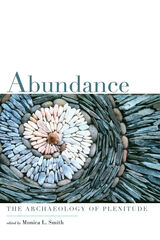
Using case studies from around the globe—including Mesoamerica, North and South America, Africa, China, and the Greco-Roman world—and across multiple time periods, the authors in this volume make the case that abundance provides an essential explanatory perspective on ancient peoples’ choices and activities. Economists frequently focus on scarcity as a driving principle in the development of social and economic hierarchies, yet focusing on plenitude enables the understanding of a range of cohesive behaviors that were equally important for the development of social complexity.
Our earliest human ancestors were highly mobile hunter-gatherers who sought out places that provided ample food, water, and raw materials. Over time, humans accumulated and displayed an increasing quantity and variety of goods. In households, shrines, tombs, caches, and dumps, archaeologists have discovered large masses of materials that were deliberately gathered, curated, distributed, and discarded by ancient peoples. The volume’s authors draw upon new economic theories to consider the social, ideological, and political implications of human engagement with abundant quantities of resources and physical objects and consider how individual and household engagements with material culture were conditioned by the quest for abundance.
Abundance shows that the human propensity for mass consumption is not just the result of modern production capacities but fulfills a longstanding focus on plenitude as both the assurance of well-being and a buffer against uncertainty. This book will be of great interest to scholars and students in economics, anthropology, and cultural studies.
Contributors: Traci Ardren, Amy Bogaard, Elizabeth Klarich, Abigail Levine, Christopher R. Moore, Tito E. Naranjo, Stacey Pierson, James M. Potter, François G. Richard, Christopher W. Schmidt, Carol Schultze, Payson Sheets, Monica L. Smith, Katheryn C. Twiss, Mark D. Varien, Justin St. P. Walsh, María Nieves Zedeño

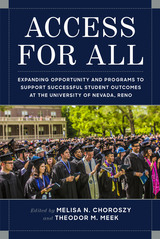
This collection of essays, written by University of Nevada, Reno (UNR) faculty and students, is an examination of the programs and strategies created to support first-generation and other underrepresented student populations. In addition, it serves as a dedication to the families and students whose hopes and dreams include the attainment of a college degree. Readers will gain insight into the framework needed to provide accessible programs and services to a large and diverse student population before, during, and after college graduation as well as first-hand success stories from the students themselves.
Each generation hopes for a better life for their children. Higher education, in particular, has been a dream for many in this country that has been made possible through public and private financial support. Every new generation of college-bound students faces new and evolving challenges, but the fierce dedication and commitment demonstrated in these pages define the key to developing a thriving and diverse institution that helps all students succeed.
The intimate stories of these "accidental" immigrants broaden conventional notions of home. From a Maori woman who moves to Norway to the daughter of an Iranian diplomat now living in France, Kelley weaves together these stories of the personal and emotional effects of immigration with interdisciplinary discussions drawn from anthropology and psychology. Ultimately, she reveals how the lifelong process of immigration affects each woman's sense of identity and belonging and contributes to better understanding today's globalized society.
Today's diverse and financially burdened students enter higher education eager to succeed at institutions originally designed for culturally homogenous and predominantly white middle-class populations. They are expected to learn from faculty trained primarily as researchers. Unsurprisingly, student dropout and faculty burnout rates are high, leading some conservatives to demand that higher education purge itself of "unqualified" students and teachers. But, as Achieving Against the Odds demonstrates, new and better solutions emerge once we assume that both faculty and students still possess a mutual potential for learning when they meet in the college classroom.
This collection -- drawing on the experiences of faculty at the University of Massachusetts-Boston -- documents a complex and challenging process of pedagogical transformation. The contributors come from a wide range of disciplines -- American studies, anthropology, Asian American studies, English, ESL, history, language, political science, psychology, sociology, and theology. Like their students, they bring a variety of backgrounds into the classroom -- as people of color, women, gays, working class people, and "foreigners" of one sort or another. Together they have engaged in an exciting struggle to devise pedagogies which respond to the needs and life experiences of their students and to draw each of them into a dialogue with the content and methodology of their disciplines. Courageously airing their own mistakes and weaknesses alongside their breakthroughs, they illuminate for the reader a process of teaching transformation by which discipline-trained scholars discover how to promote the learning of diverse students.
As one reads their essays, one is struck by how much these faculty have benefited from the insights they have gleaned from colleagues as well as students. Through argument and examples, personal revelation and references as well as students. Through argument and examples, personal revelation and references to authority, they draw the reader into their community. This is a book to inspire and enlighten everyone interested in making higher education more truly democratic, inclusive and intellectually challenging for today's students.

Provides a new foundation for discussions about theater, film, and translations between the two mediums.
Adapting Performance Between Stage and Screen provides an introduction to adaptations between theater and film, establishing a framework for considering these as distinct from literary adaptation. The book places emphasis on performance and event, opening new avenues of exploration to include non-literary issues such as the treatment of space and place, mis en scène, acting styles, and star personas. The recent growth of digital theater is examined to foreground the “events” of theater and cinema—largely ignored in adaptation studies—with phenomena such as National Theatre Live analyzed for the different ways that “liveness” is adapted.
Drawing from case studies that explore distinct periods in British film and theater history, the volume looks at issues surrounding theatrical naturalism and cinematic realism and illustrates the principle that adaptations can't be divorced from the historical and cultural moment in which they are produced. Adapting Performance Between Stage and Screen explores how cultural values can be articulated in the act of translating between media, providing a new framework for the discussion of theater and film as dramatic works.
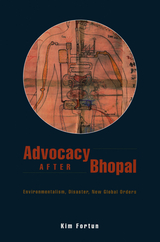
Kim Fortun explores these claims by focusing on the dynamics and paradoxes of advocacy in competing power domains. She moves from hospitals in India to meetings with lawyers, corporate executives, and environmental justice activists in the United States to show how the disaster and its effects remain with us. Spiraling outward from the victims' stories, the innovative narrative sheds light on the way advocacy works within a complex global system, calling into question conventional notions of responsibility and ethical conduct. Revealing the hopes and frustrations of advocacy, this moving work also counters the tendency to think of Bhopal as an isolated incident that "can't happen here."
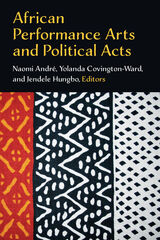
African Performance Arts and Political Actspresents innovative formulations for how African performance and the arts shape the narratives of cultural history and politics. This collection, edited by Naomi André, Yolanda Covington-Ward, and Jendele Hungbo, engages with a breadth of African countries and art forms, bringing together speech, hip hop, religious healing and gesture, theater and social justice, opera, radio announcements, protest songs, and migrant workers’ dances. The spaces include village communities, city landscapes, prisons, urban hostels, Township theaters, opera houses, and broadcasts through the airwaves on television and radio as well as in cyberspace. Essays focus on case studies from Cameroon, the Democratic Republic of the Congo, Nigeria, Senegal, South Africa, and Tanzania.
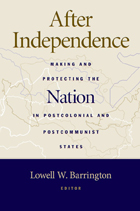
"Where do nationalists go once they get what they want? We know rather little about how nationalist movements transform themselves into the governments of new states, or how they can become opponents of new regimes that, in their view, have not taken the self-determination drive far enough. This stellar collection contributes not only to comparative theorizing on nationalist movements, but also deepens our understanding of the contentious politics of nationalism's ultimate product--new countries."
--Charles King, Chair of the Faculty and Ion Ratiu Associate Professor, Georgetown University School of Foreign Service
"This well-integrated volume analyzes two important variants of nationalism-postcolonial and postcommunist-in a sober, lucid way and will benefit students and scholars alike."
--Zvi Gitelman, University of Michigan
Lowell W. Barrington is Associate Professor of Political Science, Marquette University.

This book offers an intellectual and historical background for these policy choices, specifically in Argentina, Brazil, Chile, Colombia, Mexico, and Peru. The contributors detail the structural reform and economic policies in Latin America and discuss the various and often contradictory effects neoliberalism, such as fluctuating growth rates and saving-investment balances, worsened corruption, growth of exports, falling wages, and rising unemployment. In addition, each case study forecasts the effects of neoliberal policies on future growth and income distribution in the respective countries. Finally, it offers policy alternatives to neoliberalism.
The essays in this volume are: an introduction by Lance Taylor; "The Argentine Experience with Stabilization and Structural Reform," by José María Fanelli and Roberto Frenkel; "Opening, Stabilization, and Macroeconomic Sustainability in Brazil," by Edward Amadeo, "An Ongoing Structural Transformation: The Colombian Economy, 1986-96," by José Antonio Ocampo; "Economic Reforms, Stabilization Policies, and the 'Mexican Disease,'" by Nora Claudia Lustig and Jaime Ros; and "Structural Reforms and Macroeconomic Policy in Peru: 1990-96," by Oscar Dancourt.
Lance Taylor is the Arnhold Professor of International Cooperation and Development, New School for Social Research.


Caputi asks us not only to name the phenomenon of sexually political murder, but to recognize sex crime in all of its various interconnecting manifestations.
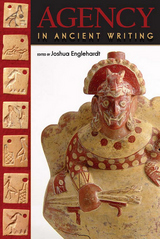
Individual agents are frequently evident in early writing and notational systems, yet these systems have rarely been subjected to the concept of agency as it is traceable in archeology. Agency in Ancient Writing addresses this oversight, allowing archeologists to identify and discuss real, observable actors and actions in the archaeological record.
Embracing myriad ways in which agency can be interpreted, ancient writing systems from Mesoamerica, Mesopotamia, Egypt, Crete, China, and Greece are examined from a textual perspective as both archaeological objects and nascent historical documents. This allows for distinction among intentions, consequences, meanings, and motivations, increasing understanding and aiding interpretation of the subjectivity of social actors. Chapters focusing on acts of writing and public recitation overlap with those addressing the materiality of texts, interweaving archaeology, epigraphy, and the study of visual symbol systems.
Agency in Ancient Writing leads to a more thorough and meaningful discussion of agency as an archaeological concept and will be of interest to anyone interested in ancient texts, including archaeologists, historians, linguists, epigraphers, and art historians, as well as scholars studying agency and structuration theory.
Since the expansion of public programs in the 1960s, charges of bureaucratic inefficiency, unresponsiveness, and “red tape” have been rampant. The response has often been extensive reorganization in an effort to change the source of control, carry out specific missions, and to achieve greater inter-agency cooperation. Karen M. Hult examines why these restructurings often fail, through three case studies: the U.S. Department of Housing and Urban Design (HUD); the Minnesota Department of Energy, Planning, and Development; and the Minneapolis Community Development Agency. Hult's study assesses the usefulness of mergers and reorganizations as a policy tool, and offers a valuable contribution to the study of public management and organization design.
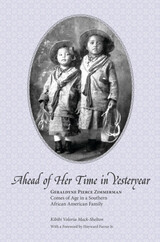
Born into a relatively privileged family, Geraldyne Pierce Zimmerman earned a reputation as a maverick in her lifelong home of Orangeburg, South Carolina, a semirural community where race and class were very much governed by the Jim Crow laws. Educated at Nashville’s Fisk University, Zimmerman returned to Orangeburg to teach school, serve her community, and champion equal rights for African Americans and women.
Kibibi V. Mack-Shelton offers a vivid portrayal of the kind of black family seldom recognized for its role in the development of the African American community after the Civil War. At a time when “separate but equal” usually meant suffering and injustice for the black community, South Carolina families such as the Tatnalls, Pierces, and Zimmermans achieved a level of financial and social success rivaling that of many white families.
Drawing heavily on the oral accounts of Geraldyne Pierce Zimmerman, Mack-Shelton draws the reader into the lives of the African American elite of the early twentieth century. Her captivating narrative style brings to life many complicated topics: how skin color affected interracial interactions and class distinctions within the black community itself, the role of education for women and for African Americans in general, and the ways in which cultural ideas about family and community are simultaneously preserved and transformed over the span of
generations.
Refreshing and engaging, Ahead of Her Time in Yesteryear is a fascinating biography for any reader interested in a new perspective on small-town black culture in the Jim Crow South.

Leading landscape architect and planner Carl Steinitz has developed an innovative GIS-based simulation modeling strategy that considers the demographic, economic, physical, and environmental processes of an area and projects the consequences to that area of various land-use planning and management decisions. The results of such projections, and the approach itself, are known as "alternative futures."
Alternative Futures for Changing Landscapes presents for the first time in book form a detailed case study of one alternative futures project—an analysis of development and conservation options for the Upper San Pedro River Basin in Arizona and Sonora, Mexico. The area is internationally recognized for its high levels of biodiversity, and like many regions, it is facing increased pressures from nearby population centers, agriculture, and mining interests. Local officials and others planning for the future of the region are seeking to balance the needs of the natural environment with those of local human communities.
The book describes how the research team, working with local stakeholders, developed a set of scenarios which encompassed public opinion on the major issues facing the area. They then simulated an array of possible patterns of land uses and assessed the resultant impacts on biodiversity and related environmental factors including vegetation, hydrology, and visual preference. The book gives a comprehensive overview of how the study was conducted, along with descriptions and analysis of the alternative futures that resulted. It includes more than 30 charts and graphs and more than 150 color figures.
Scenario-based studies of alternative futures offer communities a powerful tool for making better-informed decisions today, which can help lead to an improved future. Alternative Futures for Changing Landscapes presents an important look at this promising approach and how it works for planners, landscape architects, local officials, and anyone involved with making land use decisions on local and regional scales.
The impassioned debate that erupted between long-time white ethnic residents and more recently arrived Puerto Rican citizens in the de-industrialized city the author calls "Arnhem" was initially sparked by one school board member's disparaging comments about Latinos. The conflict led to an investigation by the attempts to implement multicultural reforms in the city's schools. American Conversations follows the ensuing conflict, looks at the history of racial formation in the United States, and considers the specific economic and labor histories of the groups comprising the community in opposition. Including interviews with students, teachers, parents, and community leaders, as well as her own observations of exchanges among them inside and outside the classroom, Bigler's book explores the social positions, diverging constructions of history, and polarized understandings of contemporary racial/ethnic dynamics in Arnhem. Through her retelling of one community's crisis, Bigler illuminates the nature of racial politics in the United States and how both sides in the debate over multicultural education struggle to find a common language.
American Conversations will appeal to anyone invested in education and multiculturalism in the United States as well as those interested in anthropology, sociology, racial and ethnic studies, educational institutions, migration and settlement, the effects of industrial restructuring, and broad issues of community formation and conflict.
American Culture comprises fifteen essays looking at the familiar and the less familiar in American society: urbanites in Pittsburgh and Indianapolis, rural communities in the American West, Hispanics in Wisconsin, Samoans in California, the Amish, and the utopian religious communities of the Shakers and Oneida. The essays address a wide range of topics and a spectrum of occupations-miners, whalers, farmers, factory workers, physicians and nurses-to consider such questions as why some religious sects remain distinctive, separate, and viable; how groups use of such things as nicknames and family reunions to maintain ties within the community; how immigrant communities organize to sustain traditional cultural activities.
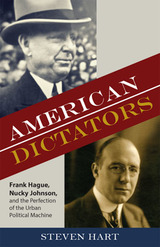
One man was tongue-tied and awkward around women, in many ways a mama's boy at heart, although his reputation for thuggery was well earned. The other was a playboy, full of easy charm and ready jokes, his appetite for high living a matter of public record. One man tolerated gangsters and bootleggers as long as they paid their dues to his organization. The other was effectively a gangster himself, so crooked that he hosted a national gathering of America's most ruthless killers. One man never drank alcohol. The other, from all evidence, seldom drank anything else.
American Dictators is the dual biography of two of America’s greatest political bosses: Frank Hagueand Enoch “Nucky” Johnson. Packed with compelling information and written in an informal, sometimes humorous style, the book shows Hague and Johnson at the peak of their power and the strength of their political machines during the years of Prohibition and the Great Depression. Steven Hart compares how both men used their influence to benefit and punish the local citizenry, amass huge personal fortunes, and sometimes collaborate to trounce their enemies.
Similar in their ruthlessness, both men were very different in appearance and temperament. Hague, the mayor of Jersey City, intimidated presidents and wielded unchallenged power for three decades. He never drank and was happily married to his wife for decades. He also allowed gangsters to run bootlegging and illegal gambling operations as long as they paid protection money. Johnson, the political boss of Atlantic City, and the inspiration for the hit HBO series Boardwalk Empire, presided over corruption as well, but for a shorter period of time. He was notorious for his decadent lifestyle. Essentially a gangster himself, Johnson hosted the infamous Atlantic City conference that fostered the growth of organized crime.
Both Hague and Johnson shrewdly integrated otherwise disenfranchised groups into their machines and gave them a stake in political power. Yet each failed to adapt to changing demographics and circumstances. In American Dictators, Hart paints a balanced portrait of their accomplishments and their failures.
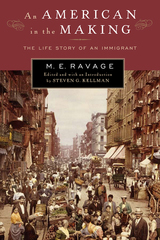
Steven G. Kellman brings Ravage's story to life again in this new edition, providing a brief biography and introduction that place the memoir within historical and literary contexts. An American in the Making contributes to a broader understanding of the global notion of "America" and remains timely, especially in an era when massive immigration, now from Latin America and Asia, challenges ideas of national identity.
In 1895 there was not a single case of dementia praecox reported in the United States. By 1912 there were tens of thousands of people with this diagnosis locked up in asylums, hospitals, and jails. By 1927 it was fading away . How could such a terrible disease be discovered, affect so many lives, and then turn out to be something else?
In vivid detail, Richard Noll describes how the discovery of this mysterious disorder gave hope to the overworked asylum doctors that they could at last explain—though they could not cure—the miserable patients surrounding them. The story of dementia praecox, and its eventual replacement by the new concept of schizophrenia, also reveals how asylum physicians fought for their own respectability. If what they were observing was a disease, then this biological reality was amenable to scientific research. In the early twentieth century, dementia praecox was psychiatry’s key into an increasingly science-focused medical profession.
But for the moment, nothing could be done to help the sufferers. When the concept of schizophrenia offered a fresh understanding of this disorder, and hope for a cure, psychiatry abandoned the old disease for the new. In this dramatic story of a vanished diagnosis, Noll shows the co-dependency between a disease and the scientific status of the profession that treats it. The ghost of dementia praecox haunts today’s debates about the latest generation of psychiatric disorders.

This pioneering study of United States direct investment in Japan will interest academic specialists, business managers, and government policymakers in America, Japan, and elsewhere. Drawing on rich historical materials from both sides of the Pacific, including corporate records and government documents never before made public, Mason examines the development of both Japanese policy towards foreign investment and the strategic responses of American corporations. This history is related in part through original case studies of Coca-Cola, Dow Chemical, Ford, General Motors, International Business Machines, Motorola, Otis Elevator, Texas Instruments, Western Electric, and Victor Talking Machine.
The book seeks to explain why s little foreign direct investment has entered modern Japan. In contrast to the widely held view that emphasizes an alleged lack of effort on the part of foreign corporations, this study finds that Japanese restrictions merit greater attention. Many analysts of the modern Japanese political economy identify the Japanese government as the key actor in initiating such restrictions. Mason finds that the influence of Japanese business has often proved more potent than these analysts suggest. This book offers fresh insights into both the operation of the modern Japanese political economy and of its relations with the world economy.
A history of Americans who spied against their country and what their stories reveal about national security
What's your secret?
American Spies presents the stunning histories of more than forty Americans who spied against their country during the past six decades. Michael Sulick, former head of the CIA's clandestine service, illustrates through these stories—some familiar, others much less well known—the common threads in the spy cases and the evolution of American attitudes toward espionage since the onset of the Cold War. After highlighting the accounts of many who have spied for traditional adversaries such as Russian and Chinese intelligence services, Sulick shows how spy hunters today confront a far broader spectrum of threats not only from hostile states but also substate groups, including those conducting cyberespionage.
Sulick reveals six fundamental elements of espionage in these stories: the motivations that drove them to spy; their access and the secrets they betrayed; their tradecraft, or the techniques of concealing their espionage; their exposure; their punishment; and, finally, the damage they inflicted on America's national security.
The book is the sequel to Sulick's popular Spying in America: Espionage from the Revolutionary War to the Dawn of the Cold War. Together they serve as a basic introduction to understanding America's vulnerability to espionage, which has oscillated between peacetime complacency and wartime vigilance, and continues to be shaped by the inherent conflict between our nation's security needs and our commitment to the preservation of civil liberties. Now available in paperback, with a new preface that brings the conversation up to the present, American Spies is as insightful and relevant as ever.
Contemporary America, with its unparalleled armaments and ambition, seems to many commentators a new empire. Others angrily reject the designation. What stakes would being an empire have for our identity at home and our role abroad?
A preeminent American historian addresses these issues in light of the history of empires since antiquity. This elegantly written book examines the structure and impact of these mega-states and asks whether the United States shares their traits and behavior. Eschewing the standard focus on current U.S. foreign policy and the recent spate of pro- and anti-empire polemics, Charles S. Maier uses comparative history to test the relevance of a concept often invoked but not always understood. Marshaling a remarkable array of evidence—from Roman, Ottoman, Moghul, Spanish, Russian, Chinese, and British experience—Maier outlines the essentials of empire throughout history. He then explores the exercise of U.S. power in the nineteenth and twentieth centuries, carefully analyzing its economic and strategic sources and the nation’s relationship to predecessors and rivals.
To inquire about empire is to ask what the United States has become as a result of its wealth, inventiveness, and ambitions. It is to confront lofty national aspirations with the realities of the violence that often attends imperial politics and thus to question both the costs and the opportunities of the current U.S. global ascendancy. With learning, dispassion, and clarity, Among Empires offers bold comparisons and an original account of American power. It confirms that the issue of empire must be a concern of every citizen.

In the preface to her memoir, Ercenia "Alice" Cedeño recalls the secrecy and turmoil that marked her youth: "I spent most of my growing years mad at my mother and wanting her to change to fit in with the rest of the world," she writes. "When my sisters and I wanted her to visit our friends' mothers, she would say, 'Why do people need to know other peoples' lives?' Looking back, I wonder if she was really saying, 'I don't want them to know our business.' There was so much to hide."
Now bringing those hidden memories to light, Amá, Your Story Is Mine traces the hardship, violence, deceit, and defiance that shaped the identity of two generations of women in Alice's family. Born in the mountains of northern Mexico, Alice's mother married at age 14 into a family rife with passion that often turned to anger. After losing several infant children to disease, the young couple crossed into the United States seeking a better life.
Unfolding in a series of powerful vignettes, Amá, Your Story Is Mine describes in captivating detail a daring matriarch who found herself having to protect her children from their own father while facing the challenges of cultural discrimination. By turns wry and tender, Alice's recollections offer a rare memoir that fully encompasses the Latina experience in the United States.
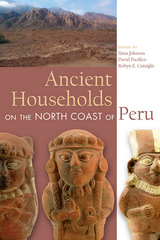
Many volumes on this region are limited to one time period or civilization, often the Moche. While Ancient Households on the North Coast of Peru does examine the Moche, it offers a wider thematic approach to a broader swath of prehistory. Chapters on various time periods use a comparable scale of analysis to examine long-term continuity and change and draw on a large corpus of prior research on states, rulership, and cosmology to offer new insight into the intersection of household, community, and state. Contributors address social reproduction, construction and reinforcement of gender identities and social hierarchy, household permanence and resilience, and expression of identity through cuisine.
This volume challenges common concepts of the “household” in archaeology by demonstrating the complexity and heterogeneity of household-level dynamics as they intersect with institutions at broader social scales and takes a comparative perspective on daily life within one region of the Andes. It will be of interest to both students and scholars of South American archaeology and household archaeology.
Contributors: Brian R. Billman, David Chicoine, Guy S. Duke, Hugo Ikehara, Giles Spence-Morrow, Jessica Ortiz, Edward Swenson, Kari A. Zobler
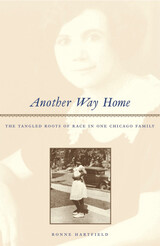
Hartfield begins with the early life of her mother, Day Shepherd. Born to a wealthy British plantation owner and the mixed-race daughter of a former slave, Day negotiates the complicated circumstances of plantation life in the border country of Louisiana and Mississippi and, as she enters womanhood, the quadroon and octoroon societies of New Orleans. Equally a tale of the Great Migration, Another Way Home traces Day's journey to Bronzeville, the epicenter of black Chicago during the first half of the twentieth century. Here, through the eyes of Day and, ultimately, her daughter, we witness the bustling city streets and vibrant middle-class culture of this iconic black neighborhood. We also relive crucial moments in African American history as they are experienced by the author's family and others in Chicago's South Side black community, from the race riots of 1919 and the Great Depression to the murder of Emmett Till and the dawn of the civil rights movement.
Throughout her book, Hartfield portrays mixed-race Americans navigating the challenges of their lives with resilience and grace, making Another Way Home an intimate and compelling encounter with one family's response to our racially charged culture.
In the midst of global recession, angry citizens and media pundits often offer simplistic theories about how bad decisions lead to crises. Many economists, however, base their analyses on rational choice theory, which assumes that decisions are made by well-informed, intelligent people who weigh risks, costs, and benefits. Taking a more realistic approach, the field of anthropology carefully looks at the underlying causes of choices at different times and places.
Using case studies of choices by farmers, artisans, and bureaucrats drawn from Michael Chibnik's research in Mexico, Peru, Belize, and the United States, Anthropology, Economics, and Choice presents a clear-eyed perspective on human actions and their economic consequences. Five key issues are explored in-depth: choices between paid and unpaid work; ways people deal with risk and uncertainty; how individuals decide whether to cooperate; the extent to which households can be regarded as decision-making units; and the "tragedy of the commons," the theory that social chaos may result from unrestricted access to commonly owned property.
Both an accessible primer and an innovative exploration of economic anthropology, this interdisciplinary work brings fresh insight to a timely topic.
Editors Monica Prendergast and Juliana Saxton have updated the book to reflect shifts in practice over the last few years in the world of applied theater. With their background in drama education and pedagogy, the contributors offer introductory chapters and dozens of case studies on applied theater projects around the globe. This new edition of Applied Theatre will encourage students and practitioners to acquire a deeper, more concrete understanding of the field and its best practice.
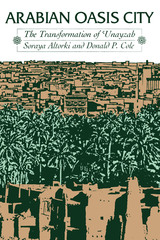
Vast social change has occurred in the Middle East since the oil boom of the mid-1970s. As the first anthropological study of an urban community in Saudi Arabia since that oil boom, Arabian Oasis City is also the first to document those changes.
Based on extensive interviews and participant observation with both men and women, the authors record and analyze the transformation that has occurred in this ancient oasis city throughout the twentieth century: the creation of the present Saudi Arabian state and of a new national economy based on the export of oil and the economic boom brought about by the dramatic increases in the price of oil following the October 1973 Arab-Israeli War. In addition, the authors reveal the changes brought about by the fall in the price of oil beginning in 1982 and analyze the problems confronting ‘Unayzah in its aftermath.
By demonstrating that the area was not exclusively dominated by tribalism and Bedouin nomads, this empirical case study destroys stereotypical views about Saudi Arabia. Indeed, it proves the existence—prior to the coming of the modern Saudi Arabian state— of surplus agricultural and craft production and the full development of local, regional, and long-distance trade networks. It shows that women, although veiled, played active roles in work outside the household. The social impact of change over the years is, however, profound—especially the gradual replacement of the extended family by the nuclear family, changing patterns of husband-wife relationships, the impact of self-earned income on the status of women, and the emergence of a new middle class of employees and entrepreneurs. Because of the high degree of gender segregation in this area of research, Altorki and Cole give us a fortunate collaboration between a Saudi Arabian female scholar and an American male scholar experienced in research in the Middle East.
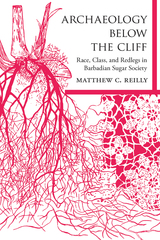
Archaeology below the Cliff: Race, Class, and Redlegs in Barbadian Sugar Society is the first archaeological study of the poor whites of Barbados, the descendants of seventeenth-century European indentured servants and small farmers. “Redlegs” is a pejorative to describe the marginalized group who remained after the island transitioned to a sugar monoculture economy dependent on the labor of enslaved Africans. A sizable portion of the “white” minority, the Redlegs largely existed on the peripheries of the plantation landscape in an area called “Below Cliff,” which was deemed unsuitable for profitable agricultural production. Just as the land on which they resided was cast as marginal, so too have the poor whites historically and contemporarily been derided as peripheral and isolated as well as idle, alcoholic, degenerate, inbred, and irrelevant to a functional island society and economy.
Using archaeological, historical, and oral sources, Matthew C. Reilly shows how the precarious existence of the Barbadian Redlegs challenged elite hypercapitalistic notions of economics, race, and class as they were developing in colonial society. Experiencing pronounced economic hardship, similar to that of the enslaved, albeit under very different circumstances, Barbadian Redlegs developed strategies to live in a harsh environment. Reilly’s investigations reveal that what developed in Below Cliff was a moral economy, based on community needs rather than free-market prices.
Reilly extensively excavated households from the tenantry area on the boundaries of the Clifton Hall Plantation, which was abandoned in the 1960s, to explore the daily lives of poor white tenants and investigate their relationships with island economic processes and networks. Despite misconceptions of strict racial isolation, evidence also highlights the importance of poor white encounters and relationships with Afro-Barbadians. Historical data are also incorporated to address how an underrepresented demographic experienced the plantation landscape. Ultimately, Reilly’s narrative situates the Redlegs within island history, privileging inclusion and embeddedness over exclusion and isolation.
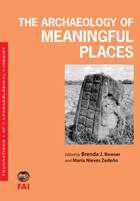
Diverse spatial and temporal contexts in two culture areas--Mesoamerica and the Greater Southwest--serve as backdrops for nine chapters in which fourteen contributors show how place is an ideal starting point to begin unraveling the human past. Several authors further address the enduring significance of places of the past for contemporary peoples. Among the many strengths of this volume is the careful way in which powerful concepts, diverse lines of thought, and empirical models are integrated to reveal the multiple facets of meaningful places, and to illustrate ways in which places may be approached archaeologically, theoretically, and culturally. Ultimately, the book’s contributors champion the notion that place is a valid and useful analytical unit for describing, reconstructing, interpreting, and explaining the form, structure, and temporality of the meanings humans ascribe to their environment.
During the first centuries of the Roman Empire, Greek intellectuals wrote a great many texts modeled on the dialect and literature of Classical Athens, some 500 years prior. Among the most successful of these literary figures were sophists, whose highly influential display oratory has been the prevailing focus of scholarship on Roman Greece over the past fifty years. Often overlooked are the period’s historians, who spurned sophistic oral performance in favor of written accounts. One such author is Arrian of Nicomedia.
Daniel W. Leon examines the works of Arrian to show how the era's historians responded to their sophistic peers’ claims of authority and played a crucial role in theorizing the past at a time when knowledge of history was central to defining Greek cultural identity. Best known for his history of Alexander the Great, Arrian articulated a methodical approach to the study of the past and a notion of historical progress that established a continuous line of human activity leading to his present and imparting moral and political lessons. Using Arrian as a case study in Greek historiography, Leon demonstrates how the genre functioned during the Imperial Period and what it brings to the study of the Roman world in the second century.
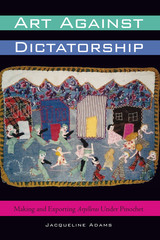
Art can be a powerful avenue of resistance to oppressive governments. During the dictatorship of Augusto Pinochet in Chile, some of the country’s least powerful citizens—impoverished women living in Santiago’s shantytowns—spotlighted the government’s failings and use of violence by creating and selling arpilleras, appliquéd pictures in cloth that portrayed the unemployment, poverty, and repression that they endured, their work to make ends meet, and their varied forms of protest. Smuggled out of Chile by human rights organizations, the arpilleras raised international awareness of the Pinochet regime’s abuses while providing income for the arpillera makers and creating a network of solidarity between the people of Chile and sympathizers throughout the world.
Using the Chilean arpilleras as a case study, this book explores how dissident art can be produced under dictatorship, when freedom of expression is absent and repression rife, and the consequences of its production for the resistance and for the artists. Taking a sociological approach based on interviews, participant observation, archival research, and analysis of a visual database, Jacqueline Adams examines the emergence of the arpilleras and then traces their journey from the workshops and homes in which they were made, to the human rights organizations that exported them, and on to sellers and buyers abroad, as well as in Chile. She then presents the perspectives of the arpillera makers and human rights organization staff, who discuss how the arpilleras strengthened the resistance and empowered the women who made them.
In the field of negotiation theory, the Harvard Project’s Getting to Yes and Donald Trump’s The Art of the Deal occupy polar opposition locations on a spectrum considering distributive and integrative negotiation theories. The Art of Getting More Back in Diplomacy offers case studies from international negotiations in which the author participated that can help illustrate the tactics and theories of each type of negotiation and to make students in law, business, and other fields into better negotiators. Among the case studies are lessons drawn from negotiating denuclearization with North Korea, political reconciliation in Libya, human rights improvements in China, Israel-Palestinian peace processes, and UN negotiations over surveillance, privacy, atrocities prevention, LGBTI rights, and other fundamental freedoms. By illustrating these lessons, The Art of Getting More Back in Diplomacy strengthens the tools that students and teachers of negotiations should have in their negotiating toolbox. Perhaps most importantly, Richardson provides concrete examples of how a negotiator is likely to Get More Back for their clients if they deploy these tactics, rather than having them used against the negotiator.

Long before Bruce Springsteen picked up a guitar; before Danny DeVito drove a taxi; before Jack Nicholson flew over the cuckoo's nest, Asbury Park was a seashore Shangri-La filled with shimmering odes to civic greatness, world-renowned baby parades, temples of retail, and atmospheric movie palaces. It was a magnet for tourists, a summer vacation mecca-to some degree New Jersey's own Coney Island.
In Asbury Park's Glory Days, award-winning author Helen-Chantal Pike chronicles the city's heyday-the ninety-year period between 1890 and 1980. Pike illuminates the historical conditions contributing to the town's cycle of booms and recessions. She investigates the factors that influenced these peaks, such as location, lodging, dining, nightlife, merchandising, and immigration, and how and why millions of people spent their leisure time within this one-square-mile boundary on the northern coast of the state. Pike also includes an epilogue describing recent attempts to resurrect this once-vibrant city.
In words that eerily echo current U.S. debates, Mesa-Lago analyzes virtually all social insurance programs: old age, disability and survivors' pensions; health care; occupational hazards; family allowances; and unemployment. For social security specialists, this impressive study will serve as a comprehensive regional handbook on the legal, administrative, and financial features of Latin America's programs. Students of comparative policy and applied economics will find Mesa-Lago's methodology, analytical framework, and policy recommendations invaluable.
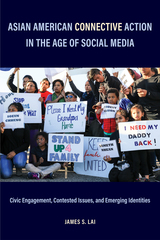
Social media provides ethno-racial immigrant groups—especially those who cannot vote due to factors such as lack of citizenship and limited English proficiency—the ability to mobilize and connect around collective issues. Online spaces and discussion forums have encouraged many Asian Americans to participate in public policy debates and take action on social justice issues. This form of digital group activism serves as an adaptive political empowerment strategy for the fastest-growing and largest foreign-born population in America. Asian American Connective Action in the Age of Social Media illuminates how associating online can facilitate and amplify traditional forms of political action.
James Lai provides diverse case studies on contentious topics ranging from affirmative action debates to textbook controversies to emphasize the complexities, limitations, and challenges of connective action that is relevant to all racial groups. Using a detailed multi-methods approach that includes national survey data and Twitter hashtag analysis, he shows how traditional immigrants, older participants, and younger generations create online consensus and mobilize offline to foment political change. In doing so, Lai provides a nuanced glimpse into the multiple ways connective action takes shape within the Asian American community.
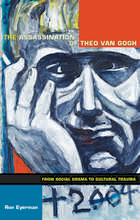
Eyerman utilizes theories of social drama and cultural trauma to evaluate the reactions to and effects of the murder. A social drama is triggered by a public transgression of taken-for-granted norms; one that threatens the collective identity of a society may develop into a cultural trauma. Eyerman contends that the assassination of Theo van Gogh quickly became a cultural trauma because it resonated powerfully with the postwar psyche of the Netherlands. As part of his analysis of the murder and reactions to it, he discusses significant aspects of twentieth-century Dutch history, including the country’s treatment of Jews during the German occupation, the loss of its colonies in the wake of World War II, its recruitment of immigrant workers, and the failure of Dutch troops to protect Muslims in Srebrenica in 1995.

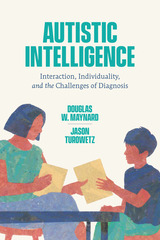
As autism has grown in prevalence, so too have our attempts to make sense of it. From placing unfounded blame on vaccines to seeking a genetic cause, Americans have struggled to understand what autism is and where it comes from. Amidst these efforts, however, a key aspect of autism has been largely overlooked: the diagnostic process itself. That process is the central focus of Autistic Intelligence. The authors ask us to question the norms by which we measure autistic behavior, to probe how that behavior can be considered sensible rather than disordered, and to explore how we can better appreciate the individuality of those who receive the diagnosis.
Drawing on hundreds of hours of video recordings and ethnographic observations at a clinic where professionals evaluated children for autism, the authors’ analysis of interactions among clinicians, parents, and children demystifies the categories, tools, and practices involved in the diagnostic process. Autistic Intelligence shows that autism is not a stable category; it is the outcome of complex interactional processes involving professionals, children, families, and facets of the social and clinical environments they inhabit. The authors suggest that diagnosis, in addition to carefully classifying children, also can highlight or include unique and particular contributions those with autism potentially can make to the world around us.
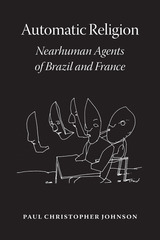
Automatic Religion explores an unlikely series of episodes from the end of the nineteenth century, when crucial ideas related to automatism and, in a different realm, the study of religion were both being born. Paul Christopher Johnson draws on years of archival and ethnographic research in Brazil and France to explore the crucial boundaries being drawn at the time between humans, “nearhumans,” and automata. As agency came to take on a more central place in the philosophical, moral, and legal traditions of the West, certain classes of people were excluded as less-than-human. Tracking the circulation of ideas across the Atlantic, Johnson tests those boundaries, revealing how they were constructed on largely gendered and racial foundations. In the process, he reanimates one of the most mysterious and yet foundational questions in trans-Atlantic thought: what is agency?
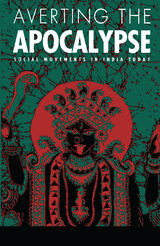
Bonner finds that India’s inability or refusal to address its debilitating social structure may be the precursor to an apocalyptic social upheaval unless heed is paid to the social movements that his first-hand investigation reveals.
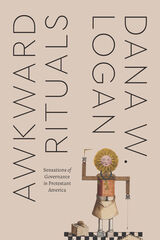
In the years between the American Revolution and the Civil War, there was an awkward persistence of sovereign rituals, vestiges of a monarchical past that were not easy to shed. In Awkward Rituals, Dana Logan focuses our attention on these performances, revealing the ways in which governance in the early republic was characterized by white Protestants reenacting the hierarchical authority of a seemingly rejected king. With her unique focus on embodied action, rather than the more common focus on discourse or law, Logan makes an original contribution to debates about the relative completeness of America’s Revolution.
Awkward Rituals theorizes an under-examined form of action: rituals that do not feel natural even if they sometimes feel good. This account challenges common notions of ritual as a force that binds society and synthesizes the self. Ranging from Freemason initiations to evangelical societies to missionaries posing as sailors, Logan shows how white Protestants promoted a class-based society while simultaneously trumpeting egalitarianism. She thus redescribes ritual as a box to check, a chore to complete, an embarrassing display of theatrical verve. In Awkward Rituals, Logan emphasizes how ritual distinctively captures what does not change through revolution.
READERS
Browse our collection.
PUBLISHERS
See BiblioVault's publisher services.
STUDENT SERVICES
Files for college accessibility offices.
RECENTLY PUBLISHED


UChicago Accessibility Resources
home | accessibility | search | about | contact us
BiblioVault ® 2001 - 2024
The University of Chicago Press