
 A SCHOLARLY BOOK REPOSITORY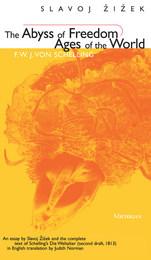
Zizek argues that Schelling's most profound thoughts are found in the series of three consecutive attempts he made to formulate the "ages of the world/Weltalter," the stages of the self-development of the Absolute. Of the three versions, claims Zizek, it is the second that is the most eloquent and definitive encompassing of Schelling's lyrical thought. It centers on the problem of how the Absolute (God) himself, in order to become actual, to exist effectively, has to accomplish a radically contingent move of acquiring material, bodily existence. Never before available in English, this version finally renders accessible one of the key texts of modern philosophy, a text that is widely debated in philosophical circles today.
The Abyss of Freedom is Zizek's own reading of Schelling based upon Lacanian psychoanalytic theory. It focuses on the notion that Lacan's theory--which claims that the symbolic universe emerged from presymbolic drives--is prefigured in Schelling's idea of logos as given birth to from the vortex of primordial drives, or from what "in God is not yet God." For Zizek, this connection is monumental, showing that Schelling's ideas forcefully presage the post-modern "deconstruction" of logocentrism.
Slavoj Zizek is not a philosopher who stoops to conquer objects but a radical voice who believes that philosophy is nothing if it is not embodied, nothing if it is only abstract. For him, true philosophy always speaks of something rather than nothing. Those interested in the genesis of contemporary thought and the fate of reason in our "age of anxiety" will find this coupling of texts not only philosophically relevant, but vitally important.
Slavoj Zizek is the author of The Sublime Object of Ideology, Tarrying with the Negative: Kant, Hegel and the Critique of Ideology, and most recently, The Indivisible Remainder: An Essay on Schelling and Related Matters. Currently he is a Senior Researcher at the Institute for Social Sciences, University of Ljubljana. Judith Norman is Assistant Professor of Philosophy at Trinity University in San Antonio, Texas.
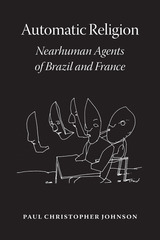
Automatic Religion explores an unlikely series of episodes from the end of the nineteenth century, when crucial ideas related to automatism and, in a different realm, the study of religion were both being born. Paul Christopher Johnson draws on years of archival and ethnographic research in Brazil and France to explore the crucial boundaries being drawn at the time between humans, “nearhumans,” and automata. As agency came to take on a more central place in the philosophical, moral, and legal traditions of the West, certain classes of people were excluded as less-than-human. Tracking the circulation of ideas across the Atlantic, Johnson tests those boundaries, revealing how they were constructed on largely gendered and racial foundations. In the process, he reanimates one of the most mysterious and yet foundational questions in trans-Atlantic thought: what is agency?
Following an ardent debate in the 1930s on the question over whether something like a “Christian philosophy” exists, as Etienne Gilson, Jacques Maritain, and others held, the term was used by many thinkers and rejected by many others, not only by Heidegger who called it a contradiction in terms, an “iron wood,” but also by Thomists who wanted to see philosophy and Christian faith strictly separated. Seifert analyses five understandings of the term “Christian philosophy” which have never been expounded with such clarity and which he rejects for different, partly for opposite, reasons. He presents these senses of Christian philosophy, and his reasons for rejecting them, in clear, straight-forward language. He presents for the first time a series of eleven wholly different and thoroughly positive and fruitful ways of understanding the (rather misleading) term “Christian philosophy.” Identifying and distinguishing these legitimate ways to speak of “Christian philosophy” shed light on the manifold fruitful relations between reason and faith. In a second part of the book, Seifert gives an example of Christian philosophy in the sense of a philosophy of religion that shows the absolute presupposedness and necessity of the existence of human, divine, and angelic free will to make any sense of divine revelation and of Christian (but also of Muslim and Jewish) religion. In a third part, he presents a penetrating analysis of seven indubitable evidences that demonstrate the nature and real existence of human free will (in a so-called “libertarian” sense that rejects the thesis of the compatibility between free will and determinism). The book is introduced by the eminent Thomist philosopher, John Finnis.

Widely praised when first published in France, The Coherence of Kant's Doctrine of Freedom articulates and interrelates the disparate senses of freedom in Kant's work. Bernard Carnois organizes all Kant's usages into a logical "grammar," isolating and defining the individual meanings and pointing out their implications and limits. In a first step, he shows how Kant's notion of intelligible character makes possible a synthesis of transcendental freedom, as a problematic concept of theoretical reason, and practical freedom, as a fact demonstrated by experience. He then develops the concept of freedom under the rubric of the will's autonomy in the context of the moral law. And finally, Carnois persistently explores the role of negativity in Kant's idea of freedom. For within the magisterial coherence of the system the imperfection of human finitude is inscribed. This introduces the "history" of our freedom—a freedom which posits itself, but then inevitably denies itself, even while preserving the possibility of its regeneration.
The only work in English to consider in detail all of Kant's writings on freedom, this book also introduces French Kant scholars whose works have often been unavailable to English-speaking readers. As both an interpretation of Kant and a trenchant analysis of the relationship between ethical commitments and metaphysical assumptions, it will be a useful addition to moral, religious, and political philosophy as well as to Kant scholarship.
Smith takes an in-depth look at the problem of free will through the prism of different disciplines. Physiology, psychology, philosophy, evolutionary theory, ethics, history and sociology all played a part in the debates that took place. His subtly nuanced navigation through these arguments has much to contribute to our understanding of Victorian and Edwardian science and culture, as well as having relevance to current debates on the role of genes in determining behaviour.
Freedom Regained brings the issues raised by the possibilities—and denials—of free will to thought-provoking life, drawing on scientific research and fascinating encounters with everyone from artists to prisoners to dissidents. He looks at what it means for us to be material beings in a universe of natural laws. He asks if there is any difference between ourselves and the brains from which we seem never able to escape. He throws down the wildcards and plays them to the fullest: What about art? What about addiction? What about twins? And he asks, of course, what this all means for politics.
Ultimately, Baggini challenges those who think free will is an illusion. Moving from doubt to optimism to a hedged acceptance of free will, he ultimately lands on a satisfying conclusion: it is something we earn. The result is a highly engaging, new, and more positive understanding of our sense of personal freedom, a freedom that is definitely worth having.
This provocative volume, one of the most important interpretive works on the philosophical thought of the Renaissance, has long been regarded as a classic in its field. Ernst Cassirer here examines the changes brewing in the early stages of the Renaissance, tracing the interdependence of philosophy, language, art, and science; the newfound recognition of individual consciousness; and the great thinkers of the period—from da Vinci and Galileo to Pico della Mirandola and Giordano Bruno. The Individual and the Cosmos in Renaissance Philosophy discusses the importance of fifteenth-century philosopher Nicholas Cusanus, the concepts of freedom and necessity, and the subject-object problem in Renaissance thought.
“This fluent translation of a scholarly and penetrating original leaves little impression of an attempt to show that a ‘spirit of the age’ or ‘spiritual essence of the time’ unifies and expresses itself in all aspects of society or culture.”—Philosophy
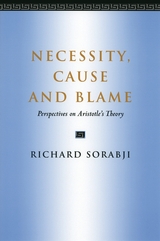
“Necessity, Cause and Blame would be counted by all as one of Sorabji’s finest. The book is essential for philosophers—both specialists on the Greeks and modern thinkers about free will—and also compelling for non-specialists.”—Martha Nussbaum
“Original and important . . . The book relates Aristotle’s discussions to both the contemporary debates on determinism and causation and the ancient ones. It is especially detailed on Stoic arguments about necessity . . . and on the social and legal background to Aristotle’s thought.”—Choice
“It is difficult to convey the extraordinary richness of this book. . . . A Greekless philosopher could read it with pleasure . . . At the same time, its learning and scholarship are enormous.”—G. E. M. Anscombe, Times Literary Supplement
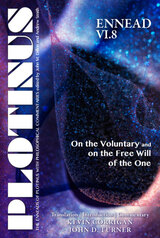
Plotinus’ On the Voluntary and on the Free Will of the One is a groundbreaking work that provides a new understanding of the importance and nature of free human agency. It articulates a creative idea of agency and radical freedom by showing how such terms as desire, will, self-dependence, and freedom in the human ethical sphere can be genuinely applied to Intellect and the One while preserving the radical inability of all metaphysical language to express anything about God or gods.
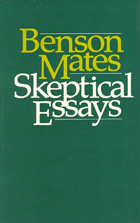
The problems Mates discusses are: the Liar paradox and Russell's Antinomy of the class of all nonself-membered classes; the problem of determinism and moral responsibility; and the existence of the external world. Clearly written and effectively organized, the book will be an excellent text for advanced students.
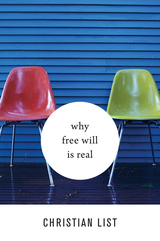
A crystal-clear, scientifically rigorous argument for the existence of free will, challenging what many scientists and scientifically minded philosophers believe.
Philosophers have argued about the nature and the very existence of free will for centuries. Today, many scientists and scientifically minded commentators are skeptical that it exists, especially when it is understood to require the ability to choose between alternative possibilities. If the laws of physics govern everything that happens, they argue, then how can our choices be free? Believers in free will must be misled by habit, sentiment, or religious doctrine. Why Free Will Is Real defies scientific orthodoxy and presents a bold new defense of free will in the same naturalistic terms that are usually deployed against it.
Unlike those who defend free will by giving up the idea that it requires alternative possibilities to choose from, Christian List retains this idea as central, resisting the tendency to defend free will by watering it down. He concedes that free will and its prerequisites—intentional agency, alternative possibilities, and causal control over our actions—cannot be found among the fundamental physical features of the natural world. But, he argues, that’s not where we should be looking. Free will is a “higher-level” phenomenon found at the level of psychology. It is like other phenomena that emerge from physical processes but are autonomous from them and not best understood in fundamental physical terms—like an ecosystem or the economy. When we discover it in its proper context, acknowledging that free will is real is not just scientifically respectable; it is indispensable for explaining our world.
READERS
Browse our collection.
PUBLISHERS
See BiblioVault's publisher services.
STUDENT SERVICES
Files for college accessibility offices.
RECENTLY PUBLISHED


UChicago Accessibility Resources
home | accessibility | search | about | contact us
BiblioVault ® 2001 - 2024
The University of Chicago Press